World

UN nature deal calls to protect 30% of planet by 2030

A UN nature deal proposed Sunday calls to protect at least 30 percent of the planet by 2030 and asks rich countries to stump up $20 billion in yearly aid for developing nations to save their ecosystems.

China, chairing the COP15 biodiversity summit in Montreal, presented a long-awaited compromise text aiming to seal a pact to save the species and ecosystems on which life depends.

It called on wealthy countries to increase financial aid to the developing world to $20 billion annually by 2025, rising to $30 billion per year by 2030.

The document also called on countries to “ensure and enable that by 2030 at least 30 percent of terrestrial, inland water, and coastal and marine areas” are effectively conserved and managed.

Crucially, it includes language safeguarding the rights of Indigenous people as stewards of their lands, strongly backed by campaigners.

The compromise text was quickly welcomed by conservationists, but still needs to be agreed upon by the 196 signatories to the Convention on Biological Diversity before it is finalized.

More than 10 days of fraught biodiversity negotiations came to a head as delegates examined the compromise draft agreement just as the football World Cup between France and Argentina kicked off in Qatar.

A plenary session was scheduled for Sunday evening when countries will have the opportunity to approve the deal. Negotiations over the past 10 days have been slow however and observers warned the talks, scheduled to end on Monday, could run over.

– Risk of pushback –

The proposal “responds to parties’ calls for ambitious outcomes by 2030, including calls to enhance ecological integrity, reduce the risk of pathogen spillover, and conserve at least 30% of our lands and oceans,” said Alfred DeGemmis of the Wildlife Conservation Society in a statement.

“However, parties may push back in plenary, so it’s important for China to bring any hesitant governments on board with the overwhelming global consensus that biodiversity loss is an urgent crisis that requires immediate action.”

He also cautioned that much of the text was too focused on action by 2050, as opposed to more immediate achievements by 2030.

Another key issue to watch for is the funding mechanism. 

Developing countries, spearheaded by Brazil, were seeking the creation of a new fund to signal the global north’s commitment to the cause. But the draft text instead suggests a compromise: a “trust fund” within the existing Global Environment Facility.

China’s Environment Minister Huang Rinqiu said ahead of Sunday’s publication: “It is not a perfect document, not a document that will make everyone happy. However… it is a document that must be adopted at this meeting, that is highly expected by the international community.”

Observers had warned the COP15 conference risked collapse as countries squabbled over how much the rich world should pay to fund the efforts, with developing nations walking out of talks at one point.

But Huang said Saturday he was “greatly confident” of a consensus and his Canadian counterpart Steven Guilbeault said “tremendous progress” had been made.

– Million species threatened –

Delegates are working to roll back the destruction and pollution that threaten an estimated one million plant and animal species with extinction, according to scientists that report to the United Nations.

The more than 20 targets also include reducing environmentally destructive farming subsidies, requiring businesses to assess and report on their biodiversity impacts, and tackling the scourge of invasive species.

Representatives of Indigenous communities, who safeguard 80 percent of the world’s remaining biodiversity, want their rights to practice stewardship of their lands to be enshrined in the final agreement.

The issue of how much money the rich countries will send to the developing world, home to most of the planet’s biodiversity, has been the biggest sticking point.

Lower income nations point out developed countries grew rich by exploiting their resources and therefore they should be paid to protect their own ecosystems.

Current financial flows to the developing world are estimated at around $10 billion per year.

Several countries have recently made new commitments. The European Union has committed seven billion euros ($7.4 billion) for the period until 2027, double its prior pledge.
Record-breaking snowfall blankets Moscow

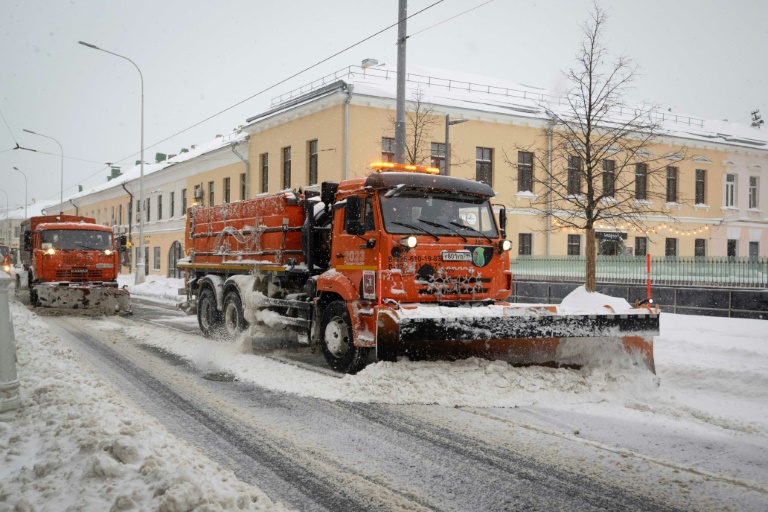
Heavy snowfall descended on the Russian capital on Sunday, disrupting traffic, delaying flights and leaving pavements buried with snow. 

In parts of Moscow, snow piled into mounds over 30 centimetres (12 inches) high, something not usually observed until the end of winter in February, the Fobos weather centre said.

The last time a similar depth of snow was recorded in Moscow in mid-December was in 1989 and in 1993, Fobos added. 

Close to 119,000 people and over 12,500 vehicles were deployed to clear the snow, according to Moscow city authorities, with snowfall forecast to continue until the evening. 

“It’s a snow Armageddon: in Moscow there is such a storm that you can’t walk or drive,” state-controlled Channel One said in a report.

Pavements in some parts of the capital were left completely covered in snow with snow-clearing equipment prioritising roads to ease the heavily congested traffic.

Air traffic was also affected with over 50 flights either delayed or cancelled at Moscow airports.

Iran urged to free top actor who backed protests

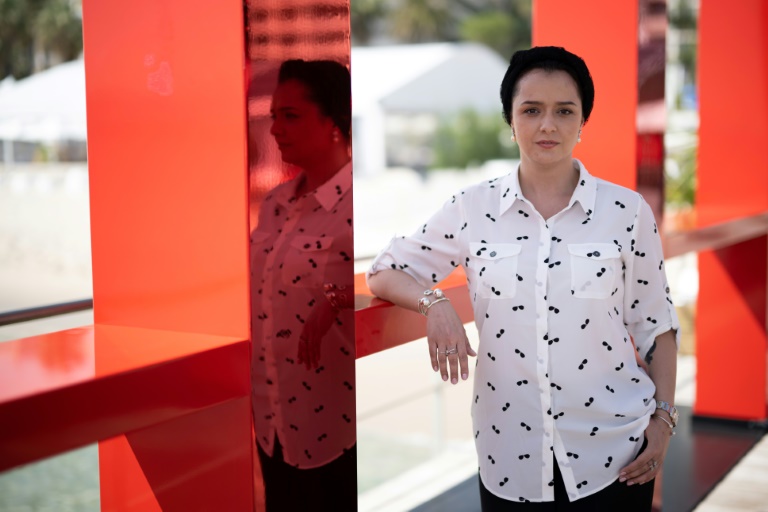
Celebrities and rights groups called on Iran on Sunday to free actor Taraneh Alidoosti, one of the most prominent figures yet arrested in its three-month crackdown on protests.

Alidoosti, 38, was arrested on Saturday, official media said, after making a string of social media posts supporting the protest movement including removing her headscarf and condemning the execution of protesters.

The unrest was sparked by the September 16 death in custody of Mahsa Amini, 22, whom the morality police accused of violating the Islamic republic’s strict dress code for women.

Iran blames the United States and other “enemies” for trying to destabilise the country by fuelling the demonstrations.

Other Iranian actors and prominent figures including footballers have been detained in connection with the protests.

Alidoosti has considerable international renown, performing in award-winning films by director Asghar Farhadi, including the Oscar-winning 2016 film “The Salesman”.

She attended this year’s Cannes Film Festival to promote the movie “Leila’s Brothers” in which she starred.

Fellow actor Golshifteh Farahani, calling her “the brave actress of Iran”, noted her arrest in a post on Instagram with a photo of her and Alidoosti together and the Persian hashtag “free Taraneh Alidoosti”.

Farahani now lives in exile after falling out with the authorities.

Cameron Bailey, head of the Toronto International Film Festival, called Alidoosti “one of Iran’s most talented and acclaimed actors”.

“I hope she’s free to keep representing the strength of Iranian cinema soon”, Bailey wrote on Twitter.

Nazanin Boniadi, a prominent British actor of Iranian origin, also backed Alidoosti on social media, saying she had been arrested for “posting a photo of herself without compulsory hijab in solidarity with the protestors.”

– ‘Power of women’s voices’ –

Authorities in Tehran on Sunday also questioned pop singer Amir Maghare.

The judiciary’s Mizan Online news website said the 26-year-old had “left the prosecutor’s office after providing explanations, receiving a warning and making a commitment”.

Daily sports newspaper Khabar Varzeshi reported Sunday that Ashkan Dejagah, 36, a former Iran national football player who also has German citizenship, has been barred from leaving the country “after being seen in protests… in Germany”.

Dejagah, 36, joined Iranian club Foolad earlier this year after a career in Britain and Germany.

Iran last month arrested two other prominent actors, Hengameh Ghaziani and Katayoun Riahi, who expressed solidarity with the protest movement and removed their headscarves in public. Both have now been released on bail.

Ghaziani was among a group of actors who gathered outside Evin prison in support of Alidoosti, the reformist newspaper Shargh reported.

The group also included film star Mitra Hajjar, whose arrest Shargh had reported on December 3.

The New York-based Center for Human Rights in Iran said women including Alidoosti “are being arrested and jailed in Iran for refusing to wear forced hijabs”.

“The power of women’s voices terrify the Islamic republic’s ruler”, it added.

– ‘Any price’ –

During the street protests, banners of supreme leader Ayatollah Ali Khamenei have been set alight, women have openly walked down streets without headscarves, and demonstrators have at times sought to challenge the security forces.

Alidoosti’s most recent social media post was on December 8, the same day Mohsen Shekari, 23, became the first person executed by authorities over the protests.

“Your silence means the support of the oppression and the oppressor”, read a post on her Instagram account.

On November 9, she posted an image of herself without a headscarf, holding a paper with the main slogan of the protests: “Woman, life, freedom”.

Images have also circulated on social media of Alidoosti shopping in Tehran without a headscarf.

She had vowed not to leave Iran and said she was prepared to “pay any price to stand up for my rights.”

Mizan Online said the actor was arrested “by order of the judicial authority” as she “did not provide documentation for some of her claims” about the protests.

Her Instagram account with more than eight million followers was no longer accessible on Sunday.

The Oslo-based monitor Iran Human Rights said Saturday Iran’s security forces had killed at least 469 people in the protests.

Iran’s top security body, the Supreme National Security Council, on December 3 gave a toll of more than 200 people killed in the street violence, including security personnel.

Iranian authorities have arrested at least 14,000 people, according to the United Nations.

Tunisia opposition calls for Saied to quit after voters shun election

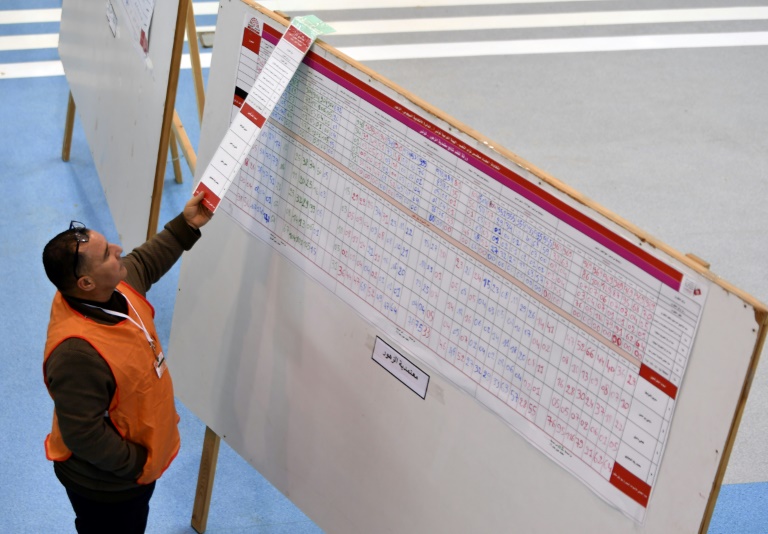
Tunisia plunged into political uncertainty Sunday as its main opposition alliance called on President Kais Saied to “leave immediately”, a day after voters overwhelming snubbed elections for a neutered parliament.

That comes with Saied’s government negotiating a nearly $2-billion package to bail out the North African country’s crippled public finances.

Ahmed Nejib Chebbi, president of the National Salvation Front alliance, said Saied had “lost all legal legitimacy”.

The electoral board said 8.8 percent of the nine-million-strong electorate had turned out for Saturday’s polls, the culmination of a power grab by Saied in the only democracy to have emerged from the Arab Spring.

An abstention rate of more than 91 percent “shows that very, very few Tunisians support Kais Saied’s approach”, Chebbi told AFP by telephone.

He said the result showed “great popular disavowal” of the process that began when Saied, elected in 2019, seized executive powers last year.

The president in July 2021 sacked the government, froze parliament and surrounded it with military vehicles, following months of political deadlock and economic crisis exacerbated by the coronavirus pandemic.

Saied, a former law professor, followed up by seizing control of the judiciary and pushing through a constitution that consolidated his near-absolute power in a widely boycotted referendum in July.

His moves, a decade after the ouster of dictator Zine El Abidine Ben Ali, have sparked fears of a return to autocracy.

The National Salvation Front, which includes Saied’s nemesis the Islamist-inspired Ennahdha party, boycotted Saturday’s election, saying it was part of a “coup” against Tunisia’s democracy.

“Today the situation is critical. We should agree on a high-ranking judge to oversee immediate presidential elections,” Chebbi said. 

A presidential decree earlier this year gave Saied the power to fire judges, and he sacked 57 of them but an administrative court in August revoked most of those firings.

Chebbi said his bloc would reach out to “all social and political actors” in the coming days.

“Tunisians were shaken yesterday. I hope that will push them towards talking to each other and agreeing on an urgent solution,” Chebbi said.

– ‘Draconian conditions’ –

The ballot for the new 161-seat assembly followed three weeks of barely noticeable campaigning, with few posters in the streets and no serious debate among a public preoccupied with day-to-day economic survival.

Saied’s moves were initially supported by some Tunisians tired of the messy and sometimes corrupt democratic system installed after the revolution.

But almost a year and half on, the country’s economic woes have gone from bad to worse and inflation is higher than Saturday’s voter turnout.

Political analyst Salaheddine Jourchi said Saturday’s “shock” low turnout had left Saied “more isolated, from the elite, the parties and now the people too”.

“This turnout, the lowest ever recorded, shows that the people have no trust” in Saied, he said.

The previous legislature, dominated by Ennahdha, had far-reaching powers in the mixed presidential-parliamentary system enshrined in Tunisia’s post-revolution constitution.

But the new chamber “won’t be able to appoint a government or censure it, except under draconian conditions that are almost impossible to meet,” according to political scientist Hamadi Redissi.

Candidates were required to stand as individuals, in a system that neuters political parties.

Hamza Meddeb, a fellow at the Carnegie Middle East Center, said the election was a “formality to complete the political system imposed by Kais Saied and concentrate power in his hands”.

Spielberg regrets 'Jaws' impact on shark population

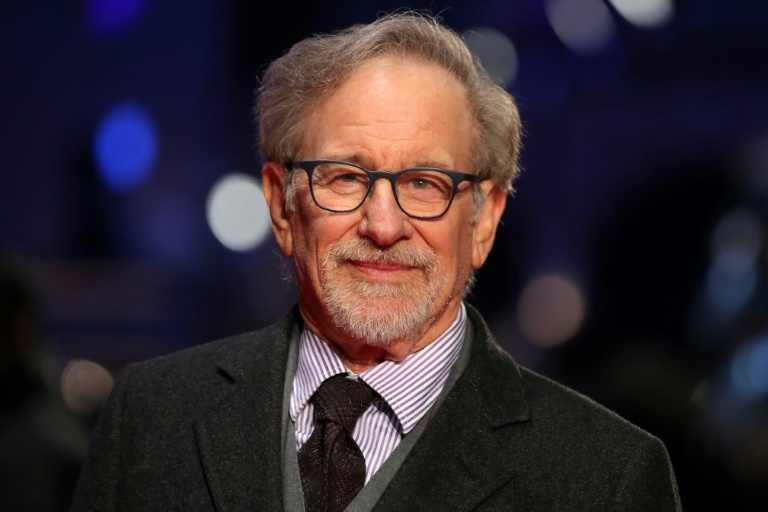
Film-maker Steven Spielberg has said he truly regrets the “decimation of the shark population” following the success of his 1975 film “Jaws”.

Spielberg’s Oscar-winning thriller told the story of a man-eating great white shark that attacked a US seaside town, prompting a rise in sports fishing across America.

“I truly and to this day regret the decimation of the shark population because of the book and the film. I really, truly regret that,” Spielberg, 75, told BBC Radio’s Desert Island Discs programme.

According to a study in Nature last year, the world’s population of oceanic sharks has fallen by 71 percent since the 1970s due to overfishing.

The Shark Conservation Fund, meanwhile, says 36 percent of the world’s 1,250 shark and ray species are currently threatened with extinction.

Researchers have blamed films such as “Jaws” for playing a role in the public’s perception of sharks, driving support for killing them.

Others, however, argue that this attributes too much significance to the influence of Hollywood.

Spielberg, who is also known for Hollywood blockbusters including ET, Indiana Jones and Jurassic Park, chose the 10 records he would take if he was stranded on a desert island in the Sunday broadcast.

– ‘It was a tightrope’ –

Asked by presenter Lauren Laverne how he felt about having real sharks circling his desert island, he said: “That’s one of the things I still fear.

“Not to get eaten by a shark, but that sharks are somehow mad at me for the feeding frenzy of crazy sports fishermen that happened after 1975.”

Spielberg also discussed his successful directing career, including his latest project — semi-autobiographical film “The Fabelmans”.

Spielberg’s latest film tells the mostly true story of his own childhood and introduction to film-making in post-war America.

The film, starring Paul Dano and Michelle Williams, has already received wide critical acclaim, picking up top nods at both the 2023 Golden Globes and Critics Choice Awards.

Discussing the making of the film, Spielberg admitted he had initially thought the project would be the “most self indulgent thing I’ve ever asked people to accompany me through”.

Describing it as “$40 million of therapy”, he said: “I didn’t know really what I was doing, except I was answering a need I had.

“Being an orphan, or recently orphaned by the loss of both parents, to recapture some of those memories in some way that wouldn’t seem too indulgent to actors I really respected.

“So it was a tightrope for a while.”

France slams Israel's expulsion of French-Palestinian lawyer

French-Palestinian human rights lawyer Salah Hamouri, held without charge in Israeli prisons since March accused of security offences, arrived in Paris on Sunday following his expulsion from Israel condemned by Paris.

Hamouri, 37, had been held in Israel under a controversial practice known as administrative detention, which allows suspects to be detained for renewable periods of up to six months.

He arrived at the French capital’s Charles de Gaulle airport on Sunday morning, an AFP correspondent saw, the culmination of a lengthy judicial saga after his deportation.

“I have changed location but the fight continues,” an emotional Hamouri said at the airport, where he was welcomed by his wife Elsa, politicians, NGO representatives and supporters of the Palestinian cause. 

“I have an enormous responsibility to my cause and people. We can’t abandon Palestine. Resistance is our right.”

Israel’s interior ministry earlier on Sunday announced the deportation following Interior Minister Ayelet Shaked’s decision to withdraw his residency status.

“We condemn today the Israeli authorities’ decision, against the law, to expel Salah Hamouri to France,” the French foreign ministry said in a statement.

An Israeli military court sentenced Hamouri, who holds French citizenship, to administrative detention in March, accusing him of being a member of the Popular Front for the Liberation of Palestine (PFLP), and said he “endangers security in the region”.

Israel, the United States and the European Union consider the PFLP a “terrorist group”. It has been implicated in several deadly attacks on Israelis.

Hamouri denies links to the PFLP.

– ‘Illegal’ deportation –

The French foreign ministry said Paris had been “fully mobilised, including at the highest level of the state”, to enable Hamouri to defend his rights, benefit from all possible assistance and lead a normal life in his native east Jerusalem.

“France also took several steps to communicate to the Israeli authorities in the clearest way its opposition to this expulsion of a Palestinian resident of east Jerusalem, an occupied territory under the Fourth Geneva Convention,” it added.

“It’s a happy day for a family reunited but for the Palestinian people, it’s a sad day,” Amnesty International’s France chief, Jean-Claude Samouiller, told AFP.

He described the expulsion as a “crime of apartheid”.

Supporters said Hamouri’s deportation from his birthplace by an “occupying power” was illegal.

Amnesty International and French NGOs said Hamouri’s deportation aimed to hinder his human rights work and was part of Israel’s “long-term political objective to diminish the Palestinian population” of annexed east Jerusalem, which Palestinians want as the capital of a future state.

Hamouri has been arrested and jailed by Israeli authorities on several occasions, including in 2005.

Following that arrest he was tried and convicted by an Israeli court on charges of plotting to assassinate Ovadia Yosef, a prominent rabbi and spiritual leader of the ultra-Orthodox Shas political party.

Hamouri was released in December 2011 as part of a prisoner swap.

He has always maintained his innocence.

Born in east Jerusalem, Hamouri does not have Israeli nationality, but he held a residency permit that Israeli authorities revoked. 

“We didn’t think it was possible to deport somebody from his birthplace,” Hamouri’s mother Denise said earlier.

Israel has occupied the West Bank and east Jerusalem since the 1967 Six-Day War.

Last month, he was informed he would be deported, but the expulsion was delayed as his lawyers contested the case.

– ‘A great achievement’ –

Earlier this month, Israeli authorities confirmed the revocation of his residency, paving the way for Hamouri’s imminent expulsion despite a new administrative detention hearing scheduled for January 1.

“It is a great achievement to have been able to cause, just before the end of my term, his expulsion,” Interior Minister Shaked said on Sunday. 

Benjamin Netanyahu, winner of the November 1 legislative elections, is expected to form a new Israeli government with allies from ultra-Orthodox and far-right parties.

Hamouri worked for the prisoner support group Addameer. In November 2021 it was among six Palestinian civil society groups that Israel’s army said could no longer operate legally in the West Bank, after Defence Minister Benny Gantz said they were collaborating with the PFLP.

In April Hamouri, along with rights groups, filed a complaint in France against Israeli surveillance firm NSO Group for having “illegally infiltrated” his mobile phone with the spyware Pegasus.

He is one of several Palestinian activists whose phones were hacked using the Pegasus malware, according to a report in November by human rights groups.

Putin's invasion of Ukraine opened 'gates of hell': Anglican leader

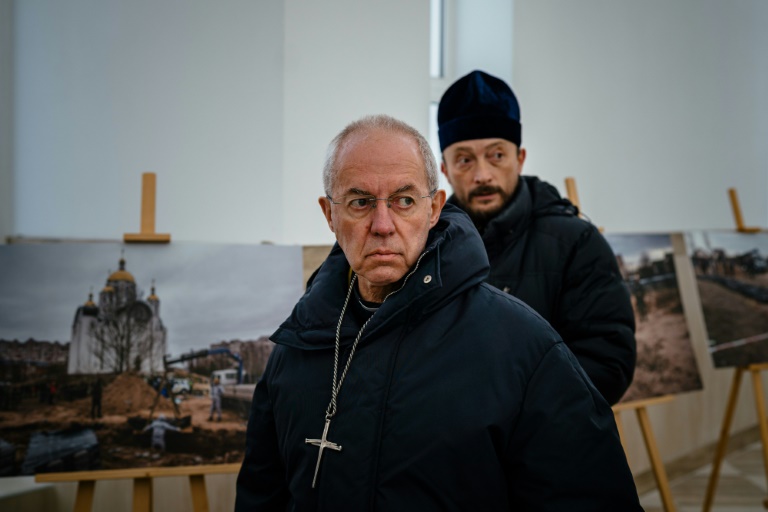
Archbishop of Canterbury Justin Welby on Sunday said Russia’s invasion of Ukraine had “opened the gates of hell” unleashing “every evil” force worldwide from murder and rape in occupied territory to famine and debt in Africa and Europe.

Welby, the highest-ranking cleric in the worldwide Anglican communion, travelled to Ukraine late last month to meet church leaders and local Christians as well as those displaced by the conflict.

He said he had been struck by the “size of the mass graves in Bucha, the photos of what had been done to the people there, the rape, the massacres, the torture by the occupying Russian forces”.

And he said the repercussions of the invasion were also being felt far beyond Ukraine’s borders.

“Effectively we’re in the same struggle at one remove. When Ukraine was invaded at the decision of President (Vladimir) Putin, the gates of hell were opened and every evil force came out across the world,” he told BBC television.

“I was in Mozambique the week before I was in Ukraine where there is famine all the way up the East African coast,” he said. 

“There is inflation… there’s an energy crisis, there’s suffering, there’s shortages of drugs, everything evil has been unleashed and until there is withdrawal and ceasefire we can’t make progress on reconciliation,” he added.

In the UK, he said, rising food and fuel prices at least partly driven by the conflict had resulted in a 400-percent rise in the past 18 months in people seeking help from food banks.

“We are seeing debt rising, pressures on families just at all sorts of levels,” he added.

Welby has been publicly critical of Russia’s war on Ukraine, calling its invasion in February “an act of great evil”.

Visiting Mozambique the week before his Ukraine trip he travelled to the jihadist-hit Cabo Delgado region where he met survivors of the insurgency there.

Earlier this month, the US committed another $2.5 billion in food assistance to Africa, pledging to help the continent cope with rising prices blamed in part on Russia’s invasion of breadbasket Ukraine.

The Horn of Africa has been especially hard hit after successive failed rainy seasons, with the United Nations saying that aid has staved off full-fledged famine in Somalia.

Voting for S.Africa's ruling party leader to get underway

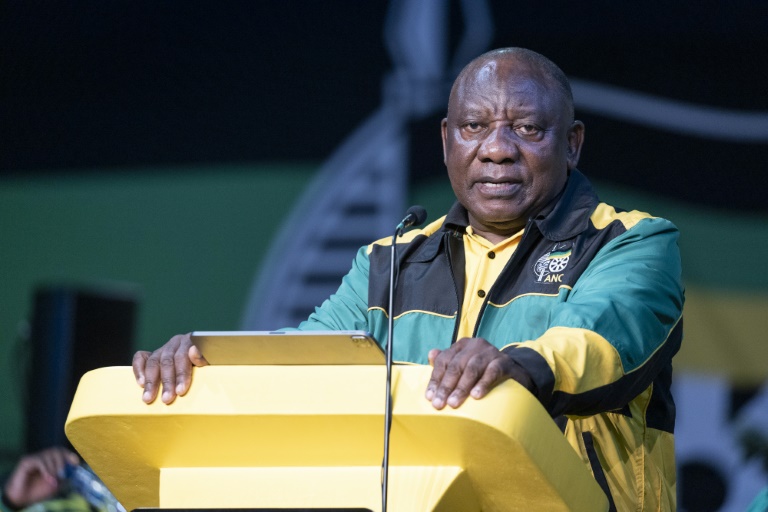
Voting to elect a new leader of South Africa’s ruling party was to get underway on Sunday, with President Cyril Ramaphosa squaring off against his former health minister Zweli Mkhize.

Ramaphosa, 70, is expected to be confirmed in the role that opens the way to being head of state, despite a damaging cash-heist scandal and vociferous internal opposition.

But observers said the race looked closer than expected, with local media reporting party delegates from several provinces had shifted support to Mkhize. 

“We’re seeing Ramaphosa moving from enjoying a comfortable lead, to having Mkhize right behind him. It’s up in the air right now,” independent political analyst Pearl Mncube told AFP. 

More than 4,000 delegates are to cast their ballot to appoint seven top leadership roles, including party president, deputy president, chair and secretary general, at a conference near Johannesburg.

After 28 years in power, the African National Congress (ANC), which was shaped by Nelson Mandela to spearhead the struggle to end apartheid, faces deep rifts and declining support.

Its image has been stained by corruption, cronyism, nepotism and a lacklustre economic record.

Some of those divisions played out in the open at the conference that opened on Friday, with Ramaphosa heckled by some delegates before his opening address.

Much of the disturbance came from supporters of corruption-tainted former president Jacob Zuma who was forced out by Ramaphosa.

“(Ramaphosa) is going to win, we know that. But because of Phala Phala, he must step aside,” said one of the disruptive delegates, Thami Chamane, 30, referring to the farm at the centre of the scandal engulfing the president. 

– Dented image –

Chants, shouting and celebratory dances also marked the process to confirm all nominations in the early morning, with senior party officials repeatedly calling for order.

Some delegates rolled their hands as a sign for “change” while others made the number two with their fingers in support of a second term for Ramaphosa.

Mkhize, hails from the same province as Zuma, the southeastern KwaZulu-Natal, which has the largest number of party delegates.

A 66-year-old doctor by training, he is among those whose image has been tainted by corruption allegations that he denies. 

As health minister, he was lauded for his handling of the coronavirus pandemic, but his two-year spell ended abruptly when Ramaphosa replaced him in August 2021.

He was placed on special leave after investigators opened a probe into a 150-million-rand ($10.4-million) contract for a Covid awareness campaign.

Ramaphosa’s clean-hands image has also been dented by accusations he concealed a huge cash burglary at his farm in 2020, rather than report it to the authorities.

Portraying himself as a graft-busting champion, he took control of the ANC in 2017 after his then boss Zuma became mired in corruption allegations.

Ramaphosa, who denies any wrongdoing, won a reprieve ahead of the conference when the ANC used its majority in parliament to block a possible impeachment inquiry.

An ex-trade unionist, he fronted the historic negotiations to end apartheid in 1994 and helped draft the constitution — considered to be one of Africa’s most progressive charters.

Paul Mashatile, 61, the current party treasurer and acting secretary general, is seen as the leading contender for the role of deputy president. 

EU reaches deal on major carbon market reform

EU member states and parliamentarians on Sunday announced an agreement for a major reform to the bloc’s carbon market, the central plank of its ambitions to reduce emissions and invest in climate-friendly technologies.

The deal aims to accelerate emissions cuts, phase out free allowances to industries and targets fuel emissions from the building and road transport sectors, according to a European Parliament statement.

The EU Emissions Trading System (ETS) allows electricity producers and industries with high energy demands such as steel and cement to purchase “free allowances” to cover their carbon emissions under a “polluter pays” principle.

The quotas are designed to decrease over time to encourage them to emit less and invest in greener technologies as part of the European Union’s ultimate aim of achieving carbon neutrality.

Negotiators representing member states and the parliament had spent more than 24 hours in intense talks before reaching an agreement on Saturday night that widens the scope of the carbon market.

The deal means emissions in the ETS sectors are to be cut by 62 percent by 2030 based on 2005 levels, up from a previous goal of 43 percent. Concerned industries must cut their emissions by that amount.

The agreement also seeks to accelerate the timetable for phasing out the free allowances, with 48.5 percent phased out by 2030 and a complete removal by 2034, a schedule at the centre of fierce debates between MEPs and member states.

The carbon market will be progressively extended to the maritime sector and intra-European flights. Waste incineration sites will be included from 2028, depending on a favourable report by the commission.

Climate Action Network, a coalition of NGOs, criticised the agreement, saying it would allow major polluters to continue to receive billions of euros in free quotas for another decade while households would receive little.

– ‘Ambitious carbon price’ –

French MEP Pascal Canfin, president of the European Parliament’s environment committee, said the carbon price for industries affected by the ETS would be around 100 euros per tonne.

“No other continent has such an ambitious carbon price,” he tweeted.

A “carbon border tax”, which imposes environmental standards on imports into the bloc based on the carbon emissions linked to their production, will offset the reduction of free allowances and allow industries to compete with more polluting non-EU rivals.

The agreement also aims to make households pay for emissions linked to fuel and gas heating from 2027, but the price will be capped until 2030.

The European Commission had proposed a second carbon market targeting building heating and road fuels, but the plan raised concerns as households grapple with soaring energy prices exacerbated by Russia’s invasion of Ukraine.

The second carbon market would have obliged suppliers of fuel and gas to buy quotas to cover their emissions, but MEPs argued the measure should be limited to offices and large vehicles.

If energy prices continue to spiral, the application of this part of the agreement will be delayed by a year. 

Funds from this second market will go to a “Social Climate Fund” designed to help vulnerable households and businesses weather the energy price crisis.

– ‘Moment of truth’ –

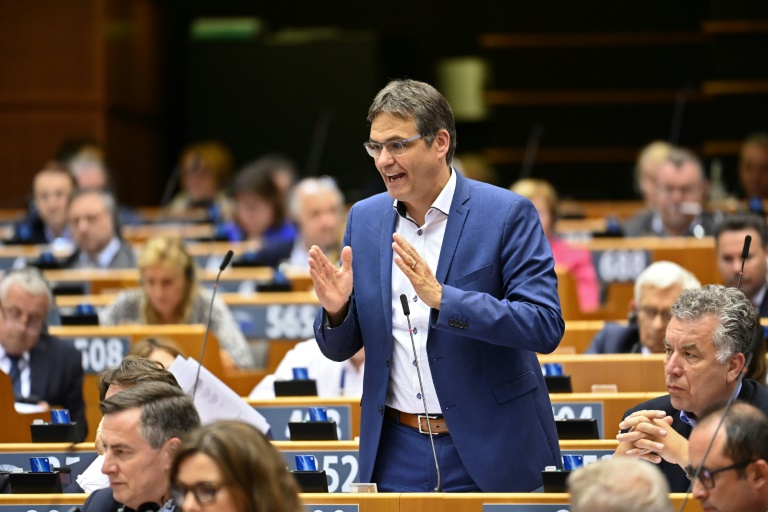
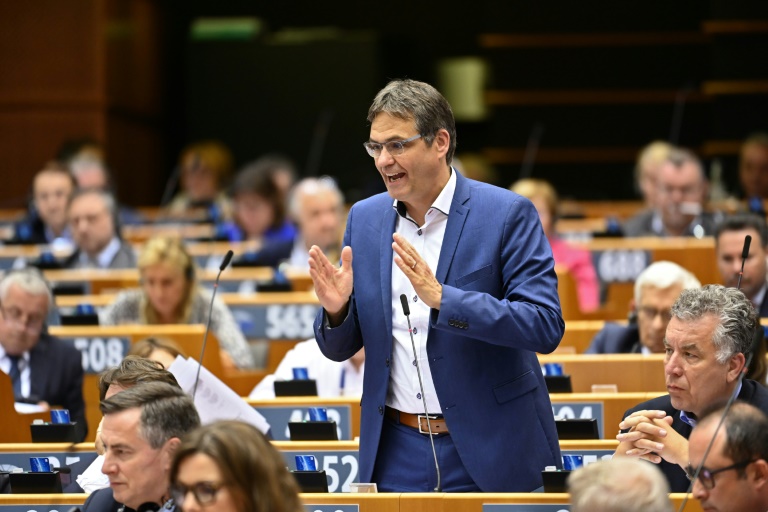
“This deal will provide a huge contribution towards fighting climate change at low costs,” European Parliament rapporteur Peter Liese said in the statement.

“It will give breathing space for citizens and industry in difficult times and provide a clear signal to European industry that it pays off to invest in green technologies.”

The conservative German MEP added the bloc would have until 2026 to invest in green sources and energy efficiency, after which it would be “the moment of truth: we must reduce our emissions by then, or pay dear”.

The commission first proposed the carbon market reform in July 2021 as part of plans to reduce the bloc’s greenhouse gas emissions by at least 55 percent by 2030 compared with 1990 levels.

The ETS was created in 2005 and applies to around 40 percent of EU emissions.

EU reaches deal on major carbon market reform

EU member states and parliamentarians on Sunday announced an agreement for a major reform to the bloc’s carbon market, the central plank of its ambitions to reduce emissions and invest in climate-friendly technologies.

The deal aims to accelerate emissions cuts, phase out free allowances to industries and targets fuel emissions from the building and road transport sectors, according to a European Parliament statement.

The EU Emissions Trading System (ETS) allows electricity producers and industries with high energy demands such as steel and cement to purchase “free allowances” to cover their carbon emissions under a “polluter pays” principle.

The quotas are designed to decrease over time to encourage them to emit less and invest in greener technologies as part of the European Union’s ultimate aim of achieving carbon neutrality.

Negotiators representing member states and the parliament had spent more than 24 hours in intense talks before reaching an agreement on Saturday night that widens the scope of the carbon market.

The deal means emissions in the ETS sectors are to be cut by 62 percent by 2030 based on 2005 levels, up from a previous goal of 43 percent. Concerned industries must cut their emissions by that amount.

The agreement also seeks to accelerate the timetable for phasing out the free allowances, with 48.5 percent phased out by 2030 and a complete removal by 2034, a schedule at the centre of fierce debates between MEPs and member states.

The carbon market will be progressively extended to the maritime sector and intra-European flights. Waste incineration sites will be included from 2028, depending on a favourable report by the commission.

Climate Action Network, a coalition of NGOs, criticised the agreement, saying it would allow major polluters to continue to receive billions of euros in free quotas for another decade while households would receive little.

– ‘Ambitious carbon price’ –

French MEP Pascal Canfin, president of the European Parliament’s environment committee, said the carbon price for industries affected by the ETS would be around 100 euros per tonne.

“No other continent has such an ambitious carbon price,” he tweeted.

A “carbon border tax”, which imposes environmental standards on imports into the bloc based on the carbon emissions linked to their production, will offset the reduction of free allowances and allow industries to compete with more polluting non-EU rivals.

The agreement also aims to make households pay for emissions linked to fuel and gas heating from 2027, but the price will be capped until 2030.

The European Commission had proposed a second carbon market targeting building heating and road fuels, but the plan raised concerns as households grapple with soaring energy prices exacerbated by Russia’s invasion of Ukraine.

The second carbon market would have obliged suppliers of fuel and gas to buy quotas to cover their emissions, but MEPs argued the measure should be limited to offices and large vehicles.

If energy prices continue to spiral, the application of this part of the agreement will be delayed by a year. 

Funds from this second market will go to a “Social Climate Fund” designed to help vulnerable households and businesses weather the energy price crisis.

– ‘Moment of truth’ –

“This deal will provide a huge contribution towards fighting climate change at low costs,” European Parliament rapporteur Peter Liese said in the statement.

“It will give breathing space for citizens and industry in difficult times and provide a clear signal to European industry that it pays off to invest in green technologies.”

The conservative German MEP added the bloc would have until 2026 to invest in green sources and energy efficiency, after which it would be “the moment of truth: we must reduce our emissions by then, or pay dear”.

The commission first proposed the carbon market reform in July 2021 as part of plans to reduce the bloc’s greenhouse gas emissions by at least 55 percent by 2030 compared with 1990 levels.

The ETS was created in 2005 and applies to around 40 percent of EU emissions.

Close Bitnami banner
Bitnami