World

Tense Fiji election tied with all votes counted

Final results showed Fiji’s tumultuous general election deadlocked Sunday, with two rival ex-coup leaders failing to win a clear majority of seats in parliament.

Incumbent Prime Minister Frank Bainimarama’s Fiji First party and a coalition led by Sitiveni Rabuka were both projected to secure 26 seats in the 55-seat legislature, according to a Fijian Election Office tally posted online.

The prime minister and the next government will now likely be determined through party horsetrading and what could be a drawn-out negotiation process.

The election holds significance beyond Fiji — Bainimarama, 68, has been close with Beijing, while Rabuka, 74, has signalled his desire to loosen Fiji’s ties to China.

Fiji has been upended by four coups in the past 35 years, and many on the streets of its capital, Suva, had hoped in vain for a smooth election.

The cliffhanger result caps a fractious campaign marked by allegations of fraud and calls for the military to intervene.

After polls closed Wednesday, opposition leader and former rugby international Rabuka claimed “anomalies” in the count and asked the country’s powerful military to step in.

He was then hauled in for questioning by detectives. On his release, he told AFP it was part of a government effort to intimidate him.

“The way this government has operated, we’ve been talking about a climate of fear. This is how they instil that fear,” he said.

The two frontrunners are already courting the small Social Democratic party, which holds three seats and the balance of power.

It is led by deeply Christian businessman Viliame Gavoka, who was arrested in 2010 for sending tourism operators emails about a Fijian pastor falsely prophesying an impending tsunami.

Land rights for Indigenous Fijians and free tertiary education are some of the Social Democratic party’s key policies.

A Social Democratic official said the party was locked in discussions with Bainimarama’s Fiji First party when AFP visited the campaign headquarters on Sunday morning.

Rabuka’s People’s Alliance kicked off negotiations late Saturday night — a major sticking point being whether Rabuka would serve as prime minister.

Gavoka has fallen out with Bainimarama in the past, but has a particularly tense relationship with Rabuka, who he replaced as leader of the Social Democrats.

– ‘Rambo’ and the commander –

Fiji’s polls ran into trouble early Thursday morning when what the election officials called a technical “anomaly” knocked results offline for four hours.

By Friday, six opposition leaders including Gavoka were calling for counting to be stopped pending an independent “forensic audit”.

Rabuka, a two-time coup leader and former Commonwealth Games shot putter nicknamed “Rambo”, was then called in for police questioning late Friday night.

Military commander Jone Kalouniwai rebuffed Rabuka’s plea.

Election supervisor Mohammed Saneem has hit back at claims of fraud: “This is serious ladies and gentlemen. Step up with the evidence.”

Ex-navy commodore Bainimarama legitimised his government through election wins in 2014 and 2018 — but his majority has shrunk each time.

With just under 43 percent of the vote this time round, his tally has again dropped. Rabuka’s coalition won almost 45 percent of the vote.  

Fiji spans more than 300 tropical islands but has a population of just shy of one million people.

Still, it is one of the South Pacific’s major players and a powerful voice in the global debate on climate change.

Already threatened by rising sea levels, Fiji was the first country to ratify the Paris climate agreement in 2016.
Ukraine races to restore power after Russian missiles batter grid

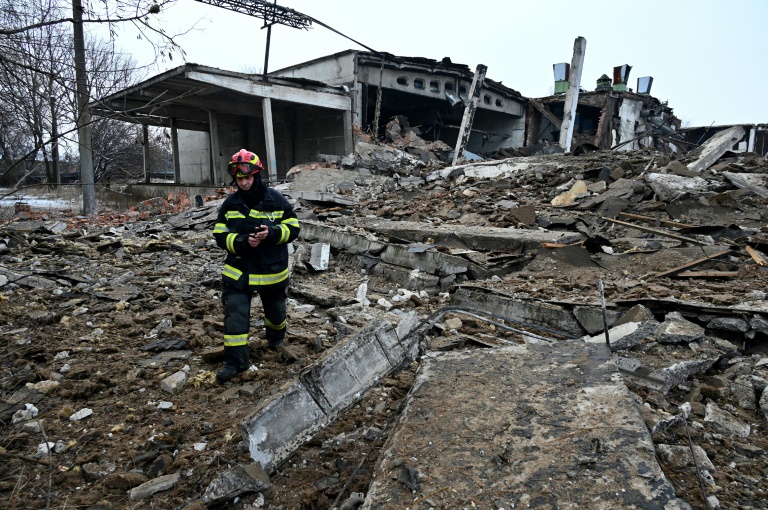
Ukraine worked Saturday to restore electricity and water supplies after Russia’s latest wave of attacks pitched multiple cities into darkness and forced people to endure sub-zero temperatures without heating or running water.

The volley of missiles unleashed Friday came as President Vladimir Putin held extensive meetings with the military top brass overseeing Russia’s invasion of Ukraine, where Moscow has stepped up bombardments.

Ukrainian President Volodymyr Zelensky said late Saturday electricity had been restored to almost six million Ukrainians, but noted ongoing problems with heat and water supplies, and “large-scale outages” in many regions.

“The main thing today is energy,” he said in his nightly address. “There is still a lot of work to do to stabilise the system.”

In the capital Kyiv, the metro had stopped running so that people wrapped in winter coats could take shelter at underground stations, but Mayor Vitali Klitschko said Saturday the service had resumed. 

Water supply had also been restored and 75 percent of the city’s population had their heating supply back.

In the eastern city of Kharkiv, power had also been fully returned, regional governor Oleg Sinegubov said on Saturday, after the strikes had left Ukraine’s second city without electricity.

Ukraine’s national energy provider Ukrenergo had imposed emergency blackouts in response to the strikes, warning the extent of the damage in the north, south and centre of the country meant it could take longer to restore supplies than after previous attacks.

The country’s energy system “continues to recover”, it said on Saturday.

– ‘Barbaric’ attacks –

In Russia, Putin sought proposals from his military commanders on how to proceed with the Ukraine offensive, according to the Kremlin.

The Kremlin released footage Friday of Putin presiding over a round-table meeting with Defence Minister Sergei Shoigu and Chief of General Staff Valery Gerasimov among other top brass.

After a series of humiliating battlefield defeats, Russia has since October pursued an aerial campaign against what Moscow says are military-linked facilities.

But France and the European Union have said the suffering inflicted on freezing civilians constitutes war crimes, with the bloc’s foreign policy chief calling the bombings “barbaric”.

Russia’s defence ministry said Saturday the strikes had targeted Ukraine’s military and energy facilities, while also disrupting “the transfer of weapons and ammunition of foreign production”.

“All assigned targets were hit,” the ministry said in its daily briefing.

Russia fired 74 — mainly cruise — missiles Friday, 60 of which were shot down by anti-aircraft defences, according to the Ukrainian army.

Ukraine’s military command said in a statement Saturday: “The enemy continues to focus its efforts on conducting offensive actions in the Bakhmut and Avdiivka directions”, referring to two cities in the eastern Donetsk region.

Russian troops were also trying to regain lost ground around Lymanskyi, in the south, the statement added.

Zelensky said the strikes hit power and water supplies in Kyiv and 14 regions.

Regional officials said their air defence forces had shot down 37 out of 40 missiles.

In the central city of Kryvyi Rig, where Zelensky was born, Friday’s air strikes hit a residential building.

The missiles killed a 64-year-old woman and a young couple with a son, governor Valentyn Reznichenko said Saturday, wounding 13 others.

In the south, fresh Russian shelling in Kherson, recently recaptured by Ukraine, killed a 36-year-old man and injured a 70-year-old woman, governor Yaroslav Yanushevich said Saturday morning.

A separate strike hit a geriatric centre in the village of Stepanivka just north of Kherson, he added later, but there were no casualties reported.

Kherson has been subjected to persistent Russian shelling since Moscow’s forces retreated in November, and power was cut in the city earlier this week.

– Protracted war –

Moscow has said the strikes on Ukrainian infrastructure are a response to an explosion on the Kerch bridge connecting the Russian mainland to the Crimean peninsula, annexed from Ukraine in 2014.

Ukrainian defence officials said this week that their forces had downed over a dozen Iranian-made attack drones launched at Kyiv, a sign that Western-supplied systems are having an impact.

The country’s military leaders have also warned Moscow is preparing for a major winter offensive, including a fresh attempt to take Kyiv.

Russia meanwhile on Saturday accused Moldova of “political censorship” after it suspended the broadcasting licence of six television channels over accusations of misinformation.

Moldova — which sits on Ukraine’s southwestern border — said on Friday the decision was made because of the “lack of correct information” in their coverage of national events and Russia’s military campaign in Ukraine.

Moscow also responded to the EU’s decision Friday to impose further sanctions, adding restrictions on the export of drone engines to Russia or countries like Iran looking to supply Moscow with weapons.

The new package of “illegitimate unilateral restrictive measures” would not achieve its goal, Russia’s foreign ministry said Saturday.

Ukraine races to restore power after Russian missiles batter grid

Ukraine worked Saturday to restore electricity and water supplies after Russia’s latest wave of attacks pitched multiple cities into darkness and forced people to endure sub-zero temperatures without heating or running water.

The volley of missiles unleashed Friday came as President Vladimir Putin held extensive meetings with the military top brass overseeing Russia’s invasion of Ukraine, where Moscow has stepped up bombardments.

Ukrainian President Volodymyr Zelensky said late Saturday electricity had been restored to almost six million Ukrainians, but noted ongoing problems with heat and water supplies, and “large-scale outages” in many regions.

“The main thing today is energy,” he said in his nightly address. “There is still a lot of work to do to stabilise the system.”

In the capital Kyiv, the metro had stopped running so that people wrapped in winter coats could take shelter at underground stations, but Mayor Vitali Klitschko said Saturday the service had resumed. 

Water supply had also been restored and 75 percent of the city’s population had their heating supply back.

In the eastern city of Kharkiv, power had also been fully returned, regional governor Oleg Sinegubov said on Saturday, after the strikes had left Ukraine’s second city without electricity.

Ukraine’s national energy provider Ukrenergo had imposed emergency blackouts in response to the strikes, warning the extent of the damage in the north, south and centre of the country meant it could take longer to restore supplies than after previous attacks.

The country’s energy system “continues to recover”, it said on Saturday.

– ‘Barbaric’ attacks –

In Russia, Putin sought proposals from his military commanders on how to proceed with the Ukraine offensive, according to the Kremlin.

The Kremlin released footage Friday of Putin presiding over a round-table meeting with Defence Minister Sergei Shoigu and Chief of General Staff Valery Gerasimov among other top brass.

After a series of humiliating battlefield defeats, Russia has since October pursued an aerial campaign against what Moscow says are military-linked facilities.

But France and the European Union have said the suffering inflicted on freezing civilians constitutes war crimes, with the bloc’s foreign policy chief calling the bombings “barbaric”.

Russia’s defence ministry said Saturday the strikes had targeted Ukraine’s military and energy facilities, while also disrupting “the transfer of weapons and ammunition of foreign production”.

“All assigned targets were hit,” the ministry said in its daily briefing.

Russia fired 74 — mainly cruise — missiles Friday, 60 of which were shot down by anti-aircraft defences, according to the Ukrainian army.

Ukraine’s military command said in a statement Saturday: “The enemy continues to focus its efforts on conducting offensive actions in the Bakhmut and Avdiivka directions”, referring to two cities in the eastern Donetsk region.

Russian troops were also trying to regain lost ground around Lymanskyi, in the south, the statement added.

Zelensky said the strikes hit power and water supplies in Kyiv and 14 regions.

Regional officials said their air defence forces had shot down 37 out of 40 missiles.

In the central city of Kryvyi Rig, where Zelensky was born, Friday’s air strikes hit a residential building.

The missiles killed a 64-year-old woman and a young couple with a son, governor Valentyn Reznichenko said Saturday, wounding 13 others.

In the south, fresh Russian shelling in Kherson, recently recaptured by Ukraine, killed a 36-year-old man and injured a 70-year-old woman, governor Yaroslav Yanushevich said Saturday morning.

A separate strike hit a geriatric centre in the village of Stepanivka just north of Kherson, he added later, but there were no casualties reported.

Kherson has been subjected to persistent Russian shelling since Moscow’s forces retreated in November, and power was cut in the city earlier this week.

– Protracted war –

Moscow has said the strikes on Ukrainian infrastructure are a response to an explosion on the Kerch bridge connecting the Russian mainland to the Crimean peninsula, annexed from Ukraine in 2014.

Ukrainian defence officials said this week that their forces had downed over a dozen Iranian-made attack drones launched at Kyiv, a sign that Western-supplied systems are having an impact.

The country’s military leaders have also warned Moscow is preparing for a major winter offensive, including a fresh attempt to take Kyiv.

Russia meanwhile on Saturday accused Moldova of “political censorship” after it suspended the broadcasting licence of six television channels over accusations of misinformation.

Moldova — which sits on Ukraine’s southwestern border — said on Friday the decision was made because of the “lack of correct information” in their coverage of national events and Russia’s military campaign in Ukraine.

Moscow also responded to the EU’s decision Friday to impose further sanctions, adding restrictions on the export of drone engines to Russia or countries like Iran looking to supply Moscow with weapons.

The new package of “illegitimate unilateral restrictive measures” would not achieve its goal, Russia’s foreign ministry said Saturday.

China set to offer compromise to save summit nature accord

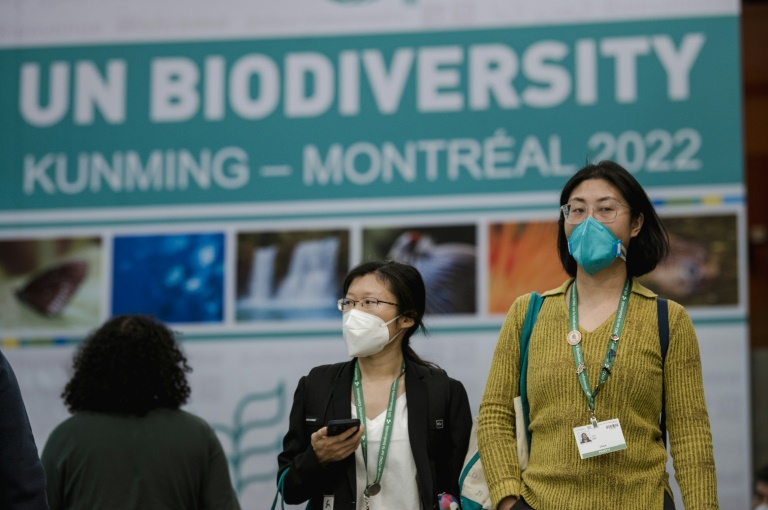
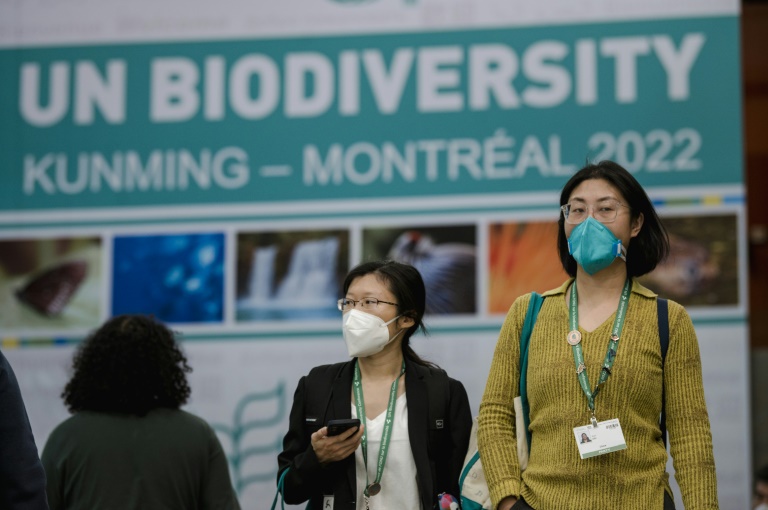
China, which chairs a high-stakes UN biodiversity summit in Montreal, is due to present a long-awaited compromise text on Sunday in an attempt to seal the “peace pact with nature” that the planet sorely needs.

More than 10 days of fraught biodiversity negotiations look to be coming to a head as delegates prepare to wrangle over the compromise draft agreement.

“It is not a perfect document, not a document that will make everyone happy, however it is a document that is based on the efforts of all of us over the last four years,” said China’s Environment Minister Huang Rinqiu.

“It is a document that must be adopted at this meeting that is highly expected by the international community.”

Observers had warned the COP15 conference risked collapse as countries squabbled over how much the rich world should pay to fund the efforts, with developing countries walking out of talks at one point.

But conference leaders turned upbeat Saturday on their chances of securing a deal.

Huang said he was “greatly confident” of a consensus and his Canadian counterpart Steven Guilbeault said “tremendous progress” had been made.

Huang said he would publish a draft agreement at 8:00 am EST (1300 GMT) on Sunday and hear lead delegates’ feedback later in the day.

The negotiations officially run until December 19, but could go longer if needed.

“Now is not the time for small decisions, let’s go big!” tweeted French President Emmanuel Macron.

“Let’s work together to achieve the most ambitious agreement possible. The world is depending on it.”

– Million species threatened –

Delegates are working to roll back the destruction and pollution that threaten an estimated one million plant and animal species with extinction, according to scientists that report to the UN.

The text is meant to be a roadmap for nations through 2030. The last 10-year plan, signed in Aichi, Japan in 2010, did not achieve any of its objectives — a failure blamed widely on its lack of monitoring mechanisms.

Major goals in the draft under discussion include a cornerstone pledge to protect 30 percent of the world’s land and oceans by 2030.

The more than 20 targets also include reducing environmentally destructive farming subsidies, requiring businesses to assess and report on their biodiversity impacts, and tackling the scourge of invasive species.

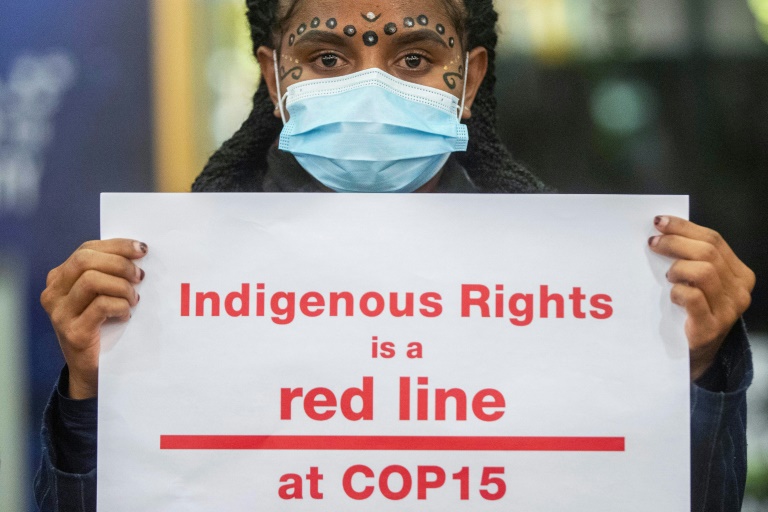
Representatives of Indigenous communities, who safeguard 80 percent of the world’s remaining biodiversity, want their rights to practice stewardship of their lands to be enshrined in the final agreement.

“We are the ones doing the work. We protect biodiversity,” said Valentin Engobo, leader of the Lokolama community in the Congo Basin, in a statement released by Greenpeace. “You won’t replace us. We won’t let you.”

– Money matters –

The issue of how much money the rich countries will send to the developing world, home to most of the world’s biodiversity, has been the biggest sticking point.

Several countries have announced new commitments. The European Union has committed seven billion euros ($7.4 billion) for the period until 2027, double its prior pledge.

But campaigners and developing countries say more is needed — and delegates have not reached agreement on what form the new funding flows should take.

Brazil has proposed flows of $100 billion annually, compared to the roughly $10 billion at present.

“We will be able to specify our financial ambitions once we have seen the text,” France’s Environment Minister Christophe Bechu told AFP on Saturday.

“An agreement on paper without numbers would be worse than no agreement. We need an ambitious agreement that is quantified and with verifiable aims and dates.”

China set to offer compromise to save summit nature accord

China, which chairs a high-stakes UN biodiversity summit in Montreal, is due to present a long-awaited compromise text on Sunday in an attempt to seal the “peace pact with nature” that the planet sorely needs.

More than 10 days of fraught biodiversity negotiations look to be coming to a head as delegates prepare to wrangle over the compromise draft agreement.

“It is not a perfect document, not a document that will make everyone happy, however it is a document that is based on the efforts of all of us over the last four years,” said China’s Environment Minister Huang Rinqiu.

“It is a document that must be adopted at this meeting that is highly expected by the international community.”

Observers had warned the COP15 conference risked collapse as countries squabbled over how much the rich world should pay to fund the efforts, with developing countries walking out of talks at one point.

But conference leaders turned upbeat Saturday on their chances of securing a deal.

Huang said he was “greatly confident” of a consensus and his Canadian counterpart Steven Guilbeault said “tremendous progress” had been made.

Huang said he would publish a draft agreement at 8:00 am EST (1300 GMT) on Sunday and hear lead delegates’ feedback later in the day.

The negotiations officially run until December 19, but could go longer if needed.

“Now is not the time for small decisions, let’s go big!” tweeted French President Emmanuel Macron.

“Let’s work together to achieve the most ambitious agreement possible. The world is depending on it.”

– Million species threatened –

Delegates are working to roll back the destruction and pollution that threaten an estimated one million plant and animal species with extinction, according to scientists that report to the UN.

The text is meant to be a roadmap for nations through 2030. The last 10-year plan, signed in Aichi, Japan in 2010, did not achieve any of its objectives — a failure blamed widely on its lack of monitoring mechanisms.

Major goals in the draft under discussion include a cornerstone pledge to protect 30 percent of the world’s land and oceans by 2030.

The more than 20 targets also include reducing environmentally destructive farming subsidies, requiring businesses to assess and report on their biodiversity impacts, and tackling the scourge of invasive species.

Representatives of Indigenous communities, who safeguard 80 percent of the world’s remaining biodiversity, want their rights to practice stewardship of their lands to be enshrined in the final agreement.

“We are the ones doing the work. We protect biodiversity,” said Valentin Engobo, leader of the Lokolama community in the Congo Basin, in a statement released by Greenpeace. “You won’t replace us. We won’t let you.”

– Money matters –

The issue of how much money the rich countries will send to the developing world, home to most of the world’s biodiversity, has been the biggest sticking point.

Several countries have announced new commitments. The European Union has committed seven billion euros ($7.4 billion) for the period until 2027, double its prior pledge.

But campaigners and developing countries say more is needed — and delegates have not reached agreement on what form the new funding flows should take.

Brazil has proposed flows of $100 billion annually, compared to the roughly $10 billion at present.

“We will be able to specify our financial ambitions once we have seen the text,” France’s Environment Minister Christophe Bechu told AFP on Saturday.

“An agreement on paper without numbers would be worse than no agreement. We need an ambitious agreement that is quantified and with verifiable aims and dates.”

'Be good ancestors,' youth activists tell ministers at UN nature talks

As the world’s environment ministers try to thrash out a new deal for nature, youth activists gathered at a UN summit in Montreal are making it clear that actions taken today will affect generations to come.

Here is what some had to say.

– Prisca Daka –

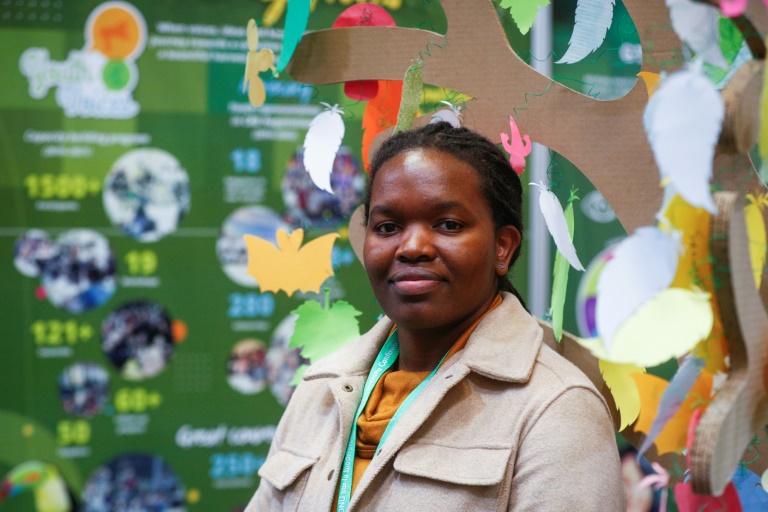
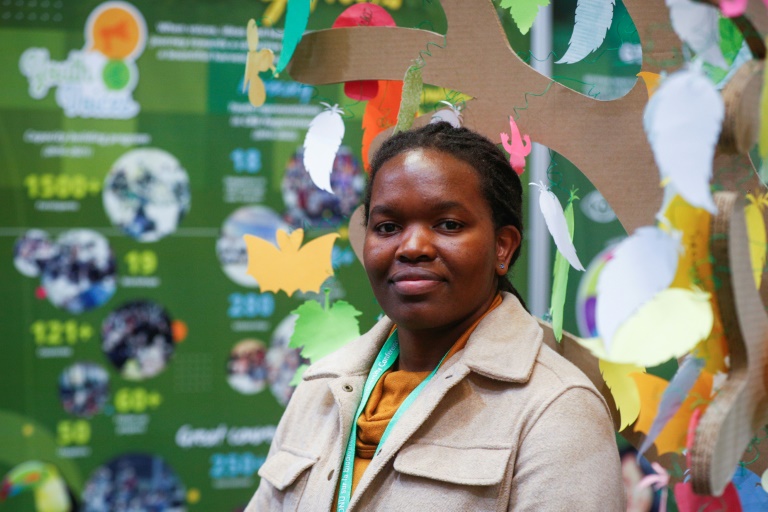
Prisca Daka, a 31-year-old from Zimbabwe now based in the US, is regional coordinator for Global Youth Biodiversity Network (GYBN) Africa. 

She works with local communities to help preserve the Samango monkey, a species that is unique to Zimbabwe but whose habitat is being threatened by deforestation and banana plantations.

Daka has been formally involved in activism since 2017, but says her love of nature began when she was six years old and visited national parks with her family.

“We don’t talk much about biodiversity, which is the web of life — everything we see, the air we breathe, the water we drink,” she said. 

“Extinction is forever, so as young people we’re bringing attention to the biodiversity crisis and showing what the future could look like if we do not act now.”

She added she felt proud that this COP has more African youth than ever before, something she hopes will “become the norm.”

– Eshadi Mendis –

As a member of GYBN in Sri Lanka, Eshadi Mendis, 30, focuses on beach and ocean clean-up projects in her island nation.

“Because of the way Sri Lanka is situated, all the inland pollution is going to the sea. So we need to find ways to clean it and stop it,” she says.

Unfortunately, she adds, awareness about the COP15 summit is limited in her home country, something Mendis is working hard to change.

She also thinks it’s important for the United Nations to stop treating climate and biodiversity as distinct issues requiring distinct summits, with the latter receiving less attention as a result.

“They’re very interconnected,” she says. Her take-home message, though, is to prioritize young people in the negotiation process.

“Our word should be considered… older people should know that they should be good ancestors for us so when they leave this Earth, we have something to utilize as well.”

– Flavia Gonzales –

Flavia Gonzales studied biology to understand “how I could save nature”. Along the way, she realized that the best way was to make people aware of their own relationship with the environment.

The Bolivian activist, who wears her hair in colored braids, was moved as a teenager by the mistreatment of animals in her hometown La Paz. But “little by little you see that not only animals are being mistreated, but all of nature is being mistreated.”

Now 24 years old, she has dedicated herself to educating people about the environment, empowering girls and young people about their rights.

Gonzales was one of a few dozen youths who painted their faces and took part in a protest outside the Montreal Convention Centre on Friday, demanding policymakers reach a deal that “achieves the objectives that can help us improve as a society.”

“If we don’t, what’s the point?”

'Be good ancestors,' youth activists tell ministers at UN nature talks

As the world’s environment ministers try to thrash out a new deal for nature, youth activists gathered at a UN summit in Montreal are making it clear that actions taken today will affect generations to come.

Here is what some had to say.

– Prisca Daka –

Prisca Daka, a 31-year-old from Zimbabwe now based in the US, is regional coordinator for Global Youth Biodiversity Network (GYBN) Africa. 

She works with local communities to help preserve the Samango monkey, a species that is unique to Zimbabwe but whose habitat is being threatened by deforestation and banana plantations.

Daka has been formally involved in activism since 2017, but says her love of nature began when she was six years old and visited national parks with her family.

“We don’t talk much about biodiversity, which is the web of life — everything we see, the air we breathe, the water we drink,” she said. 

“Extinction is forever, so as young people we’re bringing attention to the biodiversity crisis and showing what the future could look like if we do not act now.”

She added she felt proud that this COP has more African youth than ever before, something she hopes will “become the norm.”

– Eshadi Mendis –

As a member of GYBN in Sri Lanka, Eshadi Mendis, 30, focuses on beach and ocean clean-up projects in her island nation.

“Because of the way Sri Lanka is situated, all the inland pollution is going to the sea. So we need to find ways to clean it and stop it,” she says.

Unfortunately, she adds, awareness about the COP15 summit is limited in her home country, something Mendis is working hard to change.

She also thinks it’s important for the United Nations to stop treating climate and biodiversity as distinct issues requiring distinct summits, with the latter receiving less attention as a result.

“They’re very interconnected,” she says. Her take-home message, though, is to prioritize young people in the negotiation process.

“Our word should be considered… older people should know that they should be good ancestors for us so when they leave this Earth, we have something to utilize as well.”

– Flavia Gonzales –

Flavia Gonzales studied biology to understand “how I could save nature”. Along the way, she realized that the best way was to make people aware of their own relationship with the environment.

The Bolivian activist, who wears her hair in colored braids, was moved as a teenager by the mistreatment of animals in her hometown La Paz. But “little by little you see that not only animals are being mistreated, but all of nature is being mistreated.”

Now 24 years old, she has dedicated herself to educating people about the environment, empowering girls and young people about their rights.

Gonzales was one of a few dozen youths who painted their faces and took part in a protest outside the Montreal Convention Centre on Friday, demanding policymakers reach a deal that “achieves the objectives that can help us improve as a society.”

“If we don’t, what’s the point?”

Messi's Argentina in World Cup final showdown with France

Argentina face defending champions France in the World Cup final on Sunday with Lionel Messi seeking to win the honour that has so far eluded one of football’s greatest ever players.

In his way stands the prolific Kylian Mbappe and a France team aiming to win back-to-back World Cups for the first time since Pele’s Brazil in 1958 and 1962.

Messi, 35, has collected seven Ballon d’Or awards for the best player in the world, but the last time he reached the World Cup final it ended in the bitter disappointment of defeat to Germany in 2014.

It is Messi’s quest that will focus the world’s attention on the 89,000-capacity Lusail Stadium in Doha, the most spectacular of the remarkable venues that the desert state have erected to host the tournament, for the 1500 GMT kickoff.

“I am well aware that Argentina will have a lot of fans behind them,” France coach Didier Deschamps said on the eve of the game.

“I know Argentina, many people around the world, and maybe some French people, hope Lionel Messi could win the World Cup, but we’re going to do everything to achieve our objective.”

Argentina goalkeeper Emiliano Martinez said: “People say the favourites are France. But we have the greatest player of all time.”

Deschamps has suffered a difficult few days since France beat Morocco — the first African team ever to reach the last four  — in the semi-final.

His squad have been battling a mystery virus that is believed to have affected five players so far.

Central defenders Raphael Varane and Ibrahima Konate, and winger Kingsley Coman were forced to miss training on Friday because of the illness.

Before that, midfielder Adrien Rabiot and Dayot Upamecano were ruled out of the semi-final.

Players, staff and sources close to the French squad have spoken of a range of symptoms including fever, stomach pain and headaches.

“We are trying to take as many precautions as possible, to adapt as necessary and get on with it,” Deschamps said.

He had cause for encouragement when all 24 members of his squad took to the field at the start of their last team training session before the final, although reporters were ushered away after 15 minutes.

– Emulating Maradona –

Captain Hugo Lloris preferred to focus on the match, insisting he was not concentrating solely on Messi and noted how France had shaken off the injury-enforced absence from the tournament of key performers Karim Benzema, Paul Pogba and N’Golo Kante.

“Lots of people didn’t believe in us but here we are back in the final again,” said Lloris.

“We know what Messi represents in the history of our sport but this is a match between France and Argentina. We will do everything to win this last battle.”

Messi has been brilliant in his fifth World Cup and Sunday’s final is likely to be his last chance to match the achievement of Diego Maradona, who inspired Argentina to victory in Mexico in 1986.

But his Paris Saint-Germain teammate Mbappe, 23, is aiming to become the youngest player to win two World Cups since Pele achieved the feat at the age of 21.

France can also count on Antoine Griezmann, who has been highly influential from midfield in the run to the final.

Argentina supporters will dominate in the stadium, with at least 40,000 estimated to be in Doha.

Their passionate presence has been one of the features of this unusual World Cup, played for the first time outside of its traditional slot in the middle of year.

“We all believe this will be Messi’s day,” Ricardo Schwarz, a teacher from Cordoba, told AFP at the Souq Waqif in the centre of the Qatari capital.

Croatia beat Morocco 2-1 in the third-place playoff on Saturday, but the north Africans’ coach Walid Regragui predicted a team from Africa will win the World Cup in the next “15-20 years”.

The next World Cup in 2026 will be expanded to 48 teams and Africa will have nine slots, up from five at present.

“With nine participants, we’re going to learn. In 15, 20 years, I’m sure an African team will win the World Cup because we’ll have learned,” said Regragui.

Dam plans threatens China's migratory bird haven

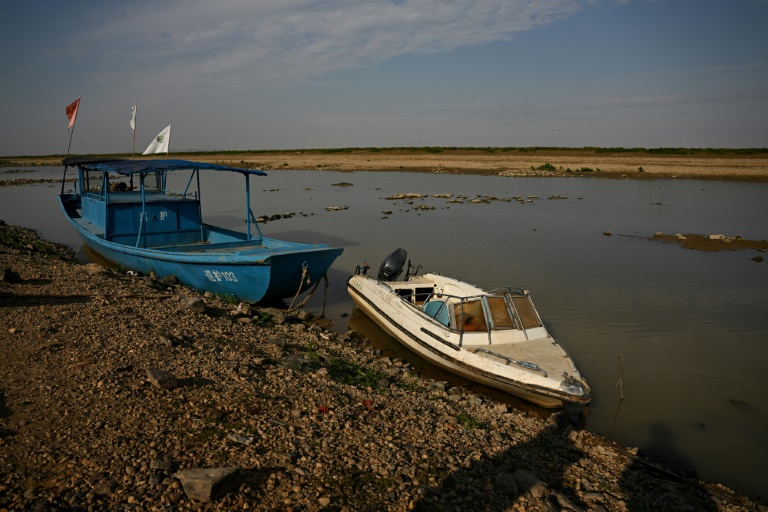
Spooked by a historic drought, local authorities in China have renewed controversial plans to dam the country’s biggest freshwater lake.

But environmentalists warn damming Poyang Lake, a winter stopover for over half a million birds, would threaten the fragile ecosystem and the endangered birds and other wildlife it supports.

China is currently chairing UN biodiversity talks in Montreal, billed as the “last best chance” to save the planet’s species and their habitats from irreversible human destruction.

The Poyang dam, which is slowly recovering after shrinking to less than a third of its usual size, shows how fraught such efforts are in China.

Conservationist Zhang Daqian said that if realised, the 3,000-metre-long sluice gate across one of the lake’s channels would cut it off from the river Yangtze, “leaving Poyang a dead lake”.

China has built more than 50,000 dams in the Yangtze basin in the past 70 years — including the Three Gorges, which came in the face of widespread opposition from environmentalists.

Over the same period at least 70 percent of the river’s wetlands have vanished, according to data from the environment ministry.

When the project was initially proposed, complaints from ecologists succeeded in shelving it.

But the looming spectre of droughts — which are becoming ever more frequent and severe in the area thanks to climate change — has altered the calculus.

Poyang supplies water to Jiangxi province’s 4.8 million residents, and the local government says damming it will conserve water, irrigate more farmland and improve navigation.

An environmental impact assessment (EIA) published in May gave experts just two weeks to review 1,200 pages of documents and lodge complaints.

– Winter visitors –

In a normal wet season, Poyang can be three times the size of Los Angeles. 

Its mud flats are the primary winter feeding grounds for hundreds of thousands of birds flying south to escape the chill every autumn. 

They include the critically endangered Siberian crane, the population of which has shrunk to about 4,000.

This year’s drought was the worst in 70 years, with the region entering the dry season three months sooner than usual. 

Still, hundreds of birds were gathering at small pools of water left on the cracked riverbed when AFP visited a reserve in Yongxiu County in early November. 

“Migratory birds are still coming to Poyang, because it’s their habitual winter home,” said an employee surnamed Chen, looking across the dry expanse littered with empty mussel shells and fish skeletons. 

“But there are no fish or shrimp for them to eat. Many birds flock to nearby fields and farmers have been told to leave a bit of their paddy unharvested for the birds,” Chen said.

Officials have pumped water from nearby reservoirs to form small butterfly-shaped watering holes for the birds.

“There are no conflicts (between residents and birds), because migratory birds are nationally-protected animals, and people will not harm them,” He Fangjin, an employee at another wetland park, told AFP. 

At nearby Zhupao Hill, a popular bird-watching spot, about 90,000 migratory birds were spotted from October to early December, up from about 62,000 birds in the same period last year.

– Damage to ecosystem –

It’s not clear what stage of development the dam is currently in, and neither local authorities nor the environment ministry responded to questions put to them by AFP. 

But were they to go ahead, the sluice gate would disrupt the lake’s natural ebb and flow with the Yangtze, potentially threatening the tidal flats the birds feed on, said Lu Xixi, a geography professor at the National University of Singapore.

Losing its natural water circulation could also hurt Poyang’s ability to flush out nutrients, risking an algae build-up that could disrupt the food chain, Lu added.

The dam could also affect another critically endangered species that calls the lake its home — the Yangtze finless porpoise. There are just over 1,000 left in the wild.

During the drought, the porpoises took refuge in the same channel the dam would cut off, a ranger from the Beijing Environmental Protection Prairie League, who has patrolled the lake for over a month, told AFP.

Beijing-based Friends of Nature said the dam EIA failed to do a comprehensive evaluation of whether the porpoises’ migration would be blocked.

“Without comprehensive scientific evidence and before eliminating the environmental risks, the project should not be pushed forward,” the group said in a statement.

What campaigners want to see in UN nature deal

As high-stakes UN biodiversity talks in Montreal draw to a close, delegates will be presented Sunday with a draft deal to safeguard the planet’s ecosystems and species by 2030.

Will it amount to the “peace pact with nature” that UN chief Antonio Guterres said the world desperately needs? Campaigners say the devil lies in the details. Here’s what they’re looking out for:

– ’30 by 30′ –

The cornerstone of the agreement is the so-called 30 by 30 goal — a pledge to protect 30 percent of the world’s land and seas by 2030. 

Currently, only about 17 percent of land and seven percent of oceans are protected.

And some experts say 30 percent is a low aim, insisting that protecting 50 percent would be better. 

So far, more than 100 countries have publicly pledged support for the 30 by 30 target, and observers say it has received broad support among negotiators. 

“For COP15 to be a success, we need to hold the line on our existing level of ambition,” Alfred DeGemmis, of the Wildlife Conservation Society, told AFP.

Brian O’Donnell of the Campaign for Nature added it was key that the text applies to oceans, as well as land, which had been in doubt.

– Indigenous rights –

The question of Indigenous rights will be crucial. 

About 80 percent of the Earth’s remaining biodiverse land is currently managed by Indigenous people, and it’s broadly recognized that biodiversity is better respected on Indigenous territory. 

Many activists want to make sure their rights are not trampled in the name of conservation — previous efforts to safeguard land have seen Indigenous communities marginalized or displaced in what has been dubbed “green colonialism.”

Advocates say therefore these rights have to be adequately addressed throughout the text, including within the 30 by 30 pledge, so that Indigenous people are not subject to mass evictions.

Failure on this front would be a “complete red line for us,” said O’Donnell.

“We are the ones doing the work. We protect biodiversity. You won’t replace us. We won’t let you,” said Valentin Engobo, leader of the Lokolama community in the Congo Basin, which protects the world’s largest tropical peatland.

“You can be our partners, if you want. But you cannot push us out.”

– Loopholes matter –

As a general principle, it is vital that the targets envisioned in the text aren’t significantly weakened through loopholes that will weaken actual implementation, said Georgina Chandler of the Royal Society for the Protection of Birds.

For example, during some plenary sessions, some ministers had suggested stripping out language about numerical targets for ecosystem restoration.

“Keeping those measurable elements…and making sure that they are ambitious, is really, really important,” said Chandler.

Other things she’ll be watching include whether there will be a commitment to halve pesticide use, and whether businesses will be mandated to assess and report on the biodiversity impacts.

– Finance –

As ever, money remains a difficult question. 

Developing countries say developed nations grew rich by exploiting their resources and the South should be paid to preserve its ecosystems.

Several countries have announced new commitments either at the COP or recently, with Europe emerging as a key leader. The European Union has committed seven billion euros ($7.4 billion) for the period until 2027, double its prior pledge.

But Brazil has led a charge by developing countries for far more, proposing flows of $100 billion annually, compared to the roughly $10 billion at present.

Developing countries are also seeking a new funding mechanism, as a signal of the rich world’s commitment to this goal. 

Whether international aid is delivered via a new fund, an existing mechanism called the Global Environment Facility (GEF), or a halfway solution involving a new “trust fund” within the GEF is still up for debate.

Close Bitnami banner
Bitnami