World

What campaigners want to see in UN nature deal

As high-stakes UN biodiversity talks in Montreal draw to a close, delegates will be presented Sunday with a draft deal to safeguard the planet’s ecosystems and species by 2030.

Will it amount to the “peace pact with nature” that UN chief Antonio Guterres said the world desperately needs? Campaigners say the devil lies in the details. Here’s what they’re looking out for:

– ’30 by 30′ –

The cornerstone of the agreement is the so-called 30 by 30 goal — a pledge to protect 30 percent of the world’s land and seas by 2030. 

Currently, only about 17 percent of land and seven percent of oceans are protected.

And some experts say 30 percent is a low aim, insisting that protecting 50 percent would be better. 

So far, more than 100 countries have publicly pledged support for the 30 by 30 target, and observers say it has received broad support among negotiators. 

“For COP15 to be a success, we need to hold the line on our existing level of ambition,” Alfred DeGemmis, of the Wildlife Conservation Society, told AFP.

Brian O’Donnell of the Campaign for Nature added it was key that the text applies to oceans, as well as land, which had been in doubt.

– Indigenous rights –

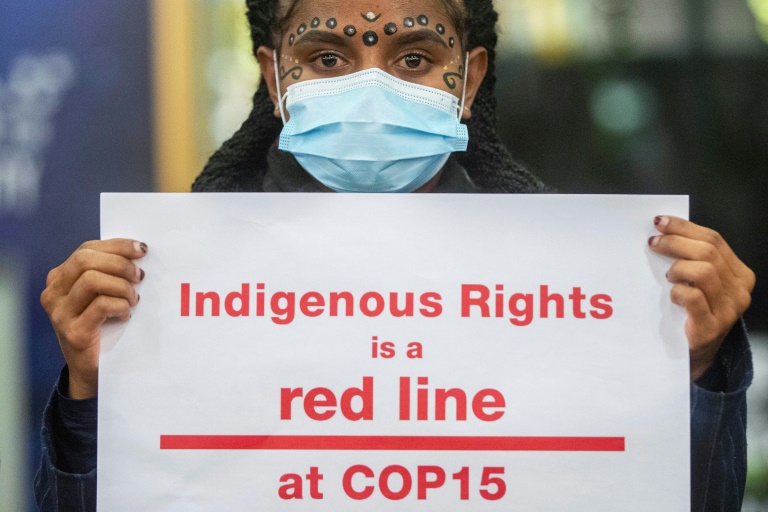
The question of Indigenous rights will be crucial. 

About 80 percent of the Earth’s remaining biodiverse land is currently managed by Indigenous people, and it’s broadly recognized that biodiversity is better respected on Indigenous territory. 

Many activists want to make sure their rights are not trampled in the name of conservation — previous efforts to safeguard land have seen Indigenous communities marginalized or displaced in what has been dubbed “green colonialism.”

Advocates say therefore these rights have to be adequately addressed throughout the text, including within the 30 by 30 pledge, so that Indigenous people are not subject to mass evictions.

Failure on this front would be a “complete red line for us,” said O’Donnell.

“We are the ones doing the work. We protect biodiversity. You won’t replace us. We won’t let you,” said Valentin Engobo, leader of the Lokolama community in the Congo Basin, which protects the world’s largest tropical peatland.

“You can be our partners, if you want. But you cannot push us out.”

– Loopholes matter –

As a general principle, it is vital that the targets envisioned in the text aren’t significantly weakened through loopholes that will weaken actual implementation, said Georgina Chandler of the Royal Society for the Protection of Birds.

For example, during some plenary sessions, some ministers had suggested stripping out language about numerical targets for ecosystem restoration.

“Keeping those measurable elements…and making sure that they are ambitious, is really, really important,” said Chandler.

Other things she’ll be watching include whether there will be a commitment to halve pesticide use, and whether businesses will be mandated to assess and report on the biodiversity impacts.

– Finance –

As ever, money remains a difficult question. 

Developing countries say developed nations grew rich by exploiting their resources and the South should be paid to preserve its ecosystems.

Several countries have announced new commitments either at the COP or recently, with Europe emerging as a key leader. The European Union has committed seven billion euros ($7.4 billion) for the period until 2027, double its prior pledge.

But Brazil has led a charge by developing countries for far more, proposing flows of $100 billion annually, compared to the roughly $10 billion at present.

Developing countries are also seeking a new funding mechanism, as a signal of the rich world’s commitment to this goal. 

Whether international aid is delivered via a new fund, an existing mechanism called the Global Environment Facility (GEF), or a halfway solution involving a new “trust fund” within the GEF is still up for debate.
Hope stirs for deal to save nature at UN talks

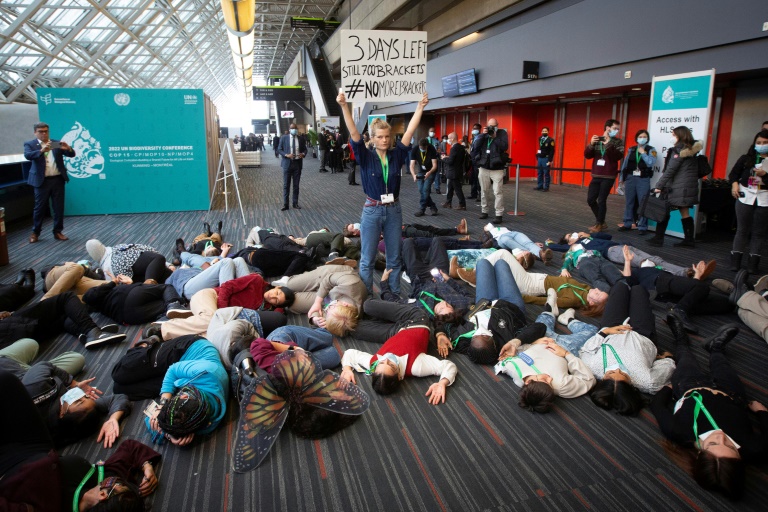
Top officials at high-stakes UN biodiversity negotiations said Saturday they were confident of securing a major deal to save the natural world from destruction.

Observers had warned the COP15 talks aimed at sealing a “peace pact for nature” risked collapse due to disagreement over how much the rich world should pay to protect ecosystems in developing countries.

The talks that started on December 7 had appeared to be on the verge of breakdown when developing countries walked out days ago over the question of funding. But the mood among leaders turned upbeat on Saturday.

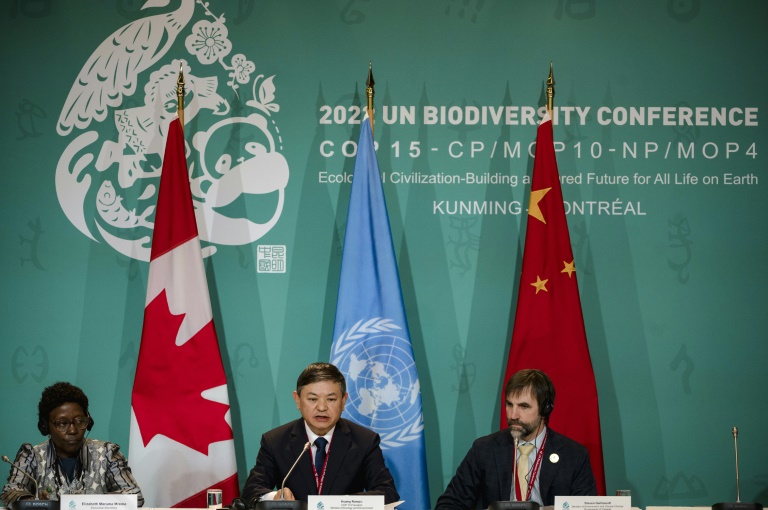
“I am greatly confident that we can … keep our ambitions as well as achieve consensus,” China’s Environment Minister Huang Runqiu told reporters in Montreal, where the COP15 meeting is being held.

His Canadian counterpart Steven Guilbeault echoed his statement, saying: “We’ve made tremendous progress… I don’t know about how many of us thought we could get there.”

Huang said he would publish a draft agreement at 8:00 am EST (1300 GMT) on Sunday and hear lead delegates’ feedback later in the day.

The negotiations officially run until December 19, but could go longer if needed.

French President Emmanuel Macron tweeted: “With just a few days to go before the end of the COP 15 Biodiversity Conference in Montreal, my message to our partners is: now is not the time for small decisions, let’s go big!

“Let’s work together to achieve the most ambitious agreement possible. The world is depending on it.”

– Million species threatened –

Delegates are working to roll back the destruction and pollution that threaten an estimated one million plant and animal species with extinction, according to scientists that report to the UN.

The text is meant to be a roadmap for nations through 2030. The last 10-year plan, signed in Aichi, Japan in 2010, did not achieve any of its objectives — a failure blamed widely on its lack of monitoring mechanisms.

Major goals in the draft under discussion include a cornerstone pledge to protect 30 percent of the world’s land and oceans by 2030.

The more than 20 targets also include reducing environmentally destructive farming subsidies, requiring businesses to assess and report on their biodiversity impacts, and tackling the scourge of invasive species.

Representatives of Indigenous communities, who safeguard 80 percent of the world’s remaining biodiversity, want their rights to practice stewardship of their lands to be enshrined in the final agreement.

“Indigenous Rights are not negotiable,” said Orpha Novita Yoshua, an Indigenous Namblong woman from West Papua, in a statement released by Greenpeace.

“We are the ones doing the work. We protect biodiversity,” said Valentin Engobo, leader of the Lokolama community in the Congo Basin. “You won’t replace us. We won’t let you.”

– Money matters –

The issue of how much money the rich countries will send to the developing world, home to most of the world’s biodiversity, has been the biggest sticking point.

“If the framework is not accompanied by adequate resources, then we will be destined to repeat the same failures that we saw after Aichi,” warned Brian O’Donnell, director of the NGO Campaign for Nature.

“If it’s weak we would certainly oppose it and encourage parties to oppose it and not sign up to a weak deal,” he added. “We’re still remaining hopeful that we can get there.”

Several countries have announced new commitments. The European Union has committed seven billion euros ($7.4 billion) for the period until 2027, double its prior pledge.

But these commitments are still well short of what observers say is needed, and what developing countries are seeking.

Brazil has led that charge, proposing flows of $100 billion annually, compared to the roughly $10 billion at present.

Whether international aid is delivered via a new fund, an existing mechanism called the Global Environment Facility (GEF), or a halfway solution involving a new “trust fund” within the GEF is still up for debate.
Tunisians shun vote for powerless new parliament

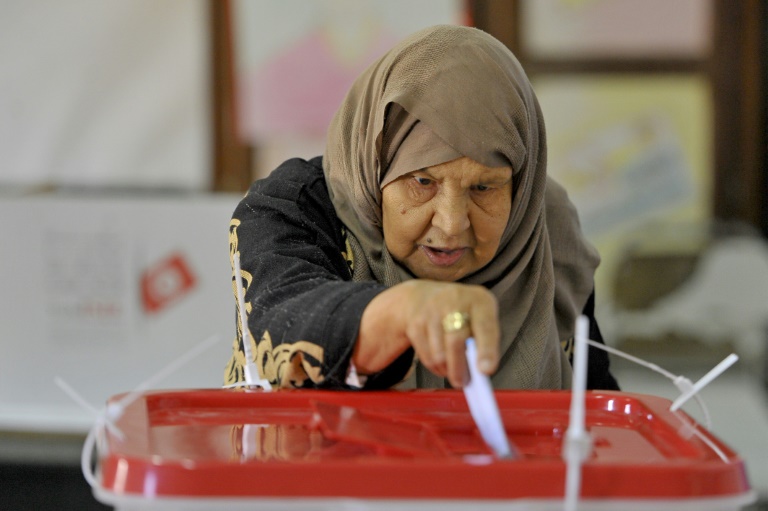
Tunisians on Saturday overwhelmingly boycotted an election for a new parliament which will have virtually no authority following a power grab by President Kais Saied in the birthplace of the Arab Spring.

Electoral board president Farouk Bouasker said that by close of polls at 6:00 pm (1700 GMT), just 8.8 percent of the nine-million-strong electorate had cast votes.

That would be the lowest participation in any poll since the revolution.

Opposition groups boycotted the election, saying it was part of a “coup” against the only democracy to have emerged from the 2011 uprisings across the region.

Bouasker acknowledged turnout was “modest” but said it could be explained by “the absence of foreign financing, in contrast to previous elections”.

“This was the cleanest election, with no vote-buying,” he said.

Preliminary results are expected Monday.

The National Salvation Front, the main opposition alliance which includes Ennahdha, described the low turnout as “seismic”, and called on the president to bring all political forces together for consultations.

The ballot followed three weeks of barely noticeable campaigning, with few posters in the streets and no serious debate among a public preoccupied with day-to-day economic survival.

It comes almost a year and a half after Saied deployed military vehicles to suspend parliament, following months of political deadlock and economic crisis exacerbated by the coronavirus pandemic.

His power grab sparked fears for the democracy ushered in after the ouster of dictator Zine El Abidine Ben Ali.

In the impoverished central city of Kasserine, Mohammed Jraidi, 40, said he was boycotting the poll.

“I don’t have any faith in the political class,” he said. “They’ve used us as lab rats for all types of elections while the economy gets worse and worse.”

Tunisia expert Youssef Cherif said that even though turnout was just nine percent, the parliament being elected “is supposedly more democratic and representative than all previous parliaments in the country’s history”.

– Boycotting ‘farce’ –

Saied, a former law professor, used a July referendum to push through a new constitution giving the presidency almost unchecked powers, laying the ground for a rubber-stamp legislature.

On Saturday, he told voters that Tunisia was “breaking with those who destroyed the country”.

“Those who are elected today should remember that they are being watched by their voters, and that if they’re not up to the job their mandate will be taken away,” he said at a polling station in a comfortable district of Tunis.

But on Friday many Tunisians voiced indifference.

In the polluted phosphate-mining hub of Gafsa, Aicha Smari said she had voted partly because of the symbolism of the date, 12 years to the day since street vendor Mohamed Bouazizi burned himself to death in an act of protest that triggered the Arab Spring.

But Abdel Kader Tlijani, 55 said he was boycotting.

Successive governments “killed the revolution and killed our dreams,” he said.

In the capital, 59-year-old engineer Ridha called the vote a “farce”. 

“This president has disappointed us and he’s dragging us towards the abyss,” he said, declining to give his full name.

– ‘Formality’ –

Saied’s moves against an unpopular political system were initially supported by Tunisians tired of the messy and sometimes corrupt democratic system installed after the revolution.

But almost a year and half on, the country’s economic woes have gone from bad to worse.

Inflation is around 10 percent, and frequent shortages of milk, sugar and petrol are fuelling a growing wave of emigration.

The previous legislature had far-reaching powers in the mixed presidential-parliamentary system enshrined in Tunisia’s post-revolution constitution.

But the new chamber “won’t be able to appoint a government or censure it, except under draconian conditions that are almost impossible to meet,” said political scientist Hamadi Redissi.

Candidates were required to stand as individuals, in a system that neuters political parties including Saied’s nemesis, the once-powerful Islamist-leaning Ennahdha party.

Analyst Hamza Meddeb said the election was a “formality to complete the political system imposed by Kais Saied and concentrate power in his hands.” 

Almost all of Tunisia’s political parties, including Ennahdha, boycotted the vote.

kl/fka/par/md

Tunisians shun vote for powerless new parliament

Tunisians on Saturday overwhelmingly boycotted an election for a new parliament which will have virtually no authority following a power grab by President Kais Saied in the birthplace of the Arab Spring.

Electoral board president Farouk Bouasker said that by close of polls at 6:00 pm (1700 GMT), just 8.8 percent of the nine-million-strong electorate had cast votes.

That would be the lowest participation in any poll since the revolution.

Opposition groups boycotted the election, saying it was part of a “coup” against the only democracy to have emerged from the 2011 uprisings across the region.

Bouasker acknowledged turnout was “modest” but said it could be explained by “the absence of foreign financing, in contrast to previous elections”.

“This was the cleanest election, with no vote-buying,” he said.

Preliminary results are expected Monday.

The ballot followed three weeks of barely noticeable campaigning, with few posters in the streets and no serious debate among a public preoccupied with day-to-day economic survival.

It comes almost a year and a half after Saied deployed military vehicles to suspend parliament, following months of political deadlock and economic crisis exacerbated by the coronavirus pandemic.

His power grab sparked fears for the democracy installed after the ouster of dictator Zine El Abidine Ben Ali.

In the marginalised city of Kasserine, Mohammed Jraidi, 40, said he was boycotting the poll.

“I don’t have any faith in the political class,” he said. “They’ve used us as lab rats for all types of elections while the economy gets worse and worse.”

Tunisia expert Youssef Cherif said that even though turnout was just nine percent, “this parliament is supposedly more democratic and representative than all previous parliaments in the country’s history”.

– Boycotting ‘farce’ –

Saied, a former law professor, used a July referendum to push through a new constitution giving the presidency almost unchecked powers, laying the ground for a rubber-stamp legislature.

On Saturday, he told voters that Tunisia was “breaking with those who destroyed the country”.

“Those who are elected today should remember that they are being watched by their voters, and that if they’re not up to the job their mandate will be taken away,” he said at a polling station in a comfortable district of Tunis.

But on Friday many Tunisians voiced indifference.

In the polluted phosphate-mining hub of Gafsa, Aicha Smari said she had voted partly because of the symbolism of the date, 12 years to the day since street vendor Mohamed Bouazizi burnt himself to death in an act of protest that triggered the Arab Spring.

But Abdel Kader Tlijani, 55 said he was boycotting.

Successive governments “killed the revolution and killed our dreams,” he said.

In the capital, 59-year-old engineer Ridha called the vote a “farce”. 

“This president has disappointed us and he’s dragging us towards the abyss,” he said, declining to give his full name.

– ‘Formality’ –

Saied’s moves against an unpopular political system were initially supported by Tunisians tired of the messy and sometimes corrupt democratic system installed after the revolution.

But almost a year and half on, the country’s economic woes have gone from bad to worse.

Inflation is around 10 percent, and frequent shortages of milk, sugar and petrol are fuelling a growing wave of emigration.

The previous legislature had far-reaching powers in the mixed presidential-parliamentary system enshrined in Tunisia’s post-revolution constitution.

But the new chamber “won’t be able to appoint a government or censure it, except under draconian conditions that are almost impossible to meet,” said political scientist Hamadi Redissi.

Candidates were required to stand as individuals, in a system that neuters political parties including Saied’s nemesis, the once-powerful Islamist-leaning Ennahdha party.

Analyst Hamza Meddeb said the election was a “formality to complete the political system imposed by Kais Saied and concentrate power in his hands.” 

Almost all of Tunisia’s political parties, including Ennahdha, boycotted the vote.

kl/fka/par

Clock ticking down on vital UN nature talks

Crucial UN talks aimed at sealing a “peace pact for nature” were entering their final stages Saturday, officially the last day the world’s environment ministers are gathered in Montreal for the COP15 meeting.

Whether they deliver a deal for biodiversity as ambitious as the Paris climate accord, endorse a watered-down text, or fail to agree on anything at all remains to be seen.

The negotiations officially run until December 19, but there are strong signs that ministers will be asked to stay on until the end, and the conference itself could run beyond the allotted time.

“We’re all going to be held accountable, by our future generation, our children and all life on Earth,” Chinese environment minister Huang Runqiu, the conference president, told fellow ministers. 

China holds the presidency of COP15, but its strict Covid rules prevented it from hosting, leaving that task to Canada in deep winter.

At stake is nothing less than the future of the planet: whether humanity can roll back the habitat destruction, pollution and climate crisis that threaten an estimated one million plant and animal species with extinction. 

The text is meant to be a roadmap for nations through 2030. The last 10-year plan, signed in Japan in 2010, failed to achieve any of its objectives, a failure blamed widely on its lack of monitoring mechanisms.

Major draft goals now include a cornerstone pledge to protect 30 percent of the world’s land and oceans by 2030, an ambitious objective being compared to the Paris deal commitment to hold long-term planetary warming to 1.5 degrees Celsius — or at least to 2.0 degrees.

– Money matters –

In all, there are more than 20 targets. They include reducing environmentally destructive farming subsidies, requiring businesses to assess and report on their biodiversity impacts, and tackling the scourge of invasive species.

Representatives of Indigenous communities — who safeguard 80 percent of the world’s remaining biodiversity — want their rights to practice stewardship of their lands to be enshrined in the final agreement.

The thorny issue of how much money the rich countries — collectively known as the Global North — will send to the Global South, home to most of the world’s biodiversity, has emerged as the biggest sticking point.

Developing countries say developed nations grew rich by exploiting their resources and the South should be paid to preserve its ecosystems.

Several countries have announced new commitments either at the COP or recently, with Europe emerging as a key leader. The European Union has committed seven billion euros ($7.4 billion) for the period until 2027, double its prior pledge.

But these commitments are still well short of what observers say is needed, and what developing countries are seeking.

Brazil has led that charge, proposing flows of $100 billion annually, compared to the roughly $10 billion at present.

But France has hit back, saying developed countries will only step up funding if developing countries agree to more ambitious plans, including on reducing heavy pesticide use by agricutural industries.

“We cannot have, on the one hand, some tears for species but no real commitments at the end of this COP,” French environment minister Christophe Bechu said Friday.

Whether international aid is delivered via a new fund, an existing mechanism called the Global Environment Facility (GEF), or a halfway solution involving a new “trust fund” within the GEF is still up for debate.
With the clock ticking, over 3,000 scientists have written an open letter to policymakers, calling for immediate action to stop the destruction of critical ecosystems.

“We owe this to ourselves and to future generations — we can’t wait any longer,” they said.

Beyond the moral implications, there is the question of self-interest: $44 trillion of economic value generation — more than half the world’s total GDP — depends on nature and its services.

Ireland's Varadkar becomes premier for second time

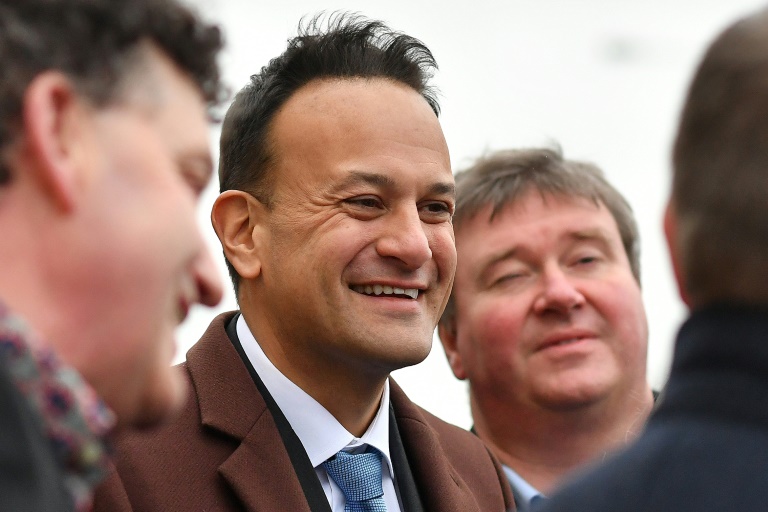
Ireland’s Leo Varadkar on Saturday took over as prime minister for the second time, a handover of power in line with a coalition deal struck in 2020.

Varadkar replaced Micheal Martin as Taoiseach (premier) in a rotation between his Fine Gael and Martin’s Fianna Fail parties unprecedented in Irish history.

The centre-right parties, the two main political partners in a three-party governing coalition, were forged from opposing sides in the Irish Civil War in the early 20th century.

They agreed to the rotating premiership as part of a coalition with Ireland’s Greens following 2020 elections.

Varadkar, who is mixed race and openly gay, is stepping up from deputy premier. Even in his second stint in the role, at 43 he is still one of Ireland’s youngest-ever leaders.

Speaking at a special sitting of the Irish parliament in Dublin, Varadkar paid tribute to his predecessor Martin, who he said had provided “reassurance and hope in difficult times”.

He added: “I accept this nomination with humility and resolve and a burning desire… to provide new hope and new opportunities for all our citizens.”

Varadkar gained the support of 87 members of parliament in a vote on Saturday, while 62 voted against.

After the result, UK Prime Minister Rishi Sunak tweeted: “Congratulations to @LeoVaradkar on becoming Ireland’s Taoiseach once again.

“I look forward to working with him to ensure all strands of the Belfast (Good Friday) Agreements are working and to continue to work with @MichealMartinTD in his new role.”

The 1998 Good Friday agreement of 1998 ended three decades of sectarian conflict in Northern Ireland that left more than 3,500 dead.

– Ireland’s youngest leader –

In a video posted on social media, Martin earlier said it had been “the honour of a lifetime to serve” as Taoiseach.

Varadkar’s rise to the top of Irish politics was remarkable in a country dominated by a strict, conservative Catholic morality well into the latter half of the last century.

He became the country’s youngest Taoiseach at the age of 38 as well as its first openly gay head of government and first of Indian heritage.

Varadkar was born in Dublin to an Irish mother who worked as a nurse and an Indian immigrant father who was a qualified doctor.

After gaining a medical degree from Trinity College Dublin, he went into general practice but stayed involved in politics, and in 2007 secured election for Fine Gael in Dublin West.

In 2015, before Ireland’s referendum legalising same-sex marriage, Varadkar came out publicly as gay. 

His tenure as Taoiseach was overshadowed by Brexit and the pandemic, during which he re-registered as a doctor and returned to work once a week while continuing to lead the country.

Ukraine races to restore power after Russian missiles batter grid

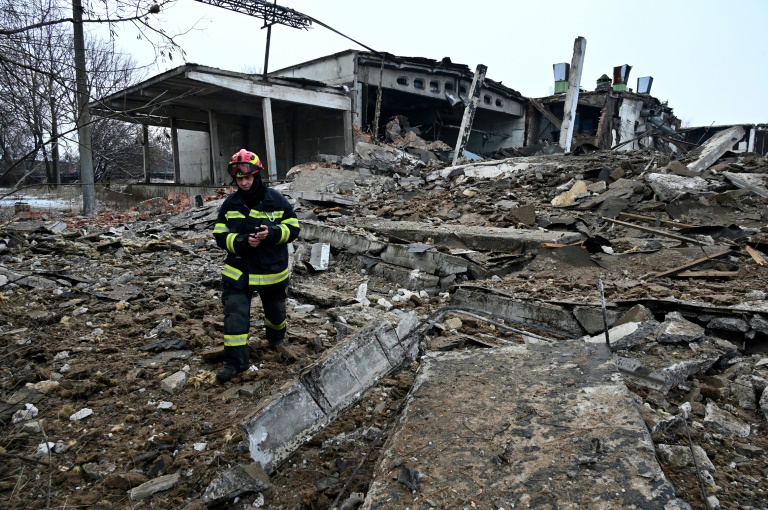
Ukraine worked Saturday to restore electricity and water supplies after Russia’s latest wave of attacks pitched multiple cities into darkness and forced people to endure sub-zero temperatures without heating or running water.

The volley of missiles unleashed Friday came as President Vladimir Putin held extensive meetings with the military top brass overseeing Russia’s invasion of Ukraine, where Moscow has stepped up bombardments. 

In the capital Kyiv, the metro had stopped running so that people wrapped in winter coats could take shelter at underground stations after air raid sirens rang out on Friday morning.

Kyiv mayor Vitali Klitschko said the metro service was relaunched early Saturday, the water supply had been restored and 75 percent of the city’s population had their heating supply back.

Power was also restored throughout the eastern city of Kharkiv on Saturday, regional governor Oleg Sinegubov said, after the strikes left Ukraine’s second city without electricity.

Ukraine’s national energy provider imposed emergency blackouts, saying on Saturday that the energy system “continues to recover”. 

Ukrenergo had warned the extent of the damage in the north, south and centre of the country meant it could take longer to restore supplies than after previous attacks.

Ukraine’s military command said in a statement Saturday: “The enemy continues to focus its efforts on conducting offensive actions in the Bakhmut and Avdiivka directions”, referring to two cities in the eastern Donetsk region.

Russian troops were also trying to regain lost ground around Lymanskyi, in the south, the statement added.

– ‘Barbaric’ attacks –

In Russia, Putin sought out proposals from his military commanders on how Russia should proceed with the Ukraine offensive, according to the Kremlin.

The Kremlin released footage Friday of Putin presiding over a round-table meeting with Defence Minister Sergei Shoigu and Chief of General Staff Valery Gerasimov among other top brass.

After a series of humiliating battlefield defeats, Russia since October has pursued an aerial onslaught against what Moscow says are military-linked facilities.

But France and the European Union have said the suffering inflicted on freezing civilians constitutes war crimes, with the bloc’s foreign policy chief calling the bombings “barbaric”.

Russia’s defence ministry said Saturday the strikes had targeted Ukraine’s military and energy facilities, while also disrupting “the transfer of weapons and ammunition of foreign production”.

“All assigned targets were hit,” the ministry said in its daily briefing.

Russia fired 74 — mainly cruise — missiles Friday, 60 of which were shot down by anti-aircraft defences, according to the Ukrainian army.

Ukrainian President Volodymyr Zelensky said the strikes hit power and water supplies in Kyiv and 14 regions.

Regional officials said their air defence forces had shot down 37 out of 40 missiles.

In the central city of Kryvyi Rig, where Zelensky was born, Friday’s air strikes hit a residential building.

The missiles killed a 64-year-old woman and a young couple with a son, governor Valentyn Reznichenko said Saturday, wounding 13 others.

In the south, fresh Russian shelling in Kherson, recently recaptured by Ukraine, killed a 36-year-old man and injured a 70-year-old woman, governor Yaroslav Yanushevich said Saturday morning.

A separate strike hit a geriatric centre in the village of Stepanivka just north of Kherson, he added later, but there were no casualties reported.

Kherson has been subjected to persistent Russian shelling since Moscow’s forces retreated in November, and power was cut in the city earlier this week.

– Protracted war –

Moscow has said the strikes on Ukrainian infrastructure are a response to an explosion on the Kerch bridge connecting the Russian mainland to the Crimean peninsula, annexed from Ukraine in 2014.

Ukrainian defence officials said this week that their forces had downed over a dozen Iranian-made attack drones launched at Kyiv, a sign that Western-supplied systems are having an impact.

The country’s military leaders have also warned Moscow is preparing for a major winter offensive, including a fresh attempt to take Kyiv.

Russia meanwhile on Saturday accused Moldova of “political censorship” after it suspended the broadcasting licence of six television channels over accusations of misinformation.

Moldova — which sits on Ukraine’s southwestern border — said on Friday the decision was made because of the “lack of correct information” in their coverage of national events and Russia’s military campaign in Ukraine.

Moscow also responded to the EU’s decision Friday to impose further sanctions, adding restrictions on the export of drone engines to Russia or countries like Iran looking to supply Moscow with weapons. 

The new package of “illegitimate unilateral restrictive measures” would not achieve its goal, Russia’s foreign ministry said Saturday.

Iran actor arrested after voicing support for protests

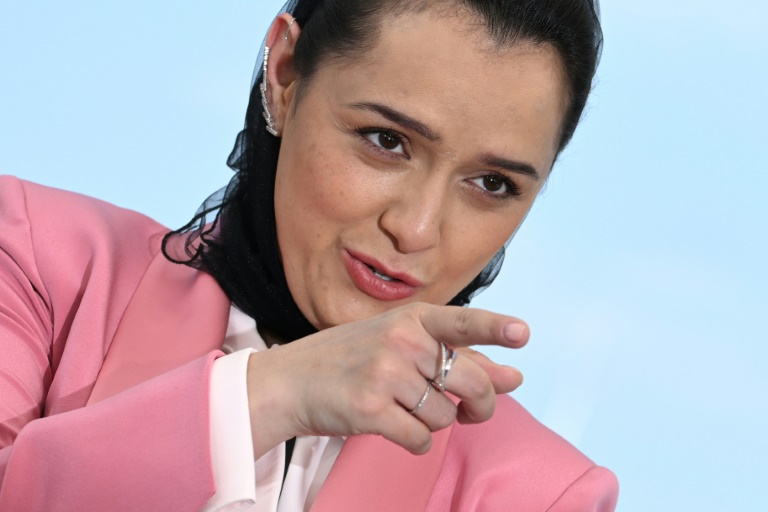
Iran arrested a prominent actor Saturday after she voiced support for the three-month-old protest movement triggered by the death of a woman in custody, the judiciary said Saturday.

Taraneh Alidoosti, 38, was arrested “by order of the judicial authority” as she “did not provide documentation for some of her claims” about the protests, reported the judiciary’s Mizan Online news website.

It added “some figures and a number of celebrities” including Alidoosti have been questioned or arrested “following some baseless comments about the recent events and the publishing of provocative material in support of the street riots”.

Alidoosti is best known for her role in the Oscar-winning 2016 film “The Salesman”.

Her most recent social media post was on December 8, the same day Mohsen Shekari, 23, became the first person executed by authorities over the protests.

“Your silence means the support of the oppression and the oppressor”, read text on an image shared to her Instagram account.

“Every international organisation who is watching this bloodshed and not taking action, is a disgrace to humanity,” Alidoosti wrote in the caption of her post.

The actor has been a prominent presence in Iranian cinema since she was a teenager. Recently, she starred in the film “Leila’s Brothers”, which screened at this year’s Cannes Film Festival.

The Islamic republic has been rocked by protests triggered by the September 16 death of Mahsa Amini, a 22-year-old Iranian of Kurdish origin, after her arrest for an alleged breach of the country’s dress code.

On the day of Amini’s death, Alidoosti posted a photo to Instagram with text saying: “Damnation to this captivity”.

The caption to the post read: “Don’t forget what Iran’s women go through” and asked people to “say her name, spread the word”.

On November 9, she posted an image of herself without a headscarf, holding a paper with the words “Woman, life, freedom”, the main slogan of the protests.

Hot on the heels of Shekari’s execution, Iran publicly hanged protester Majidreza Rahnavard, 23, on December 12. 

Nine other people arrested in connection with the unrest have been sentenced to death.

Thousands of people have been detained since the protests erupted and 400 have received jail sentences of up to 10 years for their involvement in the unrest, Iran’s judiciary said Tuesday.

Timeline: Twitter mayhem since Musk takeover

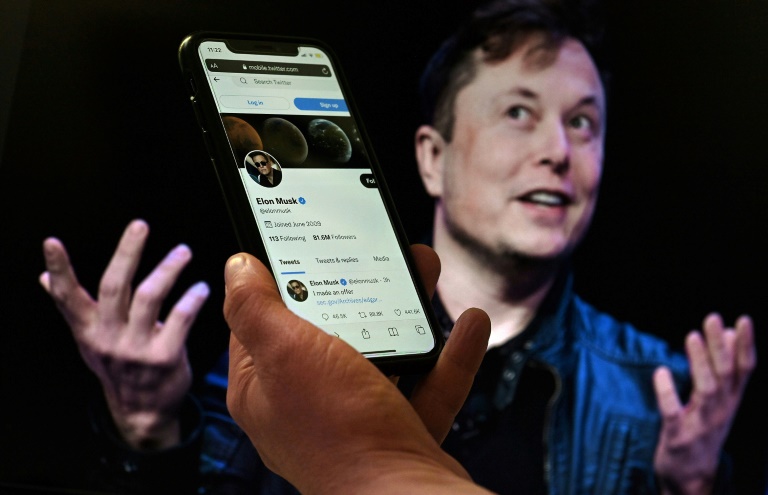
Since buying Twitter, Elon Musk has made radical changes that have sparked fears for the future of the platform, from firing half the staff to restoring ex-president Donald Trump’s account and suspending those of several journalists.

AFP looks back at a rollercoaster two months at the Silicon Valley giant.

– Enter Elon –

Musk, the world’s second-richest richest man and CEO of Tesla and SpaceX, buys Twitter in late October for $44 billion after months of on-off negotiations.

“Let the good times roll,” he tweets after the deal is sealed on October 28. He becomes the sole director of the company after dissolving its corporate board.

– ‘Content moderation council’ –

In one of his first moves, the self-declared free speech absolutist announces he will form a “content moderation council”, in a nod to concerns that Twitter could become a free-for-all platform for disinformation and hate speech.

– Monthly charge –

On November 1, Musk announces the site will charge $8 per month to verify the accounts of celebrities and companies — a service that used to be free. But the November 6 launch of the Twitter Blue subscription plan goes awry. Musk is forced to suspend the move after an embarrassing rash of fake accounts alarm advertisers.

– Brands step back –

Top global companies, including General Mills and Volkswagen, suspend their advertising on Twitter on November 3 as they monitor the new direction the company will take.

– Massive layoffs –

On November 4, half of Twitter’s 7,500-strong staff are made redundant, sending shockwaves through Silicon Valley.

Musk tweets that “unfortunately there is no choice when the company is losing over $4M/day”.

– Regulator’s ‘concern’-

The chaos draws a rare warning on November 10 from the Federal Trade Commission (FTC), the US authority that oversees consumer safety.

“We are tracking recent developments at Twitter with deep concern,” says an FTC spokesperson.

– Ultimatum to staff –

Musk delivers an ultimatum to Twitter staff on November 16, asking them to choose between being “extremely hardcore” and working long hours, or losing their jobs. He gives them a day to decide.

Large numbers of staff quit.

– Trump reinstated –

Musk reinstates the account of banned former president Donald Trump after conducting a poll of users, a narrow majority of whom support the move. 

A few days later he announces an “amnesty” for all banned Twitter accounts.

– ‘War’ with Apple – 

On November 29, Musk tweets that he is going “to war’ with Apple, claiming it has threatened to oust Twitter from its App Store. After meeting with Apple boss Tim Cook he later says the clash was a misunderstanding.

– Covid controversy  –

In late November, Twitter says it is no longer enforcing a policy of combatting Covid-19 disinformation. Musk had fiercely opposed Covid restrictions. Days later he is rapped by the White House for calling for President Joe Biden’s chief Covid adviser Anthony Fauci to be prosecuted.

– Kanye suspended –

Musk revises his promises of unfettered free speech after rapper Kanye West tweets a picture that appears to show a swastika interlaced with a Star of David. His account is suspended for “incitement to violence”.

– Twitter Blue take two –

In mid-December Musk relaunches Twitter Blue. This time, Twitter conducts a review of the account before giving it the coveted blue check mark.

– Journalists suspended, then reinstated –

On December 15, Twitter suspends the accounts of more than a half-dozen journalists, including reporters from CNN, The New York Times, and The Washington Post.

Musk accuses them of endangering his family through their reporting on Twitter’s shutdown of an account that tracked flights of his private jet. 

Media outlets criticise the move and say they are re-evaluating their use of Twitter. The EU threatens to sanction the company.

Twitter users in a poll conducted by Musk back restoring the accounts. 

On December 17 some of the accounts are reactivated, but some remain suspended. A CNN reporter says Twitter conditioned the restoration of his ability to tweet on his removal of a post about tracking Musk’s location. 

The UN’s human rights chief Volker Turk welcomes the reinstatement of the journalists but tweets that “serious concern” remains.

Rio ex-governor to be freed after 6 years in jail over corruption

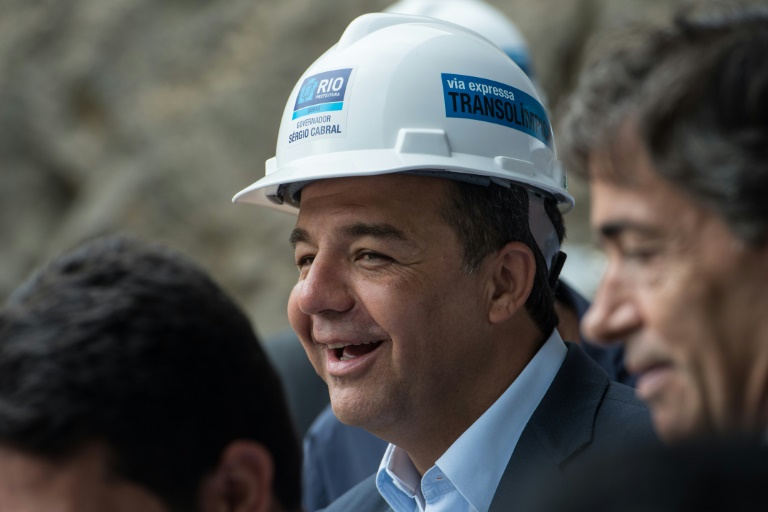
The former Rio de Janeiro governor accused of receiving huge bribes over construction work for the 2014 World Cup and the 2016 Olympics will soon be free after six years in prison, following a ruling by Brazil’s highest court.

The magistrates of the Federal Supreme Court (STF) voted three to two late Friday to place Sergio Cabral under house arrest pending further appeals.

His lawyers said the 59-year-old former journalist would probably be released from prison on Monday. 

Cabral was sentenced to more than 425 years in prison in 23 corruption cases, but no higher court has yet heard his appeals.

Prosecutors say he purchased jewelry and other luxury items with embezzled money — even paying for a horse-riding lesson for his son.

STF Judge Gilmar Mendes, whose vote proved decisive Friday, said Cabral could not be held “indefinitely” under a preventive measure taken to avoid any possible destruction of evidence should he be allowed to await trial in freedom.

But Mendes added that his decision did not in any way amount to Cabral’s acquittal.

Cabral served as Rio governor from 2007 to 2014, years in which Brazil was picked to host both the 2014 World Cup and the 2016 Summer Olympic Games.

Revelations of large-scale corruption involving Cabral shocked public opinion in Brazil.

The diversion of millions of dollars of funds directly affected the public finances of Rio, leaving it near bankruptcy just months after the Olympics.

Close Bitnami banner
Bitnami