World

Musk restores some suspended Twitter accounts of journalists

The Twitter accounts of several journalists suspended after Elon Musk accused them of endangering his family were reinstated Saturday, but some said the billionaire owner offered full use of the platform only if they deleted posts about tracking his location.

Musk had drawn anger and warnings from the European Union and United Nations after suspending the accounts of more than a half-dozen prominent journalists from The New York Times, CNN, The Washington Post and other outlets.

“The people have spoken. Accounts who doxxed my location will have their suspension lifted now,” the Twitter owner tweeted late Friday.

Doxxing generally means publishing private information on the Internet to harass or embarrass someone.

Musk carried out a Twitter poll asking whether he should restore the suspended accounts now or in a week’s time. Nearly 59 percent of the 3.69 million who took part said he should restore the accounts now.

Some of the suspended accounts were reactivated, with former Vox journalist Aaron Rupar, Mashable reporter Matt Binder and freelancer Tony Webster tweeting again Saturday.

Speaking later on MSNBC, Rupar warned that Twitter’s crackdown, even if temporary, would have a “chilling effect on coverage of Elon Musk” and make reporters think twice about running afoul of the company’s new owner.

The accounts of some other journalists remained suspended early Saturday, including those of Business Insider’s Linette Lopez and former MSNBC anchor Keith Olbermann.

CNN’s Donie O’Sullivan, who has reported at length on Musk, said that while his suspended account became viewable Saturday, Twitter has imposed a condition for him to be able to tweet again.

He said Twitter demanded he remove a post that it says violates its rules against posting private information.

“Right now, unless I agree to remove that tweet at the behest of the billionaire, I won’t be allowed to tweet on the platform,” O’Sullivan told CNN.

The latest controversy began Wednesday when Musk suspended @elonjet, an account that tracked flights of his private plane.

Musk said the move was necessary after a car in Los Angeles carrying one of his children was followed by “a crazy stalker”; he seemed to blame the jet tracking for the incident.

Some of the suspended journalists had reported on the affair, including tweets linking to the suspended @elonjet account, which Musk said amounted to offering “assassination coordinates” against him and his family.

In a chat hosted live on Twitter, Musk provided no evidence for his claim but told suspended reporters that on Twitter “everyone’s going to be treated the same… they’re not special because you’re a journalist.”

Pressed further on his allegations, Musk ended the conversation. Twitter Spaces, the feature where the chat took place, was then suspended. The live audio service was back up Friday, with Musk saying the platform had been fixing a bug.

As of Saturday, the Musk plane-tracking account remained suspended.

Musk’s deactivations have drawn sharp criticism from media organizations, the EU and the United Nations.

UN rights chief Volker Turk welcomed Musk’s decision to reinstate the accounts, “but serious concerns remain,” he posted on Twitter.

He also urged Musk to “commit to making decisions based on publicly-available policies that respect rights, including free speech. Nothing less.”

Earlier, the spokesman for UN chief Antonio Guterres called the suspensions a “dangerous precedent at a time when journalists all over the world are facing censorship, physical threats and even worse.”

The EU had warned that Twitter could face fines through European laws.

“News about arbitrary suspension of journalists on Twitter is worrying,” EU commissioner Vera Jourova tweeted after the move.

– Controversies –

Twitter has lurched from one controversy to the next since Musk took control of the company in October.

The billionaire’s talk of unfettered speech, coupled with the instability surrounding the company, has scared off major advertisers and caught the attention of regulators.

Musk has reinstated the account of former US president Donald Trump and lashed out against the outgoing key US advisor on Covid-19, Anthony Fauci, a frequent target of vitriol in right-wing media.

CNN has reported that Twitter’s former head of trust and safety fled his home after baseless attacks on Twitter content moderation, endorsed by Musk.

Meanwhile, a purge initiated by Musk at Twitter left more than half of its 7,500 employees out of work.
Musk restores some suspended Twitter accounts of journalists

The Twitter accounts of several journalists suspended after Elon Musk accused them of endangering his family were reinstated Saturday, but some said the billionaire owner offered full use of the platform only if they deleted posts about tracking his location.

Musk had drawn anger and warnings from the European Union and United Nations after suspending the accounts of more than a half-dozen prominent journalists from The New York Times, CNN, The Washington Post and other outlets.

“The people have spoken. Accounts who doxxed my location will have their suspension lifted now,” the Twitter owner tweeted late Friday.

Doxxing generally means publishing private information on the Internet to harass or embarrass someone.

Musk carried out a Twitter poll asking whether he should restore the suspended accounts now or in a week’s time. Nearly 59 percent of the 3.69 million who took part said he should restore the accounts now.

Some of the suspended accounts were reactivated, with former Vox journalist Aaron Rupar, Mashable reporter Matt Binder and freelancer Tony Webster tweeting again Saturday.

Speaking later on MSNBC, Rupar warned that Twitter’s crackdown, even if temporary, would have a “chilling effect on coverage of Elon Musk” and make reporters think twice about running afoul of the company’s new owner.

The accounts of some other journalists remained suspended early Saturday, including those of Business Insider’s Linette Lopez and former MSNBC anchor Keith Olbermann.

CNN’s Donie O’Sullivan, who has reported at length on Musk, said that while his suspended account became viewable Saturday, Twitter has imposed a condition for him to be able to tweet again.

He said Twitter demanded he remove a post that it says violates its rules against posting private information.

“Right now, unless I agree to remove that tweet at the behest of the billionaire, I won’t be allowed to tweet on the platform,” O’Sullivan told CNN.

The latest controversy began Wednesday when Musk suspended @elonjet, an account that tracked flights of his private plane.

Musk said the move was necessary after a car in Los Angeles carrying one of his children was followed by “a crazy stalker”; he seemed to blame the jet tracking for the incident.

Some of the suspended journalists had reported on the affair, including tweets linking to the suspended @elonjet account, which Musk said amounted to offering “assassination coordinates” against him and his family.

In a chat hosted live on Twitter, Musk provided no evidence for his claim but told suspended reporters that on Twitter “everyone’s going to be treated the same… they’re not special because you’re a journalist.”

Pressed further on his allegations, Musk ended the conversation. Twitter Spaces, the feature where the chat took place, was then suspended. The live audio service was back up Friday, with Musk saying the platform had been fixing a bug.

As of Saturday, the Musk plane-tracking account remained suspended.

Musk’s deactivations have drawn sharp criticism from media organizations, the EU and the United Nations.

UN rights chief Volker Turk welcomed Musk’s decision to reinstate the accounts, “but serious concerns remain,” he posted on Twitter.

He also urged Musk to “commit to making decisions based on publicly-available policies that respect rights, including free speech. Nothing less.”

Earlier, the spokesman for UN chief Antonio Guterres called the suspensions a “dangerous precedent at a time when journalists all over the world are facing censorship, physical threats and even worse.”

The EU had warned that Twitter could face fines through European laws.

“News about arbitrary suspension of journalists on Twitter is worrying,” EU commissioner Vera Jourova tweeted after the move.

– Controversies –

Twitter has lurched from one controversy to the next since Musk took control of the company in October.

The billionaire’s talk of unfettered speech, coupled with the instability surrounding the company, has scared off major advertisers and caught the attention of regulators.

Musk has reinstated the account of former US president Donald Trump and lashed out against the outgoing key US advisor on Covid-19, Anthony Fauci, a frequent target of vitriol in right-wing media.

CNN has reported that Twitter’s former head of trust and safety fled his home after baseless attacks on Twitter content moderation, endorsed by Musk.

Meanwhile, a purge initiated by Musk at Twitter left more than half of its 7,500 employees out of work.
Ecuador leader to visit Biden, seek help fighting cartels

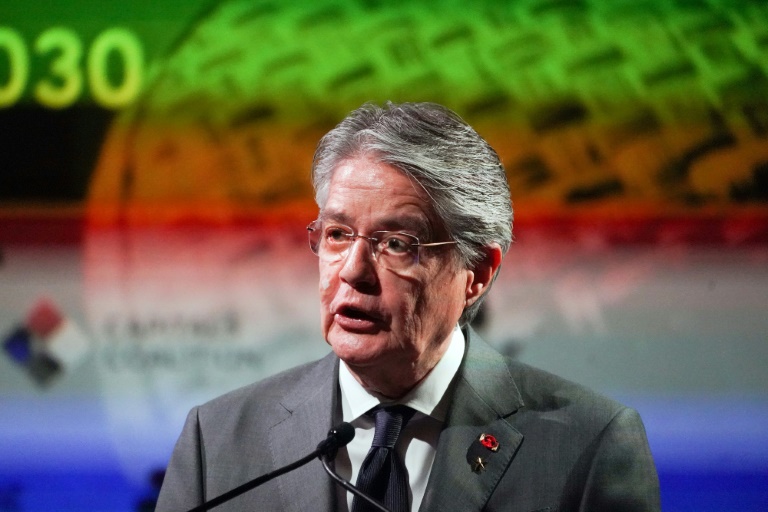
Ecuadoran President Guillermo Lasso will meet with President Joe Biden at the White House Monday to discuss security and other issues — delicately trying to balance his nation’s deep interests with both the United States and China.

Lasso arrives in Washington with a list of priorities. At the top is securing help in battling drug cartels that have waged open warfare in Ecuador’s streets and prisons. 

Drug-related violence prompted Lasso to declare a state of emergency in November in parts of Ecuador, which is sandwiched between Colombia and Peru, the world’s largest producers of cocaine.

John Kirby, the spokesman for the US National Security Council, said Friday that the two presidents, who last met in June at the Summit of the Americas in Los Angeles, will discuss ways to boost cooperation in the battle against drugs.

– Balancing act –

Trade will be another prime topic. The two leaders will discuss regional economic initiatives, including the Americas Partnership for Economic Prosperity (APEP), aimed at mobilizing investment, promoting clean energy and strengthening supply chains, White House spokeswoman Karine Jean-Pierre said Friday.

Like other Latin American countries, Ecuador seeks to avoid the global rivalry between the United States and China by remaining on good terms with Washington while benefiting from Beijing’s open wallet.

Ecuador’s first conservative president in 14 years is looking forward to concluding a free-trade pact with China after nearly 10 months of negotiations.

– Setting an example –

Biden is expected to focus on the immigration crisis at the US border with Mexico, where US agents intercepted more than 2.2 million migrants in the year that ended September 30, according to the US Customs and Border Protection office.

Ecuadorans constitute a relatively small share of the migrants. Still, their numbers have grown sharply this year, from 600 in January to 5,000 in September, according to official data.

Quito has set a good example on migration, Kirby said, noting it had regularized Venezuelan migrants and refugees living in Ecuador.

He also applauded Lasso for condemning the Russian invasion of Ukraine, another issue for the White House talks.

The two leaders will also explore opportunities for collaboration once Ecuador assumes a non-permanent seat on the UN Security Council starting January 1. 

Days before Lasso’s visit, Ecuador got some good news from Washington.

The International Monetary Fund approved the immediate disbursement of $700 million after completing a final review of a fund facility for Ecuador aimed at supporting its recovery from the pandemic, ensuring fiscal stability and expanding protections for vulnerable people.

And the US Congress passed a bipartisan bill for the 2023 fiscal year that aims to help strengthen democratic institutions, foster more inclusive growth, and support environmental initiatives and the fight against corruption, crime and “malign foreign influence.”

Robert Menendez, chairman of the US Senate Foreign Relations Committee, has said Ecuador has become a “model” for the region.

But at home, Lasso has been navigating troubled waters, marked by anti-government demonstrations led by the powerful Indigenous movement known as Conaie, which played a role in uprisings that brought down three presidents between 1997 and 2005.

Lasso and Conaie have put aside their differences for now, but for how long remains unclear.

Clock ticking down on vital UN nature talks

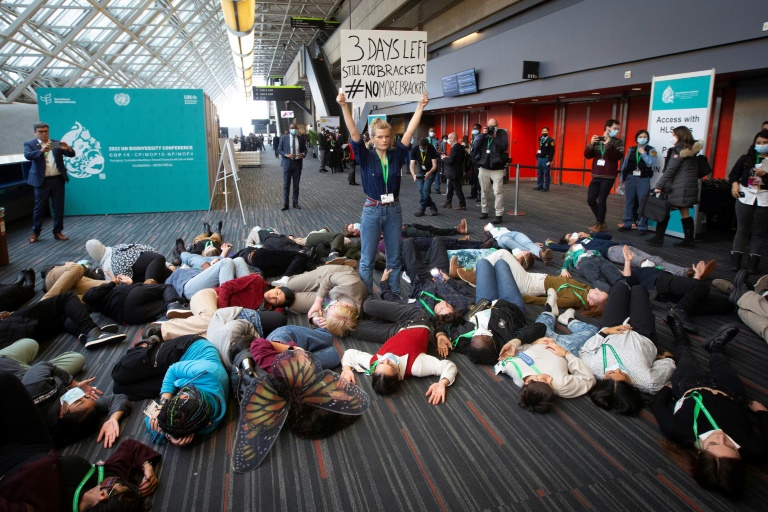
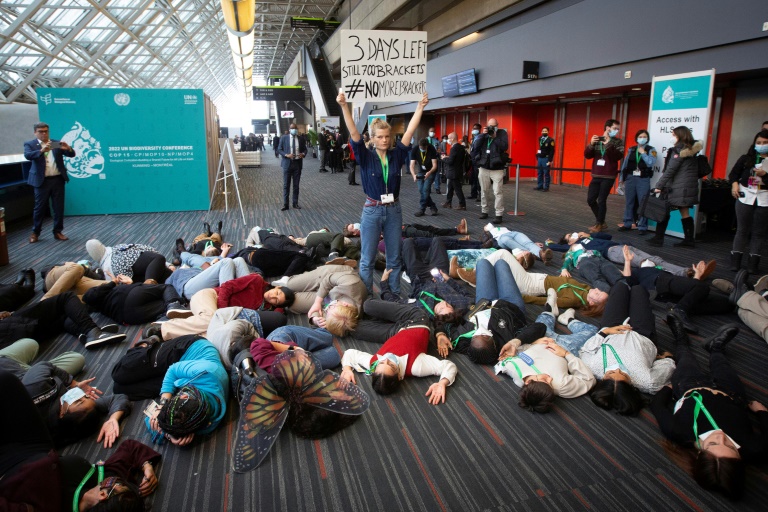
Crucial UN talks aimed at sealing a “peace pact for nature” were entering their final stages Saturday, officially the last day the world’s environment ministers are gathered in Montreal for the COP15 meeting.

Whether they deliver a deal for biodiversity that is as ambitious as the Paris accord for climate, endorse a watered-down text, or fail to agree on anything at all remains to be seen, though there are strong signs the negotiations set to last until December 19 will run beyond the allotted time.

With the clock ticking down, over 3,000 scientists wrote an open letter to policymakers, calling for immediate action to stop the destruction of critical ecosystems.

“We owe this to ourselves and to future generations — we can’t wait any longer,” they said.

At stake is the future of the planet and whether humanity can roll back habitat destruction, pollution and the climate crisis, which are threatening an estimated million plant and animal species with extinction.

The text is meant to be a roadmap for nations to follow that carries them through until 2030, after the last 10-year plan signed in Japan failed to achieve any of its objectives, widely blamed on its lack of monitoring mechanisms.

Major draft goals include a cornerstone pledge to protect 30 percent of the world’s land and oceans by 2030, which is compared to the Paris deal commitment to hold long-term planetary warming by 1.5 degrees Celsius or at least to 2C.

In all, there are more than 20 targets, including reducing environmentally destructive subsidies of agriculture, obliging businesses to assess and report on their biodiversity impacts, and tackling the scourge of invasive species.

The thorny issue of how much money the global north will send to the global south to help preserve their ecosystems has emerged as the biggest sticking point.

Several countries have announced new commitments either at the COP or recently, with Europe emerging as a key leader. The European Union has committed seven billion euros for the period until 2027, double its prior pledge.

But these commitments are still well short of what observers say is needed, and what developing countries are seeking.

Brazil has led that charge, proposing flows of $100 billion annually, compared to the roughly $10 billion at present.

But France has hit back, saying developed countries will only step up funding if developing countries agree to more ambitious plans, including on reducing pesticide use that agro industries in the global south use heavily.

“We cannot have on hand some tears for species but no real commitments at the end of this COP,” French environment minister Christophe Bechu said Friday.

Whether international aid is delivered via a new fund, an existing mechanism called the Global Environment Facility, or a halfway solution involving a new “trust fund” within the GEF, is still up for debate.

Clock ticking down on vital UN nature talks

Crucial UN talks aimed at sealing a “peace pact for nature” were entering their final stages Saturday, officially the last day the world’s environment ministers are gathered in Montreal for the COP15 meeting.

Whether they deliver a deal for biodiversity that is as ambitious as the Paris accord for climate, endorse a watered-down text, or fail to agree on anything at all remains to be seen, though there are strong signs the negotiations set to last until December 19 will run beyond the allotted time.

With the clock ticking down, over 3,000 scientists wrote an open letter to policymakers, calling for immediate action to stop the destruction of critical ecosystems.

“We owe this to ourselves and to future generations — we can’t wait any longer,” they said.

At stake is the future of the planet and whether humanity can roll back habitat destruction, pollution and the climate crisis, which are threatening an estimated million plant and animal species with extinction.

The text is meant to be a roadmap for nations to follow that carries them through until 2030, after the last 10-year plan signed in Japan failed to achieve any of its objectives, widely blamed on its lack of monitoring mechanisms.

Major draft goals include a cornerstone pledge to protect 30 percent of the world’s land and oceans by 2030, which is compared to the Paris deal commitment to hold long-term planetary warming by 1.5 degrees Celsius or at least to 2C.

In all, there are more than 20 targets, including reducing environmentally destructive subsidies of agriculture, obliging businesses to assess and report on their biodiversity impacts, and tackling the scourge of invasive species.

The thorny issue of how much money the global north will send to the global south to help preserve their ecosystems has emerged as the biggest sticking point.

Several countries have announced new commitments either at the COP or recently, with Europe emerging as a key leader. The European Union has committed seven billion euros for the period until 2027, double its prior pledge.

But these commitments are still well short of what observers say is needed, and what developing countries are seeking.

Brazil has led that charge, proposing flows of $100 billion annually, compared to the roughly $10 billion at present.

But France has hit back, saying developed countries will only step up funding if developing countries agree to more ambitious plans, including on reducing pesticide use that agro industries in the global south use heavily.

“We cannot have on hand some tears for species but no real commitments at the end of this COP,” French environment minister Christophe Bechu said Friday.

Whether international aid is delivered via a new fund, an existing mechanism called the Global Environment Facility, or a halfway solution involving a new “trust fund” within the GEF, is still up for debate.

Germany finds most items from 2019 jewellery heist: police

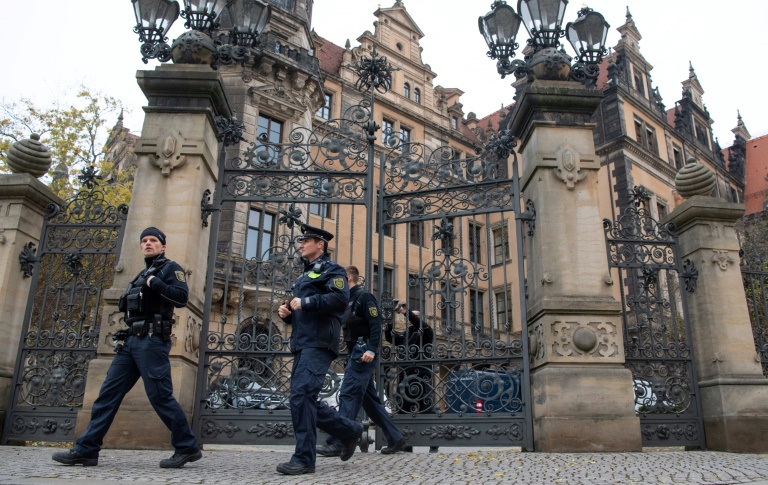
German authorities said Saturday they had found a “considerable portion” of items stolen in a spectacular 2019 robbery of priceless 18th-century jewels from a state museum.

The authorities retrieved a total of 31 items in the night of Friday to Saturday in the capital Berlin, the police and prosecutors said.

The discovery comes in the middle of the trial of six suspects over the brazen night-time raid on the Green Vault museum in the eastern city of Dresden’s Royal Palace in November 2019.

The thieves grabbed 21 pieces of jewellery and other valuables from the collection of the Saxon ruler Augustus the Strong, encrusted with more than 4,300 individual diamonds.

Insurance experts had said the loot stolen in 2019 was worth at least 113.8 million euros ($120 million at the current rate), with German media dubbing it the biggest art heist in modern history.

The jewels included a sword with a diamond-encrusted hilt and a shoulder piece which contains the famous 49-carat Dresden white diamond.

There had been no trace of the jewels.

But “exploratory talks” between the defence and the prosecution towards a possible settlement and the return of the stolen items led to a breakthrough, police and prosecutors said, without providing further details.

Special police have escorted the retrieved items from Berlin back to Dresden, they said.

Experts are now to examine them to verify their authenticity.

Some pieces remain missing, however, including a brooch that belonged to Queen Amalie Auguste of Saxony.

– Organised crime –

Suspects on trial for the raid are members of the so-called “Remmo clan”, an extended family known for a web of ties to organised crime in Germany.

Two were minors at the time of the crime.

The trial, which opened in January, is set to resume on Tuesday.

The defendants face up to ten years in prison.

Some 40 people are still wanted and believed to be involved in the audacious heist.

Last month a Dutch man was arrested and transferred to Germany on charges of fraudulently offering stolen loot from the robbery.

The state prosecutor’s office in Dresden said the 54-year-old suspect, who was not named, had claimed to have been offered a valuable piece snatched during the theft.

The suspect is believed to have contacted a Dutch art detective in December 2021 and claimed to be a diamond dealer from Antwerp.

He told the investigator that he had been offered the opportunity to buy back a historic Polish medal that had belonged to the museum for 40,000 euros.

He then fled with the money, according to prosecutors in November, who said he had a lengthy criminal record.

Tunisians vote for neutered parliament in poll shunned by opposition

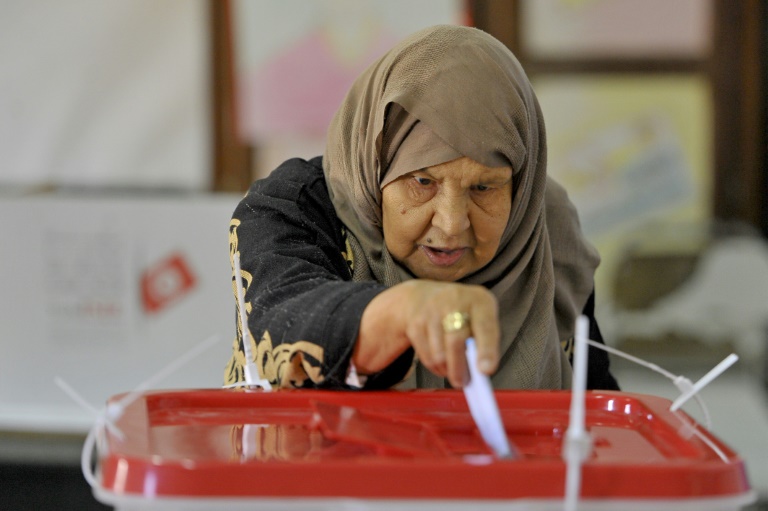
Uninspired Tunisians voted on Saturday for a parliament which will have virtually no power, marking the culmination of a power grab by President Kais Saied in the birthplace of the Arab Spring.

Opposition political groups in the North African country are boycotting the election. They say the poll is part of a “coup” against the only democracy to have emerged from the 2011 wave of uprisings across the region.

The ballot follows three weeks of barely noticeable campaigning, with few posters in the streets and no serious debate among a public preoccupied with day-to-day economic survival.

Electoral board president Farouk Bouasker said that by 3:00 p.m. (1400 GMT) just over seven percent of the nine-million-strong electorate had cast votes. 

The poll comes almost a year and a half since Saied suspended parliament and sent military vehicles to surround it, after months of political deadlock and economic crisis exacerbated by the coronavirus pandemic.

His power grab sparked fears for the democratic system that replaced dictator Zine El Abidine Ben Ali, unseated by a revolution sparked on December 17, 2010 when street vendor Mohamed Bouazizi burned himself to death to protest police harassment and unemployment.

In the marginalised city of Kasserine, Mohammed Jraidi, 40, said Saturday he was boycotting the poll.

“I don’t have any faith in the political class,” he said. “They’ve used us as lab rats for all types of elections while the economy gets worse and worse.”

Abed Jabbar Boudhiafi, 59, said he was voting out of a sense of duty and hope that it would change the political and economic situation. 

But he added, “we’re bored of elections.”

– Boycotting ‘farce’ –

Saied, a former law professor, used a July referendum to push through a new constitution giving the presidency almost unrestrained powers, laying the ground for a 161-seat rubber-stamp legislature in the country of around 12 million people.

On Saturday, he told voters that Tunisia was “breaking with those who destroyed the country”.

“Those who are elected today should remember that they are being watched by their voters, and that if they’re not up to the job their mandate will be taken away,” he said at a polling station in a comfortable district of Tunis.

On the streets of the capital, many expressed indifference.

“I’m not taking part in this farce,” said Ridha, a 59-year-old engineer who declined to give his full name. 

“This president has disappointed us and he’s dragging us towards the abyss.”

Saied’s moves against an unpopular political system were initially supported by many Tunisians tired of the messy and corrupt democratic system in the post-Ben Ali era.

But almost a year and half on, the country’s economic woes have gone from bad to worse.

Inflation is around 10 percent, and frequent shortages of milk, sugar and petrol are fuelling a growing wave of emigration.

– It ‘will change nothing’ –

The previous legislature had far-reaching powers in the mixed presidential-parliamentary system enshrined in Tunisia’s post-revolution constitution.

But the new chamber “won’t be able to appoint a government or censure it, except under draconian conditions that are almost impossible to meet,” said political scientist Hamadi Redissi.

Candidates are standing as individuals, in a system that neuters political parties including Saied’s nemesis, the once-powerful Islamist-leaning Ennahdha party.

Analyst Hamza Meddeb said the election was a “non-event” and predicted few Tunisians would vote for largely unknown candidates.

“This election is a formality to complete the political system imposed by Kais Saied and concentrate power in his hands,” said Meddeb, a fellow at the Carnegie Middle East Center.

Almost all of Tunisia’s political parties, including Ennahdha, said they would boycott the vote.

The powerful UGTT trade union federation has called the poll meaningless.

Student Salima Bahri, 21, said she wasn’t voting because it “will change nothing”.

“All the candidates represent Kais Saied, not the Tunisian people,” she said.

But others were determined to take part.

“It’s a duty to vote, whatever the process is,” said lawyer Ali Bejaoui, 48, after casting his ballot.

Peru president refuses to quit, demands Congress speed up election

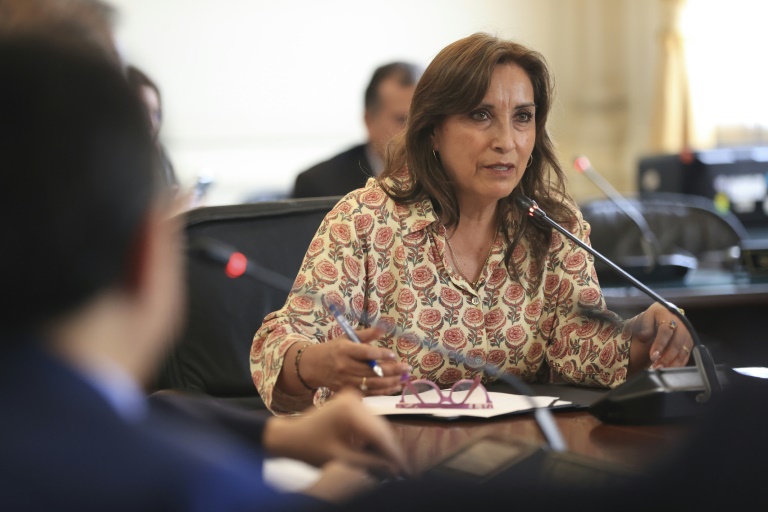
Peru’s embattled President Dina Boluarte said Saturday she would not step down in the face of violent protests over her predecessor’s ouster as she called on lawmakers to bring forward elections as a way to quell unrest.

“What is solved by my resignation? We will be here, firmly, until Congress determines to bring forward the elections,” Boluarte told Peruvians, a day after lawmakers voted against a bill to hold elections next December, more than two years early.

On Friday, House speaker Jose Williams said the vote could be revisited during a forthcoming session of Congress.

The South American nation has been wracked by violent unrest since then-president Pedro Castillo was impeached and arrested on December 7 after he attempted to dissolve Congress. At least 18 people have been killed, including minors.

In a televised address to the nation, Boluarte expressed regret for the protests and the deaths, most of which came in clashes with security forces including the military, which has been authorized to impose order under a state of emergency.

If armed troops were on the streets, she said, “it has been to take care of and protect” Peru’s citizens because the protests were “overflowing” with violent elements that were coordinated and not spontaneous.

“These groups did not emerge overnight. They had tactically organized to block roads,” Boluarte added.

Protesters are calling for the release of the ousted former president Castillo, the resignation of Boluarte and closure of Congress, and immediate general elections.

Ukraine races to restore power after Russian missiles batter grid

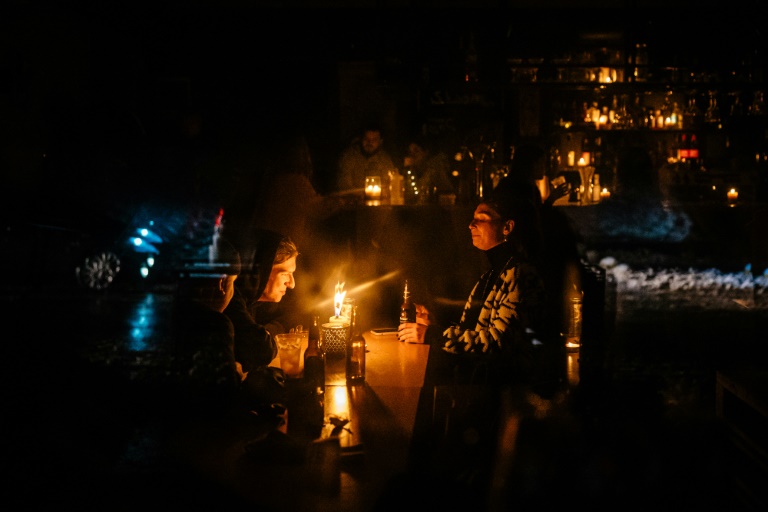
Ukraine worked Saturday to restore electricity and water supplies after Russia’s latest wave of attacks pitched multiple cities into darkness and forced people to endure sub-zero temperatures without heating or running water.

The volley of missiles unleashed Friday came as President Vladimir Putin held extensive meetings with the military top brass overseeing Russia’s invasion of Ukraine, where Moscow has stepped up bombardments. 

In the capital Kyiv, the metro had stopped running so that people wrapped in winter coats could take shelter at underground stations after air raid sirens rang out on Friday morning.

Kyiv mayor Vitali Klitschko said the metro service was relaunched early Saturday and water supply had been restored.

However, a third of Kyiv residents were still without power, Klitschko added. 

Power was also restored throughout the eastern city of Kharkiv on Saturday, regional governor Oleg Sinegubov said, after the strikes left Ukraine’s second city without electricity.

Ukraine’s national energy provider imposed emergency blackouts, saying on Saturday that the energy system “continues to recover”. 

Ukrenergo had warned the extent of the damage in the north, south and centre of the country meant it could take longer to restore supplies than after previous attacks.

During a visit to the army staff Friday, Putin sought out proposals from his military commanders on how Russia should proceed with the Ukraine offensive, according to the Kremlin.

The Kremlin released footage of Putin presiding over a round-table meeting with Defence Minister Sergei Shoigu and Chief of General Staff Valery Gerasimov among other top brass.

– ‘Barbaric’ attacks –

After a series of humiliating battlefield defeats, Russia since October has pursued an aerial onslaught against what Moscow says are military-linked facilities.

But France and the European Union have said the suffering inflicted on freezing civilians constitutes war crimes, with the bloc’s foreign policy chief calling the bombings “barbaric”.

Russia’s defence ministry said Saturday the strikes targeted Ukraine’s military and energy facilities, while also disrupting “the transfer of weapons and ammunition of foreign production”.

“All assigned targets were hit,” the ministry said in its daily briefing. 

Russia fired 74 — mainly cruise — missiles Friday, 60 of which were shot down by anti-aircraft defences, according to the Ukrainian army.

Kyiv withstood one of the biggest missile attacks since the start of the invasion. Regional officials said their air defence forces had shot down 37 out of 40 missiles.

Ukrainian President Volodymyr Zelensky said the strikes hit power and water supplies in Kyiv and 14 regions.

In the central city of Kryvyi Rig, where Zelensky was born, the air strikes hit a residential building.

A 64-year-old woman and a young couple with a little son died, governor Valentyn Reznichenko said Saturday, adding that 13 others had been wounded.

In the south, fresh Russian shelling in Kherson, recently recaptured by Ukraine, killed a 36-year-old man and injured a 70-year-old woman, governor Yaroslav Yanushevich said.

He later said that a separate strike hit a geriatric centre in the village of Stepanivka just north of Kherson. There were no casualties or injuries reported.

Kherson has been subjected to persistent Russian shelling since Moscow’s forces retreated in November, and power was cut in the city earlier this week.

– Protracted war –

Moscow has said the strikes on Ukrainian infrastructure are a response to an explosion on the Kerch bridge connecting the Russian mainland to the Crimean peninsula, annexed from Ukraine in 2014.

Ukrainian defence officials said this week that their forces had downed over a dozen Iranian-made attack drones launched at Kyiv, a sign that Western-supplied systems are having an impact.

Ukrainian military leaders have warned Moscow is preparing for a major winter offensive, including a fresh attempt to take Kyiv.

NATO chief Jens Stoltenberg told AFP that Russia was readying for a protracted war. 

“We see that they are mobilising more forces, that they are willing to suffer also a lot of casualties, that they are trying to get access to more weapons and ammunition,” he said.

Aiming to push Moscow to the negotiating table, the EU Friday imposed further sanctions, adding restrictions on the export of drone engines to Russia or countries like Iran looking to supply Moscow with weapons. 

Russia’s foreign ministry said Saturday the new package of “illegitimate unilateral restrictive measures” will not achieve its goal. 

Germany cuts the ribbon on first LNG terminal

Germany on Saturday inaugurated its first liquefied natural gas (LNG) terminal, built in record time, as the country scrambles to adapt to life without Russian energy.

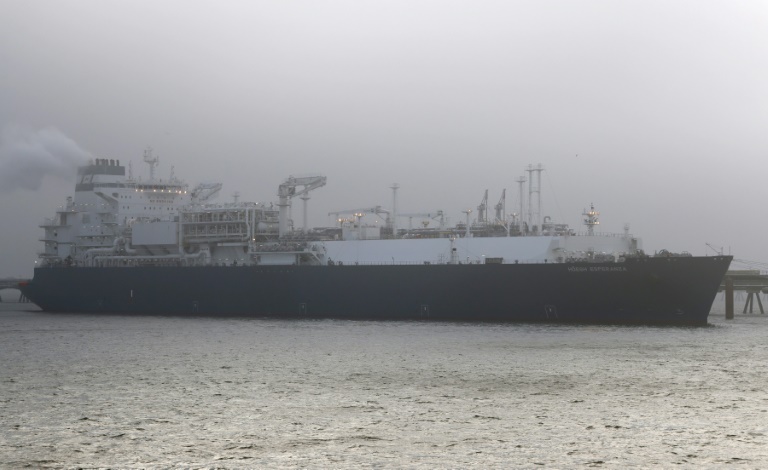
The rig in the North Sea port of Wilhelmshaven was opened by Chancellor Olaf Scholz at a ceremony on board a specialist vessel known as an FSRU, named the Hoegh Esperanza.

“It’s a good day for our country and a sign to the whole world that the German economy will be able to remain strong,” Scholz said from the boat.

The Hoegh Esperanza sounded its horn as the chancellor, dressed in a high visibility jacket, approached.

The ship has already been stocked with gas from Nigeria that could supply 50,000 homes for a year, and the terminal is set to begin deliveries on December 22.

Germany plans to open four more government-funded LNG terminals over the next few months as well as a private terminal in the port of Lubmin.

Together, the terminals could deliver 30 billion cubic metres of gas a year from next year, or a third of Germany’s total gas needs — if Berlin can find enough LNG to service them.

LNG terminals allow for the import by sea of natural gas which has been chilled and turned into a liquid to make it easier to transport.

The FRSU stocks the LNG, then turns it back into a ready-to-use gas.

Until now, Germany had no LNG terminals and relied on cheap gas delivered through pipelines from Russia for 55 percent of its supply.

– Supply worries –

But since Russia’s invasion of Ukraine, gas supplies to Germany have been throttled and Berlin has been forced to rely on LNG processed by Belgian, French and Dutch ports, paying a premium for transport costs.

The government decided to invest in building its own LNG terminals as quickly as possible and has spent billions of euros (dollars) on hiring FSRUs to service them.

However, Germany has not yet signed a single major long-term contract to begin filling the terminals from January.

“The import capacity is there. But what worries me are the deliveries,” Johan Lilliestam, a researcher at the University of Potsdam, told AFP.

A contract has been signed with Qatar for LNG to supply the Wilhelmshaven terminal but deliveries are not set to begin until 2026.

Suppliers want long-term contracts, while the German government is not keen to be locked into multi-year gas deals as it wants the country to become climate-neutral by 2045. 

“Companies need to know that the purchasing side in Germany will eventually diminish if we want to meet climate protection targets,” economy minister Robert Habeck has said.

Environmental campaigners have criticised the LNG project, with the DUH association announcing it will take legal action. A handful of protestors turned out in Wilhelmshaven with placards demanding an “End to gas”.

– Cold winter –

Germany could initially be forced to buy LNG from the expensive spot markets, which would lead to higher prices for consumers.

The market could also be squeezed next year by renewed demand in China as it emerges from strict Covid-19 curbs, Andreas Schroeder, an expert at the ICIS energy research institute, told AFP. 

“If Europe has been able to receive so much LNG in recent months, it is because Chinese demand was low,” Schroeder said. 

China recently signed a deal to buy gas from Qatar for 27 years — the longest such deal in history, according to Doha.

Germany has also had a cold winter so far, meaning the gas tanks have been emptying faster than expected.

“Gas consumption is increasing. This is a risk, especially if the cold spell continues,” said Klaus Mueller, the head of the country’s Federal Network Agency regulatory body, in a recent interview.

As a result, there is a real risk that Germany could experience temporary supply disruptions next winter, according to Schroeder.

Gas usage is currently down 13 percent compared to last year but the government wants that figure to be closer to 20 percent.

In Europe, the gap between supply and demand could reach 27 billion cubic metres (950 billion cubic feet) in 2023, according to an IEA report — equivalent to 6.5 percent of the European Union’s annual consumption.

Close Bitnami banner
Bitnami