World

Climate change fuelling cholera surge: WHO

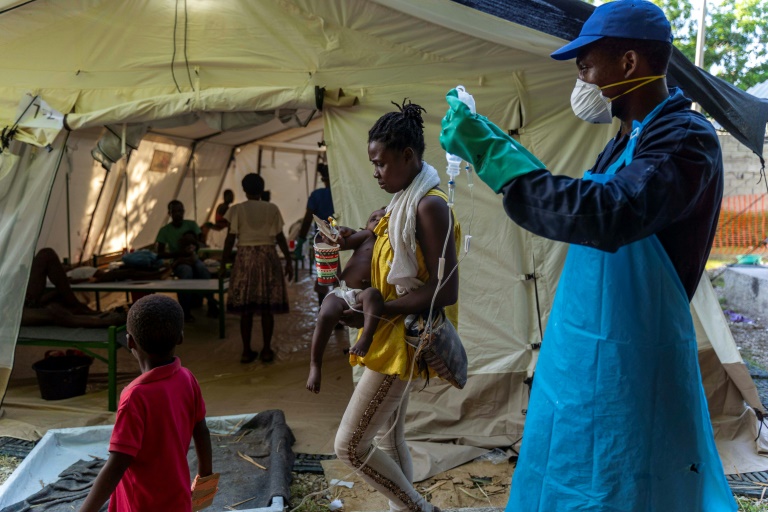
Climate change is fuelling a global cholera upsurge, the WHO said Friday, warning the situation was compounded by vaccine shortages and will only worsen unless it is stamped out soon.

The World Health Organization is responding to cholera outbreaks in 29 countries, including Haiti, which has more than 1,200 confirmed cases, more than 14,000 suspected cases and more than 280 reported deaths.

This week, Haiti received almost 1.2 million doses of oral cholera vaccines.

But the WHO said that vaccine stockpiles were extremely low — and that manufacturers were not enthusiastic about producing a vaccine chiefly aimed at some of the poorest countries in the world.

“If we don’t control the outbreak now, the situation will get worse and worse,” Philippe Barboza, the WHO’s team lead on cholera, told reporters in Geneva.

He said fatality rates are extremely high for most of the countries for which the UN health agency has data.

Cholera is contracted from a bacterium that is generally transmitted through contaminated food or water.

It causes diarrhoea and vomiting, and can be especially dangerous for young children.

“The factors which drive cholera are still the same: poverty, vulnerability and people who do not have access to clean water,” Barboza said.

These are amplified by conflict, humanitarian crises and natural disasters, which reduce access to drinking water.

– Vaccine shortage –

“But this year, we have a factor which is even more important: the direct impact of climate change, with a succession of major droughts, unprecedented floods in certain parts of the world, and cyclones which have amplified most of these epidemics,” he said.

Barboza said that while there had been big epidemics in certain countries before, they had not happened simultaneously, as now.

Although cholera can kill within hours, it can be treated with simple oral rehydration, and antibiotics for more severe cases.

But many people lack timely access to such treatment.

Outbreaks can be prevented by ensuring access to clean water and improving surveillance.

“It is not acceptable in the 21st century to have people dying of a disease which is very well-known and very easy to treat,” said Barboza.

Around 36 million cholera vaccine doses were produced this year.

Barboza said that making these doses was not very attractive to manufacturers as it is “a vaccine for poor countries”.

But he insisted that the mortality rate could be reduced by prioritising timely access to medical aid.

“The fight against cholera is not lost. We can win it,” he said.
Top Jordan police officer shot dead in fuel price protests

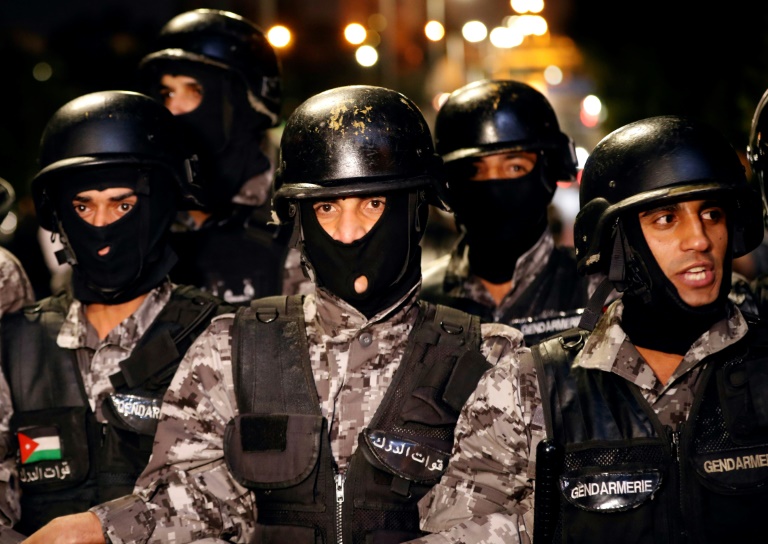
Gunfire killed a senior Jordanian officer and wounded two other police in the country’s south, where protesters have taken to the streets for days against rising fuel prices, authorities said on Friday.

Colonel Abdul Razzaq Dalabeh, the deputy police chief of Maan province, was shot in the head on Thursday while officers tried to “calm down riots” in the southern town of Al-Husseiniya, the Public Security Directorate said in a statement.

A separate PSD statement said an officer and a non-commissioned officer “were shot while calming down ‘saboteurs’ who had staged riots”, also in Al-Husseiniya.

Several provinces in the south of Jordan have seen strikes during the past few days. Truck drivers were the first to take action, followed by taxi drivers and then merchants, who closed their premises on Wednesday to protest higher fuel costs.

In some areas the demonstrators blocked roads with burning tyres or scuffled with security officers.

Because of incitement to violence and “calls for chaos,” the PSD’s cybercrime unit said it suspended operations of the TikTok social video app inside the kingdom, “after its misuse”.

Fuel prices in Jordan have nearly doubled compared with a year earlier, particularly the diesel used by trucks and buses, and kerosene for heating.

The government has proposed relief measures including financial aid for the most-affected families.

Global crude prices are up over the past year, and the economic consequences of Russia’s February invasion of Ukraine increased economic pain for already-struggling people around the Arab world.

Energy costs have led to protests in Jordan before, including in 2018 when prime minister Hani Mulki resigned after several days of rallies against proposed tax reforms and energy price increases.

“Our only demand is reducing fuel prices,” one truck driver, vowing they will remain “steadfast”, told Al-Mamlaka state television on Thursday in Maan. He and his colleagues parked their rigs beside a highway and held a sit-in, the images showed.

– In debt –

Another driver quoted by the channel asked: “What would we say to a government whose people couldn’t afford food, warmth, and fuel? Is this what we deserve from the government?”

The NetBlocks internet monitor reported that TikTok had been restricted in Jordan “on multiple internet providers”.

The PSD said it protects freedom of opinion and peaceful expression but would use “appropriate” force against rioters and vandals.

Government spokesman Faisal Shboul on Twitter said the cabinet condemned the attack “and affirms that the hand of justice will extend to the killers and refer them to a fair judiciary to receive their punishment”.

The United States, a close ally of Jordan, on Thursday said US government personnel had been restricted from both personal and official travel to the provinces of Karak, Tafilah, Maan, and Aqaba until further notice.

This was because of “reports of ongoing protests, burning tyres, and throwing stones at vehicles on streets and highways throughout Jordan and particularly in the south,” the US embassy in Jordan said.

The World Bank says Jordan is heavily in debt and faces around 23 percent unemployment.

The Hashemite kingdom relies extensively on foreign aid, of which the US in September committed to provide $10.15 billion between 2023 and 2029.

Around 675,000 refugees from neighbouring war-torn Syria are registered with the United Nations in Jordan. Amman estimates the real figure to be about twice that and says the cost of hosting them has exceeded $12 billion.

With multiple tensions around this part of the world, France’s Elysee Palace said in early December that a regional summit would take place in Jordan “before the end of the year”.

French President Emmanuel Macron is to attend, the palace said at the time after he held a phone call with Iraqi Prime Minister Mohammed Shia al-Sudani.

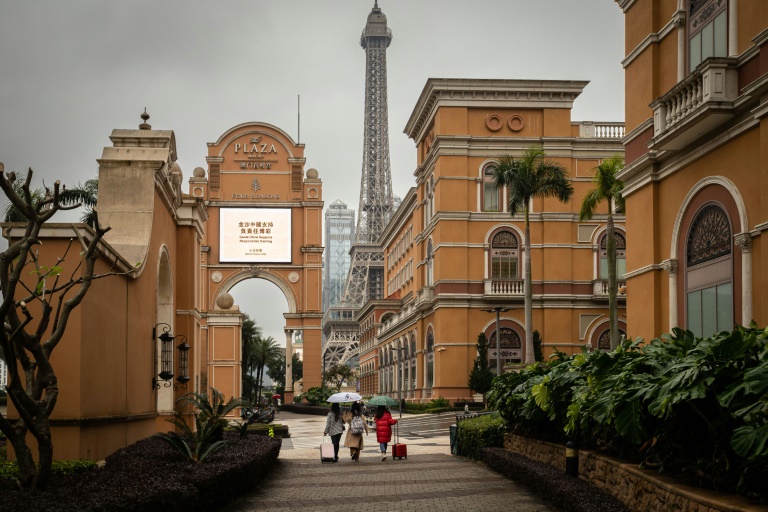
Macau casino giants pledge $15 billion for 10-year licences

Six Macau casino firms agreed Friday to invest a total of 118.8 billion patacas ($15 billion) after being granted 10-year operating licences, with the bulk of the money pledged to non-gaming projects.

The former Portuguese colony is the only place in China where casinos are allowed, and issues just six operating concessions for a multi-billion-dollar industry that, until the pandemic hit, was bigger than Las Vegas.

Macau has been keen to diversify away from gambling into tourism and leisure for decades, but with mixed results.

The government confirmed last month that the six incumbents all won licence renewals, beating back a surprise bid from a newcomer firm linked to Malaysian gaming and resorts giant Genting.

The casino firms promised to spend 108.7 billion patacas — more than 90 percent of their investment total — on “exploring overseas customer markets and developing non-gaming projects”, the government said Friday.

Such projects would cover the “convention and exhibition business, entertainment and performances, sports events, culture and art, health care, and themed amusement”, the government added.

Macau’s leader Ho Iat-seng said he hoped the operators would contribute to Macau’s development and “deliver on their corporate social responsibilities regarding protection of local employment and promotion of upward mobility of local workers”.

The six firms — MGM China, Wynn Macau, Sands China, Galaxy Entertainment, Melco Resorts, and SJM Holdings — will begin their new contract period on January 1.

Shares in the operators have spiked more than 60 percent in the past three weeks, according to Bloomberg, as news of the licence renewals emerged and China loosens coronavirus restrictions.

But all are still trading well below where they were before the pandemic. 

Macau’s gaming sector, which has been limping for nearly three years, was further battered this year as the Omicron variant led to a cycle of lockdowns, testing and border closures for residents and kept mainland Chinese tourists away.

The casinos are on track for their weakest annual revenue on record, with only 38.7 billion patacas recorded between January and November — down 86 percent from the same period in 2019.

Even if pandemic measures are fully lifted, it is unlikely they will return to their headiest, freewheeling days.

Chinese President Xi Jinping has spearheaded an anti-corruption campaign that has increased scrutiny of the high rollers and officials who travel to gamble in Macau, where money laundering is common.

For decades, Macau’s gaming industry was run as a monopoly by casino magnate Stanley Ho, but in 2002 more operators were brought in and issued 20-year concessions as part of a liberalisation effort.

In January, authorities slashed the licence period to 10 years and unveiled regulations seeking to increase local ownership and government supervision.

Russia fires missile barrage at Ukraine grid

A fresh barrage of deadly Russian strikes battered Ukraine on Friday, cutting water and electricity in major cities and piling pressure on the grid in sub-zero temperatures.

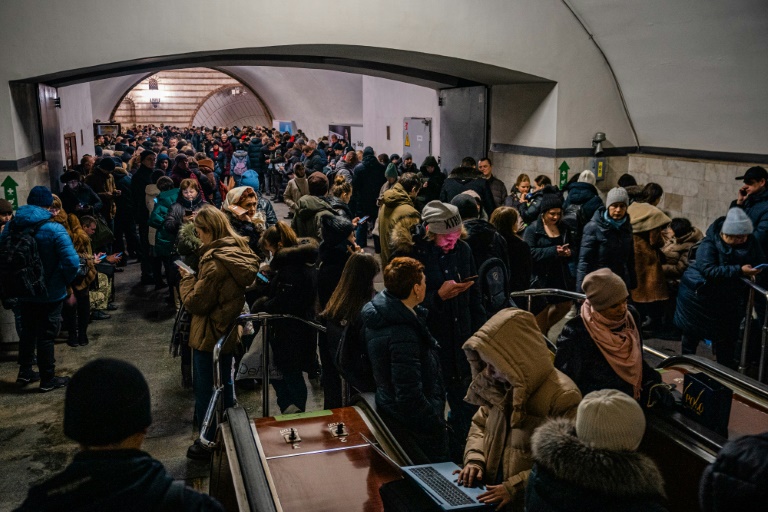
Kyiv residents in winter coats crammed into underground metro stations as air raid sirens rang out and Russian forces fired off dozens of missiles in one of the biggest broadsides targeting the Ukrainian capital since February.

AFP journalists reported loud explosions and Kyiv’s mayor said water supplies were disrupted in a wave of nationwide attacks that also killed two in President Volodymyr Zelensky’s hometown in the south.

Ukraine’s second largest city Kharkiv, near the border with Russia, was left without electricity, its mayor said.

“I woke up, I saw a rocket in the sky,” Kyiv resident 25-year-old Lada Korovai said. “I saw it and understood that I have to go to the tube.”

“We live in this situation. It’s a war, it’s real war,” she told AFP.

The onslaught is the latest of several waves of strikes targeting key infrastructure that began in October after a series of embarrassing battlefield defeats for Russia.

The central cities of Poltava and Kremenchuk were also without power and regional officials in Kryvyi Rig, where Zelensky was born, said rockets hit a residential building.

– Kyiv water cuts –

“Two people died,” governor Valentyn Reznichenko said. Eight were injured, he added.

Oleksandr Starukh, head of the frontline Zaporizhzhia region, which houses Europe’s largest nuclear power plant, said more than a dozen Russian missiles had targeted territory under Ukrainian control.

Kyiv meanwhile “withstood one of the biggest missile attacks since the beginning of the full-scale invasion. About 40 missiles were recorded in the capital’s airspace,” regional authorities said in a statement on social media. 

“Thirty-seven of them were destroyed by air defence forces!” they added.

Kyiv Mayor Vitali Klitschko said there were disruptions to water supplies and that the metro had stopped running so people could shelter underground.

“Due to damage to the power system and emergency power outages, subway trains will not run until the end of the day today,” city officials later announced online.

The Kyiv metro, a vital resource for the capital which had a pre-war population of three million, has been used as a city-wide bomb shelter since the Russian invasion.

About half of Ukraine’s energy grid has been damaged in sustained attacks and the national provider warned Friday of emergency blackouts because of the “massive” wave of Russian attacks.

– ‘Russian terror’ –

Temperatures in the Ukrainian capital hovered between minus one and three degrees Celsius (30 to 37 degrees Fahrenheit).

Foreign Minister Dmytro Kuleba called on Ukraine’s allies to bolster supplies of weapons.

“For each Russian missile or drone aimed at Ukraine and Ukrainians there must be a howitzer delivered to Ukraine, a tank for Ukraine, an armoured vehicle for Ukraine,” he said on social media. 

“This would effectively end Russian terror against Ukraine and restore peace and security in Europe and beyond.”

Fresh Russian shelling in the southern city of Kherson, recently recaptured by Ukraine, killed one person and wounded three more.

Kherson has been subjected to persistent Russian shelling since Moscow’s forces retreated in November and power was cut in the city on Thursday. 

The UN humanitarian coordinator for Ukraine, Denise Brown, said a woman working as a paramedic for the Ukrainian Red Cross was killed by Thursday’s strikes in Kherson.

In the Russian-controlled region of Lugansk in eastern Ukraine, Moscow-installed officials said shelling from Kyiv’s forces had killed eight and wounded 23.

– Putin to visit Belarus –

“The enemy is conducting barbaric shelling of cities and districts of the republic,” the Russian-installed leader of Lugansk Leonid Pasechnik said on social media.

Moscow has said the strikes on Ukrainian infrastructure are a response to an explosion on the Kerch bridge connecting the Russian mainland to the Crimean peninsula annexed by Moscow in 2014.

The Kremlin has said it holds Kyiv ultimately responsible for the humanitarian impact of the strikes for refusing to capitulate to Russian negotiation terms.

Ukrainian defence officials have credited systems newly supplied by Western allies for downing Russian missiles and drones.

Defence officials said this week that Ukraine had shot down a swarm of more than a dozen Iranian-made attack drones launched at Kyiv.

Separately on Friday, Russian President Vladimir Putin announced he will visit Belarus next week for talks with his counterpart and ally Alexander Lukashenko.

Minsk said the pair will hold one-on-one talks as well as wider negotiations with their ministers on “Belarusian-Russian integration”. 

UN force in Lebanon urges swift probe into Irish peacekeeper's death

The United Nations’ peacekeeping force in south Lebanon on Friday urged Beirut to ensure a “speedy” investigation into an Irish soldier’s shooting death near the Israeli border.

The peacekeeper’s convoy came under fire late Wednesday near the village of Al-Aqbiya, the Irish military said, wounding three other members of the UN force UNIFIL.

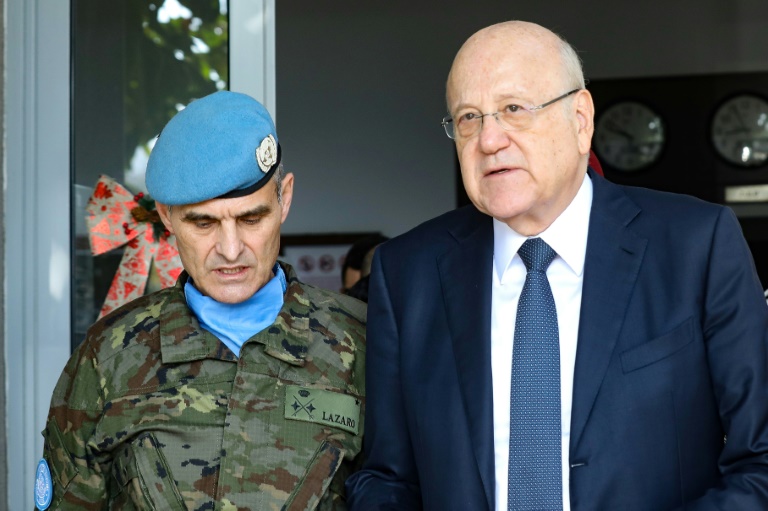
Lebanon’s caretaker Prime Minister Najib Mikati and army chief Joseph Aoun visited on Friday the UNIFIL headquarters in the border town of Naqura, denouncing the attack that claimed private Sean Rooney’s life.

UNIFIL spokesman Andrea Tenenti called it “a very serious incident” and told reporters it was “important” for the Lebanese authorities to bring the perpetrators to justice.

“It is a crime against the international community, against peacekeepers who are here… to maintain stability,” he added.

It is the first death of a UNIFIL member in a violent incident in Lebanon since January 2015, when a Spanish peacekeeper was killed during retaliatory Israeli fire.

“Peacekeepers are continuing with their activities and patrolling,” Tenenti said.

UNIFIL was set up in 1978 to monitor the withdrawal of Israeli forces after they invaded Lebanon in reprisal for a Palestinian attack.

Now with nearly 10,000 troops, the UN force acts as a buffer between Israel and Lebanon, which remain technically at war.

Israel withdrew from south Lebanon in 2000 but fought a devastating 2006 war with the powerful Iran-backed movement Hezbollah and its allies.

UNIFIL was beefed up to oversee the ceasefire that ended that conflict.

– Bullet to the head –

Witnesses said villagers in the Al-Aqbiya area, a Hezbollah stronghold, blocked Rooney’s vehicle after it took a road along the Mediterranean coast not normally used by the United Nations force.

A Lebanese judicial source told AFP that the peacekeeper was killed by a bullet to the head when seven projectiles pierced the vehicle.

The three others were injured when the vehicle hit a pylon and overturned, the source added.

Following a meeting in Naqura with the force’s commander, Major General Aroldo Lazaro, Lebanon’s Mikati said “the investigation continues in order to determine the circumstances of the incident.”

The Lebanese premier said it was “important” to prevent similar attacks, and promised “those who will be proven guilty will be punished”.

A spokesman for Ireland’s army told AFP that a specialist team was expected in Lebanon on Saturday to launch an investigation of the attack.

Over the years there have been a number of incidents between Hezbollah supporters and the UN force in border areas loyal to the armed group.

Wafic Safa, Hezbollah’s security chief, told Lebanon’s LBCI television that the incident was “unintentional” and called for investigators to be given time to establish the facts.

Relations between UNIFIL and communities in south Lebanon have “always been very positive”, the force’s spokesman said on Friday.

“The support of the communities is paramount in order for us to implement our mandate.”

Iranians hit streets again as protests enter fourth month

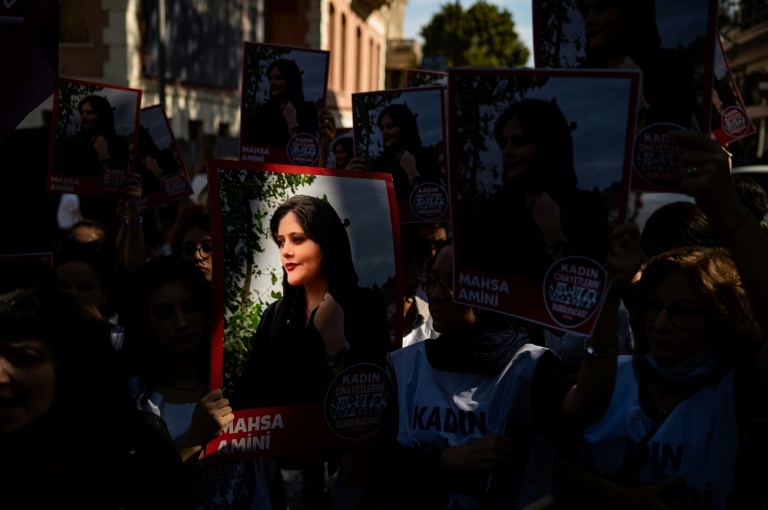
Dozens took to the streets Friday in Iran’s restive southeast, footage shared by rights groups showed, as a wave of protests sparked by Mahsa Amini’s death entered a fourth month.

Protesters in Zahedan, the Sistan-Baluchistan provincial capital, chanted “Death to the dictator”, taking aim at supreme leader Ayatollah Ali Khamenei, according to a video shared by Oslo-based Iran Human Rights (IHR) and verified by AFP.

Other images from Zahedan show crowds of men, some raising posters with anti-regime slogans, and a group of black-clad women marching down what appears to be a nearby street, also chanting slogans.

The Islamic republic has seen waves of protests since the September 16 death in custody of Amini, a 22-year-old Iranian Kurd who had been arrested for allegedly violating the country’s strict dress code for women.

Hundreds of people have been killed and thousands arrested in the unrest, leading to international condemnation, sanctions and Iran’s removal Wednesday from the a UN women’s rights body.

Sistan-Baluchistan, which lies on Iran’s far southeastern border with Afghanistan and Pakistan, had been the site of often deadly violence even before nationwide protests erupted.

The province’s Baluchi minority, who adhere to Sunni Islam rather than the Shiite branch predominant in Iran, have long complained of discrimination.

US-based rights group HRANA said hundreds rallied after Friday prayers in Zahedan, which has seen weekly protests since the security forces killed more than 90 people in the city on September 30, in what has been dubbed “Bloody Friday”.

The trigger for that violence was the alleged rape in custody of a 15-year-old girl by a police commander in the province’s port city of Chabahar.

But analysts say the Baluchi were inspired by the protests that flared over Amini’s death, which were initially driven by women’s rights but expanded over time to include other grievances.

– Hundreds killed –

Last week, a cleric was killed after being kidnapped from his mosque in Khash, a town in Sistan-Baluchistan.

Zahedan chief prosecutor Mehdi Shamsabadi said on Tuesday that the cleric Abdulwahed Rigi’s killers had been arrested after allegedly seeking to stir trouble between Sunnis and Shiites.

The largely peaceful demonstrations sparked by Amini’s death have been met with a crackdown by the Iranian security forces that has killed at least 458 protesters, according a toll issued on December 7 by the Norway-based IHR.

Iran’s top security body, the Supreme National Security Council, said on December 3 that more than 200 people had been killed in the street violence, including security personnel.

The United Nations says Iran’s security forces have arrested at least 14,000 people.

Iran’s judiciary said it has handed down 11 death sentences in connection with the protests.

Iran executed Mohsen Shekari on December 8 and Majidreza Rahnavard on Monday. Both were 23 years old. The latter was hanged in public rather than in prison as has been usual in the Islamic republic in recent years.

Amnesty International said on Friday that at least 26 people are at risk of execution in connection with the protests in Iran, which according to the London-based rights group is already the world’s most prolific user of the death penalty after China.

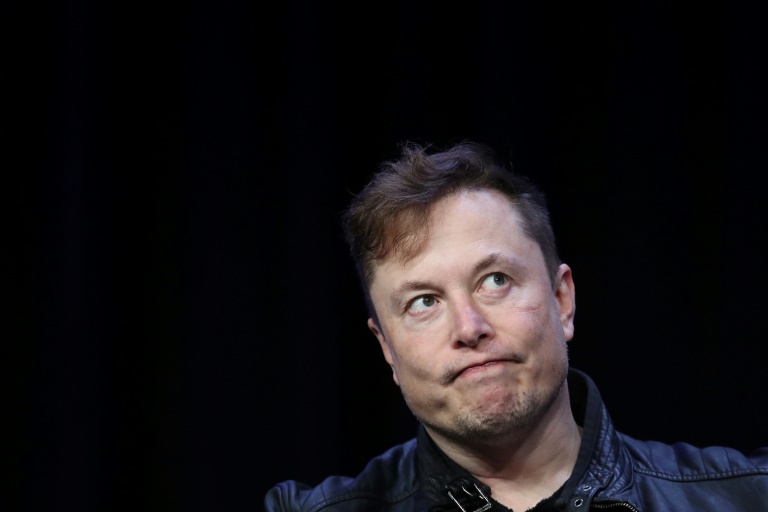
Twitter suspends accounts of journalists covering Musk

Twitter suspended Thursday accounts of more than a half-dozen journalists who had been writing about the company and its new owner Elon Musk.

Silencing journalists at Twitter while claiming to be a free speech champion is the latest controversy provoked by Musk since he took over the company, which has seen staffing gutted and advertisers exit.

Some of the journalists had been tweeting about Twitter shutting down an @ElonJet account that tracked flights of billionaire Musk’s private jet and about versions of that account hosted at other social networks.

Twitter did not say why the reporters’ accounts were suspended.

“Nothing says free speech like suspending journalists who cover you,” Sarah Reese Jones of news commentary website PoliticusUSA said in a tweeted response to posts about the suspensions.

Checks at Twitter showed account suspensions included reporters from CNN, The New York Times, and The Washington Post as well as independent journalists.

“The impulsive and unjustified suspension of a number of reporters, including CNN’s Donie O’Sullivan, is concerning but not surprising,” the news organization said in a tweet.

“Twitter’s increasing instability and volatility should be of incredible concern for everyone who uses the platform.”

CNN said it has asked Twitter for an explanation of the suspension.

The New York Times said in a statement it also wanted answers from Twitter regarding the “questionable” suspension of journalists.

“I have no idea what rules I purportedly broke,” independent journalist Aaron Rupar, whose Twitter account was suspended, wrote in a Substack post.

“I haven’t heard anything from Twitter at all.”

In a tweet late Thursday, Musk appeared to allude to the suspension of the reporters’ accounts with this tweet: “If anyone posted real-time locations & addresses of NYT reporters, FBI would be investigating, there’d be hearings on Capitol Hill & Biden would give speeches about end of democracy!”

Musk on Wednesday tweeted that a car in Los Angeles carrying one of his children was followed by “a crazy stalker” and seemed to blame the tracking of his jet for this alleged incident. In the tweet, he said legal action is being taken against the person who ran ElonJet.

The Twitter account that tracked flights of Musk’s private jet was shut down Wednesday despite the billionaire’s statement that he is a free speech absolutist.

Twitter later sent out word that it updated its policy to prohibit tweets, in most cases, from giving away someone’s location in real time.

Musk had gone public saying he would not touch @ElonJet after buying Twitter in a $44 billion deal as part of his commitment to free speech at the platform.

The European Union warned Musk on Friday that Twitter could be subject to sanctions under a future media law after the “worrying” suspension of several journalists from the platform.

“News about arbitrary suspension of journalists on Twitter is worrying. EU’s Digital Services Act requires respect of media freedom and fundamental rights. This is reinforced under our Media Freedom Act,” EU commissioner Vera Jourova tweeted.

“Elon Musk should be aware of that. There are red lines. And sanctions, soon.”

– Exodus expected –

Twitter has lurched from one controversy to the next since Musk took control in late October.

The billionaire’s talk of unfettered speech scared off major advertisers and caught the attention of regulators.

Musk has reinstated the account of former US president Donald Trump and lashed out against the outgoing key advisor for the US response to the Covid-19 pandemic, Anthony Fauci, a frequent target of vitriol on right-wing media.

CNN has reported that Twitter’s former head of trust and safety fled his home after baseless attacks on Twitter content moderation, endorsed by Musk.

Meanwhile, a purge initiated by Musk at Twitter left more than half of its 7,500 employees on the sidelines and now many of them are taking the SpaceX and Tesla tycoon to court.

Musk at one point signaled he was going to war with Apple over the App Store, only to later tweet that it was a “misunderstanding.”

Market tracker Insider Intelligence forecast that Twitter will experience an exodus of users.

“There won’t be one catastrophic event that ends Twitter,” said Insider Intelligence analyst Jasmine Enberg.

“Instead, users will start to leave the platform next year as they grow frustrated with technical issues and the proliferation of hateful or other unsavory content.”

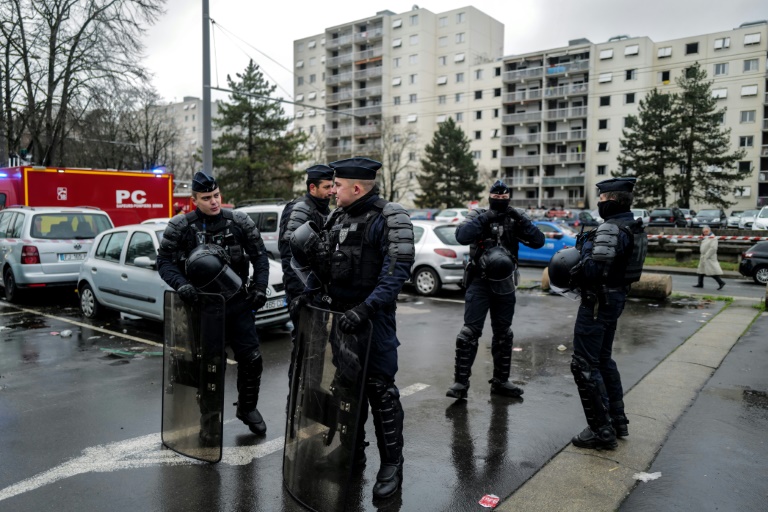
Apartment fire leaves 10 dead in France's Lyon

Ten people died including five children Friday in a pre-dawn blaze at a rundown seven-storey apartment building in a deprived suburb of the French city of Lyon, the government said Friday.

Prosecutors were probing the source of the fire that broke out at around 3:00 am (0200 GMT) in a residential building in Vaulx-en-Velin that Interior Minister Gerald Darmanin called a known drug-dealing spot.

Darmanin said it was too early to draw any conclusions about the cause but hailed the work of firefighters who arrived on the scene 12 minutes after being alerted. 

They “were able to save 15 people by taking considerable risks for their own lives by climbing the building from the outside… saving children and babies up to the seventh floor,” he said.

“Without the rapidity of the fire services and their heroism we would have had a much worse toll,” he said.

Nineteen people were injured, including four “whose lives are still in danger”, Darmanin said, adding that some of the bodies of the deceased were still being identified.

Witnesses at the scene described panicked occupants of the building screaming for help as smoke billowed from the windows.

“I heard people shouting ‘help, help, help, help us’,” said Assed Belal, a young resident of the neighbourhood. 

“There were people on the ground, others stuck on the balconies and the firefighters had difficulty in intervening because of the trees,” he told AFP.

He said his friends had told him they managed to catch a 10-year-old boy who was dropped from an upper floor by his mother to save his life.

– ‘Really terrible’ –

“We all know each other, it’s really terrible, I don’t have the words,” he added.”

Two of the 170 firefighters at the scene suffered light injuries while battling the flames, which broke out on the ground floor of the building, they said.

Darmanin said residents had complained about drug-dealing and squatters in the building.

“The (police) pressure on dealing locations is daily, but unfortunately drugs are deeply entrenched in some areas of the country,” he said. 

Vaulx-en-Velin, home to a large immigrant population, is just five kilometres (three miles) from the centre of Lyon but a world away from its fancy restaurants and elegant buildings.

The formerly industrial area is dotted with high-rise public housing blocs, and was the scene of violent riots in 1990 sparked by the death of a youth who was hit by a police car.

It has been a laboratory for various urban renewal efforts since, with hundreds of millions of euros injected into the area to improve living conditions and public transport.

The building that caught fire on Friday had undergone emergency repairs in 2019, Housing Minister Olivier Klein told reporters.

It was described as “rundown” in a statement by Lyon city authorities, which had earmarked the building for renovation work in January. 

Other deadly fires in France in recent years include a February 2019 blaze which killed 10 people and wounded 96.

In 2005, 24 people were killed in a fire in a residential home used by families of African origin. A woman was jailed for starting it by throwing clothes on candles during an argument.

Stocks, oil prices extend losses on recession fears

Stock markets dropped further Friday on prospects of more aggressive rises to interest rates to fight sky-high inflation, renewing concerns over the global economy entering recession next year.

After a healthy rally in recent weeks fuelled by signs that price rises were slowing, the US Federal Reserve, European Central Bank and Bank of England this week crushed any Christmas spirit by hiking borrowing costs again by sizeable amounts and warning of more pain.

While inflation in most countries has started coming down — helped by a drop in energy costs — it remains at multi-decade highs.

And observers have warned that economies could be heading for a period of stagflation where prices keep rising but growth stalls.

“In a nutshell, it is all about fears over a sharper economic slowdown in 2023 than previously expected,” noted Fawad Razaqzada, market analyst at City Index trading group.

“While macro data have been weak of late, there was still hope that the downturn might be short-lived and that a recession might be avoided in some regions altogether, amid signs of inflation peaking in some regions like the US.”

The latest rate hikes came as data showed US and UK retail sales dropping in November as consumers — key drivers of growth — feel the pinch from high prices and rate hikes.

– Recession on horizon? –

“With central banks on both sides of the pond suggesting they have more work to tame inflation, hiking interest rates into a dimming macro environment will undoubtedly trigger a recession,” said SPI Asset Management’s Stephen Innes.

“The question is just how profound. Forget inflation; Asia traders are now worried about a global recession.”

Wall Street tumbled Thursday, with the Nasdaq losing more than three percent as tech firms took another blow.

And the losses carried through to Asia, where Tokyo closed down 1.9 percent.

Eurozone indices dropped approaching the half-way stage but less sharply compared with Thursday.

On the upside, Hong Kong rose on progress in talks over allowing US officials to audit Chinese firms listed in New York, easing concerns about a possible delisting of some big names such as Alibaba and Tencent.

The news provided a little more help to Hong Kong traders, whose sentiment has been lifted also by China’s shift away from the economically damaging zero-Covid policy as well as moves to open the city further to overseas visitors.

And a report in the city’s South China Morning Post said the border with mainland China would be fully reopened next month, providing another much-needed boost to the beleaguered economy.

However, the mood was soured a little by a US decision to put 36 Chinese companies including top producers of advanced computer chips on a trade blacklist, severely restricting their access to any US technology.

– Key figures around 1145 GMT –

London – FTSE 100: DOWN 1.3 percent at 7,333.40 points

Frankfurt – DAX: DOWN 0.8 percent at 13,870.08

Paris – CAC 40: DOWN 1.3 percent at 6,438.84

EURO STOXX 50: DOWN 1.1 percent at 3,795.35

Tokyo – Nikkei 225: DOWN 1.9 percent at 27,527.12 (close)

Hong Kong – Hang Seng Index: UP 0.4 percent at 19,450.67 (close)

Shanghai – Composite: FLAT at 3,167.86 (close)

New York – Dow: DOWN 2.3 percent at 33,202.22 (close)

West Texas Intermediate: DOWN 1.8 percent at $74.71 per barrel

Brent North Sea crude: DOWN 1.8 percent at $79.74 per barrel

Euro/dollar: UP at $1.0630 from $1.0627 on Thursday

Pound/dollar: UP at $1.2187 from $1.2175

Euro/pound: DOWN at 87.22 pence from 87.26 pence

Dollar/yen: DOWN at 137.04 yen from 137.80 yen

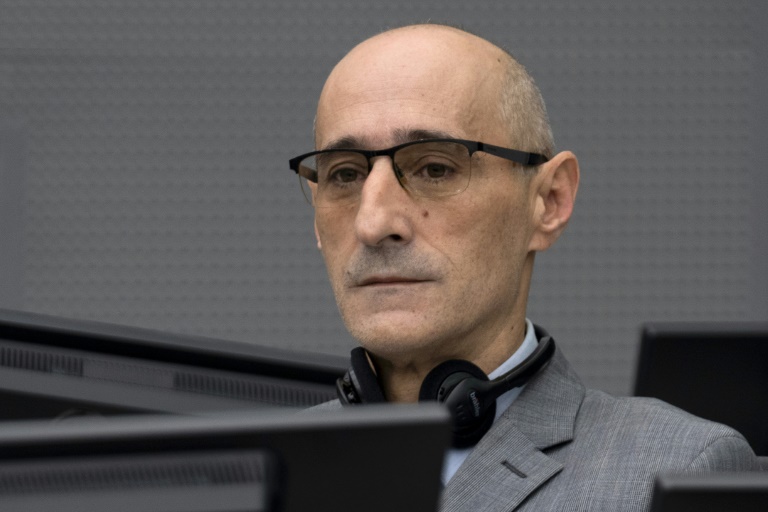
Kosovo court jails rebel commander in first war crimes verdict

A special Kosovo court in The Hague issued its first ever war crimes verdict on Friday, sentencing a former rebel commander who ran a makeshift torture centre to 26 years in jail.

Salih Mustafa was convicted of murder, torture and arbitrary detention during the ethnic Albanian Kosovo Liberation Army (KLA)’s 1998-1999 bloody independence war with Serbia.

Judges found that Mustafa and his men had brutally assaulted fellow ethnic Albanians whom they falsely accused of spying for Serb forces, and left one detainee to die.

Head Judge Mappie Veldt-Foglia said the verdict was a “milestone” for the court, which was set up in 2015, and “constitutes the first war crimes judgment of this tribunal.” 

“The panel sentences you to a single sentence of 26 years of imprisonment,” she told Mustafa, who wore a grey suit and blue tie and stood impassively during the verdict.

The high-security court operates under Kosovo law but is based in the Netherlands to shield witnesses from intimidation in Kosovo, where former KLA commanders still dominate political life.

The verdict comes at a sensitive time as ethnic tensions have flared again in Kosovo nearly a quarter-century after the war, with attackers exchanging gunfire with police at the weekend.

– ‘Burnt, electrocuted, stabbed’ –

Judges found that Mustafa, who was arrested in 2020 while working as an adviser at Kosovo’s defence ministry, ran a guerilla unit of the KLA in the Zllash region east of Pristina during the war.

His group kept at least six people, who were accused of collaborating with Serbs, “in barns suitable for animals, in deplorable conditions with livestock excrement lying around’, Veldt-Foglia said.

Prisoners were forced to sleep in puddles, denied food for two or three days at a time, and when they asked for water the KLA soldiers “urinated upon them saying, ‘here’s water for you’.”

“Detainees were beaten, hit with baseball bats, iron and rubber batons, they were burnt, electrocuted, stabbed, kicked punched and slapped,” the judge said.

Mustafa personally interrogated two detainees, subjecting one to a mock execution and beating him “all over his body” and he was also present while his soldiers abused other prisoners.

One victim was left in a “near-to-death” state and denied medical care. 

He was later found dead, with judges saying the mistreatment and lack of aid contributed to his death, while he also had gunshot wounds which could have either been inflicted by KLA rebels or advancing Serb troops.

But Mustafa’s actions “effectively equalled a decision to kill the murder victim, as at that stage he was denied any chance of survival,” the judge said.

– ‘Fear and intimidation’ –

The judge said she hoped the ruling, the EU-funded court’s first since it was set up in 2015, would “further reconciliation” in Kosovo.

But she noted that there was a “climate of fear and intimidation” surrounding the trial, with the court having jailed two KLA veterans last year for intimidating witnesses.

Kosovo reluctantly passed a law to allow the creation of the court after a 2010 Council of Europe report alleged atrocities by KLA forces. 

These had gone unpunished even as a number of Serbians have been convicted by other courts over the wars that ripped apart Yugoslavia in the 1990s.

The court has also issued war crimes charges former Kosovo president Hashim Thaci, who resigned after being indicted and is still regarded as a hero at home.

Thaci and other senior KLA leaders appeared in court later on Friday for a hearing on the possible timing of their trial.

The Kosovo war, which left 13,000 people dead, ended when Serbian president Slobodan Milosevic’s forces withdrew after an 11-week NATO bombing campaign.

Although Kosovo declared independence from Serbia in 2008, Belgrade does not recognise it and encourages the Serb majority in northern Kosovo to defy Pristina’s authority.

Close Bitnami banner
Bitnami