World

Russia fires 'massive' missile barrage at Ukraine grid

A fresh barrage of deadly Russian strikes hit Ukraine on Friday, cutting water and electricity in major cities and piling pressure on the grid in sub-zero temperatures.

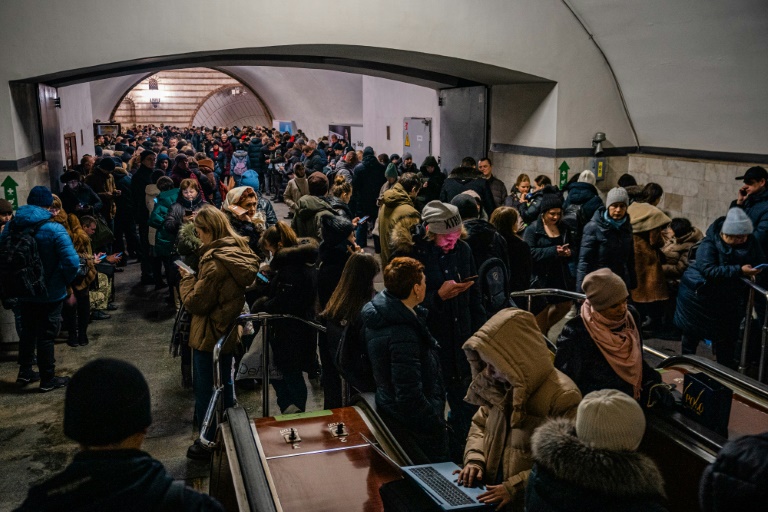
AFP journalists in Kyiv reported loud explosions and the mayor said the metro had stopped running to allow residents to take shelter as water supplies were disrupted.

The strikes killed two people and injured several others — including children — in the southern city of Kryvyi Rig, President Volodymyr Zelensky’s hometown.

“Another wave of massive Russian attacks on energy infrastructure,” Energy Minister German Galushchenko said on social media. “There will be emergency power outages,” he added.

The onslaught is just the latest of several waves of strikes that began in October after a series of embarrassing battlefield defeats for Russia in Ukraine.

Ukraine’s second largest city Kharkiv, near the border with Russia, was without electricity, its mayor said. 

The central cities of Poltava and Kremenchuk were also without power.

Air raid sirens wailed across the entire country as the extent of the damage was being assessed.

Regional officials in Kryvyi Rig said rockets had hit a residential building.

– Kyiv water cuts –

“Two people died,” governor Valentyn Reznichenko said. “At least five people were injured, including two children. All are in hospital,” he added.

Oleksandr Starukh, head of the frontline Zaporizhzhia region, which houses Europe’s largest nuclear power plant, said more than a dozen Russian missiles had targeted territory under Ukrainian control.

“Due to damage to energy infrastructure, there are interruptions to water supplies in all areas of the capital,” said Kyiv Mayor Vitali Klitschko on social media.

“Metro traffic is temporarily stopped on all lines,” he added, so that stations could be used as bomb shelters.

Temperatures in the Ukrainian capital on Friday hovered between minus one and three degrees Celsius (30 to 37 degrees Fahrenheit).

Fresh Russian shelling in the southern city of Kherson, recently recaptured by Ukraine, killed one person and wounded three more.

Kherson has been subjected to persistent Russian shelling since Moscow’s forces retreated in November and power was cut in the city on Thursday. 

The UN humanitarian coordinator for Ukraine, Denise Brown, said a woman working as a paramedic for the Ukrainian Red Cross was killed by Thursday’s strikes in Kherson.

“This deeply tragic event is yet another reminder of the horrific consequences of this war for civilians and the extraordinary risks front-line humanitarian workers take,” she said.

In the Russian-controlled region of Lugansk in eastern Ukraine, Moscow-installed officials said shelling from Kyiv’s forces had killed eight and wounded 23.

– Putin to visit Belarus –

“The enemy is conducting barbaric shelling of cities and districts of the republic,” the Russian-installed leader of Lugansk Leonid Pasechnik said on social media.

Moscow has said the strikes on Ukrainian infrastructure are a response to an explosion on the Kerch bridge connecting the Russian mainland to the Crimean peninsula annexed by Moscow in 2014.

The Kremlin has also said Kyiv was ultimately responsible for the humanitarian impact of the strikes for refusing to capitulate to Russian negotiation terms.

The wave of attacks has spurred urgent pleas from Kyiv for greater air defence capabilities from Western allies. 

Ukrainian defence officials have credited newly supplied systems for downing Russian missiles and drones.

Defence officials said this week that Ukraine had shot down a swarm of more than a dozen Iranian-made attack drones launched at Kyiv.

Separately on Friday, Russian President Vladimir Putin announced he will visit Belarus next week for talks with his counterpart and ally Alexander Lukashenko.

Minsk said the pair will hold one-on-one talks as well as wider negotiations with their ministers on “Belarusian-Russian integration”. 
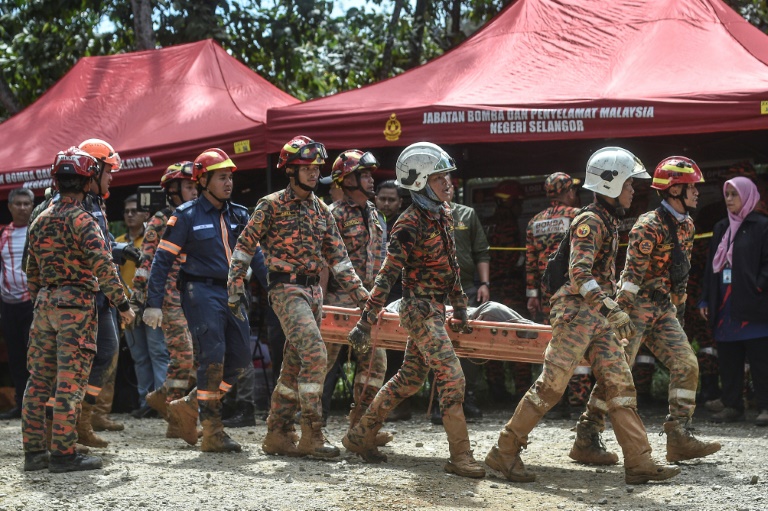
Nineteen killed, 14 missing in Malaysia landslide

Nearly 20 people, including four children, were killed when a landslide struck a campsite at a Malaysian farm on Friday, officials said, with rescuers scouring the muddy terrain for those still missing.

“The total is 19 people (dead),” Norazam Khamis, director of the Selangor state fire and rescue department, told reporters.

Two of the victims were “believed to be a mother and her child in a state of embrace buried under the earth”, he said, adding that 14 people were still missing.

According to Nga Kor Ming, the local government development minister, 61 people so far have been found safe after the predawn landslide near the town of Batang Kali, just outside the capital Kuala Lumpur and near a mountain casino resort.

Veronica Loi, who was camping at the site overnight and survived the landslide, told AFP that her family was sleeping when they heard a sudden, loud sound. 

“We saw the tent beside us was totally gone,” she said.

Hundreds of government personnel including police and rescuers were seen at the gates leading to the campsite compound, while an excavator was seen entering the area from the main road. 

Authorities said rescue efforts would be on-going but if it rained, they would have to stop.

– ‘No licence’ –

The farm where the campsite was situated — “Father’s Organic Farm” — changed its Facebook profile picture to all black on Friday.

Nga said the “campsite is operating without a licence”, and that the operators would be punished if found guilty by the court.

Videos and photos circulating online showed large fallen trees and crushed vehicles, as well as search and rescue personnel wearing headlamps and digging with shovels, and searching for survivors by a fallen structure.

Landslides are common in Malaysia after heavy rains, which are regular at the end of the year. However, there were no heavy rains recorded overnight in Batang Kali.

The government has imposed strict rules with regards to hillside development, but landslides have continued to occur after bouts of bad weather.

In March, four people were killed after a massive landslide triggered by heavy rains buried their homes in a Kuala Lumpur suburb.

In one of the deadliest such incidents, a huge mudslide in 1993 brought on by heavy rain caused a 12-storey residential building outside the capital to collapse, killing 48 people.

Peru protests spread as ousted leader's detention extended

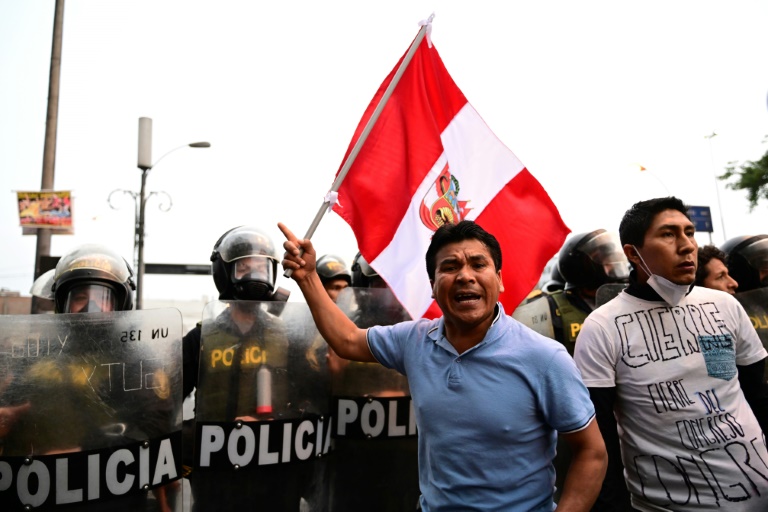
Protests erupted late Thursday in Peru’s southern city of Ayacucho, with clashes between demonstrators and the military killing at least seven people as unrest grows over the treatment of ousted president Pedro Castillo.

The country’s Supreme Court earlier on Thursday ordered Castillo to remain in detention for 18 months after his arrest last week, which has sparked protests that have killed at least 15 people across the South American nation, according to authorities.

Castillo was removed from office and detained after he tried to dissolve the legislature and announced he would rule by decree, in what opponents say was a bid to dodge an impeachment vote amid several corruption probes.

The leftist former schoolteacher stands accused of rebellion and conspiracy and could be jailed for up to 10 years if found guilty, according to public prosecutor Alcides Diaz.

A Supreme Court judge granted the request from prosecutors to keep Castillo in custody, saying he posed a flight risk after trying to seek asylum at the Mexican embassy in Lima. The detention order extends to June 2024.

His removal from office has sparked protests across the country with thousands taking to the streets every day, including in the capital Lima on Thursday, despite a state of emergency decree that allows the military to participate in law enforcement operations.

Clashes between the military and Castillo’s supporters left at least seven dead on Thursday in the southern city of Ayacucho, regional health authorities said, with fighting near the airport killing two, according to the country’s ombudsman.

The ombudsman put the number of injured at 340, with the police saying at least half of that total are from their ranks.

Castillo’s supporters — dozens of whom have camped outside the prison where he is being held in the capital — remain undeterred and unbowed.

“I am in total disagreement with the Peruvian justice system, because everything is for sale,” demonstrator Rolando Arana, 38, said in Lima after the court ruling on keeping Castillo detained. 

“The president has been kidnapped. There is no other word for it,” 41-year-old Lucy Carranza said earlier. 

On Thursday, 300 people marched near the prison shouting “Freedom for Castillo” under the watchful eye of police.

Dina Boluarte, the former vice president who was quickly sworn in as president after Castillo’s arrest, on Wednesday declared a nationwide state of emergency for 30 days.

The following day she exhorted Congress to approve a constitutional reform that will allow her to bring forward elections slated for July 2026 to December 2023.

New elections are one of the main demands of pro-Castillo demonstrators, which have included Indigenous people from Peru’s Amazon regions in the center and southeast.

– ‘They didn’t let him govern’ –

Four airports have been shut down due to the protests, while more than 100 roads throughout the country remain blocked.

Hundreds of tourists have been left stranded at Peru’s most popular attraction, the 15th-century Inca citadel Machu Picchu, after train service to the site was suspended.

Protest leaders have said they will stage new demonstrations again on Friday, demanding Castillo’s release, Boluarte’s resignation, Congress’s closure and new elections.

Castillo and his attorneys were not present at the virtual hearing that determined he should not be released.

The judge said Castillo had refused to accept the summons, so his case was assigned to a public defense lawyer.

The hearing was supposed to take place on Wednesday when Castillo’s initial seven-day detention expired but was postponed by 24 hours after the former leader’s lawyers argued they had not received the necessary documents related to his case from prosecutors.

Castillo has called his arrest unjust and arbitrary, while urging security forces to “stop killing” protesters.

Speaking outside the prison where Castillo is being held, his niece Vilma Vasquez accused his political opponents of mounting a smear campaign against the ex-president even before he took office last year.

“From the first day that he took office and even during the (election) campaign, already we were (called) terrorists,” said Vasquez.

“They didn’t let him govern — we were thieves, we were corrupt. We’re going to stay here until he leaves” prison.

Before his election, Castillo’s detractors tried to paint him as a dangerous communist and sympathizer with Shining Path rebels who sowed chaos in the 1980s and 1990s. Castillo says he fought against the Maoist guerrillas.

He was in power for only 17 months in Peru, which is prone to political instability and is now on its sixth president in six years.

His short period in office was marked by a power struggle with the opposition-dominated Congress, and six investigations into him and his family mainly for corruption.

Fire outside France's Lyon kills 10, including five children

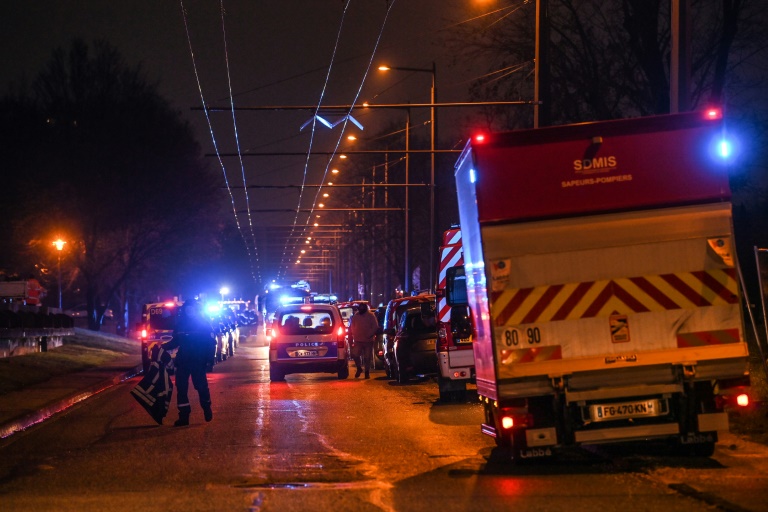
Five children including a three-year-old were among 10 people killed when a fire broke out in a seven-storey apartment building in a suburb of the French city of Lyon, the government said Friday.

Fourteen people were injured, including four who required emergency treatment, after the fire erupted in Vaulx-en-Velin in the northern outskirts of Lyon, in eastern France, the local authorities said.

The fire was one of the deadliest such tragedies in a residential building in recent years, although the country has seen a sequence of similar incidents.

Interior Minister Gerald Darmanin told reporters in Paris before heading to the scene that 10 people were killed, including five children aged between three and 15.

“We do not know the cause of the fire and the investigation will be able to find out,” he said.

“It’s shocking and the toll is extremely heavy,” he said, adding he had discussed what had happened with President Emmanuel Macron.

The fire was put out, local authorities said, adding that the blaze erupted shortly after 3:00 am (0200 GMT) in Vaulx-en-Velin.

– ‘Really terrible’ –

“I heard people shouting ‘help, help, help, help us’,” said Assed Belal, a young resident of the neighbourhood who was there during the fire. 

“There were people on the ground, others stuck on the balconies and the firefighters had difficulty in intervening because of the trees,” he told AFP.

He said his friends had told him they managed to catch a 10-year-old boy who was thrown from an upper floor by his mother to save his life.

“We all know each other, it’s really terrible, I don’t have the words,” he added.”

Two firefighters suffered light injuries while battling the blaze, which broke out on the ground floor of the building, they said.

Smoke as well as flames then surged upwards, putting all the residents of the building in danger.

Nearly 170 firefighters had been deployed at the building.

“It was horrific,” said Mohamed, whose last name was not given, the cousin of a resident who managed to escape from the fourth floor to safety with his two children.

– ‘Difficult conditions’ –

The emergency services were busy on the scene with ambulances, trucks and flashing lights, according to an AFP photographer.

In the middle of the night and on one of the coldest nights of the winter, the rescue operation took place in “difficult conditions”, said Darmanin.

A large security cordon was set up in the area, a district that had been undergoing a process of substantial urban renewal.

The area had often been the scene of social tensions in the Lyon suburbs, sometimes gritty areas in total contrast to the glitzy city centre which is a magnet for international gastro-tourism.

But the local authorities in the early 2000s launched a program worth 100 million euros to revamp it into a so-called “eco-district” to develop local shops and expand public transport.

In February 2019, 10 people were killed and 96 wounded in a fire in Paris which was the deadliest in the French capital since 2005.

In 2005, 24 people were killed in a fire in a residential home used by families of African origin. A woman was jailed for starting it by throwing clothes on candles during an argument.

Top Jordan police officer shot dead in fuel price protests

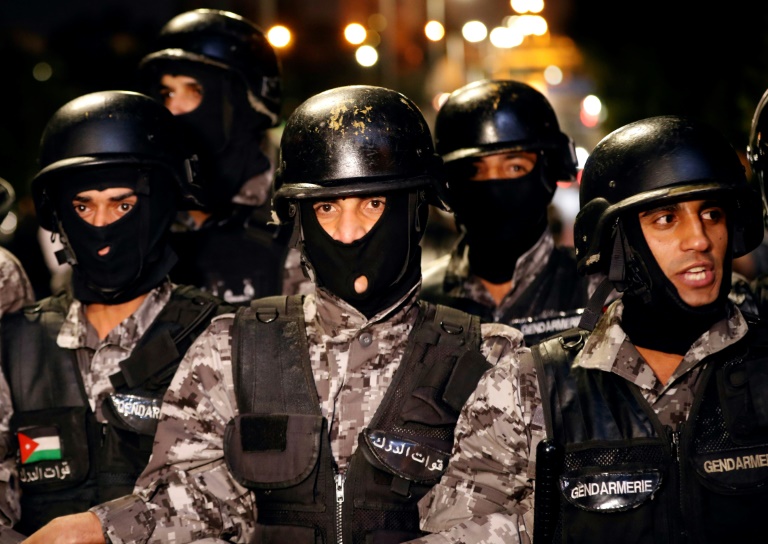
Gunfire killed a senior Jordanian officer and wounded two other police in the country’s south, where protesters have taken to the streets for days against rising fuel prices, authorities said Friday.

Colonel Abdul Razzaq Dalabeh, the deputy police chief of Maan province, was shot in the head on Thursday while officers tried to “calm down riots” in the southern town of Al-Husseiniya, the Public Security Directorate (PSD) said in a statement.

A separate statement said an officer and a non-commissioned officer “were shot while calming down ‘saboteurs’ who had staged riots”, also in Al-Husseiniya.

Several provinces in the south of Jordan have seen strikes over the past few days. Truck drivers were the first to take action, followed by taxi drivers and then merchants, who closed their premises on Wednesday to protest higher fuel prices.

In some areas the demonstrators blocked roads with burning tyres or scuffled with security officers.

Fuel prices in Jordan have nearly doubled compared with a year earlier, particularly the diesel used by trucks and buses, and kerosene for heating.

The government has proposed relief measures including financial aid for the most-affected families.

Global crude prices are up over the past year, and the economic consequences of Russia’s February invasion of Ukraine increased economic pain for already-struggling people around the Arab world.

Energy costs have led to protests in Jordan before, including in 2018 when prime minister Hani Mulki resigned after several days of rallies against proposed tax reforms and energy price increases.

The Public Security Directorate said that it protects freedom of opinion and peaceful expression but would use “appropriate” force against rioters and vandals.

“We will strike with an iron fist anyone who attempts to attack lives and public property and threatens the security of the homeland and the citizen,” it said.

– Heavily in debt –

The United States, a close ally of Jordan, on Thursday said US government personnel had been restricted from both personal and official travel to the provinces of Karak, Tafilah, Maan, and Aqaba until further notice.

This was because of “reports of ongoing protests, burning tyres, and throwing stones at vehicles on streets and highways throughout Jordan and particularly in the south,” the US embassy in Jordan said.

“Road closures and related security incidents are frequent and unpredictable, and emergency services are experiencing significant delays when responding to calls for help,” the embassy said.

The World Bank says Jordan is heavily in debt and faces around 23 percent unemployment.

The Hashemite kingdom relies extensively on foreign aid, of which the US in September committed to provide $10.15 billion between 2023 and 2029.

In late November officials in Amman, where the two countries signed an accord, said Washington would provide Jordan with more than $845 million in annual financial support.

Around 675,000 refugees from neighbouring war-torn Syria are registered with the United Nations in Jordan. Amman estimates the real figure to be about twice that and says the cost of hosting them has exceeded $12 billion.

With multiple tensions around this part of the world, France’s Elysee Palace said in early December that a regional summit would take place in Jordan “before the end of the year”.

French President Emmanuel Macron is to attend, the palace said at the time after he held a phone call with Iraqi Prime Minister Mohammed Shia al-Sudani.

Beijing crematoriums strain under China Covid wave

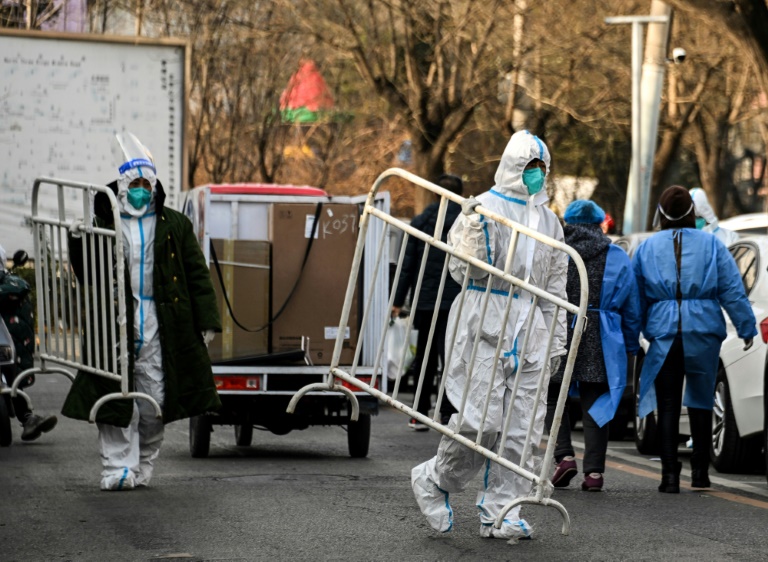
Workers at Beijing crematoriums said Friday they are overwhelmed as China faces a surge in Covid cases that authorities warn could hit its underdeveloped rural hinterland during upcoming public holidays.

Covid-19 is spreading rapidly across China after three years of strict containment measures ended last week, with health authorities now admitting the true scale of the outbreak is “impossible” to track.

China’s top Covid response body on Friday urged local governments to step up monitoring and treatment services for people returning to rural hometowns to visit family for upcoming New Year’s Day and Lunar New Year celebrations.

The latter is the world’s largest annual migration, with three years of pent-up demand due to prolonged zero-Covid domestic travel restrictions waiting to explode.

State media and Chinese health experts have downplayed the severity of Omicron, with expert Zhong Nanshan recently saying that Covid should be called the “coronavirus cold”.

But millions of unvaccinated elderly people remain vulnerable, and there have been widespread shortages of antigen tests and fever medicines in shops.

Two Beijing funeral homes contacted by AFP confirmed they were operating 24 hours a day and offering same-day cremation services to keep up with a recent surge in demand, despite official data registering no new Covid deaths since December 4.

“We’re being worked to the bone! Over 10 of our 60 staff are positive (for Covid) but we have no choice, it’s been so busy lately,” one crematorium staffer told AFP.

“We are cremating 20 bodies a day, mostly old people. A lot of people have been getting sick recently.”

Another Beijing crematorium told AFP that there was a week-long waiting list for a spot.

A recent study by researchers at the University of Hong Kong estimated China could experience about a million Covid deaths this winter without timely intervention such as fourth-dose booster vaccinations and social restrictions. 

China has only reported nine official deaths from Covid since mid-November, despite logging more than 10,000 daily infections since then. 

There were no Covid deaths reported nationwide between May 28 and November 19.

In the earliest Wuhan outbreak, many deaths of Covid-positive patients went unreported due to strict national criteria for classifying Covid-related deaths, Chinese media reported at the time.

– Closed loop –

Managers of five nursing homes told Chinese media in a Thursday report that they were unable to procure antigen tests or medicines due to shortages, and had no emergency plans for a wide-scale outbreak. 

Staff at multiple Beijing nursing homes contacted by AFP Friday refused to speak about conditions there. 

Many elderly homes nationwide have continued pandemic-era “closed-loop” protocols in which staff are required to live on-site, according to notices posted online in recent days. 

In addition, China’s lack of a primary care system means that hospital facilities are easily swamped by an influx of people with relatively minor ailments. 

Videos of Covid patients sitting on stools receiving saline drips outside crowded hospitals have also been going viral on social media in recent days.

AFP geolocated one video to a hospital in Hanchuan county, Hubei province, whose staff confirmed it was filmed Tuesday.

“The patients in the video volunteered to sit outside in the sun because it was… a little bit crowded inside,” the staffer told AFP.

Counterstrikes and controversy: Japan's defence overhaul

Japan has laid out plans to expand its defence capabilities drastically over five years.

The new security strategy marks a major shift, as Japan confronts China’s growing military might.

– Why are the changes controversial? –

Japan’s constitution, drafted by the United States after World War II, does not officially recognise the military, so moves to bolster its capacity are highly sensitive.

The constitution limits spending on the army, navy and air force to nominally defensive capabilities, and bans the “use of force as means of settling international disputes”.

Although defence spending has risen every year for decades, the total has long hovered at around one percent of GDP, below the NATO standard of two percent.

That level “became symbolic of Japan’s security policy that focuses exclusively on self-defence”, Naoko Aoki of the Atlantic Council think tank told AFP.

Now Prime Minister Fumio Kishida has pledged to ramp up spending to two percent by 2027, although how to finance the rise is proving a political headache.

“Breaching this self-imposed cap does not mean that Japan is abandoning its policy,” said Aoki.

“But it reflects the alarm and concern that the Japanese feel about their security environment.”

– What is ‘counterstrike capacity’? –

A pillar of the new strategy is to acquire “counterstrike capacity”: weapons to destroy enemy missile launch sites during an attack.

The move is delicate “because it would exceed what Japan has traditionally considered necessary to defend itself”, Aoki said, although polls show most Japanese are in favour.

The government has insisted for decades that carrying out counterstrikes under certain conditions would not violate the pacifist limits of the constitution.

Even so, questions remain about the efficacy of counterstrike missiles given the sophisticated capacities of China and other neighbours, said James Brady, vice president of Teneo consultancy.

“North Korea alone has recently been demonstrating multiple types of mobile launch platforms, including road, railway, and submarine,” he warned.

“Even with counterstrike capacities, Japan’s defence planners would face a whack-a-mole scenario.”

– Why is Japan doing this now? –

Unease has grown in Japan over China’s rapidly modernising military and North Korea’s wave of missile tests.

Russia’s invasion of Ukraine has also “reinforced Japanese concerns”, Aoki said.

Japanese officials have regularly protested Chinese maritime incursions, and raised concerns about joint aerial exercises by Chinese and Russian planes.

Under President Xi Jinping, China has also become more bellicose toward Taiwan, which it considers a part of its territory to be taken by force one day if necessary.

So “a key question going forward will be the extent to which Japanese and US forces can better integrate planning to respond jointly to something like a Taiwan contingency,” Brady said.

– How will the changes be received? –

Plans to bolster Japan’s missile arsenal have faced some hesitancy from the ruling party’s coalition partner Komeito, which takes a traditionally pacifistic stance.

“Similarly, neighbouring capitals have traditionally opposed the idea of Tokyo re-arming, worried that it might prelude a return to the military expansionism of the pre-1945 era,” Brady said.

Japan’s ties with China have already deteriorated in recent years, and Beijing has said it is “firmly opposed” to the overhaul.

Russia too will likely see the moves as a further nail in the coffin for ties.

Tokyo’s key ally Washington, however, is expected to welcome the shift and play a key role in bolstering Japan’s defences.

Surveys also show Japan’s public is broadly supportive of efforts to boost defences, including through the counterstrike capacity, though there is opposition to new taxes to finance spending.

Most markets drop as central banks crush Christmas spirit

Most stock markets fell Friday as investors contemplated interest rates going higher than expected for an extended period after central banks reaffirmed their commitment to bringing down inflation.

After a healthy rally in recent weeks fuelled by signs that price rises were slowing, the US Federal Reserve and European Central Bank this week crushed any Christmas spirit by hiking borrowing costs again and warning of more pain to come.

While inflation in most countries has started coming down from the levels seen earlier this year — helped by a drop in energy costs — it remains at multi-decade highs.

And observers have warned that economies could be heading for a period of stagflation where prices keep rising but growth stalls.

After a rough week for markets, anxiety was enhanced on Wednesday after the Fed hiked rates as expected but indicated they would likely have to go higher than had been forecast, ramping up fears of a recession.

That was followed by similar moves by the ECB on Thursday, with its boss Christine Lagarde warning: “We have more ground to cover, we have longer to go and we are in for a long game.”

The Bank of England also lifted rates and said more hikes were on the cards.

The decisions came as data also showed that almost a year of monetary tightening was hitting the economy more and more, with US retail sales dropping in November as American consumers — the key driver of growth — began to feel the pinch.

– Recession on horizon? –

“With central banks on both sides of the pond suggesting they have more work to tame inflation, hiking interest rates into a dimming macro environment will undoubtedly trigger a recession,” said SPI Asset Management’s Stephen Innes.

“The question is just how profound. Forget inflation; Asia traders are now worried about a global recession.”

All three main indexes on Wall Street tumbled Thursday, with the Nasdaq losing more than three percent as tech firms took another blow.

And the losses carried through to Asia, where Tokyo gave up 1.9 percent while Sydney, Seoul, Singapore, Mumbai, Taipei, Bangkok and Manila were also in the red. Shanghai was barely moved.

However, the dollar eased back slightly after Thursday’s rally.

Hong Kong rose, supported by signs of progress in talks on allowing US officials to audit Chinese firms listed in New York, easing concerns about a possible delisting of some big names such as Alibaba and Tencent.

The news provided a little more help to Hong Kong traders, whose sentiment has been lifted by China’s shift away from the economically damaging zero-Covid policy as well as moves to open the city further to overseas visitors.

And a report in the city’s South China Morning Post said the border with mainland China would be fully reopened next month, providing another much-needed boost to the beleaguered economy.

However, the mood was soured a little by a US decision to put 36 Chinese companies including top producers of advanced computer chips on a trade blacklist, severely restricting their access to any US technology.

London, Paris and Frankfurt opened mixed a day after suffering hefty losses.

– Key figures around 0820 GMT –

Tokyo – Nikkei 225: DOWN 1.9 percent at 27,527.12 (close)

Hong Kong – Hang Seng Index: UP 0.4 percent at 19,450.67 (close)

Shanghai – Composite: FLAT at 3,167.86 (close)

London – FTSE 100: DOWN 0.1 percent at 7,418.88

Euro/dollar: UP at $1.0640 from $1.0627 on Thursday

Dollar/yen: DOWN at 137.16 yen from 137.80 yen

Pound/dollar: UP at $1.2200 from $1.2175

Euro/pound: DOWN at 87.25 pence from 87.26 pence

West Texas Intermediate: DOWN 0.5 percent at $75.77 per barrel

Brent North Sea crude: DOWN 0.3 percent at $80.99 per barrel

New York – Dow: DOWN 2.3 percent at 33,202.22 (close)

Japan approves major defence overhaul on China threats

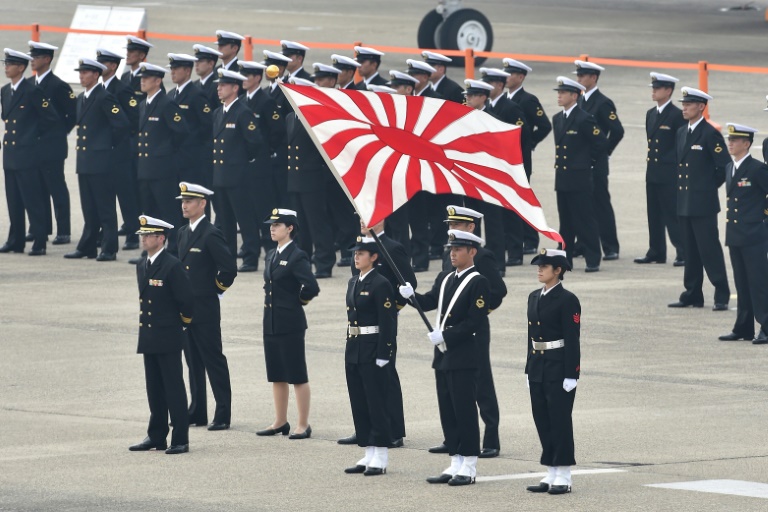
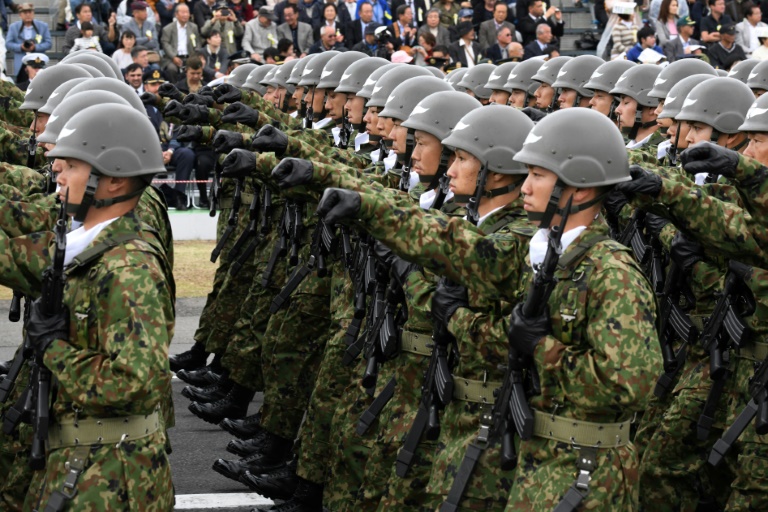
Japan’s government approved a major defence policy overhaul Friday, including a significant spending hike, as it warned China poses the “greatest strategic challenge ever” to the country’s security.

In its largest defence shake-up in decades, Japan vowed to up security spending to two percent of GDP by 2027, reshape its military command, and acquire new missiles that can strike far-flung enemy launch sites.

“Fundamentally strengthening our defence capabilities is the most urgent challenge in this severe security environment,” Prime Minister Fumio Kishida said last week.

Polls suggest Japan’s public largely backs the shift, worried by growing Chinese military power and geopolitical developments like the war in Ukraine.

But the changes could still be controversial as Japan’s post-World War II constitution does not officially recognise the military and limits it to nominally self-defensive capabilities.

The moves are outlined in three defence and security documents approved by the cabinet Friday.

They describe Beijing as “the greatest strategic challenge ever to securing the peace and stability of Japan”, as well as a “serious concern” for Japan and the international community.

In response, the government plans to raise its defence spending to two percent of GDP by fiscal 2027, bringing Japan in line with NATO member guidelines.

That marks a significant increase from historic spending of around one percent and has sparked criticism over how it will be financed.

The money will fund projects including the acquisition of what Japan calls “counterstrike capacity” — the ability to hit launch sites that threaten the country.

The documents warn that Japan’s current missile interception systems are no longer sufficient and a “counterstrike capacity is necessary”.

– ‘Radically strengthen’ –

While Japanese governments have long suggested that counterstrikes to neutralise enemy attacks would be permissible under the constitution, there has been little appetite to secure the capacity.

That has shifted with the continued growth of Chinese military might and a record volley of North Korean missile launches in recent months, including over Japanese territory.

Still, in a nod to the sensitivity of the issue, the documents rule out preemptive strikes, and insist Japan is committed to “an exclusively defence-oriented policy”.

The counterstrike capacity will involve both upgrading existing Japanese weaponry but also buying US-made Tomahawk missiles, reportedly up to 500.

Other changes include the establishment of a permanent joint command for Japan’s armed forces as well as enhancement of the country’s coastguard.

Among the documents is the National Security Strategy, which is being updated for the first time since its 2013 launch.

Its language on relations with both China and Russia has hardened significantly.

The strategy document previously said Japan was seeking a “mutually beneficial strategic partnership” with Beijing, a phrase that has disappeared from this iteration.

Instead it suggests a “constructive and stable relationship” and better communication.

China’s foreign ministry on Friday urged Japan to “reflect on its policies”.

“Japan disregards the facts, deviates from the common understandings between China and Japan and its commitment to bilateral relations, and discredits China,” ministry spokesman Wang Wenbin told reporters of the new stance.

And while Japan’s strategy document once called for enhanced ties and cooperation with Russia, it now warns that Moscow’s military posturing in Asia and cooperation with China are “a strong security concern”.

Japan has joined Western allies in imposing sanctions on Moscow over its invasion of Ukraine, sending relations into a deep freeze.

The strategy contained in the documents represents a major evolution of Japan’s military posture, according to Chris Hughes, professor of international politics and Japanese studies at the University of Warwick.

“The Japanese government will depict these changes as necessary, moderate and wholly in line with previous defence posture,” he told AFP.

Still, “they are going to, in the words often used by the (ruling) Liberal Democratic Party itself in policy documents, ‘radically strengthen’ Japan’s military power”, added Hughes, author of the book “Japan as a Global Military Power”.

'Heavy losses': Ukraine soldiers count war's cost away from front

In a near pitch-black home set back from fierce fighting in Donbas, Ukraine soldier Volodymyr relishes a few moments of calm before deploying again to the front.

“We never know how long we’ll get,” the 29-year-old, who declined to give his last name for security reasons, told AFP.

“We get called on the radio and then have one hour to get packing,” he said, still wearing his mud-covered uniform.

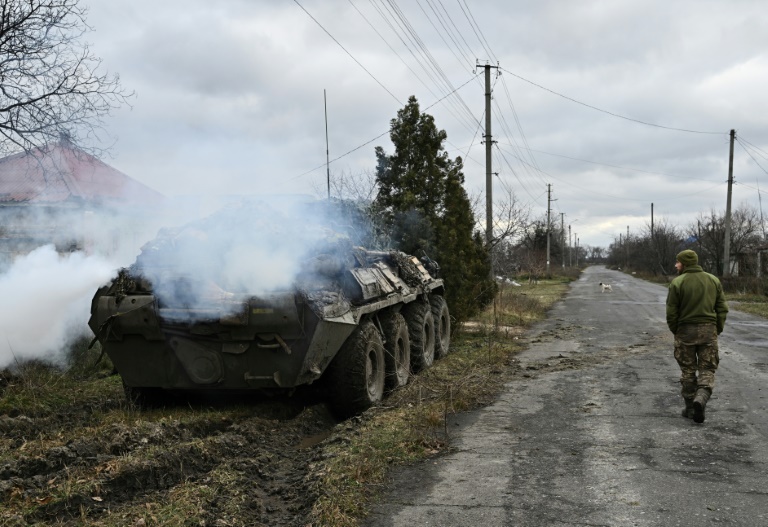
He and several other Ukrainian soldiers — who were on the frontline a day earlier — are finding some reprieve in the war-battered town of Lyman — now about 30 kilometres (18 miles) from fighting.

It was recaptured from Russian forces — who had held the town for four months — during a lightning counter-offensive in October.

But the buildings in the deserted railway hub are still scarred by the combat.

Volodymyr has to search for an open shop to get food for others in his unit waiting in the home’s kitchen.

They are warming themselves around a wood-burning stove, napping, scrolling through their phones or passing around canned food or vodka “to relax and destress”.

“The fighting is hard. We are constantly moving from one place to another… always on the frontline. It’s physically demanding,” Volodymyr said.

– Hours through the mud –

Since Ukraine captured the Black Sea southern coastal city of Kherson last month, the focus of Russia’s nearly 10-month invasion has shifted again to the eastern industrial Donetsk region.

Kyiv said this week that the cities of Bakhmut and Avdiivka — both south of Lyman — were now the “epicentre” of the war.

Volodymyr said he and his unit need to haul weapons and ammunition several kilometres (miles) through mud, which takes hours — before the shooting even starts.

“We’re already tired by then,” Volodymyr said.

“The Russians are strong. They make very good trenches and bunkers,” he added.

Petro, the head of the unit who also declined to give his full name, agreed.

“This is a tough enemy to beat,” the 35-year-old said.

“Remaining on the frontline is very difficult. They sustain heavy losses but so do we,” Petro said.

“It’s complicated but we’re doing our best to win,” he added. 

Also under Petro’s command is an exhausted medic, who worked in a civilian hospital before the war.

Now he’s worried about tanks — when they’re a safe distance, you can hear them fire, the whistle of the shell, then the explosion, he said.

“But when they’re close, that’s when you’re in the shit. You’ll only hear the explosion.” 

– ‘Covered in colleague’s blood’ –

“Before, I was just doing my job, I didn’t really care about a patient’s personal life,” he said.

“Now, when I hear that a comrade has been shot over the radio, I drop everything… and I rush there.”

“It’s hard when my hands are covered in my colleague’s blood,” he added.

The injured are brought from the frontline by ambulances chartered by an NGO, which also operates a medical facility in Lyman.

Lieutenant Oleksiy Nazarichyn, the chief doctor of the 66th motorised brigade who also works at the facility, says nearly everyone brought in from the front has been injured by shelling and shrapnel.

Svitlana Druzenko, the head of the NGO that runs the medical centre, says they do their best to treat injured soldiers before they are sent to hospitals that can provide comprehensive care.  

“We do everything we can to stabilise them so that they stay alive,” she told AFP, as two Ukrainian Sukhoi fighter jets roar towards the frontline.

Close Bitnami banner
Bitnami