World

Sixteen killed, 17 missing in Malaysia landslide

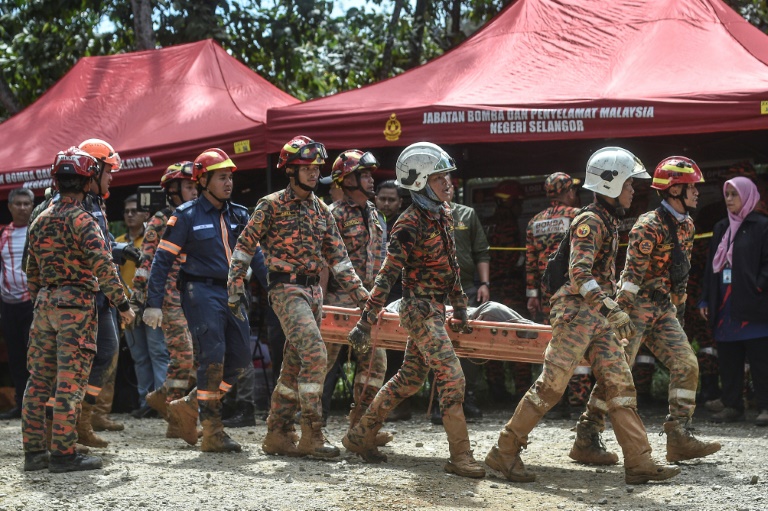
At least 16 people were killed when a landslide struck a campsite at a Malaysian farm on Friday, officials said, with rescuers scouring the muddy terrain for nearly 20 people still missing.

Nor Hisham Mohammad, director of the operations division at the fire and rescue department, told reporters that “as of 1 pm (0500 GMT), 16 victims have died. The search now is focused on the remaining 17.”

According to Nga Kor Ming, the local government development minister, 61 people so far have been found safe after the predawn landslide near the town of Batang Kali, just outside the capital Kuala Lumpur and near a mountain casino resort.

Veronica Loi, who was camping at the site overnight and survived the landslide, told AFP that her family was sleeping when they heard a sudden, loud sound. 

“We saw the tent beside us was totally gone,” she said.

Hundreds of government personnel including police and rescuers were seen at the gates leading to the campsite compound, while an excavator was seen entering the area from the main road. 

The farm where the campsite was situated — “Father’s Organic Farm” — changed its Facebook profile picture to all black on Friday.

Nga said the “campsite is operating without a licence”, and that the operators would be punished if found guilty by the court.

Videos and photos circulating online showed large fallen trees and crushed vehicles, as well as search and rescue personnel wearing headlamps and digging with shovels, and searching for survivors by a fallen structure.

Landslides are common in Malaysia after heavy rains, which are regular at the end of the year. However, there were no heavy rains recorded overnight in Batang Kali.

The government has imposed strict rules with regards to hillside development, but landslides have continued to occur after bouts of bad weather.

In March, four people were killed after a massive landslide triggered by heavy rains buried their homes in a Kuala Lumpur suburb.

In one of the deadliest such incidents, a huge mudslide in 1993 brought on by heavy rain caused a 12-storey residential building outside the capital to collapse, killing 48 people.

Varadkar to become Irish PM for second time

Leo Varadkar takes over for the second time as Ireland’s prime minister this weekend, in a handover of power between the two main political partners in the three-party governing coalition.

Varadkar, who is mixed race, openly gay and is still one of Ireland’s youngest ever leaders even in his second stint in the role, steps up from deputy premier on Saturday.

The rotation between 43-year-old Varadkar’s Fine Gael and current premier Micheal Martin’s Fianna Fail parties is unprecedented in Irish history.

The centre-right parties were forged from opposing sides in the Irish Civil War in the early 20th century.

They agreed to the rotating premiership as part of a coalition with Ireland’s Greens following 2020 elections.

Varadkar was seen as a fresh face when he took the helm of governing Fine Gael in 2017. 

But after two-and-a-half years as Taoiseach (prime minister in Irish), a misfire at the polls in 2020 and controversies as deputy premier, his critics claim he has lost his shine. 

A December poll for Ireland’s Sunday Independent indicated 43 percent of respondents were in favour of Martin remaining in power, against 34 percent for Varadkar.

But Varadkar’s backers point to his experience steering the nation through the coronavirus pandemic and the aftermath of the UK’s 2016 vote to leave the European Union.    

– Glass ceilings –

Varadkar’s rise to the top of Irish politics was remarkable in a country dominated by a strict, conservative Catholic morality well into the latter half of the last century.

At 38, he became the country’s youngest Taoiseach as well as its first openly gay head of government and first of Indian heritage.

Varadkar was born in Dublin to an Irish mother who worked as a nurse and an Indian immigrant father, who was a qualified doctor.

At the age of seven, a precocious Varadkar is reported to have told his mother’s friends that he wanted to be the minister for health.

After gaining a medical degree from Trinity College Dublin, he went into general practice but stayed involved in politics, and in 2007 secured election for Fine Gael in Dublin West.

In 2015, before Ireland’s referendum legalising same-sex marriage, Varadkar came out publicly as gay. 

His partner, Matthew Barrett, is a cardiologist.

“I am a gay man, it’s not a secret, but not something that everyone would necessarily know,” Varadkar told RTE at the time.

“It’s not something that defines me…. It’s part of my character.” 

The revelation raised his profile, with praise from all quarters of Irish politics and beyond.

– Image –

Varadkar’s tenure as Taoiseach was overshadowed by Brexit and the pandemic.

He was widely judged as an effective communicator leading the country into its first lockdown — one of the longest and most stringent imposed in Europe.

He re-registered as a doctor, returning to work once a week while continuing to lead the country. 

On Brexit, Varadkar was credited in 2019 with former UK prime minister Boris Johnson for breaking the deadlock on Northern Ireland.

But a resulting deal — which effectively keeps the UK-run province within the European single market and customs union — remains a point of tension between Brussels and London.

Varadkar’s image has more recently been hit by a police investigation into his leaking of a government pay deal for GPs to a friend.

In July, the director of public prosecutions confirmed they would not pursue a case against him, which might have jeopardised his return as premier.

Varadkar’s private life has also been in the spotlight in recent weeks after he was filmed socialising at a Dublin nightclub.

The footage, which has been viewed millions of times on social media, has sparked debate over privacy in public life and social media regulation.

Defended by government colleagues, Varadkar responded by saying he would not comment on the personal matter.

But he added that “everyone makes errors in judgement”.   

Ousted Peru leader ordered detained for 18 months amid protests

Peru’s Supreme Court on Thursday ordered ousted president Pedro Castillo to remain in detention for another 18 months after his arrest last week, which has sparked deadly unrest in the South American nation.

Castillo was removed from office and detained after he tried to dissolve the legislature and announced he would rule by decree, in what opponents say was a bid to dodge an impeachment vote amid several corruption probes.

The leftist former schoolteacher stands accused of rebellion and conspiracy and could be jailed for up to 10 years if found guilty, according to public prosecutor Alcides Diaz.

A Supreme Court judge granted the request from prosecutors to keep Castillo in custody, saying he posed a flight risk after trying to seek asylum at the Mexican embassy in Lima. The detention order extends to June 2024.

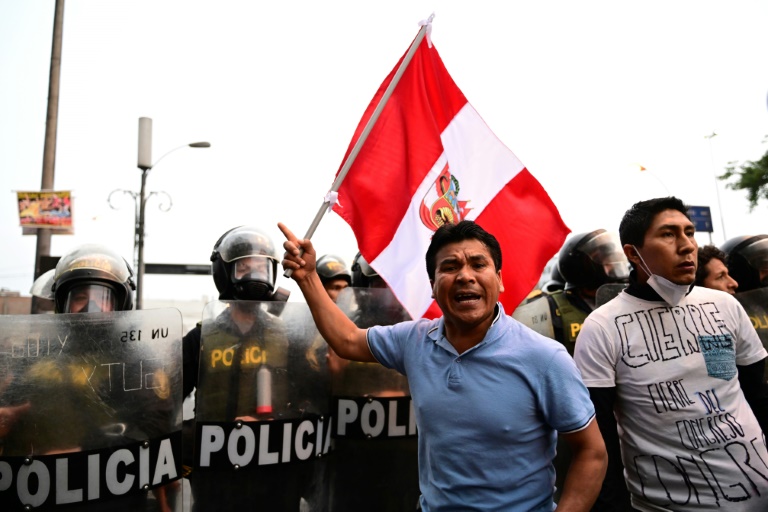
His removal from office has sparked protests across the country, with the death toll now at 15, according to the health ministry and regional authorities. Thousands rally daily nationwide despite a state of emergency, including in the capital Lima on Thursday.

Clashes between the military and Castillo’s supporters left at least seven dead on Thursday in the southern city of Ayacucho, regional health authorities said, with fighting near the airport also killing two, according to the country’s ombudsman.

The ombudsman put the number of injured at 340, with the police saying at least half of that total are from their ranks.

Castillo’s supporters — dozens of whom have camped outside the prison where he is being held in the capital — remain undeterred and unbowed.

“I am in total disagreement with the Peruvian justice system, because everything is for sale,” demonstrator Rolando Arana, 38, said in Lima after the court ruling on keeping Castillo detained. 

“The president has been kidnapped. There is no other word for it,” 41-year-old Lucy Carranza said earlier. 

On Thursday, a total of 300 people marched near the prison shouting “Freedom for Castillo” under the watchful eye of police.

Dina Boluarte, the former vice president who was quickly sworn in as president after Castillo’s arrest, on Wednesday declared a nationwide state of emergency for 30 days.

On Thursday, she exhorted Congress to approve a constitutional reform that will allow her to bring forward elections slated for July 2026 to December 2023.

New elections are one of the main demands of pro-Castillo demonstrators, which have included Indigenous people from Peru’s Amazon regions in the center and southeast.

– ‘They didn’t let him govern’ –

Four airports have been shut down due to the protests, while more than 100 roads throughout the country remain blocked.

Hundreds of tourists have been left stranded at Peru’s most popular attraction, the 15th-century Inca citadel Machu Picchu, after train service to the site was suspended.

Protest leaders have said they will stage new demonstrations again on Friday, demanding Castillo’s release, Boluarte’s resignation, Congress’s closure and new elections.

Castillo and his attorneys were not present at his virtual release hearing.

The judge said Castillo refused to accept the summons, so his case was assigned to a public defense lawyer.

The hearing was supposed to take place on Wednesday when Castillo’s initial seven-day detention expired but was postponed by 24 hours after the former leader’s lawyers argued they had not received the necessary documents related to his case from prosecutors.

Castillo has called his arrest unjust and arbitrary and called on the security forces to “stop killing” protesters.

Speaking outside the prison where Castillo is being held, his niece Vilma Vasquez complained that his political opponents had mounted a smear campaign against the ex-president even before he took office last year.

“From the first day that he took office and even during the (election) campaign, already we were (called) terrorists,” said Vasquez.

“They didn’t let him govern, we were thieves, we were corrupt. We’re going to stay here until he leaves” prison.

Before his election, Castillo’s detractors tried to paint him as a dangerous communist and sympathizer with the Shining Path rebels who sowed chaos in the 1980s and 1990s. Castillo says he fought against the Maoist guerrillas.

He was in power for only 17 months in Peru, which is prone to political instability and is now on its sixth president in six years.

His short period in office was marked by a power struggle with the opposition-dominated Congress, and six investigations into him and his family mainly for corruption.

US citizens trapped in Tigray, detained in Addis Ababa

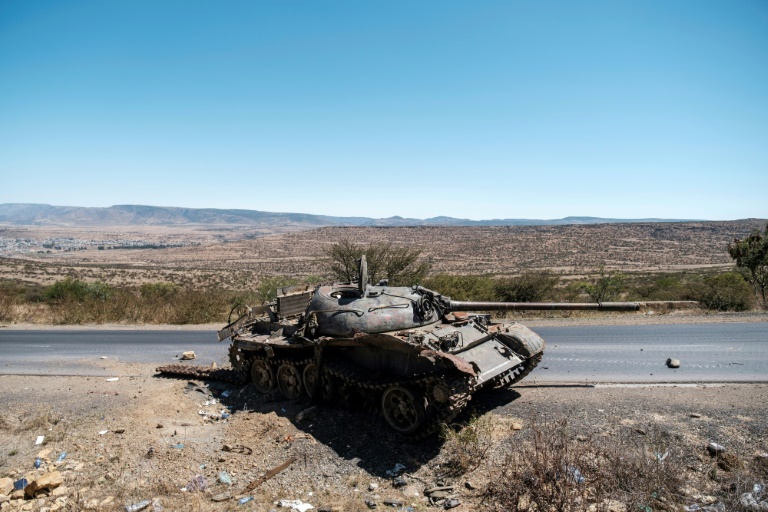
US citizens trapped in war-torn Tigray are being detained and interrogated by Ethiopian authorities while trying to leave the country, interviews with fleeing people and family members show.

Leaked emails by US officials say that the Ethiopian government, citing national security grounds, insisted on holding and questioning US citizens from Tigray — a stance, they say, that caused Washington to abort plans to airlift Americans from the region last year.

The lucky few to escape the region, cut off from the outside world for two years as government forces battled Tigrayan rebels, told AFP they had been singled out and interrogated when attempting to leave.

Gebremedhn Gebrehiwot, an American citizen who made it out of Tigray earlier this year, said he was pulled aside and questioned at Addis Ababa’s international airport while trying to board a flight home. 

“I had all the documents, there was no reason to stop me,” the San Diego-based deacon told AFP. He believed his “typically Tigrayan” name was the reason he was detained.

After a 90-minute wait, he was finally allowed to leave.

“I just ran to the gate and barely made it.”

Zenebu Negusse, 52, told AFP she too was targeted while attempting to board her US-bound flight.

The Colorado-based caregiver, who was in Tigray visiting her elderly mother when the war began in November 2020, managed to escape the region by road and took shelter with relatives in Addis Ababa.

She took care to hide her Tigrayan tribal markings, afraid of being detained like some of her friends, but her name aroused suspicion.

She said that after a harrowing interrogation last year during which she explicitly denied being Tigrayan, she was allowed to fly home.

Some who had been on her flight were intercepted and taken into custody, she said: “I was lucky. Many others were not.” 

AFP spoke to eight Americans who shared their stories and spoke of the plight of friends and family — US citizens or permanent residents — still in Tigray.

Ethiopia does not recognise dual nationality, meaning officials there can treat US citizens of Ethiopian descent as Ethiopians, regardless of their passport.

– Aborted evacuation –

The US government drafted a plan to evacuate Americans trapped in Tigray as fighting spread toward Addis Ababa in November 2021.

But it was aborted at the last minute, with US officials blaming Ethiopia’s demand that evacuees be subject to indefinite detention for vetting. 

“The Ethiopian government… pulled clearance the day of (travel) when the United States disagreed with the Ethiopian government’s request to clear passengers and potentially detain them indefinitely before being cleared for further travel,” read one email by an official at the US Senate seen by AFP.

Another email by an official at the US House of Representatives also blamed Addis Ababa’s “security vetting requirements (for) preventing the U.S. embassy from moving forward with evacuation plans”.

US and Ethiopian authorities did manage to “facilitate the departure of 217 U.S. citizens, lawful permanent residents, immigrant visa applicants, and guardians of minors from Mekelle (Tigray’s capital) to Addis Ababa” in February, a US State Department spokesperson told AFP.

The State Department did not comment on whether any evacuees were detained in Addis Ababa or on the number who travelled onward to the United States.

It has no estimate of the number of Americans still stuck in Tigray, the spokesperson said.

Ethiopian government officials did not respond to repeated requests from AFP for comment.

– Ethnic profiling –

All the Americans interviewed by AFP said they had been ethnically profiled in Addis Ababa after leaving Tigray.

Yohannes, a 54-year-old Uber driver who asked AFP not to reveal his last name, said he was placed in solitary confinement at Addis Ababa airport while trying to leave with his family in December 2020.

“I said I was a US citizen, but they said they were not going to let me go.”

The security officials eventually relented after he shelled out a hefty bribe, he said.

It was a price worth paying to save his severely diabetic teenage son, he added.

A peace deal was signed last month between Addis Ababa and Tigrayan rebels, but many Americans told AFP they were frightened their loved ones would be detained even if they were able to make it out of Tigray.

Maebel Gebremedhin told AFP that “around 50” family members were trapped in Tigray — all US citizens and permanent residents.

“Almost my entire family is there,” said the Brooklyn-based activist, who has had no news of her father in over a year.

“There is such fear within our community about (what) the Ethiopian government could do to our families.”

– Blackout –

The communications blackout has also affected US businessman Awet — not his real name — who told AFP he hadn’t spoken to his wife in well over a year and has never held their baby girl.

The 30-year-old flew to Ethiopia last year to bring them home to Colorado, but wasn’t allowed to travel to Tigray.

He has approached US officials repeatedly for help in getting his family out of Ethiopia, but to no avail.

“It’s always the same answer — we don’t have an evacuation plan.”

A handful of photos and videos are his only mementos of his two-year-old daughter. And even looking at them is too painful sometimes, he said.

In one video seen by AFP, that was shot a year ago and sent by someone with rare access to satellite internet in Tigray, the little girl was struggling to stand up or raise her spindly arms. 

“Her legs were too weak because of a lack of food,” the distraught father said.

“It’s strange to feel like you are a dad when you haven’t even seen your daughter.”

Saba Desta’s parents retired to Tigray after two decades in Seattle and settled in Shire, which was heavily bombed in October before its capture by Ethiopian forces and their allies.

She has been frantic with worry for her 70-year-old father, who suffers from a debilitating neurological disorder, leaving him especially vulnerable in a region with crippling medicine shortages.

The 36-year-old had reached out to the State Department and the US Embassy in Addis Ababa to ask for help.

“Everyone gave me the run around,” she told AFP, fighting back tears.

Even so, she added, life could be worse.

She knows several people detained in Addis Ababa, including a friend who was held for six months, and her own aunt who was in custody for around a week.

Her greatest fear, she said, was to get her elderly parents out of Tigray, only for them to be detained in Addis Ababa. 

“I am more scared of what might happen to them in Addis than in a war zone like Tigray.”

Ukraine war providing lessons for future conflicts

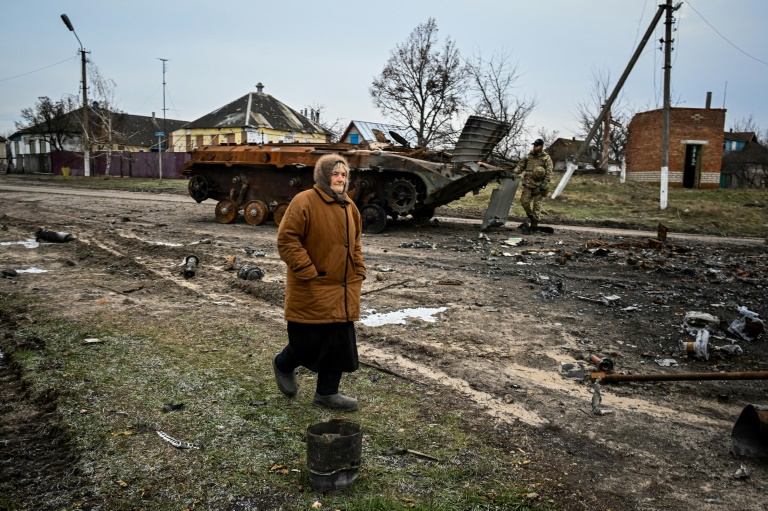
Russia invaded Ukraine hoping for a quick victory over Kyiv’s forces, but is instead locked in a grinding, protracted war that has failed to achieve Moscow’s main aims.

The United States and other countries imposed punishing sanctions on Russia, leaving it increasingly isolated, and are providing a steady stream of weapons and other equipment that have been instrumental in Ukrainian victories over Moscow’s forces.

How the war in Ukraine has played out — both on the world stage and the battlefield — serves as a cautionary tale on the potential dangers of launching such an invasion, and offers other lessons as well.

General Mark Milley, the top US military officer, said the war was providing “lessons learned” for Washington and Europe, as well as for Taiwan and China.

“One of the things people are learning is that war on paper is a whole lot different than real war,” he said.

“There’s a lot of friction and fog and death in combat,” Milley added, predicting that shortfalls in fighting experience and training would hamper a Chinese invasion of Taiwan, which Beijing claims as part of its territory.

– Logistics –

Russia has an extensive nuclear arsenal and has hinted at the use of such weapons during the Ukraine war, but this has not led to battlefield successes — something US Undersecretary of Defense for Policy Colin Kahl said he hopes China will note.

“The fact that Russia has nuclear weapons has not ensured that Russia’s invasion of Ukraine has been successful on the ground, let alone as a strategic matter. And I think that’s an important lesson for Beijing to take,” Kahl said.

Russia’s “aggression against Ukraine has been a catastrophic strategic disaster for Vladimir Putin. It’s hard for me to believe that Xi Jinping would want China to have a similar reaction from the international community,” he said.

US Defense Secretary Lloyd Austin said the response to Russia’s invasion demonstrated the international commitment to the rule of law.

“As soon as Russia invaded Ukraine, we saw countries unite and not only provide security assistance but also participate in sanctions and trade restrictions that make it very tough for Russia,” Austin said.

He cited two other factors that have contributed to Russian failures and Ukrainian successes on the battlefield.

“There’s a lesson that we continue to see play out regarding logistics. The Russians struggled with logistics from the very beginning” and are still doing so, especially when it comes to artillery ammunition, Austin said.

On the Ukrainian side, junior and non-commissioned officers have performed well, contributing to the success of Kyiv’s forces.

“I think the Ukrainians performed well early on because of the training that we had provided them at that level, at… the platoon and squad level. So we saw Ukrainian leaders making or exercising an initiative on the battlefield,” Austin said.

– Ammunition –

“Because of what they were doing and approaching things (in) an asymmetric fashion, attacking supply lines and command and control nodes, that made it very difficult for the Russians to be successful early on,” he added.

Mark Cancian, a senior adviser at the Center for Strategic and International Studies, said another lesson from the Ukraine war is how ubiquitous observation on the battlefield has become.

Drones and satellite imagery have made it “much easier to be seen and much more important to hide,” he said.

And while precision weapons such as Himars rocket launchers have played essential roles in Ukraine, the war has also shown that older technology still has a place.

“Many people had thought that the battlefield would move to primarily precision, and that has not been the case,” Cancian said. “Both sides are firing thousands… of unguided projectiles every day.”

The large amount of ammunition being used in Ukraine has raised concerns about the impact on US supplies, and Kahl said the war has demonstrated the kind of stockpiles that may be required elsewhere.

There have been “lessons from Ukraine about the types of munitions we need, but also the types of stockpiles we may need available for other frontline allies and partners in the event that we see a Ukraine-like scenario” emerge, Kahl said.

Kosovo court to give first war crimes verdict

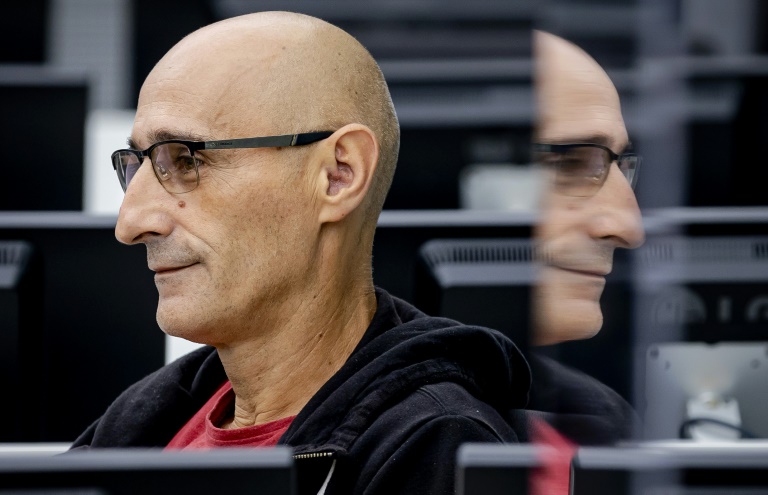
A special Kosovo court in The Hague will hand down its long-awaited first war crimes verdict Friday in the trial of a former rebel commander accused of murder and torture.

Salih Mustafa allegedly abused prisoners in a makeshift jail run by the ethnic Albanian Kosovo Liberation Army (KLA) in the 1998-1999 independence war with Serbia.

The verdict comes at a sensitive time for Kosovo, where ethnic tensions have flared up again nearly a quarter-century after the war, with attackers exchanging gunfire with police and throwing a stun grenade at EU law enforcers at the weekend.

Judges at the heavily-secured court will read out the verdict from 9:00 am (0800 GMT), with Mustafa charged with the war crimes of murder, torture, cruel treatment and arbitrary detention.

The court operates under Kosovo law but is based in the Netherlands and funded by the EU to shield witnesses from intimidation, given that former KLA commanders still dominate political life in Kosovo.

The 50-year-old Mustafa, who was arrested in 2020 while working as an adviser at Kosovo’s defence ministry, denounced the “Gestapo” court when his trial opened last year.

Prosecutors say Mustafa, nicknamed Commander Cali, and his men “brutalised and tortured” at least six fellow ethnic Kosovo Albanians accused of collaborating with Serbs.

Prisoners were kept in grim conditions in a stable in Zllash, a village east of the capital Pristina, with Mustafa personally taking part in the beatings, they said.

One young man died after being repeatedly beaten and tortured, and his body was found in a shallow grave.

– Kosovo tensions –

The trial has heard from 29 witnesses during 52 actual days in court, said the tribunal, which is formally known as the Kosovo Specialist Chambers.

It is the court’s first judgement dealing specifically with war crimes charges since it was set up in 2015. 

Last year it jailed two KLA veterans for intimidating witnesses, although they were not charged with war crimes.

Kosovo reluctantly passed a law to allow the creation of the court after a 2010 Council of Europe report alleged atrocities by KLA forces.

These had gone unpunished even as a number of Serbians have been convicted by other courts over the wars that ripped apart Yugoslavia in the 1990s.

The court has issued war crimes charges against several senior members of the KLA including former Kosovo president Hashim Thaci, who resigned after being indicted and is still regarded as a hero at home.

The Kosovo court in November lost its chief prosecutor, Jack Smith, after he was tapped to lead a US probe into highly sensitive investigations of Donald Trump. 

The Kosovo war, which left 13,000 people dead, ended when Serbian president Slobodan Milosevic’s forces withdrew after an 11-week NATO bombing campaign.

Although Kosovo declared independence from Serbia in 2008, Belgrade does not recognise it and encourages the Serb majority in northern Kosovo to defy Pristina’s authority.

Tensions have rocketed in recent months in the north over Kosovo’s decision to replace Belgrade-issued car licence plates with ones issued in Pristina.

Berlin sex workers reclaim their history with audio app

Sex workers in Berlin are emerging from the shadows to tell the history of their profession, hoping a new app will help them push back against stigma, abuse and the curse of gentrification.

The “We Have Always Been Everywhere” audio guide tells the story of the famed red-light district in the German capital’s central Schoeneberg neighbourhood from the 1880s onwards.

Launched by local sex workers with support from the city government and the Schwules Museum of LGBTQ life, the project argues that prostitution is a time-honoured — if still taboo — part of the city’s fabric.

“We’ve been here for generations and we belong here and we deserve to work here safely,” said one of the initiators, who goes by the name Emma Pankhurst in tribute to the British suffragette Emmeline Pankhurst.

The 35-year-old emigrated from the United States three years ago to legally ply her trade without fear of arrest.

Although Germany’s relatively liberal prostitution laws marked an improvement on the full criminalisation back home, she said Berlin had failed to live up to its reputation as a sexual safe haven.

Schoeneberg is “one of the gay paradises of the world”, she said of the diverse district. 

“That in part is due to the sex worker community being here first and the gay community following suit,” she said, a common trajectory in cities around the globe.

However, Pankhurst said gentrification was now putting the squeeze on her and her colleagues.

“Real estate prices are through the roof and that means there’s quite a lot of money to be made here. People don’t want to see sex workers on the street.”

A nine-month prostitution ban during the pandemic had also had a lasting negative impact, she said, often serving as an excuse for harassment and violence.

– Bowie’s backyard –

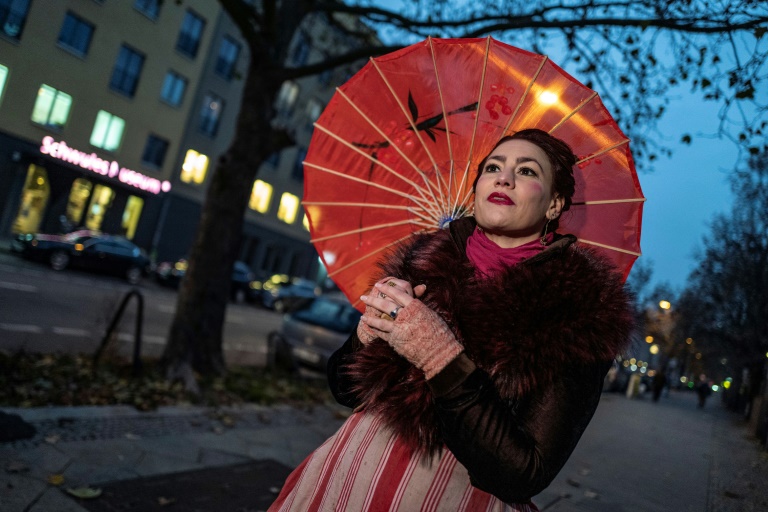
Dressed in petticoats and carrying a red parasol, Pankhurst led a tour to introduce the audio guide looking the part of a late 19th-century prostitute.

As snow began to fall, she recounted the early days of the sex trade beneath the Buelowstrasse overground train as the city started to boom after the Franco-Prussian War.

“Because factory bosses knew that prostitution was a possibility for their female employees, they often used this as a justification to pay them far less than their male co-workers,” Pankhurst said.

The tour covers the libertine Weimar Republic era through to the brutal hypocrisy of the Nazi period, when “sexual deviants” were sent to concentration camps where forced prostitution was a common practice.

West Berlin’s post-war years gave rise to a bold gay rights movement and barely hidden but still illegal sex work sector.

Schoeneberg became a heady mix of middle-class Germans, prostitutes, Turkish immigrants and a vibrant LGBTQ scene, making nonconformist newcomers like David Bowie feel right at home.

The AIDS epidemic of the 1980s and 1990s, however, whipsawed through the community, and the fall of the Berlin Wall brought an influx of eastern European sex workers, pushing down prices.

– ‘Written out of history’ –

Pankhurst studied ballet and arrived in Germany on an arts visa. Difficulty making a living as a dancer led her to sex work and she is now employed in a brothel.

Asked whether she sympathised with local families complaining about prostitution, Pankhurst called for mutual understanding.

“Many sex workers have children too — for a lot of us it’s why we do sex work because of the need to make a relatively large amount of money to survive in a short amount of time so that we can get back to our kids.”

Prostitution is legal in Germany but since 2017 all sex workers have been required to register, submit to regular health checkups and use condoms.

At the end of 2021, about 23,700 were registered — a small fraction of the estimated 400,000 working in Germany.

Many activists would prefer decriminalisation to full legality because they say a registration requirement drove much of the sector underground again.

That fosters scourges like trafficking, which German federal police said soared 10 percent in 2021, with a third of the victims of forced sex work under 21.

Pankhurst herself was fined for not registering properly when she reported her former escort service to the police for pressuring her to perform certain sexual acts.

Decriminalisation, she said, helps eliminate “negative consequences for any person who is being trafficked — or client who suspects trafficking — reporting it to the police.”

Birgit Bosold of the Schwules Museum said it had supported the tour due to long-standing “solidarity” between sex workers and the queer community, who “know what it means to be marginalised and written out of history.”

“We’ve accumulated networks and know-how over the last 30 to 40 years that we can offer to our brothers and sisters,” she said.

Participants said the guide, available on the berlinHistory app, offered a number of surprises.

Eugen Januschke, 55, was “particularly fascinated by the history of sex work under the Third Reich,” citing stories about prostitutes who hid Jews from the Nazis.

Abigail Goldner-Morris, 22, visiting from Washington DC, found Pankhurst’s case for decriminalisation persuasive.

“Because people, when given all of their options, are going to make the best choice for them,” she said.

Twitter suspends accounts of journalists covering Musk

Twitter suspended Thursday accounts of more than a half-dozen journalists who had been writing about the company and its new owner Elon Musk.

Silencing journalists at Twitter while claiming to be a free speech champion is the latest controversy provoked by Musk since he took over the company, which has seen staffing gutted and advertisers exit.

Some of the journalists had been tweeting about Twitter shutting down an @ElonJet account that tracked flights of billionaire Musk’s private jet and about versions of that account hosted at other social networks.

Twitter did not say why the reporters’ accounts were suspended.

“Nothing says free speech like suspending journalists who cover you,” Sarah Reese Jones of news commentary website PoliticusUSA said in a tweeted response to posts about the suspensions.

Checks at Twitter showed account suspensions included reporters from CNN, The New York Times, and The Washington Post as well as independent journalists.

“The impulsive and unjustified suspension of a number of reporters, including CNN’s Donie O’Sullivan, is concerning but not surprising,” the news organization said in a tweet.

“Twitter’s increasing instability and volatility should be of incredible concern for everyone who uses the platform.”

CNN said that it has asked Twitter for an explanation of the suspension.

In a statement, The New York Times said it also wanted answers from Twitter regarding the “questionable” suspension of journalists.

“I have no idea what rules I purportedly broke,” independent journalist Aaron Rupar, whose Twitter account was suspended, wrote in a Substack post.

“I haven’t heard anything from Twitter at all.”

In a tweet late Thursday, Musk appeared to allude to the suspension of the reporters’ accounts with this tweet: “If anyone posted real-time locations & addresses of NYT reporters, FBI would be investigating, there’d be hearings on Capitol Hill & Biden would give speeches about end of democracy!”

Musk on Wednesday tweeted that a car in Los Angeles carrying one of his children was followed by “a crazy stalker” and seemed to blame the tracking of his jet for this alleged incident. In the tweet, he said legal action is being taken against the person who ran ElonJet.

The Twitter account that tracked flights of Musk’s private jet was shut down Wednesday despite the billionaire’s statement that he is a free speech absolutist.

Twitter later sent out word that it updated its policy to prohibit tweets, in most cases, from giving away someone’s location in real time.

Musk had gone public saying he would not touch @ElonJet after buying Twitter in a $44 billion deal as part of his commitment to free speech at the platform.

– Exodus expected –

Twitter has lurched from one controversy to the next since Musk took control in late October.

The billionaire’s talk of unfettered speech scared off major advertisers and caught the attention of regulators.

Musk has reinstated the account of former US president Donald Trump and lashed out against the outgoing key advisor for the US response to the Covid-19 pandemic, Anthony Fauci, a frequent target of vitriol on right-wing media.

CNN has reported that Twitter’s former head of trust and safety fled his home after baseless attacks on Twitter content moderation, endorsed by Musk.

Meanwhile, a purge initiated by Musk at Twitter left more than half of its 7,500 employees on the sidelines and now many of them are taking the SpaceX and Tesla tycoon to court.

Musk at one point signaled he was going to war with Apple over the App Store, only to later tweet that it was a “misunderstanding.”

Market tracker Insider Intelligence forecast that Twitter will experience an exodus of users.

“There won’t be one catastrophic event that ends Twitter,” said Insider Intelligence analyst Jasmine Enberg.

“Instead, users will start to leave the platform next year as they grow frustrated with technical issues and the proliferation of hateful or other unsavory content.”

S. Africa's Ramaphosa on track for re-election as ANC leader despite scandal

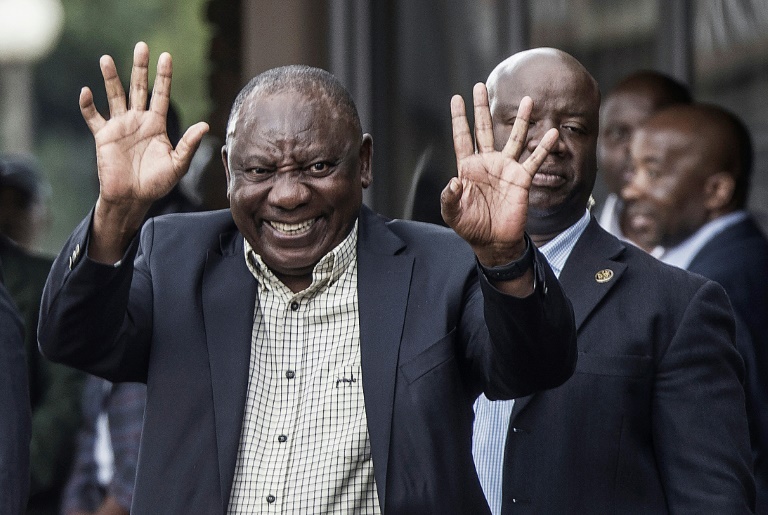
South Africa’s ruling party on Friday launches a closely watched conference that looks set to re-elect Cyril Ramaphosa as its leader, despite a tarnishing cash-heist scandal.

Ramaphosa is bidding to retain the reins of the African National Congress (ANC) as the storied party struggles with rifts and declining support after 28 long years in power.

Ramaphosa, portraying himself as a graft-busting champion, took control of the ANC in 2017 after his boss Jacob Zuma became mired in corruption affairs.

The party’s majority in parliament means that it also approves the national president.

But Ramaphosa’s clean-hands image has been dented by allegations he concealed a huge cash burglary at his farm rather than report the matter to the authorities.

Despite this, analysts say the 70-year-old leader remains on track to win the party leadership election, set to take place among delegates on Saturday.

“The ANC needs Ramaphosa. He will win,” said political writer Ralph Mathekga.

“Even those who hate him need him to win.”

A victory would secure him a ticket to a fresh term as president after the 2024 elections, if his party wins that vote.

– Reprieve –

Ramaphosa won a reprieve ahead of the conference when the ANC used its majority in parliament to block a possible impeachment inquiry.

He is leading the list of only two nominated presidential candidates so far and is seen to be the most viable in the absence of better options in the 110-year-old party.

The former trade union leader led the historic negotiations to end apartheid and helped draft the country’s constitution — hailed as one of Africa’s most progressive charters.

Dodging the impeachment bullet “probably strengthened his bid to seek re-election” because it removed any “immediate uncertainty,” said political analyst Susan Booysen.

His rival is his former health minister Zweli Mkhize, who has corruption allegations linked to Covid-19 funds hanging over his head.

“ANC members can be dishonest but they are not idiots — they know that Zweli Mkhize is not a bankable star,” said Mathekga, author of “The ANC’s Last Decade.”

– Decline – 

The venerable party was shaped by Nelson Mandela into the main weapon that ended apartheid.

But its image today is stained by corruption and factionalism.

Protests, which spiralled into looting, broke out last year when Zuma was jailed for contempt of court for snubbing a probe into state corruption.

Ramaphosa told a party fundraising dinner Thursday night that the conference was “a watershed moment” for the ANC and South Africa.

His government has had to “steer the ship through stormy and unexpectedly rough waters,” he said after listing Covid, the riots, floods and Ukraine war-induced cost of living crisis. 

“Likewise, the ANC has been experiencing its own challenges and some may even say turbulence.”

Over the past decade, the ANC has lost its grip over key cities in municipal elections.

Its showing in this battlefield slumped last year to below 50 percent for the first time.

On a national level, the ANC won the 2019 nation election with 57.50 percent of the vote, down from 62.15 percent in 2014.

But it remains South Africa’s largest party with 230 out of 400 seats in the National Assembly.

More than 4,500 delegates will convene at an events centre near the Johannesburg suburb of Soweto for the conference.

Ramaphosa said the next five days will “determine where South Africa goes not only the next five years but in the next decade and beyond that”.

He will open the gathering with a political report, and his deputy David Mabuza will later deliver the party’s organisational report.

Whoever emerges victorious in the vote will have to get the party on track for the next elections due in 2024, and defuse anger at crippling power cuts and entrenched poverty.

Deadly Russian shelling cuts off Kherson power

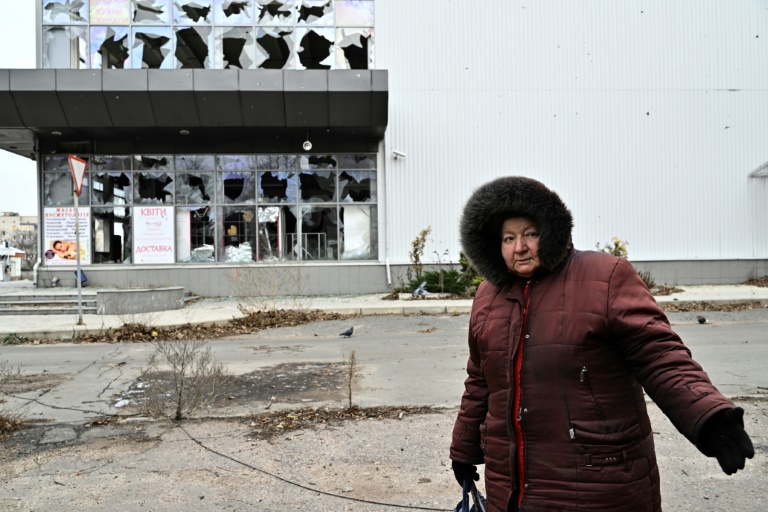
Russian forces bombarded Kherson on Thursday, killing two people and depriving the Ukrainian city of electricity as the European Union announced its latest slew of sanctions against Moscow and an 18 billion euro aid package for Kyiv.

Moscow-allied officials in the Russian-occupied city of Donetsk, meanwhile, said they have come under some of the heaviest shelling in years from Ukrainian forces, leaving one person dead.

Despite Russia’s retreat from the southern port city in November, Kherson remains within reach of Moscow’s weaponry and under constant threat.

Ukrainian President Volodymyr Zelensky said Russian forces had attacked Kherson 16 times on Thursday alone.

The International Committee of the Red Cross confirmed that one of its Ukrainian team members had been killed by the strikes and urged that humanitarian “personnel and property” be spared.

While winter temperatures plunge below freezing, the heavy shelling has left Kherson “completely without power”, according to regional governor Yaroslav Yanushevych.

Much of Ukraine is struggling without heat or power after Moscow started targeting electricity and water systems nearly two months ago.

The UN human rights chief warned the campaign has inflicted “extreme hardship” on Ukrainians this winter, and also decried likely war crimes as he described his office’s documentation of civilians killed by Russian forces.

“Winter is coming, how can people survive?,” Svetlana, a resident of the capital, told AFP. “Lord, what do they want from us? They do not let Ukrainians live.”

– Summary killings –

UN rights chief Volker Turk said his office has documented the executions and direct killings of 441 civilians across three regions of Ukraine from the start of Russia’s invasion on February 24 until April 6.

The “actual figures are likely to be considerably higher”, he said, adding “there are strong indications that the executions… may constitute the war crime of willful killing.”

Beyond that initial period, Turk said his team had continued to document gross rights violations affecting both civilians and combatants, including arbitrary detention, enforced disappearances, torture and sexual violence.

So far, he added, “accountability remains sorely lacking”.

He also warned of further displacements as Russian attacks on critical infrastructure leave people without power or clean water. 

“Additional strikes could lead to a further serious deterioration in the humanitarian situation and spark more displacement,” he said.

An estimated 18 million Ukrainians are already in need of humanitarian aid. 

– Kyiv expected to be targeted again –

Ukrainian commander-in-chief General Valeriy Zaluzhny told British weekly The Economist they expected a fresh Russian assault on Kyiv in the early months of 2023.

Kyiv was the primary target when the Russians first invaded on February 24. But their northern campaign, launched from Belarus, was rebuffed by a gritty Ukrainian counter-offensive that preserved the seat of government.

“The Russians are preparing some 200,000 fresh troops. I have no doubt they will have another go at Kyiv,” Zaluzhny said.

Russia has appeared to pump up its presence anew in Belarus in recent weeks, according to US-based conflict monitor the Institute for the Study of War.

But it said exercises and deployments do not likely indicate plans by Belarusian forces to attack northern Ukraine themselves.

Instead, the actions “are likely part of ongoing Russian information operations” to keep Kyiv nervous and force it to maintain significant force levels in the north, far from the active front lines, according to ISW.

– Blasts in Donetsk –

Having retreated from parts of southern Ukraine, Moscow’s forces have since engaged in fierce battles in the east, particularly in the Donetsk region.

The region has been partly controlled by Moscow-backed separatists since 2014.

On Thursday, local Russia-aligned authorities reported “the most massive shelling since 2014” in the regional capital, Donetsk city.

At least one person was killed and nine more injured in the strikes, they said.

In Donetsk, “the epicentre of the fighting remains the Bakhmut and Avdiivka directions,” Ukraine deputy defence minister Ganna Malyar told a briefing. 

“The enemy is hard to beat,” Petro, a Ukrainian military unit chief in the area, told AFP.

“Staying on the frontline is very difficult. They sustain heavy losses, but so do we.”

– International support –

The EU unleashed its ninth wave of sanctions on Russia Thursday, blacklisting “almost 200” individuals and entities, targeting three banks, curbing mining investments and banning more TV channels.

But diplomats have warned that the bloc is increasingly running out of ways to hurt the Russian economy as the war drags towards its 10th month. 

The EU also cleared the way to giving Ukraine another 18 billion euros ($19 billion) in aid following an impassioned plea from Zelensky.

In Washington, the Pentagon announced it will expand training for Ukrainian forces in Germany to about 500 persons per month focused on larger-scale manoeuvres and specific weapons systems.

The new effort will “include joint maneuver and combined arms operations training while building upon the specialized equipment training that we’re already providing,” Pentagon press secretary Pat Ryder said.

Ryder would not confirm expectations that the United States will provide advanced Patriot air defence batteries to Ukraine, which would bring added protection against Russian cruise missiles as well as tactical ballistic missiles Moscow is believed to be seeking from Iran.

Close Bitnami banner
Bitnami