World

Biden tells leaders US is 'all in' for Africa

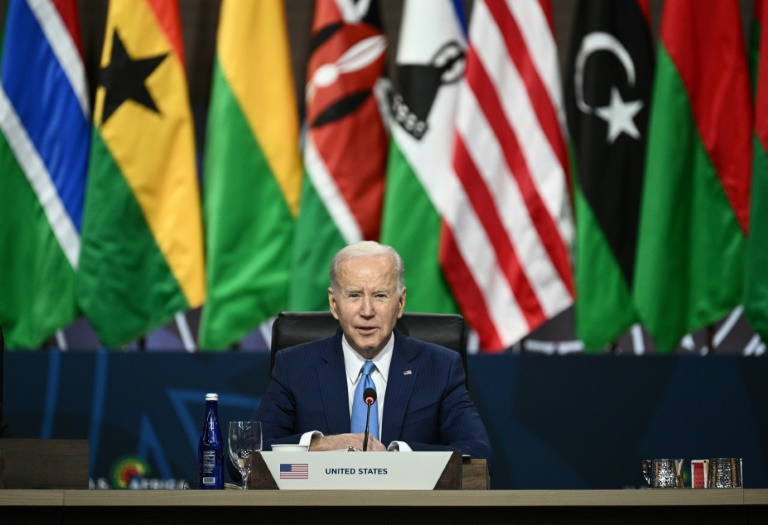
US President Joe Biden threw his support Thursday behind a larger African role in the world as he also vowed to champion democracy in a continent where China and Russia have enjoyed rising clout.

“The United States is all in on Africa and all in with Africa,” Biden told nearly 50 African leaders who have spent three days in a wintry Washington summit that featured a gala White House dinner.

“Africa belongs to the table in every room — every room for global challenges that are being discussed,” Biden said. 

Biden, who in September called for an African permanent seat on the UN Security Council, backed a permanent African Union role in the Group of 20 economies and said he was planning a visit — the first by a US president since 2015 — to sub-Saharan Africa.

The summit is the first of its kind since African leaders came in 2014 to see Barack Obama, whose successor Donald Trump made no secret of his lack of interest in Africa.

China for the past decade has eclipsed the United States as an investor, and Russia in recent years has sent in mercenaries and sought diplomatic support against Western pressure.

Biden announced $2.5 billion in new assistance on food as price increases lead to hunger across the continent, especially in the drought-struck Horn.

“Russia’s brutal war in Ukraine has led to the disruption of food and energy supplies that affect all of our economies,” Vice President Kamala Harris told a luncheon.

She told African leaders that “international rules and norms are under threat — for example, sovereignty and territory integrity, unimpeded commerce and peaceful resolution of disputes.”

– Democracy in ‘DNA’ –

The Biden administration has been more veiled in its criticism of China, which has poured in funding for high-profile infrastructure projects and lent more than $120 billion across the continent since the start of the century.

The United States at the summit laid out $55 billion in projects over the coming three years including in green energy, training for health workers and modernization of internet networks, with the private sector also pledging $15 billion led by investment in technology.

In a contrast with China, which has been happy to do business with all African regimes, the United States has made a point of stressing democracy, even if Biden still invited leaders seen as authoritarian.

“The United States will always lead with our values,” Biden told the African leaders.

“Support for democracy, respect for the rule of law, commitment to human rights, responsible government, all are part of our DNA.”

Biden, while announcing $100 million for security, also said the United States would invest $75 million to counteract “democratic backsliding” including by strengthening electoral authorities and civil society.

On Wednesday, Biden met jointly with the leaders of six nations that hold elections next year including Nigeria and the Democratic Republic of Congo, sub-Saharan Africa’s largest countries in population and size respectively, to seek promises on free elections.

Mark Green, a former congressman and head of the US Agency of International Development, said that the United States was focused on building self-reliance in Africa, while China was looking to “reinforce aid dependency.”

“If a Chinese investment in Africa leads to greater self-reliance, somebody in Beijing is going to lose his or her job,” said Green, now president of the Wilson Center.

China denies US accusations it is putting developing nations into a “debt trap” and in turn has called on Washington not to see Africa through the prism of geopolitical competition.

– Will not ‘dictate’ to Africa –

African leaders largely welcomed the summit. But the continent has also been reluctant to take sides among major powers.

Secretary of State Antony Blinken, speaking to reporters at the end of the summit, said: “America will not dictate Africa’s choices. Neither should anyone else.”

Senegalese President Macky Sall, the current chair of the African Union, welcomed US support for the institution and voiced appreciation for Biden’s summit.

But he also called for the United States to end longstanding rights sanctions on Zimbabwe and voiced alarm over a bill in the US Congress that would impose sanctions on African countries over dealings with Russia.

“This would be the first time in international relations that a whole continent is targeted,” Sall said.
New funding announcements at high-stakes UN nature summit

The world’s environment ministers began the final phase of crunch talks at a UN summit in Montreal on Thursday aimed at sealing a historic “peace pact with nature.” 

New international funding commitments from some wealthy donor countries could help lift the mood after negotiations appeared to be in trouble, though significant work is still needed to drag the deal across the finish line.

At stake is the future of the planet and whether humanity can roll back habitat destruction, pollution and the climate crisis, which are threatening an estimated million plant and animal species with extinction.

The thorny issue of how much money the rich nations will pay lower income countries to preserve their ecosystems is perhaps the biggest sticking point.

But the matter received a boost Thursday after Australia, Japan, the Netherlands, Norway, Spain and the United States all announced increased pledges, joining Germany, France, the EU, the United Kingdom and Canada who previously revised upward their commitments.

“This step forward is extremely important,” European Commissioner for the Environment Virginijus Sinkevicius told AFP.

“These new announcements and reminder of existing commitments are a good signal of the much-needed political will in Montreal,” said Claire Blanchard, head of global advocacy at WWF International.

– Long way to go –

But it isn’t clear the new promises will be enough to satisfy countries of the Global South, home to most of the world’s remaining biodiversity.

Dozens of nations, including Brazil, India, Indonesia and many African countries are seeking much more ambitious funding of $100 billion yearly, or one percent of global GDP, until 2030 — compared to the current figure of around $10 billion.

Developing countries also want a new global biodiversity fund (GBF) to help them meet their goals, for example by setting up protected areas.

But rich countries are opposed — and propose instead making existing financial mechanisms more accessible. The disagreement triggered a temporary walkout earlier.

“Funding proposals put forth by developing countries to generate new and additional funding dedicated specifically to biodiversity-related initiatives need to be taken seriously,” Jorge Viana, representing Brazilian president-elect Luiz Inacio Lula da Silva, wrote in a letter.

He added the impasse could yet tank a possible deal.

“The idea, which is quite condescending, is the Global North thinking that they are doing the Global South a favor by providing money,” Joseph Onoja of the Nigerian Conservation Foundation told AFP.

– 30 by 30 –

Other draft targets include a cornerstone pledge to protect 30 percent of the world’s land and seas by 2030, reducing environmentally destructive subsidies, and how poor countries should be compensated for the exploitation of their natural resources, whose genetic information is stored in digital libraries.

“We must work together to promote harmonious coexistence between man and nature,” Chinese President Xi Jinping said in a video message that opened the high-level segment involving 200 ministerial-level delegates.

China is chairing the summit, known as COP15, but is not hosting because of its strict Covid rules, leaving Canada to step in and hold the meeting in Montreal, one of North America’s coldest cities, in deep winter.

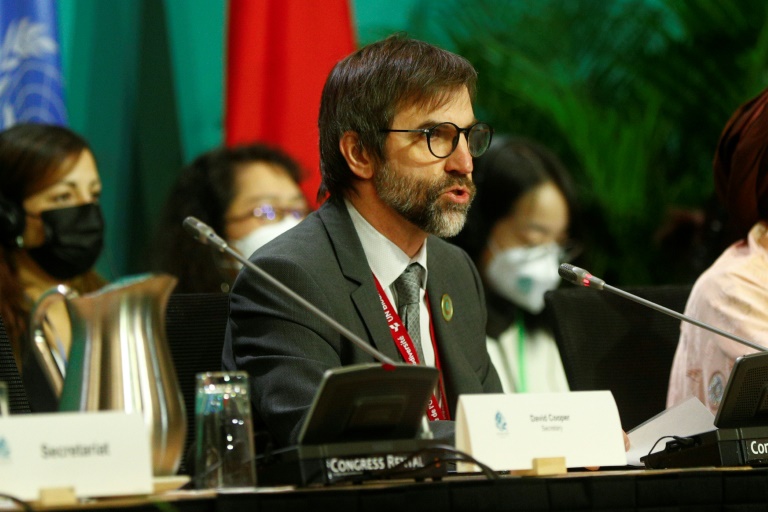
“A brilliant Canadian artist, Joni Mitchell, sent us a message in a song — that we have ‘Paved paradise and put up a parking lot,'” said Canada’s environment minister, Steven Guilbeault, who was nicknamed “Green Jesus” during his days as an activist.

“We listened to her music and sang along but didn’t really understand her message. We must live in harmony with nature, not try and dominate it,” he added.

Beyond the moral implications, there is the question of self-interest: $44 trillion of economic value generation — more than half the world’s total GDP — is dependent on nature and its services.

EU studies ways to rival vast new US subsidies on greener tech

EU leaders on Thursday tasked the European Commission with coming up with ways to vie with huge US subsidies on greener tech such as electric vehicles to protect the bloc’s industrial base.

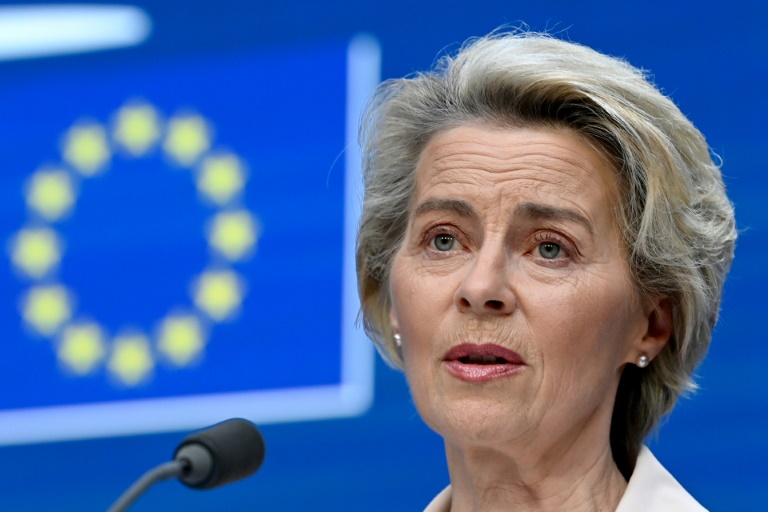
“We will come forward in January with a state aid proposal that is not only faster and simpler, but even more predictable,” commission chief Ursula von der Leyen said after a summit.

The European bloc is unsettled by parts of the multi-billion-dollar US Inflation Reduction Act (IRA) which lavishes subsidies and tax cuts for US purchasers of electric vehicles — if they “Buy American”.

The bloc views the act as discriminatory against European car manufacturers, a breach of World Trade Organization rules, and a threat to investment in Europe.

To compete — and keep big industrial companies on its shores — many EU countries want rules around national subsidies loosened and public investment in cleaner energy boosted.

European companies “need subsidies in the same way as those in the United States, and of the same magnitude, if you want to avoid a fragmentation of the European market,” French President Emmanuel Macron said.

The EU leaders, in their summit conclusion text, stressed the need to safeguard “Europe’s economic, industrial and technological base and of preserving the global level playing field”.

The commission’s upcoming proposals, it said, should look at “mobilising all relevant national and EU tools as well as to improving framework conditions for investment, including through streamlined administrative procedures.”

– Some unconvinced –

Some EU countries, though, were not convinced that a big-gun response was needed.

“Finland is not ready for new instruments,” Prime Minister Sanna Marin said, adding that Europe needed to ensure that “we do not get into an unnecessary trade war with the US”.

German Chancellor Olaf Scholz said he believed the EU had a possibility of winning status like Canada within the United States’ application of its subsidies — despite it not being part of the North American Free Trade Agreement.

“In the next few weeks, we will have to agree on a fair framework with the US and then we will have to make regulations to defend our own industrial development,” Scholz said.

Macron and the commission have tried to persuade US President Joe Biden to change the contentious parts of the IRA, to no avail apart from receiving promises of some “tweaks”. 

Biden and his administration believe the EU is free to come up with its own subsidy arrangement for electric vehicles — a sector in which China has advantages when it comes to batteries and rare-earth supplies.  

While positions were being worked out on that issue, the European Union on Thursday adopted a plan to sign a global minimum 15 percent tax on multinational businesses, after months of wrangling. 

The landmark agreement between nearly 140 countries is intended to stop governments racing to cut taxes to lure the world’s richest firms to their territory.

“Today the European Union has taken a crucial step towards tax fairness and social justice,” EU economy commissioner Paolo Gentiloni said.

“Minimum taxation is key to addressing the challenges a globalised economy creates.”

The plan was drawn up under the guidance of the Organisation for Economic Cooperation and Development and already had the backing of Washington and several major EU economies.

Tiny meteorite may have caused leak from Soyuz capsule

Russian and NASA engineers were assessing a coolant leak on Thursday from a Soyuz crew capsule docked with the International Space Station (ISS) that may have been caused by a micrometeorite strike.

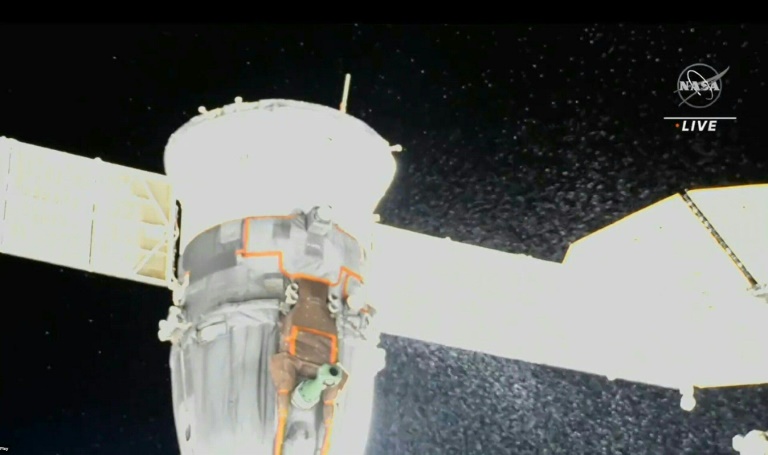
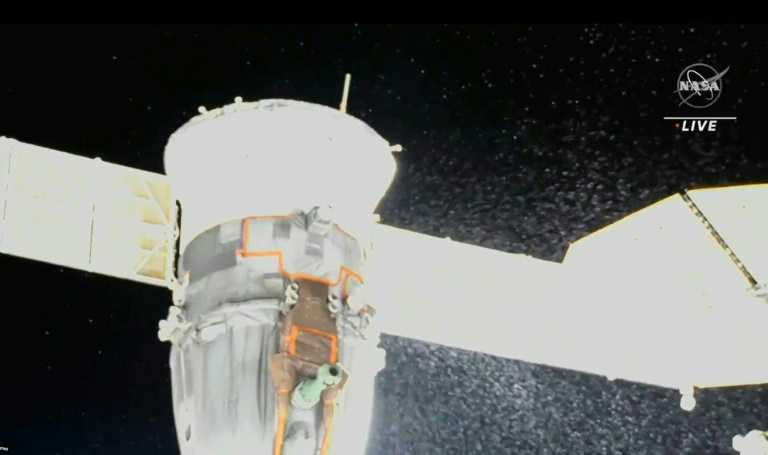
Dramatic NASA TV images showed white particles resembling snowflakes streaming out of the rear of the vessel for hours.

The coolant leak forced the last-minute cancellation of a spacewalk by two Russian cosmonauts on Wednesday and could potentially impact a return flight to Earth by three crew members.

Russia’s space corporation Roscosmos and the US space agency said the leak on the Soyuz MS-22 spacecraft did not pose any danger to the astronauts and cosmonauts aboard the ISS.

“The crew members aboard the space station are safe, and were not in any danger during the leak,” NASA said.

It said ground teams were evaluating “potential impacts to the integrity of the Soyuz spacecraft.”

“NASA and Roscosmos will continue to work together to determine the next course of action,” NASA said.

The TASS news agency quoted Sergei Krikalev, a former cosmonaut who heads the crewed space flight program for Roscosmos, as saying that the leak may have been caused by a tiny meteorite striking Soyuz MS-22.

“The cause of the leak may be a micrometeorite entering the radiator,” TASS quoted Krikalev as saying. “Possible consequences are changes in the temperature regime.”

“No other changes in the telemetric parameters of either the Soyuz spacecraft or the (ISS) station on the Russian or American segments have been detected,” Krikalev said.

– Coolant pressure drop –

NASA later added that the crew on the station “completed normal operations Thursday, including… configuring tools ahead of a planned US spacewalk on Monday.”

Soyuz MS-22 flew Russian cosmonauts Sergei Prokopyev and Dmitry Petelin and NASA astronaut Frank Rubio to the ISS in September.

It is scheduled to bring them back to Earth in March and another vessel would have to be sent to the ISS if Soyuz MS-22 is unavailable.

Prokopyev and Petelin had been making preparations for a spacewalk on Wednesday when the leak was discovered.

“The crew reported the warning device of the ship’s diagnostic system went off, indicating a pressure drop in the cooling system,” Roscosmos said. “At the moment, all systems of the ISS and the ship are operating normally, the crew is safe.”

NASA said the leak had occurred on the “aft end” of Soyuz MS-22, which is secured to the space station.

There are currently four other astronauts and cosmonauts aboard the space station in addition to Rubio, Prokopyev and Petelin.

NASA astronauts Josh Cassada and Nicole Mann, Japanese astronaut Koichi Wakata and Russian cosmonaut Anna Kikina were flown to the ISS in October aboard a SpaceX spacecraft.

Space has been a rare avenue of cooperation between Moscow and Washington since the start of Moscow’s assault on Ukraine in February, and ensuing Western sanctions on Russia that shredded ties between the two countries.

The ISS was launched in 1998 at a time of increased US-Russia cooperation following their Space Race competition during the Cold War.

Tiny meteorite may have caused leak from Soyuz capsule

Russian and NASA engineers were assessing a coolant leak on Thursday from a Soyuz crew capsule docked with the International Space Station (ISS) that may have been caused by a micrometeorite strike.

Dramatic NASA TV images showed white particles resembling snowflakes streaming out of the rear of the vessel for hours.

The coolant leak forced the last-minute cancellation of a spacewalk by two Russian cosmonauts on Wednesday and could potentially impact a return flight to Earth by three crew members.

Russia’s space corporation Roscosmos and the US space agency said the leak on the Soyuz MS-22 spacecraft did not pose any danger to the astronauts and cosmonauts aboard the ISS.

“The crew members aboard the space station are safe, and were not in any danger during the leak,” NASA said.

It said ground teams were evaluating “potential impacts to the integrity of the Soyuz spacecraft.”

“NASA and Roscosmos will continue to work together to determine the next course of action,” NASA said.

The TASS news agency quoted Sergei Krikalev, a former cosmonaut who heads the crewed space flight program for Roscosmos, as saying that the leak may have been caused by a tiny meteorite striking Soyuz MS-22.

“The cause of the leak may be a micrometeorite entering the radiator,” TASS quoted Krikalev as saying. “Possible consequences are changes in the temperature regime.”

“No other changes in the telemetric parameters of either the Soyuz spacecraft or the (ISS) station on the Russian or American segments have been detected,” Krikalev said.

– Coolant pressure drop –

NASA later added that the crew on the station “completed normal operations Thursday, including… configuring tools ahead of a planned US spacewalk on Monday.”

Soyuz MS-22 flew Russian cosmonauts Sergei Prokopyev and Dmitry Petelin and NASA astronaut Frank Rubio to the ISS in September.

It is scheduled to bring them back to Earth in March and another vessel would have to be sent to the ISS if Soyuz MS-22 is unavailable.

Prokopyev and Petelin had been making preparations for a spacewalk on Wednesday when the leak was discovered.

“The crew reported the warning device of the ship’s diagnostic system went off, indicating a pressure drop in the cooling system,” Roscosmos said. “At the moment, all systems of the ISS and the ship are operating normally, the crew is safe.”

NASA said the leak had occurred on the “aft end” of Soyuz MS-22, which is secured to the space station.

There are currently four other astronauts and cosmonauts aboard the space station in addition to Rubio, Prokopyev and Petelin.

NASA astronauts Josh Cassada and Nicole Mann, Japanese astronaut Koichi Wakata and Russian cosmonaut Anna Kikina were flown to the ISS in October aboard a SpaceX spacecraft.

Space has been a rare avenue of cooperation between Moscow and Washington since the start of Moscow’s assault on Ukraine in February, and ensuing Western sanctions on Russia that shredded ties between the two countries.

The ISS was launched in 1998 at a time of increased US-Russia cooperation following their Space Race competition during the Cold War.

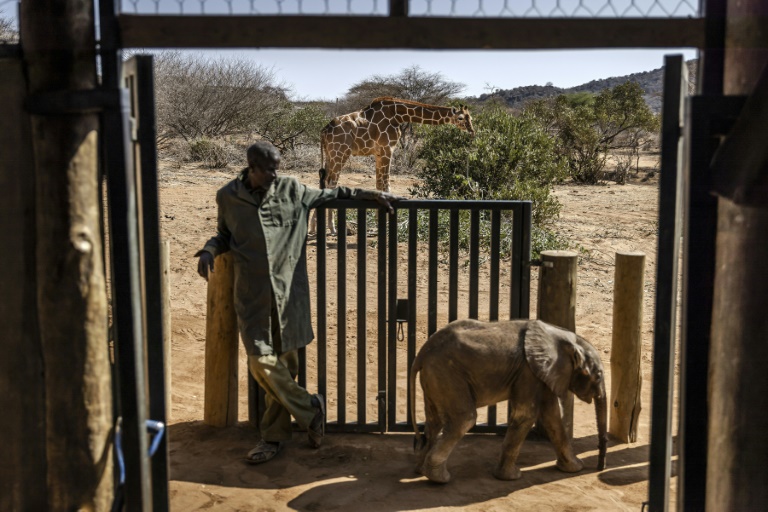
US backs fund for sustainable safaris in Africa

The United States is committing support to promote sustainable safaris in Africa, hoping to prevent environmental destruction as the tourism sector recovers, officials said Thursday.

The US Agency for International Development (USAID) made the announcement at a three-day summit that brought nearly 50 African leaders in Washington.

The nascent Africa Conservation and Communities Tourism Fund, led by investors and conservationists, aims to raise $75 million to fund safari operators across the continent.

USAID said it was committing $2.5 million to reduce risks and jumpstart the fund, which it estimated would benefit 44,000 people.

The fund will work with safari operators in Botswana, Kenya, Namibia, South Africa, Tanzania, and Zambia.

A notice on the project earlier this year by advisors Impact Align said that ecotourism operators had been devastated by Covid-19, which shut down international travel.

“The fate of millions of acres of wildlands and wildlife hangs in the balance,” it said.

“If operators fail to financially recover, once protected wildlands will be at high risk of destruction which would worsen planetary health, exacerbate climate change and deprive local communities of employment and management opportunities.”

The United States during the summit has laid out some $55 billion in funding over the next several years including to improve health infrastructure, promote green energy and stave off hunger.

Ex-Twitter worker gets prison time in Saudi 'spy' case

US justice officials on Thursday said a former Twitter worker convicted of spying for Saudi officials was sentenced to 3.5 years in prison.

Ahmad Abouammo was found guilty in August on criminal counts including money laundering, fraud, and being an illegal agent of a foreign government, according to a copy of the verdict.

Prosecutors in federal court in San Francisco told jurors that Abouammo sold Twitter user information for cash and an expensive watch some seven years earlier.

“This case revealed that foreign governments, here, the Kingdom of Saudi Arabia will bribe insiders to obtain the user information that is collected and stored by our Silicon Valley social media companies,” US attorney Stephanie Hinds said in a statement.

“This sentence sends a message to insiders with access to user information to safeguard it, particularly from repressive regimes, or risk significant time in prison.”

The defense team for 45-year-old Abouammo contended in court that he did nothing more than accept gifts from free-spending Saudis for simply doing his client management job.

“The evidence shows that, for a price and thinking no one was watching, the defendant sold his position to an insider of the crown prince,” US prosecutor Colin Sampson said in final remarks to the jury.

Defense attorney Angela Chuang countered that while there certainly appeared to be a conspiracy to get revealing information about Saudi critics from Twitter, prosecutors failed to prove Abouammo was part of it.

Abouammo quit Twitter in 2015 and took a job at e-commerce titan Amazon in Seattle, where he lives, according to court documents.

Jurors found Abouammo guilty on 6 of the 11 charges against him.

Chuang conceded to the jury that Abouammo did violate Twitter employee rules by not telling the San Francisco-based company that he had received $100,000 in cash and a watch valued at more than $40,000 from someone close to the Saudi crown prince.

However, she downplayed the significance of the gift, saying it amounted to “pocket change” in a Saudi culture known for generosity and lavish presents.

US district court Judge Edward said while pronouncing the sentence that “exposing dissident information is a serious offense,” and ordered Abouammo to forfeit the value of “bribes” received, according to prosecutors.

Abouammo is to begin serving his sentence at the end of March.

Prosecutors accused Abouammo and fellow Twitter employee Ali Alzabarah of being enlisted by Saudi officials between late 2014 and early the following year to get private information on accounts that were critical of the regime.

The then-Twitter workers could glean email addresses, phone numbers, birth dates and other private data to identify people behind anonymous accounts, prosecutors said.

Alzabarah, a Saudi national, is being sought on a charge of failing to register in the United States as an agent of a foreign government as required by United States law, according to an FBI statement.

Keystone pipeline partly reopens after oil spill

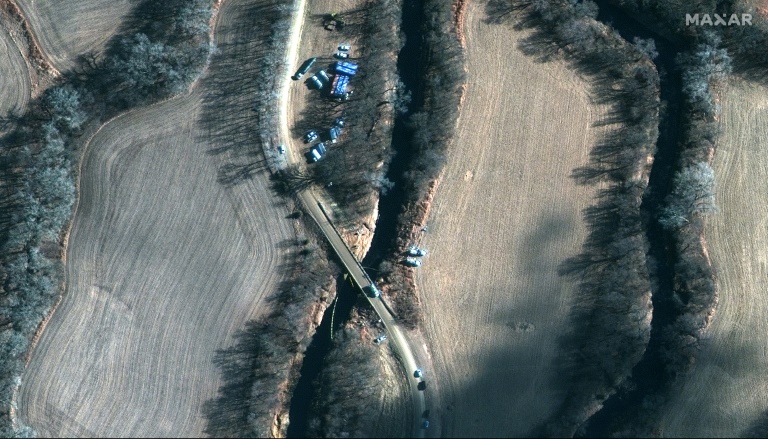
Canada’s TC Energy has restarted a portion of the Keystone Pipeline, which was shut down last week following a large spill of heavy crude oil in Kansas.

The company on Wednesday night resumed the flow of diluted bitumen, a heavy crude oil, from Hardisty, Alberta to Wood River/Patoka, Illinois, TC Energy said on its website.

The southern portion of the pipeline — which extends to Texas and includes Washington, Kansas where authorities are attempting to limit the spill’s environmental damage — remains off line.

The restored portion pipeline will operate at “reduced capacity,” said TC Energy. 

“We continue to progress our response and oil recovery effort,” the company said.

TC Energy said it has recovered 3,035 barrels of oil from the creek. The initial estimated spill volume was 14,000 barrels, said an order from the Pipeline and Hazardous Materials Safety Administration.

A total of 414 personnel reported to the oil spill site on Wednesday, including emergency staff from TC Energy and state and federal agencies, according to an Environmental Protection Agency news release.

EPA said that there were four deceased mammals recovered from the site, along with 71 fish.

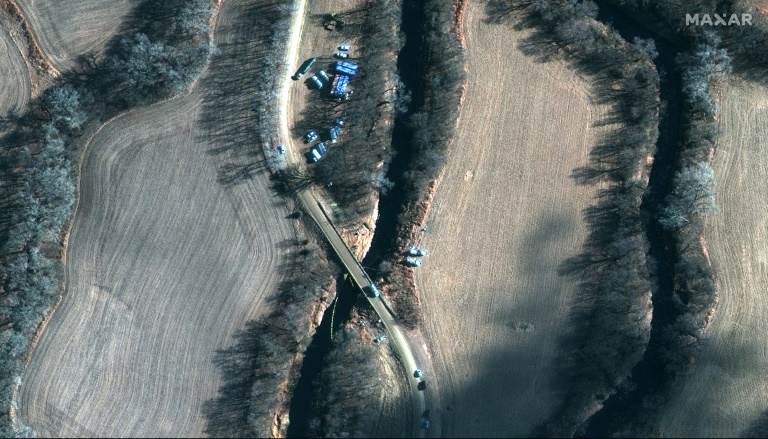
Keystone pipeline partly reopens after oil spill

Canada’s TC Energy has restarted a portion of the Keystone Pipeline, which was shut down last week following a large spill of heavy crude oil in Kansas.

The company on Wednesday night resumed the flow of diluted bitumen, a heavy crude oil, from Hardisty, Alberta to Wood River/Patoka, Illinois, TC Energy said on its website.

The southern portion of the pipeline — which extends to Texas and includes Washington, Kansas where authorities are attempting to limit the spill’s environmental damage — remains off line.

The restored portion pipeline will operate at “reduced capacity,” said TC Energy. 

“We continue to progress our response and oil recovery effort,” the company said.

TC Energy said it has recovered 3,035 barrels of oil from the creek. The initial estimated spill volume was 14,000 barrels, said an order from the Pipeline and Hazardous Materials Safety Administration.

A total of 414 personnel reported to the oil spill site on Wednesday, including emergency staff from TC Energy and state and federal agencies, according to an Environmental Protection Agency news release.

EPA said that there were four deceased mammals recovered from the site, along with 71 fish.

Teen believed to be among four victims of Channel capsizing

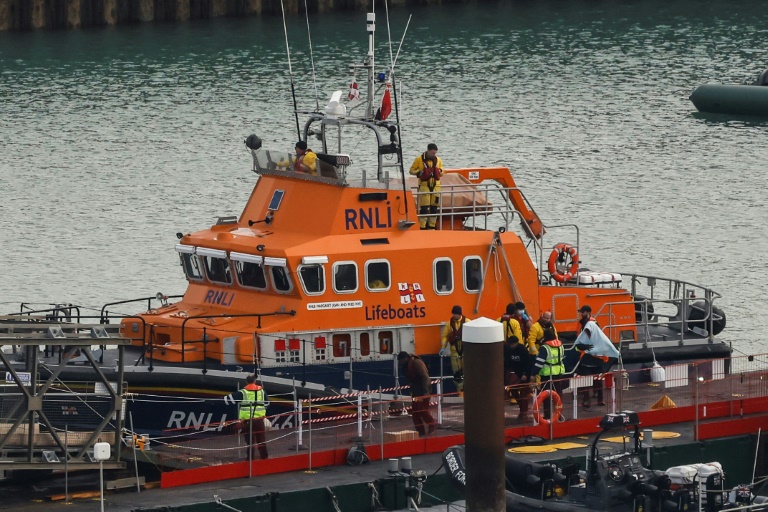
A teenager was among the four people who died after a small boat packed with migrants capsized in freezing temperatures in the Channel, a regional official said on Thursday.

Britain’s coastguard and other emergency responders, as well as a fishing boat in the area early Wednesday, plucked 43 people from the frigid waters of one of the world’s busiest shipping lanes.

However four of those retrieved from off England’s south coast during the large-scale rescue operation, which continued until mid-afternoon Thursday, did not survive, UK officials have confirmed.

The leader of the council in Kent, southeast England — home to the stretch of coastline where most cross-Channel migrants arrive — told colleagues at a cabinet meeting that one of the victims was a teenager.

Conservative councillor Roger Gough also said that 12 of the 39 people who survived were lone migrant children who have now been taken into the council’s care, UK media reported.

He called the tragedy a “sobering reminder of the human costs of what is an ongoing crisis”, the reports said.

The UK interior ministry could not confirm the details, noting it would be for a coroner to formally confirm details of those who died.

The tragedy comes just over a year after at least 27 people died in the Channel in another incident.

A higher death toll appears to have been averted thanks largely to the crew of the fishing trawler Arcturus, who discovered the dozens of migrants clinging to stricken inflatable vessels and in the icy waters.

“It was like something out of a Second World War movie, there were people in the water everywhere, screaming,” the boat’s skipper Raymond Strachan told Sky News.

“I steamed towards the dinghy and we secured it with a rope to the side of the boat. We were trying to pull them off the dinghy.”

The crew are believed to have saved 31 of the 39 people rescued during the hours-long operation.

On Thursday evening, migrants rights groups in northern France were set to hold a rally in memory of the deceased.

It would also “denounce the policies at the border which are once again responsible for the deaths of people in exile,” organisers said.

In a joint statement issued late Wednesday, French Interior Minister Gerald Darmanin and British counterpart Suella Braverman said the incident was “a stark reminder of the urgent need to destroy the business model of people-smugglers”.

The UK government is trying to pass new laws to prevent the record numbers of migrants from attempting the Channel crossing, including making any such arrivals inadmissible for asylum claims.

Close Bitnami banner
Bitnami