World

Irish UN peacekeeper shot dead in south Lebanon

An Irish soldier of the UN peacekeeping force in south Lebanon near the Israeli border was killed and three wounded after their convoy came under fire, Irish officials said Thursday.

Irish Prime Minister Micheal Martin said he was “deeply shocked and very saddened” by the loss of life.

The UN peacekeeping force UNIFIL said the “incident” happened near the village of Al-Aqbiya, just outside the force’s area of operations in a strip along Lebanon’s border with Israel.

The Irish military said “a convoy of two armoured utility vehicles carrying eight personnel travelling to Beirut came under small arms fire” around 2115 GMT on Wednesday.

It said four were taken to hospital near Lebanon’s main southern city of Sidon, where one was pronounced dead on arrival. Another underwent surgery and was in a serious condition while the other two were treated for minor injuries.

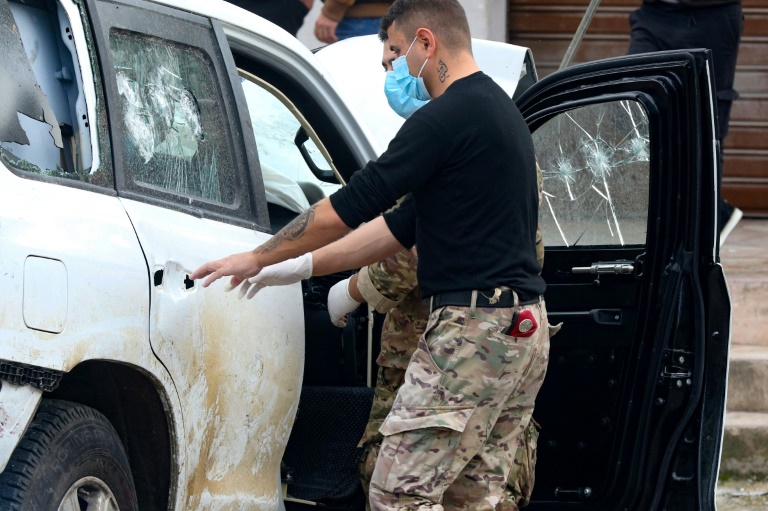
A Lebanese judicial source later told AFP that the peacekeeper was killed by a bullet to the head when seven projectiles pierced the vehicle.

The three others were injured when the vehicle hit a pylon and overturned, the source added.

Witnesses told AFP villagers blocked the vehicle after it took a road along the Mediterranean coast not normally used by the United Nations force.

They said they had heard gunfire and the driver appeared to lose control as the convoy attempted to leave the area.

An AFP photographer reported that a UNIFIL vehicle had slammed into a shop on the road towards Sidon.

Irish Foreign Minister Simon Coveney told public broadcaster RTE that the peacekeepers had been on a “standard administrative run” to the Lebanese capital when their armoured vehicles got separated.

“One of them got surrounded by a hostile mob — I think that’s the only way you could describe them — and shots were fired and unfortunately one of our peacekeepers was killed.”

Wafic Safa, security chief of Lebanon’s powerful armed Hezbollah movement, told Lebanon’s LBCI television that the incident was “unintentional”. 

He, too, said the peacekeepers had taken an “unusual route” but called for investigators to be given time to establish the facts.

Lebanon’s caretaker Prime Minister Najib Mikati expressed his “deep regret following this painful incident” and underlined the “need to carry out the necessary enquiries to determine its circumstances and prevent its repetition”.

– Mandate dispute –

UN Secretary General Antonio Guterres said he was “deeply saddened” by the peacekeeper’s death, his spokesperson said.

He called for a “swift investigation by relevant authorities to determine the facts related to the incident and the need for accountability”.

The US embassy in Beirut also condemned the attack, saying it “puts Lebanese civilians at risk, and jeopardises stability in southern Lebanon”.

It is the first death of a UNIFIL member in a violent incident in Lebanon since January 2015, when a Spanish peacekeeper was killed during retaliatory Israeli fire.

UNIFIL was set up in 1978 to monitor the withdrawal of Israeli forces after they invaded Lebanon in reprisal for a Palestinian attack.

Now with nearly 10,000 troops, the UN force acts as a buffer between Israel and Lebanon, which remain technically at war.

Israel withdrew from south Lebanon in 2000 but fought a devastating 2006 war with Hezbollah and its allies.

UNIFIL was beefed up to oversee the ceasefire that ended that war.

Over the years there have been a number of incidents between Hezbollah supporters and the UN force in border areas loyal to the Iran-backed group.

UNIFIL’s terms of deployment were slightly altered during the annual renewal of its mandate by the UN Security Council at the end of August.

To the anger of Hezbollah, the new wording states that the force “is allowed to conduct its operations independently”.

Previously, peacekeepers had routinely coordinated their patrols and other movements inside the area of operations with the Lebanese army.

Hezbollah leader Hassan Nasrallah condemned the changed rules as “a violation of Lebanese sovereignty” that served Israel’s interests.

Hezbollah is the only one of Lebanon’s armed groups that was allowed to keep its weaponry after the 1975-91 civil war.

It insists its arsenal remains necessary for defence against its arch foe Israel.

Hezbollah’s role in Lebanon has polarised the country’s politics, creating opposing blocs that have failed to find common ground on forming a regular government to replace the current caretaker administration.
Legal net tightens on Greek MEP graft suspect

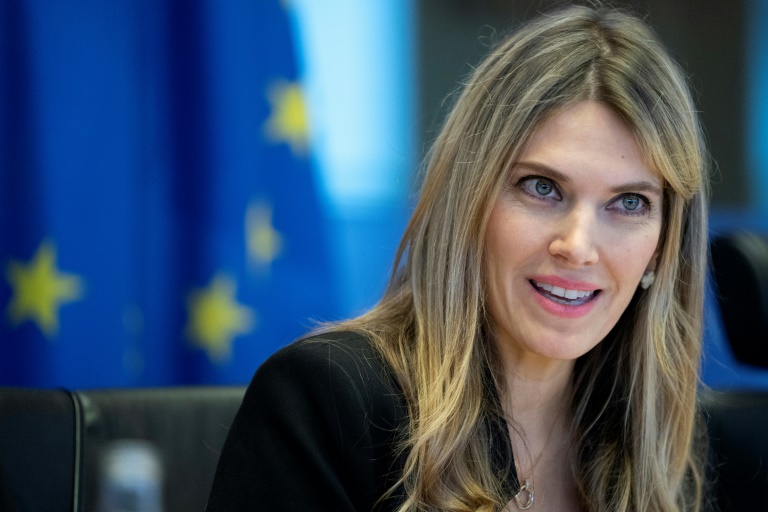
The legal challenges facing Eva Kaili sharpened Thursday as the Greek MEP, already accused of taking bribes from Qatar, faced a second investigation and a vote to strip her of parliamentary immunity.

Kaili was arrested last week during a series of Belgian police raids on European politicians’ homes and offices around Brussels, and has been charged with corruption and money-laundering.

On Thursday, a Greek judicial source said that Athens prosecutors had also opened a preliminary inquiry in parallel with the Belgian case, which has sent shockwaves through the European Parliament.

And in the latest blow, the European chief prosecutor asked the parliament to strip Kaili of her immunity from prosecution so that she can be investigated for a separate alleged misuse of funds assigned to MEPs to pay assistants.

The Qatar government has rejected any claims of wrongdoing as “gravely misinformed”. 

These new damaging developments came as the president of the European Parliament, Roberta Metsola, vowed to adopt “a wide-ranging reform package” to clean up the legislature.

Metsola said the plan would strengthen the parliament’s whistle-blower protection systems, ban all “unofficial friendship groups” with foreign governments and review how to enforce its own rules.

She said she would lead the changes, which are to include “a complete and in-depth look at how we interact with third countries,” and that the package would be ready “in the New Year”.

At the same time, EU lawmakers voted to call for representatives of Qatar to be temporarily barred from parliamentary premises in Strasbourg and Brussels.

Four suspects — including Kaili, a former European Parliament vice president under Metsola — have been charged in Belgium with “criminal organisation, corruption and money laundering”.

– Bags of cash –

Through her lawyers, Kaili, a 44-year-old former TV newsreader, has denied any wrongdoing and suggested that her partner and fellow accused Francesco Giorgi has questions to answer.

A series of searches at the homes and offices of politicians, lobbyists and parliamentary assistants turned up around 1.5 million euros ($1.6 million) in cash.

A Belgian judicial source said 600,000 euros were found at the home of MEP-turned-lobbyist Pier Panzeri, 150,000 euros in Kaili’s flat and 750,000 in her father’s hotel room.

In Kaili’s Greek homeland, the Athens financial prosecutor’s office has opened a preliminary corruption and money laundering investigation, a judicial source said on Thursday.

“The financial prosecutor… has ordered the opening of an investigation into taking bribes and money laundering,” said the source. 

Two deputy prosecutors have been assigned to the case and asked Belgium for copies of documents and information on the progress of the investigation. 

But Greek prosecutors will await the results of the ongoing investigation in Brussels before deciding whether to open criminal proceedings in Greece.

– Allowance fraud –

In Luxembourg, EU prosecutor Laura Kovesi’s office said Kaili, a socialist, and her fellow Greek conservative Maria Spyraki were suspects in a separate case related to the payment of parliamentary assistants.

Legal and political sources said this case was entirely distinct from “Qatargate”.

Kovesi wrote to Metsola asking her to arrange a vote to strip Kaili and Spyraki of their immunity so they can be investigated for “fraud… in relation to the management of the parliamentary allowance, and in particular concerning the remuneration of accredited parliamentary assistants”.

In response, Metsola’s press service said: “The parliament has immediately started the procedure regarding the request for waiver of immunity, foreseen in its rules.”

In the Belgian case, a magistrate concluded that Kaili’s parliamentary immunity would not apply as she was allegedly caught red-handed with thousands of euros in cash.

In the separate issue of parliamentary allowances and assistants’ pay, she continues to enjoy protection as an MEP, as does her political rival Spyraki, who has no link to the bribery scandal.

burs-dc/kjm

Biden tells leaders US is 'all in' for Africa

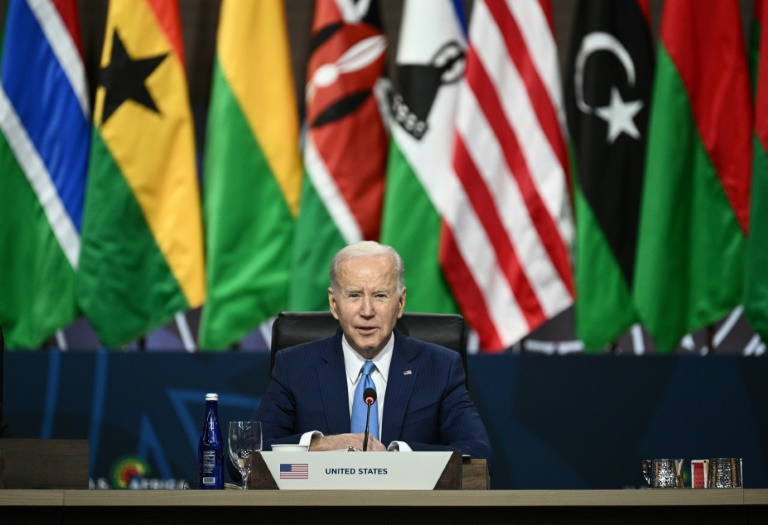
President Joe Biden threw his support Thursday behind a larger African role in the world but also vowed the United States would not shy away from promoting democracy.

“The United States is all in on Africa,” Biden told nearly 50 African leaders who have gathered in Washington for three days.

“Africa belongs to the table in every room — every room for global challenges that are being discussed — and in every institution,” Biden said. 

Biden, who in September called for an African permanent seat on the UN Security Council, backed a permanent African Union role in the Group of 20 economies and said he was planning a visit, the first by a US president since 2015, to sub-Saharan Africa.

“We’re all going to be seeing you and you’re going to see a lot of us,” Biden said, without specifying the dates or destinations.

Biden a night earlier invited African leaders to a gala White House dinner, with the African Union arriving first to the red carpet, as he pulled out the stops for the first such summit since Barack Obama launched an initiative in 2014.

Obama’s successor Donald Trump made little secret of his lack of interest in Africa, where in the ensuing years China — seen by the United States as its top global competitor — has become a key player through major investment.

– Democracy in ‘DNA’ –

The United States at the summit is laying out $55 billion in projects over the coming three years including investment in green energy, training for health workers and modernization of internet networks. 

The private sector also pledged $15 billion in deals led by investments by US firms in digital technology.

In a contrast with China, which has been happy to do business with all African regimes, the United States has made a point of stressing democracy, even if Biden still invited leaders seen as authoritarian.

“The United States will always lead with our values,” Biden told the African leaders.

“Support for democracy, respect for the rule of law, commitment to human rights, responsible government, all are part of our DNA.”

Biden, while announcing $100 million for security, also said the United States would invest $75 million to counteract “democratic backsliding” including by strengthening electoral authorities and civil society.

On Wednesday, Biden met jointly with the leaders of six nations that hold elections next year including Nigeria and the Democratic Republic of Congo, sub-Saharan Africa’s largest countries in population and size respectively, to seek promises on free elections.

Mark Green, a former congressman and head of the US Agency of International Development, said that the United States was focused on building self-reliance in Africa, while China was looking to “reinforce aid dependency.”

“If a Chinese investment in Africa leads to greater self-reliance, somebody in Beijing is going to lose his or her job,” said Green, now president of the Wilson Center. 

China denies US accusations it is putting developing nations into a “debt trap” and in turn has called on Washington not to see Africa through the prism of geopolitical competition.

– Countering Russia –

Senegalese President Macky Sall, the current chair of the African Union, welcomed US support for the institution and voiced appreciation for Biden’s summit.

But he also called for the United States to end longstanding rights sanctions on Zimbabwe and voiced alarm over a bill in the US Congress that would impose sanctions on African countries over dealings with Russia.

“This would be the first time in international relations that a whole continent is targeted,” Sall told Biden before the leaders.

Biden will later Thursday lead a session on food security as his administration emphasizes US assistance and points the finger at Russia for a sharp spike in global prices that has contributed to hunger, especially on the drought-struck Horn of Africa.

Russia in February invaded Ukraine, a major exporter of grains to the developing world.

Russia has sought to rally African public opinion by blaming food inflation not on the war itself, but on Western sanctions imposed on Moscow in response.

Tiny meteorite may have caused coolant leak from Soyuz capsule

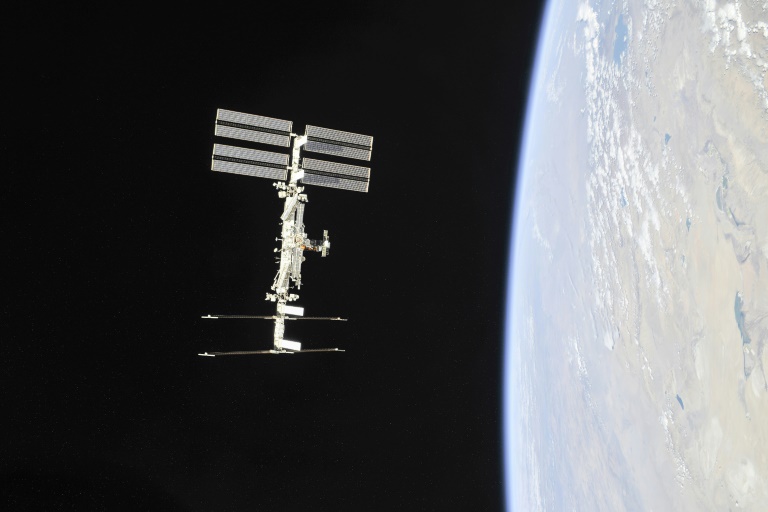
Russian and NASA engineers were assessing a coolant leak on Thursday from a Soyuz crew capsule docked with the International Space Station (ISS) that may have been caused by a micrometeorite strike.

The coolant leak forced the last-minute cancellation of a spacewalk by two Russian cosmonauts on Wednesday and could potentially impact a return flight to Earth by three crew members.

Russia’s space corporation Roscosmos and the US space agency said the leak on the Soyuz MS-22 spacecraft did not pose any danger to the astronauts and cosmonauts aboard the ISS.

“The crew members aboard the space station are safe, and were not in any danger during the leak,” NASA said.

It said ground teams were evaluating “the fluid and potential impacts to the integrity of the Soyuz spacecraft.”

“NASA and Roscosmos will continue to work together to determine the next course of action following the ongoing analysis,” NASA said.

The TASS news agency quoted Sergei Krikalev, a former cosmonaut who heads the crewed space flight program for Roscosmos, as saying that the leak may have been caused by a micrometeorite striking Soyuz MS-22.

“The cause of the leak may be a micrometeorite entering the radiator,” TASS quoted Krikalev as saying. “Possible consequences are changes in the temperature regime.”

“No other changes in the telemetric parameters of either the Soyuz spacecraft or the (ISS) station on the Russian or American segments have been detected,” Krikalev said.

Soyuz MS-22 flew Russian cosmonauts Sergei Prokopyev and Dmitry Petelin and NASA astronaut Frank Rubio to the ISS in September.

It is scheduled to bring them back to Earth in March and another vessel would have to be sent to the ISS if Soyuz MS-22 is unavailable.

Prokopyev and Petelin had been making preparations for a spacewalk on Wednesday when the leak was discovered.

“The crew reported the warning device of the ship’s diagnostic system went off, indicating a pressure drop in the cooling system,” Roscosmos said. “At the moment, all systems of the ISS and the ship are operating normally, the crew is safe.”

– White particles –

NASA said the leak had occurred on the “aft end” of Soyuz MS-22, which is secured to the ISS.

Dramatic NASA TV images showed white particles resembling snowflakes streaming out of the rear of the vessel for hours.

There are currently four other astronauts and cosmonauts aboard the space station in addition to Rubio, Prokopyev and Petelin.

NASA astronauts Josh Cassada and Nicole Mann, Japanese astronaut Koichi Wakata and Russian cosmonaut Anna Kikina were flown to the ISS in October aboard a SpaceX spacecraft.

Space has been a rare avenue of cooperation between Moscow and Washington since the start of Moscow’s assault on Ukraine in February, and ensuing Western sanctions on Russia that shredded ties between the two countries.

The ISS was launched in 1998 at a time of increased US-Russia cooperation following their Space Race competition during the Cold War.

Tiny meteorite may have caused coolant leak from Soyuz capsule

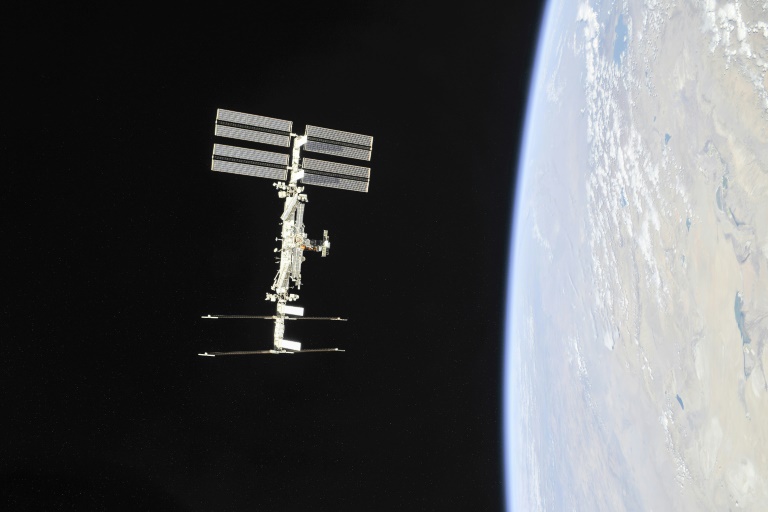
Russian and NASA engineers were assessing a coolant leak on Thursday from a Soyuz crew capsule docked with the International Space Station (ISS) that may have been caused by a micrometeorite strike.

The coolant leak forced the last-minute cancellation of a spacewalk by two Russian cosmonauts on Wednesday and could potentially impact a return flight to Earth by three crew members.

Russia’s space corporation Roscosmos and the US space agency said the leak on the Soyuz MS-22 spacecraft did not pose any danger to the astronauts and cosmonauts aboard the ISS.

“The crew members aboard the space station are safe, and were not in any danger during the leak,” NASA said.

It said ground teams were evaluating “the fluid and potential impacts to the integrity of the Soyuz spacecraft.”

“NASA and Roscosmos will continue to work together to determine the next course of action following the ongoing analysis,” NASA said.

The TASS news agency quoted Sergei Krikalev, a former cosmonaut who heads the crewed space flight program for Roscosmos, as saying that the leak may have been caused by a micrometeorite striking Soyuz MS-22.

“The cause of the leak may be a micrometeorite entering the radiator,” TASS quoted Krikalev as saying. “Possible consequences are changes in the temperature regime.”

“No other changes in the telemetric parameters of either the Soyuz spacecraft or the (ISS) station on the Russian or American segments have been detected,” Krikalev said.

Soyuz MS-22 flew Russian cosmonauts Sergei Prokopyev and Dmitry Petelin and NASA astronaut Frank Rubio to the ISS in September.

It is scheduled to bring them back to Earth in March and another vessel would have to be sent to the ISS if Soyuz MS-22 is unavailable.

Prokopyev and Petelin had been making preparations for a spacewalk on Wednesday when the leak was discovered.

“The crew reported the warning device of the ship’s diagnostic system went off, indicating a pressure drop in the cooling system,” Roscosmos said. “At the moment, all systems of the ISS and the ship are operating normally, the crew is safe.”

– White particles –

NASA said the leak had occurred on the “aft end” of Soyuz MS-22, which is secured to the ISS.

Dramatic NASA TV images showed white particles resembling snowflakes streaming out of the rear of the vessel for hours.

There are currently four other astronauts and cosmonauts aboard the space station in addition to Rubio, Prokopyev and Petelin.

NASA astronauts Josh Cassada and Nicole Mann, Japanese astronaut Koichi Wakata and Russian cosmonaut Anna Kikina were flown to the ISS in October aboard a SpaceX spacecraft.

Space has been a rare avenue of cooperation between Moscow and Washington since the start of Moscow’s assault on Ukraine in February, and ensuing Western sanctions on Russia that shredded ties between the two countries.

The ISS was launched in 1998 at a time of increased US-Russia cooperation following their Space Race competition during the Cold War.

US industrial output slips in November

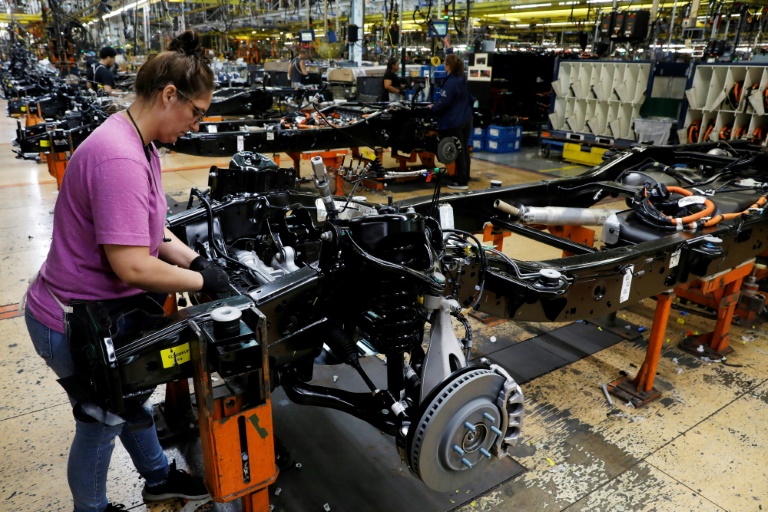
Industrial production in the United States slumped in November with “broad based” decreases, the Federal Reserve said Thursday, as output for bigger-ticket consumer products and manufacturing fell.

While tangled supply chains and surging costs which weighed on businesses are easing, in a boost to production, firms are now contending with weakening demand as interest rates rise.

The Fed has raised its benchmark lending rate seven times this year in an effort to cool the world’s biggest economy, making borrowing more expensive with policy effects rippling across sectors.

Total output dropped 0.2 percent in November, defying analysts’ expectations of an uptick, according to Fed data.

“Decreases were broad based across market groups,” the report said.

It added that the output of consumer durables fell about two percent, referring to products that do not have to be purchased very often. The decline was led by automotive goods.

Manufacturing output dropped 0.6 percent as well, while that of mining fell 0.7 percent, only partly offset by a rebound in utilities, the Fed added.

“Headline production was flattered by a weather-related… jump in utilities output, which is hugely volatile,” said economist Kieran Clancy of Pantheon Macroeconomics in a note.

The main factor bogging down manufacturing output is likely “softening capital spending, in the wake of higher borrowing costs,” he added.

“The next few months will be rough; the downturn in manufacturing output has further to run,” he said.

On Thursday, the New York Federal Reserve Bank’s Empire survey also saw a plunge in readings, with shipments and new orders worsening, analysts noted.

“Manufacturing conditions in the US are deteriorating as central banks continue to raise rates and the global economy weakens,” said economist Gurleen Chadha of Oxford Economics.

UN rights chief denounces crackdown in Nicaragua

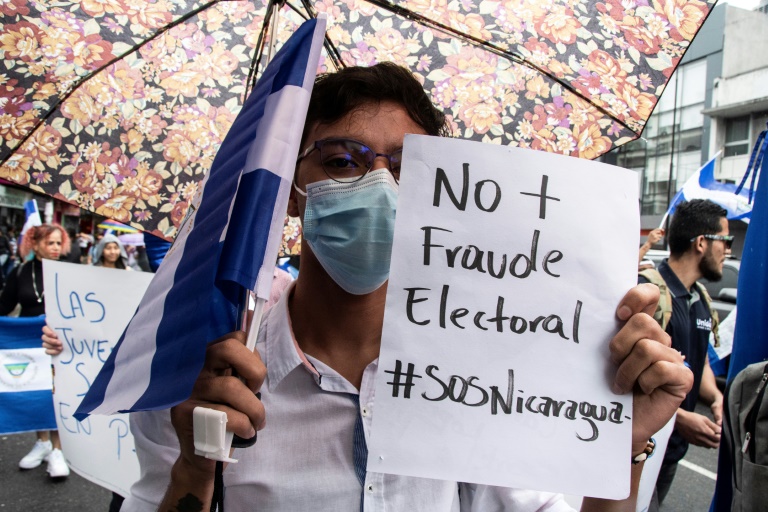
Nicaragua is systematically working to stifle dissent, the UN’s rights chief warned Thursday, pointing to swelling numbers of arbitrary detentions, thousands of NGOs shut down and “muzzling of the media”.

Volker Turk told the United Nations Human Rights Council the country was beset by an intensifying “climate of oppression”, an update that was harshly criticised by Nicaragua and its allies.

There is, he warned, “a systematised effort to stifle opposition and dissent”.

Nicaraguan President Daniel Ortega’s leftist government has faced mounting diplomatic pressure over what the United States has called a dramatic deterioration of human rights. That has included the jailing of dozens of political opponents, students and journalists.

“The number of people arbitrarily detained for expressing their political views or for being perceived as critics of the government went up from 195 in September to 225 today,” Turk told the council.

“This includes relatives of detained political opponents, allegedly to coerce the latter into surrendering,” he said.

The UN rights chief also voiced alarm that over 3,000 national and international NGOs had been shut down — nearly half of them since September.

And he accused the government of “muzzling of the media”, after it shuttered 26 national media outlets and three international ones.

– ‘Arrested, harassed, intimidated’ –

“Human rights defenders, journalists, clergy or those perceived to be political opponents, are arrested, harassed, intimidated,” Turk said.

In particular, he warned the municipal elections in Nicaragua last month “had the trappings of an exercise in autocracy”.

He pointed to waves of arrests, dismissals of political opponents and  widespread intimidation on election day.

Turk called on the authorities to release all those arbitrarily arrested and to fully respect fundamental freedoms of expression, association and assembly.

He asked that his staff be granted access to the country. 

A range of diplomats at Thursday’s meeting, including many of Nicaragua’s neighbours, echoed Turk’s concern. Ecuador’s representative Alejandro Davalos describing the situation as “a source of deep alarm”.

US ambassador Michele Taylor voiced “great concern,” urging “the regime to cease its assault on peaceful opposition, independent media, academia, human right defenders, journalists and religious actors”.

Her use of the word “regime” sparked immediate protest from Nicaragua’s representative in the room.

Nicaragua’s Attorney General Wendy Morales Urbina denounced Turk’s presentation and the “manipulative and biased position” of the UN rights office towards her country.

A number of countries, including Russia, Venezuela, North Korea and Cuba, also jumped to Nicaragua’s defence.

They echoed the words of the Chinese representative Zhang Xiaoyue, who criticised the “politicisation and instrumentalisation of human rights issue… to interfere in the internal affairs of other countries”.

Heathrow ground handling staff suspend strike set for Friday

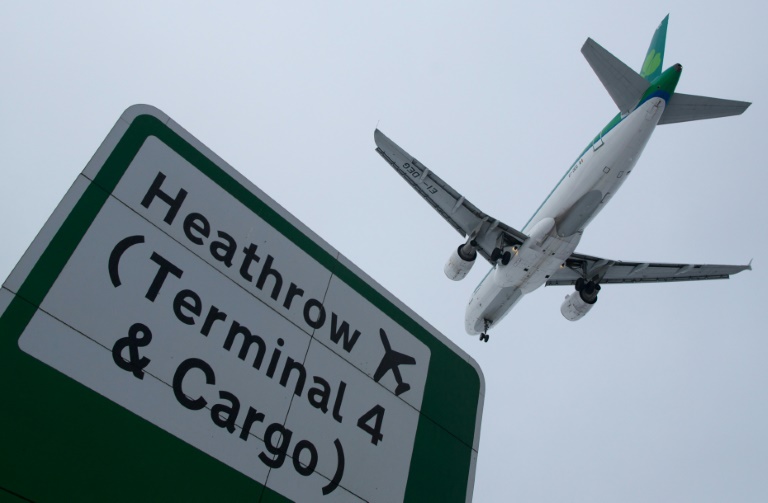
Heathrow Airport baggage handlers have suspended a planned strike, their union said on Thursday, as industrial action continues across the UK.

Around 400 members of the Unite union employed by private contractors Menzies had been due to walk out for 72 hours from 4:00 am (0400 GMT) on Friday in a months-long dispute over pay.

But the stoppage was halted as a “gesture of goodwill” after Menzies made an improved pay offer during talks held Thursday between Unite and Menzies, according to the union.

It will now ballot its members on the revised pay offer.

“Unite has been adamant that Menzies was able to offer an improved pay offer and that has proved to be the case,” the union’s regional officer Kevin Hall said in a statement.

Miguel Gomez Sjunnesson, of Menzies, said the firm was “hopeful” that the revised offer would be accepted.

He added the deal would allow the company “to give our employees their well-deserved pay increase and we can focus on delivering the best service during this busy holiday period”.

However, strike action scheduled to begin on December 29 remains in place pending the outcome of the ballot of members.

Britain has seen a growing number of public and private sector workers striking, amid decades-high inflation.

Nurses on Thursday staged an unprecedented walkout across England, Wales and Northern Ireland, while railway workers have this week started a series of 48-hour walk-outs.

Border Force staff checking passports at major airports including Heathrow and Gatwick are set to strike over Christmas.

Security guards employed by the contractor Mitie on the cross-Channel rail link Eurostar were due to strike on Friday and Sunday.

But they called off the walk-out late on Wednesday. Further planned action on December 22 and 23 was still due to go ahead.

Rafael Nadal launches hotel brand with Spain's Melia Group

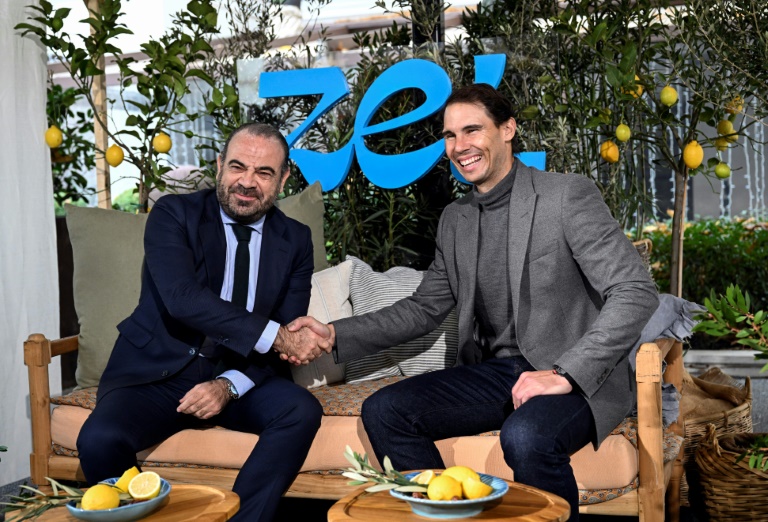
Spanish tennis star Rafael Nadal on Thursday announced the launch of a new hotel brand with Spain’s Melia group that is planning to open some 20 hotels across the globe in the next five years. 

Inspired by the “Mediterranean lifestyle”, the new “Zel” chain is expected to open its first hotel in 2023 in Mallorca in the Balearic Islands where 36-year-old Nadal was born and where Melia Hotels International was founded in 1956.

Nadal, one of the world’s two top-ranked tennis players, and Melia, Spain’s leading hotel group which operates more than 400 establishments across the globe, will jointly own the company. 

They did not specify who would hold what percentage of the shares. 

The aim is that “over the next five years”, the chain will open “more than 20 hotels across the world”, Nadal told reporters in Madrid. 

Melia said the new chain would establish hotels “in destinations with a clear focus on premium leisure tourism”, such as Spain, France, Italy or Croatia but also the Caribbean, southeast Asia and the Middle East

It would also be present in the main tourist capitals with openings already planned in London, Paris and Madrid. 

Initially, 80 percent of the hotels will be set up in existing structures “which will undergo a radical transformation” to adapt them to Zel’s “Mediterranean character”, said Melia chairman Gabriel Escarrer.

The ultimate objective is that most hotels will be specially built for Zel, which means “sky” in the dialect of Catalan that is spoken in Mallorca, said Escarrer, who is also from the Balearic Islands. 

The idea, he said, was to put the emphasis on Mediterranean culture with “its good life, gastronomy and parties” — an idea which customers found “very appealing”. 

Nadal said his involvement in the hotel chain did not mean he was ending his sporting career. 

“I’m trying to make sure that my retirement is put off for as long as possible,” he told reporters. 

Huge crowds rally to support Istanbul's banned mayor

Tens of thousands of Turks swarmed a central Istanbul square on Thursday in solidarity with the city’s opposition mayor after he was banned from politics ahead of next year’s presidential election.

A criminal court on Wednesday sentenced Ekrem Imamoglu to more than two years in prison and barred him from holding office for the same length of time for “insulting a public official” in 2019.

Imamoglu will continue to serve as mayor of Turkey’s largest city while his appeal is heard in a case linked to a hugely contested election in which his initial victory was annulled.

The case could be fast-tracked for a quick hearing and destroy any bid by Imamoglu to run in the June presidential campaign.

The US State Department said it was “deeply troubled and disappointed” by the potential removal of one of President Recep Tayyip Erdogan’s biggest rivals from the political scene.

Germany called it “a heavy blow to democracy” while France urged Turkey to “reverse its slide away from the rule of law, democracy and respect for fundamental rights”.

“This sentence is disproportionate and confirms the systemic lack of independence of the judiciary and the undue political pressure on judges and prosecutors in Turkey,” a European Union said in a statement.

– ‘Absolutely not afraid’ –

Turkey’s fractured opposition has struggled to unite behind a single candidate to challenge Erdogan’s two-decade rule in the upcoming vote.

Polls show the 52-year-old Istanbul mayor as one of the more likely challengers to beat Erdogan in a head-to-head race.

But his secular CHP party’s leader Kemal Kilicdaroglu — a bookish former civil servant who struggles in opinion polls — is still pushing hard for his own candidacy.

Meral Aksener of the nationalist Iyi (Good) Party has also seen her electoral ratings shoot up.

The fractured opposition has seized on the court case to try and spur their stuttering campaign.

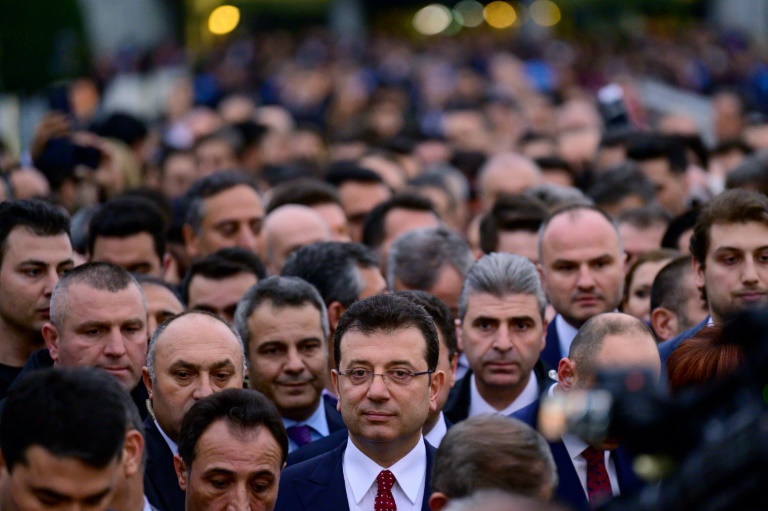
Imamoglu and the leaders of six Turkish opposition parties walked out shoulder-to-shoulder through a crowd of supporters for a rally aimed at showing their defiance of Erdogan.

“I am absolutely not afraid of their illegitimate verdict,” Imamoglu told the flag-waving crowd under constant rain.

“I don’t have judges to protect me, but I have 16 million Istanbulites and our nation behind me.”

The rally marked the first joint public appearance by the main opposition leaders during the election campaign.

Its size also rivalled the number of people Erdogan generally draws at his own almost weekly campaign events.

Local media reports said a few hundred people showed up to a separate rally in Imamoglu’s native Black Sea city of Trabzon.

– ‘Damaged credibility’ –

Snap polls show that Wednesday’s court ruling threatens to backfire on Erdogan.

The Turkish leader’s own ratings have started to recover from a low reached during an economic crisis in the past year.

But a MetroPoll survey showed that even voters for Erdogan’s Islamic-rooted AKP party believe that the case against the mayor was “political”.

MetroPoll showed 28.3 percent of AKP voters thought it was rooted in politics while 24.2 percent believed it was connected to “libel”.

Only 17.6 percent nationally thought is was “libel”.

Erdogan himself is yet to address the mayor’s  conviction.

But the head of the staunchly nationalist junior partner in Erdogan’s ruling coalition accused Imamoglu of flouting the law.

“It is one thing to disapprove of a court decision, another to insult it,” MHP party chief Devlet Bahceli said.

“Everyone must respect judicial decisions, even if they are disliked.”

one of the main dangers for Erdogan’s coalition appears to be a loss of legitimacy for the upcoming vote among ordinary Turks.

“This verdict and the accompanying political ban is a sign of the AKP’s deep worry if Imamoglu was to be the opposition’s candidate,” the EU’s former Turkey ambassador Marc Pierini tweeted.

“If the verdict is not overturned at appeal stage, the election’s credibility will be badly damaged.”

Close Bitnami banner
Bitnami