World

Stocks sink as central banks hike rates, data fan recession fears

Global stocks sank Thursday as central banks hiked interest rates again and signalled they needed to go higher to tame inflation.

Meanwhile, downbeat economic data out of China and the United States fanned recession fears. 

Both the Bank of England and the European Central Bank mirrored the Fed’s half-point hike on Wednesday to tackle soaring inflation, with Norway and Switzerland raising rates as well.

Sentiment was already hammered on Wednesday after the Fed suggested that it saw US rates topping out next year at 5.1 percent, higher than markets had predicted. 

Meanwhile the BoE, which lifted its key rate to the highest level in 14 years, warned that labour market tightness and inflationary pressures justified “a further forceful monetary policy response”.

The ECB delivered a similar message.

ECB president Christine Lagarde warned that inflation in the 19-nation eurozone was still “far too high” and more action needed to be taken. 

The world’s major central banks are seeking to dampen red-hot inflation, which has been fuelled partly by fallout from Russia’s invasion of Ukraine.

“We have more ground to cover, we have longer to go and we are in for a long game,” Lagarde told reporters. 

Share prices headed south after the rate decisions and kept falling.

Wall Street’s main indices were all down more than two percent in late morning trading.

In Europe, both Frankfurt suffered losses of more than three percent.

“The collapse in equity valuations comes as traders face up to an impending economic collapse where central banks seem to exacerbate rather than remedy the situation,” said Joshua Mahony, senior market analyst at online trading platform IG.

– Fresh recession fears –

Rising rates fan recession concerns because they push up loan repayments for consumers and companies, denting expenditure, investment and economic activity.

Market analyst Patrick O’Hare at Briefing.com said “these (central bank) policy moves were expected, but that still hasn’t helped matters given the understanding that higher rates will inevitably weigh on economic activity.” 

Economic data released Thursday fed recession fears.

China’s retail sales plunged last month as Covid restrictions and a property market crisis hammered the world’s second-largest economy.

In the United States, retail sales slid by 0.6 percent in November from October, with industrial output dropping as well.

The Fed warned Wednesday that the world’s biggest economy would grow less than expected next year.

The ECB said Thursday the eurozone was likely in a shallow recession, as Britain’s economy is expected to continue contracting through next year.

Oil prices slid on the dimmer economic prospects.

“The raising of inflation forecasts and downgrading of growth forecasts with interest rates remaining higher for longer appear to be re-rating market expectations of the demand outlook over the course of the next few months,” said Michael Hewson at CMC Markets.

– Key figures around 1630 GMT –

New York – Dow: DOWN 2.2 percent at 33,207.78 points

EURO STOXX 50: DOWN 3. percent at 3,8

London – FTSE 100: DOWN 0.9 percent at 7,426.17 (close)

Frankfurt – DAX: DOWN 3.3 percent at 13,986.23 (close)

Paris – CAC 40: DOWN 3.1 percent at 6,522.77 (close)

Tokyo – Nikkei 225: DOWN 0.4 percent at 28,051.70 (close)

Hong Kong – Hang Seng Index: DOWN 1.6 percent at 19,368.59 (close)

Shanghai – Composite: DOWN 0.3 percent at 3,168.65 (close)

Euro/dollar: DOWN at $1.0648 from $1.0684 on Wednesday

Dollar/yen: UP at 137.65 yen from 135.45 yen

Pound/dollar: DOWN at $1.2221 from $1.2424

Euro/pound: UP at 87.13 pence from 85.96 pence

Brent North Sea crude: DOWN 2.0 percent at $81.02 per barrel

West Texas Intermediate: DOWN 2.3 percent at $75.49 per barrel

burs-rl/rox

UK nurses stage unprecedented walkout

UK nurses on Thursday staged an unprecedented one-day strike in a fight for better wages and working conditions, despite warnings patients could be put at risk.

Up to 100,000 members of the Royal College of Nursing (RCN) in England, Wales and Northern Ireland stopped work from 0800 to 2000 GMT after rejecting a pay deal.

The RCN’s industrial action — the first in its 106-year history — is part of a surging wave of stoppages by public and private sector employees across the UK as spiralling inflation outstrips wages growth.

Outside St Thomas’ Hospital in central London, nurses on picket lines chanted slogans and held aloft placards urging “Pay us our worth” and “It’s time to pay nursing staff fairly”.

They were joined by England’s chief nursing officer Ruth May, according to The Times.

“This group don’t want to be here, they want to be in there,” psychiatric nurse Geoff Brennan told AFP, pointing at the hospital.

“But we’ve got no choice. If we continue to just sit in there and endure the conditions that are going on, there (the hospital) won’t exist any more.”

Nurse Rebecca Cosgrave said salaries have been depreciating over the last decade or so, forcing some to use food banks.

“It’s really a terrible state for anyone, not just nurses to be quite frank, (that) are having to use food banks,” she said.

– ‘Tragic’ – 

Union leaders said nurses were overworked due to staff shortages, as the state-run National Health Service (NHS) battles a growing backlog for appointments and treatment worsened by the pandemic.

RCN general secretary Pat Cullen said it was a “tragic day” for nurses, patients and the NHS that they had to take such action.

She added there were currently 50,000 vacant nursing posts and more needed to be done to stop staff leaving for better-paid jobs in supermarkets and retail.

“It’s up to the government. They have a responsibility to address those vacant nursing posts and stop the drain out of our profession,” said Cullen.

“They need to do that by paying nurses a decent wage.”

On the picket line in London, ophthalmologic nurse Ian Henderson said attracting new nurses was increasingly difficult.

“People don’t want to come into nursing anymore. I think it’s important that we make a stand and say, there’s a problem here,” he told AFP.

The RCN wants a pay rise significantly above inflation, which surged to a 41-year high of 11.1 percent in October, falling slightly to 10.7 percent last month.

Cullen said that would redress an effective 20-percent wage cut for nurses in real terms over the last decade. 

– Long hours –

The government maintains the demands are unaffordable and Health Secretary Steve Barclay called the strikes “deeply regrettable”.

Barclay insisted he was open to talks on wider issues but not on the pay offer, which was recommended by an independent review body.

The NHS Pay Review Body recommended a pay rise of at least £1,400 ($1,740) on top of a 3.0 percent increase last year, he said.

“Further pay increases would mean taking money away from frontline services at a time when we are tackling record waiting lists as a result of the pandemic,” he added.

The RCN has said chemotherapy, dialysis, intensive care and high-dependency units, as well as neonatal and paediatric intensive care will be protected.

But other services will be reduced to Christmas staffing levels during the walk-out.

Saffron Cordery, interim chief executive of NHS Providers, said NHS trusts were “pulling out all the stops” to lessen the impact on patients.

“The picture will vary across the country as (hospital) trust leaders work out service levels with unions locally,” she added.

Health minister Maria Caulfield said some 70,000 appointments, procedures and surgeries will be lost in England due to the walk-out, with thousands more elsewhere.

Caulfield — a qualified nurse and RCN member — accepted pay was an issue but told Times Radio it was “smaller” compared to others such as long working hours.

The main opposition Labour party leader Keir Starmer called the strike a “badge of shame” for the ruling Conservative government.

Another walk-out is due next Tuesday.

video-bur/jj/phz/rox

UN nature talks teeter on brink as ministers arrive for home stretch

Hopes of sealing a historic “peace pact with nature” at a United Nations biodiversity summit hang in the balance as the world’s environment ministers began the final phase of high-stakes talks on Thursday.

Stark divisions remain to be bridged, foremost among them the subject of how much developed countries will pay developing nations to help them save ecosystems, and whether there should be a new, dedicated fund for this purpose. 

At stake is the future of the planet and whether humanity can roll back habitat destruction, pollution and the climate crisis, which are threatening an estimated million species with extinction.

The draft agreement contains more than 20 targets, including a cornerstone pledge to protect 30 percent of the world’s land and seas by 2030, as well as goals to eliminate harmful fishing and agricultural subsidies, tackle invasive species and reduce pesticides.

“A sound ecosystem is essential for the prosperity of civilization,” Chinese President Xi Jinping said in a video message that opened the high-level segment.

“We must work together to promote harmonious coexistence between man and nature.”

China is chairing the summit but is not hosting because of its strict Covid rules, leaving Canada to step in and hold the meeting in Montreal, one of North America’s coldest cities, in deep winter.

“A brilliant Canadian artist, Joni Mitchell, sent us a message in a song — that we have ‘paved paradise and put up a parking lot,'” said Canada’s environment minister, Steven Guilbeault, who was once a radical activist nicknamed “Green Jesus.”

“We listened to her music and sang along but didn’t really understand her message. We must live in harmony with nature, not try and dominate it,” he added.

In the absence of heads of state and government, more than a hundred ministers will have to drag the text, four years in the making, over the finish line.

But its success is still far from assured after disagreements over the thorny issue of biodiversity financing led to a walkout by negotiators from developing nations overnight Tuesday and a temporary pause in talks.

– New fund sought –

The Global South, home to most of the world’s biological diversity, wants a new global biodiversity fund (GBF) to help them meet goals, for example by setting up protected areas.

But rich countries are opposed — and propose instead making existing financial mechanisms more accessible. 

This debate mirrors a similar disagreement during recent UN climate talks in Egypt on creating a “loss and damages” fund for the most climate-vulnerable nations — though that demand was eventually met.

Dozens of nations, including Brazil, India, Indonesia and many African countries are also seeking funding of $100 billion yearly, or one percent of global GDP, until 2030. 

Current financial flows from high-income countries to lower income ones are in the order of $10 billion per year.

A crisis meeting of heads of delegations, organized on Wednesday by China, which is chairing the meeting, brought negotiators back to the table following the breakdown.

A Western negotiator who declined to be named told AFP: “The African group wants to reach an agreement with money in front, other developing countries too, but Brazil is using the financial question to derail the process.”

The source said the Brazilian delegation is still following the policies of outgoing far-right president Jair Bolsonaro, who is very close to the agricultural industry, which is hostile to reducing pesticide use.

Nevertheless, developing countries are angered by what they see as a lack of ambition.

“This has led to the negotiations now being on the edge of a full breakdown,” said Innocent Maloba of WWF International.

Beyond the moral implications, there is the question of self-interest: $44 trillion of economic value generation — more than half the world’s total GDP — is dependent on nature and its services.

Israeli technology aims to curb male chick culling

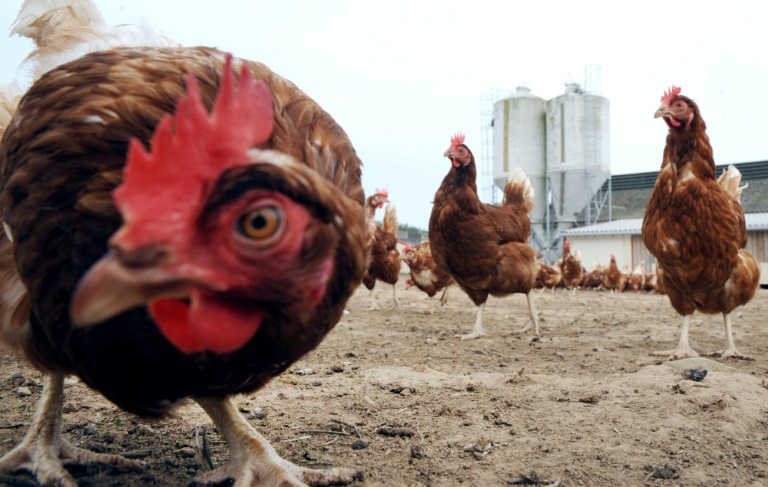
Israeli scientists have created egg-laying hens that only produce females, a breakthrough that could help end the annual culling of around seven billion male chicks globally. 

The chicks, born from egg-laying, are destroyed en masse by suffocation or crushing because they are not suitable for meat production and do not lay eggs. 

Animal rights activists have denounced the practice as barbaric, and it has been banned in several European states. 

A German prohibition on male chick culling came into effect this year. French farmers have until year’s end to comply with new restrictions. 

A team at the Israeli Agricultural Research Organization-Volcani Center has used gene editing to develop hens that only gives birth to females. 

Except for this vital change, they are “completely identical to the breed of hens that lay edible eggs and are currently used in agriculture,” according to Huminn, the American-Israeli firm which partnered with the Volcani Center.

The researchers say this is the only option to substantially curb mass male chick culling around the world. 

“This is a world first and the only solution that is easy for industry players to implement,” team leader Yuval Cinnamon, a Volcani Center embryologist, told AFP. 

He said technologies that seek to identify whether an egg is carrying a male or female embryo are not reliable.

The Volcani Center, based in the Tel Aviv suburbs, developed the technique following seven years of research with Huminn, which in part specialises in commercially viable sustainable food production. 

– ‘Most serious problem’ –     

The technology involves genetically modifying egg-laying hens so that, when carrying male embryos, those do not progress and hatch. 

“After fertilisation the male embryos do not develop, and the female embryos develop normally without being genetically modified and hatch normally,” Cinnamon explained. 

“This will provide a real answer to what is probably the most serious animal welfare problem in the world today,” he added.

Beyond the animal rights benefits, the technology could offer poultry producers huge savings in terms of the space and energy required to operate incubators while reducing the significant culling costs. 

“It costs a dollar to cull each male chick, so that’s seven billion in savings a year,” Cinnamon said.

Huminn has forecast that commercial benefits from the technology could emerge within two years. 

At a meeting in October, European Union agriculture ministers said they would consider a bloc-wide ban on culling male chicks from egg-laying hens, pending the results of an impact assessment. 

Israeli technology aims to curb male chick culling

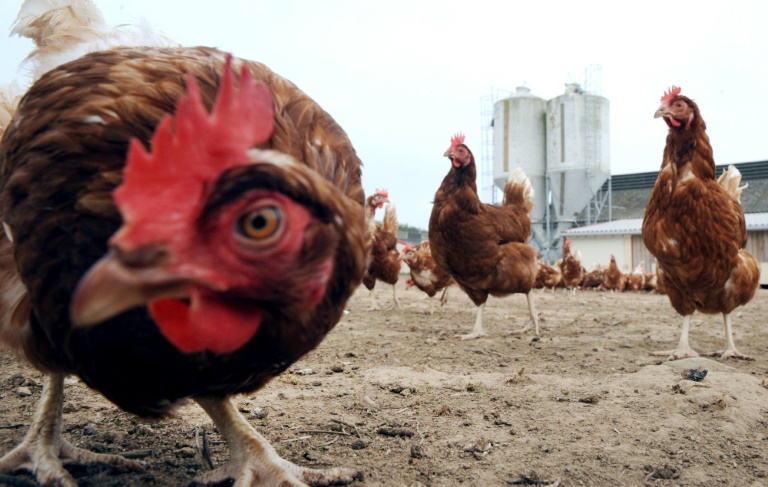
Israeli scientists have created egg-laying hens that only produce females, a breakthrough that could help end the annual culling of around seven billion male chicks globally. 

The chicks, born from egg-laying, are destroyed en masse by suffocation or crushing because they are not suitable for meat production and do not lay eggs. 

Animal rights activists have denounced the practice as barbaric, and it has been banned in several European states. 

A German prohibition on male chick culling came into effect this year. French farmers have until year’s end to comply with new restrictions. 

A team at the Israeli Agricultural Research Organization-Volcani Center has used gene editing to develop hens that only gives birth to females. 

Except for this vital change, they are “completely identical to the breed of hens that lay edible eggs and are currently used in agriculture,” according to Huminn, the American-Israeli firm which partnered with the Volcani Center.

The researchers say this is the only option to substantially curb mass male chick culling around the world. 

“This is a world first and the only solution that is easy for industry players to implement,” team leader Yuval Cinnamon, a Volcani Center embryologist, told AFP. 

He said technologies that seek to identify whether an egg is carrying a male or female embryo are not reliable.

The Volcani Center, based in the Tel Aviv suburbs, developed the technique following seven years of research with Huminn, which in part specialises in commercially viable sustainable food production. 

– ‘Most serious problem’ –     

The technology involves genetically modifying egg-laying hens so that, when carrying male embryos, those do not progress and hatch. 

“After fertilisation the male embryos do not develop, and the female embryos develop normally without being genetically modified and hatch normally,” Cinnamon explained. 

“This will provide a real answer to what is probably the most serious animal welfare problem in the world today,” he added.

Beyond the animal rights benefits, the technology could offer poultry producers huge savings in terms of the space and energy required to operate incubators while reducing the significant culling costs. 

“It costs a dollar to cull each male chick, so that’s seven billion in savings a year,” Cinnamon said.

Huminn has forecast that commercial benefits from the technology could emerge within two years. 

At a meeting in October, European Union agriculture ministers said they would consider a bloc-wide ban on culling male chicks from egg-laying hens, pending the results of an impact assessment. 

Israeli technology aims to curb male chick culling

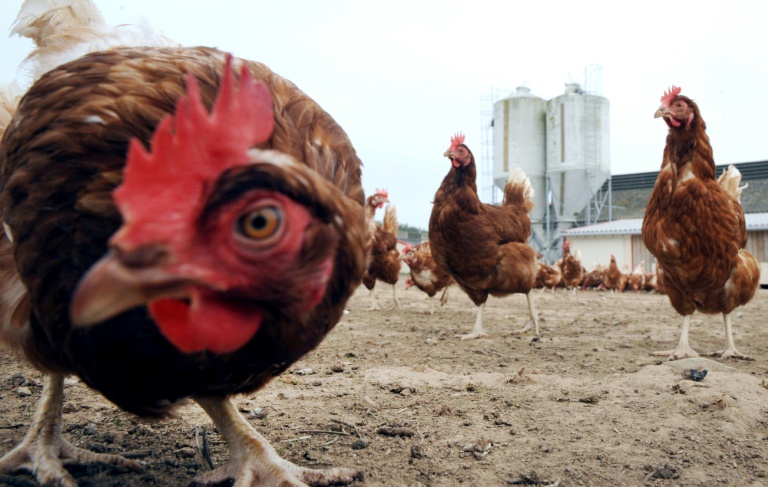
Israeli scientists have created egg-laying hens that only produce females, a breakthrough that could help end the annual culling of around seven billion male chicks globally. 

The chicks, born from egg-laying, are destroyed en masse by suffocation or crushing because they are not suitable for meat production and do not lay eggs. 

Animal rights activists have denounced the practice as barbaric, and it has been banned in several European states. 

A German prohibition on male chick culling came into effect this year. French farmers have until year’s end to comply with new restrictions. 

A team at the Israeli Agricultural Research Organization-Volcani Center has used gene editing to develop hens that only gives birth to females. 

Except for this vital change, they are “completely identical to the breed of hens that lay edible eggs and are currently used in agriculture,” according to Huminn, the American-Israeli firm which partnered with the Volcani Center.

The researchers say this is the only option to substantially curb mass male chick culling around the world. 

“This is a world first and the only solution that is easy for industry players to implement,” team leader Yuval Cinnamon, a Volcani Center embryologist, told AFP. 

He said technologies that seek to identify whether an egg is carrying a male or female embryo are not reliable.

The Volcani Center, based in the Tel Aviv suburbs, developed the technique following seven years of research with Huminn, which in part specialises in commercially viable sustainable food production. 

– ‘Most serious problem’ –     

The technology involves genetically modifying egg-laying hens so that, when carrying male embryos, those do not progress and hatch. 

“After fertilisation the male embryos do not develop, and the female embryos develop normally without being genetically modified and hatch normally,” Cinnamon explained. 

“This will provide a real answer to what is probably the most serious animal welfare problem in the world today,” he added.

Beyond the animal rights benefits, the technology could offer poultry producers huge savings in terms of the space and energy required to operate incubators while reducing the significant culling costs. 

“It costs a dollar to cull each male chick, so that’s seven billion in savings a year,” Cinnamon said.

Huminn has forecast that commercial benefits from the technology could emerge within two years. 

At a meeting in October, European Union agriculture ministers said they would consider a bloc-wide ban on culling male chicks from egg-laying hens, pending the results of an impact assessment. 

US places Chinese chipmakers on trade blacklist

The US Commerce Department on Thursday blacklisted 36 Chinese companies including top producers of advanced computer chips, severely restricting their access to American technology.

The move, which included semiconductor makers Cambricon and Yangtze Memory Technologies, aimed to limit China’s “efforts to obtain and leverage advanced technologies including artificial intelligence for its military modernization efforts and human rights violations,” the Commerce Department said.

The companies’ placement on the so-called Entity List makes it nearly impossible for them to legally acquire directly or indirectly US semiconductor manufacturing technology, designs and other intellectual property, hampering their production potential.

Of the 36 names, 21 are identified as major firms involved in the research and design, marketing and sales of artificial intelligence chips with close ties to the Chinese defense sector.

Seven are linked to the Chinese military’s efforts to develop hypersonic and ballistic missile systems.

One of the companies, Tianjin Tiandi Weiye Technologies, was placed on the Entity List for its alleged role in “China’s campaign of repression, mass arbitrary detention, and high-technology surveillance” against Uyghurs and other minorities in the western Xinjiang region.

The Entity List additions Thursday further the Biden administration’s efforts to deny China “access to advanced technologies for military modernization and human rights abuses,” Assistant Secretary of Commerce Thea Rozman Kendler said in a statement.

The announcement, the most recent in a series of US actions seeking to limit China’s access to sensitive US technologies, came just days after Beijing filed a dispute claim at the World Trade Organization against Washington’s restrictive policies.

China commerce ministry on Monday accused the United States of “obstructing normal international trade in products including chips and threatening the stability of the global industrial supply chain,” as well as violating international trade rules and engaging in “protectionist practices.”

Speaking on Tuesday, Chinese foreign ministry spokesman Wang Wenbin said the United States has “repeatedly used national security as an excuse to interfere in the normal operation of international trade.”

“All countries should stand up and not let Washington’s unilateralism and protectionism go unchecked,” Wang said. “This concerns the stability of the global trade system and more importantly, international justice.”

In October more than 30 Chinese high-tech companies were placed on the US Entity List, with officials saying they did not want American technology helping the Pentagon’s top rival, the Chinese military.

The Commerce Department’s rules require any US firm seeking to sell its technology to a Chinese company on the list to obtain a special permit, and getting those permits is almost impossible.

“With the latest rules, the US government is betting that it can so deeply undermine China’s semiconductor fabrication capabilities that it won’t matter how motivated or well-resourced China’s efforts are to create its own semiconductor industry — they simply won’t be able to catch up,” wrote Matt Sheehan, a global technology specialist at the Carnegie endowment for International Peace.

US places Chinese chipmakers on trade blacklist

The US Commerce Department on Thursday blacklisted 36 Chinese companies including top producers of advanced computer chips, severely restricting their access to American technology.

The move, which included semiconductor makers Cambricon and Yangtze Memory Technologies, aimed to limit China’s “efforts to obtain and leverage advanced technologies including artificial intelligence for its military modernization efforts and human rights violations,” the Commerce Department said.

The companies’ placement on the so-called Entity List makes it nearly impossible for them to legally acquire directly or indirectly US semiconductor manufacturing technology, designs and other intellectual property, hampering their production potential.

Of the 36 names, 21 are identified as major firms involved in the research and design, marketing and sales of artificial intelligence chips with close ties to the Chinese defense sector.

Seven are linked to the Chinese military’s efforts to develop hypersonic and ballistic missile systems.

One of the companies, Tianjin Tiandi Weiye Technologies, was placed on the Entity List for its alleged role in “China’s campaign of repression, mass arbitrary detention, and high-technology surveillance” against Uyghurs and other minorities in the western Xinjiang region.

The Entity List additions Thursday further the Biden administration’s efforts to deny China “access to advanced technologies for military modernization and human rights abuses,” Assistant Secretary of Commerce Thea Rozman Kendler said in a statement.

The announcement, the most recent in a series of US actions seeking to limit China’s access to sensitive US technologies, came just days after Beijing filed a dispute claim at the World Trade Organization against Washington’s restrictive policies.

China commerce ministry on Monday accused the United States of “obstructing normal international trade in products including chips and threatening the stability of the global industrial supply chain,” as well as violating international trade rules and engaging in “protectionist practices.”

Speaking on Tuesday, Chinese foreign ministry spokesman Wang Wenbin said the United States has “repeatedly used national security as an excuse to interfere in the normal operation of international trade.”

“All countries should stand up and not let Washington’s unilateralism and protectionism go unchecked,” Wang said. “This concerns the stability of the global trade system and more importantly, international justice.”

In October more than 30 Chinese high-tech companies were placed on the US Entity List, with officials saying they did not want American technology helping the Pentagon’s top rival, the Chinese military.

The Commerce Department’s rules require any US firm seeking to sell its technology to a Chinese company on the list to obtain a special permit, and getting those permits is almost impossible.

“With the latest rules, the US government is betting that it can so deeply undermine China’s semiconductor fabrication capabilities that it won’t matter how motivated or well-resourced China’s efforts are to create its own semiconductor industry — they simply won’t be able to catch up,” wrote Matt Sheehan, a global technology specialist at the Carnegie endowment for International Peace.

US financial sanctions target one of Russia's richest men

The US announced financial sanctions targeting one of Russia’s wealthiest men, Vladimir Potanin, the Treasury Department and State Department said Thursday, adding to efforts that curb Moscow’s ability to fund its war in Ukraine.

The actions follow earlier moves by Washington to isolate Russia from the global financial system, and are expected to complement those of the US’s partners, according to authorities.

“The Department of State is imposing sanctions on Vladimir Potanin, one of Russia’s wealthiest oligarchs and a close associate of President (Vladimir) Putin, as well as three members of his immediate family and his company, Interros,” said Secretary of State Antony Blinken.

The department is also identifying Potanin’s yacht, Nirvana, as blocked property, he said.

Meanwhile, the designation of Rosbank and other entities related to Russia’s financial sector “are part of the US government’s efforts to further limit (Russia’s) ability to fund its unconscionable war of choice against Ukraine,” the Treasury Department added in a statement.

It is sanctioning 18 entities in its latest move, with Rosbank in particular being a Russia-based commercial bank that Potanin acquired earlier this year, and seen as a key credit institution.

The Treasury Department’s Office of Foreign Assets Control is also targeting 17 subsidiaries of Russia’s second-largest bank, VTB Bank, the department said.

“By sanctioning additional major Russian banks, we continue to deepen Russia’s isolation from global markets,” said Treasury’s Under Secretary for Terrorism and Financial Intelligence Brian Nelson.

– ‘Clear message’ –

The Treasury Department’s actions run alongside the State Department’s moves to designate Potanin, his network and more than 40 more people linked to the government in Moscow.

Blinken said Thursday that officials also took aim at “29 Russian heads of regions and governors, two of their family members, and an entity owned by one of the family members.” 

“These governors oversee and enforce the conscription of citizens in response to Russia’s recent mobilization order,” he added.

He said the US’s actions “are a clear message that the United States will not hesitate to continue to use the tools at our disposal to promote an end to, and accountability for,” Putin’s war.

Potanin formerly served as a Deputy Prime Minister for the Russian Federation, and has direct ties to Putin, according to the State Department.

The actions come after similar moves were taken against Potanin and his network by Britain and Canada, the State Department said.

US financial sanctions target one of Russia's richest men

The US announced financial sanctions targeting one of Russia’s wealthiest men, Vladimir Potanin, the Treasury Department and State Department said Thursday, adding to efforts that curb Moscow’s ability to fund its war in Ukraine.

The actions follow earlier moves by Washington to isolate Russia from the global financial system, and are expected to complement those of the US’s partners, according to authorities.

“The Department of State is imposing sanctions on Vladimir Potanin, one of Russia’s wealthiest oligarchs and a close associate of President (Vladimir) Putin, as well as three members of his immediate family and his company, Interros,” said Secretary of State Antony Blinken.

The department is also identifying Potanin’s yacht, Nirvana, as blocked property, he said.

Meanwhile, the designation of Rosbank and other entities related to Russia’s financial sector “are part of the US government’s efforts to further limit (Russia’s) ability to fund its unconscionable war of choice against Ukraine,” the Treasury Department added in a statement.

It is sanctioning 18 entities in its latest move, with Rosbank in particular being a Russia-based commercial bank that Potanin acquired earlier this year, and seen as a key credit institution.

The Treasury Department’s Office of Foreign Assets Control is also targeting 17 subsidiaries of Russia’s second-largest bank, VTB Bank, the department said.

“By sanctioning additional major Russian banks, we continue to deepen Russia’s isolation from global markets,” said Treasury’s Under Secretary for Terrorism and Financial Intelligence Brian Nelson.

– ‘Clear message’ –

The Treasury Department’s actions run alongside the State Department’s moves to designate Potanin, his network and more than 40 more people linked to the government in Moscow.

Blinken said Thursday that officials also took aim at “29 Russian heads of regions and governors, two of their family members, and an entity owned by one of the family members.” 

“These governors oversee and enforce the conscription of citizens in response to Russia’s recent mobilization order,” he added.

He said the US’s actions “are a clear message that the United States will not hesitate to continue to use the tools at our disposal to promote an end to, and accountability for,” Putin’s war.

Potanin formerly served as a Deputy Prime Minister for the Russian Federation, and has direct ties to Putin, according to the State Department.

The actions come after similar moves were taken against Potanin and his network by Britain and Canada, the State Department said.

Close Bitnami banner
Bitnami