World

World Cup run temporarily masks Argentina's inflation misery

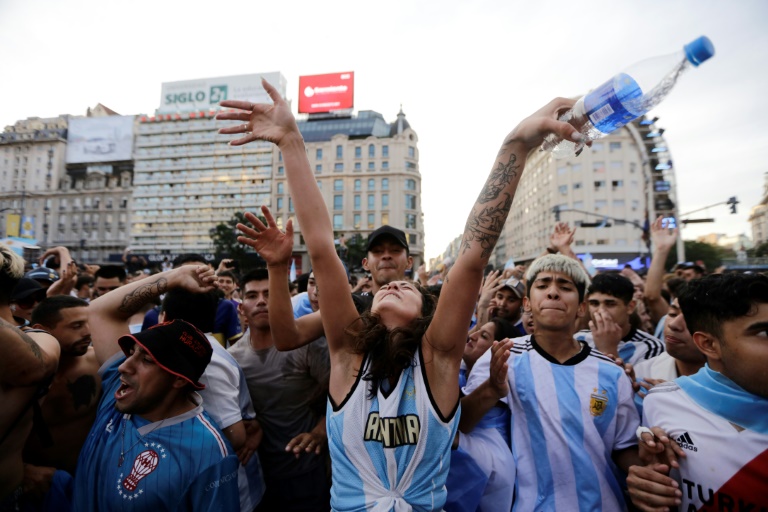
Argentina’s economy may be sinking but the entire country is buoyant, basking in the elation of its football team led by iconic captain Lionel Messi reaching the World Cup final.

The dream of landing Argentina’s third world title, 36 years after the last one, seems — at least for now — to have let Argentines forget their woes.

That number three seems significant today, and not just because Messi and his teammates seek to put a third championship star on the team’s blue and white jersey.

Sporting glory arrives at a time when many people believe the inflation that has wreaked havoc on the South American nation’s economy will reach a barely believable triple digits for 2022.

Last Thursday, the INDEC statistics institute published the price index for November, around six percent, suggesting inflation, which already stood at 88 percent over the last 12 months, is not decelerating.

Argentina has had double-figure inflation for decades.

But there is a genuine feeling that soccer success — and that Messi magic — can alleviate the pain of millions in a country where the poverty level is over 40 percent.

Before the tournament in Qatar began, Argentina’s Labor Minister Kelly Olmos was even asked whether lowering inflation was more important than winning the World Cup.

“We must constantly work against inflation, but one month won’t make a huge difference,” she said.

“On the other hand, from a morale point of view, given what it means for all Argentines, we want Argentina to be champions,” Olmos added. “The Argentine people really deserve some joy.”

Predictably, that provoked a barrage of criticism.

– ‘A relief’ –

And yet Argentines crowd around television screens in droves to watch the team’s matches, whether in bars, homes, even a Buenos Aires ‘fan zone.’

Most of these fans could never dream of affording a ticket to Qatar in a country where the average wage is a meagre 66,500 pesos ($390).

“People are well aware of the problems” but football and the economic situation “are on parallel paths, they don’t meet,” Lucrecia Presdiger, a 38-year-old hospital worker, told AFP after Argentina’s quarter-final victory over the Netherlands.

“Many people really need this joy and are making the most of it. But they don’t take it literally, they know it’s only football, they are perfectly aware of the problems,” Presdiger said, adding: “You shouldn’t take them for fools.”

For designer Tony Molfese, an Argentina triumph would be “a relief, a breath of fresh air, a joy, even momentary — and we deserve it.”

Olmos drew parallels with Argentina’s first World Cup success in 1978, when the country was run by a military dictatorship.

“We were under dictatorship, persecuted, we didn’t know what tomorrow held, but Argentina became champions and we went out to celebrate in the streets,” she recalled.

“And then we went back to the reality, which was unrelenting.”

– ‘Transient and eternal’ –

Despite the great passions football inspires, it remains just a game, according to writer Ariel Scher.

“Football bestows individual and collective joy, but that joy is transient, it doesn’t eliminate the other problems of existence,” Scher, a university lecturer and football specialist, told AFP.

“It’s like when our child passes an exam: we’re delighted but that doesn’t pay the bills.”

The power of football is that “it gives us the possibility of a happiness that is both transient and eternal,” added Scher.

“No problems will be resolved or eliminated but at the same time, even briefly, it dazzles us with something that leaves a lasting memory.”

In a November poll, more than three quarters of Argentines said the country’s fortunes at the World Cup would have an effect on people’s morale.

Some 32 percent even said they thought the result would affect the next presidential election in 10 months time.

Political scientist Raul Aragon scoffed at such an idea.

Regardless of what happens in Sunday’s final “the social mood will return to what it was before. And no political force could capitalise on any eventual victory.”
World Cup run temporarily masks Argentina's inflation misery

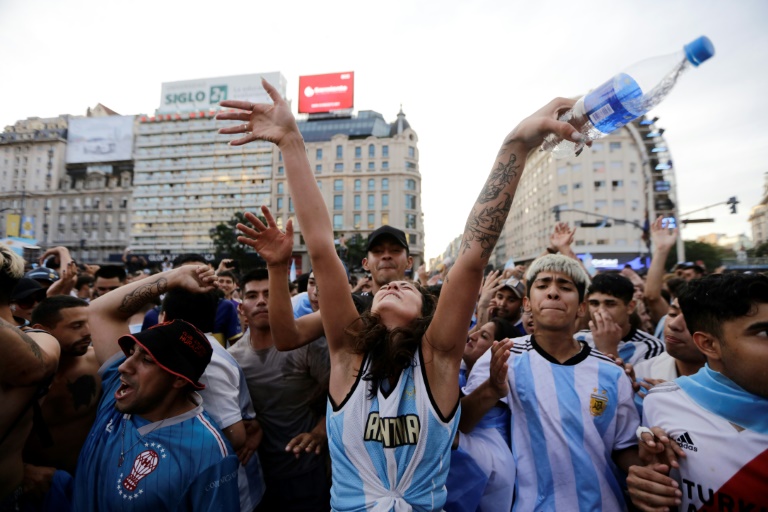
Argentina’s economy may be sinking but the entire country is buoyant, basking in the elation of its football team led by iconic captain Lionel Messi reaching the World Cup final.

The dream of landing Argentina’s third world title, 36 years after the last one, seems — at least for now — to have let Argentines forget their woes.

That number three seems significant today, and not just because Messi and his teammates seek to put a third championship star on the team’s blue and white jersey.

Sporting glory arrives at a time when many people believe the inflation that has wreaked havoc on the South American nation’s economy will reach a barely believable triple digits for 2022.

Last Thursday, the INDEC statistics institute published the price index for November, around six percent, suggesting inflation, which already stood at 88 percent over the last 12 months, is not decelerating.

Argentina has had double-figure inflation for decades.

But there is a genuine feeling that soccer success — and that Messi magic — can alleviate the pain of millions in a country where the poverty level is over 40 percent.

Before the tournament in Qatar began, Argentina’s Labor Minister Kelly Olmos was even asked whether lowering inflation was more important than winning the World Cup.

“We must constantly work against inflation, but one month won’t make a huge difference,” she said.

“On the other hand, from a morale point of view, given what it means for all Argentines, we want Argentina to be champions,” Olmos added. “The Argentine people really deserve some joy.”

Predictably, that provoked a barrage of criticism.

– ‘A relief’ –

And yet Argentines crowd around television screens in droves to watch the team’s matches, whether in bars, homes, even a Buenos Aires ‘fan zone.’

Most of these fans could never dream of affording a ticket to Qatar in a country where the average wage is a meagre 66,500 pesos ($390).

“People are well aware of the problems” but football and the economic situation “are on parallel paths, they don’t meet,” Lucrecia Presdiger, a 38-year-old hospital worker, told AFP after Argentina’s quarter-final victory over the Netherlands.

“Many people really need this joy and are making the most of it. But they don’t take it literally, they know it’s only football, they are perfectly aware of the problems,” Presdiger said, adding: “You shouldn’t take them for fools.”

For designer Tony Molfese, an Argentina triumph would be “a relief, a breath of fresh air, a joy, even momentary — and we deserve it.”

Olmos drew parallels with Argentina’s first World Cup success in 1978, when the country was run by a military dictatorship.

“We were under dictatorship, persecuted, we didn’t know what tomorrow held, but Argentina became champions and we went out to celebrate in the streets,” she recalled.

“And then we went back to the reality, which was unrelenting.”

– ‘Transient and eternal’ –

Despite the great passions football inspires, it remains just a game, according to writer Ariel Scher.

“Football bestows individual and collective joy, but that joy is transient, it doesn’t eliminate the other problems of existence,” Scher, a university lecturer and football specialist, told AFP.

“It’s like when our child passes an exam: we’re delighted but that doesn’t pay the bills.”

The power of football is that “it gives us the possibility of a happiness that is both transient and eternal,” added Scher.

“No problems will be resolved or eliminated but at the same time, even briefly, it dazzles us with something that leaves a lasting memory.”

In a November poll, more than three quarters of Argentines said the country’s fortunes at the World Cup would have an effect on people’s morale.

Some 32 percent even said they thought the result would affect the next presidential election in 10 months time.

Political scientist Raul Aragon scoffed at such an idea.

Regardless of what happens in Sunday’s final “the social mood will return to what it was before. And no political force could capitalise on any eventual victory.”
Fiji opposition challenges election results, calls for calm

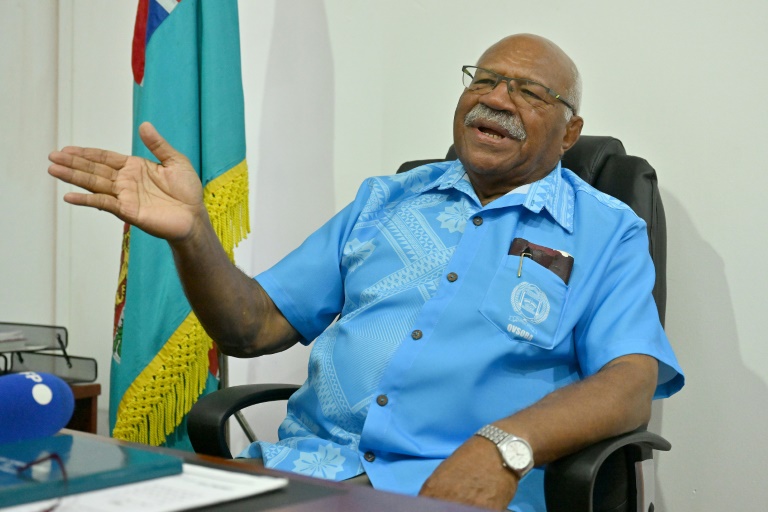
Fiji’s opposition leader said Thursday he will challenge the country’s election results, after an overnight “anomaly” abruptly halted a tally that showed him holding a very early lead.

Sitiveni Rabuka — a former prime minister and two-time coup leader nicknamed “Rambo”– told AFP his party had a right to “legal redress”, in his first public remarks on the incident.

“We will pursue every avenue available to us to make sure that the people are not denied their right of electing their government,” he said in an interview, saying he would first take his case to the country’s electoral commission.   

“I have to be convinced that it is the correct result. Even with the participation of the courts,” he said as he flicked through a copy of the country’s constitution.

Rabuka, who called on his supporters to remain calm, is trying to replace Fiji’s leader of 16 years, Prime Minister Frank Bainimarama.

The 68-year-old prime minister seized control in a 2006 putsch but legitimised his grip on power with election wins in 2014 and 2018. 

After four coups in the past 35 years, the vote is being seen as a test of the Pacific nation’s fledgling democracy.

As the very first batch of votes was tallied on Wednesday, Rabuka held an early lead, raising his supporters’ hopes of victory and the first peaceful transfer of power in two decades.

Then, in a hastily arranged press conference in the early hours of Thursday, election supervisor Mohammed Saneem said vote counters had stopped publishing results after detecting an “anomaly”.

Four hours later, as dawn broke, provisional results were back online and Bainimarama was ahead and projected to win the election.

Saneem cited a “mismatch” between votes cast and the tallies published for some candidates — with a few relatively obscure figures polling well ahead of the major parties.  

“To cure this, the Fijian Elections Office had to review the entire mechanism through which we were pushing out results,” he said.

The late-night irregularity dominated local news bulletins and was met with scepticism and anger on social media, but Saneem defended the integrity of the count.

“Everyone is too hungry for conspiracy theories,” he told reporters. 

Rabuka said he wanted to know what took place, but urged composure and said the legal process should play out.

“In layman’s terms, at this point, it is a complaint. Later on … it will probably be asking for legal redress and for the court to adjudicate,” he said.

“Let us not be too carried away with what we assessed as an early victory yesterday,” he added, calling on Fijians to “remain calm, especially our supporters.”

– Nervous wait –

Pacific analyst Tess Newton Cain said the glitch “may undermine confidence in the elections as a whole.”

“It will quite likely undermine confidence in the office of elections, and Saneem as supervisor” added Newton Cain, who is Project Lead at Griffith University’s Pacific Hub.

While final results are not expected until Sunday, partial results showed the election was still in the balance.

Bainimarama’s Fiji First party held around 45 percent of the vote, with more than half of the country’s 2071 polling stations counted. 

Rabuka’s People’s Alliance and its coalition partner — the National Federation Party — had just under 42 percent between them. 

Another potential coalition party is polling just under the five percent threshold to take a seat in parliament.

That fracturing of the opposition could once again deliver Bainimarama victory.

Asked whether he would accept the outcome, win or lose, Bainimarama said “of course” as he cast his ballot in the capital Suva on Wednesday with his granddaughter in tow.

The result of the election holds significance well beyond Fiji.

Rabuka has signalled that Fiji could loosen its ties with China if he is elected. 

Fiji has grown closer to Beijing under Bainimarama, who used a “look north” policy to stabilise the economy after Australia and New Zealand hit the country with heavy trade sanctions in retaliation for his 2006 coup.

Fiji has a population of some 900,000 and is heavily reliant on its tourism industry, which was badly damaged by the Covid-19 pandemic.

Twitter suspends account tracking Elon Musk's plane

A Twitter account that tracked flights of Elon Musk’s private jet was grounded on Wednesday despite the billionaire’s talk of free speech.

“Well it appears @ElonJet is suspended,” creator Jack Sweeney tweeted from his personal @JxckSweeney account.

The account was in action briefly later in the day, after Twitter sent out word that it updated its policy to prohibit tweets, in most cases, from giving away someone’s location in real time.

“Yes I am back!” read a tweet fired off  by @ElonJet, which added a link to versions of the flight tracking account at other social networks such as Instagram, Facebook and Mastodon “just in case.”

A short time later attempts to reach @ElonJet, as well as Sweeney’s personal Twitter account, were met with messages that both were suspended.

Musk’s jet “flew from LA to Austin last night after my account was suspended on Twitter,” he said in an Instagram post.

“Any account doxxing real-time location info of anyone will be suspended, as it is a physical safety violation,” Musk said in a tweet.

“This includes posting links to sites with real-time location info.”

Doxxing refers to revealing identifying information such as home address or phone number online, typically to target someone for abuse.

Tweets sharing a person’s location that are “not same-day” are allowed under the tweaked policy, as are posts about being at a public event such as a concert, Twitter said.

Sweeney attracted attention with his Twitter account that tracks the movements of the billionaire’s plane and even rejected Musk’s offer of $5,000 to shut down @ElonJet, which had hundreds of thousands of followers.

Musk had gone public saying he would not touch the account after buying Twitter in a $44 billion deal as part of his commitment to free speech at the platform.

Flight-following websites and several Twitter accounts offer real-time views of air traffic, but that exposure draws pushback ranging from complaints to equipment seizures.

US rules require planes in designated areas be equipped with ADS-B technology that broadcasts aircraft positions using signals that relatively simple devices can pick up.

Figuring out or confirming to whom a plane actually belongs can require some sleuthing, said Sweeney, who filed a public records request with the US government in order to confirm Musk’s ownership of his plane.

Suspension of the account came a day after Twitter co-founder and former chief Jack Dorsey published an online post defending the tech firm’s workers, who Musk has criticized for decisions regarding content moderation.

“I’m a strong believer that any content produced by someone for the internet should be permanent until the original author chooses to delete it,” Dorsey wrote.

“It should be always available and addressable. Content takedowns and suspensions should not be possible.”

Brazil sees area burned by fire nearly double in November

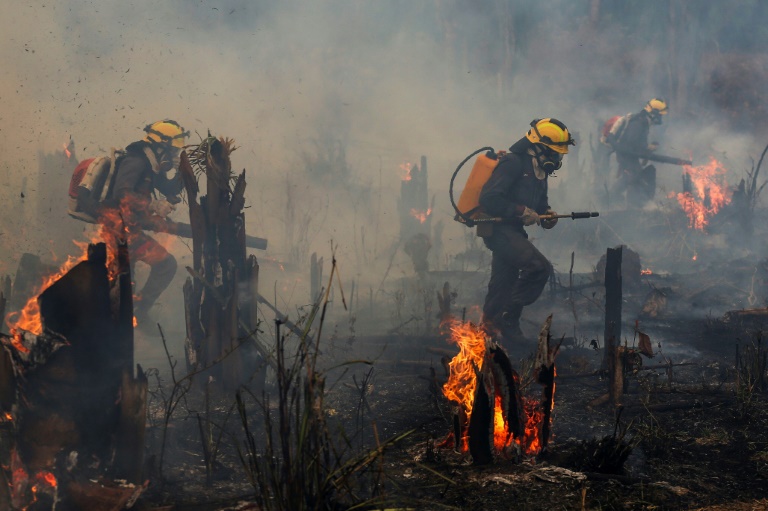
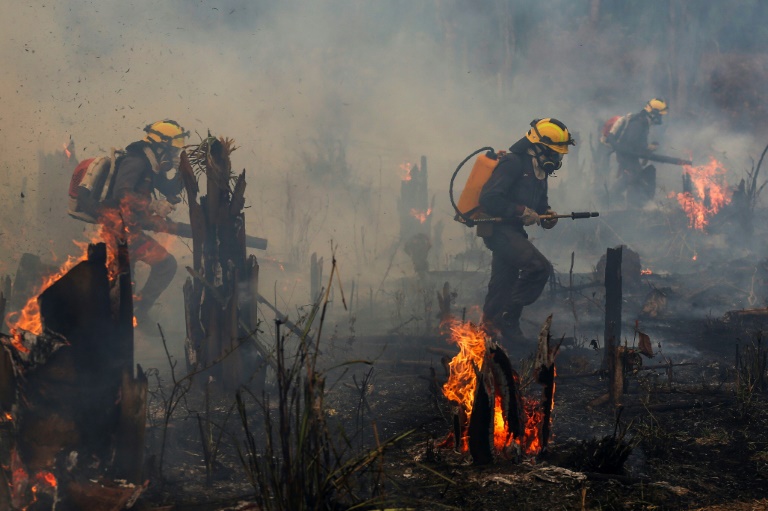
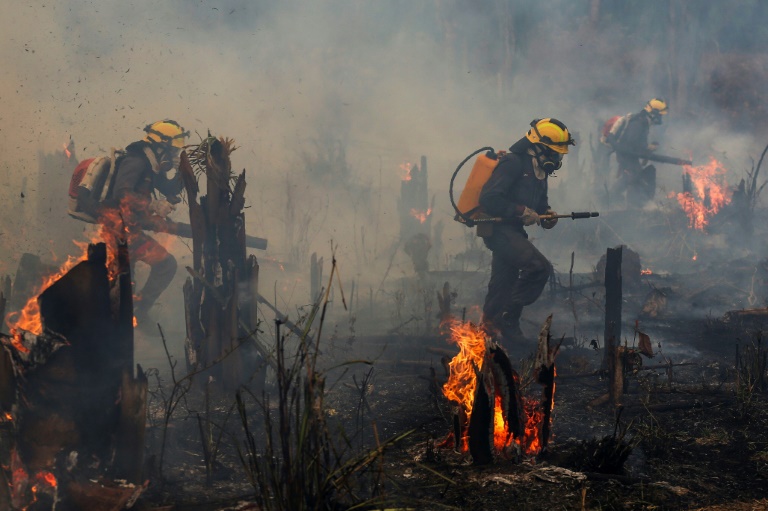
Fires scorched almost two million acres of territory in Brazil in November, according to data released by an NGO group Wednesday, nearly 90 percent more than in the same month last year.

That is an area about three-quarters of the size of the Brazilian Amazon city of Manaus.

More than 80 percent of the burned land is located in the Amazon rainforest, according to MapBiomas, the NGO consortium made up of nonprofits, Brazilian universities and startups that use satellite imagery to track the destruction of natural lands. 

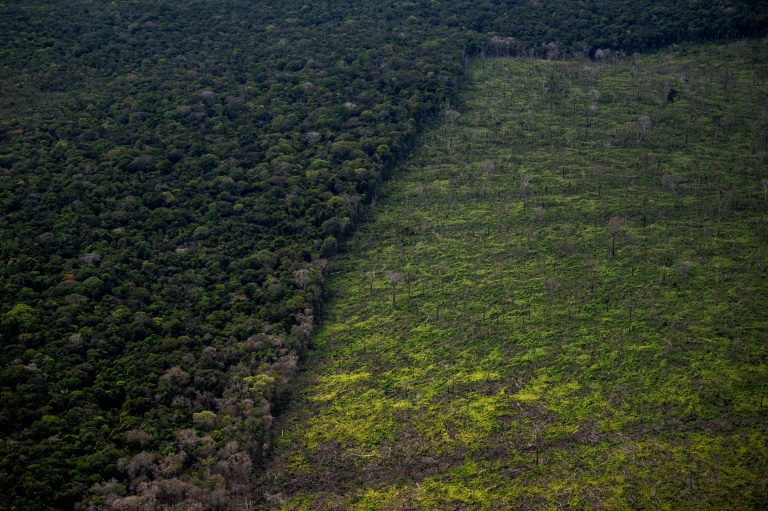
“The data confirms the escalation of environmental destruction in the final months of the Bolsonaro government,” the organization said in a statement. 

Fires and deforestation have increased since right-wing Brazilian President Jair Bolsonaro, a proponent of expanding mining and farming in the Amazon, took office in 2019.

In October, Bolsonaro lost re-election to leftist Luiz Inacio Lula da Silva, who will take office in January and has promised to “fight for zero deforestation.”

For MapBiomas, the spike in November’s fire numbers was a surprise as the month usually coincides with the rainy season.

“Clearly this is a reaction to the expectation of more effective anti-deforestation and anti-fire policies from the new government,” said Ane Alencar, MapBiomas Fire coordinator and director of science at the Institute of Amazonian Environmental Investigation.

Together with November’s numbers, the area burned in the first 11 months of 2022 totaled about 40 million acres, or just under the size of Uruguay, according to MapBiomas, a 13 percent increase over the same period in 2021. 

Nearly half of that land is within the Amazon, the group said. 

Brazil sees area burned by fire nearly double in November

Fires scorched almost two million acres of territory in Brazil in November, according to data released by an NGO group Wednesday, nearly 90 percent more than in the same month last year.

That is an area about three-quarters of the size of the Brazilian Amazon city of Manaus.

More than 80 percent of the burned land is located in the Amazon rainforest, according to MapBiomas, the NGO consortium made up of nonprofits, Brazilian universities and startups that use satellite imagery to track the destruction of natural lands. 

“The data confirms the escalation of environmental destruction in the final months of the Bolsonaro government,” the organization said in a statement. 

Fires and deforestation have increased since right-wing Brazilian President Jair Bolsonaro, a proponent of expanding mining and farming in the Amazon, took office in 2019.

In October, Bolsonaro lost re-election to leftist Luiz Inacio Lula da Silva, who will take office in January and has promised to “fight for zero deforestation.”

For MapBiomas, the spike in November’s fire numbers was a surprise as the month usually coincides with the rainy season.

“Clearly this is a reaction to the expectation of more effective anti-deforestation and anti-fire policies from the new government,” said Ane Alencar, MapBiomas Fire coordinator and director of science at the Institute of Amazonian Environmental Investigation.

Together with November’s numbers, the area burned in the first 11 months of 2022 totaled about 40 million acres, or just under the size of Uruguay, according to MapBiomas, a 13 percent increase over the same period in 2021. 

Nearly half of that land is within the Amazon, the group said. 

Brazil sees area burned by fire nearly double in November

Fires scorched almost two million acres of territory in Brazil in November, according to data released by an NGO group Wednesday, nearly 90 percent more than in the same month last year.

That is an area about three-quarters of the size of the Brazilian Amazon city of Manaus.

More than 80 percent of the burned land is located in the Amazon rainforest, according to MapBiomas, the NGO consortium made up of nonprofits, Brazilian universities and startups that use satellite imagery to track the destruction of natural lands. 

“The data confirms the escalation of environmental destruction in the final months of the Bolsonaro government,” the organization said in a statement. 

Fires and deforestation have increased since right-wing Brazilian President Jair Bolsonaro, a proponent of expanding mining and farming in the Amazon, took office in 2019.

In October, Bolsonaro lost re-election to leftist Luiz Inacio Lula da Silva, who will take office in January and has promised to “fight for zero deforestation.”

For MapBiomas, the spike in November’s fire numbers was a surprise as the month usually coincides with the rainy season.

“Clearly this is a reaction to the expectation of more effective anti-deforestation and anti-fire policies from the new government,” said Ane Alencar, MapBiomas Fire coordinator and director of science at the Institute of Amazonian Environmental Investigation.

Together with November’s numbers, the area burned in the first 11 months of 2022 totaled about 40 million acres, or just under the size of Uruguay, according to MapBiomas, a 13 percent increase over the same period in 2021. 

Nearly half of that land is within the Amazon, the group said. 

Developing nations demand more money at crunch UN biodiversity talks

The thorny issue of how much money wealthy countries are willing to pony up to protect the world’s remaining biodiversity took center stage Wednesday at UN talks in Montreal aimed at creating a “peace pact with nature.”

At stake is the future of the planet and whether humanity can roll back habitat destruction, pollution, and the climate crisis, which are driving the sixth mass extinction of plant and animal species. 

Negotiators worked late into the night Tuesday, but “the atmosphere deteriorated when the group started discussing concepts, in particular the global biodiversity fund (GBF) proposal,” said UN spokesman David Ainsworth, leading to a walkout by developing nations.

The GBF is a new financial instrument sought by low-income nations to help them, for example, establish marine or terrestrial protected areas and implement biodiversity action plans.

A long pause in technical talks on other items was resolved after China, the chair, held an hours-long meeting of the heads of delegations Wednesday, though the finance issue isn’t yet settled.

“Our territories are home to most of the biological diversity of the world,” said a statement by Brazil, which added existing financing mechanisms were not up to the task.

Brazil, which also spoke on behalf of some other developing countries, including the African Group, added that the new fund should provide $100 billion yearly, or one percent of global GDP, until 2030. 

Financial flows from the Global North to South for biodiversity are currently estimated at around $10 billion annually.

Wealthy nations say they would rather reform existing financial mechanisms and leverage more private sector funding.

The deterioration in dialogue came on the eve of the high-level phase of negotiations involving the environment ministers of the 196 members at the Montreal summit, called COP15, which began on December 7 and is set to run to December 19.

“The walkout that happened last night is a signal of a pivotal moment in the negotiations that we needed,” Masha Kalinina of The Pew Charitable Trusts told AFP. 

“It draws important attention to this negotiation, especially as the leaders are arriving today and tomorrow. So we are waiting with bated breath.”

Brian O’Donnell, director of the Campaign for Nature, told reporters: “If we want to find a source for increased finance for biodiversity, it’s simple: let’s place a windfall tax on those companies that have driven biodiversity loss – primarily the oil and gas companies and the mining companies.”

– ‘Have you no shame?’ –

The talks have more than 20 targets, including a cornerstone pledge to protect 30 percent of the world’s land and seas by 2030, eliminating harmful fishing and agriculture subsidies, tackling invasive species and reducing pesticides.

Science shows that time is running out.

An estimated million species are threatened with extinction, a third of the world’s landmass is degraded, comprising the productivity of soil, while pollution and the climate crisis are destroying marine ecosystems.

Beyond the moral implications, there is the question of self interest: $44 trillion of economic value generation — more than half the world’s total GDP — is dependent on nature and its services.

But the summit has failed to garner the same level of attention as a UN climate summit held in Egypt in November, which brought together more than a hundred world leaders.

The meeting is being held in Canada but chaired by China, which declined to host because of its strict Covid rules.

The only world leader in attendance is Canada’s Prime Minister Justin Trudeau.

Speaking at a press conference organized by the nonprofit Avaaz, Hollywood actor and activist James Cromwell singled out French President Emmanuel Macron in particular, for opting to visit Qatar to watch the soccer World Cup semifinal instead of coming to the COP.

“It’s tragic that it takes an actor to come up here to talk about issues,” he said. “Have you no shame?”

US political world seeks distance from disgraced donor Bankman-Fried

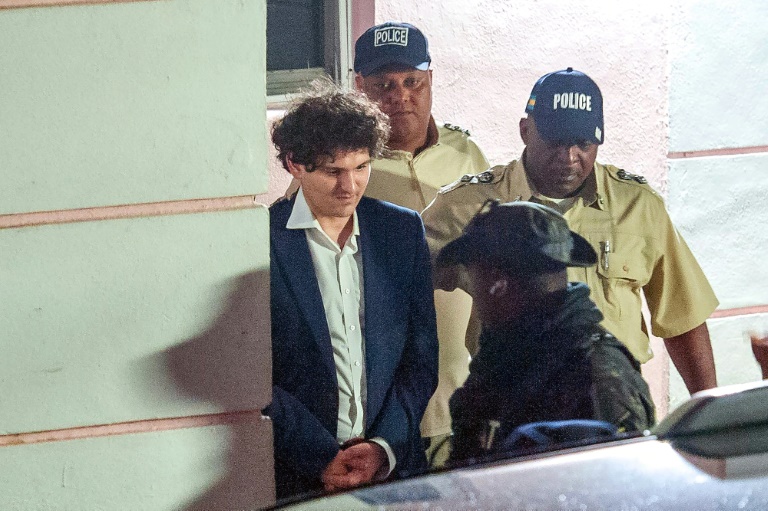
After years of benefitting from the enormous contributions of FTX founder Sam Bankman-Fried — accused of massive financial fraud — America’s political elite are now skittering away, eager to put distance between themselves and the disgraced cryptocurrency darling.

The 30-year-old tycoon — currently detained in the Bahamas awaiting US extradition proceedings — had in recent years become one of the largest public donors to the Democratic Party, and claimed to have privately donated an equal amount to the Republican camp too.

Recipients reach as far into the US political world as President Joe Biden, whose 2020 campaign accepted more than $5 million in donations from Bankman-Fried.

Asked about the situation Tuesday, White House spokeswoman Karine Jean-Pierre deflected.

“I’m limited on what I can say,” she said, in reference to a law that prohibits her from discussing political matters in her official capacity. 

The former head of the now-bankrupt cryptocurrency exchange platform was charged in the United States Wednesday with money laundering, violating campaign finance laws and wire fraud. 

He is accused of making risky investments with clients’ money and fraudulently influencing the political sphere with his offerings. 

“Samuel Bankman-Fried and his co-conspirators made millions of dollars in political contributions funded by (his other company) Alameda Research to federal political candidates and committees in advance of the 2022 election,” New York prosecutor Damian Williams said in a statement, referencing a practice which is allowed in the United States. 

But he made those contributions in a way that was designed “to evade contribution limits and reporting requirements,” the statement added.

– ‘Dirty money’ –

According to the prosecutor, Bankman-Fried made these donations in such a way that they would appear to be coming from wealthy associates, instead of him directly. 

“All of this dirty money was used in service of Bankman-Fried’s desire to buy bipartisan influence and impact the direction of public policy in Washington,” Williams said during a press conference. 

A search for Bankman-Fried on the US Federal Election Commission’s website shows 213 donations since 2020, including a September 2020 contribution for $5 million to a pro-Biden political group, and another for $50,000 in October of that year to the “Biden Victory Fund.”

The vast majority of those publicly declared donations were allocated to Democratic groups or candidates. 

But Bankman-Fried, who made several media appearances and statements over the last several months as FTX took on water, insisted during a November interview with cryptocurrency expert Tiffany Fong that he had “donated about the same amount to both parties.”

“All my Republican donations were dark,” he said, but “not for regulatory reasons.”

Reporters “freak” out over donations to Republicans, he said.

“They’re all super liberal, and I didn’t want to have that fight.”

For some of those political beneficiaries, the bill on the price for those donations has come due: The money donated by Bankman-Fried, though legal, now feels toxic. 

Democratic Senator Kirsten Gillibrand of New York told the New York Post that she has given the money she received from Bankman-Fried to an organization working with marginalized communities.

The newspaper reported similar decisions by five other lawmakers, including four Democrats and one Republican. 

But congressman Brad Sherman, a House Democrat opposed to cryptocurrency, recently told NBC that “the right answer” is giving the donations back to the FTX customers and investors through a bankruptcy trustee fund, “because it was never Bankman’s money.”

The nonprofit organization OpenSecrets, which works to demystify campaign finance, has calculated that Bankman-Fried ranked number six in top donors of the nearly $39.2 million in declared donations made during November’s midterm elections.

He becomes the number two donor when looking only at contributions made to Democrats, behind billionaire George Soros, who, via various avenues, gave more than $128 million to the party during the midterms. 

The rules for US campaign finance — a complex scene which involves the exchange of billions of dollars each election cycle — depend on whether the money is given directly to candidates or raised through political action committees.

These so-called PACs — and super PACs, which are political entities that can accept unlimited contributions but can not spend directly on a candidate’s activities — play an important, if sometimes underground, role in US campaigns.

Investors, wealthy patrons, economic special interest groups and organizations representing different societal concerns donate to the PACs and super PACs in efforts to influence races for local office, Congress and the White House. 

The political issue likely most top of mind for SBF, as he has come to be known? The still-nascent topic of regulations for the high-risk cryptocurrency market.

WHO eyes end to Covid emergency in 2023

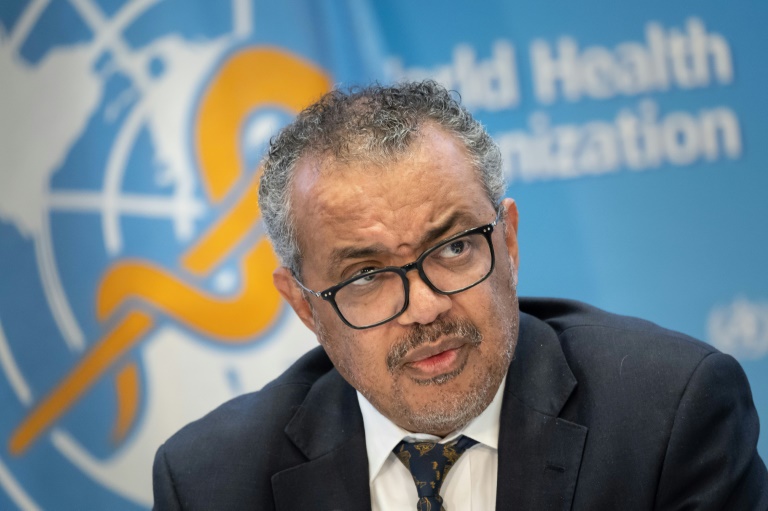
The World Health Organization said Wednesday it hoped that Covid-19 would no longer be a public health emergency in 2023, as it urged China to share information that could pinpoint how the pandemic started.

As the third anniversary of the original outbreak rolls around, the WHO said the virus was here to stay but would need managing alongside other respiratory illnesses.

WHO chief Tedros Adhanom Ghebreyesus said the weekly Covid death toll was now around a fifth of what it was a year ago — but was still far too high.

“Last week, less than 10,000 people lost their lives. That’s still 10,000 too many and there is still a lot that all countries can do to save lives,” he told a press conference.

“But we have come a long way. We are hopeful that at some point next year, we will be able to say that Covid-19 is no longer a global health emergency.”

The WHO’s emergency committee on Covid-19, which advises Tedros on whether the virus constitutes a public health emergency of international concern (PHEIC), will discuss the criteria for declaring an end to the emergency phase when they next meet in January.

Maria Van Kerkhove, the WHO’s Covid-19 technical lead, said the committee would look at the epidemiology, variants like Omicron, and the impact of the virus.

While waves of infection are still expected, the pandemic “is not what it was in the beginning”, with cases resulting in fewer hospitalisations and deaths, she said.

“These deaths are largely happening among people who are not vaccinated,” or have not received their full course of jabs, Van Kerkhove said.

While the WHO says more than 13 billion vaccine doses have been administered, around 30 percent of the world has not received a single dose, she added.

– Covid origins –

Nearly 650 million confirmed Covid cases and more than 6.6 million deaths have been reported to the WHO, though the UN health agency acknowledges this will be a vast undercount.

Tedros said that as the world looks to end the Covid emergency, which has upended economies and left millions suffering ongoing symptoms, it needs to understand how the pandemic began.

The first cases of Covid-19 were recorded in the Chinese city of Wuhan in December 2019.

“We continue to call on China to share the data and conduct the studies that we have requested, to better understand the origins of this virus,” Tedros said.

“All hypotheses remain on the table,” he said, adding that this includes the theory that the virus escaped from Wuhan’s virology laboratories.

WHO emergencies chief Michael Ryan said the organisation could not simply stop engaging with Beijing “because you’re not cooperating with us on the origins”, as a huge chunk of the world’s population live in China.

– New vaccines hope –

Tedros said the virus had been around so long, it was almost part of the family.

“This virus will not go away. It’s here to stay and all countries will need to learn to manage it alongside other respiratory illnesses,” he said.

The WHO’s vaccines chief Kate O’Brien said that the current crop of Covid jabs do not prevent people from catching the virus to the level that had been hoped for. 

“We would love to have vaccines that are more effective against infection and transmission and have greater duration of protection,” O’Brien said, calling for more ongoing investment in research and development. 

– Mpox declining –

On Mpox — formerly known as monkeypox — Tedros said the global outbreak this year had taken the world by surprise.

But like Covid, the emergency phase should be over within 12 months, he said.

More than 82,000 cases have been reported from 110 countries, although the mortality rate has remained low, with 65 deaths.

“Thankfully, the number of weekly reported cases has declined more than 90 percent since I declared a PHEIC in July,” said Tedros.

“If the current trend continues, we’re hopeful that next year we’ll also be able to declare an end to this emergency.”

Close Bitnami banner
Bitnami