World

Peru declares state of emergency as ousted leader remains in prison

Peru declared a nationwide state of emergency Wednesday over violent protests against the ouster and arrest of ex-president Pedro Castillo that have left seven people dead.

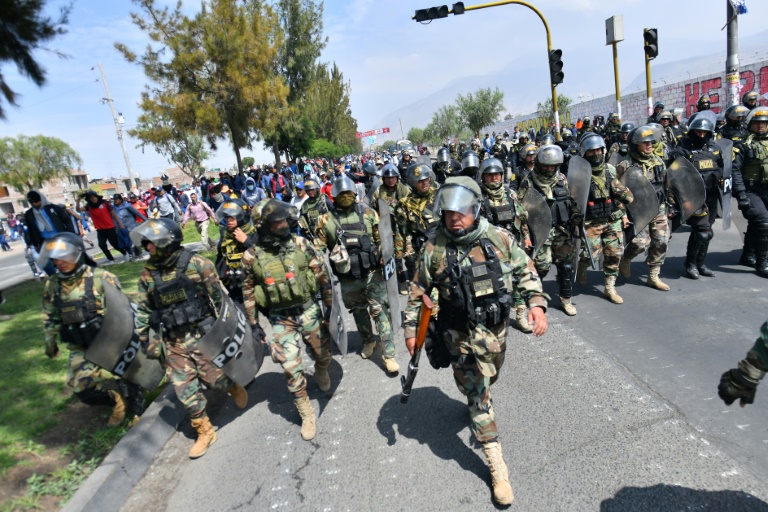
Castillo’s supporters have taken to the streets and set up roadblocks countrywide in protests that have also left 200 injured as they demand his release and the holding of early elections.

The country plunged into crisis last week when Castillo tried to dissolve Congress and rule by decree, but was quickly impeached by lawmakers and arrested on his way to seek refuge in the Mexican embassy.

The new President Dina Boluarte has struggled to quell tensions, and has now called for the next election — normally due in 2026 — to be brought forward to December 2023, after an earlier bid to hold them in 2024 failed to halt the protests.

Defense Minister Alberto Otarola announced the new 30-day state of emergency due to “acts of vandalism and violence,” and roadblocks, and said police and the armed forces “would have control of the whole territory.”

He said the measure involved “the suspension of the freedom of movement and assembly” and could also include a night-time curfew.

– ‘Humiliation and mistreatment’ –

Last week, a judge ordered Castillo to be held in jail for seven days, and he was meant to be released on Wednesday.

However, prosecutors filed a request late on Tuesday to hold him in pre-trial detention for 18 months. 

Judge Juan Checkley on Wednesday postponed a hearing on the new request until Thursday after defense attorneys argued they had not received all documents from the public prosecutor. 

However, he also ordered Castillo to remain in detention for another 48 hours.

“Enough! The outrage, humiliation and mistreatment continue,” wrote Castillo on Twitter, adding that he would petition the Inter-American Commission on Human Rights to “intercede.”

Castillo, a leftist former school teacher, was in power for only 17 months in the South American nation that is prone to political instability and is now on its sixth president in six years.

His short period in office was marked by a power struggle with the opposition-dominated Congress, and six investigations into him and his family mainly for corruption.

On Tuesday, Castillo called his arrest unjust and arbitrary and said he would “never give up and abandon this popular cause that brought me here.”

He also called on security forces “to lay down their arms and stop killing these people thirsty for justice.”

– ‘Serious social convulsion’ –

Protesters have set up roadblocks in numerous regions.

The worst-hit areas are in the north and south, including the region of Cusco, a tourism lure that is home to the Machu Picchu Inca citadel, and Peru’s second city, Arequipa.

In Lima, dozens of demonstrators threw stones at the police on Tuesday evening as they tried to reach Congress, with the police firing tear gas to disperse them.

Five people were killed in clashes between protesters and security forces on Monday, following another two on Sunday.

Six of the seven deaths have been in the Apurimac region, where Boluarte was born.

Rights ombudsman Eliana Revollar told AFP on Tuesday that things could still get worse.

“This is a very serious social convulsion. We fear that it will lead to an uprising because there are people calling for an insurrection, who are asking to take up arms,” said Revollar.

Indigenous and agrarian organizations called an indefinite strike to begin on Tuesday, forcing the train service between the city of Cusco and Machu Picchu to be suspended.

It left many tourists stranded at the tourist site, according to Machu Picchu mayor Darwin Baca, who asked for help evacuating them.

“I was meant to leave Cuzco yesterday (Tuesday) by train and take a flight to Lima to go home, but now the situation is not clear,” a Belgian tourist who gave his name only as Walter, told AFP.
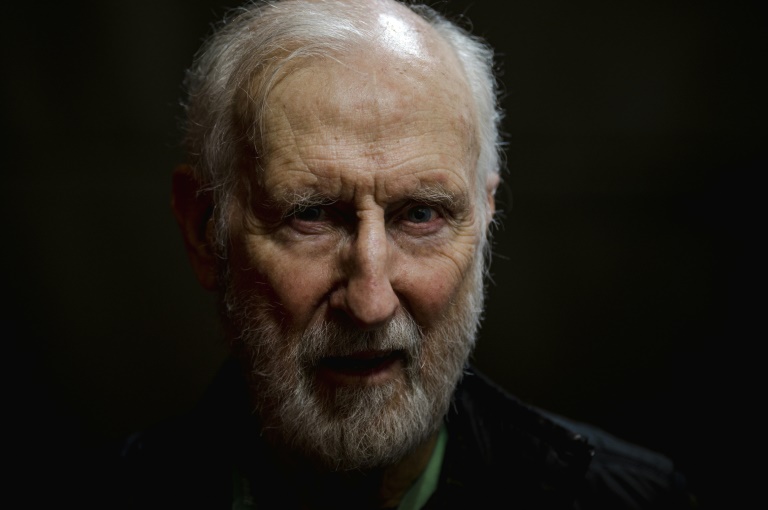
Actor James Cromwell bashes world leaders for absence at UN nature summit

A high-stakes UN summit in Canada seen as vital to saving the world’s biodiversity has failed to attract a single world leader beyond the host country’s prime minister Justin Trudeau.

It was left therefore to actor James Cromwell, a man who has played a US president four times on screen, to lend the event some star power and try to inject a sense of urgency into talks.

At stake is the future of the planet as habitat destruction, pollution, and the climate crisis imperil ecosystems and drive a million species that depend on them to the brink of extinction.

“Capitalism is a cancer that has metastasized from its origins in Europe, and now covers every aspect of our lives all over the entire world,” said the lanky 82-year-old, in fiery remarks that channeled his anti-corporate character in the HBO series Succession.

“It is rapacious. It is cruel, it is destructive. And it does not work,” he added.

“We’re in now the Sixth Mass extinction,” he went on, “brought on by the stupidity and the unwillingness of human beings, mostly white human beings, to take responsibility for what they’ve created. What they have created is a goddamn mess!”

Cromwell, who recalled his own activism from the Civil Rights and anti-Vietnam war movements of the 1960s to recent arrests while campaigning for animal rights issues (he became vegan while shooting the 1995 film “Babe”), said it was “deplorable” that heads of state and government had snubbed the UN meeting, called COP15.

By contrast, more than 120 leaders attended UN climate talks in Egypt in November.

“It’s tragic that it takes an actor to come up here to talk about issues,” he said, calling out French President Emmanuel Macron for choosing to fly to Qatar to watch the soccer World Cup instead of coming to the COP. “Have you no shame?”

Cromwell was invited to attend by outspoken nonprofit Avaaz,  which also gathered messages of support from other celebrities including Olivia Colman, Joaquin Phoenix and Jack Black.

“Once we raise awareness, we raise also the pressure and accountability of governments,” said Oscar Soria of Avaaz.

US Fed downshifts campaign to tame inflation but still 'some ways to go'

The Federal Reserve moderated its all-out campaign to cool US inflation Wednesday, lifting the benchmark lending rate by a half percentage point though warning there is still “some ways to go.”

America’s central bank has taken aggressive moves to ease demand in the world’s biggest economy, hiking rates seven times this year with interest-sensitive sectors like housing already reeling from tightening policy.

Its latest increase takes the rate to 4.25-4.50 percent, the highest since 2007.

But officials signaled that their battle to cool the US economy is not yet over.

In a statement, the Fed’s policy-setting Federal Open Market Committee (FOMC) said it “anticipates that ongoing increases in the target range will be appropriate” to reach a stance restrictive enough to rein in inflation.

A quarterly forecast released with Wednesday’s decision also saw policymakers downgrade US economic growth to 0.5 percent in 2023, just narrowly avoiding a contraction.

They also raised their unemployment and inflation estimates for next year.

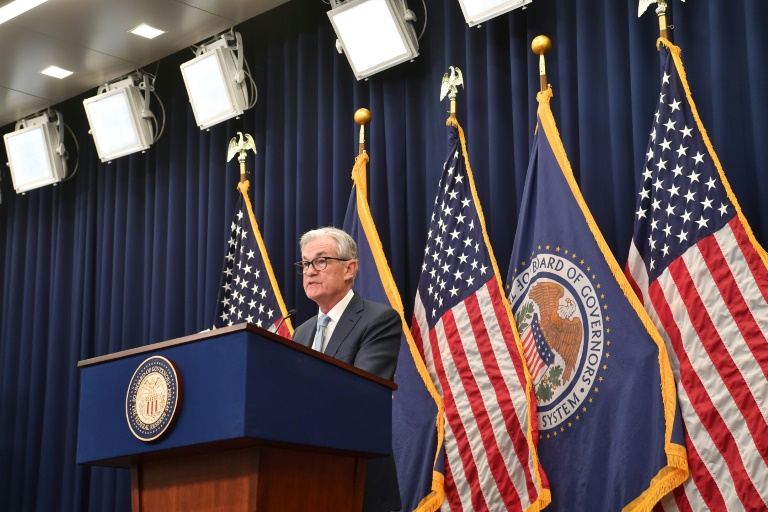
“Fifty basis points is still a historically large increase, and we still have some ways to go,” Fed Chair Jerome Powell told reporters in a press briefing after the rate announcement, and markets slumped on the central bank’s signals.

In their projections, policymakers expect rates would land higher than expected at 5.1 percent next year, according to a median forecast.

“I wouldn’t see us considering rate cuts until the committee is confident that inflation is moving down to two percent in a sustained way,” Powell said.

– ‘More evidence’ –

While consumer inflation eased in October and November, Powell said “it will take substantially more evidence to give confidence that inflation is on a sustained downward path.”

Households have been squeezed by red-hot prices, with conditions worsened by surging food and energy costs after Russia’s invasion of Ukraine, and fallout from China’s zero-Covid measures.

To make borrowing more expensive, the Fed has raised interest rates seven times including four bumper 0.75-point increases.

Asked if a “soft landing” for the economy remains achievable, Powell said this would be more likely if lower inflation readings persist.

Nancy Vanden Houten of Oxford Economics said: “The projections don’t explicitly call for a recession, although a rise in the unemployment rate by as much as the Fed now forecasts is consistent with a recession.”

The Fed lifted its median jobless rate forecast to 4.6 percent on Wednesday.

But Powell said: “I don’t think anyone knows whether we’re going to have a recession or not, and if we do, whether it’s going to be a deep one or not.”

– ‘Hawkish’ –

“The new forecasts are more hawkish than we expected,” said economist Ian Shepherdson of Pantheon Macroeconomics, referring to the higher inflation and unemployment rate expectations, and lower GDP growth projection.

“If policymakers implement all the hikes they now expect, they will have done too much,” he cautioned.

Analysts have warned that further tightening by the Fed risks cooling the economy at a time when it is already under pressure heading into 2023.

The latest increase suggests the Fed has “moved to phase two of its rate hiking cycle,” said Rubeela Farooqi of High Frequency Economics in a note.

This means it is shifting from its more aggressive path to “a slower pace of rate increases until rates are in a sufficiently restrictive stance,” she said.

Powell added Wednesday that the Fed’s focus now is “on moving our policy stance to one that is restrictive enough to ensure a return of inflation to our two percent goal over time.”

Consumer inflation came in at 7.1 percent year-on-year in November, according to government figures.

“We think that we’ll have to maintain a restrictive stance of policy for some time,” Powell said. 

“Historical experience cautions strongly against prematurely loosening policy,” he added.

Erdogan backs Turkmen gas link easing dependence on Russia

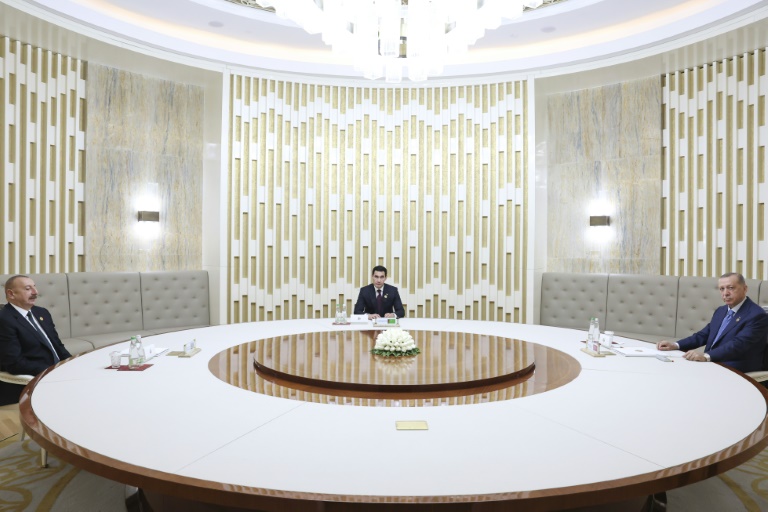
Turkish President Recep Tayyip Erdogan on Wednesday backed the creation of a new natural gas pipeline that could ease Europe’s dependence on Russia by linking up with energy-rich Turkmenistan.

The Turkish leader’s remarks came during a three-way summit with the presidents of Turkmenistan and Azerbaijan in the isolated Central Asian state’s city of Awaza.

The meeting came with Europe trying to end its dependence on Russian energy following the Kremlin’s invasion of Ukraine.

Erdogan has tried to play a role of a middle man in the conflict by maintaining close working relations with Russian President Vladimir Putin while supplying Kyiv with arms.

He has backed Putin’s idea of creating a new “gas hub” in Turkey that could supply European clients while bypassing existing pipelines running through Ukraine and under the Baltic Sea.

But he also lent his support on Wednesday to a new project that could link Turkmenistan with an existing pipeline running from Turkey to Azerbaijan.

“We carry Caspian Sea gas to Europe via (the existing) corridor, which is the backbone of the Trans-Anatolian natural gas pipeline,” Erdogan said in remarks released by his office.

“We need to launch work on transporting Turkmen natural gas to Western markets in the same way.”

The US Energy Information Administration lists Turkmenistan as the world’s sixth-largest holder of proven natural gas reserves.

Much of its past gas volumes have reached world markets via pipeline running to Russia.

But its has also been ramping up supplies to China and is looking for ways to access other markets via Turkey.

Erdogan has long dreamt of using Turkey’s location on the edges of the Middle East and Europe to turn it into one of the world’s main centres of the energy trade.

Central Asian countries have also been reassessing their once-close relations with Moscow since Russia’s war on Ukraine.

Russia’s decision to limit gas supplies in retaliation for Western sanctions have left European countries scambling for supplies as they head into the cold winter months.

Greek MEP in Qatar scandal protests innocence but stays in jail

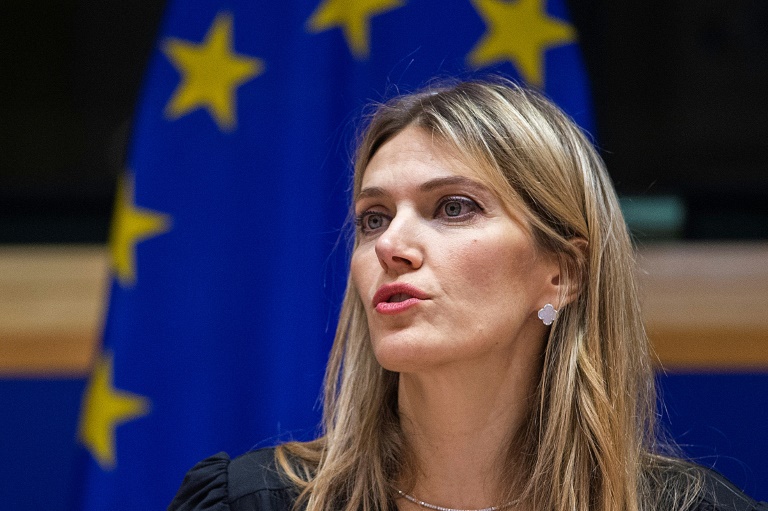
The Greek MEP who has become the face of the European Parliament’s widening graft scandal will spend at least another week in custody before attending a postponed pre-trial hearing, her lawyer said Wednesday.

Eva Kaili, a 44-year-old former newsreader and until this week one of the vice presidents of the Strasbourg parliament, is one of four suspects charged with receiving bribes from World Cup host Qatar to influence EU policy.

The Qatar government has rejected any claims of wrongdoing as “gravely misinformed”. 

Kaili’s lawyers have told AFP she is innocent and will fight the charges.

The four were arrested last week as Belgian police conducted a series of searches at the homes and offices of politicians, lobbyists and parliamentary assistants, seizing around 1.5 million euros ($1.6 million) in cash.

All four had been due to appear together in a pre-trial hearing in Brussels on Wednesday to discover whether they were to remain in custody pending their eventual trial and as the investigation continues.

– Case split –

But Kaili’s Brussels lawyer, Andre Risopoulos, told AFP she had been unable to attend the hearing because of a staff strike at her detention centre, and her case would be separated from that of her alleged accomplices.

They are her partner, Francesco Giorgi, former MEP turned lobbyist Pier Panzeri and Niccolo Figa-Talamanca, who leads the human rights pressure group “No Peace without Justice”.

“The case has been split,” Risopoulos said, adding that she was now expecting a custody hearing on December 22.

Earlier, Kaili’s lawyer in Athens, Michalis Dimitrakopoulos, insisted she was innocent and “did not know of the existence” of the cash found at her Brussels home.

Dimitrakopoulos suggested Kaili’s Italian boyfriend, Giorgi, might have “answers about the existence of this cash”.

Giorgi and Panzeri were remanded in custody and Figa-Talamanca was released pending trial but ordered to wear an electronic ankle bracelet, the federal prosecutor said.

Qatar is a key energy supplier to Europe, and plays an important intermediary role in several diplomatic disputes.

But it has also been criticised for the alleged mistreatment of migrant workers, most notoriously those who built the World Cup stadiums.

As Kaili remained in jail, her colleagues in the Strasbourg parliament scrambled to distance themselves from the scandal, stripping her of her vice presidential role and promising a wave of transparency reforms.

Speaking for the first time on the case, Greek prime minister Kyriakos Mitsotakis said it was “undermining… democracy at a time when populism prevails.”

“I hope this affair will be resolved quickly,” he said, adding that “it undermines the prestige of Europe.”

– Hotel room stash –

She is the only serving MEP to have been charged. But several more have had their offices put under police seal.

A Belgian judicial source said 600,000 euros were found at Panzeri’s home, 150,000 euros in Kaili’s flat and 750,000 in her father’s hotel room.

Brussels has been rocked by the claims and European Parliament President Roberta Metsola has sought to portray the alleged bribes as an assault on democracy.

Kaili was one of six people detained. Four have been charged with “criminal organisation, corruption and money laundering” and two released.

Among those released was Luca Visentini, general secretary of the International Trade Union Confederation, a global labour body that has pushed Qatar on labour rights. 

S.Africa's power utility CEO resigns amid energy crisis

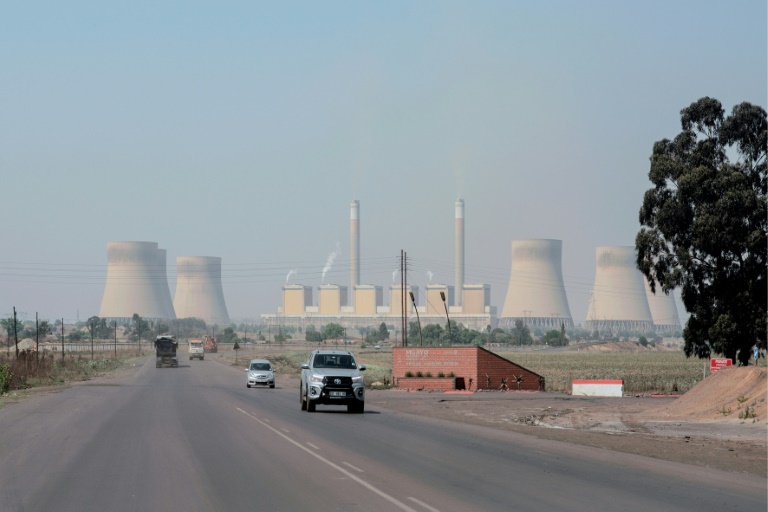
The head of South Africa’s beleaguered state-owned power utility Eskom, Andre de Ruyter, has resigned, the company said on Wednesday, as the country suffers from a worsening energy crisis. 

De Ruyter, a former packaging executive who took over as CEO in 2020, will stay on until the end of March next year to give the firm time to look for a successor, Mpho Makwana, the chairman of Eskom’s board said in a statement. 

“It has been an honour and privilege to serve Eskom and South Africa. I wish all the hard working people of Eskom well,” said De Ruyter.

Scheduled blackouts have burdened Africa’s most industrialised economy for years, with Eskom failing to keep pace with demand and maintain its ageing coal power infrastructure.

But the outages reached new extremes this year. 

Record power cuts have cost the country hundreds of millions of dollars in lost output, disrupting commerce and industry and angering the population, with lights going off often several times a day for a few hours. 

Last month, Eskom, which is struggling under a 400-billion-rand ($23.3 billion) debt — half of which the government has pledged to take on — said it had run out of funds to buy diesel to stabilise the system. 

De Ruyter had come under pressure from some government ministers that accused the company of not properly attending to the crisis, which analysts say is the result of years of mismanagement, disrepair and corruption.

“At a time when de Ruyter needed all the support he could muster and a free hand to deal with the most pressing challenge facing the country, he has been sacrificed at the altar of political expediency,” said Ghaleb Cachalia a lawmaker with the opposition Democratic Alliance (DA) party.

Public Enterprises Minister, Pravin Gordhan thanked De Ruyter for his “sacrifice and resilience in a difficult job”.

Red Cross fears 'enormous suffering' in 2023

The head of the International Committee of the Red Cross warned Wednesday “an enormous level of suffering” awaits the world in 2023 with famine spreading.

Mirjana Spoljaric, who took over at the ICRC in October, told a Geneva press conference: “We expect an enormous level of suffering.

“As the world is trending at the moment we don’t see any easing of the humanitarian pressures, they will be immense potentially,” she said.

“There is a possibility that we will see very high levels of hunger in many parts of the world and insecurity in general.”

Not only will prices be high for food, it will “simply not be available in the same amounts due to a lack of fertilisers and due to, again, the impact of climate change.”

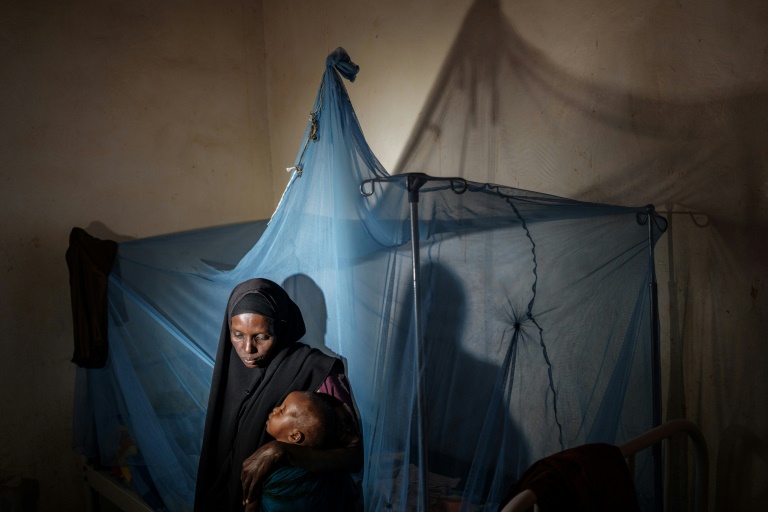
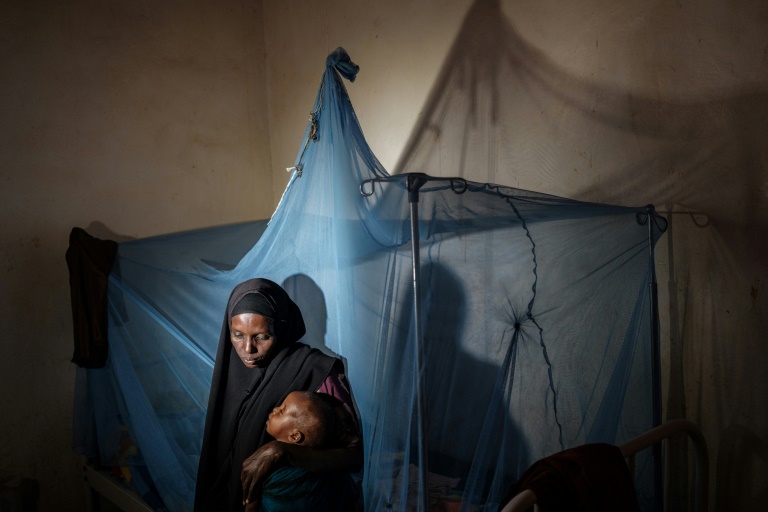
She cited Somalia as a country of particular concern.

“In our four hospitals we have seen a tenfold increase of wounds caused by violence, violent, armed violence, conflict and we are also witnessing a three fold increase of malnutrition in children.

“The situation is extremely alarming,” Spoljaric said, adding her next trip would be to the Horn of Africa were some 20 million people are suffering from malnutrition.

The ICRC is seeking 2.8 billion euros for next year, up on last year’s 2.4 billion.

But the ICRC chief said it might not be enough, “depending on how the situation evolves”.

Red Cross fears 'enormous suffering' in 2023

The head of the International Committee of the Red Cross warned Wednesday “an enormous level of suffering” awaits the world in 2023 with famine spreading.

Mirjana Spoljaric, who took over at the ICRC in October, told a Geneva press conference: “We expect an enormous level of suffering.

“As the world is trending at the moment we don’t see any easing of the humanitarian pressures, they will be immense potentially,” she said.

“There is a possibility that we will see very high levels of hunger in many parts of the world and insecurity in general.”

Not only will prices be high for food, it will “simply not be available in the same amounts due to a lack of fertilisers and due to, again, the impact of climate change.”

She cited Somalia as a country of particular concern.

“In our four hospitals we have seen a tenfold increase of wounds caused by violence, violent, armed violence, conflict and we are also witnessing a three fold increase of malnutrition in children.

“The situation is extremely alarming,” Spoljaric said, adding her next trip would be to the Horn of Africa were some 20 million people are suffering from malnutrition.

The ICRC is seeking 2.8 billion euros for next year, up on last year’s 2.4 billion.

But the ICRC chief said it might not be enough, “depending on how the situation evolves”.

China Covid 'explosion' began before restrictions eased: WHO

The flare-up in Covid-19 cases in China was well underway before the government began easing restrictions, the World Health Organization said on Wednesday.

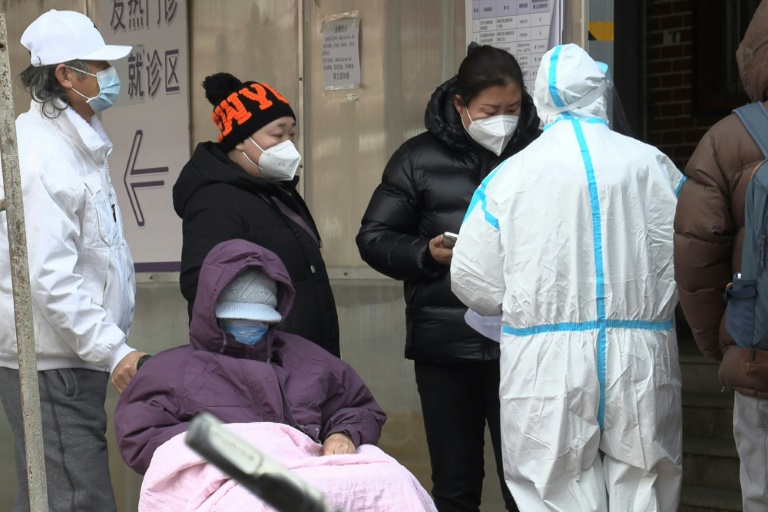
Officials in China warned that cases are rising rapidly in Beijing after the government abruptly abandoned its zero-Covid policy, scrapping mass testing and quarantines after nearly three years of attempting to stamp out the virus.

“The explosion of cases in China is not due to the lifting of Covid restrictions. The explosion of cases in China had started long before any easing of the zero-Covid policy,” WHO emergencies chief Michael Ryan told reporters.

“There’s a narrative that, in some way, China lifted the restrictions and all of a sudden, the disease is out of control,” he added at the UN health agency’s headquarters in Geneva.

“The disease was spreading intensively because the control measures in themselves were not stopping the disease. 

“I believe the Chinese authorities have decided strategically that that, for them, is not the best option anymore,” he said, referring to the control measures.

Ryan said the Omicron variant of the virus, which was first detected around a year ago, meant China-style restrictions were not as useful as they had been against previous strains circulating when vaccination coverage was low.

“The super-transmissibility of Omicron really took away the opportunity for using public health and social measures aimed at full containment of the virus,” he told a press conference with the UN correspondents’ association.

Ryan said such measures had been primarily used to protect health systems while vaccination levels increased, but now their usefulness had changed.

“There is data from places like Hong Kong that show that the inactivated Chinese vaccines, with the addition of a third dose, performed very, very well. But it did require that third dose to show that effect,” he said.

And he stressed: “The increased intensity of transmission was occurring long before there was any change in the policy.”

Chinese leaders are determined to press ahead even though the country is facing a surge in cases that experts fear it is ill-equipped to manage. 

Millions of vulnerable elderly people are still not fully vaccinated and underfunded hospitals lack the resources to deal with an influx of infected patients.

Germany signs contract to buy F-35 jets

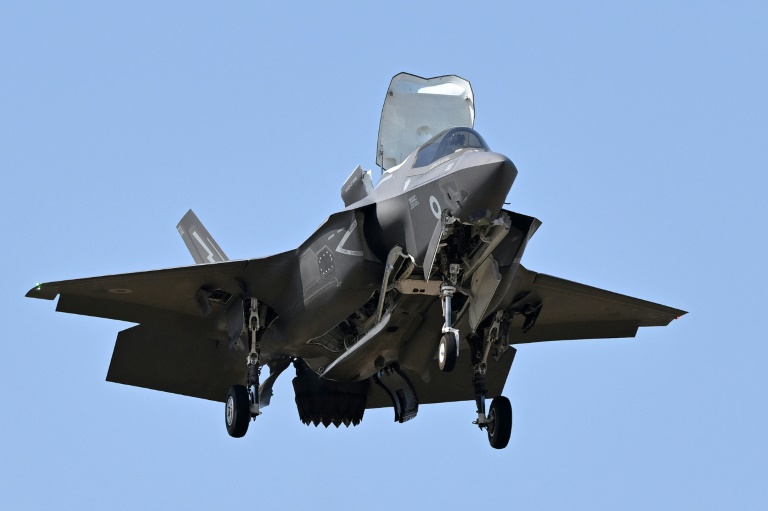
Germany on Wednesday signed a deal to buy dozens of US-made F-35 fighter jets, US officials said, part of the country’s military overhaul following Russia’s invasion of Ukraine. 

“The German F-35 programme will ensure the continuation of Germany’s alliance commitments and guarantee NATO’s credible deterrence in the future,” said the US embassy in Berlin in a statement. 

The 35 jets, the world’s most advanced warplanes, should be delivered between 2026 and 2029, it said. 

Berlin had announced in March the planned purchase of the aircraft made by Lockheed Martin to replace its ageing Tornado fleet. 

But the defence ministry in Berlin earlier this month raised concerns about the plan, warning of “delays and additional costs” in the nearly 10 billion euro ($10.5 billion) acquisition, in a letter to parliament’s budget committee. 

Germany’s lower house of parliament still decided to press ahead and approve the acquisition on Wednesday. 

“The German-US defence partnership has never been stronger and is a central pillar of NATO’s transatlantic partnership,” said the embassy statement. 

The cost of the jets is to come from a planned 100 billion euro investment in the armed forces, unveiled following the outbreak of the Ukraine war in a bid to overhaul Germany’s underfunded military.

Close Bitnami banner
Bitnami