World

COP15's key aim: protect 30% of the planet

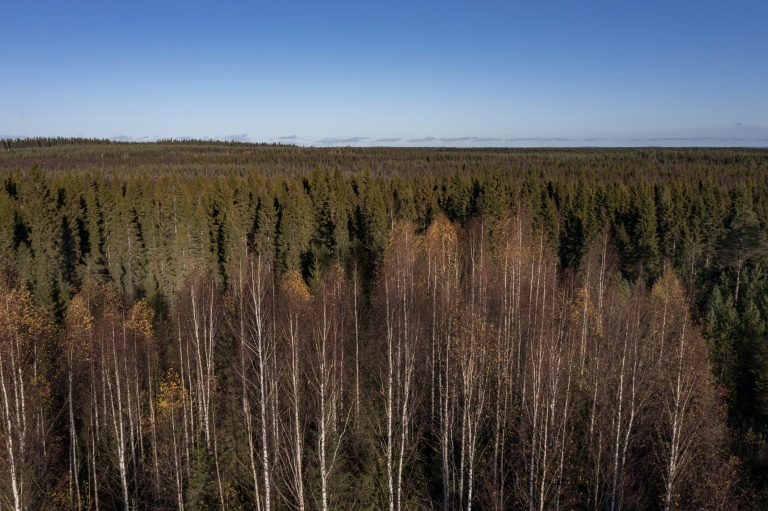
Headlining the COP15 biodiversity talks is a drive to secure 30 percent of Earth’s land and oceans as protected zones by 2030 — the most disputed item on the agenda.

Some campaigners say the so-called “30×30” target is nature’s equivalent of the landmark 1.5C global warming target set at climate talks under the Paris Agreement.

But delegates negotiating a broad accord for protecting nature are divided over how to pay for “30×30” and how the measure would be applied. 

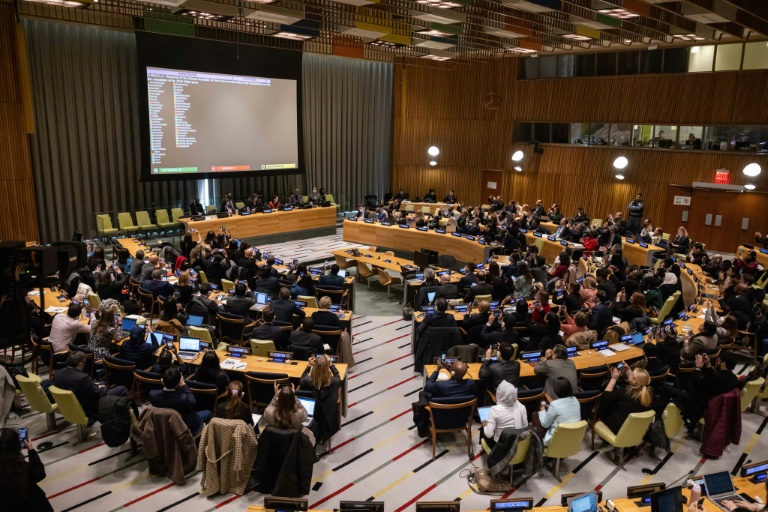
Here are some facts about the initiative, one of numerous targets under discussion at the talks taking place in Montreal until December 19.

– Too much? –

Fearful that COP15 will end with a less ambitious agreement, scientists and environmentalists insist 30 percent must be a minimum target for protecting nature, not a ceiling.

Currently, 17 percent of land and eight percent of the seas have protected status.

South Africa, Russia, and Saudi Arabia have argued for a target of 20 percent. Other countries, such as China, Japan and South Korea support 30 percent for land but want a less arduous target of 20 percent for the seas.

The target would be applied worldwide, so countries with big populations or small shorelines would not be obliged to contribute a disproportionate share.

Some countries would shoulder higher percentages, particularly ones that are home to areas of rich biodiversity, or places of strategic importance for arresting climate change — such as the Amazon and the Congo Basin.

– Not enough? –

Some say the 30 percent target is not ambitious enough.

“Thirty percent would be a laudatory goal if the year were 1952. But it’s 2022 and we don’t have the luxury of waiting,” said Eric Dinerstein, a biologist who authored “Global Safety Net,” a study on areas in need of protection.

“The simplest way to say it, as we biologists would like to put it, is that 50 percent is our 1.5 degrees.”

Oscar Soria of the civil campaign group Avaaz called too for a 50-percent target, in line with other NGOs such as Wild Foundation and One Earth.

He argued that if governments recognized indigenous peoples’ and other communities’ rights over their territory, the 30 percent protection target would have already been achieved.

Accounting for six percent of the world’s population and occupying 25 percent of its land, indigenous people are key players in the Montreal talks.

“We are here to send the message that we cannot achieve ambitious conservation aims unless our rights are fully taken into account,” said Jennifer Corpuz, a lawyer and member of the International Indigenous Forum on Biodiversity.

– Subject to conditions –

Many NGOs say they will accept a 30 percent target if certain criteria are met, such as only including ecologically significant land in the protected areas and ensuring effective protection measures.

Some are demanding that a fixed percentage of the land be classed as strongly or totally protected — with barely any human activity.

Most of these elements have yet to be approved in the draft agreements under discussion.

Campaigners are therefore pressing for action from one of the negotiating blocs at COP15: the High Ambition Coalition for Nature and People. The bloc is jointly led by Costa Rica, France and Britain and backed by 130 countries that support the 30 percent target.

Some are limiting the scope of these demands, however.

“If the criteria are too restrictive, countries will go and protect areas that are not of great interest for biodiversity,” said one Western negotiator who asked not to be named.

“But the richest areas are also the ones with the best resources: they have to be managed sustainably but not prohibited,” the negotiator added.

“There is a lot of talk about 30 percent, but what is key is also what is done to nature in the remaining 70 percent.”

Other key aims at stake in the talks are defending biodiversity in land management, reducing the use of pesticides, and restoring damaged land.
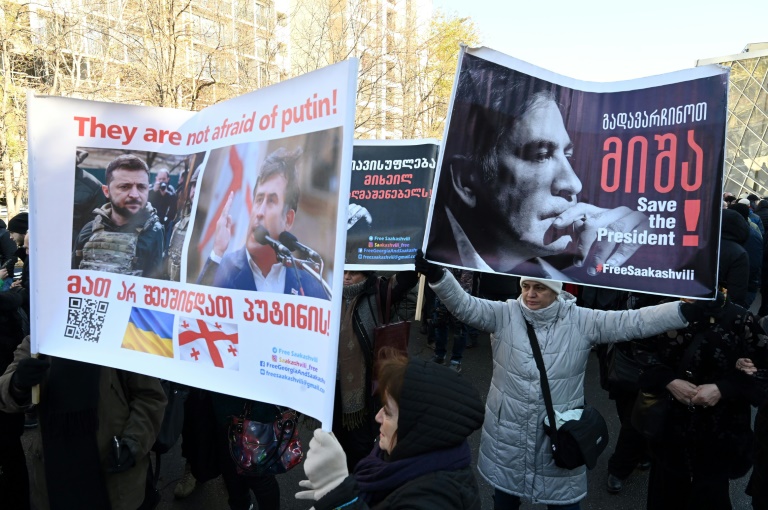
Georgia's jailed ex-leader Saakashvili declares, then calls off hunger strike

Georgia’s jailed ex-president Mikheil Saakashvili called off a hunger strike he had announced a few hours earlier Wednesday over the authorities’ failure to ensure a video link between the hospital where he is being held and his court hearing.

Saakashvili has been a key figure of politics in the ex-Soviet Caucasus country for two decades and his latest protest put pressure on a long-running standoff with the political rivals who jailed him.

The 54-year-old was transferred to hospital last year after an initial 50-day hunger strike to protest his jailing, which rights groups and allies abroad have said was politically motivated.

Saakashvili’s lawyers had requested the deferral of his prison sentence on abuse of office charges, pointing to his poor health.

A court hearing over their demand due earlier Wednesday was postponed after authorities failed to provide a video link between the courtroom and Saakashvili’s hospital.

His lawyer Dito Sadzaglishvili told AFP on Wednesday that “Mikheil Saakashvili went on a hunger strike, demanding he be allowed to take part in the court hearings by video link.” 

Later in the evening Saakashvili called off the hunger strike, after an appeal by a group of European Parliament members.

“I have now received a message from the MEPs categorically asking me to stop the hunger strike at this stage” so as to not give the authorities a pretext to accuse him of self-harm, he said in a written message seen by AFP.

“The MEPs promise to mobilize all diplomatic efforts to ensure the protection of my minimum rights,” he added.

– Poisoning concerns –

The founder of Georgia’s main opposition force and president between 2004 and 2013, Saakashvili was convicted in absentia and sentenced to six years in prison in 2018.

The pro-Western reformer was imprisoned in October 2021, days after secretly returning from exile in Ukraine. 

Doctors — including those linked to Georgia’s rights ombudsperson and his legal team — have warned Saakashvili is suffering from serious neurological conditions.

Rights group Empatia has said Saakashvili was physically and psychologically abused in detention and a doctor linked to Georgia’s rights ombudsperson said he had lost around 40 kilogrammes (88 pounds) in jail. 

“I am sick not because I did not eat forcefully, but because I was poisoned… because I was a victim of improper treatment for many months, which has been confirmed by the world’s best experts, including Nobel Prize laureates,” Saakashvili said in his message.

In a report released by Saakashvili’s legal team, a United States-based toxicologist David Smith said testing had revealed the presence of heavy metals in Saakashvili’s body and that related symptoms likely “are the result of heavy metal poisoning” in custody.

The authorities insist that Saakashvili is being given adequate medical care and promised to ensure he takes part in a court hearing next week.

– ‘Political revenge’ –

Commenting last week on the growing concerns about Saakashvili’s health, Prime Minister Garibashvili said: “Our lives are given to God, so I can’t really be responsible for anyone’s life.”

He had earlier said that Saakashvili had been jailed because he refused to quit politics.

The European Union and United States earlier said the government was responsible for providing Saakashvili with a proper medical care.

In October, the Council of Europe rights watchdog called for the “release of political prisoners opposed to (Russian President Vladimir) Putin in the Russian Federation and other countries, including Mikheil Saakashvili”.

Amnesty International has branded his treatment as “apparent political revenge”.

Prior to his return to Georgia, Saakashvili — who is a Ukrainian national — had been appointed by President Volodymyr Zelensky to lead a government agency steering reforms.

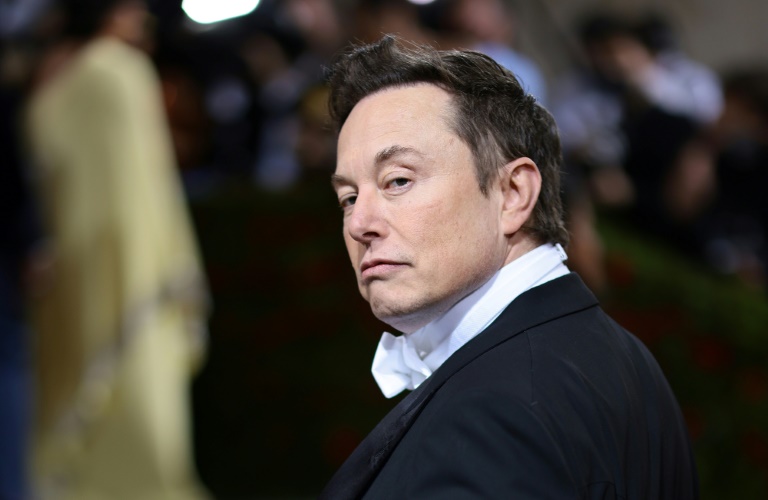
Twitter suspends account tracking Elon Musk's jet

A Twitter account that tracked flights of Elon Musk’s private jet put out word Wednesday that it was suspended by the platform despite the billionaire’s talk of free speech.

“Well it appears @ElonJet is suspended,” creator Jack Sweeney tweeted from his personal @JxckSweeney account.

Sweeney attracted attention with his Twitter account that tracks the movements of the billionaire’s plane and even rejected Musk’s offer of $5,000 to shut down @ElonJet, which had hundreds of thousands of followers.

Musk had gone public saying he would not touch the account after buying Twitter in a $44 billion deal as part of his commitment to free speech at the platform.

Sweeney referred people to accounts he runs at social media services such as Instagram, Facebook and Mastodon for his latest posts regarding Musk’s jet.

Musk’s jet “flew from LA to Austin last night after my account was suspended on Twitter,” he said in an Instagram post Wednesday.

Flight-following websites and several Twitter accounts offer real-time views of air traffic, but that exposure draws pushback ranging from complaints to equipment seizures.

US rules require planes in designated areas be equipped with ADS-B technology that broadcasts aircraft positions using signals that relatively simple devices can pick up.

Figuring out or confirming to whom a plane actually belongs can require some sleuthing, said Sweeney, who filed a public records request with the US government in order to confirm Musk’s ownership of his plane.

Suspension of the account came a day after Twitter co-founder and former chief Jack Dorsey published an online post defending the tech firm’s workers, who Musk has criticized for decisions regarding content moderation.

“I’m a strong believer that any content produced by someone for the internet should be permanent until the original author chooses to delete it,” Dorsey wrote.

“It should be always available and addressable. Content takedowns and suspensions should not be possible.”

UN removes Iran from women's rights body over protest crackdown

The UN on Wednesday voted to remove Iran from a women’s rights body, following a concerted campaign by the United States, over Tehran’s brutal crackdown of women-led protests.

Iranian pro-democracy activists hailed the expulsion of the Islamic republic from the United Nations Commission on the Status of Women (UNCSW) for the remainder of its 2022-2026 term.

A simple majority was needed to adopt the move, which was proposed by the United States, opposed by Iran allies Russia and China, and marks a diplomatic victory for Washington.

Twenty-nine members of the UN Economic and Social Council (ECOSOC) voted in favor, eight countries voted against and 16 abstained.

The resolution strips Iran of its membership of the commission with immediate effect.

The text says the Iranian leadership “continuously undermine and increasingly suppress the human rights of women and girls, including the right to freedom of expression and opinion, often with the use of excessive force.”

It adds that Iran’s government does so “by administering policies flagrantly contrary to the human rights of women and girls” and the commission’s mandate “as well as through the use of lethal force resulting in the deaths of peaceful protestors, including women and girls.”

The commission is the principal global intergovernmental body exclusively dedicated to the promotion of gender equality and the empowerment of women.

Iran has been gripped by demonstrations since the September 16 death in custody of Masha Amini, a young Iranian Kurd who had been arrested for allegedly violating the country’s strict dress code for women.

Authorities have since made thousands of arrests in a crackdown on what they regard as riots and handed down at least 11 death sentences in connection with the protests.

In early November, Vice President Kamala Harris said the United States would work with other nations to oust Iran from the commission. Former Secretary of State Hillary Clinton also campaigned for the move.

“This vote is another sign of the growing international consensus on Iran and demands for accountability,” US National Security Advisor Jake Sullivan said in a statement.

– ‘Historic’ –

Roya Boroumand, co-founder of the Washington-based Abdorrahman Boroumand Center, and Iranian rights group, said the result was “another good day for universal human rights and international solidarity.”

“Iranian women were heard!” she tweeted.

Mahsa Alimardani, an Iran researcher for the Article 19 freedom of expression group, posted on Twitter: “A historic move and a clear sign by the international community that the Islamic Republic’s crimes will not be tolerated.”

Opponents, however, noted that Iran had been elected to the body and that expelling it set “a dangerous precedent.”

UN watchers also said the initiative had caused some discontent among diplomats, including US allies who felt they were left with no choice but to back it.

“The US forced Russia off the Human Rights Council in April, but there is a formal mechanism for that,” said Richard Gowan, UN director at the International Crisis Group.

“This vote against Iran was pretty unprecedented to my knowledge and that is why quite a lot of states have felt queasy about it,” he told AFP.

Nations on the women’s commission are elected by the UN Economic and Social Council, whose members in turn are voted on by the General Assembly.

Iran had accused Washington of pressuring countries ahead of the vote.

EU vows investment in push to boost SE Asia ties

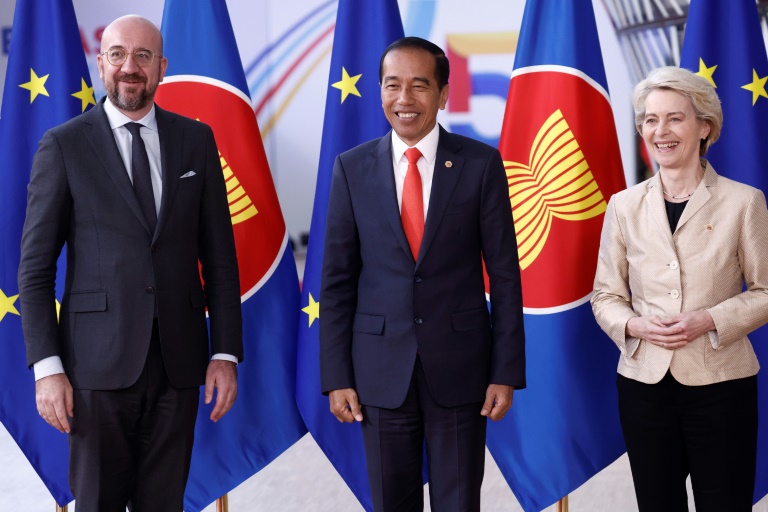
The EU vowed billions of dollars of investment in southeast Asia Wednesday, as leaders looked to bolster ties at a summit in the face of the Ukraine war and challenges from China. 

The European Union billed its first full summit with the Association of Southeast Asian Nations (ASEAN) in Brussels as a chance to push trade relations with the region’s fast-growing economies. 

“There might be many, many miles that divide us, but there are much more values that unite us,” European Commission President Ursula von der Leyen told the gathered leaders.

But different opinions over Russia’s war in Ukraine and concerns about tensions with China over a key shipping route for global trade loomed over the meeting. 

The EU has been on a diplomatic push to galvanise a global front against Moscow as its invasion has sent economic and political shock waves around the world. 

ASEAN’s 10 nations — nine of which were represented, after Myanmar’s junta was not invited — have been divided in their response to the Kremlin’s war on Ukraine.

Singapore has gone along with Western sanctions on Russia, while Vietnam and Laos, which have close military ties to Moscow, have remained more neutral. 

Along with Thailand, they abstained from a United Nations vote in October condemning Russia’s attempted annexation of regions of Ukraine seized since February.    

The diverging views led to intense wrangling over a declaration from the summit as the EU pushed for stronger language to condemn Moscow.

The final statement said “most members” decried Russia’s war, but conceded there were also “other views and different assessments”. 


– China looms –

While Europe pressed for a tougher response to Russia, another global giant figured prominently at the summit. 

Chinese claims over the South China Sea have set it against some neighbours and sparked fears in Europe over trade flows through the key global thoroughfare. 

But China remains the biggest trade partner for ASEAN and many in the region are wary of distancing themselves from their giant neighbour.

The EU is keen to pitch itself as a reliable partner for southeast Asia’s dynamic economies amid the growing rivalry between Beijing and Washington. 

The EU and ASEAN are each other’s third-largest trading partner and Europe sees the region as a key source for raw materials and wants to increase access to its booming markets.

EU nations are pushing to diversify key supply chains away from China as the war in Ukraine has highlighted Europe’s vulnerabilities. 

Von der Leyen offered an investment package over the next five years worth 10 billion euros ($10.6 billion) under the EU’s Global Gateway strategy designed as a counterweight to China’s largesse.

But ASEAN leaders insisted they would not be forced to make a choice between the global players competing for influence.  

“We absolutely refuse to go back to the situation of the Cold War where we have to pick sides in terms of who the superpower is that we are aligned with,” said Filipino President Ferdinand Marcos Jr.

– Sex law furore –

ASEAN and the EU suspended their push for a joint trade deal over a decade ago — but the bloc’s top officials said they hoped to relaunch efforts for a broad agreement. 

So far deals with Vietnam and Singapore are in place, and the EU is looking now to make progress with ASEAN’s largest economy Indonesia and to resume talks with Malaysia, Philippines and Thailand.

One issue that had risked clouding discussions was a new law in Indonesia criminalising sex outside marriage that has sparked fears for foreign visitors to the country.

But Indonesia’s President Joko Widodo pointedly insisted that the EU-ASEAN relationship needed to be based more on “equality”. 

“There must be no imposition of views,” he said. “There must not be one who dictates over the other and thinks that my standard is better than yours.”

Study explains surprise surge in methane during pandemic lockdown

A mysterious surge in planet-heating atmospheric methane in 2020 despite Covid lockdowns that reduced many human-caused sources can be explained by a greater release from nature and, surprisingly, reduced air pollution, scientists said Wednesday.

Methane stays in the atmosphere only a fraction as long as carbon dioxide, but is far more efficient at trapping heat and is responsible for roughly 30 percent of the global rise in temperatures to date.

Released from the oil and gas, waste and agriculture sectors, as well as through biological processes in wetlands, the powerful greenhouse gas is a key target for efforts to curb global warming. 

But a new study published in the journal Nature suggests that cutting methane may be even more of a challenge — and more urgent — than is currently understood. 

Researchers in China, France, the US and Norway found that efforts to reduce CO2 emissions and air pollution will affect the atmospheric process that scrubs methane from the air. That means the planet-heating gas will linger longer and accumulate faster.

If the world is to meet the challenge of keeping warming to under 2 degrees Celsius since the pre-industrial era, “we will have to act even more quickly and even more strongly to reduce methane”, said Philippe Ciais who co-led the research at France’s Laboratory for the Sciences of Climate and Environment (LSCE).

The researchers focused on the mystery of the concentrations of methane in the atmosphere in 2020, which had their biggest increase on record even as Covid-19 lockdowns saw carbon dioxide emissions fall.

– ‘Bad news’ –

What they found is potentially two pieces of “bad news” for climate change, said co-author Marielle Saunois of (LSCE). 

Firstly, they looked at inventories to assess fossil fuel and agricultural methane emissions and found that human sources of methane did indeed fall slightly in 2020.

Then they used ecosystem models to estimate that warmer and wetter conditions over parts of the northern hemisphere caused a surge in emissions from wetlands.

That confirms other research and is worrying because the more methane released, the more warming, potentially creating a feedback loop largely outside of human control. 

But that is only half of the story, the researchers found.

Researchers also looked at changes in atmospheric chemistry, because this provides a “sink” for methane, effectively cleaning it out of the air in a relatively short period by converting it to water and CO2 when it reacts with the hydroxyl radical (OH).

These hydroxyl radicals are present in tiny quantities and have a lifetime of less than a second, but they remove about 85 percent of methane from the atmosphere. 

They are the “Pac-Man of the atmosphere”, said Ciais: “As soon as they see something they eat it and then disappear.”

– ‘Dramatic’ –

The researchers simulated changes in OH using human sources of carbon monoxide, hydrocarbons and nitrogen oxide emissions that altogether affect the production and loss of hydroxyl radicals in the atmosphere. 

They found that OH concentrations decreased by around 1.6 percent in 2020 from the year before, largely because of a fall in nitrogen oxide (NOx) emissions caused by the Covid lockdowns. Nitrogen oxide is emitted into the air primarily from burning fuel. 

A 20 percent reduction in NOx could increase methane twice as fast, Cias told a press briefing, adding: “This has surprised us greatly.”

The researchers said their study helps to solve the riddle of the rise in methane in the atmosphere in 2020.

But they acknowledged that more work would have to be done to answer the next mystery: why the rise in methane concentrations hit a new record in 2021. 

Ciais said lower nitrogen oxide emissions from transport in the United States and India, as well as continued low levels of air travel due to the pandemic may have played a part. 

Euan Nisbet, a professor of Earth Sciences at Royal Holloway University who was not involved in the research, said the jump in methane in 2020 was a “major shock”.  

“Even more worrying is the rise in methane in 2021 — this was after the major Coronavirus shutdowns when the economy was recovering,” he told AFP. 

“As yet we don’t have detailed studies but something very dramatic seems to be going on.” 

Study explains surprise surge in methane during pandemic lockdown

A mysterious surge in planet-heating atmospheric methane in 2020 despite Covid lockdowns that reduced many human-caused sources can be explained by a greater release from nature and, surprisingly, reduced air pollution, scientists said Wednesday.

Methane stays in the atmosphere only a fraction as long as carbon dioxide, but is far more efficient at trapping heat and is responsible for roughly 30 percent of the global rise in temperatures to date.

Released from the oil and gas, waste and agriculture sectors, as well as through biological processes in wetlands, the powerful greenhouse gas is a key target for efforts to curb global warming. 

But a new study published in the journal Nature suggests that cutting methane may be even more of a challenge — and more urgent — than is currently understood. 

Researchers in China, France, the US and Norway found that efforts to reduce CO2 emissions and air pollution will affect the atmospheric process that scrubs methane from the air. That means the planet-heating gas will linger longer and accumulate faster.

If the world is to meet the challenge of keeping warming to under 2 degrees Celsius since the pre-industrial era, “we will have to act even more quickly and even more strongly to reduce methane”, said Philippe Ciais who co-led the research at France’s Laboratory for the Sciences of Climate and Environment (LSCE).

The researchers focused on the mystery of the concentrations of methane in the atmosphere in 2020, which had their biggest increase on record even as Covid-19 lockdowns saw carbon dioxide emissions fall.

– ‘Bad news’ –

What they found is potentially two pieces of “bad news” for climate change, said co-author Marielle Saunois of (LSCE). 

Firstly, they looked at inventories to assess fossil fuel and agricultural methane emissions and found that human sources of methane did indeed fall slightly in 2020.

Then they used ecosystem models to estimate that warmer and wetter conditions over parts of the northern hemisphere caused a surge in emissions from wetlands.

That confirms other research and is worrying because the more methane released, the more warming, potentially creating a feedback loop largely outside of human control. 

But that is only half of the story, the researchers found.

Researchers also looked at changes in atmospheric chemistry, because this provides a “sink” for methane, effectively cleaning it out of the air in a relatively short period by converting it to water and CO2 when it reacts with the hydroxyl radical (OH).

These hydroxyl radicals are present in tiny quantities and have a lifetime of less than a second, but they remove about 85 percent of methane from the atmosphere. 

They are the “Pac-Man of the atmosphere”, said Ciais: “As soon as they see something they eat it and then disappear.”

– ‘Dramatic’ –

The researchers simulated changes in OH using human sources of carbon monoxide, hydrocarbons and nitrogen oxide emissions that altogether affect the production and loss of hydroxyl radicals in the atmosphere. 

They found that OH concentrations decreased by around 1.6 percent in 2020 from the year before, largely because of a fall in nitrogen oxide (NOx) emissions caused by the Covid lockdowns. Nitrogen oxide is emitted into the air primarily from burning fuel. 

A 20 percent reduction in NOx could increase methane twice as fast, Cias told a press briefing, adding: “This has surprised us greatly.”

The researchers said their study helps to solve the riddle of the rise in methane in the atmosphere in 2020.

But they acknowledged that more work would have to be done to answer the next mystery: why the rise in methane concentrations hit a new record in 2021. 

Ciais said lower nitrogen oxide emissions from transport in the United States and India, as well as continued low levels of air travel due to the pandemic may have played a part. 

Euan Nisbet, a professor of Earth Sciences at Royal Holloway University who was not involved in the research, said the jump in methane in 2020 was a “major shock”.  

“Even more worrying is the rise in methane in 2021 — this was after the major Coronavirus shutdowns when the economy was recovering,” he told AFP. 

“As yet we don’t have detailed studies but something very dramatic seems to be going on.” 

US leads technology investment in Africa at Biden summit

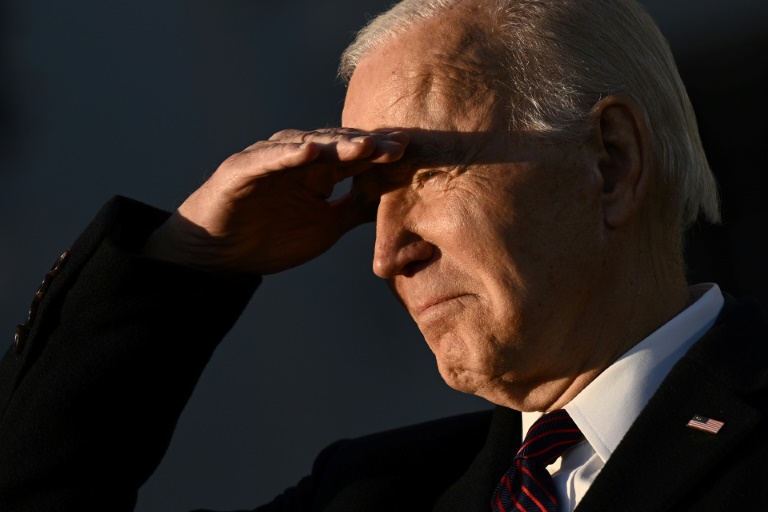
President Joe Biden was set Wednesday to unveil a long-term commitment to African leaders as the United States laid out a major investment push in technology in the continent, where China’s infrastructure spending has made it a top player.

Biden will deliver an address on Africa to some 49 leaders who have gathered in Washington for the continent-wide summit, the first held by a US president since Barack Obama in 2014.

The White House said Biden will stress the importance of Africa, back a greater role for the African Union, and outline some $55 billion in support for the continent over the next few years.

After an initial announcement on training health workers, the White House said Wednesday that the United States will commit $350 million and mobilize $450 million in financing for digital development in Africa.

Improving connectivity will both spur development and advance social equality while creating more opportunities for US companies, the White House said.

China in the past decade has surpassed the United States on investing in Africa, mostly through highly visible infrastructure projects, often funded through loans that have totaled more than $120 billion since the start of the century.

Defense Secretary Lloyd Austin on Tuesday warned African leaders that both China as well as Russia were “destabilizing” the continent, saying Beijing’s mega-contracts lacked transparency.

– Investing in technology –

US and African businesses laid out details of $15 billion in new trade on the second day of the forum, with a heavy push on the goal of digital development.

Cisco and partner Cybastion said they would commit $858 million to bolster cybersecurity through 10 contracts across Africa, addressing a vulnerability that has held up online development.

The ABD Group said it would commit $500 million starting in Ivory Coast to adopt cloud technology through data centers that can work with major US technology firms.

Technology leader Microsoft said it would employ satellites to bring internet access to some 10 million people, half of them in Africa, hoping to bridge a digital divide that has held back the continent.

The project will prioritize internet access in areas of Egypt, Senegal and Angola that have not had access to the internet, often due to unreliable electricity.

Microsoft president Brad Smith said that the company has been impressed by its engineers in Nairobi and Lagos.

In Africa, “there is no shortage of talent, but there is a huge shortage of opportunity,” Smith told AFP.

Smith said he saw wide support in Africa for bringing internet access, saying many governments have leapfrogged over their Western counterparts in ease of regulation as the continent did not have the same “extraordinary web of licensing regimes” in place from the past.

– Support for democracy –

Unlike China, which has had a hands-off policy toward countries where it invests, the United States has also emphasized democracy, with Biden planning to press leaders up for election next year to ensure free and fair polls.

Secretary of State Antony Blinken took part in the signing of a $504 million compact with Benin and Niger under the Millennium Challenge Corporation, which funds projects in countries that meet key standards on good governance.

The deal aims to connect Benin’s port of Cotonou with landlocked Niger’s capital Niamey, with the United States estimating benefits to 1.6 million people.

“For a long time we’ve considered this to be our natural port,” Niger’s President Mohamed Bazoum said.

He hailed the partnership with the United States and promised “institutional reforms” to support trade.

In a veiled allusion to China, Blinken said that the deal will not “saddle governments with debt.”

“Projects will bear the hallmarks of America’s partnership. They’ll be transparent. There’ll be high quality. They’ll be accountable to the people that they mean to serve,” Blinken said.

Greek MEP in Qatar scandal protests innocence but remains in jail

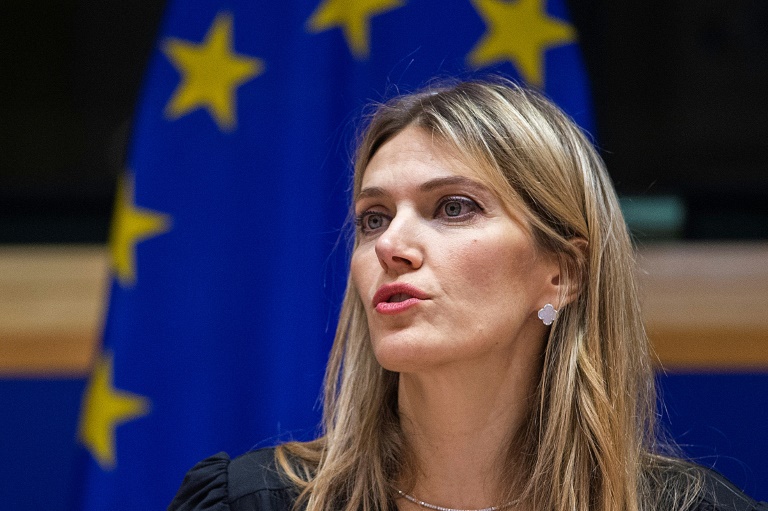
The Greek MEP who has become the face of the European Parliament’s widening graft scandal will spend at least another week in jail before attending a postponed pre-trial hearing, her lawyer said Wednesday.

Eva Kaili, a 44-year-old former newsreader and until this week one of the vice presidents of the Strasbourg parliament, is one of four suspects charged with receiving bribes from World Cup host Qatar to influence EU policy.

The Qatar government has rejected any claims of wrongdoing as “gravely misinformed”. 

Kaili’s lawyers have told AFP that she is innocent and will fight the charges.

The four were arrested last week as Belgian police conducted a series of searches on the homes and offices of politicians, lobbyists and parliamentary assistants, seizing around 1.5 million euros ($1.6 million) in cash.

All four had been due to appear together in a pre-trial hearing in Brussels on Wednesday to discover whether they were to remain in custody pending their eventual trial and as the investigation continues.

– Case split –

But Kaili’s Brussels lawyer, Andre Risopoulos, told AFP she had been unable to attend the hearing because of a staff strike at her detention centre, and that her case would be separated from that of her alleged accomplices.

They are her partner, Francesco Giorgi, former MEP turned lobbyist Pier Panzeri and Niccolo Figa-Talamanca, who leads the human rights pressure group “No Peace without Justice”.

“The case has been split,” Risopoulos said, adding that she was now expecting a custody hearing on December 22.

Earlier, Kaili’s lawyer in Athens, Michalis Dimitrakopoulos, insisted that she was innocent and “did not know of the existence” of the cash found at her Brussels home.

Dimitrakopoulos suggested Kaili’s Italian boyfriend, Giorgi, might have “answers about the existence of this cash”.

Giorgi and Panzeri were remanded in custody and Figa-Talamanca was released pending trial but ordered to wear an electronic ankle bracelet, the federal prosecutor said.

Qatar is a key energy supplier to Europe, and plays an important intermediary role in several diplomatic disputes.

But it has also been criticised for the alleged mistreatment of migrant workers, most notoriously those who built the World Cup stadiums.

As Kaili remained in jail, her colleagues in the Strasbourg parliament scrambled to distance themselves from the scandal, stripping her of her vice presidential role and promising a wave of transparency reforms.

– Hotel room –

She is the only serving MEP to have been charged. But several more have had their offices put under police seal.

A Belgian judicial source said 600,000 euros were found at Panzeri’s home, 150,000 euros in Kaili’s flat and 750,000 in her father’s hotel room.

Brussels has been rocked by the claims and European Parliament President Roberta Metsola has sought to portray the alleged bribes as an assault on democracy.

Kaili was one of six people detained. Four have been charged with “criminal organisation, corruption and money laundering” and two released.

One of those released was Luca Visentini, the general secretary of the International Trade Union Confederation, a global labour body that has pushed Qatar on labour rights. 

Ukraine downs swarm of attack drones over Kyiv

Ukraine said Wednesday it had shot down more than a dozen Iranian-made drones launched at the capital by Russian forces in their latest assault on Kyiv. 

The attack came as the Kremlin promised no let-up to fighting over Christmas and as Ukraine leader Volodymyr Zelensky urged European leaders to back a court to try Russian officials.

“The terrorists started this morning with 13 Shaheds,” Ukrainian President Volodymyr Zelensky said, referring to the Iran-made weapons.

“All 13 were shot down” he added, urging residents to heed air raid sirens.

The national energy provider Ukrenergo said no electricity facilities had been damaged in the attack, crediting Ukrainian air defences for their “brilliant” work.

Ukraine has been subjected to nearly 10 months of air raid sirens and frequent aerial attacks since Russia invaded Ukraine in February and tried to capture the capital. 

But since a series of key battlefield setbacks this summer and autumn, Russia switched began systematically targeting critical infrastructure in Ukraine.

As temperatures drop, the missile and drone attacks disrupted electricity, water and heat to millions in Ukraine.

– ‘Nearly 7 million children’ at risk –

The strikes targeting Ukrainian energy infrastructure have piled pressure on the country’s power grid, whose operators have for weeks been forced to implement rolling blackouts.

They left “nearly seven million children without sustained access to electricity, heating and water, putting them at increased risk”, UNICEF, the UN children’s agency said Wednesday.

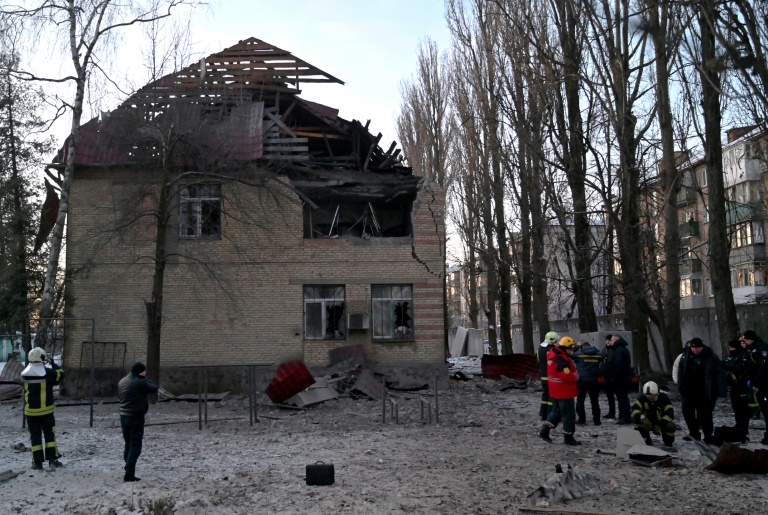
Explosions rang out over central Kyiv and AFP journalists later saw law enforcement and emergency service workers inspecting metal fragments at a snow-covered impact site.

City officials said debris from the downed drones had damaged residential homes and an local administrative building. No one was reported injured or killed.  

The latest round of attacks came a day after dozens of countries and international organisations meeting up in Paris responded to a plea from Zelensky to help the country withstand Russia’s onslaught on its energy grid with 1 billion euros ($1.1 billion).

In a video message from Kyiv, Zelensky said Ukraine needed assistance for its battered energy sector and spare parts for repairs, high-capacity generators, extra gas and increased electricity imports.

Foreign Minister Dmytro Kuleba called on Ukraine’s allies to provide his country with more weapons to help it “fight through the winter” and sustain Kyiv’s military advances.

– US citizen freed –

Ukraine separately said Wednesday it had secured the release of US citizen Suedi Murekezi as well as 64 Ukrainian members of the military in its latest prisoner swap with Russian forces.

Russia’s state-run TASS news agency earlier reported that Murekezi had been arrested in the eastern Donetsk region of Ukraine in June and charged with attending anti-Russian protests.

After nearly 10 months of fighting, Russia has yet to fulfil any of its stated key goals in what it refers to as its “special military operation” in Ukraine, including seizing the capital or the eastern Donbas region.

The Moscow-installed leader of Ukraine’s Donetsk region on Wednesday however called for Russia to widen its goals and annex two more areas of Ukraine, the Black Sea region of Odessa and Chernigiv in the north.

The Kremlin said a ceasefire was not on Moscow’s agenda, and that it had not received any proposals from Kyiv to pause fighting in Ukraine during the upcoming holiday period.

“No, no proposals have been received from anyone and no topic of this kind is on the agenda,” the Kremlin’s spokesman Dmitry Peskov. 

Meanwhile on Wednesday, Zelensky accepted the European Union Sakharov Prize for human rights on behalf of the people of Ukraine. 

As he accepted the EU’s top rights award, he urged Europe to help set up a tribunal swiftly to try Russia’s leadership for the “crime of aggression”.

Close Bitnami banner
Bitnami