World

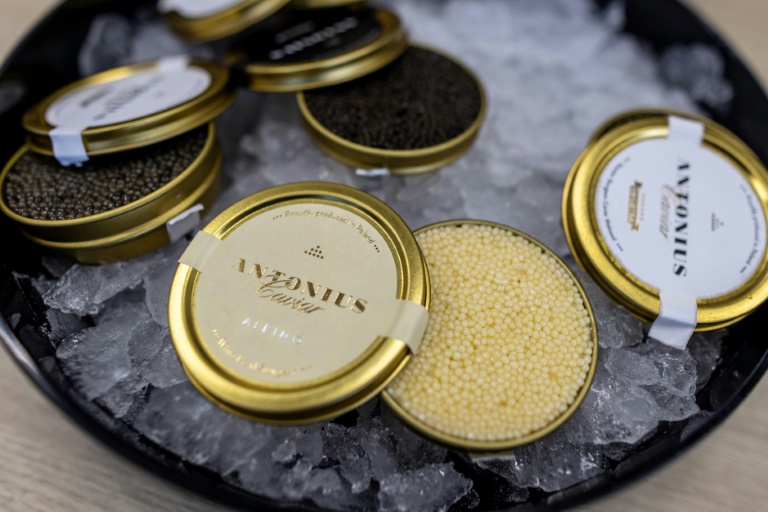
Polish fish farm fights 'myth of Russian caviar'

With Moscow blacklisted since it invaded Ukraine, Europe’s main producer of caviar wants to put an end, once and for all, to the delicacy’s traditional association with Russia.

“For most people, caviar means Russia, but that hasn’t been the case for a long time now,” said Agata Lakomiak-Winnicka, marketing and sales manager for Poland’s Antonius Caviar. 

Based in the northeastern village of Rus, the company is one of the world’s top makers of the luxury food, having produced 42 tonnes of black caviar last year — more than any one firm in Italy or France and almost as much as those in China.

“We used to get clients who couldn’t locate Poland on a map. Today we’re on a whole different level,” Lakomiak-Winnicka said.

The company exports mostly to the United Arab Emirates, the United States, France and Denmark and also supplies Michelin-starred restaurants around the world.

Retail prices range from 1,200 to 2,400 euros ($1,275-2,550) for sturgeon caviar and up to 8,000 euros for the albino kind.

The company’s challenge now, one faced by producers worldwide, is the battle against “the myth of Russian caviar”. 

“Take any box of caviar that reads ‘Russian tradition’ or ‘Russian method’ and you’ll see that 99 percent of the time it doesn’t actually come from Russia,” Lakomiak-Winnicka said. 

– Russia boycott –

Traditionally, caviar was made from eggs from wild sturgeon in the Caspian and Black seas with the best-known producers in Russia and Iran.

But years of overfishing and pollution left the sturgeon at risk of extinction, and it is now a protected species. 

Most caviar today is produced on fish farms and has nothing to do with Russia.

But consumers still associate the two — a challenge for those who out of solidarity for Ukraine no longer want to buy Russian.

“Because of the war… clients ask about the provenance of the caviar,” said Wiktoria Yerystova-Rostkowska, who owns a Russian shop outside Warsaw.

“They want good caviar but it can’t be Russian,” she told AFP, adding that she sources hers from Germany.

The EU and United States have banned Russian caviar as part of their sanctions against Moscow, but it was already practically impossible to buy due to restrictions to protect wild sturgeon.

– Aquaculture –

The green and black boxes of caviar are on display in the shop window. 

Featuring a drawing of the fish, the label reads “malossol” — the Russian for “lightly salted” and the name of the traditional method used to preserve caviar.

Yerystova-Rostkowska said the boycott of Russian products has left her struggling to stay open.

“It’s no longer profitable. I’m down 80 percent in revenue,” she said. 

Lakomiak-Winnicka for her part sees the boycott as an opportunity. 

“It’s a chance to explain that caviar no longer comes from Russia,” she said.

It has been years since wild Russian caviar was available on the international market.

“The Caspian Sea no longer has any importance in caviar production,” said Antonius head Marek Szczukowski.

“The vast majority of caviar sold around the world is derived from aquaculture,” including in Russia, he added.

– Sturgeon ‘on vacation’ –

On the Antonius fish farm in Rus, thousands of sturgeon — some more than a metre (three feet) in length — swim around in canals fed by the crystal clear water of a nearby river.

The company initially farmed trout there, but because of climate change they switched to sturgeon, which prefer warmer water.

“The sturgeon are on vacation here, like they’re in Hawaii,” Szczukowski said. 

The caviar is harvested after the fish reach maturity, with the entire operation taking under 20 minutes.  

Workers extract the caviar, wash and salt it, then box it up.

The label reads: “Proudly produced in Poland”. 

It used to also include the word “Russian” — to denote the fish species — but from now on it will just say “sturgeon caviar”. 

“At the express request of clients, we’re changing the labels, leaving no room for doubt,” Lakomiak-Winnicka said.  
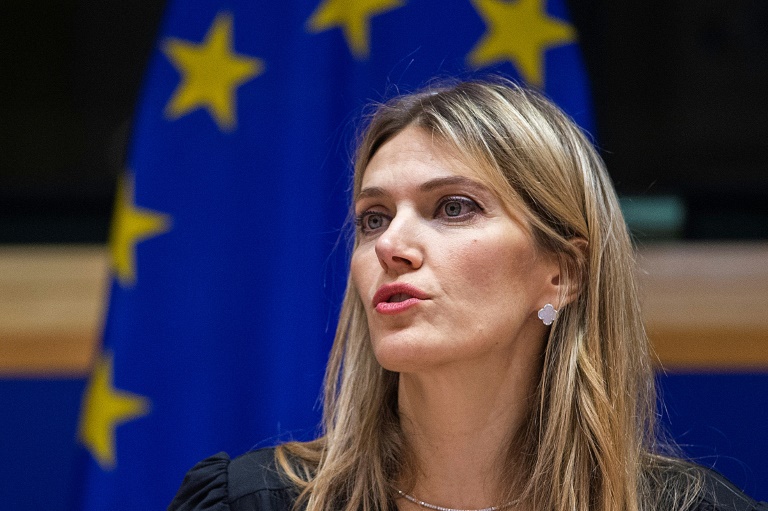
Greek MEP in Qatar scandal protests innocence but remains in jail

The Greek MEP who has become the face of the European Parliament’s widening graft scandal will spend at least another week in jail before attending a postponed pre-trial hearing, her lawyer said Wednesday.

Eva Kaili, a 44-year-old former newsreader and until this week one of the vice presidents of the Strasbourg parliament, is one of four suspects charged with receiving bribes from World Cup host Qatar to influence EU policy.

The Qatar government has rejected any claims of wrongdoing as “gravely misinformed”. 

Kaili’s lawyers have told AFP that she is innocent and would fight the charges.

The four were arrested last week as Belgian police conducted a series of searches on the homes and offices of politicians, lobbyists and parliamentary assistants and seized around 1.5 million euros ($1.6 million) in cash.

The four were due to appear in pre-trial hearing in Brussels on Wednesday to discover whether they are to remain in custody pending their eventual trial and as the investigation continues.

– Case split –

But Kaili’s Brussels lawyer, Andre Risopoulos, told AFP she was unable to attend the hearing because of a staff strike at her detention centre, and that her case would be separated from that of her alleged accomplices.

Those are her partner, Francesco Giorgi, former MEP turned lobbyist Pier Panzeri and Niccolo Figa-Talamanca, who leads the human rights pressure group “No Peace without Justice”.

“The case has been split,” Risopoulos said, adding that she was now expecting a custody hearing on December 22.

Earlier, Kaili’s lawyer in Athens, Michalis Dimitrakopoulos, insisted that she was innocent and “did not know of the existence” of the cash found at her Brussels home.

Dimitrakopoulos suggested Kaili’s Italian boyfriend, Giorgi, might have “answers about the existence of this cash”.

Giorgi was remanded in custody for at least a further month, his lawyer Pierre Monville said. The fate of the other two suspects was not immediately clear. 

Qatar is a key energy supplier to Europe, and plays an important intermediary role in several diplomatic tangles.

But it has also been criticised for the alleged mistreatment of migrant workers, most notoriously those who built the World Cup stadiums.

As Kaili remained in jail, her colleagues in the Strasbourg parliament scrambled to distance themselves from the scandal, stripping her of her vice presidential role and promising a wave of transparency reforms.

– Hotel room –

She is the only serving MEP to have been charged. But several more have had their offices put under police seal.

A Belgian judicial source, confirming reports in Belgian newspapers Le Soir and Knack, said 600,000 euros were found at Panzeri’s home, 150,000 euros in Kaili’s flat and 750,000 in her father’s hotel room.

Brussels has been rocked by the claims and European Parliament President Roberta Metsola has sought to portray the alleged bribes as an assault on democracy.

Kaili was one of six people detained. Four have been charged with “criminal organisation, corruption and money laundering” and two released.

One of those released was Luca Visentini, the general secretary of the International Trade Union Confederation, a global labour body that has pushed Qatar on labour rights. 

Markets muted before expected US rate hike

Caution reigned on stock markets on Wednesday ahead of an expected interest rate hike from the Federal Reserve as inflation remains at decade-high levels despite moderate slowdowns. 

Wall Street’s main indices posted modest gains in morning trading, with the Dow adding 0.7 percent.

European stocks finished moderately lower, with London losses cushioned by news that UK inflation nudged lower in November.

Meanwhile, Frankfurt and Paris also fell despite the Ifo research institute’s forecast that Germany’s recession could be milder than previously predicted.

Asian stocks rose following Tuesday’s rebound on Wall Street.

The dollar drifted lower against its main rival currencies.

The Fed is forecast to increase borrowing costs 50 basis points Wednesday after four 75-point rises in a row.

The US central bank has embarked on an all-out campaign to cool demand in the world’s biggest economy, raising rates six times this year with interest-sensitive sectors like housing already reeling from tightening policy.

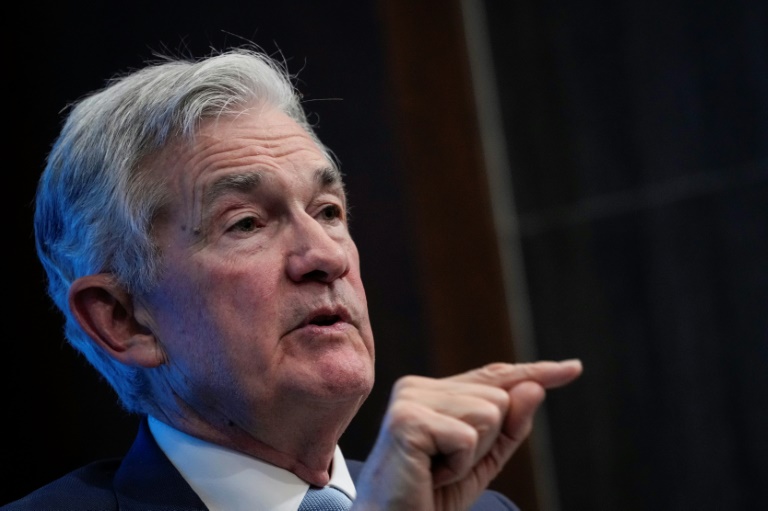
The US central bank’s post-meeting statement and boss Jerome Powell’s comments are the main focus for traders, along with the Fed’s infamous “dot plot” chart of the rate outlook.

“At the end of the day, it’s Jerome Powell, and the Fed, who will either give a green light for a modest Santa rally (for equities), or tell investors that Santa is stuck in a snow storm this year,” noted SwissQuote analyst Ipek Ozkardeskaya.

Investors will be looking for indications on the pace of future rate hikes, as well as what could be the “terminal rate”, or the highest interest rate before the Fed begins lowering rates again.

Briefing.com analyst Patrick O’Hare said the “tone and cadence from Fed Chair Powell will have an outsized impact today” on markets as official forecasts are subject to revision.

Later, the impact of higher interest rates on consumers and the wider economy will feed into investors’ calculations.

“That reality will be an inevitable drag on economic activity and it will be incorporated in the market’s concerns about the long and variable lags of monetary policy on economic activity,” he added.

It’s the turn of Europe on Thursday, with the Bank of England and European Central Bank expected to announce less aggressive rate hikes compared with their recent monetary policy decisions.

Wall Street rebounded Tuesday in reaction to data showing US consumer prices rose 7.1 percent last month, less than forecast and the slowest pace since December 2021.

The reading followed an October slowdown and fuelled hopes that inflation in the world’s biggest economy has finally peaked, after several months of Fed rate hikes.

Markets are also eyeing developments in China, which is continuing to roll back its strict zero-Covid strategy that has battered the world’s number two economy, though fears of a sharp surge in infections are causing some unease among dealers.

Oil prices pushed higher.

“Crude oil prices have continued their recent rise after the IEA warned that prices were likely to rise next year as sanctions further squeeze Russian supply, and demand starts to pick up as China starts to reopen properly,” said market analyst Michael Hewson at CMC Markets.

– Key figures around 1630 GMT –

New York – Dow: UP 0.7 percent at 34,350.80 points

EURO STOXX 50: DOWN 0.3 percent at 3,975.26

London – FTSE 100: DOWN less than 0.1 percent at 7,495.93 (close)

Frankfurt – DAX: DOWN 0.3 percent at 14,460.20 (close)

Paris – CAC 40: DOWN 0.2 percent at 6,730.79 (close)

Tokyo – Nikkei 225: UP 0.7 percent at 28,156.21 (close)

Hong Kong – Hang Seng Index: UP 0.4 percent at 19,673.45 (close)

Shanghai – Composite: FLAT at 3,176.53 (close)

Euro/dollar: UP at $1.0660 from $1.0635 on Tuesday

Dollar/yen: DOWN at 134.76 yen from 135.59 yen

Pound/dollar: UP at $1.2421 from $1.2366

Euro/pound: DOWN at 85.83 pence from 85.96 pence

Brent North Sea crude: UP 2.5 percent at $82.72 per barrel

West Texas Intermediate: UP 2.6 percent at $77.36 per barrel

burs-rl/lc

US businesses pump investment into Africa at Biden summit

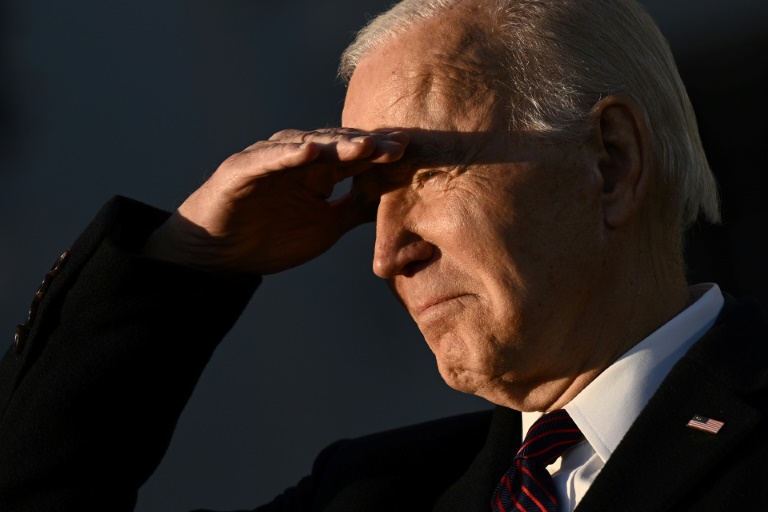
President Joe Biden was set Wednesday to lay out a long-term commitment to African leaders as US companies announced more than $2 billion led by technology deals for a continent where China has become a top player.

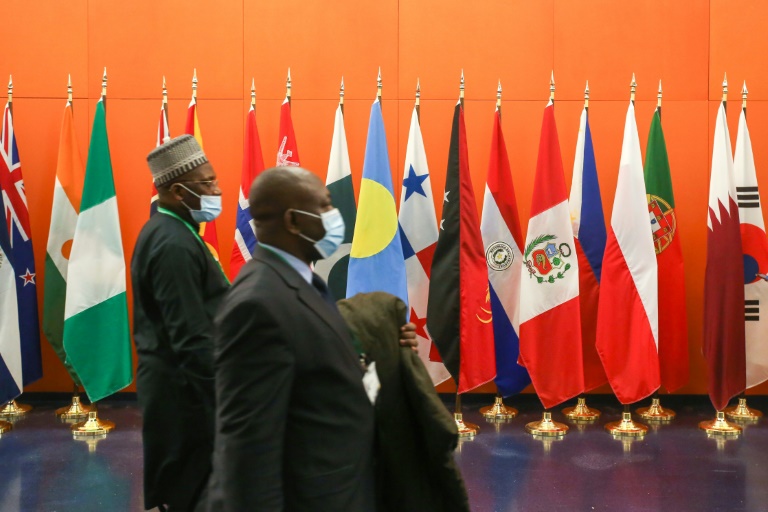
Biden will deliver an address on Africa to some 49 leaders who have gathered in Washington for the continent-wide summit, the first held by a US president since Barack Obama in 2014.

The White House said Biden will give details on some $55 billion in support for Africa over the next few years, which will include climate initiatives and training of health workers.

Biden is also expected to offer US support for a greater role for the African Union, including a permanent berth in the Group of 20 club of major economies.

Defense Secretary Lloyd Austin on Tuesday warned African leaders that both China and Russia were “destabilizing” the continent, Beijing through mega-contracts that he said lack transparency.

– Investing in technology –

China in the past decade has surpassed the United States on investing in Africa, largely through major infrastructure projects and loans that have totaled more than $120 billion since the start of the century.

On the second day of the three-day summit, US businesses also mobilized to lay out business plans in Africa, where China for the past decade has outpaced the United States with its spending blitz.

Cisco and partner Cybastion said they would commit $858 million to bolster cybersecurity through 10 contracts across Africa, addressing a vulnerability that has held up online development.

The ABD Group said it would commit $500 million starting in Ivory Coast to adopt cloud technology through data centers that can work with major US technology firms.

Technology leader Microsoft said it would employ satellites to bring internet access to some 10 million people, half of them in Africa, hoping to bridge a digital divide that has held back the continent.

The project will prioritize internet access in areas of Egypt, Senegal and Angola that have not had access to the internet, often due to unreliable electricity.

Microsoft president Brad Smith said that the company has been impressed by its engineers in Nairobi and Lagos.

In Africa, “there is no shortage of talent, but there is a huge shortage of opportunity,” Smith told AFP.

Smith said he saw wide support in Africa for bringing internet access, saying many governments have leapfrogged over their Western counterparts in ease of regulation as the continent did not have the same “extraordinary web of licensing regimes” in place from the past.

– Support for democracy –

Unlike China, which has had a hands-off policy toward countries where it invests, the United States has also emphasized democracy, with Biden planning to press leaders up for election next year to ensure free and fair polls.

Secretary of State Antony Blinken took part in the signing of a $504 million compact with Benin and Niger under the Millennium Challenge Corporation, which funds projects in countries that meet key standards on good governance.

The deal aims to connect Benin’s port of Cotonou with landlocked Niger’s capital Niamey, with the United States estimating benefits to 1.6 million people.

“For a long time we’ve considered this to be our natural port,” Niger’s President Mohamed Bazoum said.

He hailed the partnership with the United States and promised “institutional reforms” to support trade.

In a veiled allusion to China, Blinken said that the deal will not “saddle governments with debt.”

“Projects will bear the hallmarks of America’s partnership. They’ll be transparent. There’ll be high quality. They’ll be accountable to the people that they mean to serve,” Blinken said.

Ousted Peru leader to remain in prison as hearing postponed

A judge in Peru on Wednesday postponed by 24 hours a hearing to decide whether ex-president Pedro Castillo will be released from detention on charges of rebellion and conspiracy.

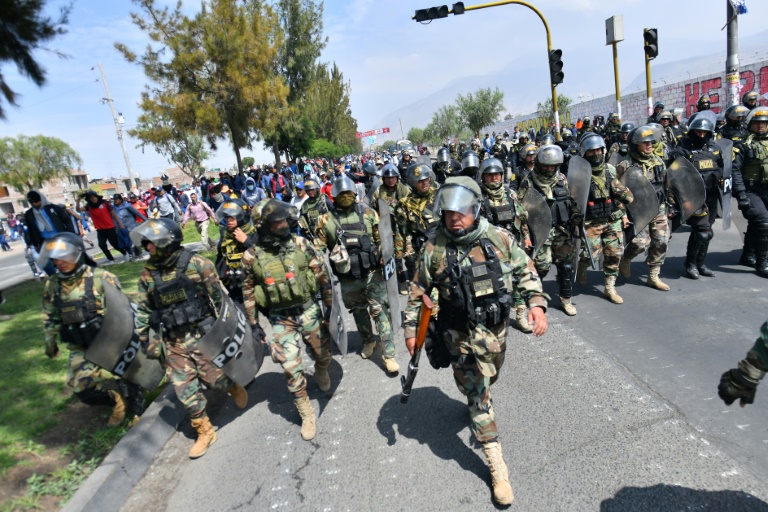
Castillo’s arrest last week after he tried to dissolve parliament and rule by decree has sparked days of nationwide protests in which seven people have been killed.

Last week, a judge ordered Castillo to be held for seven days, and he was meant to be released on Wednesday.

However, prosecutors filed a request late Tuesday to hold him in pre-trial detention for 18 months. 

Judge Juan Checkley on Wednesday postponed a hearing on the new request until Thursday after defense attorneys argued they had not received all documents from the public prosecutor. 

He also ordered Castillo to remain in detention for another 48 hours.

Castillo, a leftist former school teacher, was in power for only 17 months in the South American nation that is prone to political instability and is now on its sixth president in six years.

His short period in office was marked by a power struggle with the opposition-dominated Congress, and six investigations into him and his family, mainly for corruption.

He was facing his third impeachment bid when, last Wednesday, he announced he was dissolving Congress and would rule by decree.

But lawmakers went ahead and voted to sack him and he was quickly arrested while trying to flee to the Mexican embassy and seek asylum.

Castillo’s vice president, Dina Boluarte, was sworn in as his successor, but has failed to calm tensions that have led to violent clashes between police and protestors in several parts of the country.

Developing countries stage walk out at UN biodiversity talks

Delegates from developing countries at high-stakes UN talks on biodiversity staged a late-night walkout after talks broke down with wealthy nations over the contentious issue of funding, officials and non-profit groups said Wednesday.

The deterioration in dialogue comes on the eve of the high-level phase of negotiations involving the environment ministers of the 196 members at the summit, called COP15.

At stake is the health of the Earth’s ecosystems and the million plant and animal species threatened with extinction as a result of habitat destruction, pollution and the climate crisis.

“The countries left the meeting because they considered that it was impossible to make progress in the discussions because developed countries were not ready to compromise,” the nonprofit Avaaz said in an update.

David Ainsworth, a spokesman for the UN Environment Programme, told reporters: “The atmosphere deteriorated when the group started discussing concepts, in particular the global biodiversity fund proposal” — a new fund sought by low income nations to help them achieve their objectives.

Wealthy nations oppose creating a new mechanism and would rather reform existing financial flows.

China, which is chairing the summit, was set to hold a major meeting involving all heads of delegations to resolve the impasse.

The current finance gap for biodiversity ranges from between $600 billion to almost $825 billion per year, according to experts. 

A group of developing nations including Gabon, Brazil, South Africa and Indonesia this year called for rich countries to provide at least $100 billion annually -– rising to $700 billion a year by 2030 — for biodiversity.

Major targets include a cornerstone pledge to protect 30 percent of the world’s land and seas by 2030, eliminating harmful fishing and agriculture subsidies and tackling invasive species and reducing pesticides.

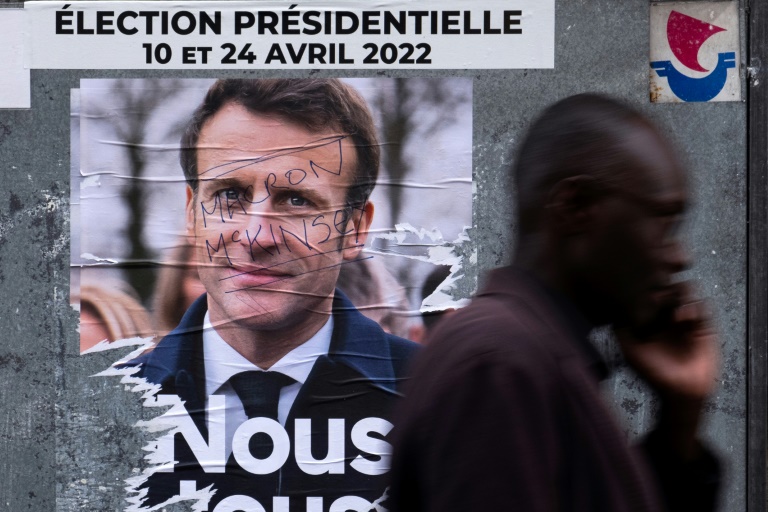
French prosecutors search Macron's party offices

French prosecutors said Wednesday that they had searched the headquarters of President Emmanuel Macron’s Renaissance party in their investigation into the use of consulting firms by the government since 2017.

The Paris offices of US consulting giant McKinsey were also searched on Tuesday, the National Financial Prosecutors’ Office said, confirming a report in Le Parisien newspaper.

The use of consultants by Macron’s governments came under the spotlight in March after a French Senate inquiry concluded that public spending on them had more than doubled from 2018 to 2021, during Macron’s first term.

“It’s normal for the judiciary to investigate freely and independently to shed all the light on this subject,” a Renaissance spokesman, Loic Signor, told AFP.

He said the party remained at prosecutors’ disposal “to provide all useful information on the campaigns”.

McKinsey also confirmed the search of its offices, saying it was “cooperating fully with the authorities”.

Two probes have been underway since October, looking into possible false election campaign accounting, as well as possible favouritism and conspiracy.

Some McKinsey consultants are known to have worked as unpaid volunteers on Macron’s victorious 2017 election campaign and prosecutors are thought to be probing whether this entailed a hidden campaign expense.

They are also looking into whether the firm enjoyed special access and treatment afterwards when winning lucrative contracts with the government.

Finance Minister Bruno Le Maire acknowledged last month that there had been “excesses” with the use of consulting contracts in the past, but they had since been “corrected”.

– ‘McKinseygate’ –

Total outlays on consulting firms reached more than a billion euros ($1.1 billion) last year, according to the Senate panel report, a figure frequently cited by Macron’s opponents during his successful bid for a second term last April.

The panel also criticised fiscal strategies by McKinsey that it said allowed the US firm to pay no corporate taxes in France between 2011 and 2020.

That claim prompted the financial prosecutor’s office to open a separate preliminary investigation that led to a search of McKinsey’s Paris headquarters on May 24.

The prosecutors have not publicly identified the president or his campaign teams as the targets of the inquiry, of which Macron said in November that “I’m not scared of anything.”

But the use of expensive foreign firms for strategic advice, dubbed “McKinseygate” by national media, shocked many French voters even as Macron has repeatedly defended the contracts.

“When you want to go very quickly and very strongly with a policy, you need to make use of outside contractors occasionally,” he told reporters in March.

If prosecutors want to question Macron directly on the consulting claims, they may have to wait until he no longer enjoys presidential immunity in 2027, when he leaves office after the constitutional limit of two five-year terms.

France’s state auditor, the Cour des Comptes, has also found that several contracts for consulting firms during the Covid-19 crisis were awarded under “problematic” circumstances, Le Monde newspaper reported Monday, citing a confidential report.

France has strict rules on the financing of election campaigns and political parties, which have led to several convictions in recent decades.

Former president Nicolas Sarkozy received a one-year prison sentence in September 2021 for illegal financing of his 2012 re-election bid.

Judges concluded that Sarkozy spent nearly twice the legal limit on his doomed quest for a second term. He has appealed the ruling.

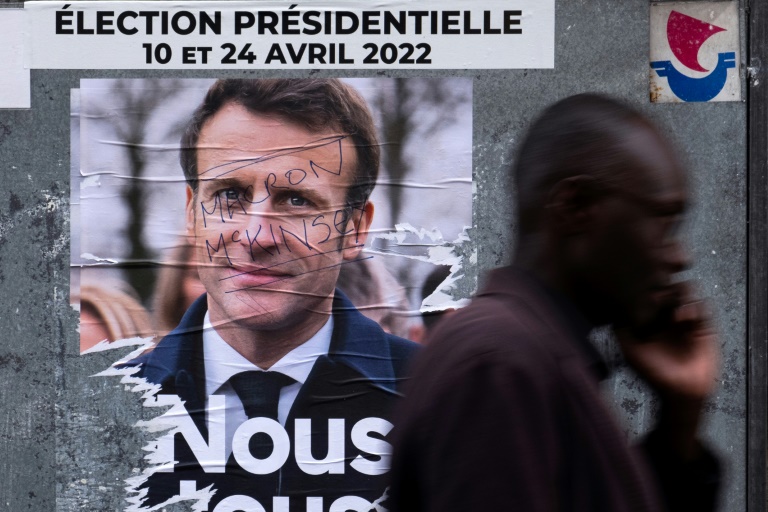
French prosecutors search Macron's party offices

French prosecutors said Wednesday that they had searched the headquarters of President Emmanuel Macron’s Renaissance party in their investigation into the use of consulting firms by the government since 2017.

The Paris offices of US consulting giant McKinsey were also searched on Tuesday, the National Financial Prosecutors’ Office said, confirming a report in Le Parisien newspaper.

The use of consultants by Macron’s governments came under the spotlight in March after a French Senate inquiry concluded that public spending on them had more than doubled from 2018 to 2021, during Macron’s first term.

“It’s normal for the judiciary to investigate freely and independently to shed all the light on this subject,” a Renaissance spokesman, Loic Signor, told AFP.

He said the party remained at prosecutors’ disposal “to provide all useful information on the campaigns”.

McKinsey also confirmed the search of its offices, saying it was “cooperating fully with the authorities”.

Two probes have been underway since October, looking into possible false election campaign accounting, as well as possible favouritism and conspiracy.

Some McKinsey consultants are known to have worked as unpaid volunteers on Macron’s victorious 2017 election campaign and prosecutors are thought to be probing whether this entailed a hidden campaign expense.

They are also looking into whether the firm enjoyed special access and treatment afterwards when winning lucrative contracts with the government.

Finance Minister Bruno Le Maire acknowledged last month that there had been “excesses” with the use of consulting contracts in the past, but they had since been “corrected”.

– ‘McKinseygate’ –

Total outlays on consulting firms reached more than a billion euros ($1.1 billion) last year, according to the Senate panel report, a figure frequently cited by Macron’s opponents during his successful bid for a second term last April.

The panel also criticised fiscal strategies by McKinsey that it said allowed the US firm to pay no corporate taxes in France between 2011 and 2020.

That claim prompted the financial prosecutor’s office to open a separate preliminary investigation that led to a search of McKinsey’s Paris headquarters on May 24.

The prosecutors have not publicly identified the president or his campaign teams as the targets of the inquiry, of which Macron said in November that “I’m not scared of anything.”

But the use of expensive foreign firms for strategic advice, dubbed “McKinseygate” by national media, shocked many French voters even as Macron has repeatedly defended the contracts.

“When you want to go very quickly and very strongly with a policy, you need to make use of outside contractors occasionally,” he told reporters in March.

If prosecutors want to question Macron directly on the consulting claims, they may have to wait until he no longer enjoys presidential immunity in 2027, when he leaves office after the constitutional limit of two five-year terms.

France’s state auditor, the Cour des Comptes, has also found that several contracts for consulting firms during the Covid-19 crisis were awarded under “problematic” circumstances, Le Monde newspaper reported Monday, citing a confidential report.

France has strict rules on the financing of election campaigns and political parties, which have led to several convictions in recent decades.

Former president Nicolas Sarkozy received a one-year prison sentence in September 2021 for illegal financing of his 2012 re-election bid.

Judges concluded that Sarkozy spent nearly twice the legal limit on his doomed quest for a second term. He has appealed the ruling.

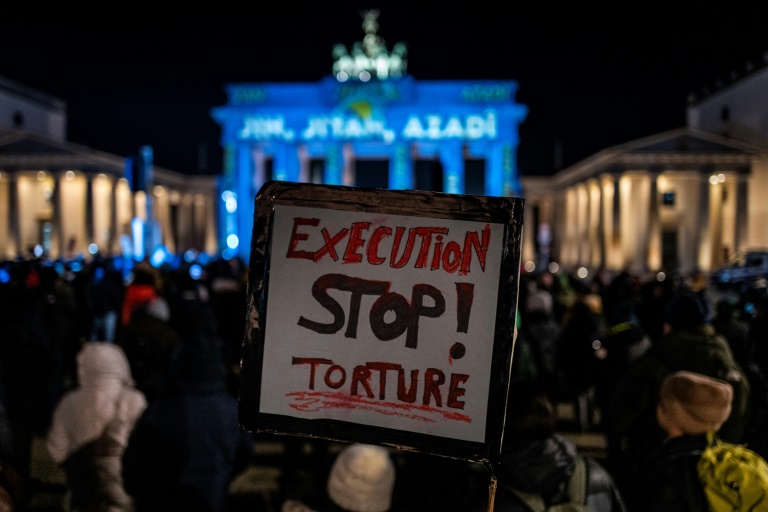
The young Iranians facing death penalty over protests

A doctor, rap artists and a footballer are among around two dozen Iranians who risk being hanged as Tehran uses capital punishment as an intimidation tactic to quell protests, rights groups say.

The executions in the past week of Mohsen Shekari and Majidreza Rahnavard, both 23 and the first people put to death over the protests, sparked an outcry, especially as Rahnavard was hanged from a crane in public rather than in prison.

But campaigners warn that more executions will inevitably follow without tougher international action, with a dozen more people already sentenced to death over the protests and a similar number charged with crimes that could see them hanged.

“Unless the political cost of the executions is increased significantly, we will be facing mass executions,” said Mahmood Amiry-Moghaddam, director of the Norway-based Iran Human Rights group.

He accused Iran’s leaders of using executions to “spread fear among people and save the regime from the nationwide protests”.

The largely peaceful demonstrations sparked by the death in September of Mahsa Amini, who had been arrested for allegedly violating Iran’s strict dress code for women, are posing the biggest challenge to the Islamic republic since the 1979 revolution.

There have been no reports of a slackening in protest activity in recent days, including after the executions, but the movement has been marked by phases of more and less intense demonstrations.

Authorities describe those facing death sentences as “rioters” who are being judged in full accordance with the country’s sharia law.

But activists express alarm over the use of vaguely worded sharia legal charges against protesters, such as “enmity against God,” “corruption on earth” and “armed rebellion”, all of which are capital crimes in Iran.

– ‘Unfair trial, torture’ –

Amnesty International currently confirms 11 cases of death sentences issued against individuals over the protests, and another nine cases where individuals have been charged with crimes that could see them given the death penalty.

One young protester, Sahand Nourmohammad-Zadeh, was sentenced to death over charges — which he denied — that he did no more than tear down highway railings and set fire to rubbish bins and tyres, the rights group said.

Mohammad Ghobadlou, aged 22, was sentenced to death on charges of running over police officials with a car, killing one and injuring several others, Amnesty said, adding it had “serious concerns” he was subjected to torture and other abuse in jail.

Saman Seydi, a young Kurdish rapper, was sentenced to death on charges of firing a pistol three times into the air during protests, the group said, adding it had received information he had also been subjected to torture to extract forced confessions.

Before his arrest, Seydi had posted material on Instagram in support of the protests, while his rap songs had also been critical of the authorities.

Hamid Ghare-Hasanlou, a doctor, and his wife Farzaneh Ghare-Hasanlou were on their way to the funeral of a killed protester when they were “caught up in the chaos” of a fatal assault on a member of the Basij militia, Amnesty said.

Hamid Ghare-Hasanlou was sentenced to death and his wife to 25 years in prison, with the court relying on incriminating statements from his wife which Amnesty said were coerced and later retracted by her in court.

Her husband was tortured in custody and hospitalised with broken ribs, it said.

Mahan Sadrat, another young man Amnesty had been concerned about, was granted a stay of execution after a conviction based on allegations he had drawn a knife to attack an individual, his lawyer said Wednesday.

Those who face the death penalty after being charged with capital crimes include Toomaj Salehi, 32, a prominent rapper who was charged “solely in connection with critical music and social media posts,” Amnesty said, adding that he had been tortured in detention.

The professional footballer Amir Nasr-Azadani, 26, is in a similar position after being charged over the deaths of three security officials in November in the city of Isfahan, it said.

The world union of professional footballers FIFPRO said it was “shocked and sickened” by the reports he faces death.

– Executed ‘at any moment’ –

Campaigners are seeking to highlight all individuals facing the death penalty in the hope that increased scrutiny on specific cases can help spare lives.

But they warn the executions often come with little or no advance notice.

Rahnavard was hanged just 23 days after his arrest and shortly after a last meeting with his mother, who was given no inkling her son was about to be put to death.

Activists were also unaware of Shekari’s case until his execution was announced by state media.

Amnesty said Iranian authorities are issuing, upholding and carrying out death sentences in a “speedy manner” and there is a “serious risk” that people whose death sentences have not been made public could be executed “at any moment”.

“The executions of two people connected to the protests in Iran are appalling, and we are extremely worried for the lives of others who have been similarly sentenced to death,” the office of the UN High Commissioner for Human Rights told AFP.

It added that Iran had “ignored” its pleas not to carry out the executions.

Markets muted before expected US rate hike

Caution reigned on stock markets on Wednesday ahead of an expected interest rate hike from the Federal Reserve as inflation remains at decade-high levels despite moderate slowdowns. 

Wall Street opened mixed, with the Dow adding 0.2 percent.

European stocks were moderately lower in afternoon trade, with London losses cushioned by news that UK inflation nudged lower in November.

Meanwhile, Frankfurt and Paris also fell despite the Ifo research institute’s forecast that Germany’s recession could be milder than previously predicted.

Asian stocks rose following Tuesday’s rebound on Wall Street.

The dollar drifted lower against its main rival currencies.

The Fed is forecast to increase borrowing costs 50 basis points Wednesday after four 75-point rises in a row.

The US central bank’s post-meeting statement and boss Jerome Powell’s comments are the main focus for traders, along with the Fed’s infamous “dot plot” chart of the rate outlook.

“At the end of the day, it’s Jerome Powell, and the Fed, who will either give a green light for a modest Santa rally (for equities), or tell investors that Santa is stuck in a snow storm this year,” noted SwissQuote analyst Ipek Ozkardeskaya.

Investors will be looking for indications on the pace of future rate hikes, as well as what could be the “terminal rate”, or the highest interest rate before the Fed begins lowering rates again.

Briefing.com analyst Patrick O’Hare said the “tone and cadence from Fed Chair Powell will have an outsized impact today” on markets as official forecasts are subject to revision.

Later, the impact of higher interest rates on consumers and the wider economy will feed into investors’ calculations.

“That reality will be an inevitable drag on economic activity and it will be incorporated in the market’s concerns about the long and variable lags of monetary policy on economic activity,” he added.

It’s the turn of Europe on Thursday, with the Bank of England and European Central Bank expected to announce less aggressive rate hikes compared with their recent monetary policy decisions.

Wall Street rebounded Tuesday in reaction to data showing US consumer prices rose 7.1 percent last month, less than forecast and the slowest pace since December 2021.

The reading followed an October slowdown and fuelled hopes that inflation in the world’s biggest economy has finally peaked, after several months of Fed rate hikes.

Markets are also eyeing developments in China, which is continuing to roll back its strict zero-Covid strategy that has battered the world’s number two economy, though fears of a sharp surge in infections are causing some unease among dealers.

Oil extended recent gains as traders awaited the weekly US inventories report for clues on demand in the world’s top crude consuming nation.

– Key figures around 1430 GMT –

London – FTSE 100: DOWN less than 0.1 percent at 7,498.46 points

Frankfurt – DAX: DOWN 0.5 percent at 14,424.85

Paris – CAC 40: DOWN 0.3 percent at 6,723.43

EURO STOXX 50: DOWN 0.4 percent at 3,972.18

New York – Dow: UP 0.2 percent at 34,165.75

Tokyo – Nikkei 225: UP 0.7 percent at 28,156.21 (close)

Hong Kong – Hang Seng Index: UP 0.4 percent at 19,673.45 (close)

Shanghai – Composite: FLAT at 3,176.53 (close)

Euro/dollar: UP at $1.0641 from $1.0635 on Tuesday

Dollar/yen: DOWN at 134.98 yen from 135.59 yen

Pound/dollar: UP at $1.2367 from $1.2366

Euro/pound: UP at 86.03 pence from 85.96 pence

Brent North Sea crude: UP 1.6 percent at $81.98 per barrel

West Texas Intermediate: UP 1.8 percent at $76.78 per barrel

burs-rl/lc

Close Bitnami banner
Bitnami