World

UK inflation slows, remains close to 11 percent

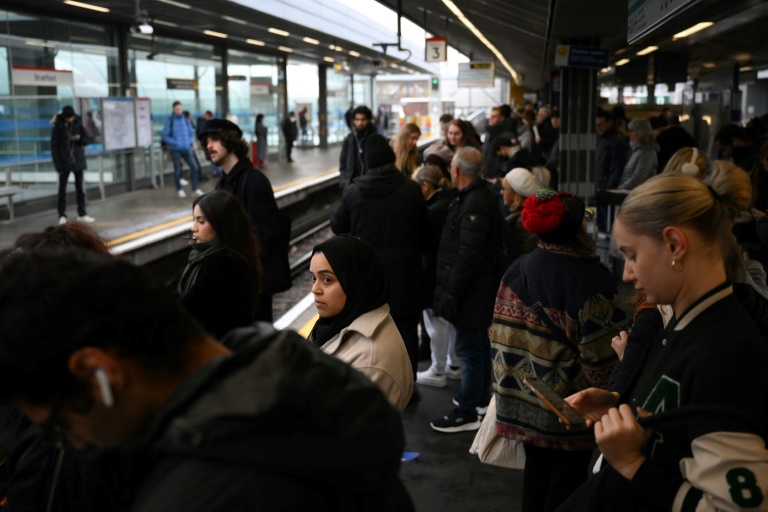
British inflation slowed more than expected in November but remained near the highest level in more than 40 years, official data showed Wednesday, as a cost-of-living crisis sparks fresh UK strikes.

The consumer prices index eased to 10.7 percent last month, the Office for National Statistics (ONS) said in a statement, against expectations of a drop to 10.9 percent.

The ONS said motor fuel prices had risen at a slower pace than a year earlier.

October’s annual inflation rate had stood at 11.1 percent, the highest level since 1981, after energy prices and food bills soared across the world this year on supply constraints caused by Russia’s invasion of Ukraine and the lifting of pandemic lockdowns.

Wednesday’s data comes amid crippling UK industrial action by public and private sector workers demanding higher wages.

Railway staff were staging a two-day national strike due to end Wednesday, kicking off a month of walkouts involving professions from nurses to passport control and postal workers that spells Christmas misery for millions of Britons.

November’s inflation data was meanwhile published on the eve of an interest rate decision from the Bank of England, which is widely expected to deliver its ninth hike in a row as policymakers try to tackle rampant prices.

Economists expect the BoE will lift its key lending rate to 3.5 percent from 3.0 percent on Thursday, further squeezing Britons’ disposable incomes with rising loan costs.

Inflation is still running at more than five times the central bank’s official target level of two percent.

– ‘Historically high’ –

“Although still at historically high levels, annual inflation eased slightly in November,” noted ONS chief economist Grant Fitzner.

“Prices are still rising, but by less than this time last year, with the most notable example of this being motor fuels.”

Reacting to the data, finance minister Jeremy Hunt said “getting inflation down so people’s wages go further” was his “top priority”.

Prime Minister Rishi Sunak’s Conservative government insists that inflation-busting pay hikes would worsen inflation.

Nurses meanwhile are set to walk out for the first time in their union’s 106-year history on Thursday.

– Inflation peak? –

Britain remains on course for a long-lasting recession on fallout from the highest inflation in decades, despite this week’s news that the country’s economy grew in October.

The government and BoE have each said they believe Britain is already in a recession that the bank expects to last all next year.

While Wednesday’s data “doesn’t constitute a new trend, it is a move in the right direction and comes as inflation in the US, and the eurozone shows signs of cooling”, said Fawad Razaqzada, market analyst at City Index trading group.

The Federal Reserve and European Central Bank are both expected to announce less aggressive interest rate hikes in the next 24 hours compared with their recent monetary policy decisions.

“Inflation may be past the peak but given that prices for UK consumers have scaled a mountain, there is still a vertiginous descent to navigate before it’s back down to less dangerous levels,” said Susannah Streeter, senior investment and markets analyst at stockbroker Hargreaves Lansdown.

The ONS added Wednesday that the retail prices index — the inflation measure that includes mortgage interest payments and is used by trade unions and employers when negotiating wage increases — eased to 14 percent in November.
UK inflation slows, remains close to 11 percent

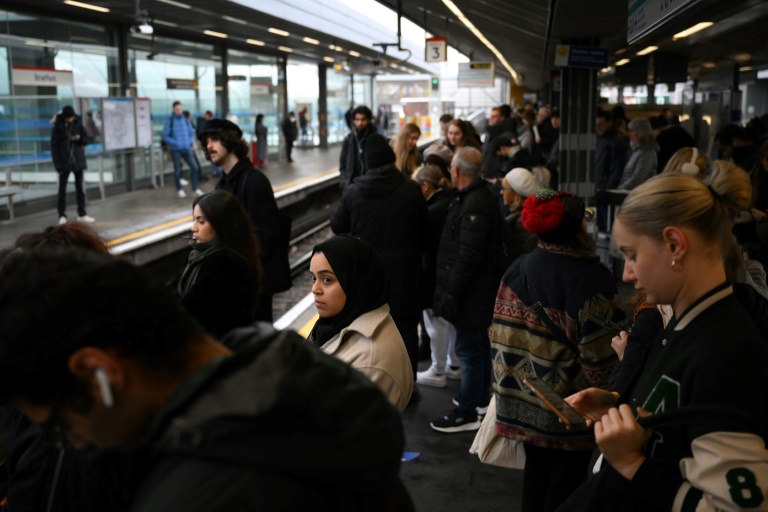
British inflation slowed more than expected in November but remained near the highest level in more than 40 years, official data showed Wednesday, as a cost-of-living crisis sparks fresh UK strikes.

The consumer prices index eased to 10.7 percent last month, the Office for National Statistics (ONS) said in a statement, against expectations of a drop to 10.9 percent.

The ONS said motor fuel prices had risen at a slower pace than a year earlier.

October’s annual inflation rate had stood at 11.1 percent, the highest level since 1981, after energy prices and food bills soared across the world this year on supply constraints caused by Russia’s invasion of Ukraine and the lifting of pandemic lockdowns.

Wednesday’s data comes amid crippling UK industrial action by public and private sector workers demanding higher wages.

Railway staff were staging a two-day national strike due to end Wednesday, kicking off a month of walkouts involving professions from nurses to passport control and postal workers that spells Christmas misery for millions of Britons.

November’s inflation data was meanwhile published on the eve of an interest rate decision from the Bank of England, which is widely expected to deliver its ninth hike in a row as policymakers try to tackle rampant prices.

Economists expect the BoE will lift its key lending rate to 3.5 percent from 3.0 percent on Thursday, further squeezing Britons’ disposable incomes with rising loan costs.

Inflation is still running at more than five times the central bank’s official target level of two percent.

– ‘Historically high’ –

“Although still at historically high levels, annual inflation eased slightly in November,” noted ONS chief economist Grant Fitzner.

“Prices are still rising, but by less than this time last year, with the most notable example of this being motor fuels.”

Reacting to the data, finance minister Jeremy Hunt said “getting inflation down so people’s wages go further” was his “top priority”.

Prime Minister Rishi Sunak’s Conservative government insists that inflation-busting pay hikes would worsen inflation.

Nurses meanwhile are set to walk out for the first time in their union’s 106-year history on Thursday.

– Inflation peak? –

Britain remains on course for a long-lasting recession on fallout from the highest inflation in decades, despite this week’s news that the country’s economy grew in October.

The government and BoE have each said they believe Britain is already in a recession that the bank expects to last all next year.

While Wednesday’s data “doesn’t constitute a new trend, it is a move in the right direction and comes as inflation in the US, and the eurozone shows signs of cooling”, said Fawad Razaqzada, market analyst at City Index trading group.

The Federal Reserve and European Central Bank are both expected to announce less aggressive interest rate hikes in the next 24 hours compared with their recent monetary policy decisions.

“Inflation may be past the peak but given that prices for UK consumers have scaled a mountain, there is still a vertiginous descent to navigate before it’s back down to less dangerous levels,” said Susannah Streeter, senior investment and markets analyst at stockbroker Hargreaves Lansdown.

The ONS added Wednesday that the retail prices index — the inflation measure that includes mortgage interest payments and is used by trade unions and employers when negotiating wage increases — eased to 14 percent in November.
Once a star, Ghana battles economic crisis

The packing machine at Nakobs’ Pac factory in the outskirts of Ghana’s capital Accra is running at full pace, churning out sachets of treated drinking water.

But all is not well at Nakobs’. Like other small businesses in Ghana these days, owner Daniel Tekyi is struggling.

With inflation at over 50 percent, the currency worth half what it was last year, fuel prices doubling and debt payments gobbling up more than half the government’s revenues, Ghana is battling its worst economic crisis in decades.

Ghana signed a $3 billion bailout deal with the International Monetary Fund on Tuesday in a bid to shore up public finances, but economic stability is still a way off.

“It would be better for us to close the factory,” said Tekyi. “We really don’t know when this crisis is going to end.”

Once applauded as a rock of economic stability and security in a region plagued by coups and jihadist wars, Ghana has steadily lost investor confidence.   

Like much of the continent, Ghana slowly emerged from the pandemic only to face the fallout of the war in Ukraine and the surge in fuel and food costs.

Facing a crunch in payments, President Nana Akufo-Addo this year reversed course from his “Ghana Beyond Aid” concept and entered talks with the IMF for a bailout.

Already, the government has announced a 2.5 percent increase in VAT and a freeze on public worker hires to help cut costs and hike revenues. A debt restructuring is underway.

With an IMF team in Accra, Finance Minister Kenneth Ofori-Atta promised the credit deal, debt swap and a reform package would restore investor confidence and steer the economy out of “grave times”.

But many Ghanaians are bracing for potential austerity before any stability returns, with the impact of new taxes and spending cuts.

How Ghana’s government emerges may also have political fallout. Elections are two years away with Akufo-Addo stepping aside and ruling New Patriotic Party or NPP allies already jostling for position for primaries in early 2023.

The government has to find ways to mitigate any impact from reforms, especially on public sector employment and high taxes, economist Daniel Anim Amarteye said. 

“If that is not done, it could be politically fatal,” he said.

– Dimmed star –

Ghana’s economic story was brighter a few years ago. Before the pandemic, the West African state was a star with fast growth rates, growing oil production and strong investor interest.

But its high level of debt was a looming problem. 

Since the start of the year, its cedi currency has lost half its value, which has helped increase its debt burden by $6 billion, with warnings Ghana risked a default.

A major part of the IMF agreement is bringing the country back to debt sustainability through a restructuring, calling on investors to exchange bonds for new ones maturing later. 

IMF approval of the $3 billion loan will depend on its success. Officials say they have the means to help offset any impact on local banks or pension funds — major holders of domestic bonds.

But Ghana’s major labour movement, the Trades Union Congress, is already rumbling over the deal’s potential impact on workers’ pensions. 

Opposition National Democratic Congress has been quick to blame Akufo-Addo’s government for ballooning debt, even trying and failing to censure the finance minister.  

“No matter how the IMF programme turns out and how they can turn the corner, the records will show that they took us to 40 percent inflation, the records will show the market was closed to us, the markets will show the cedi depreciated 54 percent,” said NDC lawmaker Isaac Adongo.

Akufo-Addo’s government spent heavily on social programmes such as free high schools. But his ruling New Patriotic Party says the crisis is all about external shocks — Covid and Russia’s war in Ukraine.

“Assuming Covid didn’t happen, what would our story be?” NPP communications director Richard Ahiagbah told AFP.

– Daily struggle –

Testifying before parliament last month, Ofori-Atta apologised to Ghanaians for their pain, but officials dismissed NDC charges of mismanagement.

But political calculations are not a luxury Patience Tesonkeh can afford. 

Stung by the soaring price of cooking gas, the single mother switched to cheaper charcoal to cook. Her usual weekly shopping budget no longer stretches to all her family’s needs.

“I withdrew 300 cedis ($20) thinking I would get everything I needed but I couldn’t,” she said on a recent trip to buy rice, fish and yams at a market in her Accra neighbourhood.

Unionised traders and shopkeepers in the capital also closed their businesses last month in a three-day protest over rising living costs.

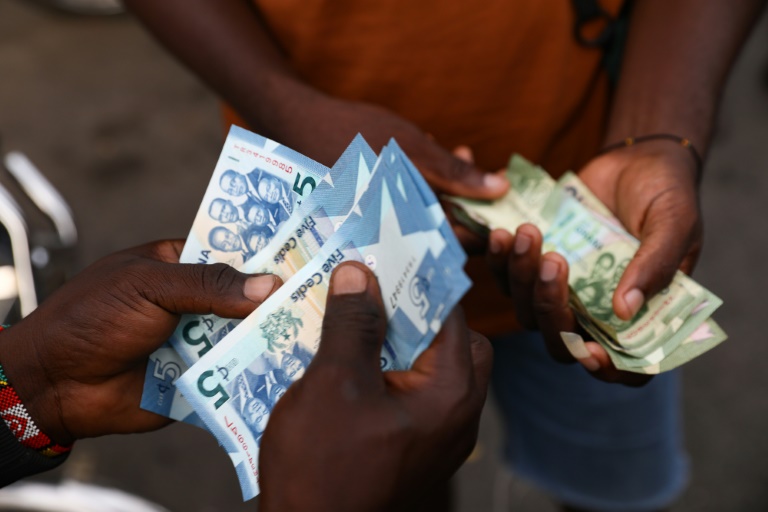
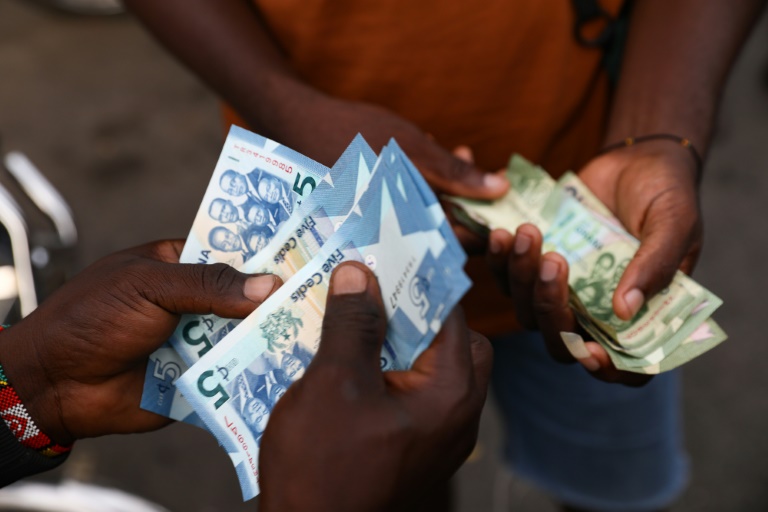
For factory owner Tekyi the numbers just don’t add up. Production and transport now total 5.8 cedis per water bag. But he can only sell them for five. 

“We planned closing our factory because we are not making any profit,” he said.

“But we had a second thought that if we close and we lay off our workers, how can they also survive? So for now, we are producing and making a loss.”

Once a star, Ghana battles economic crisis

The packing machine at Nakobs’ Pac factory in the outskirts of Ghana’s capital Accra is running at full pace, churning out sachets of treated drinking water.

But all is not well at Nakobs’. Like other small businesses in Ghana these days, owner Daniel Tekyi is struggling.

With inflation at over 50 percent, the currency worth half what it was last year, fuel prices doubling and debt payments gobbling up more than half the government’s revenues, Ghana is battling its worst economic crisis in decades.

Ghana signed a $3 billion bailout deal with the International Monetary Fund on Tuesday in a bid to shore up public finances, but economic stability is still a way off.

“It would be better for us to close the factory,” said Tekyi. “We really don’t know when this crisis is going to end.”

Once applauded as a rock of economic stability and security in a region plagued by coups and jihadist wars, Ghana has steadily lost investor confidence.   

Like much of the continent, Ghana slowly emerged from the pandemic only to face the fallout of the war in Ukraine and the surge in fuel and food costs.

Facing a crunch in payments, President Nana Akufo-Addo this year reversed course from his “Ghana Beyond Aid” concept and entered talks with the IMF for a bailout.

Already, the government has announced a 2.5 percent increase in VAT and a freeze on public worker hires to help cut costs and hike revenues. A debt restructuring is underway.

With an IMF team in Accra, Finance Minister Kenneth Ofori-Atta promised the credit deal, debt swap and a reform package would restore investor confidence and steer the economy out of “grave times”.

But many Ghanaians are bracing for potential austerity before any stability returns, with the impact of new taxes and spending cuts.

How Ghana’s government emerges may also have political fallout. Elections are two years away with Akufo-Addo stepping aside and ruling New Patriotic Party or NPP allies already jostling for position for primaries in early 2023.

The government has to find ways to mitigate any impact from reforms, especially on public sector employment and high taxes, economist Daniel Anim Amarteye said. 

“If that is not done, it could be politically fatal,” he said.

– Dimmed star –

Ghana’s economic story was brighter a few years ago. Before the pandemic, the West African state was a star with fast growth rates, growing oil production and strong investor interest.

But its high level of debt was a looming problem. 

Since the start of the year, its cedi currency has lost half its value, which has helped increase its debt burden by $6 billion, with warnings Ghana risked a default.

A major part of the IMF agreement is bringing the country back to debt sustainability through a restructuring, calling on investors to exchange bonds for new ones maturing later. 

IMF approval of the $3 billion loan will depend on its success. Officials say they have the means to help offset any impact on local banks or pension funds — major holders of domestic bonds.

But Ghana’s major labour movement, the Trades Union Congress, is already rumbling over the deal’s potential impact on workers’ pensions. 

Opposition National Democratic Congress has been quick to blame Akufo-Addo’s government for ballooning debt, even trying and failing to censure the finance minister.  

“No matter how the IMF programme turns out and how they can turn the corner, the records will show that they took us to 40 percent inflation, the records will show the market was closed to us, the markets will show the cedi depreciated 54 percent,” said NDC lawmaker Isaac Adongo.

Akufo-Addo’s government spent heavily on social programmes such as free high schools. But his ruling New Patriotic Party says the crisis is all about external shocks — Covid and Russia’s war in Ukraine.

“Assuming Covid didn’t happen, what would our story be?” NPP communications director Richard Ahiagbah told AFP.

– Daily struggle –

Testifying before parliament last month, Ofori-Atta apologised to Ghanaians for their pain, but officials dismissed NDC charges of mismanagement.

But political calculations are not a luxury Patience Tesonkeh can afford. 

Stung by the soaring price of cooking gas, the single mother switched to cheaper charcoal to cook. Her usual weekly shopping budget no longer stretches to all her family’s needs.

“I withdrew 300 cedis ($20) thinking I would get everything I needed but I couldn’t,” she said on a recent trip to buy rice, fish and yams at a market in her Accra neighbourhood.

Unionised traders and shopkeepers in the capital also closed their businesses last month in a three-day protest over rising living costs.

For factory owner Tekyi the numbers just don’t add up. Production and transport now total 5.8 cedis per water bag. But he can only sell them for five. 

“We planned closing our factory because we are not making any profit,” he said.

“But we had a second thought that if we close and we lay off our workers, how can they also survive? So for now, we are producing and making a loss.”

Fiji PM vows to respect result, as votes counted

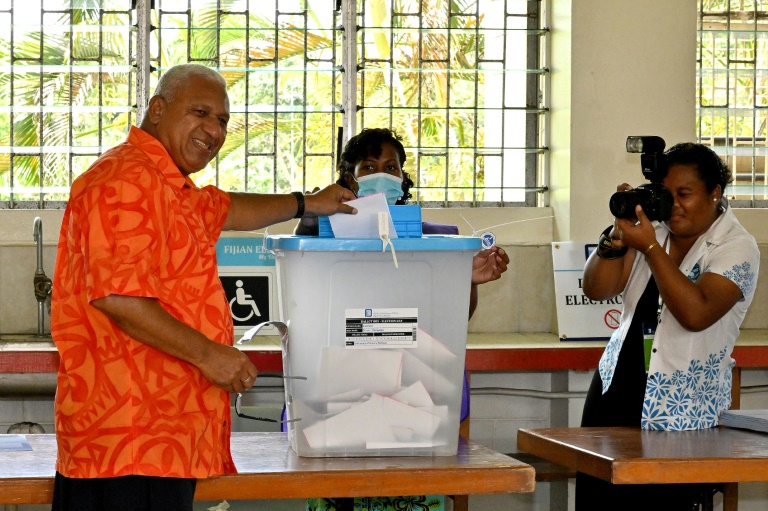
Fijian Prime Minister Frank Bainimarama on Wednesday vowed to respect an election that could end his 16-year grip on power, as his rival ex-coup leader took an early lead with a small fraction of the vote counted.

Bainimarama, 68, seized control of Fiji in a 2006 putsch, but legitimised his grip on power with election wins in 2014 and 2018. 

Standing in the way of Bainimarama’s third elected term is his chief political rival, Sitiveni Rabuka, a 74-year-old former military commander nicknamed “Rambo” after leading two coups in 1987. 

With just 70 of the more than 2,000 voting stations reporting, Rabuka’s People’s Alliance party had registered 4,450 votes, while Bainimarama’s Fiji First party had 2,760 votes.

Fiji now faces a nervous wait for a winner to be declared — ballots must be tallied from remote islands and highland villages.

The final count is not expected for at least two days, although provisional returns will come more quickly.

The election is being seen as a test of the nation’s fledgling democracy. 

Asked whether he would accept the outcome, win or lose, Bainimarama said “of course” as he cast his ballot in the capital Suva with his granddaughter in tow.

He then lashed out at reporters, suggesting they ask “better questions.” 

Rabuka said he would readily concede defeat if beaten, and Bainimarama should do the same. 

“I think he will not. So I’m hoping for a flood of votes in our favour, so that it makes any attempt at that course futile,” he said. 

“We cannot live forever, we cannot rule forever, so successions from an opposition party should be accepted.” 

In a contested vote the military could be key. The country’s top commander has said the armed forces would respect the election result.

Blake Johnson from the Australian Strategic Policy Institute said any arguments about the result would likely be dealt with through the courts, rather than another coup.

“Should Rabuka win, this will be Fiji’s first test at completing a peaceful handover of power in nearly two decades,” he told AFP on Wednesday.  

“If Bainimarama refuses to accept defeat, we could see several legal challenges tie up the parliamentary and judicial systems for some time.”

Rabuka — who is also a former Fijian international rugby player and Commonwealth Games hammer thrower — has signalled that Fiji could loosen its ties with China if he is elected. 

Fiji has grown closer to Beijing under Bainimarama, who used a “look north” policy to stabilise the economy after Australia and New Zealand hit the country with heavy trade sanctions in retaliation for his 2006 coup. 

– Blackout –

The buildup to the vote has been marked by a strict media blackout, preventing local journalists from covering any aspect of the election for 48 hours before voting day and until polls close. 

Suva’s distinctive open-air busses blasted reggae and dance music as they carried voters to polling centres around the city. 

Office worker Dee Atama said that there was a need for change in Fiji, and that more should be done for younger voters. 

“Something for the younger ones, because they will be the ones leading the future,” she told AFP from a voting booth at a Suva school.

Salesman Niraj Prasad, 50, said not everyone in Fiji favoured a change of government. 

“Some people say it’s time for a change,” he told AFP from a voting centre on the outskirts of Suva. 

“Probably this is a mixed feeling… it depends on what the government is doing.”

There are no reliable polls that give any indication about the outcome, but it is expected to be close. 

Fiji has a population of some 900,000 and is heavily reliant on its tourism industry — which was badly damaged by the Covid-19 pandemic.

China says tracking Covid cases 'impossible' as infections soar

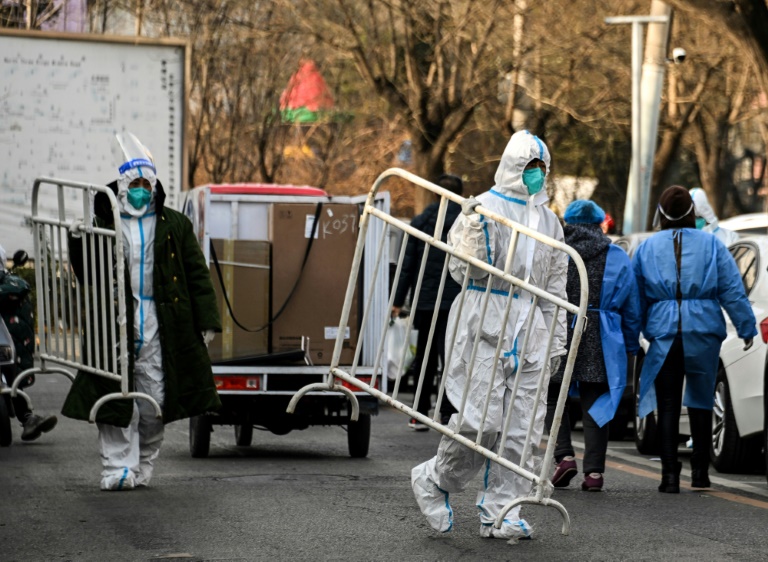
China’s top health body said Wednesday the true scale of coronavirus infections in the country is now “impossible” to track, with officials warning cases are rising rapidly in Beijing after the government abruptly abandoned its zero-Covid policy.

Beijing’s decision to scrap mass testing and quarantines after nearly three years of attempting to stamp out the virus has led to a corresponding drop in officially reported infections, which hit an all-time high only last month.

But those numbers no longer reflected reality because testing is no longer required for much of the country, China’s National Health Commission (NHC) acknowledged on Wednesday.

“Many asymptomatic people are no longer participating in nucleic acid testing, so it is impossible to accurately grasp the actual number of asymptomatic infected people,” the NHC said in a statement Wednesday.

That came after Vice Premier Sun Chunlan said new infections in the capital were “rapidly growing”.

Chinese leaders are determined to press ahead even though the country is facing a surge in cases that experts fear it is ill-equipped to manage. Millions of vulnerable elderly are still not fully vaccinated and underfunded hospitals lack the resources to deal with an influx of infected patients.

Authorities said on Wednesday they would begin allowing some vulnerable groups, including those 60 and older, to receive a second booster shot six months after their first.

A line of about 50 people stretched out the door of a fever clinic in Beijing on Wednesday, with multiple residents telling AFP they were infected with Covid.

“Basically, if we are lining up here, we are all infected. We would not come here if we weren’t,” one person waiting in line said. 

“I’m here with a senior member of my family, he’s had a fever for nearly 10 days in a row now, so we are coming to do a checkup on him.”

– Beijing struggles –

Restaurants, shops and parks are now allowed to reopen but residents are not finding the path to living with the virus straightforward.

Many with symptoms have opted to self-medicate at home, while others are staying in to protect themselves from getting infected.

Businesses are also struggling as Covid-19 rips through the population and hits their staffing.

As a result, the capital’s streets are largely empty. 

“Basically I follow the requirements of the Beijing government, that the elderly should stay home and go out as little as possible,” said one resident in his 80s who declined to give his name.

He said he wasn’t too worried because he thought Omicron was mild but told AFP he thought “there shouldn’t be complete relaxation and freedom”.

“If we are dead, how can we be free, right?” he said.

Residents have complained of sold-out cold medicines and long lines at pharmacies, while Chinese search giant Baidu said searches for fever-reducing Ibuprofen had risen 430 percent over the past week.

Soaring demand for rapid antigen tests and medications has created a black market with astronomical prices, while buyers resort to sourcing the goods from “dealers” whose contacts are being passed around WeChat groups.

Authorities are cracking down, with market regulators hitting one business in Beijing with a 300,000 yuan ($43,000) fine for selling overpriced test kits, the local Beijing News reported Tuesday.

In a sea change for a country where infection with the virus was once taboo and recovered patients faced discrimination, people are now taking to social media to show off their test results and give detailed descriptions of their experiences while sick.

“When my body temperature went past 37.2 degrees, I began to add some sugar and salt to my lemon water,” Beijing-based Xiaohongshu social site user “Nina” wrote in an account intended as advice for those not yet infected.

Wang, another Beijing resident in his 50s, told AFP: “I think everyone has got used to it. They have moved on.”

“I don’t think people are that fragile.”

Zara owner's profits rise despite inflation

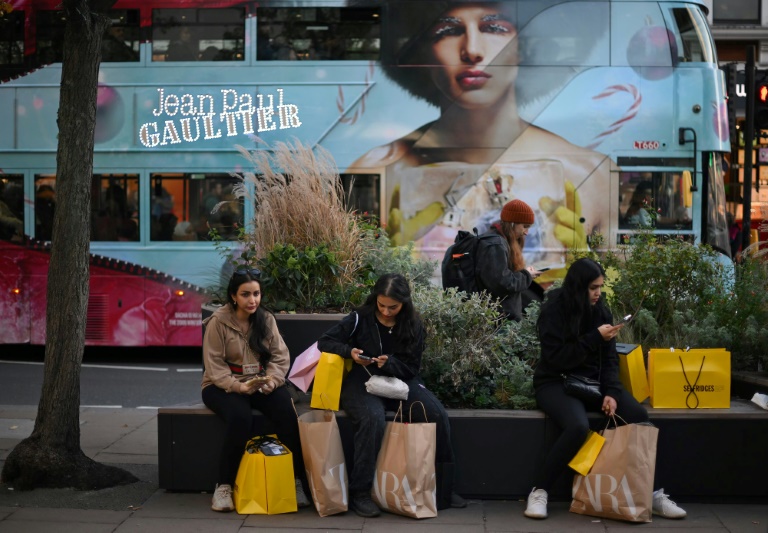
Zara owner Inditex reported Wednesday a jump in profits in the third quarter of its fiscal year despite soaring inflation and the war in Ukraine impacting business costs.

The group, which also owns Massimo Dutti, said it pulled in a net profit of 1.3 billion euros ($1.4 billion), between August 1 and October 31, compared to 1.23 billion euros in the same period last year.

Analysts surveyed by financial information service Factset had expected a net profit of 1.3 billion euros.

Between February 1 and October 31, the ready-to-wear giant said net income rose by 3.1 billion euros, up 24 percent from the same period in 2021.

Sales were also up 19 percent to reach 23 billion euros, thanks to a strong showing in stores and online.

The results come despite “the current challenging context”, Inditex CEO Oscar Garcia Maceiras said, referring to red-hot inflation and the conflict in Ukraine.

The company has seen manufacturing and transport costs rise, along with other businesses impacted by supply chain bottlenecks after Covid lockdowns and Russia’s invasion of Ukraine.

It said operating costs rose by 17 percent between August 1 and October 31 compared to the same period in 2021.

Inditex decided in March to shut 502 stores in Russia and stop online sales in the country, which had been one of its biggest markets after Spain, accounting for 10 percent of company sales.

The retailer in October said the Russian stores would be bought by United Arab Emirates-based Daher group, Inditex’s franchisee in the Middle East.

Inditex said global online and in-store sales rose by 12 percent at current exchange rates between November 1 and December 8, compared to the same period in 2021.

The young Iranians facing death penalty over protests

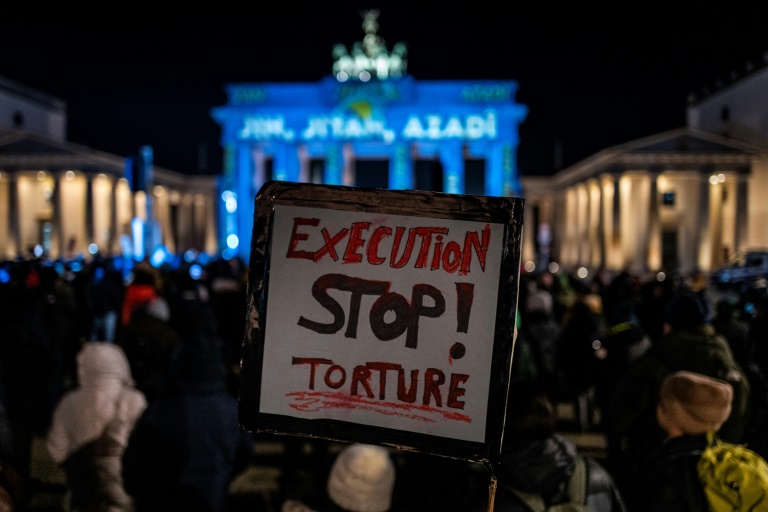
A doctor, rap artists and a footballer are among around two dozen Iranians who risk being hanged as Tehran uses capital punishment as an intimidation tactic to quell protests, rights groups say.

The executions in the past week of Mohsen Shekari and Majidreza Rahnavard, both 23 and the first people put to death over the protests, sparked an outcry, especially as Rahnavard was hanged from a crane in public rather than in prison.

But campaigners warn that more executions will inevitably follow without tougher international action, with a dozen more people already sentenced to death over the protests and a similar number charged with crimes that could see them hanged.

“Unless the political cost of the executions is increased significantly, we will be facing mass executions,” said Mahmood Amiry-Moghaddam, director of the Norway-based Iran Human Rights group.

He accused Iran’s leaders of using executions to “spread fear among people and save the regime from the nationwide protests”.

The largely peaceful protests sparked by the death in September of Mahsa Amini, who had been arrested for allegedly violating Iran’s strict dress code for women, are posing the biggest challenge to the Islamic republic since the 1979 revolution.

There have been no reports of a slackening in protest activity in recent days, including after the executions, but the movement has been marked by phases of more and less intense demonstrations.

Authorities describe those facing death sentences as “rioters” who are being judged in full accordance with the country’s sharia law.

But activists express alarm over the use of vaguely worded sharia legal charges against protesters, such as “enmity against God,” “corruption on earth” and “armed rebellion”, all of which are capital crimes in Iran.

– ‘Unfair trial, torture’ –

Amnesty International currently confirms 11 cases of death sentences issued against individuals over the protests, and another nine cases where individuals have been charged with crimes that could see them given the death penalty.

One young protester, Sahand Nourmohammad-Zadeh, was sentenced to death over charges — which he denied — that he did no more than tear down highway railings and set fire to rubbish bins and tyres, Amnesty said.

The group said it was concerned another young man, Mahan Sadrat, 22, could be executed “imminently” after being sentenced to death in a “grossly unfair trial” over accusations of using a knife to attack an individual.

Mohammad Ghobadlou, aged 22, was sentenced to death on charges of running over police officials with a car, killing one and injuring several others, Amnesty said, adding it had “serious concerns” he was subjected to torture and other abuse in jail.

Saman Seydi, a young Kurdish rapper, was sentenced to death on charges of firing a pistol three times into the air during protests, adding it had received information he had also been subjected to torture to extract forced confessions.

Before his arrest, Seydi had posted material on Instagram in support of the protests, while his rap songs had also been critical of the authorities.

Hamid Ghare-Hasanlou, a doctor, and his wife Farzaneh Ghare-Hasanlou were on their way to the funeral of a killed protester when they were “caught up in the chaos” of a fatal assault on a member of the Basij militia, Amnesty said.

Hamid Ghare-Hasanlou was sentenced to death and his wife to 25 years in prison, with the court relying on incriminating statements from his wife which Amnesty said were coerced and later retracted by her in court.

Her husband was tortured in custody and hospitalised with broken ribs, it said.

Those who face the death penalty after being charged with capital crimes include Toomaj Salehi, 32, a prominent rapper who was charged “solely in connection with critical music and social media posts,” Amnesty said, adding that he had been tortured in detention.

The professional footballer Amir Nasr-Azadani, 26, is in a similar position after being charged over the deaths of three security officials in November in the city of Isfahan, it said.

The world union of professional footballers FIFPRO said it was “shocked and sickened” by the reports he faces death.

– Executed ‘at any moment’ –

Campaigners are seeking to highlight all individuals facing the death penalty in the hope that increased scrutiny on specific cases can help spare lives.

But they warn the executions are often sudden.

Rahnavard was hanged just 23 days after his arrest and shortly after a last meeting with his mother, who was given no inkling her son was about to be put to death.

Activists were also unaware of Shekari’s case until his execution was announced by state media.

Amnesty said Iranian authorities are issuing, upholding and carrying out death sentences in a “speedy manner” and there is a “serious risk” that people whose death sentences have not been made public could be executed “at any moment.”

“The executions of two people connected to the protests in Iran are appalling, and we are extremely worried for the lives of others who have been similarly sentenced to death,” the office of the UN high commissioner for human rights told AFP.

It added that Iran had “ignored” its pleas not to carry out the executions.

UK inflation slows but remains elevated

British inflation slowed in November but sat near the highest level in more than 40 years, data showed Wednesday, as a cost-of-living crisis sparks fresh strikes.

The Consumer Prices Index eased somewhat to 10.7 percent last month, the Office for National Statistics (ONS) said in a statement, against expectations of 10.9 percent.

That marked a modest improvement from October’s 11.1 percent, the highest level since 1981, but pressures remain high due to soaring domestic energy and food bills after Russia’s war on Ukraine.

The news comes amid crippling industrial action by public and private sector workers demanding higher wages, which have been dramatically eroded by rising living costs this year.

Railway staff are currently staging their second day of a two-day national strike, kicking off a month of walkouts involving professions from nurses to passport control and postal workers that spells Christmas misery for millions.

November’s inflation data was also published on the eve of an interest rate decision from the Bank of England, which is widely expected to deliver the ninth hike in a row as policymakers try to tackle rampant prices.

– Historically high –

“Although still at historically high levels, annual inflation eased slightly in November,” noted ONS chief economist Grant Fitzner.

“Prices are still rising, but by less than this time last year, with the most notable example of this being motor fuels.”

British finance minister Jeremy Hunt blames Russian President Vladimir Putin’s war in Ukraine for fuelling sky-high energy prices, as well as the economic reopening from Covid restrictions.

“The aftershocks of Covid-19 and Putin’s weaponisation of gas mean high inflation is plaguing economies across Europe, and I know families and businesses are struggling here in the UK,” Hunt said.

“Getting inflation down so people’s wages go further is my top priority.”

“I know it is tough for many right now, but it is vital that we take the tough decisions needed to tackle inflation — the number one enemy that makes everyone poorer.”

Prime Minister Rishi Sunak’s Conservative government insists that inflation-busting pay hikes would further worsen the situation.

Nurses are set to walk out for the first time in their union’s 106-year history on Thursday.

Economists meanwhile expect the BoE will lift its key lending rate from 3.0 percent to 3.5 percent on Thursday, further squeezing Britons’ disposable incomes with rising loan costs.

Inflation is still running at more than five times the BoE’s official target level of just two percent.

– Inflation past peak? –

Britain remains on course for a long-lasting recession on fallout from the highest inflation in decades, despite this week’s news of economic growth in October.

The government and BoE have each said they believe Britain is already in a recession that the bank expects to last all next year.

Wednesday’s data nevertheless stoked hope that inflation may have peaked in October, but analysts warn more hefty interest rate hikes could further darken the outlook.

“Inflation may be past the peak but given that prices for UK consumers have scaled a mountain, there is still a vertiginous descent to navigate before it’s back down to less dangerous levels,” said Susannah Streeter, senior investment and markets analyst at stockbroker Hargreaves Lansdown.

Yet the ONS was quick to dampen talk of a peak.

“Some may be calling this a peak. It is, I think, too early. We’ve only seen one fall from a 40-year high, so let’s wait a few months,” Fitzner told BBC radio.

UK inflation slows but remains elevated

British inflation slowed in November but sat near the highest level in more than 40 years, data showed Wednesday, as a cost-of-living crisis sparks fresh strikes.

The Consumer Prices Index eased somewhat to 10.7 percent last month, the Office for National Statistics (ONS) said in a statement, against expectations of 10.9 percent.

That marked a modest improvement from October’s 11.1 percent, the highest level since 1981, but pressures remain high due to soaring domestic energy and food bills after Russia’s war on Ukraine.

The news comes amid crippling industrial action by public and private sector workers demanding higher wages, which have been dramatically eroded by rising living costs this year.

Railway staff are currently staging their second day of a two-day national strike, kicking off a month of walkouts involving professions from nurses to passport control and postal workers that spells Christmas misery for millions.

November’s inflation data was also published on the eve of an interest rate decision from the Bank of England, which is widely expected to deliver the ninth hike in a row as policymakers try to tackle rampant prices.

– Historically high –

“Although still at historically high levels, annual inflation eased slightly in November,” noted ONS chief economist Grant Fitzner.

“Prices are still rising, but by less than this time last year, with the most notable example of this being motor fuels.”

British finance minister Jeremy Hunt blames Russian President Vladimir Putin’s war in Ukraine for fuelling sky-high energy prices, as well as the economic reopening from Covid restrictions.

“The aftershocks of Covid-19 and Putin’s weaponisation of gas mean high inflation is plaguing economies across Europe, and I know families and businesses are struggling here in the UK,” Hunt said.

“Getting inflation down so people’s wages go further is my top priority.”

“I know it is tough for many right now, but it is vital that we take the tough decisions needed to tackle inflation — the number one enemy that makes everyone poorer.”

Prime Minister Rishi Sunak’s Conservative government insists that inflation-busting pay hikes would further worsen the situation.

Nurses are set to walk out for the first time in their union’s 106-year history on Thursday.

Economists meanwhile expect the BoE will lift its key lending rate from 3.0 percent to 3.5 percent on Thursday, further squeezing Britons’ disposable incomes with rising loan costs.

Inflation is still running at more than five times the BoE’s official target level of just two percent.

– Inflation past peak? –

Britain remains on course for a long-lasting recession on fallout from the highest inflation in decades, despite this week’s news of economic growth in October.

The government and BoE have each said they believe Britain is already in a recession that the bank expects to last all next year.

Wednesday’s data nevertheless stoked hope that inflation may have peaked in October, but analysts warn more hefty interest rate hikes could further darken the outlook.

“Inflation may be past the peak but given that prices for UK consumers have scaled a mountain, there is still a vertiginous descent to navigate before it’s back down to less dangerous levels,” said Susannah Streeter, senior investment and markets analyst at stockbroker Hargreaves Lansdown.

Yet the ONS was quick to dampen talk of a peak.

“Some may be calling this a peak. It is, I think, too early. We’ve only seen one fall from a 40-year high, so let’s wait a few months,” Fitzner told BBC radio.

Close Bitnami banner
Bitnami