World

Pope says spend less on Christmas, give to Ukraine

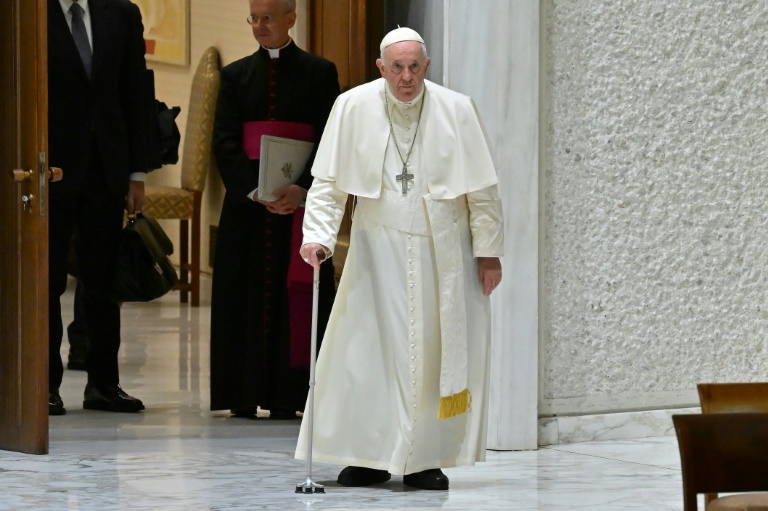
Pope Francis on Wednesday called on people to spend less on Christmas presents and celebrations, and donate the money saved to those in war-ravaged Ukraine.

“It is nice to celebrate Christmas. But let’s lower the level of Christmas spending a bit,” Francis said in his weekly general audience at the Vatican.

“Let’s have a more humble Christmas, with more humble gifts. Let’s send what we save to the Ukrainian people, who need it,” he said.

Nearly 10 months into the war, hardship from the fighting has compounded as winter sets in and Russia pounds Ukraine’s energy infrastructure.

Missile strikes have been crippling — resulting in the periodic loss of electricity, heating, water and phone service across swathes of Ukraine.

The Ukrainians “are suffering so much. They are hungry, cold. So many people are dying because there are no doctors or nurses,” the pope said.

On Tuesday, Ukraine’s Western allies pledged an additional one billion euros ($1.1 billion) in emergency winter aid to help the country withstand Russia’s onslaught.

Ukraine downs swarm of attack drones over Kyiv

Ukrainian forces said Wednesday they had shot down an entire swarm of Iranian-made drones launched at the capital by Russian troops in their latest attack on Kyiv.

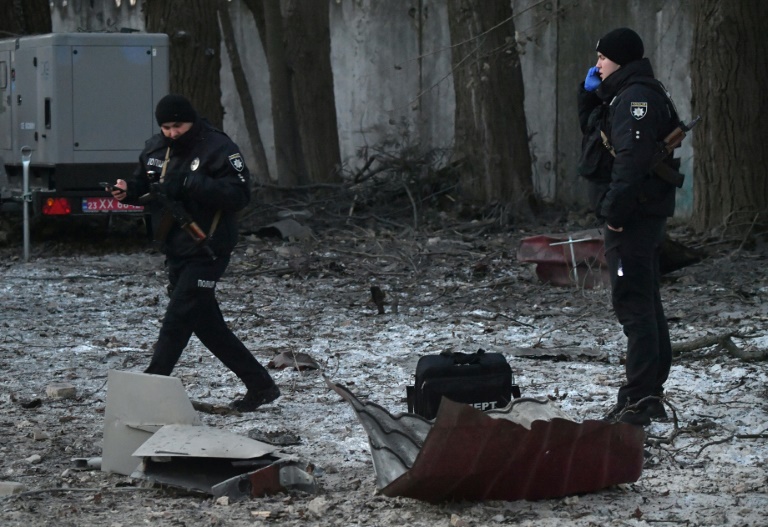
Explosions rang out over a central neighbourhood in the early hours of Wednesday, the mayor said, and AFP journalists saw law enforcement and emergency service workers inspecting metal fragments at a snow-covered impact site.

“The terrorists started this morning with 13 Shaheds,” Ukrainian President Volodymyr Zelensky said, referring to the Iran-made weapons.

“According to the preliminary information, all 13 were shot down by our Ukrainian air defence systems.”

He added that residents of the capital, which has now been subjected to nearly ten months of air raid sirens and frequent aerial attacks since Russia invaded the country in February, should stay alert to government warnings of incoming attacks.

Kyiv region officials praised the Ukrainian air defence and electronic warfare units for downing the latest wave of suicide drones.

US ambassador in Ukraine Bridget Brink said following the morning attacks that Kyiv could continue to rely on Washington’s backing.

“More support is on the way,” she wrote on Twitter.

– ‘Fight through winter’ –

Mayor Vitali Klitschko announced on social media at 6:41 am local time (0441 GMT) that “explosions” had been heard in the central district of Shevchenkivsky and that emergency services were responding.

“Debris from downed drones hit one administrative building and four more residential buildings suffered minor damage. No one was injured,” added Sergiy Popko, the head of the Kyiv regional military administration.

Since a series of key battlefield setbacks this summer and autumn, Russia has been pummelling critical infrastructure across Ukraine with missiles and drones, plunging millions into cold and darkness in winter.

Moscow last week also targeted Ukrainian energy infrastructure, piling pressure on the country’s power grid, whose operators have for weeks been forced to implement rolling blackouts.

Ukrainian Prime Minister Denys Shmygal said this week that between 40 and 50 percent of the country’s grid was out of action because of Russia’s strikes.

The latest round of attacks on Wednesday came one day after Zelensky issued urgent appeals to around 70 countries and international organisations at a Paris conference to help Ukraine withstand Russian attacks this winter.

In a video message from Kyiv, Zelensky said Tuesday that Ukraine needed assistance worth around 800 million euros in the short term for its battered energy sector.

He also said that his country needs spare parts for repairs, high-capacity generators, extra gas and increased electricity imports.

Foreign Minister Dmytro Kuleba called on Ukraine’s allies to provide his country with more weapons to help it “fight through the winter” and sustain Kyiv’s military advances.

Istanbul mayor's 'insult' trial resumes ahead of elections

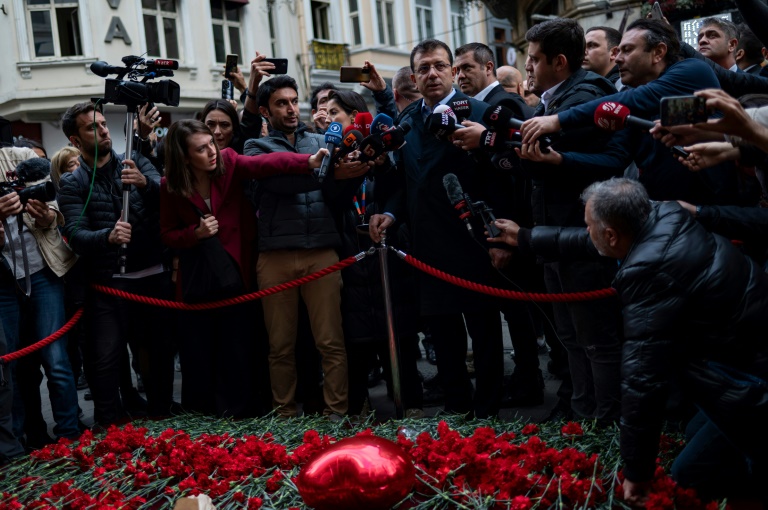
Istanbul’s popular opposition mayor faced new hearings Wednesday in a politically-charged trial that could bar him from seeking office months before next year’s general election.

Prosecutors want to sentence Ekrem Imamoglu to between 15 months and four years in jail over a remark he made after defeating President Recep Tayyip Erdogan’s ally in a hugely controversial 2019 mayoral vote.

People who are sentenced to less than four years are rarely put behind bars in Turkey.

But a conviction would disqualify Imamoglu — one of the brightest stars of Turkey’s main secular party — from politics for the duration of the sentence.

Imamoglu would continue serving as Istanbul’s mayor while his almost certain appeal wound its way through the courts.

The mayor’s team views the trial as Erdogan’s personal vendetta against one of his biggest rivals.

“Despite everything, I want to trust the judges, the prosecutors and the decision makers,” he said on the eve of Wednesday’s third hearing in the trial.

The case stems from an offhand remark Imamoglu made to reporters a few months after defeating Erdogan’s ally in a re-run election held after his first victory was annulled.

Officials reported discovering hundreds of thousands of “suspicious votes” after Erdogan refused to acknowledge Imamoglu’s initial win in a city that he himself ran before entering national politics two decades ago.

The decision backfired badly on Erdogan’s Islamic-rooted party.

Waves of protests and a groundswell of support from all political corners delivered Imamoglu an overwhelming victory in a re-run vote held that June.

Imamoglu let his frustration at the entire episode spill over a few months later by calling the people who annulled the first vote “idiots”.

Prosecutors have charged the mayor with the crime of “insulting” public officials.

Imamoglu has not personally attended the hearings and there has been no indication of how long the trial might last.

–  Divided opposition –

Imamoglu’s potential disqualification from politics comes with Turkey’s opposition parties still arguing about who should stand against Erdogan in next June’s presidential vote.

The Istanbul mayor is among a handful of opposition leaders that polls show could beat Erdogan in a head-to-head race.

Erdogan’s domination of Turkish politics has been shaken by an economic crisis made worse by his unconventional approach to interest rates.

But more recent polls show Erdogan’s ratings beginning to recover thanks to his widely-praised handling of Russia’s invasion of Ukraine.

This puts even more pressure on the opposition to put aside their personal rivalries in the election campaign.

Imamoglu’s CHP party is headed by Kemal Kilicdaroglu — a leftist former civil servant who generally performs poorly in opinion polls.

The CHP has been holding round-table talks with five smaller allies about a single candidate who would not split the anti-Erdogan vote.

Those talks have been mired by arguments over policy and general unease about fielding Kilicdaroglu instead of someone more likely to beat Erdogan.

Imamoglu’s legal troubles have effectively disqualified him from the race.

He told reporters this week that Kilicdaroglu was the only possible candidate from the CHP.

“But at the end of the day it is up to the round-table to make a decision about a single candidate,” Imamoglu said.

Hong Kong police wrong to ban Tiananmen vigil, court rules

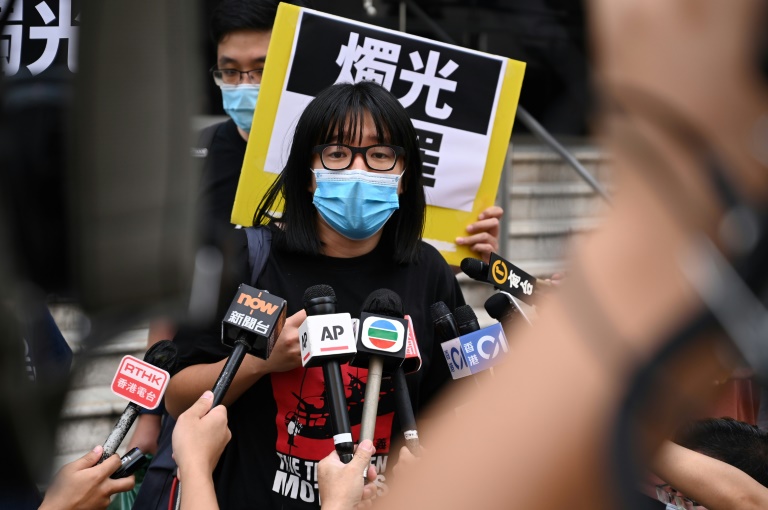
Hong Kong police’s decision to ban a Tiananmen vigil last year was unlawful, a court ruled on Wednesday, as it overturned the conviction of jailed democracy activist Chow Hang-tung.

The ruling is a rare rebuke of authorities in a city where the public commemoration of Beijing’s deadly 1989 crackdown has been virtually wiped out in recent years.

Chow, a 37-year-old lawyer and one of Hong Kong’s most prominent democracy activists, led a now-disbanded group that used to organise the city’s annual candlelight vigils to mourn those killed in Tiananmen Square when China sent troops to crush democracy protests.

Police have banned the last three vigils citing the coronavirus and security fears and the courts have already jailed multiple activists who defied those bans, including Chow.

Pro-democracy media tycoon Jimmy Lai is also among those behind bars for defying the various bans on the vigils, in his case for the 2020 event.

Chow was jailed for 15 months in January for writing articles urging the public to “light candles to seek justice for the dead”, which a lower court said amounted to inciting others to defy the ban.

But High Court judge Judianna Barnes on Wednesday said police wrongly banned the vigil in 2021 as they did not “proactively and seriously consider” ways to faciliate a public gathering, as was required by law.

As the government failed to prove the ban was legally valid, Chow’s articles would no longer constitute a crime and her conviction was scrapped on appeal.

Despite her court victory, Chow remains in custody as she faces further prosecutions including for national security charges which carry up to a decade in jail.

Hong Kong was formerly the only place in China where mass commemoration of Tiananmen was tolerated but Beijing has been remoulding the city in its authoritarian image after huge and sometimes violent democracy protests in 2019.

Chow was arrested on the morning of June 4, 2021 when her articles appeared on social media and in a newspaper calling on residents to mourn Tiananmen victims.

At the time, police warned that the vigil was banned due to the pandemic and that thousands of officers would be on standby to halt any “unlawful assemblies”.

But judge Barnes said on Wednesday that police failed to fulfil their duty under the law to take reasonable measures to facilitate public gatherings, such as imposing conditions on social distancing.

“Although the organisers expressed willingness to follow any reasonable demands by the police, the police only raised questions… and did not propose measures or conditions that could obviously be considered,” the judge said. 

AFP has contacted the Department of Justice and Hong Kong police for comment.

In mainland China, censors have long scrubbed what happened at Tiananmen Square, both online and in the real world.

Commemoration of the Tiananmen crackdown in Hong Kong has largely been driven underground.

Last year, multiple statues marking the historical event were removed from university campuses while an activist-run museum was shut down.

Japan to radically overhaul defence policy on China threats

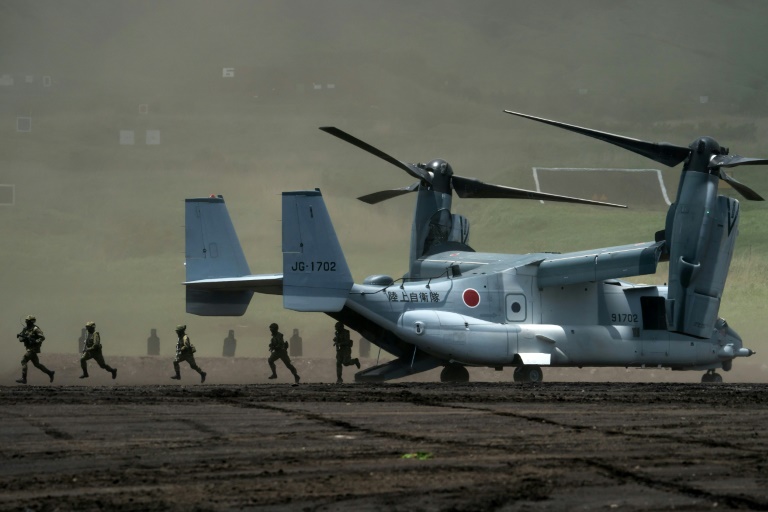
Japan is expected to announce its biggest defence overhaul in decades this week, hiking spending, reshaping its military command and acquiring new missiles to tackle the threat from China.

The policies, to be outlined in three defence and security documents as soon as Friday, will reshape the defence landscape in a country whose post-war constitution does not even officially recognise the military.

“Fundamentally strengthening our defence capabilities is the most urgent challenge in this severe security environment,” Prime Minister Fumio Kishida said at the weekend.

“We will urgently ramp up our defence capabilities over the next five years.”

The shift is the result of Tokyo’s fears about China’s growing military strength and regional posturing, as well as threats ranging from North Korean missile launches to Russia’s invasion of Ukraine.

Key among the new policies is a pledge to boost spending to two percent of GDP by 2027 to bring Japan in line with NATO members.

That marks a significant increase from historic spending of around one percent, and has sparked criticism over how it will be financed.

The money will fund projects including the acquisition of what Japan calls “counterstrike capacity” — the ability to hit launch sites that threaten the country, even preemptively.

Japan has previously shied away from acquiring that ability over disputes on whether it could violate the constitution’s limit on self-defence.

In a nod to the controversy, the policy documents will reportedly insist that Japan remains committed to a “self-defence-oriented security policy” and will “not become a military power”.

Part of that capacity will come from up to 500 US-made Tomahawk cruise missiles Japan is reportedly considering purchasing as a backstop while it develops longer-range missiles domestically.

– ‘Greatest strategic challenge’ –

Japan has also announced plans to develop a next-generation fighter jet with Italy and Britain, and is reportedly planning to build new ammunition depots and launch satellites to help guide potential counterstrikes.

The changes will also affect military organisation, with the Nikkei newspaper reporting that all three branches of the Self-Defense Forces will be brought under a single command within five years.

The SDF presence on Japan’s southernmost islands will be increased — including a tripling of units with ballistic missile interception capacity, according to local media.

The documents, including the key National Security Strategy, are expected to point to China for the shift in policy.

Japan’s ruling party reportedly wanted to term Beijing a “threat”, but under pressure from its coalition partner will settle for dubbing China a “serious concern” and Japan’s “greatest strategic challenge”.

That still represents a sea change from 2013, the document’s first iteration and the last time it was updated, when Japan said it sought a “mutually beneficial strategic partnership”, a phrase expected to disappear now.

Worries about China have deepened since major military drills carried out by Beijing around Taiwan in August, during which missiles fell in Japanese economic waters.

China on Wednesday said they are “firmly opposed” to the proposed documents. 

They “deviate from Japan’s commitment to bilateral relations and the consensus between China and Japan, and contains groundless smears against China,” said Wang Wenbin, China’s foreign ministry spokesman.

Japan is also expected to call Russia a challenge, compared to a 2013 pledge to seek cooperation and “enhance” ties.

Japan has joined Western allies in imposing sanctions on Moscow over Ukraine, sending already frosty relations into deep freeze.

The radical defence overhaul is likely to anger Beijing, which has regularly referenced Japan’s wartime belligerence in criticising Tokyo.

It may also cause waves domestically, though surveys show growing support for a stronger defence strategy.

“For Japan’s defence policymakers, these developments represent not a militarist resurgence but the latest step in a slow, gradual normalisation of defence and national security posture,” said James Brady, vice president of Teneo consultancy.

Asian markets extend US rally after inflation boost, eyes on Fed

Asian markets rose Wednesday and the dollar struggled to recover as investors welcomed softer-than-expected US inflation data that could allow the Federal Reserve to slow down its pace of interest rate hikes.

The reading provided some much-needed Christmas cheer on trading floors and came the day before the US central bank’s last policy decision of the year, which will be pored over for clues about its plans for 2023.

There is also some focus on China as it continues to roll back its strict zero-Covid strategy that has battered the world’s number two economy, though fears of a sharp surge in infections are causing some unease among dealers.

All three main indexes on Wall Street ended in positive territory Tuesday in reaction to data showing consumer prices rose 7.1 percent last month, less than forecast and the slowest pace since December 2021.

The reading followed an October slowdown and fuelled hopes that inflation has finally peaked, after several months of Fed rate hikes.

It “came with the caveat that it was ‘just one month of data’ but the November numbers add further weight to the interpretation that the long-awaited goods disinflation is showing up in the data,” said National Australia Bank’s Taylor Nugent.

Asian markets tracked Wall Street higher, though the gains were limited ahead of the Fed meeting with traders accepting that seven percent inflation was still very high.

Hong Kong, Tokyo, Sydney, Seoul, Singapore, Mumbai, Taipei, Manila and Bangkok all rose, while Shanghai was flat though Wellington and Jakarta dipped.

And the dollar moved only slightly after Tuesday’s retreat that came in reaction to the inflation report, with the yen, euro and pound the main beneficiaries.

London dipped as data showed UK inflation had also slowed in November, though it still remained elevated at 10.7 percent.

Paris and Frankfurt also fell.

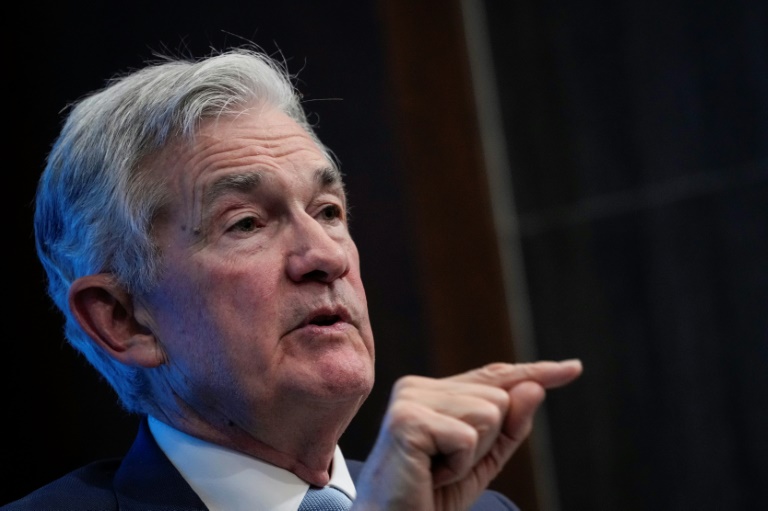
While the Fed is widely expected to increase borrowing costs by 50 basis points Wednesday — after four successive 75-point hikes — its post-meeting statement and boss Jerome Powell’s comments are the main focus for traders.

And while the slower inflation print was welcomed, there is still concern that the US economy will tip into recession next year as rates will remain elevated until prices are brought under control and within the bank’s target of around two percent.

Silvia Dall’Angelo, at Federated Hermes, said policymakers would slow the pace of hikes so they could “assess the impact on the real economy from the large cumulative tightening that has taken place since March.

“However, the Fed will stress that it is still far from mission accomplished with respect to its fight (against) high inflation, and more hikes will follow in coming months,” she added.

“Our expectation is that while inflation will decline over 2023, it will remain above target, which will prevent the Fed from easing next year.”

Oil prices edged down slightly after rallying on the back of the weaker dollar, though Brent held above $80.

– Key figures around 0820 GMT –

Tokyo – Nikkei 225: UP 0.7 percent at 28,156.21 (close)

Hong Kong – Hang Seng Index: UP 0.4 percent at 19,673.45 (close)

Shanghai – Composite: FLAT at 3,176.53 (close)

London – FTSE 100: DOWN 0.3 percent at 7,481.69

Euro/dollar: DOWN at $1.0630 from $1.0635 on Tuesday

Dollar/yen: DOWN at 135.53 yen from 135.59 yen

Pound/dollar: DOWN at $1.2361 from $1.2366

Euro/pound: UP at 86.00 pence from 85.96 pence

West Texas Intermediate: DOWN 0.1 percent at $75.33 per barrel

Brent North Sea crude: DOWN 0.1 percent at $80.60 per barrel

New York – Dow: UP 0.3 percent at 34,108.64 (close)

Fear persists 10 years after Delhi gang rape and murder

Ten years ago the brutal gang rape and murder of a young woman on a Delhi bus horrified the world and shone a spotlight on high rates of sexual violence in India.

Jyoti Singh, 23, and a male friend boarded a bus on the evening of December 16, 2012. 

Savagely attacked, tortured with an iron rod and dumped at the roadside, Singh survived long enough to identify her attackers, earning herself the nickname “Nirbhaya” — “fearless”. 

But the student died from her injuries in a Singapore hospital 13 days later.

It sparked huge protests that forced authorities to promise to do more to protect women. In 2020 four of the six attackers — one died in jail, another was a juvenile — were hanged.

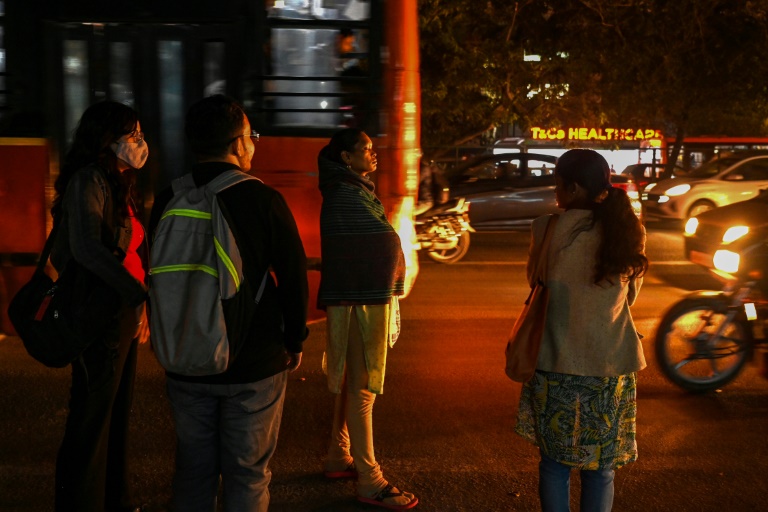
But a decade after the assault many women are still scared to travel at night in India’s capital, a sprawling metropolis of 20 million people.

AFP talks to the victim’s mother, the chief police investigator at the time, an activist, and a young woman commuter.

– The mother –

“Obviously the pain doesn’t go,” Singh’s mother Asha Devi told AFP.

“She was in so much pain during the 12 to 13 days that she was alive,” she said in her modest two-bedroom Delhi home.

“How can anybody do this to another human being? Because my daughter struggled to even breathe.”

Since the attack Devi has become a prominent campaigner on women’s safety, counselling survivors’ families, helping their legal battles and protesting for justice.

The 57-year-old, who with her husband has set up a fund for rape survivors, sits next to a glass cabinet full of mementos of their daughter and awards for their efforts.

“My daughter’s suffering gave me the strength to fight this battle,” she said.

The case led to tougher punishments for rapists, more CCTV cameras and street lights, and safety marshals on some buses. 

There are now also centres for rape survivors for legal and medical help.

But Devi said that sexual assaults remain all too common and that “nothing has changed” when it comes to seeking justice.

“If any incident happens, either the parents are blamed or the girl. No one questions the boy or talks about his mistake. ‘Why was the girl out at night?’ they ask. 

“There are still so many cases, such horrific cases,” Devi said. “I don’t think anyone is afraid of the law.”

India registered 31,677 rape cases last year, an average of 86 a day, according to the latest official criminal statistics — a near-13 percent increase on 2020.

In a patriarchal society, daughters are often considered a burden thanks to the persistence of the dowry tradition.

In rural areas, where 70 percent of Indians live, the problem is deeper. 

Girls who wear jeans, use mobile phones or go out with boyfriends are often seen as sexually permissive. Life for lower-caste girls and women is particularly dangerous.

“The change has to come first in society and families so that daughters are considered as daughters and not a burden,” Devi said.

– The cop –

The chief police investigator in the case — herself a woman — interviewed Singh in her hospital bed.

“She understood that she had been hurt and that she would have a limited time to survive,” said Chhaya Sharma, now 50.

“Don’t spare them,” Singh, whose attackers had left 13 bite marks on her body, told her.

“The way she was interacting with me was very confident, despite the pain and trauma she was going through,” Sharma said. 

“She was very determined about the fact that she wanted these persons caught.” 

The policewoman, who has gone on to become joint commissioner of police for Delhi’s eastern district, hugged her mother and promised her she would get justice for her daughter.

Often, rapists and victims are known to each other. In this case, “you’re looking for a needle in the haystack”.

“Out of 370 buses, we had to find the correct bus,” Sharma told AFP. “We were walking a very tight rope and a very thin line.”

Sharma said that when the attackers were arrested, they showed no remorse.

“I felt that they did it without even feeling anything. That was the sickest part.”

The case was a watershed moment, she said, insisting Delhi should not be seen as a “rape capital”.

But sexual violence has remained a major issue, she said, and women still need to take precautions.

Sharma’s own daughter is now studying in college, and she “knows what she has to do” to try to protect herself from danger.

– The activist –

Hopes were high in 2012 that women’s safety would improve, said Yogita Bhayana, an activist with the People Against Rapes in India (PARI) organisation.

“I really thought this might be the last case, that Nirbhaya might be the last case,” Bhayana told AFP.

“But unfortunately this did not happen and we kept getting cases and things were very slow, (legal) procedures were very slow. Even till today, every single day our helpline gets five or six similar cases,” she said.

– The passenger –

Lashita is a 19-year-old student who declined to give her full name. About to get the metro home after dark from central Delhi, she said does not feel safe on the train and uses the women-only carriage.

“Groping is the new ‘good afternoon’ in the metro,” she told AFP. Women have to be careful “because men are not going to stop”, she added.

Travelling late “really bothers my parents because they obviously have safety concerns in mind,” she said.

“Maybe I am delusional enough to believe that nothing bad could happen to me, but it’s a sad reality that everyone has to be careful.”

abh-ash-lth-stu/slb/cha/ser

Fiji PM vows to respect result, as voting ends

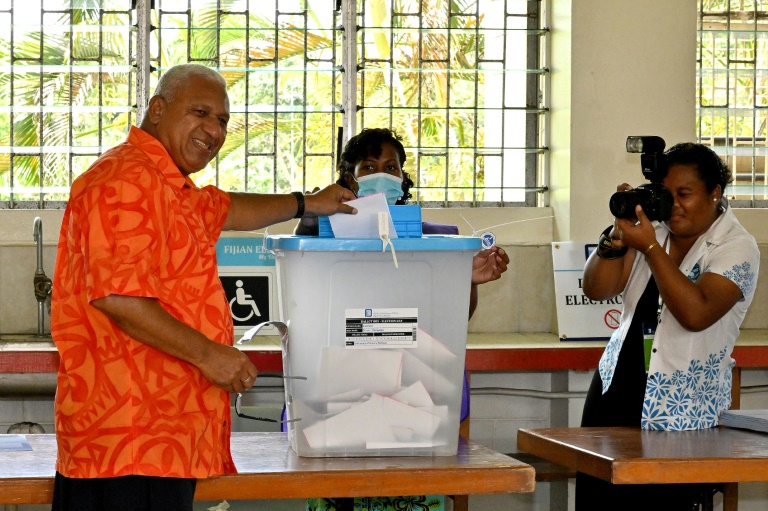
Fijian Prime Minister Frank Bainimarama vowed to respect the outcome of Wednesday’s election, as polls closed in a vote that could end his 16 years in power and return a rival ex-coup leader to office.

Bainimarama, 68, seized control of Fiji in a 2006 putsch, but legitimised his grip on power with election wins in 2014 and 2018.

Standing in the way of Bainimarama’s third elected term is his chief political rival, Sitiveni Rabuka, a 74-year-old former military commander nicknamed “Rambo” after leading two coups in 1987.

The vote is seen as a test of the nation’s fledgling democracy.

Asked whether he would accept the outcome, win or lose, Bainimarama said “of course” as he cast his ballot in the capital Suva with his granddaughter in tow.

He then lashed out at reporters, suggesting they ask “better questions.” 

Fiji now faces a nervous wait for a winner to be declared — ballots must be tallied from remote islands and highland villages, and the country’s complicated counting system could further slow things down.  

The final count is not expected for at least two days, although provisional returns could come more quickly.

Rabuka said he would readily concede defeat if beaten, and Bainimarama should do the same. 

“I think he will not. So I’m hoping for a flood of votes in our favour, so that it makes any attempt at that course futile,” he said. 

“We cannot live forever, we cannot rule forever, so successions from an opposition party should be accepted.” 

Blake Johnson from the Australian Strategic Policy Institute said any arguments about the result would likely be dealt with through the courts, rather than another coup.

“Should Rabuka win, this will be Fiji’s first test at completing a peaceful handover of power in nearly two decades,” he told AFP on Wednesday.  

“If Bainimarama refuses to accept defeat, we could see several legal challenges tie up the parliamentary and judicial systems for some time.”

Rabuka — who is also a former Fijian international rugby player and Commonwealth Games hammer thrower — has signalled that Fiji could loosen its ties with China if he was elected. 

Fiji has grown closer to Beijing under Bainimarama, who used a “look north” policy to stabilise the economy after Australia and New Zealand hit the country with heavy trade sanctions in retaliation for his 2006 coup. 

– Blackout –

The buildup to the vote has been marked by a strict media blackout, preventing local journalists from covering any aspect of the election for 48 hours before voting day and until polls close. 

Suva’s distinctive open-air busses blasted reggae and dance music as they carried voters to polling centres around the city. 

Office worker Dee Atama said that there was a need for change in Fiji, and that more should be done for younger voters. 

“Something for the younger ones, because they will be the ones leading the future,” she told AFP from a voting booth at a Suva school.

Salesman Niraj Prasad, 50, said not everyone in Fiji favoured a change of government. 

“Some people say it’s time for a change,” he told AFP from a voting centre on the outskirts of Suva. 

“Probably this is a mixed feeling… it depends on what the government is doing.”

There are no reliable polls that give any indication about the outcome, but it is expected to be close. 

Fiji has a population of some 900,000 and is heavily reliant on its tourism industry — which was badly damaged by the Covid-19 pandemic.

As Peru protests rage, court denies ex-president's release appeal

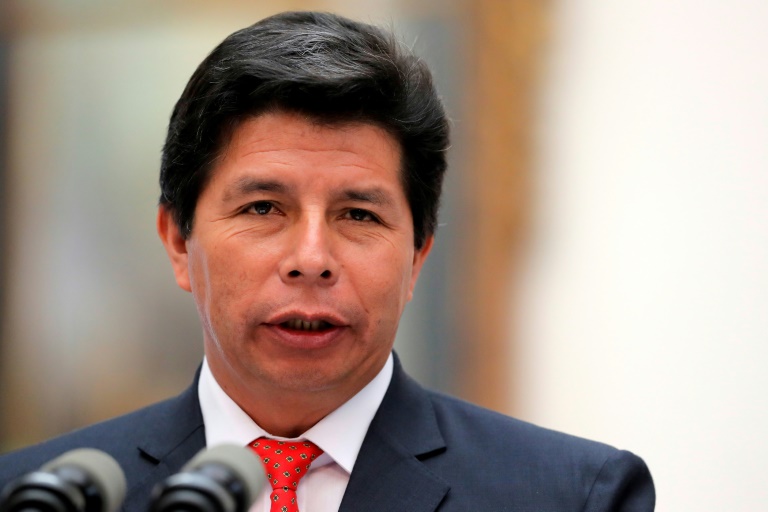
A court in Peru rejected on Tuesday an appeal by former president Pedro Castillo to be freed from detention on charges of rebellion and conspiracy, as officials warned protests demanding his release could spiral out of control.

Prosecutors late Tuesday filed a request to hold Castillo in pre-trial detention for 18 months, marking the formal start of the investigation against him, a prosecution source told AFP.

Castillo, who was removed from office and arrested after attempting to dissolve parliament and rule by decree, had earlier told the court he would “never give up” his cause.

Castillo also called on police and the military to “stop killing” protesters who continue to demand his release and reinstatement, after violent clashes between security forces and demonstrators left seven people dead in recent days.

But Judge Cesar San Martin rejected his appeal for release following a virtual hearing.

Castillo’s demise was rapid after he had attempted to sideline parliament last Wednesday just hours before it was due to hold a third impeachment vote against him. Castillo and his family were being investigated for alleged corruption.

Congress went ahead with its vote and overwhelmingly decided to impeach him for “moral incapacity.”

He was provisionally detained for seven days.

Within hours Castillo’s vice president, Dina Boluarte, a former prosecutor, was sworn in as his successor.

“I will never give up and abandon this popular cause that brought me here,” the leftist Castillo said during Tuesday’s hearing.

“From here I would like to urge the armed forces and national police to lay down their arms and stop killing these people thirsty for justice.”

He said his arrest was unjust and arbitrary.

“I am not a thief, a rapist, corrupt or a thug,” he added, before being interrupted by the judge who asked him to keep to legal arguments.

– Seven dead –

Castillo’s supporters began protesting almost immediately after his arrest, with demonstrations escalating on Sunday when two people were killed in clashes between demonstrators and security forces.

Another five people died Monday in more violent clashes.

Six of the seven deaths have been in the Apurimac region, where Boluarte was born.

The other occurred in Peru’s second largest city Arequipa as police cleared hundreds of protesters from the airport, where they had set up barricades of burning tires, logs and rocks.

“This is a very serious social convulsion, we fear that it will lead to an uprising because there are people calling for an insurrection, who are asking to take up arms,” rights ombudsman Eliana Revollar told AFP.

She said more than 200 people have been injured in the unrest.

Boluarte called for “calm, peace, that we can live together as siblings” and said she would consider extending the state of emergency already declared in flashpoint areas to a national level.

On Sunday she also vowed to bring forward elections from 2026 to 2024 in a bid to ease tensions.

The government on Monday fired the 26 regional prefects who had been appointed by Castillo, accusing them of “inciting protests.”

The country’s right-leaning Congress convened an emergency session Sunday to discuss the crisis, but it was suspended after fighting broke out.

Mexico’s leftist President Andres Manuel Lopez Obrador gave Castillo his backing Tuesday, insisting his country still recognizes him as president.

A day earlier, the leftist governments of Mexico, Argentina, Colombia and Bolivia released a joint statement saying Castillo had been “the victim of antidemocratic harassment” since his election.

Peru’s foreign ministry responded by insisting that Congress had acted in line with the constitution.

– State of emergency –

The government declared a state of emergency in the regions of Arequipa and Ica, Defence Minister Alberto Otarola said Tuesday evening, a move that allows the military to be deployed alongside police.

In Lima, dozens of demonstrators threw stones at the police on Tuesday evening as they tried to reach Congress, with the police firing tear gas to disperse them.

Earlier in the day, protests had persisted with roadblocks set up across several regions, police said.

The worst-hit areas were in the north and south, including the region of Cusco, a tourism hotspot that is home to the Machu Picchu Inca citadel, and Arequipa.

Indigenous and agrarian organizations have called an indefinite strike to begin Tuesday.

That forced the train service between the city of Cusco and Machu Picchu to be suspended, the rail operator said.

Cusco airport was also shut overnight due to attempts by protesters to get inside.

“We demand the dissolution of Congress and the immediate resignation of Dina Boluarte,” Hugo Maquera, a local official who participated in a protest blocking the Puno international bridge on the Bolivian border, told AFP.

With his background as a rural teacher and union leader, and with little contact with the nation’s elites, Castillo has always drawn his strongest support from Andean regions, while struggling to find backing in coastal Lima.

Peru is now on its sixth president since 2016.

Castillo’s 17-month rule was overshadowed by six investigations against him and his family, mass protests demanding his removal, and a power struggle with the opposition-backed Congress.

China says tracking Covid cases now 'impossible' as infections soar

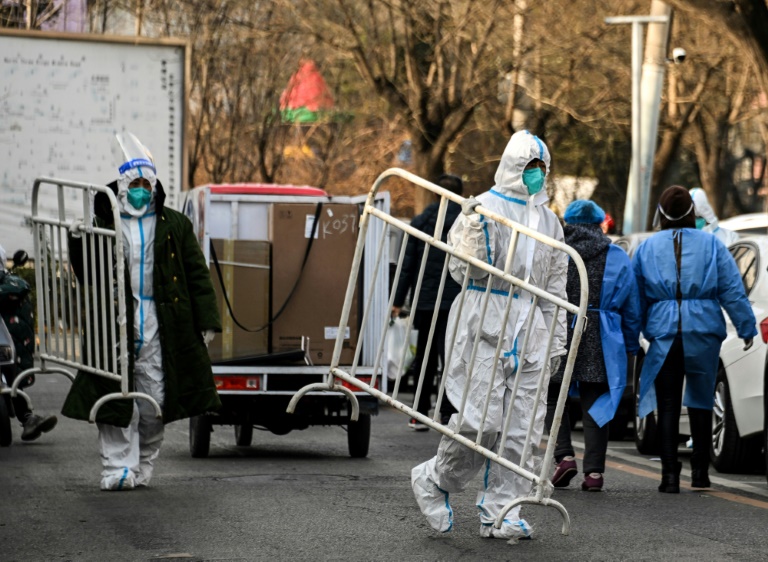
China’s top health body said Wednesday the true scale of coronavirus infections in the country is now “impossible” to track, with officials warning cases are rising rapidly in Beijing after the government abruptly abandoned its zero-Covid policy last week. 

After nearly three years of attempting to stamp out the virus, the sudden end of mass testing and quarantines has led to a corresponding drop in officially reported infections, which hit an all-time high only last month.

With testing no longer required for much of the country, China’s National Health Commission on Wednesday admitted its numbers no longer reflected reality.

“Many asymptomatic people are no longer participating in nucleic acid testing, so it is impossible to accurately grasp the actual number of asymptomatic infected people,” the NHC said in a statement.

The statement comes after Vice Premier Sun Chunlan said the capital’s new infections were “rapidly growing”, according to state media.

Chinese leaders are determined to press ahead with opening up, with Beijing’s tourism authority saying Tuesday that it would resume tour groups in and out of the capital.

But the country is facing a surge in cases that experts fear it is ill-equipped to manage, with millions of vulnerable elderly still not fully vaccinated and underfunded hospitals lacking the resources to deal with an expected influx of infected patients.

A line of about 50 people stretched out the door of the Puren fever clinic in Beijing on Wednesday, with multiple residents telling AFP they were infected with Covid.

“Basically, if we are lining up here, we are all infected. We would not come here if we weren’t,” one person waiting in line told AFP. 

“I’m here with a senior member of my family, he’s had a fever for nearly 10 days in a row now, so we are coming to do a checkup on him.”

– Medicine shortage –

Restaurants, shops and parks are now allowed to reopen, but residents are finding the path to living with the virus less than straightforward.  

Many with symptoms have opted to self-medicate at home, while others are staying in to protect themselves from getting infected. 

And businesses are struggling as Covid-19 rips through the population and affects their staffing. 

As a result, Beijing’s streets are largely empty. 

Residents have complained of sold-out cold medicines and long lines at pharmacies, while Chinese search giant Baidu said that searches for fever-reducing Ibuprofen had risen 430 percent over the past week.

Soaring demand for rapid antigen tests and medications has created a black market with astronomical prices, while buyers resort to sourcing the goods from “dealers” whose contacts are being passed around WeChat groups.

Authorities are cracking down, with market regulators hitting one business in Beijing with a 300,000 yuan ($43,000) fine for selling overpriced test kits, the local Beijing News reported Tuesday.

And in a sea change for a country where infection with the virus was once taboo and recovered patients faced discrimination, people are taking to social media to show off their test results and give detailed descriptions of their experience while sick.

“When my body temperature went past 37.2 degrees, I began to add some sugar and salt to my lemon water,” Beijing-based Xiaohongshu social site user “Nina” wrote in one account intended as advice for those not yet infected.

“I’ve been resurrected!!” wrote another account owner in the caption of a photo showing a row of five positive antigen tests and one negative.

Close Bitnami banner
Bitnami