World

Ukraine secures 1 bn euros in aid 'to get through winter'

Ukraine’s Western allies pledged an additional one billion euros ($1.1 billion) in emergency winter aid on Tuesday, responding to pleas from President Volodymyr Zelensky to help the country withstand Russia’s onslaught against its energy grid.

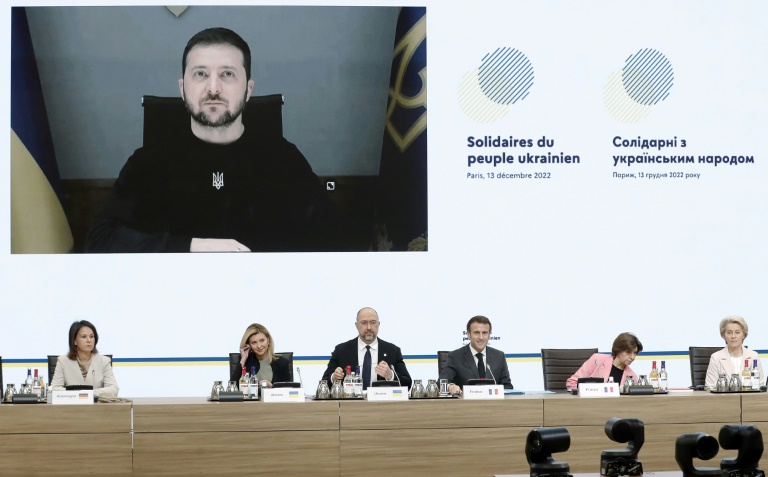
Around 70 countries and international organisations gathered in Paris for a meeting aimed at enabling Ukrainians “to get through this winter”, said French President Emmanuel Macron.

In a video message, Zelensky said Ukraine needed assistance worth around 800 million euros in the short term for its battered energy sector.

“Of course it is a very high amount, but the cost is less than the cost of a potential blackout,” Zelensky told the conference via video link.

Pledges for the energy sector comprised 400 million euros of the funds raised on Tuesday, France’s Foreign Minister Catherine Colonna said. 

Ukraine needs spare parts for repairs, high-capacity generators, extra gas as well as increased electricity imports, Zelensky said.

“Generators have become as necessary as armoured vehicles and bullet-proof jackets,” he said.

Ukrainian Prime Minister Denys Shmygal said 40 to 50 percent of the country’s grid was out of action because of Russia’s strikes.

Many areas of the country have power for only a few hours a day.

Another 1.5 million people were left without power in southern Odessa over the weekend after Russian drone attacks. 

“They want to put us into darkness and it will fail, thanks to our partners all over the world,” Shmygal told delegates.

– Bridge attack –

On the battlefield Tuesday, local authorities in the Russian-occupied city of Melitopol said pro-Kyiv forces had used explosives to damage a strategic bridge.

Melitopol is an important transport hub for Russian forces in the region of Zaporizhzhia and is key for Ukraine’s hopes of liberating the south of the country.

The bridge in the eastern suburbs “was damaged by terrorists”, Vladimir Rogov, a Moscow-installed regional official, said on the Telegram messaging app.

He did not specify the extent of the damage, but images on his social media accounts showed that a middle section of the bridge had collapsed.

Elsewhere on Tuesday, Belarus held a surprise inspection of its armed forces, raising fears of a possible escalation in the conflict.

Belarus is a close ally of Moscow, but Belarusian leader Alexander Lukashenko has repeatedly said he does not plan to send Belarusian troops to Ukraine.

Ukrainian PM Shmygal also said Tuesday that the UN nuclear watchdog IAEA had agreed to dispatch permanent teams to monitor the country’s nuclear plants.

They are expected to take up positions in the Russian-controlled Zaporizhzhia plant, a hotspot of fighting, which has been a source of global concern in recent months.

A deal to de-militarise the site, which would see both sides withdraw forces, has proved impossible so far despite international diplomatic efforts.

– ‘War crimes’ – 

Tuesday’s conference in Paris, titled “Standing with the Ukraine People,” also saw the launch of a new so-called Paris Mechanism to coordinate civilian aid to Ukraine.

The digital platform, announced by G7 leaders on Monday, will enable Ukraine to list its requirements and allow international donors to coordinate their responses in real-time.

“A large number of countries will use this mechanism — all the members to the European Union, but it will go beyond to other partners, including non-European partners,” Colonna told reporters.

A similar platform exists for military aid, which is coordinated via meetings of Ukraine’s Western allies at the US-run Ramstein military base in Germany.

Macron hosted Tuesday’s conference alongside Zelensky’s wife Olena, giving the French leader an opportunity to reaffirm his support for Kyiv.

He condemned Russia’s “cynical” and “cowardly” attacks on Ukrainian civilian infrastructure. 

“These strikes… which Russia openly admits are designed to break the resistance of the Ukrainian people, are war crimes,” Macron said in his opening address.

“They violate without any doubt the most basic principles of humanitarian law,” he said. 

“These acts are intolerable and will not go unpunished.”

The French president has riled some of his allies in Kyiv in the past, most notably in June when he said “we must not humiliate Russia”.

On December 3, he also called for Russia to be offered “security guarantees” at the end of the war, drawing criticism from some Ukrainian and eastern European politicians who believe the focus should be on pushing back Moscow’s forces militarily.

– Mine clearance –

In a video address to the New Zealand parliament on Wednesday, Zelensky appealed to Wellington — whose military has extensive experience in mine clearing — for long-term help in clearing mines in war-ravaged Ukraine.

“As of now, 174,000 square kilometres (67,000 square miles) of Ukrainian territory are contaminated with mines and unexploded ordnance,” Zelensky said, calling Russia’s nearly year-old invasion as an “ecocide” that would have a lasting impact. 

“There is no real peace for any child who can die from a hidden Russian antipersonnel mine.”

In Russia, the Kremlin announced that Putin will not hold his annual end-of-year press conference this year, a break with tradition.

Kremlin spokesman Dmitry Peskov gave no reason for not holding the event that Putin has hosted almost every year he has been in power since 2000.
Fiji PM vows to respect election result, as vote gets under way

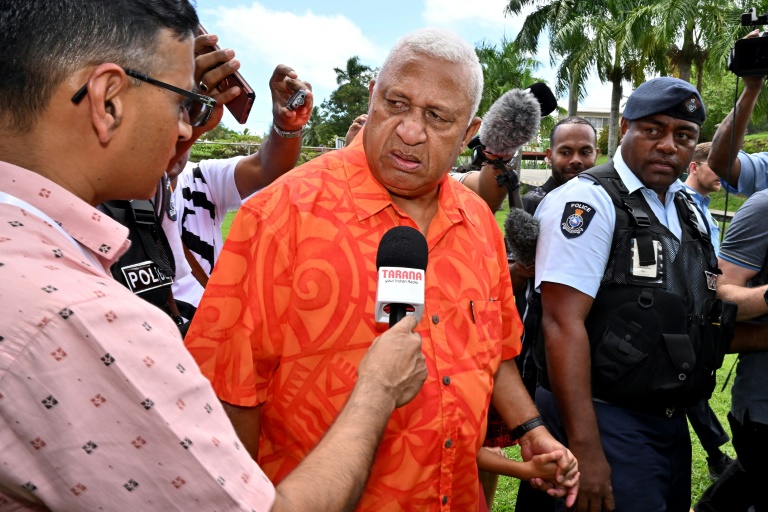
Prime Minister Frank Bainimarama vowed to respect the outcome of Fiji’s election Wednesday, as he faced a rival ex-coup leader looking to end his 16 years in power and pivot away from China.

Bainimarama, 68, led a coup to seize control of Fiji in 2006 and has since legitimised his grip on power with election wins in 2014 and 2018.

Casting his ballot in the capital Suva, Bainimarama was asked if he would respect the result. “Of course,” he replied, before lashing out at reporters, suggesting they ask “better questions.”

Standing in the way of Bainimarama’s third elected term is his chief political rival, Sitiveni Rabuka, a 74-year-old former military commander nicknamed “Rambo” after leading two coups in 1987.

Rabuka — who is also a former Fijian international rugby player and Commonwealth Games hammer thrower — served as Fiji’s prime minister between 1992 and 1999.

“I’m feeling great and getting better. But victory belongs to the lord,” Rabuka told reporters after casting his vote at a makeshift polling booth in the capital, Suva.

Rabuka called into question whether the prime minister would concede if defeated. 

“I accepted my defeat in 1999,” he said. “I hope he can do that. We cannot live forever, we cannot rule forever.”

The buildup to the vote has been marked by a strict media blackout, preventing Fijian media from reporting on any aspect of the election for 48 hours before voting day and until polls close.

Suva voter Avinay Kumar, 26, said there was a palpable feeling of tension ahead of the vote.

“It’s a bit tense at the moment, because the older parties and the new parties are clashing with each other,” he told AFP.

The vote is seen as a test of Fiji’s fledgling democracy, and of China’s quest for Pacific influence. 

Rabuka has signalled Fiji could pivot away from Beijing under his leadership, saying it was time for Fiji to “reassess our associations” while explicitly ruling out a security pact with China.

Fiji has grown closer to China under Bainimarama, who used a “look north” policy to stabilise the economy after Australia and New Zealand hit the country with heavy trade sanctions in retaliation for his 2006 coup.

In recent years, Bainimarama has switched his fatigues for suits and colourful bula shirts and focused heavily on Fiji’s fight against climate change — an existential issue for the low-lying nation.

The military’s role could yet be key in a tightly contested vote — commanding officer Major General Jone Kalouniwai has insisted his forces will “honour the democratic process by respecting the outcome”.

There are no reliable polls that give any indication about the outcome, but it is expected to be close.

Ahead of election day, the 97-person-strong Multinational Observer Group said it had been given “full access” to election sites and had not “observed any irregularities” in registration or pre-polling.

– ‘It is prohibited’ –

While Bainimarama has billed the contest as Fiji’s most crucial vote “ever”, it was almost impossible to tell on the oppressively humid streets of Suva that an election was at hand.

The capital has been purged of political billboards, and campaign adverts have been erased from the airwaves under strict blackout laws meant to preserve the integrity of the election.

On election day, Suva’s distinctive open-air buses blasted reggae and dance music over the radio instead of once-ubiquitous campaign messages.

As the polls opened, only the sight of queues of voters fanning themselves with blue election booklets and seeking out trees for shade gave a hint that the election was under way.

Voting will take place in 1,436 polling stations dotted across a large number of Fiji’s 300-plus islands.

Campaign blackouts are not unusual internationally, but Fiji’s laws are notably harsh.

The government must approve all election-related local media coverage during the blackout — which started on December 10 and ends at 6:00 pm local time (0600 GMT) Wednesday — and breaches can result in up to five years in prison.

“It is prohibited for any media organisation to publish, print or broadcast any campaign advertisement, debate, opinion or interview on any election issue,” Supervisor of Elections Mohammed Saneem told reporters in the lead-up to the poll.

Polish fish farm fights 'myth of Russian caviar'

With Moscow blacklisted since it invaded Ukraine, Europe’s main producer of caviar wants to put an end, once and for all, to the delicacy’s traditional association with Russia.

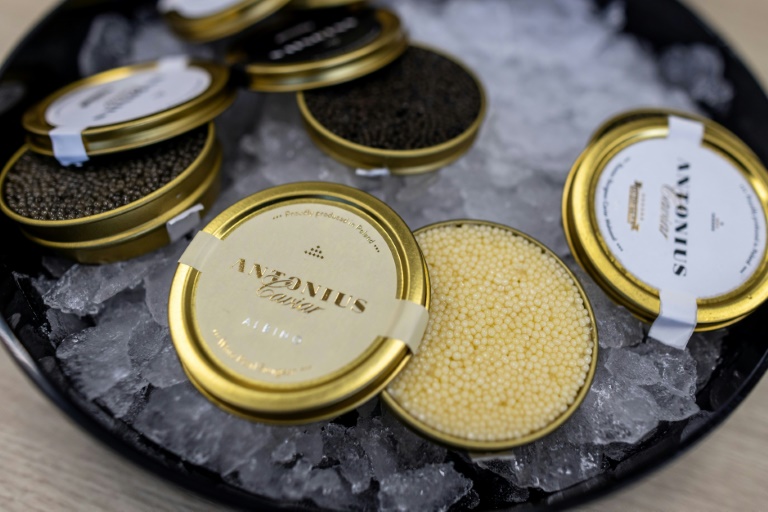
“For most people, caviar means Russia, but that hasn’t been the case for a long time now,” said Agata Lakomiak-Winnicka, marketing and sales manager for Poland’s Antonius Caviar. 

Based in the northeastern village of Rus, the company is one of the world’s top makers of the luxury food, having produced 42 tonnes of black caviar last year — more than any one firm in Italy or France and almost as much as those in China.

“We used to get clients who couldn’t locate Poland on a map. Today we’re on a whole different level,” Lakomiak-Winnicka said.

The company exports mostly to the United Arab Emirates, the United States, France and Denmark and also supplies Michelin-starred restaurants around the world.

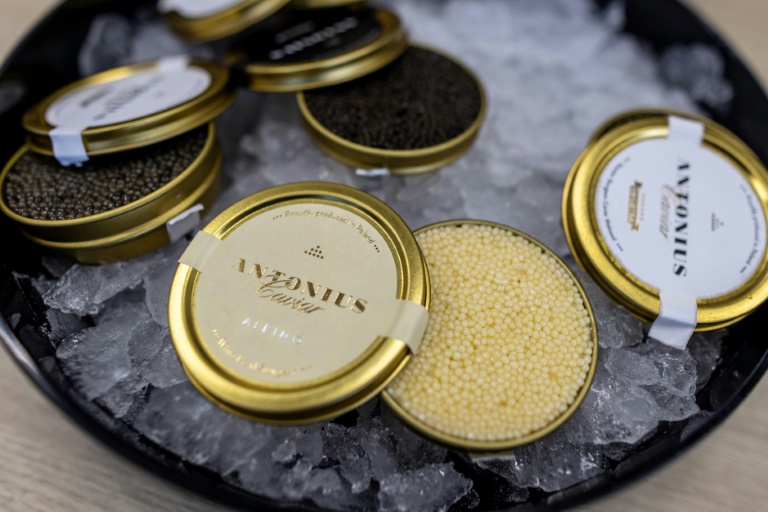
Retail prices range from 1,200 to 2,400 euros ($1,275-2,550) for sturgeon caviar and up to 8,000 euros for the albino kind.

The company’s challenge now, one faced by producers worldwide, is the battle against “the myth of Russian caviar”. 

“Take any box of caviar that reads ‘Russian tradition’ or ‘Russian method’ and you’ll see that 99 percent of the time it doesn’t actually come from Russia,” Lakomiak-Winnicka said. 

– Russia boycott –

Traditionally, caviar was made from eggs from wild sturgeon in the Caspian and Black seas with the best-known producers in Russia and Iran.

But years of overfishing and pollution left the sturgeon at risk of extinction, and it is now a protected species. 

Most caviar today is produced on fish farms and has nothing to do with Russia.

But consumers still associate the two — a challenge for those who out of solidarity for Ukraine no longer want to buy Russian.

“Because of the war… clients ask about the provenance of the caviar,” said Wiktoria Yerystova-Rostkowska, who owns a Russian shop outside Warsaw.

“They want good caviar but it can’t be Russian,” she told AFP, adding that she sources hers from Germany.

The EU and United States have banned Russian caviar as part of their sanctions against Moscow, but it was already practically impossible to buy due to restrictions to protect wild sturgeon.

– Aquaculture –

The green and black boxes of caviar are on display in the shop window. 

Featuring a drawing of the fish, the label reads “malossol” — the Russian for “lightly salted” and the name of the traditional method used to preserve caviar.

Yerystova-Rostkowska said the boycott of Russian products has left her struggling to stay open.

“It’s no longer profitable. I’m down 80 percent in revenue,” she said. 

Lakomiak-Winnicka for her part sees the boycott as an opportunity. 

“It’s a chance to explain that caviar no longer comes from Russia,” she said.

It has been years since wild Russian caviar was available on the international market.

“The Caspian Sea no longer has any importance in caviar production,” said Antonius head Marek Szczukowski.

“The vast majority of caviar sold around the world is derived from aquaculture,” including in Russia, he added.

– Sturgeon ‘on vacation’ –

On the Antonius fish farm in Rus, thousands of sturgeon — some more than a metre (three feet) in length — swim around in canals fed by the crystal clear water of a nearby river.

The company initially farmed trout there, but because of climate change they switched to sturgeon, which prefer warmer water.

“The sturgeon are on vacation here, like they’re in Hawaii,” Szczukowski said. 

The caviar is harvested after the fish reach maturity, with the entire operation taking under 20 minutes.  

Workers extract the caviar, wash and salt it, then box it up.

The label reads: “Proudly produced in Poland”. 

It used to also include the word “Russian” — to denote the fish species — but from now on it will just say “sturgeon caviar”. 

“At the express request of clients, we’re changing the labels, leaving no room for doubt,” Lakomiak-Winnicka said.  

Polish fish farm fights 'myth of Russian caviar'

With Moscow blacklisted since it invaded Ukraine, Europe’s main producer of caviar wants to put an end, once and for all, to the delicacy’s traditional association with Russia.

“For most people, caviar means Russia, but that hasn’t been the case for a long time now,” said Agata Lakomiak-Winnicka, marketing and sales manager for Poland’s Antonius Caviar. 

Based in the northeastern village of Rus, the company is one of the world’s top makers of the luxury food, having produced 42 tonnes of black caviar last year — more than any one firm in Italy or France and almost as much as those in China.

“We used to get clients who couldn’t locate Poland on a map. Today we’re on a whole different level,” Lakomiak-Winnicka said.

The company exports mostly to the United Arab Emirates, the United States, France and Denmark and also supplies Michelin-starred restaurants around the world.

Retail prices range from 1,200 to 2,400 euros ($1,275-2,550) for sturgeon caviar and up to 8,000 euros for the albino kind.

The company’s challenge now, one faced by producers worldwide, is the battle against “the myth of Russian caviar”. 

“Take any box of caviar that reads ‘Russian tradition’ or ‘Russian method’ and you’ll see that 99 percent of the time it doesn’t actually come from Russia,” Lakomiak-Winnicka said. 

– Russia boycott –

Traditionally, caviar was made from eggs from wild sturgeon in the Caspian and Black seas with the best-known producers in Russia and Iran.

But years of overfishing and pollution left the sturgeon at risk of extinction, and it is now a protected species. 

Most caviar today is produced on fish farms and has nothing to do with Russia.

But consumers still associate the two — a challenge for those who out of solidarity for Ukraine no longer want to buy Russian.

“Because of the war… clients ask about the provenance of the caviar,” said Wiktoria Yerystova-Rostkowska, who owns a Russian shop outside Warsaw.

“They want good caviar but it can’t be Russian,” she told AFP, adding that she sources hers from Germany.

The EU and United States have banned Russian caviar as part of their sanctions against Moscow, but it was already practically impossible to buy due to restrictions to protect wild sturgeon.

– Aquaculture –

The green and black boxes of caviar are on display in the shop window. 

Featuring a drawing of the fish, the label reads “malossol” — the Russian for “lightly salted” and the name of the traditional method used to preserve caviar.

Yerystova-Rostkowska said the boycott of Russian products has left her struggling to stay open.

“It’s no longer profitable. I’m down 80 percent in revenue,” she said. 

Lakomiak-Winnicka for her part sees the boycott as an opportunity. 

“It’s a chance to explain that caviar no longer comes from Russia,” she said.

It has been years since wild Russian caviar was available on the international market.

“The Caspian Sea no longer has any importance in caviar production,” said Antonius head Marek Szczukowski.

“The vast majority of caviar sold around the world is derived from aquaculture,” including in Russia, he added.

– Sturgeon ‘on vacation’ –

On the Antonius fish farm in Rus, thousands of sturgeon — some more than a metre (three feet) in length — swim around in canals fed by the crystal clear water of a nearby river.

The company initially farmed trout there, but because of climate change they switched to sturgeon, which prefer warmer water.

“The sturgeon are on vacation here, like they’re in Hawaii,” Szczukowski said. 

The caviar is harvested after the fish reach maturity, with the entire operation taking under 20 minutes.  

Workers extract the caviar, wash and salt it, then box it up.

The label reads: “Proudly produced in Poland”. 

It used to also include the word “Russian” — to denote the fish species — but from now on it will just say “sturgeon caviar”. 

“At the express request of clients, we’re changing the labels, leaving no room for doubt,” Lakomiak-Winnicka said.  

Inside a Lego factory, where Christmas wishes come true

As a boy, Samuel Tacchi was crazy about Lego cranes. Now he designs them, under cloak-and-dagger secrecy, at the Danish group’s headquarters where Santa has filled his sacks for decades.

At its ultra-modern flagship building in Billund, a visit to the offices where the design work is done is out of the question — the company is fiercely protective of its trade secrets.

But Tacchi, a 34-year-old Frenchman, lifts the veil a smidgen on the creative process, standing at a display featuring some of the brand’s colourful toy kits.

“I always start with a little sketch on paper about what I have in mind”, says Tacchi, who designs for the Lego Technic series.

“Then I start to build the technical layout: the drive train, steering, and starting to build with the function. And then I dive into the styling.”

“Then afterwards we dive into the computer.”

His office is a child’s dream come true, chock-a-block with Lego Technic pieces.

“We have an elements shelf behind our backs. It’s easy to reach and fix some elements, build them together and see if (our idea) works,” he says.

In his seven years with the company, Tacchi has helped create around 25 kits.

– From start-up to multinational –

A family-owned company, Lego employs more than 20,000 people around the world — more than a quarter of them in Billund, which is also home to its oldest factory.

Here, in a huge hall where robots move about like in a choreographed dance, hundreds of thousands of pieces are manufactured each day. 

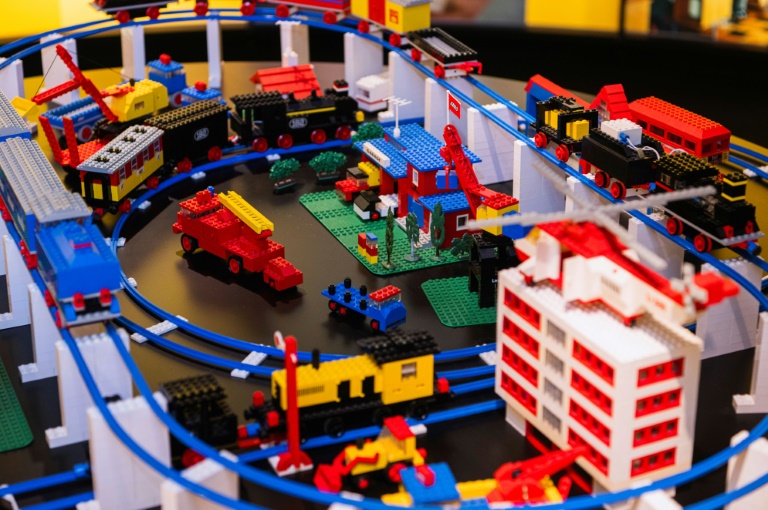
Colourful plastic is moulded into familiar shapes: bricks, figurines, hair, dragon wings and tyres (Lego is reported to be the biggest tyre manufacturer in the world!)

Sorted and stored by model in large crates in an adjoining warehouse, the pieces are then sent to other factories to be included in kits.

While everything is made of plastic today, the toy empire was founded by a carpenter very conscious of the quality of the wood he used. 

In 1932, in the middle of the Great Depression, Ole Kirk Kristiansen began making wooden toys, winning the favour of Danish children with his yo-yos.

“He sold the yo-yo to every child in Billund and… (when every child had one) he couldn’t sell anymore. But he still had them laying around,” explains Signe Wiese, Lego’s resident historian.

“So instead of throwing them out or just leaving them, he reused them. He split the yo-yos in half and he used them for wheels on wagons.”

Four years later, having given up on carpentry, he named his new company “Lego”, a contraction of the Danish “Leg godt”, which means “Play well”.

With a shortage of raw materials after World War II, Kirk Kristiansen gradually turned towards plastic and invested his life savings in an injection moulding machine.

“He was really fascinated with the technology and the machinery and the material itself,” says Wiese.

“So for him, it seems to have been a pretty easy decision, in spite of the fact that everyone was actually advising him against it.”

The idea for the bricks came later.

Initially they were made without Lego’s famed “clutch power” — the mechanism that makes it possible to click the bricks together.

The design was patented in 1958, paving the way for an endless catalogue of figures, shapes and kits.

Now, Lego is the biggest toymaker in the world, ahead of Japan’s Bandai Namca and US groups Hasbro and Mattel, according to market analysts Statista.

This year, Lego says its catalogue of toys is bigger than ever before, but refuses to disclose the exact number. Another trade secret… 

China says tracking Covid cases now 'impossible' as infections soar

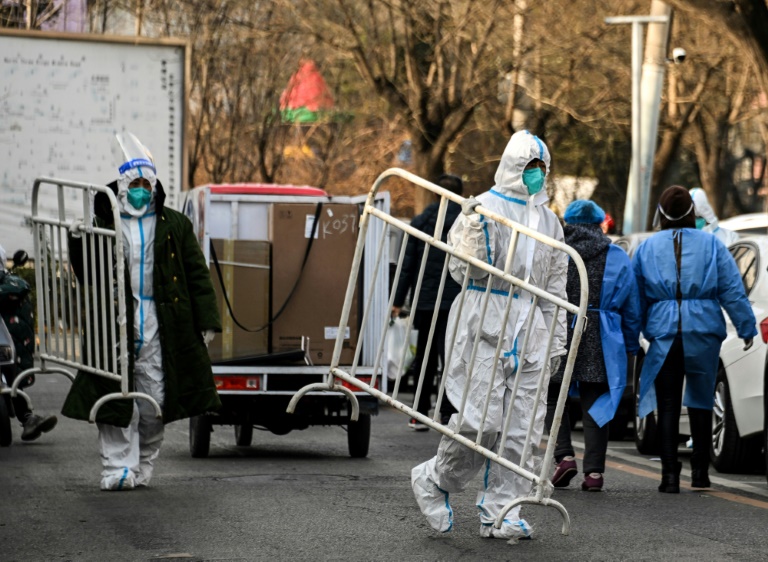
The true scale of Covid-19 infections in China is now “impossible” to track, the country’s top health body said Wednesday, as officials warned of a rapid spread in Beijing after the country abruptly dropped its zero-tolerance policy.

China last week loosened restrictions for mass testing and quarantine after nearly three years of attempting to stamp out the virus, prompting officially reported infections to fall quickly from the all-time highs recorded last month.

And with testing no longer required for much of the country, China’s National Health Commission on Wednesday admitted its numbers no longer reflected reality.

“Many asymptomatic people are no longer participating in nucleic acid testing, so it is impossible to accurately grasp the actual number of asymptomatic infected people,” the NHC said in a statement.

The statement comes after Vice Premier Sun Chunlan said the capital’s new infections were “rapidly growing”, according to a state media readout.

Chinese leaders are determined to press ahead with opening up, with Beijing’s tourism authorities saying on Tuesday that it would resume tour groups in and out of the capital.

But the country is facing a surge in cases it is ill-equipped to manage, with millions of vulnerable elderly still not fully vaccinated and underfunded hospitals lacking the resources to deal with an expected influx of infected patients.

And as the country steers a tricky path out of its zero-Covid policy towards living with the virus, many with symptoms have opted to self-medicate at home.

Residents of Beijing have complained of sold-out cold medicines and long lines at pharmacies, while Chinese search giant Baidu said that searches for fever-reducing Ibuprofen had risen 430 percent over the past week.

Soaring demand for rapid antigen tests and medications has created a black market with astronomical prices, while buyers resort to sourcing the goods from “dealers” whose contacts are being passed around WeChat groups.

Authorities are cracking down, with market regulators hitting one business in Beijing with a 300,000 yuan ($43,000) fine for selling overpriced test kits, the local Beijing News reported Tuesday.

And in a sea change in a country where infection with the virus was once taboo and recovered patients faced discrimination, people are taking to social media to show off their test results and give detailed descriptions of their experiences being sick.

“When my body temperature went past 37.2 degrees, I began to add some sugar and salt to my lemon water,” Beijing-based Xiaohongshu social site user “Nina” wrote in one account intended as advice for those not yet infected.

“I’ve been resurrected!!” wrote another account owner in the caption to a photo showing a row of five positive antigen tests and one negative.

EU wants to 'reconnect' with Southeast Asia amid Ukraine war

EU leaders meet their counterparts from Southeast Asia for a summit in Brussels on Wednesday, looking to bolster ties in the face of the war in Ukraine and challenges from China. 

Europe is keen to boost trade with the Association of Southeast Asian Nations (ASEAN), which counts some of the world’s fastest-growing economies.

“There is a need for Europeans to reconnect with ASEAN, one of the most dynamic areas in the world,” the French presidency said. 

The EU has been on a diplomatic push to galvanise a global front against Moscow as its invasion has sent economic and political shock waves around the world. 

But ASEAN’s 10 nations have been divided in their response to the Kremlin’s war on Ukraine.

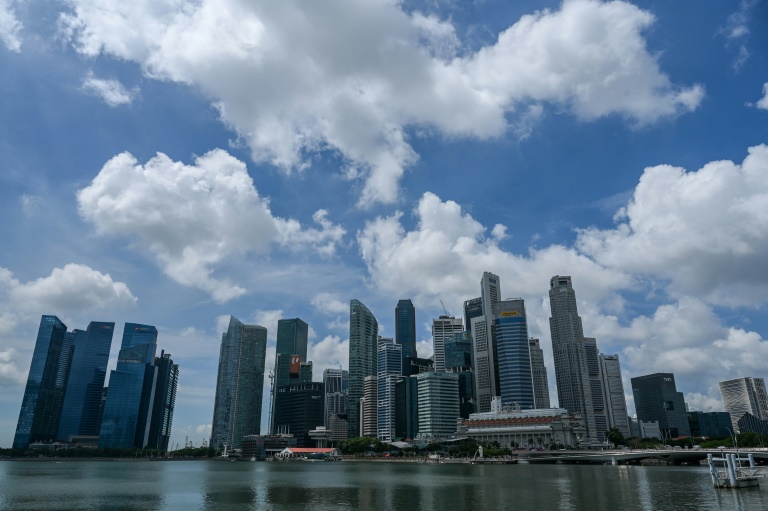
Singapore has gone along with Western sanctions on Russia, while Vietnam and Laos, which have close military ties to Moscow, have remained more neutral. 

Along with Thailand, they abstained from a United Nations vote in October condemning Russia’s attempted annexation of regions of Ukraine seized since February.    

The diverging views led to intense wrangling over a final declaration from the summit as the EU pushed for stronger language to condemn Moscow.

An EU official said Brussels was satisfied in the end that it sent a “crystal clear message” of the need to respect Ukraine’s sovereignty and independence. 

– China looms –

While Europe presses for a tougher response to Russia, there is another global giant looming over the summit. 

Chinese claims over the South China Sea have set it against some neighbours and sparked fears in Europe over trade flows through the key global thoroughfare. 

But China remains the biggest trade partner for ASEAN and many in the region are wary of distancing themselves from their giant neighbour.

The EU is keen to pitch itself as a reliable partner for Southeast Asia’s dynamic economies amid the growing rivalry between Beijing and Washington. 

The EU and ASEAN are each other’s third-largest trading partner and Europe sees the region as a key source for raw materials and wants to increase access to its booming markets.

EU nations are pushing to diversify key supply chains away from China as the war in Ukraine has highlighted Europe’s vulnerabilities. 

The EU is set to unveil investments that could be worth 10 billion euros ($10.6 billion) for the region under its Global Gateway strategy designed as a counterweight to China’s largesse.

– Sex law furore –

ASEAN and the EU suspended their push for a joint trade deal over a decade ago and Brussels has focused on striking agreements with individual members. 

So far deals with Vietnam and Singapore are in place, but the bloc is keen to make progress with ASEAN’s largest economy Indonesia and to resume talks with Malaysia, Philippines and Thailand. 

The crisis in ASEAN member Myanmar will also figure as its regional neighbours have struggled to calm the bloodshed in the junta-ruled country. 

But Myanmar will not be represented at the summit as its military rulers were not invited.

One issue that risks clouding discussions is a new law in Indonesia criminalising sex outside marriage that has sparked fears for foreign visitors to country.

An EU official said the matter would likely be raised with Indonesia’s President Joko Widodo.

“I think even from an investment point of view, there are questions as to whether this legislation will encourage further people to visit,” he said. 

US charges crypto tycoon Bankman-Fried with 'massive' fraud

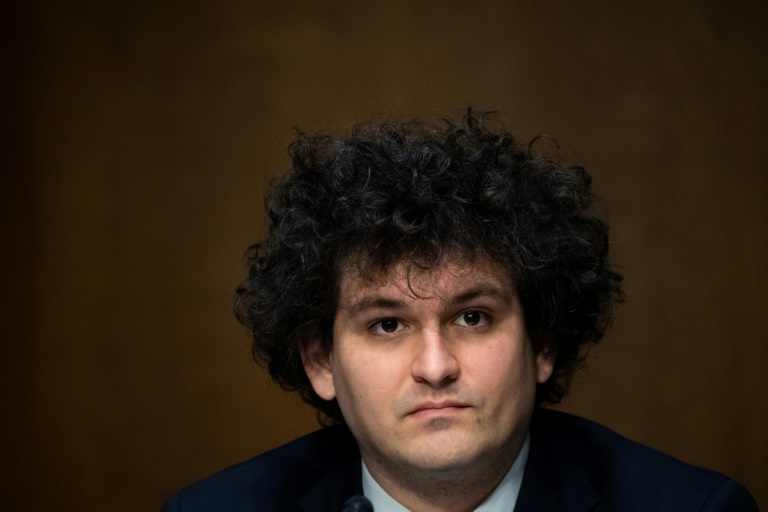
Disgraced cryptocurrency tycoon Sam Bankman-Fried was hit with multiple criminal charges Tuesday, accused of committing one of the biggest financial frauds in US history.

The 30-year-old founder of the FTX platform, who was arrested in the Bahamas Monday at the request of the United States, is facing a raft of accusations, including from US market regulators who say that the investor knowingly built a fraudulent house of cards.

A Bahamian judge denied Bankman-Fried bail and remanded him into custody as the one-time high-flyer began to battle his extradition in a Nassau court room, with his parents looking on.

A new Bahamas court date to examine the US request for extradition was set for February 8, local media reported. 

Given the seriousness of the accusations, legal analysts said that Bankman-Fried risked as much as life in prison, recalling the fate of financier Bernie Madoff who died in a US prison last year after running the largest Ponzi scheme in US history.

In their indictment, US prosecutors said Bankman-Fried also carried out money laundering, violated campaign finance laws and committed wire fraud since the start of his company in 2019.

“It’s hard to compare these things, but this is one of the biggest financial frauds in American history,” said US Attorney Damian Williams when asked to compare the case to the Madoff affair.

When asked if further charges against other individuals would be forthcoming, Williams added: “I can only say this: Clearly, we are not done.”

– ‘Massive fraud’ –

Bankman-Fried “was orchestrating a massive, years-long fraud, diverting billions of dollars of the trading platform’s customer funds for his own personal benefit and to help grow his crypto empire,” prosecutors said.

The legal hammer fell after the 30-year-old spent weeks defying legal advice and made multiple media appearances defending his actions, usually by video link from the Bahamas, where his company is headquartered.

“Mr. Bankman-Fried is reviewing the charges with his legal team and considering all of his legal options,” his lawyer Mark Cohen said in a statement.

Bankman-Fried had embodied the emergence of cryptocurrency as an above-board investment rather than a dodgy get-rich-quick scheme for high-risk investors.

His FTX platform was plugged by celebrities in advertising campaigns and he became a regular presence in Washington, where he donated tens of millions of dollars in political contributions, mainly to the Democratic Party.

But after reaching a valuation of $32 billion, FTX’s implosion was swift following a November 2 media report on ties between FTX and Alameda, a trading company also controlled by Bankman-Fried.

The report exposed that Alameda’s balance sheet was heavily built on the FTT currency — a token created by FTX with no independent value — and exposed Bankman-Fried’s companies as being dangerously interlinked.

– ‘Grossly inexperienced’ –

Reeling from customer withdrawals and short some $8 billion, FTX and around 100 related entities filed for bankruptcy protection on November 11, inviting scrutiny from regulators, prosecutors and furious clients.

“If convicted he could be facing the rest of his life in prison, given the dollar amount of the fraud,” Jacob S. Frenkel, a former federal criminal prosecutor at Dickinson Wright, told AFP.

“We would not see an indictment if prosecutors were not absolutely convinced that they will win a conviction.”

In his media interviews, Bankman-Fried has admitted to mistakes, but has denied intent to defraud his customers.

FTX CEO John Ray, who came to the company after the debacle, told Congress on Tuesday that the problems arose because control was “in the hands of a very small group of grossly inexperienced and unsophisticated individuals.”

“Never in my career have I seen such an utter failure of corporate controls at every level of an organization, from the lack of financial statements to a complete failure of any internal controls or governance whatsoever,” Ray said.

The fall of FTX has caused major doubts about the long term viability of cryptocurrency and heaped stress on other platforms and entities that rode the success of Bitcoin and other currencies.

Asian markets extend US rally after inflation boost, eyes on Fed

Asian markets rose Wednesday and the dollar struggled to recover as investors welcomed softer-than-expected US inflation data that could allow the Federal Reserve to slow down its pace of interest rate hikes.

The reading provided some much-needed Christmas cheer on trading floors and came the day before the US central bank’s last policy decision of the year, which will be pored over for clues about its plans for 2023.

There is also some focus on China as it continues to roll back its strict zero-Covid strategy that has battered the world’s number two economy, though fears of a sharp surge in infections is causing some unease among dealers.

All three main indexes on Wall Street ended in positive territory Tuesday in reaction to data showing consumer prices rose 7.1 percent last month, less than forecast and the slowest pace since December 2021.

The reading followed an October slowdown and fuelled hopes that inflation has finally peaked, after several months of Fed rate hikes.

“Last month’s positive surprise came with the caveat that it was ‘just one month of data’ but the November numbers add further weight to the interpretation that the long-awaited goods disinflation is showing up in the data,” said National Australia Bank’s Taylor Nugent.

Asian markets tracked Wall Street higher, though the gains were limited ahead of the Fed meeting.

Hong Kong, Tokyo, Shanghai, Sydney, Seoul, Singapore, Taipei, Manila and Jakarta all rose.

And the dollar held the losses suffered Tuesday in reaction to the inflation report, with the yen, euro and pound the main beneficiaries.

While the Fed is widely expected to increase borrowing costs 50 basis points Wednesday — after four successive 75-point rises — its post-meeting statement and boss Jerome Powell’s comments are the main focus for traders.

And while the slower inflation print was welcomed, there is still a growing concern among investors that the US economy will tip into recession next year as rates will remain elevated until prices are brought under control and within the bank’s target around two percent.

Silvia Dall’Angelo, at Federated Hermes, said monetary policymakers would slow the pace of hikes so they could “assess the impact on the real economy from the large cumulative tightening that has taken place since March.

“However, the Fed will stress that it is still far from mission accomplished with respect to its fight (against) high inflation, and more hikes will follow in coming months,” she added.

“Our expectation is that while inflation will decline over 2023, it will remain above target, which will prevent the Fed from easing next year.”

Oil prices edged down slightly after rallying on the back of the weaker dollar, though Brent held above $80.

– Key figures around 0230 GMT –

Tokyo – Nikkei 225: UP 0.7 percent at 28,141.41 (break)

Hong Kong – Hang Seng Index: UP 0.3 percent at 19,662.40

Shanghai – Composite: UP 0.1 percent at 3,178.01

Euro/dollar: DOWN at $1.0633 from $1.0635 on Tuesday

Dollar/yen: DOWN at 135.44 yen from 135.59 yen

Pound/dollar: DOWN at $1.2353 from $1.2366

Euro/pound: UP at 86.08 pence from 85.96 pence

West Texas Intermediate: DOWN 0.5 percent at $75.00 per barrel

Brent North Sea crude: DOWN 0.6 percent at $80.18 per barrel

New York – Dow: UP 0.3 percent at 34,108.64 (close)

London – FTSE 100: UP 0.8 percent at 7,502.89 (close)

US Fed expected to slow pace of rate hikes as inflation eases

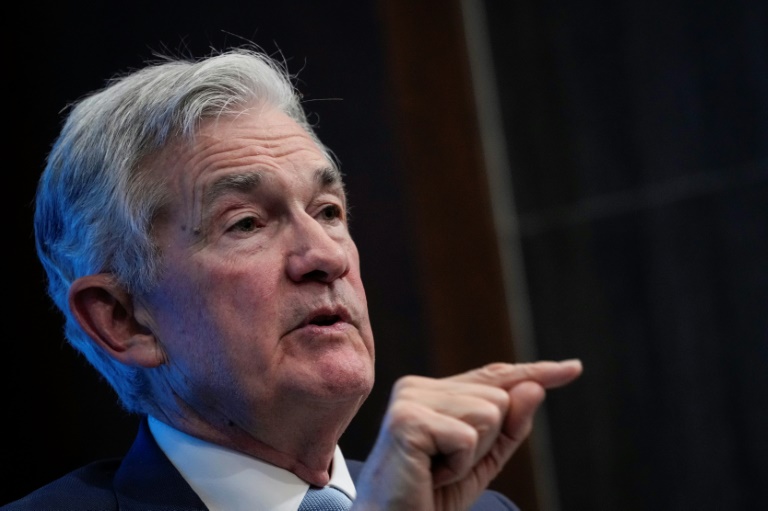
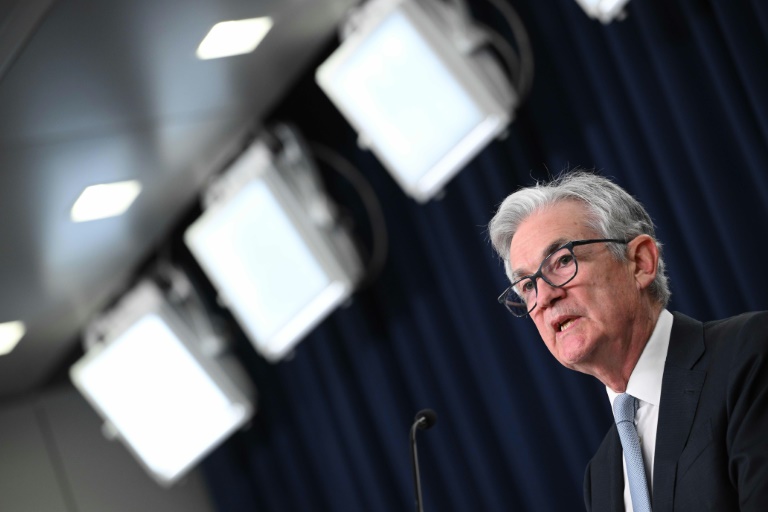
US central bankers open the second day of a key policy meeting Wednesday, with mounting anticipation of a smaller hike to its benchmark lending rate as inflation showed signs of easing.

The Federal Reserve has embarked on an all-out campaign to cool demand in the world’s biggest economy, raising rates six times this year with interest-sensitive sectors like housing already reeling from tightening policy.

But there have been positive signs, with consumer inflation in the United States easing in November, according to government data released Tuesday.

The consumer price index, a key gauge of inflation, logged its smallest annual increase in nearly a year, fueling optimism that the Fed could soon moderate its efforts.

Households have been squeezed by red-hot prices, with conditions worsened by surging food and energy costs after Russia’s invasion of Ukraine, and fallout from China’s zero-Covid measures.

To make borrowing more expensive, the Fed has raised interest rates six times, including four bumper 0.75-point increases, bringing the rate to between 3.75 percent and four percent.

Analysts widely expect the Fed to adopt a smaller, half-point hike on Wednesday, with Ian Shepherdson of Pantheon Macroeconomics calling it a “a done deal” in an analysis.

While this marks a step down from earlier 0.75-point increases, it would still be a steep jump.

Shepherdson cautioned that Fed Chair Jerome Powell is “in no hurry to say what markets want to hear.”

“(Powell) is unlikely to deviate from his clear line that the Fed will do whatever is necessary to squeeze out inflation, and that some pain will be necessary,” Shepherdson added.

– ‘Not yet proof’ –

Recent easing in inflation data is welcome news to policymakers, but this is “not yet proof that inflation has sustainably cooled to levels consistent with the inflation target,” cautioned economist Edoardo Campanella of UniCredit Bank in a note.

The Fed has a longer-term inflation target of two percent.

“The Fed will likely further slow the pace of rate hikes early next year to 25 basis points,” Campanella added.

“However, with the labor market still very tight… and with broad financial conditions easing, the Fed will likely say that their job is not done,” he said.

Neil Saunders, managing director of GlobalData, added that the Fed is taking a “hawkish view on inflation” and will likely conclude further tightening is needed, based on the continued strength of underlying demand in the economy.

“As much as this action may have the desired effect, it will cool the economy at a time when it is already under pressure heading into 2023,” said Saunders.

The Fed’s further rate hike will also mark “a new phase” in its tightening cycle, said Nationwide chief economist Kathy Bostjancic in a note Monday.

This comes as officials look to adjust policy now that it is “within the range considered restrictive.”

Financial markets will be watching for signals of how high rates might go, and “the path for rates beyond that peak,” she added.

Close Bitnami banner
Bitnami