World

Vietnam factory workers laid off as West cuts imports

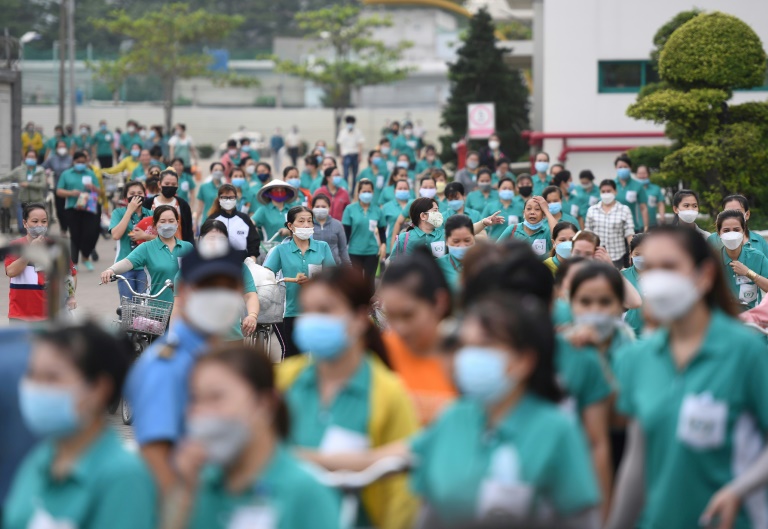
Phan Thi Nhieu has spent a decade assembling shoes for worldwide brands such as Timberland and K-Swiss, but she is now among tens of thousands of Vietnamese factory workers laid off as Western consumers cut spending.

Almost half a million others have been forced to work fewer hours as orders fall in the Southeast Asian country, one of the world’s largest exporters of clothing, footwear and furniture.

The cost-of-living crisis in Europe and the United States — major markets for Vietnamese-produced goods — has seen the buying power of Western shoppers plunge.

Women factory workers, who make up 80 percent of the labour force in Vietnam’s garment industry, have been hit the hardest by the knock-on effect.

Early last month, 31-year-old Nhieu — who lives in a nine-square-metre (100 square feet) room in Ho Chi Minh City with her two young sons and husband — was told she was no longer needed at Ty Hung Company, a Taiwanese shoemaker that supplies big Western labels.

“They told us they did not have enough orders,” she said of Ty Hung’s announcement that it would fire 1,200 of its 1,800 staff. 

“I was so, so shocked and so scared, I cried, but I can do nothing, I have to accept it.”

The job earned Nhieu just $220 a month in an expensive city where the average monthly income is $370, but the money was regular and a step up from the mushroom picking she did as a teenager in the heat of the Mekong Delta.

– ‘Worse than Covid’ –

Now, with just two months’ severance pay to survive on, Nhieu must feed her family on a few dollars a day, and her kids are struggling to get enough to eat.

“We have no one to help us. I will have to get us through this on my own.”

Since September, more than 1,200 companies — mostly foreign businesses in the garment, footwear and furniture sectors — have been forced to sack staff or cut working hours, according to the Vietnam General Confederation of Labour. 

Compared with last year, orders are down 30-40 percent from the United States and 60 percent from Europe, where inflation and energy bills have soared because of the war in Ukraine.

More than 470,000 workers have had their hours slashed in the last four months of the year while about 40,000 people have lost their jobs — 30,000 of them women aged 35 or older, the confederation said.

Taiwanese giant Pouyuen, a Nike shoe producer, has put 20,000 of its workers on paid leave in rotation, while reports said Vietnam’s largest foreign investor, Samsung Electronics, has started reducing its smartphone production at factories in the north.

The situation is bleaker than during the Covid-19 pandemic, say workers, who were helped out with food donations when strict quarantine measures forced them to stay home — and were quickly in demand again once restrictions lifted at the end of 2021.

“It’s not easy to find a new job like before (following the pandemic),” said Nguyen Thi Thom, 35, who was laid off from a South Korean garment firm that makes clothes for US retail giant Walmart.

– No dream –

Since her factory work finished, Thom, who has three young children, spends her days on the streets of a shiny new suburban district of Ho Chi Minh City, selling dried noodles, shrimp sauce and oranges to passers-by.

The slowdown has come as a shock because export businesses in Vietnam were running at “their fullest capacity” for the first half of 2022, according to Tran Viet Anh, deputy head of Ho Chi Minh City’s Business Association. 

“At the start of the third quarter, due to global inflation, consumption demands have shrunk, leading to the suspension of orders… and huge stock surplus,” he told AFP.

But the downturn in Vietnam will likely only be temporary, Viet Anh added. 

A cut in production during the pandemic led to a shortage of goods in the first six months of 2022, and the situation will likely repeat a year on.

Viet Anh said that “2023 will be a period where we increase production to compensate”.

Until then, women like Nhieu and Thom, who form the backbone of a low-paid workforce that has helped Vietnam become a key manufacturing hub seen as an alternative to China, must find another way to keep their families afloat.

“I have never had the luxury of dreaming what I want from life. I have only one wish, of earning enough to survive,” Nhieu said.
Vietnam factory workers laid off as West cuts imports

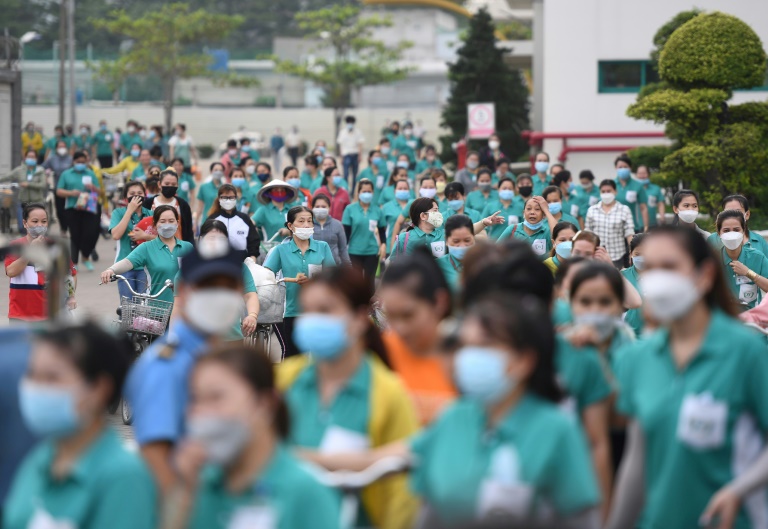
Phan Thi Nhieu has spent a decade assembling shoes for worldwide brands such as Timberland and K-Swiss, but she is now among tens of thousands of Vietnamese factory workers laid off as Western consumers cut spending.

Almost half a million others have been forced to work fewer hours as orders fall in the Southeast Asian country, one of the world’s largest exporters of clothing, footwear and furniture.

The cost-of-living crisis in Europe and the United States — major markets for Vietnamese-produced goods — has seen the buying power of Western shoppers plunge.

Women factory workers, who make up 80 percent of the labour force in Vietnam’s garment industry, have been hit the hardest by the knock-on effect.

Early last month, 31-year-old Nhieu — who lives in a nine-square-metre (100 square feet) room in Ho Chi Minh City with her two young sons and husband — was told she was no longer needed at Ty Hung Company, a Taiwanese shoemaker that supplies big Western labels.

“They told us they did not have enough orders,” she said of Ty Hung’s announcement that it would fire 1,200 of its 1,800 staff. 

“I was so, so shocked and so scared, I cried, but I can do nothing, I have to accept it.”

The job earned Nhieu just $220 a month in an expensive city where the average monthly income is $370, but the money was regular and a step up from the mushroom picking she did as a teenager in the heat of the Mekong Delta.

– ‘Worse than Covid’ –

Now, with just two months’ severance pay to survive on, Nhieu must feed her family on a few dollars a day, and her kids are struggling to get enough to eat.

“We have no one to help us. I will have to get us through this on my own.”

Since September, more than 1,200 companies — mostly foreign businesses in the garment, footwear and furniture sectors — have been forced to sack staff or cut working hours, according to the Vietnam General Confederation of Labour. 

Compared with last year, orders are down 30-40 percent from the United States and 60 percent from Europe, where inflation and energy bills have soared because of the war in Ukraine.

More than 470,000 workers have had their hours slashed in the last four months of the year while about 40,000 people have lost their jobs — 30,000 of them women aged 35 or older, the confederation said.

Taiwanese giant Pouyuen, a Nike shoe producer, has put 20,000 of its workers on paid leave in rotation, while reports said Vietnam’s largest foreign investor, Samsung Electronics, has started reducing its smartphone production at factories in the north.

The situation is bleaker than during the Covid-19 pandemic, say workers, who were helped out with food donations when strict quarantine measures forced them to stay home — and were quickly in demand again once restrictions lifted at the end of 2021.

“It’s not easy to find a new job like before (following the pandemic),” said Nguyen Thi Thom, 35, who was laid off from a South Korean garment firm that makes clothes for US retail giant Walmart.

– No dream –

Since her factory work finished, Thom, who has three young children, spends her days on the streets of a shiny new suburban district of Ho Chi Minh City, selling dried noodles, shrimp sauce and oranges to passers-by.

The slowdown has come as a shock because export businesses in Vietnam were running at “their fullest capacity” for the first half of 2022, according to Tran Viet Anh, deputy head of Ho Chi Minh City’s Business Association. 

“At the start of the third quarter, due to global inflation, consumption demands have shrunk, leading to the suspension of orders… and huge stock surplus,” he told AFP.

But the downturn in Vietnam will likely only be temporary, Viet Anh added. 

A cut in production during the pandemic led to a shortage of goods in the first six months of 2022, and the situation will likely repeat a year on.

Viet Anh said that “2023 will be a period where we increase production to compensate”.

Until then, women like Nhieu and Thom, who form the backbone of a low-paid workforce that has helped Vietnam become a key manufacturing hub seen as an alternative to China, must find another way to keep their families afloat.

“I have never had the luxury of dreaming what I want from life. I have only one wish, of earning enough to survive,” Nhieu said.

US plans to send Patriot missiles to Ukraine: media

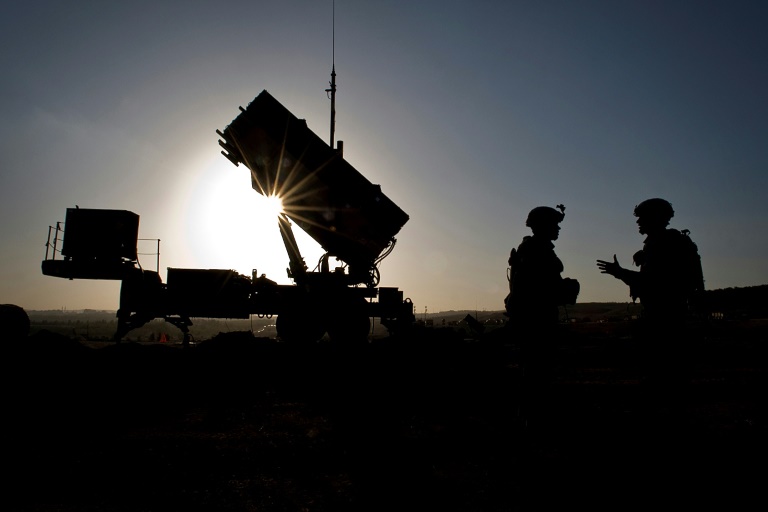
The Pentagon is finalizing plans to send Patriot missile batteries that can shoot down incoming missiles to Ukraine, US media reported Tuesday.

As Russia has ramped up missile strikes on key Ukrainian infrastructure, the administration of President Joe Biden could announce the deployment as early as this week, US officials told The New York Times and CNN.  

Ukraine’s air defenses have played a key role during Russia’s invasion, but with Moscow stepping up strikes on energy infrastructure as it faces growing losses on the ground, Kyiv has repeatedly pressed other countries — especially the United States — for the Patriot system.

The US Army describes Patriot — which consists of multiple parts including a radar, a control station, power generating equipment and up to eight launchers — as its “most advanced air defense system.”

While dozens of personnel are assigned to a battery, only three are required to operate it in combat.

The US Army’s first Patriot battalion was activated in 1982, but the system was not used in combat until 1991 during Operation Desert Storm, the international air and ground offensive against Iraqi forces who had invaded Kuwait.

Patriot has intercepted more than 150 ballistic missiles in combat since 2015, and has also undergone more than 3,000 ground and 1,400 flight tests, primary contractor Raytheon says.

When Russia invaded in February, Ukraine’s air defenses largely consisted of Soviet-era planes and missile systems, which Kyiv used effectively to deny Moscow air superiority.

They have since been significantly augmented: the United States provided NASAMS and Germany offered IRIS-T — two advanced systems — while older equipment such as the S-300 and HAWK systems and Stinger missiles have also been donated.

Youth of African diaspora consider climate solutions at US summit

A group of young Black Americans and their peers from African countries on Tuesday highlighted their common anxieties over climate change, shared as members of the global African diaspora. 

They were gathered at the African and Diaspora Young Leaders Forum in Washington, held on the sidelines of the Biden administration’s US-Africa Leaders Summit, in which some 50 leaders from the continent are participating this week. 

Michael Regan, the first Black American head of the US Environmental Protection Agency, called on the people in attendance to throw themselves into humanity’s fight against a warming world. 

“Young people have always been at the forefront of movements to change, and the environmental movement is absolutely no exception,” he said. 

“Your generation is leading the charge and fighting to secure a healthier, more just tomorrow.”

For activist Wafa May Elamin, society must “allow young people to really take charge” to tackle the “massive” climate challenges ahead. 

Elamin, a 30-year-old Sudanese-American, said she had been waiting for such an event for “a really long time” — the most recent iteration of this summit was organized eight years ago, during Barack Obama’s presidency. 

Other attendees of Tuesday’s meeting, which was organized by the National Museum of African American History and Culture, included Vice President Kamala Harris, the first Black, South Asian and female US vice president, and Ghanaian President Nana Akufo-Addo.

– ‘Guardians of our planet’ –

Speaking at the convention, actress and activist Sabrina Elba — a United Nations goodwill ambassador for the International Fund for Agricultural Development — said the environmental conservation of the immense African continent is especially close to the hearts of people whose ancestors came from Africa.

Elba recalled how her mother, who immigrated from Somalia to Canada, instilled in her a remembrance of their ancestral home: “As early as I can remember, she would say ‘give back, give back, give back, give back to the continent, so we can go back.'”

It was this relationship to Africa that inspired Elba — whose husband, the British actor Idris Elba, also spoke Tuesday — to get involved with the UN.

“It only took one visit back home to see a drought or famine or people really being affected by an issue that they have very little output towards,” she said. 

For her, the priority is to support the people living in areas in need of preservation.

“These people are the custodians of our planet,” she said.

– ‘Not a monolith’ –

But according to Elamin, funding for the fight against climate change is not distributed fairly. 

Regan acknowledged the unequal realities of working for a better planet.

“Countries should be required, in some way, shape or fashion, to ensure certain resources absolutely reach those who have been disproportionately impacted,” the EPA director said.

Jamaji Nwanaji-Enwerem, a doctor and assistant public health professor of environmental health at Emory University in Atlanta, was among those in attendance.

“African is not a monolith,” the 32-year-old said.

“So being able to just hear the stories and hear about other people’s experiences goes a long way in helping to develop solutions that are meaningful for all of us,” she explained. 

As the attendees discussed such possible solutions, Regan announced the United States would allocate $4 million for Peace Corps volunteers to work on projects combatting climate change in 24 Sub-Saharan African countries. 

“Are we doing enough? No. Should we be doing more? Yes, but in a democracy, it’s slow,” he said. 

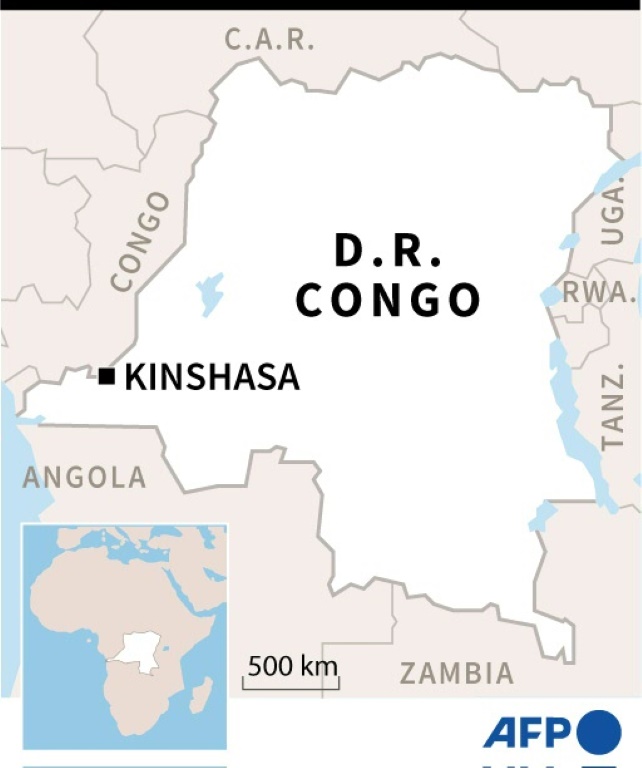
Flooding kills more than 120 in DR Congo capital

More than 120 people were killed Tuesday as the worst floods in years battered DR Congo’s capital Kinshasa following an all-night downpour, authorities said in a provisional assessment.

Major roads in the centre of Kinshasa, a city of some 15 million people, were submerged for hours, and a key supply route was cut off.

The death toll — which was first estimated in the late afternoon to be at least 55 — jumped to more than 120 by nightfall. 

The government has announced three days of national mourning beginning Wednesday, according to a statement from Prime Minister Jean-Michel Sama Lukonde’s office.

City police chief General Sylvano Kasongo told AFP that the bulk of people dead were on hillside locations where there had been landslides.

An AFP reporter saw the bodies of nine members of the same family — including young children — who had died after the collapse of their home in the Binza Delvaux district.

“We were woken up at around 4:00 am (0300 GMT) by water entering the house,” a relative said.

“We drained the water out, and thinking that there was no more danger we went back indoors to sleep — we were soaked,” he said.

The family went back to bed and “just afterwards, the wall collapsed”.

Located on the Congo River, Kinshasa has seen a huge population influx in recent years.

Many dwellings are shanty houses built on flood-prone slopes, and the city suffers from inadequate drainage and sewerage. 

A major landslide occurred in the hilly district of Mont-Ngafula, smothering National Highway 1, a key supply route linking the capital with Matadi, a port further down the Congo River and a crucial outlet to the Atlantic Ocean.

Lukonde told reporters at the scene that about 20 people there had died when “homes were swept away”.

Searches are continuing for survivors, he said.

The highway should be reopened to small vehicles within the next day, but it could take “three or four days” for trucks, the prime minister said.

The streets of the up-market Gombe district — home to government buildings and usually spared the problems affecting other areas of Kinshasa such as inadequate waste disposal and power supplies — were also inundated.

– ‘Disaster’ –

In November 2019, around 40 people in Kinshasa died in floods and landslides.

Mont-Ngafula was one of the worst-hit areas, but a local resident said the flooding this time was even worse.

“We’ve never seen a flood here on this scale,” said Blanchard Mvubu, who lives in the Mont-Ngafula neighbourhood of CPA Mushie.

“I was asleep and I could feel water in the house… it’s a disaster — we’ve lost all our possessions in the house, nothing could be saved.”

He added: “People are building big houses and that blocks up the drains. The water can’t move freely and that’s what causes the floods.”

Another man, who gave his name as Freddy, said everything in his home was underwater,

“Shoes, food stocks, clothes — everything is lost, there’s nothing to be saved,” he said.

Close by, a young man was asking for 500 Congolese francs (24 US cents) from passers-by to carry them on his back across the submerged street.

Another man, who identified himself as a teacher, was walking barefoot in the water, holding a pair of shoes in one hand and a plastic bag containing documents in the other.

“I’ve got no other choice,” he said. “I have to give schoolchildren an exam.”

Landslides  are common in Mont-Ngafula, often triggered by heavy rainfall and rampant urban development.

Japan to radically overhaul defence policy on China threats

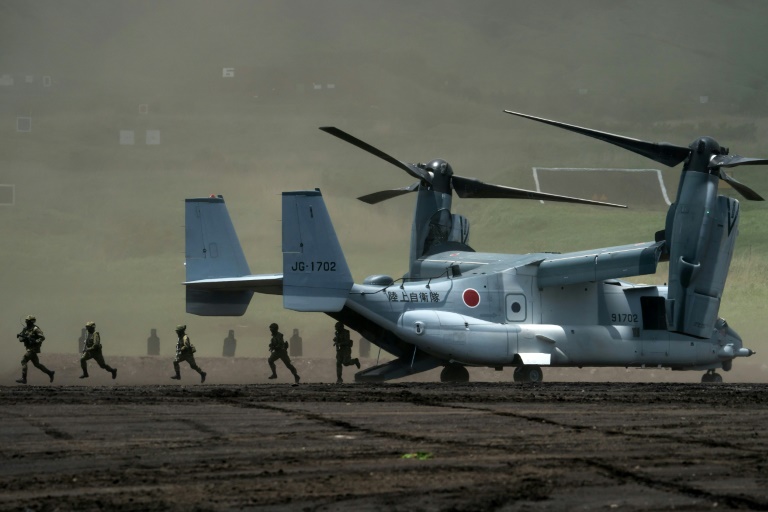
Japan is expected to announce its biggest defence overhaul in decades this week, hiking spending, reshaping its military command and acquiring new missiles to tackle the threat from China.

The policies, to be outlined in three defence and security documents as soon as Friday, will reshape the defence landscape in a country whose post-war constitution does not even officially recognise the military.

“Fundamentally strengthening our defence capabilities is the most urgent challenge in this severe security environment,” Prime Minister Fumio Kishida said at the weekend.

“We will urgently ramp up our defence capabilities over the next five years.”

The shift is the result of Tokyo’s fears about China’s growing military strength and regional posturing, as well as threats ranging from North Korean missile launches to Russia’s invasion of Ukraine.

Key among the new policies is a pledge to boost spending to two percent of GDP by 2027 to bring Japan in line with NATO members.

That marks a significant increase from historic spending of around one percent, and has sparked criticism over how it will be financed.

The money will fund projects including the acquisition of what Japan calls “counterstrike capacity” — the ability to hit launch sites that threaten the country, even preemptively.

Japan has previously shied away from acquiring that ability over disputes on whether it could violate the constitution’s limit on self-defence.

In a nod to the controversy, the policy documents will reportedly insist that Japan remains committed to a “self-defence-oriented security policy” and will “not become a military power”.

Part of that capacity will come from up to 500 US-made Tomahawk cruise missiles Japan is reportedly considering purchasing as a backstop while it develops longer-range missiles domestically.

– ‘Greatest strategic challenge’ –

Japan has also announced plans to develop a next-generation fighter jet with Italy and Britain, and is reportedly planning to build new ammunition depots and launch satellites to help guide potential counterstrikes.

The changes will also affect military organisation, with the Nikkei newspaper reporting that all three branches of the Self-Defense Forces will be brought under a single command within five years.

The SDF presence on Japan’s southernmost islands will be increased — including a tripling of units with ballistic missile interception capacity, according to local media.

The documents, including the key National Security Strategy, are expected to point to China for the shift in policy.

Japan’s ruling party reportedly wanted to term Beijing a “threat”, but under pressure from its coalition partner will settle for dubbing China a “serious concern” and Japan’s “greatest strategic challenge”.

That still represents a sea change from 2013, the document’s first iteration and the last time it was updated, when Japan said it sought a “mutually beneficial strategic partnership”, a phrase expected to disappear now.

Worries about China have deepened since major military drills carried out by Beijing around Taiwan in August, during which missiles fell in Japanese economic waters.

Japan is also expected to call Russia a challenge, compared to a 2013 pledge to seek cooperation and “enhance” ties.

Japan has joined Western allies in imposing sanctions on Moscow over Ukraine, sending already frosty relations into deep freeze.

The radical defence overhaul is likely to anger Beijing, which has regularly referenced Japan’s wartime belligerence in criticising Tokyo.

It may also cause waves domestically, though surveys show growing support for a stronger defence strategy.

“For Japan’s defence policymakers, these developments represent not a militarist resurgence but the latest step in a slow, gradual normalisation of defence and national security posture,” said James Brady, vice president of Teneo consultancy.

Snakes have clitorises, scientists say, slamming research 'taboo'

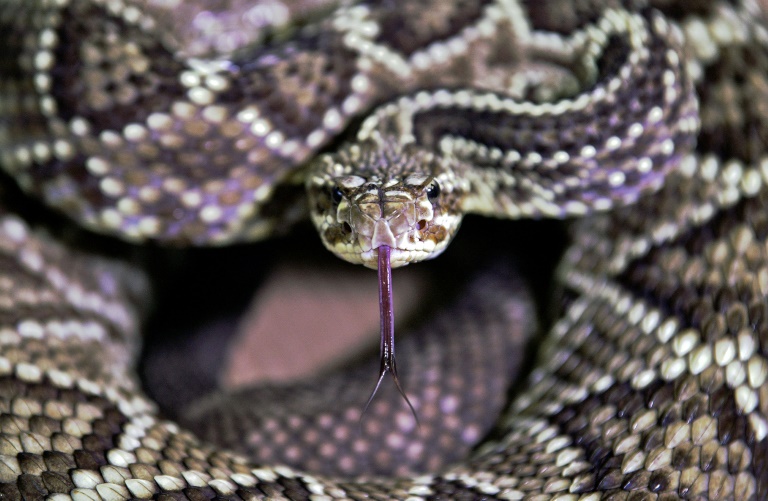
Female snakes have clitorises, according to the first detailed study on the subject Wednesday, in which the scientists lashed out at how little female sex organs have been researched compared to males across species.

Previous research had hypothesised that the organs on female snakes were scent glands, under-developed versions of penises, or were even there to stimulate males, rather than the other way around.

But the new study said it has “definitively” ruled out such theories, offering the first complete description of snake clitorises.

The findings suggest that clitorises may be common across squamates, the largest order of reptiles which includes snakes, and could play an essential role in how they reproduce.

However comparatively little research on the subject has been carried out, as in the case for the clitorises of pretty much all animals — including humans.

“Female genitalia are conspicuously overlooked in comparison to their male counterparts, limiting our understanding of sexual reproduction across vertebrate lineages,” wrote the authors of the study published in the journal Proceedings of the Royal Society B.

Since the 1800s it has been known that male squamates have a dual sex organ called a hemipenis.

However it was not until 1995 that German herpetologist Wolfgang Boehme, who was researching monitor lizards, first described the female sexual organ, the hemiclitores.

Megan Folwell, a PhD candidate at the University of Adelaide in Australia and the new study’s lead author, told AFP she started off by analysing the hemiclitores of a common death adder.

The team of Australian and American researchers went on to dissect 10 snakes from nine different species, including the carpet python, puff adder and Mexican moccasin. 

They found that snakes have two individual clitorises — hemiclitores — separated by tissue and hidden by skin on the underside of the tail.

For the death adder, the organ forms a triangle shape “like a heart”, Folwell said.

Some are quite thin while others take up almost all the area around the cloaca, the tiny opening for the digestive, urinary and reproductive tract. Sizes ranged from less than a millimetre to seven millimetres.

The organs have erectile tissue that likely swells with blood as well as nerve bundles which “may be indicative of tactile sensitivity, similar to the mammalian clitoris,” the study said.

– ‘Taboo subject’ –

“Snakes are very tactile animals,” Folwell said, “so there’s quite a high chance that they would get quite a lot of sensation even through the skin.”

If the snakes’ hemiclitores are stimulated during sex, it likely prompts longer and more frequent mating, resulting in a greater chance of reproductive success.

“Pleasure is such an important part of reproduction,” Folwell said.

It could lead to lubrication to prevent damage from the “very spiny hemipenis” of male snakes, she said, adding that “we don’t know”.

So why did it take so long for scientists to get here?

“It’s quite a taboo subject, female genitalia is not the easiest topic to bring up and be respected,” Folwell said.

“There’s also the fact that it is not the easiest structure to find,” she said. “Especially if you don’t know what you’re looking for or where.”

The study comes after a research abstract presented in the United States earlier this year said that the human clitoris has between 9,850-1,100 nerve fibres — around 20 percent more than the previously widely cited number of 8,000, which reportedly came from research carried out on cows.

Snakes have clitorises, scientists say, slamming research 'taboo'

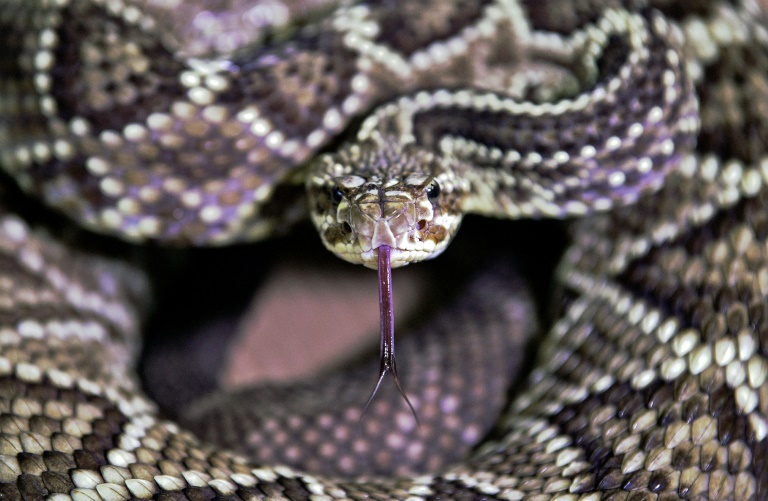
Female snakes have clitorises, according to the first detailed study on the subject Wednesday, in which the scientists lashed out at how little female sex organs have been researched compared to males across species.

Previous research had hypothesised that the organs on female snakes were scent glands, under-developed versions of penises, or were even there to stimulate males, rather than the other way around.

But the new study said it has “definitively” ruled out such theories, offering the first complete description of snake clitorises.

The findings suggest that clitorises may be common across squamates, the largest order of reptiles which includes snakes, and could play an essential role in how they reproduce.

However comparatively little research on the subject has been carried out, as in the case for the clitorises of pretty much all animals — including humans.

“Female genitalia are conspicuously overlooked in comparison to their male counterparts, limiting our understanding of sexual reproduction across vertebrate lineages,” wrote the authors of the study published in the journal Proceedings of the Royal Society B.

Since the 1800s it has been known that male squamates have a dual sex organ called a hemipenis.

However it was not until 1995 that German herpetologist Wolfgang Boehme, who was researching monitor lizards, first described the female sexual organ, the hemiclitores.

Megan Folwell, a PhD candidate at the University of Adelaide in Australia and the new study’s lead author, told AFP she started off by analysing the hemiclitores of a common death adder.

The team of Australian and American researchers went on to dissect 10 snakes from nine different species, including the carpet python, puff adder and Mexican moccasin. 

They found that snakes have two individual clitorises — hemiclitores — separated by tissue and hidden by skin on the underside of the tail.

For the death adder, the organ forms a triangle shape “like a heart”, Folwell said.

Some are quite thin while others take up almost all the area around the cloaca, the tiny opening for the digestive, urinary and reproductive tract. Sizes ranged from less than a millimetre to seven millimetres.

The organs have erectile tissue that likely swells with blood as well as nerve bundles which “may be indicative of tactile sensitivity, similar to the mammalian clitoris,” the study said.

– ‘Taboo subject’ –

“Snakes are very tactile animals,” Folwell said, “so there’s quite a high chance that they would get quite a lot of sensation even through the skin.”

If the snakes’ hemiclitores are stimulated during sex, it likely prompts longer and more frequent mating, resulting in a greater chance of reproductive success.

“Pleasure is such an important part of reproduction,” Folwell said.

It could lead to lubrication to prevent damage from the “very spiny hemipenis” of male snakes, she said, adding that “we don’t know”.

So why did it take so long for scientists to get here?

“It’s quite a taboo subject, female genitalia is not the easiest topic to bring up and be respected,” Folwell said.

“There’s also the fact that it is not the easiest structure to find,” she said. “Especially if you don’t know what you’re looking for or where.”

The study comes after a research abstract presented in the United States earlier this year said that the human clitoris has between 9,850-1,100 nerve fibres — around 20 percent more than the previously widely cited number of 8,000, which reportedly came from research carried out on cows.

DR Congo leader blames climate change for devastating floods

The president of the Democratic Republic of Congo joined the United States on Tuesday in blaming climate change for major floods that have claimed around 100 lives in the capital Kinshasa.

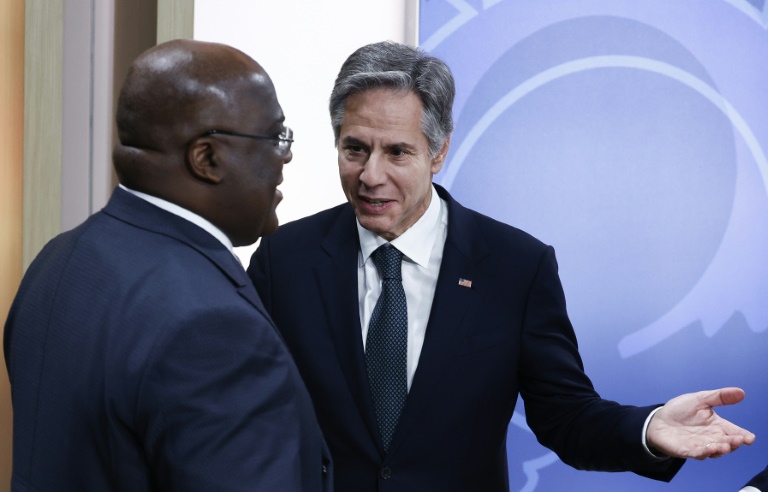
“The DRC is under pressure but unfortunately it’s not sufficiently heard or supported,” President Felix Tshisekedi told Secretary of State Antony Blinken as they met at a US-Africa summit in Washington.

The flooding is an example of “what we have been deploring for some time,” he said.

“Support must come from countries that pollute and unfortunately trigger the harmful consequences in our countries that lack the means to protect themselves,” he said.

Blinken offered condolences for the deaths, saying the flooding was “further evidence of the challenges we are facing with climate and something we need to work on together.”

Despite a series of international conferences, scientists say the planet is far off course from meeting a UN-blessed goal of checking warming at 1.5 degrees Celsius (2.7 Fahrenheit) above pre-industrial levels.

Blinken was also speaking to Tshisekedi as the United States puts pressure on Rwanda to stop alleged support for M23 rebels who have made rapid advances in the eastern DRC.

“Our country is unfortunately the victim of a secret aggression by Rwanda through the M23 movement,” Tshisekedi said.

“It is causing serious destabilization in part of our country that is already in distress, with hundreds of thousands of displaced living in precarious conditions.”

Rwanda, whose President Paul Kagame is also in Washington, denies support to the M23, which is mostly made of Congolese Tutsis. 

Relations between Rwanda and DR Congo have been strained since the mass arrival in the eastern DRC of Rwandan Hutus accused of slaughtering Tutsis during the 1994 genocide in Rwanda.

Aid staves off Somalia famine, for now: UN

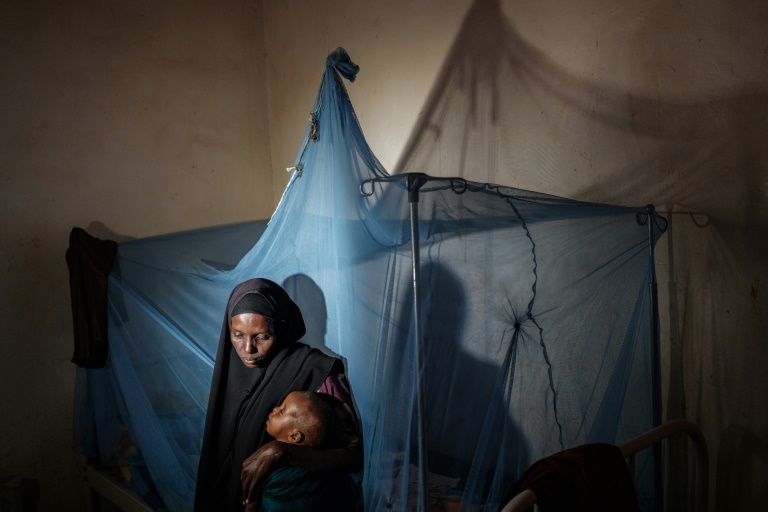
Humanitarian aid and support from local communities have helped avert a dreaded famine declaration in Somalia this year, but the situation remains “catastrophic,” the UN said on Tuesday.

The United Nations humanitarian agency OCHA said the latest assessment found that, technically, Somalia was not yet in the grip of full-blown famine.

The report “does not lead to a declaration of famine at this point, in large part thanks to the response of humanitarian organisations and local communities,” OCHA spokesman Jens Laerke told reporters in Geneva.

But, he warned, that “does not mean that people are not experiencing catastrophic food shortages.” 

“They have kept famine outside the door, but nobody knows for how much longer,” he said. 

“The underlying crisis has not improved.” 

The United States announced in response that it was contributing another $411 million in emergency food and other relief to Somalia, bringing its contribution this year to $1.3 billion.

“The warnings of the Famine Review Committee serve not as a stamp of inevitability, but as an alarm bell alerting us to our last lingering opportunities to avoid catastrophe,” said Samantha Power, administrator of the US Agency for International Development.

Somalia has been wracked by decades of civil war, political violence and an Islamist insurgency.

Millions of people are at risk of starvation across the wider Horn of Africa, in the grip of the worst drought in four decades after five consecutive failed rainy seasons wiped out livestock and crops.

If assistance is not scaled up, Laerke warned, “famine is expected to occur between April and June 2023 in southern Somalia,” including in the capital.

Agropastoral populations in Baidoa and Burhakaba districts, and displaced people in Baidoa town and in Mogadishu itself were most at risk, he said.

– ‘Step up’ –

The report indicated surging numbers of  people at the highest level on the UN’s five-scale food insecurity classification, known as IPC, which means they have dangerously little access to food and could face starvation.

When a large enough portion of a population is estimated to be at IPC level 5, a famine is declared.

Between last October and next June, the number of people at IPC5 in Somalia was expected to more than triple from 214,000 to 727,000, according to Tuesday’s report.

At the same time, some 8.3 million people across the country are expected to be at crisis level (IPC3) or above between April and June next year, up from 5.6 million today, it said.

A full 2.7 million of them were expected to be at IPC level 4, facing major food shortages, very high acute malnutrition and excess mortality.

“The situation can hardly get any worse,” Laerke warned.

He called countries “to step up and help the humanitarian organisations continue the very important and truly life-saving work” in Somalia.

James Elder, a spokesman for the UN children’s agency Unicef, said that the famine declaration had, for now, only been averted.

If the world wants to delay a famine declaration further or stave it off altogether, this would require “backbreaking work with proper funding,” he said.

“There is no doubt that large numbers of children have died… (and) that children are dying now.”

Close Bitnami banner
Bitnami