World

EU parliament sacks vice president charged in Qatar bribe probe

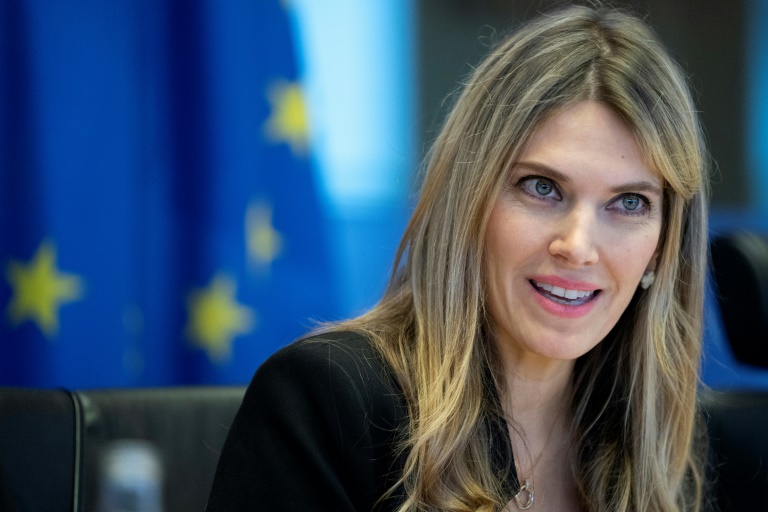
The European Parliament sacked one of its vice presidents on Tuesday amid corruption accusations allegedly linked to World Cup host Qatar, as EU officials scrambled to contain a widening scandal.

The assembly’s MEPs voted 625 to one to strip Greek socialist MEP Eva Kaili of her vice presidential role, despite her lawyer declaring that she was innocent and “has nothing to do with Qatar’s bribes”.

The government of Qatar has denied any connection to any wrongdoing in the case. 

Kaili’s arrest came during a series of police raids across homes and offices in and near Brussels in which at least 1.5 million euros ($1.6 million) in cash was seized. 

As the 44-year-old former TV news presenter sat in a Brussels jail cell, her colleagues in the Strasbourg parliament scrambled to distance themselves from the scandal.

The parliament’s president, Maltese conservative Roberta Metsola, called the sacking vote after reaching agreement with the leaders of the parliament’s political groupings, amid fears the scandal could spread.

On Wednesday, a Belgian judge will decide whether to maintain Kaili and three co-accused in custody pending trial. 

She was arrested last week during a series of raids by Belgian graft investigators on the homes and offices of several MEPs and their assistants or associates. 

Kaili is the only serving MEP to have been charged. But several more have had their offices put under police seal while investigations continue.

– Bags of cash-

A Belgian judicial source, confirming reports in Belgian newspapers Le Soir and Knack, said 600,000 euros were found at the home of one suspect, Italian former MEP Pier Antonio Panzeri; 150,000 euros in Kaili’s flat; and 750,000 in her father’s hotel room. 

Because some of the cash was found in Kaili’s home, a judicial source said, Belgium concluded that she was caught red-handed, thus preventing her from asserting immunity from prosecution normally extended to serving MEPs.

A Belgian judicial source told AFP that investigators believe that figures representing Gulf monarchy Qatar had been paying off European politicians to burnish the country’s image.

Qatar is a key energy supplier to Europe, and plays an important intermediary role in several diplomatic tangles.

But it has also been criticised for the alleged mistreatment of migrant workers, most notoriously those who built the World Cup stadiums. 

Kaili visited Qatar just before the competition and called it a “front-runner in labour rights”, to the consternation of activists and some of her colleagues. She has also defended Qatar’s quest to win EU visa waivers for its citizens.

Qatar denies any involvement in European corruption. “Any claims of misconduct by the State of Qatar are gravely misinformed,” an official told AFP.

Kaili’s lawyer Michalis Dimitrakopoulos told private Greek television channel Open TV: “Her position is she is innocent. She has nothing to do with Qatar’s bribes.”

Asked if any cash was found at Kaili’s home, Dimitrakopoulos said: “I am not confirming or denying. There is confidentiality. I have no idea if money was found or how much was found.”

But Brussels has been rocked by the claims, and Metsola, defending the integrity of the parliament, has sought to portray the alleged bribes as an assault on democracy.

Some MEPs braced for more revelations. “I’m fearful that what we’re seeing here is just the tip of the iceberg,” warned German social democrat Rene Repasi. 

Metsola also promised Qatar’s EU visa waiver bid would be sent back to a parliamentary committee for further scrutiny, delaying or derailing the measure.

– Further allegations –

Kaili was one of six people arrested. Four have been charged with “criminal organisation, corruption and money laundering” and two released.

One of those released was Luca Visentini, the general secretary of the International Trade Union Confederation, a global labour body that has pushed Qatar on labour rights. 

“Should any further allegations be made, I look forward to the opportunity to refute them, as I am innocent of any wrongdoing,” he said in an ITUC statement.

The European Parliament is expected to approve a second text calling for more transparency to deter corruption in European institutions, which will go to a vote on Thursday. 
Mali's world-beating nonuplets back home

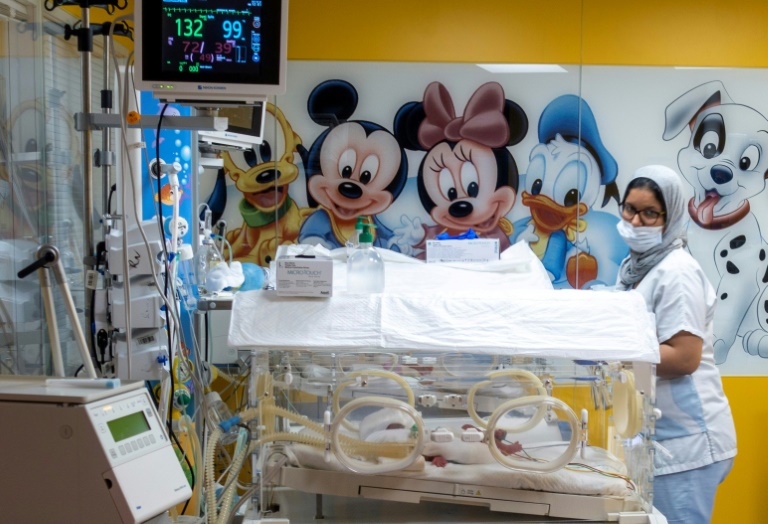
A Malian mother who gave birth to nine babies in Morocco last year returned home on Tuesday with her infants, Health Minister Dieminatou Sangare told AFP.

“Joy and satisfaction to see them in good health. The mother and babies are doing well and have arrived safe and sound in Mali,” she said in a message.

Sangare showed pictures on her Facebook page of her welcoming the two parents and their nine children in the capital Bamako.

Halima Cisse, a young woman from the northern city of Timbuktu, gave birth to five girls and four boys in Casablanca in May 2021.

Mali’s government flew her to the city’s Ain Borja clinic, which had better facilities to cope with multiple pregnancies than in the impoverished Sahel state.

Doctors had worried for the health of the mother-to-be and for the babies’ chances of survival, given the high risk of very premature birth.

She was 25 weeks pregnant when admitted and medical staff managed to extend her term to 30 weeks.

All were delivered safe and sound by Caesarean section, using a team of 10 doctors assisted by 25 paramedics.

They each weighed between 500 grams and one kilogram (1.1 and 2.2 pounds) but needed to stay in Morocco to benefit from specialist care.

The verified world record for the most living births is eight, born to an American woman, Nadya Suleman, nicknamed “Octomum”, in 2009 when she was 33.

“This is a first. It’s a source of pride for us,” Sangare said.

She said “the state honoured its commitments” in helping Cisse and expressed her thanks to the Moroccan medical team.

India's Paytm to buy back shares after 75% stock rout

Indian mobile payments giant Paytm will launch a share buyback, it said Tuesday, offering investors little more than a third of what they paid just over a year ago in the country’s then-biggest IPO.

Paytm’s shares have nosedived 75 percent since its $2.5 billion flotation in November 2021, demonstrating the risks of overpriced share offers in loss-making tech firms.

Its market debut came in the midst of an IPO frenzy in Asia’s third-largest economy last year, with start-ups attracting billions of dollars in investment in a bright spot in the Covid-battered economy.

But the shares nosedived 27 percent on their first day of trading due to concerns about losses, dropping further in subsequent months before settling to trade at a quarter of their IPO value.

Paytm said it will buy shares back at 810 rupees ($9.80) each, a steep 62 percent discount to the IPO price of 2,150 rupees, but a 50 percent premium on Tuesday’s closing price.

Founder Vijay Shekhar Sharma, once named India’s youngest billionaire, has dropped off Forbes’ list of 100 richest Indians after his personal net worth — $2.4 billion at the IPO price — eroded in line with his company’s stock price.

The stock collapse raises concerns for Paytm’s biggest shareholders, which include Softbank, Alibaba, Berkshire Hathaway and Canada Pension Plan Investment Board, many of which are also grappling with a global tech stock meltdown.

“We value our shareholders and their journey with us in the public markets,” Sharma said in a statement, promising that the $103 million buyback “will be immensely beneficial for our stakeholders and will drive long-term shareholder value”.

The firm remains deeply in the red, reporting a net loss of 5.7 billion rupees in the quarter ended September 30, despite a 76 percent jump in revenues.

But in a disclosure to stock exchanges, it insisted it was “on a clear path to deliver cash flow profitability”.

Paytm’s platform was launched in 2010 and quickly became synonymous with digital payments in a country traditionally dominated by cash transactions.

It has benefited from the government’s efforts to curb the use of cash — including the demonetisation of nearly all banknotes in circulation five years ago — and most recently, from the pandemic.

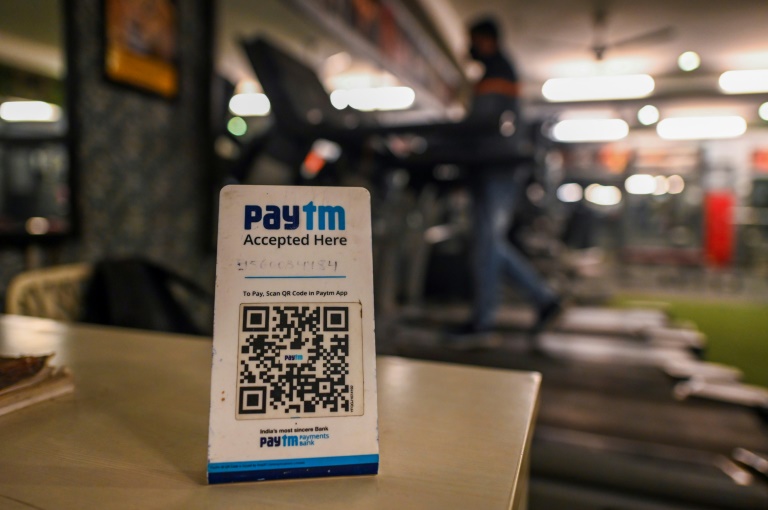
Indian shop owners, taxi and rickshaw drivers and other vendors accept payments as low as 10 rupees ($0.13) using Paytm’s ubiquitous blue-and-white QR code stickers.

Merchant payments rose 37 percent year-on-year to $28 billion in the months of October and November, the company said in a business update released Monday.

More than 84 million customers used Paytm’s diversified marketplace and payments app in the months of October and November, the company said, up from 80 million in the quarter ended September 30.

Stocks surge, dollar drops as US inflation cools

Stocks surged while the dollar dropped Tuesday as US inflation slowed more than expected, opening the way for the Federal Reserve to reduce the tempo of interest rate hikes.

US consumer prices rose at an annual pace of 7.1 percent in November, down from 7.7 percent in October, according to Labor Department data.

The consumer price index (CPI) is a closely-watched measure of inflation and was forecast by analysts to come in at 7.3 percent. 

The bigger-than-expected drop should come as a relief to monetary policymakers after wholesale inflation proved hotter than expected last week.

“The key takeaway from the report at first blush is that overall inflation is cooling and that the Fed should be convinced to temper the pace of its rate hikes and perhaps place a lower ceiling on its terminal rate,” said market analyst Patrick O’Hare at Briefing.com.

The central bank is widely expected to lift interest rates 50 basis points Wednesday — a slowdown from the previous four 75-point hikes. 

Lower inflation and interest rates are positive for businesses, and stock prices in Europe surged after the US inflation data was released.

While they later gave up part of those gains, London ended the day up 0.8 percent, Frankfurt 1.3 percent and Paris 1.4 percent.

Wall Street’s main indices jumped more than two percent at the opening bell, but gave up some of those gains as the morning wore on.

The Dow stood up 0.7 percent in late morning trading.

“In summary, Santa has delivered a nice enough package to the Fed, who can now celebrate the Christmas with more peace knowing that inflation is moving in the direction that they want with plenty of tail wind behind,” said Naeem Aslam, chief market analyst at Avatrade.

The prospect of the Fed slowing interest rate hikes was not positive for the US dollar, however, which lost more than one percent against its main rival currencies before cutting losses.

The weak dollar helped oil prices jump more than three percent, with Brent crude rising back above $80 per barrel.

Elsewhere, China’s shift away from its economically damaging zero-Covid policy continued to support sentiment as the world’s number two economy opens up.

Top Chinese officials are meeting this week to draw up their economic blueprint for re-emerging from Covid, with observers predicting more stimulus measures and pledges of support for the troubled property sector.

But there is also a worry among investors that the quick relaxation of containment measures such as mass testing and lockdowns might lead to a massive surge in infections that could overwhelm the healthcare system and weigh on the economy.

Still, the expected pick-up in demand in China boosted oil prices further, with both main contracts extending Monday’s strong gains.

“China’s reopening is coming, it won’t happen overnight, but it will provide a major boost to demand in the outlook next quarter,” said OANDA’s Edward Moya. 

Ahead of the Wall Street open, United Airlines unveiled an order of 100 new Boeing 787 Dreamliners with options for an additional 100 jets.

Shares in Boeing climbed 0.9 percent, but United Airlines tumbled 5.7 percent.

And the US Securities and Exchange Commission charged disgraced cryptocurrency tycoon Sam Bankman-Fried with defrauding customers of billions of dollars.

– Key figures around 1630 GMT –

New York – Dow: UP 0.7 percent at 34,235.03 points

EURO STOXX 50: UP 1.7 percent at 3,986.83

London – FTSE 100: UP 0.8 percent at 7,502.89 (close)

Frankfurt – DAX: UP 1.3 percent at 14,497.89 (close)

Paris – CAC 40: UP 1.4 percent at 6,744.98 (close)

Tokyo – Nikkei 225: UP 0.4 percent at 27,954.85 (close)

Hong Kong – Hang Seng Index: UP 0.7 percent at 19,596.20 (close)

Shanghai – Composite: DOWN 0.1 percent at 3,176.33 (close)

Euro/dollar: UP at $1.0658 from $1.0539 on Monday

Dollar/yen: DOWN at 134.96 yen from 137.66 yen

Pound/dollar: UP at $1.2392 from $1.2268

Euro/pound: UP at 86.05 pence from 85.78 pence

Brent North Sea crude: UP 3.6 percent at $80.76 per barrel

West Texas Intermediate: UP 3.4 percent at $75.66 per barrel

burs-rl/bp

Detained Peruvian ex-president says he will 'never give up'

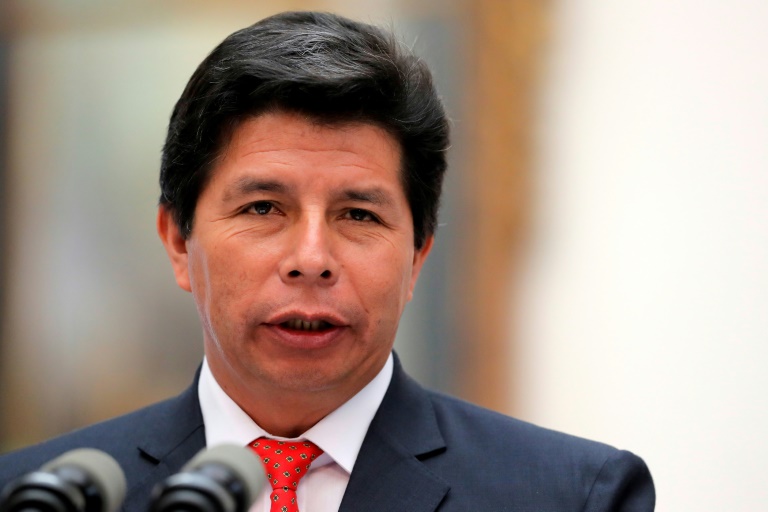
Former Peruvian president Pedro Castillo, who was removed from office and arrested last week on charges of rebellion and conspiracy, insisted Tuesday he would “never give up” his cause.

Castillo also called on police and the military to “stop killing” protesters demanding his release and reinstatement, after violent clashes between security forces and demonstrators left seven people dead in recent days.

“I will never give up and abandon this popular cause that brought me here,” the leftist Castillo said during a court hearing.

“From here I would like to urge the armed forces and national police to lay down their arms and stop killing these people thirsty for justice.

He said his arrest was unjust and arbitrary.

“I am not a thief, a rapist, corrupt or a thug,” he added during the virtual hearing into his appeal against provisional detention.

Castillo was arrested last Wednesday after he attempted to dissolve congress and rule by decree just hours before the legislature was due to hold a third impeachment vote against him. Castillo and his family were being investigated for alleged corruption.

Congress went ahead with its vote and overwhelmingly decided to impeach him for “moral incapacity.”

He was provisionally detained for seven days as prosecutors accused him of rebellion and conspiracy.

Within a matter of hours his vice-president Dina Boluarte, a former prosecutor, was sworn in as Castillo’s successor.

However, Castillo’s supporters began protesting almost immediately, with matters escalating on Sunday when two people were killed in clashes between demonstrators and the security forces.

Another five people died on Monday in more violent clashes.

Six of the seven dead have been in Apurmiac region, where Boluarte was born.

The other death happened in Peru’s second largest city Arequipa as police cleared hundreds of protesters from the runway at the city’s airport where they had set up barricades of burning tires, logs and rocks.

Boluarte tried to calm tensions on Sunday by vowing to bring forward elections from 2026 to 2024 and declaring a state of emergency in flashpoint areas.

Protests continued on Tuesday with road blocks in 13 of the country’s 24 regions, according to police.

The worst hit areas are in the north and the south, including the region of Cusco, a hotspot for tourism in the country as it is home to the Machu Picchu Inca citadel, and Arequipa.

Indigenous and agrarian organizations have also called an indefinite strike to begin on Tuesday.

That forced the train service between the city of Cusco and Machu Picchu to be suspended, the rail operator said.

Cusco airport was also shut overnight due to attempts by protesters to get inside.

The situation in Lima was calm on Tuesday morning following clashes on Monday night in which police used tear gas to disperse hundreds of protesters trying to reach the congress building.

Fifty-five dead as floods strike DR Congo capital

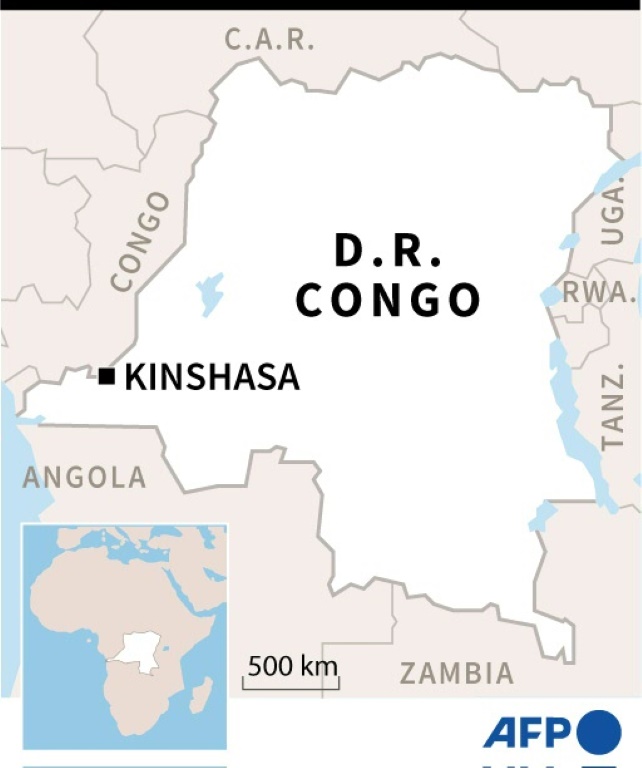
At least 55 people died on Tuesday as the worst floods in years battered DR Congo’s capital Kinshasa following an all-night downpour, according to an official toll.

Major roads in the centre of Kinshasa, a city of some 15 million people, were submerged for hours, and a key supply route was cut off.

City police chief General Sylvano Kasongo, in a statement to AFP, gave a provisional toll of at least 55 dead, concentrated especially on hillside locations where there had been landslips.

An AFP reporter saw the bodies of nine members of a family who had died after the collapse of their home in the Binza Delvaux district.

“We were woken up at around 4:00 a.m. by water entering the house,” a relative said.

“We drained the water out, and thinking that there was no more danger we went back indoors to sleep — we were soaked,” he said.

The family went back to bed and “just afterwards the wall collapsed”.

Located on the Congo River, Kinshasa has seen a huge population influx in recent years.

Many dwellings are shanty houses built on flood-prone slopes and the city suffers from inadequate drainage and sewerage. 

A major landslide occurred in the hilly district of Mont-Ngafula, smothering National Highway 1, a key supply route linking the capital with Matadi, a port further down the Congo River and a crucial outlet to the Atlantic Ocean.

Prime Minister Jean-Michel Sama Lukonde told reporters at the scene that around 20 people there had died when “homes were swept away”.

Searches are continuing for survivors, he said.

The highway should be reopened to small vehicles within the next day, but it could take “three or four days” for trucks, the prime minister said.

The streets in the up-market government district of Gombe, which houses ministries and embassies, were also inundated.

– ‘Disaster’ –

In November 2019, around 40 people in Kinshasa died in floods and landslides. 

Mont-Ngafula was one of the worst-hit areas, but a local resident said the flooding this time was even worse.

“We’ve never seen a flood here on this scale,” said Blanchard Mvubu, who lives in the Mont-Ngafula neighbourhood of CPA Mushie.

“I was asleep and I could feel water in the house… it’s a disaster — we’ve lost all our possessions in the house, nothing could be saved.”

He added: “People are building big houses and that blocks up the drains. The water can’t move freely and that’s what causes the floods.”

Another man, who gave his name as Freddy, said everything in his home was under water — “shoes, food stocks, clothes. Everything is lost, there’s nothing to be saved.”

Close by, a young man was asking 500 Congolese francs (24 cents) from passers-by to carry them on his back across the submerged street.

Another man, who identified himself as a teacher, was walking barefoot in the water, holding a pair of shoes in one hand and a plastic bag containing documents in the other.

“I’ve got no other choice,” he said. “I have to give schoolchildren an exam.”

US researchers announce historic nuclear fusion breakthrough

US researchers announced a historic nuclear fusion breakthrough on Tuesday, hailing a “landmark achievement” in the quest for a source of unlimited, clean power and an end to reliance on fossil fuels.

The Lawrence Livermore National Laboratory (LLNL) in California said an experiment it conducted this month “produced more energy from fusion than the laser energy used to drive it.”

The US Department of Energy described the achievement of fusion ignition as a “major scientific breakthrough” that will lead to “advancements in national defense and the future of clean power.”

LLNL director Kim Budil described it as “is one of the most significant scientific challenges ever tackled by humanity.”

Scientists have been working for decades to develop nuclear fusion — touted by its supporters as a clean, abundant and safe source of energy that could eventually allow humanity to break its dependence on the fossil fuels driving a global climate crisis.

The LLNL said a team at its National Ignition Facility (NIF) conducted the first controlled fusion experiment in history on December 5, achieving what is known as “scientific energy breakeven.”

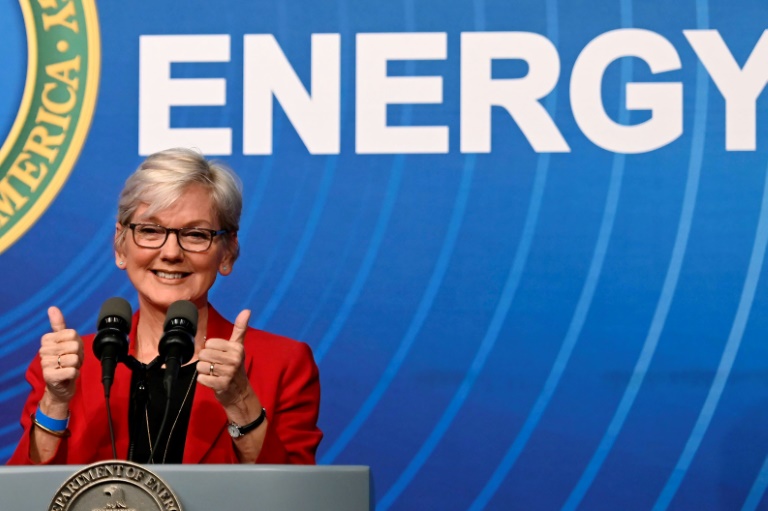
“This is a landmark achievement for the researchers and staff at the National Ignition Facility who have dedicated their careers to seeing fusion ignition become a reality, and this milestone will undoubtedly spark even more discovery,” US Secretary of Energy Jennifer Granholm said.

– More developments needed –

Nuclear power plants around the world currently use fission — the splitting of a heavy atom’s nucleus — to produce energy.

Fusion on the other hand combines two light hydrogen atoms to form one heavier helium atom, releasing a large amount of energy in the process.

That’s the process that occurs inside stars, including our sun.

On Earth, fusion reactions can be provoked by heating hydrogen to extreme temperatures inside specialized devices.

Researchers at the LLNL use the massive National Ignition Facility — 192 ultra-powerful lasers all pointed into a thimble-sized cylinder filled with hydrogen.

Like fission, fusion is carbon-free during operation, but has many more advantages: it poses no risk of nuclear disaster and produces much less radioactive waste.

However, there is still a long way to go before fusion is viable on an industrial scale.

“Many advanced science and technology developments are still needed to achieve simple, affordable IFE to power homes and businesses,” LLNL said.

Other nuclear fusion projects are also in development around the world, including the major international project known as ITER, which is currently under construction in France.

Instead of lasers, ITER will use a technique known as magnetic confinement, containing a swirling mass of fusing hydrogen plasma within a massive donut-shaped chamber.

US inflation slows in November in smallest spike in year

US consumer inflation eased in November, according to government data released Tuesday, bringing some relief to policymakers with the smallest annual increase in nearly a year.

Officials are closely eying the monthly inflation report for signs that painfully high consumer prices are definitively moderating at last, as surging costs of living force households to dip into their savings.

The consumer price index (CPI), a closely-watched measure of inflation, jumped 7.1 percent from a year ago, down from 7.7 percent in October, according to Labor Department figures.

But the overall number is still about three times the pre-pandemic pace.

Prices ticked up 0.1 percent from October to November, a smaller-than-expected increase after a prior 0.4 percent jump, the latest data showed.

President Joe Biden reacted with cautious optimism about the US economy, saying the figures gave “a reason for some optimism for the holiday season and I would argue for the year ahead.”

Core prices, which exclude the volatile food and energy segments, rose 0.2 percent in November, down from a 0.3 percent pick-up in October.

“The index for shelter was by far the largest contributor to the monthly all items increase, more than offsetting decreases in energy indexes,” the Labor Department said in a statement.

Food inflation nudged up as well, underscoring the financial squeeze that households are still experiencing.

While an improvement from before, the data likely reinforces official views that costs remain far too high, and US central bankers are poised to push on in their quest to cool the world’s biggest economy.

The Federal Reserve has raised the benchmark lending rate six times this year in hopes of lowering demand, walking a fine line between reining in prices and triggering a recession.

The lower inflation figure is likely to fuel optimism for easing in the Fed’s aggressive campaign as its policy-setting committee starts a two-day meeting Tuesday that is widely expected to culminate in a smaller rate hike.

– Right direction –

Consumer inflation remains much higher than the Fed’s longer-term goal of two percent, even as prices are “moving in the right direction,” said economist Rubeela Farooqi of High Frequency Economics Tuesday.

But “further sustained improvement” over the coming months could allow the Fed to slow its pace of rate hikes more, she added.

While goods prices are decelerating, they still contribute heavily to CPI changes and a reversal of the trend will take time, she warned in an earlier analysis.

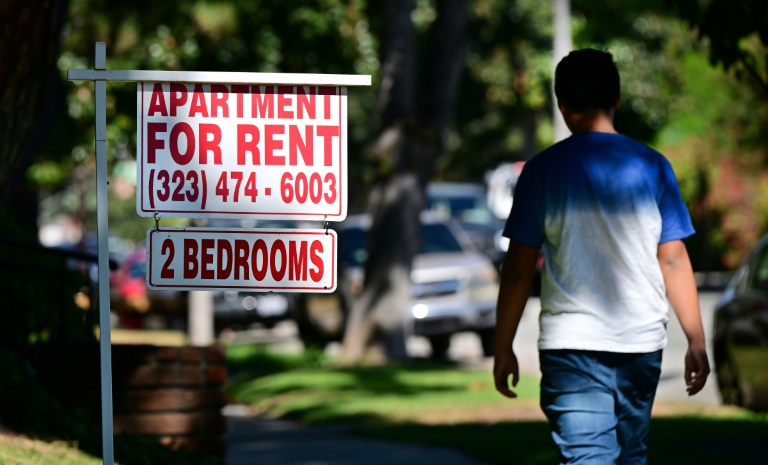
James Knightley of ING told AFP that while the asking price for rents appears to be falling in many cities, most people are still paying “considerably more” than last year.

Analysts have also been watching price increases in services, given that quickly rising wages feed into this segment and “continue to run hot,” he noted.

“This is clearly an area of concern for the Fed,” he said.

S.Africa's Ramaphosa dodges impeachment vote in parliament

South Africa’s scandal-engulfed President Cyril Ramaphosa on Tuesday easily survived a vote in parliament on whether to initiate impeachment proceedings that could have forced him out of office.

After a heated debate, his ruling African National Congress (ANC) party defeated the motion by 214 votes to 148, with two abstentions through open voting.

The “inquiry will therefore not be proceeded with”, declared National Assembly speaker Nosiviwe Mapisa-Nqakula, preventing an impeachment over allegations he concealed a huge cash theft at his farm.

The removal of Ramaphosa could have thrown the Africa’s most industrialised country into political instability.

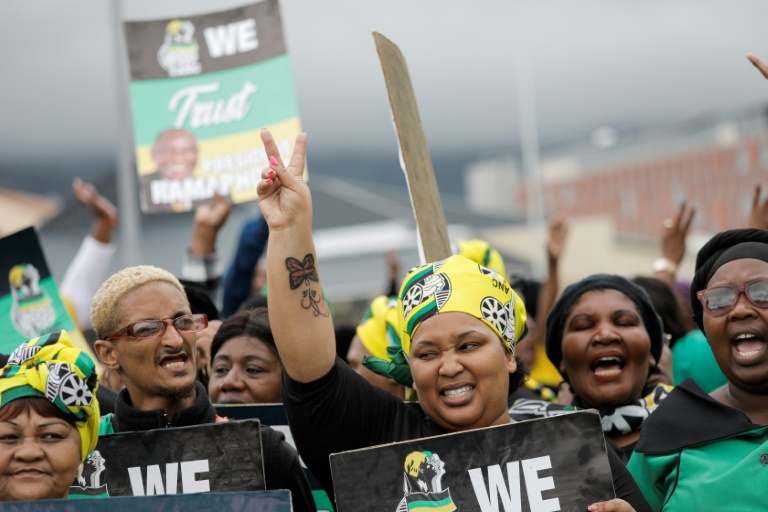
Ramaphosa — championed as a graft-busting saviour after corruption-stained predecessor Jacob Zuma — escaped thanks to the support of a majority of MPs from the ANC, which has been further divided by the scandal.

The extraordinary parliamentary session opened noisily in Cape Town to discuss the findings of an independent panel which said Ramaphosa may be guilty of serious violations and misconduct.

The 70-year-old president survived the day, thanks to his party’s majority in parliament.

Last week, he secured the renewed backing of the ANC, which holds 230 of the National Assembly’s 400 seats, after mounting a legal bid to have the damning report annulled. Some of his party MPs were absent during voting.

Justice Minister Ronald Lamola trashed the report saying “there is not sufficient evidence to impeach the president”.

“The panel report has set the bar too low to impeach a sitting president,” he said.

– ‘Constitutional delinquent’ –

The ANC national executive had vowed last week to shoot down any attempt to force Ramaphosa from office. 

That decision upset some, who said the executive had forced their hand. 

A few ANC lawmakers, including Nkosazana Dlamini-Zuma — Ramaphosa’s rival, a cabinet minister and Zuma’s former wife — defied the party command.

Ramaphosa’s graft-tainted predecessor Zuma survived several no-confidence motions during his tenure before his own party forced him to resign in 2018.

Opposition parties presented a largely united front on the issue. 

Julius Malema, the fiery leader of the second largest opposition Economic Freedom Fighters party, expressed “deepest disappointment” in Ramaphosa who was once a “celebrated… architect” of South Africa’s constitution. 

He said Ramaphosa was now “peeing” on that document, calling him a “constitutional delinquent”.

Vuyolwethu Zungula, leader of the African Transformation Movement, a small opposition party which tabled the motion for the parliament-sanctioned inquiry into the scandal, said the “watershed moment” would “affirm that no one is above the law”.

– Sudanese element –

Ramaphosa, who was at his home during the vote, kicked off his day in the capital Pretoria, attending under pouring rain a police graduation ceremony.

If the opposition had had its way, Ramaphosa would have faced the prospect of having the affair further scrutinised by parliament in a year that leads to general elections in 2024.

An impeachment vote itself would have needed the support of a two-thirds majority of MPs to succeed.

The president, who was a wealthy businessman before entering politics, found himself in hot water in June when a controversial ex-spy boss filed a complaint against him to the police.

Arthur Fraser alleged Ramaphosa had concealed the theft of several million dollars from his farm in 2020.

He accused the president of having the burglars kidnapped and bribed into silence instead of reporting the matter to the authorities. 

Ramaphosa has not been charged with any crime and has denied wrongdoing.

The findings of the three-person special probe, issued last week, brought forward details that have left South Africa agog.

Ramaphosa acknowledged the theft of $580,000 in cash that was stashed under sofa cushions at his farm — a safer place, his employees said, than the office safe.

He said the money was payment for buffaloes bought by a Sudanese businessman, who recently confirmed the transaction in interviews with British media.

Sound of a dust devil on Mars recorded for first time

The sound of a dust devil on Mars was recorded for the first time as the eye of the whirlwind swept over the top of NASA’s Perseverance rover, a new study said Tuesday. 

“We hit the jackpot” when the rover’s microphone picked up the noise made by the dust devil overhead, the study’s lead author Naomi Murdoch told AFP.

The researchers hope the recording will help to better understand the weather and climate on Mars, including how its arid surface and thin atmosphere may once have supported life.

Common across Mars, dust devils are short-lived whirlwinds loaded with dust that form when there is a major difference between ground and air temperatures.

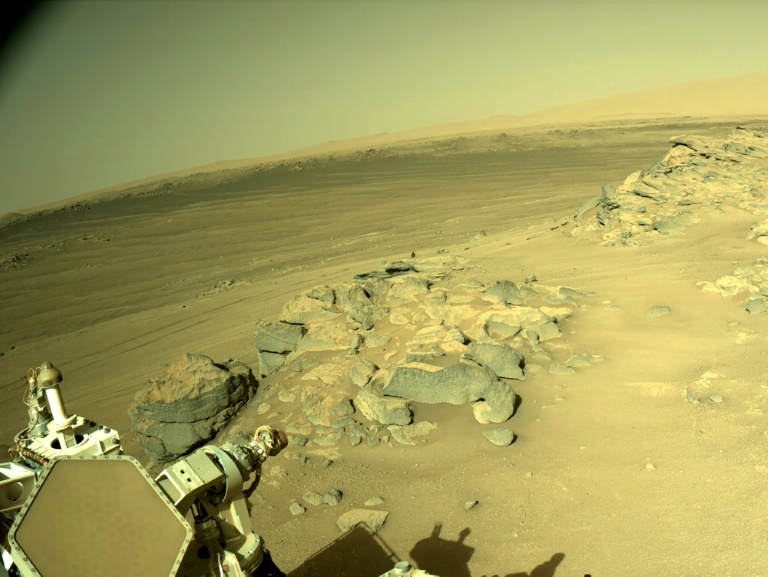
They are a common feature in the Jezero crater, where the Perseverance rover has been operational since February 2021 — but it had never before managed to record audio of one of them.

By chance on September 27, 2021, a dust devil 118 metres (390 feet) high and 25 metres wide passed directly over the rover.

This time the microphone on the rover’s SuperCam — which previously recorded the first ever audio from the Martian surface — managed to catch the muffled, whirring sounds of the dust devil.

“We hear the wind associated with the dust devil, the moment it arrives, then nothing because we are in the eye of the vortex,” said Murdoch, a planetary researcher at France’s ISAE-SUPAERO space research institute, where the SuperCam’s microphone was designed.

Then the sound returns “when the microphone passes through the second wall” of the dust devil, she added.

– A dust devil mystery –

The impact of the dust made “tac tac tac” sounds which will let researchers count the number of particles to study the whirlwind’s structure and behaviour, she said.

It could also help solve a mystery that has puzzled scientists. On some parts of Mars, “whirlwinds pass by sucking up dust, cleaning the solar panels of rovers along the way,” Murdoch said.

But in other areas, the whirlwinds move by without kicking up much dust. “They’re just moving air,” Murdoch said, adding that “we don’t know why”.

For example, the solar panels of NASA’s InSight lander are “covered in dust” because it is located at a spot where it cannot take advantage of these natural vacuum cleaners, she said.

Understanding why this happens could help scientists build a model of dust devils so they might predict where the whirlwinds might strike next. 

It could even shed light on the great dust storms that sweep across the planet, famously depicted in the 2015 science-fiction film “The Martian”, starring Matt Damon. However Murdoch noted that the violence of the dust storms shown in the film was “unrealistic”.

Sylvestre Maurice, a planetary scientist and co-author of the study published in the journal Nature Communications, said that analysing Martian dust makes it possible to “explore the interactions” between the ground and the extremely thin atmosphere.

The atmosphere was much thicker billions of years ago, which allowed for the presence of life-sustaining liquid water, said Maurice, who also works on the SuperCam.

“You might think that studying the Martian climate today is unrelated to the search for traces of life from billions of years ago,” he said.

“But it is all part of a whole, because the history of Mars is one of extreme climate change from a humid, hot planet to a completely arid and cold planet.”

Close Bitnami banner
Bitnami