World

EU parliament sacks vice president charged in Qatar bribe probe

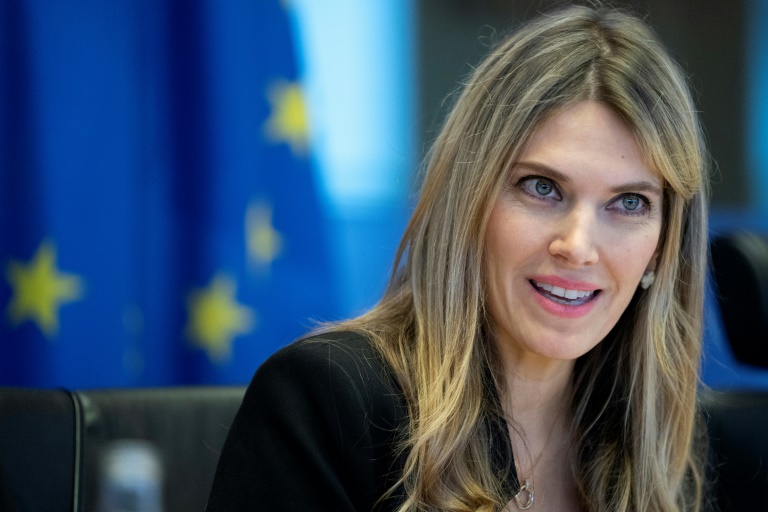
The European Parliament sacked one of its vice presidents on Tuesday amid corruption accusations allegedly linked to World Cup host Qatar, as EU officials scrambled to contain a widening scandal.

The assembly’s MEPs voted 625 to one to strip Greek socialist MEP Eva Kaili of her vice presidential role, despite her lawyer declaring that she was innocent and “has nothing to do with Qatar’s bribes”.

The government of Qatar has denied any connection to any wrongdoing in the case. 

Kaili’s arrest came during a series of police raids across homes and offices in and near Brussels in which at least 1.5 million euros ($1.6 million) in cash was seized. 

As the 44-year-old former TV news presenter sat in a Brussels jail cell, her colleagues in the Strasbourg parliament scrambled to distance themselves from the scandal.

The parliament’s president, Maltese conservative Roberta Metsola, called the sacking vote after reaching agreement with the leaders of the parliament’s political groupings, amid fears the scandal could spread.

On Wednesday, a Belgian judge will decide whether to maintain Kaili and three co-accused in custody pending trial. 

She was arrested last week during a series of raids by Belgian graft investigators on the homes and offices of several MEPs and their assistants or associates. 

Kaili is the only serving MEP to have been charged. But several more have had their offices put under police seal while investigations continue.

– Bags of cash-

A Belgian judicial source, confirming reports in Belgian newspapers Le Soir and Knack, said 600,000 euros were found at the home of one suspect, Italian former MEP Pier Antonio Panzeri; 150,000 euros in Kaili’s flat; and 750,000 in her father’s hotel room. 

Because some of the cash was found in Kaili’s home, a judicial source said, Belgium concluded that she was caught red-handed, thus preventing her from asserting immunity from prosecution normally extended to serving MEPs.

A Belgian judicial source told AFP that investigators believe that figures representing Gulf monarchy Qatar had been paying off European politicians to burnish the country’s image.

Qatar is a key energy supplier to Europe, and plays an important intermediary role in several diplomatic tangles.

But it has also been criticised for the alleged mistreatment of migrant workers, most notoriously those who built the World Cup stadiums. 

Kaili visited Qatar just before the competition and called it a “front-runner in labour rights”, to the consternation of activists and some of her colleagues. She has also defended Qatar’s quest to win EU visa waivers for its citizens.

Qatar denies any involvement in European corruption. “Any claims of misconduct by the State of Qatar are gravely misinformed,” an official told AFP.

Kaili’s lawyer Michalis Dimitrakopoulos told private Greek television channel Open TV: “Her position is she is innocent. She has nothing to do with Qatar’s bribes.”

Asked if any cash was found at Kaili’s home, Dimitrakopoulos said: “I am not confirming or denying. There is confidentiality. I have no idea if money was found or how much was found.”

But Brussels has been rocked by the claims, and Metsola, defending the integrity of the parliament, has sought to portray the alleged bribes as an assault on democracy.

Some MEPs braced for more revelations. “I’m fearful that what we’re seeing here is just the tip of the iceberg,” warned German social democrat Rene Repasi. 

Metsola also promised Qatar’s EU visa waiver bid would be sent back to a parliamentary committee for further scrutiny, delaying or derailing the measure.

– Further allegations –

Kaili was one of six people arrested. Four have been charged with “criminal organisation, corruption and money laundering” and two released.

One of those released was Luca Visentini, the general secretary of the International Trade Union Confederation, a global labour body that has pushed Qatar on labour rights. 

“Should any further allegations be made, I look forward to the opportunity to refute them, as I am innocent of any wrongdoing,” he said in an ITUC statement.

The European Parliament is expected to approve a second text calling for more transparency to deter corruption in European institutions, which will go to a vote on Thursday. 

US files criminal charges against crypto tycoon Bankman-Fried

US prosecutors slapped disgraced cryptocurrency tycoon Sam Bankman-Fried with multiple criminal charges on Tuesday for massive fraud as he built his FTX crypto empire.

The founder of the FTX platform, who was arrested in the Bahamas Monday at the request of the United States, is facing a raft of accusations, including from US market regulators who say that the investor knowingly built a fraudulent house of cards.

The criminal charges, made by federal prosecutors in New York, pose the greatest legal peril for Bankman-Fried who risks a long jail sentence given the billions of dollars amounts involved.

In their indictment, US prosecutors said Bankman Fried also carried out money laundering, violated campaign finance laws and committed wire fraud from the very start of his company in 2019.

The charge comes a day after Bankman-Fried was arrested in the Bahamas on the eve of his scheduled appearance at a US congressional hearing in which he was to testify under oath about the crypto exchange’s overnight demise.

The US Securities and Exchange Commission said the onetime crypto wunderkind was “responsible for fraudulently raising billions of dollars from investors in FTX and misusing funds belonging to FTX’s trading customers.”

The legal hammer fell after 30-year-old defied legal advice and made multiple media appearances offering his version of his company’s sudden failure, usually by video link from the Bahamas, where his company is headquartered.

According to a press release from the attorney general’s office in the Bahamas, Bankman-Fried was to be held in custody before an expected request for his extradition by the United States and a hearing was expected in Nassau on his legal fate.

Bankman-Fried had embodied the apparent emergence of cryptocurrency as an above-board investment rather than a frowned-upon get-rich-quick scheme. 

His FTX platform was plugged by celebrities in advertising campaigns and he became a regular presence in Washington, where he donated tens of millions of dollars in political contributions.

But after reaching a valuation of $32 billion, FTX’s implosion was swift following a November 2 report on ties between FTX and Alameda, a trading company also controlled by Bankman-Fried.

The report exposed that Alameda’s balance sheet was heavily built on the FTT currency — a token created by FTX with no independent value.

– ‘Life in prison’? –

The price of FTT plunged in early November, roiling both Alameda and FTX, where Alameda had large trading positions. 

Reeling from customer withdrawals and short some $8 billion, FTX and around 100 related entities filed for bankruptcy protection on November 11, inviting scrutiny from regulators, prosecutors and furious clients. 

“If convicted he could be facing the rest of his life in prison, given the dollar amount of the fraud,” Jacob S. Frenkel, a former federal criminal prosecutor at Dickinson Wright, told AFP.

“We would not see an indictment if prosecutors were not absolutely convinced that they will win a conviction.”

In his media interviews, Bankman-Fried has admitted to mistakes, but has denied intent to defraud his customers.

FTX CEO John Ray, who came to the company after the debacle, was to tell Congress on Tuesday that the problems arose because control was “in the hands of a very small group of grossly inexperienced and unsophisticated individuals.”

“Never in my career have I seen such an utter failure of corporate controls at every level of an organization, from the lack of financial statements to a complete failure of any internal controls or governance whatsoever,” Ray said in prepared remarks.

The fall of FTX has caused major doubts about the long term viability of cryptocurrency and heaped stress on other platforms and entities that rode the success of Bitcoin and other currencies.

US files criminal charges against crypto tycoon Bankman-Fried

US prosecutors slapped disgraced cryptocurrency tycoon Sam Bankman-Fried with multiple criminal charges on Tuesday for massive fraud as he built his FTX crypto empire.

The founder of the FTX platform, who was arrested in the Bahamas Monday at the request of the United States, is facing a raft of accusations, including from US market regulators who say that the investor knowingly built a fraudulent house of cards.

The criminal charges, made by federal prosecutors in New York, pose the greatest legal peril for Bankman-Fried who risks a long jail sentence given the billions of dollars amounts involved.

In their indictment, US prosecutors said Bankman Fried also carried out money laundering, violated campaign finance laws and committed wire fraud from the very start of his company in 2019.

The charge comes a day after Bankman-Fried was arrested in the Bahamas on the eve of his scheduled appearance at a US congressional hearing in which he was to testify under oath about the crypto exchange’s overnight demise.

The US Securities and Exchange Commission said the onetime crypto wunderkind was “responsible for fraudulently raising billions of dollars from investors in FTX and misusing funds belonging to FTX’s trading customers.”

The legal hammer fell after 30-year-old defied legal advice and made multiple media appearances offering his version of his company’s sudden failure, usually by video link from the Bahamas, where his company is headquartered.

According to a press release from the attorney general’s office in the Bahamas, Bankman-Fried was to be held in custody before an expected request for his extradition by the United States and a hearing was expected in Nassau on his legal fate.

Bankman-Fried had embodied the apparent emergence of cryptocurrency as an above-board investment rather than a frowned-upon get-rich-quick scheme. 

His FTX platform was plugged by celebrities in advertising campaigns and he became a regular presence in Washington, where he donated tens of millions of dollars in political contributions.

But after reaching a valuation of $32 billion, FTX’s implosion was swift following a November 2 report on ties between FTX and Alameda, a trading company also controlled by Bankman-Fried.

The report exposed that Alameda’s balance sheet was heavily built on the FTT currency — a token created by FTX with no independent value.

– ‘Life in prison’? –

The price of FTT plunged in early November, roiling both Alameda and FTX, where Alameda had large trading positions. 

Reeling from customer withdrawals and short some $8 billion, FTX and around 100 related entities filed for bankruptcy protection on November 11, inviting scrutiny from regulators, prosecutors and furious clients. 

“If convicted he could be facing the rest of his life in prison, given the dollar amount of the fraud,” Jacob S. Frenkel, a former federal criminal prosecutor at Dickinson Wright, told AFP.

“We would not see an indictment if prosecutors were not absolutely convinced that they will win a conviction.”

In his media interviews, Bankman-Fried has admitted to mistakes, but has denied intent to defraud his customers.

FTX CEO John Ray, who came to the company after the debacle, was to tell Congress on Tuesday that the problems arose because control was “in the hands of a very small group of grossly inexperienced and unsophisticated individuals.”

“Never in my career have I seen such an utter failure of corporate controls at every level of an organization, from the lack of financial statements to a complete failure of any internal controls or governance whatsoever,” Ray said in prepared remarks.

The fall of FTX has caused major doubts about the long term viability of cryptocurrency and heaped stress on other platforms and entities that rode the success of Bitcoin and other currencies.

Ukraine secures 1 bn euros in aid 'to get through winter'

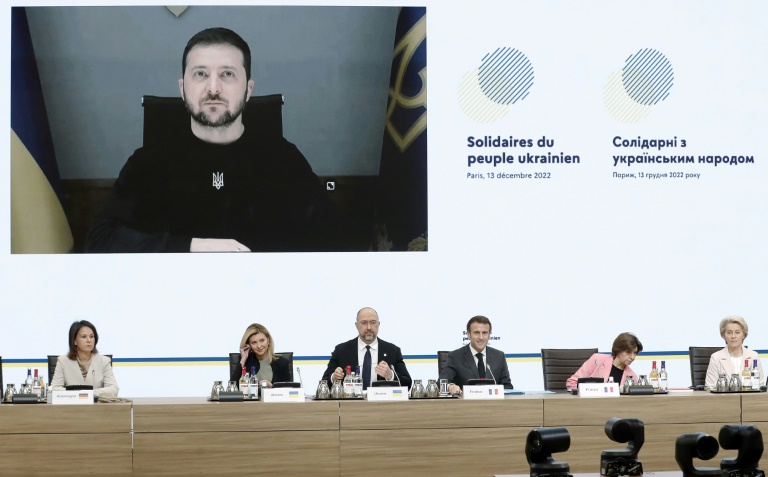
Ukraine’s Western allies pledged an additional one billion euros ($1.1 billion) in emergency winter aid on Tuesday, responding to pleas from President Volodymyr Zelensky to help the country withstand Russia’s onslaught against its energy grid.

Around seventy countries and international organisations gathered in Paris for a meeting aimed at enabling Ukrainians “to get through this winter”, said French President Emmanuel Macron.

In a video message, Zelensky said Ukraine needed assistance worth around 800 million euros in the short term for its battered energy sector.

“Of course it is a very high amount, but the cost is less than the cost of a potential blackout,” Zelensky told the conference via video link.

Pledges for the energy sector comprised 400 million euros of the funds raised on Tuesday, France’s Foreign Minister Catherine Colonna said. 

Ukraine needs spare parts for repairs, high-capacity generators, extra gas as well as increased electricity imports, Zelensky said.

“Generators have become as necessary as armoured vehicles and bullet-proof jackets,” he said.

Ukrainian Prime Minister Denys Shmygal said 40 to 50 percent of the country’s grid was out of action because of Russia’s strikes.

Many areas of the country have power for only a few hours a day.

Another 1.5 million people were left without power in southern Odessa over the weekend after Russian drone attacks. 

“They want to put us into darkness and it will fail, thanks to our partners all over the world,” Shmygal told delegates.

– Bridge attack –

On the battlefield Tuesday, local authorities in the Russian-occupied city of Melitopol said pro-Kyiv forces had used explosives to damage a strategic bridge.

Melitopol is an important transport hub for Russia forces in the region of Zaporizhzhia and is key for Ukraine’s hopes of liberating the south of the country.

The bridge in the eastern suburbs “was damaged by terrorists,” Vladimir Rogov, a Moscow-installed regional official, said on the Telegram messaging app.

He did not specify the extent of the damage, but images on his social media accounts showed that a middle section of the bridge had collapsed.

Elsewhere on Tuesday, Belarus held a surprise inspection of its armed forces, raising fears of a possible escalation in the conflict.

Belarus is a close ally of Moscow, but Belarusian leader Alexander Lukashenko has repeatedly said he does not plan to send Belarusian troops to Ukraine.

Ukrainian PM Shmygal also said Tuesday that the UN nuclear watchdog IAEA had agreed to dispatch permanent teams to monitor the country’s nuclear plants.

They are expected to take up positions in the Russian-controlled Zaporizhzhia plant, a hotspot of fighting, which has been a source of global concern in recent months.

A deal to de-militarise the site, which would see both sides withdraw forces, has proved impossible so far despite international diplomatic efforts.

– Aid mechanism – 

Tuesday’s conference in Paris, titled “Standing with the Ukraine People,” also saw the launch of a new so-called Paris Mechanism to coordinate civilian aid to Ukraine.

The digital platform, announced by G7 leaders on Monday, will enable Ukraine to list its requirements and allow international donors to coordinate their responses in real-time.

“A large number of countries will use this mechanism — all the members to the European Union, but it will go beyond to other partners, including non-European partners,” Colonna told reporters.

She underlined that Bahrein, Cambodia, India, Indonesia and Qatar were represented at Tuesday’s meeting– “countries that you rarely see at international conferences for Ukraine,” she said. 

A similar platform exists for military aid, which is coordinated via meetings of Ukraine’s Western allies at the US-run Ramstein military base in Germany.

– ‘War crimes’ –

Macron hosted Tuesday’s conference alongside Zelensky’s wife Olena, giving the French leader an opportunity to reaffirm his support for Kyiv.

He has riled some of his allies in Kyiv in the past, most notably in June when he said “we must not humiliate Russia”.

On December 3, he also called for Russia to be offered “security guarantees” at the end of the war, drawing criticism from some Ukrainian and eastern European politicians.

Although a diplomatic settlement to the war is seen as a likely conclusion, critics believe the focus should remain solely on pushing back Russia’s forces militarily. 

Macron condemned Russia’s “cynical” and “cowardly” attacks on Ukrainian civilian infrastructure. 

“These strikes… which Russia openly admits are designed to break the resistance of the Ukrainian people, are war crimes,” he said in his opening address.

“They violate without any doubt the most basic principals of humanitarian law. These acts are intolerable and will not go unpunished,” he said.

In Russia, the Kremlin has announced that Putin will not hold his annual end-of-year press conference this year, a break with tradition.

Kremlin spokesman Dmitry Peskov gave no reason for not holding the event that Putin has hosted almost every year he has been in power since 2000.

Ukraine secures 1 bn euros in aid 'to get through winter'

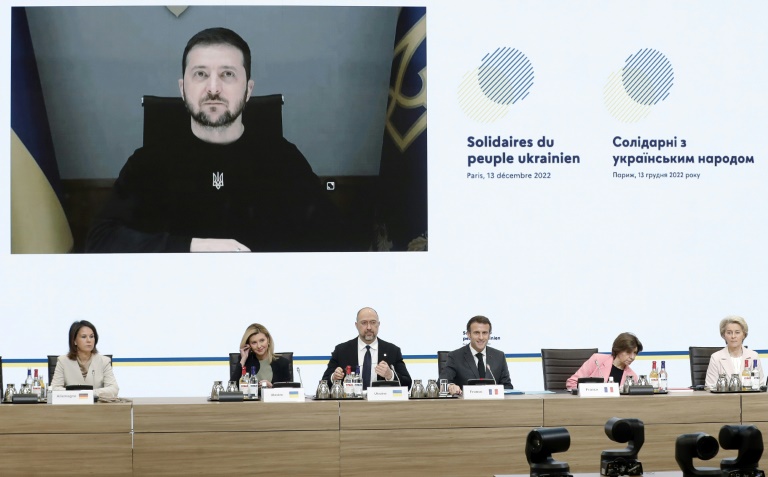
Ukraine’s Western allies pledged an additional one billion euros ($1.1 billion) in emergency winter aid on Tuesday, responding to pleas from President Volodymyr Zelensky to help the country withstand Russia’s onslaught against its energy grid.

Around seventy countries and international organisations gathered in Paris for a meeting aimed at enabling Ukrainians “to get through this winter”, said French President Emmanuel Macron.

In a video message, Zelensky said Ukraine needed assistance worth around 800 million euros in the short term for its battered energy sector.

“Of course it is a very high amount, but the cost is less than the cost of a potential blackout,” Zelensky told the conference via video link.

Pledges for the energy sector comprised 400 million euros of the funds raised on Tuesday, France’s Foreign Minister Catherine Colonna said. 

Ukraine needs spare parts for repairs, high-capacity generators, extra gas as well as increased electricity imports, Zelensky said.

“Generators have become as necessary as armoured vehicles and bullet-proof jackets,” he said.

Ukrainian Prime Minister Denys Shmygal said 40 to 50 percent of the country’s grid was out of action because of Russia’s strikes.

Many areas of the country have power for only a few hours a day.

Another 1.5 million people were left without power in southern Odessa over the weekend after Russian drone attacks. 

“They want to put us into darkness and it will fail, thanks to our partners all over the world,” Shmygal told delegates.

– Bridge attack –

On the battlefield Tuesday, local authorities in the Russian-occupied city of Melitopol said pro-Kyiv forces had used explosives to damage a strategic bridge.

Melitopol is an important transport hub for Russia forces in the region of Zaporizhzhia and is key for Ukraine’s hopes of liberating the south of the country.

The bridge in the eastern suburbs “was damaged by terrorists,” Vladimir Rogov, a Moscow-installed regional official, said on the Telegram messaging app.

He did not specify the extent of the damage, but images on his social media accounts showed that a middle section of the bridge had collapsed.

Elsewhere on Tuesday, Belarus held a surprise inspection of its armed forces, raising fears of a possible escalation in the conflict.

Belarus is a close ally of Moscow, but Belarusian leader Alexander Lukashenko has repeatedly said he does not plan to send Belarusian troops to Ukraine.

Ukrainian PM Shmygal also said Tuesday that the UN nuclear watchdog IAEA had agreed to dispatch permanent teams to monitor the country’s nuclear plants.

They are expected to take up positions in the Russian-controlled Zaporizhzhia plant, a hotspot of fighting, which has been a source of global concern in recent months.

A deal to de-militarise the site, which would see both sides withdraw forces, has proved impossible so far despite international diplomatic efforts.

– Aid mechanism – 

Tuesday’s conference in Paris, titled “Standing with the Ukraine People,” also saw the launch of a new so-called Paris Mechanism to coordinate civilian aid to Ukraine.

The digital platform, announced by G7 leaders on Monday, will enable Ukraine to list its requirements and allow international donors to coordinate their responses in real-time.

“A large number of countries will use this mechanism — all the members to the European Union, but it will go beyond to other partners, including non-European partners,” Colonna told reporters.

She underlined that Bahrein, Cambodia, India, Indonesia and Qatar were represented at Tuesday’s meeting– “countries that you rarely see at international conferences for Ukraine,” she said. 

A similar platform exists for military aid, which is coordinated via meetings of Ukraine’s Western allies at the US-run Ramstein military base in Germany.

– ‘War crimes’ –

Macron hosted Tuesday’s conference alongside Zelensky’s wife Olena, giving the French leader an opportunity to reaffirm his support for Kyiv.

He has riled some of his allies in Kyiv in the past, most notably in June when he said “we must not humiliate Russia”.

On December 3, he also called for Russia to be offered “security guarantees” at the end of the war, drawing criticism from some Ukrainian and eastern European politicians.

Although a diplomatic settlement to the war is seen as a likely conclusion, critics believe the focus should remain solely on pushing back Russia’s forces militarily. 

Macron condemned Russia’s “cynical” and “cowardly” attacks on Ukrainian civilian infrastructure. 

“These strikes… which Russia openly admits are designed to break the resistance of the Ukrainian people, are war crimes,” he said in his opening address.

“They violate without any doubt the most basic principals of humanitarian law. These acts are intolerable and will not go unpunished,” he said.

In Russia, the Kremlin has announced that Putin will not hold his annual end-of-year press conference this year, a break with tradition.

Kremlin spokesman Dmitry Peskov gave no reason for not holding the event that Putin has hosted almost every year he has been in power since 2000.

Fed opens meeting with smaller rate hike in the cards

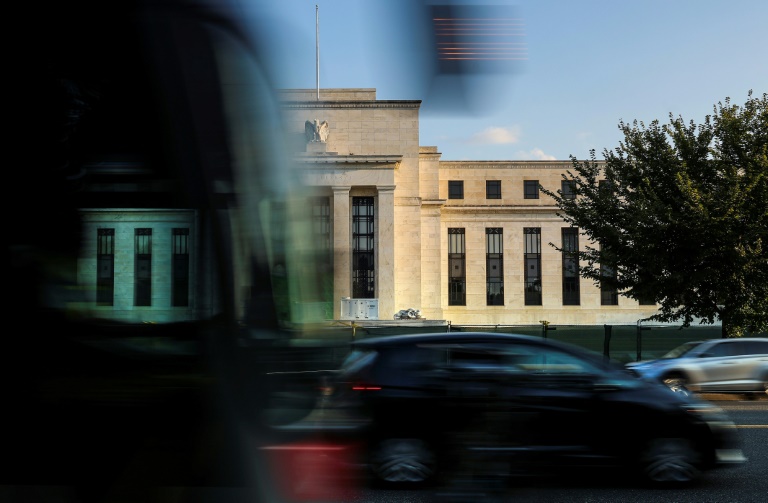
US central bankers started a two-day policy meeting Tuesday, with all eyes searching for clear signs that decades-high inflation in the world’s biggest economy is definitively slowing.

The Federal Reserve is widely expected to implement a smaller hike than previous ones in the benchmark lending rate after officials convene, with consumer prices easing and sectors like housing already reeling from tightening policy.

Indeed, US consumer inflation eased in November, according to government data released Tuesday, bringing some relief to policymakers with the smallest annual increase in nearly a year.

The consumer price index (CPI), a closely-watched measure of inflation, jumped 7.1 percent from a year ago, down from 7.7 percent in October, the Labor Department said.

As costs rocketed this year, worsened by Russia’s invasion of Ukraine and China’s zero-Covid measures, the US central bank hiked interest rates six times, bringing its range from close to zero to between 3.75 percent and four percent.

The aim was to make borrowing more expensive and lower demand, eventually reining in price increases.

With the pace of inflation ticking down in recent months, analysts expect policymakers to opt for a 0.5-point rate hike this week.

While this is still a steep rise, it marks a step down after four bumper 0.75-point hikes.

A Fed spokesperson confirmed the policy-setting Federal Open Market Committee (FOMC) started its meeting as scheduled on Tuesday, and it is scheduled to announce its decision on Wednesday afternoon.

“Inflation seems to have peaked… We’ve seen goods inflation become negative recently. But we need service price inflation to come down,” said Marc Giannoni, chief US economist at Barclays.

Wage pressures will have to ease, he told AFP, adding that it will be hard to have “sustainably low inflation without having some slowing on the labor market, and some slowing in particular on the demand for services.”

Policy makers are watching wage changes, given concerns that fast-growing salaries will add to the costs of delivering services.

But economists caution that a lower headline number does not mean the Fed will immediately step on the brakes in its forceful campaign to cool the economy.

“Powell recently noted there hasn’t been clear progress toward returning inflation to the (longer-term) two percent target,” said Oren Klachkin of Oxford Economics.

Even with inflation cooling in November, “it doesn’t mean the Fed is finished raising interest rates,” he said.

“Inflation is the Fed’s sole focus at the moment, and will dictate the trajectory of monetary policy,” he added.

To get inflation to two percent over time, month-on-month readings need to average 0.17 percent for several months, added economist James Knightley of ING.

“We are not there yet… It is too soon for the Fed to relax,” he said.

Europe's record 2022 wildfires sent carbon emissions soaring: monitors

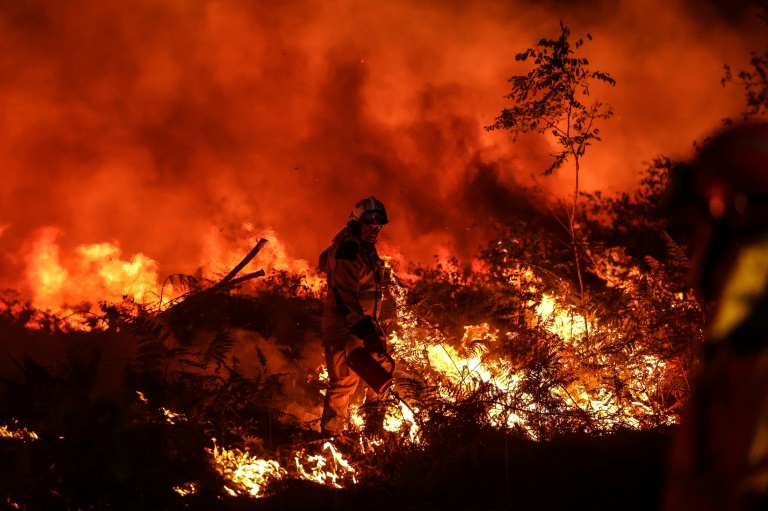
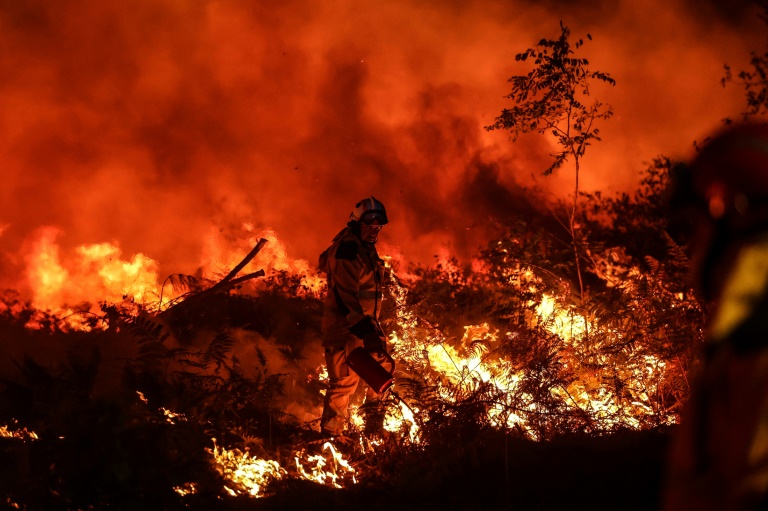
Wildfires that scorched across Europe this year burned a record land area and stoked carbon emissions, according to an update released on Tuesday by Europe’s forest fire and satellite monitors. 

The summer of 2022 was the hottest in Europe’s recorded history. The continent suffered blistering heatwaves and the worst drought in centuries, as climate change drives ever longer and stronger hot spells. 

That created tinderbox forests, increasing the risk of devastating and sometimes deadly wildfires. 

“The length and intensity of the heatwaves to hit Europe during the summer, combined with the general dry conditions on the continent during 2022, contributed to record-breaking wildfire activity,” the Copernicus Atmosphere Monitoring Service (CAMS) said. 

It said the European Forest Fire Information System (EFFIS) put the total cumulative burnt area in the 27-nation European Union from the start of the year to mid-November at over 785,000 hectares (1.9 million acres). 

That is more than double the average of just over 317,000 hectares in the 2006-2021 period. 

CAMS said that result aligns with its data, estimating total wildfire emissions from the EU plus the United Kingdom from June 1 to August 31 at 6.4 megatonnes of carbon, the highest level for these months since the summer of 2007.

While the global trend is a decline in emissions from wildfires because of a reduction in savanna fires in tropical regions, some parts of the world are seeing emissions rise, CAMS said. 

“We also continue to identify and monitor significantly increased fire emissions in different parts of the world, where hotter and drier conditions are leading to increased flammability of the vegetation,” said CAMS Senior Scientist Mark Parrington.

Huge fires that raged across Spain and France meant that the countries saw the highest carbon emissions from June to August since the satellite monitor’s records began in 2003.

“This had a major impact on air quality in the region,” CAMS said. 

EFFIS has said that 2022 is likely to have seen the highest number of fires recorded in Europe since 2006.

“Wildfires raging from west to east and across northern, central and southern European countries offer clear evidence of the effects of climate change,” it said in its report on 2021 wildfires, which was published in November and included details of the 2022 burned area.

EFFIS said it would be necessary to prepare populations to “live with wildfires, as they become more frequent and intense because of climate change”.

In September, the United Nations’ World Meteorological Organization said the interaction between pollution and climate change would impact hundreds of millions of people over the coming century, and urged action to rein in the harm.

Europe's record 2022 wildfires sent carbon emissions soaring: monitors

Wildfires that scorched across Europe this year burned a record land area and stoked carbon emissions, according to an update released on Tuesday by Europe’s forest fire and satellite monitors. 

The summer of 2022 was the hottest in Europe’s recorded history. The continent suffered blistering heatwaves and the worst drought in centuries, as climate change drives ever longer and stronger hot spells. 

That created tinderbox forests, increasing the risk of devastating and sometimes deadly wildfires. 

“The length and intensity of the heatwaves to hit Europe during the summer, combined with the general dry conditions on the continent during 2022, contributed to record-breaking wildfire activity,” the Copernicus Atmosphere Monitoring Service (CAMS) said. 

It said the European Forest Fire Information System (EFFIS) put the total cumulative burnt area in the 27-nation European Union from the start of the year to mid-November at over 785,000 hectares (1.9 million acres). 

That is more than double the average of just over 317,000 hectares in the 2006-2021 period. 

CAMS said that result aligns with its data, estimating total wildfire emissions from the EU plus the United Kingdom from June 1 to August 31 at 6.4 megatonnes of carbon, the highest level for these months since the summer of 2007.

While the global trend is a decline in emissions from wildfires because of a reduction in savanna fires in tropical regions, some parts of the world are seeing emissions rise, CAMS said. 

“We also continue to identify and monitor significantly increased fire emissions in different parts of the world, where hotter and drier conditions are leading to increased flammability of the vegetation,” said CAMS Senior Scientist Mark Parrington.

Huge fires that raged across Spain and France meant that the countries saw the highest carbon emissions from June to August since the satellite monitor’s records began in 2003.

“This had a major impact on air quality in the region,” CAMS said. 

EFFIS has said that 2022 is likely to have seen the highest number of fires recorded in Europe since 2006.

“Wildfires raging from west to east and across northern, central and southern European countries offer clear evidence of the effects of climate change,” it said in its report on 2021 wildfires, which was published in November and included details of the 2022 burned area.

EFFIS said it would be necessary to prepare populations to “live with wildfires, as they become more frequent and intense because of climate change”.

In September, the United Nations’ World Meteorological Organization said the interaction between pollution and climate change would impact hundreds of millions of people over the coming century, and urged action to rein in the harm.

Stocks surge, dollar drops as US inflation cools

Stocks surged while the dollar dropped Tuesday as US inflation slowed more than expected, opening the way for the Federal Reserve to reduce the tempo of interest rate hikes.

US consumer prices rose at an annual pace of 7.1 percent in November, down from 7.7 percent in October, according to Labor Department data.

The consumer price index (CPI) is a closely-watched measure of inflation and was forecast by analysts to come in at 7.3 percent. 

The bigger-than-expected drop should come as a relief to monetary policymakers after wholesale inflation came in hotter than expected last week.

“The key takeaway from the report at first blush is that overall inflation is cooling and that the Fed should be convinced to temper the pace of its rate hikes and perhaps place a lower ceiling on its terminal rate,” said market analyst Patrick O’Hare at Briefing.com.

The central bank is widely expected to lift interest rates 50 basis points Wednesday — a slowdown from the previous four 75-point hikes. 

Lower inflation and interest rates are positive for businesses, and stock prices in Europe surged after the US inflation data was released, with London up 1.0 percent, Paris 2.1 percent, and Frankfurt 2.2 percent in afternoon trade.

Wall Street’s main indices jumped at the opening bell, with the Dow climbing 2.1 percent. The S&P 500 rose 2.6 percent and the tech-heavy Nasdaq 3.6 percent.

“In summary, Santa has delivered a nice enough package to the Fed, who can now celebrate the Christmas with more peace knowing that inflation is moving in the direction that they want with plenty of tail wind behind,” said Naeem Aslam, chief market analyst at Avatrade.

The prospect of the Fed slowing interest rate hikes was not positive for the US dollar, however, which lost more than one percent against its main rival currencies.

Elsewhere, China’s shift away from its economically damaging zero-Covid policy continued to support sentiment as the world’s number two economy opens up.

Top Chinese officials are meeting this week to draw up their economic blueprint for re-emerging from Covid, with observers predicting more stimulus measures and pledges of support for the troubled property sector.

But there is also a worry among investors that the quick relaxation of containment measures such as mass testing and lockdowns might lead to a massive surge in infections that could overwhelm the healthcare system and weigh on the economy.

Still, the expected pick-up in demand in China boosted oil prices further, with both main contracts extending Monday’s strong gains.

“China’s reopening is coming, it won’t happen overnight, but it will provide a major boost to demand in the outlook next quarter,” said OANDA’s Edward Moya. 

Ahead of the Wall Street open, United Airlines unveiled an order of 100 new Boeing 787 Dreamliners with options for an additional 100 jets.

Shares in Boeing climbed 1.4 percent and United Airways 1.2 percent as trading got underway.

And the US Securities and Exchange Commission charged disgraced cryptocurrency tycoon Sam Bankman-Fried with defrauding customers of billions of dollars.

– Key figures around 1430 GMT –

London – FTSE 100: UP 1.0 percent at 7,519.85 points

Frankfurt – DAX: UP 2.2 percent at 14,614.89

Paris – CAC 40: UP 2.1 percent at 6,788.81

EURO STOXX 50: UP 2.5 percent at 4,018.36

New York – Dow: UP 2.1 percent at 34,708.92

Tokyo – Nikkei 225: UP 0.4 percent at 27,954.85 (close)

Hong Kong – Hang Seng Index: UP 0.7 percent at 19,596.20 (close)

Shanghai – Composite: DOWN 0.1 percent at 3,176.33 (close)

Euro/dollar: UP at $1.0660 from $1.0539 on Monday

Dollar/yen: DOWN at 134.82 yen from 137.66 yen

Pound/dollar: UP at $1.2430 from $1.2268

Euro/pound: DOWN at 85.75 pence from 85.78 pence

Brent North Sea crude: UP 2.1 percent at $79.66 per barrel

West Texas Intermediate: UP 1.9 percent at $74.58 per barrel

burs-rl/bp

United Airlines announces huge Boeing 787 order

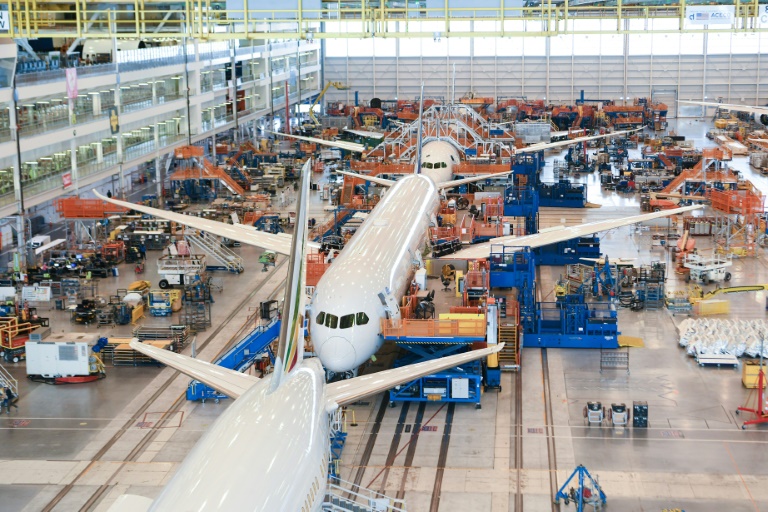
Betting on robust demand for international travel, United Airlines on Tuesday unveiled an order of 100 new Boeing 787 Dreamliners with options for an additional 100 jets.

The huge order, the largest by an American carrier for this class of aircraft, marks a victory for Boeing, which has targeted mid-decade as the period it expects to return to its pre-pandemic financial health after the 737 MAX scandal and other woes.

United Chief Executive Scott Kirby, who also announced a giant Boeing and Airbus order in June 2021 ahead of rivals, predicted the airline’s ambitious 787 plan would pay off for the carrier during a capacity-constrained period.

“United is really uniquely positioned to grow in a way that’s going to be a huge challenge for others,” Kirby told reporters.

White House Chief of Staff Ronald Klain touted the order, saying on Twitter, “Another day, another huge investment in US manufacturing — advanced production, high-quality jobs in the USA.”

United expects deliveries of the jets to take place between 2024 and 2032, aiming the new aircraft as a replacement for the 767 fleet that will be removed from service by 2030. 

The Dreamliner saves 25 percent of the carbon emission compared with the jets being retired.

United executives did not offer an estimate as to the total potential cost of the contracts, but projected that capital spending would rise to $9 billion in 2023 and $11 billion in 2024.

United said it also exercised options for an additional 44 737 MAX planes between 2024 and 2026, and ordered 56 more MAX jets for 2027 and 2028.

– Production ramp-up –

After the 737 MAX, the 787 Dreamliner — which flies transatlantic journeys as well as other international itineraries — has been Boeing’s other leading source of orders and deliveries.

United officials said beefing up the fleet of 787s made sense at a time when the carrier already flies the jet, making it an easy transition for pilots and helping the company add capacity quickly.

But United officials praised the A350, the rival widebody offering from European aerospace giant Airbus, and said they still plan to take delivery of 45 of the Airbus jets from 2030.

For Boeing, the United order signals a victory for the 787, for which production was slowed to a trickle while the company halted deliveries of new jets for more than a year while addressing production problems.

Boeing resumed 787 deliveries in August after getting the green light from the Federal Aviation Administration, which has heavily scrutinized Boeing processes in the aftermath of the 737 MAX crisis.

“This is an opportunity for Boeing to ramp up at Charleston, perhaps with two production shifts,” said Michel Merluzeau, director of aerospace and defense analysis at AIR consultancy.

In October 2020, Boeing consolidated manufacturing of the 787 to Charleston, ending production of the wide-body jet in Washington state in an efficiency move as it battled financial losses during the Covid-19 downturn.

At its investor day in November, Boeing officials outlined a plan to restore 787 production to 10 passenger jets per month. 

Shares of Boeing gained 0.9 percent to $187.91 in early trading Tuesday, while United rose 1.3 percent to $44.80.

Close Bitnami banner
Bitnami