World

Beijing 'shocked' by attack on Afghan hotel hosting Chinese visitors

Beijing said Tuesday it was “shocked” by a deadly attack on a Kabul hotel popular with Chinese business visitors, adding that five of its nationals were wounded.

The Taliban claim to have improved security since storming back to power in August last year but there have been scores of bomb blasts and attacks, many like this one claimed by the local chapter of the Islamic State group. 

“This terror attack is abominable and China is deeply shocked,” foreign ministry spokesman Wang Wenbin said in Beijing.

“As far as we know, five Chinese citizens were injured in the terrorist attack, and several Afghan military and police were also killed.”

The Taliban’s chief spokesman, Zabihullah Mujahid, however, said Monday only three attackers were killed in the raid on the Kabul Longan Hotel. Two foreigners were hurt escaping from the building, he said.

Mujahid told AFP Tuesday “a few other” injuries may have since been reported. 

The Italian non-governmental organisation Emergency NGO, which operates a hospital just one kilometre from the blast site, said Monday they had received 21 casualties, including three people dead on arrival.

Taliban casualty figures following such incidents are usually lower than those reported by hospitals and other independent sources.

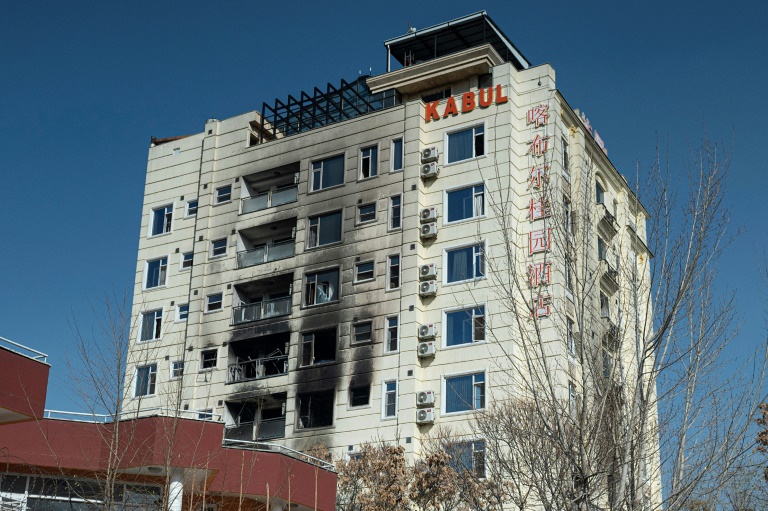
On Tuesday, the hotel facade was blackened by fire that erupted during the attack and windows of the 10-storey building had also been blown out.

“I heard the sound of a loud explosion and shots. Of course everyone was scared,” said a vendor in an adjacent street, asking not to be identified.

The Islamic State group claimed responsibility for Monday’s attack, issuing photos of two men it said were the perpetrators.

It also claimed responsibility for a suicide bombing outside the Russian embassy in September that killed two staff, as well as an attack on Pakistan’s mission this month that Islamabad decried as an assassination attempt against the ambassador.

No country has recognised Afghanistan’s Taliban government but China, Russia, and Pakistan are among a handful that have maintained their embassies in Kabul.

“This looks like (at least in part) a campaign to dent the efforts of the Taliban, IS-K’s rival, to gain legitimacy both at home and abroad,” tweeted Michael Kugelman, director of the South Asia Institute at the Wilson Center think tank.

China, Pakistan, and Russia were expected to base decisions about international recognition on security rather than the Taliban’s human rights record, he said.

In Beijing, Wang reminded Chinese nationals that foreign ministry advice was to evacuate from Afghanistan as soon as possible.

Chinese business visitors have flocked to the country since the Taliban’s return in pursuit of high-risk but potentially lucrative business deals.

China shares a rugged 76-kilometre (47-mile) border with Afghanistan and it has long feared Afghanistan could become a staging point for minority Uyghur separatists in China’s sensitive border region of Xinjiang.
LED lightbulbs enter Ukrainian resistance fight

Taken for granted by most consumers in rich countries, the humble LED lightbulb was identified on Tuesday as a strategic ally for Ukraine as Kyiv seeks to resist Russian bombing of its power grid.

Ukrainian President Volodymyr Zelensky highlighted how replacing the country’s old-style incandescent bulbs by modern LED versions would help the country escape blackouts this winter. 

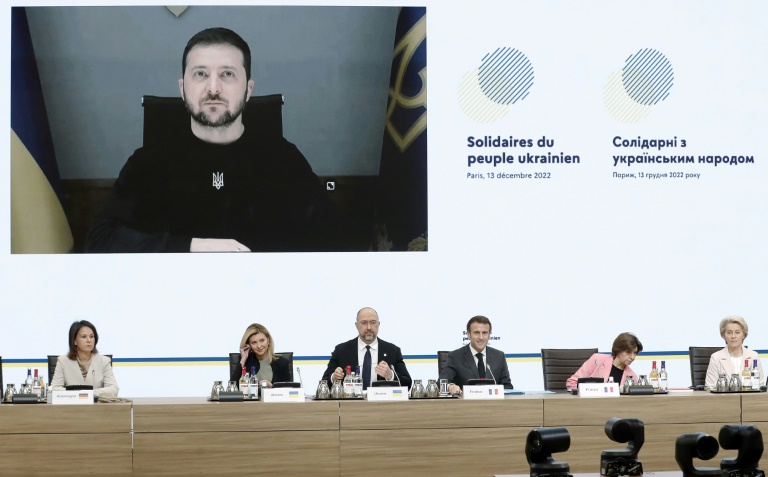
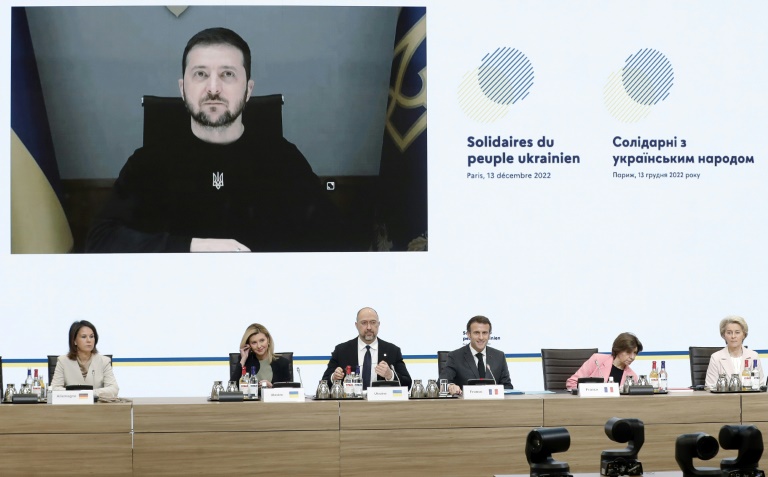
“It maybe doesn’t seem very important but fifty million LED lamps will allow us to save one gigawatt of power,” he told an international aid conference in Paris attended by around 70 states and international organisations. 

Large parts of Ukraine face blackouts and regular load-shedding as the country’s power grid buckles under repeated Russian air strikes.

Zelensky said the current power shortfall in the country was around 2.5 gigawatts per day, meaning 50 million LED lightbulbs would reduce this by 40 percent.

European Commission president Ursula von der Leyen immediately announced that the European Union would fund the purchase of 30 million LED lightbulbs for 30 million euros ($32 million).

They are 88 percent more efficient than traditional ones, she estimated.

“The savings are crucial to reduce the pressure that we have on the power grid now,” von der Leyen said.

“In these times of suffering and darkness, it is so important to bring light to Ukraine,” she added.

Zelensky estimated that Ukraine needed around 800 million euros in emergency aid in total for its energy sector in the face of Russia’s onslaught.

The country is desperately seeking spare parts to repair its power lines, as well as transformers, gas turbines and generators to keep the lights on.

French President Emmanuel Macron, who also championed the idea of LED lighting for Ukraine, condemned Russia’s “cynical” and “cowardly” attacks on civilian infrastructure. 

“These strikes… which Russia openly admits are designed to break the resistance of the Ukrainian people, are war crimes,” he said in an opening speech.

“They violate without any doubt the most basic principals of humanitarian law. These acts are intolerable and will not go unpunished.”

LED lightbulbs enter Ukrainian resistance fight

Taken for granted by most consumers in rich countries, the humble LED lightbulb was identified on Tuesday as a strategic ally for Ukraine as Kyiv seeks to resist Russian bombing of its power grid.

Ukrainian President Volodymyr Zelensky highlighted how replacing the country’s old-style incandescent bulbs by modern LED versions would help the country escape blackouts this winter. 

“It maybe doesn’t seem very important but fifty million LED lamps will allow us to save one gigawatt of power,” he told an international aid conference in Paris attended by around 70 states and international organisations. 

Large parts of Ukraine face blackouts and regular load-shedding as the country’s power grid buckles under repeated Russian air strikes.

Zelensky said the current power shortfall in the country was around 2.5 gigawatts per day, meaning 50 million LED lightbulbs would reduce this by 40 percent.

European Commission president Ursula von der Leyen immediately announced that the European Union would fund the purchase of 30 million LED lightbulbs for 30 million euros ($32 million).

They are 88 percent more efficient than traditional ones, she estimated.

“The savings are crucial to reduce the pressure that we have on the power grid now,” von der Leyen said.

“In these times of suffering and darkness, it is so important to bring light to Ukraine,” she added.

Zelensky estimated that Ukraine needed around 800 million euros in emergency aid in total for its energy sector in the face of Russia’s onslaught.

The country is desperately seeking spare parts to repair its power lines, as well as transformers, gas turbines and generators to keep the lights on.

French President Emmanuel Macron, who also championed the idea of LED lighting for Ukraine, condemned Russia’s “cynical” and “cowardly” attacks on civilian infrastructure. 

“These strikes… which Russia openly admits are designed to break the resistance of the Ukrainian people, are war crimes,” he said in an opening speech.

“They violate without any doubt the most basic principals of humanitarian law. These acts are intolerable and will not go unpunished.”

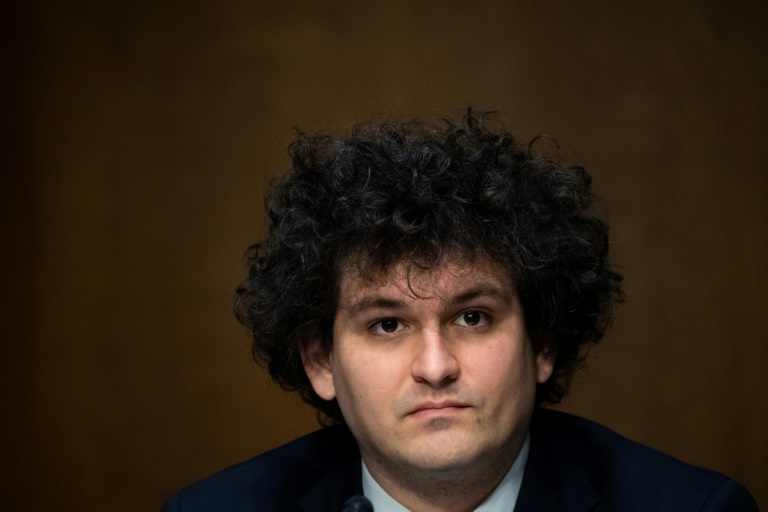
SEC charges disgraced crypto tycoon Bankman-Fried with defrauding investors

The US Securities and Exchange Commission charged disgraced cryptocurrency tycoon Sam Bankman-Fried on Tuesday with defrauding customers of billions of dollars, a day after he was arrested in the Bahamas at the request of the United States.

Bankman-Fried had “built a house of cards on a foundation of deception” in his dealings with investors in his FTX crypto firm, the SEC said.

“Today we are holding Mr. Bankman-Fried responsible for fraudulently raising billions of dollars from investors in FTX and misusing funds belonging to FTX’s trading customers.”

The charge comes a day after Bankman-Fried was arrested in the Bahamas on the eve of his scheduled appearance at a US congressional hearing in which he was to testify under oath about the crypto exchange’s overnight demise.

The SEC said investigations “as to other securities law violations and into other entities and persons relating to the alleged misconduct are ongoing.”

The 30-year-old had in recent weeks defied legal advice and made multiple media appearances offering his version of his company’s sudden failure, usually by video link from the Bahamas, where his company is headquartered.

According to a press release from the attorney general’s office in the Bahamas, Bankman-Fried was to be held in custody before an expected request for his extradition by the United States. 

The Bahamian prime minister’s office shared news of the arrest, as well as a police statement saying Bankman-Fried was arrested in the early evening at his apartment complex in the capital Nassau.

He was taken into custody without incident, the statement said, and was to appear in court in Nassau on Tuesday.

As much as anyone, Bankman-Fried had embodied the apparent emergence of cryptocurrency as an above-board investment rather than a frowned-upon get-rich-quick scheme shunned by the banking establishment. 

His FTX platform was plugged by celebrities in advertising campaigns and the cyber whiz kid became a regular presence in Washington, where he donated tens of millions of dollars in political contributions.

But after reaching a valuation of $32 billion, FTX’s implosion was swift following a November 2 report on ties between FTX and Alameda, a trading company also controlled by Bankman-Fried.

The report exposed that Alameda’s balance sheet was heavily built on the FTT currency — a token created by FTX with no independent value.

– ‘Grossly inexperienced’ –

The price of FTT plunged in early November, roiling both Alameda and FTX, where Alameda had large trading positions. 

Reeling from customer withdrawals and short some $8 billion, FTX and around 100 related entities filed for bankruptcy protection on November 11, inviting scrutiny from regulators, prosecutors and furious clients. 

Among the revelations, FTX is suspected of fraud for propping up Alameda with billions of dollars in customer funds that are now likely lost forever.

Questions also linger over whether Bankman-Fried engaged in market manipulation, or illegally provided inside information to Alameda.

“If convicted he could be facing the rest of his life in prison, given the dollar amount of the fraud,” Jacob S. Frenkel, a former federal criminal prosecutor at Dickinson Wright, told AFP.

“We would not see an indictment if prosecutors were not absolutely convinced that they will win a conviction,” he added.

In his media interviews, Bankman-Fried has admitted to mistakes, but has denied intent to defraud his customers.

FTX CEO John Ray, who came to the company after the debacle, was to tell Congress on Tuesday that the problems arose because control was “in the hands of a very small group of grossly inexperienced and unsophisticated individuals.”

“Never in my career have I seen such an utter failure of corporate controls at every level of an organization, from the lack of financial statements to a complete failure of any internal controls or governance whatsoever,” Ray said in prepared remarks.

The fall of FTX has caused major doubts about the long term viability of cryptocurrency and heaped stress on other platforms and entities that rode the success of Bitcoin and other currencies.

Zelensky urges 800 mn euros in Ukraine winter help

President Volodymyr Zelensky on Tuesday said Ukraine needed emergency aid for its energy sector totalling around 800 million euros to help his country survive Russia’s bombing of its civilian infrastructure.

Failing to make an impact on the battlefield in its invasion, Moscow has switched tactics since October when it began airstrikes targeting Ukraine’s energy network, plunging millions into cold and darkness at the onset of winter.

The alarm over Ukraine’s ability to cope comes nine months into the Russian assault against its neighbour, which has seen Moscow make only slight territorial gains in the face of fierce Ukrainian resistance.

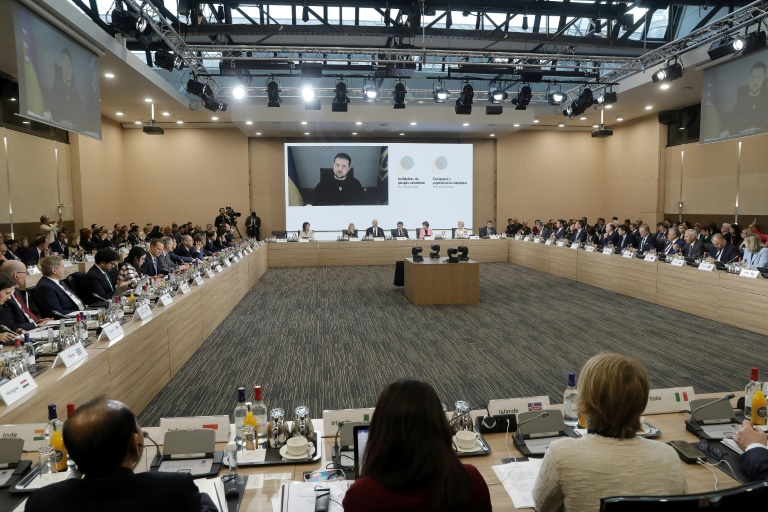
Zelensky made the request for 800 million euros at international conference in Paris designed to raise material and money to repair Ukraine’s damaged infrastructure.

It is hosted by French President Emmanuel Macron with whom he has sometimes had testy ties.

“Of course it is a very high amount, but the cost is less than the cost of a potential blackout,” Zelensky told the gathering in Paris via video link.

“I hope that decisions will be made accordingly.”

Zelensky said that Ukraine needed transformers, equipment to repair damaged high-voltage power lines, as well as generators and gas turbines. 

“Because of the destruction of our power plants by terror attacks we will need to use more gas this winter than expected,” added Zelensky, whose wife Olena attended the conference in person.

Zelensky urged G7 nations on Monday to provide “about two billion cubic metres” of additional gas to get through the winter as well as more tanks and missiles to fight the invasion.

– Russia wants ‘darkness’ –

Ukrainian Prime Minister Denys Shmygal also appealed for help from the 70 states and international agencies gathered in Paris for the “Standing with the Ukrainian People” conference.

“They (Russians) want to put us into darkness and it will fail, thanks to our partners all over the world,” he added.

Shmygal also said Tuesday that the UN nuclear watchdog IAEA had agreed to dispatch permanent teams to the country’s nuclear plants, including the Russian-controlled Zaporizhzhia plant, a hotspot of fighting.

The prime minister said after a meeting with IAEA chief Rafael Grossi that teams would deploy to plants at Zaporizhzhia, Rivne, Khmelnytskyi, Pivdennoukrainska and Chernobyl without specifying a timeframe.

Ukrainian Energy Minister German Galushchenko told AFP ahead of the conference that Russia’s war against Ukraine “completely changes our understanding of nuclear security”.

Macron said the focus in Paris was on providing short-term assistance given Russia’s attempts to “sow terror” in Ukraine by “cowardly” bombing the country’s infrastructure.

“Very concretely, these are commitments to deliver generators, help repair infrastructure, deliver LEDs (light-emitting diodes) for lighting,” he said.

Macron has riled his Ukrainian allies in the past, most notably in June when he said “we must not humiliate Russia”.

Macron called for Russia to be offered “security guarantees” at the end of the war during an interview on December 3, drawing criticism from some Ukrainian and eastern European politicians that he was focusing on diplomatic compromises with Russian President Vladimir Putin.

But in a call at the weekend, he “reminded President Zelensky that Ukraine can count on France’s support for as long as is required to fully re-establish its sovereignty and national integrity,” the French presidency said.

UN chief Antonio Guterres will also make an address remotely to attendees, which include ambassadors from some Gulf states, as well as India and Indonesia.

China has not sent a representative.

– No Putin presser –

French organisers have stressed that the meeting is different from other recent international gatherings in Lugano, Warsaw or Berlin dedicated to long-term reconstruction.

Instead, they hope donors will pledge help from engineering expertise to generators and spare parts to carry out repairs on the energy grid.

One key outcome will be developing a new platform, agreed by G7 leaders Monday, that will enable donors to see Ukraine’s needs and coordinate their aid.

In Russia meanwhile, the Kremlin has announced that Putin will not hold his annual end-of-year press conference this year, a break with tradition amid the military setbacks.

Kremlin spokesman Dmitry Peskov gave no reason for not holding the event which Putin has hosted almost every year he has been in power since 2000.

Elsewhere, Belarus held a surprise inspection of its armed forces Tuesday, raising fears of a possible escalation in the conflict.

Belarus is a close ally of Moscow but Belarusian leader Alexander Lukashenko has repeatedly said he does not plan to send Belarusian troops to Ukraine.

Zelensky urges 800 mn euros in Ukraine winter help

President Volodymyr Zelensky on Tuesday said Ukraine needed emergency aid for its energy sector totalling around 800 million euros to help his country survive Russia’s bombing of its civilian infrastructure.

Failing to make an impact on the battlefield in its invasion, Moscow has switched tactics since October when it began airstrikes targeting Ukraine’s energy network, plunging millions into cold and darkness at the onset of winter.

The alarm over Ukraine’s ability to cope comes nine months into the Russian assault against its neighbour, which has seen Moscow make only slight territorial gains in the face of fierce Ukrainian resistance.

Zelensky made the request for 800 million euros at international conference in Paris designed to raise material and money to repair Ukraine’s damaged infrastructure.

It is hosted by French President Emmanuel Macron with whom he has sometimes had testy ties.

“Of course it is a very high amount, but the cost is less than the cost of a potential blackout,” Zelensky told the gathering in Paris via video link.

“I hope that decisions will be made accordingly.”

Zelensky said that Ukraine needed transformers, equipment to repair damaged high-voltage power lines, as well as generators and gas turbines. 

“Because of the destruction of our power plants by terror attacks we will need to use more gas this winter than expected,” added Zelensky, whose wife Olena attended the conference in person.

Zelensky urged G7 nations on Monday to provide “about two billion cubic metres” of additional gas to get through the winter as well as more tanks and missiles to fight the invasion.

– Russia wants ‘darkness’ –

Ukrainian Prime Minister Denys Shmygal also appealed for help from the 70 states and international agencies gathered in Paris for the “Standing with the Ukrainian People” conference.

“They (Russians) want to put us into darkness and it will fail, thanks to our partners all over the world,” he added.

Shmygal also said Tuesday that the UN nuclear watchdog IAEA had agreed to dispatch permanent teams to the country’s nuclear plants, including the Russian-controlled Zaporizhzhia plant, a hotspot of fighting.

The prime minister said after a meeting with IAEA chief Rafael Grossi that teams would deploy to plants at Zaporizhzhia, Rivne, Khmelnytskyi, Pivdennoukrainska and Chernobyl without specifying a timeframe.

Ukrainian Energy Minister German Galushchenko told AFP ahead of the conference that Russia’s war against Ukraine “completely changes our understanding of nuclear security”.

Macron said the focus in Paris was on providing short-term assistance given Russia’s attempts to “sow terror” in Ukraine by “cowardly” bombing the country’s infrastructure.

“Very concretely, these are commitments to deliver generators, help repair infrastructure, deliver LEDs (light-emitting diodes) for lighting,” he said.

Macron has riled his Ukrainian allies in the past, most notably in June when he said “we must not humiliate Russia”.

Macron called for Russia to be offered “security guarantees” at the end of the war during an interview on December 3, drawing criticism from some Ukrainian and eastern European politicians that he was focusing on diplomatic compromises with Russian President Vladimir Putin.

But in a call at the weekend, he “reminded President Zelensky that Ukraine can count on France’s support for as long as is required to fully re-establish its sovereignty and national integrity,” the French presidency said.

UN chief Antonio Guterres will also make an address remotely to attendees, which include ambassadors from some Gulf states, as well as India and Indonesia.

China has not sent a representative.

– No Putin presser –

French organisers have stressed that the meeting is different from other recent international gatherings in Lugano, Warsaw or Berlin dedicated to long-term reconstruction.

Instead, they hope donors will pledge help from engineering expertise to generators and spare parts to carry out repairs on the energy grid.

One key outcome will be developing a new platform, agreed by G7 leaders Monday, that will enable donors to see Ukraine’s needs and coordinate their aid.

In Russia meanwhile, the Kremlin has announced that Putin will not hold his annual end-of-year press conference this year, a break with tradition amid the military setbacks.

Kremlin spokesman Dmitry Peskov gave no reason for not holding the event which Putin has hosted almost every year he has been in power since 2000.

Elsewhere, Belarus held a surprise inspection of its armed forces Tuesday, raising fears of a possible escalation in the conflict.

Belarus is a close ally of Moscow but Belarusian leader Alexander Lukashenko has repeatedly said he does not plan to send Belarusian troops to Ukraine.

Turkey ends tanker dispute linked to Russian price cap

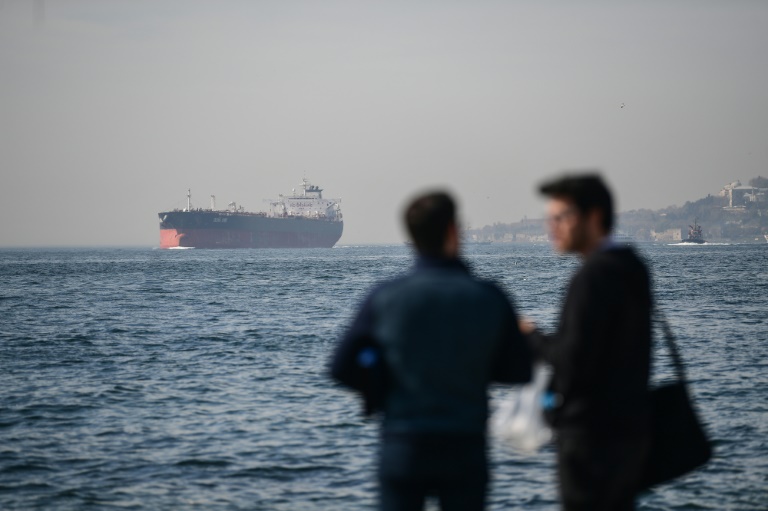
Turkey said Tuesday it has cleared up a dispute linked to a Western price cap on Russian crude that had stalled the passage of tankers through the Bosphorus and Dardanelle straits.

A queue of around 20 oil ships had been waiting to sail through the straits for much of the past week in a spat over Turkey’s demand for physical proof of insurance.

The European Union and the Group of Seven leading industrialised nations agreed earlier this month to block Western firms from servicing ships that sell Russian oil for more than $60 a barrel.

The decision was part of a US-led drive to punish Russia for its war on Ukraine by stripping away its main source of income while avoiding major disruptions to the global crude market.

The plan hit a snag when Turkey voiced alarm over the possibility of uninsured ships passing through the Bosphorus — a strait running through the heart of the 16-million-strong city of Istanbul.

Turkish coast guards began to demand letters proving ships had so-called “protection and indemnity” insurance against spills and other accidents.

Western insurance companies balked at the demand because it made them liable for the possible breach of the new sanctions.

European diplomats have been meeting with insurers and Turkish officials in a bid to agree on a compromise text that could suit all parties.

Turkey’s transport ministry said tankers have now started to produce a “confirmation letter” that guaranteed their passage from Russian ports to world markets.

“There are no tankers loaded with crude waiting for passage,” the ministry said in a statement.

The bottleneck in the Turkish straits had made little impact on the global oil market because most Western countries no longer purchase Russian crude.

An analysis by Bloomberg showed that Bulgaria was the only European country to have imported Russian oil this month.

It showed most of the Russian tankers now headed for Asian markets through the Suez Canal.

EU energy ministers seek compromise on gas price cap

EU ministers meeting in Brussels on Tuesday struggled to bridge differences over a proposed cap on natural gas prices, a challenge stymying other measures designed to mitigate Europe’s energy crunch.

The continent has entered a bitingly cold winter with fewer energy options because Russia has reduced gas supplies in retaliation for EU sanctions imposed over its war in Ukraine.

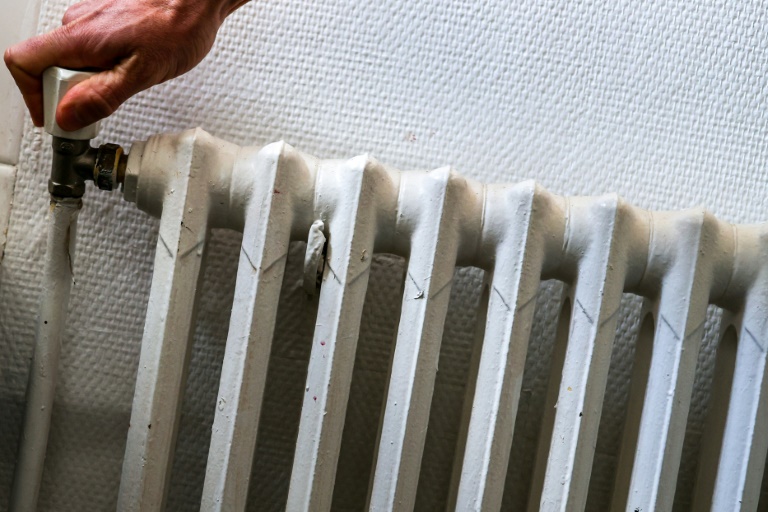
Gas prices are high, albeit lower than during the middle of the year, spurring worries that European homes and businesses could face blackouts or unpayable bills, if not this winter than in the next.

Several energy ministers going into the talks doubted a compromise could be reached. They said discussions could roll over to another meeting scheduled for next Monday.

“I’m viewing this meeting today with a bit of scepticism because there has been too little movement in the last days,” Austrian Energy Minister Leonore Gewessler said.

She said two other measures, joint gas purchases and speeded-up authorisations for renewable energy sources, could find agreement but they were “being held hostage” by countries intent on securing a gas price cap.

Several EU countries, including France, Poland and Spain, want a price cap lower than the one proposed by the European Commission, with fewer conditions attached.

The commission has suggested a price ceiling of 275 euros per megawatt hour, but only if the price remains above that level for at least two weeks, and then only if the price for liquified natural gas (LNG) goes above 58 euros for 10 days within that same two-week period.

Some EU countries including Germany, the Netherlands and Austria, view a too-rigid price cap as a threat to supplies, comporting the risk that deliveries could be diverted from Europe to more lucrative markets in Asia.

“The time for consultation has run out,” the Italian minister for European affairs, Raffaele Fitto, said.

“European citizens are in agony, European businesses are closing… All of us must heed to our responsibilities and agree without delay on the market correction mechanism and energy solidarity.”

Czech Industry Minister Jozef Sikela, who was chairing the meeting under his country’s EU presidency, said he understood the concerns of both camps but believed a “feasible proposal” was on the table.

“The citizens and businesses of Europe, they expect from us that we will come up with a clear solution,” he said.

EU parliament to sack vice president in Qatar bribe claim

The European Parliament took a first step Tuesday in efforts to restore its credibility, amid allegations of corruption linked to World Cup host Qatar, moving to ditch one of its own vice presidents.

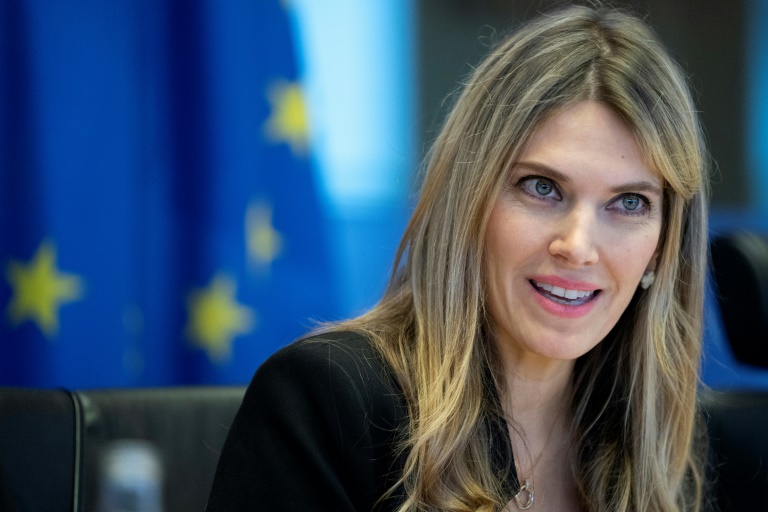
At the same time, in a first reaction since she was charged in a Belgian anti-graft probe, Greek socialist MEP Eva Kaili’s lawyer declared that she was innocent and “has nothing to do with Qatar’s bribes”.

But, as the 44-year-old former TV news presenter waited in a Brussels jail cell, her colleagues in the Strasbourg parliament were to vote to strip her of her vice president’s role.

The parliament’s president, Maltese conservative Roberta Metsola, convened the leaders of political groups before calling on MEPs to vote “on the early termination of office of Vice President Eva Kaili”.

Kaili’s fellow MEPs are scrambling to distance themselves from her.

On Wednesday a Belgian judge will decide whether to maintain her and three co-accused in custody pending her trial.

She was arrested last week during a series of raids on the homes and offices of several MEPs and their assistants or associates carried out by Belgian graft investigators.

– Bags of cash-

Belgian prosecutors said 600,000 euros ($630,000) were found at the home of one suspect, 150,000 euros at the flat of an MEP and several hundred thousand euros in a suitcase in a hotel room. 

Some of these “bags of cash” were found in Kaili’s home, a judicial source said, leading a judge to conclude that, as she had apparently been caught red-handed her parliamentary immunity would not apply.

A Belgian judicial source told AFP that investigators believe that figures representing Gulf monarchy Qatar had been paying off European politicians to burnish the country’s image.

Qatar is a key energy supplier to Europe. But it has also been criticised for the alleged mistreatment of migrant workers, most notoriously those who built the World Cup stadiums. 

Kaili visited Qatar just before the competition and called it a “front-runner in labour rights”. She has also defended Qatar’s quest to win EU visa waivers for its citizens.

Qatar has denied any involvement in European corruption. “Any claims of misconduct by the State of Qatar are gravely misinformed,” an official told AFP.

Kaili’s lawyer Michalis Dimitrakopoulos told private Greek television channel Open TV: “Her position is she is innocent. She has nothing to do with Qatar’s bribes.”

Asked if any cash was found at Kaili’s home, Dimitrakopoulos said: “I am not confirming or denying. There is confidentiality. I have no idea if money was found or how much was found.”

But Brussels has been rocked by the claims, and Metsola, defending the integrity of the parliament, has sought to portray the alleged bribes as an assault on democracy.

Some MEPs braced for more revelations. “I’m fearful that what we’re seeing here is just the tip of the iceberg,” warned German social democrat Rene Repasi. 

Metsola also promised to send Qatar’s EU visa waiver bid back to a parliamentary committee for further scrutiny, delaying or derailing the measure.

– Further allegations –

Kaili was one of six people arrested in the Belgian police raids. Four have been charged with “criminal organisation, corruption and money laundering” and two released.

One of those released was Luca Visentini, the general secretary of the International Trade Union Confederation, a global labour body that has pushed Qatar on labour rights. 

“Should any further allegations be made, I look forward to the opportunity to refute them, as I am innocent of any wrongdoing,” he said in an ITUC statement.

The European Parliament was to vote on sacking Kaili from her vice president post later Tuesday and the measure was expected to receive the required two-thirds majority.

A second text, calling for more transparency to deter corruption in European institutions, will go to a vote on Thursday. 

S.Africa's Ramaphosa faces crunch impeachment debate

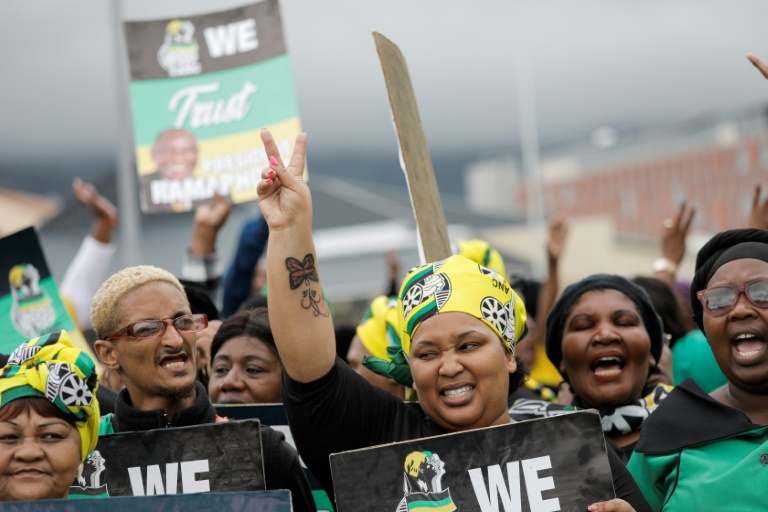
South African MPs on Tuesday prepared to debate whether to initiate proceedings that could force out President Cyril Ramaphosa over allegations he concealed a huge cash theft at his farm.

Ramaphosa — championed as a graft-busting saviour after corruption-stained predecessor Jacob Zuma — is counting on support from the ruling African National Congress (ANC) party, which has been further divided by the scandal.

An extraordinary parliamentary session opening in Cape Town at 1200 GMT will discuss the findings of an independent panel which said Ramaphosa may be guilty of serious violations and misconduct.

Lawmakers are called to decide in an open vote, by simple majority, whether to launch an impeachment investigation against Ramaphosa — a lengthy probe that could lead to his removal from office.

The 70-year-old president seems likely to survive the day, although analysts predicted the debate could be long and bitter.

Last week, he secured the renewed backing of the ANC, which holds 230 of the National Assembly’s 400 seats, after mounting a legal bid to have the damning report annulled. 

“We are going to use our numbers as ANC… because we cannot be dictated to by a panel that has not been objective,” Communications Minister Khumbudzo Ntshavheni told reporters before entering parliament.

“We are not going to be bullied by anyone,” she said.  

– Toe the line? –

Political analyst Ongama Mtimka from the Nelson Mandela University predicted ANC MPs would toe the party line ahead of a crunch meeting this Friday, when they hold a five-yearly conference to elect new leaders.

The ANC conference “presents the members with a chance to make a change at a party level, where it matters the most,” said Mtimka.

Yet others believe there might be room for surprises, as the scandal has deepened rifts within the deeply factionalised ANC.

Its national executive vowed last week to vote down any attempt to force Ramaphosa from office. 

That decision upset some, who said the executive had forced their hand. 

Ramaphosa’s graft-tainted predecessor Zuma survived several no-confidence motions during his tenure, before his own party forced him to resign in 2018.

Opposition parties are presenting a largely united front on the issue. 

John Steenhuisen, leader of the largest opposition party, the Democratic Alliance, said the ANC cannot be allowed to use “the tyranny of their majority to protect a president from scrutiny”.

It is likely to be “a very heated and long procedure,” said analyst Daniel Silke. 

– Scrutiny –

Ramaphosa, who will not be in parliament on Tuesday, kicked off his day in the capital Pretoria, presiding under pouring rain at a police graduation ceremony.

Were the opposition to have its way, Ramaphosa would face the prospect of having the affair further scrutinised by parliament in a year that leads to general elections in 2024.

An impeachment vote itself would need the support of a two-thirds majority of MPs to succeed.

The president, who was a wealthy businessman before entering politics, found himself in hot water in June when South Africa’s former spy boss filed a complaint against him to the police.

Arthur Fraser alleged Ramaphosa had concealed the theft of several million dollars from his luxury farm in 2020.

He accused the president of having the burglars kidnapped and bribed into silence instead of reporting the matter to the authorities. 

A police inquiry is ongoing. Ramaphosa has not been charged with any crime and has denied wrongdoing. 

The findings of the three-person special probe, issued last week, brought forward details that have left South Africa agog.

Ramaphosa acknowledged the theft of $580,000 in cash that was stashed under sofa cushions at his farm — a safer place, his employees said, than the office safe.

He said the money was payment for buffaloes bought by a Sudanese businessman, who recently confirmed the transaction in interviews with British media.

The huge amount of greenback cash has raised questions about declaration of foreign currency and tax concerns.

Close Bitnami banner
Bitnami