World

Biden to sign same-sex marriage protections into law

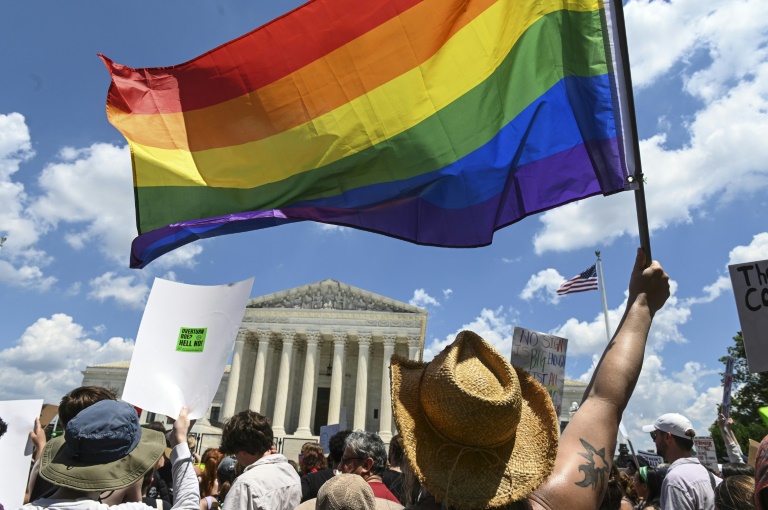
President Joe Biden will on Tuesday sign into law a bill granting federal protections to same-sex marriage — gathering thousands of guests at the White House to celebrate the legislative milestone.

It comes 12 years after Biden — then Barack Obama’s vice president — took a public stand in favor of same-sex unions, well before they became legal in the entire United States through a 2015 US Supreme Court decision.

After the Supreme Court — now significantly more conservative — overturned longstanding abortion rights last June, lawmakers from the left and right came together to prevent any subsequent move to curb same-sex marriage rights, feared by some.

The legislation’s final adoption by Congress last week marked a rare show of bipartisanship in deeply divided Washington.

In celebration, Biden will be gathering a group of Republican and Democratic lawmakers on the White House grounds, along with advocates and plaintiffs in marriage equality cases across the country, his spokeswoman Karine Jean-Pierre said Monday.

Jean-Pierre, who herself made history as the first openly gay White House press secretary, also touted “musical guests and performances to celebrate this historic bill.”

The legislation, she said, “will give peace of mind to millions of LGBTQI+ and interracial couples who will finally be guaranteed the rights and protections to which they and their children are entitled.”

– Growing support –

Hundreds of thousands of same-sex couples have married since the Supreme Court’s 2015 decision legalizing the unions throughout the United States.

Public acceptance has grown dramatically in recent decades, with polls now showing a strong majority of Americans supporting same-sex marriage.

But some conservatives and the religious right remain opposed.

The new legislation, known as the Respect for Marriage Act, does not require states to legalize same-sex marriage but does require them to recognize a marriage so long as it was valid in the state where it was performed.

It repeals previous legislation defining marriage as a union between a man and a woman, and also protects interracial couples by requiring states to recognize legal marriages without regard to “sex, race, ethnicity or national origin.”

In the House of Representatives, 39 Republicans joined a united Democratic majority in supporting the bill, while 169 Republicans voted against. It was previously adopted in the evenly-split Senate by 61 votes to 36.

– ‘Who do you love?’ –

Jean-Pierre said Biden would stress Tuesday that “there is much more work to be done to protect LGBTQI+ individuals across the country.”

Biden’s spokeswoman recalled that the 80-year-old Democrat was among the first American political leaders to publicly support same-sex unions at the highest levels of government.

Back in 2012, Biden caused a stir by candidly declaring his support for same-sex unions — when Obama’s White House was still looking for the best way to make the president’s position official as he sought reelection to a second term.

“I am absolutely comfortable with the fact that men marrying men, women marrying woman and heterosexual men marrying women are entitled to the same, exact rights,” Biden said in a televised interview at the time.

“Who do you love? Who do you love and will you be loyal to the person you love?” Biden said. “That’s what people are finding out what all marriages at their root are about.”

Following his election in 2020, Biden tapped Pete Buttigieg to become his transport secretary — the first openly gay person to be confirmed by the Senate to a cabinet post.

And beyond the issue of marriage, the Biden administration has taken a strong stance in support of LGBTQ rights — notably towards the transgender community whose push for greater rights has become a political flashpoint in the country.

The administration has introduced gender-neutral passports — allowing people who identify neither as male nor female to select the gender “X” — and it lifted a ban on transgender people serving in the armed forces, introduced under Biden’s predecessor Donald Trump.


Ukraine needs extra gas and weapons, Zelensky tells G7

President Volodymyr Zelensky urged G7 nations on Monday to provide extra gas and weapons to help Ukraine survive a brutal winter that threatens to bring further suffering to millions in the war-torn country.

With snow on the ground and Ukraine’s energy grid battered by Russian strikes, many are facing freezing temperatures without power or heating.

During a video conference with the G7 club of wealthy nations on Monday, Zelensky said Ukraine needs “about two billion cubic metres” of additional gas to get through the winter.

He also urged the G7 to send more arms to Ukraine, including “modern tanks” as well as “rocket artillery and more long-range missiles”.

Western-supplied weapons have helped turn the tide in the war, and a senior US military official said Monday that Russia is likely turning to older, less reliable artillery and rocket ammunition as its newer stocks run low.

But Zelensky said “Russia still has the advantage in artillery and missiles.”

“This is a fact,” he told the G7. “These capabilities of the occupying army are the ones to fuel the Kremlin’s arrogance”.

– ‘We will survive’ –

Meanwhile, in the strategic Ukrainian port of Ochakiv, officials are hoping the Black Sea naval base can serve to consolidate Kyiv’s gains in the southern Kherson region.

After failing to seize the port, Russian troops have been pummelling Ochakiv from the nearby Kinburn peninsula. 

In the fog at the local market, 62-year-old Oleg Klyutshko said: “I am not afraid of winter… but I would like the strikes to stop. We will survive anything else.”

Kyiv says 40 percent of Ukraine’s critical energy infrastructure has been damaged, with wave after wave of targeted Russian attacks.

The Ukrainian energy ministry said in a statement that Russian missiles had hit all of the country’s thermal power plants, while 44 overhead high-voltage power lines had also been affected.

Power company YASNO said supply limitations in Kyiv were “significant” with some 40 percent of supplies diverted to critical infrastructure.

Oil and gas company DTEK said its specialists were “constantly looking for equipment to restore the energy infrastructure destroyed by Russia” and had agreed on contracts with European suppliers ABB and Siemens.

According to a readout issued by his office, Zelensky told the G7 “the terror against our power plants forced us to use more gas than expected”. 

“This is why we need additional support over this particular winter,” he said.

The G7 groups Britain, Canada, France, Germany — which currently holds the club’s presidency — Italy, Japan and the United States.

G7 leaders agreed on key elements of a platform to coordinate financial support for Ukraine, German Chancellor Olaf Scholz said, before a summit in Paris on post-war reconstruction.

Zelensky also proposed a special summit, which he called the Global Peace Formula Summit, “to determine how and when we can implement the points of the Ukrainian Peace Formula,” which would secure Ukraine’s security and territorial integrity.

He invited the G7 industrialised nations “as well as other conscientious countries” to “show your leadership”.

The Ukrainian leader also urged Russia “to take a concrete and meaningful step towards a diplomatic settlement”. 

Zelensky called on “the occupier” Moscow to leave Ukrainian territory by Christmas.

“The one who brought the war upon us has to take it away.”

– ‘Rethink’ nuclear security –

An international conference hosted by France will kick off in Paris on Tuesday. 

The gathering of politicians, blue-chip companies and aid agencies will focus on how Ukraine’s Western allies can provide immediate support to keep its civil infrastructure afloat amid incessant bombing by Russia. 

Speaking to AFP ahead of Tuesday’s meeting, Ukraine’s energy minister German Galushchenko said in an interview that the war with Russia “completely changes our understanding of nuclear security”.

He pointed to Russia’s seizure of Ukraine’s Zaporizhzhia nuclear power plant — Europe’s largest atomic facility — which has raised alarm among Western allies as shelling has continued in the area throughout the nearly 10-month conflict. 

“This situation absolutely pushes us to rethink what we should do from the point of view of (nuclear) safety,” Galushchenko told AFP. “That’s a question, too, to all the countries of the world.”

Hong Kong leader says Google has 'moral obligation' to remove wrong anthem

Google has a “moral obligation” to stop a democracy protest song appearing in search results, Hong Kong’s leader said Tuesday, as row over China’s national anthem widened to include the tech giant.

Hong Kong officials have been infuriated by a series of mistakes at international sporting events in recent weeks when a protest song has been played instead of China’s national anthem for the city’s athletes.

Their ire has increasingly focused on Google after it emerged that the protest song “Glory to Hong Kong” routinely appears at the top of the page when people search for Hong Kong’s anthem.

City leader John Lee told reporters on Tuesday that Google should ensure China’s national anthem — which the city’s athletes compete under — comes at the top of the search page. 

“If any company is in anyway responsible, it has that moral obligation,” he said. 

“There are ways to do it,” Lee added.

Lee’s comments came a day after Hong Kong’s security chief Chris Tang said Google had refused to change the search results, something he said was an issue of “great regret”. 

According to Tang, a former police chief, Google said its search engine results were governed by an algorithm, not human input.

Both Tang and Lee have countered that Google has been willing to amend search results to abide by local laws, including privacy laws in the European Union.

Lee said his administration would reach out again to Google to pursue the matter.

Google has not yet responded to requests for comment.

China’s national anthem is “March of the Volunteers”, a rousing song born out of the Communist Party’s struggle to liberate the country from Japanese occupation.

“Glory to Hong Kong” was penned during huge protests that swept Hong Kong in 2019 and became hugely popular within the city.

It is now all but illegal to sing the song or play its melody under a sweeping national security law that was imposed to crush those protests.

Hong Kong leader says Google has 'moral obligation' to remove wrong anthem

Google has a “moral obligation” to stop a democracy protest song appearing in search results, Hong Kong’s leader said Tuesday, as row over China’s national anthem widened to include the tech giant.

Hong Kong officials have been infuriated by a series of mistakes at international sporting events in recent weeks when a protest song has been played instead of China’s national anthem for the city’s athletes.

Their ire has increasingly focused on Google after it emerged that the protest song “Glory to Hong Kong” routinely appears at the top of the page when people search for Hong Kong’s anthem.

City leader John Lee told reporters on Tuesday that Google should ensure China’s national anthem — which the city’s athletes compete under — comes at the top of the search page. 

“If any company is in anyway responsible, it has that moral obligation,” he said. 

“There are ways to do it,” Lee added.

Lee’s comments came a day after Hong Kong’s security chief Chris Tang said Google had refused to change the search results, something he said was an issue of “great regret”. 

According to Tang, a former police chief, Google said its search engine results were governed by an algorithm, not human input.

Both Tang and Lee have countered that Google has been willing to amend search results to abide by local laws, including privacy laws in the European Union.

Lee said his administration would reach out again to Google to pursue the matter.

Google has not yet responded to requests for comment.

China’s national anthem is “March of the Volunteers”, a rousing song born out of the Communist Party’s struggle to liberate the country from Japanese occupation.

“Glory to Hong Kong” was penned during huge protests that swept Hong Kong in 2019 and became hugely popular within the city.

It is now all but illegal to sing the song or play its melody under a sweeping national security law that was imposed to crush those protests.

Maduro says Venezuela-Colombia border to completely reopen Jan. 1

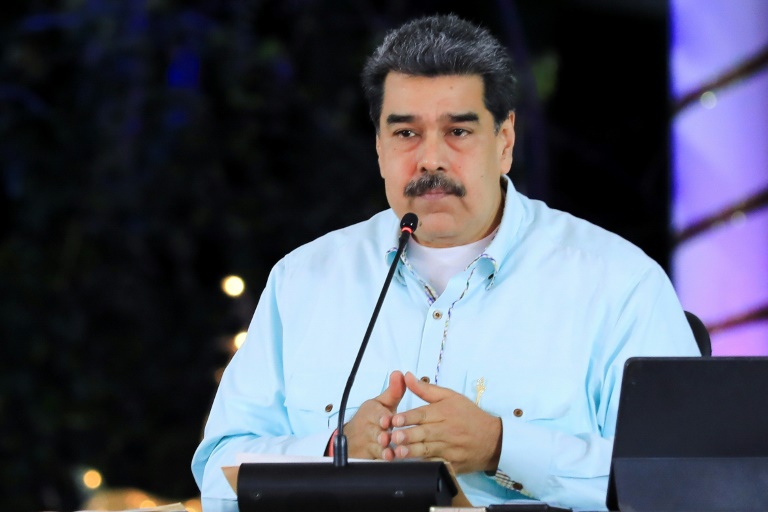
Venezuelan leader Nicolas Maduro said Monday his country would fully reopen its land border with Colombia on January 1, completing a negotiating process that began in September with the two South American neighbors reestablishing diplomatic ties.

“I can announce that we will be completely opening the entire western border of Venezuela with Colombia for the passage of vehicles,” the socialist president said in a statement broadcast on the state media.

“We are preparing everything to comply with what we announced, to fulfill the pledges made with (Colombian) President Gustavo Petro to open it on January 1,” Maduro said.

The border was partially closed seven years ago and completely blocked three years ago, when Maduro broke off diplomatic ties after the previous Colombian government questioned his re-election, the legitimacy of which many countries, including the United States, have also doubted.

As soon as he came to power, Petro, Colombia’s first-ever left-wing president, sought to reestablish ties and pushed for a reopening of the border. 

The Simon Bolivar Bridge, which connects Colombia’s Cucuta with the Venezuelan city of San Antonio del Tachira, is currently open for cargo vehicles between 10:00 am and 5:00 pm and for pedestrians between 5:00 am and 6:00 pm. 

It is expected that next Thursday a test plan will be launched on the “Tienditas” bridge, a land route that has not been inaugurated since its construction in 2017.

Disgraced crypto tycoon Bankman-Fried arrested in Bahamas

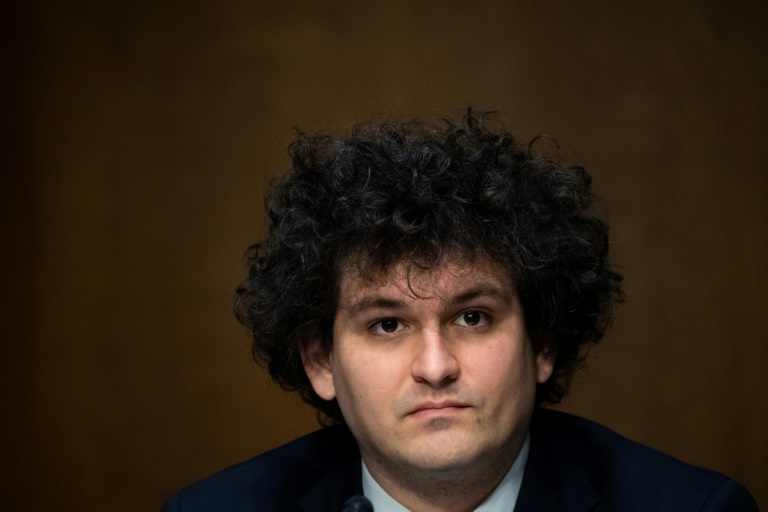
Disgraced cryptocurrency tycoon Sam Bankman-Fried was arrested Monday in the Bahamas at the request of the United States, according to US officials seeking to charge him after the spectacular collapse of his FTX platform.

The arrest comes on the eve of Bankman-Fried’s scheduled appearance at a US Congress hearing in which he was to testify under oath about the crypto exchange’s overnight demise.

The 30-year-old had in recent weeks defied legal advice and multiplied media appearances offering his version of his company’s sudden failure, usually by video link from the Bahamas where his company is headquartered.

“Earlier this evening, Bahamian authorities arrested Samuel Bankman-Fried at the request of the US Government, based on a sealed indictment filed by the southern district of New York,” said a tweeted statement from Damian Williams, lead prosecutor for the district.

“We expect to move to unseal the indictment in the morning and will have more to say at that time,” he added.

According to a press release from the attorney general’s office in the Bahamas, Bankman-Fried was to be held in custody before an expected request for his extradition by the United States. 

The Bahamas prime minister’s office shared news of the arrest, as well as a police statement saying Bankman-Fried was arrested in the early evening at his apartment complex in the capital Nassau.

He was taken into custody without incident, the statement said, and was to appear in court in Nassau on Tuesday.

As much as anyone, Bankman-Fried had embodied the apparent emergence of cryptocurrency as an above-board investment and no longer a frowned on get-rich-quick scheme shunned by the banking establishment. 

His FTX platform was plugged by celebrities in advertising campaigns and the cyber whiz kid became a regular presence in Washington where he donated tens of millions of dollars in political contributions.

But after reaching a valuation of $32 billion, FTX’s implosion was swift following a November 2 report on ties between FTX and Alameda, a trading company also controlled by Bankman-Fried.

The report exposed that Alameda’s balance sheet was heavily built on the FTT currency — a token created by FTX and with no independent value.

– ‘Grossly inexperienced’ –

The price of FTT plunged in early November, roiling both Alameda and FTX, where Alameda had large trading positions. 

Reeling from customer withdrawals and short some $8 billion, FTX and some 100 related entities filed for bankruptcy protection on November 11, inviting scrutiny from regulators, prosecutors and furious clients who had believed the hype about cryptocurrency. 

Among the revelations, FTX is suspected of fraud for propping up Alameda with billions of dollars in customer funds that are now likely lost forever.

Questions also linger over whether Bankman-Fried engaged in market manipulation, or illegally provided inside information to Alameda.

“If convicted he could be facing the rest of his life in prison, given the dollar amount of the fraud,” Jacob S. Frenkel, a former federal criminal prosecutor at Dickinson Wright, told AFP.

“We would not see an indictment if prosecutors were not absolutely convinced that they will win a conviction,” he added.

In his media interviews, Bankman-Fried has admitted to mistakes, but has denied intent to defraud his customers.

FTX CEO John Ray, who came to the company after the debacle, was to tell Congress on Tuesday that the problems arose because control was “in the hands of a very small group of grossly inexperienced and unsophisticated individuals.”

“Never in my career have I seen such an utter failure of corporate controls at every level of an organization, from the lack of financial statements to a complete failure of any internal controls or governance whatsoever,” Ray said in prepared remarks.

The fall of FTX has caused major doubts on the long term viability of cryptocurrency and heaped stress on other platforms and entities that rode the success of Bitcoin and other currencies.

Seven dead as Peru's new leader fails to quell protests

Five more protesters died in Peru on Monday as violent demonstrations over the ousting of the former president showed no sign of calming, despite his successor’s efforts to quell the unrest.

Seven people, including three teenagers, have now died in escalating protests since the leftist Pedro Castillo was accused of an attempted coup, impeached and arrested last week.

New President Dina Boluarte tried to ease tensions on Sunday, announcing she would seek to hold elections two years early and declaring a state of emergency in flashpoint areas.

But that had little effect as protesters continued to demand her resignation, blocking roads in several cities around the country with logs, rocks and burning tires.

Some 2,000 protesters smashed runway lighting, burned security booths and forced the closure of the airport in Peru’s second-largest city Arequipa for several hours on Monday before police dispersed them with tear gas.

The clashes left one dead, while another four people died as riot police quashed protests in Boluarte’s southeastern home region of Apurimac — where two other protesters died in clashes with security forces during an attempt to storm an airport there on Sunday.

“We have seven people reported dead” since Sunday, a source from the public defender’s office told AFP on condition of anonymity.

Also Monday in Apurimac, demonstrators torched the public prosecutor’s office and a police station. In Arequipa, protesters also occupied one of the largest factories in the country, owned by the dairy company Gloria.

In a statement, UN Human Rights Office spokeswoman Marta Hurtado warned that “the situation may escalate further” and urged “all involved to exercise restraint.”

Hurtado also called on authorities to “allow people to exercise their rights to peaceful assembly and freedom of opinion and expression.”

– ‘Political prisoner’-

Castillo has been in detention since last Wednesday, and is facing charges of rebellion and conspiracy after he dissolved Congress and vowed to rule by decree.

The former president met with his lawyers in Lima ahead of a hearing Tuesday in which he will seek his immediate release.

“The president’s position is that he is a political prisoner,” said lawyer Ronald Atencio.

Around 100 supporters were camping out front of the prison where Castillo is being held, demanding he be released and returned to office.

“We have been sleeping here for four nights and we will continue until we get the president back to the (presidential) palace,” protester Ana Karina Ramos told AFP, with tears in her eyes.

Meanwhile, the leftist governments of Mexico, Argentina, Colombia and Bolivia released a joint statement in support of Castillo, saying he had been “the victim of antidemocratic harassment” since his election.

Castillo’s 17-month rule was overshadowed by six investigations against him and his family, mass protests demanding his removal, and a power struggle with the opposition-controlled Congress.

Boluarte, a former prosecutor who had served as Castillo’s vice president, was quickly sworn in to replace him following his impeachment and arrest.

On Sunday, she tried to appease citizens in a televised address saying she would seek “to reach an agreement” with Congress to bring forward elections from July 2026 to April 2024.

The country’s right-leaning Congress convened an emergency session on Sunday afternoon to discuss the crisis, but it had to be suspended after fighting broke out.

On Monday, the government fired the 26 regional prefects who had been appointed by Castillo, accusing them of “inciting protests.”

– ‘Indefinite strike’ –

With his background as a rural teacher and union leader, and with little contact among the nation’s elites, Castillo has always drawn his strongest support from Andean regions, while struggling to find backing in coastal Lima.

Rural unions and organizations representing Indigenous peoples have called for an “indefinite strike” beginning Tuesday in support of Castillo, himself the son of a peasant family.

They demanded the suspension of Congress, early elections and a new constitution, as well as Castillo’s immediate release, according to a statement from the Agrarian and Rural Front of Peru, which groups about a dozen organizations.

Peru is no stranger to political instability and is now on its sixth president since 2016.

Musk relaunches Twitter Blue after fake account fiasco

Elon Musk relaunched a Twitter subscription service on Monday after a first attempt saw an embarrassing spate of fake accounts that scared advertisers and cast doubt on the site’s future.

The first try last month came just 10 days after Musk’s $44 billion takeover of the platform and a mass round of layoffs that saw company staff levels halved, including teams of workers moderating content.

The relaunch of Twitter Blue in a handful of countries including the United States comes as the Tesla and SpaceX owner has stepped up his tweets endorsing right-wing causes, including opposition to the use of gender neutral pronouns and the US government’s response to Covid-19.

The subscription service costs $8 per month for users accessing Twitter on the web and $11 if signing up on an Apple device. 

The initial rollout of Twitter Blue caused an uproar when many fake accounts popped up pretending to be celebrities or companies and Musk’s team was forced to pull the plug on the scheme.

This time, the company beefed up its verification procedure with a review required by Twitter before receiving the coveted blue mark.

A blue checkmark on an account, which indicates it has been verified by Twitter, was previously free but reserved for organizations and public figures in an attempt to avoid impersonation and misinformation.

The relaunch came the same day as reports that Musk disbanded Twitter’s Trust and Safety Council — a body created six years ago that allows the company to tap into global experts for help shaping strategies around hate speech, child safety, civil rights and other sensitive issues.

An email sent to council members said Twitter is reevaluating how it brings “external insights” into its work and decided that the council is “not the best structure to do this,” The Washington Post and CNN reported, citing copies of the message.

Some members of the Trust and Safety Council had already resigned in protest, saying the wellbeing of Twitter users was declining with Musk in charge, CNN reported.

– Personal attacks – 

Since his takeover, content moderation has proved to be a major headache for Musk, who has described himself as a free-speech absolutist and vowed to let people tweet whatever they want, within the law.

But the billionaire’s commitment to unfettered comment has scared off major advertisers and caught the attention of regulators.

Musk believes that the previous ownership of Twitter held a strong left-wing and pro-LGBTQ bias and unfairly banned accounts, including that of former US president Donald Trump.

On Sunday he lashed out against the outgoing key advisor for the US response to the Covid-19 pandemic, Anthony Fauci, a frequent target of vitriol on right-wing media.

“My pronouns are Prosecute/Fauci,” Musk said, tauntingly playing on the growing practice for people to indicate their preferred gender pronouns.

By late Monday, trending comment on Twitter in response to Musk called for people to change their pronouns to Boycott/Tesla.

The White House blasted Musk for the tweets against Fauci calling them “disgusting” and “divorced from reality”.

“These are incredibly dangerous, these personal attacks that we are seeing,” said White House spokeswoman Karine Jean-Pierre.

CNN reported that Twitter’s former head of trust and safety had fled his home after baseless attacks on Twitter, endorsed by Musk.

Yoel Roth, who left the company in November, has been the subject of threats since Musk’s release of internal documents that play into unsubstantiated theories about collusion by some inside Twitter with the Democratic Party.

The attacks took a serious turn Sunday when Musk endorsed a tweet that accused Roth of being an apologist for pedophilia — a common trope used by conspiracy theorists to target opponents.

The South African-born billionaire’s embrace of right-wing talking points seemed to attract increasing scorn in politically liberal San Francisco, where Twitter is headquartered.

Musk was loudly booed by a crowd in the city late Sunday after he was invited on stage by comedian Dave Chappelle.

“It’s almost as if I’ve offended San Francisco’s unhinged leftists… but nahhh,” Musk tweeted after the event.

Carolina Milanesi, a tech analyst for Creative Strategies, warned that Musk’s political turn on Twitter could be problematic for the company going forward.

arp-gc-pmh-gc/des

Asian markets extend US rally ahead of inflation, Fed decision

Asian markets mostly rose Tuesday, with nervous investors sitting tight ahead of key US inflation data and a Federal Reserve policy decision but fresh pledges by China to open up from zero-Covid offering support.

The gains across the region came after Wall Street’s three main indexes raced out of the traps Monday, with analysts citing a survey by the central bank that showed inflation expectations falling.

The November consumer price index figures later in the day follow Friday’s forecast-beating print on wholesale inflation, which dented hopes the Fed could take a more dovish tilt in its monetary-tightening campaign.

The central bank is then widely expected to lift interest rates 50 basis points on Wednesday — a slowdown from the previous four 75-point hikes — but its post-meeting statement and comments from boss Jerome Powell will be closely followed.

While the general view is that policymakers will stop increasing borrowing costs next year, there is debate about how high they will end and when they will start to come down.

“It’s all going to depend on CPI numbers, whether the Fed is going to pivot or not,” Xi Qiao, at UBS Group AG, told Bloomberg Television.

“With the current inflation situation, a lot of the fundamental challenges that we have right now are going to go into 2023.”

But the Wall Street Journal reported that there were disagreements within the policy board about the way forward, with doves trying to limit the economic pain as they bring inflation down, while hawks want a tougher line on fighting prices by weakening the jobs market.

“In this light, don’t expect clearcut signals from the Fed… on what they expect to be doing at early 2023 (policy) meetings after a widely expected 50 basis points fund rate hike this week,” said National Australia Bank’s Ray Attrill.

In early Asian business, Hong Kong, Tokyo, Shanghai, Sydney, Seoul, Wellington, Taipei, Manila and Jakarta were all well up.

China’s shift away from its economically damaging zero-Covid policy continued to lift sentiment as the world’s number two economy opens up.

And on Monday, the country’s ambassador to the United States said: “In the near future I believe that measures will be further relaxed and international travel will become easier.”

Meanwhile, top Chinese officials are meeting this week to draw up their economic blueprint for re-emerging from Covid, with observers predicting more stimulus measures and pledges of support for the troubled property sector.

But there is also a worry among investors that the quick relaxation of containment measures such as mass testing and lockdowns might lead to a massive surge in infections that could overwhelm the healthcare system and weigh on the economy.

Still, the expected pick-up in demand in China boosted oil prices further, with both main contracts extending Monday’s strong gains.

“China’s reopening is coming, it won’t happen overnight, but it will provide a major boost to demand in the outlook next quarter,” said OANDA’s Edward Moya. 

– Key figures around 0230 GMT –

Tokyo – Nikkei 225: UP 0.4 percent at 27,946.09 (break)

Hong Kong – Hang Seng Index: UP 0.6 percent at 19,585.54

Shanghai – Composite: UP 0.1 percent at 3,183.39

Euro/dollar: UP at $1.0547 from $1.0539 on Monday

Dollar/yen: UP at 137.75 yen from 137.66 yen

Pound/dollar: UP at $1.2276 from $1.2268

Euro/pound: UP at 85.92 pence from 85.87 pence

West Texas Intermediate: UP 0.9 percent at $73.82 per barrel

Brent North Sea crude: UP 0.9 percent at $78.67 per barrel

New York – Dow: UP 1.6 percent at 34,005.04 (close)

London – FTSE 100: DOWN 0.4 percent at 7,445.97 (close) 

Nature guardians: Why Indigenous people are vital for saving biodiversity

For countless generations prior to European colonization, Canada’s Indigenous people relied on caribou both as a source of subsistence and as an integral part of their cultural practices.

Hunting and butchering the animal in frigid temperatures was long seen as a rite of passage, and members of the First Nations were the first to detect their serious decline.

“Fundamentally we are people of caribou,” Valerie Courtois, director of Canada’s Indigenous Leadership Initiative and a member of the Innu nation, told AFP.

“Caribou is what has really enabled us to survive, and to be who we are.”

Today the species, which is known as reindeer outside North America, is endangered across much of Canada as a result of widespread habitat destruction from logging, roadbuilding, construction of transmission lines and more.

But an innovative pilot program led by Indigenous people might show a path to wider recovery.

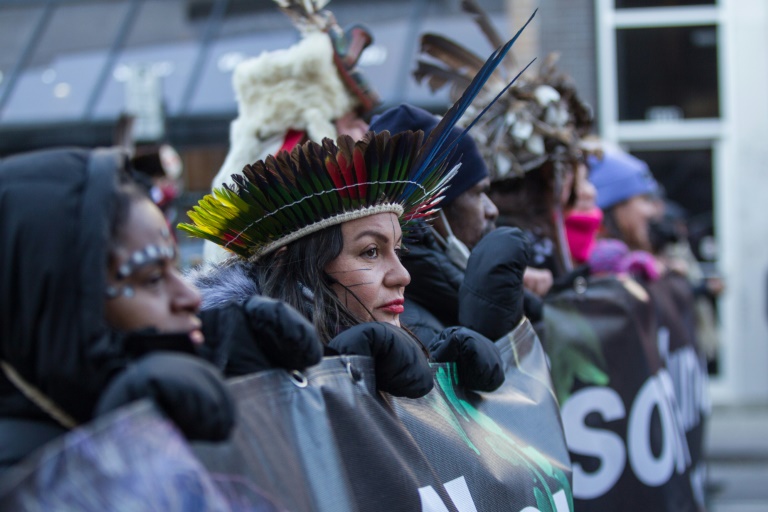
As delegates from across the world meet in COP15 in Montreal this week to hammer out a new deal for nature, the case highlights the value of Indigenous stewardship in protecting ecosystems that benefit all humanity.

As detailed in a March 2022 paper in “Ecological Applications,” the Klinse-Za subpopulation of caribou in British Columbia were once so plentiful they were described as “bugs on the landscape” but by 2013 had dwindled to just 38 animals.

That year, the First Nations of West Moberly and Saulteau devised a plan that saw them first cull wolves to reduce caribou predation, then added a maternal pen-fenced enclosures for females to birth and raise calves.

Their efforts saw the number of caribou of the herd triple in the area from 38 to 114. 

With the threat of localized extinction averted, the two nations signed an agreement in 2020 with the governments of British Columbia and Canada to secure 7,900 square kilometers (3,050 square miles) of land for caribou, hoping to eventually revive their traditional hunt.

“When you protect caribou, a lot of animals come along for the ride,” Ronnie Drever, a conservation scientist with nonprofit Nature United, told AFP.

“Good caribou conservation is also climate action,” he added, because the old-growth forests and peatlands they live on are invaluable carbon sinks.

– Science catching up – 

Globally, Indigenous people own or use a quarter of the world’s land, but safeguard 80 percent of remaining biodiversity — testament to centuries of sustainable practices that modern science is only just starting to understand.

A paper published this October in Current Biology looked at tropical forests across Asia, Africa, and the Americas, finding those located on protected Indigenous lands were the “healthiest, highest functioning, most diverse, and most ecologically resilient.”

A 2019 paper in Environmental Science & Policy analyzed more than 15,000 areas in Canada, Brazil and Australia.

It found that the total number of birds, mammals, amphibians and reptiles were highest on lands managed or co-managed by Indigenous communities.

Protected areas like parks and wildlife reserves had the second highest levels of biodiversity, followed by areas that were not protected.

“This suggests that it’s the land-management practices of many Indigenous communities that are keeping species numbers high,” said lead author Richard Schuster, in a statement.

– Partnership crucial – 

Jennifer Tauli Corpuz, of the Kankana-ey Igorot people of the Philippines, who is a lawyer and biodiversity expert with the International Indigenous Forum on Biodiversity, stressed that collaborative efforts were crucial.

“Conservation does not have a good history with Indigenous peoples, it’s resulted in displacement,” she told AFP. 

National parks established on Euro-American notions that the land was once pristine “wilderness” typically prohibited Indigenous peoples from exercising their customary land uses, and forcibly displaced many from their ancestral homes.

Instead, she says, the rights of Indigenous groups need to be woven into the fabric of the new global biodiversity deal — including a cornerstone pledge to protect 30 percent of land and water by 2030.

Indigenous groups say they should have greater autonomy to take the lead as managers of protected areas, arguing their successful record demonstrates they can pursue economic activity sustainably.

“The current biodiversity crisis is often depicted as a struggle to preserve untouched habitats,” said a study published last year in the Proceedings of the National Academy of Sciences, which found that areas untouched by people were almost as rare 12,000 years ago as they are today.

“Current biodiversity losses are caused not by human conversion or degradation of untouched ecosystems, but rather by the appropriation, colonization, and intensification of use in lands inhabited and used by prior societies,” it concluded.

Close Bitnami banner
Bitnami