World

Europe's biggest port 'drowning in cocaine'

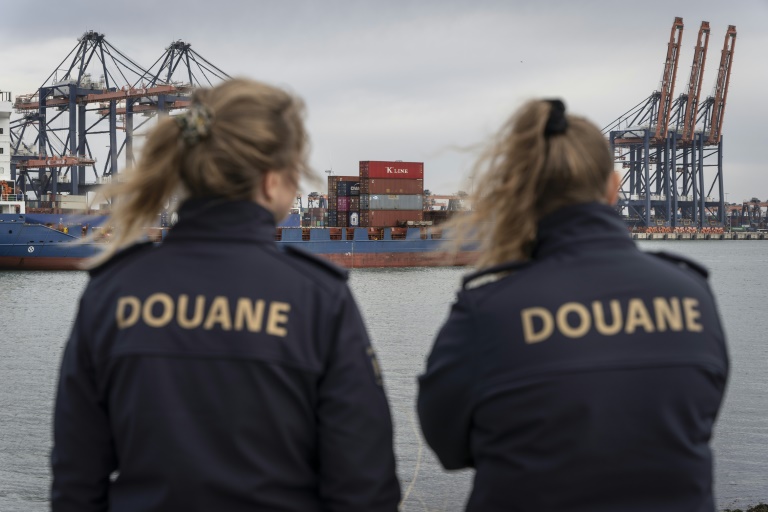
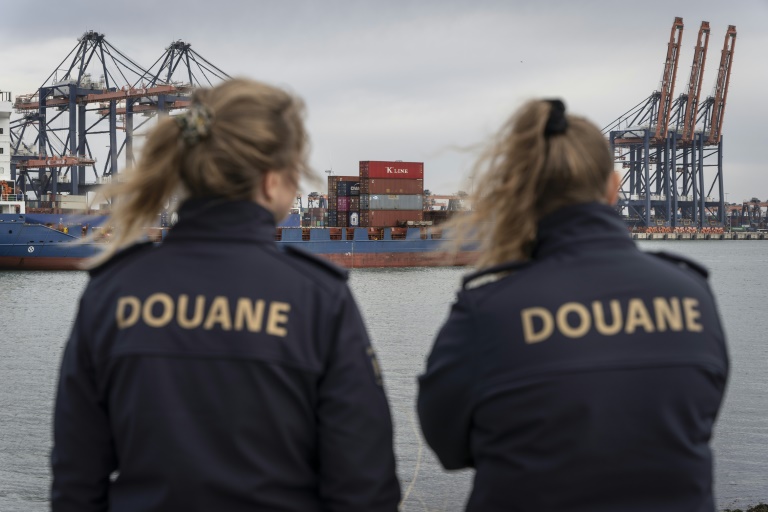
The millions of containers unloaded by Rotterdam’s giant cranes make it Europe’s largest port, but the Dutch city is also dealing with ever larger amounts of a less welcome cargo: cocaine.

A record of nearly 70 tonnes of the drug was intercepted in 2021, up 74 percent from a year before, said Ger Scheringa, who leads a team of armed customs officers at the port.

Rotterdam and Antwerp in neighbouring Belgium were the two main entry points used by a Dubai-based “super cartel” supplying a third of Europe’s cocaine, which Europol said it busted last month.

The cocaine is usually hidden in containers, or sometimes underneath ships in openings below the water line where they are then recovered by divers.

Pinpointing the reason for this jump in cocaine seizures is a “delicate question”, Scheringa told AFP. 

“It seems there are lots of buyers” in Europe, he said dryly.

“And if there is demand, it is supplied.”

Rotterdam has taken major steps to stop the white powder making its way into Europe, particularly by stepping up customs checks, the Dutchman said.

But he doesn’t expect Rotterdam’s record for seizures to be beaten in 2022, and admitted that he “doesn’t know if there is really a solution to the problem” as long as people keep taking cocaine.

– ‘Needle in a haystack’ –

Rotterdam mayor Ahmed Aboutaleb has deplored the fact that the port city is “drowning in cocaine”, and condemns the violence that accompanies the drug trade.

Aboutaleb wants port authorities to scan all containers arriving from Latin America.

But customs official Scheringa said the “biggest challenge is to find a good balance between the speed of logistics for the port, and checking everything you want.”

Gangs use sophisticated methods to send the cocaine through Rotterdam and then recover it afterwards, often relying on inside information, said Romilda Schaaf, a drugs specialist for the port police.

Maps on her computer show the dizzying scale of her patch, with tens of thousands of containers piling up at multiple terminals, meaning investigators need precise details to find smuggled drugs.

“It really is a question of finding a needle in a haystack,” she told AFP.

Young men, often from the deprived south of Rotterdam according to prosecutors, sometimes spend several nights in “container hotels” equipped with food and blankets, close to where a container with cocaine is expected.

They then move the drugs to different containers so there is less chance of them being checked, particularly if they come from South America.

More than 70 people have been arrested so far this year for trafficking-related offences in the port, said Scheringa, including gang members and even port employees.

As recently as December 6, Dutch police said a 43-year-old female officer from Rotterdam was arrested over allegations of corruption and involvement in drug trafficking.

Gangs pay dockers and officials up to 100,000 euros to help get big batches through, Scheringa said.

It’s easy money, said police official Schaaf, “but it leads to nothing. If you say yes once, you can’t say no… (so) don’t start in the first place!”

– Assassinations  –

Dutch customs officers insist that good contacts with “source” countries are important to stem the flood of cocaine, along with tackling efforts to corrupt port employees — and more checks.

A key part of the checks is risk assessment. Containers are singled out as suspect, often because of information from abroad, then scanned, unpacked and searched with sniffer dogs. 

Some ships are also inspected by diving teams.

The automation of some parts of the port, and therefore the elimination of the human factor, has also helped to curb corruption, according to two officials.

Violence linked to the cocaine trade has deeply touched Dutch society.

A famous Dutch journalist and a lawyer who were involved in the trial of an alleged drug lord were assassinated in 2019 and 2021, shocking the country and convincing authorities to allocate more resources to a crackdown.

“The aim is really to assure people that they can live in safety, and that no politician, lawyer or crime reporter should have to be under protection because this junk is coming into our country,” said Schaaf. 
Europe's biggest port 'drowning in cocaine'

The millions of containers unloaded by Rotterdam’s giant cranes make it Europe’s largest port, but the Dutch city is also dealing with ever larger amounts of a less welcome cargo: cocaine.

A record of nearly 70 tonnes of the drug was intercepted in 2021, up 74 percent from a year before, said Ger Scheringa, who leads a team of armed customs officers at the port.

Rotterdam and Antwerp in neighbouring Belgium were the two main entry points used by a Dubai-based “super cartel” supplying a third of Europe’s cocaine, which Europol said it busted last month.

The cocaine is usually hidden in containers, or sometimes underneath ships in openings below the water line where they are then recovered by divers.

Pinpointing the reason for this jump in cocaine seizures is a “delicate question”, Scheringa told AFP. 

“It seems there are lots of buyers” in Europe, he said dryly.

“And if there is demand, it is supplied.”

Rotterdam has taken major steps to stop the white powder making its way into Europe, particularly by stepping up customs checks, the Dutchman said.

But he doesn’t expect Rotterdam’s record for seizures to be beaten in 2022, and admitted that he “doesn’t know if there is really a solution to the problem” as long as people keep taking cocaine.

– ‘Needle in a haystack’ –

Rotterdam mayor Ahmed Aboutaleb has deplored the fact that the port city is “drowning in cocaine”, and condemns the violence that accompanies the drug trade.

Aboutaleb wants port authorities to scan all containers arriving from Latin America.

But customs official Scheringa said the “biggest challenge is to find a good balance between the speed of logistics for the port, and checking everything you want.”

Gangs use sophisticated methods to send the cocaine through Rotterdam and then recover it afterwards, often relying on inside information, said Romilda Schaaf, a drugs specialist for the port police.

Maps on her computer show the dizzying scale of her patch, with tens of thousands of containers piling up at multiple terminals, meaning investigators need precise details to find smuggled drugs.

“It really is a question of finding a needle in a haystack,” she told AFP.

Young men, often from the deprived south of Rotterdam according to prosecutors, sometimes spend several nights in “container hotels” equipped with food and blankets, close to where a container with cocaine is expected.

They then move the drugs to different containers so there is less chance of them being checked, particularly if they come from South America.

More than 70 people have been arrested so far this year for trafficking-related offences in the port, said Scheringa, including gang members and even port employees.

As recently as December 6, Dutch police said a 43-year-old female officer from Rotterdam was arrested over allegations of corruption and involvement in drug trafficking.

Gangs pay dockers and officials up to 100,000 euros to help get big batches through, Scheringa said.

It’s easy money, said police official Schaaf, “but it leads to nothing. If you say yes once, you can’t say no… (so) don’t start in the first place!”

– Assassinations  –

Dutch customs officers insist that good contacts with “source” countries are important to stem the flood of cocaine, along with tackling efforts to corrupt port employees — and more checks.

A key part of the checks is risk assessment. Containers are singled out as suspect, often because of information from abroad, then scanned, unpacked and searched with sniffer dogs. 

Some ships are also inspected by diving teams.

The automation of some parts of the port, and therefore the elimination of the human factor, has also helped to curb corruption, according to two officials.

Violence linked to the cocaine trade has deeply touched Dutch society.

A famous Dutch journalist and a lawyer who were involved in the trial of an alleged drug lord were assassinated in 2019 and 2021, shocking the country and convincing authorities to allocate more resources to a crackdown.

“The aim is really to assure people that they can live in safety, and that no politician, lawyer or crime reporter should have to be under protection because this junk is coming into our country,” said Schaaf. 

Still no major progress toward 'peace pact with nature' at COP15

The world had just eight days to seal a historic deal to stem the destruction of nature. 

But half way into the COP15 biodiversity talks, there has been no major progress either on increased funding for conservation in developing nations, or towards a pledge to protect 30 percent of the world’s land and seas.

The general view is that negotiations will get tough on Thursday, when the environment ministers of the 196 members of the United Nations Convention on Biological Diversity (CBD) will take over from their delegates in Montreal. 

But the chances of ending on December 19 with agreement for an ambitious “peace pact with nature” — 20 objectives to stop the destruction of water, forests and living things by the end of the decade — will be undermined if the draft agreement remains as it is now.

Despite long hours put in by the 5,000 delegates since December 3, the text is far behind schedule, weighed down by dozens of points still under negotiation.

Only five of the 22 or 23 objectives envisaged have been settled. 

“Governments are making progress, but not fast enough to prepare a clean text for the arrival of ministers,” said Alfred DeGemmis, a senior official at the Wildlife Conservation Society (WCS). 

Time is running out: a million species are threatened with extinction, a third of all land is severely degraded, soil fertility and water purity are compromised, and oceans are threatened by pollution and climate change. 

“We are still a long way away. But we are seeing flashes of light at the end of the tunnel,” said Marco Lambertini, the head of WWF international, adding that he had observed a “much more constructive engagement” since the start of the talks.

“We see a market emerging where the countries of the South say that they will not agree to commit to strong ambitions without seeing corresponding funding,” said Sebastien Treyer, director general of the think tank IDDRI.

Brazil on Saturday reiterated, on behalf of the African continent and 14 other countries including India and Indonesia, their demand for “financial subsidies of at least $100 billion per year or one percent of world GDP until 2030.”

– Global Biodiversity Fund –

That increase is deemed unrealistic by rich countries, whose aid earmarked for biodiversity in 2020 amounted to $10 billion. 

“If today we are at 10 billion, talking about 100 billion all of a sudden paralyzes the conversation,” warned the French envoy to COP15, Sylvie Lemmet, since rich countries have kept to their commitment to double aid development over the previous decade. 

The European Union also opposes creation of a new global biodiversity fund, something being called for by several countries at the COP16 in 2024 in Turkey.

That is a solution which the North deems ineffective, preferring instead to push for a reform of global finance, both in the public and private sectors, and a better use of national resources. 

They have also argued for the reduction of negative subsidies that adversely affect nature, such as fertilizers and pesticides used in agriculture, something which has been the subject of lively debates with farming powerhouses Brazil and Argentina. 

While not part of the negotiation, the United States — which has not ratified the Convention on Biodiversity — plays a crucial role in the financial equation likely to unblock any agreement.

“We did replenish the Global Environment Facility this year, the US contribution was bigger than it had ever been,” US environment ambassador Monica Medina said Monday.

Looking to remove obstacles, all eyes have turned toward China, which is president of the COP15, but which is considered to be too “wait-and-see” or “passive” by many here.

That criticism was brushed aside by the French ambassador, who lauded a “very involved Chinese presidency” that is “listening to the parties” and which “commits bilaterally.” 

On Monday, negotiators resumed talks behind closed doors. 

“The progress is encouraging”,” CBD chief Elizabeth Mrema said, but warned that negotiations remain “a bumpy road.”

French court to rule on 2016 Nice terror attack suspects

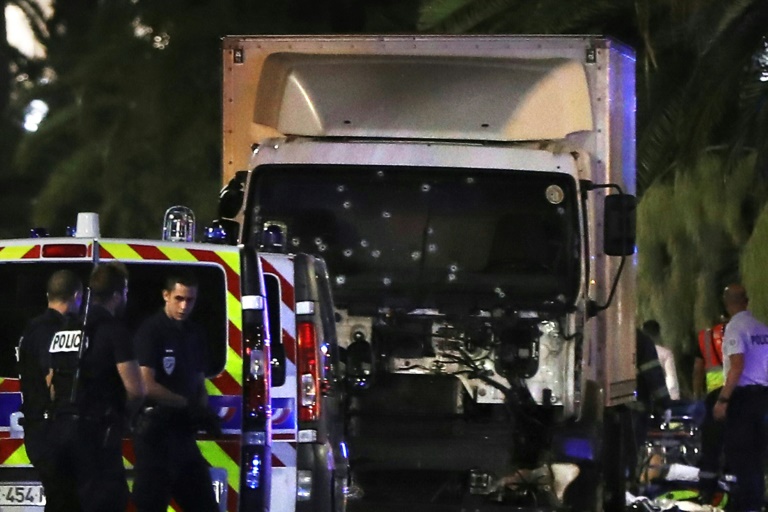
A French court will issue verdicts Tuesday for eight suspects charged in the harrowing 2016 terror attack in Nice, where an allegedly radicalised Islamist attacker is accused of ploughing his truck into a crowd celebrating the July 14 national holiday.

Mohamed Lahouaiej-Bouhlel, a 31-year-old Tunisian resident, killed 86 people and injured over 450 after speeding onto a seaside embankment in the southern city, rampaging for four minutes before being shot dead by police.

Prosecutors are seeking 15-year prison terms against three suspects on charges of association with terrorists.

Ramzi Arefa, who has admitted to providing Lahouaiej-Bouhlel with a gun that he fired at police without hitting anyone, faces charges relating to supplying the weapon.

He is not thought to have been aware of the attacker’s radicalisation.

“I’m guilty of selling a weapon, without thinking about it, and since then it’s been six years that I haven’t stopped thinking about it,” Arefa told the court in his closing statement Monday.

But two others, Mohamed Ghraieb and Chokri Chafroud, allegedly knew about the attacker’s turn to Islamist radicalism and his potential to carry out a terror attack, based on records of phone calls and text messages among the three in the days ahead of the massacre. 

Ghraieb, a 47-year-old from the same Tunisian town as Lahouaiej-Bouhlel, and Chafroud are also accused of helping him rent the delivery truck. They have denied the charges.

“I am not a terrorist, I had nothing to do with what happened,” Ghraieb said Monday, while Chafroud, 43 and also Tunisian, declined to address the court.

Prosecutor Jean-Michel Bourles had argued however that “there can be no doubt: They acted in full awareness of his discourse and his fascination, his proximity with the Islamic State.”

The Islamic State group later claimed Lahouaiej-Bouhlel as one of its followers, though investigators have not found any links between the attacker and the jihadists who at the time controlled swathes of Iraq and Syria.

– Night of horror –

Five other suspects, a Tunisian and four Albanians, are charged with weapons trafficking and criminal conspiracy but without any terrorism link.

But Brahim Tritrou is being tried in absentia after fleeing judicial supervision to Tunisia, where he is now believed to be under arrest.

Some 30,000 people had gathered on the Nice seafront to watch a fireworks display celebrating France’s annual Bastille Day holiday on July 14 when Lahouaiej-Bouhlel began his rampage.

According to French and Tunisian press reports, his body was repatriated to Tunisia in 2017 and buried in his hometown of M’saken, south of Tunis. This has never been confirmed by the Tunisian authorities.

France has been buffeted by a wave of Islamist terror attacks since the killings at the satirical Charlie Hebdo newspaper and a Jewish supermarket in Paris in January 2015, often by “lone wolf” attackers acting in the name of IS or other jihadist groups.

In October, a Paris appeals court upheld the life sentence of Ali Riza Polat, accused of helping to find the weapons for the Charlie Hebdo attackers.

The Nice trial is taking place at the historic Palais de Justice in Paris, in the same purpose-built courtroom that hosted the hearings over the November 2015 terror attacks in Paris that left 130 people dead.

A special venue has also been set up in Nice to allow victims to follow proceedings via a live broadcast.

For many of the victims, the sentences sought by prosecutors fail to match the scope of the suffering.

During the trial, many of the survivors gasped in horror when prosecutors showed grisly video footage, never seen publicly, of the vehicle as Lahouaiej-Bouhlel swerved through the crowd, trying to mow down as many people as possible.

“I hope the court will be more severe than they’ve asked — I cannot understand them after all that’s been said in the hearings,” said Anne Murris, president of the Memorial des Anges victims’ association, who lost her daughter in the attack. 

China launches WTO dispute over US chip sanctions

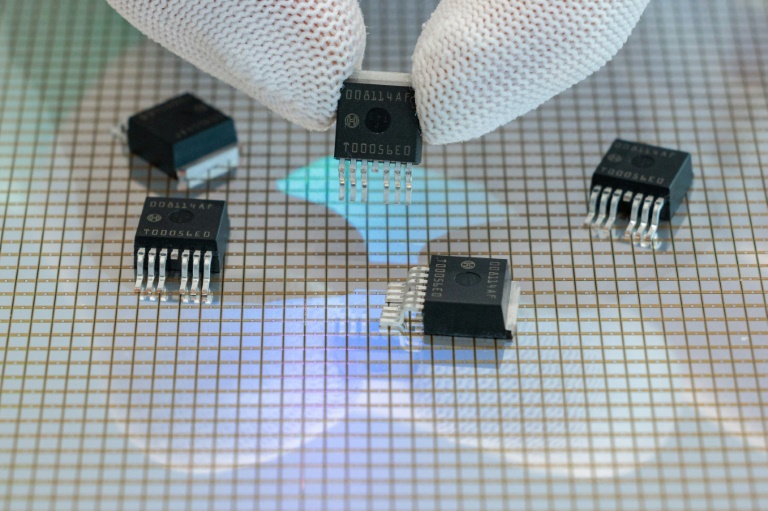
China has filed a dispute with the World Trade Organization over US restrictions on chip exports, Beijing’s commerce ministry said in a statement late Monday, accusing Washington of threatening global supply chains.

The United States in October announced new export controls aimed at restricting China’s ability to buy and manufacture high-end chips with military applications, complicating Beijing’s push to further its own semiconductor industry and develop advanced military systems.

The moves include export restrictions on some chips used in supercomputing as well as stricter requirements on the sale of semiconductor equipment.

The aim is to prevent “sensitive technologies with military applications” from being acquired by China’s military, intelligence and security services, the US Commerce Department said in October.

But China’s Ministry of Commerce on Monday accused the United States of “obstructing normal international trade in products including chips and threatening the stability of the global industrial supply chain”, as well as violating international trade rules and engaging in “protectionist practices”.

The WTO dispute is intended to defend China’s “legitimate rights and interests”, the ministry said in its statement, urging Washington to “give up zero-sum thinking”.

The two superpowers have long faced off over a range of issues including technology, trade, Hong Kong, Taiwan and human rights.

Chinese leader Xi Jinping and US President Joe Biden pledged to repair frayed relations at a summit in Bali, Indonesia last month.

Days before the latest chip controls, the Pentagon added 13 more Chinese firms including drone manufacturer DJI and surveillance firm Zhejiang Dahua Technology to a blacklist of military-linked entities.

France hosts conference for 'urgent' Ukraine winter help

France hosts an international conference Tuesday designed to raise material and money to repair Ukraine’s damaged infrastructure as well as underline Paris’ ongoing support for Kyiv’s fight against Russia.

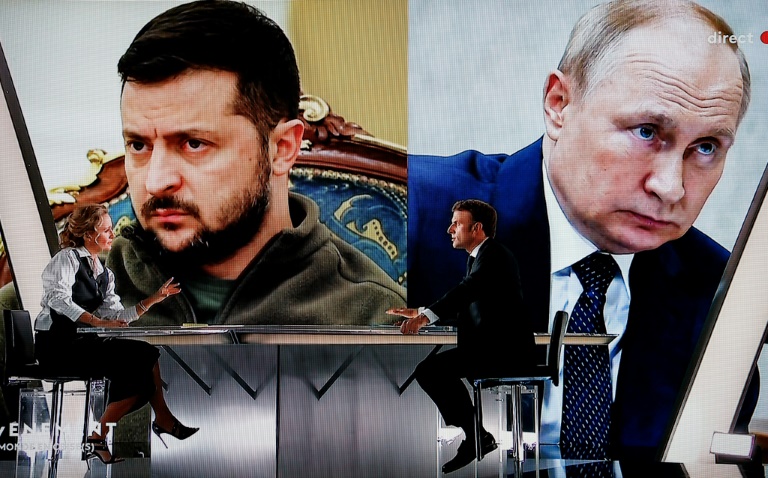
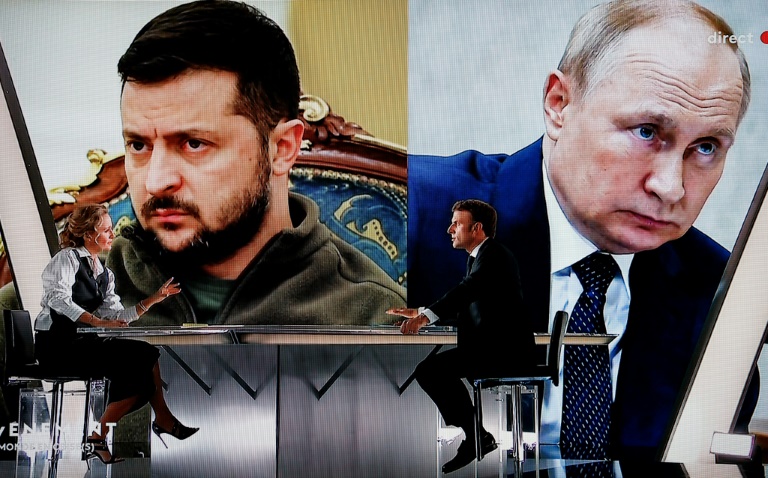
The gathering of politicians, blue-chip companies and aid agencies comes after fresh comments about the war from French President Emmanuel Macron which put him at odds with many in Ukraine.

Macron called for Russia to be offered “security guarantees” at the end of the war during an interview on December 3, drawing criticism from some Ukrainian and eastern European politicians.

A call between the French leader and Ukrainian counterpart Volodymyr Zelensky on Sunday cleared the air and saw the men discuss Tuesday’s conference.

Macron “reminded President Zelensky that Ukraine can count on France’s support for as long as is required to fully re-establish its sovereignty and national integrity,” according to the French presidency.

Both men will address the first part of the conference, called “Solidarity with the Ukrainian People” — Macron in person and Zelensky via videolink.

The event will focus on ways in which Ukraine’s Western allies can provide immediate support to keep the country’s civil infrastructure functioning amid incessant bombing from Russia.

Moscow has switched tactics since October when it began airstrikes targeting Ukraine’s energy network in particular, plunging millions into cold and darkness at the onset of winter.

Another 1.5 million people were left without power in southern Odessa over the weekend after drone attacks, according to Ukrainian authorities. 

“Our immediate objective is to ensure that Ukraine’s network does not collapse and lead to black-outs for several weeks,” an aide to Macron told journalists last Friday. “This is about urgent help.”

– Coordination – 

French organisers have stressed that the conference is different from other recent international gatherings in Lugano, Warsaw or Berlin dedicated to long-term reconstruction.

Instead, they hope donors will pledge help from engineering expertise to spare parts to carry out repairs. 

Another key outcome will be a new platform, agreed by G7 leaders Monday, that will enable donors to see Ukraine’s needs and coordinate their aid.

Western military aid is currently coordinated in this way, but nothing of the sort exists for civilian assistance, Macron’s office said.

“The goal is now to build this platform quickly with the participation of Ukraine, international financial institutions and other partners,” German Chancellor Olaf Scholz said after the leaders of the club of wealthy nations held online talks Monday.

Ukraine’s Prime Minister Denys Shmyhal and Zelensky’s wife Olena are both expected to be in Paris.

The second part of the event, called “The Franco-Ukrainian conference for Resilience and Reconstruction”, will see 500 French companies gather to discuss reconstruction contracts.

Even though the war is still raging, Western states and companies are already eyeing deals that are expected to be worth tens of billions of euros. 

“The Ukrainians wanted us to talk about reconstruction. There are already areas that have been evacuated by the Russian army which are ready to discuss reconstruction,” the French official said. 

The French economy ministry had already prepared a range of tools to encourage its companies, from insurance to export guarantees. 

– Out of context? –

Macron’s comments about providing security guarantees to Russia led to accusations he was focusing again on diplomatic compromises with Russian President Vladimir Putin.

Critics say it is too early to discuss arrangements with Putin and that Western leaders should focus uniquely on helping Ukraine roll back Russia’s occupation.

Macron has riled his Ukrainian allies in the past, most notably in June when he said “we must not humiliate Russia”.

The 44-year-old French leader initially tried to position himself as an intermediary between Ukraine and Russia, holding lengthy talks with Putin and Zelensky shortly before Moscow’s attack.

Macron’s office have played down any suggestion of tensions with Zelensky.

“There’s a gap between what some people say by taking part of a sentence out of context and the reality of the work that we are doing, which is going smoothly,” the aide said.

“The dialogue between the president (Macron) and President Zelensky is excellent.”

France hosts conference for 'urgent' Ukraine winter help

France hosts an international conference Tuesday designed to raise material and money to repair Ukraine’s damaged infrastructure as well as underline Paris’ ongoing support for Kyiv’s fight against Russia.

The gathering of politicians, blue-chip companies and aid agencies comes after fresh comments about the war from French President Emmanuel Macron which put him at odds with many in Ukraine.

Macron called for Russia to be offered “security guarantees” at the end of the war during an interview on December 3, drawing criticism from some Ukrainian and eastern European politicians.

A call between the French leader and Ukrainian counterpart Volodymyr Zelensky on Sunday cleared the air and saw the men discuss Tuesday’s conference.

Macron “reminded President Zelensky that Ukraine can count on France’s support for as long as is required to fully re-establish its sovereignty and national integrity,” according to the French presidency.

Both men will address the first part of the conference, called “Solidarity with the Ukrainian People” — Macron in person and Zelensky via videolink.

The event will focus on ways in which Ukraine’s Western allies can provide immediate support to keep the country’s civil infrastructure functioning amid incessant bombing from Russia.

Moscow has switched tactics since October when it began airstrikes targeting Ukraine’s energy network in particular, plunging millions into cold and darkness at the onset of winter.

Another 1.5 million people were left without power in southern Odessa over the weekend after drone attacks, according to Ukrainian authorities. 

“Our immediate objective is to ensure that Ukraine’s network does not collapse and lead to black-outs for several weeks,” an aide to Macron told journalists last Friday. “This is about urgent help.”

– Coordination – 

French organisers have stressed that the conference is different from other recent international gatherings in Lugano, Warsaw or Berlin dedicated to long-term reconstruction.

Instead, they hope donors will pledge help from engineering expertise to spare parts to carry out repairs. 

Another key outcome will be a new platform, agreed by G7 leaders Monday, that will enable donors to see Ukraine’s needs and coordinate their aid.

Western military aid is currently coordinated in this way, but nothing of the sort exists for civilian assistance, Macron’s office said.

“The goal is now to build this platform quickly with the participation of Ukraine, international financial institutions and other partners,” German Chancellor Olaf Scholz said after the leaders of the club of wealthy nations held online talks Monday.

Ukraine’s Prime Minister Denys Shmyhal and Zelensky’s wife Olena are both expected to be in Paris.

The second part of the event, called “The Franco-Ukrainian conference for Resilience and Reconstruction”, will see 500 French companies gather to discuss reconstruction contracts.

Even though the war is still raging, Western states and companies are already eyeing deals that are expected to be worth tens of billions of euros. 

“The Ukrainians wanted us to talk about reconstruction. There are already areas that have been evacuated by the Russian army which are ready to discuss reconstruction,” the French official said. 

The French economy ministry had already prepared a range of tools to encourage its companies, from insurance to export guarantees. 

– Out of context? –

Macron’s comments about providing security guarantees to Russia led to accusations he was focusing again on diplomatic compromises with Russian President Vladimir Putin.

Critics say it is too early to discuss arrangements with Putin and that Western leaders should focus uniquely on helping Ukraine roll back Russia’s occupation.

Macron has riled his Ukrainian allies in the past, most notably in June when he said “we must not humiliate Russia”.

The 44-year-old French leader initially tried to position himself as an intermediary between Ukraine and Russia, holding lengthy talks with Putin and Zelensky shortly before Moscow’s attack.

Macron’s office have played down any suggestion of tensions with Zelensky.

“There’s a gap between what some people say by taking part of a sentence out of context and the reality of the work that we are doing, which is going smoothly,” the aide said.

“The dialogue between the president (Macron) and President Zelensky is excellent.”

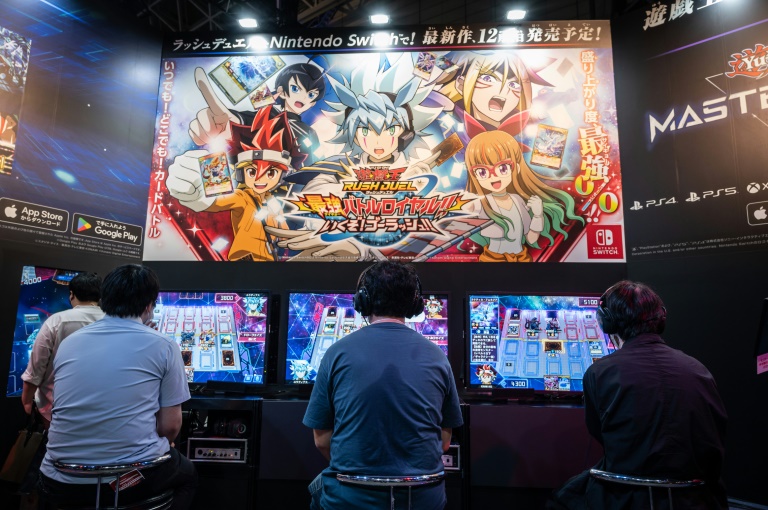
Video game hub Japan confronts problem of addiction

From Super Mario to Final Fantasy, Japan has long been synonymous with gaming, but some experts and parents fear a growing addiction problem is going unaddressed.

While nearby nations like China and South Korea have imposed drastic restrictions on youth gaming in recent years — with mixed results — some Japanese families feel they are being left to deal with the issue on their own.

Each month, a group meets in Tokyo to swap stories and strategies for tackling their children’s gaming habits.

“My only comfort is that he has been keeping his promise to stay offline overnight,” one father says, as another confides their child has been attending a rehab day camp.

The group’s founder, Sakiko Kuroda, says children in Japan now start playing video games early in primary school, and pandemic restrictions mean many are playing for longer.

Many parents do not know how to deal with the issue, and there is “a lack of action by the government and the gaming industry,” said Kuroda, who started the group in 2019 as an informal meet-up.

“People come from across the country to take part, as this kind of self-help gathering is rare in Japan.”

The World Health Organization describes “gaming disorder” as behaviour that results in “significant impairment” of areas like relationships, education or work, and lasts at least a year.

As gaming can overlap with other online activities like social media use, it is hard to quantify the problem, though anecdotal evidence from doctors suggests more families in Japan are worried — particularly since the pandemic.

– ‘Playing all night’ –

An education ministry survey this April showed that 17 percent of children aged six to 12 spend more than four hours a day gaming — up from nine percent in 2017, with a similar jump seen among those aged 12 to 15.

“Games have clever systems to lure people into continuing to play… including constantly updated apps and virtual money,” said Mia Itoshiro, who works with a group that gives seminars on preventing gaming addiction.

“Parents are increasingly consulting us saying ‘my children can’t go to school because they’re tired after playing all night’.”

China in November announced it had “solved” youth gaming addiction by limiting the time children can play online games to just three specified hours a week, enforced through facial recognition software and ID registration.

Meanwhile, South Korea last year removed a decade-long ban on PC-based online gaming for children under 16 between midnight and 6:00 am, which local media had branded outdated and ineffective.

Japan has had no similar rules, and even a much-debated 2020 local ordinance that banned under-18s from playing more than an hour on weekdays had no enforcement mechanism.

Parents and experts say gaming can tip into obsessive behaviour in children because of other problems, including Covid-related stress or bullying.

The mother of a 13-year-old girl told AFP that video games became a “lifeline” for her daughter when she was struggling at school.

When she tried to take away the girl’s tablet, her daughter, then 10, replied: “If you deprive me of this, I’d want to die.”

“I was shocked to hear her say something like that,” the mother said.

Others who have experienced gaming addiction also say it became a lifeline for them during times of struggle.

– Underlying problems –

Takahisa Masuda, now a 46-year-old social worker, plunged into gaming as a bullied middle school student, and he believes the escape mechanism saved his life.

“I had thought about killing myself, but I wanted to finish Dragon Quest,” Masuda told AFP.

By the time he had, he felt strong enough to face his tormentors, and he committed to his studies, eventually realising his goal of working in the gaming industry.

So, while parents are often inclined to ban gaming or remove devices, Susumu Higuchi, a doctor and director of the Kurihama Medical and Addiction Centre, instead offers children counselling to tackle underlying problems.

His clinic also provides offline activities from art and cooking to sports, intended to open patients up to other hobbies and social situations.

He wants the government and industry to do more to prevent children from becoming addicted in the first place.

“Discussing gaming and online tools requires a balance,” Higuchi said.

“But at the moment it seems to me that measures to rein in the negative aspects are dwarfed by the promotion of gaming.”

Nuclear fusion: harnessing the power of the stars

The US Department of Energy’s nuclear fusion laboratory says there will be a “major scientific breakthrough” announced Tuesday, as media report that scientists have finally surpassed an important milestone for the technology: getting more energy out than was put in.

The announcement has the scientific community abuzz, as nuclear fusion is considered by some to be the energy of the future, particularly as it produces no greenhouse gases, leaves little waste and has no risk of nuclear accidents.

Here is an update on how nuclear fusion works, what projects are underway and estimates on when they could be completed:

– Energy of the stars –

Fusion differs from fission, the technique currently used in nuclear power plants, by fusing two atomic nuclei instead of splitting one.

In fact, fusion is the process that powers the sun.

Two light hydrogen atoms, when they collide at very high speeds, fuse together into one heavier element, helium, releasing energy in the process.

“Controlling the power source of the stars is the greatest technological challenge humanity has ever undertaken,” tweeted physicist Arthur Turrell, author of “The Star Builders.”

– Two distinct methods –

Producing fusion reactions on Earth is only possible by heating matter to extremely high temperatures — over 100 million degrees Celsius (180 million Fahrenheit).

“So we have to find ways to isolate this extremely hot matter from anything that could cool it down. This is the problem of containment,” Erik Lefebvre, project leader at the French Atomic Energy Commission (CEA), told AFP.

One method is to “confine” the fusion reaction with magnets.

In a huge donut-shaped reactor, light hydrogen isotopes (deuterium and tritium) are heated until they reach the state of plasma, a very low density gas.

Magnets confine the swirling plasma gas, preventing it from coming into contact with the chamber’s walls, while the atoms collide and begin fusing.

This is the type of reactor used in the major international project known as ITER, currently under construction in France, as well as the Joint European Torus (JET) near Oxford, England.

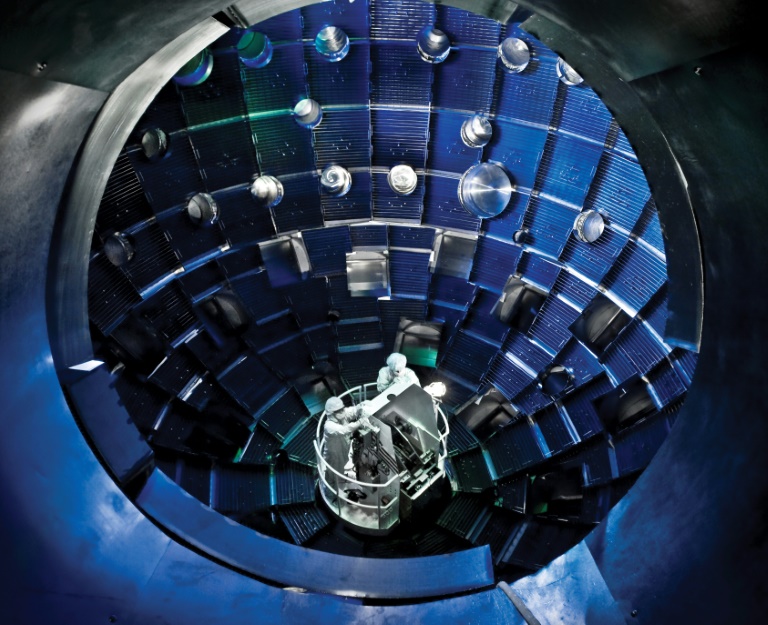
A second method is inertial confinement fusion, in which high energy lasers are directed simultaneously into a thimble-sized cylinder containing the hydrogen.

This technique is used by the French Megajoule Laser (LMJ), and the world’s most advanced fusion project, the California-based National Ignition Facility (NIF).

Inertial confinement is used to demonstrate the physical principles of fusion, while magnetic confinement seeks to mimic future industrial-scale reactors.

– State of research –

For decades, scientists have attempted to achieve what is known as “net energy gain” — that is, more energy is produced by the fusion reaction than it takes to activate it.

According to reports by the Financial Times and the Washington Post, that will be the “major scientific breakthrough” announced Tuesday by the NIF.

But Lefebvre cautions that “the road is still very long” before “a demonstration on an industrial scale that is commercially viable.”

He says such a project will take another 20 or 30 years to be completed. 

To get there, researchers must first increase the efficiency of the lasers and reproduce the experiment more frequently. 

– Fusion’s benefits –

The NIF’s reported success has sparked great excitement in the scientific community, which is hoping the technology could be a game-changer for global energy production.

Unlike fission, fusion carries no risk of nuclear accidents.

“If a few lasers are missing and they don’t go off at the right time, or if the confinement of the plasma by the magnetic field… is not perfect,” the reaction will simply stop, Lefebvre says.

Nuclear fusion also produces much less radioactive waste than current power plants, and above all, emits no greenhouse gases.

“It is an energy source that is totally carbon-free, generates very little waste, and is intrinsically extremely safe,” according to Lefebvre, who says fusion could be “a future solution for the world’s energy problems.”

Regardless of Tuesday’s announcement, however, the technology is still a far way off from producing energy on an industrial scale, and cannot therefore be relied on as an immediate solution to the climate crisis.

Nuclear fusion: harnessing the power of the stars

The US Department of Energy’s nuclear fusion laboratory says there will be a “major scientific breakthrough” announced Tuesday, as media report that scientists have finally surpassed an important milestone for the technology: getting more energy out than was put in.

The announcement has the scientific community abuzz, as nuclear fusion is considered by some to be the energy of the future, particularly as it produces no greenhouse gases, leaves little waste and has no risk of nuclear accidents.

Here is an update on how nuclear fusion works, what projects are underway and estimates on when they could be completed:

– Energy of the stars –

Fusion differs from fission, the technique currently used in nuclear power plants, by fusing two atomic nuclei instead of splitting one.

In fact, fusion is the process that powers the sun.

Two light hydrogen atoms, when they collide at very high speeds, fuse together into one heavier element, helium, releasing energy in the process.

“Controlling the power source of the stars is the greatest technological challenge humanity has ever undertaken,” tweeted physicist Arthur Turrell, author of “The Star Builders.”

– Two distinct methods –

Producing fusion reactions on Earth is only possible by heating matter to extremely high temperatures — over 100 million degrees Celsius (180 million Fahrenheit).

“So we have to find ways to isolate this extremely hot matter from anything that could cool it down. This is the problem of containment,” Erik Lefebvre, project leader at the French Atomic Energy Commission (CEA), told AFP.

One method is to “confine” the fusion reaction with magnets.

In a huge donut-shaped reactor, light hydrogen isotopes (deuterium and tritium) are heated until they reach the state of plasma, a very low density gas.

Magnets confine the swirling plasma gas, preventing it from coming into contact with the chamber’s walls, while the atoms collide and begin fusing.

This is the type of reactor used in the major international project known as ITER, currently under construction in France, as well as the Joint European Torus (JET) near Oxford, England.

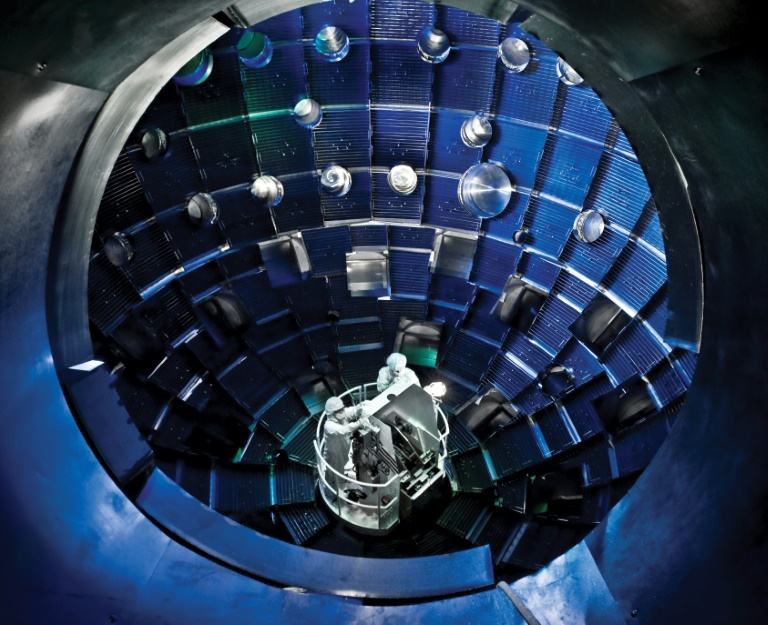
A second method is inertial confinement fusion, in which high energy lasers are directed simultaneously into a thimble-sized cylinder containing the hydrogen.

This technique is used by the French Megajoule Laser (LMJ), and the world’s most advanced fusion project, the California-based National Ignition Facility (NIF).

Inertial confinement is used to demonstrate the physical principles of fusion, while magnetic confinement seeks to mimic future industrial-scale reactors.

– State of research –

For decades, scientists have attempted to achieve what is known as “net energy gain” — that is, more energy is produced by the fusion reaction than it takes to activate it.

According to reports by the Financial Times and the Washington Post, that will be the “major scientific breakthrough” announced Tuesday by the NIF.

But Lefebvre cautions that “the road is still very long” before “a demonstration on an industrial scale that is commercially viable.”

He says such a project will take another 20 or 30 years to be completed. 

To get there, researchers must first increase the efficiency of the lasers and reproduce the experiment more frequently. 

– Fusion’s benefits –

The NIF’s reported success has sparked great excitement in the scientific community, which is hoping the technology could be a game-changer for global energy production.

Unlike fission, fusion carries no risk of nuclear accidents.

“If a few lasers are missing and they don’t go off at the right time, or if the confinement of the plasma by the magnetic field… is not perfect,” the reaction will simply stop, Lefebvre says.

Nuclear fusion also produces much less radioactive waste than current power plants, and above all, emits no greenhouse gases.

“It is an energy source that is totally carbon-free, generates very little waste, and is intrinsically extremely safe,” according to Lefebvre, who says fusion could be “a future solution for the world’s energy problems.”

Regardless of Tuesday’s announcement, however, the technology is still a far way off from producing energy on an industrial scale, and cannot therefore be relied on as an immediate solution to the climate crisis.

Close Bitnami banner
Bitnami