World

Disgraced crypto tycoon Bankman-Fried arrested in Bahamas

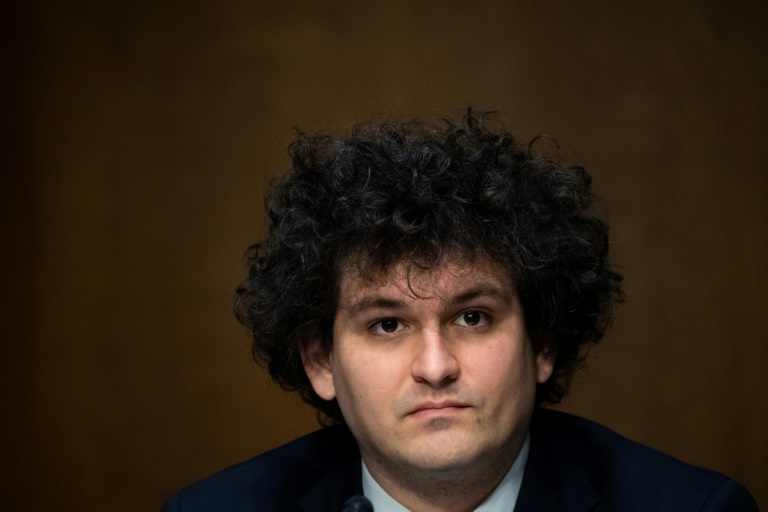
Disgraced cryptocurrency tycoon Sam Bankman-Fried was arrested Monday in the Bahamas at the request of the United States, according to US officials seeking to charge him after the spectacular collapse of his FTX platform.

The arrest comes on the eve of Bankman-Fried’s scheduled appearance at a US Congress hearing in which he was to testify under oath about the crypto exchange’s overnight demise.

The 30-year-old had in recent weeks defied legal advice and multiplied media appearances offering his version of his company’s sudden failure, usually by video link from the Bahamas where his company is headquartered.

“Earlier this evening, Bahamian authorities arrested Samuel Bankman-Fried at the request of the US Government, based on a sealed indictment filed by the southern district of New York,” said a tweeted statement from Damian Williams, lead prosecutor for the district.

“We expect to move to unseal the indictment in the morning and will have more to say at that time,” he added.

According to a press release from the attorney general’s office in the Bahamas, Bankman-Fried was to be held in custody before an expected request for his extradition by the United States. 

The Bahamas prime minister’s office shared news of the arrest, as well as a police statement saying Bankman-Fried was arrested in the early evening at his apartment complex in the capital Nassau.

He was taken into custody without incident, the statement said, and was to appear in court in Nassau on Tuesday.

As much as anyone, Bankman-Fried had embodied the apparent emergence of cryptocurrency as an above-board investment and no longer a frowned on get-rich-quick scheme shunned by the banking establishment. 

His FTC platform was plugged by celebrities in advertising campaigns and the cyber whiz kid became a regular presence in Washington where he donated tens of millions of dollars in political contributions.

But after reaching a valuation of $32 billion, FTX’s implosion was swift following a November 2 report on ties between FTX and Alameda, a trading company also controlled by Bankman-Fried.

The report exposed that Alameda’s balance sheet was heavily built on the FTT currency — a token created by FTX and with no independent value.

– ‘Grossly inexperienced’ –

The price of FTT plunged in early November, roiling both Alameda and FTX, where Alameda had large trading positions. 

Reeling from customer withdrawals and short some $8 billion, FTX and some 100 related entities filed for bankruptcy protection on November 11, inviting scrutiny from regulators, prosecutors and furious clients who had believed the hype about cryptocurrency. 

Among the revelations, FTX is suspected of fraud for propping up Alameda with billions of dollars in customer funds that are now likely lost forever.

Questions also linger over whether Bankman-Fried engaged in market manipulation, or illegally provided inside information to Alameda.

In his media interviews, Bankman-Fried has admitted to mistakes, but has denied intent to fraud his customers.

FTX CEO John Ray, who came to the company after the debacle, was to tell Congress on Tuesday that the problems rose because control was “in the hands of a very small group of grossly inexperienced and unsophisticated individuals.”

“Never in my career have I seen such an utter failure of corporate controls at every level of an organization, from the lack of financial statements to a complete failure of any internal controls or governance whatsoever,” Ray said in prepared remarks.

The fall of FTX has caused major doubts on the long term viability of cryptocurrency and heaped stress on other platforms and entities that rode the success of Bitcoin and other currencies.
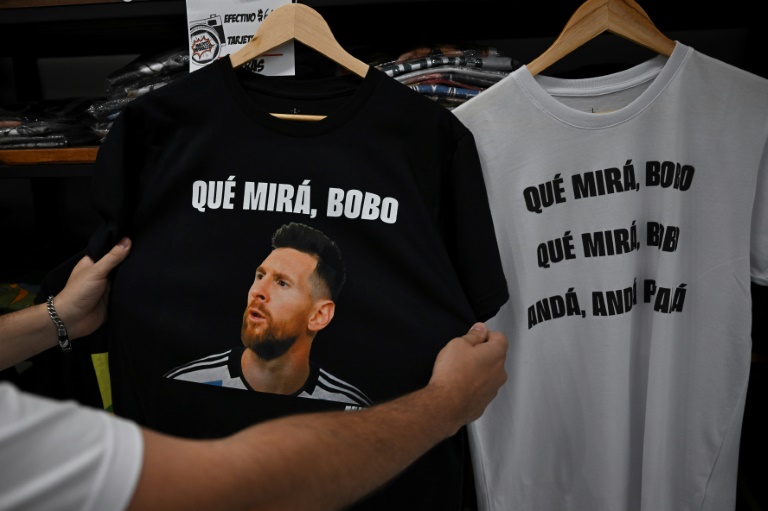
Messi 'fool' taunt spawns mugs, T-shirts in Argentina

“What are you looking at, fool? Get lost!” Lionel Messi’s World Cup taunt of Dutch player Wout Weghorst has delighted Argentina, where the phrase has made its way onto mugs, shirts and other products.

In a viral video online, soccer superstar Messi is shown being interviewed after Friday’s stormy quarter-final clash with the Netherlands, when his eyes drift off camera. 

He then launches his words in the direction of the Dutch substitute — whose two late goals pushed the two teams into penalties — while the reporter struggles to get his attention.

Argentina emerged victorious, but Messi fumed after the fractious match at the referee who gave Weghorst a free kick.

The sport’s world governing body FIFA has opened disciplinary proceedings against both teams after a World Cup record of 18 yellow cards and multiple mass confrontations during the game.

But in Argentina, a saltier Lionel Messi has drawn comparisons with Diego Maradona, a troubled genius known for fiery moments both on and off the field.

Businesses wasted no time plastering the slogan on a variety of products, with mugs selling for 1,600 pesos ($9), T-shirts for 2,900 pesos, and caps for 3,900 pesos.

“We made the T-shirts right away. The phrase went viral because in another stage, Messi had a calm, low profile. But people wanted him to have a bit of Diego (Maradona) spiciness,” said clothing designer Tony Molfese, 31.

For many in Argentina, the language Messi used is far milder than what can be heard on the streets.

“I thought the phrase was great, so innocent and tender” compared to what you usually hear in Argentina’s sporting world, said 67-year-old Graciela Squietino, who bought T-shirts for her three grandsons.

Libyan accused of Lockerbie bombing charged in US court

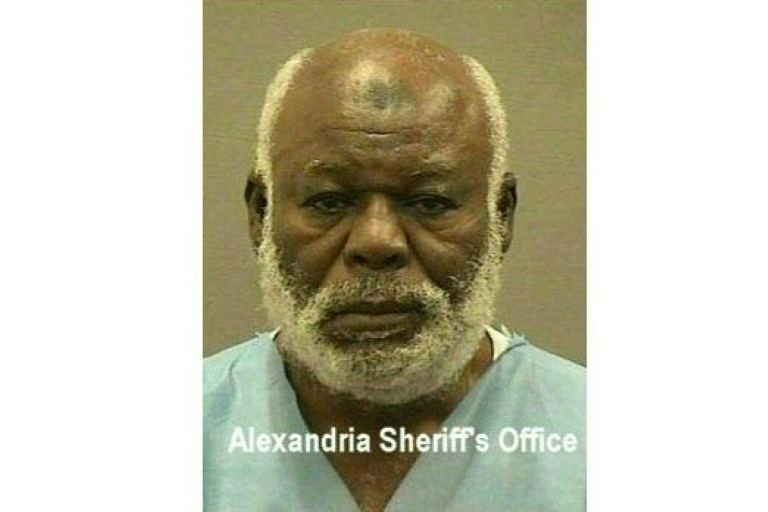
An alleged former Libyan intelligence agent accused of making the bomb that blew up a Pan Am jet over Scotland in 1988, killing 270 people, appeared in a US court Monday to face charges for the deadliest-ever terror attack in Britain.

Abu Agila Mohammad Masud Kheir al-Marimi, who allegedly worked as an intelligence operative for the regime of Libyan dictator Moamer Kadhafi between 1973 and 2011, faces three counts related to the Lockerbie bombing.

Federal prosecutors said they did not intend to seek the death penalty but Masud could face life in prison if convicted of “destruction of an aircraft resulting in death” and two other related charges.

The judge presiding over the hearing in a US District Court in Washington read the 71-year-old Masud the charges and his rights before ordering him held without bond until a detention hearing on December 27.

The balding and white-bearded Masud was provided with an Arabic interpreter for the hearing, his first court appearance since being brought to the United States.

Scottish prosecutors announced Sunday that the Tunisian-born Masud was in American hands, but officials have not provided any details on how he had been transferred to US custody.

“Yesterday, the United States lawfully took custody of Abu Agila Mohammad Masud Kheir Al-Marimi and brought him to the United States,” Homeland Security advisor Liz Sherwood-Randall said in a statement.

“This action underscores the Biden Administration’s unwavering commitment to enforcing the rule of law and holding accountable those who inflict harm on Americans in acts of terrorism,” she added.

US Attorney General Merrick Garland said Masud’s arrest was “an important step forward in our mission to honor the victims and pursue justice on behalf of their loved ones.

“American and Scottish law enforcement have worked tirelessly to identify, find, and bring to justice the perpetrators of this horrific attack,” Garland said.

– ‘Kadhafi thanked him’ –

Only one person has been convicted for the December 21, 1988 bombing of Pan Am Flight 103.

The New York-bound aircraft was blown up 38 minutes after it took off from London, sending the main fuselage plunging to the ground in the town of Lockerbie and spreading debris over a vast area.

The bombing killed all 259 people on the jumbo jet, including 190 Americans, and 11 people on the ground.

Two alleged Libyan intelligence operatives — Abdelbaset Ali Mohmet al-Megrahi and Al Amin Khalifa Fhimah — were charged with the bombing and tried by a Scottish court in the Netherlands.

Megrahi spent seven years in a Scottish prison after his conviction in 2001 while Fhimah was acquitted.

Megrahi died in Libya in 2012, always maintaining his innocence.

His family lodged a bid for a posthumous appeal to clear his name in 2017, but Scotland’s High Court upheld his conviction in 2021.

Masud’s fate has been tied up in the warring factionalism of Libyan politics that followed Kadhafi’s ouster and death in 2011.

Masud was reportedly imprisoned in Libya for his alleged involvement in attacks on Libyan opposition figures in 2011.

According to a September 2015 article in The New Yorker, Masud was sentenced that year to 10 years in prison in Libya after being accused of using remote-detonated bombs against Libyan opposition members in 2011.

The Lockerbie probe was relaunched in 2016 when Washington learned of Masud’s arrest and his reported confession of involvement to the new Libyan regime in 2012.

According to an affidavit from an FBI agent involved in the probe, Masud worked as a “technical expert” for Libya’s External Security Organization, building explosive devices and earning the rank of colonel.

Masud confessed in a 2012 interview with a Libyan law enforcement officer to assembling the bomb that brought down Flight 103, the affidavit said.

“Masud confirmed that the bombing operation of Pan Am Flight 103 was ordered by Libyan intelligence leadership,” it said.

“Masud confirmed that after the operation, Kadhafi thanked him and other members of the team for their successful attack on the United States.”

– Blinken credits ‘diplomatic effort’ –

According to the FBI agent’s affidavit, Masud also admitted to committing the April 1986 bombing of the LaBelle Discotheque in Berlin which killed two US service members and a Turkish woman.

In a statement US Secretary of State Antony Blinken thanked those who helped bring Masud into US custody “following an intensive diplomatic effort.”

“The prosecution of Masud is the product of years of cooperation between US and Scottish authorities and the efforts of Libyan authorities over many years,” Blinken said.

Ukraine needs extra gas and weapons, Zelensky tells G7

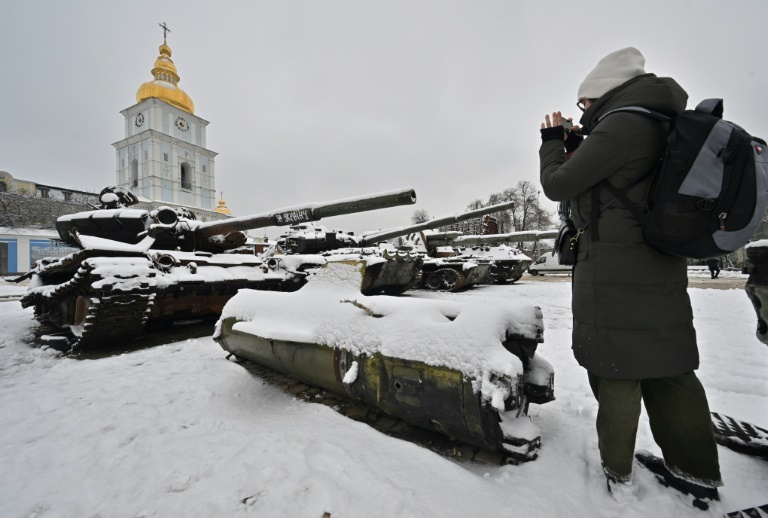
President Volodymyr Zelensky urged G7 nations on Monday to provide extra gas and weapons to help Ukraine survive a brutal winter, which threatens to bring further suffering to millions in the war-torn country.

With snow on the ground and Ukraine’s energy grid battered by Russian strikes, many are facing freezing temperatures without power or heating.

During a video conference with the G7 club of wealthy nations on Monday, Zelensky said Ukraine needs “about two billion cubic metres” of additional gas to get through the winter.

He also urged the G7 to send more arms to Ukraine, including “modern tanks” as well as “rocket artillery and more long-range missiles”.

Western-supplied weapons have helped turn the tide in the war, and a senior US military official said Monday that Russia is likely turning to older, less reliable artillery and rocket ammunition as its newer stocks run low.

But Zelensky said “Russia still has the advantage in artillery and missiles.”

“This is a fact,” he told the G7. “These capabilities of the occupying army are the ones to fuel the Kremlin’s arrogance”.

– ‘We will survive’ –

Meanwhile in the strategic Ukrainian port of Ochakiv, officials are hoping the Black Sea naval base can serve to consolidate Kyiv’s gains in the southern Kherson region.

After failing to seize the port, Russian troops have been pummelling Ochakiv from the nearby Kinburn peninsula. 

In the fog at the local market, 62-year-old Oleg Klyutshko said: “I am not afraid of winter… but I would like the strikes to stop. We will survive anything else.”

Kyiv says 40 percent of Ukraine’s critical energy infrastructure has been damaged, with wave after wave of targeted Russian attacks.

The Ukrainian energy ministry said in a statement that Russian missiles had hit all of the country’s thermal power plants, while 44 overhead high-voltage power lines had also been affected.

Power company YASNO said supply limitations in Kyiv were “significant” with some 40 percent of supplies diverted to critical infrastructure.

Oil and gas company DTEK said its specialists were “constantly looking for equipment to restore the energy infrastructure destroyed by Russia” and had agreed contracts with European suppliers ABB and Siemens.

According to a readout issued by his office, Zelensky told the G7 “the terror against our power plants forced us to use more gas than expected”. 

“This is why we need additional support over this particular winter,” he said.

The G7 groups Britain, Canada, France, Germany — which currently holds the club’s presidency — Italy, Japan and the United States.

G7 leaders agreed on key elements of a platform to coordinate financial support for Ukraine, German Chancellor Olaf Scholz said, before a summit in Paris on post-war reconstruction.

Zelensky also proposed a special summit, which he called the Global Peace Formula Summit, “to determine how and when we can implement the points of the Ukrainian Peace Formula,” which would secure Ukraine’s security and territorial integrity.

He invited the G7 industrialised nations “as well as other conscientious countries” to “show your leadership”.

The Ukrainian leader also urged Russia “to take a concrete and meaningful step towards a diplomatic settlement”. 

Zelensky called on “the occupier” Moscow to leave Ukrainian territory by Christmas.

“The one who brought the war upon us has to take it away.”

Stock markets diverge ahead of key rate decisions

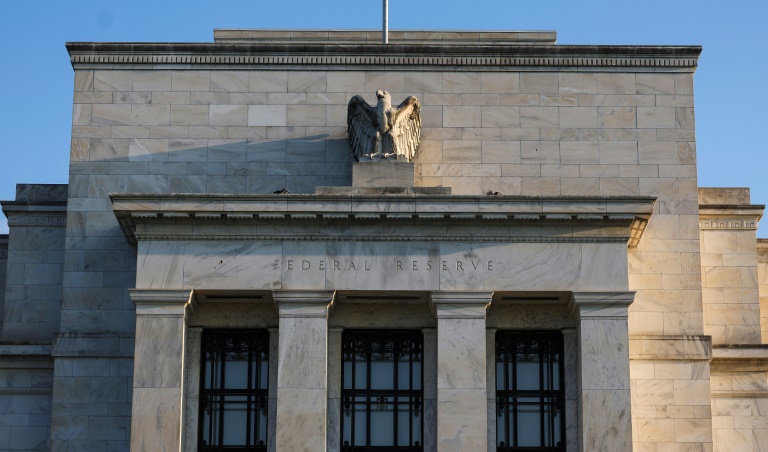
Wall Street stocks surged Monday while European and Asian markets dropped as investors braced for interest rate decisions this week from major central banks, including the Federal Reserve.

The dollar generally rose against its main rivals, while oil prices rebounded following sharp falls last week.

Analysts expect the Fed and the European Central Bank to announce rate hikes at their meetings this week.

And the Bank of England is on course for a ninth straight increase as policymakers try to bring down inflation from the highest levels in decades.

“Following a softer session in Asia, European markets are on edge, opening the week lower ahead of a critical few days,” said Victoria Scholar, head of investment at Interactive Investor.

“The ECB, the Fed and the Bank of England are expected to raise rates by 50 basis points each as the pace of tightening looks set to slow,” Scholar added.

The half-point jumps will still be steep rises, however, as central banks struggle to cool the pace of price increases, particularly in energy and food.

London, Frankfurt and Paris all closed lower. 

Wall Street stocks ended higher, as bargain hunters moved in following losses at the end of last week.

The Dow Jones Industrial Average jumped 1.6 percent and the S&P 500 closed 1.4 percent up.

Ahead of the Fed’s policy meeting, investors are set to digest US inflation data due Tuesday.

“It will be a fitting hump day on Wednesday, because the (inflation) data and the Fed decision are big humps the market needs to get over if it wants to make a run at a year-end rally,” said market analyst Patrick O’Hare at Briefing.com.

“If either, or both, disappoint in a meaningful way, then a year-end rally becomes a more challenging proposition.”

Traders are also keeping an eye on developments in China as it moves away from a zero-Covid policy that has hammered its economy, the world’s second largest after the United States.

The shift comes after widespread protests following nearly three years of strict controls.

Uncertainty surrounding the strength of China’s demand recovery has hit oil prices hard, with crude futures shedding more than 10 percent last week, but they rebounded on Monday.

“The gradual easing of Chinese Covid restrictions is… expected to lead to a further upswing in demand,” said Susannah Streeter, senior investment and markets analyst at Hargreaves Lansdown.

But investors are wary of whether the relaxation of restrictions will lead to a swift rebound as Covid cases are expected to jump.

“The recent volatility in crude oil highlights the ongoing questions over whether the Chinese economy is truly ready to return or on the cusp of yet another series of restrictions,” said Joshua Mahony, senior market analyst at online trading platform IG.

– Key figures around 2140 GMT –

New York – Dow: UP 1.6 percent at 34,005.04 (close)

New York – S&P 500: UP 1.4 percent at 3,990.56 (close)

New York – Nasdaq: UP 1.3 percent at 11,143.74 (close)

EURO STOXX 50: DOWN 0.5 percent at 3,921.82 (close)

London – FTSE 100: DOWN 0.4 percent at 7,445.97 (close) 

Frankfurt – DAX: DOWN 0.5 percent at 14,306.63 (close)

Paris – CAC 40: DOWN 0.4 percent at 6,650.55 (close)

Tokyo – Nikkei 225: DOWN 0.2 percent at 27,842.33 (close)

Hong Kong – Hang Seng Index: DOWN 2.2 percent at 19,463.63 (close)

Shanghai – Composite: DOWN 0.9 percent at 3,179.04 (close)

Euro/dollar: DOWN at $1.0539 from $1.0546

Dollar/yen: UP at 137.66 yen from 136.57 yen

Pound/dollar: UP at $1.2268 from $1.2262

Euro/pound: DOWN at 85.87 pence from 85.90 pence

West Texas Intermediate: UP 3.0 percent at $73.17 per barrel

Brent North Sea crude: UP 2.5 percent at $77.99 per barrel

burs-rl-bys/bgs

Stock markets diverge ahead of key rate decisions

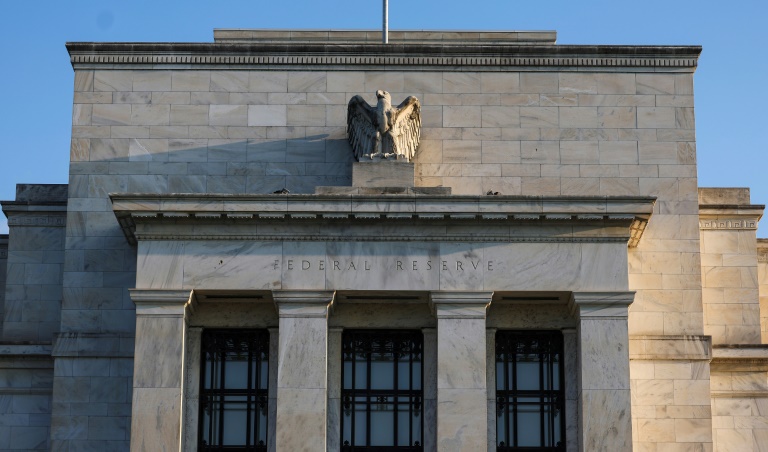
Wall Street stocks surged Monday while European and Asian markets dropped as investors braced for interest rate decisions this week from major central banks, including the Federal Reserve.

The dollar generally rose against its main rivals, while oil prices rebounded following sharp falls last week.

Analysts expect the Fed and the European Central Bank to announce rate hikes at their meetings this week.

And the Bank of England is on course for a ninth straight increase as policymakers try to bring down inflation from the highest levels in decades.

“Following a softer session in Asia, European markets are on edge, opening the week lower ahead of a critical few days,” said Victoria Scholar, head of investment at Interactive Investor.

“The ECB, the Fed and the Bank of England are expected to raise rates by 50 basis points each as the pace of tightening looks set to slow,” Scholar added.

The half-point jumps will still be steep rises, however, as central banks struggle to cool the pace of price increases, particularly in energy and food.

London, Frankfurt and Paris all closed lower. 

Wall Street stocks ended higher, as bargain hunters moved in following losses at the end of last week.

The Dow Jones Industrial Average jumped 1.6 percent and the S&P 500 closed 1.4 percent up.

Ahead of the Fed’s policy meeting, investors are set to digest US inflation data due Tuesday.

“It will be a fitting hump day on Wednesday, because the (inflation) data and the Fed decision are big humps the market needs to get over if it wants to make a run at a year-end rally,” said market analyst Patrick O’Hare at Briefing.com.

“If either, or both, disappoint in a meaningful way, then a year-end rally becomes a more challenging proposition.”

Traders are also keeping an eye on developments in China as it moves away from a zero-Covid policy that has hammered its economy, the world’s second largest after the United States.

The shift comes after widespread protests following nearly three years of strict controls.

Uncertainty surrounding the strength of China’s demand recovery has hit oil prices hard, with crude futures shedding more than 10 percent last week, but they rebounded on Monday.

“The gradual easing of Chinese Covid restrictions is… expected to lead to a further upswing in demand,” said Susannah Streeter, senior investment and markets analyst at Hargreaves Lansdown.

But investors are wary of whether the relaxation of restrictions will lead to a swift rebound as Covid cases are expected to jump.

“The recent volatility in crude oil highlights the ongoing questions over whether the Chinese economy is truly ready to return or on the cusp of yet another series of restrictions,” said Joshua Mahony, senior market analyst at online trading platform IG.

– Key figures around 2140 GMT –

New York – Dow: UP 1.6 percent at 34,005.04 (close)

New York – S&P 500: UP 1.4 percent at 3,990.56 (close)

New York – Nasdaq: UP 1.3 percent at 11,143.74 (close)

EURO STOXX 50: DOWN 0.5 percent at 3,921.82 (close)

London – FTSE 100: DOWN 0.4 percent at 7,445.97 (close) 

Frankfurt – DAX: DOWN 0.5 percent at 14,306.63 (close)

Paris – CAC 40: DOWN 0.4 percent at 6,650.55 (close)

Tokyo – Nikkei 225: DOWN 0.2 percent at 27,842.33 (close)

Hong Kong – Hang Seng Index: DOWN 2.2 percent at 19,463.63 (close)

Shanghai – Composite: DOWN 0.9 percent at 3,179.04 (close)

Euro/dollar: DOWN at $1.0539 from $1.0546

Dollar/yen: UP at 137.66 yen from 136.57 yen

Pound/dollar: UP at $1.2268 from $1.2262

Euro/pound: DOWN at 85.87 pence from 85.90 pence

West Texas Intermediate: UP 3.0 percent at $73.17 per barrel

Brent North Sea crude: UP 2.5 percent at $77.99 per barrel

burs-rl-bys/bgs

Moscow calls for 'diplomatic' solution to Kosovo tensions

The Kremlin on Monday called for a “diplomatic” resolution to a recent flare-up in tensions in Kosovo following attacks targeting the police.

“We are in favour of the parties making efforts of a peaceful nature and this situation being resolved through diplomatic means,” Kremlin spokesman Dmitry Peskov told reporters. 

“We stand for ensuring that all the rights of the Serbs are guaranteed,” he added. 

Russia’s foreign ministry vowed to stand by Belgrade. 

“We will continue to help Belgrade defend legitimate national interests with regard to Kosovo,” the ministry’s spokeswoman, Maria Zakharova, said in a statement.

She said Moscow was “alarmed” by the situation, accusing Pristina of “provocations” and “repressions against Serbs in Kosovo”. 

With historically close ties, Serbia is one of Russia’s few remaining allies in Europe after President Vladimir Putin ordered troops into Ukraine. 

Although Kosovo declared independence from Serbia in 2008, Belgrade does not recognise it and encourages the Serb majority in northern Kosovo to defy Pristina’s authority.

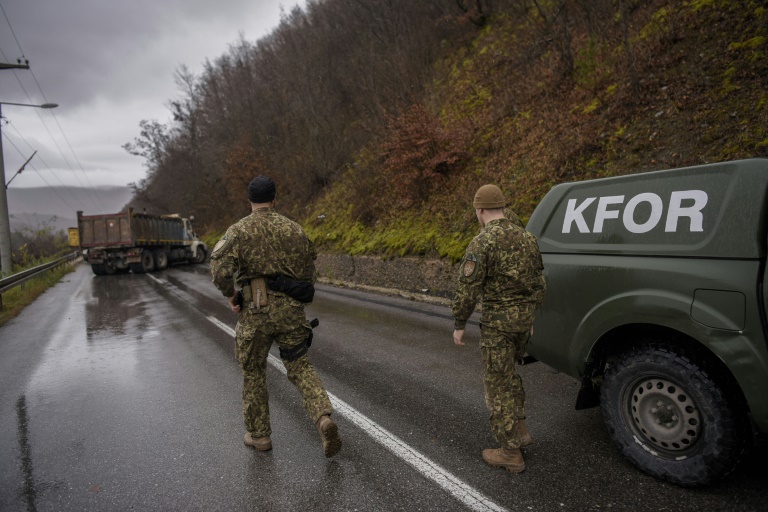
Tensions escalated this weekend in northern Kosovo after unknown attackers exchanged gunfire with the police and threw a stun grenade at EU law enforcers.

Hundreds of Serbs, outraged over the arrest of a former police officer, set up roadblocks, which paralysed traffic through two border crossings from Kosovo to Serbia. 

Pristina and Belgrade traded accusations over the latest incidents with Kosovo deciding to postpone local elections in Serb-majority municipalities scheduled for mid-December.

France said it was “very concerned” by developments in north Kosovo, and described the attack on EU peacekeepers as “unacceptable”.

“France is very concerned by the situation in northern Kosovo and strongly condemns the unacceptable attack on the EULEX Kosovo mission as well as all acts of violence on the ground,” the foreign ministry said in a statement.

EU democracy 'under attack' as parliament rocked by Qatar bribe claims

Leaders of the EU Parliament accused foreign powers on Monday of trying to corrupt European democracy, as a probe into alleged bribes from World Cup host Qatar widened.

Belgian investigators, meanwhile raided offices in the parliament’s Brussels base, seeking to seize computer data to track the alleged web of corruption.

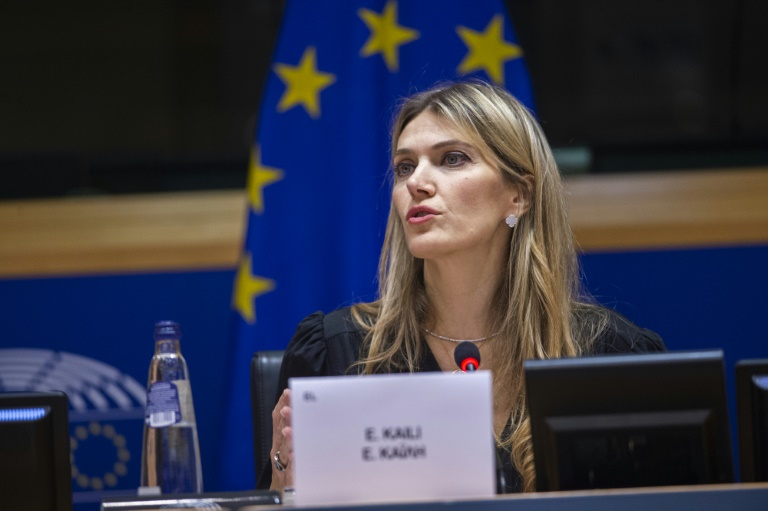
One of the vice presidents of the parliament, Greek socialist MEP Eva Kaili, has been charged with “criminal organisation, corruption and money laundering”. 

The Parliament’s president, Maltese conservative Roberta Metsola, vowed to members meeting at their seat in Strasbourg on Monday that the body’s integrity would be restored. 

“Make no mistake,” Metsola said. “The European Parliament, dear colleagues, is under attack. European democracy is under attack and our free and democratic societies are under attack.”

Leaders of the body’s political blocs agreed. 

“We won’t let our work be sullied, we won’t let our parliament or our Europe be sullied,” promised Stephane Sejourne of the liberal group Renew.

Manon Aubry of the left-wing GUE group dubbed the scandal the “most serious” in the parliament’s history. “Our democracy is not for sale,” she declared. 

Searches were carried out at the homes of MEPs and their associates in Belgium and around a million euros in cash has been recovered after allegations that Qatar has been seeking to burnish its image.

Belgian prosecutors said 600,000 euros ($630,000) were found at the home of one suspect, 150,000 euros at the flat of an MEP and several hundred thousand euros in a suitcase in a hotel room. 

– ‘My fury, my anger ‘ –

The Gulf monarchy, which is currently hosting the football World Cup, denies any involvement. “Any claims of misconduct by the State of Qatar are gravely misinformed,” a Qatar official told AFP.

Kaili has been stripped of her vice-presidential responsibilities and parliamentary group leaders will meet Tuesday to prepare a vote to formally remove her from the post.

She is remanded in custody and will face a hearing on Wednesday to see if she and three fellow accused will need to remain in detention pending a corruption trial.

European Parliament members usually have immunity from prosecution, but Belgian investigators said that was not the case this time as suspects were caught “in flagrante”.

Kaili visited Qatar just ahead of the World Cup and praised the country as a “frontrunner in labour rights”, a sentiment she has repeated on the floor of the parliament.

She received a new legal blow on Monday, when Greek authorities froze the 44-year-old former television presenter and her relatives’ assets.

At the parliament a wide-ranging internal investigation has been launched, Metsola said, and the parliament will continue to fully cooperate with and support the Belgian authorities’ probe.

Metsola, who attended in person a police search of a Belgian MEP’s home on Saturday, said she would choose her words carefully to avoid jeopardising the police investigation.

“So, if my fury, my anger, my sorrow do not come across, please be assured that they are very much present,” she said.

“These malign actors linked to autocratic third countries have allegedly weaponised NGOs, unions, individuals, assistants and members of the European Parliament in an effort to subvert our processes.”

Kaili was a member of the Socialists and Democrats (S&D) group in the parliament. Meeting on Monday, the group’s leaders voted to expel her and to suspend other S&D MEPs implicated in the investigation.

A group source told AFP that three MEPs have stepped down from committee positions pending the investigation and a fourth, Belgian socialist Marc Tarabella, has “suspended himself”.

Tarabella’s home was searched on Saturday, but he has not been formally charged.

EU foreign ministers, in Brussels to discuss sanctions against Iran and Russia, warned that the scandal threatens the credibility of European institutions.

– ‘Credibility and consequences’ –

Several MEPs as well as transparency campaigners have called for tougher anti-graft rules.

The European Parliament often votes to criticise corruption abroad and has pushed for action against member states accused of breaking Brussels’ rules, like Viktor Orban’s Hungary.

But ministers such as Irish Foreign Minister Simon Coveney warned that the scandal was “damaging”.

“This is really an unbelievable incident that must now be cleared up, without ifs and buts, with the full force of the law,” German Foreign Minister Annalena Baerbock said.

“Because this is also and especially about Europe’s credibility and consequences must follow.”

France bets on tech and transparency to beat Chinese caviar

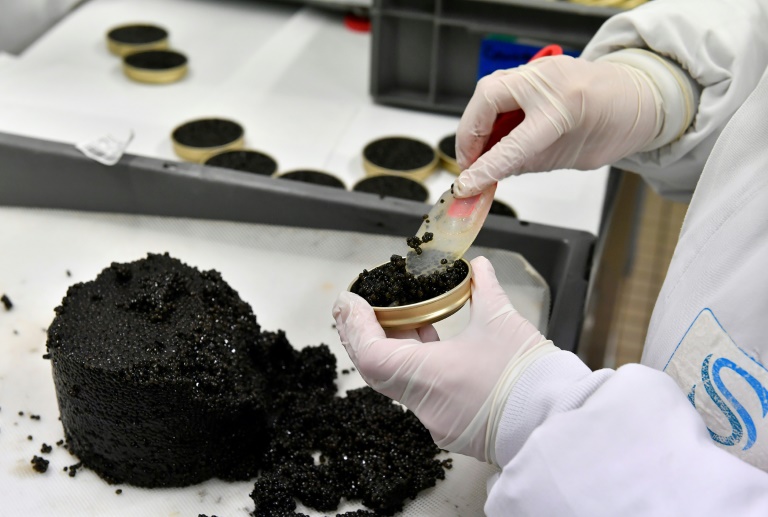
At the fish farm near Bordeaux, Christophe Baudon is running an ultrasound device over the belly of a large sturgeon to check its eggs.

“Caviar!” he shouts as the monitor shows the right sparkle around each little round ball.

“Over-mature!” comes the next shout, indicating the fish’s pregnancy cycle has gone too far and the eggs have softened — losing the crucial crunch. It will go back in the lake to await another cycle in two years.

For the company, Sturia, it’s an incredibly laborious process — they ultrasound some 20,000 fish a year for a total of 18 tonnes of caviar — but climate change has made it vital.

Many fish are coming out “over-mature”, in part because warmer waters have accelerated the pregnancy cycle.

For the guys standing in the water, scooping up the huge fish for inspection, the winter days when 10 centimetres (four inches) of ice coated the lakes are not entirely missed. 

But the change is still shocking.

“It’s been 10 years since we’ve seen any ice on these lakes,” said Baudon.

One in 20 of the fish died in 2021 when water temperatures hit 30 degrees, five degrees above a sturgeon’s comfort zone. 

“You might not know each one by name, but it’s never nice to pull out a dead fish — and of course the cost for the group is enormous,” said Sturia boss Laurent Dulau. 

– Extinction threat –

Fished to the brink of extinction in the wild — including the once-rich Russian and Iranian waters of the Caspian Sea — sturgeon now exist almost exclusively in farms, most of them in China.

Sturgeon were fished in France’s Gironde river for centuries, but their eggs were given to children, old people and pigs until Russian nobles fleeing the Communist revolution a century ago showed locals their potential.

It became a delicacy in Paris after Armenian emigrants Melkoum and Mouchegh Petrossian convinced the Ritz Hotel in Paris to serve caviar in the 1920s. 

Farming only started in France in the 1990s, and since it takes up to a decade to raise a sturgeon, progress is painstaking. 

Unable to compete with China on quantity, French producers focus on sustainable and healthy farming. 

The ultrasound avoids unnecessary killing and Sturia uses the meat for rillettes pate, the skin for leather and the bladder for a specialist glue favoured by violin-makers.

– ‘Produce better’ –

Dulau said the focus on traceability and quality is rebuilding caviar’s image after the over-fishing crisis. 

“The idea is to produce less, but produce better,” he said. “People will eat less because it’s a lot more expensive, but it will be so good that they’ll be satisfied.”

But Michel Berthommier, of nearby Caviar Perlita, is frustrated that “nine out of 10, maybe 10 out of 10” French restaurants still source from China. He blamed middle-men for preferring the mark-up on foreign eggs.

“It’s bizarre at a time when restaurants are always saying they source their products locally. We sell more to Singapore than restaurants 10 kilometres down the road,” he said. 

But he said the transparency of French production will win over buyers. 

“There used to be a mystery around how these fish were raised and harvested. We have opened our books on how our fish live, how they are fed and selected. 

“We can’t be number one in production, but we can lead the way in creativity and science.”

France bets on tech and transparency to beat Chinese caviar

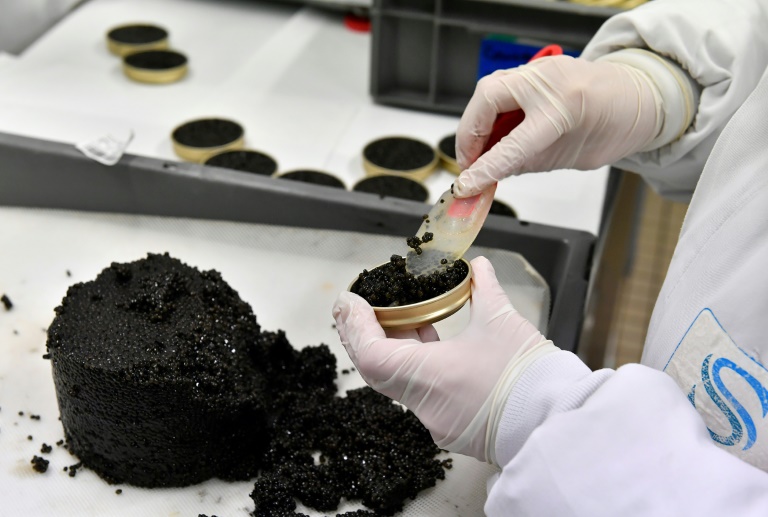
At the fish farm near Bordeaux, Christophe Baudon is running an ultrasound device over the belly of a large sturgeon to check its eggs.

“Caviar!” he shouts as the monitor shows the right sparkle around each little round ball.

“Over-mature!” comes the next shout, indicating the fish’s pregnancy cycle has gone too far and the eggs have softened — losing the crucial crunch. It will go back in the lake to await another cycle in two years.

For the company, Sturia, it’s an incredibly laborious process — they ultrasound some 20,000 fish a year for a total of 18 tonnes of caviar — but climate change has made it vital.

Many fish are coming out “over-mature”, in part because warmer waters have accelerated the pregnancy cycle.

For the guys standing in the water, scooping up the huge fish for inspection, the winter days when 10 centimetres (four inches) of ice coated the lakes are not entirely missed. 

But the change is still shocking.

“It’s been 10 years since we’ve seen any ice on these lakes,” said Baudon.

One in 20 of the fish died in 2021 when water temperatures hit 30 degrees, five degrees above a sturgeon’s comfort zone. 

“You might not know each one by name, but it’s never nice to pull out a dead fish — and of course the cost for the group is enormous,” said Sturia boss Laurent Dulau. 

– Extinction threat –

Fished to the brink of extinction in the wild — including the once-rich Russian and Iranian waters of the Caspian Sea — sturgeon now exist almost exclusively in farms, most of them in China.

Sturgeon were fished in France’s Gironde river for centuries, but their eggs were given to children, old people and pigs until Russian nobles fleeing the Communist revolution a century ago showed locals their potential.

It became a delicacy in Paris after Armenian emigrants Melkoum and Mouchegh Petrossian convinced the Ritz Hotel in Paris to serve caviar in the 1920s. 

Farming only started in France in the 1990s, and since it takes up to a decade to raise a sturgeon, progress is painstaking. 

Unable to compete with China on quantity, French producers focus on sustainable and healthy farming. 

The ultrasound avoids unnecessary killing and Sturia uses the meat for rillettes pate, the skin for leather and the bladder for a specialist glue favoured by violin-makers.

– ‘Produce better’ –

Dulau said the focus on traceability and quality is rebuilding caviar’s image after the over-fishing crisis. 

“The idea is to produce less, but produce better,” he said. “People will eat less because it’s a lot more expensive, but it will be so good that they’ll be satisfied.”

But Michel Berthommier, of nearby Caviar Perlita, is frustrated that “nine out of 10, maybe 10 out of 10” French restaurants still source from China. He blamed middle-men for preferring the mark-up on foreign eggs.

“It’s bizarre at a time when restaurants are always saying they source their products locally. We sell more to Singapore than restaurants 10 kilometres down the road,” he said. 

But he said the transparency of French production will win over buyers. 

“There used to be a mystery around how these fish were raised and harvested. We have opened our books on how our fish live, how they are fed and selected. 

“We can’t be number one in production, but we can lead the way in creativity and science.”

Close Bitnami banner
Bitnami