World

Musk to relaunch Twitter plan after fake account fiasco

Twitter owner Elon Musk was set to relaunch a subscription service on Monday after a first attempt saw an embarrassing spate of fake accounts that scared advertisers and created doubt on the site’s future.

The first try last month came just 10  days after Musk’s $44 billion takeover of the influential platform and a mass round of layoffs that saw company staff levels halved, including teams of workers moderating content.

The relaunch of Twitter Blue comes as the Tesla and SpaceX owner has stepped up his tweets endorsing right-wing causes, including against the use of gender neutral pronouns and the US government’s response to Covid-19.

The first rollout of the subscription plan caused an uproar when many fake accounts popped up pretending to be celebrities or companies and Musk’s team was forced to swiftly suspend the rollout.

This time, the company said that starting Monday subscribers would be required to be reviewed by Twitter before receiving the coveted blue check mark.

The checkmark will become gold for businesses and, later in the week, gray for government organizations, it added.

A blue checkmark on an account, which indicates it has been verified by Twitter, was previously free but reserved for organizations and public figures in an attempt to avoid impersonation and misinformation.

As of 1600 GMT, the new version had yet to go live on the Twitter website.

In the US relaunch, the Twitter Blue subscription service will cost $8 per month for users accessing Twitter on the web and $11 for those signing up on an Apple device.

The extra price for iPhone users could be explained by Musk’s anger that Apple charges up to 30 percent service fee on the app store while banning other payment methods.

– ‘One more lockdown’ – 

Since his takeover, content moderation has proved to be a huge headache for Musk, who has described himself as a free speech absolutist and vowed to free up most forms of censorship on the site.

But Musk’s free speech commitment has spooked away major advertisers, caught the attention of regulators and briefly challenged the company’s access to the Apple app store.

Musk believes that the previous ownership of Twitter held a strong left-wing and pro-LGBT bias and unfairly banned accounts, including that of former president Donald Trump.

On Sunday he also lashed out against the outgoing key advisor of the US response to the Covid-19 pandemic, Anthony Fauci, a frequent target of vitriol on right-wing media.

Musk posted a meme showing Fauci telling US President Joe Biden, “Just one more lockdown, my king…”

Early in the pandemic, Musk tweeted that concern over the virus was “dumb” and since taking over Twitter has removed its policy targeting Covid misinformation.

His embrace of right-wing talking points seemed to attract increasing scorn in San Francisco, a politically liberal city and the headquarters for Twitter.

Musk was loudly booed by a crowd in San Francisco on Sunday night after he was invited on stage by comedian Dave Chappelle.

“It’s almost as if I’ve offended San Francisco’s unhinged leftists … but nahhh,” Musk tweeted after the event.
Franco-US satellite set for unprecedented survey of Earth's water

A Franco-US satellite is due for launch this week on a mission to survey with unprecedented accuracy nearly all water on Earth’s surface for the first time and help scientists investigate its impact on Earth’s climate.

For NASA and France’s space agency CNES, which have worked together in the field for 30 years, it’s a landmark scientific mission with a billion dollar budget.

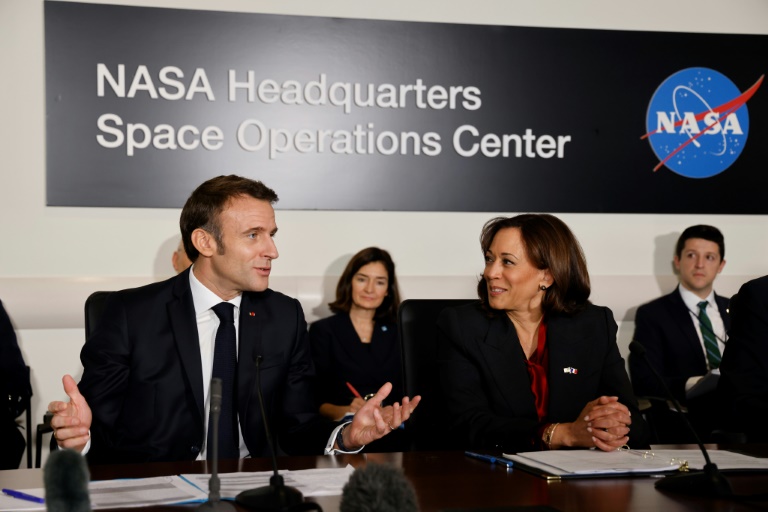
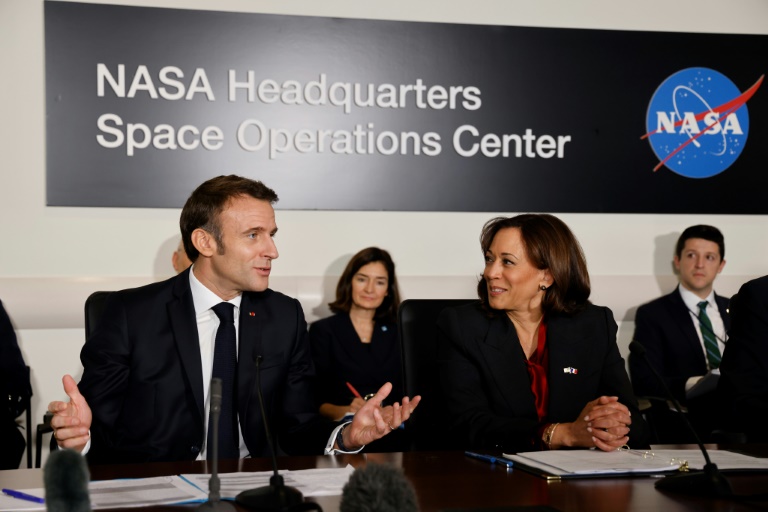
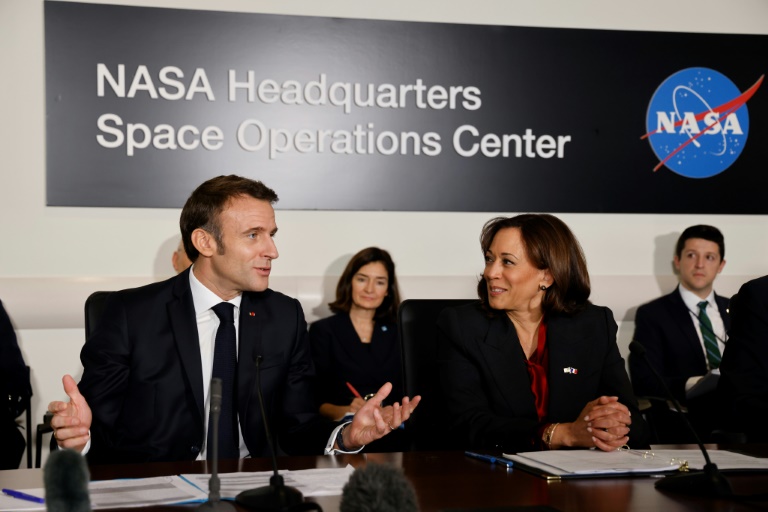
French President Emmanuel Macron went to NASA’s Washington headquarters at the end of November alongside US Vice President Kamala Harris.

He highlighted the liftoff — scheduled for early Thursday on the US west coast — of the Surface Water and Ocean Topography (SWOT) mission to monitor the levels of oceans, lakes and rivers, including in remote locations.

Its predecessor, TOPEX/Poseidon, launched in 1992, was also a Franco-US joint venture that measured ocean surface to an accuracy of 4.2 centimeters (1.7 inches).

It aided the forecast of the 1997-1998 El Nino weather phenomenon and improved understanding of ocean circulation and its effect on global climate.

The 2.2-tonne SWOT mission will be put into orbit from Vandenberg Space Force Base in California atop a SpaceX Falcon 9 rocket.

The satellite’s primary payload is an innovative instrument to measure the height of water called KaRin, or Ka-band radar interferometer. Its two antennas, separated by a big boom, create paralleled swaths of data.

“We’re going to get ten times better resolution than with current technologies to measure sea-surface height and understand the ocean fronts and eddies that help shape climate,” said NASA Earth Science Division Director Karen St. Germain.

“It’s like looking at a car number plate from space when before we could only see a street,” added Thierry Lafon, SWOT project leader at the CNES.

The stakes are high. While the impact of major ocean currents such as the Gulf Stream is known, more local flows and eddies covering dozens of kilometres remain more of a mystery.

But they too affect sea water surface temperatures and heat transfer as well as the absorption by the oceans of carbon dioxide from the atmosphere.

SWOT will improve weather and climate modelling, the observation of coastal erosion and help track how fresh and saltwater bodies change over time.

– Debris-free end of life –

With an “optimal” orbit of 890 kilometers (about 550 miles) above Earth, Lafon said SWOT will “take in all the components that affect water levels such as tides and the sun”.

NASA says SWOT will survey nearly all water on Earth’s surface for the first time.

It will monitor water levels, surface areas and quantities at more than 20 million lakes with shores of more than 250 metres. The entire length of rivers more than 100 metres wide will also be observed.

Water management, flood and drought prevention will be improved, said Lafon.

Flying the satellite to Vandenberg from the Thales Alenia Space (TAS) site in Cannes, southern France, proved a headache.

“Due to the conflict in Ukraine, there were no more Antonov 124s available and the 747 cargo is too small,” said TAS project leader Christophe Duplay.

“We decided to ask the USAF to provide one of its C-5 Galaxies.”

And that meant counting on NASA to have the US air force supply one of its rare giant aircraft to ship the huge payload.

SWOT has an estimated three-year lifetime — although Lafon said “nothing precludes the mission to last five to eight years” — and is set to become the first satellite to make a controlled re-entry into Earth’s atmosphere, reducing the amount of space debris, in line with the French space operations act.

Nearly 80 percent of the 400 kilos (880 pounds) of onboard fuel will be used to that end.

Franco-US satellite set for unprecedented survey of Earth's water

A Franco-US satellite is due for launch this week on a mission to survey with unprecedented accuracy nearly all water on Earth’s surface for the first time and help scientists investigate its impact on Earth’s climate.

For NASA and France’s space agency CNES, which have worked together in the field for 30 years, it’s a landmark scientific mission with a billion dollar budget.

French President Emmanuel Macron went to NASA’s Washington headquarters at the end of November alongside US Vice President Kamala Harris.

He highlighted the liftoff — scheduled for early Thursday on the US west coast — of the Surface Water and Ocean Topography (SWOT) mission to monitor the levels of oceans, lakes and rivers, including in remote locations.

Its predecessor, TOPEX/Poseidon, launched in 1992, was also a Franco-US joint venture that measured ocean surface to an accuracy of 4.2 centimeters (1.7 inches).

It aided the forecast of the 1997-1998 El Nino weather phenomenon and improved understanding of ocean circulation and its effect on global climate.

The 2.2-tonne SWOT mission will be put into orbit from Vandenberg Space Force Base in California atop a SpaceX Falcon 9 rocket.

The satellite’s primary payload is an innovative instrument to measure the height of water called KaRin, or Ka-band radar interferometer. Its two antennas, separated by a big boom, create paralleled swaths of data.

“We’re going to get ten times better resolution than with current technologies to measure sea-surface height and understand the ocean fronts and eddies that help shape climate,” said NASA Earth Science Division Director Karen St. Germain.

“It’s like looking at a car number plate from space when before we could only see a street,” added Thierry Lafon, SWOT project leader at the CNES.

The stakes are high. While the impact of major ocean currents such as the Gulf Stream is known, more local flows and eddies covering dozens of kilometres remain more of a mystery.

But they too affect sea water surface temperatures and heat transfer as well as the absorption by the oceans of carbon dioxide from the atmosphere.

SWOT will improve weather and climate modelling, the observation of coastal erosion and help track how fresh and saltwater bodies change over time.

– Debris-free end of life –

With an “optimal” orbit of 890 kilometers (about 550 miles) above Earth, Lafon said SWOT will “take in all the components that affect water levels such as tides and the sun”.

NASA says SWOT will survey nearly all water on Earth’s surface for the first time.

It will monitor water levels, surface areas and quantities at more than 20 million lakes with shores of more than 250 metres. The entire length of rivers more than 100 metres wide will also be observed.

Water management, flood and drought prevention will be improved, said Lafon.

Flying the satellite to Vandenberg from the Thales Alenia Space (TAS) site in Cannes, southern France, proved a headache.

“Due to the conflict in Ukraine, there were no more Antonov 124s available and the 747 cargo is too small,” said TAS project leader Christophe Duplay.

“We decided to ask the USAF to provide one of its C-5 Galaxies.”

And that meant counting on NASA to have the US air force supply one of its rare giant aircraft to ship the huge payload.

SWOT has an estimated three-year lifetime — although Lafon said “nothing precludes the mission to last five to eight years” — and is set to become the first satellite to make a controlled re-entry into Earth’s atmosphere, reducing the amount of space debris, in line with the French space operations act.

Nearly 80 percent of the 400 kilos (880 pounds) of onboard fuel will be used to that end.

Franco-US satellite set for unprecedented survey of Earth's water

A Franco-US satellite is due for launch this week on a mission to survey with unprecedented accuracy nearly all water on Earth’s surface for the first time and help scientists investigate its impact on Earth’s climate.

For NASA and France’s space agency CNES, which have worked together in the field for 30 years, it’s a landmark scientific mission with a billion dollar budget.

French President Emmanuel Macron went to NASA’s Washington headquarters at the end of November alongside US Vice President Kamala Harris.

He highlighted the liftoff — scheduled for early Thursday on the US west coast — of the Surface Water and Ocean Topography (SWOT) mission to monitor the levels of oceans, lakes and rivers, including in remote locations.

Its predecessor, TOPEX/Poseidon, launched in 1992, was also a Franco-US joint venture that measured ocean surface to an accuracy of 4.2 centimeters (1.7 inches).

It aided the forecast of the 1997-1998 El Nino weather phenomenon and improved understanding of ocean circulation and its effect on global climate.

The 2.2-tonne SWOT mission will be put into orbit from Vandenberg Space Force Base in California atop a SpaceX Falcon 9 rocket.

The satellite’s primary payload is an innovative instrument to measure the height of water called KaRin, or Ka-band radar interferometer. Its two antennas, separated by a big boom, create paralleled swaths of data.

“We’re going to get ten times better resolution than with current technologies to measure sea-surface height and understand the ocean fronts and eddies that help shape climate,” said NASA Earth Science Division Director Karen St. Germain.

“It’s like looking at a car number plate from space when before we could only see a street,” added Thierry Lafon, SWOT project leader at the CNES.

The stakes are high. While the impact of major ocean currents such as the Gulf Stream is known, more local flows and eddies covering dozens of kilometres remain more of a mystery.

But they too affect sea water surface temperatures and heat transfer as well as the absorption by the oceans of carbon dioxide from the atmosphere.

SWOT will improve weather and climate modelling, the observation of coastal erosion and help track how fresh and saltwater bodies change over time.

– Debris-free end of life –

With an “optimal” orbit of 890 kilometers (about 550 miles) above Earth, Lafon said SWOT will “take in all the components that affect water levels such as tides and the sun”.

NASA says SWOT will survey nearly all water on Earth’s surface for the first time.

It will monitor water levels, surface areas and quantities at more than 20 million lakes with shores of more than 250 metres. The entire length of rivers more than 100 metres wide will also be observed.

Water management, flood and drought prevention will be improved, said Lafon.

Flying the satellite to Vandenberg from the Thales Alenia Space (TAS) site in Cannes, southern France, proved a headache.

“Due to the conflict in Ukraine, there were no more Antonov 124s available and the 747 cargo is too small,” said TAS project leader Christophe Duplay.

“We decided to ask the USAF to provide one of its C-5 Galaxies.”

And that meant counting on NASA to have the US air force supply one of its rare giant aircraft to ship the huge payload.

SWOT has an estimated three-year lifetime — although Lafon said “nothing precludes the mission to last five to eight years” — and is set to become the first satellite to make a controlled re-entry into Earth’s atmosphere, reducing the amount of space debris, in line with the French space operations act.

Nearly 80 percent of the 400 kilos (880 pounds) of onboard fuel will be used to that end.

One in five cars on Norway's roads are electric

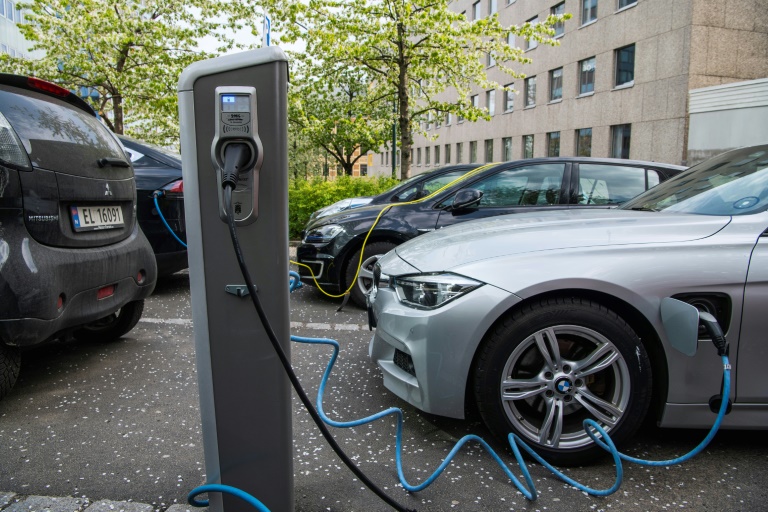
One in five cars on Norway’s roads are electric, a share that has doubled in less than three years, the Norwegian Electric Vehicle Association said Monday.

“The snowball is rolling faster and faster and a growing number of good electric car models are on Norway’s roads”, the head of the association, Christina Bu, said on its website.

While it took almost 10 years for the country’s electric car fleet to go from zero to 10 percent of the market — a level reached in March 2020 — it took less than three years for the share to then double to 20 percent, the body said.

A market share of 30 percent could be reached within two years, it said.

By comparison, 0.64 percent of cars on France’s roads were electric, according to French government figures from January 2021.

Norway, which is paradoxically Western Europe’s biggest oil and gas producer, aims for all its new cars to be “zero emission” — in other words, electric and hydrogen — by 2025.

Clean cars benefit from several advantages in the Scandinavian country.

Among other things, they are largely tax-free, enjoy lower fares for road tolls and public parking, and can in some cases use public transport lanes.

Electric cars now represent about 80 percent of Norway’s new car registrations, as an increasing number of models become available.

With the growing popularity of these cars, and the loss of income for the state, Norwegian authorities have started to roll back some of the benefits.

As of January 1, the 25 percent VAT exemption on the purchase of new electric vehicles will only apply to the first 500,000 kroner ($50,000) of the car’s price.

The change is expected to affect high-end electric car makes, such as Tesla, Mercedes and Audi.  

Greek MEP Eva Kaili, ex-TV host accused of taking bribes

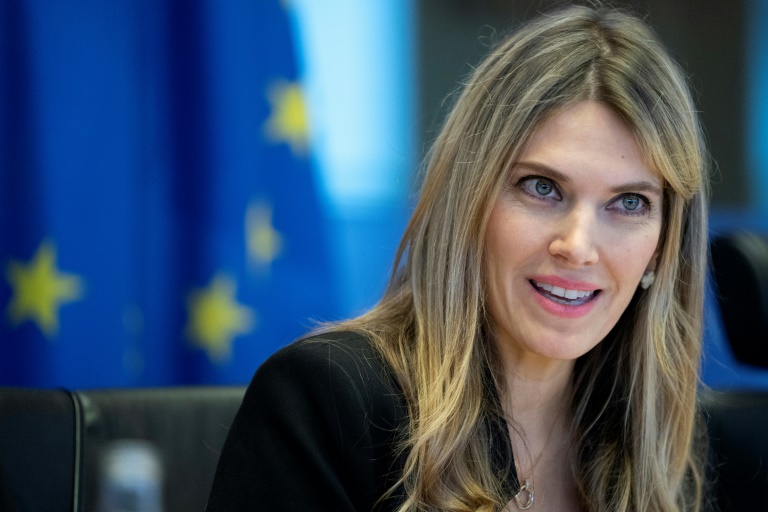
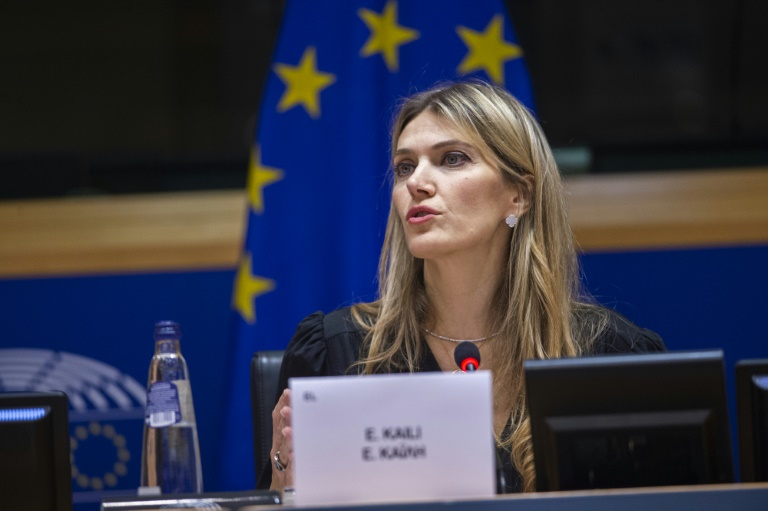
Only 11 months after she became a European Parliament vice president, Greek MEP Eva Kaili is at the heart of an alleged corruption scandal involving Qatar and the EU, a far cry from the days when she presented the news.

Kaili, 44, was the highest-profile target remanded in custody on Sunday over allegations of bribery by World Cup host Qatar, after investigators found “bags of cash” at her home.

The socialist MEP had her powers as a vice president suspended on Saturday over the claims, following her arrest the day before. 

She is one of four suspects to have been charged with participating in a criminal organisation, money laundering and corruption.

Kaili had already raised hackles when she told the parliament in November that Qatar was “a front-runner in labour rights”. This was despite widespread anger over the Gulf nation’s treatment of workers who built stadiums and infrastructure for the international football tournament.

The scandal has rocked the European Union’s legislature.

It also threatens the reputation of Kaili, once hailed as a rising star of Greek socialist party PASOK-Kinal.

Kaili, who hails from Greece’s second-largest city, Thessaloniki, entered politics at a young age.

She joined PASOK’s youth movement in her early teens and in 1998 became a local councillor in Thessaloniki, when she was only 20 and still a student.

After gaining a Bachelor’s degree in architecture, she pursued a career in journalism, while simultaneously studying for a Master’s in international and European affairs.

– Youngest socialist MP –

Most Greeks first discovered Kaili when she presented the news on one of the biggest private television channels, Mega, between 2004 and 2007.

But the lure of politics remained and in 2007, she became the youngest PASOK lawmaker in the Greek parliament when she was elected aged 29.

Setting her sights on a larger stage, she became a member of the European Parliament (MEP) in 2014, within its Socialists and Democrats group. She was re-elected in 2019.

In 2018, she figured on Politico Europe’s list of “Women Who Shape Brussels”, who the magazine described as “powerhouses driving debates and influencing policy”.

She was elected as one of the European Parliament’s 14 vice presidents in January 2022.

At the time of her arrest, Kaili was also part of the parliamentary delegation for developing the EU’s relations with the Arab peninsula.

Her partner, Francesco Giorgi, an Italian parliamentary assistant with the Socialists and Democrats group, has also been arrested over the bribery allegations. The couple have a two-year-old daughter.

– ‘Trojan horse’ – 

Shortly before the World Cup began, Kaili visited Qatar.

“Today, the World Cup in Qatar is proof, actually, of how sports diplomacy can achieve a historical transformation of a country, with reforms that inspired the Arab world,” she told the EU assembly on November 22.

In Greece, Kaili’s political positions have differed from the PASOK line several times over the years, much to the party’s chagrin.

In 2018, she criticised an agreement between the left-wing Greek government at the time and the neighbouring former Yugoslav Republic of Macedonia that ended a 27-year name dispute.

The country changed its name to “North Macedonia” to distinguish it from the bordering Greek province of Macedonia.

Kaili said she was “ashamed” after the agreement.

PASOK leader Nikos Androulakis has compared her in the past to a “Trojan horse”, acting on behalf of the ruling right-wing party, New Democracy.

He said she would not be the party’s candidate in the next European Parliament elections, due in 2024.

Faced with the graft scandal, PASOK suspended Kaili from the party and several lawmakers have urged her to resign as an MEP.

Stock markets diverge ahead of key rate decisions

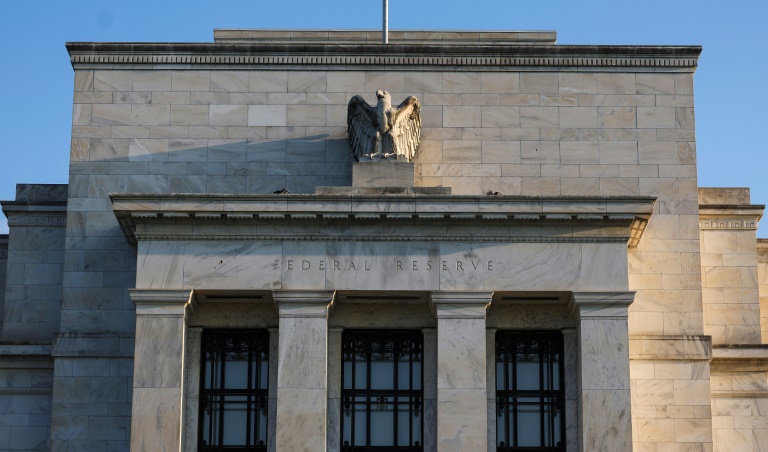
Wall Street pushed higher but European and Asian stock markets dropped Monday as investors looked ahead to interest rate decisions this week from major central banks including the Federal Reserve.

The dollar traded mixed against its main rivals, while oil prices rebounded following sharp falls last week.

Analysts are forecasting the Fed and the European Central Bank to announce smaller rate hikes at their meetings this week compared with recent decisions.

The Bank of England is meanwhile on course for a ninth increase in a row as policymakers try to bring down inflation from the highest levels in decades.

“Following a softer session in Asia, European markets are on edge, opening the week lower ahead of a critical few days for central bank action,” noted Victoria Scholar, head of investment at Interactive Investor. 

Wall Street opened higher, however, as bargain hunters moved in following losses at the end of last week.

“The ECB, the Fed and the Bank of England are expected to raise rates by 50 basis points each as the pace of tightening looks set to slow,” Scholar added.

The half-point jumps will still be steep rises, however, as central banks struggle to cool the pace of price increases, particularly regarding energy and food.

Ahead of the Fed’s policy meeting, investors were set to digest US inflation data due Tuesday.

“It will be a fitting hump day on Wednesday, because the (inflation) data and the Fed decision are big humps the market needs to get over if it wants to make a run at a year-end rally,” said market analyst Patrick J. O’Hare at Briefing.com.

“If either, or both, disappoint in a meaningful way, then a year-end rally becomes a more challenging proposition,” he added.

Traders were keeping an eye also on developments in China as it moves away from the zero-Covid policy that has hammered its economy, the world’s second largest after the United States.

The shift comes after widespread protests against the near three-year strategy, though there is concern about the expected spike in infections.

Uncertainty surrounding the strength of China’s demand recovery has hit oil prices hard, with crude futures shedding more than 10 percent last week.

“The gradual easing of Chinese Covid restrictions is… expected to lead to a further upswing in demand,” said Susannah Streeter, senior investment and markets analyst at Hargreaves Lansdown.

“However, concerns about the rapid spread of the virus remain, and China will have a tough fight on its hands, dealing with an expected explosion of infections while trying to open up the economy.”

– Key figures around 1430 GMT –

London – FTSE 100: DOWN 0.4 percent at 7,446.42 points

Frankfurt – DAX: DOWN 0.5 percent at 14,301.97

Paris – CAC 40: DOWN 0.5 percent at 6,644.94

EURO STOXX 50: DOWN 0.6 percent at 3,918.42

New York – Dow: UP 0.4 percent at 33,597.24

Tokyo – Nikkei 225: DOWN 0.2 percent at 27,842.33 (close)

Hong Kong – Hang Seng Index: DOWN 2.2 percent at 19,463.63 (close)

Shanghai – Composite: DOWN 0.9 percent at 3,179.04 (close)

Euro/dollar: UP at $1.0559 from $1.0534 on Friday

Dollar/yen: UP at 137.04 yen from 136.57 yen

Pound/dollar: UP at $1.2284 from $1.2262

Euro/pound: UP at 85.96 pence from 85.90 pence

West Texas Intermediate: UP 1.2 percent at $71.88 per barrel

Brent North Sea crude: UP 0.4 percent at $76.37 per barrel

burs-rl/imm

EU parliament's credibility rocked by Qatar bribe claims

The European Parliament scrambled Monday to get ahead of the widening scandal of alleged huge cash bribes from figures working on behalf of World Cup host Qatar.

One of the assembly’s vice presidents, Greek socialist Eva Kaili, has been charged with corruption by Belgian prosecutors and her assets have been frozen by her homeland.

Three of Kaili’s associates have also been charged, after bags of cash were found in her home shortly after she returned from an official visit to Qatar, and a second MEP’s house has been searched. 

EU foreign ministers, arriving in Brussels to discuss sanctions against Iran and Russia, warned that the scandal threatens the credibility of European institutions.

“The allegations against the vice president of the European Parliament are of utmost concern, very serious,” European Commission President Ursula von der Leyen said.

“It is a question of confidence of people into our institutions, and this confidence and trust into our institutions needs higher standards.”

In Strasbourg, the president of the parliament, Maltese conservative Roberta Metsola — who this weekend attended a police search of a Belgian MEP’s home — prepared to address the crisis.

According to parliamentary sources she would meet the leaders of the assembly’s rival political groupings and address the issue from the podium at the opening of the week’s session.

Kaili has been remanded in custody by an investigating magistrate in Belgium and has not travelled down to Strasbourg, the parliament’s official seat, for the plenary session.

She received a new legal blow on Monday, when Greek authorities froze the 44-year-old former television presenter and her relatives’ assets.

Several MEPs as well as transparency campaigners have called for tougher anti-graft rules.

– ‘Insult to democracy’ –

Manon Aubry, head of the Left group, called for Kaili’s resignation and a commission of inquiry into what she called the parliament’s “failures” in the affair.

“This will be a good week to fight corruption!” tweeted German Green MEP Daniel Freund. 

Parliament’s agenda this week will be overshadowed by the scandal, and Wednesday’s debate on “the defence of democracies against foreign interference” now looks timely.

French socialist Aurore Lalucq wrote: “If the evidence is proven, this case is an insult. An insult to citizens, an insult to Europeans. An insult to democracy. An insult to Europe.”

Qatar had been hoping that its diplomatic outreach, and the glow of hosting of the World Cup, would secure EU visa liberalisation for its citizens. 

Doha “categorically” denied involvement in any wrongdoing. 

The European Parliament often votes to criticise corruption abroad and has pushed for action against member states accused of breaking Brussels’ rules, like Viktor Orban’s Hungary.

But EU member state ministers meeting in Brussels, like Irish Foreign Minister Simon Coveney, warned that the scandal was “damaging”.

“This is really an unbelievable incident that must now be cleared up, without ifs and buts, with the full force of the law,” German Foreign Minister Annalena Baerbock said.

“Because this is also and especially about Europe’s credibility and consequences must follow.”

Belgian prosecutors revealed on Sunday that four suspects had been charged “with participation in a criminal organisation, money laundering and corruption”.

The arrests followed raids in Brussels which prosecutors said turned up 600,000 euros ($630,000) in cash. Police also seized computers and mobile phones.

– Caught red-handed –

A judicial source confirmed to AFP that Kaili was one of the four charged, after large sums of cash were found in her home doing a police search.

Separately, police searched the home of Belgian socialist MEP Marc Tarabella, vice-chair of the parliamentary delegation “for relations with the Arab peninsula”. 

He has not been charged. Metsola’s office said she had returned early from Malta to attend the search, as required by Belgium’s constitution. 

Kaili has been stripped of her responsibilities as a vice president of the parliament, notably that of representing Metsola in the Middle East.

But she remains an MEP and would normally enjoy immunity from criminal prosecution, except in cases where a suspect is caught red-handed in the act of committing an alleged crime.

Kaili visited Qatar just ahead of the World Cup and praised the country as a “frontrunner in labour rights”, a sentiment she has repeated on the floor of the parliament.

UK eyes new ties in Africa, Latin America and Asia

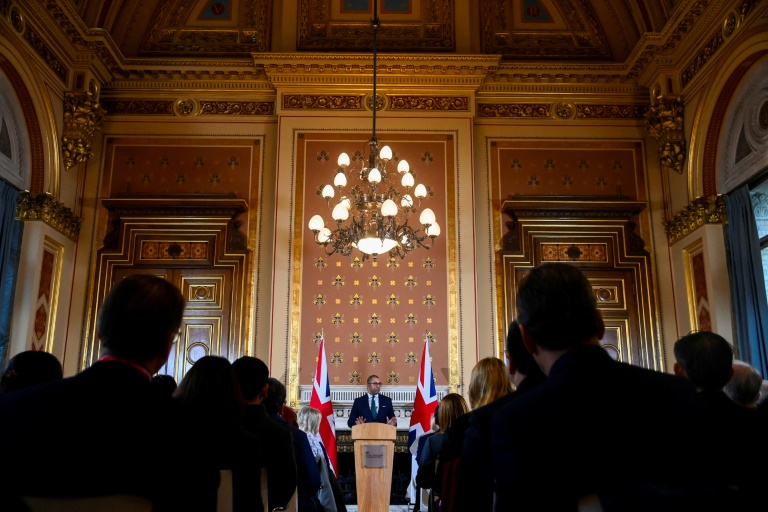
Foreign Secretary James Cleverly on Monday set out his long-term vision for UK foreign policy, urging a move towards new partnerships in Latin America, Asia and Africa.

Cleverly said British diplomacy had sometimes been slow to capitalise on the shift in the geopolitical centre of gravity “eastwards and southwards”.

But Brexit — the UK’s departure from the European Union — provided opportunities to look beyond its nearest neighbours for new strategic partnerships.

Cleverly said the UK needed to have policy aims for up to 20 years, in areas from trade to climate change, even if there was no immediate visible dividend back home.

Countries such as India, Indonesia and Brazil, with much younger demographics than the UK’s traditional allies that helped set up the post-World War II global institutions, will become increasingly influential, he said.

“I am determined that we will make investments of faith in the countries that will shape the world’s future,” he said.

“We can’t just hang on to the comfort blanket perhaps of our pre-existing friendships and alliances,” he added.

“We need to work, we need to graft, we need to make sure that we’re having conversations with those countries that are also being wooed by other philosophies and we need to sell the benefits.”

– ‘Global Britain’ –

Since the UK left the EU, London has been pushing a policy of “Global Britain”, particularly a “tilt” towards the Asia-Pacific region.

But excerpts of Cleverly’s speech released in advance raised questions about whether he was advocating closer ties with some non-aligned countries that are more prepared to flout the international rules-based system in areas such as human rights.

Convincing future partners about upholding international law, respecting human rights and diversity needed to take place “over decades”, he said, aiming for persuasion over lecturing.

Cleverly hit out at Russia for trying to take the world back to a time when “might was right” and neighbouring states were treated as “prey”.

He noted China’s rise as an economic superpower in the last 50 years yet voiced concern about its rapid military expansion and supposed “no strings attached” partnerships with developing countries.

But his overarching aims come as the UK backslides on one of its main “soft power” weapons by cutting international aid funding and by tightening immigration controls post-Brexit, despite an employment deficit in some sectors for overseas staff.

The ruling Conservative government, in power since 2010, is also well behind in opinion polls and facing defeat at the next general election due in the next two years.

“I’m willing to concede that I am unlikely to be foreign secretary in 25 years’ time,” he added, but said he wanted UK foreign policy to be more long-term.

Mercedes plans 1 bn-euro electric van plant in Poland

German automaker Mercedes-Benz said Monday it planned to inject more than one billion euros into a new plant in Poland dedicated to building fully electric vans.

The site will be located in Jawor, southwestern Poland, where the group has already been manufacturing combustion engines since 2019 and battery systems since 2021.

“We will build our first pure electric plant in Jawor,” Mathias Geisen, head of Mercedes‑Benz Vans, said in a statement.

The move would “ensure our leading position in the field of all-electric light commercial vehicles” while at the same time “preserving the long-term prospects of the existing plants in Europe”, he added.

At a press conference in Warsaw, Geisen said the group planned to spend more than a billion euros on setting up the new site.

“The investment announced by Mercedes today is for Poland a very, very important investment,” Polish Prime Minister Mateusz Morawiecki told reporters.

It comes as Mercedes-Benz and rival automakers around the globe are spending vast sums as part of a major industry-wide shift towards electrification.

Mercedes had initially planned to partner with US start-up Rivian and build all-electric vans in Europe together.

But Mercedes on Monday said plans to establish a joint venture were “on hold due to Rivian’s ongoing reprioritisation of projects”.

Rivian, which has been grappling with supply chain woes that have forced it to curb production this year, said it had decided “to pause discussions” with Mercedes.

“At this point in time, we believe focusing on our consumer business, as well as our existing commercial business, represent the most attractive near-term opportunities to maximise value for Rivian,” CEO RJ Scaringe said in a statement.

Close Bitnami banner
Bitnami