World

Three boys die after falling into frozen lake in UK: police

Three boys aged eight, 10 and 11 have died and another boy remains in critical condition after they fell into an icy lake near Birmingham, central England, police said Monday.

“Three boys have tragically died after falling into the lake at Babbs Mill Park in Solihull yesterday afternoon,” West Midlands Police said in a statement.

The boys suffered a cardiac arrest and were rushed to hospital after being pulled from the water.

“Sadly, they could not be revived and our thoughts are with their family and friends at this deeply devastating time,” said police.

“A fourth boy, aged six, remains in a critical condition in hospital.”

Witnesses reported seeing other children on the lake, which froze during a cold snap that has hit swathes of Britain, but police have not reported anyone else missing. 

Emergency services were quickly on the scene, with fire and police officers wading into the frozen water in their uniforms, Solihull Superintendent Richard Harris said in a news conference.

One officer attempted to punch through the ice to get to the boys, he added.

Harris said the families were “absolutely devastated” and the fact it occurred during the Christmas period “adds to the tragedy”.

Identities of the victims will not be released until the families agree to do so, he added.

– Arctic blast –

The tragedy came as the UK was hit by heavy snow and freezing conditions, causing major travel disruption, on the eve of a national rail strike Tuesday that was already expected to bring the country to a grinding halt.

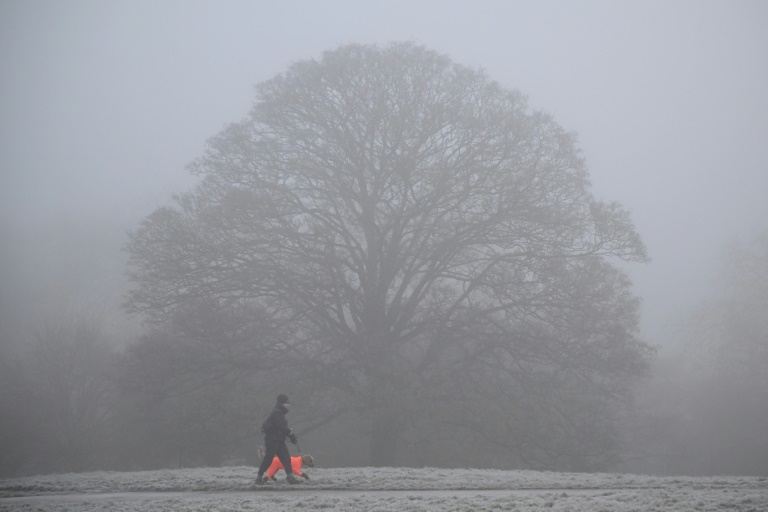
The UK has been experiencing a cold snap for several days, with temperatures dropping to -10 degrees Celsius (14 degrees Fahrenheit) in some areas, although the Met Office said the temperatures were “not unusual for this time of year”. 

The service has issued yellow alerts for snow, fog and frost in several areas, including southeast and southwest England, and the north of Scotland.

London Stansted airport warned of disruption. 

“Our runway is temporarily closed whilst we undertake snow clearing,” it said late Sunday, with many flights cancelled early Monday.

The airport later said that the runway was open and fully operational, but that travellers should still brace for delays.

The airport is a main hub of budget airline Ryanair, which also cautioned about disruption to its flights at Gatwick, south of London.

“Due to ongoing severe snowy weather across the UK, runways at both Stansted and Gatwick have been temporarily closed tonight (11 December), disrupting all flights scheduled to depart Stansted/Gatwick during this temporary closure period,” it said.

Dozens of stranded passengers posted videos on social media showing snow-covered runways and planes stuck on the ground.

More than 50 flights were also cancelled on Sunday at Heathrow, the UK’s largest airport, due to freezing fog. 

Train and bus services in London were also severely affected after the dump of around four inches (10 centimetres) of snow overnight, which also forced the closure of parts of the M25 orbital road around the capital, the country’s busiest motorway.

Some schools were also shut.
Unidentified gunmen attack China hotel in Afghan capital

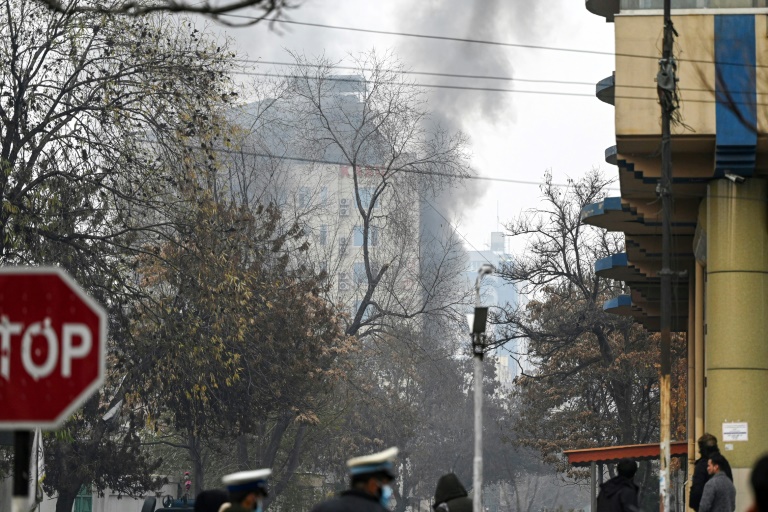
Unidentified gunmen attacked a hotel popular with Chinese business people in the Afghan capital Monday, with witnesses reporting multiple blasts and several bursts of gunfire.

Smoke could be seen pouring from the multi-storey Kabul Longan Hotel as Taliban security forces rushed to the site and sealed off the neighbourhood.

The Taliban claim to have improved security since storming back to power in August last year but there have been scores of bomb blasts and attacks, many claimed by the local chapter of the Islamic State group.

A Kabul police spokesman told reporters the attack was carried out by “mischievous elements”.

“Security forces have reached the area and the clearance of the raiders is underway,” he said in a WhatsApp media group.

AFP correspondents near the scene in Shahr-e-naw, a commercial and residential neighbourhood, heard multiple blasts and gunfire, while Afghan media reported similar details.

Video circulating on social media showed people clamouring out of windows on the lower floors of the building, with the hotel sign — in English and Chinese — clearly visible.

Other video showed huge flames licking out of another section, with thick plumes of smoke. 

A helicopter also made several passes of the area.

The hotel is popular with Chinese business visitors, who have flocked to Afghanistan since the Taliban’s return in pursuit of high-risk but potentially lucrative business deals.

China, which shares a rugged 76-kilometre (47-mile) border with Afghanistan, has not officially recognised the Taliban government but is one of the few countries to maintain a full diplomatic presence there.

– Sensitive border –

Beijing has long feared Afghanistan could become a staging point for minority Uyghur separatists in China’s sensitive border region of Xinjiang.

The Taliban have promised that Afghanistan would not be used as a base for militants and, in exchange, China has offered economic support and investment for Afghanistan’s reconstruction.

Maintaining stability after decades of war in Afghanistan is Beijing’s main consideration as it seeks to secure its borders and strategic infrastructure investments in neighbouring Pakistan, home to the China-Pakistan Economic Corridor.

The Taliban are at pains to portray Afghanistan as safe for diplomats and business people but two Russian embassy staff members were killed in a suicide bombing outside the mission in September in an attack claimed by IS.

The group also claimed responsibility for an attack on Pakistan’s embassy in Kabul this month that Islamabad decried as an “assassination attempt” against the ambassador.

A security guard was wounded in that attack.

Despite owning the rights to major projects in Afghanistan, notably the Mes Aynak copper mine, China has not pushed any of these projects forward.

The Taliban are reliant on China to turn one of the world’s largest copper deposits into a working mine that would help the cash-strapped and sanctions-hit nation recover.

Stock markets begin week lower ahead of key rate decisions

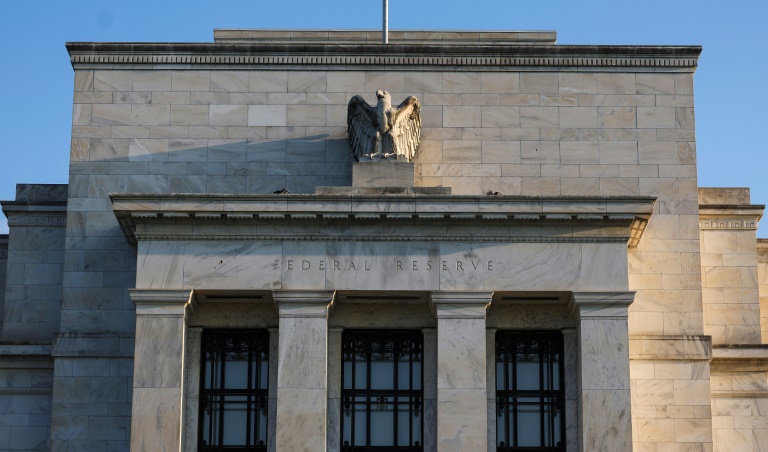
European stock markets dropped Monday following losses in Asia, as investors looked ahead to interest rate decisions this week from major central banks including the Federal Reserve.

The dollar traded mixed against its main rivals, while oil prices retreated further following sharp falls last week.

Analysts are forecasting the Fed and the European Central Bank to announce smaller rate hikes at their meetings this week compared with recent decisions.

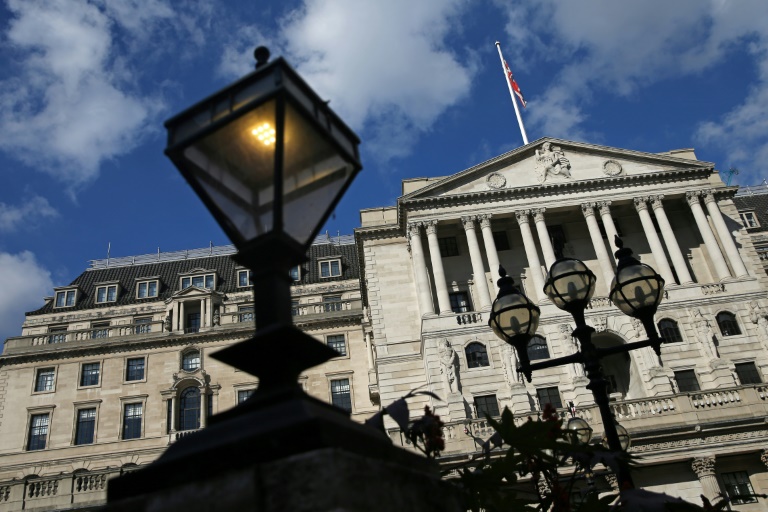
The Bank of England is meanwhile on course for a ninth increase in a row as policymakers try to bring down inflation from the highest levels in decades.

“Following a softer session in Asia, European markets are on edge, opening the week lower ahead of a critical few days for central bank action,” noted Victoria Scholar, head of investment at Interactive Investor. 

“The ECB, the Fed and the Bank of England are expected to raise rates by 50 basis points each as the pace of tightening looks set to slow.”

The half-point jumps will still be steep rises, however, as central banks struggle to cool the pace of price increases, particularly regarding energy and food.

Ahead of the Fed’s policy meeting, investors were set to digest US inflation data due Monday.

Traders were keeping an eye also on developments in China as it moves away from the zero-Covid policy that has hammered its economy, the world’s second largest after the United States.

The shift comes after widespread protests against the near three-year strategy, though there is concern about the expected spike in infections.

Uncertainty surrounding the strength of China’s demand recovery has hit oil prices hard, with crude futures shedding more than 10 percent last week.

“The gradual easing of Chinese Covid restrictions is… expected to lead to a further upswing in demand,” said Susannah Streeter, senior investment and markets analyst at Hargreaves Lansdown.

“However, concerns about the rapid spread of the virus remain, and China will have a tough fight on its hands, dealing with an expected explosion of infections while trying to open up the economy.”

– Key figures around 1200 GMT –

London – FTSE 100: DOWN 0.2 percent at 7,462.48 points

Frankfurt – DAX: DOWN 0.3 percent at 14,329.81

Paris – CAC 40: DOWN 0.3 percent at 6,659.99

EURO STOXX 50: DOWN 0.4 percent at 3,926.69

Tokyo – Nikkei 225: DOWN 0.2 percent at 27,842.33 (close)

Hong Kong – Hang Seng Index: DOWN 2.2 percent at 19,463.63 (close)

Shanghai – Composite: DOWN 0.9 percent at 3,179.04 (close)

New York – Dow: DOWN 0.9 percent at 33,476.46 (close)

Euro/dollar: UP at $1.0570 from $1.0534 on Friday

Dollar/yen: UP at 136.84 yen from 136.57 yen

Pound/dollar: UP at $1.2275 from $1.2262

Euro/pound: UP at 86.13 pence from 85.90 pence

West Texas Intermediate: DOWN 0.7 percent at $70.55 per barrel

Brent North Sea crude: DOWN 0.9 percent at $75.44 per barrel

EU parliament's credibility rocked by Qatar bribe claims

The European Parliament scrambled Monday to get ahead of the widening scandal of alleged huge cash bribes from figures working on behalf of World Cup host Qatar.

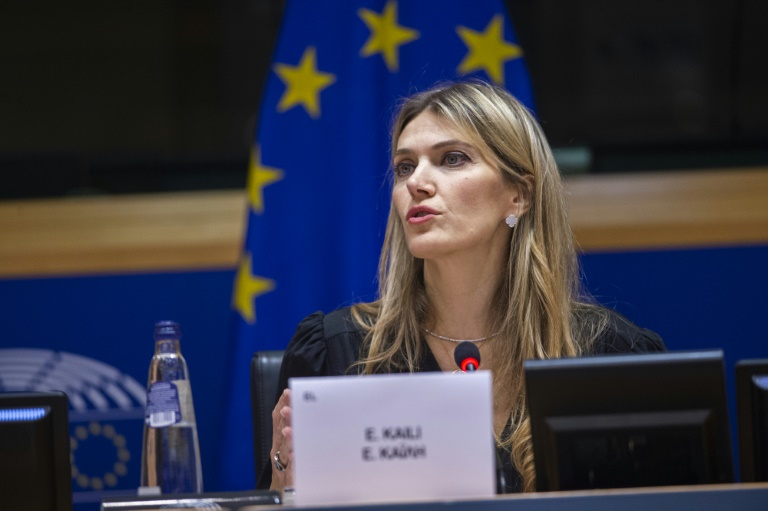
One of the assembly’s vice presidents, Greek socialist Eva Kaili, has been charged with corruption by Belgian prosecutors and her assets have been frozen by her homeland.

Three of Kaili’s associates have also been charged, after bags of cash were found in her home shortly after she returned from an official visit to Qatar, and a second MEP’s house has been searched. 

EU foreign ministers, arriving in Brussels to discuss sanctions against Iran and Russia, warned that the scandal threatens the credibility of European institutions.

“The allegations against the vice president of the European Parliament are of utmost concern, very serious,” European Commission President Ursula von der Leyen said.

“It is a question of confidence of people into our institutions, and this confidence and trust into our institutions needs higher standards.”

In Strasbourg, the president of the parliament, Maltese conservative Roberta Metsola — who this weekend attended a police search of a Belgian MEP’s home — prepared to address the crisis.

According to parliamentary sources she would meet the leaders of the assembly’s rival political groupings and address the issue from the podium at the opening of the week’s session.

Kaili has been remanded in custody by an investigating magistrate in Belgium and has not travelled down to Strasbourg, the parliament’s official seat, for the plenary session.

She received a new legal blow on Monday, when Greek authorities froze the 44-year-old former television presenter and her relatives’ assets.

Several MEPs as well as transparency campaigners have called for tougher anti-graft rules.

– ‘Insult to democracy’ –

Manon Aubry, head of the Left group, called for Kaili’s resignation and a commission of inquiry into what she called the parliament’s “failures” in the affair.

“This will be a good week to fight corruption!” tweeted German Green MEP Daniel Freund. 

Parliament’s agenda this week will be overshadowed by the scandal, and Wednesday’s debate on “the defence of democracies against foreign interference” now looks timely. 

French socialist Aurore Lalucq wrote: “If the evidence is proven, this case is an insult. An insult to citizens, an insult to Europeans. An insult to democracy. An insult to Europe.”

Qatar had been hoping that its diplomatic outreach, and the glow of hosting of the World Cup, would secure EU visa liberalisation for its citizens. 

Doha “categorically” denied involvement in any wrongdoing. 

The European Parliament often votes to criticise corruption abroad and has pushed for action against member states accused of breaking Brussels’ rules, like Viktor Orban’s Hungary.

But EU member state ministers meeting in Brussels, like Irish Foreign Minister Simon Coveney, warned that the scandal was “damaging”.

“This is really an unbelievable incident that must now be cleared up, without ifs and buts, with the full force of the law,” German Foreign Minister Annalena Baerbock said.

“Because this is also and especially about Europe’s credibility and consequences must follow.”

Belgian prosecutors revealed on Sunday that four suspects had been charged “with participation in a criminal organisation, money laundering and corruption”.

The arrests followed raids in Brussels which prosecutors said turned up 600,000 euros ($630,000) in cash. Police also seized computers and mobile phones.

– Caught red-handed –

A judicial source confirmed to AFP that Kaili was one of the four charged, after large sums of cash were found in her home doing a police search.

Separately, police searched the home of Belgian socialist MEP Marc Tarabella, vice-chair of the parliamentary delegation “for relations with the Arab peninsula”. 

He has not been charged. Metsola’s office said she had returned early from Malta to attend the search, as required by Belgium’s constitution. 

Kaili has been stripped of her responsibilities as a vice president of the parliament, notably that of representing Metsola in the Middle East.

But she remains an MEP and would normally enjoy immunity from criminal prosecution, except in cases where a suspect is caught red-handed in the act of committing an alleged crime.

Kaili visited Qatar just ahead of the World Cup and praised the country as a “frontrunner in labour rights”, a sentiment she has repeated on the floor of the parliament.

Three boys die after falling into frozen lake in UK: police

Three boys aged eight, 10 and 11 have died and another boy remains in critical condition after they fell into an icy lake near Birmingham, central England, police said Monday.

“Three boys have tragically died after falling into the lake at Babbs Mill Park in Solihull yesterday afternoon,” West Midlands Police said in a statement.

The boys suffered cardiac arrest and were rushed to hospital after being pulled from the water.

“Sadly, they could not be revived and our thoughts are with their family and friends at this deeply devastating time,” said police.

“A fourth boy, aged six, remains in a critical condition in hospital.”

Witnesses reported seeing other children on the lake, which froze during a cold snap that has hit swathes of the country. 

“Searches of the lake are continuing as we seek to establish exactly what happened and if anyone else fell into the water,” added police.

The incident came as the UK was hit by heavy snow and freezing conditions, causing major travel disruption, on the eve of a national rail strike Tuesday that was already expected to bring the country to a grinding halt.

– Arctic blast –

The UK has been experiencing a cold snap for several days, with temperatures dropping to -10 Celsius degrees (14 Fahrenheit) in some areas, although the Met Office said the temperatures were “not unusual for this time of year”. 

The service has issued yellow alerts for snow, fog and frost in several areas, including southeast and southwest England, and the north of Scotland.

London Stansted airport warned of disruption. 

“Our runway is temporarily closed whilst we undertake snow clearing,” it said late Sunday, with many flights cancelled early Monday.

The airport later said that the runway was open and fully operational, but that travellers should still brace for delays.

The airport is a main hub of budget airline Ryanair, which also cautioned about disruption to its flights at Gatwick, south of London.

“Due to ongoing severe snowy weather across the UK, runaways at both Stansted and Gatwick have been temporarily closed tonight (11 December),  disrupting all flights scheduled to depart Stansted/Gatwick during this temporary closure period,” it said.

Dozens of stranded passengers posted videos on social media showing snow-covered runways and planes stuck on the ground.

More than 50 flights were also cancelled on Sunday at Heathrow, the UK’s largest airport, due to freezing fog. 

Train and bus services in London were also severely affected after the dump of around four inches (10 centimetres) of snow overnight, which also forced the closure of parts of the M25 orbital road around the capital, the country’s busiest motorway.

Some schools were also shut.
Macron postpones French pension overhaul to January

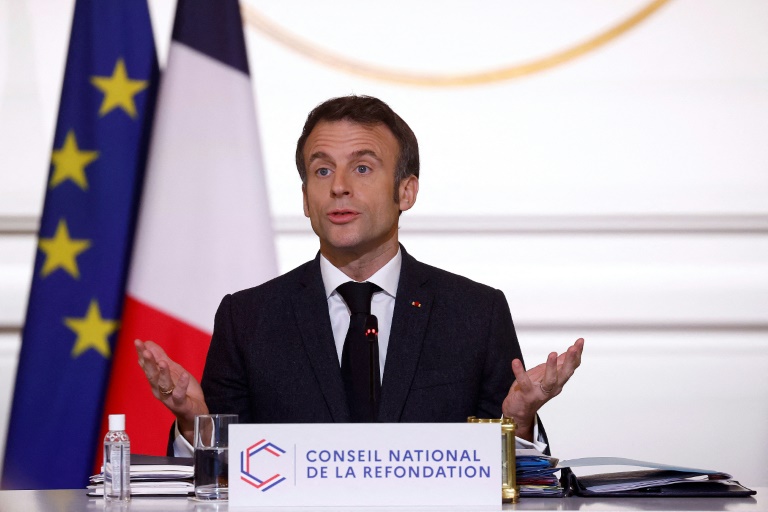
French President Emmanuel Macron said Monday that he was pushing back his presentation of a major pensions overhaul denounced by labour unions, citing recent leadership changes at two opposition parties.

Both the Greens and the right-wing Republicans have elected new chiefs, and Macron said he would consult with them before unveiling details of the major reform on January 10, instead of Thursday as planned.

“This will give a few more weeks for those… who have taken over to discuss some of the key elements of the reform with the government,” Macron said during the latest gathering of his so-called “national refoundation council.”

Macron says the retirement age needs to be extended to 64 or 65, from 62 currently — one of the lowest ages in the EU — in order to finance the pay-as-you-go system as more people live longer and enter the workforce later.

The system is likely to have a surplus of 3.2 billion euros this year, according to a September report from the government’s pensions advisory board (COR), but is forecast to fall into structural deficits in coming decades unless new financing sources are found.

Macron has also promised to streamline the country’s 42 separate pension regimes, which offer early retirement and other benefits mainly to public-sector workers.

There has been bitter opposition to the planned reform, which has been one of Macron’s long-standing targets in power.

Unions staged huge protests and strikes when the reform was first attempted two years ago, before the government abandoned it as the Covid-19 crisis engulfed the world in early 2020.

Macron’s overhaul would be the most extensive in a series of pension reforms enacted by successive governments on both the left and right in recent decades aiming to end budget shortfalls.

Iran defies outcry with second protest execution

Iran on Monday executed a second man in connection with protests that have shaken the regime for almost three months, defying an international outcry over its use of capital punishment against those involved in the movement.  

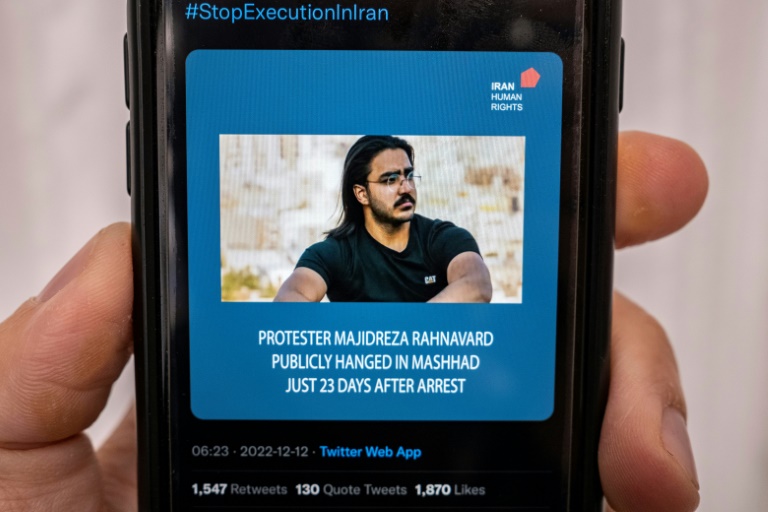
Majidreza Rahnavard, 23, had been sentenced to death by a court in the city of Mashhad for killing two members of the security forces with a knife, and wounding four other people, the judiciary’s Mizan Online news agency reported.

It said he was hanged in public in the city, rather than inside prison.

Europe and the United States reacted with outrage after Iran on Thursday carried out the first execution linked to the protests. Mohsen Shekari, also 23, was hanged after his conviction for wounding a member of the security forces. 

Iran calls the protests “riots” and says they have been encouraged by its foreign foes.

Mizan published images of Rahnavard’s execution, showing a man with his hands tied behind his back hanging from a rope attached to a crane. The execution took place before dawn and there was no sign of any significant number of people witnessing it.

The director of Oslo-based group Iran Human Rights, Mahmood Amiry-Moghaddam, said Rahnavard “was sentenced to death based on coerced confessions after a grossly unfair process and a show trial”.

“The public execution of a young protester, 23 days after his arrest, is another serious crime committed by the Islamic Republic’s leaders and a significant escalation of the level of violence against protesters,” he told AFP.

The weeks of protest were sparked by the death in custody of Mahsa Amini, 22, a Kurdish-Iranian arrested by the morality police for allegedly breaching the Islamic republic’s strict dress code for women.

The protests represent the biggest challenge to the regime since the shah’s ouster in 1979 and have been met with a crackdown that activists say aims to instil public fear.

– New EU sanctions –

EU ministers meeting in Brussels were Monday expected to impose fresh sanctions on Iran over the crackdown on the protesters and its supply of drones to Russia used in the war on Ukraine.

EU foreign policy chief Josep Borrell said the bloc was going to “approve a very, very tough package of sanctions”.

“These executions are a blatant attempt to intimidate people, not for committing crimes but just for taking their opinions to the streets, just for wanting to live in freedom,” German Foreign Minister Annalena Baerbock said.

US-based dissident Masih Alinejad charged that “Majidreza Rahnavard’s crime was protesting the murder of Mahsa Amini. 

“The regime’s method of dealing with protests is execution,” said Alinejad, adding: “EU, recall your ambassadors.”

Prior to the two executions, Iran’s judiciary said it had issued death sentences to 11 people in connection with the protests, but campaigners say around a dozen others face charges that could see them also receive the death penalty.

Reports ahead of the execution had described Rahnavard as a young fitness fanatic who was a keen amateur wrestler and had won competitions.

Rights groups including IHR have said images have shown he was beaten in custody and forced into a purported confession broadcast on state media.

The protest monitor social media channel 1500tasvir said his family had been informed of the execution only after it was carried out. 

It published pictures of a last meeting between the condemned man and his mother, saying she had left with no idea he was about to die.

– ‘Risk of mass execution’ –

Iran’s use of the death penalty is part of a crackdown that IHR says has seen the security forces kill at least 458 people. 

According to the UN, at least 14,000 have been arrested.

Iran is already the world’s most prolific user of the death penalty after China, Amnesty International says.

Public executions are however highly unusual in the Islamic republic, and one in July was described by IHR as the first in two years.

Amnesty International Saturday warned that the lives of two more young men sentenced to death — Mahan Sadrat and Sahand Nourmohammadzadeh — were both at imminent risk.

Amiry-Moghaddam warned of “a serious risk of mass execution of protesters” and urged a strong international “response that deters the Islamic Republic leaders from more executions.”

Before the second execution was announced, Oscar-winning Iranian film director Asghar Farhadi on his Instagram account urged the authorities to halt the executions.

“Killing and executing defenceless young people and the oppressed will only bring you more anger and more hate,” he said.

China faces soaring Covid cases as hardline policy eases

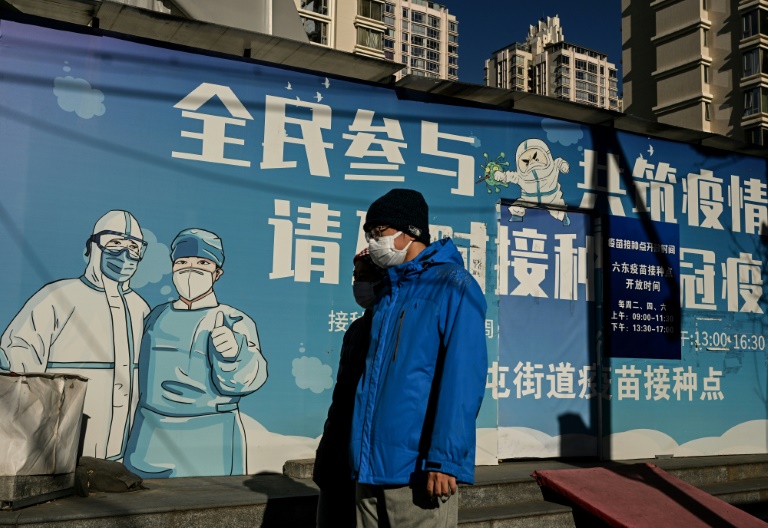
Covid cases are surging in the Chinese capital, officials said Monday, as the country navigates a rapid turn away from its zero-tolerance coronavirus strategy.

Just a few days after China began loosening restrictions, Beijing authorities said more than 22,000 patients had visited hospitals across the city in the previous day — 16 times the number a week ago.

“The current trend of the rapid spread of the epidemic in Beijing still exists,” said city health commission spokesman Li Ang at a briefing Monday.

“The number of fever clinic visits and flu-like cases increased significantly, and the number of… emergency calls increased sharply.”

China reported 8,626 domestic infections Monday but with testing no longer mandatory for much of the population the number is believed to be a lot higher.

As the country steers a tricky path out of its zero-Covid policy towards living with the virus, many with symptoms have opted to self-medicate at home.

Cold and fever medicines have sold out in virtually all pharmacies across Beijing, and rapid antigen tests are dwindling as people stock up in anticipation of a virus surge that threatens the lives of millions of unvaccinated elderly.

Social media users reported a surge of infections in smaller cities including Baoding in Hebei province and Dazhou in Sichuan, with hospitals inundated and residents unable to buy medicines.

AFP was not immediately able to verify the claims.

“It’s really serious, the supply of medicine is not enough and it’s being managed badly,” wrote one person on the Twitter-like platform Weibo.

Lacking adequate medical infrastructure and primary care triage, China’s rural interior is particularly vulnerable to health crises such as Covid.

– ‘End of an era’ –

In a major move towards unwinding years of hardline restrictions, China said Monday it would retire an app used to track travel to areas with infections.

The state-run “Communications Itinerary Card” was a central part of zero-Covid, keeping tabs on the movements of millions through their phone signal data.

It was one of a panoply of tracking apps that have governed everyday life through the pandemic. Most people still use local “health codes” run by their city or province to enter shops and offices.

Social media users hailed the retirement of the software, noting the symbolism of the government shutting down its main tracking app.

“Bye bye, this announces the end of an era, and also welcomes a brand new one,” one person wrote on Weibo.

Others asked what would become of the mountains of data collected and hoped it would be deleted.

– ‘Spreading rapidly’ –

Kendra Schaefer, tech partner at research consultancy Trivium China, said the “political win of returning to normalcy is ginormous”.

But that normalcy means the country faces a surge of cases it is ill-prepared to handle, with millions of elderly not fully vaccinated and underfunded hospitals lacking capacity to take on huge numbers of patients.

China has one intensive care unit bed per 10,000 people, Jiao Yahui, director of the Department of Medical Affairs at the National Health Commission, warned last week.

The official number of Covid cases has dropped sharply from an all-time high recorded last month, but top Chinese health expert Zhong Nanshan warned in state media Sunday that the Omicron variant was “spreading rapidly”.

The easing of restrictions has also released pent-up demand for domestic travel, with state broadcaster CCTV saying Monday that flights from Beijing’s two main airports were expected to soon return to 70 percent of 2019 levels.

S. Africa's embattled Ramaphosa faces decisive week

Embattled South African President Cyril Ramaphosa faces a decisive week as a scandal hangs over his future, with an impeachment vote on Tuesday preceding a key ruling party conference.

Ramaphosa, who was championed as a graft-busting saviour after the corruption-tainted tenure of predecessor Jacob Zuma, has been marred by accusations that he attempted to cover up a huge cash theft at his luxury farm. 

Parliament is due to decide on Tuesday whether to greenlight proceedings to remove him from office, after a report by an independent panel found that he “may” be guilty of serious violations and misconduct. 

The vote comes just three days before Ramaphosa’s party, the African National Congress (ANC), meets for its five-yearly conference to elect a new leader. 

The president is the front-runner of the two candidates for the top ANC post — which is also the key to him possibly staying on as head of state for a second term.

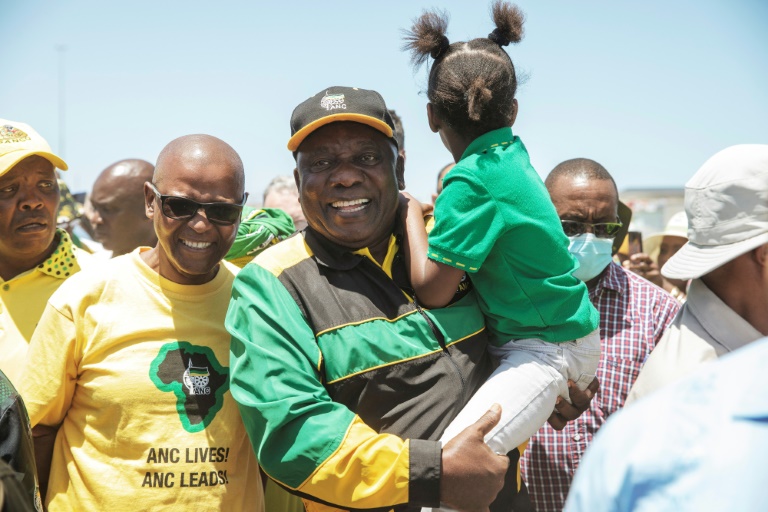
He was rumoured to be on the verge of resigning earlier this month. But in a show of confidence, he campaigned on the streets of Cape Town over the weekend. 

“There’s no issue. There’s no crisis. Just relax,” he told reporters as, greeted like a star by cheers and camera flashes, he shook hands with supporters and patted children’s heads.

Renowned for his patience and strategic thinking, Ramaphosa remains popular despite the scandal, attracting a support base crossing South Africa’s racial and class divisions. 

– Counter-attack –

A simple majority in the National Assembly, where the ANC has 230 of the 400 seats, would be sufficient on Tuesday to initiate the impeachment process.

An impeachment vote itself would need the support of a two-thirds majority of MPs to succeed.

Last week, the 70-year-old president went on the counter-attack, asking the country’s top court to annul the investigative report. 

The ANC’s national executive vowed last week to close ranks around Ramaphosa and vote down any attempt to force him from office.

That decision upset some within the party who said the executive had forced their hand. 

Dissenting voices included former health minister Zweli Mkhize, 66, who is challenging Ramaphosa for the ANC leadership. 

But party officials seem confident there will be insufficient votes in parliament to start impeachment proceedings. 

“(Lawmakers) normally tow the party line. The ANC is on top of it,” a senior party official told AFP on condition of anonymity. 

The vote might even not happen at all, analysts say. 

That would ease pressure on Ramaphosa ahead of the ANC leadership election.

“There is a possibility that the speaker of National Assembly, who is a political ally of Ramaphosa, decides to postpone the whole process and says, ‘Let’s have it next year’,” said political scientist William Gumede.

– Cash in sofa –

The president, who was a wealthy businessman before entering politics, found himself in hot water in June when South Africa’s former spy boss filed a complaint against him to the police.

Arthur Fraser alleged Ramaphosa had concealed the theft of several million dollars from his game and rare cattle farm in 2020.

He accused the president of having the burglars kidnapped and bribed into silence. 

A police inquiry is ongoing but Ramaphosa has not so far been charged with any crime and has denied wrongdoing. 

He has acknowledged the theft of $580,000, which was stashed under sofa cushions at his farm, but said the money was payment for buffalo bought by a Sudanese businessman. 

The latter, Hazim Mustafa, recently confirmed the transaction in interviews with British media.

Mustafa said he did not know the 20 buffalo belonged to Ramaphosa when he bought them in late 2019 and was waiting for a refund since the animals had not yet been delivered to him in Dubai. 

Britain stuck on recession path despite growth rebound

Britain’s economy remains on course for a long-lasting recession on fallout from the highest inflation in decades, analysts said on Monday, even if official data showed growth in October.

Gross domestic product rebounded 0.5 percent in the month, the Office for National Statistics (ONS) said. GDP had dropped 0.6 percent in September, in part owing to businesses closing for the funeral of Queen Elizabeth II.

ONS director of economic statistics, Darren Morgan, said the economy was helped in October especially by car sales which “rebounded after a very poor September, while the health sector also saw a strong month”.

Despite the rebound, Britain’s finance minister Jeremy Hunt spoke of “a tough road ahead”. 

“High inflation, exacerbated by (Russian President Vladimir) Putin’s illegal war, is slowing growth across the world, with the IMF predicting a third of the world economy will be in recession this year or next,” he said in a statement.

The UK government and Bank of England have each said they believe Britain is already in a recession that the BoE expects to last all next year. 

The main reason for the bleak outlook is fallout from British inflation, which at above 11 percent is the country’s highest level in more than 40 years.

Britons are seeing their wages squeezed, triggering mass strike action by public and private sector workers across the UK.  

Energy bills and food prices have rocketed this year on supply constraints caused by Russia’s invasion of Ukraine and the reopening of economies from pandemic lockdowns.

Britain’s economy has further been hit by recent political turmoil and surging interest rates to try and cool inflation.

– Rate hikes –

The Bank of England is on Thursday expected to raise its main interest rate for a ninth meeting in a row.

“The surprisingly strong rise (in October GDP) could tilt the Bank of England towards another bumper 75 basis-points interest rate hike… depending on the labour market and inflation data on Tuesday and Wednesday,” noted Ruth Gregory, senior economist at Capital Economics.

Analysts are forecasting the Federal Reserve and European Central Bank to announce smaller rate hikes at their meetings this week compared with recent decisions.

“Monetary policy conditions are set to tighten further, with the Bank of England likely to raise its policy rate by 50 basis points to 3.5 percent this week and then to a peak of 4.0 percent in February 2023,” forecast Raj Badiani, principal economist at S&P Global Market Intelligence.

“The return to growth in October was expected and supports our assessment that the anticipated recession is likely to be shallow at first before deepening in early 2023.” 

He added, however, that data showing “the economy faltering in the three months to October suggests the recession appeared to start in the third quarter of 2022, (and)… is expected to last for four quarters”.

The BoE has also said Brexit is hurting the UK economy, with the country’s departure from the European Union hitting trade.

burs-bcp/rfj/raz

Close Bitnami banner
Bitnami