World

China retires major Covid tracking app as virus rules ease

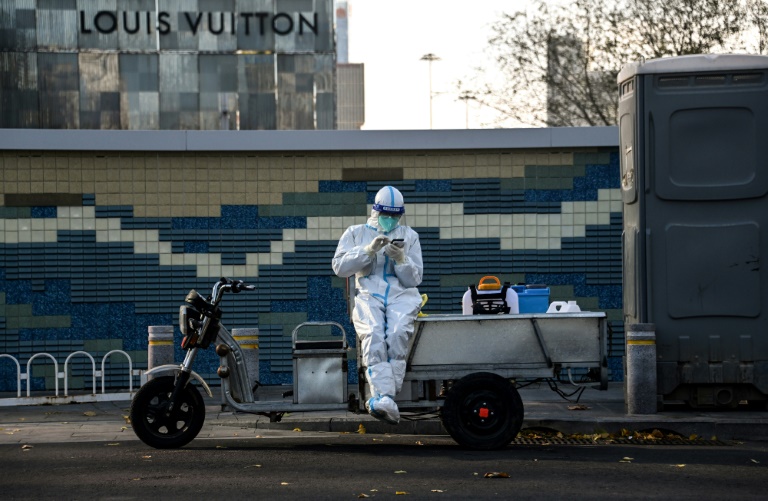
China said Monday it would retire an app used to track Covid-19 contacts, a milestone in the country’s rapid turn away from its zero-tolerance coronavirus strategy.

The state-run “Communications Itinerary Card”, which tracks whether someone has been to a high-risk area based on their phone signal, will go offline at 12 am Tuesday, according to an official WeChat post, after more than two years in operation.

The “Itinerary Card” was a central part of China’s zero-Covid policy, with millions of people required to key in their phone numbers to produce its signature green arrow in order to travel between provinces or enter events.

The decision comes just days after China announced an end to large-scale lockdowns, mandatory quarantine in central facilities, and a broad relaxation of testing measures, effectively throwing in the towel on its zero-Covid strategy.

Official reported cases in the country have dropped sharply from all-time highs last month, but top Chinese health expert Zhong Nanshan warned in state media Sunday that the prevailing Omicron variant was “spreading rapidly” through the country.

First rolled out in 2020 with a four-tier system that assigned different colours depending on users’ predicted level of Covid exposure, the Itinerary Card was tweaked multiple times before a final change this year shortened the tracking period from 14 to seven days.

It is only one of a panoply of tracking apps that have governed everyday life in China throughout the pandemic, with most people using local “health codes” run by their city or province to enter shops and offices.

But social media users nevertheless hailed the Itinerary Card’s retirement, noting the symbolism of Beijing shutting down its main tracking app.

Many posted screenshots of their “last” logins.

“Bye bye, this announces the end of an era, and also welcomes a brand new one,” one person wrote on the Twitter-like Weibo platform.

“Goodbye itinerary card, concerts here I come,” wrote another.

Others asked what would become of the mountains of data collected by the app.

“The Itinerary Card and other similar products mean vast amounts of personal information and private data,” wrote one Weibo user. 

“I hope there will be mechanisms and measures to log out and delete this.”
Asian markets track Wall St down on inflation fears

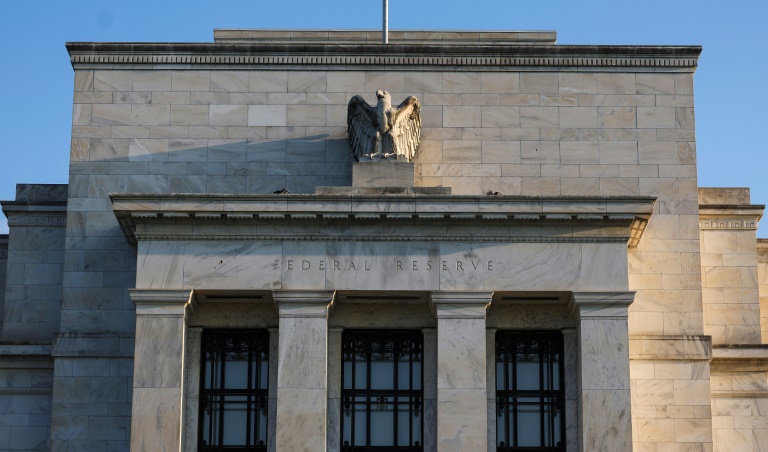
Asian markets dropped and the dollar edged up Monday after a forecast-beating US inflation reading dampened hopes for a more dovish tilt by the Federal Reserve in its battle against soaring prices.

The producer price index reading for November followed data showing the jobs market remained tight, suggesting the central bank would likely need to keep hiking interest rates.

Investors are now looking to the release later in the day of key consumer price index figures, which comes ahead of the Fed’s next policy meeting.

A below-forecast print for October’s CPI sparked a rally on markets last month as investors bet on a shorter pace of rate hikes, though concerns about a recession continue to weigh on sentiment.

“An ominous feeling is consuming markets ahead of this week’s crucial CPI report and (Fed policy) meeting,” said Stephen Innes at SPI Asset Management.

“While headline inflation continues to drop, the top-side beat on PPI expectations suggests that while inflation might climb down the mountain, the slope remains very uncertain.”

Policy decisions in the United Kingdom, the European Union and several other economies are also due this week.

All three main indexes on Wall Street fell Friday, and Asia followed suit.

Hong Kong led the way down, having surged last week, while Tokyo, Shanghai, Sydney, Seoul, Taipei, Jakarta and Wellington were also in the red.

The dollar extended Friday’s gains against most of its peers, having surged for much of the year owing to the Fed’s sharp rate hikes.

Chris Weston, at Pepperstone Group, added that should core consumer prices go above 6.3 percent “then the US dollar should rally hard, and equity should find decent sellers”. 

“Conversely, a read below six percent would be a surprise and the US dollar bears should find comfort in that.”

Investors are also keeping an eye on developments in China as it moves away from the zero-Covid policy that has hammered its economy, the world’s second-largest.

The shift comes after widespread protests against the near three-year strategy, though there is concern about the expected spike in infections.

“One official was quoted as saying the mortality rate from Omicron is around 0.1 percent, similar to the common flu and that most people recover within 7-10 days,” said National Australia Bank’s Tapas Strickland.

“The change in language continues the tentative pivot from China over the past few weeks, both in rhetoric around the virus, and also in the easing of restrictions.”

– Key figures around 0230 GMT –

Tokyo – Nikkei 225: DOWN 0.3 percent at 27,821.12 (break)

Hong Kong – Hang Seng Index: DOWN 1.8 percent at 19,545.33 

Shanghai – Composite: DOWN 0.6 percent at 3,188.61

Euro/dollar: DOWN at $1.0511 from $1.0534 on Friday

Dollar/yen: UP at 136.88 yen from 136.57 yen

Pound/dollar: DOWN at $1.2221 from $1.2262

Euro/pound: UP at 86.00 pence from 85.90 pence

West Texas Intermediate: UP 0.5 percent at $71.36 per barrel

Brent North Sea crude: UP 0.3 percent at $76.32 per barrel

New York – Dow: DOWN 0.9 percent at 33,476.46 (close)

London – FTSE 100: FLAT at 7,476.63 (close)

Striking UK nurses say walkouts over pay 'last resort'

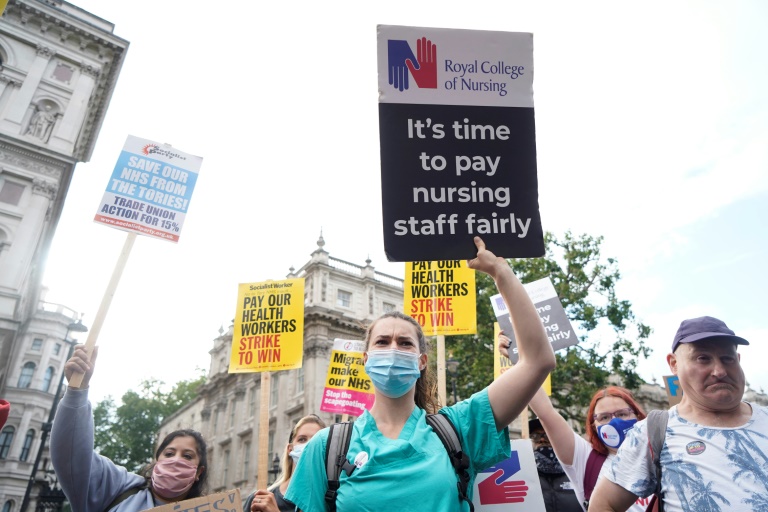
UK nurses are set to walk out on strike for the first time in their union’s 106-year history this week, insisting they are taking action as a “last resort”.

Up to 100,000 members of the Royal College of Nursing (RCN) in England, Wales and Northern Ireland will hold a one-day stoppage on Thursday after rejecting a government pay offer.

Chemotherapy, dialysis, intensive care and high-dependency units, as well as neonatal and paediatric intensive care will be protected.

But other services will be reduced to Christmas staffing levels, the RCN said.

Accident and emergency staff nurse Mark Boothroyd, 37, said the situation had reached a tipping point.

“Workloads are horrendous. Nurses are burnt out, can’t provide safe service to patients. We are seeing harm to patients and patients put at risk every day,” he told AFP.

Boothroyd, an RCN member and staff representative for the Unite union, said Thursday’s stoppage and another on December 20 were about restoring “quality of care for patients”.

As in other countries, Britain is gripped by a cost-of-living crisis, pushing up prices for housing, food and energy.

The RCN’s industrial action is part of a growing wave among public and private sector employees.

Healthcare unions say their members are skipping meals, struggling to feed and clothe their families, and leaving the state-run National Health Service (NHS) in droves.

But successive below-inflation awards since 2010 have left experienced nurses worse off by 20 percent in real terms, they say.

The RCN wants a pay rise significantly above inflation which surged to a 41-year high of 11.1 percent in October. The government maintains that is unaffordable.

– Struggle –  

Over the weekend, RCN general secretary Pat Cullen offered to “press pause” on the strikes if Health Secretary Steve Barclay agrees to talks.

“I won’t dig in if he doesn’t dig in. Come to the table and let’s have the discussion,” she told BBC television on Sunday.

But Barclay insisted that while he was open to talks on wider issues, the pay settlement was recommended by an independent review body and would not be reopened.

“We are working hard to make sure patients experience as little disruption as possible” from the strikes, the health minister wrote in the Sun on Sunday newspaper.

“But with the NHS already under pressure due to the Covid pandemic and coming winter, the risks to patients will be significant.”

During the pandemic, Britons stood on their doorsteps every week to clap for nurses and doctors on the frontline of battling the virus.

Now one in four hospitals say they have had to set up food banks to help staff eat.

“Nurses are struggling with the cost-of-living crisis to pay bills… people are struggling to pay rents, pay transport, some of my colleagues are single mothers — they’re struggling to keep a roof over their heads and provide for their children,” said Boothroyd.

Boothroyd, who works at St Thomas’ Hospital in central London, said poor pay meant newly qualified nurses now spend only a year or two before leaving the profession.

The resulting unfilled vacancies have put huge pressure on remaining staff, many of whom were reporting mental health problems from stress.

Conditions were “horrendous and cannot be allowed to go on”, he said.

Despite assurances about the protection of “life-preserving services” and cancer care provision, Boothroyd conceded the strike would have an impact on patients.

But he said it would be a “short-term disruption” to resolve the long-running problems plaguing the NHS, including lengthening appointment and treatment backlogs.

“We feel we’ve been forced into this… As a union rep, we’ve protested, we’ve demonstrated, we’ve written to the government,” he said.

“We’ve done everything possible to tell them how bad this has been getting and they’ve not listened to us, so the strike is the last resort.”

ECB mulls rate hike slowdown on 'peak inflation' hopes

Growing hopes that the eurozone’s red-hot inflation is nearing its peak could prompt European Central Bank policymakers to opt for a smaller rate hike on Thursday, observers said.

Following two consecutive interest rate hikes of 75 basis points, markets are on tenterhooks to see whether the ECB will keep up the aggressive pace or downshift to 50 basis points as the region braces for a winter recession.

This week’s meeting of the ECB’s 25-member governing council in Frankfurt will be the final one of 2022, a year that will be remembered for unprecedented consumer price shocks as Russia’s war in Ukraine sent food and energy costs soaring.

Like other central banks, the ECB has fought back with a series of interest rate rises — walking a tightrope between raising borrowing costs enough to tame inflation, without dampening demand so much it triggers a deep economic downturn.

ECB governors may take heart from November’s eurozone inflation data, which showed prices slowing for the first time in 17 months on the back of cooling energy costs.

Inflation remains eye-wateringly high, however, at 10 percent — five times the ECB’s target — and president Christine Lagarde has repeatedly said further rate hikes are needed.

But the rare bit of good news has bolstered hopes that price pressures are finally easing in the 19-nation in currency club.

“I would be reasonably confident in saying that it is likely we are close to peak inflation,” the ECB’s chief economist Philip Lane said last week.

The early Christmas present could “take away some of the urgency to continue with jumbo rate hikes,” said ING bank economist Carsten Brzeski, even if a 75-basis-point hike is “still on the table”.

Andrew Kenningham, chief Europe economist at Capital Economics, said he expected the ECB “to slow the pace to 50 basis points”.

Observers may look across the Atlantic for clues on Wednesday, when the US Federal Reserve is set to announce its latest monetary policy decisions.

The Fed, which began hiking earlier and faster than the ECB, has signalled it could scale back the pace of its rate increases.

– Recession fears –

The ECB’s rate decision will be guided by the latest economic forecasts due to be unveiled on Thursday.

Analysts expect them to show that inflation will remain well above the two-percent target in 2023 before falling back in 2024 and 2025.

The eurozone economy is seen shrinking in the final quarter of 2022 and the first months of 2023, meeting the technical definition of a recession.

Berenberg Bank economist Holger Schmieding said he expected “a significant winter recession for the eurozone as consumers and businesses hold back”.

But with governments rolling out massive support packages and gas storage levels above average for this time of the year, “the region is better prepared for the cold season than expected”, he added.

Schmieding urged the ECB not to “overdo its response to inflation”, warning that aggressive rate hikes would make the recession “even more painful”.

– Bloated balance sheet –

As part of its monetary policy tightening, the ECB will on Thursday outline the next steps in its efforts to slim down the bank’s massive balance sheet.

It has already made changes to the terms of an ultra-cheap bank loan scheme, aimed at keeping credit flowing during the pandemic, in a bid to incentivise early repayment of the so-called TLTRO loans.

The move appears to be paying off, with eurozone lenders handing back nearly 750 billion euros ($790 billion) in TLTRO cash since October.

Analysts are also eager to hear how and when the ECB plans to start shrinking its five-trillion-euro bond portfolio, after years of hoovering up government and corporate debt.

The issue will be discussed at this week’s meeting, Lagarde has said.

The ECB has already indicated that the process of “quantitative tightening” — letting the bonds mature or actively selling them — would be gradual and predictable to avoid spooking financial markets.

NASA capsule Orion splashes down after record-setting lunar voyage

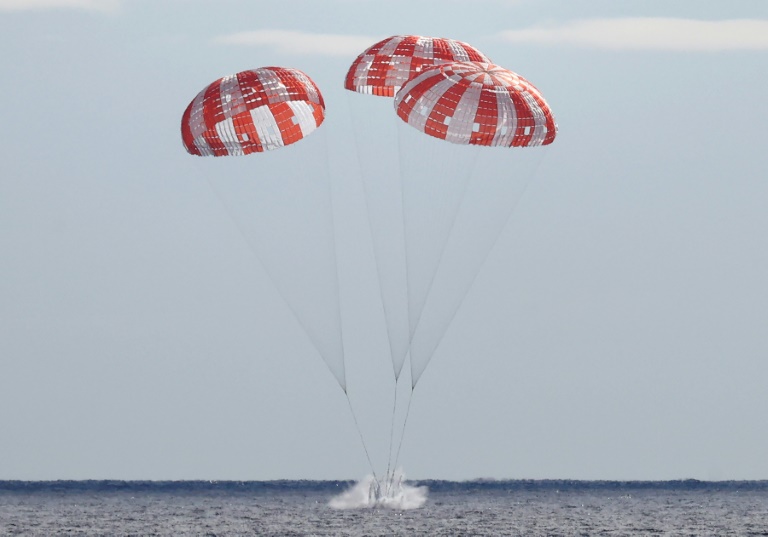
NASA’s Orion space capsule splashed down safely in the Pacific on Sunday, completing the Artemis 1 mission — a more than 25-day journey around the Moon with an eye to returning humans there in just a few years.

After racing through the Earth’s atmosphere at a speed of 25,000 miles (40,000 kilometers) per hour, the uncrewed capsule floated down to the sea with the help of three large orange and white parachutes, as seen on NASA TV.

“I don’t think any one of us could have imagined the mission this successful,” said Artemis Mission Manager Mike Sarafin in a press conference.

“We now have a foundational deep space transportation system.” 

During the trip around Earth’s orbiting satellite and back, Orion logged well over a million miles and went farther from Earth than any previous habitable spacecraft.

“For years, thousands of individuals have poured themselves into this mission, which is inspiring the world to work together to reach untouched cosmic shores,” said NASA Administrator Bill Nelson.

“Today is a huge win for NASA, the United States, our international partners, and all of humanity,” he added.

After touchdown, helicopters flew over the floating spacecraft, which showed no evidence of damage.

Orion was recovered by a prepositioned US Navy ship off the coast of Mexico’s Baja California after some initial tests were run.

As it reentered the Earth’s atmosphere, the gumdrop-shaped capsule had to withstand a temperature of 2,800 degrees Centigrade (5,000 Fahrenheit) — about half that of the surface of the Sun.

The main goal of this mission was to test Orion’s heat shield — for the day when it carries astronauts.

Achieving success in this mission was key for NASA, which has invested tens of billions of dollars in the Artemis program due to take people back to the Moon and prepare for an onward trip, someday, to Mars.

A first test of the capsule was in 2014, but that time it stayed in Earth’s orbit, coming back into the atmosphere at a slower speed of around 20,000 miles per hour.

– Choppers, divers and boats – 

The USS Portland was positioned to recover the Orion capsule in an exercise NASA has been rehearsing for years. Helicopters and inflatable boats were also deployed.  

The falling spacecraft eased to a speed of 20 miles per hour as it finally hit the Pacific.

NASA let Orion float for several hours — a lot longer than if astronauts were inside — to collect data on temperatures inside the crew module.

Divers then attached cables to hoist Orion onto the USS Portland, an amphibious transport dock vessel whose stern was partly submerged. The water was then pumped out slowly so the spacecraft came to rest on a platform designed to hold it.

The Navy ship was then set to head for San Diego, California, where the spacecraft will be unloaded in the coming days.

Orion has now traveled 1.4 million miles since it took off from Florida on November 16, aided by the huge SLS rocket.

At its nearest point to the Moon, it flew less than 80 miles from the surface. And it broke the distance record for a habitable capsule from our planet, venturing 268,000 miles away at its farthest point.

– Artemis 2 and 3 –

Recovering the spacecraft will allow NASA to gather data that is crucial for future missions.

This includes information on the condition of the vessel after its flight, data from monitors that measure acceleration and vibration, and the performance of a special vest put on a mannequin in the capsule to test how to protect people from radiation while flying through space.

Some capsule components should be good for reuse in the Artemis 2 mission, already in advanced stages of planning.

That mission, planned for 2024, will take a crew toward the Moon but still without landing on it.

Artemis 3, scheduled for 2025, will see a spacecraft land for the first time on the south pole of the Moon, where they hope to find water in the form of ice. The space agency thereafter aims to launch one mission per year.

“We have hardware today in work around the world through Artemis 5, this isn’t just a one flight and we’re done,” said NASA Associate Administrator Jim Free.

As part of the Artemis missions, NASA is planning to send a woman and a person of color to the Moon for the first time.

Only 12 people — all of them white men — have set foot on the Moon. That was during NASA’s historic Apollo missions, which ended in 1972.

NASA hopes to establish a lasting human presence on the Moon, through a base on the surface as well as an orbiting space station.

Having people learn to live on the Moon should help engineers develop technologies for a years-long trip to Mars, possibly in the late 2030s.

Guatemala volcano eruption eases after forcing airport closure

One of the most active volcanoes in Central America erupted over the weekend, spewing lava and ash and forcing Guatemalan authorities to briefly close the country’s largest airport before activity eased on Sunday.

The volcano named Fuego — Spanish for fire — rumbled into activity overnight Saturday into Sunday, with molten rock oozing down its slopes and ash belching two kilometers (more than a mile) into the sky. Winds carried the ash toward Guatemala City, 35 kilometers (22 miles) away.

La Aurora international airport, six kilometers south of the capital, was temporarily closed at mid-morning, the General Directorate of Civil Aeronautics said in a statement, citing the presence of ash near the runway.

At least two incoming flights had to be diverted, aviation sources said, before it reopened around midday local time after winds changed direction and sent ash away from the facility.

In addition, a road that connects southern and central Guatemala was closed as a precaution, said Carlos Aquino, a spokesman for the highway police. It reopened Sunday afternoon as the volcano’s activity subsided.

The volcano sits about 16 kilometers from Antigua, the country’s picturesque former capital and biggest tourist attraction.

Fuego erupts every four to five years on average. In 2018, an eruption sent rivers of lava pouring down its sides, devastating the village of San Miguel Los Lotes, killing 215 people and leaving a similar number missing.

Authorities said they were monitoring the latest eruption closely, but that no one had been evacuated.

“With what happened in 2018, now the authorities are already more alert and more active,” said Jose Sul, a resident of Alotenango, which lies at the eastern base of Fuego.

Locals saw a sudden expulsion of lava on Saturday night that reddened the sky. “People here are used to experiencing this, and they look at it as normal,” Demetrio Pamal, a 28-year-old Indigenous Mayan farmer, told AFP.

Many local families have a backpack ready with food, water, a flashlight and medicine so they can evacuate for up to three days at the drop of a hat.

Sunday afternoon, the Guatemalan volcanological institute said that “activity has decreased; there are no longer pyroclastic flows or the emission of lava or eruptive columns loaded with ash.”

“After several hours of relative calm, this eruptive activity can be considered over,” said Roberto Merida, a technician at the volcanological institute.

Guatemala has two other active volcanoes — Santiaguito in the west of the country and Pacaya in the south.

Fuego also adjoins the inactive Acatenango volcano — at 3,500 meters.

Unlike South America’s Andean volcanoes, Guatemala’s are not snow-capped because of Central America’s warmer climate.

Central America has more than 100 volcanoes, many of which are wildly popular tourist attractions, even though they occasionally cause death and destruction. 

Guatemala volcano eruption eases after forcing airport closure

One of the most active volcanoes in Central America erupted over the weekend, spewing lava and ash and forcing Guatemalan authorities to briefly close the country’s largest airport before activity eased on Sunday.

The volcano named Fuego — Spanish for fire — rumbled into activity overnight Saturday into Sunday, with molten rock oozing down its slopes and ash belching two kilometers (more than a mile) into the sky. Winds carried the ash toward Guatemala City, 35 kilometers (22 miles) away.

La Aurora international airport, six kilometers south of the capital, was temporarily closed at mid-morning, the General Directorate of Civil Aeronautics said in a statement, citing the presence of ash near the runway.

At least two incoming flights had to be diverted, aviation sources said, before it reopened around midday local time after winds changed direction and sent ash away from the facility.

In addition, a road that connects southern and central Guatemala was closed as a precaution, said Carlos Aquino, a spokesman for the highway police. It reopened Sunday afternoon as the volcano’s activity subsided.

The volcano sits about 16 kilometers from Antigua, the country’s picturesque former capital and biggest tourist attraction.

Fuego erupts every four to five years on average. In 2018, an eruption sent rivers of lava pouring down its sides, devastating the village of San Miguel Los Lotes, killing 215 people and leaving a similar number missing.

Authorities said they were monitoring the latest eruption closely, but that no one had been evacuated.

“With what happened in 2018, now the authorities are already more alert and more active,” said Jose Sul, a resident of Alotenango, which lies at the eastern base of Fuego.

Locals saw a sudden expulsion of lava on Saturday night that reddened the sky. “People here are used to experiencing this, and they look at it as normal,” Demetrio Pamal, a 28-year-old Indigenous Mayan farmer, told AFP.

Many local families have a backpack ready with food, water, a flashlight and medicine so they can evacuate for up to three days at the drop of a hat.

Sunday afternoon, the Guatemalan volcanological institute said that “activity has decreased; there are no longer pyroclastic flows or the emission of lava or eruptive columns loaded with ash.”

“After several hours of relative calm, this eruptive activity can be considered over,” said Roberto Merida, a technician at the volcanological institute.

Guatemala has two other active volcanoes — Santiaguito in the west of the country and Pacaya in the south.

Fuego also adjoins the inactive Acatenango volcano — at 3,500 meters.

Unlike South America’s Andean volcanoes, Guatemala’s are not snow-capped because of Central America’s warmer climate.

Central America has more than 100 volcanoes, many of which are wildly popular tourist attractions, even though they occasionally cause death and destruction. 

Greek MEP held as Qatar graft probe expands

A European Parliament vice president, Greek socialist MEP Eva Kaili, was charged with corruption and remanded in custody on Sunday after Belgian investigators found “bags of cash” in her home.

Belgian police are investigating allegations that figures working on behalf of Qatar, the Gulf monarchy and World Cup host, have paid European politicians huge bribes to influence the Brussels policy debate.

Kaili, who has spoken publicly in support of Qatar’s recent labour reforms, was one of four suspects to have been charged and detained.

Two more have been released and the house of at least one more MEP has been searched by investigators.

The Belgian federal prosecutor’s office did not identify the four by name, but a judicial source confirmed to AFP that Kaili was among those charged.

“Four individuals have been arrested by the Brussels investigating judge who is leading the investigation,” the federal prosecutor’s office stated.

“They are charged with participation in a criminal organisation, money laundering and corruption. Two persons have been released by the investigating judge.”

The arrests followed raids in Brussels which prosecutors said turned up 600,000 euros ($630,000) in cash. Police also seized computers and mobile phones.

– ‘Bags of cash’ –

The second search of an MEP’s house is understood to have involved a Belgian member, since the president of the parliament, Roberta Metsola, was invited to witness the raid. 

The judicial source identified him as Marc Tarabella, a Belgian socialist and vice-chair of the parliamentary delegation “for relations with the Arab peninsula”. He has not been charged.

Under the Belgian constitution the European Parliament president must attend if one of the country’s MEPs is targeted by a search, Metsola’s office confirmed.

A spokesman confirmed Metsola returned from Malta to Brussels late Saturday to be present.

“The European Parliament and President Metsola stand firmly against corruption, are actively and fully cooperating with law enforcement and judicial authorities to assist the course of justice.”

The EU’s economy commissioner Paolo Gentiloni on Sunday said the case was “seriously damaging” to the parliament’s reputation.

The former Italian prime minister said during a show on Italy’s state broadcaster Rai that if the allegations were confirmed, “I think it would really be one of the most dramatic corruption cases in recent years”.

Kaili has been stripped of her responsibilities as a vice president of the parliament, notably that of representing Metsola in the Middle East.

She remains an MEP and would normally enjoy immunity from criminal prosecution.

But there is an exception in cases where a suspect is caught red-handed in the act of committing an alleged crime and, according to the judicial source, Belgian police detained Kaili in possession of “bags of cash” and thus she was brought before the judge.

Among the six arrested on Friday, after at least 16 police raids of premises in Brussels, were the former MEP Pier-Antonio Panzeri and his fellow Italian Luca Visentini, the general secretary of the International Trade Union Confederation (ITUC).

– ‘Strategic positions’ –

According to Belgian media, Kaili’s father is also implicated, caught transporting cash “in a suitcase”. 

“It is suspected that third parties in political and/or strategic positions within the European Parliament were paid large sums of money or offered substantial gifts to influence parliament’s decisions,” the prosecutor’s statement said, without pointing fingers at Qatar.

The scandal erupted during the 2022 football World Cup, an event Qatar had hoped would boost its reputation but which has been dogged by allegations of mistreatment of the migrant workers who built the host’s new stadiums.

Kaili visited Qatar just ahead of the World Cup and praised the country as a “frontrunner in labour rights” a sentiment she has repeated on the floor of the parliament, to the consternation of some MEPs.

Questions of corruption are now expected to hang over this week’s European Parliament plenary session in Strasbourg, where Kaili’s party grouping the Socialists and Democrats will be under pressure from opponents on the right and left.

French MEP Manon Aubry, co-Chair of the Left Group in the European Parliament, called on Kaili to resign her position as vice president, for a full parliamentary debate on the affair Monday and an internal parliamentary inquiry.

“What this affair demonstrates is the need to clean house in the institutions and to considerably reinforce the ethical rules…,” she tweeted Sunday.

Metsola, herself a Maltese conservative, has called a meeting of the leaders of the parliament’s political blocs Monday to discuss the Belgian investigation, two parliamentary sources told AFP.

Some MEPs also now plan to oppose opening the debate on visa liberalisation for Qatari travellers, potentially derailing a key diplomatic goal of the gas-rich nation.

Alleged Lockerbie bombmaker in US custody

A Libyan man accused of making the bomb that destroyed a Pan Am flight over Scotland in 1988, killing 270 people, has been taken into US custody, authorities said on Sunday.

Abu Agila Mohammad Masud was charged by the United States two years ago for the Lockerbie bombing — in which Americans made up a majority of the victims. He had previously been held in Libya for alleged involvement in a 1986 attack on a Berlin nightclub.

The US Justice Department confirmed in a statement that Masud was in American custody, following an announcement by Scottish prosecutors, without saying how the suspect ended up in US hands.

A department spokesperson said Masud was expected to make an initial appearance, at a time yet to be specified, in a federal court in the US capital. 

According to The New York Times, Masud was arrested by the FBI and is in the process of being extradited to the United States to face prosecution.

Only one individual has so far been prosecuted for the bombing of Pan Am flight 103 on December 21, 1988 — which remains the deadliest terror attack on British soil.

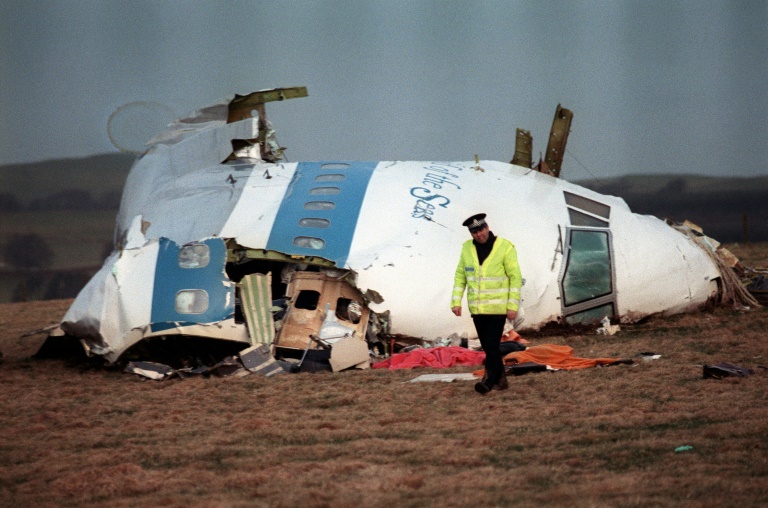
The New York-bound aircraft was blown up 38 minutes after it took off from London, sending the main fuselage plunging to the ground in the town of Lockerbie and spreading debris over a vast area.

The bombing killed 259 people including 190 Americans on board, and 11 people on the ground.

Former Libyan intelligence officer Abdelbaset Ali Mohmet al-Megrahi spent seven years in a Scottish prison after his conviction in 2001. 

He died in Libya in 2012, always maintaining his innocence.

“The families of those killed in the Lockerbie bombing have been told that the suspect Abu Agila Mohammad Masud Kheir Al-Marimi … is in US custody,” a spokesperson for Scotland’s Crown Office and Procurator Fiscal Service said.

“Scottish prosecutors and police, working with UK government and US colleagues, will continue to pursue this investigation, with the sole aim of bringing those who acted along with al-Megrahi to justice.”

The families thanked US and British law enforcement officials.

“Our loved ones will never be forgotten, and those who are responsible for their murder on December 21, 1988 must face justice,” they said in a statement.

– Libyan connection –

Scottish officials gave no information on when Masud was handed over, and his fate has been tied up in the warring factionalism of Libyan politics.

He was kidnapped by a Libyan militia group, according to reports last month cited by the BBC, following his detention for the Berlin attack which killed two US soldiers and a Turkish citizen.

Masud was reputedly a leading bombmaker for Libyan dictator Moamer Kadhafi. According to the US indictment, he assembled and programmed the bomb that brought down the Pan Am jumbo jet.

The investigation was relaunched in 2016 when Washington learned of Masud’s arrest, following Kadhafi’s ouster and death in 2011, and his reported confession of involvement to the new Libyan regime in 2012.

However, the Libyan connection to Lockerbie has long been disputed by some.

In January 2021, Megrahi’s family lost a posthumous appeal in Scotland against his conviction, following an independent review that said a possible miscarriage of justice may have occurred.

The family wants UK authorities to declassify documents that are said to allege that Iran used a Syria-based Palestinian proxy to build the bomb that downed flight 103.

In that narrative, the Lockerbie bombing was retaliation for the downing of an Iranian passenger jet by a US Navy missile in July 1988 that killed 290 people.

After the news of Masud being in US custody, lawyers for Megrahi’s son issued a statement again trying to cast doubt on the Libyan connection.

The US indictment says, for instance, that Masud bought clothes used to fill the suitcase containing the bomb that brought down the airliner, lawyer Aamer Anwar said in a statement.

But the owner of the store in Malta who sold those clothes said they were purchased by Megrahi — and this was central to the case against him.

“How can both Megrahi and Masud now be held responsible?,” the lawyer wrote.

More Iranians at imminent risk of execution: rights groups

Rights groups warned Sunday that several protesters in Iran are at imminent risk of execution, following an international backlash against the clerical regime’s first hanging linked to ongoing demonstrations.

The almost three-month-old protest movement was sparked by the death in custody of Mahsa Amini, a Kurdish-Iranian arrested by the morality police for allegedly breaching the Islamic republic’s strict dress code for women.

The protests, described by the authorities as “riots”, represent the biggest challenge to the regime since the shah’s ouster in 1979. They have been met with a crackdown that activists say aims to instil public fear.

Iran on Thursday executed Mohsen Shekari, 23, who was convicted of attacking a member of the security forces. Rights groups said he underwent a show trial marked by undue haste.

Iran’s judiciary says it has handed down death sentences to 11 people so far in connection with the protests, but campaigners say around a dozen others face charges that could see them receive the death penalty.

Unless foreign governments “significantly increase” the diplomatic and economic costs to Iran, the world “is sending a green light to this carnage”, said Hadi Ghaemi, executive director of the New York-based Center for Human Rights in Iran (CHRI).

Amnesty International said Iran was now “preparing to execute” Mahan Sadrat, 22, just a month after his “grossly unfair” trial. He was convicted of drawing a knife in the protests, an accusation he strongly denied in court.

On Saturday, Sadrat was transferred from Greater Tehran Prison to Rajai Shahr prison in the nearby city of Karaj, “sparking concerns that his execution may be carried out imminently”, Amnesty said.

– ‘Show trial’ –

“Like all other death row prisoners, he was denied any access to his lawyer during the interrogations, proceedings and show trial,” said another group, Oslo-based Iran Human Rights.

Amnesty warned the life of another young man arrested over the protests, Sahand Nourmohammadzadeh, was also at risk “after a fast-tracked proceeding which did not resemble a trial”.

He was sentenced to death in November on accusations of “tearing down highway railings and setting fire to rubbish cans and tires”, the group said.

Among others handed the same sentence is rapper Saman Seyedi, 24, from Iran’s Kurdish minority. His mother pleaded for his life on social media in a video where she stated “my son is an artist not a rioter.”

Another dissident rapper, Toomaj Salehi, who expressed support for anti-regime protests, is charged with “corruption on earth” and could face a death sentence, Iranian judicial authorities confirmed last month.

“We fear for the life of Iranian artists who have been indicted on charges carrying the death penalty,” United Nations experts said in a statement, referring to the cases of Sayedi and Salehi.

Amnesty and IHR have also raised the case of Hamid Gharehasanlou, a medical doctor sentenced to death. They say he was tortured in custody and his wife was coerced into giving evidence against him which she later sought to retract.

– ‘Boundless contempt’ –

“Protester executions can only be prevented by raising their political cost for the Islamic republic,” IHR director Mahmood Amiry-Moghaddam said, calling for a “stronger than ever” international response.

The US, European Union members and UK strongly condemned Shekari’s execution. German Foreign Minister Annalena Baerbock said it showed a “boundless contempt for human life”.

Iran on Friday and Saturday again summoned the German and British ambassadors to protest their countries’ actions, marking the 15th time in less than three months Tehran has called in foreign envoys.

Many activists want the foreign response to go further, extending even to severing diplomatic ties with Iran.

After the widespread international outrage at Shekari’s execution, Iran said it was exercising restraint, both in the response by security forces, and the “proportionality” of the judicial process.

Iran’s use of the death penalty is part of a crackdown that IHR says has seen the security forces kill at least 458 people. 

According to the UN, at least 14,000 have been arrested.

Meanwhile, two actors and a theatre director detained in November for making a video supporting the protest movement have been released on bail, local media reported.

“Theatre director Hamid Pourazari and actresses Soheila Golestani and Faezeh Aeen, were released on Sunday evening,” the ISNA news agency said.

Close Bitnami banner
Bitnami