World

Gaza's firefighters ill-equipped to contain deadly blazes

Standing on his street in Gaza, Alaa Habboub looked on in horror as flames engulfed his neighbours’ home and screams rang out from the inferno that would claim 21 lives.

The disaster last month, in a three-storey residence packed with containers of petrol, may have been less deadly if the Gaza Strip had a better equipped fire service, said the 21-year-old.

The densely crowded Palestinian enclave blockaded by Israel has a shortage of fire and rescue gear, and most of its trucks are decades old, its emergency services say.

“If we had equipment and cranes, the fire would have been brought under control,” said Habboub, recalling the fire that raged in Jabalia, northern Gaza on November 17.

Since Israel imposed its Gaza blockade in 2007, when Islamist armed group Hamas took power there, it has heavily restricted the import of “dual-use” goods — anything with a potential military purpose.

Israel says this is necessary to contain Gaza-based militants committed to attacking Israel.

While cars can enter Gaza from Israel, fire trucks and cranes cannot, according to Gisha, an Israeli human rights group that examines the issue of dual-use materials.

Israeli officials confirmed to AFP that fire trucks are considered “dual-use” items, adding that one truck donated by Qatar entered Gaza in 2019 through Egypt.

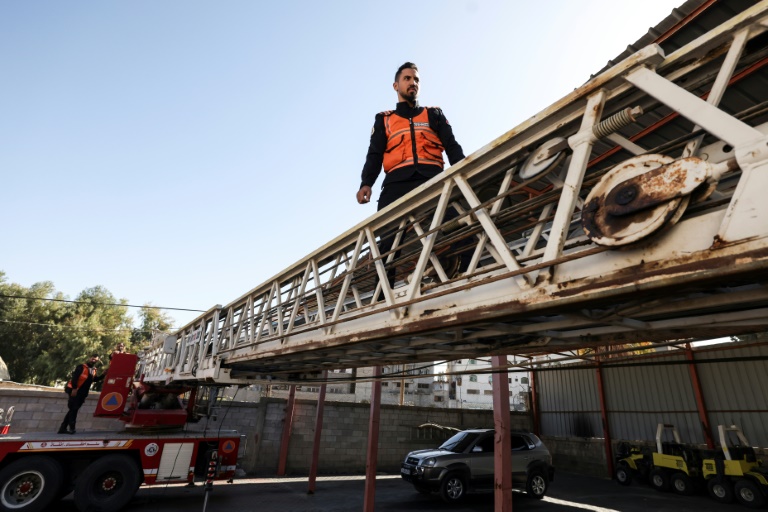
The Palestinian enclave currently has around 20 trucks in working order, according to its civil defence unit.

– ‘Old and worn out’ –

“We have a shortage of all equipment,” said the head of Gaza’s civil defence unit, Zuhair Shaheen. “Our best model of vehicle was made in 1994. Everything is old and worn out.”

The lack of equipment “increases the number of casualties and damage to citizens’ property”, he told AFP.

Apart from Qatar’s donation, all the vehicles were imported before the Israeli blockade began.

But just one of those is equipped with a working crane capable of reaching the rooftops in Gaza, which now has more tall buildings for a growing population estimated at 2.3 million people.

Shaheen argued it is unjust for Israel to categorise essential firefighting material as dual-use. 

“I can assure you, there is no military purpose,” he said. “We are a humanitarian organisation that protects and saves lives.”

Israel has fought four wars with Hamas since 2007 and, with a lack of specialist equipment, rescuers have struggled to save people from bombed-out buildings.

Mahmoud Basal, from the civil defence unit, said during the May 2021 war the rescuers lost vital time after multiple airstrikes in downtown Gaza City.

“Unfortunately, we pulled martyrs out from under the rubble who were supposed to have been pulled out wounded,” he said.

He added this was “due to the lack of equipment to detect (people) under the rubble and no capacity”.

– Working ‘miracles’ –

The push for more rescue tools has been supported by Haaretz, Israel’s left-wing daily newspaper. 

In an editorial days after the Jabalia fire, the paper said officials in Gaza had “warned in the past about the poor condition of their vehicles and equipment”.

“These services urgently need oxygen, ladders, lock breakers and firefighter suits,” Haaretz said. 

“Israel should send this equipment,” it added, insisting the government “can’t ignore its own responsibility for the lives of Gaza’s residents”.

There is no official contact between Israel and Hamas, meaning all coordination on humanitarian issues is done through intermediaries.

The Palestinian Authority, based in the occupied West Bank, as well as Egypt and the United Nations, serve as key players.

Shaheen said Gaza’s rescue teams work “miracles through their own efforts and with meagre resources”.

Palestinian farmer Abdul Karim al-Dabbah, 67, said he has repeatedly seen Israeli emergency response aircraft drop water on fires that break out on Israeli territory, near the Gaza border. 

“Why can’t they help our civil defence service?” he asked.
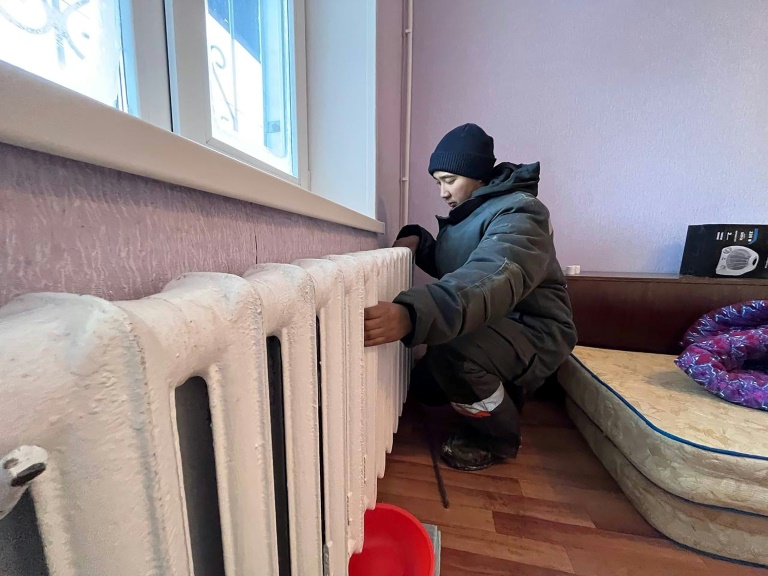
Power cuts in -30C spark anger in Kazakhstan

The plight of a city in Kazakhstan left without heating for over a week in temperatures that dropped to minus 30 degrees Celsius (minus 22 degrees Fahrenheit) has sparked anger and highlighted the deplorable state of the country’s Soviet-era infrastructure.

This month the northeastern city of Ekibastuz, with a population of around 150,000 people, descended into an icy hell, highlighting the dire consequences of power disruptions in winter, as European countries struggle with shortages due to Moscow’s assault on Ukraine.

Ekibastuz was home to a Soviet-era prison camp where writer Alexander Solzhenitsyn was imprisoned between 1950 and 1953.

The camp became the inspiration for Solzhenitsyn’s classic novel “One Day in the Life of Ivan Denisovich.”

Images broadcast in Kazakhstan in recent days showed long icicles forming inside apartments, while residents burnt anything they could find to keep warm.

Teams had to work day and night to repair water pipes that had burst due to the cold.

On November 28, authorities declared a state of emergency in Ekibastuz after a malfunction at a thermal power plant deprived several districts of electricity and heating.

The state of emergency was lifted on Thursday and the situation has gradually improved, but the problem has sparked outrage across the country.

Dimash Kudaibergen, a popular Kazakh singer with nearly four million followers on Instagram, said those responsible should pay for the “tears of the mothers left on the streets”.

“I believe that all the perpetrators, starting with the head of the thermal power plant, should be held accountable and serve their sentences in a prison without heating,” he said.

– Run-down infrastructure –

President Kassym-Jomart Tokayev, who saw deadly protests break out over fuel price hikes in January last year, fired the local governor and dispatched senior officials to the scene.

The city’s plight has sparked an outpouring of support, with residents of Kazakhstan collecting donations and sending heaters and blankets to Ekibastuz.

Funds were even collected in neighbouring Kyrgyzstan, which itself suffers from power outages.

The Ekibastuz ordeal is just the latest in a long list of accidents involving thermal infrastructure in the vast Central Asian country. 

Kazakhstan’s energy system, inherited from the Soviet Union, is still run-down despite investments. 

“As they say here, the first time it’s an accident, the second time it’s a coincidence, but the third time it’s a rule,” energy expert Zhakyp Khairushev told AFP. 

According to government data, heating plants were on average built more than 60 years ago under Soviet leader Nikita Khrushchev. 

Khairushev said that more than 1,000 emergency shutdowns had occurred at thermal power plants since the start of the year.

President Tokayev has lamented that the hydrocarbon-rich nation is “one of the world’s most energy-intensive countries” and depends on imports from Russia.

– ‘Unprofitable’ company – 

To meet the high demand, power stations need to operate at full capacity, which increases the risk of accidents. 

Khairushev said the recent expansion of the power-hungry crypto mining industry was adding to the risks. 

Twenty-two of Kazakhstan’s 37 thermal power stations are in private hands, and Tokayev has said he is considering the nationalisation of a number of assets.

Many have laid the blame for the most recent accident on tycoon Alexander Klebanov, the owner of the Ekibastuz power station.

Klebanov, described by Forbes as the Central Asian country’s 15th richest man, has denied responsibility. 

In a video statement, he said he had repeatedly warned the authorities about the condition of the plant.

“But as a private company, we cannot raise consumer tariffs,” he said. “So the company has been unprofitable from the very beginning.”

Khairushev struck a similar note.

“The existing infrastructure is deteriorating,” he said.

“If urgent measures are not taken, including the revision of tariffs, then, unfortunately, such accidents will not be uncommon.”

Kerry says US could 'tweak' green subsidies after EU anger

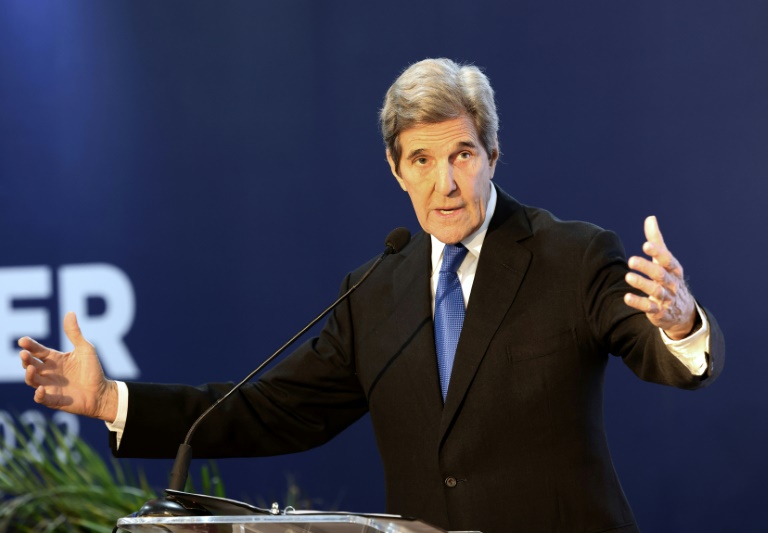
The United States is open to amending lucrative green subsidies that have drawn transatlantic anger for allegedly encouraging job losses in Europe, US climate envoy John Kerry said.

In a BBC interview from London, broadcast on Saturday, Kerry also signalled unease over the UK government’s decision to permit the opening of a coal mine despite ambitions to slash carbon emissions.

Several EU leaders including French President Emmanuel Macron, during a state visit to Washington, have said the US subsidies are enticing European companies to relocate to the United States.

Washington’s landmark Inflation Reduction Act contains around $370 billion in subsidies for green energy, as well as tax cuts for US-made electric cars and batteries.

“I don’t think you’re going to see it watered down,” Kerry said, insisting the measures were needed to kick-start the climate transition.

“But will you see, where it might be appropriate, if there were some tweak or adjustment that is fair, and not going to prejudice our own efforts? 

“I’m confident President (Joe) Biden would consider that,” he said.

Biden defended the act to Macron, but said it was never intended to disadvantage US allies, and has committed to understanding EU concerns.

Kerry also spoke out after Britain this week granted planning permission for a controversial new coal mine in northern England, the first in decades.

The go-ahead for the project in Cumbria was slammed by Greenpeace as “climate hypocrisy”, and Kerry said it risked antagonising other countries.

Richer countries had to abide by their own climate rhetoric or be portrayed as “do as we say, not as we do”, the US envoy said.

Kerry said he needed more information about the rationale for the mine, which is intended to supply coal for steel plants, including how its emissions might be offset.

“But obviously, we will hear people raise criticisms about it because in general, the idea of mining coal in any form whatsoever is the opposite direction from that which most people are advocating and most people are moving in,” he said.

Kerry conceded that the recent COP27 climate summit in Egypt lacked “collective ambition” to avert the worst-case models for rising temperatures.

But he defended the UN process overall.

“If you didn’t have that kind of a process, you’d have to invent it. Because you need to get every nation on the planet engaged in this dialogue and in this effort.”

Kerry says US could 'tweak' green subsidies after EU anger

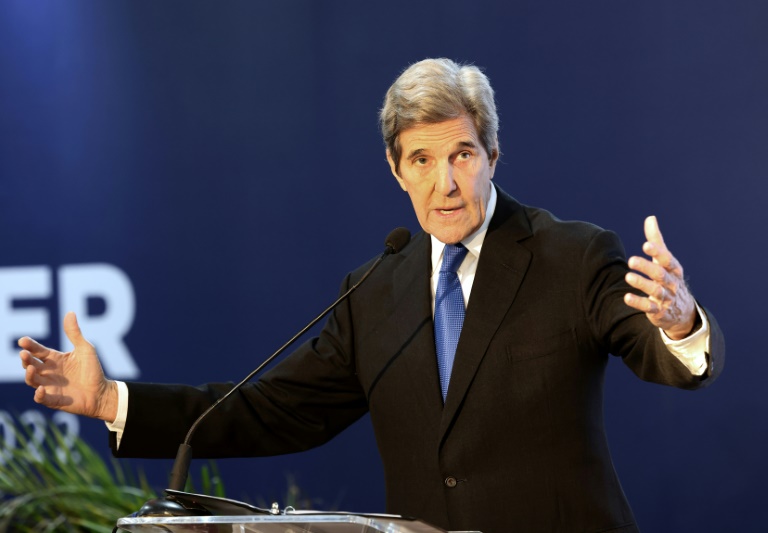
The United States is open to amending lucrative green subsidies that have drawn transatlantic anger for allegedly encouraging job losses in Europe, US climate envoy John Kerry said.

In a BBC interview from London, broadcast on Saturday, Kerry also signalled unease over the UK government’s decision to permit the opening of a coal mine despite ambitions to slash carbon emissions.

Several EU leaders including French President Emmanuel Macron, during a state visit to Washington, have said the US subsidies are enticing European companies to relocate to the United States.

Washington’s landmark Inflation Reduction Act contains around $370 billion in subsidies for green energy, as well as tax cuts for US-made electric cars and batteries.

“I don’t think you’re going to see it watered down,” Kerry said, insisting the measures were needed to kick-start the climate transition.

“But will you see, where it might be appropriate, if there were some tweak or adjustment that is fair, and not going to prejudice our own efforts? 

“I’m confident President (Joe) Biden would consider that,” he said.

Biden defended the act to Macron, but said it was never intended to disadvantage US allies, and has committed to understanding EU concerns.

Kerry also spoke out after Britain this week granted planning permission for a controversial new coal mine in northern England, the first in decades.

The go-ahead for the project in Cumbria was slammed by Greenpeace as “climate hypocrisy”, and Kerry said it risked antagonising other countries.

Richer countries had to abide by their own climate rhetoric or be portrayed as “do as we say, not as we do”, the US envoy said.

Kerry said he needed more information about the rationale for the mine, which is intended to supply coal for steel plants, including how its emissions might be offset.

“But obviously, we will hear people raise criticisms about it because in general, the idea of mining coal in any form whatsoever is the opposite direction from that which most people are advocating and most people are moving in,” he said.

Kerry conceded that the recent COP27 climate summit in Egypt lacked “collective ambition” to avert the worst-case models for rising temperatures.

But he defended the UN process overall.

“If you didn’t have that kind of a process, you’d have to invent it. Because you need to get every nation on the planet engaged in this dialogue and in this effort.”

Kerry says US could 'tweak' green subsidies after EU anger

The United States is open to amending lucrative green subsidies that have drawn transatlantic anger for allegedly encouraging job losses in Europe, US climate envoy John Kerry said.

In a BBC interview from London, broadcast on Saturday, Kerry also signalled unease over the UK government’s decision to permit the opening of a coal mine despite ambitions to slash carbon emissions.

Several EU leaders including French President Emmanuel Macron, during a state visit to Washington, have said the US subsidies are enticing European companies to relocate to the United States.

Washington’s landmark Inflation Reduction Act contains around $370 billion in subsidies for green energy, as well as tax cuts for US-made electric cars and batteries.

“I don’t think you’re going to see it watered down,” Kerry said, insisting the measures were needed to kick-start the climate transition.

“But will you see, where it might be appropriate, if there were some tweak or adjustment that is fair, and not going to prejudice our own efforts? 

“I’m confident President (Joe) Biden would consider that,” he said.

Biden defended the act to Macron, but said it was never intended to disadvantage US allies, and has committed to understanding EU concerns.

Kerry also spoke out after Britain this week granted planning permission for a controversial new coal mine in northern England, the first in decades.

The go-ahead for the project in Cumbria was slammed by Greenpeace as “climate hypocrisy”, and Kerry said it risked antagonising other countries.

Richer countries had to abide by their own climate rhetoric or be portrayed as “do as we say, not as we do”, the US envoy said.

Kerry said he needed more information about the rationale for the mine, which is intended to supply coal for steel plants, including how its emissions might be offset.

“But obviously, we will hear people raise criticisms about it because in general, the idea of mining coal in any form whatsoever is the opposite direction from that which most people are advocating and most people are moving in,” he said.

Kerry conceded that the recent COP27 climate summit in Egypt lacked “collective ambition” to avert the worst-case models for rising temperatures.

But he defended the UN process overall.

“If you didn’t have that kind of a process, you’d have to invent it. Because you need to get every nation on the planet engaged in this dialogue and in this effort.”

Bolsonaro breaks silence on election loss

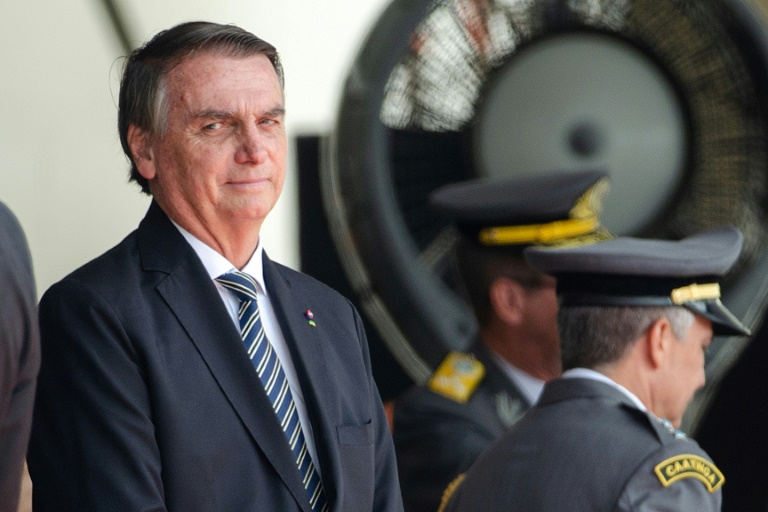
Brazilian President Jair Bolsonaro broke his uncharacteristic silence about his electoral defeat on Friday, saying it “hurts my soul.”

Bolsonaro had not spoken publicly since his narrow loss to leftist rival Luiz Inacio Lula da Silva in bitterly-fought runoff elections on October 30, and he has only made one public appearance.

“I’ve been silent for practically 40 days. It hurts, it hurts my soul. I have always been a happy person among you, even risking my life among the people,” he said.

Following his defeat, thousands of his supporters blocked roads and demonstrated in front of military barracks to ask the army to prevent Lula from taking power.

Brazil’s top electoral authority last month threw out a challenge by Bolsonaro’s party against his election defeat and fined it more than $4 million for bringing the case “in bad faith.”

Bolsonaro will remain in office until January 1.

Lula unveiled on Friday ministers in the key posts of foreign affairs, justice, defense, and chief of staff.

Hong Kong media tycoon Jimmy Lai jailed over lease violation

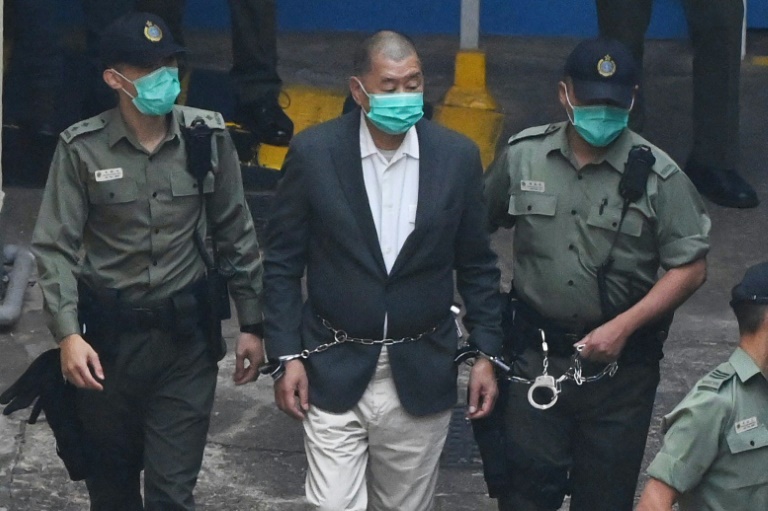
Hong Kong pro-democracy media tycoon Jimmy Lai received a fresh jail sentence of five years and nine months on Saturday after being found guilty of fraud in a contractual dispute.

Lai, the 75-year-old founder of the now-shuttered Apple Daily newspaper, had recently completed a 20-month jail term resulting from multiple convictions for his part in protests and unauthorised assemblies.

He also faces a possible life sentence at his upcoming trial on national security charges.

While the earlier convictions were related to his role in the huge democracy protests that swept Hong Kong in 2019, the latest case involved one of his companies violating the terms of the lease on his newspaper’s offices.

Lai and former Apple Daily executive Wong Wai-keung were both found guilty of fraud in October in what District Judge Stanley Chan described as a “planned, organised and years-long” scheme.

Prosecutors said that a consultancy firm Lai operated for his personal use had taken up office space that Apple Daily had rented for the purposes of publication and printing.

This was in breach of the terms of the lease Apple Daily signed with a government company and amounted to fraud, prosecutors said.

Defence lawyers previously argued the case should have been a civil suit instead of a criminal prosecution, adding that the square footage involved was minimal.

In addition to his jail term, Lai was fined HK$2 million ($257,000) and banned from managing companies for eight years.

Co-defendant Wong, 61, was jailed for 21 months with the judge comparing him to “the getaway driver for a robbery”.

The judge said the sentence was in response to a “simple case of fraud”, which dated back to the 1990s when the lease first came into effect.

He criticised Apple Daily for abusing its reputation as a well-known media company as a “protective shield”, which he claimed discouraged the landlord from taking action against the breach of lease terms.

But he said the case had nothing to do with politics or press freedom.

“Don’t draw any connection to politics,” Chan said.

One of Hong Kong’s best-known pro-democracy activists, Lai has long been openly loathed by Beijing.

For years, Apple Daily was scathing in its criticism of China’s Communist Party and openly supportive of democracy.

It collapsed last year after its funds were frozen and many of its senior staff were charged alongside Lai under the sweeping national security law Beijing imposed on Hong Kong — primarily over their campaign for international sanctions against China.

Nobel Peace Prize ceremony, a call to arms for Ukraine

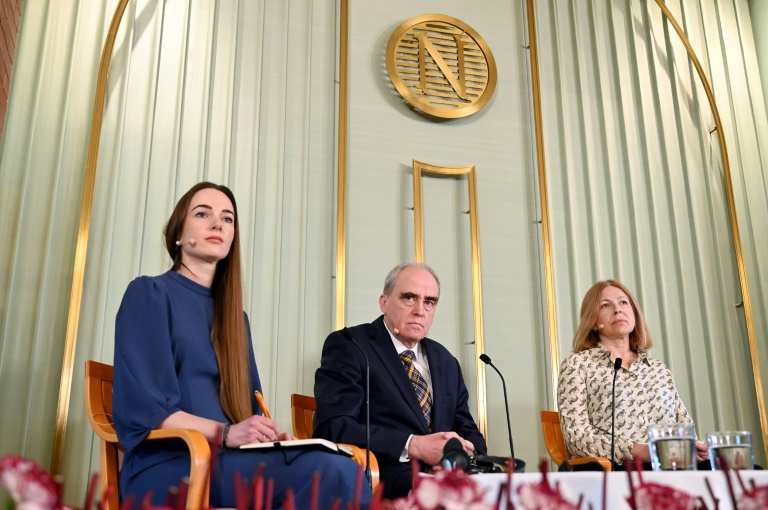
A trio representing the three nations at the centre of the war in Ukraine will receive the Nobel Peace Prize on Saturday, showing no sign of giving up the fight against Vladimir Putin and his Minsk ally.

Jailed Belarusian human rights advocate Ales Bialiatski, Russian human rights organisation Memorial, and Ukraine’s Center for Civil Liberties (CCL) will be presented with their awards at a formal ceremony in Oslo.

While the Peace Prize may be a small balm for the laureates’ souls, it has in no way weakened their resolve.

“Putin will stop when he will be stopped”, CCL head Oleksandra Matviichuk told reporters Friday at the Nobel Institute. 

“Authoritarian leaders … see any attempt to dialogue as a sign of weakness”, she said, urging Western countries to continue to help Ukraine liberate its territories occupied by Russia, including Crimea.

The CCL has documented war crimes committed by Russian troops in Ukraine for the past eight years, crimes for which Matviichuk wants to see Russian President Putin and his ally, Belarusian strongman Alexander Lukashenko, brought to justice.

“This war has a genocidal character,” she said in English. “If Ukraine stops its resistance, there will be no more of us.”

“So I have no doubt that sooner or later Putin will appear before an international court.”

The chairman of the board of Memorial, Yan Rachinsky, agreed, while remaining more cautious in his remarks due to the penalties imposed by Moscow on those who criticise the conflict in Ukraine.

“Ukraine has to fight for its independence”, he said.

“Ukraine is not fighting for its interests alone. It is fighting for our joint peaceful future”.

“The choice before the international community … is between the unpleasant situation today and the catastrophe tomorrow”, he said.

– Situation is ‘terrible’ –

Founded in 1989, Memorial has for decades shed light on crimes committed by Stalin’s totalitarian regime and worked to preserve the memory of the victims, as well as documented human rights violations in Russia.

The country’s Supreme Court ordered it dissolved at the end of 2021, and ordered a raid of its Moscow offices on October 7 — the very day it was announced as co-winner of this year’s Peace Prize.

“When it comes to rights defenders, at this juncture in Russia, the situation is terrible”, Rachinsky said.

The third co-laureate, Ales Bialiatski, founder of rights group Viasna, has been detained since July 2020 pending trial following Minsk’s crackdown on large-scale protests against the regime.

He faces 12 years in prison. 

His wife Natalia Pinchuk, who will accept his Nobel prize on his behalf, said “the issue of Belarus is also being decided on the battlefield of Ukraine”.

She said Bialiatski — whom she has seen only once since his arrest, through a glass pane — was not authorised to give her an acceptance speech for the prestigious prize.

The ceremony at Oslo’s City Hall will start at 1:00 pm (1200 GMT), attended by the Norwegian royal family and special dignitaries.

Meanwhile, in Stockholm, a separate awards ceremony will take place honouring the winners of the other Nobel prizes in the fields of medicine, physics, chemistry, literature and economics.

That will be followed by a lavish banquet at Stockholm City Hall for some 1,500 guests, including the royal family.

Also in attendance will be the laureates from 2020 and 2021, when the Stockholm festivities were cancelled due to the Covid-19 pandemic.

This year’s laureates will receive a gold medal, diploma and cheque for 10 million Swedish kronor ($970,000).

France's Mediawan buys majority stake in Brad Pitt's Plan B

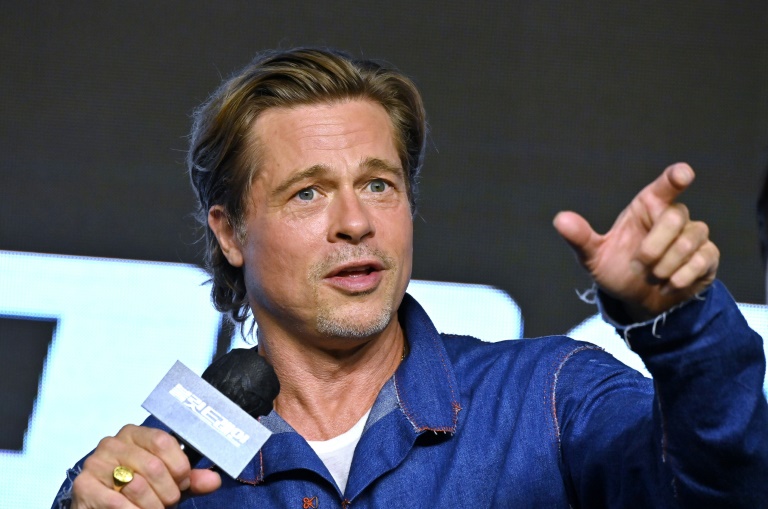
French media company Mediawan has bought a majority stake in US film star Brad Pitt’s production house Plan B Entertainment, it said Friday, in a deal reportedly worth more than $300 million.

Plan B, co-founded by Pitt in the early 2000s with his then-wife Jennifer Aniston has three best picture Oscar winners to its name: “The Departed”, “Twelve Years a Slave” and “Moonlight”.

The deal “marks the deployment of Mediawan into the American market,” the French company said in a press release which did not say how much the deal was worth.

The Financial Times reported the deal had valued Plan B Entertainment at more than $300 million.

“Cinema is becoming international. Talents are emerging all over the world,” Pitt said in an interview with Le Parisien newspaper.

“For our future projects, we have to look outside the United States.”

With Mediawan “we have the same conception of how to produce films and series,” he added.

In a press release Mediawan CEO Pierre-Antoine Capton said the deal was “an exceptional opportunity to be able to develop Mediawan alongside Plan B, the most beautiful independent production company in the US.”

Founded in 2015 Mediawan produces and distributes films, series and streaming shows and has recently snapped up several production houses across Europe.

It produced the hit Netflix show “Call My Agent.”

Three jailed for 30 years for drone attack on Venezuelan leader

Three people accused in a failed drone attack targeting Venezuelan President Nicolas Maduro in 2018 were sentenced to 30-year jail terms, relatives said on Friday.

Maria Delgado Tabosky, retired army major Juan Carlos Marrufo and retired colonel Juan Francisco Rodriguez were convicted on charges of “terrorism, treason and criminal conspiracy,” according to a family member of one of the accused, who asked to remain anonymous.

The criminal hearing began Thursday night and lasted into the early hours of Friday, the family member said. 

Delgado Tabosky, 48, holds dual Venezuelan and Spanish citizenship and is sister of Osman Delgado Tabosky, who resides in the United States,

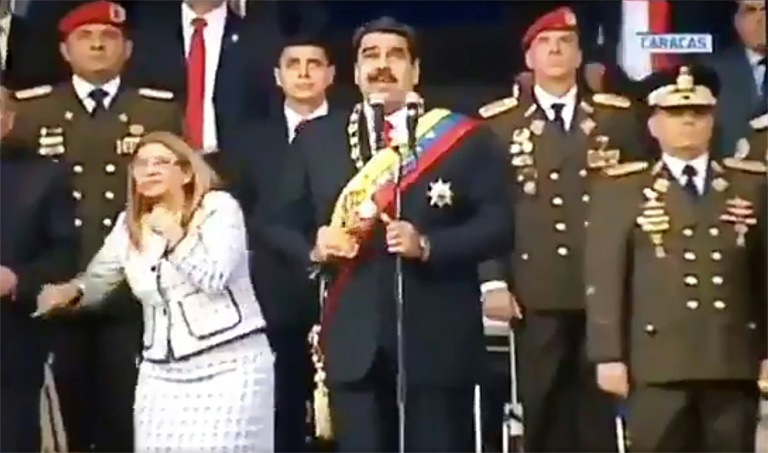
He is accused by the Maduro government of financing the attack, in which two drones carrying explosives blew up near where Maduro was addressing an assembly of members of the National Guard on August 4, 2018, in Caracas.

One drone exploded in the air over guardsmen standing in formation, injuring a few of them, and the second drone crashed into an apartment building two blocks away. Neither Maduro nor his wife, who was nearby, were hurt.

Marrufo, 52, who has both Venezuelan and Italian citizenship, is married to Maria Delgado Tabosky.

The Working Group on Arbitrary Detention, a UN human rights body, has said that the arrests of Delgado Tabosky and Marrufo in 2019 were “arbitrary.” The couple have been jailed for three years and eight months at the General Directorate of Military Counterintelligence.

Relatives have appealed for their transfer to a prison and requested without avail for Spain and Italy to intercede in their cases. 

Another 17 people accused in the attack, among them former opposition legislator Juan Requesens, were condemned in August to prison terms of between five and 30 years.

Close Bitnami banner
Bitnami