World

Pele health 'improving progressively': hospital

Pele’s health is “improving progressively,” his doctors said Tuesday, a week after the 82-year-old Brazilian football legend was hospitalized amid ongoing treatment for colon cancer.

With the World Cup in full swing in Qatar, fans have been on edge over the health of the footballer considered by many the greatest of all time, who has been in fragile health in recent years.

Pele was hospitalized last Tuesday in Sao Paulo for what doctors called a “reevaluation” of his chemotherapy treatments, which he has been undergoing since having surgery in September 2021 to remove a colon tumor.

They also diagnosed a respiratory infection, which they are treating with antibiotics.

His family said it was the result of a Covid-19 infection that Pele, who is fully vaccinated, contracted three weeks ago.

Pele “continues improving progressively, especially the respiratory infection,” his medical team said in a statement.

“He remains in a standard room, with stable vital signs, conscious and with no new complications.”

– ‘This is for him’ –

The player known as “The King” got a moving tribute Tuesday from the Brazilian national team after they danced their way to a dazzling 4-1 win over South Korea in the World Cup, securing a spot in the quarter-finals.

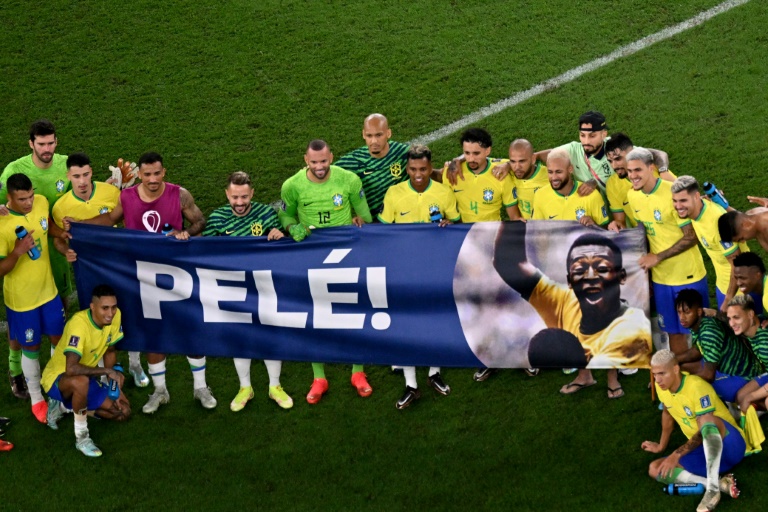
Neymar and team returned to the pitch after the match carrying a banner marked “Pele!” with a picture of the football icon celebrating Brazil’s 1970 World Cup championship — the third of the country’s record five titles.

Pele, the only player in history to win three World Cups (1958, 1962 and 1970), had earlier posted a message to the “Selecao” on Instagram, telling them he would be cheering them on from the hospital.

“I’ll be rooting for each one of you,” he wrote.

“I want to inspire you, my friends… We are on this journey together. Good luck to our Brazil!”

The team did him proud, scoring a cascade of goals that evoked the “samba football” Pele embodied.

“It’s hard to talk about what Pele is going through, but I wish him all the best,” Paris Saint-Germain superstar Neymar said after the match — in which he converted a penalty, taking him to within one goal of Pele’s all-time Brazil scoring record.

“I hope he’ll get well as soon as possible, and that we at least brought him some comfort with the win and the banner we dedicated to him.”

Real Madrid winger Vinicius Junior, who scored Brazil’s opening goal, also sent “a big hug to Pele.”

“This win is for him,” he said. “I hope we’ll be champions for him.”

Pele — whose real name is Edson Arantes do Nascimento — has also received a flood of messages from fans and current football stars around the world, including France striker Kylian Mbappe and England captain Harry Kane.

His family say they are optimistic about his condition.

“When he gets better, he’ll come home,” his daughter Kely Arantes Nascimento said Sunday.
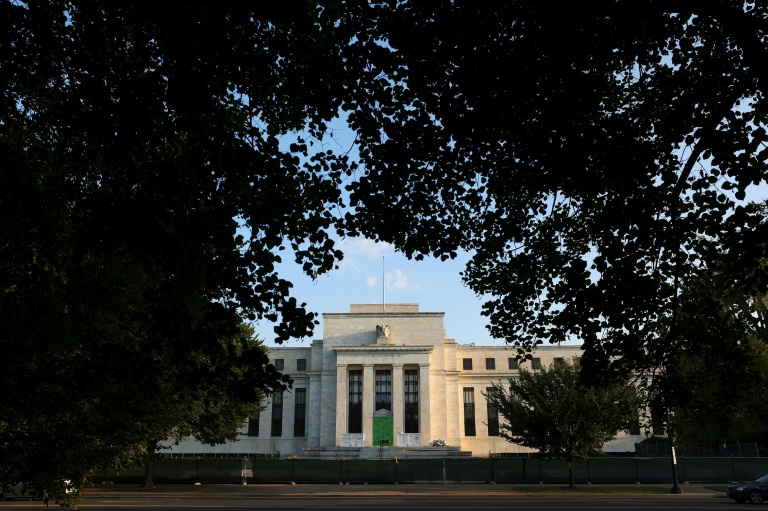
Markets drop as Fed worries offset China's Covid easing

Stock markets fell on Tuesday as investors were split between fears that the US Federal Reserve will maintain its aggressive anti-inflation measures and growing optimism over China’s economic reopening.

Meanwhile, oil prices tumbled, with the price of Brent crude briefly falling below $80 for the first time since January, when prices began to rise ahead of Russia’s invasion of Ukraine.

London, Frankfurt and Paris equity markets all closed lower after Asia mostly fell.

Wall Street extended losses in late morning trading following a sell-off the previous day.

Data showing a forecast-busting jump in activity in the US services sector last month raised the prospect that the Fed will not back down from sharp rate increases when it meets next week.

Monday’s data followed robust jobs figures last week and a jump in wages that give the central bank more room to cool the US economy.

Market analyst Michael Hewson at CMC Markets said the strength of the services sector data “appears to have upset the conventional wisdom that inflation might come down quite quickly, given the resilience of the numbers, as well as the rebound in wages growth seen in Friday’s payrolls report.” 

That has investors spooked again over what the Fed will do and the possibility it may push the US economy into a deep recession to tame inflation.

“Worries that the Fed could unwrap an unwelcome present of another super-sized rate hike when policymakers meet next week are sprinkling Christmas fear on indices,” said Susannah Streeter, senior investment and markets analyst at Hargreaves Lansdown.

“Speculation is swirling that central banks will have to be more Scrooge-like and make borrowing even more expensive to rein in inflation,” she said.

Markets had been running higher ahead of the jobs figures after a surprise drop in inflation and comments from Fed boss Jerome Powell that the bank was likely to raise rates at a slower pace.

Bets have increased on borrowing costs rising higher than five percent next year — from the current range of 3.75-4.0 percent — before the bank pauses, with no cuts seen until 2024.

“There is a prominent undercurrent of concern that the Fed is going to overtighten and trigger a deeper economic setback,” said Briefing.com analyst Patrick O’Hare.

Analysts said concerns over the Fed have overshadowed China’s easing of zero-Covid policies following nationwide protests over the measures, which have hammered the world’s second biggest economy.

Despite the prospect of higher Chinese demand for oil as the economy reopens, crude prices fell as an EU embargo on Russian oil and a G7-EU price cap on the country’s exports came into force on Monday.

“It seems that the only thing guaranteed in the oil market for now is volatility,” said OANDA trading platform analyst Craig Erlam.

After European stock markets closed, the price of Brent crude briefly fell below $80 for the first time since January, as the market is swept by volatility over the price cap and worries about global demand as central banks jack up interest rates.

CMC Markets’s Hewson said traders were also doubting how much of an economic boost the Chinese measures will provide. 

“Hopes of a demand boost from a China reopening have been tempered by the realisation that while infection rates remain high any recovery will be muted at best,” he said.

The dollar lost ground against other major currencies after gains on Monday.

– Key figures around 1630 GMT –

New York – Dow: DOWN 0.7 percent at 33,723.65 points

EURO STOXX 50: DOWN 0.4 percent at 3,939.19

London – FTSE 100: DOWN 0.6 percent at 7,521.39 

Frankfurt – DAX: DOWN 0.7 percent at 14,343.19

Paris – CAC 40: DOWN 0.1 percent at 6,687.79

Tokyo – Nikkei 225: UP 0.2 percent at 27,885.87 (close)

Hong Kong – Hang Seng Index: DOWN 0.4 percent at 19,441.18 (close)

Shanghai – Composite: FLAT at 3,212.53 (close)

Euro/dollar: UP at $1.0518 from $1.0495 on Monday

Dollar/yen: DOWN at 136.52 yen from 136.78 yen

Pound/dollar: UP at $1.2237 from $1.2186

Euro/pound: DOWN at 85.96 pence from 86.06 pence

West Texas Intermediate: DOWN 2.7 percent at $74.87 per barrel

Brent North Sea crude: DOWN 2.8 percent at $80.35 per barrel

burs-rl/kjm

Meta expected to face new fines after EU privacy ruling

Meta is expected to face another large fine after Europe’s data watchdog on Tuesday imposed binding decisions concerning the treatment of personal data by the owner of Facebook, Instagram and WhatsApp. 

The European Data Protection Supervisor (EDPS) said in a statement that the rulings concerned Meta’s use of data for targeted advertising, but did not give details of its ruling or recommended fines. 

Authorities in Ireland, where Meta has its European headquarters, have a month to impose the ruling.

Previous interventions by the EDPS have led to large fines on tech platforms, including a 405-million-euro fine on Instagram in September over a breach in the handling of children’s data.

The latest case follows complaints by privacy campaigning group Noyb that Meta’s three apps fail to meet Europe’s strict rules on data protection. 

Noyb says they flouted the landmark General Data Protection Regulation (GDPR) that came into force in May 2018 by failing to give users the option of holding back their personal data and blocking targeted advertising.

Facebook argues these are vital to its functioning.

In October 2021, the Irish Data Protection Authority (DPC) recommended a fine of just 28 to 36 million euros for lack of transparency. 

But this was rejected as far too low by France’s CNIL (the National Commission for Technology and Freedoms) and other regional watchdogs, who asked the EDPS to investigate the case. 

Meta did not respond to requests for comment on Tuesday.  

According to the Politico news site, internal documents show that Meta earmarked three billion euros for possible European fines in 2022 and 2023.

As well as the Instagram fine in September, Meta was fined a further 265 million euros last month over a data leak that saw half a billion users’ details published on a hacking website.

That adds to a 60-million-euro fine in France in January over its use of “cookies”, the digital trackers used to target advertising.

Somalia forces recapture key town from jihadists

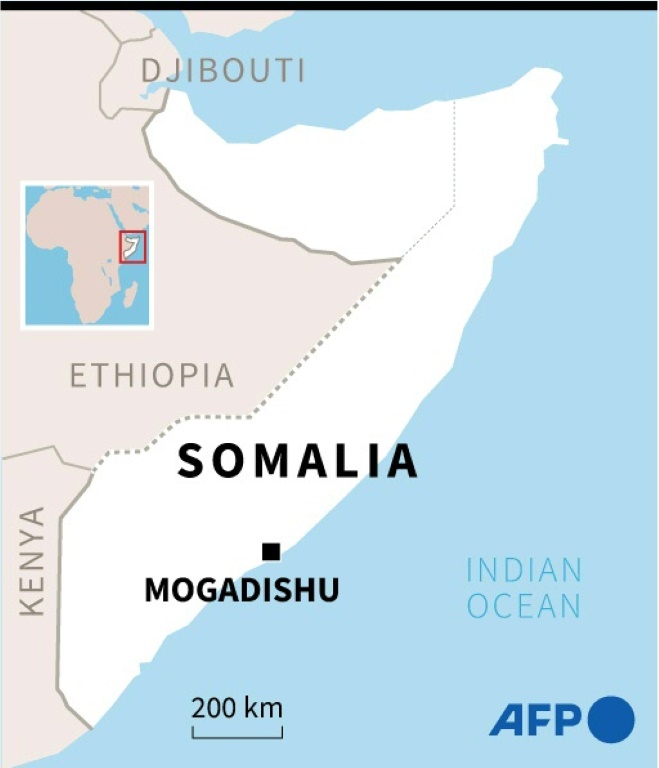
Somali government forces and allied militias have recaptured a strategic town held by Al-Shabaab jihadists since 2016, President Hassan Sheikh Mohamud said on Tuesday.

The army and local clan militias known as “Macawisley” have retaken swathes of territory in the central states of Galmudug and Hirshabelle in recent months in an operation backed by US air strikes and an African Union (AU) force, ATMIS.

Pro-government forces entered the town of Adan Yabal in Hirshabelle, around 220 kilometres (140 miles) northeast of the capital Mogadishu, after the Al-Qaeda-affiliated rebels withdrew, the president said.

“Somali government forces are in Adan Yabal this morning… They (Al-Shabaab) did not even fight and vacated instead,” Mohamud said in a televised address.

Colonel Mohamed Ali, one of the operation’s commanders, told AFP the rebels fled when they learned the army was approaching. 

“We have taken the town without any resistance and the army is in full control,” he added.

Military sources said the jihadists pulled out on Monday evening.

ATMIS, which supported the operation with helicopters, said Al-Shabaab had used Adan Yabal as a training base.

The force welcomed its return to Somali government control.

The rebels, who have been waging a bloody insurgency against Somalia’s internationally backed federal government for 15 years, also used the town as a logistics hub.

Mohamud accused Al-Shabaab of making off with electric pumps from the town’s wells and forcing people to “flee with them, to be human shields.”

The president, who declared an “all-out war” against Al-Shabaab after his election in May, said the effort to rid Hirshabelle and Galmudug of the group was in its “final stages” with only “pockets” of resistance remaining.

Forced out of the country’s main urban centres around 10 years ago, Al-Shabaab remains entrenched in vast swathes of rural central and southern Somalia and continues to carry out deadly attacks in Mogadishu.

On October 29, 116 people in the capital were killed in two car bomb explosions at the education ministry, and eight civilians died in a 21-hour hotel siege on November 27.

AMISOM, a previous incarnation of the AU force in Somalia, seized Adan Yabal from the rebels in 2016 before ceding control a few months later after Ethiopian troops withdrew.

Macron tackles French immigration 'anxieties' with new law

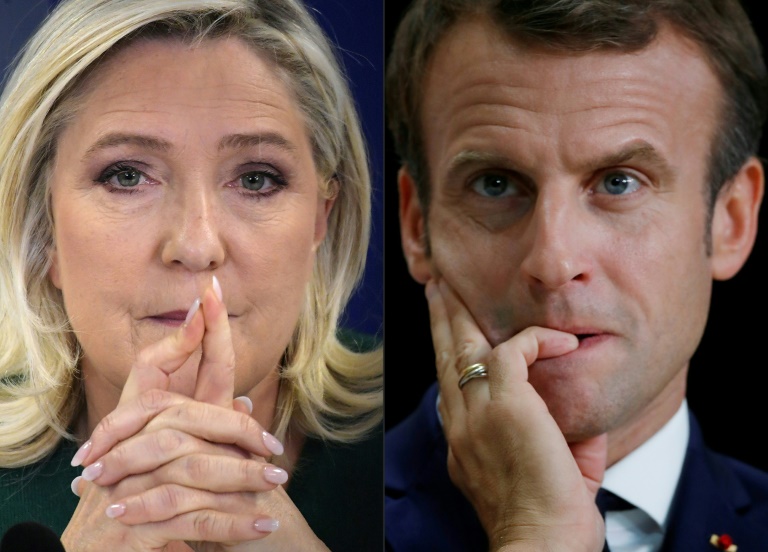
French President Emmanuel Macron is set to make a second attempt at increasing expulsions of illegal immigrants under fierce pressure from his far-right opponents.

Macron’s centrist government unveiled the outlines of a new draft immigration law on Tuesday that will be debated formally in parliament in early 2023.

It comes just four years after a 2018 law with similar objectives, passed during Macron’s first term in office, which also aimed to take the heat out of an explosive political issue.

“It’s about integrating better and expelling better,” Macron’s hardline interior minister, Gerald Darmanin, told France Info radio on Tuesday of the new proposals.

“We want those people who work, not those who rob.”

Darmanin and Macron have linked immigration to delinquency in recent weeks, with both saying that around half of petty crimes committed in Paris are by foreigners.

Speaking to the Parisien newspaper at the weekend, Macron pitched the new legislation as a means of addressing the historic rise of the far-right National Rally, which in June became the biggest opposition party in parliament.

“We need a policy that is firm and humane in line with our values,” the 44-year-old said. “It’s the best antidote to the extremes which feed off anxieties.”

Figures from the interior ministry show that France currently expels around 10 percent of migrants who have been ordered to leave the country and the rate has never been higher than 20 percent.

– ‘Nothing will change’ –

The country’s lengthy legal appeals process, procedural delays and a lack of state resources are seen as reasons for the low expulsion rate, which Darmanin has pledged to increase.

Like many European countries, France struggles to persuade countries in North and West Africa to re-admit their citizens once they are subject to an expulsion order.

French far-right leader Marine Le Pen, who scored 41 percent in the second round of April’s presidential election, regularly accuses the government of laxity and “submerging” France with foreigners.

In her third bid for the presidency this year, she proposed changing the constitution via a referendum to set strict immigration targets and ensure French people get priority over foreigners for all state services. 

“I don’t expect anything (from the new law),” she said on Tuesday. “They will talk to us again about balancing firmness and humanity. We’ve heard that for decades.

“Nothing will change… immigration in our country is completely out of control.”

A gruesome murder of a 12-year-old schoolgirl in Paris in October caused a major political scandal after it emerged that her killer was an Algerian woman who had been ordered to leave the country.

The chaotic management of 234 migrants and asylum seekers who landed in France in November aboard the charity rescue ship Ocean Viking has also embarrassed the government.

Although the interior ministry initially said most of the adults had been refused entry to France, only a handful were detained after they lodged asylum claims and court appeals.

– Legal migration route – 

The new draft legislation, which Darmanin has co-written, would reduce the number of appeals possible for failed asylum seekers from 12 to three and in theory speed up expulsion procedures.

It would also remove safeguards for foreigners who arrived in France as children, making it easier to expel them if they are convicted of crimes — a measure designed to tackle teenage delinquents.

And there will be measures to offer work permits to foreign workers with skills required in particular sectors of the economy, which could include the many employed illegally in the restaurant sector.

Macron’s MPs are a minority in parliament, meaning the bill will need support from the rightwing opposition Republicans party, which has criticised the proposals as too weak.

“There’s a red line in what we know about this bill which is the massive regularisation of illegal workers in short-staffed sectors,” senior MP Pierre-Henri Dumont told reporters.

France has passed 29 different laws on immigration since 1980.

People from 15 different charities and some left-wing MPs demonstrated in front of the national assembly on Tuesday to denounce what they termed the “hostile” attitude of the government to migration.

Nearly eight in 10 French people think Macron’s governments have failed to control immigration, according to a poll by the CSA survey group published by the CNews channel last month.

Around seven in 10 think there are too many foreigners in France, multiple polls this year have shown.

bur-sha-vac-adp/jh/kjm

Georgia runoff Senate vote a new test for Biden

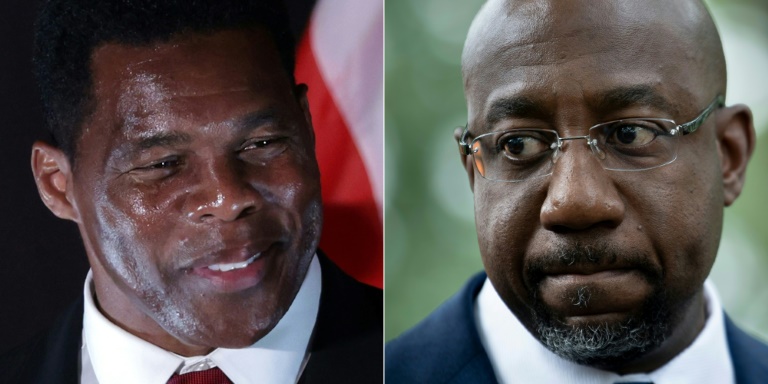
Voters were casting ballots in the southern US state of Georgia on Tuesday to choose between a pastor and a former American football star in a Senate race with high stakes for Joe Biden’s presidency.

A victory by incumbent Democratic senator Raphael Warnock would allow his camp to consolidate their paper-thin majority in the chamber and wield greater influence on key committees.

Republicans see the Georgia Senate seat as an opportunity to boost their ability to block Biden’s policies, having won back control of the House of Representatives in the November midterm election.

Warnock, pastor at the Atlanta church where civil rights icon Martin Luther King Jr once preached, is being challenged by Republican Herschel Walker, who is backed by former president Donald Trump.

Warnock and Walker, who are both African American, are in a runoff election after neither earned more than 50 percent in the November 8 midterm vote.

Polls opened at 7:00 am (1200 GMT) and close at 7:00 pm (0000 GMT).

With Warnock, 53, and Walker, 60, running neck and neck, Biden urged Georgians on Tuesday to turn out and vote.

“Georgia, today is Election Day — and the eyes of the nation are on you. Head to the polls and help send @ReverendWarnock back to the US Senate,” the president tweeted.

Democrats retained control of the Senate in last month’s vote — but just barely, winning 50 seats.

Vice President Kamala Harris’s tie-breaking vote gives Democrats the edge in the 100-seat chamber.

A Warnock win would give Democrats 51 seats and significantly curb the power of centrist Democratic senator Joe Manchin, who has already blocked several major Biden initiatives in the first two years of his term.

With 700 days to go before the 2024 presidential election, Republicans hope to stymie Biden’s momentum, after his party performed much better than expected in November.

– Obama to the rescue –

Determined to win the race, Democrats called on their top gun: charismatic former president Barack Obama, who campaigned alongside Warnock in Atlanta last week.

And in yet another sign of how high the stakes are, $400 million has been spent in the campaign, making the Georgia race the most expensive in all of the midterms.

Some 1.9 million people voted early, many of them likely Democratic voters, while Republicans are expected to turn out in force on Tuesday.

With the two candidates running head to head, according to most recent polls, the outcome is hard to predict.

Historically a Republican state, Georgia took America by surprise when voters chose Biden over Trump in the 2020 presidential election and then sent two Democrats to the Senate two months later in another runoff.

– Polar opposites –

This time, while both of the candidates are natives of Georgia, the men are polar opposites.

Born the eleventh of 12 children to a former soldier and preacher father and a mother who worked in the cotton fields, Warnock grew up in poverty.

Even after his election, Warnock remained as a senior pastor at Martin Luther King’s Ebenezer Baptist Church. He holds a doctorate in theology.

Walker is a latecomer to politics with his 2022 Senate run.

The 60-year-old conservative is considered one of the best players in the history of American college football — a near-religious institution in the South — and went on to have a stellar career in the National Football League.

Walker, who is staunchly anti-abortion, even in cases of rape, has been the subject of several recent scandals, having been accused of paying for abortions for two women he had relationships with.

Al Jazeera takes journalist's 'brutal' killing to ICC

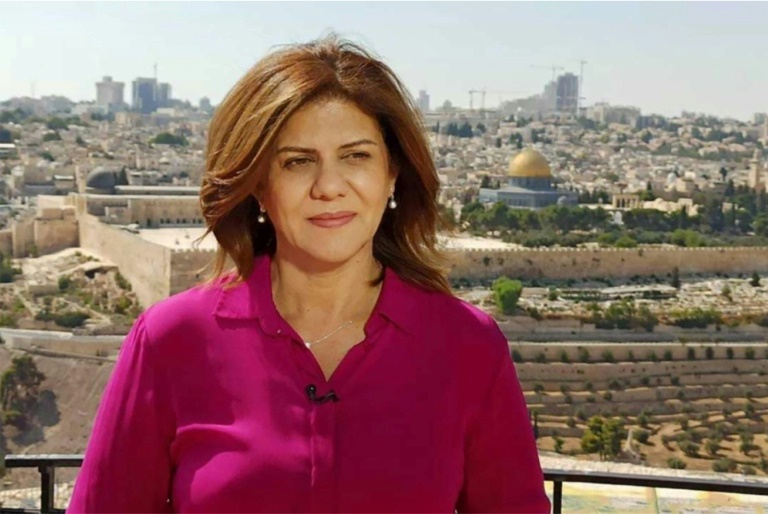
Al Jazeera submitted the case of slain journalist Shireen Abu Akleh to the International Criminal Court on Tuesday, saying the veteran reporter was deliberately killed by Israeli forces.

The Qatar-based television channel said it had “unearthed new evidence” on the “brutal” death of the Palestinian-American, shot while covering an Israel army raid in Jenin in the occupied West Bank on May 11.

Any person or group can file a complaint to the ICC prosecutor for investigation, but the Hague-based court is not obliged to take them on.

“My family still doesn’t know who fired that deadly bullet and who was in the chain of command that killed my aunt,” her niece Lina Abu Akleh told a press conference in The Hague.

“The evidence is overwhelmingly clear, we expect the ICC to take action,” she said, adding that they had asked for a meeting with prosecutor Karim Khan.

An AFP journalist saw a lawyer representing Al Jazeera’s case entering the ICC’s headquarters to hand over their submission.

The ICC, which was set up in 2002 as a war crimes court of last resort, last year launched a probe in the Palestinian territories.

But Israel is not an ICC member and disputes the court’s jurisdiction.

Israel said it would not cooperate with any external probe into Abu Akleh’s death.

“No one will investigate IDF (Israeli military) soldiers and no one will preach to us about morals in warfare, certainly not Al Jazeera,” Israeli Prime Minister Yair Lapid said in a statement.

The ICC prosecutor’s office confirmed that it “has received the communication from Al Jazeera Media Network” but that it did not comment on individual submissions.

“Any individual or group may send information on alleged crimes to the ICC Prosecutor, who is duty bound to protect the confidentiality of the information received,” his office said in a statement to AFP.

– ‘Complete cover-up’ –

The veteran reporter, who was a Christian, was wearing a bulletproof vest marked “Press” and a helmet when she was shot in the head in the Jenin refugee camp, a historic flashpoint in the Israeli-Palestinian conflict.

The Israeli army conceded on September 5 that one of its soldiers had likely shot Abu Akleh after mistaking her for a militant.

Al Jazeera said it had submitted new evidence and video footage which showed Israeli forces had “directly fired” at the journalist and her colleagues.

“The evidence shows that this deliberate killing was part of a wider campaign to target and silence Al Jazeera,” it said in a statement.

The new evidence showed there was no firing in the area except by Israeli soldiers and that journalists were in “full view” and walking slowly down an empty road with “distinctive” media vests, said the channel.

“The claim by the Israeli authorities that Shireen was killed by mistake in an exchange of fire is completely unfounded,” it added.

Al Jazeera’s lawyer Rodney Dixon accused Israel of a “complete cover-up”.

He alleged that her killing was part of a “systematic and widespread campaign” against Al Jazeera by Israel that also included the bombing of a Gaza building housing Al Jazeera’s office and the bureau of the US news agency the Associated Press last year.

“There’s a clear attempt to shut Al Jazeera down and silence it,” Dixon told the press conference.

“We are hopeful that there will now be justice for Shireen.”

After receiving complaints from individuals or groups, the ICC prosecutor decides independently what cases to submit to judges at the court.

Judges decide whether to allow a preliminary investigation by the prosecutor, which can then be followed by a formal investigation, and if warranted, charges. 

In the majority of cases such complaints do not lead to investigations, according to the ICC.

Argentina braces for graft verdict against VP Kirchner

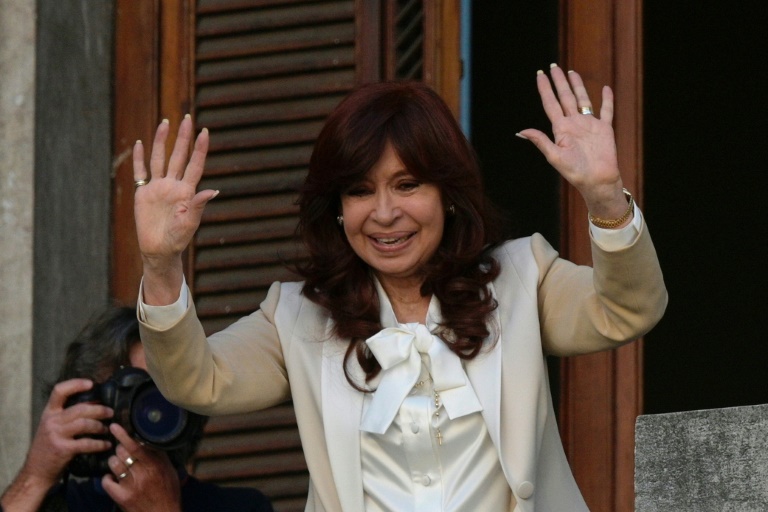
A court will deliver its verdict on Tuesday in the closely-watched corruption trial of Argentina’s Vice President Cristina Kirchner, but the country’s best-known politician is unlikely to spend time behind bars even if found guilty.

Kirchner is accused of fraudulently awarding public works contracts in her stronghold in Patagonia as president between 2007 and 2015, and prosecutors have requested a 12-year prison sentence and lifetime ban from politics.

But the 69-year-old leftist, who enjoys congressional immunity, will not go to prison on Tuesday even if convicted — and still has several avenues for appeal.

Kirchner has been at the center of Argentine politics for two decades, drawing love and hatred in equal measure. She says the trial is a political witchhunt and the result a foregone conclusion.

“Obviously, there will be a conviction,” she told the Brazilian daily Folha de Sao Paulo in an interview on Monday.

Tuesday’s hearing got underway with a final address from one of Kirchner’s co-accused, before being suspended until 5:30 pm (2030 GMT) for the verdict. Defendants will follow the outcome by videoconference, a court source told AFP.

“The verdict will have a strong political impact,” said political analyst Rosendo Fraga of the University of Buenos Aires. However, if found guilty, “the chances of her being arrested for the sentence are non-existent.”

Kirchner is charged alongside 12 others for alleged involvement in the illicit attribution of public works contracts in the southern Santa Cruz province in favor of businessman Lazaro Baez.

The period investigated includes Kirchner’s eight years in office and the preceding four years when her late husband Nestor Kirchner, who died in 2010, was president.

The public prosecutor denounced what he called “a system of institutional corruption” and “probably the largest corruption operation” in the country, with “systematic irregularities in 51 calls for tenders” over 12 years.

– Uncertain future –

Kirchner says the charges are a lie made up by her political enemies.

“This court has been a true firing squad,” the veteran politician said during her final address to the court, accusing prosecutors of having “dedicated themselves to disrespecting and insulting me.”

As vice president, Kirchner is head of the country’s Senate and enjoys immunity as a lawmaker. Argentina holds general elections in 2023, and she can still run for any elective office.

However, her star has faded in recent years, and her future in politics is uncertain. 

Even if Kirchner is convicted, years of potential appeals lie ahead in a process that Fraga said could take up to six years or more.

All eyes will be on potential protests if she is found guilty.

When prosecutors announced they were seeking a 12-year jail term in late August, mass daily demonstrations took place outside Kirchner’s apartment building in the upmarket suburb of Recoleta.

During one of these protests on September 1, a man shoved a revolver in her face and pulled the trigger — but the gun did not fire. Four people have been charged with involvement in the attack.

On Tuesday, only a handful of Kirchner supporters braved the heat to show up outside the court, while another march began in the suburbs of Buenos Aires toward the tribunal.

“I am here to defend Cristina. We defend her for what she has done and what we know she can continue to give,” said 50-year-old Marcelo Graziano, outside the courthouse.

Ukraine war revives EU wish to bring Balkans into its fold

European Union leaders vowed on Tuesday to strengthen ties with the Western Balkans, a drive reinvigorated by Russia’s war on Ukraine.

The war has underscored the importance for the EU of bringing the Balkans into its orbit, to stabilise the region and counter the influence there of both Russia and China.

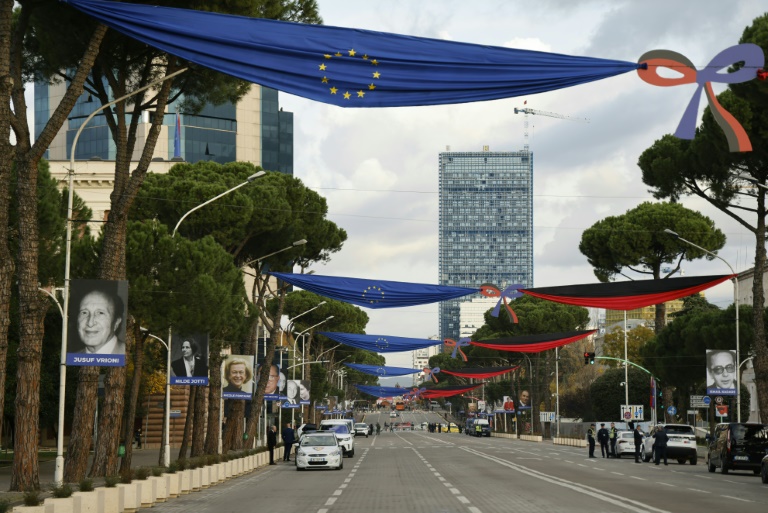
“The future of our children will be safe and more prosperous with the Western Balkans within the EU, and we are working very hard in order to make progress,” EU Council president Charles Michel told reporters as he arrived at a meeting in Tirana of EU and Balkan leaders.

The summit was called to discuss requests by six states — Albania, Bosnia, Montenegro, Kosovo, North Macedonia and Serbia — to join the 27-nation EU and examine areas where they can cooperate. 

The Balkan bids to join the EU “have gained momentum again”, said Ursula von der Leyen, the president of the EU’s executive arm, the European Commission.

She urged the Balkan nations to choose camps.

“Russia is trying to exert influence (in the Western Balkans). China tries to influence”, von der Leyen said. 

“We (the EU) are the largest investor. We are the closest partner and that is why the discussion is also about you having to decide which side you are on, the side of democracy,” von der Leyen stressed.

Balkan countries have been stuck in the EU waiting room for years. 

They have regularly expressed frustration at the long and demanding membership process, especially since the EU moved so rapidly this year to accept Ukraine and Moldova as official candidates to join the bloc.

The EU was expected on Tuesday to confirm its “commitment to the European Union membership (prospects) of the Western Balkans” and call for negotiations to be speeded up.

– ‘Stick together’ –

Expanding the EU has again become a priority, European Commissioner Oliver Varhelyi noted on Friday. 

Dutch Prime Minister Mark Rutte echoed that, saying EU and Balkan nations needed “to stick together and work together” in the face of Russia’s war on Ukraine.

In July Brussels finally began membership talks with North Macedonia and Albania, which applied in 2005 and 2014 respectively. 

Negotiations have been underway for several years with Montenegro and Serbia, while in October Brussels recommended making Bosnia an official candidate.

Kosovo, the sixth would-be member, faces challenges on its path to joining the EU. 

It split from Serbia in 2008 but Belgrade has not recognised its declaration of independence. 

Neither, crucially, do five EU member countries — Cyprus, Greece, Romania, Slovakia and Spain. 

– Solidarity and migration –

Pro-European sentiment in the Balkans could do with a boost, noted Lukas Macek of the Jacques Delors Institute in Paris.

“The pro-European camp is getting a little desperate,” he said. A show of support from Brussels could help sway public opinion.

“There is a window of opportunity to reverse the trend but it will not necessarily last very long and it must be fleshed out with something tangible,” he said.

The EU is expected in Tirana to confirm a package of subsidies worth around one billion euros (dollars) to help the Balkans weather the energy crisis triggered by the Ukraine war.

The subsidies should help attract public and private investments and raise at least 2.5 billion euros in total.

The EU is also due to sign a deal with the region’s telecom operators to reduce roaming charges between the bloc and the Balkan states in 2023 and phase them out by 2027.

And it will also examine ways of cooperating on security issues, particularly on preventing the kind of cyber attacks that have plagued the Balkans.

Illegal migration remains a key concern. 

The dangerous “Balkans route” is one of the main conduits used by millions of would-be asylum seekers, many from conflict zones, to try and reach Western Europe.

The numbers arriving by this route rose by almost 170 percent in the first 10 months of 2022 compared to last year. That spike prompted the Commission on Monday to propose sending the EU border force Frontex to help police the Balkan borders.

The EU, for its part, wants Balkan countries to align their visa policies with its own. 

Serbia has been accused of contributing to an increase in the number of migrants from Cuba, Burundi, India and Tunisia entering the EU. 

These nationals can arrive at Belgrade airport without a visa and then continue their journey to the bloc by land. 

Under EU pressure, Serbian President Aleksandar Vucic has announced an end to visa exemptions for Tunisians and Burundians.

Ukraine war revives EU wish to bring Balkans into its fold

European Union leaders vowed on Tuesday to strengthen ties with the Western Balkans, a drive reinvigorated by Russia’s war on Ukraine.

The war has underscored the importance for the EU of bringing the Balkans into its orbit, to stabilise the region and counter the influence there of both Russia and China.

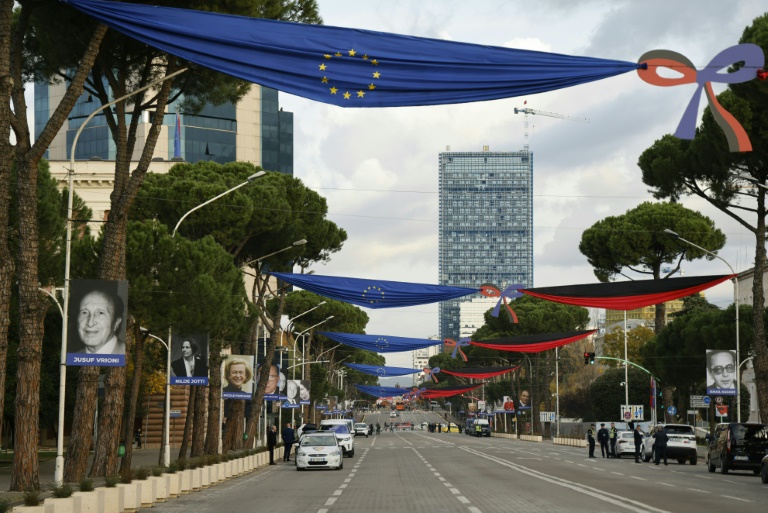
“The future of our children will be safe and more prosperous with the Western Balkans within the EU, and we are working very hard in order to make progress,” EU Council president Charles Michel told reporters as he arrived at a meeting in Tirana of EU and Balkan leaders.

The summit was called to discuss requests by six states — Albania, Bosnia, Montenegro, Kosovo, North Macedonia and Serbia — to join the 27-nation EU and examine areas where they can cooperate. 

The Balkan bids to join the EU “have gained momentum again”, said Ursula von der Leyen, the president of the EU’s executive arm, the European Commission.

She urged the Balkan nations to choose camps.

“Russia is trying to exert influence (in the Western Balkans). China tries to influence”, von der Leyen said. 

“We (the EU) are the largest investor. We are the closest partner and that is why the discussion is also about you having to decide which side you are on, the side of democracy,” von der Leyen stressed.

Balkan countries have been stuck in the EU waiting room for years. 

They have regularly expressed frustration at the long and demanding membership process, especially since the EU moved so rapidly this year to accept Ukraine and Moldova as official candidates to join the bloc.

The EU was expected on Tuesday to confirm its “commitment to the European Union membership (prospects) of the Western Balkans” and call for negotiations to be speeded up.

– ‘Stick together’ –

Expanding the EU has again become a priority, European Commissioner Oliver Varhelyi noted on Friday. 

Dutch Prime Minister Mark Rutte echoed that, saying EU and Balkan nations needed “to stick together and work together” in the face of Russia’s war on Ukraine.

In July Brussels finally began membership talks with North Macedonia and Albania, which applied in 2005 and 2014 respectively. 

Negotiations have been underway for several years with Montenegro and Serbia, while in October Brussels recommended making Bosnia an official candidate.

Kosovo, the sixth would-be member, faces challenges on its path to joining the EU. 

It split from Serbia in 2008 but Belgrade has not recognised its declaration of independence. 

Neither, crucially, do five EU member countries — Cyprus, Greece, Romania, Slovakia and Spain. 

– Solidarity and migration –

Pro-European sentiment in the Balkans could do with a boost, noted Lukas Macek of the Jacques Delors Institute in Paris.

“The pro-European camp is getting a little desperate,” he said. A show of support from Brussels could help sway public opinion.

“There is a window of opportunity to reverse the trend but it will not necessarily last very long and it must be fleshed out with something tangible,” he said.

The EU is expected in Tirana to confirm a package of subsidies worth around one billion euros (dollars) to help the Balkans weather the energy crisis triggered by the Ukraine war.

The subsidies should help attract public and private investments and raise at least 2.5 billion euros in total.

The EU is also due to sign a deal with the region’s telecom operators to reduce roaming charges between the bloc and the Balkan states in 2023 and phase them out by 2027.

And it will also examine ways of cooperating on security issues, particularly on preventing the kind of cyber attacks that have plagued the Balkans.

Illegal migration remains a key concern. 

The dangerous “Balkans route” is one of the main conduits used by millions of would-be asylum seekers, many from conflict zones, to try and reach Western Europe.

The numbers arriving by this route rose by almost 170 percent in the first 10 months of 2022 compared to last year. That spike prompted the Commission on Monday to propose sending the EU border force Frontex to help police the Balkan borders.

The EU, for its part, wants Balkan countries to align their visa policies with its own. 

Serbia has been accused of contributing to an increase in the number of migrants from Cuba, Burundi, India and Tunisia entering the EU. 

These nationals can arrive at Belgrade airport without a visa and then continue their journey to the bloc by land. 

Under EU pressure, Serbian President Aleksandar Vucic has announced an end to visa exemptions for Tunisians and Burundians.

Close Bitnami banner
Bitnami