World

Libya tells foreign energy firms it's safe to return

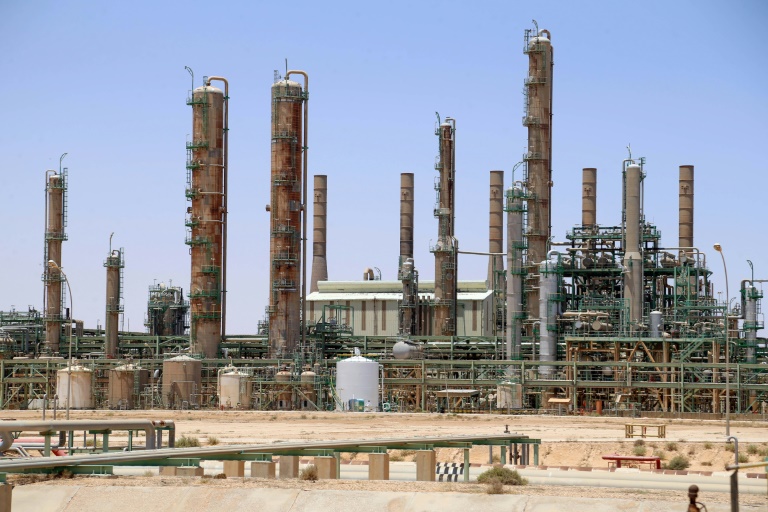
Libya’s state energy firm urged its foreign oil and gas partners to resume exploration and production Tuesday assuring them security had begun to improve dramatically after clashes earlier this year.

Rival administrations in east and west have vied for power since March, in a standoff that has hampered Libya’s efforts to sharply ramp up output in response to a surge in European demand for non-Russian oil and gas. 

“The National Oil Corporation calls (on) the international oil and gas companies with whom it has signed oil and gas exploration and production agreements to lift the force majeure declared by them,” the firm said in a statement.

Force majeure is a legal measure allowing companies to free themselves from contractual obligations in light of circumstances beyond their control.

NOC said its appeal followed a “realistic and  logical analysis of the security situation, which has begun to improve dramatically.”

The firm expressed “readiness to provide all necessary support… along with providing a safe working environment in cooperation with the civil and military authorities.”

Libya aims to raise its oil output from around 1.2 million barrels per day currently to 2.0 million bpd by 2027, NOC chairman Farhat Bengdara said last week.

On taking up his post in July, Bengdara lifted force majeure at all of the country’s oil fields and export terminals as an eastern-based militia abandoned a three-month blockade of six of them that had cut output by 400,000 bpd.

Since Russia invaded Ukraine in February, European countries have looked to alternative supplies from Africa to help end their dependence on Russian oil and gas.

Libya, which boasts the biggest proven crude reserves on the continent, has been wracked by years of conflict and division since a NATO-backed revolt toppled dictator Moamer Kadhafi in 2011.

Prime Minister Abdulhamid Dbeibah was appointed as part of a United Nations-guided peace process following the last major fighting in 2020, but the eastern-based parliament and military strongman Khalifa Haftar say his mandate has expired.

In March, parliament appointed a new government to take his place, but the rival administration has failed to install itself in Tripoli.

NOC chairman Bengdara was appointed by the Dbeibah government but has vowed to “work to prevent political interference” in the vital sector.

NOC has predicted oil revenues alone will amount to between $35 billion and $37 billion this year.
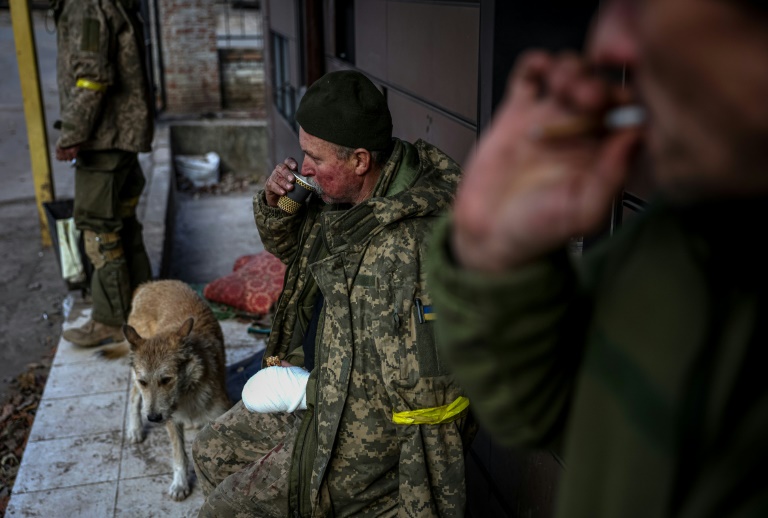
Zelensky visits Donbas near 'difficult' Ukraine front

President Volodymyr Zelensky on Tuesday visited the frontline region of Donetsk in east Ukraine, describing fighting in the area as “difficult” with Russian forces pushing to capture the industrial city of Bakhmut.

The visit came as Vladimir Putin convened his security council in the wake of the latest spate of drone attacks on military-linked facilities inside Russian territory.

The focus of fighting in Ukraine has shifted this month to Donbas after Kyiv’s forces recaptured the southern city of Kherson following a Russian retreat from the regional capital.

Zelensky appeared in a video wearing a heavy winter coat and standing next to a large sign in Ukraine’s blue and yellow colours bearing the city name Sloviansk and calling for a moment of silence to commemorate killed Ukrainian soldiers.

“The east of Ukraine today is the most difficult front. And I am honoured to be here now with our defending troops in Donbas. I believe that next time we will meet in our Ukrainian Donetsk and Lugansk and in Crimea as well,” Zelensky said.

Russian forces and their proxies have controlled parts of Donetsk and Lugansk since 2014, when fighting with separatists broke out and the Kremlin annexed the Crimean peninsula from Ukraine.

“From the bottom of my heart, I congratulate you on this great holiday, the Day of the Armed Forces,” said Zelensky, who was later shown meeting soldiers and distributing awards.

– Drone attacks in Russia –

The Ukrainian leader has visited several frontline regions after more than nine months of fighting, including Kherson in the south recently recaptured by Ukrainian forces, calling its recapture “the beginning of the end of the war”.

Sloviansk, which was among regions in Donetsk briefly held by Russian-backed separatists, lies some 45 kilometres (28 miles) north of Bakhmut, which has become the centre of fighting since Kherson’s fall.

The Kremlin said Putin met senior officials to discuss issues related to the country’s “domestic security” and that Russia was taking “necessary” measures to fend off more of what it said were Ukrainian attacks.

Officials in Russia’s Kursk region near the border with Ukraine said earlier Tuesday that a drone attack near an airfield had caused a fire at a oil storage unit.

That attack came after the defence ministry said a day earlier that Ukraine had tried to attack another airfield in Ryazan region and also the key Engels airfield in the Saratov region.

Engels is a base for the country’s strategic aircraft that Kyiv says have been used to strike Ukraine, and both sites are hundreds of kilometres away from Ukraine’s border.

The drone attacks come on the back of weeks of systematic Russian attacks that have crippled Ukrainian critical infrastructure like water, electricity and heating ahead of winter.

– ‘Crush’ Ukraine military –

Russia on Monday fired another barrage of dozens of missiles that knocked out power and water in cities across Ukraine, the latest wave of attacks that Moscow has said Kyiv was responsible for because it refused Russian demands.

Defence Minister Sergei Shoigu on Tuesday said that Russian forces were using long-range, precision weapons to target military-linked facilities and “crush the military potential of Ukraine”.

The defence ministry also announced Tuesday it had returned from Ukraine captivity 60 Russian servicemen in their most recent exchange.

Russia’s invasion and its decision to conscript hundreds of thousands of men has set off an exodus of Russians from the country, including critical politicians and journalists.

However, neighbouring Latvia announced Tuesday it was revoking the licence for exiled independent channel Dozhd for multiple violations that included showing the Crimea peninsula annexed from Ukraine as part of Russia.

“The laws of Latvia must be respected by everyone,” Ivars Abolins, head of the Latvian National Electronic Mass Media Council said on Twitter.

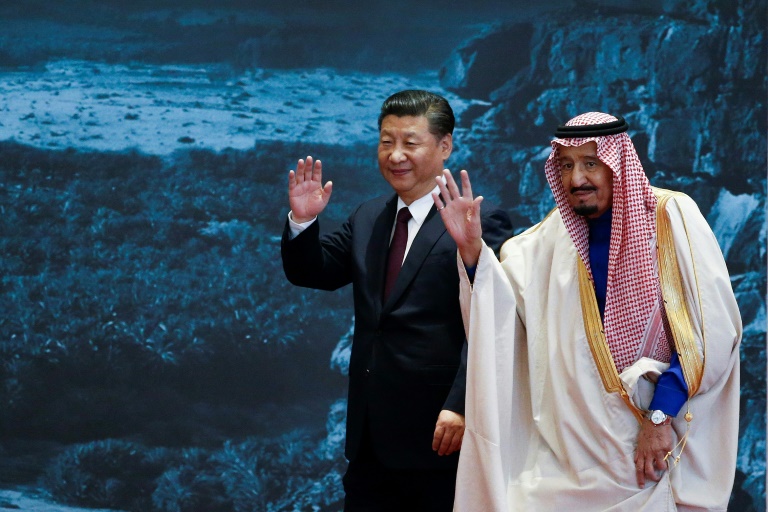
Xi visit spotlights warming Saudi-China ties, and their 'limits'

When Chinese President Xi Jinping visits Saudi Arabia from Wednesday, the oil-rich kingdom will seek mostly economic gains rather than a meaningful shift away from its longtime protector the United States, analysts say.

Xi will arrive on Wednesday for a three-day visit including meetings with Saudi royals, the regional Gulf Cooperation Council and other Middle East leaders, Saudi state media said. 

It coincides with heightened tensions between Saudi Arabia and the United States over issues ranging from energy policy to regional security and human rights. 

The latest blow to that decades-old partnership came in October when the OPEC+ oil bloc agreed to cut production by two million barrels a day, a move the White House said amounted to “aligning with Russia” on the war in Ukraine. 

On Sunday OPEC+, which includes Saudi Arabia and Russia, opted to keep those cuts in place.

Yet Xi’s trip to Riyadh, his first since 2016, is “not just about the United States, or signalling to the United States — it’s about Saudi Arabia itself”, said Naser al-Tamimi, an expert on Gulf-China ties at the Italian Institute for International Political Studies. 

“The country is changing. They’re trying to change the structure of their economy, the structure of their foreign policy. The main theme for them is diversification.”

China, for its part, “wants to maintain a relatively balanced strategy in the Middle East, so there are inherent limitations to how hard it will lean into the relationship with the Saudis”, said Andrew Small, senior transatlantic fellow at the German Marshall Fund’s Asia Program. 

“Beijing is also well aware of the depth of Saudi-US ties — despite the current tensions. But if Riyadh wants to hedge, this is a period where Beijing will be keen to take advantage of that.”

– Oil and beyond –

Saudi Arabia is the world’s largest oil exporter and China is the biggest importer of crude, purchasing roughly a quarter of the Saudi shipments.

The Wall Street Journal reported in March that Riyadh was considering pricing some of its oil contracts in yuan after trading exclusively in US dollars for decades. The CEO of energy giant Saudi Aramco called the report “speculation”. 

There is also potential for the two sides to ramp up cooperation in developing infrastructure like refineries. 

China is keen on “boosting its ties with major energy suppliers at a time of continued unpredictability in the market”, Small said.

Beyond energy, Saudi de facto ruler Crown Prince Mohammed bin Salman sees China as an important partner in his bid to develop other industries in line with his Vision 2030 reform agenda.

Analysts said deals announced this week could involve work by Chinese firms at the futuristic $500 billion megacity known as NEOM, including facial recognition and other surveillance technology. 

Meetings between Xi and leaders of the six-member Gulf Cooperation Council could also offer a chance to revive a long-sought free trade agreement, said Jonathan Fulton of the Atlantic Council. 

“China sells basically everything under the sun to Saudi,” Fulton said. 

“And Saudi sells oil and oil products to China, that’s about it. So I think they’d like to find different ways to enter the Chinese market and not be so reliant on a single resource.”

– ‘Highly vulnerable’ –

Yet embracing closer relations with China does not mean Saudi Arabia wants to downgrade its partnership with the United States.

Even at the height of the uproar over the oil production cuts in October, as US President Joe Biden spoke of unspecified “consequences”, Saudi officials stressed the importance of their ties with Washington. 

Crucially, while China and Saudi Arabia cooperate on arms sales and production, Beijing cannot provide the security guarantees that have underpinned the US-Saudi partnership since its inception at the end of World War II, analysts say. 

Saudi Arabia has lived for years under the persistent threat of drone attacks from Iran-backed Huthi rebels in Yemen, where it leads a military coalition in support of the internationally recognised government. 

The US said last month it had “exposed and deterred imminent threats” to Saudi Arabia from Iran. 

“Improving relations with China is a priority” for the Saudis, said Soltvedt of Verisk Maplecroft. 

“But there is a limit to how far they can shift away from the US as long as the regional dynamics are the way they are, and as long as they are highly vulnerable to Iranian military attacks.” 

Indonesia parliament approves ban on sex outside marriage

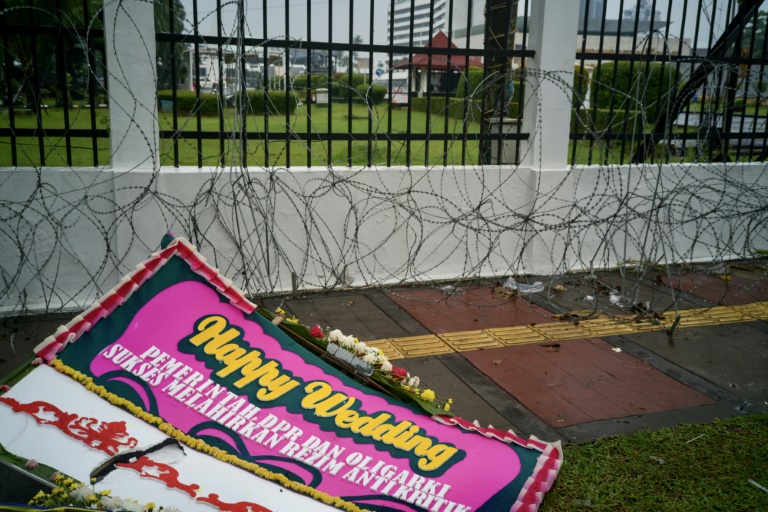
Indonesia’s parliament approved legislation on Tuesday that would outlaw sex outside marriage in a move critics said was a huge setback to rights in the world’s most populous Muslim country.

After it was endorsed by all nine parties in a sweeping overhaul of the criminal code, deputy house speaker Sufmi Dasco Ahmad banged the gavel to signal the text was approved and shouted “legal”.

A revision of Indonesia’s criminal code, which stretches back to the Dutch colonial era, had been debated for decades.

Rights groups protested against the amendments, denouncing them as a crackdown on civil liberties and political freedoms as well as a shift towards fundamentalism in Muslim-majority Indonesia, where the constitution recognises five religions alongside Islam.

“We have tried our best to accommodate the important issues and different opinions which were debated,” Minister of Law and Human Rights Yasonna Laoly told parliament.

“However, it is time for us to make a historical decision on the penal code amendment and to leave the colonial criminal code we inherited behind.” 

The article criminalising sex outside marriage has been criticised by Indonesian business organisations as detrimental to tourism, though authorities insist foreigners travelling to Bali would not be affected.

The new code, which still needs to be approved by President Joko Widodo, will come into force after three years.

– ‘Morality clauses’ –

Some of the most controversial articles criminalise extra-marital sex, as well as the cohabitation of unmarried couples. 

According to the text seen by AFP, sex outside of marriage will be punished with one year in prison while unmarried people living together could face six months in jail.

Albert Aries from the Law and Human Rights Ministry defended the amendments before the vote and said the law would protect marriage institutions. 

Sex outside marriage could only be reported by a spouse, parents or children, drastically limiting the scope of the amendment, he said. 

At a business conference before the vote on Tuesday, US ambassador to Indonesia Sung Yong Kim said he was concerned about “morality clauses” in the criminal code that could have a negative impact on businesses.

Previous drafts had planned to make homosexuality illegal, but this has disappeared from the final text. 

But the new rules on adultery and cohabitation could also be used to criminalise the LGBTQ community in Indonesia, said Andreas Harsono of Human Rights Watch, as the country does not acknowledge same-sex marriage.

Several other countries prohibit adultery and enforce harsh punishments on extra-marital sex, including Iran, Saudi Arabia, Morocco, and the Philippines.

– ‘A step back’ –

Analysts say the new code also curtails some political rights. 

Among the additions are several articles concerning blasphemy — already a crime in Indonesia — and there will be a two to four year jail term for forcing others to renounce their religion.

Spreading ideas “contradictory to Pancasila” — the official ideology of Indonesia which stresses unity and respect for ethnic and religious minorities — will be punishable by a maximum of four years in prison.

The death sentence, largely used in Indonesia for drug crimes, will now come with a 10-year probation period, after which the sentence can be reduced to life in jail if the convict shows exemplary behaviour.

Bambang Wuryanto, head of the commission that oversaw deliberations on the text, acknowledged “this is a product by humans and hence it will never be perfect”.

But he invited critics to “file a judicial review to the constitutional court” instead of demonstrating.

Rights groups slammed the legislation as morality policing.

“The passing of the criminal code bill is clearly a step back in the protection of civil rights… particularly on the rights of freedom of expression and press freedom,” Amnesty International Indonesia director Usman Hamid told AFP. 

An attempt to pass a similar draft law in 2019 brought tens of thousands onto the streets in protests which eventually forced the government to back down.

On Tuesday around a dozen protesters gathered in downtown Jakarta holding banners.

Markets drop as Fed worries offset China's Covid easing

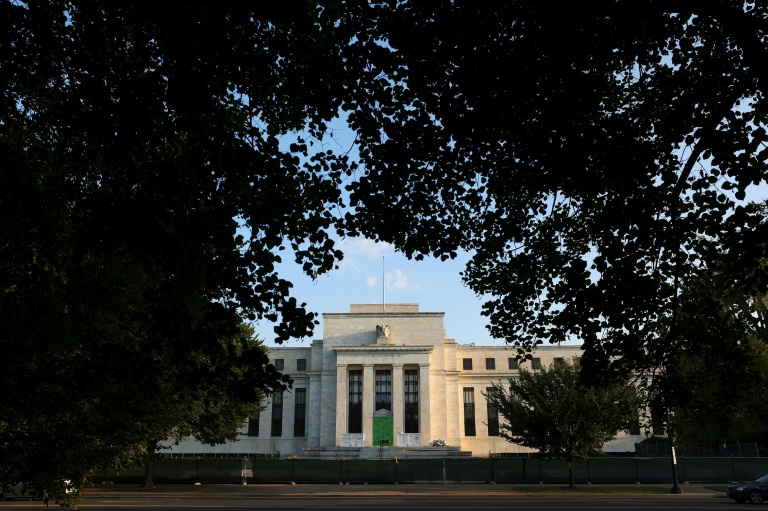
Stock markets mostly fell on Tuesday as fears that the US Federal Reserve will maintain its aggressive anti-inflation measures trumped growing optimism over China’s economic reopening.

London, Paris and Frankfurt were all in the red at around midday.

Asian markets were mostly down after all three main indexes on Wall Street lost more than one percent the day before.

Data showing a forecast-busting jump in activity in the US services sector last month raised the prospect that the Fed will not back down from sharp rate increases when it meets next week.

Monday’s data followed robust jobs figures last week that could give the central bank more room to manoeuvre, fuelling investor concerns that the Fed’s actions could tip the economy into recession.

“Worries that the Fed could unwrap an unwelcome present of another super-sized rate hike when policymakers meet next week are sprinkling Christmas fear on indices,” said Susannah Streeter, senior investment and markets analyst at Hargreaves Lansdown.

“Speculation is swirling that central banks will have to be more Scrooge-like and make borrowing even more expensive to rein in inflation,” she said.

Markets had been running higher ahead of the jobs figures after a surprise drop in inflation and comments from Fed boss Jerome Powell that the bank was likely to raise rates at a slower pace.

“Outstanding news from the vast services-based US economy is devastating for market participants keen to see evidence of the US economic disintegration,” said SPI Asset Management’s Stephen Innes.

Bets have increased on borrowing costs rising higher than five percent next year — from the current range of 3.75-4.0 percent — before the bank pauses, with no cuts seen until 2024.

Investors have also been tracking China’s zero-Covid policies, which have hammered the world’s second biggest economy.

Hong Kong dropped after soaring around 15 percent over the past week on China’s easing of strict Covid containment measures.

The dollar lost ground against other major currencies after gains on Monday.

Crude prices fell more than one percent over concerns that higher interest rates could slow the global economy, which would affect oil demand.

– Key figures around 1150 GMT –

London – FTSE 100: DOWN 0.4 percent at 7,539.62 points

Frankfurt – DAX: DOWN 0.3 percent at 14,405.66

Paris – CAC 40: DOWN 0.3 percent at 6,675.04

EURO STOXX 50: DOWN 0.3 percent at 3,946.83

Tokyo – Nikkei 225: UP 0.2 percent at 27,885.87 (close)

Hong Kong – Hang Seng Index: DOWN 0.4 percent at 19,441.18 (close)

Shanghai – Composite: FLAT at 3,212.53 (close)

New York – Dow: DOWN 1.4 percent at 33,947.10 (close)

Euro/dollar: UP at $1.0513 from $1.0495 on Monday

Dollar/yen: DOWN at 136.34 yen from 136.78 yen

Pound/dollar: UP at $1.2216 from $1.2186

Euro/pound: UP at 86.08 pence from 86.06 pence

West Texas Intermediate: DOWN 1.3 percent at $75.97 per barrel

Brent North Sea crude: DOWN 1.2 percent at $81.70 per barrel

Energy crisis fuels renewables boom: IEA

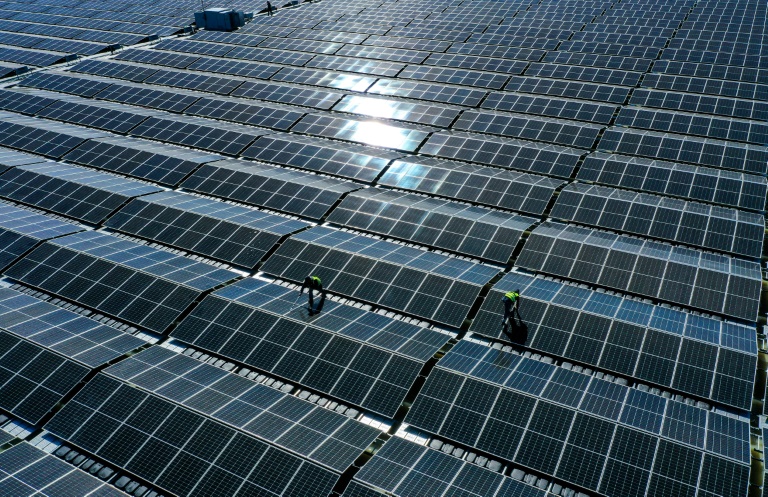
The energy crisis is fuelling an acceleration of the rollout of renewable power, raising hopes for efforts to meet ambitious targets against global warming, the International Energy Agency said Tuesday.

Total renewables capacity growth worldwide is set to almost double in the next five years and overtake coal as the largest source of electricity generation by 2025, the IEA said in a report.

The 2,400-gigawatt growth between 2022-2027 is almost a third higher than last year’s IEA forecast, according to the Paris-based agency, which advises developed nations.

This would help “keep alive the possibility of limiting global warming to 1.5 (degrees Celsius)”, the IEA said, referring to the preferrable target set in the 2015 Paris Agreement to prevent a climate catastrophe.

The invasion of Ukraine by major oil and gas exporter Russia has triggered an energy crunch and prompted countries in Europe, which were highly dependent on Russian deliveries, to diversify their supplies.

“Renewables were already expanding quickly, but the global energy crisis has kicked them into an extraordinary new phase of even faster growth as countries seek to capitalise on their energy security benefits,” said IEA executive director Fatih Birol.

“The world is set to add as much renewable power in the next five years as it did in the previous 20 years,” Birol said in a statement.

“This is a clear example of how the current energy crisis can be a historic turning point towards a cleaner and more secure future world energy system.”

The amount of renewable power capacity added in Europe between 2022-2027 is forecast to be twice as high as in the previous five-year period, the IEA said.

EU nations could deploy wind and solar power even faster if they were to quickly streamline the process for receiving permits, the report said.

The IEA’s revised forecast is also driven by new policies and market reforms being implemented more quickly than previously planned.

China is expected to account for almost half of new global renewable power capacity additions in the next five years, the report said.

Energy crisis fuels renewables boom: IEA

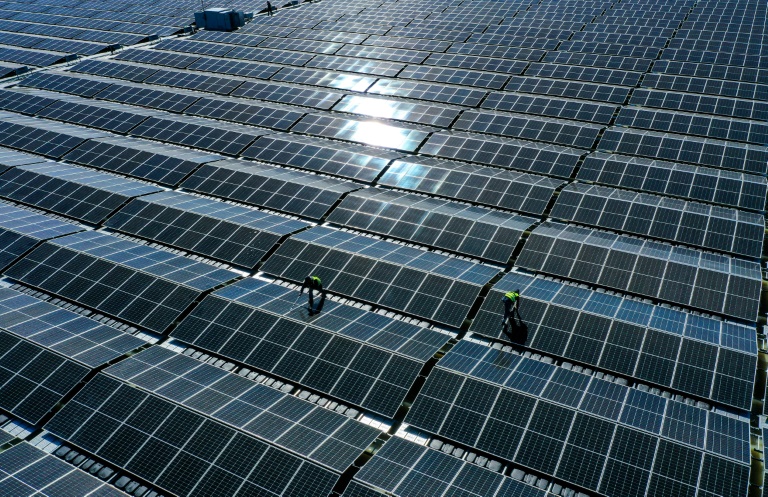
The energy crisis is fuelling an acceleration of the rollout of renewable power, raising hopes for efforts to meet ambitious targets against global warming, the International Energy Agency said Tuesday.

Total renewables capacity growth worldwide is set to almost double in the next five years and overtake coal as the largest source of electricity generation by 2025, the IEA said in a report.

The 2,400-gigawatt growth between 2022-2027 is almost a third higher than last year’s IEA forecast, according to the Paris-based agency, which advises developed nations.

This would help “keep alive the possibility of limiting global warming to 1.5 (degrees Celsius)”, the IEA said, referring to the preferrable target set in the 2015 Paris Agreement to prevent a climate catastrophe.

The invasion of Ukraine by major oil and gas exporter Russia has triggered an energy crunch and prompted countries in Europe, which were highly dependent on Russian deliveries, to diversify their supplies.

“Renewables were already expanding quickly, but the global energy crisis has kicked them into an extraordinary new phase of even faster growth as countries seek to capitalise on their energy security benefits,” said IEA executive director Fatih Birol.

“The world is set to add as much renewable power in the next five years as it did in the previous 20 years,” Birol said in a statement.

“This is a clear example of how the current energy crisis can be a historic turning point towards a cleaner and more secure future world energy system.”

The amount of renewable power capacity added in Europe between 2022-2027 is forecast to be twice as high as in the previous five-year period, the IEA said.

EU nations could deploy wind and solar power even faster if they were to quickly streamline the process for receiving permits, the report said.

The IEA’s revised forecast is also driven by new policies and market reforms being implemented more quickly than previously planned.

China is expected to account for almost half of new global renewable power capacity additions in the next five years, the report said.

China blasts US military report as 'groundless speculation'

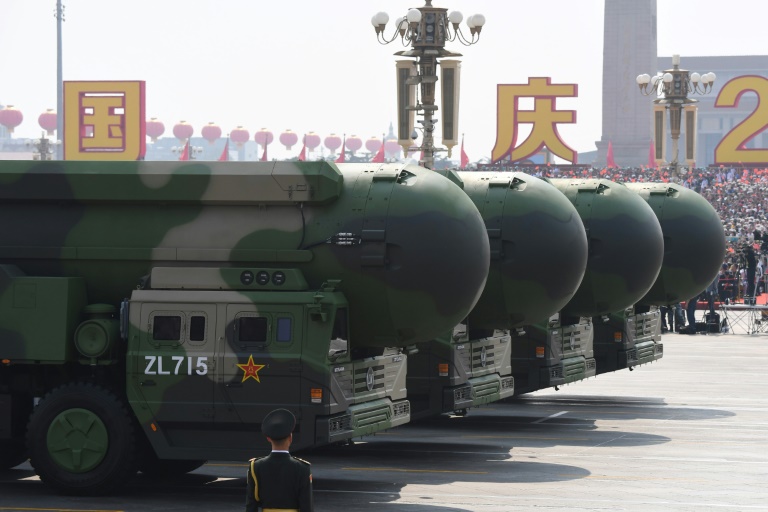
China on Tuesday criticised a US defence report estimating Beijing’s nuclear arsenal would triple by 2035 as “groundless speculation” and accused Washington of “hyping up” the military threat posed by the world’s most populous country.

The US Department of Defense released its annual China Military Power Report last week, which said China’s People’s Liberation Army (PLA) would likely acquire around 1,500 nuclear warheads by 2035 at its current pace of expansion.

That figure would still lag far behind the arsenals of the United States and Russia, which each include several thousand nuclear warheads.

Chinese defence ministry spokesman Tan Kefei said the report “distorts China’s defence policy and military strategy, is groundless speculation on China’s military development… and is (the United States’) customary trick to hype up and exaggerate China’s so-called military threat”.

“The United States is making accusations and speculations about the modernisation of China’s nuclear forces, when in fact it is the one that should deeply review and reflect on its own nuclear policy,” Tan added.

The Pentagon report also said Beijing had “adopted more dangerous, coercive and aggressive actions in the Indo-Pacific region”.

The PLA would “likely continue to increase military pressure — in concert with diplomatic, information and economic pressure — in an attempt to compel Taiwan toward unification”, it said.

Tan on Tuesday said this “grossly interfered” in China’s internal affairs regarding its attitude towards Taiwan, which is a flashpoint in deteriorating US-China relations.

After US House Speaker Nancy Pelosi visited the self-ruled island in early August, China staged unprecedented military exercises in the surrounding waters and fired multiple missiles, some of which Japan said landed in its exclusive economic zone.

“The PLA increased provocative and destabilising actions in and around the Taiwan Strait, to include … conducting exercises focused on the potential seizure of one of Taiwan’s outlying islands,” the US report said, in reference to this incident.

Chinese President Xi Jinping and top military officials have repeatedly stated that China’s eventual “unification” with Taiwan is inevitable, and have hardened their rhetoric to include the possibility of a takeover using military force.

In October, US Secretary of State Antony Blinken said China was “determined to pursue reunification on a much faster timeline” than previously expected.

The United States has pledged to provide Taiwan with the means to defend itself in the event of an invasion, but remains ambiguous on whether it would intervene militarily. 

South African GDP rebounds to scale new peak

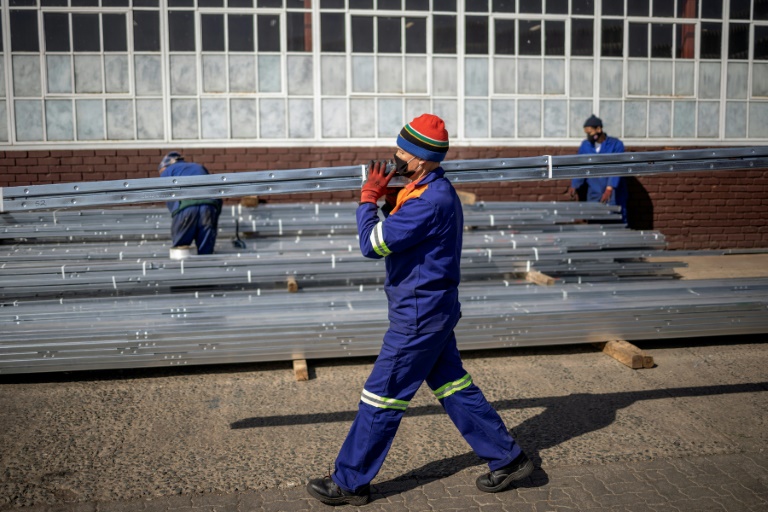
South Africa’s economy rebounded beyond pre-Covid levels in the third quarter of 2022 to reach its highest-ever peak, official data showed Tuesday.

Gross domestic product (GDP) expanded by 1.6 percent in the three months to September, following a 0.7 dip in the previous trimester, StatsSA said. 

“The size of the economy now exceeds pre-pandemic levels,” the official statistics agency said in a statement.

“Quarterly real GDP is now the highest it’s ever been, exceeding the previous peak of 1,152 billion (rand) ($66 billion) recorded in the fourth quarter of 2018.”

Agriculture, finance, transport and manufacturing were the main drivers, with demand benefiting from a rise in exports and government consumption, it said.

Africa’s most industrialised economy was badly hit by the Covid-19 pandemic, which amplified joblessness, poverty and inequality.

Economic growth was braked for about two years.

GDP returned to its pre-pandemic size only in the first quarter of 2022, on the back of six months of modest growth.

But some of those gains were lost in the second quarter, when economic activity was hit by floods in the southeastern KwaZulu-Natal province and power cuts caused by a prolonged energy crisis.

Biden celebrates giant semiconductor project

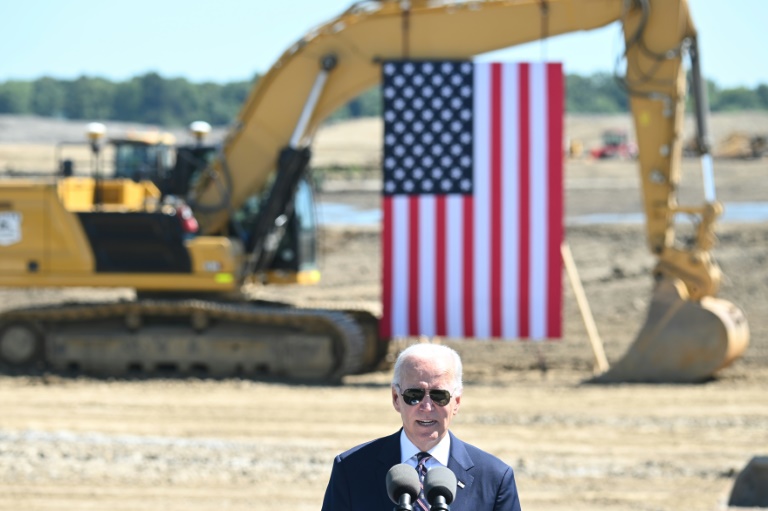
President Joe Biden flies Tuesday to Arizona to celebrate the mammoth expansion of a Taiwanese semiconductor plant, citing the project as proof that the United States is finally breaking dangerous dependency on foreign manufacturers for the vital component.

The White House announced that TSMC is unveiling plans to build a second facility in Phoenix by 2026, ballooning its investment from $12 billion to $40 billion.

The “major milestone” adds up to “the largest foreign direct investment in Arizona history and it’s one of the largest in US history,” White House National Economic Council Director Brian Deese told reporters.

Biden will speak at the TSMC site, accompanied by senior political figures and titans of the corporate world, including Apple CEO Tim Cook, TSMC’s founder Morris Chang and Micron CEO Sanjay Mehrotra.

The Democrat will seek to take credit for the investment influx, pointing to the effect of his signature CHIPS Act, which sets aside almost $53 billion for subsidies and research in the semiconductors sector. It’s a message he’ll be especially keen to spread in Arizona, which was long a Republican dominated state but has turned into a battleground where Democrats do increasingly well.

The plant expansion — which comes on top of other significant microchip manufacturing projects dotted around the country — is part of an overall strategy by the Biden administration to try to end reliance on foreign suppliers.

Although much of that supply comes from reliable US allies, particularly Taiwan, the Covid pandemic shutdown demonstrated how fragile those supply lines were in case of emergency. With China threatening to take control of Taiwan — and eyeing how to ensure its own semiconductor supplies — Washington wants to bring the vital gadgets home.

“Virtually every large tech firm, including automotive firms and any company that uses technology is sweating bullets that something’s going to happen between Taiwan and China. And so there’s a massive rush to shift manufacturing out of both countries,” technology analyst Rob Enderle said.

– Smaller the better –

In the high-stakes world of microchips, sheer quantity is important. The miniscule, hard-to-make gadgets are at the heart of almost every modern appliance, vehicle and advanced weapon.

But quality — and small size — is also increasingly important for sophisticated everyday devices like smartphones and there the White House says it has good news.

The new TSMC plant will produce tiny 3 nanometer chips, while the existing facility will start reducing the size of its current 5 nanometer chips to 4 nanometers.

Building a plant, or a “fab,” takes several years. But once “at scale, these two fabs could meet the entire US demand for advanced chips when they’re completed. That’s the definition of supply chain resilience,” Ronnie Chatterji, National Economic Council deputy director for industrial policy, told reporters.

Deese, one of Biden’s most senior advisors, said the broader message from the White House is that US industrial strategy is undergoing a rebirth.

For almost four decades, the idea was “trickle down,” where government would “get out the way” and cut taxes for big companies to attract investment, he said.

Instead, Biden’s policy — both through the CHIPS Act and the giant Inflation Reduction Act — uses public money to attract, or “crowd in” private investment.

The goal is not to exclude “private companies, but in fact, encouraging private investment at historic scale,” Deese said.

Close Bitnami banner
Bitnami