World

EU agrees ban on imports driving deforestation

The European Union reached an agreement Tuesday to ban the import of products including coffee, cocoa and soy in cases where they are deemed to contribute to deforestation.

The draft law, which aims to ensure “deforestation-free supply chains” for the 27-nation EU, was hailed by environmental groups as “groundbreaking”.

It requires companies importing into the EU to guarantee products are not produced on land that suffered deforestation after December 31, 2020, and that they comply with all laws of the source country.

The scope encompasses palm oil, cattle, soy, coffee, cocoa, timber and rubber as well as derived products such as beef, furniture and chocolate.

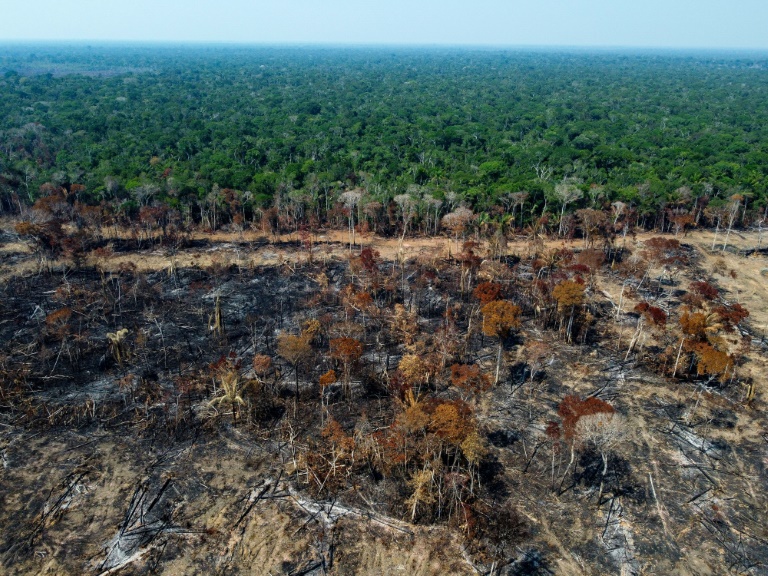
Illegal production has spurred massive deforestation in countries such as Brazil, Indonesia,  Malaysia, Nigeria, the Democratic Republic of Congo, Ethiopia, Mexico and Guatemala.

The United Nations’ Food and Agriculture Organization estimates that an aggregate area of land bigger than the European Union, or some 420 million hectares (more than one billion acres), has been deforested around the world over the past three decades.

The European Union is the second-biggest market for consumption of the targeted products after China. 

Pascal Canfin, chairman of the European Parliament’s environment committee, hailed the agreement, and how its impact would feed through to everyday items Europeans consume.

“It’s the coffee we have for breakfast, the chocolate we eat, the coal in our barbecues, the paper in our books. This is radical,” he said.

– ‘Historic’ –

The environmental lobby group Greenpeace called the draft law, agreed between the European Parliament and EU member states, “a major breakthrough”.  

Another, WWF, called it “groundbreaking” and “historic”.

“This regulation is the first in the world to tackle global deforestation and will significantly reduce the EU’s footprint on nature,” the WWF said in a statement.

Both groups called on the EU to go further, by expanding the scope of the law to include savannahs, such as Brazil’s Cerrado, which are also under threat by encroaching ranchers and farmers.

Greenpeace noted that financial institutions extending services to importing companies would not initially come under the new law, but that they would come under review two years later.

Both the European Council — representing the EU countries — and the European Parliament now have to officially adopt the agreed law. Big companies would have 18 months to comply, while smaller ones would get a longer grace period.

“The new law will ensure that a set of key goods placed on the (European Union) market will no longer contribute to deforestation and forest degradation in the EU and elsewhere in the world,” the European Commission said in a statement. 

“The battle for climate and biodiversity is accelerating,” French President Emmanuel Macron tweeted.

– Big fines –

The parliament said in a statement that the law opened the way for technology such as satellite monitoring and DNA analysis to verify the provenance of targeted imports.

High-risk exporting countries would have nine percent of products sent to the EU checked, while lower-risk ones would have lower proportions scrutinised.

Companies found violating the law could be fined up to four percent of annual turnover in the EU.

The legislation would be reviewed one year after coming into force, to see whether it should be extended to other wooded land.

Another review at the two-year mark would have the commission considering whether to expand it to cover other ecosystems and commodities, as well as financial institutions.
Philippine lawmakers propose $4.9 bn sovereign wealth fund chaired by Marcos

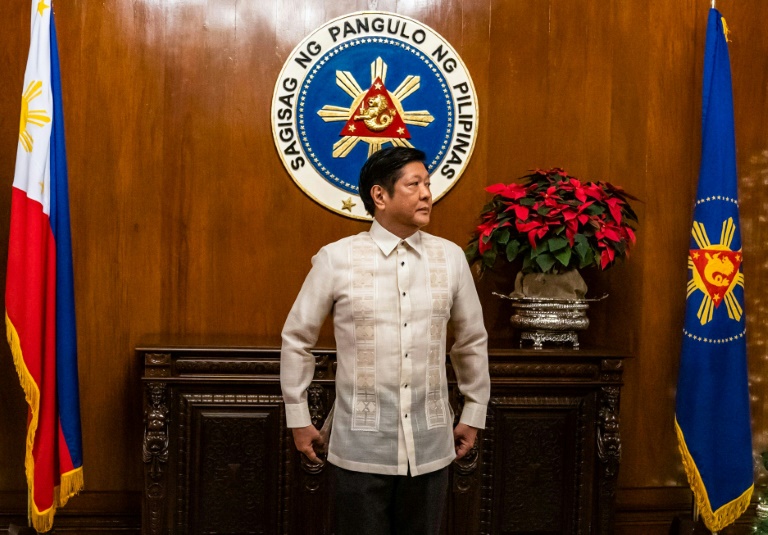
Philippine lawmakers have proposed a $4.9 billion sovereign wealth fund to be chaired by President Ferdinand Marcos Jr to boost growth, but critics warn it will be prone to graft and risk Filipino pensions.

Congressmen Sandro Marcos and Martin Romualdez — the president’s son and cousin respectively — are among the six authors of the bill filed to the House of Representatives and will be examined by several committees before being debated in the house.

The “Maharlika Investments Fund” (MIF) would be seeded with 275 billion pesos from government financial institutions, including two pension funds and two banks, according to the latest version of the bill.

It would help the Marcos administration achieve its goals of getting the Philippine economy to “soar to greater heights in spite of external shocks”, the authors wrote.

The word “maharlika” is widely associated with Marcos Jr’s late dictator father and namesake, who presided over widespread human rights abuses and corruption during his two decades in power. He was ousted in 1986.

Marcos Sr claimed to have led an anti-Japanese guerrilla unit called Ang Mga Maharlika during World War II, but he has been accused of lying about his war record.

The MIF has been met with concern from business groups, economists, activists and opposition figures, who have questioned the need for a sovereign wealth fund in the debt-laden country.

They argue pension funds were already being invested and that diverting them to the MIF would expose them to additional risk.

Even the president’s own sister, Senator Imee Marcos, said it was “risky to gamble” retirement funds.

“We all know about our neighbour Malaysia where their 1MDB was a real disaster where the money was looted,” she said, referring to the graft scandal that involved billions of dollars of state funds.

A lack of safeguards also meant “the potential for corruption is almost limitless”, Vincent Lazatin, former executive director of the Transparency and Accountability Network, told AFP Tuesday.

– ‘A lot of questions’ – 

The bill’s proponents highlighted Indonesia as an example of a sovereign wealth fund successfully being used to attract direct investments into infrastructure and emerging industries.

But Natixis senior economist Trinh Nguyen said Indonesia’s fund has a “very clear” investment objective, while the Philippine proposal “lacks a direction”.

“There are a lot of questions… How is it going to benefit the longer-term development objective of the Philippines because it’s not very clear to me that it would,” she said.

Under the proposed bill, MIF funds would be “exempt from any regulatory restrictions”.

Investment options would include financial derivatives, equities, infrastructure projects and “other investments as may be approved by the Board”.

Congressman Joey Salceda, who leads the technical working group examining the bill, told AFP the fund’s governing board would be chaired by the president.

Former president Gloria Arroyo, who has backed the bill, said it was a “powerful statement that the highest official of the land will hold himself as ultimately accountable to the Filipino people for the performance of the Fund”.

But Lazatin noted that the country had a dismal record of punishing elected officials for corruption. 

“Our laws are good on paper, but in practice… we have not been able to hold public officials accountable,” he said.

An estimated $10 billion was stolen from state coffers over the course of Marcos Sr’s rule, while the family has been accused of owing more than $3.6 billion in estate taxes.

No one in the clan has been jailed.

Indonesia parliament approves ban on sex outside marriage

Indonesia’s parliament approved legislation on Tuesday that would outlaw sex outside marriage in a move critics said was a huge setback to rights in the world’s most populous Muslim country.

After the new criminal code was endorsed by all nine parties in a sweeping overhaul of the legal code, deputy house speaker Sufmi Dasco Ahmad banged the gavel to signal the text was approved and shouted “legal”.

A revision of Indonesia’s criminal code, which stretches back to the Dutch colonial era, has been debated for decades.

Rights groups had protested against the amendments, denouncing a crackdown on civil liberties and political freedoms, as well as a shift towards fundamentalism in Muslim-majority Indonesia, where secularism is enshrined in the constitution. 

“We have tried our best to accommodate the important issues and different opinions which were debated,” Minister of Law and Human Rights Yasonna Laoly told parliament.

“However, it is time for us to make a historical decision on the penal code amendment and to leave the colonial criminal code we inherited behind.” 

The article criminalising sex outside marriage has been criticised by Indonesian business organisations as detrimental to tourism, though authorities insist foreigners travelling to Bali would not be affected. 

The new code, which still needs to be approved by president Joko Widodo, will come into force after three years.

– One year in prison –

Some of the most controversial articles in the new code criminalise extra-marital sex, as well as the cohabitation of unmarried couples. 

According to the text seen by AFP, sex outside of marriage will be punished with one year in prison while unmarried people living together could face six months in jail.

Albert Aries from the Law and Human Rights Ministry defended the amendments before the vote and said the law would protect marriage institutions. 

Sex outside marriage could only be reported by a spouse, parents or children, drastically limiting the scope of the amendment, he said. 

At a business conference before the vote on Tuesday, US ambassador to Indonesia Sung Yong Kim said he was concerned about “morality clauses” in the criminal code that can have “negative” impact on businesses.

Previous drafts had planned to make homosexuality illegal, but this has disappeared from the final text. 

But the new rules on adultery and cohabitation could also be used to “criminalise” the LGBTQ community in Indonesia said Andreas Harsono of Human Rights Watch, as the country does not acknowledge same-sex marriage.

– ‘A step back’  –

The new code also curtails some political rights, analysts say. 

Spreading an ideology “contradictory to Pancasila” — the official ideology which stresses unity and respect for ethnic and religious minorities — will be punishable by a maximum of four years in prison. 

The death sentence, largely used in Indonesia for drug crimes, will now come with a 10-year probation period, after which the sentence can be reduced to life in jail if the convict shows exemplary behaviour.

Bambang Wuryanto, head of the commission that oversaw deliberations on the text, acknowledged “this is a product by humans and hence it will never be perfect”. 

But he invited critics to “file a judicial review to the constitutional court” instead of demonstrating.

Rights groups slammed the legislation as morality policing.

“The passing of the criminal code bill is clearly a step back in the protection of civil rights… particularly on the rights of freedom of expression and press freedom”, Amnesty International Indonesia director Usman Hamid told AFP. 

An attempt to pass a similar draft law in 2019 brought tens of thousands onto the streets in protests which eventually forced the government to back down.

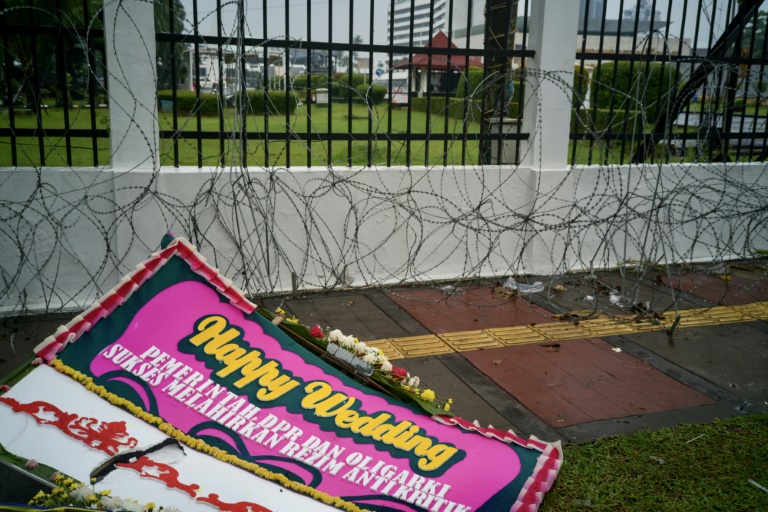
On Tuesday around a dozen protesters gathered in downtown Jakarta holding banners.

“You reapply the colonial-era law,” read one. 

“Want to colonise your own tribe and blood?” 

Iran protests: regime challenged by push for change

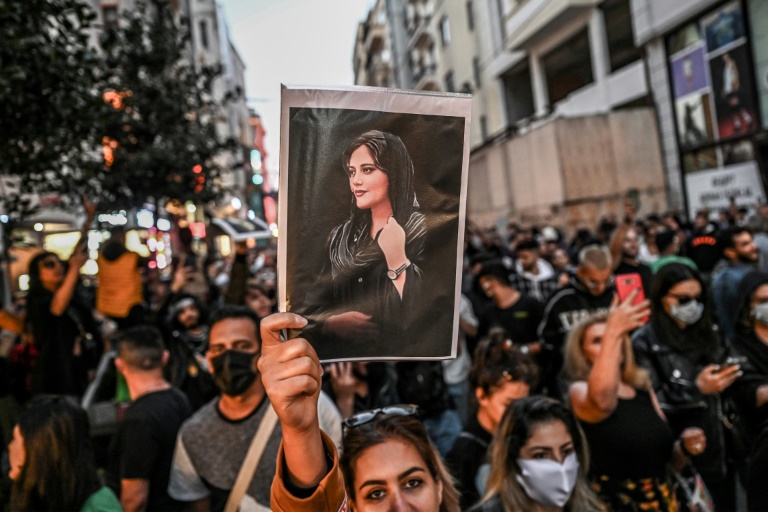
Almost three months of protests in Iran have left the clerical regime facing an existential challenge by shattering taboos and shaking its ideological pillars in a push for change that shows no sign of retreating. 

The demonstrations, which erupted in mid-September following the death of Mahsa Amini who had been arrested by the Tehran morality police, are a reflection of pent-up public anger over economic shortcomings and social restrictions, analysts say.

While there have been protests in Iran before, this movement is unprecedented due to the duration, its spread across provinces, social classes and ethnic groups and readiness to openly call for the end of the clerical regime.

Banners of supreme leader Ayatollah Ali Khamenei have been set alight, women have openly walked down streets without headscarves, and demonstrators have at times sought to challenge the security forces.

Iran, for its part, accuses hostile foreign powers of stoking what it labels “riots”, chiefly its arch-foes the United States, Israel and their allies, but also exiled Kurdish Iranian opposition groups in Iraq whom it has targeted in repeated missile and drone strikes.

In an apparent response to the protests, Iran’s prosecutor general said Saturday that the morality police had been abolished. Activists received the declaration with scepticism, given the continued legal obligation for women to wear a headscarf.

French President Emmanuel Macron, after holding a landmark meeting with exiled Iranian dissidents last month, described the movement as a “revolution” by a generation of “young women and men who have never known anything other than this regime”.

“It was very obvious from the beginning that the protests were not about reform or the morality police, but were targeting the entire regime,” said Shadi Sadr, founder of the London-based Justice for Iran group that campaigns for accountability for rights violations.

“What is happening is a fundamental challenge to the regime,” she told AFP. “They know they are facing a real threat from protesters.” 

– ‘Never more vulnerable’ –

“The mood in Iran is revolutionary,” said Kasra Aarabi, Iran programme lead at the Tony Blair Institute for Global Change, arguing there had been a growing trend of anti-regime dissent for the past half decade. 

“While they can try to suppress the protesters they cannot suppress the revolutionary mood,” he told AFP.

The Islamic republic has ruled Iran, first under revolutionary founder Ayatollah Ruhollah Khomeini and then his successor Khamenei, since ousting the more West-leaning and secular shah in 1979.

It swiftly imposed policies including sharia law and compulsory headscarves for women in public.

Rights groups accuse the regime of committing gross human rights abuses ever since, including extra-judicial killings and abductions abroad and holding foreign nationals hostage at home.

It now carries out more executions than any country other than China, according to Amnesty International. 

Norway-based group Iran Human Rights says the country has executed more than 500 people this year alone.

The Islamic republic remains at odds with Western powers over its nuclear programme, and has also spread its influence throughout the Middle East, notably through Shiite allies in Lebanon and Iraq.

Iran has been an active participant in the civil war in Syria, and backs rebels in Yemen.

International condemnation of the crackdown has — for now — buried any expectation of reviving the 2015 deal on the Iranian nuclear programme that the United States walked out of in 2018.

The regime is also active in Russia’s invasion of Ukraine, tightening relations with Moscow and supplying Russian forces with cheap and plentiful drones, which have been used to attack Kyiv and other cities.

Yet it is at home that the Islamic republic is now facing its greatest threat. 

“Never before in its 43-year history has the regime appeared more vulnerable,” Iran scholar Karim Sadjadpour, senior fellow at the Carnegie Endowment for International Peace, told the US journal Foreign Affairs.

– ‘Machinery of repression’ –

In response to the challenge posed by the protests, the authorities have mobilised what Amnesty International has described as their “well-honed machinery of repression” with a fierce crackdown that has combined the use of live fire with mass arrests.

At least 448 people, including 60 minors aged under 18, have been killed by security forces, according to IHR.

More than half of the deaths have come in areas populated by Kurdish and Baluch ethnic minorities where the protests have been particularly intense, the rights group noted.

At least 14,000 people have been arrested, according to the UN, including several prominent figures such as the rapper Toomaj Salehi who could face the death penalty if convicted.

Iran’s judiciary has already sentenced six people to death over the protests, in what IHR calls “show trials without access to their lawyers and due process”. 

It says 26 people, including three minors, are facing charges that could see them hanged.

Sadr warned it would be rash to predict the regime was on the verge of falling.

“Dismantling a regime like the Islamic republic is a very difficult task. There are pieces needed that are missing for this to succeed,” she said, pointing to a need for greater organisation among protesters and a stronger international response.

– ‘We will win’ –

Unlike when Khomeini challenged the shah from exile in the late 1970s, there is no single leader to the protest movement. 

But Aarabi said the protesters were drawing inspiration from several figures, all representing different constituencies. Most are deemed such a menace by the authorities that they have been locked up.

“These protests are not leaderless,” he said, adding the demonstrators believe “they are in the middle of a revolution and there is no going back”.

Such figures include the freedom of expression campaigner Hossein Ronaghi, who was released in November only after a two-month hunger strike, the prominent dissident Majid Tavakoli who remains in prison, and veteran women’s rights activist Fatemeh Sepehri.

“I continue to fight with the intensity of passion and hope and vitality inside Iran,” the rights campaigner Narges Mohammadi, who was in detention even before the protests, said in a message from Tehran’s Evin prison.

“And I am sure that we will win,” she said in the message relayed by her family to the European parliament. 

Asian, European markets drop as Fed worries offset China Covid easing

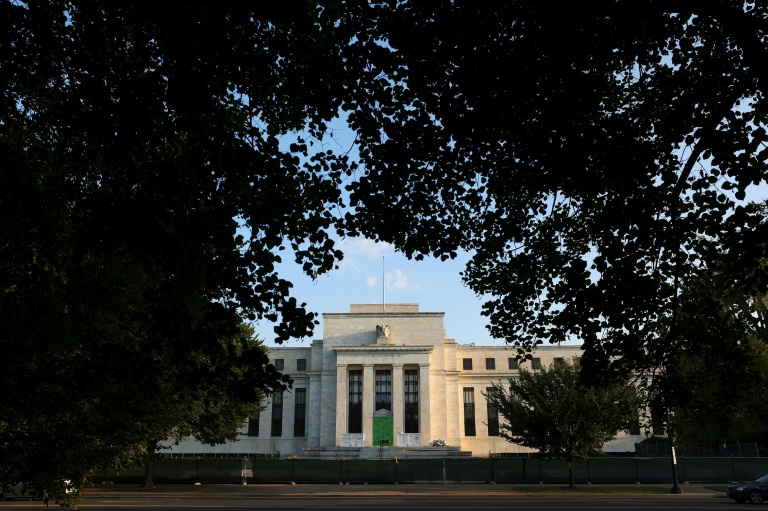
Most Asian and European markets fell Tuesday and the dollar rose as fresh fears that the US Federal Reserve will push interest rates higher than hoped overshadowed growing optimism over China’s economic reopening.

After a strong start to the week in Asia, traders tracked a big drop on Wall Street that came on the back of data showing a forecast-busting jump in activity in the US services sector last month.

The news — combined with Friday’s bigger-than-expected print on November jobs and wage increases — dented optimism that the Fed’s monetary tightening campaign was finally paying off, which would give it room to take a less hawkish approach into the new year.

Markets had been running higher ahead of the jobs figures after a surprise drop in inflation and comments from Fed boss Jerome Powell that the bank would likely raise rates at a slower pace.

“Outstanding news from the vast services-based US economy is devastating for market participants keen to see evidence of the US economic disintegration,” said SPI Asset Management’s Stephen Innes.

“Coming as it did on the heels of Friday’s jobs report, which indicated that the rumours of the US economic demise were greatly exaggerated, the market immediately moved into ‘good news is bad’ mode, which saw investors ride roughshod over the dovish pivot camp.”

Bets have increased on borrowing costs going higher than five percent next year — from the current 3.75 to 4.0 percent — before the bank pauses, with no cuts seen until 2024.

All three main indexes on Wall Street lost more than one percent and Asia struggled to maintain its recent momentum.

Hong Kong dropped after soaring around 15 percent over the past week on China’s easing of strict Covid containment measures.

Sydney, Seoul, Singapore, Wellington, Mumbai, Bangkok, Taipei and Jakarta were also in the red.

Shanghai was barely moved while Tokyo rose. Manila was up more than three percent as banks were boosted by a forecast-beating jump in inflation that ramped up expectations for a hike in interest rates.

London, Paris and Frankfurt all slipped at the open.

The dollar extended most of the gains made Monday after the services data release. The Australian dollar was among the biggest losers after the country’s central bank lifted interest rates to a decade high but by less than expected.

The mood in Asia remains largely positive owing to the prospect of China rolling back some of the harsh measures that have been in place for almost three years and have hammered the giant economy.

But analysts said the country would not likely see a complete end to the zero-Covid policy for several months.

Oil prices climbed Tuesday, having dropped heavily the two previous days, on expectations that a reopening will boost demand in the world’s biggest importer of the commodity.

– Key figures around 0820 GMT –

Tokyo – Nikkei 225: UP 0.2 percent at 27,885.87 (close)

Hong Kong – Hang Seng Index: DOWN 0.4 percent at 19,441.18 (close)

Shanghai – Composite: FLAT at 3,212.53 (close)

London – FTSE 100: DOWN 0.1 percent at 7,562.19

Euro/dollar: DOWN at $1.0490 from $1.0495 on Monday

Dollar/yen: UP at 136.90 yen from 136.78 yen

Pound/dollar: UP at $1.2200 from $1.2186

Euro/pound: DOWN at 85.99 pence from 86.06 pence

West Texas Intermediate: UP 0.8 percent at $77.53 per barrel

Brent North Sea crude: UP 0.9 percent at $83.44 per barrel

New York – Dow: DOWN 1.4 percent at 33,947.10 (close)

Indonesia parliament approves ban on extra-marital sex

Indonesia’s parliament on Tuesday approved legislation that would outlaw sex outside marriage in a move critics said was a huge setback to rights in the world’s most populous Muslim country.

After the new criminal code was endorsed by all nine parties in a sweeping overhaul of the legal code, deputy house speaker Sufmi Dasco Ahmad banged the gavel to signal the text was approved and shouted “legal”.

A revision of Indonesia’s criminal code, which stretches back to the Dutch colonial era, has been debated for decades.

Rights groups had protested against the amendments, denouncing a crackdown on civil liberties and political freedoms, as well as a shift towards fundamentalism in Muslim-majority Indonesia, where secularism is enshrined in the constitution. 

“We have tried our best to accommodate the important issues and different opinions which were debated,” Yasonna Laoly, Minister of Law and Human Rights, told parliament.

“However, it is time for us to make a historical decision on the penal code amendment and to leave the colonial criminal code we inherited behind.” 

A provision in the text, which still needs to be signed by the president, states the new criminal code will be applicable in three years.

– 1 year in prison –

Some of the most controversial articles in the newly passed code criminalise extra-marital sex, as well as the cohabitation of unmarried couples. 

According to the text seen by AFP, illegal cohabitation will have a maximum sentence of six months imprisonment, and sex outside of marriage will be punished with one year in prison.

There are also fears these rules could have a major impact on the LGBTQ community in Indonesia, where same-sex marriage is illegal.

The spokesperson of the Law and Human Rights Ministry’s criminal code bill dissemination team, Albert Aries, defended the amendments before the vote and said the law would protect marriage institutions. 

He said acts of extra-marital sex could only be reported by a spouse, parents or children, limiting the scope of the amendment. 

The article on extra-marital sex has been criticised by Indonesian business organisations as detrimental to tourism, though authorities insisted foreigners travelling to Bali would not be affected. 

At a business conference before the vote on Tuesday, US ambassador to Indonesia Sung Yong Kim said he was concerned about “morality clauses” in the criminal code that can have “negative” impact on businesses.

Before the vote, a shouting match erupted between a lawmaker from the Prosperous Justice Party or PKS and the deputy house speaker. 

“Don’t be a dictator”, shouted Iskan Qolba Lubis, the lawmaker from the Islamist party, after he was prevented from speaking.

Bambang Wuryanto, head of the commission that oversaw deliberations on the text, acknowledged “this is a product by humans and hence it will never be perfect”. 

But he invited critics to “file a judicial review to the constitutional court” instead of demonstrating.

Rights groups slammed the legislation as morality policing.

“We are going backward… repressive laws should have been abolished but the bill shows that the arguments of scholars abroad are true, that our democracy is indisputably in decline,” Amnesty International Indonesia director Usman Hamid told AFP. 

About a hundred people protested against the bill Monday and unfurled a yellow banner that read “reject the passing of the criminal code revision”, with some dropping flower petals on the banner as is done for a funeral.

Another protest to reject the new law was scheduled to be held on Tuesday in front of the parliament building. 

China's ruling party lauds late leader Jiang Zemin

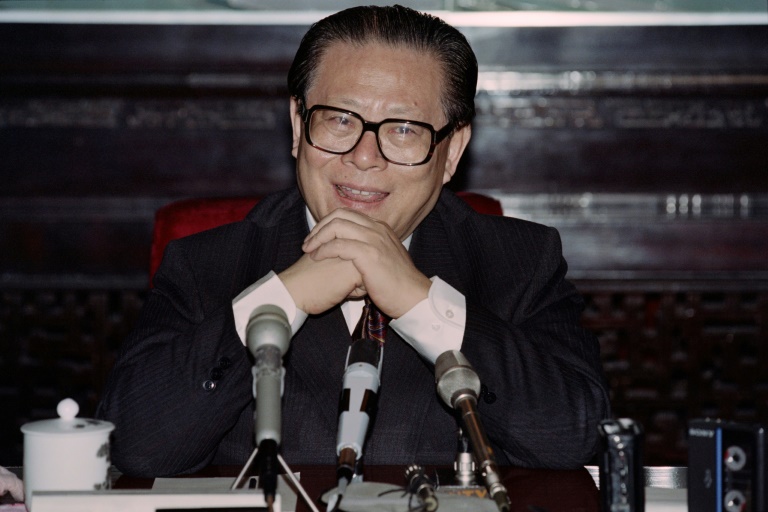
Sirens wailed across China as the Communist Party eulogised late leader Jiang Zemin Tuesday, hailing him as a patriot who “dedicated his life” to the country.

China’s rulers orchestrated a day of mourning across the country, with security services ensuring there were no large gatherings on the streets following rare protests in recent weeks.

Jiang died in Shanghai last Wednesday at the age of 96 and left a mixed legacy, taking power in the aftermath of the 1989 Tiananmen Square crackdown and leading China towards its emergence as a powerhouse on the global stage.

A public memorial service attended by China’s political elite began at 10:00 am (0200 GMT) in Beijing’s Great Hall of the People, bedecked with a giant portrait of the late leader as well as slogans lauding him and a massive flower display.

“He dedicated his whole life and energy to the Chinese people, dedicated his life to fighting for national independence, people’s liberation, national prosperity, and people’s happiness,” President Xi Jinping told assembled party faithful at the hall.

“The CCP Central Committee calls on the whole Party, the army and the people of all ethnic groups in China to turn grief into strength,” Xi added.

Looking frail and distraught, Jiang’s wife Wang Yeping sat in a wheelchair in the front row.

A nationwide “three-minute silence” was held as sirens sounded.

In Jiang’s hometown of Yangzhou, around 100 people gathered in front of his former residence to observe the silence after which they were swiftly dispersed by police.

Flags across the country were at half-mast as were those at Chinese government buildings overseas.

– ‘Deep feelings’ –

Stock markets in Shanghai and Shenzhen suspended trading for three minutes, as did the Chinese Gold and Silver Exchange in Hong Kong.

Hong Kong’s bourse suspended the display of data on external screens at its offices while senior executives observed the silence.

And in the semi-autonomous city’s harbour, hundreds of vessels honked for three minutes, while officials and government employees observed three minutes of silence.

At Scientia Secondary School in Hong Kong, hundreds of students and teachers gathered for an hour-long commemoration of Jiang, whose tenure saw Britain hand sovereignty of the southern city to China.

“We Hongkongers have deep feelings for President Jiang, who has visited Hong Kong many times, including attending the ceremony of Hong Kong’s handover,” one of the teachers said.

Students stood as China’s national flag was lowered to half-mast, before being shown the live broadcast of the memorial in Beijing.

Student Kate Leung, 16, said she observed the moment of silence “with gratitude” to Jiang’s contributions and called him a “very important leader”.

Public entertainment in mainland China was also suspended on Tuesday, with some online games such as the popular League of Legends announcing a day’s pause.

– Mixed legacy –

Jiang leaves a controversial legacy. 

State media has hailed him as a great communist revolutionary, highlighting his part in quelling “serious political turmoil”.

But his rule also saw the repression of political opposition and religious minorities, as well as a tolerance for the widespread corruption that accompanied China’s economic rise.

Jiang died of leukaemia and multiple organ failure after medical treatments failed, according to state media. 

His body was cremated Monday in Beijing at a ceremony attended by President Xi and other top leaders, Xinhua said.

Former leader Hu Jintao — who was escorted out of a top Communist Party meeting in October in an imbroglio that grabbed global attention — also reportedly attended in his first public appearance since the incident.

– Nostalgia –

The anti-Covid lockdown protests that flared up in China last week were the most widespread public demonstrations in the country since rallies calling for political reform in 1989.

And despite Jiang’s role in helping to crush the 1989 rallies, his death has prompted nostalgia among some Chinese for a time seen as more liberal and tolerant of dissent.

“The Jiang era, while not the most prosperous era, was a more tolerant one,” one user on the Twitter-like Weibo wrote following his death.

“I have heard many criticisms of him, but the fact that he allowed critical voices to exist shows how he is worthy of praise,” wrote another.

In retirement, Jiang had become the subject of light-hearted memes among millennial and Gen Z Chinese fans, who called themselves “toad worshippers” in reference to his frog-like countenance and quirky mannerisms.

More than half a million comments flooded CCTV’s post announcing his death on Weibo within an hour, many referring to him as “Grandpa Jiang”.

After the announcement, the websites of state media and government-owned businesses turned black-and-white, as did apps such as Alipay, Taobao and even McDonald’s China.

Philippine lawmakers propose $4.9 bn sovereign wealth fund chaired by Marcos

Philippine lawmakers have proposed a $4.9 billion sovereign wealth fund to be chaired by President Ferdinand Marcos Jr to boost growth, but critics warn it will be prone to graft and risk Filipino pensions.

Congressmen Sandro Marcos and Martin Romualdez — the president’s son and cousin respectively — are among the six authors of the bill filed to the House of Representatives and will be examined by two committees before being debated in the house.

The “Maharlika Investments Fund” (MIF) would be seeded with 275 billion pesos from government financial institutions, including two pension funds and two banks, according to the latest version of the bill.

It would help the Marcos administration achieve its goals of getting the Philippine economy to “soar to greater heights in spite of external shocks”, the authors wrote.

The word “maharlika” is widely associated with Marcos Jr’s late dictator father, who presided over widespread human rights abuses and corruption during his two decades in power. He was ousted in 1986.

Marcos Sr claimed to have led an anti-Japanese guerrilla unit called Ang Mga Maharlika during World War II, but he has been accused of lying about his war record.

The MIF has been met with concern from business groups, economists, activists and opposition figures, who argue pension funds were already being invested and that diverting them to a sovereign wealth fund would expose them to additional risk.

Even the president’s own sister, Senator Imee Marcos, said it was “risky to gamble” retirement funds.

“We all know about our neighbour Malaysia where their 1MDB was a real disaster where the money was looted,” she said, referring to the graft scandal that involved billions of dollars of state funds.

The lack of safeguards also meant “the potential for corruption is almost limitless”, Vincent Lazatin, former executive director of the Transparency and Accountability Network, told AFP Tuesday.

Under the proposed bill, MIF funds would be “exempt from any regulatory restrictions”.

Investment options would include financial derivatives, equities and “other investments as may be approved by the Board”.

Congressman Joey Salceda, who leads the technical working group examining the bill, told AFP the fund’s governing board would be chaired by the president.

Former president Gloria Arroyo, who has backed the bill, said that was a “powerful statement that the highest official of the land will hold himself as ultimately accountable to the Filipino people for the performance of the Fund”. 

Court fight as parents reject 'vaccinated blood' for sick N.Zealand baby

New Zealand authorities on Tuesday launched a battle for custody of an infant whose parents are blocking life-saving surgery because blood donors may have been vaccinated against Covid-19.

The New Zealand health authority took the bid for emergency custody to the High Court in Auckland in a case that has sparked local protest and underscored the potency of vaccine misinformation.

The four-month-old — whose name has been suppressed by court order — needs an “urgent operation” to correct a heart disorder known as pulmonary valve stenosis, the child’s mother has said.

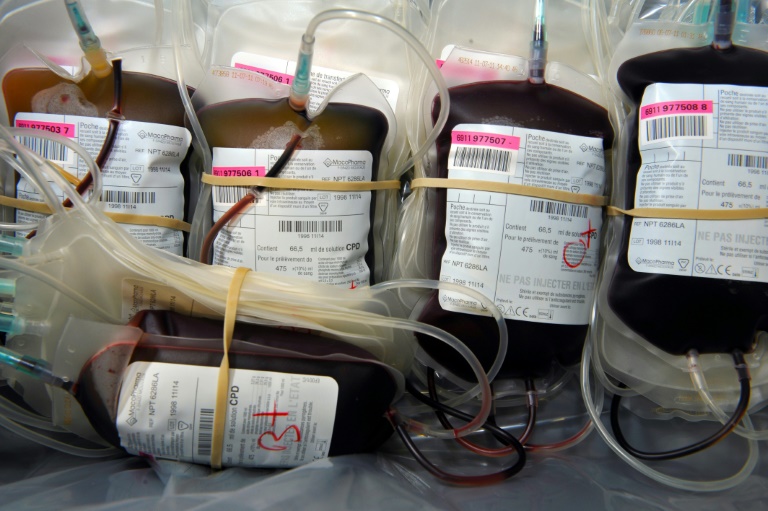
The surgical procedure has been delayed because the baby’s parents do not want any blood transfused that could have come from a donor vaccinated using mRNA vaccines.

Health authorities rejected the parents’ request for unvaccinated blood.

New Zealand’s blood service does not make a distinction between donations from those vaccinated or unvaccinated against Covid, as there is no extra risk from using vaccinated blood.

The authorities want to take partial custody of the child, leaving the parents in charge of non-medical care, but allowing the procedure to go ahead.

Health New Zealand has said it applied to the court “with the best interests of the child in mind” following “extensive conversations” with the family.

“We know that it can be worrying when parents have a child who is unwell, and are making decisions about their care,” doctor Mike Shepherd from Health New Zealand said in a statement.

Around 150 anti-vaccination protesters were outside the court in Auckland on Tuesday to voice support for the family.

New Zealand’s strict response against Covid was widely regarded as one of the most successful in the world, with the country enjoying a low mortality rate even before a vaccine programme started.

But tough travel constraints, lockdowns and other restrictions caused concern about the erosion of civil liberties and sparked the emergence of small-but-vocal anti-vaccine and anti-restriction groups.

Ukraine races to restore power grid after Russia strikes

Ukraine worked to restore power on Tuesday after Russia’s latest wave of missile strikes caused power disruptions across the country, right as winter frost builds and temperatures plunge.

Out of the 70 missiles launched by Moscow, “most” were shot down, President Volodymyr Zelensky said, but the barrage still hit Ukraine’s already battered infrastructure. 

Fresh power cuts were announced in all regions “due to the consequences of shelling,” national electricity provider Ukrenergo said on Telegram.

The head of Ukrenergo said he had “no doubt that Russian military consulted with Russian power engineers during this attack”, judging by where the missiles landed. 

“The time that Russians chose for this attack was connected with their desire to inflict as much damage as possible,” Volodymyr Kudrytskyi told a Ukrainian news programme, explaining the attacks were launched as the country enters a “peak frost” period.

“Our repairmen will be working on the energy system restoration.”

Nearly half of Ukraine’s energy system has already been damaged after months of strikes on power infrastructure, leaving people in the cold and dark for hours at a time as outdoor temperatures drop below zero degrees Celsius (32 degrees Fahrenheit).

As missiles rained down on Kyiv, UN rights chief Volker Turk — who arrived over the weekend on a four-day visit — had to move his meetings with activists into an underground shelter. 

Zelensky announced in his nightly address that four were killed in Russia’s strikes.

But “our people never give up,” the president said in a video statement. 

Across the border in Russia’s Kursk region on Tuesday, an airfield saw a “drone attack”, said local governor Roman Starovoyt, without specifying where the drone originated. 

“As a result of a drone attack in the area of the Kursk airfield, an oil storage tank caught fire,” he said on social media, adding that there were no casualties. 

Tuesday’s incident comes a day after Moscow accused its neighbour of carrying out deadly drone strikes on two other airfields.

Russia also confirmed a “massive attack on Ukrainian military command systems and related defence, communications, energy and military facilities”.

– Moscow vows to keep fighting –

The latest violence comes just after Russia shrugged off a Western-imposed price cap on its oil exports, warning the move would not impact its military campaign in Ukraine.

The $60-per-barrel cap agreed by the European Union, G7 and Australia aims to restrict Russia’s revenue while making sure Moscow keeps supplying the global market.

“Russia’s economy has all the necessary potential to fully meet the needs and requirements of the special military operation,” Kremlin spokesman Dmitry Peskov told reporters, using Moscow’s term for its Ukraine offensive.

“These measures will not affect this,” he said.

Russia “will not recognise” the measures, which amounted to “a step towards destabilising the global energy markets”, he added.

The market price of a barrel of Russian Urals crude is currently around $65 dollars, just slightly higher than the $60 cap — suggesting the measure may have only a limited impact in the short term.

The cap is the latest in a number of measures spearheaded by Western countries and introduced against Russia — the world’s second-largest crude oil exporter — after Moscow sent troops into Ukraine over nine months ago.

It comes on top of an EU embargo on seaborne deliveries of Russian crude oil that came into force on Monday.

The embargo will prevent maritime shipments of Russian crude to the European Union, which account for two-thirds of the bloc’s oil imports from Russia, potentially depriving Moscow of billions of euros.

Kyiv had initially welcomed the price ceiling, but later said it would not do enough damage to Russia’s economy. 

Meanwhile, Russian state media released footage of President Vladimir Putin driving a Mercedes car across the Crimea bridge — the closest the 70-year-old leader has come to the frontline in Ukraine.

The bridge connects the annexed peninsula to the Russian mainland, and was damaged in a blast in October.

– ‘Impossible to prepare’ –

The G7 nations — Britain, Canada, France, Germany, Italy, Japan and the United States — along with Australia have said they are prepared to adjust the price ceiling of oil if necessary.

In recent months, gas prices have skyrocketed since Moscow halted deliveries to the EU in suspected retaliation for Western sanctions and the bloc struggled to find alternative energy suppliers.

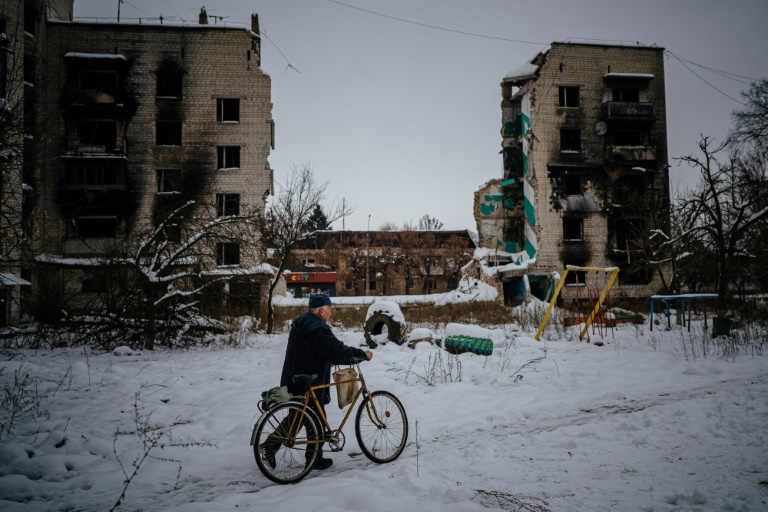
In the Ukrainian town of Borodianka, outside Kyiv, where snow has already coated the ground, locals recently gathered around wood-fired stoves inside tents to keep warm and cook food during the blackouts. 

“We are totally dependent on electricity… One day we had no electricity for 16 hours,” Irina, who had come to the tent with her child, told AFP. 

Volunteer Oleg said it was hard to say how Ukraine would manage in the coming winter months. 

“It is impossible to prepare for this winter because no one has lived in these conditions before,” he said. 

Close Bitnami banner
Bitnami