World

Indonesia's Mount Semeru erupts, forcing thousands to flee

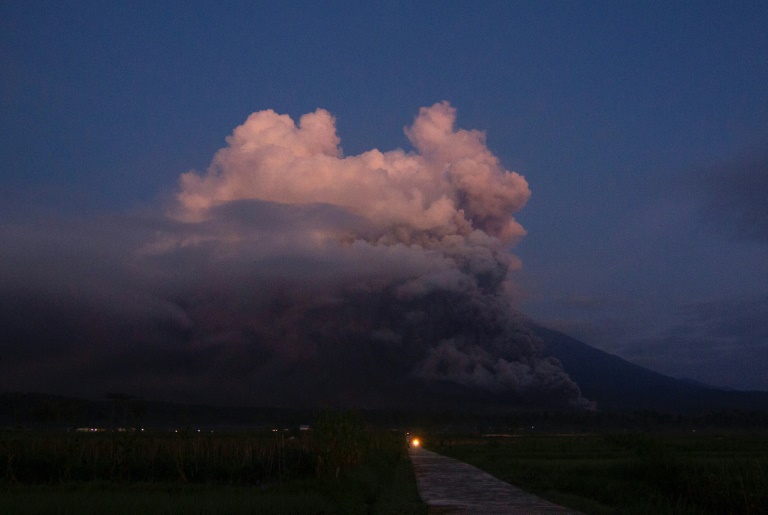
Indonesia’s Mount Semeru erupted Sunday spewing hot ash clouds a mile high and rivers of lava down its side while sparking the evacuation of nearly 2,000 people exactly one year after its last major eruption killed dozens.

The burst from the highest mountain on Indonesia’s main island of Java, around 800 kilometres (500 miles) southeast of the capital Jakarta, prompted authorities to raise the alert status for the volcano to the highest level.

Villages around Semeru were being battered by a mix of volcanic ash and monsoon rains. Videos shared with AFP by a local rescue group showed a huge black cloud rising from the volcano, engulfing the sky and blocking the sun.

One resident described the panic when the ash clouds descended on their village.

“It was dark, I could not see anything. It was raining water and ash,” the person, who did not want to be named, told AFP.

“I didn’t know where to take shelter. I had to flee.”

“Hot avalanches” triggered by piles of lava at the top flooded down the 3,676-metre (12,060 feet) mountain, said Abdul Muhari, a spokesperson for Indonesia’s National Disaster Mitigation Agency (BNPB).

A spokesperson for Indonesia’s Volcanology and Geological Disaster Mitigation Centre (PVMBG) told broadcaster Kompas TV that the higher alert level meant local villages were in danger.

However, no casualties or injuries were reported on Sunday after the PVMBG warned nearby residents not to travel within eight kilometres (five miles) of the crater.

The geological agency said that by evening Semeru was “still in the eruption phase” though the size of the ash clouds was decreasing.

“Overall the activity is still very high,” it said in a statement.

The internet in the area was down and phone signals were patchy after the eruption, according to an AFP journalist.

– Rain and ash –

The BNPB said 1,979 people had been taken to 11 shelters, with at least six villages affected by the eruption.

Local administration official Indah Amperawati Masdar said residents would only be allowed to return home when the hot clouds had dissipated.

Residents were also told to avoid a southeastern area 13 kilometres (eight miles) along a river in the direction the ash was travelling.

The majority of residents in the two villages most at risk had been evacuated, said Patria Dwi Hastiadi, a spokesperson for the Lumajang Disaster Mitigation Agency.

Locals fled on motorbikes, some three at a time with their belongings, while others helped the elderly evacuate safely. One resident was covered in mud that had rained down on him as a mix of rain and ash.

Japan’s weather agency had earlier warned that a tsunami could be triggered by the eruption affecting southern islands in the country’s Okinawa prefecture, Kyodo news agency reported. But Japan’s meteorological agency later said no significant tidal changes were observed.

Semeru last erupted exactly one year ago, killing at least 51 people and damaging more than 5,000 homes.

That disaster left entire streets filled with mud and ash that swallowed houses and vehicles, forcing nearly 10,000 people to seek refuge.

Semeru’s alert status had remained at its second-highest level since a previous major eruption in December 2020.

Indonesia sits on the Pacific Ring of Fire, where the meeting of continental plates causes substantial volcanic and seismic activity.

The Southeast Asian archipelago nation has nearly 130 active volcanoes.
More than 500 Ukrainian localities without power: ministry

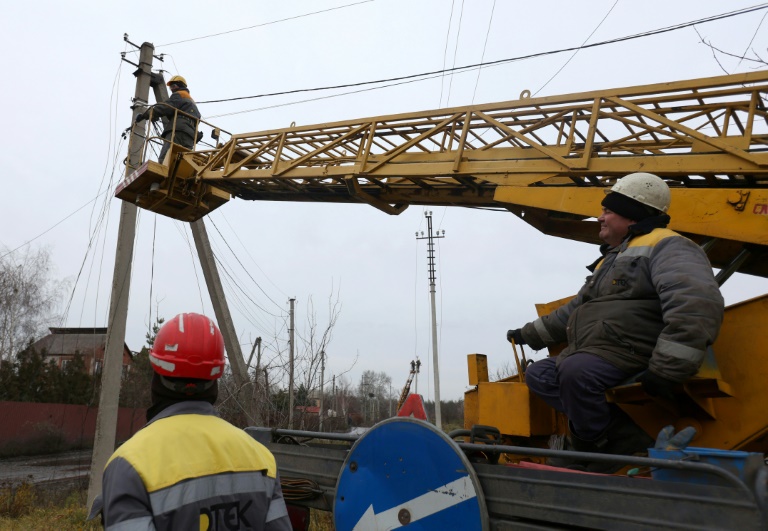
More than 500 Ukrainian localities remained without power Sunday following weeks of Russian airstrikes on the electric grid, an interior ministry official said.

“The enemy continues to attack the country’s essential infrastructure. Currently, 507 localities in eight regions of our country are cut off from electricity supplies,” deputy interior minister Yevgueny Yenin told Ukrainian television.

“The Kharkiv region is the worst hit with 112 isolated villages,” Yenin added.

Another 90 villages were cut off in the Donetsk and Kherson regions, he said, with others in the regions of Mykolaiv, Zaporizhzhia and Lugansk.

On Saturday, Ukrainian authorities — including Mykolaiv region governor Vitali Kim — had once again urged civilians to bear up in the face of continually deteriorating early winter conditions and regular power outages. 

Repeated daily power cuts have left millions of people without heat or lighting while outside temperatures have dropped below zero Celsius (32 Fahrenheit) in recent days.

With further strikes on the network widely expected, Ukrainians fear a difficult prolonged winter as well as a flood of departures by refugees from a war now into a tenth month.

Private Ukrainian energy operator DTEK said Thursday that nearly half of Ukraine’s electricity grid remains damaged after Russia began targeting Ukrainian energy facilities in October following a series of humiliating military defeats on the ground.

More than 500 Ukrainian localities without power: ministry

More than 500 Ukrainian localities remained without power Sunday following weeks of Russian airstrikes on the electric grid, an interior ministry official said.

“The enemy continues to attack the country’s essential infrastructure. Currently, 507 localities in eight regions of our country are cut off from electricity supplies,” deputy interior minister Yevgueny Yenin told Ukrainian television.

“The Kharkiv region is the worst hit with 112 isolated villages,” Yenin added.

Another 90 villages were cut off in the Donetsk and Kherson regions, he said, with others in the regions of Mykolaiv, Zaporizhzhia and Lugansk.

On Saturday, Ukrainian authorities — including Mykolaiv region governor Vitali Kim — had once again urged civilians to bear up in the face of continually deteriorating early winter conditions and regular power outages. 

Repeated daily power cuts have left millions of people without heat or lighting while outside temperatures have dropped below zero Celsius (32 Fahrenheit) in recent days.

With further strikes on the network widely expected, Ukrainians fear a difficult prolonged winter as well as a flood of departures by refugees from a war now into a tenth month.

Private Ukrainian energy operator DTEK said Thursday that nearly half of Ukraine’s electricity grid remains damaged after Russia began targeting Ukrainian energy facilities in October following a series of humiliating military defeats on the ground.

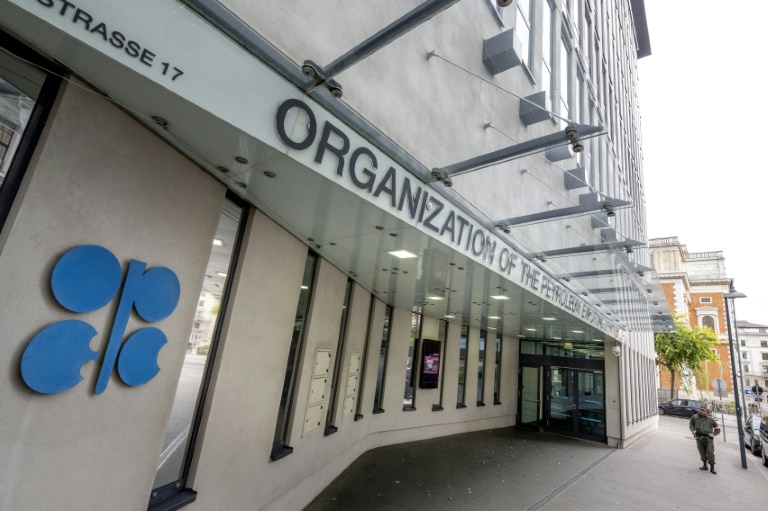
OPEC+ likely to maintain oil output levels

Major oil-producing countries led by Saudi Arabia and Russia look set to maintain their current output levels at a meeting Sunday, ahead of fresh sanctions against Moscow coming into force.

The alliance’s Joint Ministerial Monitoring Committee (JMMC) kicked off their gathering Sunday, a source close to OPEC told AFP, ahead of the full ministerial conference afterwards which was expected to be brief.

The 13-member Organization of the Petroleum Exporting Countries will consult with 10 other oil-producing nations including Russia — known collectively as OPEC+ — to review their decision in October to cut production by two million barrels per day.

On Friday, the EU, G7 and Australia agreed a $60-per-barrel price cap on Russian oil, which will come into effect on Monday or soon after, alongside an EU embargo on maritime deliveries of Russian crude oil.

It will prevent seaborne shipments of Russian crude to the European Union, which account for two thirds of the bloc’s oil imports from Russia, an attempt to deprive Moscow’s war chest of billions of euros.

While Russia denounced the incoming price cap on Saturday, threatening to suspend deliveries to any country that adopted the measure, Ukraine suggested the cap should have been set even lower.

For OPEC+, the big unknown in the oil equation is how heavily sanctions will hit Russian supply.

“The uncertainty for Russian supply is significant”, DNB analysts said. OPEC would therefore “aim for a low-profile meeting that leaves existing production quotas unchanged”.

– An ‘uncomfortable position’ –

Moscow’s threat to suspend deliveries to countries abiding by the price cap would put “some in a very uncomfortable position”, said OANDA analyst Craig Erlam: “Choosing between losing access to cheap Russian crude or facing G7 sanctions”.

The choice of a virtual OPEC+ meeting instead of an in-person conference at the Vienna headquarters, suggested a policy rollover, UniCredit analyst Edward Moya said.

But “deeper oil output cuts” could still not be ruled out at this stage.

Amid economic gloom fuelled by soaring inflation and fears of China’s weaker energy demand due to its Covid-related restrictions, the two global crude benchmarks remained close to their lowest level of the year, far from their March peaks.

Since the group’s last meeting in early October, Brent North Sea oil and its US equivalent, WTI, have lost more than six percent of their value.

But speculation that a further OPEC+ production cut might still be on the table boosted prices throughout the week.

“OPEC+ might feel compelled to adopt a more aggressive stance” by cutting or threatening to cut production even further, UniCredit analyst Edoardo Campanella said. 

“Russia might also retaliate by leveraging its influence within OPEC+ to push for more production cuts down the road, thus exacerbating the global energy crisis,” he added.

World Cup host Qatar seeks to change minds on Islam

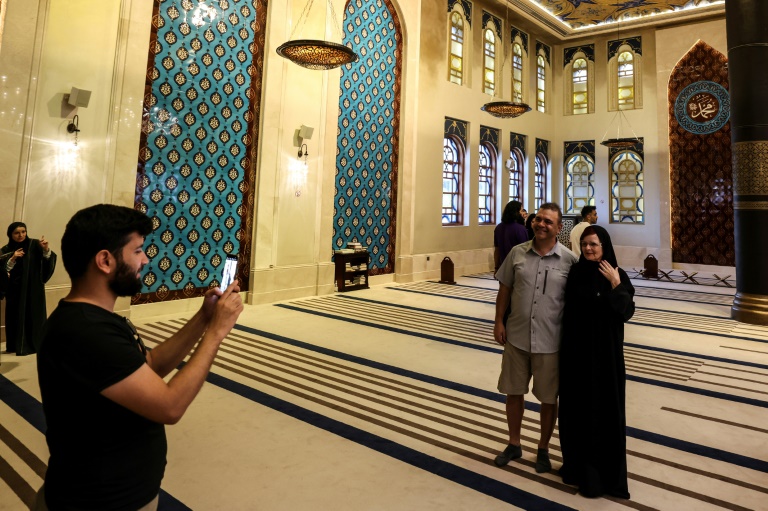
Proudly Muslim Qatar has taken advantage of the World Cup to reach out to the hundreds of thousands of visiting fans to change minds about Islam or even make conversions.

The Gulf emirate is the first Muslim nation to stage a football World Cup and its gas riches have endowed it with an array of grand mosques to pique the curiosity of visitors.

Canadian couple Dorinel and Clara Popa listened to the call to prayer at an Ottoman-style mosque in Doha’s Katara cultural district.

It is known as Doha’s Blue Mosque because of the sumptuous mosaics of blue and purple tiles on the walls. A guide took the couple on a tour of the elaborate interior dominated by a giant chandelier.

Dorinel Popa, a 54-year-old accountant, said the couple were taking a first look at Islam.  

“We have prejudice against the culture and the people,” because of a lack of exposure to others, he said.

– Coffee and faith –

“We have some thoughts in our heads and now maybe some of them will change,” added his wife, a 52-year-old doctor.

The Qatar Guest Center, which supervises the Blue Mosque, has brought dozens of Muslim preachers from around the world to Qatar for the tournament.

Outside the mosque there are booklets in different languages explaining Islam and the Prophet Mohammed, along with Arabic coffee and dates.

Syrian volunteer Ziad Fateh said the World Cup is “an opportunity to introduce millions of people to Islam” and change “misconceptions” about a religion that many in the West link to radicalism.

“We explain to people more about ethics, the importance of family bonding, and respect for neighbours and non-Muslims,” he added.

Near the mosque, volunteers managed a table aimed at visiting women with a sign saying: “Ask me about Qatar.” 

Those who stop are also offered Arabic coffee.

A Palestinian volunteer, Somaya, said most of the questions concerned “the veil, polygamy and whether women are oppressed in Islam.”

Qatar’s record on women’s and LGBTQ rights has been heavily scrutinised in connection with the World Cup.

Nearby, visitors can watch a five minute virtual reality tour of Islam.

The campaign is being pursued across Qatar.

– ‘Happiness’ in Islam –

In the Pearl district, where many expatriates live and frequent its expensive cafes and restaurants, murals have been painted with quotes from the Prophet Mohammed urging good morality.

Upscale shopping malls carry advertisements promoting Islam.

In the Souq Waqif market, where thousands of fans gather every day, free books and pamphlets are left in one alley with a sign saying: “If you’re looking for happiness… you will find (it) in Islam”.

Near the Souq, the Sheikh Abdulla bin Zaid Islamic Cultural Center is open 12 hours a day for tours.

Some Muslim leaders in Qatar have called for efforts to convert visiting football fans to Islam.

Sultan bin Ibrahim Al Hashemi, a professor of sharia law at Qatar University who heads the Voice of Islam radio station, said the World Cup should be used to find new converts as well as counter Islamophobia.

Hashemi told AFP that in his meetings with foreign fans: “I will offer them to convert to Islam.

“If I find the opportunity, I will offer them Islam with ease and grace, and if I do not find the opportunity, I will tell them that you are our guests and our brothers in humanity.”

But he stressed that Islam does not accept conversion through coercion.

Social media posts have claimed that hundreds of fans have changed faith but AFP’s fact-checking service has shown those claims are fake.

An official at Qatar’s ministry of religious endowments told AFP that the goal of the state was not “the number of converts to Islam, but rather the number of those who change their opinion about it.”

Fans said they found the idea of World Cup conversions absurd.

“It is a good opportunity to learn more about Islam,” said Petr Lulic, a 21-year-old Croatian in Qatar with his family. “But no one embraces a new religion during a football tournament.”

Indonesia villagers race to escape eruption as sky turns black

Thousands of villagers living near Indonesia’s Mount Semeru were racing for refuge Sunday to the wail of emergency sirens as lava snaked towards their homes under a black sky after the volcano erupted.

Locals fled on motorbikes sometimes three at a time as a mushroom cloud of ash approached and monsoon rains lashed the area in East Java.

“It was dark and raining. The rain did not consist only of water, but also volcanic ash. It was like mud,” said an AFP journalist on the scene.

Indonesian authorities raised their alert level for the volcano to its highest after the crater spewed hot ash a mile into the sky.

It came only a year after the volcano last erupted, killing at least 51 people and laying waste to homes.

Rescue workers were once again rushing to evacuate villagers in the area Sunday as a colossal plume of ash engulfed all light.

One emergency responder, Gunawan, filmed the clouds above as a midday sky turned ominously dark as though midnight.

“It’s getting dark, bro,” he said to the camera as a seismograph whistled in the background.

The internet was down and phone signals were patchy but villagers were alerted to the danger by sirens and the beating of bamboo drums by local volunteers.

Semeru is the highest mountain on Indonesia’s main island of Java and lies around 800 kilometres (500 miles) southeast of the capital Jakarta among a cluster of craters in a moon-like landscape.

The Southeast Asian archipelago nation has nearly 130 active volcanoes.
– ‘Cheers’ –

The eruption last year left locals combing through ruined belongings after their homes were blanketed in ash.

It remains to be seen what damage the eruption will inflict this time with the lava still edging towards homes and their owners told to remain eight kilometres (five miles) from the crater.

Many villagers, mostly women and children, took shelter in local halls and schools, some as far as 20 kilometres (12 miles) away.

Gunawan, who like many Indonesians goes by only one name, said everyone was safe for now, even if their possessions and homes might not be by day’s end.

As he flashed a peace sign at a camera against the backdrop of dark haze and monsoon rains at his rescue post, he tried to reassure people.

“Salam tangguh, salam presisi!” he said, meaning “cheers”, his voice relaxed but muffled behind a gas mask.

Shanghai axes some Covid testing requirements

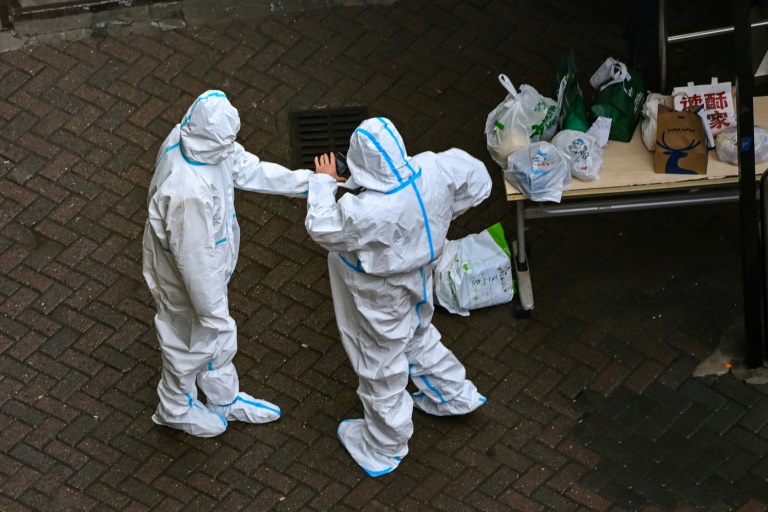
Authorities in China’s financial hub of Shanghai will from Monday scrap some testing requirements in the country’s latest relaxing of its strict zero-Covid policy following nationwide protests unseen in decades.

Multiple cities have started to roll back some restrictions after public resentment at harsh and prolonged containment measures reached a boiling point last weekend, when spontaneous protests broke out in multiple Chinese cities.

Shanghai residents will no longer need a 48-hour negative test result to use public transport and enter outdoor venues such as parks and tourist attractions, authorities said in a WeChat post on Sunday.

The city of more than 23 million was sealed off for months this year, weighing heavily on domestic economic activity.

Shanghai follows multiple cities including Beijing, Tianjin, Shenzhen and Chengdu, which all cancelled the testing requirement for public transport on Saturday.

Beijing’s local authorities also abandoned on Saturday real-name registration that had been required to buy cold and fever medicine.

Chinese health authorities last month released a list of measures designed to “optimise” zero-Covid and minimise its socio-economic impact, but local enforcement of the measures has varied widely.

The northeastern city of Jinzhou said Thursday it would continue to impose lockdowns because “it would be a shame to not achieve zero-Covid when we are able to”, before backtracking the next day after public outcry.

Officials in the eastern city of Jinan said Sunday that residents would still need to scan a health code and have a recent negative test result to access public toilets.

Protests erupted over the past week in residential compounds in cities including Beijing, Shanghai, Wuhan and Guangzhou over what residents deemed were excessive measures.

Germany's Scholz weathers shocks in turbulent first year

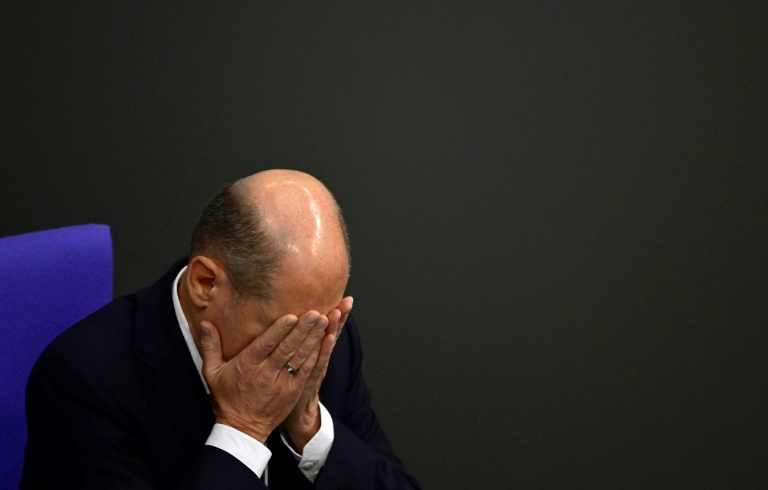
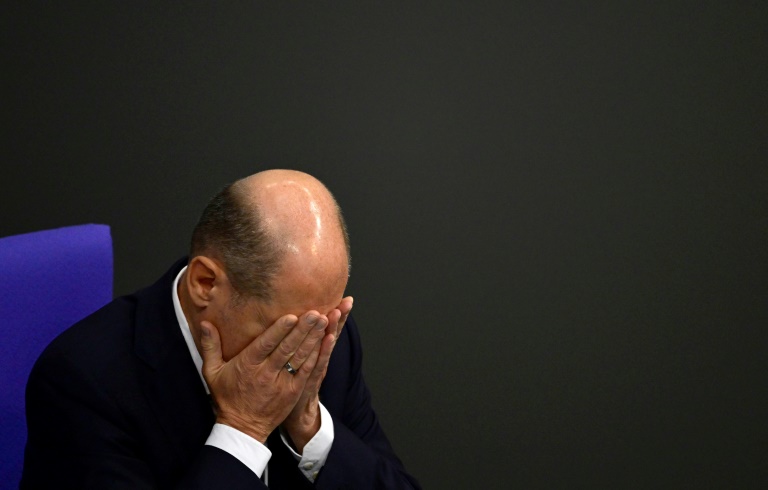
A war in his backyard, galloping economic crisis, and unhappy partners at home and abroad — German Chancellor Olaf Scholz has weathered unprecedented shocks in his first year, while struggling to make a mark on the global stage.

The ex-finance minister took office promising continuity with the era of Angela Merkel, who ended her 16 years as chancellor a widely respected figure.

But Russia’s invasion of Ukraine has forced him to rip up Germany’s post-war axioms and chart out new economic, defence and geopolitical directions for the country that prizes — and is valued for — its stability and predictability.

“We never before had a government faced with such a dramatically worsening situation, when it came to foreign and security policy, but also of course energy policy,” political scientist Ursula Muench told AFP.

Scholz’s coalition of his Social Democrats and partners Greens and liberals FDP had taken office planning ambitious climate policies and budget restraint. 

But as Moscow dwindled its energy supplies in the wake of the war, Germany has had to halt its planned nuclear exit, restart mothballed coal power stations while burning through a budgetary hole in a scrum for oil and gas to replace Russian supplies.

And in a turning point for a country whose role on the world stage was still affected by memories of World War II, Scholz announced a historic shift on defence, vowing to re-arm Germany with a massive boost in military spending.

“Going by the dramatic events this year, he did pretty well,” said Nils Diederich, a political scientist at Berlin’s Free University. 

– Turning point –

But Rachel Rizzo, a senior fellow at US think tank the Atlantic Council’s Europe Center, warned that losing momentum was a danger, even if the initial response was “impressive”.

“I think not being able to follow through with defence and security commitments is a concern,” she told AFP.

Not only is Germany trying to replenish its own military stocks, it is facing intense pressure from Ukraine to deliver what it has to help in the fightback against Russia.

The defence spending is high at a time when the treasury is also being pressed to help cushion a price shock fuelled by the energy crisis.

Huge investments are also required for the export giant to manage an economic transformation of reliance on cheap Russian energy or Chinese components to a diversified approach.

And governing in a three-way coalition means resolving each challenge inevitably involves squabbles that could unravel the fragile partnership.

Scholz’s government has managed to implement part of its programme, including raising the minimum wage and reforming unemployment benefits.

But with myriad crises not going away, the chancellor’s popularity ratings have suffered. 

A survey by the Insa institute published Sunday in tabloid Bild showed 58 percent of Germans are dissatisfied with Scholz — compared with just 22 percent a year ago — and 64 percent are dissatisfied with his government, up from 36 percent. 

– ‘Going it alone’ –

As well as disagreements at home, there have been tensions with partners abroad.

European Union allies were upset that Scholz announced a massive 200-billion-euro ($207-billion) energy fund without first consulting them, complaining he should have focused on coming up with EU-wide measures.

Tensions have also arisen in the key relationship between Berlin and Paris over issues ranging from the energy fund to German plans for defence procurement.

Unlike Merkel, who, in her time, was widely respected as the voice to reckon with in Europe, Scholz has so far failed to step into the role on the international stage.

Merkel’s departure “has left a void”, said Eric Maurice, from the Brussels office of the Robert Schuman Foundation.

Scholz is “struggling to make his mark at the European level… He is still trying to find his bearings, he does not have Merkel’s experience.”

The view Scholz was seeking to “go it alone” was reinforced when he made the first visit to China by a G7 leader since the start of the pandemic in November, accompanied by a delegation of German business leaders.

The chancellor faced accusations he was pursuing the same mercantilist, trade-focused foreign policy of previous German governments, which led to economic ties flourishing with authoritarian Russia, but ultimately left Berlin vulnerable.

As Scholz heads into his second year in the job, many of the open challenges will continue to entangle him.

High energy prices will remain a major problem, particularly for electricity-hungry German manufacturers, said Sudha David-Wilp, Berlin office director of US think tank the German Marshall Fund.

“Ensuring German competitiveness because of the increase in energy costs, particularly for industries like chemicals and steel manufacturing, is the big challenge for Scholz,” she said.

The energy fund “is just a short-term fix. No one knows when energy prices are going to come down to pre-war levels”.

Germany's Scholz weathers shocks in turbulent first year

A war in his backyard, galloping economic crisis, and unhappy partners at home and abroad — German Chancellor Olaf Scholz has weathered unprecedented shocks in his first year, while struggling to make a mark on the global stage.

The ex-finance minister took office promising continuity with the era of Angela Merkel, who ended her 16 years as chancellor a widely respected figure.

But Russia’s invasion of Ukraine has forced him to rip up Germany’s post-war axioms and chart out new economic, defence and geopolitical directions for the country that prizes — and is valued for — its stability and predictability.

“We never before had a government faced with such a dramatically worsening situation, when it came to foreign and security policy, but also of course energy policy,” political scientist Ursula Muench told AFP.

Scholz’s coalition of his Social Democrats and partners Greens and liberals FDP had taken office planning ambitious climate policies and budget restraint. 

But as Moscow dwindled its energy supplies in the wake of the war, Germany has had to halt its planned nuclear exit, restart mothballed coal power stations while burning through a budgetary hole in a scrum for oil and gas to replace Russian supplies.

And in a turning point for a country whose role on the world stage was still affected by memories of World War II, Scholz announced a historic shift on defence, vowing to re-arm Germany with a massive boost in military spending.

“Going by the dramatic events this year, he did pretty well,” said Nils Diederich, a political scientist at Berlin’s Free University. 

– Turning point –

But Rachel Rizzo, a senior fellow at US think tank the Atlantic Council’s Europe Center, warned that losing momentum was a danger, even if the initial response was “impressive”.

“I think not being able to follow through with defence and security commitments is a concern,” she told AFP.

Not only is Germany trying to replenish its own military stocks, it is facing intense pressure from Ukraine to deliver what it has to help in the fightback against Russia.

The defence spending is high at a time when the treasury is also being pressed to help cushion a price shock fuelled by the energy crisis.

Huge investments are also required for the export giant to manage an economic transformation of reliance on cheap Russian energy or Chinese components to a diversified approach.

And governing in a three-way coalition means resolving each challenge inevitably involves squabbles that could unravel the fragile partnership.

Scholz’s government has managed to implement part of its programme, including raising the minimum wage and reforming unemployment benefits.

But with myriad crises not going away, the chancellor’s popularity ratings have suffered. 

A survey by the Insa institute published Sunday in tabloid Bild showed 58 percent of Germans are dissatisfied with Scholz — compared with just 22 percent a year ago — and 64 percent are dissatisfied with his government, up from 36 percent. 

– ‘Going it alone’ –

As well as disagreements at home, there have been tensions with partners abroad.

European Union allies were upset that Scholz announced a massive 200-billion-euro ($207-billion) energy fund without first consulting them, complaining he should have focused on coming up with EU-wide measures.

Tensions have also arisen in the key relationship between Berlin and Paris over issues ranging from the energy fund to German plans for defence procurement.

Unlike Merkel, who, in her time, was widely respected as the voice to reckon with in Europe, Scholz has so far failed to step into the role on the international stage.

Merkel’s departure “has left a void”, said Eric Maurice, from the Brussels office of the Robert Schuman Foundation.

Scholz is “struggling to make his mark at the European level… He is still trying to find his bearings, he does not have Merkel’s experience.”

The view Scholz was seeking to “go it alone” was reinforced when he made the first visit to China by a G7 leader since the start of the pandemic in November, accompanied by a delegation of German business leaders.

The chancellor faced accusations he was pursuing the same mercantilist, trade-focused foreign policy of previous German governments, which led to economic ties flourishing with authoritarian Russia, but ultimately left Berlin vulnerable.

As Scholz heads into his second year in the job, many of the open challenges will continue to entangle him.

High energy prices will remain a major problem, particularly for electricity-hungry German manufacturers, said Sudha David-Wilp, Berlin office director of US think tank the German Marshall Fund.

“Ensuring German competitiveness because of the increase in energy costs, particularly for industries like chemicals and steel manufacturing, is the big challenge for Scholz,” she said.

The energy fund “is just a short-term fix. No one knows when energy prices are going to come down to pre-war levels”.

Opec+ likely to maintain oil output levels

Major oil-producing countries led by Saudi Arabia and Russia look set to maintain their current output levels at a meeting Sunday, ahead of fresh sanctions against Moscow coming into force.

The 13-member Organization of the Petroleum Exporting Countries (OPEC) is due to consult with 10 other oil-producing nations, including Russia, to review their decision in October to cut production by two million barrels per day.

The OPEC+ videoconference will take place from 1100 GMT Sunday.

On Friday, the EU, G7 and Australia agreed a $60-per-barrel price cap on Russian oil, which will come into effect on Monday or soon after, alongside an EU embargo on maritime deliveries of Russian crude oil.

It will prevent seaborne shipments of Russian crude to the European Union, which account for two thirds of the bloc’s oil imports from Russia, an attempt to deprive Moscow’s war chest of billions of euros.

While Russia denounced the incoming price cap on Saturday, threatening to suspend deliveries to any country that adopted the measure, Ukraine suggested the cap should have been set even lower.

For OPEC+, the big unknown in the oil equation is how heavily sanctions will hit Russian supply.

“The uncertainty for Russian supply is significant”, DNB analysts said. OPEC would therefore “aim for a low-profile meeting that leaves existing production quotas unchanged”.

– An ‘uncomfortable position’ –

Moscow’s threat to suspend deliveries to countries abiding by the price cap would put “some in a very uncomfortable position”, said OANDA analyst Craig Erlam: “Choosing between losing access to cheap Russian crude or facing G7 sanctions”.

The choice of a virtual OPEC+ meeting instead of an in-person conference at the Vienna headquarters, suggested a policy rollover, UniCredit analyst Edward Moya said.

But “deeper oil output cuts” could still not be ruled out at this stage.

Amid economic gloom fuelled by soaring inflation and fears of China’s weaker energy demand due to its Covid-related restrictions, the two global crude benchmarks remained close to their lowest level of the year, far from their March peaks.

Since the group’s last meeting in early October, Brent North Sea oil and its US equivalent, WTI, have lost more than six percent of their value.

But speculation that a further OPEC+ production cut might still be on the table boosted prices throughout the week.

“OPEC+ might feel compelled to adopt a more aggressive stance” by cutting or threatening to cut production even further, UniCredit analyst Edoardo Campanella said. 

“Russia might also retaliate by leveraging its influence within OPEC+ to push for more production cuts down the road, thus exacerbating the global energy crisis,” he added.

Close Bitnami banner
Bitnami