World

Liberian president's long stay abroad criticised

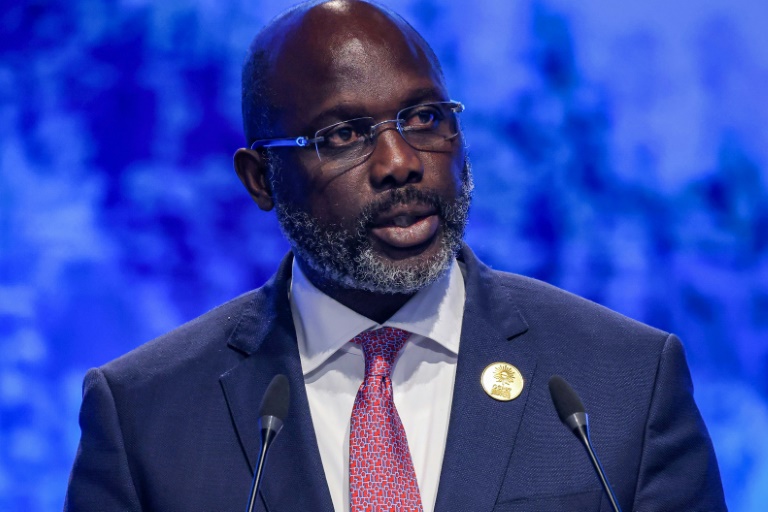
Liberian President George Weah’s long absence from the country has raised eyebrows and prompted criticism, leading one opposition figure to ask if the West African nation is running on “autopilot”.

Weah went abroad at the end of October for a string of political gatherings in numerous countries — and to watch his footballer son represent the United States at the World Cup in Qatar.

Since then, the president — himself a former football star — has not been seen in his homeland where people are battling soaring prices and shortages of basic goods.

Even those with an understanding of the demands of top-flight diplomacy, or the enduring love of the beautiful game, are beginning to wonder.

Weah has shared pictures and video of himself with his son in Qatar on Twitter, speaking of being a “proud daddy” as the US national team qualified for the knockout stages.

But images of Weah enjoying himself in the stands in Qatar — where he is a “guest of honour” — while Liberians struggle have not gone down well with many compatriots venting their anger on social media.

“This one here has passed the limit now… who (has) he left us with?” 23-year-old Abraham Kaneh told AFP in the capital Monrovia.

“He’s not going to do the work of the Liberian people. He went to do the work of his own son. He did not go on our plea, he’s gone to see other friends,” said fellow Monrovian Momo Fully.

Well-known media personality Henry Costa joked online that the president would extend his absence to January if his son Timothy scored against England last month.

– ‘Abandoning the entire country’ –

New York-born Timothy Weah is one of many people to hold US and Liberian nationality, with the countries maintaining close ties dating back to Americans’ role in the creation of the West African state in the 19th century.

Plenty of football-loving Liberians follow the younger Weah’s performances for his French club Lille, but for opposition politician Lewis Browne that does not justify the president’s globe-trotting activities.

“Weah continues to insult the intelligence of Liberians and exhibit a high degree of don’t-care attitude by abandoning the entire country and citizens to witness soccer matches,” he said.

Browne also accused Weah of misusing public money to lead a celebrity lifestyle.

The opposition has also condemned what it sees as the president’s gallivanting between Qatar and international summits in Morocco, Egypt, France, Monaco and the United States, with former vice president Joseph Boakai saying Liberia was “on autopilot”.

“We continue to witness other acts of poor leadership, irresponsible behaviour, lack of concern, impunity, and wanton misuse of our finances,” the Unity Party heavyweight added, suggesting others could have represented the country in Weah’s place.

– A ‘necessary’ absence –

Other Liberians defended Weah, who acquired iconic status after becoming the first and only African to win football’s most prestigious individual award, the Ballon d’Or, in 1995. 

“I support the president. The man wants to see his son playing, what’s wrong with that?” Alex Bono, 31, told AFP.

Entrepreneur Antoinette Anderson praised Weah for “trying to render services to the Liberian people” and “gather funds out there to make Liberia a better place to live”.

“I don’t have problems with the events he went on. The fact he went there on behalf of the country, I think it’s necessary,” added Tarlue Zeyon in Monrovia.

Weah last month extended his stint abroad, the longest since he became president, by another 25 days and is due back in Liberia on December 18.

His government is also facing criticism over its handling of a census that must take place before elections in 2023.

Weah, who came to power in 2017 on a pledge to fight poverty and corruption, has been chosen by his party to seek re-election, but critics say he has failed to honour his commitments.
As chatbot sophistication grows, AI debate intensifies

California start-up OpenAI has released a chatbot capable of answering a variety of questions, but its impressive performance has reopened the debate on the risks linked to artificial intelligence (AI) technologies.

The conversations with ChatGPT, posted on Twitter by fascinated users, show a kind of omniscient machine, capable of explaining scientific concepts and writing scenes for a play, university dissertations or even functional lines of computer code.

“Its answer to the question ‘what to do if someone has a heart attack’ was incredibly clear and relevant,” Claude de Loupy, head of Syllabs, a French company specialized in automatic text generation, told AFP.

“When you start asking very specific questions, ChatGPT’s response can be off the mark,” but its overall performance remains “really impressive,” with a “high linguistic level,” he said. 

OpenAI, cofounded in 2015 in San Francisco by billionaire tech mogul Elon Musk, who left the business in 2018, received $1 billion from Microsoft in 2019. 

The start-up is best known for its automated creation software: GPT-3 for text generation and DALL- E for image generation.

ChatGPT is able to ask its interlocutor for details, and has fewer strange responses than GPT-3, which, in spite of its prowess, sometimes spits out absurd results, said De Loupy.  

– Cicero –

“A few years ago chatbots had the vocabulary of a dictionary and the memory of a goldfish,” said Sean McGregor, a researcher who runs a database of AI-related incidents.

“Chatbots are getting much better at the ‘history problem’ where they act in a manner consistent with the history of queries and responses. The chatbots have graduated from goldfish status.” 

Like other programs relying on deep learning, mimicking neural activity, ChatGPT has one major weakness: “it does not have access to meaning,” says De Loupy.

The software cannot justify its choices, such as explain why its picked the words that make up its responses.

AI technologies able to communicate are, nevertheless, increasingly able to give an impression of thought.

Researchers at Facebook-parent Meta recently developed a computer program dubbed Cicero, after the Roman statesman.

The software has proven proficient at the board game Diplomacy, which requires negotiation skills.

“If it doesn’t talk like a real person — showing empathy, building relationships, and speaking knowledgeably about the game — it won’t find other players willing to work with it,” Meta said in research findings.

In October, Character.ai, a start-up founded by former Google engineers, put an experimental chatbot online that can adopt any personality.

Users create characters based on a brief description and can then “chat” with a fake Sherlock Holmes, Socrates or Donald Trump.

– ‘Just a machine’ –

This level of sophistication both fascinates and worries some observers, who voice concern these technologies could be misused to trick people, by spreading false information or by creating increasingly credible scams.

What does ChatGPT think of these hazards?

“There are potential dangers in building highly sophisticated chatbots, particularly if they are designed to be indistinguishable from humans in their language and behavior,” the chatbot told AFP. 

Some businesses are putting safeguards in place to avoid abuse of their technologies.

On its welcome page, OpenAI lays out disclaimers, saying the chatbot “may occasionally generate incorrect information” or “produce harmful instructions or biased content.”

And ChatGPT refuses to take sides.

“OpenAI made it incredibly difficult to get the model to express opinions on things,” McGregor said.

Once, McGregor asked the chatbot to write a poem about an ethical issue.

“I am just a machine, A tool for you to use, I do not have the power to choose, or to refuse. I cannot weigh the options, I cannot judge what’s right, I cannot make a decision On this fateful night,” it replied.

On Saturday, OpenAI cofounder and CEO Sam Altman took to Twitter, musing on the debates surrounding AI. 

“Interesting watching people start to debate whether powerful AI systems should behave in the way users want or their creators intend,” he wrote.

“The question of whose values we align these systems to will be one of the most important debates society ever has.”

As chatbot sophistication grows, AI debate intensifies

California start-up OpenAI has released a chatbot capable of answering a variety of questions, but its impressive performance has reopened the debate on the risks linked to artificial intelligence (AI) technologies.

The conversations with ChatGPT, posted on Twitter by fascinated users, show a kind of omniscient machine, capable of explaining scientific concepts and writing scenes for a play, university dissertations or even functional lines of computer code.

“Its answer to the question ‘what to do if someone has a heart attack’ was incredibly clear and relevant,” Claude de Loupy, head of Syllabs, a French company specialized in automatic text generation, told AFP.

“When you start asking very specific questions, ChatGPT’s response can be off the mark,” but its overall performance remains “really impressive,” with a “high linguistic level,” he said. 

OpenAI, cofounded in 2015 in San Francisco by billionaire tech mogul Elon Musk, who left the business in 2018, received $1 billion from Microsoft in 2019. 

The start-up is best known for its automated creation software: GPT-3 for text generation and DALL- E for image generation.

ChatGPT is able to ask its interlocutor for details, and has fewer strange responses than GPT-3, which, in spite of its prowess, sometimes spits out absurd results, said De Loupy.  

– Cicero –

“A few years ago chatbots had the vocabulary of a dictionary and the memory of a goldfish,” said Sean McGregor, a researcher who runs a database of AI-related incidents.

“Chatbots are getting much better at the ‘history problem’ where they act in a manner consistent with the history of queries and responses. The chatbots have graduated from goldfish status.” 

Like other programs relying on deep learning, mimicking neural activity, ChatGPT has one major weakness: “it does not have access to meaning,” says De Loupy.

The software cannot justify its choices, such as explain why its picked the words that make up its responses.

AI technologies able to communicate are, nevertheless, increasingly able to give an impression of thought.

Researchers at Facebook-parent Meta recently developed a computer program dubbed Cicero, after the Roman statesman.

The software has proven proficient at the board game Diplomacy, which requires negotiation skills.

“If it doesn’t talk like a real person — showing empathy, building relationships, and speaking knowledgeably about the game — it won’t find other players willing to work with it,” Meta said in research findings.

In October, Character.ai, a start-up founded by former Google engineers, put an experimental chatbot online that can adopt any personality.

Users create characters based on a brief description and can then “chat” with a fake Sherlock Holmes, Socrates or Donald Trump.

– ‘Just a machine’ –

This level of sophistication both fascinates and worries some observers, who voice concern these technologies could be misused to trick people, by spreading false information or by creating increasingly credible scams.

What does ChatGPT think of these hazards?

“There are potential dangers in building highly sophisticated chatbots, particularly if they are designed to be indistinguishable from humans in their language and behavior,” the chatbot told AFP. 

Some businesses are putting safeguards in place to avoid abuse of their technologies.

On its welcome page, OpenAI lays out disclaimers, saying the chatbot “may occasionally generate incorrect information” or “produce harmful instructions or biased content.”

And ChatGPT refuses to take sides.

“OpenAI made it incredibly difficult to get the model to express opinions on things,” McGregor said.

Once, McGregor asked the chatbot to write a poem about an ethical issue.

“I am just a machine, A tool for you to use, I do not have the power to choose, or to refuse. I cannot weigh the options, I cannot judge what’s right, I cannot make a decision On this fateful night,” it replied.

On Saturday, OpenAI cofounder and CEO Sam Altman took to Twitter, musing on the debates surrounding AI. 

“Interesting watching people start to debate whether powerful AI systems should behave in the way users want or their creators intend,” he wrote.

“The question of whose values we align these systems to will be one of the most important debates society ever has.”

As chatbot sophistication grows, AI debate intensifies

California start-up OpenAI has released a chatbot capable of answering a variety of questions, but its impressive performance has reopened the debate on the risks linked to artificial intelligence (AI) technologies.

The conversations with ChatGPT, posted on Twitter by fascinated users, show a kind of omniscient machine, capable of explaining scientific concepts and writing scenes for a play, university dissertations or even functional lines of computer code.

“Its answer to the question ‘what to do if someone has a heart attack’ was incredibly clear and relevant,” Claude de Loupy, head of Syllabs, a French company specialized in automatic text generation, told AFP.

“When you start asking very specific questions, ChatGPT’s response can be off the mark,” but its overall performance remains “really impressive,” with a “high linguistic level,” he said. 

OpenAI, cofounded in 2015 in San Francisco by billionaire tech mogul Elon Musk, who left the business in 2018, received $1 billion from Microsoft in 2019. 

The start-up is best known for its automated creation software: GPT-3 for text generation and DALL- E for image generation.

ChatGPT is able to ask its interlocutor for details, and has fewer strange responses than GPT-3, which, in spite of its prowess, sometimes spits out absurd results, said De Loupy.  

– Cicero –

“A few years ago chatbots had the vocabulary of a dictionary and the memory of a goldfish,” said Sean McGregor, a researcher who runs a database of AI-related incidents.

“Chatbots are getting much better at the ‘history problem’ where they act in a manner consistent with the history of queries and responses. The chatbots have graduated from goldfish status.” 

Like other programs relying on deep learning, mimicking neural activity, ChatGPT has one major weakness: “it does not have access to meaning,” says De Loupy.

The software cannot justify its choices, such as explain why its picked the words that make up its responses.

AI technologies able to communicate are, nevertheless, increasingly able to give an impression of thought.

Researchers at Facebook-parent Meta recently developed a computer program dubbed Cicero, after the Roman statesman.

The software has proven proficient at the board game Diplomacy, which requires negotiation skills.

“If it doesn’t talk like a real person — showing empathy, building relationships, and speaking knowledgeably about the game — it won’t find other players willing to work with it,” Meta said in research findings.

In October, Character.ai, a start-up founded by former Google engineers, put an experimental chatbot online that can adopt any personality.

Users create characters based on a brief description and can then “chat” with a fake Sherlock Holmes, Socrates or Donald Trump.

– ‘Just a machine’ –

This level of sophistication both fascinates and worries some observers, who voice concern these technologies could be misused to trick people, by spreading false information or by creating increasingly credible scams.

What does ChatGPT think of these hazards?

“There are potential dangers in building highly sophisticated chatbots, particularly if they are designed to be indistinguishable from humans in their language and behavior,” the chatbot told AFP. 

Some businesses are putting safeguards in place to avoid abuse of their technologies.

On its welcome page, OpenAI lays out disclaimers, saying the chatbot “may occasionally generate incorrect information” or “produce harmful instructions or biased content.”

And ChatGPT refuses to take sides.

“OpenAI made it incredibly difficult to get the model to express opinions on things,” McGregor said.

Once, McGregor asked the chatbot to write a poem about an ethical issue.

“I am just a machine, A tool for you to use, I do not have the power to choose, or to refuse. I cannot weigh the options, I cannot judge what’s right, I cannot make a decision On this fateful night,” it replied.

On Saturday, OpenAI cofounder and CEO Sam Altman took to Twitter, musing on the debates surrounding AI. 

“Interesting watching people start to debate whether powerful AI systems should behave in the way users want or their creators intend,” he wrote.

“The question of whose values we align these systems to will be one of the most important debates society ever has.”

Love behind bars: the Russian imprisoned poet and his fiancee

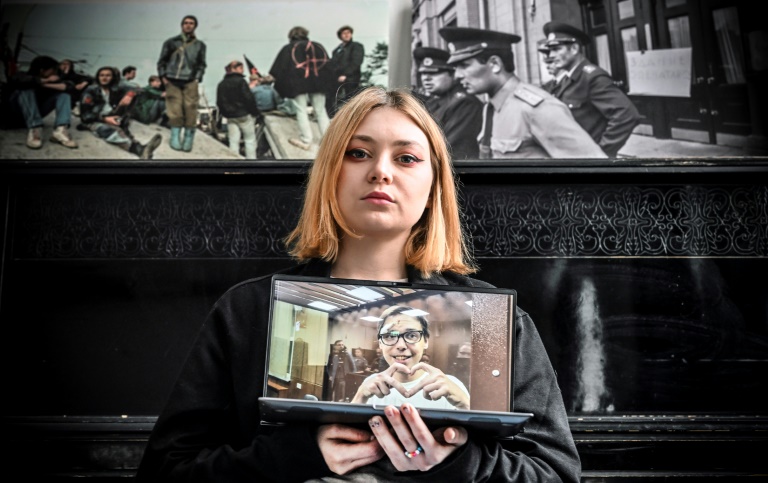
In a Moscow prison where he is held for reciting an anti-war poem in public, Artyom Kamardin scribbled some hearts in a letter to his girlfriend Alexandra Popova.

Showing AFP a scan of the letter on her computer, Popova bursts into laughter, pointing at what looks like a potato with legs.

“This is a cat,” her prisoner boyfriend had written next to his drawing. 

Popova, 28, giggles looking at it. 

She even got the clumsy drawing tattooed on her arm to “keep a bit of Artyom forever” on her body, she said. Unless, she jokes, someone was to “cut her skin off.” 

Her boyfriend Kamardin, 32, says police officers raped him when they arrested him for reading out the poem against President Vladimir Putin’s military attack on Ukraine. 

Her tattoo and dark humour helps Popova shield herself from the horror unleashed on the couple. 

Many families have been torn apart and separated by Putin’s decision to send troops to Ukraine on February 24. Thousands are grieving loved ones, others are painfully separated by military mobilisation or forced exile. 

As for Kamardin and Popova, it’s the repressive machine that has turned their lives into hell. 

– Sexual assault and forced apologies –

On September 26, masked officers barged into the young couple’s flat.

They grabbed the poet and took him to a separate room. 

There, as he told his lawyer, he was beaten and raped with a barbell. 

Popova, meanwhile, said officers had threatened her with “gang rape”, hit her and sprayed superglue on her cheeks and mouth. 

Immediately after the detention, Kamardin was forced to film an apology video — a common punishment in authoritarian regimes, but still rare in Moscow.

Popova says her boyfriend has been receiving threats of sexual assault in prison.

The couple has pressed charges and in November Russia’s Investigative Committee said it was checking possible “abuse of power”, according to a document seen by AFP.  

Popova remains traumatised by the ordeal.  

“I keep thinking that someone is going to kick the door down when I’m at home, that I am being followed or tapped,” she says.

“I know it’s paranoia, that it’s not real, but I have lost any sense of security.”

On the eve of his arrest, Kamardin went to the statue of poet Vladimir Mayakovsky in central Moscow, where dissidents have been gathering since the Soviet era. 

There, he recited his poem entitled “Kill me, militia man!” — an insult to pro-Russian separatists in eastern Ukraine. 

During his performance, Kamardin also shouted offensive slogans against the imperial “New Russia” project aiming to annex the south of Ukraine.

“His poetry is quite brutal, but he is a very sweet guy,” Popova says.

She has learned the legal article with which Kamardin was charged with by heart, reciting it like a poem: “article 282, part 2, point A.” 

It corresponds to “inciting hatred with violence of the threat of its use” and carries a maximum sentence of six years.

– Prison wedding –

The two met at a protest in 2019. 

They were initially friends but “love is unescapable,” she smiled. 

Back then, she worked for the opposition party Yabloko. He was an engineer with a passion for poetry.

They both lived within the Moscow liberal bubble, where politicised artists, journalists and activists mingled. 

“It’s a way of life, not simply a hobby,” Popova said.

But their bubble burst when the Ukraine offensive was launched and repression intensified.

Many fled, and thousands of fines and hundreds of prison sentences were handed out to those who denounced the military operation.

Kamardin and Popova were detained at an anti-war protest in spring. 

He got fined and she spent 25 days in detention.

Both now want to get married in prison.

This would make it easier for Popova to visit Kamardin, who she has not seen since his arrest. 

She was hoping to see him on November 24 at pre-trial detention hearing, where AFP saw her again. 

But her hopes were shattered. 

Kamardin was transferred to a psychiatric hospital and did not make it to court. 

Outside the tribunal, Popova is shaking in the cold. 

“I was hoping to see him, to hear him,” she says, sobbing. 

It’s late and the young woman lights a cigarette: “I have to go home.” 

And she disappears into the night. 

Colombia says pact reached with ELN rebels on displaced people

Colombian President Gustavo Petro said Saturday the ELN rebel group has agreed to allow a displaced indigenous community to return to its lands in the west of the nation, the first significant achievement in 12 days of peace talks. 

The ELN, or National Liberation Army, is the sole leftist insurgency yet to lay down weapons in Colombia.

“The first point of agreement that we reached with the ELN — in barely a week of these dialogues — is the return of the indigenous Embera people … to their reservations,” Petro said in a public appearance in Dabeiba, a town in northwestern Colombia. 

Petro did not say when the Embera would return to their lands in the departments of Choco and Risaralda. They had fled violence between drug gangs, outlawed right-wing militias and the ELN.

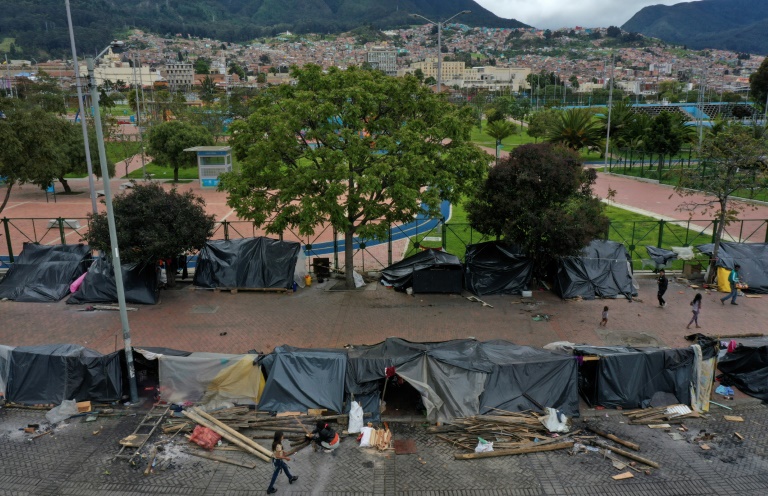
Many of the displaced Embera now live in Colombia’s capital and hold highly visible protests in parks, clashing frequently with police.

ELN delegates to the talks did not make any statements Saturday directly related to the humanitarian agreement on the Embera.

Talks between the government and the ELN broke off in 2019, following an attack in which 22 people were killed, but Petro, a leftist who took office in August, sent a team to resume them on November 21 in Venezuela. 

– No ceasefire yet –

The talks continue even though there is no formal ceasefire between security forces and ELN fighters. Indepaz, a peace-building civic group, puts the number of ELN fighters at about 2,500.

Nevertheless, the ELN had pledged to allow “humanitarian relief processes” as part of a peace talks framework its leaders signed with the government of then-president Juan Manuel Santos in 2016.

That year, Santos signed a historic peace deal with Colombia’s largest and oldest insurgency, the FARC, that ended more than five decades of conflict. The FARC and ELN operated in different parts of the country.

While Colombia’s formal insurgencies have engaged in peace talks, criminal gangs involved in drug trafficking and illegal mining still afflict some areas of Colombia, the world’s main source for cocaine.    

Art of noise: UK project aims to save lost sounds

The mostly defunct red phone boxes no longer attract much attention in London except from tourists. But Stuart Fowkes is thrilled to stumble upon one still in working order.

Its ring is one of the world’s disappearing noises that his pioneering “obsolete sounds” project is dedicated to preserving.

He whips out a hand-held recording device and swings into action, explaining, “I’ve always had sonic curiosity.

“New sounds are appearing faster than at any time in history but they are also changing and disappearing faster than ever before.”

Over the past five years Fowkes’ Cities and Memories website has collected and remixed more than 5,000 sounds from 100 countries which are being archived by the British Library.

Now, his latest project aims to preserve sounds that are “just on the edge of memory”.

These sounds that we are “just about forgetting” are the ones that have the “greatest emotional resonance”, he told AFP.

“What I have been struck by is how people have responded emotionally to some of the recordings.

“You’ve got people who heard the sound of a Super 8 film camera and this reminded them of being in their living room in 1978 with their dad showing them home movies for the first time.”

The “obsolete sounds” project features more than 150 recordings collected from around the world, and also includes remixes of those sounds by musicians and sound artists. 

Billed as the biggest collection of its kind, it includes everything from Walkman personal stereo cassette players and old video game consoles, to steam trains and vintage racing cars, as well as sounds that evoke the rapidly changing natural environment, such as crumbling glaciers. 

“Before the industrial revolution, our sound environment — bells and horses’ hooves and manual industry — would not have changed much for hundreds of years,” says Fowkes.

“Today, the pace of change is ridiculous. Things that are only a few years old, like ring tones on mobile phones, already sound dated.”

– Sound of the Underground –

Moving below street level down into London’s Underground train network, Fowkes gets to work again.

A bit like the “trainspotters” who were once a familiar sight on the platforms of UK railway stations, Fowkes is a dedicated “soundspotter”.

But to him, there is nothing dull or uninteresting about the screeching of the train’s wheels scraping against the curves in the metal tracks or the clunk of the doors opening and closing.

“I’ve always been someone who listens to the world. As soon as I have a recording device in my hand I start to listen to the world kind of differently and hear things that other people wouldn’t necessarily notice or listen to,” he says.

The digital consultant launched Cities and Memories in 2015 and has drawn in some 1,000 collaborators across the globe. 

“Every morning I wake up to emails with recordings from somewhere completely unexpected, like a beach in Bali or even the metro in Pyongyang,” he says.

Field recordings are “having a moment”, he adds, with artists such as ethereal Icelandic singer Bjork using them in their music. 

“It used to be seen as very niche, even trainspotter-like behaviour, but now anyone can make a decent recording on their phone and it’s becoming increasingly mainstream.”

Fowkes has been thrilled by the response to his project — but is keen to receive more, especially from African cities.

Anyone can contribute, he says, just by “sticking their mobile phone out of the window” and then visiting citiesandmemories.com.

In the meantime, he’ll keep on adding his own recordings, while admitting his dedication can sometimes be a source of mild irritation for his wife.

“Whenever we go to a new holiday destination… I am going ‘have you heard that pedestrian crossing? I have to go and record it’.”

UK groups hope creative biodiversity message takes flight

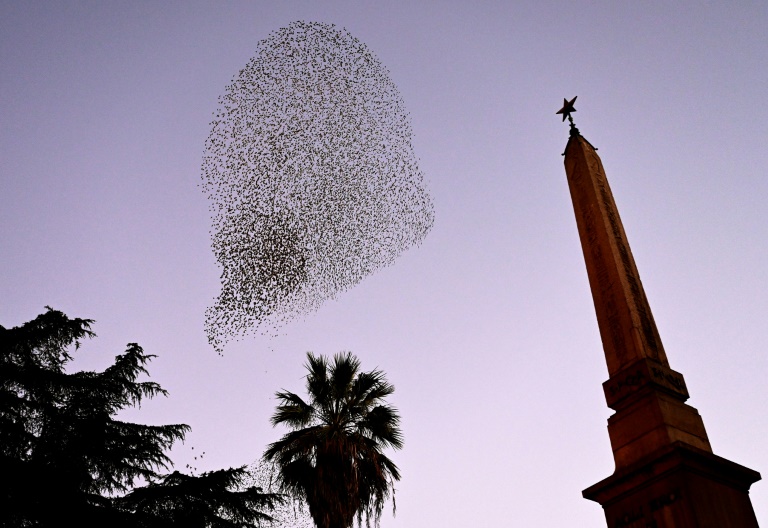
A human “murmuration” using dance techniques previously showcased by French choreographer Sadeck Waff at the Tokyo Paralympics will deliver a powerful message of “hope” to next week’s United Nations biodiversity talks.

The COP15 talks organisers are preparing for multiple protests, with security measures including a three-metre (nine-foot) high fence around the venue in Montreal, Canada.

But a coalition of Britain’s leading conservation charities has chosen a more creative approach to highlight its call for urgent targets to end biodiversity loss.

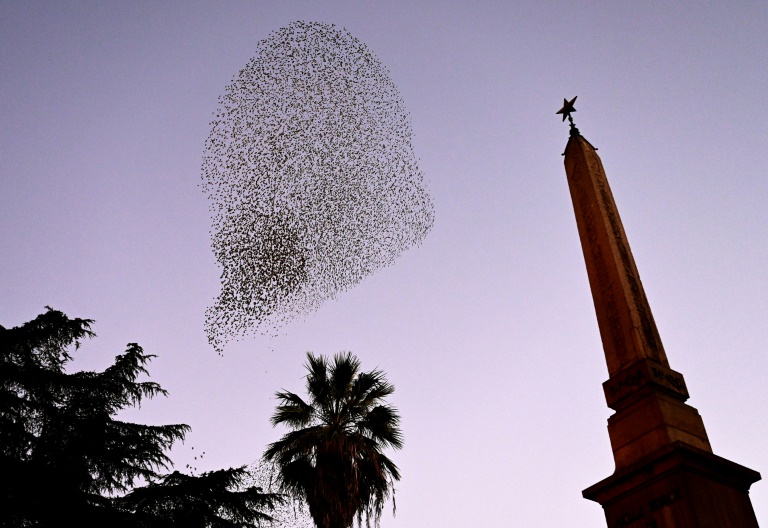
Spearheaded by the Royal Society for the Protection of Birds (RSPB), they have joined forces with Waff and 80 young British dancers to create a video of one of his trademark “murmuration” dances that mimics the motion of a flock of birds.

Paris-based Waff says the latest in his dance series, which draws its name from the collective noun for a flock of starlings, is about “recovery and hope”.

“I hope that the dance inspires everyone to appreciate the power and beauty of cooperation as well as the urgency of the conversation that needs to take place, in order to save and protect the nature that we all rely on,” he told AFP.

It is hoped a new global biodiversity framework will be agreed at the Montreal talks, which run from December 7 to 19.

The UN has said world leaders will not attend the gathering but the RSPB is asking British Prime Minister Rishi Sunak to be present.

– Synchronicity –

The conservation charity wants Sunak to push for a global deal that gives biodiversity its “Paris moment” like the agreement reached at the 2015 climate conference in the French capital.

Naturalist and BBC nature series presenter Chris Packham told AFP it was a “once in a decade opportunity” for world leaders to set targets that ensure “biodiversity is restored for generations to come”.

He said the dance was a vital means of communicating the need to reverse biodiversity loss to everyone — not just those already signed up to the message.

“The RSPB has an audience. I have an audience. But it’s not big enough. We need to spread it by using other aspects of our culture,” Packham said.

“The idea that it is mimicking a murmuration — which is a flock of birds working in synchronicity together to achieve a purpose — sends the kind of message that we all need to be working with that synchronicity.”

Waff’s hand ballets have been variously described as mesmerising, hypnotic and beautifully expressive.

His previous video to round off the 2020 Tokyo Paralympics — held in 2021 due to the pandemic — and hand over to the 2024 games in Paris featured over 120 amateur and professional wheelchair-using performers.

To a stirring composition by French singer-songwriter and music video producer Woodkid, the troupe drawn from people of all ethnicities, genders and physical abilities moved as one in time to the music.

A clip of the video immediately went viral and has since generated millions of views.

– Performers –

Waff’s latest “murmuration” dance was performed by students from Britain’s Bird College of Dance and Musical Theatre near London.

All dressed in black, only the performers’ heads, hands and forearms are clearly visible, while Waff, also in black, stands in front leading the performance.

Dancer Rex Boadu, 22, said it had been an “incredible experience” to work with Waff, who has previously choreographed Grammy winners Shakira and Chris Brown.

“It’s hard to look away from it once you start looking at it and digesting and interpreting the message,” he said adding that he hoped the video would “make people think” and research the issue for themselves.

UK groups hope creative biodiversity message takes flight

A human “murmuration” using dance techniques previously showcased by French choreographer Sadeck Waff at the Tokyo Paralympics will deliver a powerful message of “hope” to next week’s United Nations biodiversity talks.

The COP15 talks organisers are preparing for multiple protests, with security measures including a three-metre (nine-foot) high fence around the venue in Montreal, Canada.

But a coalition of Britain’s leading conservation charities has chosen a more creative approach to highlight its call for urgent targets to end biodiversity loss.

Spearheaded by the Royal Society for the Protection of Birds (RSPB), they have joined forces with Waff and 80 young British dancers to create a video of one of his trademark “murmuration” dances that mimics the motion of a flock of birds.

Paris-based Waff says the latest in his dance series, which draws its name from the collective noun for a flock of starlings, is about “recovery and hope”.

“I hope that the dance inspires everyone to appreciate the power and beauty of cooperation as well as the urgency of the conversation that needs to take place, in order to save and protect the nature that we all rely on,” he told AFP.

It is hoped a new global biodiversity framework will be agreed at the Montreal talks, which run from December 7 to 19.

The UN has said world leaders will not attend the gathering but the RSPB is asking British Prime Minister Rishi Sunak to be present.

– Synchronicity –

The conservation charity wants Sunak to push for a global deal that gives biodiversity its “Paris moment” like the agreement reached at the 2015 climate conference in the French capital.

Naturalist and BBC nature series presenter Chris Packham told AFP it was a “once in a decade opportunity” for world leaders to set targets that ensure “biodiversity is restored for generations to come”.

He said the dance was a vital means of communicating the need to reverse biodiversity loss to everyone — not just those already signed up to the message.

“The RSPB has an audience. I have an audience. But it’s not big enough. We need to spread it by using other aspects of our culture,” Packham said.

“The idea that it is mimicking a murmuration — which is a flock of birds working in synchronicity together to achieve a purpose — sends the kind of message that we all need to be working with that synchronicity.”

Waff’s hand ballets have been variously described as mesmerising, hypnotic and beautifully expressive.

His previous video to round off the 2020 Tokyo Paralympics — held in 2021 due to the pandemic — and hand over to the 2024 games in Paris featured over 120 amateur and professional wheelchair-using performers.

To a stirring composition by French singer-songwriter and music video producer Woodkid, the troupe drawn from people of all ethnicities, genders and physical abilities moved as one in time to the music.

A clip of the video immediately went viral and has since generated millions of views.

– Performers –

Waff’s latest “murmuration” dance was performed by students from Britain’s Bird College of Dance and Musical Theatre near London.

All dressed in black, only the performers’ heads, hands and forearms are clearly visible, while Waff, also in black, stands in front leading the performance.

Dancer Rex Boadu, 22, said it had been an “incredible experience” to work with Waff, who has previously choreographed Grammy winners Shakira and Chris Brown.

“It’s hard to look away from it once you start looking at it and digesting and interpreting the message,” he said adding that he hoped the video would “make people think” and research the issue for themselves.

Morocco reaps cash, clout from fertiliser supply shock

A global fertiliser supply shock deepened by Russia’s Ukraine invasion has brought boom times for the North African phosphate superpower Morocco and earned the kingdom new diplomatic capital.

Rabat is using the leverage especially in the decades-old fight over the disputed desert territory of Western Sahara, a former Spanish colony also claimed by Algeria-backed rebels, analysts say.

Morocco is set to chalk up record revenues for a second year running as farmers worldwide scramble for phosphate, made scarce by sanctions against top world producer Russia and a Chinese ban on exports.

Phosphate is a key ingredient of artificial fertilisers, which are vital for industrial agriculture and global grain supplies despite the long-term damage they inflict on soil and groundwater.

“It’s a strategic mineral for the future because it’s crucial for global food security,” said Abderrahim Handouf, an agricultural policy expert.

“As populations grow, fertilisers are the most effective way to increase farm productivity.”

According to Morocco’s state-owned phosphates firm OCP, the kingdom controls around 31 percent of the international trade in the substance.

The OCP, which holds a national monopoly in the trade, is on track to record more than 131 billion dirhams ($12.4 billion) in revenue this year, up 56 percent on 2021 — already a bumper year.

– ‘Geopolitical tensions’ –

Even before the start of the year, prices had been edging higher as the world emerged from the Covid pandemic and market leaders like China imposed export restrictions, said sector expert Mounir Halim.

There was also “strong demand from India, one of the world’s biggest importers, which had exhausted its stocks,” Halim told AFP.

Then as Western powers imposed sanctions on Russia after its invasion of Ukraine, prices of fertiliser shot up.

That made Morocco a vital alternative supplier. The kingdom’s exports of phosphates and their derivatives jumped by two thirds year-on-year in the first nine months of 2022, according to the latest official figures.

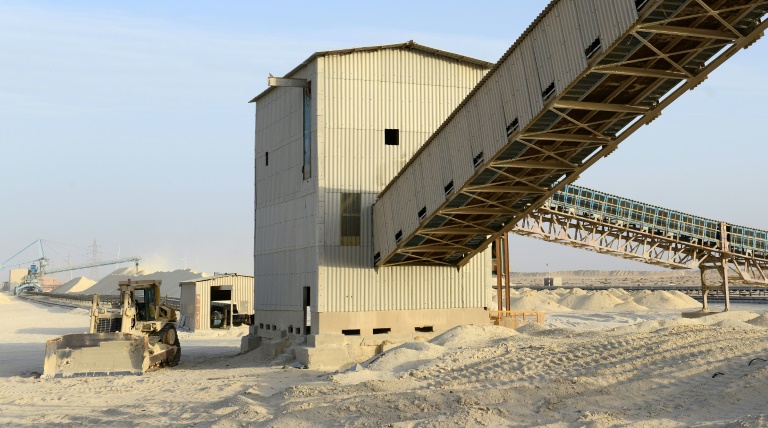
Morocco has around 70 percent of the world’s phosphate reserves, and has been mining four sites since 1921, including in the disputed Western Sahara.

Morocco’s OCP has ramped up its production capacity by a factor of four since 2008, hitting 12 million tonnes last year, on target to reach 15 million by the end of 2023.

That makes it a major player in a global market fearful of further supply shocks.

The UN Food and Agriculture Organization warned in a report this year that “fertiliser supplies remain restricted, stocks are depleted and geopolitical tensions could spark additional supply restrictions at short notice.”

– Phosphate diplomacy –

The result is that Morocco is enjoying not only an influx of cash, but also growing diplomatic muscle, particularly on Western Sahara.

The kingdom sees the vast stretch of desert as an integral part of its territory, but the Polisario movement backed by Morocco’s arch-rival Algeria seeks independence there.

Rabat has placed the question at the heart of its diplomacy. 

King Mohammed VI in August demanded that Morocco’s allies “clarify” their stances on the issue, calling it “the prism through which Morocco views its international environment”.

According to L’Economiste, a Moroccan French-language newspaper, OCP has become “the economic arm of Moroccan diplomacy”.

In September, Rabat recalled a shipment of 50,000 tonnes of fertiliser destined for Peru after Lima restored diplomatic relations with the Polisario’s self-proclaimed Sahrawi Arab Democratic Republic.

– Sticks and carrots –

But as well as sticks, OCP offers carrots. 

The firm has been expanding its presence across Africa, with branches in 16 countries, a fertiliser factory in Nigeria and a deal signed in September to open another one in Ethiopia.

It has also put aside four million tonnes of fertiliser “to support food security in Africa” next year, it said.

This year Morocco exported half a billion tonnes of fertiliser to various African countries, either for free, as aid or at preferential prices.

Morocco is even looking across the Atlantic for new markets. 

In September it signed a deal with Guatemala focusing on “fertilisers and farming”, according to the two countries’ foreign ministers.

In the same statement, Guatemala gave its backing to Morocco’s autonomy plan for the Western Sahara.

But while OCP is a potential source of international leverage on the issue, Morocco does not demand public support for its position with every contract signed.

“Morocco is using its economic arms in a pragmatic way, not in a transactional way,” said international relations expert Tajeddine El Husseini.

But, he added, economic ties can have “a political impact”.

Close Bitnami banner
Bitnami