World

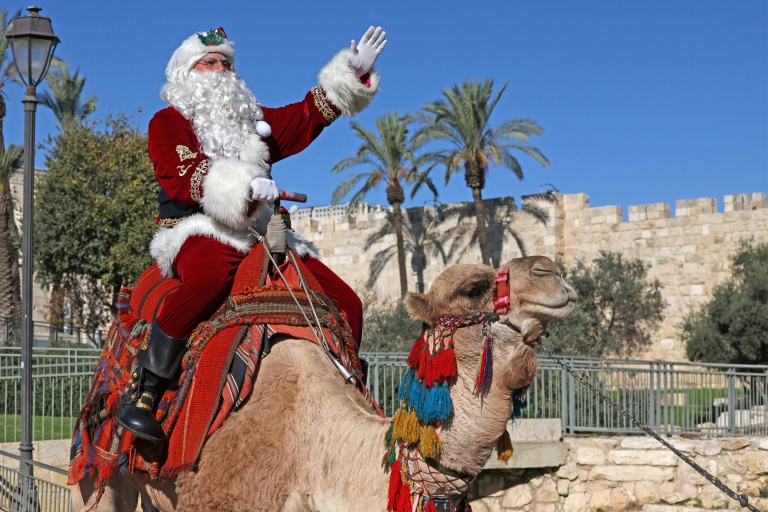
Palestinian Santa brings festive cheer to Jerusalem

In Jerusalem’s Old City there are dozens of churches, but as Christmas beckons there is just one Santa Claus — a towering Palestinian former basketball player.

Each December, the streets sparkle green and red as Christian pilgrims and others arrive to celebrate Christmas in Israeli-annexed east Jerusalem.

Seven years ago one resident, Issa Kassissieh, transformed the ground floor of his 700-year-old home into a grotto, complete with candy, mulled wine and a chance to sit on Santa’s lap.

Welcoming the season’s first visitors to Santa House, the red-suited and bearded Kassissieh belted out a “Ho, ho, ho!” at families queueing to see him.

“We are dealing with many religions here in Jerusalem. We have Muslims, Christians and Jews. I have all religions come to my house. I open my hands to everybody,” said Kassissieh, himself a Christian.

Among the visitors were a group of Israeli tourists, as well as two priests who blessed the opening with prayers in Arabic and the ancient language of Aramaic — the language of Jesus.

At 1.9 metres (six feet three inches) tall, Kassissieh’s height served him well as captain of the Palestinian basketball squad, and doesn’t seem to intimidate the children he towers over.

“I’m not a Christian, but I still love Santa Claus… We have a (Christmas) tree at home too,” eight-year-old Marwa, a Palestinian Muslim, told AFP, grinning.

Visitors from around the world also lined up to sit on Santa’s lap, and to find out if they were on his naughty or nice list.

Alison Pargiter, from the United States, waited with her children.

“It is important that our kids have fun, but we also want them to know the true story behind Christmas,” the 52-year-old said.

While Jerusalem is home to the Church of the Holy Sepulchre, which Christians believe contains Jesus’s tomb, the Nativity story of his birth happened in nearby Bethlehem, according to the faithful.

But at Santa House, Kassissieh said his young visitors have more modern concerns.

“Every child asks me for an iPhone,” he chuckled. 

“I never promise anything, but I say: ‘Let’s pray, and if you’re on my good list, you will get it’.” 

– Santa studies –

As a child, Kassissieh’s father would dress up as Santa for him and his two sisters. 

Fifteen years ago, he found his father’s suit and decided to slip into the red velvet role. 

But it has involved more than just putting on a suit.

Since then, he has attended the World Santa Claus Congress in Denmark and studied at a Santa school — yes, there is such a thing — in the US state of Colorado.

Kassissieh displayed a certificate from another centre of Santa learning, the Charles W Howard Santa Claus School, and said his training makes him Jerusalem’s only accredited Santa.

Based in Michigan, the Howard school traces its establishment to 1937, making it the world’s longest-running.

In his role, he is all too aware of the sensitivities in Jerusalem.

As well as its importance to Christians, the Old City is home to sites revered by Jews and Muslims. For decades it has been a focal point of the Israeli-Palestinian conflict.

“It’s special to give the message of love and peace from Jerusalem — it’s the heart of the world,” he told AFP at his grotto.

“When we have peace in Jerusalem, we will have peace in the world,” added Kassissieh, who consciously avoids politics.

For the Jerusalem native, the secret to being a good Santa is simple.

It is “always, to have an answer to the children’s questions,” he said.
Displaced Syrians fear Turkish threats spell new exodus

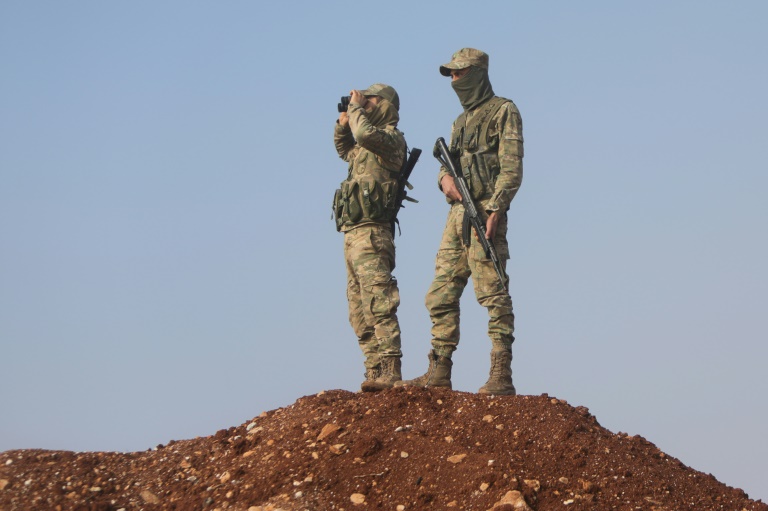
Syria’s grinding conflict has already uprooted Ahmed Yassin and his family several times, but now they fear a threatened Turkish offensive will force them to flee the muddy camp they call home.

The 34-year-old, his wife and two children live in Sandaf in Syria’s Aleppo province — just south of the border with Turkey, and under the control of Turkish-backed rebels.

“Making a living is hard,” the labourer told AFP in the impoverished camp, as sheep grazed on the roadside nearby.

“On top of everything we’ve gone through — the misery, the lack of job opportunities and poverty… we are now threatened with displacement yet again.”

On November 20, Turkey began air strikes on Kurdish-held areas of Syria and Iraq in response to a deadly bombing in Istanbul the previous week.

Turkish President Recep Tayyip Erdogan has threatened a new ground incursion into northern Syria to take control of three Kurdish-held areas. One of them, Tal Rifaat, is less than 10 kilometres (six miles) from Sandaf.

Yassin recalled fleeing his hometown in neighbouring Idlib province after fighting flared there earlier in the civil war.

“We pray for God’s help, and for us to return to our towns, our lands, our homes,” he said.

– ‘Last straw’ –

Since 2016, Turkey has carried out successive ground operations to expel Kurdish forces from border areas of northern Syria.

Its troops and their Syrian proxies hold swathes of the border, and Erdogan has long sought to establish a “safe zone” 30 kilometres (20 miles) deep the whole length of the frontier.

Turkey said its recent Syria air strikes have targeted the Kurdish People’s Protection Units (YPG), which Ankara sees as an offshoot of the outlawed Kurdistan Workers’ Party (PKK).

Turkey said the groups were behind the Istanbul bombing, an accusation both organisations have denied.

At the Sandaf camp, children, some barefoot, played on the ground between tents.

Camp resident Mohammed Abu Ali said there was sporadic shelling between the opposing sides even before Turkey launched its air assault last month.

The 45-year-old, who lives with his five children, one of whom uses a wheelchair, said the fighting left camp residents in “a state of panic and fear”.

“We hope that either a military operation will allow us to return home, or that they will reach an agreement so we can stay in the camp,” said Abu Ali, also originally from Idlib.

“All we want is… to live the remaining days of our lives in our homes,” he said, standing by a washing line strung from his tent.

Human rights groups have warned that civilians on both sides of the front line will bear the brunt of any new flareup.

Renewed conflict in northern Syria would be “the last straw for millions of people grappling with the dire humanitarian conditions”, Save the Children and other groups warned this week.

Another surge in hostilities will potentially result “in a new wave of displacement”, they said, urging all parties to protect civilians.

Any advance by Turkish-backed forces is likely to spark a mass exodus of Kurdish civilians on the other side of the front line, but any new flareup holds fears for civilians in Turkish-held areas too, with heavy exchanges likely across the front line.

– Waiting –

On the front line in Tal Rifaat, Turkish-backed Syrian fighters peered out from behind sandbags as a thick fog enveloped the area.

At positions further east near Manbij — another target of the threatened Turkish ground offensive — a fighter smoked a cigarette by the roadside as others made tea inside a cramped breeze-block bunker.

Turkish-backed fighters were scattered along the front line without any heavy equipment, an AFP correspondent reported.

In some areas, there were no fighters at all, while in others, a few rested inside their bases, some scrolling through their phones.

Government ally Russia deployed troop reinforcements to the Kurdish-held Tal Rifaat area this week, while the United States warned Turkey not to disrupt operations against the Islamic State group in Syria in which Kurdish fighters of the YPG have played a central role.

A Turkish-backed fighter near Tal Rifaat, who identified himself as Yussef Abu al-Majed, said he was eager for battle but had received no orders to attack.

If Turkish-backed forces “don’t have the green light from Turkey, they cannot act on their own”, he said.

“And if Turkey does not have the American, Russian and Iranian greenlight, it cannot engage in military action” in northern Syria. Iran is the Syrian government’s other main foreign ally.

Germany's Scholz weathers shocks in turbulent first year

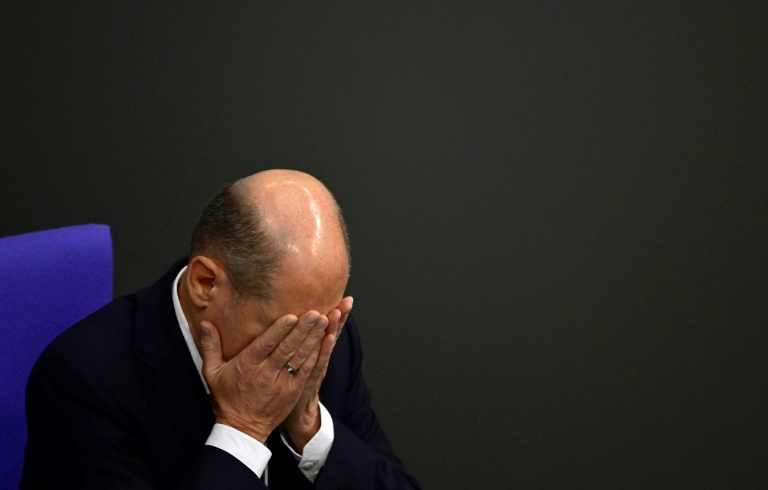
A war in his backyard, galloping economic crisis, and unhappy partners at home and abroad — German Chancellor Olaf Scholz has weathered unprecedented shocks in his first year, while struggling to make a mark on the global stage.

The ex-finance minister took office promising continuity with the era of Angela Merkel, who ended her 16 years as chancellor a widely respected figure.

But Russia’s invasion of Ukraine has forced him to rip up Germany’s post-war axioms and chart out new economic, defence and geopolitical directions for the country that prizes — and is valued for — its stability and predictability.

“We never before had a government faced with such a dramatically worsening situation, when it came to foreign and security policy, but also of course energy policy,” political scientist Ursula Muench told AFP.

Scholz’s coalition of his Social Democrats and partners Greens and liberals FDP had taken office planning ambitious climate policies and budget restraint. 

But as Moscow dwindled its energy supplies in the wake of the war, Germany has had to halt its planned nuclear exit, restart mothballed coal power stations while burning through a budgetary hole in a scrum for oil and gas to replace Russian supplies.

And in a turning point for a country whose role on the world stage was still affected by memories of World War II, Scholz announced a historic shift on defence, vowing to re-arm Germany with a massive boost in military spending.

“Going by the dramatic events this year, he did pretty well,” said Nils Diederich, a political scientist at Berlin’s Free University. 

– Turning point –

But Rachel Rizzo, a senior fellow at US think tank the Atlantic Council’s Europe Center, warned that losing momentum was a danger, even if the initial response was “impressive”.

“I think not being able to follow through with defence and security commitments is a concern,” she told AFP.

Not only is Germany trying to replenish its own military stocks, it is facing intense pressure from Ukraine to deliver what it has to help in the fightback against Russia.

The defence spending is high at a time when the treasury is also being pressed to help cushion a price shock fuelled by the energy crisis.

Huge investments are also required for the export giant to manage an economic transformation of reliance on cheap Russian energy or Chinese components to a diversified approach.

And governing in a three-way coalition means resolving each challenge inevitably involves squabbles that could unravel the fragile partnership.

Scholz’s government has managed to implement part of its programme, including raising the minimum wage and reforming unemployment benefits.

But with myriad crises not going away, the chancellor’s popularity ratings have plunged. One poll published in August suggested that 62 percent of Germans had an unfavourable view of him, compared to about 39 percent in March.

– ‘Going it alone’ –

As well as disagreements at home, there have been tensions with partners abroad.

European Union allies were upset that Scholz announced a massive 200-billion-euro ($207-billion) energy fund without first consulting them, complaining he should have focused on coming up with EU-wide measures.

Tensions have also arisen in the key relationship between Berlin and Paris over issues ranging from the energy fund to German plans for defence procurement.

Unlike Merkel, who, in her time, was widely respected as the voice to reckon with in Europe, Scholz has so far failed to step into the role on the international stage.

Merkel’s departure “has left a void”, said Eric Maurice, from the Brussels office of the Robert Schuman Foundation.

Scholz is “struggling to make his mark at the European level… He is still trying to find his bearings, he does not have Merkel’s experience.”

The view Scholz was seeking to “go it alone” was reinforced when he made the first visit to China by a G7 leader since the start of the pandemic in November, accompanied by a delegation of German business leaders.

The chancellor faced accusations he was pursuing the same mercantilist, trade-focused foreign policy of previous German governments, which led to economic ties flourishing with authoritarian Russia, but ultimately left Berlin vulnerable.

As Scholz heads into his second year in the job, many of the open challenges will continue to entangle him.

High energy prices will remain a major problem, particularly for electricity-hungry German manufacturers, said Sudha David-Wilp, Berlin office director of US think tank the German Marshall Fund.

“Ensuring German competitiveness because of the increase in energy costs, particularly for industries like chemicals and steel manufacturing, is the big challenge for Scholz,” she said.

The energy fund “is just a short-term fix. No one knows when energy prices are going to come down to pre-war levels”.

Israel strikes Gaza after rocket fired from enclave

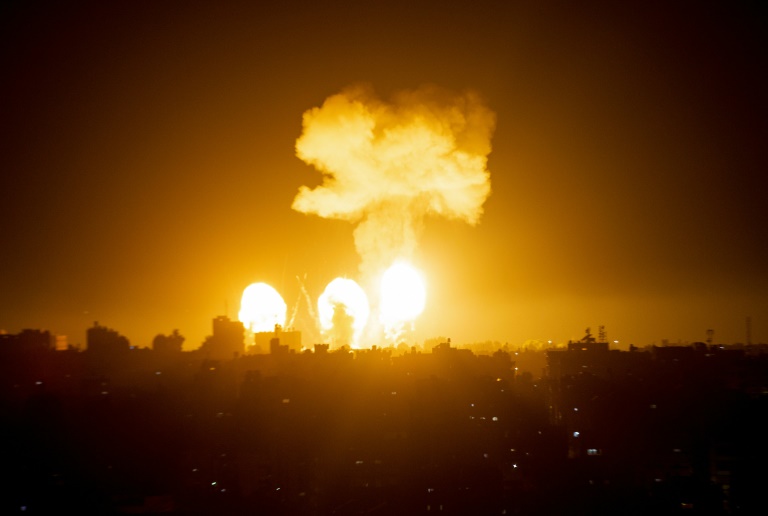
The Israeli air force said it had carried out overnight air strikes against sites of the Islamist movement Hamas in the Gaza Strip after a rocket was fired from the Palestinian enclave towards Israeli territory.

The Israeli army reported on Saturday evening a rocket had been fired from the Gaza Strip towards Israel, the first in a month.

The attack came as one of Gaza’s larger armed factions, Islamic Jihad, threatened to retaliate after Israeli troops killed two of its leaders in the West Bank town of Jenin on Thursday.

“In response to the rocket fired toward Israeli territory, IDF fighter jets targeted overnight (Sunday) a weapons manufacturing site belonging to the Hamas terrorist organisation,” the Israeli army said in a statement.

The target was a site “where the majority of the organisation’s rockets in the Gaza Strip are being manufactured”, it said.

Israel Defense Forces also hit “a Hamas terrorist tunnel in the Southern Gaza Strip”, it said.

The army said a few hours later it had targeted a Hamas military post in response to fire from the Gaza Strip against Israeli warplanes.

The armed wing of Hamas said it used anti-aircraft missiles during Israeli air strikes on the Gaza Strip.

Security sources in Gaza reported two strikes in the south of the enclave, one against a military training site in Khan Younis and the other in an uninhabited area close to Rafah.

The strikes caused no injuries, according to Palestinian medical sources.

“The Zionist enemy is extending its aggression against our people by brutally bombarding the Gaza Strip, following its crime yesterday of executing the martyr Ammar Mufleh in Huwara,” Hamas spokesman Hazem Qassem said.

A surge in bloodshed in the occupied West Bank has sparked international criticism of the Israeli army for its use of lethal force against Palestinian civilians.

Criticism has focused on the killing of Ammar Hadi Mufleh, 22, in disputed circumstances in the West Bank town of Huwara, just south of Nablus, on Friday.

At least 145 Palestinians and 26 Israelis have been killed in violence in Israel and the West Bank, including annexed east Jerusalem, this year, the heaviest toll since 2015.

In August, at least 49 Palestinians, including combatants but also civilians, were killed in three days of fighting between Israel and Palestinian militants in Gaza, which has been under Israeli blockade since 2007.

Ukraine war strips shine off Merkel legacy

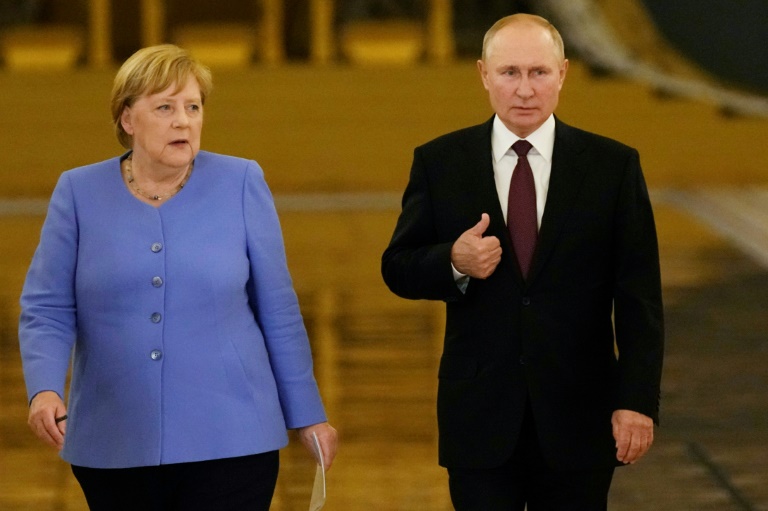
Angela Merkel left the German chancellery on December 8, 2021 at the height of her global stature. Twelve months on, it is hard to find a more precipitous drop in popularity and prestige in modern European politics.

The offices accorded to the former leader are in view of the Russian embassy, where since the Ukraine invasion in February Berliners regularly leave signs and flowers protesting the war.

Long called the world’s most powerful woman, Merkel these days has pulled back from the spotlight, working on her memoirs and enjoying the occasional television series, such as “The Crown”, which tells the story of Queen Elizabeth II’s turbulent decades on the throne.

But in many quarters the broad German support she once enjoyed as a staunch defender of Western liberal values has curdled.

“One year on, the world is in flames, Russia invaded Ukraine, gas and petrol prices are through the roof and Germany fears the winter,” wrote Der Spiegel magazine’s Alexander Osang, a longtime Merkel confidant.

“Angela Merkel went from role model to culprit, from crisis-manager to crisis-causer.”

– Invitation to Bucha –

Germany’s first female chancellor has been accused of placating Russian President Vladimir Putin in the name of realpolitik, while deepening Germany’s energy dependence on Moscow — not least by backing the Nord Stream 2 gas pipeline project even after Russia’s 2014 annexation of Crimea.

Hedwig Richter, modern history professor at Munich’s Bundeswehr University, said Merkel’s loss of standing had been “exceptional”, representing a generation of political failings.

“Amorality is not the same thing as realpolitik,” Richter told AFP.

“The governments of the last 16 years thought it was realistic to place values such as human rights and climate protection last in politics. But now reality is striking back.”

Ukrainian President Volodymyr Zelensky has laid the blame at Merkel’s feet, in particular for a decision at a 2008 NATO summit in Bucharest not to admit his country to the alliance.

In April, he offered her a barbed invitation to Bucha, the site of an alleged massacre of Ukrainian civilians, “to see what the policy of concessions to Russia has led to in 14 years”.

Looming energy shortages due to Russian retaliation for Western sanctions have also soured the mood against Merkel at home.

In the public debate, “Merkel was tied up with this war and certainly to blame for the missing gas”, said Nico Fried, who covered Merkel during all four of her terms, in Stern magazine. 

“The question is what remains of Merkel after 16 years, whether her historical portrait is already fading before it was even really framed.”

– ‘Horribly neglected’ –

Just 23 percent of Germans would want Merkel back in power, according to a Civey institute poll in late November.

Richter said Merkel had “great achievements” including allowing in more than one million asylum seekers and standing as a beacon of “decency” and “democratic duty” when strongmen like Putin and Donald Trump were on the march.

But she said two key miscalculations would cast a long shadow.

“Firstly, the inability of the (German) republic to defend itself. And because this is closely linked to the fossil-fuel dependence on Russia, it threw a spotlight on destruction of the planet,” she said.

“The Merkel governments horribly neglected both these issues.” 

Merkel, 68, has mounted a tentative counter-offensive, arguing that she acted in good conscience given the facts on the ground at the time.

She said she tried to use Nord Stream 2 as a bargaining chip to ensure Putin respected the 2015 Minsk accords aimed at stopping the fighting in Ukraine.

Merkel told Fried she pledged to US President Joe Biden last year that if Russia invaded Ukraine, the pipeline deal would be scrapped — a threat her successor Olaf Scholz made good on days before the war began.

Osang noted the irony that “Putin of all people, whom she has known so well and long, with all his tricks, lies, bragging” had muddied her reputation.

One of Merkel’s lessons from the fall of the Berlin Wall in 1989 that it was “economic, more than democratic, deprivation” that led to the communist system’s collapse.

Osang said this had coloured her approach to trade with China and energy deals with Russia.

She said Scholz’s billions in spending to help Germans facing high gas prices were now justified.

“Not everyone is in a position to freeze for Ukraine,” she said. 

Opec+ likely to maintain oil output levels

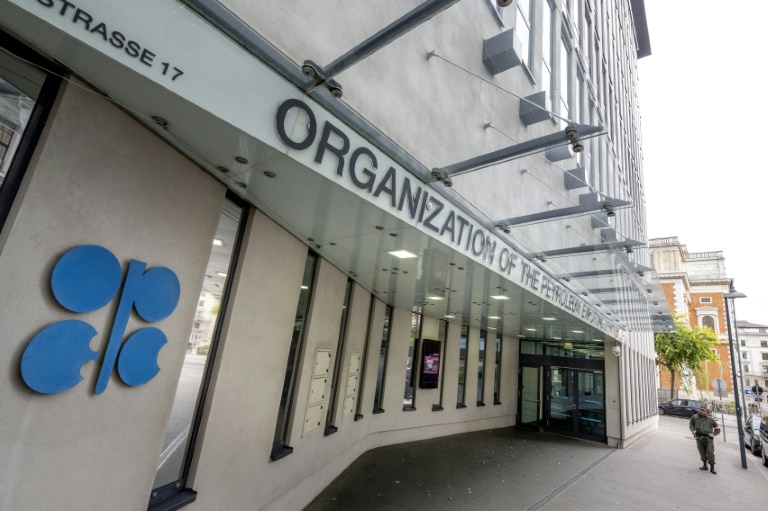
Major oil-producing countries led by Saudi Arabia and Russia look set to maintain their current output levels at a meeting Sunday, ahead of fresh sanctions against Moscow coming into force.

The 13-member Organization of the Petroleum Exporting Countries (OPEC) is due to consult with 10 other oil-producing nations, including Russia, to review their decision in October to cut production by two million barrels per day.

The OPEC+ videoconference will take place from 1100 GMT Sunday.

On Friday, the EU, G7 and Australia agreed a $60-per-barrel price cap on Russian oil, which will come into effect on Monday or soon after, alongside an EU embargo on maritime deliveries of Russian crude oil.

It will prevent seaborne shipments of Russian crude to the European Union, which account for two thirds of the bloc’s oil imports from Russia, an attempt to deprive Moscow’s war chest of billions of euros.

While Russia denounced the incoming price cap on Saturday, threatening to suspend deliveries to any country that adopted the measure, Ukraine suggested the cap should have been set even lower.

For OPEC+, the big unknown in the oil equation is how heavily sanctions will hit Russian supply.

“The uncertainty for Russian supply is significant”, DNB analysts said. OPEC would therefore “aim for a low-profile meeting that leaves existing production quotas unchanged”.

– An ‘uncomfortable position’ –

Moscow’s threat to suspend deliveries to countries abiding by the price cap would put “some in a very uncomfortable position”, said OANDA analyst Craig Erlam: “Choosing between losing access to cheap Russian crude or facing G7 sanctions”.

The choice of a virtual OPEC+ meeting instead of an in-person conference at the Vienna headquarters, suggested a policy rollover, UniCredit analyst Edward Moya said.

But “deeper oil output cuts” could still not be ruled out at this stage.

Amid economic gloom fuelled by soaring inflation and fears of China’s weaker energy demand due to its Covid-related restrictions, the two global crude benchmarks remained close to their lowest level of the year, far from their March peaks.

Since the group’s last meeting in early October, Brent North Sea oil and its US equivalent, WTI, have lost more than six percent of their value.

But speculation that a further OPEC+ production cut might still be on the table boosted prices throughout the week.

“OPEC+ might feel compelled to adopt a more aggressive stance” by cutting or threatening to cut production even further, UniCredit analyst Edoardo Campanella said. 

“Russia might also retaliate by leveraging its influence within OPEC+ to push for more production cuts down the road, thus exacerbating the global energy crisis,” he added.

Estonia to buy HIMARS rocket launchers from US

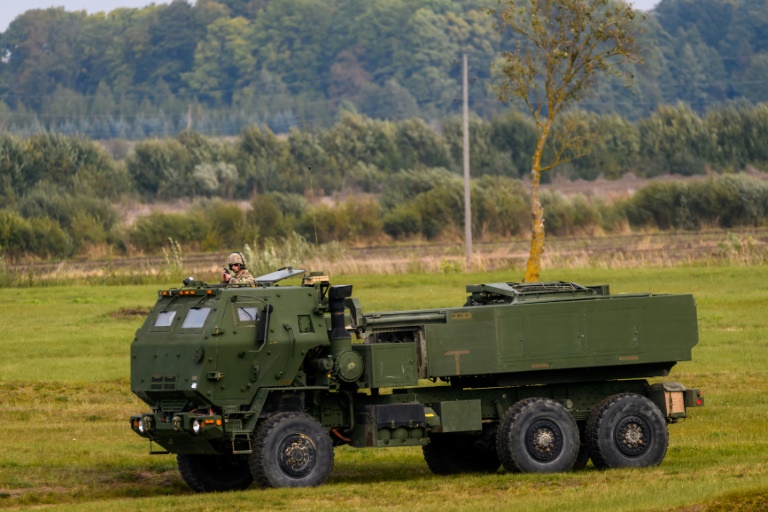
Estonia has agreed to buy six HIMARS rocket systems from the United States worth over $200 million, the state defence investment agency said on Saturday.

It is the largest arms purchase in the country’s history.

Estonia, which neighbours Russia, has increased defence spending since Moscow’s invasion of Ukraine, as has its Baltic neighbours, Latvia and Lithuania.

The HIMARS systems delivered to Ukraine are widely seen as one of the most effective tools in its arsenal, as the pro-Western country fights back against Russian troops.

Magnus-Valdemar Saar, director general of the Estonian Centre for Defence Investments (ECDI), signed a contract on Friday with the United States’ Defense Security Cooperation Agency to boost the country’s indirect fire capability, the ECDI said in a statement.

Estonia will also “procure ammunition, communications solutions, as well as training, logistics, and life-cycle solutions”, said armament category manager Ramil Lipp.

The ECDI did not provide details on how many rockets were ordered but said the purchase included those which can strike targets at a distance of 300 kilometres (186 miles), and rockets of shorter range.

The first deliveries will arrive in 2024.

Lithuania last month said it would buy eight HIMARS rocket systems from the United States for $495 million.

Estonia to buy HIMARS rocket launchers from US

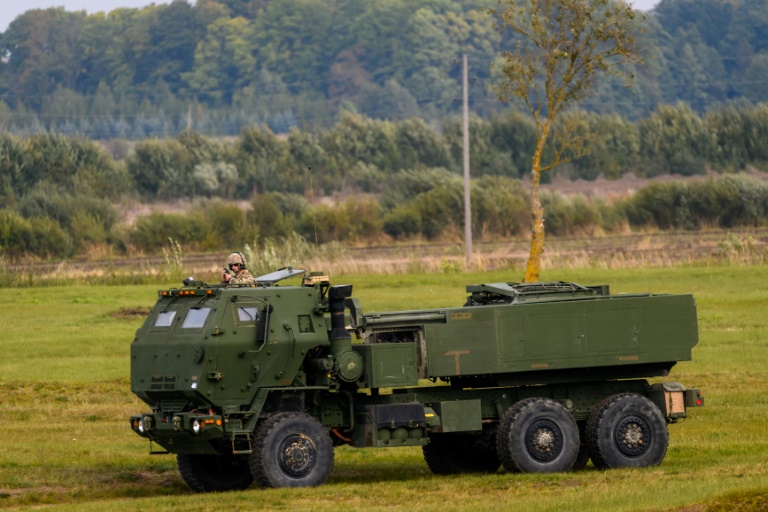
Estonia has agreed to buy six HIMARS rocket systems from the United States worth over $200 million, the state defence investment agency said on Saturday.

It is the largest arms purchase in the country’s history.

Estonia, which neighbours Russia, has increased defence spending since Moscow’s invasion of Ukraine, as has its Baltic neighbours, Latvia and Lithuania.

The HIMARS systems delivered to Ukraine are widely seen as one of the most effective tools in its arsenal, as the pro-Western country fights back against Russian troops.

Magnus-Valdemar Saar, director general of the Estonian Centre for Defence Investments (ECDI), signed a contract on Friday with the United States’ Defense Security Cooperation Agency to boost the country’s indirect fire capability, the ECDI said in a statement.

Estonia will also “procure ammunition, communications solutions, as well as training, logistics, and life-cycle solutions”, said armament category manager Ramil Lipp.

The ECDI did not provide details on how many rockets were ordered but said the purchase included those which can strike targets at a distance of 300 kilometres (186 miles), and rockets of shorter range.

The first deliveries will arrive in 2024.

Lithuania last month said it would buy eight HIMARS rocket systems from the United States for $495 million.

Burkina Faso suspends French broadcaster RFI

Burkina Faso on Saturday ordered the immediate suspension of Radio France Internationale (RFI) broadcasts, accusing it of putting out a “message of intimidation” attributed to a “terrorist chief”.

It is the second West African country under military rule, after Mali, to take the French broadcaster off the airwaves this year.

RFI had contributed to “a desperate manoeuvre of terrorist groups” to dissuade thousands of Burkinabe citizens mobilised for the defence of the country, said Burkinabe government spokesman Jean Emmanuel Ouedraogo.

At the beginning of the week, the Al-Qaeda-affiliated Support Group for Islam and Muslims (GSIM) threatened in a video to attack villages defended by the pro-government VDP militia in Burkina Faso.

The VDP are civilian volunteers given two weeks’ military training to work alongside the army carrying out surveillance, information-gathering or escort duties. 

The government had already, on November 3, protested the contents of the French broadcaster’s reports, said the government statement.

“Considering everything that has happened before, the government has decided on the immediate suspension, until further notice, of the broadcasting of Radio France Internationale’s programmes.”

The government also accused RFI of having relayed “misleading information” suggesting the leader of the Burkinabe junta, Captain Ibrahim Traore, had said there had been an attempted coup against him.

– ‘Unfounded accusations’ –

RFI’s management, in a statement late Saturday, said it “deeply deplores this decision and protests against the totally unfounded accusations calling into question the professionalism of its stations”.

The decision to cut off RFI’s broadcasting service “was taken without prior notice and without implementing the procedures… drawn up by Burkina Faso’s Higher Council for Communication,” it added.

The France Medias Monde group, to which RFI belongs, “will explore all avenues to restore RFI’s broadcasting, and reiterates its unwavering commitment to the freedom to inform and the professional work of its journalists,” the statement added.

According to RFI, the radio station is heard every week in Burkina Faso by more than 40 percent of the population and “more than 70 percent of opinion leaders”. 

An AFP journalist in Ouagadougou confirmed that the French radio station could no longer be heard by late afternoon.

The Burkinabe government nevertheless said it wanted to “reaffirm to national and international opinion its attachment to freedom of the press and opinion” and “the public’s right to information”, while exhorting media to “respect the rules and principles laid down in this area in our country”.

Burkina Faso has experienced two military coups this year, driven by army officers angered at the failure to tackle the threat from jihadist groups.

It becomes the second west African nation to ban RFI this year after Mali, another country under the rule of a military junta and fighting jihadist forces.

In March, the ruling junta in Mali announced the suspension of the broadcasting authorisation granted to RFI and France 24, after they published accounts implicating Mali’s army in abuses against civilians.

Burkina Faso suspends French broadcaster RFI

Burkina Faso on Saturday ordered the immediate suspension of Radio France Internationale (RFI) broadcasts, accusing it of putting out a “message of intimidation” attributed to a “terrorist chief”.

It is the second West African country under military rule, after Mali, to take the French broadcaster off the airwaves this year.

RFI had contributed to “a desperate manoeuvre of terrorist groups” to dissuade thousands of Burkinabe citizens mobilised for the defence of the country, said Burkinabe government spokesman Jean Emmanuel Ouedraogo.

At the beginning of the week, the Al-Qaeda-affiliated Support Group for Islam and Muslims (GSIM) threatened in a video to attack villages defended by the pro-government VDP militia in Burkina Faso.

The VDP are civilian volunteers given two weeks’ military training to work alongside the army carrying out surveillance, information-gathering or escort duties. 

The government had already, on November 3, protested the contents of the French broadcaster’s reports, said the government statement.

“Considering everything that has happened before, the government has decided on the immediate suspension, until further notice, of the broadcasting of Radio France Internationale’s programmes.”

The government also accused RFI of having relayed “misleading information” suggesting the leader of the Burkinabe junta, Captain Ibrahim Traore, had said there had been an attempted coup against him.

– ‘Unfounded accusations’ –

RFI’s management, in a statement late Saturday, said it “deeply deplores this decision and protests against the totally unfounded accusations calling into question the professionalism of its stations”.

The decision to cut off RFI’s broadcasting service “was taken without prior notice and without implementing the procedures… drawn up by Burkina Faso’s Higher Council for Communication,” it added.

The France Medias Monde group, to which RFI belongs, “will explore all avenues to restore RFI’s broadcasting, and reiterates its unwavering commitment to the freedom to inform and the professional work of its journalists,” the statement added.

According to RFI, the radio station is heard every week in Burkina Faso by more than 40 percent of the population and “more than 70 percent of opinion leaders”. 

An AFP journalist in Ouagadougou confirmed that the French radio station could no longer be heard by late afternoon.

The Burkinabe government nevertheless said it wanted to “reaffirm to national and international opinion its attachment to freedom of the press and opinion” and “the public’s right to information”, while exhorting media to “respect the rules and principles laid down in this area in our country”.

Burkina Faso has experienced two military coups this year, driven by army officers angered at the failure to tackle the threat from jihadist groups.

It becomes the second west African nation to ban RFI this year after Mali, another country under the rule of a military junta and fighting jihadist forces.

In March, the ruling junta in Mali announced the suspension of the broadcasting authorisation granted to RFI and France 24, after they published accounts implicating Mali’s army in abuses against civilians.

Close Bitnami banner
Bitnami