World

Iran's hijab law under review: attorney general

Iran’s parliament and the judiciary are reviewing a law which requires women to cover their heads, and which triggered more than two months of deadly protests, the attorney general said.

The demonstrations began after Mahsa Amini, a 22-year-old Iranian of Kurdish origin, died in custody on September 16 after her arrest by Iran’s morality police for an alleged breach of the dress code.

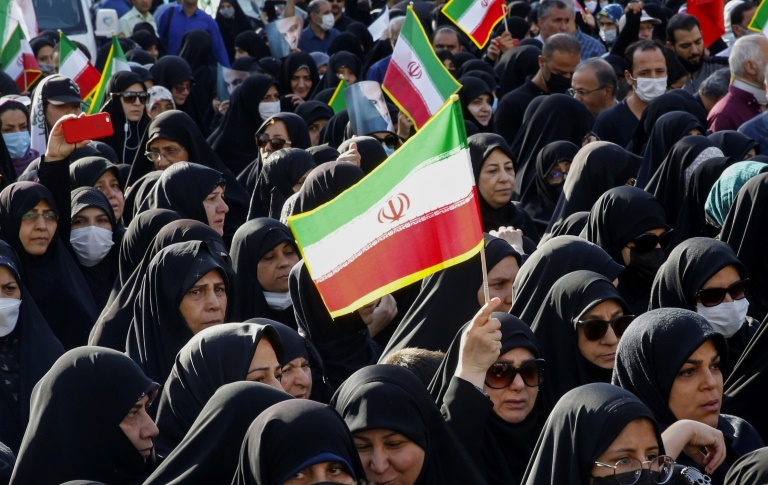
Protesters have burned their head coverings and shouted anti-government slogans. Since Amini’s death a growing number of women are not observing hijab, particularly in Tehran’s fashionable north.

The hijab headscarf became obligatory for all women in Iran in April 1983, four years after the 1979 revolution that overthrew the US-backed monarchy.

“Both parliament and the judiciary are working (on the issue)”, of whether the law needs any changes, Mohammad Jafar Montazeri said in the holy city of Qom.

Quoted on Friday by the ISNA news agency, he did not specify what could be modified in the law.

The review team met on Wednesday with parliament’s cultural commission “and will see the results in a week or two”, the attorney general said.

President Ebrahim Raisi on Saturday said Iran’s republican and Islamic foundations were constitutionally entrenched.

“But there are methods of implementing the constitution that can be flexible,” he said in televised comments.

– Hundreds killed –

After the hijab law became mandatory, with changing clothing norms it became commonplace to see women in tight jeans and loose, colourful headscarves.

But in July this year Raisi, an ultra-conservative, called for mobilisation of “all state institutions to enforce the headscarf law”.

Many women continued to bend the rules, however.

Iran accuses its sworn enemy the United States and its allies, including Britain, Israel, and Kurdish groups based outside the country, of fomenting the street violence which the government calls “riots”.

A general in Iran’s Islamic Revolutionary Guard Corps this week, for the first time, said more than 300 people have lost their lives in the unrest since Amini’s death.

Iran’s top security body, the Supreme National Security Council, on Saturday said the number of people killed during the protests “exceeds 200”.

Cited by state news agency IRNA, it said the figure included security officers, civilians, armed separatists and “rioters”.

Oslo-based non-governmental organisation Iran Human Rights on Tuesday said at least 448 people had been “killed by security forces in the ongoing nationwide protests”.

UN rights chief Volker Turk said last week that 14,000 people, including children, had been arrested in the protest crackdown.
S.Africa ruling party to discuss Ramaphosa's future on Sunday

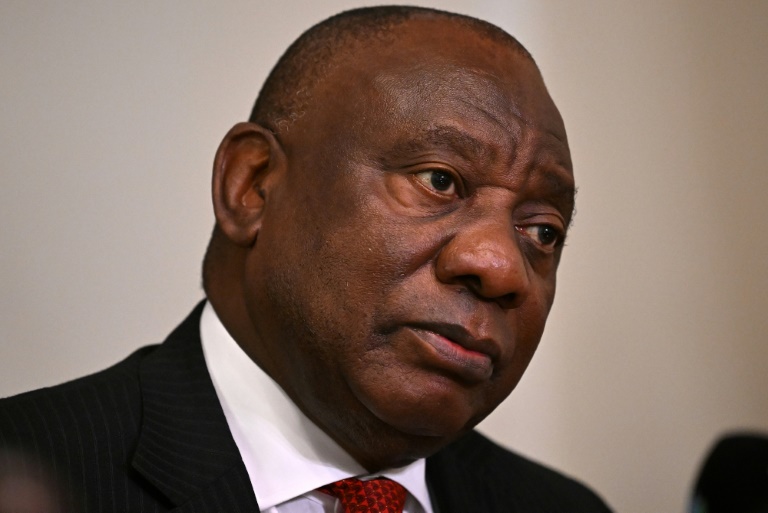
South Africa’s ruling party is set to resume talks Sunday on the future of President Cyril Ramaphosa, who is embroiled in a scandal that has put his presidency at risk.

Pressure is mounting for Ramaphosa to quit or be forced from office over a cash burglary at his farm which he allegedly covered up.

The African National Congress (ANC) will hold a “special session of its National Executive Committee” at 1200 GMT Sunday, the party said Saturday.

The committee met briefly in Johannesburg on Friday before telling journalists it would look more closely at the facts of the case against the president.

Ramaphosa has been under fire since June, when a former spy boss filed a complaint with the police alleging that he had hidden a February 2020 burglary at his farm in northeastern South Africa from the authorities.

He allegedly organised for the robbers to be kidnapped and bribed into silence.

Ramaphosa said a vast sum of cash stashed at the farm was payment for buffaloes bought by a Sudanese businessman.

The scandal has cast a shadow over Ramaphosa’s bid to portray himself as graft-free after the corruption-stained era of his predecessor Jacob Zuma.

An inquiry on Wednesday submitted a report to parliament, concluding Ramaphosa “may have committed” serious violations and misconduct.

The report will be examined by parliament on Tuesday.

That debate could open the way to a vote on impeaching Ramaphosa — a term that in South Africa means to remove from office.

Ramaphosa, in his submission to the panel, denied any wrongdoing.

The president has not been charged with anything at this point, and the police inquiry is ongoing.

But the scandal, complete with details of more than half a million dollars in cash hidden under sofa cushions, has come at the worst possible moment for him.

On December 16, he contests elections for the ANC presidency — a position that also holds the key to staying on as national president.

The South African press remained confident on Saturday that Ramaphosa would remain in office. The president is popular with the public — more so than the ANC.

UK, Greece in 'secret talks' on Parthenon Marbles: report

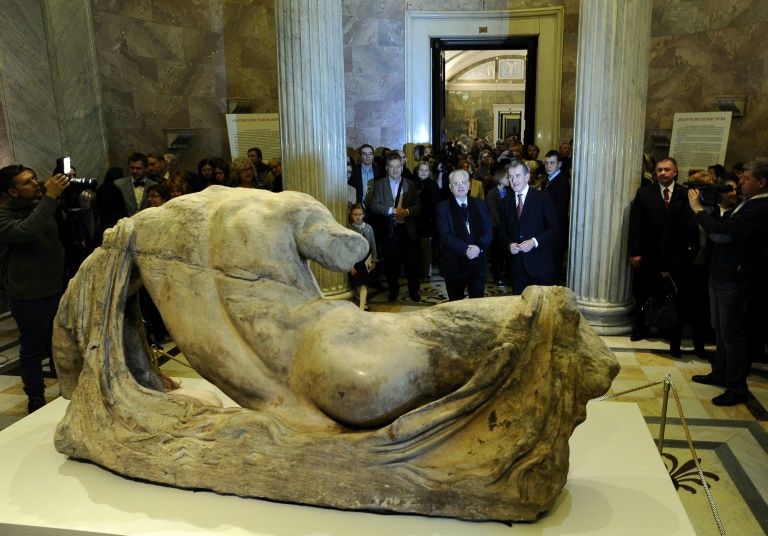
The British Museum and the Greek prime minister are in the “advanced stage” of “secret talks” over the “possible return” of the Parthenon Marbles, local media reported on Saturday. 

The ancient sculptures, also known as the Elgin Marbles, were taken from the Parthenon temple in Athens in the early 19th century by British diplomat Lord Elgin and have been held by the British Museum ever since. Greece wants them returned.

The behind-the-scenes talks between British Museum chair George Osborne and Greek Prime Minister Kyriakos Mitsotakis “have been taking place in London since November 2021”, daily newspaper Ta Nea reported.

It said the latest discussions took place at a hotel this week, while Mitsotakis was in the British capital to promote Greek business interests.  

The “delicate” negotiations between Osborne, a former British finance minister, and the Greek leader were at “an advanced stage” but Greek officials cautioned they could still “hit a stalemate at the eleventh hour”, the paper said.

“It is possible that a mutually beneficial solution can be found. The Parthenon Sculptures can be reunited and at the same time the concerns of the British Museum can be taken into account,” ANA-MPA news agency reported Mitsotakis as saying on Monday.

“I understand that there is momentum. I am consciously talking about ‘reunification’ of the Sculptures and not about a ‘return’.”

The British Museum issued a statement on Saturday saying it wanted “a new Parthenon partnership with Greece” and was prepared to talk to Athens about that.

“(But) we operate within the law and we’re not going to dismantle our great collection, as it tells a unique story of our common humanity,” it stressed.

The Parthenon temple was built on the Acropolis in the 5th century BCE to honour Athena, the patron goddess of Athens.

In the early 19th century, workmen stripped entire friezes from the monument on the orders of the British ambassador to the Ottoman Empire, Lord Elgin.

Elgin sold the marbles to the British government, which in 1817 passed them on to the British Museum, where they remain one of its most prized exhibits.

Athens insists the sculptures were stolen.

Successive Greek governments have failed to make significant headway in the dispute.

In March 2021, the then UK prime minister Boris Johnson told Ta Nea he understood the “strength of feeling of the Greek people” on the issue.

But repeating Britain’s longstanding position, he insisted that the sculptures “were legally acquired by Lord Elgin, in accordance with the laws in force at the time”.

In January, the Times newspaper, a long-standing supporter of the British Museum on the issue, changed its position. 

“Time and circumstances are changing. The sculptures belong in Athens. They must now return there,” the daily said. 

Ukraine welcomes Russian oil price cap agreed by EU, G7

Ukraine on Saturday welcomed a $60 price cap on Russian oil agreed by the EU, G7 and Australia, saying it would “destroy” Russia’s economy.

The price cap, previously negotiated on a political level between the G7 group of wealthy democracies and the European Union, will come into effect with an EU embargo on Russian crude oil from Monday.

Poland had refused to back the price cap plan over concerns the ceiling was too high, before its ambassador to the EU confirmed Warsaw’s agreement on Friday evening.

The embargo will prevent shipments of Russian crude by tanker vessel to the EU, which account for two thirds of imports, potentially depriving Russia’s war chest of billions of euros.

“We always achieve our goal and Russia’s economy will be destroyed, and it will pay and be responsible for all its crimes,” Ukraine’s presidential chief of staff Andriy Yermak said on Saturday on Telegram. 

But a cap of “$30 would have destroyed it more quickly”, he added.

The G7 said it was delivering on its vow “to prevent Russia from profiting from its war of aggression against Ukraine, to support stability in global energy markets and to minimise negative economic spillovers of Russia’s war of aggression”.

The White House described the deal as “welcome news”, saying a price cap will help limit Russian President Vladimir Putin’s ability to fund the Kremlin’s “war machine”.

– Infrastructure strikes ‘inevitable’ –

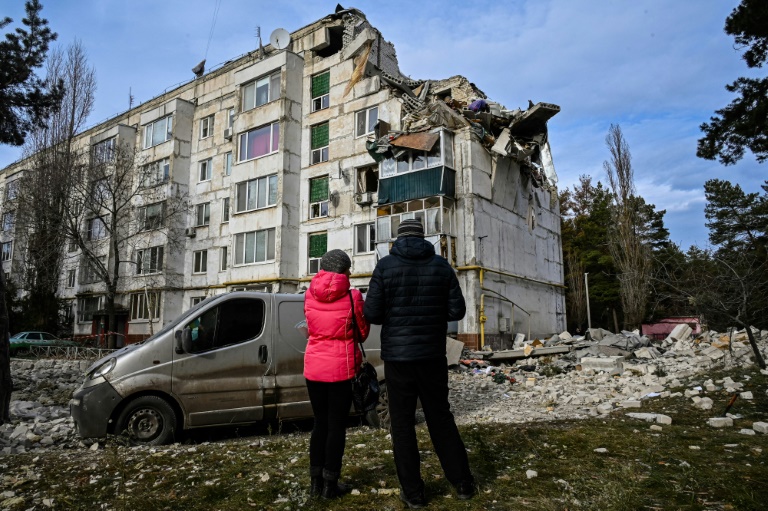
After suffering humiliating defeats during what has become the largest armed conflict in Europe since World War II, Russia began targeting Ukrainian energy infrastructure in October, causing sweeping blackouts.

Putin said Russian strikes on Ukrainian infrastructure were “inevitable”, in his first conversation with German Chancellor Olaf Scholz since mid-September.

“Such measures have become a forced and inevitable response to Kyiv’s provocative attacks on Russia’s civilian infrastructure,” Putin told Scholz, according to a Kremlin readout of the telephone talks.

The Kremlin leader referred in particular to the October attack on a bridge linking Moscow-annexed Crimea to the Russian mainland.

During the hour-long call, Scholz “urged the Russian president to come as quickly as possible to a diplomatic solution, including the withdrawal of Russian troops”, according to the German leader’s spokesman.

But Putin urged Berlin to “reconsider its approaches” and accused the West of carrying out “destructive” policies in Ukraine, the Kremlin said, stressing that its political and financial aid meant Kyiv “completely rejects the idea of any negotiations”.

Ukrainian President Volodymyr Zelensky had ruled out any talks with Russia while Putin is in power, shortly after the Kremlin claimed to have annexed several Ukrainian regions.

– Talks off the table – 

The Kremlin also indicated Moscow was in no mood for talks over Ukraine, after US President Joe Biden said he would be willing to sit down with Putin if the Russian leader truly wanted to end the fighting.

“What did President Biden say in fact? He said that negotiations are possible only after Putin leaves Ukraine,” Putin’s spokesman Dmitry Peskov told reporters, adding Moscow was “certainly” not ready to accept those conditions.

The White House, meanwhile, sought to pour water on the idea of talks as well on Friday, saying Biden currently has “no intention” of sitting down with Putin.

Russia’s strikes have destroyed close to half of the Ukrainian energy system and left millions in the cold and dark at the onset of winter.

In the latest estimates from Kyiv, Mykhaylo Podolyak, an adviser to Zelensky, said as many as 13,000 Ukrainian soldiers have died in the fighting.

Both Moscow and Kyiv are suspected of minimising their losses to avoid damaging morale.

Top US general Mark Milley last month said more than 100,000 Russian military personnel have been killed or wounded in Ukraine, with Kyiv’s forces likely suffering similar casualties. 

The fighting in Ukraine has also claimed the lives of thousands of Ukrainian civilians and forced millions to flee their homes.

Those who remain in the country have had to cope with emergency blackouts as authorities seek to relieve the pressure on the energy infrastructure.

burs-raz/gil

Ukraine welcomes Russian oil price cap agreed by EU, G7

Ukraine on Saturday welcomed a $60 price cap on Russian oil agreed by the EU, G7 and Australia, saying it would “destroy” Russia’s economy.

The price cap, previously negotiated on a political level between the G7 group of wealthy democracies and the European Union, will come into effect with an EU embargo on Russian crude oil from Monday.

Poland had refused to back the price cap plan over concerns the ceiling was too high, before its ambassador to the EU confirmed Warsaw’s agreement on Friday evening.

The embargo will prevent shipments of Russian crude by tanker vessel to the EU, which account for two thirds of imports, potentially depriving Russia’s war chest of billions of euros.

“We always achieve our goal and Russia’s economy will be destroyed, and it will pay and be responsible for all its crimes,” Ukraine’s presidential chief of staff Andriy Yermak said on Saturday on Telegram. 

But a cap of “$30 would have destroyed it more quickly”, he added.

The G7 said it was delivering on its vow “to prevent Russia from profiting from its war of aggression against Ukraine, to support stability in global energy markets and to minimise negative economic spillovers of Russia’s war of aggression”.

The White House described the deal as “welcome news”, saying a price cap will help limit Russian President Vladimir Putin’s ability to fund the Kremlin’s “war machine”.

– Infrastructure strikes ‘inevitable’ –

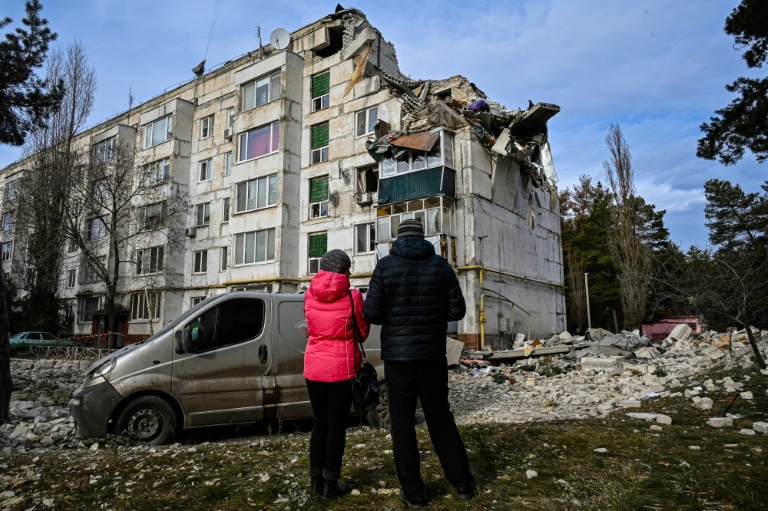
After suffering humiliating defeats during what has become the largest armed conflict in Europe since World War II, Russia began targeting Ukrainian energy infrastructure in October, causing sweeping blackouts.

Putin said Russian strikes on Ukrainian infrastructure were “inevitable”, in his first conversation with German Chancellor Olaf Scholz since mid-September.

“Such measures have become a forced and inevitable response to Kyiv’s provocative attacks on Russia’s civilian infrastructure,” Putin told Scholz, according to a Kremlin readout of the telephone talks.

The Kremlin leader referred in particular to the October attack on a bridge linking Moscow-annexed Crimea to the Russian mainland.

During the hour-long call, Scholz “urged the Russian president to come as quickly as possible to a diplomatic solution, including the withdrawal of Russian troops”, according to the German leader’s spokesman.

But Putin urged Berlin to “reconsider its approaches” and accused the West of carrying out “destructive” policies in Ukraine, the Kremlin said, stressing that its political and financial aid meant Kyiv “completely rejects the idea of any negotiations”.

Ukrainian President Volodymyr Zelensky had ruled out any talks with Russia while Putin is in power, shortly after the Kremlin claimed to have annexed several Ukrainian regions.

– Talks off the table – 

The Kremlin also indicated Moscow was in no mood for talks over Ukraine, after US President Joe Biden said he would be willing to sit down with Putin if the Russian leader truly wanted to end the fighting.

“What did President Biden say in fact? He said that negotiations are possible only after Putin leaves Ukraine,” Putin’s spokesman Dmitry Peskov told reporters, adding Moscow was “certainly” not ready to accept those conditions.

The White House, meanwhile, sought to pour water on the idea of talks as well on Friday, saying Biden currently has “no intention” of sitting down with Putin.

Russia’s strikes have destroyed close to half of the Ukrainian energy system and left millions in the cold and dark at the onset of winter.

In the latest estimates from Kyiv, Mykhaylo Podolyak, an adviser to Zelensky, said as many as 13,000 Ukrainian soldiers have died in the fighting.

Both Moscow and Kyiv are suspected of minimising their losses to avoid damaging morale.

Top US general Mark Milley last month said more than 100,000 Russian military personnel have been killed or wounded in Ukraine, with Kyiv’s forces likely suffering similar casualties. 

The fighting in Ukraine has also claimed the lives of thousands of Ukrainian civilians and forced millions to flee their homes.

Those who remain in the country have had to cope with emergency blackouts as authorities seek to relieve the pressure on the energy infrastructure.

burs-raz/gil

Australian MPs delegation to visit Taiwan

A group of Australian MPs will leave Sunday for a five-day visit to Taiwan, a spokesman for one of the politicians said Saturday, risking China’s ire just as Beijing-Canberra relations appeared to be thawing.

The bipartisan trip will be the first such Taiwan visit in more than three years, a period marked by a long disruption to air travel caused by the Covid-19 pandemic.

Details of the visit were confirmed to AFP by a spokesman for Scott Buchholz, a conservative MP who is in the delegation.

Prime Minister Anthony Albanese sought to play down the mission’s significance after it was first reported by the Weekend Australian newspaper.

“There have been backbench visits to Taiwan for a long time. This is another one. This isn’t a government visit,” he told reporters.

Albanese said both major Australian political parties supported the “One China” policy, which recognises Beijing, not Taipei, while backing the status quo on the self-ruled island.

Asked about the aims of the trip, he said: “I have no idea. I’m not going. You should ask them.”

The delegation of six MPs includes members of the centre-left ruling Labor Party as well as the conservative opposition Liberal Party and its ally, the National Party. 

Former deputy prime minister Barnaby Joyce, of the National Party, is part of the group, the spokesman for Buchholz said.

– Details kept quiet –

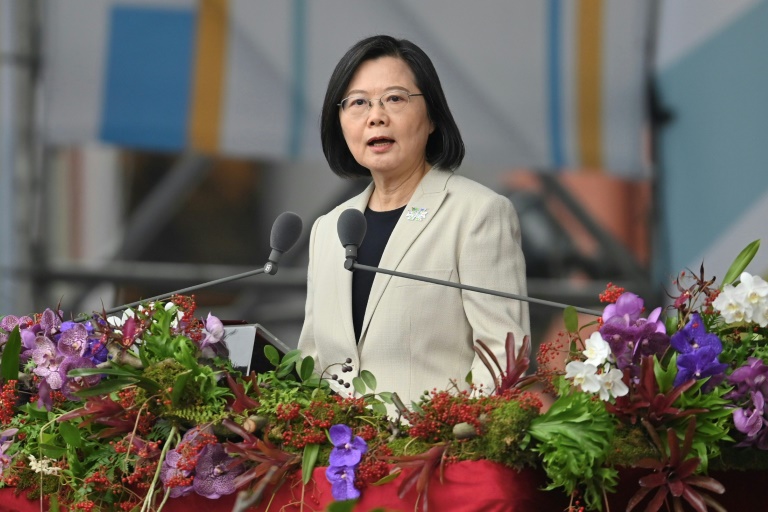
The MPs were scheduled to meet Taiwan’s President Tsai Ing-wen, Foreign Minister Joseph Wu and other senior officials, according to the Weekend Australian.

The visit, backed by Taiwan, aimed to convey a desire for peace in the Asia-Pacific region, it said.

“Just because we are friends with Taiwan does not mean we can’t be friends with China,” Buchholz told the paper.

Plans for the trip had been kept quiet to prevent China from lobbying against it, the report said.

Chinese President Xi Jinping called for better relations with Australia when he met Albanese in Indonesia last month for the first formal summit between the two countries in years.

It was seen as an opening for improved ties between the major trading partners.

China has been angered by Australia’s willingness to legislate against overseas influence operations, its ban on Huawei from 5G contracts and its call for an independent investigation into the origins of the coronavirus pandemic.

Beijing has levied punitive sanctions on Australian goods and frozen ministerial contacts in recent years.

China, which claims Taiwan as part of its territory, bristles at foreign lawmakers’ visits to the island, describing them as interference in its domestic affairs.

It notably retaliated against then-US House speaker Nancy Pelosi’s visit to Taiwan in August by staging military drills of unprecedented scale around the island.

On Ischia, illegal construction blamed for deadly landslide

Ischia, the little Italian island hit by a deadly landslide last weekend, is a victim of geography and weather but also of illegal construction, experts and politicians agree.

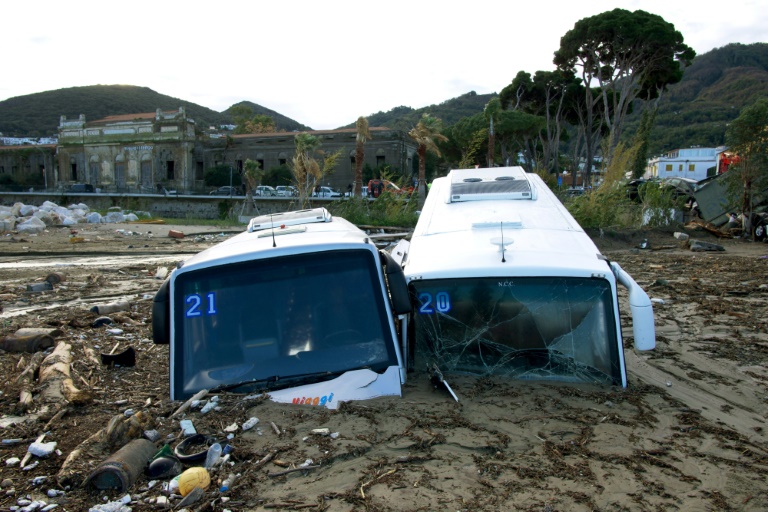
Eleven people died and one woman remains missing after a wave of mud and debris swept through the small town of Casamicciola Terme, following heavy rains across the lush island off the coast of Naples.

But WWF Italia, the environmental organisation, said it was a “predictable tragedy, with specific causes and responsibilities”.

It blamed the “repeated and irresponsible management of the island’s territory which, with the acceleration of the effects of climate change under way, has now become a bomb primed and ready to explode”.

“It sounds like hypocrisy to mourn the victims of recent days, when we continue to build where we should not.”

Experts say that both illegal and legal construction, combined with deforestation, reduces the ability of the soil to absorb large quantities of water.

Buildings erected without permission is a widespread problem across Italy.

The minister for civil protection, Nello Musumeci, acknowledged this week that “the sad and widespread problem of illegal construction” is a subject that “can no longer be avoided”.

But Ischia, an island of volcanic origin which suffered a deadly earthquake in 2017, is particularly vulnerable.

Some “49 percent of the territory of Ischia is classified as at a high or very high risk of landslide… with more than 13,000 people living in these areas”, Environment Minister Gilberto Pichetto said.

According to the latest report from the Italian Institute for Environmental Protection and Research (ISPRA), 93.9 percent of Italian communes are at risk of landslides, flooding or coastal erosion.

“You don’t need to be a specialist to understand that illegal buildings cannot be tolerated, because they constitute a risk multiplier that goes far beyond the people that live there,” said WWF.

– ‘Swiss clinic’ –

Faced with unauthorised construction, successive Italian governments have often responded with amnesties, although the bureaucratic process is often so long and complicated that it can take years for a decision.

In Ischia alone, some 27,000 requests for amnesties have been filed in recent years, according to Italian media reports.

And when the order finally comes to knock down an illegal building, its residents often find ways to avoid it.

In one case, the occupants of a condemned house brought children from across their family into the building, because the presence of minors nullifies the order, retired Naples prosecutor Aldo De Chiara told La Stampa newspaper.

The prosecutor, who specialised in the fight against illegal construction, said that in other cases, “when the police arrive, they find in the illegal rooms, whether the veranda or the living room, patients on IV drips like in a Swiss clinic”.

However, others see illegal construction as a scapegoat.

“When there is a landslide in the north of Italy we talk about climate change, when it is in the south, we talk about illegal construction,” said Sergio Piro, who runs three hotels on Ischia, including one in Casamicciola Terme.

“It’s true there is illegal construction, but in this case it was a section of the mountain that came off because there had been no preventative work, in particular of drainage canals,” the 47-year-old told AFP.

He noted other parts of the island were not as affected after last weekend’s bad weather.

The torrent of mud passed a few hundred metres (yards) from Piro’s own house: “I heard a huge noise when this torrent of rocks and soil hit the first houses.”

UN says Myanmar sentences seven students to death

The Myanmar junta handed out at least seven more death sentences this week, taking the tally of those on death row to 139, according to the United Nations.

A junta spokesperson did not respond to calls from outside Myanmar seeking confirmation of the latest death sentences. The United Nations accused it of using capital punishment as a “tool to crush opposition”.

Myanmar has been in chaos since Aung San Suu Kyi’s civilian government was toppled in a military coup in February 2021, ending the southeast Asian nation’s brief period of democracy.

At least seven male university students were sentenced to death by a military court behind closed doors on Wednesday, UN High Commissioner for Human Rights Volker Turk said in a statement.

“By resorting to use death sentences as a political tool to crush opposition, the military confirms its disdain for the efforts by ASEAN and the international community at large to end violence and create the conditions for a political dialogue to lead Myanmar out of a human rights crisis created by the military,” Turk said.

Local media reports said the Yangon-based university students were arrested in April and accused of involvement in a bank shooting.

“Imposing the death penalty on students is an act of vengeance by the military,” Dagon University’s student union said in a statement.

The United Nations is also investigating reports another four youth activists were also sentenced to death on Thursday.

“The military continues to hold proceedings in secretive courts in violation of basic principles of fair trial and contrary to core judicial guarantees of independence and impartiality,” Turk said.

He said the secret tribunal hearings sometimes last just minutes and those detained often don’t have access to lawyers or their families.

Scores of Myanmar social media users took to Facebook and Twitter to protest against the death penalties under hashtags such as “StopExecuteOurStudents”.

The latest death sentences follow July’s executions of four prisoners that included former lawmaker Phyo Zeya Thaw and democracy activist Kyaw Min Yu — better known as “Jimmy”.

It was the first use of the death penalty by the Myanmar state in around 30 years and sparked worldwide condemnation.

The Association of South East Asian Nations, which has spearheaded so far fruitless efforts to restore peace to Myanmar, warned the junta in August against carrying out further executions.

Close to 2,280 civilians have been killed and 11,637 are still detained as part of the military junta’s campaign to stamp out dissent, according to a local monitoring group.

US unveils high-tech B-21 stealth bomber

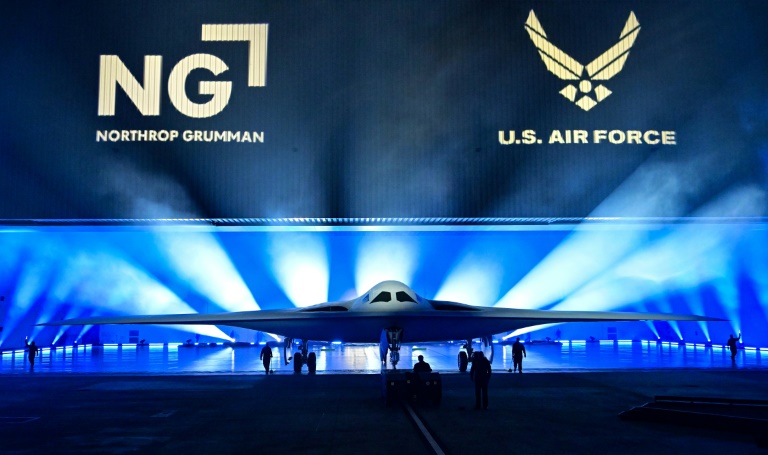
The United States on Friday unveiled the B-21 Raider, a high-tech stealth bomber that can carry nuclear and conventional weapons and is designed to be able to fly without a crew on board.

The slickly choreographed ceremony at B-21 manufacturer Northrop Grumman’s facility in Palmdale, California opened with the US national anthem as older bombers roared over a crowd that included top US officials.

Dramatic music played and lights flashed as the doors of a hanger holding the new aircraft slowly opened, and the crowd applauded as the cloth covering it was pulled away to reveal a sleek grey bomber that is on track to cost nearly $700 million per plane.

“The B-21 Raider is the first strategic bomber in more than three decades. It is a testament to America’s enduring advantages in ingenuity and innovation,” US Defense Secretary Lloyd Austin said in remarks at the ceremony.

Many specifics of the aircraft are being kept under wraps, but the plane will offer significant advances over existing bombers in the US fleet, which Austin highlighted in his remarks.

He hailed its range — “no other long-range bomber can match its efficiency” — and its durability, saying it is “designed to be the most maintainable bomber ever built.”

Like the F-22 and F-35 warplanes, the B-21 features stealth technology, which minimizes an aircraft’s signature through both its shape and the materials it is constructed from, making it harder for adversaries to detect.

“Fifty years of advances in low-observable technology have gone into this aircraft,” Austin said. “Even the most sophisticated air defense systems will struggle to detect the B-21 in the sky.”

The plane is also built with an “open system architecture,” which allows for the incorporation of “new weapons that haven’t even been invented yet,” he said.

Amy Nelson, a fellow at the Brookings Institution think tank, told AFP ahead of the unveiling that the B-21 is “designed to evolve.”

– ‘American air power’ –

“The ‘open architecture’ allows for the future integration of improved software (including for autonomy) so the aircraft doesn’t become obsolete as quickly,” she said.

“The B-21 is much fancier than its predecessors — truly modern. Not only is it dual-capable (unlike the B-2), which means it can launch nuclear or conventionally armed missiles, it can launch long- and short-range missiles,” Nelson said.

Not mentioned during the ceremony was the plane’s potential for uncrewed flight. US Air Force spokesperson Ann Stefanek told AFP the aircraft is “provisioned for the possibility, but there has been no decision to fly without a crew.”

The first flight by a B-21 — “the backbone of our future bomber force” — is expected to take place next year, and the Air Force plans to buy at least 100 of the aircraft, Stefanek said.

Northrop Grumman said six of the planes are currently in different stages of assembly and testing at its facility in Palmdale.

The bomber will be a key part of the US “nuclear triad,” which consists of weapons that can be launched from the land, air and sea.

“For nuclear deterrence, the bomber fleet provide flexibility to US nuclear posture, and redundance should any of the other legs fail,” Nelson said.

The “Raider” portion of the aircraft’s name honors the 1942 US bomber raid on Tokyo led by then-lieutenant colonel James Doolittle — the first American strike on Japan’s homeland following the surprise attack on Pearl Harbor the previous year.

“On a cold and rainy April morning, four months after Pearl Harbor, 16 US Army bomber planes took off from an aircraft carrier in the Pacific,” Austin said.

They “flew more than 650 miles to strike distant enemy targets, and the Doolittle Raiders, as they came to be known, showed the strength and the reach of American air power,” he said.

ABB to pay $315 mn to settle US charges over South Africa bribes

Swedish-Swiss industrial company ABB agreed to pay $315 million to settle US criminal charges that it bribed state-owned Eskom of South Africa over government contracts, the Department of Justice (DOJ) announced Friday.

Two affiliates of ABB each pleaded guilty to one count of conspiracy to violate the US Foreign Corrupt Practices Act as part of a three-year deferred prosecution agreement, the US agency said of a settlement that was coordinated with government authorities in Switzerland, Germany and South Africa.

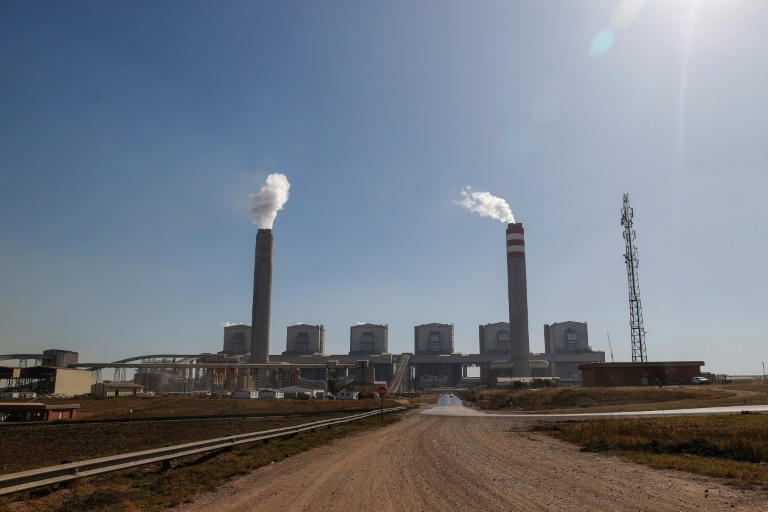
The issue concerns a troubled project near Johannesburg with the Kusile power station, the fourth largest coal-fired generator in the world, which has been fraught with allegations of graft. South Africa’s struggling power utility Eskom commissioned the plant in 2007.

In October eight people, including former Eskom CEO Matshela Koko, were arrested on corruption charges linked to the ABB work.

Between 2014 and 2017, ABB through its subsidiaries secured “multiple” government contracts, syphoning illicit payments through subcontractors associated with an official at Eskom, South Africa’s state-owned power company, the DOJ said.

“ABB worked with these subcontractors despite their poor qualifications and lack of experience,” the DOJ said in a news release. “In return, ABB received improper advantages in its efforts to obtain work with Eskom, including, among other benefits, confidential and internal Eskom information.”

ABB engaged in “sham” negotiations with the Eskom official and falsely reported the payments as legitimate business expenses, according to the press release.

ABB chief executive Bjorn Rosengren said the company has acted in the wake of the case by “launching a new code of conduct, educating employees and implementing an enhanced control system to prevent something similar from happening again.”

In a statement, he said that ABB has “a clear zero tolerance approach to non-ethical behavior within our company.” 

The US agency said the penalty was reduced 25 percent from the high end of the sentencing range in light of ABB’s “extraordinary” cooperation and “extensive” remediation efforts.

But the department noted that ABB had two earlier criminal FCPA resolutions in 2004 and 2010, as well as a guilty plea by an ABB entity for bid rigging in 2001.

The US law on foreign corrupt practices applies to foreign companies with US-issued stock, as is the case with ABB.

The company also settled a parallel civil case with the Securities and Exchange Commission. 

Earlier Friday, the Swiss attorney general’s office said ABB was fined four million Swiss francs ($4.3 million) in the case. ABB said it hoped to reach a resolution with German authorities in the near term.

In total, ABB said the settlements totaled $327 million, and have been accounted for in the company’s third quarter financial results.

Close Bitnami banner
Bitnami