World

ABB to pay $315 mn to settle US charges over South Africa bribes

Swedish-Swiss industrial company ABB agreed to pay $315 million to settle US criminal charges that it bribed state-owned Eskom of South Africa over government contracts, the Department of Justice (DOJ) announced Friday.

Two affiliates of ABB each pleaded guilty to one count of conspiracy to violate the US Foreign Corrupt Practices Act as part of a three-year deferred prosecution agreement, the US agency said of a settlement that was coordinated with government authorities in Switzerland, Germany and South Africa.

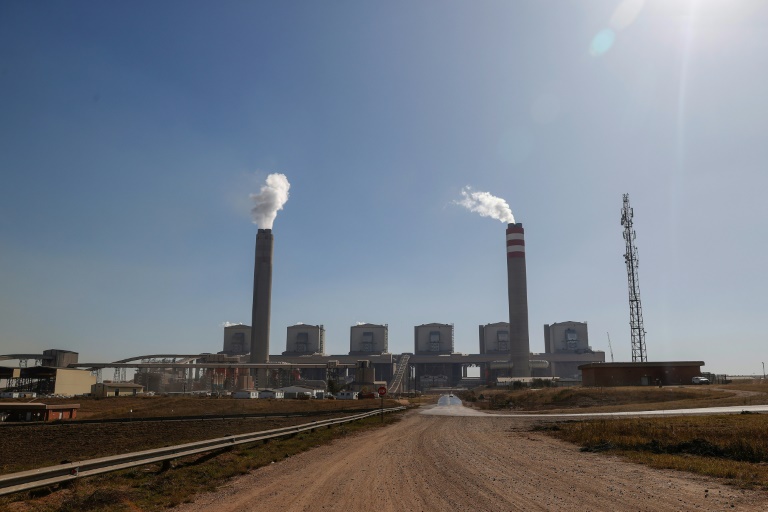
The issue concerns a troubled project near Johannesburg with the Kusile power station, the fourth largest coal-fired generator in the world, which has been fraught with allegations of graft. South Africa’s struggling power utility Eskom commissioned the plant in 2007.

In October eight people, including former Eskom CEO Matshela Koko, were arrested on corruption charges linked to the ABB work.

Between 2014 and 2017, ABB through its subsidiaries secured “multiple” government contracts, syphoning illicit payments through subcontractors associated with an official at Eskom, South Africa’s state-owned power company, the DOJ said.

“ABB worked with these subcontractors despite their poor qualifications and lack of experience,” the DOJ said in a news release. “In return, ABB received improper advantages in its efforts to obtain work with Eskom, including, among other benefits, confidential and internal Eskom information.”

ABB engaged in “sham” negotiations with the Eskom official and falsely reported the payments as legitimate business expenses, according to the press release.

ABB chief executive Bjorn Rosengren said the company has acted in the wake of the case by “launching a new code of conduct, educating employees and implementing an enhanced control system to prevent something similar from happening again.”

In a statement, he said that ABB has “a clear zero tolerance approach to non-ethical behavior within our company.” 

The US agency said the penalty was reduced 25 percent from the high end of the sentencing range in light of ABB’s “extraordinary” cooperation and “extensive” remediation efforts.

But the department noted that ABB had two earlier criminal FCPA resolutions in 2004 and 2010, as well as a guilty plea by an ABB entity for bid rigging in 2001.

The US law on foreign corrupt practices applies to foreign companies with US-issued stock, as is the case with ABB.

The company also settled a parallel civil case with the Securities and Exchange Commission. 

Earlier Friday, the Swiss attorney general’s office said ABB was fined four million Swiss francs ($4.3 million) in the case. ABB said it hoped to reach a resolution with German authorities in the near term.

In total, ABB said the settlements totaled $327 million, and have been accounted for in the company’s third quarter financial results.


G7, EU agree oil price cap to reduce Russia war funding

The G7 and EU on Friday agreed a $60-per-barrel price cap on Russian oil in an attempt to deny the Kremlin of war resources, as President Vladimir Putin said more strikes on Ukrainian infrastructure were “inevitable”.

The price cap, previously negotiated on a political level between the G7 group of wealthy democracies and the European Union, will come into effect with an EU embargo on Russian crude oil from Monday.

The embargo will prevent shipments of Russian crude by tanker vessel to the EU, which account for two thirds of imports, potentially depriving Russia’s war chest of billions of euros.

“The G7 and Australia… reached consensus on a maximum price of 60 US dollars per barrel for seaborne Russian origin crude oil in line with” the European Union, the G7 said in a statement.

The G7 said it was delivering on its vow “to prevent Russia from profiting from its war of aggression against Ukraine, to support stability in global energy markets and to minimise negative economic spillovers of Russia’s war of aggression”.

Poland had refused to back the price cap plan over concerns the ceiling was too high, before its ambassador to the bloc confirmed Warsaw’s agreement on Friday evening.

The price cap is designed to make it harder to bypass the sanctions by selling beyond the EU.

Poland’s ambassador Andrzej Sados also said Brussels would take into account Polish and Baltic state suggestions for a “painful and expensive” ninth round of sanctions against Moscow.

The White House described the deal as “welcome news”, saying a price cap will help limit Putin’s ability to fund the Kremlin’s “war machine”.

– Infrastructure strikes ‘inevitable’ –

After suffering humiliating defeats during what has become the largest armed conflict in Europe since World War II, Russia began targeting Ukrainian energy infrastructure in October, causing sweeping blackouts.

Putin said Russian strikes on Ukrainian infrastructure were “inevitable”, in his first conversation with German Chancellor Olaf Scholz since mid-September.

“Such measures have become a forced and inevitable response to Kyiv’s provocative attacks on Russia’s civilian infrastructure,” Putin told Scholz, according to a Kremlin readout of the telephone talks.

The Kremlin leader referred in particular to the October attack on a bridge linking Moscow-annexed Crimea to the Russian mainland.

During the hour-long call, Scholz “urged the Russian president to come as quickly as possible to a diplomatic solution including the withdrawal of Russian troops”, according to the German leader’s spokesman.

But Putin urged Berlin to “reconsider its approaches” and accused the West of carrying out “destructive” policies in Ukraine, the Kremlin said, stressing that its political and financial aid meant Kyiv “completely rejects the idea of any negotiations”.

Ukrainian President Volodymyr Zelensky had ruled out any talks with Russia while Putin is in power shortly after the Kremlin claimed to have annexed several Ukrainian regions.

– Talks off the table – 

The Kremlin also indicated Moscow was in no mood for talks over Ukraine, after US President Joe Biden said he would be willing to sit down with Putin if the Russian leader truly wanted to end the fighting.

“What did President Biden say in fact? He said that negotiations are possible only after Putin leaves Ukraine,” Putin’s spokesman Dmitry Peskov told reporters, adding Moscow was “certainly” not ready to accept those conditions.

The White House, meanwhile, sought to pour water on the idea of talks as well on Friday, saying Biden currently has “no intention” of sitting down with Putin.

But Washington did say it was ready to meet on a different issue, expressing disappointment that Russia had postponed talks on nuclear arms control.

Russia’s strikes have destroyed close to half of the Ukrainian energy system and left millions in the cold and dark at the onset of winter.

In the latest estimates from Kyiv, Mykhaylo Podolyak, an adviser to Zelensky, said as many as 13,000 Ukrainian troops have died in the fighting.

Both Moscow and Kyiv are suspected of minimising their losses to avoid damaging morale.

Top US general Mark Milley last month said more than 100,000 Russian military personnel have been killed or wounded in Ukraine, with Kyiv’s forces likely suffering similar casualties. 

The fighting in Ukraine has also claimed the lives of thousands of Ukrainian civilians and forced millions to flee their homes.

Those who remain in the country have had to cope with emergency blackouts as authorities sought to relieve the pressure on the energy infrastructure.

G7, EU agree oil price cap to reduce Russia war funding

The G7 and EU on Friday agreed a $60-per-barrel price cap on Russian oil in an attempt to deny the Kremlin of war resources, as President Vladimir Putin said more strikes on Ukrainian infrastructure were “inevitable”.

The price cap, previously negotiated on a political level between the G7 group of wealthy democracies and the European Union, will come into effect with an EU embargo on Russian crude oil from Monday.

The embargo will prevent shipments of Russian crude by tanker vessel to the EU, which account for two thirds of imports, potentially depriving Russia’s war chest of billions of euros.

“The G7 and Australia… reached consensus on a maximum price of 60 US dollars per barrel for seaborne Russian origin crude oil in line with” the European Union, the G7 said in a statement.

The G7 said it was delivering on its vow “to prevent Russia from profiting from its war of aggression against Ukraine, to support stability in global energy markets and to minimise negative economic spillovers of Russia’s war of aggression”.

Poland had refused to back the price cap plan over concerns the ceiling was too high, before its ambassador to the bloc confirmed Warsaw’s agreement on Friday evening.

The price cap is designed to make it harder to bypass the sanctions by selling beyond the EU.

Poland’s ambassador Andrzej Sados also said Brussels would take into account Polish and Baltic state suggestions for a “painful and expensive” ninth round of sanctions against Moscow.

The White House described the deal as “welcome news”, saying a price cap will help limit Putin’s ability to fund the Kremlin’s “war machine”.

– Infrastructure strikes ‘inevitable’ –

After suffering humiliating defeats during what has become the largest armed conflict in Europe since World War II, Russia began targeting Ukrainian energy infrastructure in October, causing sweeping blackouts.

Putin said Russian strikes on Ukrainian infrastructure were “inevitable”, in his first conversation with German Chancellor Olaf Scholz since mid-September.

“Such measures have become a forced and inevitable response to Kyiv’s provocative attacks on Russia’s civilian infrastructure,” Putin told Scholz, according to a Kremlin readout of the telephone talks.

The Kremlin leader referred in particular to the October attack on a bridge linking Moscow-annexed Crimea to the Russian mainland.

During the hour-long call, Scholz “urged the Russian president to come as quickly as possible to a diplomatic solution including the withdrawal of Russian troops”, according to the German leader’s spokesman.

But Putin urged Berlin to “reconsider its approaches” and accused the West of carrying out “destructive” policies in Ukraine, the Kremlin said, stressing that its political and financial aid meant Kyiv “completely rejects the idea of any negotiations”.

Ukrainian President Volodymyr Zelensky had ruled out any talks with Russia while Putin is in power shortly after the Kremlin claimed to have annexed several Ukrainian regions.

– Talks off the table – 

The Kremlin also indicated Moscow was in no mood for talks over Ukraine, after US President Joe Biden said he would be willing to sit down with Putin if the Russian leader truly wanted to end the fighting.

“What did President Biden say in fact? He said that negotiations are possible only after Putin leaves Ukraine,” Putin’s spokesman Dmitry Peskov told reporters, adding Moscow was “certainly” not ready to accept those conditions.

The White House, meanwhile, sought to pour water on the idea of talks as well on Friday, saying Biden currently has “no intention” of sitting down with Putin.

But Washington did say it was ready to meet on a different issue, expressing disappointment that Russia had postponed talks on nuclear arms control.

Russia’s strikes have destroyed close to half of the Ukrainian energy system and left millions in the cold and dark at the onset of winter.

In the latest estimates from Kyiv, Mykhaylo Podolyak, an adviser to Zelensky, said as many as 13,000 Ukrainian troops have died in the fighting.

Both Moscow and Kyiv are suspected of minimising their losses to avoid damaging morale.

Top US general Mark Milley last month said more than 100,000 Russian military personnel have been killed or wounded in Ukraine, with Kyiv’s forces likely suffering similar casualties. 

The fighting in Ukraine has also claimed the lives of thousands of Ukrainian civilians and forced millions to flee their homes.

Those who remain in the country have had to cope with emergency blackouts as authorities sought to relieve the pressure on the energy infrastructure.

US hoax trials spotlight misinformation profiteer

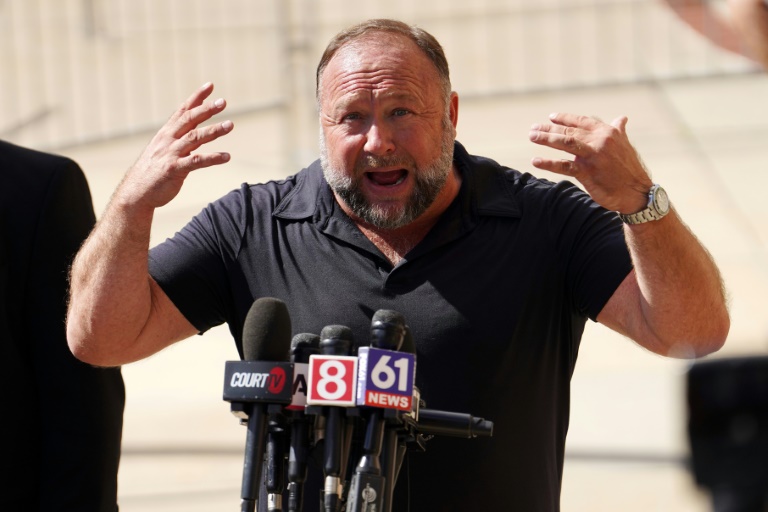
American radio host Alex Jones reaped millions spouting conspiracy-laden falsehoods that helped drive up sales of products like libido boosters, exploiting an internet ecosystem that experts say makes misinformation a lucrative business.

Jones, a serial provocateur who founded the far-right website InfoWars, has been ordered to pay nearly $1.5 billion in damages for calling a 2012 mass shooting in an elementary school –- which left 20 first graders and six adults dead — a “hoax.”

Defamation cases in Texas and Connecticut against Jones have spotlighted the challenge of curbing misinformation on the internet, where false and inflammatory content often spreads faster, generates more engagement — and more revenue -– than the truth.

“The modern internet business model consists of building an audience and then monetizing that audience, either through ads, merchandise sales, or direct donation,” Danny Rogers, cofounder of the nonprofit Global Disinformation Index, told AFP.  

“Alex Jones perfected that model by peddling the most adversarial narratives in the form of virulent conspiracy theories and unbridled anger, building a receptive audience, and then soaking that audience for profit.”

Jones, who was back in the spotlight this week when rapper Kanye West declared his admiration for Adolf Hitler on his show, has amassed what experts call a fortune by successfully merging the conspiracy theories with merchandise and dietary supplements from his InfoWars store.

Jones has hawked male vitality supplements and testosterone boosters, while claiming the government was feminizing men or turning them gay by using chemical pollutants.

He accused the government of deliberately putting fluoride in drinking water, while his store peddled fluoride-free toothpaste.

His audience, he claimed, can survive various doomsday scenarios with other products that his store can supply — storable food, body armor and even components for homemade guns.

– Bankruptcy – 

The extent of his wealth is opaque but a forensic economist testified during the Texas trial that the combined net worth of Jones and Free Speech Systems –- the parent company of Infowars –- likely fell between $135 million and $270 million.

But while bashing the trials as an assault on free speech, Jones has said he has little money to pay the damages and has repeatedly implored his audience for donations.

As he battled the defamation cases, an anonymous bitcoin donor sent Jones cryptocurrency worth $8 million, the nonprofit Southern Poverty Law Center reported in May.

This week, Jones declared personal bankruptcy in his home state of Texas, saying his liabilities far exceeded his assets that were worth between $1 million and $10 million.

InfoWars declared bankruptcy in April and Free Speech Systems filed for bankruptcy in July.

Last month, the Washington Post reported that Jones had transferred millions of dollars out of Free Speech Systems to firms that he or his family members controlled, citing financial records.

Families of the victims in the 2012 shooting in Sandy Hooks Elementary School in Newtown, Connecticut, have alleged that Jones was trying to hide his wealth to avoid paying the damages.

A jury in Connecticut awarded $965 million in October to relatives of eight Sandy Hook victims and an FBI agent. The judge later tacked on an additional $473 million in punitive damages.

In a separate trial, a jury in Texas ordered Jones to pay nearly $50 million damages to a couple whose six-year-old son was killed in the shooting.

Free Speech Systems and Jones did not respond to a request for comment.

– ‘Clicks and cash’ –

The families of the school shooting victims say they were harassed and threatened for years by Jones’s fans, with strangers showing up at their homes to confront them and hurling abuse online. Some even reported receiving rape and death threats.

“Their children got slaughtered — I saw it myself,” Bill Aldenberg, the FBI agent, said in an emotionally charged testimony during the Connecticut trial in September.

“And these people (Jones and company) made millions upon millions. They’ve destroyed everybody and they don’t give a damn.”

InfoWars sales data presented during the Connecticut trial showed a major spike in revenue after Jones peddled a new lie about the school shooting.

On September 25, 2014, when he falsely claimed that an FBI report showed that “no one died in 2012 in Sandy Hook” his site’s daily revenue jumped to more than $230,000, according to the data published by the Huffington Post.

On the previous day, before he peddled that claim, the site made only $48,000.

That underscores, what experts say, is the financial incentive of content creators to push out conspiratorial material that has potential to go viral.

“The fundamental problem is larger than Jones and is really the business model itself and its toxic externalities,” said Rogers.

“This creates an entire world of Alex Jones polarizing the global discourse, sowing fear and anger for clicks and cash. Until this changes, we’ll simply go from one Alex Jones to the next and little will change.”

Macron caps US visit with New Orleans trip, meetup with Musk

President Emmanuel Macron on Friday visited New Orleans, a city emblematic of historic Franco-American ties, to promote the French language and conclude his state visit to the United States.

The French president, on the third day of a US trip that included a lavish reception at the White House a night earlier, strolled New Orleans’s historic French Quarter — and held an unannounced face-to-face meeting with Twitter owner Elon Musk.

Macron said the two had a “clear and honest” discussion during an hour-long meeting, and that he conveyed to Musk his — and Europe’s — concerns about content moderation on the influential platform.

“Transparent user policies, significant reinforcement of content moderation and protection of freedom of speech: efforts have to be made by Twitter to comply with European regulations,” Macron tweeted after the meeting.

Macron arrived in the iconic Louisiana city to a colorful welcome by a jazz band on the tarmac at the airport, before walking the French Quarter’s lively streets with his wife, Brigitte.

Removing his jacket, Macron strolled beside New Orleans Mayor LaToya Cantrell, clasping the hands of well-wishers and beaming widely. He spoke briefly with women holding signs in support of protests in Iran.

During an impromptu press briefing, he praised “a land of creolization” where “French is loved,” and later announced a program to broaden access to French language training.

He had said in Washington that he wanted to renovate the image of French in the United States, where it is “sometimes seen as elitist.”

Before taking off from Washington earlier Friday, Macron attended a breakfast with representatives of digital companies during which he, according to the Elysee, recalled “all the efforts” made since his first term to “make France the leading European country in tech.”

Once a French colonial city, New Orleans was sold to the United States by Napoleon as part of the Louisiana Purchase of 1803, and Macron has called it “the quintessential francophone land.”

– Energy and climate –

Besides celebrating French-American ties, Macron paid tribute to the victims of Hurricane Katrina, which killed more than 1,800 people in and around New Orleans and caused billions of dollars in damage in 2005.

Accompanied by French film director Claude Lelouch and dancer and choreographer Benjamin Millepied, Macron met local artists and prominent cultural figures of New Orleans, known as the birthplace of jazz.

Shortly after his arrival, Macron and European Affairs Minister Catherine Colonna met with Louisiana Governor John Bel Edwards. As Macron looked on, Colonna and Edwards signed an accord to promote and carry out joint clean energy initiatives.

The visit came on the heels of a lavish dinner hosted by President Joe Biden at the White House, headlined by master jazzman Jon Batiste, who comes from a family of New Orleans musicians.

Macron’s state visit — the first such formal occasion since Biden took office in January 2021 — symbolized how Washington and Paris have buried last year’s bitter spat over the way Australia pulled out of a French submarine deal in favor of acquiring US nuclear subs instead.

The visit featured a full military honor guard for Macron, including service members from the marines, army, air force and even a detachment of soldiers in 18th-century Revolutionary War garb.

Prince William awards Earthshot prizes as US visit wraps up

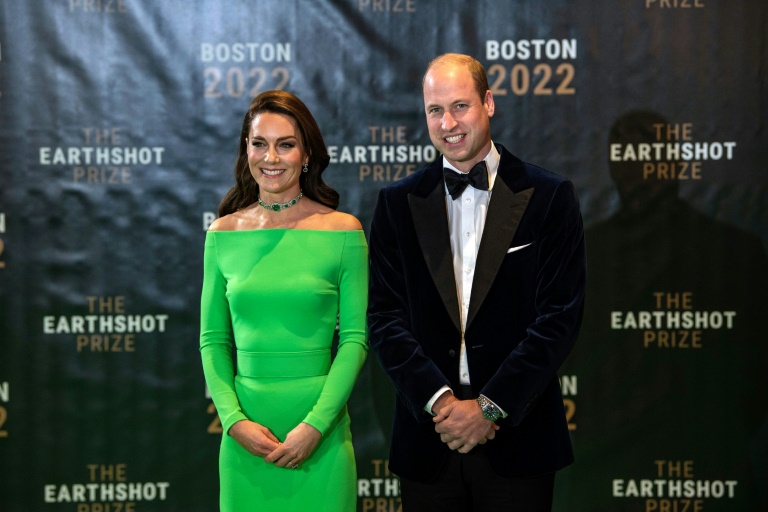
Prince William honored climate change innovators during a star-studded ceremony in Boston Friday at the culmination of a US trip overshadowed by a race row and estranged brother Harry’s Netflix series.

Britain’s heir to the throne rewarded five entrepreneurs with £1 million each ($1.2 million) as part of his Earthshot Prize initiative to support efforts to save the planet from warming temperatures.

Annie Lennox and sisters Chloe x Halle were among singers to perform at Boston’s MGM Music Hall. Actor Rami Malek and ex-footballer David Beckham presented awards.

British naturalist and television presenter David Attenborough and actress Cate Blanchett were among the judges.

Winners included a female-founded start-up providing cleaner-burning stoves to women in Kenya and a British company that crafts biodegradable packaging from marine plants. 

“I believe that the Earthshot solutions you have seen this evening prove we can overcome our planet’s greatest challenges. And by supporting and scaling them we can change our future,” William told the audience.

The ceremony, now in its second year, was trailed by royal insiders as William’s “Superbowl moment” and came at the end of his and wife Kate’s first visit to the United States in eight years.

The couple’s three-day trip to Boston focused on the environment, as they discussed rising sea levels with local officials and toured a laboratory specializing in green technologies. William briefly met President Joe Biden Friday.

The trip started Wednesday under a cloud after William’s godmother Susan Hussey apologized and quit the royal household for repeatedly asking a Black British woman where she was “really” from during a reception at Buckingham Palace the day before.

A spokesman for the royal couple told reporters in Boston that William believed it was right that Hussey, 83, had stood down. 

Then on Thursday, Netflix unveiled a trailer for its six-part docuseries in which Harry and wife Meghan Markle lift the lid on their lives in the royal family, which they quit in 2020.

Harry and Meghan, a mixed-race former television actress, cited racism in the royal household as one of the reasons for their acrimonious departure and move to California almost three years ago.

– ‘Halftime Show’ –

Omid Scobie, a close friend and biographer of the couple, tweeted that the series, due to air December 8, will share “the other side of their love story and the challenges they faced.”

“(I)f tomorrow is Prince William’s Super Bowl, then here’s your Halftime Show,” he wrote.

The Earthshot Prize, launched in October 2020, was inspired by US president John F. Kennedy’s “Moonshot” project in the 1960s to put a man on the moon.

Mukuru Clean Stoves of Kenya won the Clean our Air category for its biomass stoves made from charcoal, wood, and sugarcane that burn 70 percent less pollution than traditional stoves and cost just $10.

London-based Notpla scooped the Build a Waste-Free World prize for its packaging products made of seaweed.

The Protect and Restore Nature award went to Indian firm Kheyti whose greenhouses protect small-hold farmers’ crops from unpredictable weather and destructive pests.

The Queensland Indigenous Women Rangers Network won the Revive our Oceans category for training more than 60 women in techniques to preserve Australia’s Great Barrier Reef.

The Fix our Climate award went to Oman-based 44.01, which removes cardon dioxide from the atmosphere by turning it into peridotite rock stored underground.

Global stocks mixed after strong US jobs data

Stock markets were mixed Friday after strong US jobs data raised concerns that the US Federal Reserve may continue to aggressively hike interest rates to tame inflation.

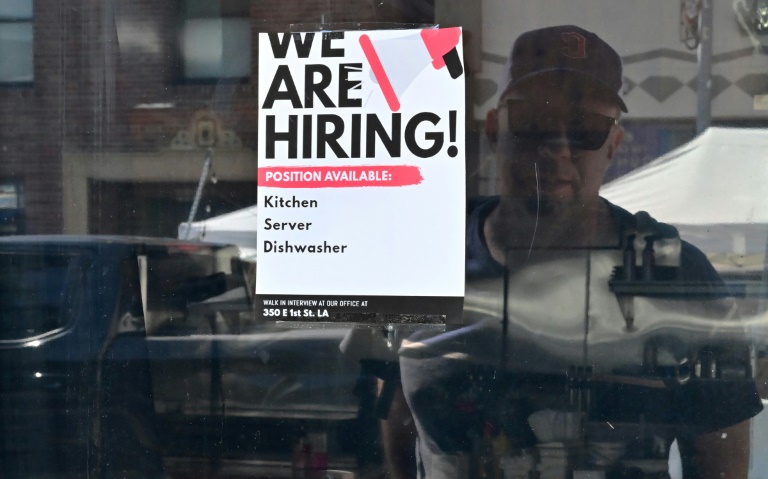
US government data showed that the world’s biggest economy added 263,000 jobs in November, with the unemployment rate remaining at 3.7 percent.

Government figures also indicated a bigger jump in hourly wages than analysts had benchmarked.

Indices in New York initially tumbled on the release as markets feared it would extend the period of ultra-aggressive Federal Reserve interest rate hikes to counter inflation.

But markets recovered throughout the day, with the S&P 500 ending down 0.1 percent.

Investors were unnerved by the jump in wages “because that tends to feed inflation,” said Quincy Krosby of LPL Financial

But traders also realize that “there’s a positive side to this,” she said. “The Fed has the luxury if you will to continue to raise rates, with smaller rate hikes. And the labor market remains resilient.”

The jobs data comes two days after Federal Reserve Chair Jerome Powell signaled the central bank could moderate its aggressive posture on interest rates as soon as this month.

Earlier, London finished flat, while Frankfurt gained modestly and Paris dipped.

Investors were also focused on the oil market, where prices finished lower amid focus on talks on a price cap to limit Russia’s oil revenues.

The G7 and EU agreed a $60-per-barrel price cap on Russian oil late Friday. Analysts were still assessing the effect of the price ceiling, but have said the impact on supply could be limited  because Russia currently sells some oil below this price level.

Traders are also focused on OPEC+, which may decide Sunday to slash oil production further to boost prices for its members, which include Saudi Arabia and Russia.

“There remains considerable uncertainty around the action OPEC+ will take when it meets,” noted OANDA trading platform analyst Craig Erlam.

Among individual companies, Boeing jumped 4.0 percent following a Wall Street Journal report that United Airlines is close to agreeing to order dozens of Boeing 787 Dreamliners. United shares were flat.

– Key figures around 2200 GMT –

New York – Dow: UP 0.1 percent at 34,429.88 (close)

New York – S&P 500: DOWN 0.1 percent at 4,071.70 (close)

New York – Nasdaq: DOWN 0.2 percent at 11,461.50 (close)

London – FTSE 100: FLAT at 7,556.23 (close)

Frankfurt – DAX: UP 0.3 percent at 14,529.39 (close)

Paris – CAC 40: DOWN 0.2 percent at 6,742.25 (close)

EURO STOXX 50: DOWN 0.2 percent at 3,977.90 (close)

Tokyo – Nikkei 225: DOWN 1.6 percent at 27,777.90 (close)

Hong Kong – Hang Seng Index: DOWN 0.3 percent at 18,675.35 (close)

Shanghai – Composite: DOWN 0.3 percent at 3,156.14 (close)

Euro/dollar: UP at $1.0531 from $1.0520 on Thursday

Dollar/yen: DOWN at 134.27 yen from 135.33 yen

Pound/dollar: UP at $1.2296 from $1.2247

Euro/pound: DOWN at 85.73 pence from 85.90 pence

Brent North Sea crude: DOWN 1.5 percent at $85.57 per barrel

West Texas Intermediate: DOWN 1.5 percent at $79.98 per barrel

burs-jmb/bgs

Ecuador seeks to protect unique Galapagos birds from flu

Ecuador has put in place a plan to try and protect its unique wild bird species on the Galapagos islands from the H5N1 virus also rampaging through Europe and North America.

The bird flu virus reached South America via migratory wild birds in recent weeks, impacting mainly Peru, where thousands of pelicans and other seabirds have died, and Ecuador, which has ordered the culling of 180,000 farm birds.

The director of the Galapagos National Park, Danny Rueda, said in a statement that “permanent monitoring has been arranged in areas with the most seabirds,” including all tourism hotspots.

The Galapagos is a bird-watchers paradise for the scores of unique and colorful birds found on the archipelago, such as the blue-footed booby with its quirky mating rituals, and endemic penguin, cormorant and albatross species.

English naturalist Charles Darwin developed his theory of evolution after studying finches and mockingbirds on the Galapagos islands in 1835.

On Wednesday, Ecuador declared a 90-day animal health emergency after detecting the highly contagious bird flu on some farms, and ordered the slaughter of about 180,000 poultry at affected sites.

In Peru, authorities have culled at least 37,000 chickens to try and control an outbreak, which has killed more than 14,000 seabirds, mostly pelicans.

Venezuela declared on Friday a 90-day health alert in five coastal states after bird flu was detected. The movement of live birds in the quarantine zones was prohibited.

The current bird flu outbreak began in Canada and spread to the United States, which has seen a record 50 million avian deaths, according to the US Centers for Disease Control and Prevention.

Europe is also experiencing its worst-ever outbreak of the virus, according to the European Centre for Disease Prevention and Control.

There is no treatment for bird flu, which spreads naturally between wild birds and can also infect domestic poultry. Avian influenza viruses do not typically infect humans, although there have been rare cases.

OPEC set to stick or cut more amid plan to cap Russian oil price

Major oil producers are expected to stick to their current output strategy or even slash production further when they meet on Sunday in the face of falling prices, a Russian oil price cap and an embargo on Russian crude shipments.

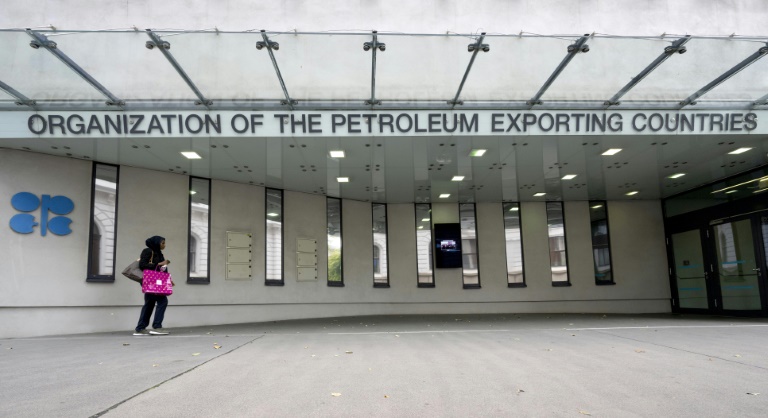
At their last ministerial session in October the 13-nation Organization of the Petroleum Exporting Countries headed by Riyadh and its 10 allies led by Moscow, collectively known as OPEC+, agreed to reduce output by two million barrels per day (bpd) from November.

The OPEC+ reduction amounted to the biggest cut since the height of the Covid pandemic in 2020.

Amid fears of economic slowdown, Sunday’s cartel meeting via videoconference convenes ahead of the EU enforcing an embargo on Russian crude shipments from Monday.

G7 countries, the EU and Australia had also appeared close to agreeing a $60 per barrel price cap on Russian oil Thursday.

The alliance should vote for a “rollover of the previous decision” to cut two million bpd, an Iranian source told AFP Thursday, arguing that the market was “very uncertain” in light of imminent European sanctions.

– China worries –

“Odds are that the group will reassert its commitment to its latest output cuts,” said PVM Energy analyst Stephen Brennock, adding he would not rule out that they “may even potentially announce fresh cuts” to bolster prices.

Since the October meeting, oil prices have been plummeting to their level of early 2022, far from the peaks above $130 a barrel in March after the start of Russia’s invasion of Ukraine.

Two global crude benchmarks were hovering around $85 a barrel on Thursday.

Covid-related restrictions in China have raised fears about energy demand from the world’s largest importer of crude oil.

Beijing defused concerns, however, by signalling a possible easing of its strict zero-Covid policy, after nationwide protests against health restrictions broke out.

Soaring inflation in Europe and across the Atlantic have also fuelled fears of a recession.

– Russian ‘leverage’ –

Beyond the economic gloom, the big unknown in the oil equation currently is Russian oil, as Western nations seek to decouple themselves from Moscow’s energy supplies as fast as possible. 

The EU has decided to ban member states from buying Russian oil exported by sea from December 5, “putting at risk over two million barrels per day,” according to estimates by ANZ analysts.

The EU will also join the G7 powers in imposing a $60-per-barrel price cap on Russian oil, the Polish ambassador to the bloc said Friday.

Poland had delayed approving the adoption of the plan while it pushed for a lower price ceiling and tough new sanctions to punish Russia for its war against Ukraine.

Last week, President Vladimir Putin had warned that any attempt by the West to cap the price of Russian oil would have “grave consequences” for world markets.

Russia “has several options to circumvent such a cap,” said UniCredit economist Edoardo Campanella, adding that “OPEC+ might feel compelled to adopt a more aggressive stance” by cutting or threatening to cut production even further.

“Russia might also retaliate by leveraging its influence within OPEC+ to push for more production cuts down the road, thus exacerbating the global energy crisis,” Campanella said.

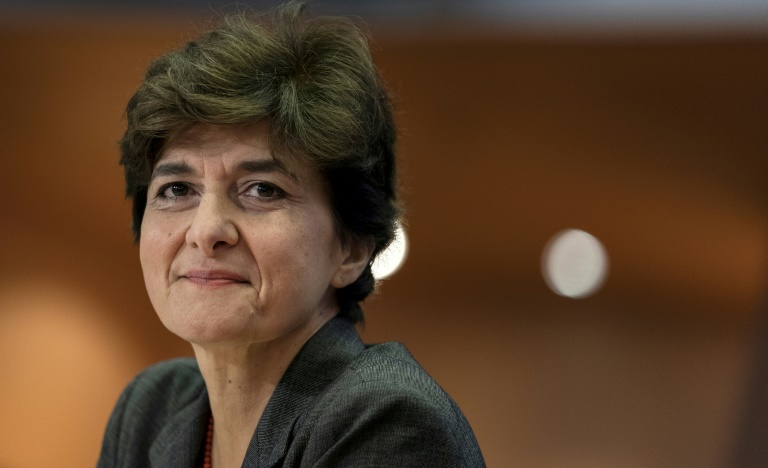
Top French central banker in corruption probe

French prosecutors said Friday that they had opened a corruption investigation into top central banker Sylvie Goulard, who simultaneously stepped down from the Bank of France.

The probe covers suspicions of accepting bribes, influence peddling, illegal conflicts of interest and breach of trust, the national financial prosecutor’s office said, confirming a report from daily Liberation.

Graft-fighting group Anticor triggered the probe by filing a criminal report in June, with the investigation launched in September.

In a statement, the Bank of France said Goulard — a former MEP and briefly defence minister under President Emmanuel Macron in 2017 — would be leaving her post as one of the institution’s deputy governors on December 5.

She wished to “return to the foreign ministry” where she started her civil service career, the bank said.

A source close to Goulard told AFP that her departure had “nothing to do with the investigation”.

“Neither Sylvie Goulard nor her lawyer were informed that the investigation had been reopened,” the source said.

A previous probe in 2019 was closed the following year after no crime was found, case files seen by AFP showed.

Anticor questioned in its complaint the work Goulard performed for the California-based Berggruen Institute think-tank.

She has acknowledged accepting 10,000 euros ($10,530 at current rates) per month working as a “special adviser” to the Council for the Future of Europe, an offshoot of Berggruen, between 2013 and 2016.

Goulard, who was also an MEP at the time, said her work had “no relation of any kind with the business activities” of the group’s founder, German-American billionaire Nicolas Berggruen.

She said her role included “reflection, moderating groups, organising meetings”.

Her lawyer declined to respond Friday when contacted by AFP.

The Berggruen Institute denied in 2019 that Goulard had been given a fake job, highlighting that she organised meetings in Brussels, Paris and Madrid.

Goulard has also been charged in a probe into suspected fake jobs among assistants to MEPs from the Democratic Movement, a small centrist party that supports Macron.

Close Bitnami banner
Bitnami