World

Biden signs emergency law forcing US rail unions to accept wages deal

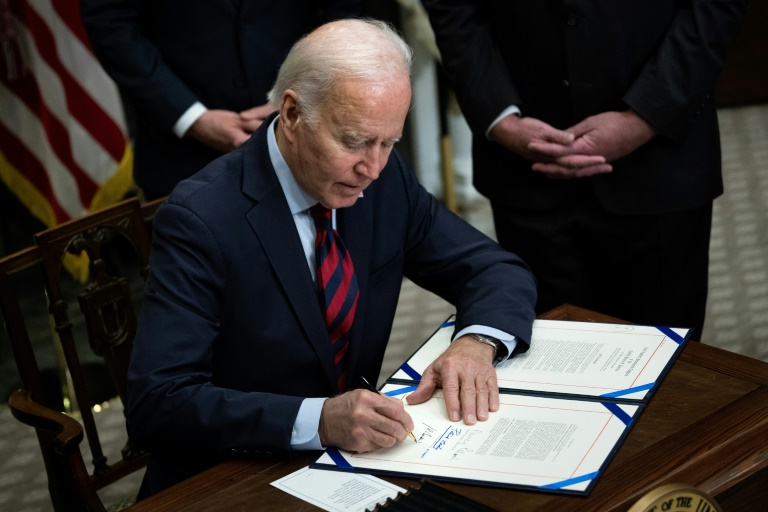
US President Joe Biden signed into law Friday a rare intervention by Congress forcing freight rail unions to accept a salary deal, avoiding a possibly devastating strike — but putting the pro-union Democrat in an awkward political position.

Biden signed the law in a brief White House ceremony only a week before unions who had rejected the deal were expected to have gone on strike, threatening crucial supply chains across the world’s biggest economy.

The deal delivers a hefty wage increase but four of the 12 unions involved refused to accept it because there was no agreement on giving workers paid sick leave. Congress acted under a little used power to resolve disputes involving railroads.

As he signed the bill, Biden said Congress had “avoided what, without a doubt, would have been an economic catastrophe.”

“Without freight rail, many of the US industries would literally have shut down,” Biden said, adding that his advisors feared the loss of three quarters of a million jobs within two weeks if the strike had gone ahead.

The episode was awkward politically for Biden.

Trade unions constitute a major element in his electoral coalition and he frequently describes himself as a lifelong union supporter and the “most pro-union president” in history.

That brand has taken a hit from the emergency bill signing, with some on the left accusing Biden of having sold out. After the Senate came down decisively in favor of the rail management, one union leader called the situation “horrific.”

The Brotherhood of Railroad Signalmen alleged that senators had “demonstrated they are for the corporate class.”

Biden bypassed the issue later Friday when he visited the International Brotherhood of Electrical Workers (IBEW) union in Boston to join a phone bank drumming up Democratic voter enthusiasm for the attempt to win a crucial extra Senate seat in Georgia’s runoff election next Tuesday.

The president told the audience he wouldn’t have won his own 2020 election without IBEW’s support and said his polices since then had favored the less well off.

“I’m tired of trickle-down economics,” he said to applause.

– No choice –

Judging by the overwhelmingly bipartisan support in Congress for forcing through the deal, the political hit for overriding the union holdouts will be contained for Biden. The House easily passed the bill and on Thursday the Senate, where usually Biden’s bills are lucky to scrape through with the one-vote Democratic majority, passed it 80-15.

Biden said he had no choice but to act quickly in the face of what the White House warns would have been a crippling strike right when the US economy is showing signs of stabilizing in the wake of the Covid pandemic.

In his comments at the signing ceremony, Biden said the wages deal — which his administration was heavily involved in crafting — was “a good product.”

He acknowledged the lack of sick leave but said “I’m coming back at it” with “more work to do.”

Above all, Biden said, the forceful intervention by Congress and the White House would benefit the country as a whole.

“They did one heck of a job in averting what could have been a real disaster,” he said.

Biden said “765,000 Americans, many of them union members themselves, would have been put out of work within the first two weeks of this strike alone.”

In addition, the breaking of supply chains for basic materials like chemicals and farm supplies would put clean drinking water and food at risk.

“We’ve spared the country that catastrophe,” Biden said.
Austria must continue to cut Russian gas reliance: OMV CEO

Austria has cut its dependence on Russian gas but it must keep up efforts to diversify its supplies for the next cold season, the head of Austrian energy group OMV told AFP.

Europe has sought to reduce its reliance on Russian oil and gas since Moscow invaded Ukraine. Russia in turn has slashed gas deliveries, causing energy prices to spike across Europe.

Austria imported 80 percent of its gas from Russia before the war broke out in late February.

By October, Russia accounted for just 23 percent of Austria’s gas imports, according to the government, as the country has filled up storage tanks and sought to buy the fossil fuel elsewhere.

Experts, however, say the Alpine nation of nine million is still dependent on it in the long run.

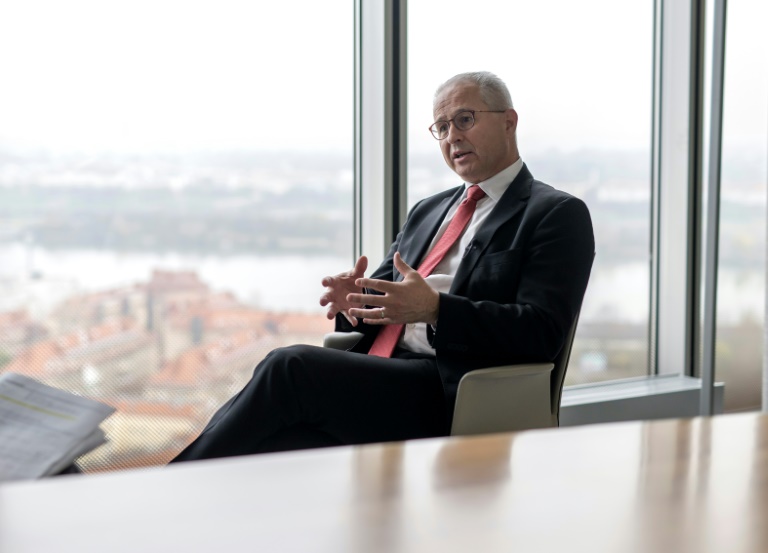
“I think we can be more confident for this winter, for this season, than we were maybe six months ago,” OMV CEO Alfred Stern told AFP on Friday in his modern office with a view over Vienna.

“But the work must go on now, also with a view to the next season,” he added.

He said the energy and chemicals group, which employs more than 22,000 people worldwide, had just signed an agreement in Abu Dhabi to try to secure gas deliveries for next winter.

– Russian exit –

Following European sanctions on Moscow, OMV froze its investments in Russia and has withdrawn from the Nord Stream 2 gas pipeline project.

“Because of the changed situation, we have decided Russia will no longer be a core region for us. This means we will not invest further there and we will consider all options including sale and exit,” said Stern, the firm’s 57-year-old CEO since September 2021.

An EU embargo on Russian crude goes into effect on Monday, while the bloc also agreed on a $60-a-barrel ceiling on Russian oil exports on Friday.

The embargo will prevent shipments of Russian crude by tanker vessel to the EU, which accounts for two thirds of imports, the rest arriving by pipeline.

OMV — known for its ties with the former Soviet Union from 1968 and for working closely with Russian giant Gazprom until the invasion of Ukraine — operates 1,800 petrol pumps in 10 European countries.

It also develops and produces oil and gas in Europe, the Middle East, Africa, the North Sea and the Asia-Pacific region.

– ‘Immorally’ high profits –

The energy giant announced in October that it recorded a high third-quarter profit thanks to soaring energy prices — with Stern describing OMV’s performance as “outstanding”.

Greenpeace and other activists have slammed the company’s “immorally” high profits.

Stern said profits supported the company as it seeks to reduce its carbon footprint and develop alternatives to oil and gas, saying such changes “didn’t happen overnight”.

He said in the meantime OMV was increasing its investment in gas as a “stopgap measure”, including considering developing an offshore gas field in the Black Sea off Romania.

“I actually see us as part of the solution (on climate change), because large and financially strong companies are necessary to implement such major challenges,” he said.

US, Brazil plan Biden-Lula meeting in Washington

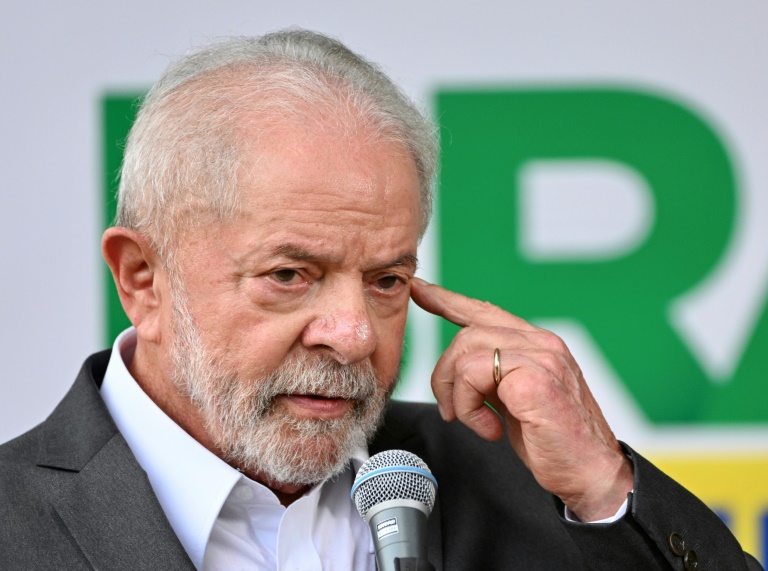
Brazilian president-elect Luiz Inacio Lula da Silva and US officials said Friday he is planning to meet with President Joe Biden at the White House, likely before taking office on January 1.

“I can confirm that we are planning for a visit,” White House National Security Council spokesman John Kirby told reporters. “We look forward to welcoming president Lula here at the appropriate time.”

Another NSC spokeswoman, Adrienne Watson, said that Biden’s national security advisor, Jake Sullivan, would travel to Brazil Monday to meet with Lula, as well as with members of outgoing President Jair Bolsonaro’s administration.

Veteran leftist Lula defeated far-right incumbent Bolsonaro in a hard-fought election in October, returning to power after two presidential terms served from 2003 to 2011.

Lula said he and Sullivan would “hold talks and discuss the date” for a visit to Washington — probably after December 12, the day his victory is formally ratified by Brazil’s electoral tribunal, he told a news conference in Brasilia.

US-Brazilian relations have chilled since Biden defeated former president Donald Trump, Bolsonaro’s political role model, in the 2020 US election.

But ties look set to warm under Lula.

Biden was one of the first world leaders to congratulate him on his election win.

“I think we have a lot to say to each other,” Lula said.

“The United States is facing the same problems with democracy as Brazil. The damage Trump did to American democracy is the same as what Bolsonaro did to Brazil.”

Diplomatic issues on the table will include “US-Brazilian relations, Brazil’s role in the new geopolitics (and) the unnecessary Ukraine war,” Lula said.

The Biden administration will also likely be keen to discuss climate policy, after four years of surging deforestation in the Brazilian Amazon under agribusiness ally Bolsonaro.

Lula vowed last month at the UN climate conference in Egypt — which Bolsonaro skipped — to fight for zero deforestation in Brazil’s 60-percent share of the world’s biggest rainforest, a key resource in the fight to curb climate change.

The incoming president said he would also begin naming his cabinet ministers after December 12 — with markets particularly anxious over his pick for finance minister, amid concerns about how his government will pay for his promised social spending.

The White House said Sullivan will be accompanied by other officials from the NSC and the State Department when he visits Brasilia on Monday.

He “will meet with Brazilian Secretary for Strategic Affairs Admiral Flavio Rocha, President-elect Lula da Silva, and Senator Jaques Wagner,” NSC spokeswoman Watson said, referring to an important ally of Lula.

“During the meetings, Sullivan will discuss how the United States and Brazil can continue to work together to address common challenges, including combatting climate change, safeguarding food security, promoting inclusion and democracy, and managing regional migration.”

Bolivia sets date for census after violent protests

Bolivia’s leftist President Luis Arce said Friday a bill had been approved to hold a national census in March 2024 after weeks of deadly protests over the count.

“We passed this Census Law so people’s blood will not be spilled. The census will take place on March 23, 2024,” the president said in a televised message.

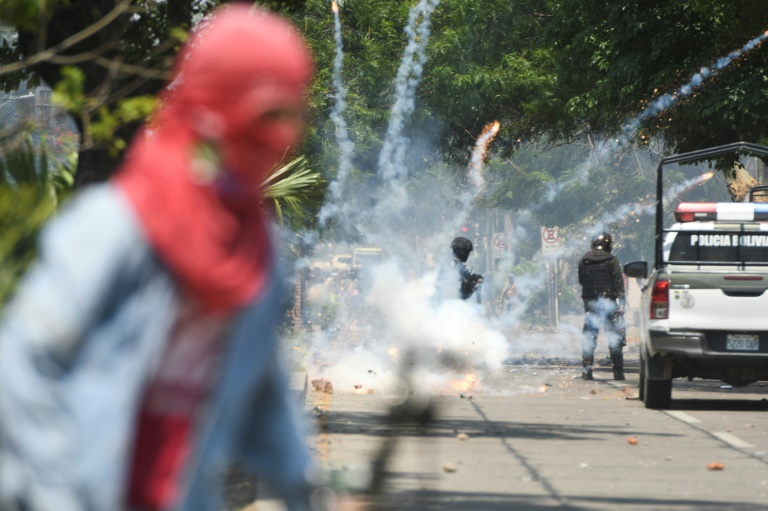
For almost five weeks, the economic hub of Santa Cruz was rocked by unrest over fears a new census to update spending allocation and the number of seats the region would be entitled to in parliament, would not take place before 2025 elections.

The protests, which began on October 22, were called off last Saturday after the bill was approved by the country’s Chamber of Deputies. It has now passed the Senate and been promulgated into law.

In addition to cementing the census date, the bill pledges government spending changes and legislative assembly seat allotment ahead of the country’s 2025 presidential election.

Bolivia’s last census was held in 2012, with a fresh count set to take place in November 2022 postponed by the government, who said they did not have time to organize it.

The protests left four people dead and more than 170 injured, and included clashes between opponents and supporters of the ruling party.

Transport was paralyzed, retail markets closed and riot police used tear gas to quell the unrest.

TotalEnergies cuts North Sea investment over UK windfall tax

French company TotalEnergies will cut North Sea oil and gas investment by 25 percent next year after the UK government extended a windfall tax on energy firms.

Jean-Luc Guiziou, head of the company’s UK production operations, has said that “following another change to the fiscal environment for energy investors in the UK, we are now evaluating the impact of this change on our current and planned projects”.

“For 2023 alone, our investments will be cut by 25 percent,” he added in a statement reported by specialist publication Energy Voice on Thursday. 

TotalEnergies confirmed the statement to AFP Friday.

Total will cut its North Sea investment by £100 million ($123 million) in 2023, impacting work on new wells, after finance minister Jeremy Hunt ramped up a windfall tax on oil and gas giants, whose profits have surged on fallout from the Ukraine war.

Prime Minister Rishi Sunak’s spokesman on Friday said “it’s right and fair that those with the broadest shoulders, and who are able to, contribute the most so we can continue to support the vulnerable”.

The tax extension in last month’s budget was aimed at helping fund support for British consumers hit by rocketing energy bills. 

The government wants the energy sector to partly foot the bill as it tries to shore up the nation’s public finances, hit by a combination of UK political turmoil, pandemic support and Brexit fallout.

The windfall tax “is in line with other European countries” such as Italy, Sunak’s spokesman added.

Guiziou this week said that a “competitive and stable fiscal and regulatory regime is vital to investment in critical energy and infrastructure projects that will support the UK’s security of supply and net zero ambitions”.

Energy giants, including also BP and Shell, will face an exceptional tax on profits of 35 percent, up from 25 percent and lasting an additional three years to 2028, Hunt announced.

Guiziou added “that the government should remain open to reviewing the energy profits levy if prices reduce before 2028”.

Before its extension, the windfall tax was introduced earlier in the year when Sunak had been finance minister.

UN anxious for unfettered aid access to Tigray

The United Nations still cannot get unfettered access to bring humanitarian aid into Ethiopia’s war-torn northern Tigray region, one month after the ceasefire, the World Health Organization said Friday.

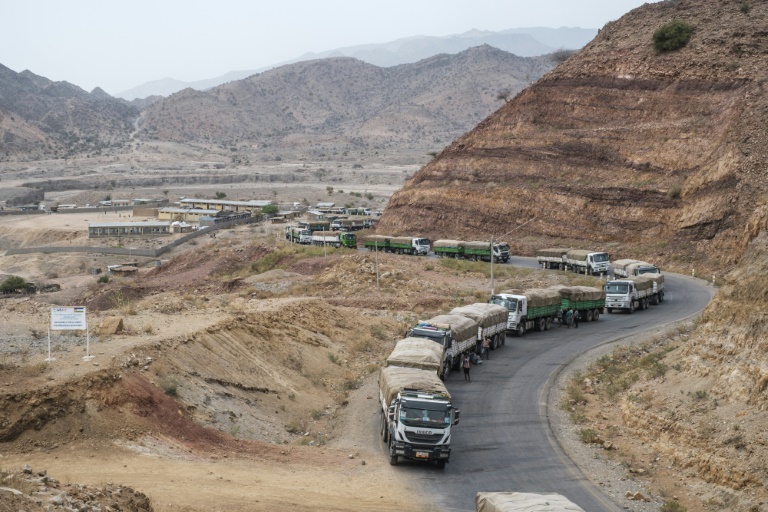
The UN’s health agency said just a trickle of aid had managed to get into Tigray, which is in the grip of a humanitarian crisis after a two-year conflict.

Restoring aid deliveries to Tigray was a key part of an agreement signed on November 2 to end a war that has killed untold numbers of people.

“That peace process has not yet resulted in the kinds of full access, unfettered access and the massive scale-up of medical and health assistance that the people of Tigray need,” WHO emergencies chief Michael Ryan told a press conference.

“I remain cynical on that front because we’ve been a long time waiting to get access to these desperate people.”

Tigray was isolated from the world for over a year, and faced severe shortages of medicines and limited access to electricity, banking and communications — services that need restoring for relief logistics operations to function.

“It’s really hard to plan a scale-up when at every moment you can have your ambitions curtailed,” Ryan lamented.

“The UN system is really anxious to scale up our operations.

“We welcome any cessation of violence, any access that’s given.

“But the people in Tigray are desperate. They’ve been years now without access to proper healthcare and nutrition and they need our help now. Not next week, not next month. Now.”

He said some WHO staff had been able to go in, while a small fuel allocation might allow the organisation to service a tiny percentage of the needs in the region.

– ‘Massive’ needs –

WHO chief Tedros Adhanom Ghebreyesus welcomed the ceasefire, deemed a vital prerequisite for health, but urged that it be implemented in full.

“The need is massive,” said Tedros, who is himself from Tigray.

He insisted that food aid and medical supplies should be delivered to civilians at all times during conflicts.

Tedros and Ryan both raised concerns for areas that are still under the control of troops from neighbouring Eritrea.

The ceasefire makes no mention of the presence on Ethiopian soil or any possible withdrawal of Eritrean troops, who have backed Ethiopian Prime Minister Abiy Ahmed’s forces and been accused of atrocities.

Last week the UN’s World Food Programme said aid deliveries into Tigray were “not matching the needs” of the stricken region.

WFP said an estimated 13.6 million people across Tigray and its neighbouring regions of Amhara and Afar were dependent on humanitarian aid as a result of the war, which broke out in November 2020.

Tigray’s authorities had been resisting central rule for months when Abiy accused their leadership of attacking federal army camps and sent troops into the region.

EU agrees to impose price cap on Russian crude

The European Union will join the G7 powers in imposing a $60-per-barrel price cap on Russian oil, the Polish ambassador to the bloc said Friday, three days ahead of an EU embargo on imports by sea.

Poland had delayed approving the adoption of the plan while it pushed for a lower price ceiling and tough new sanctions to punish Russia for its war against Ukraine and starve its military of funds.

“We can formally agree to the decision,” Poland’s EU ambassador Andrzej Sados said, explaining that Warsaw’s fellow EU members had agreed to push forward with a new ninth round of sanctions against Russia.

“We’re working on the next package of sanctions, which will be painful and expensive for Russia,” Sados told reporters.   

The EU presidency, currently held by the Czech Republic, confirmed member state ambassadors had reached an agreement on the price cap and that the decision would enter into force when published in the EU official journal this weekend.

– Painful and expensive –

The oil price cap will run alongside the EU’s ban on imports of Russian oil, which comes into effect on Monday. 

Member states hope it will be the most damaging hit yet against the industry fuelling President Vladimir Putin’s Russian war machine.

European Commission chief Ursula von der Leyen said on Twitter that the price cap would help to “stabilise global energy prices, benefitting emerging economies around the world”.

Sados told reporters that Warsaw was reassured the EU had taken on board suggestions from Poland and the Baltic states for a tough new ninth round of sanctions.  

A discussion paper circulated last month called for Gazprombank, which facilitates payments for Russian energy exports, to be kicked off the SWIFT international payments system.

It also proposed bans on the export of a wide range of consumer technology that could be pressed into use by the Russians and a ban on the importation of Russian diamonds.

Monday’s oil embargo will prevent shipments of Russian crude by tanker vessel to the EU, which accounts for two thirds of imports, the rest arriving by pipeline. 

Energy experts like Phuc-Vinh Nguyen of the Jacques Delors Institute think tank estimate that Russia has earned 67 billion euros ($71 billion) selling oil to EU clients since its February invasion of Ukraine.

This alone is greater than Russia’s 60-billion-euro defence budget before the war and dwarfs the financial and military aid spent by EU states to support Kyiv’s pro-Western government.

The price cap is designed to make it harder to bypass the sanctions by selling beyond the EU.

China and India, for example, will still be able to import Russian oil, but under the proposed plan European insurers would be banned from covering tankers that carry oil trading at prices above the $60 ceiling. 

Under the European plan, which will be coordinated with the United States, the G7 and other Western allies, if the market price of Russian oil falls below $60 then the cap will be cut until it is five percent lower than the market.

– ‘We are in the unknown’ –

The price of Urals Crude, the main variety sold by Russia, is volatile but it was trading at around $65 per barrel as EU ambassadors met to discuss the level of the cap.

But Poland, a strong supporter of its neighbour Ukraine in the battle against the Kremlin’s forces, had earlier been holding out for a lower sum.

It reportedly wanted closer to just $30 a barrel, but Sados said that the market price was expected to rise and that $60 was now a reasonable starting point.   

Moscow has warned that it will not export oil to countries respecting a price cap.

Last week, Putin warned that any attempt by the West to cap the price of Russian oil would have “grave consequences” for world markets.

With Germany and Poland having decided to stop deliveries via a pipeline by the end of the year, Russian exports to the union will be cut by more than 90 percent, the Europeans say. 

For Phuc-Vinh Nguyen, the proposed instrument raises many questions. 

“An oil price ceiling has never been seen. We are in the unknown,” he said, stressing that the reaction of OPEC producing countries, or big buyers India or China, will be crucial. 

According to the analyst, a cap — even at a high tariff — would send “a strong political signal” to Putin, because, once in place, this mechanism could be tightened.

Oil ministers from the OPEC+ oil producers’ group will meet in Vienna on Sunday.

EU agrees to impose price cap on Russian crude

The European Union will join the G7 powers in imposing a $60-per-barrel price cap on Russian oil, the Polish ambassador to the bloc said Friday, three days ahead of an EU embargo on imports by sea.

Poland had delayed approving the adoption of the plan while it pushed for a lower price ceiling and tough new sanctions to punish Russia for its war against Ukraine and starve its military of funds.

“We can formally agree to the decision,” Poland’s EU ambassador Andrzej Sados said, explaining that Warsaw’s fellow EU members had agreed to push forward with a new ninth round of sanctions against Russia.

“We’re working on the next package of sanctions, which will be painful and expensive for Russia,” Sados told reporters.   

The EU presidency, currently held by the Czech Republic, confirmed member state ambassadors had reached an agreement on the price cap and that the decision would enter into force when published in the EU official journal this weekend.

– Painful and expensive –

The oil price cap will run alongside the EU’s ban on imports of Russian oil, which comes into effect on Monday. 

Member states hope it will be the most damaging hit yet against the industry fuelling President Vladimir Putin’s Russian war machine.

European Commission chief Ursula von der Leyen said on Twitter that the price cap would help to “stabilise global energy prices, benefitting emerging economies around the world”.

Sados told reporters that Warsaw was reassured the EU had taken on board suggestions from Poland and the Baltic states for a tough new ninth round of sanctions.  

A discussion paper circulated last month called for Gazprombank, which facilitates payments for Russian energy exports, to be kicked off the SWIFT international payments system.

It also proposed bans on the export of a wide range of consumer technology that could be pressed into use by the Russians and a ban on the importation of Russian diamonds.

Monday’s oil embargo will prevent shipments of Russian crude by tanker vessel to the EU, which accounts for two thirds of imports, the rest arriving by pipeline. 

Energy experts like Phuc-Vinh Nguyen of the Jacques Delors Institute think tank estimate that Russia has earned 67 billion euros ($71 billion) selling oil to EU clients since its February invasion of Ukraine.

This alone is greater than Russia’s 60-billion-euro defence budget before the war and dwarfs the financial and military aid spent by EU states to support Kyiv’s pro-Western government.

The price cap is designed to make it harder to bypass the sanctions by selling beyond the EU.

China and India, for example, will still be able to import Russian oil, but under the proposed plan European insurers would be banned from covering tankers that carry oil trading at prices above the $60 ceiling. 

Under the European plan, which will be coordinated with the United States, the G7 and other Western allies, if the market price of Russian oil falls below $60 then the cap will be cut until it is five percent lower than the market.

– ‘We are in the unknown’ –

The price of Urals Crude, the main variety sold by Russia, is volatile but it was trading at around $65 per barrel as EU ambassadors met to discuss the level of the cap.

But Poland, a strong supporter of its neighbour Ukraine in the battle against the Kremlin’s forces, had earlier been holding out for a lower sum.

It reportedly wanted closer to just $30 a barrel, but Sados said that the market price was expected to rise and that $60 was now a reasonable starting point.   

Moscow has warned that it will not export oil to countries respecting a price cap.

Last week, Putin warned that any attempt by the West to cap the price of Russian oil would have “grave consequences” for world markets.

With Germany and Poland having decided to stop deliveries via a pipeline by the end of the year, Russian exports to the union will be cut by more than 90 percent, the Europeans say. 

For Phuc-Vinh Nguyen, the proposed instrument raises many questions. 

“An oil price ceiling has never been seen. We are in the unknown,” he said, stressing that the reaction of OPEC producing countries, or big buyers India or China, will be crucial. 

According to the analyst, a cap — even at a high tariff — would send “a strong political signal” to Putin, because, once in place, this mechanism could be tightened.

Oil ministers from the OPEC+ oil producers’ group will meet in Vienna on Sunday.

Hawaii volcano sprays fountains of lava in spectacular eruption

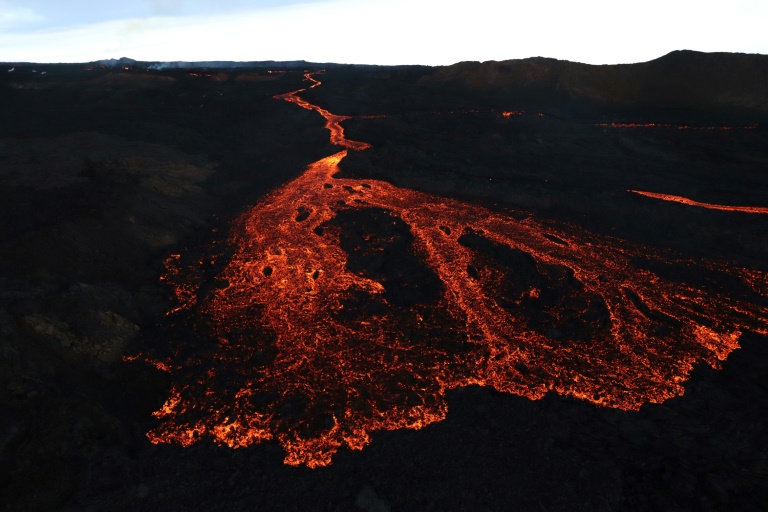
Fountains of lava and rivers of molten rock were spewing from the world’s biggest volcano Friday, as the first eruption there in almost four decades showed no signs of abating.

Two fissures on Mauna Loa were venting huge volumes of viscous rock and gases from deep within the Earth, in a thunderous display of the power of nature.

Vulcanologists said they were watching lava flows heading towards a highway on Hawaii’s largest island, though they still believe the eruption, which began Sunday, posed no immediate threat to humans.

“The Northeast Rift Zone eruption of Mauna Loa continues, with two active fissures feeding lava flows downslope,” the United States Geological Survey (USGS) said on Thursday.

“Fissure 3 remains the dominant source of the largest lava flow. The fissure 3 lava flows are traveling to the north toward the Daniel K. Inouye Highway (Saddle Road) but have reached relatively flatter ground and have slowed down significantly as expected.”

The molten rock was travelling at around 130 feet (40 meters) per hour and was still a few miles (kilometers) from the road.

“Advance rates may be highly variable over the coming days and weeks due to the way lava is emplaced on flat ground,” the USGS said.

“At the rate observed over the past 24 hours, the earliest the lava flow might be expected to reach the Daniel K. Inouye Highway (Saddle Road) is one week.”

But, the agency warned, volcanoes can be unpredictable and these calculations could change.

The other fissure still producing lava is sending it northeast, while plumes of volcanic gas were lofting high into the air and Pele’s Hair was falling to earth.

Pele’s Hair is fine strands of volcanic glass formed when lava skeins cool quickly in the air.

Named after Pele, the Hawaiian goddess of volcanoes, the strands can be very sharp and pose potential danger to skin and eyes.

Scientists say their seismic monitoring equipment was detecting a large number of earthquakes around the two active fissures.

“This indicates that magma is still being supplied, and activity is likely to continue as long as we see this signal,” the USGS said.

Pressure has been building at Mauna Loa for years, but it has not erupted since 1984.

Fountains of lava as high as 200 feet have been observed this week, lighting up the night sky in a spectacle that could be seen from Kona, a town 45 miles away.

– ‘Long Mountain’ –

The largest volcano on Earth by volume, Mauna Loa, whose name means “Long Mountain,” is larger than the rest of the Hawaiian islands combined.

The volcano’s submarine flanks stretch for miles to an ocean floor that is in turn depressed by Mauna Loa’s great mass — making its summit some 11 miles above its base, according to the USGS. 

One of six active volcanoes on the Hawaiian islands, Mauna Loa has erupted 33 times since 1843.

Its most recent eruption, in 1984, lasted 22 days.

Kilauea, a volcano on the southeastern flank of Mauna Loa, erupted almost continuously between 1983 and 2019, and a minor eruption there has been ongoing for months.

Eleven sentenced to death in Tanzania over conservationist's murder

A court in Tanzania sentenced 11 people to death on Friday over the 2017 murder of renowned conservationist Wayne Lotter.

Lotter, a 51-year-old South African based in Tanzania, was a founder of the PAMS Foundation which worked to stop the poaching of elephants and trafficking of ivory in the east African country.

He was shot dead in Dar es Salaam while in a taxi on his way back from the airport.

The exact motive for his killing is still unknown but colleagues of Lotter believe he was targeted for his work on protecting elephants.

“Some of the suspects, in their statements recorded by police officers, confessed to have taken part in the conspiracy meetings and in killing,” the judge, Laila Mgonya, told the court.

“The evidence provided was strong enough to convict them.”

The handing down of death sentences is not uncommon in Tanzania but they are generally commuted to life in prison. 

The last execution carried out in the country was in 1994.

Tanzania has been one of the African countries worst hit by elephant poaching, losing more than 66,000 elephants in a decade, but interdiction efforts mean poaching has declined in recent years.

Close Bitnami banner
Bitnami