World

US green plan should be 'wake-up call' for EU industry: French minister

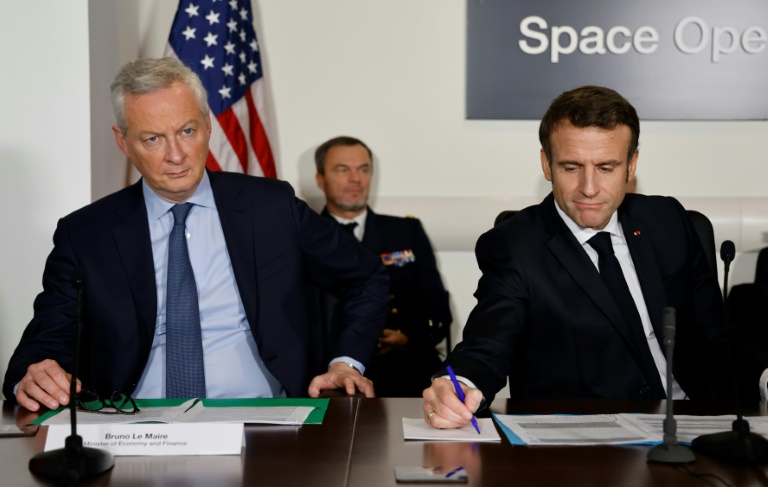
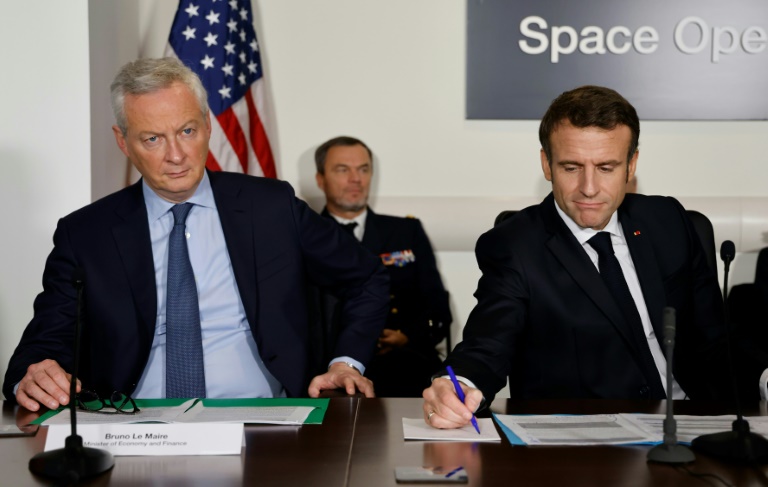
French Finance Minister Bruno Le Maire on Friday said Washington’s $430 billion plan to spur climate-friendly technologies in the United States must be seen as a wake-up call for Europe.

The EU “must be able to sweep in front of our own door” before worrying about the effects of the US climate plan on European industry, Le Maire told AFP in Washington, where he was part of French President Emmanuel Macron’s US state visit.

Even though the EU has already “changed its approach” on promoting green industry, the US climate plan must be seen as a “wake-up call” in the European Union, he added.

Le Maire’s comments came as EU countries have poured criticism on Washington’s landmark Inflation Reduction Act (IRA), seeing it as anti-competitive and a threat to European jobs, especially in the energy and auto sectors.

The act, designed to accelerate the US transition to a low-carbon economy, contains around $370 billion in subsidies for green energy as well as tax cuts for US-made electric cars and batteries. 

Macron on Wednesday slammed the plan’s “Made in USA” provisions as “super aggressive” for European businesses.

But at a joint press conference with Macron, Biden said that he and the French leader had agreed to “discuss practical steps to coordinate and align our approaches”, though he said he would not apologize for the US plan.

Biden added the IRA was never intended to disadvantage any US allies.

Last month, EU Internal Market Commissioner Thierry Breton threatened to appeal to the World Trade Organization and consider “retaliatory measures” if the United States did not reverse its subsidies.

Le Maire also criticized the EU’s own climate spending plans, arguing that they were too cumbersome and loaded with red tape.

“If the ambition is the same” as the Europeans, the United States relies on methods that “are simpler and faster”, he said.

“They put immediate and massive tax credits where we provide state aid (to specific projects) which sometimes take two years to be adopted and are too complex to implement,” said Le Maire.

US green plan should be 'wake-up call' for EU industry: French minister

French Finance Minister Bruno Le Maire on Friday said Washington’s $430 billion plan to spur climate-friendly technologies in the United States must be seen as a wake-up call for Europe.

The EU “must be able to sweep in front of our own door” before worrying about the effects of the US climate plan on European industry, Le Maire told AFP in Washington, where he was part of French President Emmanuel Macron’s US state visit.

Even though the EU has already “changed its approach” on promoting green industry, the US climate plan must be seen as a “wake-up call” in the European Union, he added.

Le Maire’s comments came as EU countries have poured criticism on Washington’s landmark Inflation Reduction Act (IRA), seeing it as anti-competitive and a threat to European jobs, especially in the energy and auto sectors.

The act, designed to accelerate the US transition to a low-carbon economy, contains around $370 billion in subsidies for green energy as well as tax cuts for US-made electric cars and batteries. 

Macron on Wednesday slammed the plan’s “Made in USA” provisions as “super aggressive” for European businesses.

But at a joint press conference with Macron, Biden said that he and the French leader had agreed to “discuss practical steps to coordinate and align our approaches”, though he said he would not apologize for the US plan.

Biden added the IRA was never intended to disadvantage any US allies.

Last month, EU Internal Market Commissioner Thierry Breton threatened to appeal to the World Trade Organization and consider “retaliatory measures” if the United States did not reverse its subsidies.

Le Maire also criticized the EU’s own climate spending plans, arguing that they were too cumbersome and loaded with red tape.

“If the ambition is the same” as the Europeans, the United States relies on methods that “are simpler and faster”, he said.

“They put immediate and massive tax credits where we provide state aid (to specific projects) which sometimes take two years to be adopted and are too complex to implement,” said Le Maire.

US-led forces resume normal patrols in Syria

A US-led coalition fighting jihadists resumed regular patrols in Kurdish-held areas of northeast Syria on Friday after earlier Turkish air strikes, an AFP correspondent and a Kurdish military source said.

Patrols were reduced following the Turkish strikes that began on November 20 in Kurdish-controlled areas of Syria and Iraq, in response to a deadly Istanbul bombing that Ankara blamed on Kurdish groups.

The Kurds denied responsibility.

Hundreds of American troops are in Syria as part of the fight against remnants of the Islamic State group.

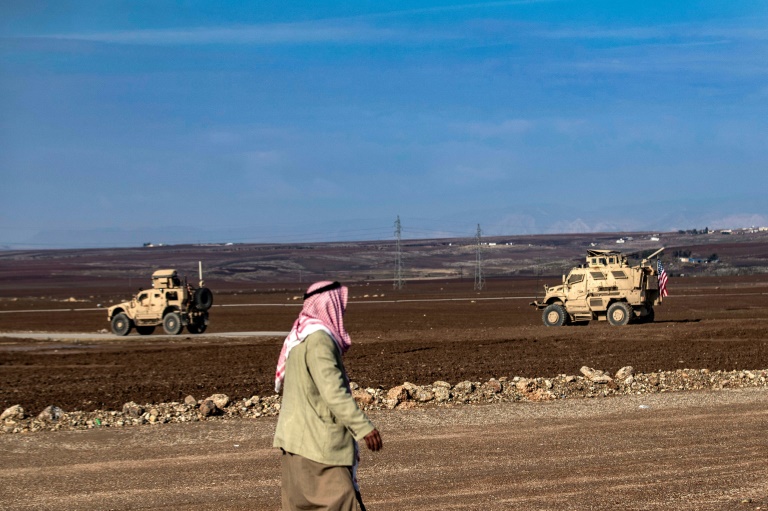
Two four-vehicle patrols bearing US flags set off separately from a base in Rmeilan in Hasakeh province, the AFP correspondent said.

A vehicle belonging to the Kurdish-led Syrian Democratic Forces (SDF) accompanied each convoy, which travelled in different directions towards Syria’s borders.

“The international coalition in cooperation with the Syrian Democratic Forces resumed its usual patrols in northeast Syria following a reduction due to Turkish strikes in the area,” a Kurdish military source told AFP.

The source requested anonymity as he was not authorised to speak on the matter.

The usual 20 weekly patrols had dropped to around five or six following the Turkish strikes, which Ankara said it carried out with aircraft and drones.

The US supports the SDF, which is the Kurds’ de facto army in the area and led the battle that dislodged IS from the last scraps of their Syrian territory in 2019.

Mahmud Bardakhan, a member of the SDF general command, meanwhile said the group “was forced to stop operations against IS cells for several days” due to the Turkish strikes.

But operations targeting the jihadists will resume on Saturday “in coordination with the coalition”, he added.

White House National Security Council spokesman John Kirby on Friday warned Turkey not to disrupt operations by US and Kurdish forces in Syria, while acknowledging Ankara’s security concerns in the volatile region.

Turkey said it struck targets of the Syrian Kurdish People’s Protection Units (YPG), which dominate the SDF but which Ankara sees as an offshoot of the Kurdistan Workers’ Party (PKK).

Turkey and its Western allies designate the PKK as a terrorist group.

The SDF “needs to focus on repelling the Turkish threats and protecting its areas”, the Kurdish military source said.

The Syrian Observatory for Human Rights, a Britain-based war monitor with a vast network of sources on the ground, said patrols were also seen Friday in Deir Ezzor province further south.

Turkey has threatened a ground operation in the semi-autonomous Syrian Kurdish zones, something which US Defence Secretary Lloyd Austin on Wednesday expressed “strong opposition” to.

The SDF has warned that a Turkish incursion would jeopardise the fight against IS.

US adds Cuba, Nicaragua, Wagner Group to religious freedom blacklist

The United States on Friday added Cuba, Nicaragua and Russia’s Wagner mercenary group to a blacklist on international religious freedom, opening the path to potential sanctions.

Secretary of State Antony Blinken said the Wagner Group was being designated due to involvement in abuses in the Central African Republic, where nearly a decade of bloodshed has had religious overtones.

Violations of religious freedom “sow division, undermine economic security and threaten political stability and peace,” Blinken said in a statement.

“The United States will not stand by in the face of these abuses.”

Cuba and Nicaragua were both newly designated as “Countries of Particular Concern” under the annual determinations, meaning that the two leftist Latin American states — already under US sanctions — could face further measures.

Blinken kept on the blacklist all Countries of Particular Concern from 2021 — China, Eritrea, Iran, Myanmar, North Korea, Pakistan, Russia, Saudi Arabia, Tajikistan and Turkmenistan.

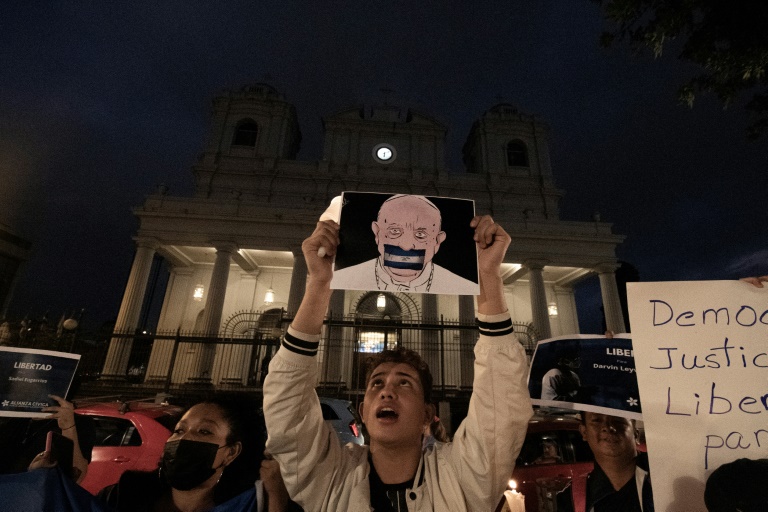
Nicaragua’s increasingly authoritarian president, Daniel Ortega, has clamped down on the Catholic Church since accusing it of supporting 2018 anti-government protests, which were crushed at the cost of hundreds of lives.

A bishop critical of the government, Rolando Alvarez, was put under house arrest in August with other priests and seminarians arrested on unspecified charges. 

After Pope Francis called for dialogue in September, Ortega branded the church a “dictatorship.”

The designation of Cuba is the latest sign of pressure on the island by the administration of President Joe Biden, which has largely shunned previous Democratic president Barack Obama’s policy of seeking an opening with the longtime US nemesis.

In its latest annual report on religious freedom issued in June, the State Department said there was growing harassment of Christians in Cuba, pointing to violence and arrests of religious figures over purported roles in rare public protests.

– No action on India, warning to Vietnam –

As expected, Blinken took no action against India, seen by the United States as a key emerging ally.

The decision ignores a recommendation by the autonomous US Commission on International Religious Freedom which said that treatment of minorities was “significantly” worsening under Prime Minister Narendra Modi’s Hindu nationalist government.

India had already voiced anger over the State Department’s annual report on religious freedom, which documented incendiary comments by Indian officials and accounts of discrimination against Muslims and Christians.

The report had separately pointed to abuses of Russia’s Wagner Group in Central African Republic, citing Amnesty International in linking the mercenaries to killings and sexual violence against Muslims.

The designation comes as the United States reportedly considers a terrorist designation of the Wagner Group, which has also been involved in Mali and has been accused of rights violations in Libya, Syria and Ukraine.

The Central African Republic, one of the world’s poorest countries, was plunged into civil war in 2013 when a Muslim-dominated rebellion overthrew the president, sparking reprisals from predominantly Christian and animist militias.

Blinken added the Central African Republic to a watchlist, meaning that it will be designated among Countries of Particular Concern without progress.

Also newly put on the watchlist was Vietnam. The State Department report said the communist authorities have harassed non-recognized religious groups including Christian house churches, independent Buddhists and members of the century-old Cao Dai movement.

Rights activists have long pushed the United States to designate Vietnam over the communist government’s treatment of Buddhist and other religious groups but successive US administrations have been building ties with the former US adversary.

Algeria and Comoros remained on the watchlist from 2021.

Brazil's Lula says to meet with Biden

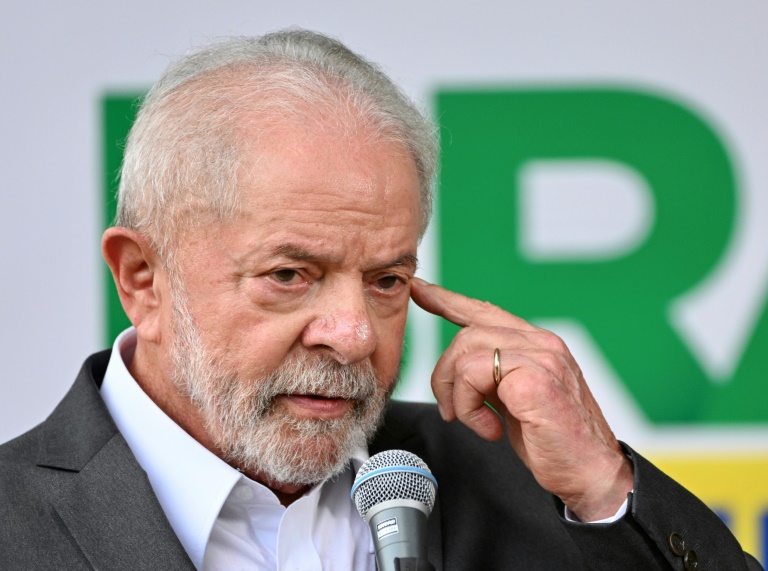
Brazilian president-elect Luiz Inacio Lula da Silva confirmed Friday he is planning a trip to the United States to meet with President Joe Biden before taking office on January 1.

“A representative of President Biden is traveling here to Brazil on Monday to hold talks and discuss the date,” said the veteran leftist, who defeated far-right President Jair Bolsonaro in a hard-fought election in October.

“If it’s possible for me to travel (to the US), the trip would be after (December) 12,” the day his victory is formally ratified by Brazil’s electoral tribunal, Lula told a news conference.

US-Brazilian relations have chilled since Biden defeated former president Donald Trump, Bolsonaro’s political role model, in the 2020 US election.

Ties look set to warm under Lula, who previously led Brazil from 2003 to 2010.

“I think we have a lot to say to each other,” Lula said.

“The United States is facing the same problems with democracy as Brazil. The damage Trump did to American democracy is the same as what Bolsonaro did to Brazil.”

Diplomatic issues on the table will include “US-Brazilian relations, Brazil’s role in the new geopolitics (and) the unnecessary Ukraine war,” he said.

The Biden administration will also likely be keen to discuss climate policy, after four years of surging deforestation in the Brazilian Amazon under agribusiness ally Bolsonaro.

Lula vowed last month at the UN climate conference in Egypt — which Bolsonaro skipped — to fight for zero deforestation in Brazil’s 60-percent share of the world’s biggest rainforest, a key resource in the fight to curb climate change.

The incoming president said he would also begin naming his cabinet ministers after December 12, in a news conference he kept short because he is still recovering from surgery last month on his vocal chords, he said.

Lula, 77, had throat cancer in 2011, and his trademark raspy voice has grown even hoarser since.

“My doctors told me to talk as little as possible, but no matter how hard I try, I can’t do it,” said the charismatic ex-metalworker.

“Maybe if I taped my mouth shut,” he joked.

EU strikes deal on oil price cap to starve Russia's war machine

The EU on Friday joined the G7 in agreeing a cap on the price of Russian oil to starve the Kremlin of resources for its Ukraine war, as Vladimir Putin said strikes on Ukraine’s infrastructure were “inevitable”.

The price cap of $60 per barrel, previously agreed on a political level with the United States and the G7 group of wealthy democracies, will come into effect with an EU embargo on Russian crude oil from Monday.

The embargo will prevent shipments of Russian crude by tanker vessel to the EU, which account for two thirds of imports, potentially depriving Russia’s war chest of billions of euros.

Poland had refused to back the price cap plan over concerns the ceiling was too high, before its ambassador to the bloc confirmed Warsaw’s agreement on Friday evening, allowing the measure to be made official this weekend.

The Czech presidency of the EU and diplomats from other member states said the deal had been confirmed and that the bureaucratic procedure to bring it into effect was underway.

The price cap is designed to make it harder to bypass the sanctions by selling beyond the EU.

Poland’s ambassador to the bloc, Andrzej Sados, also said Brussels would take into account Polish and Baltic state suggestions for a “painful and expensive” ninth round of sanctions against Moscow.

– Infrastructure strikes ‘inevitable’ –

After suffering humiliating defeats during what has become the largest armed conflict in Europe since World War II, Russia began targeting Ukrainian energy infrastructure in October, causing sweeping blackouts.

President Vladimir Putin said Russian strikes on Ukrainian infrastructure were “inevitable”, in his first conversation with German Chancellor Olaf Scholz since mid-September.

“Such measures have become a forced and inevitable response to Kyiv’s provocative attacks on Russia’s civilian infrastructure,” Putin told Scholz, according to a Kremlin readout of the telephone talks.

The Kremlin leader referred in particular to the October attack on a bridge linking Moscow-annexed Crimea to the Russian mainland.

During the hour-long call, Scholz “urged the Russian president to come as quickly as possible to a diplomatic solution including the withdrawal of Russian troops”, according to the German leader’s spokesman Steffen Hebestreit.

Putin urged Berlin to “reconsider its approaches” and accused the West of carrying out “destructive” policies in Ukraine, the Kremlin said, stressing that its political and financial aid meant Kyiv “completely rejects the idea of any negotiations”.

Ukrainian President Volodymyr Zelensky had ruled out any talks with Russia while Putin is in power shortly after the Kremlin claimed to have annexed several Ukrainian regions.

– Talks off the table – 

The Kremlin also indicated Moscow was in no mood for talks over Ukraine, after US President Joe Biden said he would be willing to sit down with Putin if the Russian leader truly wanted to end the fighting.

“What did President Biden say in fact? He said that negotiations are possible only after Putin leaves Ukraine,” Putin’s spokesman Dmitry Peskov told reporters, adding Moscow was “certainly” not ready to accept those conditions. 

Russia’s strikes have destroyed close to half of the Ukrainian energy system and left millions in the cold and dark at the onset of winter.

In the latest estimates from Kyiv, Mykhaylo Podolyak, an adviser to Zelensky, said as many as 13,000 Ukrainian troops have died in the fighting.

Both Moscow and Kyiv are suspected of minimising their losses to avoid damaging morale.

Top US general Mark Milley last month said more than 100,000 Russian military personnel have been killed or wounded in Ukraine, with Kyiv’s forces likely suffering similar casualties. 

– ‘We are not defeated’ –

The fighting in Ukraine has also claimed the lives of thousands of Ukrainian civilians and forced millions to flee their homes.

Those who remain in the country have had to cope with emergency blackouts as authorities sought to relieve the pressure on the energy infrastructure.

In an attempt to boost the mood in the capital Kyiv, musicians played a classical music concert on Thursday with hundreds of LED candles lighting up the stage.

“We thought it was a good idea to save energy,” Irina Mikolaenko, one of the concert’s organisers, told AFP. 

She said they wanted to spread “inspiration, light and love” and “tell people that we are not defeated”. 

Ukrainian officials have said they are expecting a new wave of Russian attacks shortly.

EU agrees to impose price cap on Russian crude

The European Union will join the G7 powers in imposing a $60-per-barrel price cap on Russian oil, the Polish ambassador to the bloc said Friday, three days ahead of an EU embargo on imports by sea.

Poland had delayed approving the adoption of the plan while it pushed for a lower price ceiling and tough new sanctions to punish Russia for its war against Ukraine and starve its military of funds.

“We can formally agree to the decision,” Poland’s EU ambassador Andrzej Sados said, explaining that Poland’s fellow EU members had agreed to push forward with a new ninth round of sanctions against Russia. 

“We’re working on the next package of sanctions, which will be painful and expensive for Russia,” Sados told reporters.   

The European Union presidency, currently held by the Czech Republic, confirmed that member state ambassadors had reached agreement on the price cap and that the decision would enter into force when published in the EU official journal this weekend.

– Painful and expensive –

The oil price cap will run alongside the EU’s ban on imports of Russian oil, which comes into effect on Monday, and member states hope it will be the most damaging hit yet against the industry fuelling President Vladimir Putin’s Russian war machine.   

The Polish envoy told reporters that Warsaw was reassured that the European Union had taken on board suggestions from Poland and the Baltic States for a tough new ninth round of sanctions.  

He did not say which of the ideas might feature in the package that the European Commission is drawing up, but a discussion paper circulated last month called for Gazprombank, which facilitates payments for Russian energy exports, to be kicked off the SWIFT international payments system.

It also proposed bans on the export of a wide-range of consumer technology that could be pressed into use by the Russians and a ban on the importation of Russian diamonds. 

Monday’s oil embargo will prevent shipments of Russian crude by tanker vessel to the EU, which accounts for two thirds of imports, the rest arriving by pipeline. 

Energy experts like Phuc-Vinh Nguyen of the Delors Institute think tank estimate that Russia has earned 67 billion euros ($71 billion) selling oil to EU clients since its February invasion of Ukraine.

This alone is greater than Russia’s 60-billion-euro defence budget before the war and dwarfs the financial and military aid spent by EU states to support Kyiv’s pro-Western government.

From Monday, tankers will no longer be permitted to bring Russian crude to Europe — and the price cap is designed to make it harder to bypass the sanctions by selling beyond the EU.

China and India, for example, will still be able to import Russian oil, but under the proposed plan European insurers would be banned from covering tankers that carry oil trading at prices above the $60 ceiling. 

Under the European plan, which will be coordinated with the United States, the G7 and other western allies, if the market price of Russian oil falls below $60 then the cap will be cut until it is five percent lower than the market.

– Level of the cap –

The price of Urals Crude, the main variety sold by Russia, is volatile but it was trading at around $65 per barrel as EU ambassadors met to discuss the level of the cap.

But Poland, a strong supporter of its neighbour Ukraine in the battle against the Kremlin’s forces, had earlier been holding out for a lower sum, reportedly closer to just $30 a barrel, but Sados said that the market price was expected to rise and that $60 was now a reasonable starting point.   

Moscow has previously warned that it will not export oil to countries respecting a price cap.

Last week, Putin had warned that any attempt by the West to cap the price of Russian oil would have “grave consequences” for world markets.

“We will not comment until this news… is made official,” said Russian presidential spokesman Dmitry Peskov. “We are awaiting an official announcement.”

With Germany and Poland having decided to stop deliveries via a pipeline by the end of the year, Russian exports to the union will be cut by more than 90 percent, the Europeans say. 

For Phuc-Vinh Nguyen, the proposed instrument raises many questions. 

“An oil price ceiling has never been seen. We are in the unknown,” he said, stressing that the reaction of OPEC producing countries, or big buyers like India or China will be crucial. 

According to the analyst, a cap — even at a high tariff — would send “a strong political signal” to Putin, because, once in place, this mechanism could be tightened.

Oil ministers from the OPEC+ oil producers’ group will meet in Vienna on Sunday.

EU agrees to impose price cap on Russian crude

The European Union will join the G7 powers in imposing a $60-per-barrel price cap on Russian oil, the Polish ambassador to the bloc said Friday, three days ahead of an EU embargo on imports by sea.

Poland had delayed approving the adoption of the plan while it pushed for a lower price ceiling and tough new sanctions to punish Russia for its war against Ukraine and starve its military of funds.

“We can formally agree to the decision,” Poland’s EU ambassador Andrzej Sados said, explaining that Poland’s fellow EU members had agreed to push forward with a new ninth round of sanctions against Russia. 

“We’re working on the next package of sanctions, which will be painful and expensive for Russia,” Sados told reporters.   

The European Union presidency, currently held by the Czech Republic, confirmed that member state ambassadors had reached agreement on the price cap and that the decision would enter into force when published in the EU official journal this weekend.

– Painful and expensive –

The oil price cap will run alongside the EU’s ban on imports of Russian oil, which comes into effect on Monday, and member states hope it will be the most damaging hit yet against the industry fuelling President Vladimir Putin’s Russian war machine.   

The Polish envoy told reporters that Warsaw was reassured that the European Union had taken on board suggestions from Poland and the Baltic States for a tough new ninth round of sanctions.  

He did not say which of the ideas might feature in the package that the European Commission is drawing up, but a discussion paper circulated last month called for Gazprombank, which facilitates payments for Russian energy exports, to be kicked off the SWIFT international payments system.

It also proposed bans on the export of a wide-range of consumer technology that could be pressed into use by the Russians and a ban on the importation of Russian diamonds. 

Monday’s oil embargo will prevent shipments of Russian crude by tanker vessel to the EU, which accounts for two thirds of imports, the rest arriving by pipeline. 

Energy experts like Phuc-Vinh Nguyen of the Delors Institute think tank estimate that Russia has earned 67 billion euros ($71 billion) selling oil to EU clients since its February invasion of Ukraine.

This alone is greater than Russia’s 60-billion-euro defence budget before the war and dwarfs the financial and military aid spent by EU states to support Kyiv’s pro-Western government.

From Monday, tankers will no longer be permitted to bring Russian crude to Europe — and the price cap is designed to make it harder to bypass the sanctions by selling beyond the EU.

China and India, for example, will still be able to import Russian oil, but under the proposed plan European insurers would be banned from covering tankers that carry oil trading at prices above the $60 ceiling. 

Under the European plan, which will be coordinated with the United States, the G7 and other western allies, if the market price of Russian oil falls below $60 then the cap will be cut until it is five percent lower than the market.

– Level of the cap –

The price of Urals Crude, the main variety sold by Russia, is volatile but it was trading at around $65 per barrel as EU ambassadors met to discuss the level of the cap.

But Poland, a strong supporter of its neighbour Ukraine in the battle against the Kremlin’s forces, had earlier been holding out for a lower sum, reportedly closer to just $30 a barrel, but Sados said that the market price was expected to rise and that $60 was now a reasonable starting point.   

Moscow has previously warned that it will not export oil to countries respecting a price cap.

Last week, Putin had warned that any attempt by the West to cap the price of Russian oil would have “grave consequences” for world markets.

“We will not comment until this news… is made official,” said Russian presidential spokesman Dmitry Peskov. “We are awaiting an official announcement.”

With Germany and Poland having decided to stop deliveries via a pipeline by the end of the year, Russian exports to the union will be cut by more than 90 percent, the Europeans say. 

For Phuc-Vinh Nguyen, the proposed instrument raises many questions. 

“An oil price ceiling has never been seen. We are in the unknown,” he said, stressing that the reaction of OPEC producing countries, or big buyers like India or China will be crucial. 

According to the analyst, a cap — even at a high tariff — would send “a strong political signal” to Putin, because, once in place, this mechanism could be tightened.

Oil ministers from the OPEC+ oil producers’ group will meet in Vienna on Sunday.

Stocks fall after strong US jobs data

Stock markets stumbled on Friday after strong US jobs data raised concerns that the US Federal Reserve may continue to aggressively hike interest rates to tame inflation.

Oil prices, meanwhile, were stable as investors awaited an output decision by OPEC and its Russia-led allies and tracked Western plans to cap Russian crude prices.

Stock markets are focused on the next moves of the US central bank.

While Fed chief Jerome Powell signalled on Wednesday that the central bank could start “moderating” the pace of rate hikes as soon as December, investors were unnerved by Friday’s jobs figures.

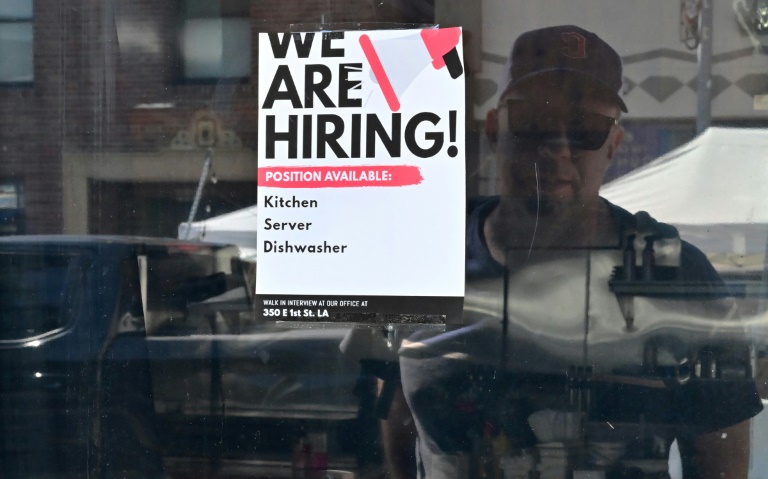
US government data showed that the world’s biggest economy added 263,000 jobs in November, with the unemployment rate remaining at 3.7 percent.

Strong job gains raise concerns among investors, as a healthy economy could convince the Fed it still has room to deliver more sharp rate increases to fight inflation.

“The report itself is good news from an economic standpoint, yet the market sees it as bad news, thinking it will push out any eventual pivot by the Fed with its monetary policy,” said Briefing.com analyst Patrick O’Hare.

Wall Street’s main indices were down in late morning trades while Paris finished lower and London closed flat. Frankfurt bucked the trend as it ended in the green.

– OPEC+ –

The focus was also on OPEC+, which may decide Sunday to slash oil production further to boost prices for its members, which include Saudi Arabia and Russia.

“There remains considerable uncertainty around the action OPEC+ will take when it meets…, although there’s every chance that the meeting will be delayed or that discussions take longer than normal, as a result of the price cap being finalised by the EU,” noted OANDA trading platform analyst Craig Erlam.

Beyond the economic gloom, the big unknown in the oil equation currently is Russian oil, as Western nations seek to decouple themselves from Moscow’s energy supplies as fast as possible.

The EU has decided to ban member states from buying Russian oil exported by sea from Monday, “putting at risk over two million barrels per day,” according to estimates by ANZ analysts.

Investors are also scrutinising EU plans to join G7 powers in imposing a $60-per-barrel price cap on Russian oil after Poland, which had pushed for a lower ceiling, dropped its objection.

Oil prices did not budge much after Poland’s announcement.

Prices have fallen heavily in recent weeks on expectations of weaker Chinese demand.

There are signs, however, that China is edging towards a pivot from its draconian Covid-zero strategy, which has seen the lockdown of tens of millions and strangled the giant economy this year.

The move came after widespread protests across the country earlier in the week against almost three years of heavy-handed containment measures and calls for more political freedoms.

Observers say they expect officials to signal a shift in priorities at a key meeting later this month, with a focus turning to kickstarting the economy, though with vaccination rates low the move will likely be gradual.

Asian stock markets closed in the red.

– Key figures around 1645 GMT –

New York – Dow: DOWN 0.1 percent at 34,365.14 points

London – FTSE 100: FLAT at 7,556.23 (close)

Frankfurt – DAX: UP 0.3 percent at 14,529.39 (close)

Paris – CAC 40: DOWN 0.2 percent at 6,742.25 (close)

EURO STOXX 50: DOWN 0.2 percent at 3,977.90

Tokyo – Nikkei 225: DOWN 1.6 percent at 27,777.90 (close)

Hong Kong – Hang Seng Index: DOWN 0.3 percent at 18,675.35 (close)

Shanghai – Composite: DOWN 0.3 percent at 3,156.14 (close)

Euro/dollar: DOWN at $1.0518 from $1.0529 on Thursday

Dollar/yen: DOWN at 134.93 yen from 135.34 yen

Pound/dollar: UP at $1.2280 from $1.2251

Euro/pound: DOWN at 85.63 pence from 85.91 pence

Brent North Sea crude: DOWN 0.2 percent at $86.69 per barrel

West Texas Intermediate: UP 0.1 percent at $81.30 per barrel

burs-lth/jj

WHO 'pleased' with China's loosening of zero-Covid after protests

The World Health Organization has cheered China’s loosening of its zero-Covid policy, with cities across the country making further moves towards unwinding some restrictions after days of unprecedented protests against the measures.

President Xi Jinping suggested the spread of the less lethal Omicron strain might allow China to pull back from its hardline strategy of lockdowns and mass testing, senior EU officials reported Friday.

Discontent with Beijing’s uncompromising pandemic response spilled onto streets last weekend and expanded into calls for more political freedom, in widespread demonstrations not seen in decades.

China’s vast security apparatus has moved swiftly to smother the rallies, deploying a heavy police presence while boosting online censorship and population surveillance.

In his first known comments on the protests, Xi told European Union chief Charles Michel the demonstrators were “mainly students or teenagers in university” fed up with Covid restrictions when the pair met Thursday in Beijing, senior officials speaking on condition of anonymity said.

Xi complained “that after three years of Covid that he had an issue because people were frustrated”, they said.

They added Xi had told Michel that given most cases in China were now of the Omicron variant, that “opens the way for more openness of the restrictions than what we have already seen in some regions”.

The World Health Organization was “pleased to learn that the Chinese authorities are adjusting their current strategies,” balancing control measures with the lives of communities who have “suffered”, WHO emergencies director Michael Ryan told reporters Friday.

Chinese government officials had signalled a broader relaxation of the zero-Covid policy could be in the works.

Speaking at the National Health Commission Wednesday, Vice Premier Sun Chunlan said the Omicron variant was weakening and vaccination rates were improving, according to state-run Xinhua news agency.

The WHO was pleased to see China’s vaccination rates rising, Ryan said.

A central figure behind Beijing’s pandemic response, Sun said this “new situation” required “new tasks”.

She made no mention of zero-Covid in those remarks or in another meeting Thursday, suggesting the approach, which has disrupted the economy and daily life, might soon be relaxed.

– Home quarantine? –

Several cities have now begun loosening coronavirus restrictions, slowly moving away from daily mass testing and compulsory central quarantine — a tedious mainstay of life under zero-Covid policy.

But sporadic localised confrontations have continued to flare up.

Social media footage posted Thursday night and geo-located by AFP showed dozens of people clashing with health workers in hazmat suits outside a school in Yicheng, in central China’s Hubei province.

The post’s author said the video showed parents of students who had tested positive for the virus and had been taken to quarantine. 

Parents are seen kneeling before the school gate, pleading to take their children home. Another video showed at least a dozen police officers at the scene.

But signs have emerged of a possible shift in the policy of sending positive cases to central quarantine facilities.

An analysis Friday by state-run newspaper People’s Daily quoted health experts supporting local government moves to allow patients to quarantine at home, which would be a marked departure from current rules.

When called Friday, some officials in Beijing’s Chaoyang district said people who tested positive there would no longer have to go to central quarantine.

Authorities in southern factory hub Dongguan said Thursday those who meet “specific conditions” should be allowed to isolate at home. They did not specify what those conditions would be.

Shenzhen, a southern tech hub, rolled out a similar policy Wednesday.

– Testing loosens –

The southwestern metropolis of Chengdu from Friday no longer required a recent negative test result to enter public places or ride the metro, instead only demanding a green health code on an app confirming people have not travelled to a “high-risk” area.

Beijing also announced Friday that using city public transport would no longer require a negative PCR test taken within 48 hours.

The day before, capital health authorities called on hospitals not to deny treatment to people without a 48-hour test.

In January, a pregnant woman in Xi’an miscarried after being refused hospital entry for not having a PCR result.

China has seen a string of deaths after treatment was delayed by Covid restrictions, including the recent death of a four-month-old baby stuck in quarantine with her father.

Those cases became a rallying cry during the protests, with a viral post listing names of those who died because of alleged negligence linked to the pandemic response.

Many other cities with virus outbreaks are allowing restaurants, shopping malls and even schools to reopen, in a clear departure from previous tough lockdown rules.

In the northwestern city of Urumqi, where the fire occurred that killed 10 people and became the catalyst for the anti-lockdown protests, authorities announced Friday that supermarkets, hotels, restaurants and ski resorts would gradually reopen.

The city of more than four million in far-western Xinjiang region endured one of China’s longest lockdowns, with some areas shut from early August.

Close Bitnami banner
Bitnami