World

Biden signs emergency law forcing US rail unions to accept wages deal

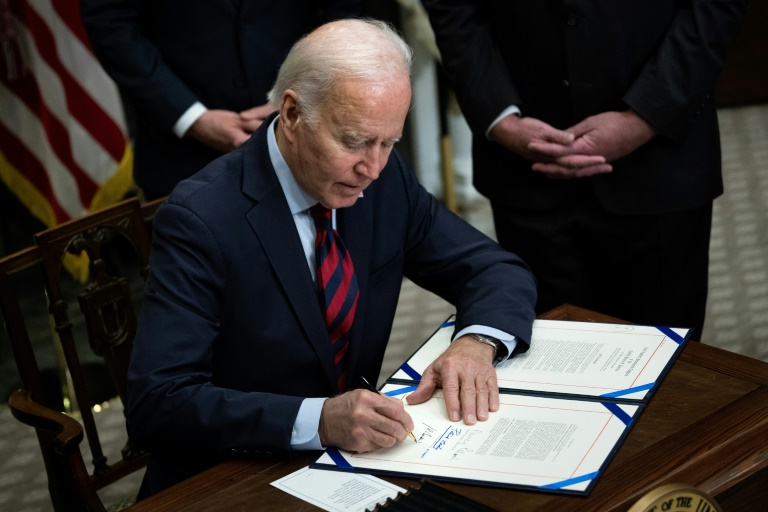
US President Joe Biden signed into law Friday a rare intervention by Congress forcing freight rail unions to accept a salary deal, avoiding a possibly devastating strike — but putting the pro-union Democrat in an awkward political position.

Biden signed the law in a brief White House ceremony only a week before unions who had rejected the deal were expected to have gone on strike, threatening crucial supply chains across the world’s biggest economy.

The deal delivers a hefty wage increase but four of the 12 unions involved refused to accept it because there was no agreement on giving workers paid sick leave. Congress acted under a little used power to resolve disputes involving railroads.

As he signed the bill, Biden said Congress had “avoided what, without a doubt, would have been an economic catastrophe.”

“Without freight rail, many of the US industries would literally have shut down,” Biden said, adding that his advisors feared the loss of three quarters of a million jobs within two weeks if the strike had gone ahead.

The episode was awkward politically for Biden.

Trade unions constitute a major element in his electoral coalition and he frequently describes himself as a lifelong union supporter and the “most pro-union president” in history.

That brand has taken a hit from the emergency bill signing, with some on the left accusing Biden of having sold out. After the Senate came down decisively in favor of the rail management, one union leader called the situation “horrific.”

The Brotherhood of Railroad Signalmen alleged that Senators had “demonstrated they are for the corporate class.”

The issue could come up Friday when Biden does voter outreach during a visit to the International Brotherhood of Electrical Workers (IBEW) union in Boston.

– No choice –

Judging by the overwhelmingly bipartisan support in Congress for forcing through the deal, the political hit for Biden will be contained. The House easily passed the bill and on Thursday the Senate, where usually Biden’s bills are lucky to scrape through with the one-vote Democratic majority, passed 80-15.

Biden said he had no choice but to act quickly in the face of what the White House warns would have been a crippling strike right when the US economy is showing signs of stabilizing in the wake of the Covid pandemic.

In his comments at the signing ceremony, Biden said the wages deal — which his administration was heavily involved in crafting — was “a good product.”

He acknowledged the lack of sick leave but said “I’m coming back at it” with “more work to do.”

Above all, Biden said, the forceful intervention by Congress and the White House would benefit the country as a whole.

“They did one heck of a job in averting what could have been a real disaster,” he said.

Biden said “765,000 Americans, many of them union members themselves, would have been put out of work within the first two weeks of this strike alone.”

In addition, the breaking of supply chains for basic materials like chemicals and farm supplies would put clean drinking water and food at risk.

“We’ve spared the country that catastrophe,” Biden said.
US hiring tops expectations in November as wages pick up

US job gains were unexpectedly robust in November despite efforts to cool the economy, while unemployment held steady and wages ticked up, the government reported Friday.

The figures provide little relief to officials who have been fighting to tamp down decades-high inflation amid concerns that elevated costs could become entrenched.

The world’s biggest economy added 263,000 jobs in November, Labor Department data showed, down from a revised 284,000 figure in October.

The unemployment rate remained low at 3.7 percent.

The US central bank has raised its benchmark interest rate multiple times this year to ease demand, with higher lending costs making it more pricey to borrow funds to buy cars and homes, or expand businesses. 

While such policy tightening may ordinarily lead to job losses, economists have noted that firms are reluctant to shed workers they may have struggled to find since the Covid-19 outbreak.

Demand remains resilient as well, with recent data showing that household spending picked up in October, another reason for firms to avoid job cuts.

Average hourly earnings for private sector workers rose 18 cents to $32.82 last month and over the last 12 months, wages have grown 5.1 percent, according to Friday’s data.

The report also said there were notable job gains in leisure and hospitality, health care as well as in government.

But employment dipped in retail trade, and in transportation and warehousing.

Noting the uptick in wages, President Joe Biden told reporters Friday that things are “moving in the right direction.”

– ‘Far too hot’ –

Although the interest-sensitive housing sector has slowed on the Federal Reserve’s rate hikes and there have been job cuts in tech, economic activity has generally remained resilient.

The labor market “remains far too hot for the Fed,” said ING economist James Knightley in an analysis.

Tightness in the jobs market, as firms compete to find and retain workers, has implications on rising wages –- and these add to the costs of delivering services.

Meanwhile the jobless rate was steady as labor participation, which is still below pre-pandemic levels, fell once more, Knightley said.

“Overall, the data are signaling ongoing positive momentum in job growth and still-elevated wages,” said Rubeela Farooqi of High Frequency Economics in a note.

Richmond Fed President Thomas Barkin cautioned in a separate speech Friday that the US may be moving into an environment where labor supply is constrained for a longer time, adding to price pressures.

Analysts believe the latest data supports further tightening of monetary policy by the US central bank, sending US stocks lower.

– Steep rate hikes –

While the Fed has signaled this week it might be time to moderate its aggressive campaign to cool the economy, there remain questions over how much higher rates have to go to bring inflation under control, said Fed Chair Jerome Powell.

The central bank has raised borrowing rates six times this year in hopes of easing demand, including four steep rate hikes, while walking a fine line to avoid tipping the economy into a recession.

A tight labor market has limited hiring ahead of the holiday season, but “employers are also hiring more cautiously” given uncertainty over the strength of consumer spending, said Sophia Koropeckyj of Moody’s Analytics.

Some industries have been pulling back, though not necessarily letting go of workers, in part explaining the low jobless rate, she added.

The trend of wage increases appears stable, but analysts have been “hoping to see a clear softening,” said Ian Shepherdson of Pantheon Macroeconomics.

“Even if inflation drops faster than expected over the next few months,” he said, policymakers “will be worried about a rebound in the second half of 2023 and beyond if wage growth does not slow.” 

Austria must continue to cut Russian gas reliance: OMV CEO

Austria has cut its dependence on Russian gas but it must keep up efforts to diversify its supplies for the next cold season, the head of Austrian energy group OMV told AFP.

Europe has sought to reduce its reliance on Russian oil and gas since Moscow invaded Ukraine. Russia in turn has slashed gas deliveries, causing energy prices to spike across Europe.

Austria imported 80 percent of its gas from Russia before the war broke out in late February.

By October, Russia accounted for just 23 percent of Austria’s gas imports, according to the government, as the country has filled up storage tanks and sought to buy the fossil fuel elsewhere.

Experts, however, say the Alpine nation of two million still is dependent on it in the long run.

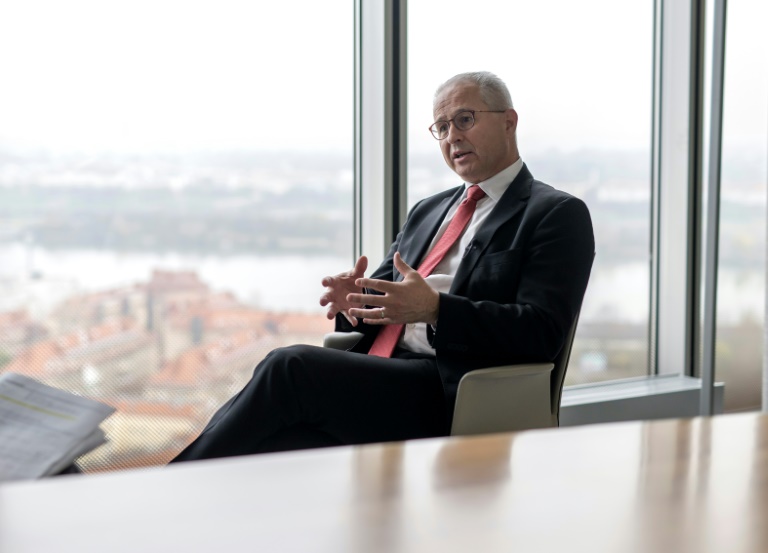
“I think we can be more confident for this winter, for this season, than we were maybe six months ago,” OMV CEO Alfred Stern told AFP on Friday in his modern office with a view over Vienna.

“But the work must go on now, also with a view to the next season,” he added.

He added the energy and chemicals group, which employs more than 22,000 people worldwide, had just signed an agreement in Abu Dhabi to try to secure gas deliveries for next winter.

– Russian exit –

Following European sanctions on Moscow, OMV froze its investments in Russia and has withdrawn from the Nord Stream 2 gas pipeline project.

“Because of the changed situation, we have decided Russia will no longer be a core region for us. This means we will not invest further there and we will consider all options including sale and exit,” said Stern, the firm’s 57-year-old CEO since September 2021.

An EU embargo on Russian crude goes into effect on Monday, while European leaders also debate a $60 a barrel ceiling on Russian oil exports.

The embargo will prevent shipments of Russian crude by tanker vessel to the EU, which accounts for two thirds of imports, the rest arriving by pipeline.

OMV — known for its ties with the former Soviet Union from 1968 and for working closely with Russian giant Gazprom until the invasion of Ukraine — operates 1,800 petrol pumps in 10 European countries.

It also develops and produces oil and gas in Europe, the Middle East, Africa, the North Sea and the Asia-Pacific region.

– ‘Immorally’ high profits –

The energy giant announced in October that it recorded a high third quarter profit thanks to soaring energy prices — with Stern describing OMV’s performance as “outstanding”.

Greenpeace and other activists have slammed the company’s “immorally” high profits.

Stern said profits supported the company as it seeks to reduce its carbon footprint and develop alternatives to oil and gas, saying such changes “didn’t happen overnight”.

He said in the meantime OMV was increasing its investment in gas as a “stopgap measure”, including considering developing an offshore gas field in the Black Sea off Romania.

“I actually see us as part of the solution (on climate change), because large and financially strong companies are necessary to implement such major challenges,” he said.

Biden signs emergency law forcing rail unions to accept wages deal

US President Joe Biden signed into law Friday a rare intervention by Congress forcing freight rail unions to accept a salary deal, avoiding a possibly devastating strike — but putting the pro-union Democrat in an awkward political position.

Biden signed the law in a brief White House ceremony only a week before unions who had rejected the deal were expected to have gone on strike, threatening crucial supply chains across the world’s biggest economy.

The deal delivers a hefty wage increase but four of the 12 unions involved refused to accept because there was no agreement on giving workers paid sick leave. Congress acted under a little used power to resolve disputes involving railroads.

As he signed the bill, Biden said Congress had “avoided what, without a doubt, would have been an economic catastrophe.”

“Without freight rail, many of the US industries would literally have shut down,” Biden said, adding that his advisors feared the loss of three quarters of a million jobs within two weeks if the strike had gone ahead.

The episode is awkward politically for Biden who frequently touts his pro-union credentials. He was due to meet with electrical union members later Friday in Boston.

Ecuador seeks to protect unique Galapagos birds from flu

Ecuador has put in place a plan to try and protect its unique wild bird species on the Galapagos islands from the H5N1 virus also rampaging through Europe and North America.

The bird flu virus reached South America via migratory wild birds in recent weeks, impacting mainly Peru, where thousands of pelicans and other seabirds have died, and Ecuador, which has ordered the culling of 180,000 farm birds.

The director of the Galapagos National Park, Danny Rueda, said in a statement that “permanent monitoring has been arranged in areas with the most seabirds,” including all tourism hotspots.

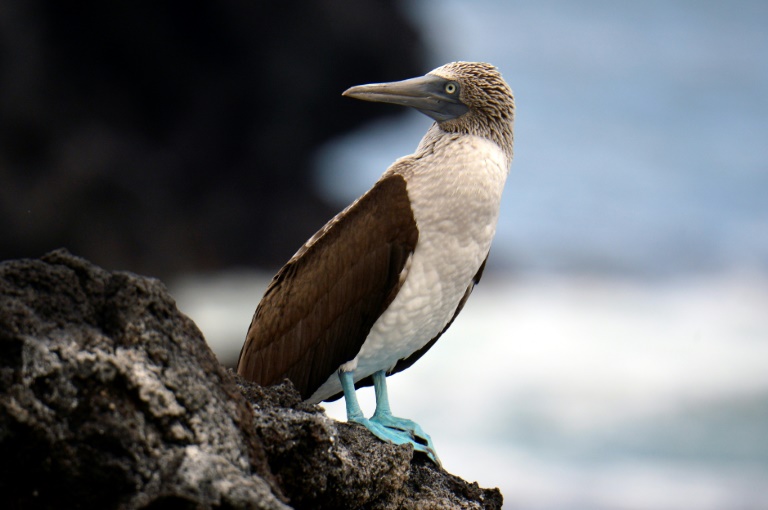
The Galapagos is a bird-watchers paradise for the scores of unique and colorful birds found on the archipelago, such as the blue-footed booby with its quirky mating rituals, and endemic penguin, cormorant and albatross species.

English naturalist Charles Darwin developed his theory of evolution after studying finches and mockingbirds on the Galapagos islands in 1835.

On Wednesday, Ecuador declared a 90-day animal health emergency after detecting the highly contagious bird flu on some farms, which includes a ban on transporting any bird products from affected areas.

In Peru, authorities have culled at least 37,000 chickens to try and control an outbreak which has killed more than 14,000 seabirds, mostly pelicans.

The current bird flu outbreak began in Canada and spread to the United States, which has seen a record 50 million avian deaths, according to the US Centers for Disease Control and Prevention.

Europe is also experiencing its worst-ever outbreak of the virus, according to the European Centre for Disease Prevention and Control.

There is no treatment for bird flu, which spreads naturally between wild birds and can also infect domestic poultry. Avian influenza viruses do not typically infect humans, although there have been rare cases.

80 years since daring 'cockleshell' raid on Nazi ships in France

France marks next week the 80th anniversary of a daring World War II raid by British Royal Marines, who slipped past German patrols up the Gironde estuary to mine crucial supply ships.

Dubbed “The Cockleshell Heroes” in a 1950s book and film after their tiny canvas-and-plywood boats, the 10-man infiltration team set off on “Operation Frankton” on December 7, 1942.

Faces blackened against detection, they slipped from a submarine near the entrance to the estuary for a 100-kilometre (60-mile) moonlight paddle trek that would take several nights to complete, resting on the banks by day.

Their mission was to sink ships moored in the port of Bordeaux that had been running arms and raw materials between German and its ally Japan.

That objective complete, the commandos would then have to make their own way another 160 kilometres overland to a meeting with resistance fighters, who would smuggle them into Vichy France.

Historian Robert Lyman dubbed the attack “Operation Suicide” in a 2012 book.

Although young — the men under the command of Major Herbert Hasler were mostly in their early 20s — the unit scored a resounding success, blasting five ships in the early hours of December 12.

But only Hasler himself and his boat mate William Sparks made it home alive four months later, after fleeing on foot, by bicycle and on trains to Gibraltar.

– ‘The Germans were everywhere’ –

Six members of the team died before even they even reached the target. 

Two men, George Sheard and David Moffat, drowned off the French coast, with Sheard’s body never found.

Swells capsized the boat of Samuel Wallace and Robert Ewart, who were captured and shot by the Germans — as were John MacKinnon and James Conway, taken after their boat was holed near Bordeaux.

After the attack, French informants gave up Alfred Laver and William Mills to the occupiers as they were trying to make their way home. Their names are on a war memorial in the village of Montlieu-La-Garde.

Around 20 plaques around the region recall the commando raid, says Erik Poisneau, president of the Frankton Souvenir (Frankton Memory) association.

The attack was “a physical and nautical feat” pitting the marines against the natural forces of Europe’s largest estuary, Poisneau says.

Although “the Germans were everywhere”, it had been “unthinkable” for them that the Allies would even attempt such a raid, he adds.

For historian Sebastien Albertelli, the mission had a “psychological, propaganda dimension” for the British. It showed that London could “strike at the heart of the enemy forces” at a time when the tide of the war had yet to clearly turn.

– ‘The chicken is tasty’ –

After placing their mines and scuttling their kayaks downstream, the exfiltration became “just as extraordinary as the mission itself,” says Christophe Soulard, author of “Frankton: the Unbelievable Odyssey”.

Navigating with map and compass with a few francs in their pockets, Hasler and Sparks crossed the river Charente. But while some locals welcomed them, others were hostile.

One farmer who put them up, Clodomir Pasqueraud, asked them to have the words “the chicken is tasty” broadcast on the BBC when they return — code to let those who had helped them know they had made it back safely.

In one village, three people including a 16-year-old boy were sent to the concentration camps for helping the British commandos.

“They never came back,” says Monique Babin, an expert on the operation who has become an associate member of Britain’s Special Boat Service Association.

A restaurateur who put them up asked for another poultry-based BBC message — “the two chickens have arrived” — and both were transmitted in April 1943 after Hasler and Sparks were helped to Gibraltar by the “Marie-Claire” resistance network.

Neither man had fired a shot during the whole operation.

Known as “Blondie” for the colour of his bushy moustache, Hasler became a well-known sport sailor, launching and competing in the first solo transatlantic race.

Having joined up to avenge his brother’s death in combat, Sparks became a trolleybus driver after the war, but fell on hard times and had to sell his medals at auction.

European gas pipe dreams become reality in eastern France

Underneath the lush countryside in eastern France lie the pipelines expected to rescue Europe before a winter without Russian gas.

Europe has scrambled to find alternative energy sources since major fossil fuel producer Russia waged war on Ukraine in late February.

Gas arrives in the mountainous Vosges region from Norway, Qatar and even the United States destined for Europe, especially export powerhouse Germany.

Here lies a symbol of European solidarity in the face of crisis.

It is home to a significant interconnection between a pipeline that brings gas, mainly from Norway via Dunkirk in the north, and another in the direction of Switzerland, fortifying Europe against a bitter energy crisis.

For decades, the French network was designed only to receive gas from eastern Europe via Belgium and Germany, either to be used in the country or redirected to Spain and Switzerland.

But since the war, the gas routes and the pipes’ direction have reversed.

Now France receives gas from Spain, and this goes to Belgium and Germany, said Guillaume Tuffigo of the French network operator GRTgaz.

The significance of the Morelmaison compressor station near Vittel in Vosges, better known for its mineral water than pipes, is not immediately visible where only four people work at the remotely controlled site.

– European ‘solidarity’ –

Before the war, Russian gas supplies accounted for more than 40 percent of all imported gas into the European Union.

That has now dropped to less than 10 percent.

With Europe pushing to diversify energy supplies, the continent gets more natural gas from Norway as well as liquefied natural gas (LNG) from Qatar and the United States, which arrive by ships at four French LNG terminals.

Once viewed as the “cul-de-sac” for Russian gas, France has now become one of the entryways for gas to the rest of Europe.

The current situation was “still unbelievable two years ago”, GRTgaz’s managing director Thierry Trouve told AFP.

“We didn’t have too many reasons to think this east-west flow could be called into question,” Trouve added.

In the gas industry, they would even remark that “Russian gas continued to flow during the Cold War”, he said, seeing no reason why this would end.

Until Russia invaded Ukraine.

Then GRTgaz modified its pipeline networks months ago to be able to send gas to Germany, whose supply mainly came from Russia.

The gas that flows via Morelmaison allows France “to show solidarity in a very concrete way and to compensate for the drop in supply from Russia”, said Tuffigo, head of GRTgaz’s marketing division.

– Energy cooperation –

Delivery to Germany via France began in October after the two neighbours agreed an energy cooperation deal a month earlier.

The connection has a maximum capacity of 100 GWh/day, which would be the equivalent output of four nuclear reactors, or 10 percent of the total LNG that France imports each day.

France’s delivery of gas to Switzerland has risen seven-fold in 2022 compared to the previous year. And Germany has delivered 70 percent less gas this year compared to the same period in 2021.

There are 26 gas compressor stations like Morelmaison across France with 32,527 kilometres (around 20,000 miles) of pipes managed by GRTgaz.

Despite the positive developments, Trouve predicted a difficult future.

Europe’s current reserve is around 93 percent full without Russian gas but for how long can the continent hold on?

“While waiting for new capacity for liquefied gas production, it will still be a tricky five years.”

Musk's free speech absolutism 'a fantasy'

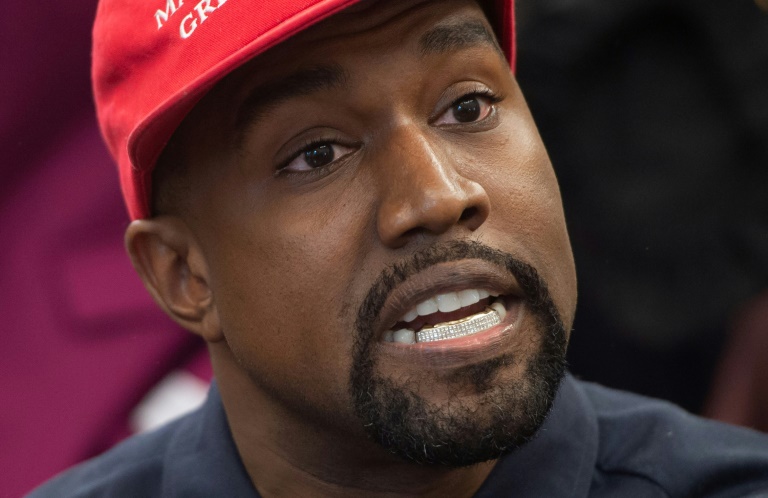
The limits of Elon Musk’s self-professed “free speech absolutism” were laid bare, critics said, by his decision to ban rapper Kanye West from Twitter over his latest anti-Semitic outburst.

Musk claims to be engaged in “a battle for the future of civilisation. 

“If free speech is lost even in America, tyranny is all that lies ahead,” he tweeted last week.

In practice, this has meant gutting his team of moderators and reinstating controversial figures such as Donald Trump, who was banned for inciting violence with his false claims about election fraud. 

Nevertheless, Musk’s claim to be a free-speech absolutist — including a mooted “general amnesty” for suspended accounts — was always going to struggle to survive the clash with reality, and particularly the clash with West (officially known as Ye), who has mounted an increasingly vociferous campaign of anti-Semitic outbursts in recent weeks.

The final straw for Musk was West’s tweet showing a Nazi swastika interlaced with a Star of David. 

It followed an interview with conspiracy theorist Alex Jones, in which he declared his “love” of the Nazis and admiration for Adolf Hitler.

– ‘Half-baked’ philosophy –

“The problem is that Elon Musk has a half-baked free speech philosophy,” said Jacob Mchangama, author of “Free Speech: A History From Socrates to Social Media”.

“Sometimes he talks about total freedom of speech, sometimes about respecting the law. But of course laws are very different around the world where Twitter is present.

“Some of the things (West) has said would arguably be punishable in court in Europe, especially in France.” 

Musk’s takeover led to an immediate spike in hate content — up 25 to 30 percent, according to Bodyguard, which works to protect individuals from online attacks. 

The numbers have fallen since, but remain 10-15 percent above long-run levels, founder Charles Cohen told AFP. Musk’s vision of free speech was “not technically, economically or ethically viable”, he added.

And while West’s tweets might have been policed by the boss himself, Asma Mhalla, of Sciences Po university in Paris, argued: “The industrial-level moderation needed for the network is now completely lacking.”

Few believe total freedom of speech is possible for a private platform that relies on advertising.

– Absolutism ‘fantasy’ –

“So-called free-speech absolutism is just a fantasy,” said influential podcaster Sam Harris earlier this week on his “Making Sense” show. “Almost no one really holds that position even when they espouse it.”

Some level of content moderation was needed to stop platforms turning into “a digital sewer”, he said.

“Contrary to what most people think, it’s legal to shout ‘fire’ in a crowded theatre — but wouldn’t we want the owner of that theatre to remove someone who was shouting that over and over again?” Harris said.

Mchangama said he did not believe West’s comments actually amounted to inciting violence, not least because the rapper has a well-documented history of mental illness that appears to be fuelling his erratic behaviour. 

“He seems profoundly disturbed rather than trying to organise violence against Jews,” Mchangama said. 

He would also like to see more creative solutions. 

“The best way forward is to empower users to filter more of what they don’t like rather than have governments or big tech make these decisions at a centralised level,” he said.

“You can’t have free speech absolutism… but you should err on the side of free speech and there are ways that Musk could have done it.

“But he’s been chaotic and has not made a persuasive case for the sceptics.”

Dutch turn against blackface festive character: poll

The Dutch are rapidly turning against the use of blackface for a popular festive character, with young people in particular saying it has no place in modern society, a survey showed Friday.

Zwarte Piet, or Black Pete, is the sidekick of Sinterklaas, or Saint Nicholas, whose feast day is celebrated in early December with presents and family celebrations — but his appearance has met increasing opposition.

Only one third (33 percent) of people now believe that Piet should sport his traditional costume of a jet-black painted face, red lips, an afro wig and large gold earring, the survey of 1,457 Dutch adults by I&O research said.

Six years ago when the first survey was carried out 65 percent of Dutch believed that the character should remain in blackface, the researchers said.

Support has even decreased from last year’s 38 percent, the researchers said.

Four percent said the character should be completely abolished while 55 percent said his appearance should change — whether gradually or immediately to a so-called ‘Chimney Pete’ with soot smears on the cheeks, or to no skin paining at all.

Protests by anti-racism campaigners have become a yearly occurrence during parades to mark the “arrival” of Sinterklaas in the Netherlands in November.

While there has been a noticeable increase in soot-smeared Piets in recent years, characters in full blackface can still be seen dancing through major cities.

Zwarte Piet is also traditional in neighbouring Belgium.

The survey said young Dutch people were especially opposed to the blackface tradition, with support dropping from 34 percent in 2018 to 19 percent this year in the 18-34 age group.

“I used to think nothing strange about Zwarte Piet, but in retrospect it is quite strange,” the survey quoted one unnamed young adult as saying.

Dutch people with heritage from the Netherlands’ former Caribbean and South American colonies were also strongly opposed, with 25 percent in favour of Zwarte Piet and 17 percent in favour of complete abolition.

Support also divided along political lines, with a large majority (79 percent) of voters for the far-right parties of anti-Islam politician Geert Wilders and pro-Kremlin Covid conspiracist Thierry Baudet wanting to keep the character in blackface.

The Netherlands has recently been reckoning with its history as a colonial and slave-trading power, and is reportedly set to make a formal apology for slavery later in December.

Ramaphosa political fate hangs in balance in South Africa

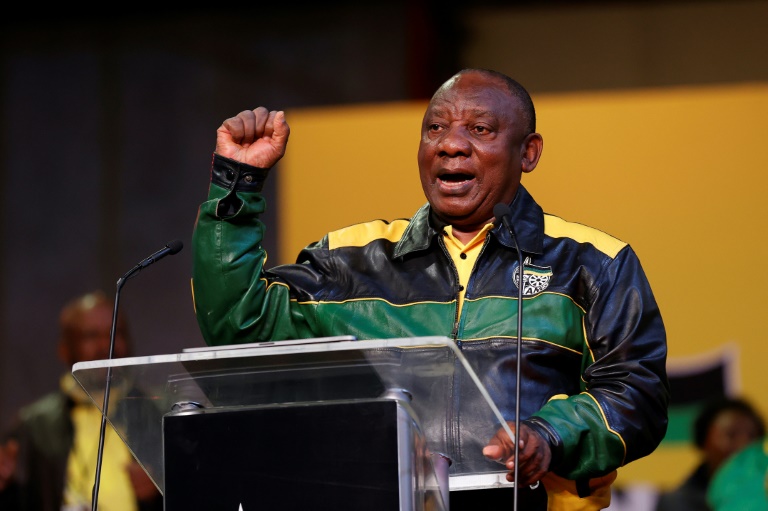
President Cyril Ramaphosa’s political future hung in the balance on Friday, as South Africans wondered whether he would cling to power or resign over accusations that he sought to cover up a burglary at his farm.

On Thursday, the 70-year-old head of state was rumoured to be close to stepping down in the face of calls to quit — but by early Friday, the pendulum seemed to have swung the other way as allies urged him to fight on. 

Leaders of African National Congress (ANC), South Africa’s ruler since the end of apartheid in 1994, held emergency talks as a party source said “a fierce debate” was unfolding “between those for and against the president.”

Its paramount body, the National Executive Committee, met briefly before adjourning, interim secretary-general Paul Mashatile told reporters outside the venue in Johannesburg.

The talks will resume before Monday, he said. The issue of whether Ramaphosa has “the intention to resign or not did not arise,” he said. The president did not attend the talks, he added.

Ramaphosa has been under fire since June, when a former spy boss filed a complaint with police, alleging he had concealed the theft of a cash haul at his farm at Phala Phala in northeastern South Africa.

Instead of alerting the authorities, he allegedly organised for the robbers to be kidnapped and bribed into silence. 

The scandal lurched dramatically into higher gear on Wednesday when an independent investigative panel, in a report to parliament, concluded that Ramaphosa had questions to answer about the money and his behaviour.

Featuring extraordinary details about hundreds of thousands of dollars stashed beneath sofa cushions, the report dealt a huge blow to Ramaphosa’s bid to portray himself as graft-free after the sleaze-tainted era of Jacob Zuma.

Ramaphosa on Thursday faced a volley of demands that he should quit or be forced out by a vote of impeachment. But on Friday, there was a wave of support for him from within and outside the party. 

“There’s no factual and legal basis for (him to go),” Mathole Motshekga, an ANC lawmaker told AFP.

The influential head of the Anglican Church also pleaded for the president to stay on. 

“No one should be above the law, but to pass final judgement on a person based on what is in effect a board of preliminary investigation, which has not made a final determination of the facts, could lead to lawlessness,” Archbishop Thabo Makgoba, who succeeded Desmond Tutu, said. 

– Buffaloes, cash and cushions –

In a lengthy submission to the inquiry, the president denied any wrongdoing and dismissed the accusations against him as “without any merit.” 

But he admitted that $580,000 in cash — which he said was payment for buffaloes bought by a Sudanese citizen — had been stolen from under sofa cushions at his ranch. 

The three-person panel was trenchant in the questions it raised.

“Why would anyone pay such a huge sum of money in cash and thereafter leave the goods without indicating when he would come back to collect the buffaloes or leaving an address for the delivery of the animals?” it asked.

It also concluded Ramaphosa “may have committed” serious violations and misconduct in not reporting the theft directly to police and in seeking the help of his Namibian counterpart to apprehend the thieves.

Parliament is scheduled to examine the report on Tuesday.

The debate could lead to a vote on removing him from office. For this to succeed, a motion has to be supported by at least two-thirds of lawmakers.

– ‘Life goes on’ –

Motshekga, though, vowed the ANC will “just reject that report and life goes on.”

The scandal has come at the worst possible moment for Ramaphosa, who had looked set to secure re-election at the helm of the ANC — a stepping stone to a second term as national president. 

The ANC, which after 28 years in power is experiencing dwindling support, is due to vote in a new leadership on December 16. 

Ramaphosa took office at the helm of Africa’s most industrialised economy in 2018 vowing to root out corruption that had taken root across state institutions.

He now risks becoming the third ANC leader forced out since the party came to power after the end of apartheid. 

The ANC forced Zuma to resign over graft in 2018, and also pushed Thabo Mbeki out of office in 2008 amidst a power tussle.

Close Bitnami banner
Bitnami