World

US hiring tops expectations in November as wages pick up

US job gains were unexpectedly robust in November despite efforts to cool the economy, while unemployment held steady and wages ticked up, the government reported Friday.

The figures provide little relief to officials who have been fighting to tamp down decades-high inflation amid concerns that elevated costs could become entrenched.

The world’s biggest economy added 263,000 jobs in November, Labor Department data showed, down from a revised 284,000 figure in October.

The unemployment rate remained low at 3.7 percent.

The US central bank has raised its benchmark interest rate multiple times this year to ease demand, with higher lending costs making it more pricey to borrow funds to buy cars and homes, or expand businesses. 

While such policy tightening may ordinarily lead to job losses, economists have noted that firms are reluctant to shed workers they may have struggled to find since the outbreak of Covid-19.

Average hourly earnings for private sector workers rose 18 cents to $32.82, and over the last 12 months, wages have grown 5.1 percent.

The report also said there were notable job gains in leisure and hospitality, health care, as well as in government.

But employment dipped in retail trade, and in transportation and warehousing.

– ‘Far too hot’ –

The labor market “remains far too hot” for the Federal Reserve, said ING economist James Knightley in an analysis.

This is because tightness in the jobs market has implication for wage pressures, which make up the largest cost in delivering services, he said.

Meanwhile, the jobless rate was steady as labor participation — which is still below pre-pandemic levels — fell once more, Knightley said.

Analysts believe the latest data supports further tightening of monetary policy by the US central bank.

“Overall, the data are signaling ongoing positive momentum in job growth and still-elevated wages,” said Rubeela Farooqi of High Frequency Economics in a note.

While the Fed has signaled this week it might be time to moderate its aggressive campaign to cool the economy, there remain questions over how much higher rates have to go to bring inflation under control, said Fed Chair Jerome Powell.

The central bank has raised borrowing rates six times this year in hopes of easing demand, including four steep rate hikes, while walking a fine line to avoid tipping the economy into a recession.

The trend of wage increases appears stable, but analysts have been “hoping to see a clear softening,” said Ian Shepherdson of Pantheon Macroeconomics.

“Even if inflation drops faster than expected over the next few months,” he said, policymakers “will be worried about a rebound in the second half of 2023 and beyond if wage growth does not slow.” 
Energy crisis driving climate-friendly power savings: IEA

Russia’s invasion of Ukraine has driven countries across the world to boost energy efficiency, creating “huge potential” to tackle high prices, security and climate change, the IEA said on Friday.

Governments have scaled up fossil fuel subsidies to cushion the impact of rising energy costs on households in the wake of the Ukraine conflict, which has disrupted gas supplies and stoked prices.  

But a new report from the International Energy Agency found that it had also prompted policymakers and consumers to shrink their power use, causing record investment in energy efficiency measures, like building renovations, and infrastructure for public transport and electric cars.

IEA executive director Fatih Birol said after the oil shocks of the 1970s, governments pushed “substantial improvements” in energy efficiency, particularly in cars, appliances and buildings. 

“Amid today’s energy crisis, we are seeing signs that energy efficiency is once again being prioritised,” he said.

“Energy efficiency is essential for dealing with today’s crisis, with its huge potential to help tackle the challenges of energy affordability, energy security and climate change.”

According to the IEA research, governments, industry and households invested a record $560 billion this year in energy efficiency measures.

Preliminary IEA data for 2022 also suggests that the global economy used energy two percent more efficiently than it did in 2021, almost double the rate of the past five years. 

Annual improvements would need to rise to four percent to meet decarbonisation goals by mid-century, the IEA said. 

But it said if current trends continue to improve, 2022 “could mark a vital turning point” for efficiency, adding that developments this year have “changed the dynamics of energy markets for decades to come”.

Recent government initiatives to boost efficiency in buildings, cars and industry have included legislation in Europe, Japan and the United States that add up to hundreds of billions of dollars in spending. 

– ‘Hyper-efficient and climate-friendly’ –

The IEA said that one in every eight cars sold globally is now electric. 

Building codes are also being updated across the world, it said, while there is growing energy efficiency awareness among consumers. 

In Southeast Asia, all governments were developing policies for efficient cooling, which the IEA said was “vital for a region with one of the fastest rates of growth in electricity demand”.

Meanwhile, global sales of heat pumps are expected to hit record levels in 2022, driven by surging demand in Europe, where almost three million are expected to be sold this year — up from 1.5 million in 2019. 

“Heat pumps are an indispensable part of any plan to cut emissions and natural gas use, and an urgent priority in the European Union today,” said Birol in a press statement this week.

If governments meet all their energy and climate targets, the IEA said “hyper-efficient and climate-friendly” heat pumps could meet nearly a fifth of global heating needs in buildings by 2030, up from a tenth in 2021.

Its first special report on the future of heat pumps, released Wednesday, said the technology, if powered by low-emissions electricity, was “central” to the global transition to sustainable heating. 

The report estimated that heat pumps have the potential to reduce global carbon dioxide emissions by at least 500 million tonnes in 2030 — equal to annual CO2 pollution from the cars in Europe today.

Energy crisis driving climate-friendly power savings: IEA

Russia’s invasion of Ukraine has driven countries across the world to boost energy efficiency, creating “huge potential” to tackle high prices, security and climate change, the IEA said on Friday.

Governments have scaled up fossil fuel subsidies to cushion the impact of rising energy costs on households in the wake of the Ukraine conflict, which has disrupted gas supplies and stoked prices.  

But a new report from the International Energy Agency found that it had also prompted policymakers and consumers to shrink their power use, causing record investment in energy efficiency measures, like building renovations, and infrastructure for public transport and electric cars.

IEA executive director Fatih Birol said after the oil shocks of the 1970s, governments pushed “substantial improvements” in energy efficiency, particularly in cars, appliances and buildings. 

“Amid today’s energy crisis, we are seeing signs that energy efficiency is once again being prioritised,” he said.

“Energy efficiency is essential for dealing with today’s crisis, with its huge potential to help tackle the challenges of energy affordability, energy security and climate change.”

According to the IEA research, governments, industry and households invested a record $560 billion this year in energy efficiency measures.

Preliminary IEA data for 2022 also suggests that the global economy used energy two percent more efficiently than it did in 2021, almost double the rate of the past five years. 

Annual improvements would need to rise to four percent to meet decarbonisation goals by mid-century, the IEA said. 

But it said if current trends continue to improve, 2022 “could mark a vital turning point” for efficiency, adding that developments this year have “changed the dynamics of energy markets for decades to come”.

Recent government initiatives to boost efficiency in buildings, cars and industry have included legislation in Europe, Japan and the United States that add up to hundreds of billions of dollars in spending. 

– ‘Hyper-efficient and climate-friendly’ –

The IEA said that one in every eight cars sold globally is now electric. 

Building codes are also being updated across the world, it said, while there is growing energy efficiency awareness among consumers. 

In Southeast Asia, all governments were developing policies for efficient cooling, which the IEA said was “vital for a region with one of the fastest rates of growth in electricity demand”.

Meanwhile, global sales of heat pumps are expected to hit record levels in 2022, driven by surging demand in Europe, where almost three million are expected to be sold this year — up from 1.5 million in 2019. 

“Heat pumps are an indispensable part of any plan to cut emissions and natural gas use, and an urgent priority in the European Union today,” said Birol in a press statement this week.

If governments meet all their energy and climate targets, the IEA said “hyper-efficient and climate-friendly” heat pumps could meet nearly a fifth of global heating needs in buildings by 2030, up from a tenth in 2021.

Its first special report on the future of heat pumps, released Wednesday, said the technology, if powered by low-emissions electricity, was “central” to the global transition to sustainable heating. 

The report estimated that heat pumps have the potential to reduce global carbon dioxide emissions by at least 500 million tonnes in 2030 — equal to annual CO2 pollution from the cars in Europe today.

Energy crisis driving climate-friendly power savings: IEA

Russia’s invasion of Ukraine has driven countries across the world to boost energy efficiency, creating “huge potential” to tackle high prices, security and climate change, the IEA said on Friday.

Governments have scaled up fossil fuel subsidies to cushion the impact of rising energy costs on households in the wake of the Ukraine conflict, which has disrupted gas supplies and stoked prices.  

But a new report from the International Energy Agency found that it had also prompted policymakers and consumers to shrink their power use, causing record investment in energy efficiency measures, like building renovations, and infrastructure for public transport and electric cars.

IEA executive director Fatih Birol said after the oil shocks of the 1970s, governments pushed “substantial improvements” in energy efficiency, particularly in cars, appliances and buildings. 

“Amid today’s energy crisis, we are seeing signs that energy efficiency is once again being prioritised,” he said.

“Energy efficiency is essential for dealing with today’s crisis, with its huge potential to help tackle the challenges of energy affordability, energy security and climate change.”

According to the IEA research, governments, industry and households invested a record $560 billion this year in energy efficiency measures.

Preliminary IEA data for 2022 also suggests that the global economy used energy two percent more efficiently than it did in 2021, almost double the rate of the past five years. 

Annual improvements would need to rise to four percent to meet decarbonisation goals by mid-century, the IEA said. 

But it said if current trends continue to improve, 2022 “could mark a vital turning point” for efficiency, adding that developments this year have “changed the dynamics of energy markets for decades to come”.

Recent government initiatives to boost efficiency in buildings, cars and industry have included legislation in Europe, Japan and the United States that add up to hundreds of billions of dollars in spending. 

– ‘Hyper-efficient and climate-friendly’ –

The IEA said that one in every eight cars sold globally is now electric. 

Building codes are also being updated across the world, it said, while there is growing energy efficiency awareness among consumers. 

In Southeast Asia, all governments were developing policies for efficient cooling, which the IEA said was “vital for a region with one of the fastest rates of growth in electricity demand”.

Meanwhile, global sales of heat pumps are expected to hit record levels in 2022, driven by surging demand in Europe, where almost three million are expected to be sold this year — up from 1.5 million in 2019. 

“Heat pumps are an indispensable part of any plan to cut emissions and natural gas use, and an urgent priority in the European Union today,” said Birol in a press statement this week.

If governments meet all their energy and climate targets, the IEA said “hyper-efficient and climate-friendly” heat pumps could meet nearly a fifth of global heating needs in buildings by 2030, up from a tenth in 2021.

Its first special report on the future of heat pumps, released Wednesday, said the technology, if powered by low-emissions electricity, was “central” to the global transition to sustainable heating. 

The report estimated that heat pumps have the potential to reduce global carbon dioxide emissions by at least 500 million tonnes in 2030 — equal to annual CO2 pollution from the cars in Europe today.

Stocks fall after strong US jobs data

Stock markets fell on Friday after strong US jobs data raised concerns that the US Federal Reserve may continue to aggressively hike interest rates to tame inflation. 

Oil prices, meanwhile, were slightly up as investors awaited an output decision by OPEC and its Russia-led allies and tracked Western plans to cap Russian crude prices.

Stock markets are focused on the next moves of the US central bank.

While Fed chief Jerome Powell signalled on Wednesday that the central bank could start “moderating” the pace of rate hikes as soon as December, investors were unnerved by Friday’s jobs figures.

US government data showed that the world’s biggest economy added 263,000 jobs in November, with the unemployment rate remaining at 3.7 percent.

Strong job gains raise concerns among investors, as a healthy economy could convince the Fed it still has room to deliver more sharp rate increases to fight inflation.

“The report itself is good news from an economic standpoint, yet the market sees it as bad news, thinking it will push out any eventual pivot by the Fed with its monetary policy,” said Briefing.com analyst Patrick O’Hare.

Wall Street opened lower while Paris and London were down in afternoon trading and Asia finished in the red. Frankfurt was flat.

– OPEC+ –

The focus was also on OPEC+, which may decide Sunday to slash oil production further to boost prices for its members, which include Saudi Arabia and Russia.

“There remains considerable uncertainty around the action OPEC+ will take when it meets…, although there’s every chance that the meeting will be delayed or that discussions take longer than normal, as a result of the price cap being finalised by the EU,” noted OANDA trading platform analyst Craig Erlam.

Beyond the economic gloom, the big unknown in the oil equation currently is Russian oil, as Western nations seek to decouple themselves from Moscow’s energy supplies as fast as possible.

The EU has decided to ban member states from buying Russian oil exported by sea from Monday, “putting at risk over two million barrels per day,” according to estimates by ANZ analysts.

Investors are also scrutinising a European Commission-proposed $60 per barrel price cap on Russian crude, which is designed to reinforce the effectiveness of the EU embargo.

Poland has refused to back the plan, saying the price ceiling should be even lower.

Prices have fallen heavily in recent weeks on expectations of weaker Chinese demand.

There are signs, however, that China is edging towards a pivot from its draconian Covid-zero strategy, which has seen the lockdown of tens of millions and strangled the giant economy this year.

The move came after widespread protests across the country earlier in the week against almost three years of heavy-handed containment measures and calls for more political freedoms.

Observers say they expect officials to signal a shift in priorities at a key meeting later this month, with a focus turning to kickstarting the economy, though with vaccination rates low the move will likely be gradual.

– Key figures around 1435 GMT –

New York – Dow: DOWN 0.7 percent at 34,155.37 points

London – FTSE 100: DOWN 0.1 percent at 7,551.75 

Frankfurt – DAX: FLAT at 14,494.59

Paris – CAC 40: DOWN 0.2 percent at 6,737.97

EURO STOXX 50: DOWN 0.3 percent at 3,972.76

Tokyo – Nikkei 225: DOWN 1.6 percent at 27,777.90 (close)

Hong Kong – Hang Seng Index: DOWN 0.3 percent at 18,675.35 (close)

Shanghai – Composite: DOWN 0.3 percent at 3,156.14 (close)

Euro/dollar: DOWN at $1.0490 from $1.0529 on Thursday

Dollar/yen: DOWN at 135.22 yen from 135.34 yen

Pound/dollar: DOWN at $1.2221 from $1.2251

Euro/pound: DOWN at 85.83 pence from 85.91 pence

Brent North Sea crude: UP 0.4 percent at $87.21 per barrel

West Texas Intermediate: UP 0.5 percent at $81.61 per barrel

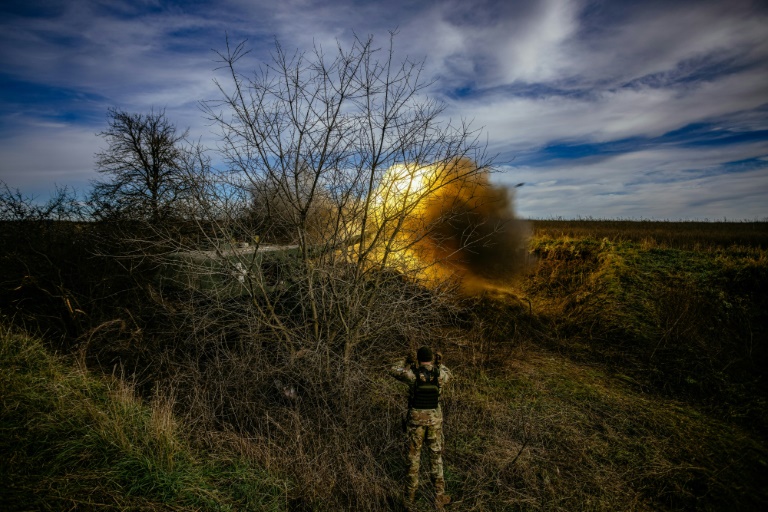
Putin says strikes on Ukraine infrastructure 'inevitable'

President Vladimir Putin said on Friday  Russia’s strikes on Ukrainian infrastructure were “inevitable” as the Kremlin rejected US President Joe Biden’s terms for talks and warned the assault would continue. 

After suffering humiliating military defeats during what has become the largest armed conflict in Europe since World War II, Russia began targeting Ukrainian energy infrastructure in October, causing sweeping blackouts.

Speaking with German Chancellor Olaf Scholz for the first time since mid-September, Putin slammed what he called the West’s “destructive” policies in Ukraine and said Russian strikes were a response to “provocative” attacks from Kyiv.

Moscow “had long refrained from precision missile strikes against certain targets on the territory of Ukraine”, Putin told Scholz, according to a Kremlin readout of the phone talks.

“But now such measures have become a forced and inevitable response to Kyiv’s provocative attacks on Russia’s civilian infrastructure,” the Kremlin said, referring in particular to the October attack on a bridge linking Moscow-annexed Crimea to the Russian mainland.

During the hour-long  call with Putin, Scholz “urged the Russian president to come as quickly as possible to a diplomatic solution including the withdrawal of Russian troops”, according to the German leader’s spokesman Steffen Hebestreit.

Putin urged Berlin to “reconsider its approaches in the context of the Ukrainian events”, the Kremlin said.

He accused the West of carrying out “destructive” policies in Ukraine, stressing that its political and financial aid “leads to the fact that Kyiv completely rejects the idea of any negotiations”.

Ukrainian President Volodymyr Zelensky had ruled out any talks with Russia while Putin is in power shortly after the Kremlin claimed to have annexed several Ukrainian regions.

– Offensive ‘continues’ – 

The Kremlin also indicated Moscow was in no mood for talks over Ukraine, after Biden said he would be willing to sit down with Putin if the Russian leader truly wanted to end the fighting.

“What did President Biden say in fact? He said that negotiations are possible only after Putin leaves Ukraine,” Putin’s spokesman Dmitry Peskov told reporters, adding Moscow was “certainly” not ready to accept those conditions. 

“The special military operation continues,” he added, using the Kremlin term for the assault launched on February 24. 

Russia’s strikes have destroyed close to half of the Ukrainian energy system and left millions in the cold and dark at the onset of winter.

In the latest estimates from Kyiv, Mykhailo Podolyak, an advisor to Zelensky, said as many as 13,000 Ukrainian troops have died in the fighting.

Both Moscow and Kyiv are suspected of minimising their losses to avoid damaging the morale.

Top US general Mark Milley last month said more than 100,000 Russian military personnel have been killed or wounded in Ukraine, with Kyiv’s forces likely suffering similar casualties. 

– ‘We are not defeated’ –

The fighting in Ukraine has also claimed the lives of thousands of Ukrainian civilians and forced millions to flee their homes.

Those who remain in the country have had to cope with emergency blackouts as authorities sought to relieve the pressure on the energy infrastructure.

In an attempt to boost the mood in the capital Kyiv, musicians played a classical music concert on Thursday with hundreds of LED candles lighting up the stage.

“We thought it was a good idea to save energy,” Irina Mikolaenko, one of the concert’s organisers, told AFP. 

She said they wanted to spread “inspiration, light and love” and “tell people that we are not defeated”. 

Ukrainian officials have said they are expecting a new wave of Russian attacks shortly.

Meanwhile, Western nations have been seeking ways to further starve Russia of resources to fight in Ukraine by imposing a price cap on its oil exports on top of a multitude of sanctions already introduced against Moscow. 

On Thursday evening, European diplomats were close to nodding the plan through, but Poland refused to back the scheme, saying the $60 a barrel ceiling was not low enough.

Moscow has previously warned that it will not export oil to countries enforcing a price cap.

Xi signals China could loosen zero-Covid policy, EU officials say

President Xi Jinping suggested the spread of the less lethal Omicron strain might allow China to loosen its zero-Covid policy, senior EU officials reported Friday, as cities across the country made further moves towards unwinding some restrictions.

Discontent with China’s hardline pandemic response spilled onto the streets last weekend and expanded into calls for more political freedom, in widespread demonstrations not seen in decades.

China’s vast security apparatus has moved swiftly to smother the rallies, deploying a heavy police presence while boosting online censorship and surveillance of the population.

In his first known comments on the protests, Xi told European Union chief Charles Michel that the demonstrators were “mainly students or teenagers in university” who were fed up with Covid restrictions when the pair met in Beijing on Thursday, senior officials speaking on condition of anonymity said.

Xi complained “that after three years of Covid that he had an issue because people were frustrated”, they said.

They added that Xi had told Michel that given most cases in China were now of the Omicron variant, that “opens the way for more openness of the restrictions than what we have already seen in some regions”.

Chinese central government officials have already signalled that a broader relaxation of the zero-Covid policy could be in the works.

Speaking at the National Health Commission Wednesday, Vice Premier Sun Chunlan said the Omicron variant was weakening and vaccination rates were improving, according to the state-run Xinhua news agency.

A central figure behind Beijing’s pandemic response, Sun said this “new situation” required “new tasks”.

She made no mention of zero-Covid in those remarks or in another meeting on Thursday, suggesting the approach, which has disrupted the economy and daily life, might soon be relaxed.

– Home quarantine? –

A number of cities have now begun loosening Covid restrictions, slowly moving away from daily mass testing and compulsory central quarantine — a tedious mainstay of life under zero-Covid policy.

But sporadic localised clashes have continued to flare up.

Social media footage posted Thursday night and geolocated by AFP showed dozens of people clashing with health workers in hazmat suits outside a school in Yicheng, in central China’s Hubei province.

The author of the post said people in the video were parents of students who had tested positive for the virus and been taken to quarantine facilities.

Parents are seen kneeling in front of the school gate, pleading to take their children home. Another video showed at least a dozen police officers at the scene.

But signs have emerged of a possible shift in the policy of sending positive cases to central quarantine facilities.

An analysis by state-run newspaper People’s Daily on Friday quoted a number of health experts supporting local government moves to allow patients to quarantine at home, which would be a marked departure from current rules.

When called on Friday, some officials in the Chaoyang district of Beijing said people who tested positive there would no longer have to go to central quarantine.

Authorities in the southern factory hub of Dongguan on Thursday also said those who meet “specific conditions” should be allowed to quarantine at home. They did not specify what those conditions would be.

Shenzhen, a southern tech hub, on Wednesday rolled out a similar policy.

– Testing loosens up –

The southwestern metropolis of Chengdu from Friday no longer required a recent negative test result to enter public places or ride the metro, instead only demanding a green health code on an app confirming people have not travelled to a “high-risk” area.

Beijing also announced Friday that using public transport in the city would no longer require a negative PCR test taken within 48 hours.

The day before, the capital’s health authorities called on hospitals not to deny treatment to people without a 48-hour test.

In January, a pregnant woman in the city of Xi’an miscarried after being refused hospital entry for not having a PCR result.

China has seen a string of deaths after treatment was delayed by Covid restrictions, including the recent death of a four-month-old baby who was stuck in quarantine with her father.

Those cases became a rallying cry during the protests, with a viral post listing the names of those who died because of alleged negligence linked to the pandemic response.

Many other cities with virus outbreaks are allowing restaurants, shopping malls and even schools to reopen, in a clear departure from previous tough lockdown rules.

In the northwestern city of Urumqi, where the fire that killed ten people and became the catalyst for the anti-lockdown protests took place, authorities announced Friday that supermarkets, hotels, restaurants and ski resorts would gradually be reopened.

The city of more than four million in the far-western Xinjiang region endured one of China’s longest lockdowns, with some areas shut from early August.

UK ex-finance minister joins exodus of Tory MPs

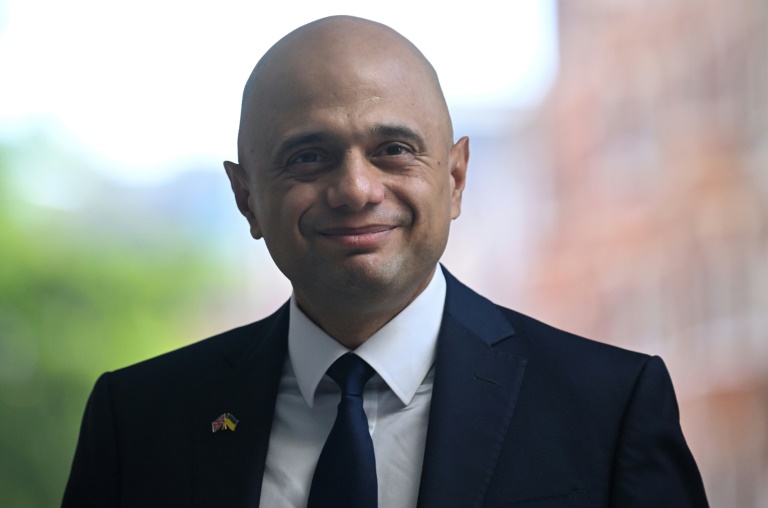
Britain’s former finance minister Sajid Javid on Friday said he would not be standing at the next election, as the Conservative party faces a slump in support after 12 years in power.

Sajid Javid, 52, is the highest-profile Tory MP yet to announce that he will quit at the next nationwide poll, which is due before January 2025 at the latest.

The Conservatives, in office since 2010, are on course for defeat by the main opposition Labour party, according to opinion polls, and several younger Tory MPs have already said they will not be standing again.

A by-election held in the City of Chester constituency in northwest England on Thursday saw Labour retain the seat as expected but the Tories haemorrhage support.

Political observers assessed that it mirrored an expected swing to Labour at the next general election.

A series of scandals under former prime minister Boris Johnson, and the political and financial turmoil caused by his short-lived successor Liz Truss, badly dented Tory support.

Javid — a cabinet minister under David Cameron, Theresa May and Johnson — said he had thought long and hard about the decision.

He wrote in a letter to the head of his Bromsgrove constituency in central England that being an MP and in government had been “the privilege of my life”.

“I am immensely grateful for the opportunity to serve,” the millionaire former investment banker added.

Javid, the son of a Pakistani immigrant bus driver, was Britain’s first Muslim home secretary and chancellor of the exchequer.

He also served as health secretary and campaigned earlier this year to take over from Johnson.

He quit the Treasury in February 2020 after refusing an order from 10 Downing Street to fire all his special advisers. He was replaced by Rishi Sunak, who is now prime minister. 

Sunak said he was “sad” to see his “good friend” and fellow “Star Wars” fan Javid go. 

“May the Force be with you, Saj,” he added.

Sunak, who took over from Truss in a Tory leadership contest in October, is trying to claw back support in time for the election.

But he faces an uphill battle against a backdrop of a cost-of-living crisis that is squeezing incomes and generating widespread strikes.

The Conservative party has given its MPs until December 5 to declare whether they will run in the next election, when many constituency maps will be redrawn.

Johnson does intend to stand again, according to sources close to the former prime minister, after speculation that he would quit parliament for a lucrative career of writing and speech-making.

European stocks, oil steady before US jobs data and OPEC

European stock markets and oil prices steadied Friday before key US jobs data and an oil output decision by OPEC and its Russia-led allies.

Asian stock markets and the dollar dropped following another volatile week for markets generally.

“Traders are jockeying for position ahead of the moderately high-risk (US jobs) event,” noted SPI Asset Management’s Stephen Innes.

The data will provide the most recent snapshot of how the world’s top economy is faring in light of rising US interest rates to combat the highest inflation in decades.

Traders are growing confident that the Federal Reserve will slow its pace of rate hikes after Fed boss Jerome Powell this week indicated that the days of jumbo 0.75-percentage-point increases were over.

At the same time, Powell and other Fed officials have lined up to warn that rates would continue to rise and stay elevated, with the possibility of no cut until 2024.

– OPEC+ –

Focus was also on OPEC+, which may decide Sunday to slash oil production further to boost prices for its members, which include Saudi Arabia and Russia.

“There remains considerable uncertainty around the action OPEC+ will take when it meets…, although there’s every chance that the meeting will be delayed or that discussions take longer than normal, as a result of the price cap being finalised by the EU,” noted OANDA trading platform analyst Craig Erlam.

Beyond the economic gloom, the big unknown in the oil equation currently is Russian oil, as Western nations seek to decouple themselves from Moscow’s energy supplies as fast as possible. 

The EU has decided to ban member states from buying Russian oil exported by sea from December 5, “putting at risk over two million barrels per day,” according to estimates by ANZ analysts.

Investors are also scrutinising a European Commission-proposed $60 per barrel price cap on Russian crude, which is designed to reinforce the effectiveness of the EU embargo.

Prices have fallen heavily in recent weeks on expectations of weaker Chinese demand.

There are signs, however, that China is edging towards a pivot from its draconian Covid-zero strategy, which has seen the lockdown of tens of millions and strangled the giant economy this year.

The move came after widespread protests across the country earlier in the week against almost three years of heavy-handed containment measures and calls for more political freedoms.

Observers say they expect officials to signal a shift in priorities at a key meeting later this month, with a focus turning to kickstarting the economy, though with vaccination rates low the move will likely be gradual.

“The language (at the meeting) will prioritise economic growth more than it did the last couple of years,” said Arthur Budaghyan at BCA Research. “Economic conditions are worsening, and policymakers’ pain point is being reached.”

– Key figures around 1200 GMT –

London – FTSE 100: DOWN 0.2 percent at 7,540.43 points

Frankfurt – DAX: UP 0.3 percent at 14,530.90

Paris – CAC 40: DOWN 0.2 percent at 6,742.29

EURO STOXX 50: DOWN 0.1 percent at 3,982.08

Tokyo – Nikkei 225: DOWN 1.6 percent at 27,777.90 (close)

Hong Kong – Hang Seng Index: DOWN 0.3 percent at 18,675.35 (close)

Shanghai – Composite: DOWN 0.3 percent at 3,156.14 (close)

New York – Dow: DOWN 0.6 percent at 34,395.01 (close)

Euro/dollar: UP at $1.0534 from $1.0529 on Thursday

Dollar/yen: DOWN at 134.09 yen from 135.34 yen

Pound/dollar: UP at $1.2277 from $1.2251

Euro/pound: DOWN at 85.82 pence from 85.91 pence

Brent North Sea crude: UP 0.5 percent at $87.27 per barrel

West Texas Intermediate: UP 0.2 percent at $81.35 per barrel

EU cap on Russian oil price on hold as Poland urges lower price

The West’s plan to starve Russia of resources to fight its war in Ukraine by imposing a price cap on its oil exports hit a diplomatic logjam in Brussels on Friday.

Poland does not think the $60 a barrel ceiling is low enough and has refused to back the plan, preventing the European Union from adopting the measure.

On Thursday evening several European diplomats said the other 26 member states were ready to nod the plan through in time for it to go into effect on Monday along with an EU embargo on Russian crude.

But on Friday one negotiator told AFP: “The silence from Warsaw is deafening.”

The embargo will prevent shipments of Russian crude by tanker vessel to the EU, which accounts for two thirds of imports, the rest arriving by pipeline. 

Energy experts like Phuc-Vinh Nguyen of the Delors Institute think tank estimate that Russia has earned 67 billion euros ($71 billion) selling oil to EU clients since its February invasion of Ukraine.

This alone is greater than Russia’s 60-billion-euro defence budget before the war and dwarfs the financial and military aid spent by EU states to support Kyiv’s pro-Western government.

From Monday, tankers will no longer be permitted to bring Russian crude to Europe — and the price cap is designed to make it harder to bypass the sanctions by selling beyond the EU.

China and India, for example, have not limited imports of Russian oil, but under the proposed plan European insurers would be banned from covering tankers that carry oil for prices above the ceiling. 

This will reinforce the European embargo, which comes after embargos imposed by Canada and the United States.

The European Commission had suggested the ceiling along with an order that if the trading price of oil falls below $60 then the cap will be cut until it is five percent lower than the market.

– Level of the cap –

The price of Urals Crude, the main variety sold by Russia, is volatile but it was trading at around $65 per barrel as EU ambassadors met to discuss the level of the cap.

But Poland, a strong supporter of its neighbour Ukraine in the battle against the Kremlin’s forces, had been holding out for a lower sum, reportedly closer to just $30 a barrel.

“We will not comment until this news… is made official,” said Russian presidential spokesman Dmitry Peskov. “We are awaiting an official announcement.”

Moscow has previously warned that it will not export oil to countries respecting a price cap.

Last week, Russia’s President Vladimir Putin had warned that any attempt by the West to cap the price of Russian oil would have “grave consequences” for world markets.

But Washington and several of its allies — the Group of Seven major industrialised democracies, the EU and Australia — have vowed to go ahead.

With Germany and Poland having decided to stop deliveries via a pipeline by the end of the year, Russian exports to the union will be cut by more than 90 percent, the Europeans say. 

For Phuc-Vinh Nguyen, the proposed instrument raises many questions. 

“An oil price ceiling has never been seen. We are in the unknown,” he said, stressing that the reaction of OPEC producing countries, or big buyers like India or China will be crucial. 

According to the analyst, a cap — even at a high tariff — would send “a strong political signal” to Putin, because, once in place, this mechanism could be tightened.

Oil ministers from the OPEC+ oil producers’ group will meet in Vienna on Sunday.

Close Bitnami banner
Bitnami