World

EU cap on Russian oil price on hold as Poland urges lower price

The West’s plan to starve Russia of resources to fight its war in Ukraine by imposing a price cap on its oil exports hit a diplomatic logjam in Brussels on Friday.

Poland does not think the $60 a barrel ceiling is low enough and has refused to back the plan, preventing the European Union from adopting the measure.

On Thursday evening several European diplomats said the other 26 member states were ready to nod the plan through in time for it to go into effect on Monday along with an EU embargo on Russian crude.

But on Friday one negotiator told AFP: “The silence from Warsaw is deafening.”

The embargo will prevent shipments of Russian crude by tanker vessel to the EU, which accounts for two thirds of imports, the rest arriving by pipeline. 

Energy experts like Phuc-Vinh Nguyen of the Delors Institute think tank estimate that Russia has earned 67 billion euros ($71 billion) selling oil to EU clients since its February invasion of Ukraine.

This alone is greater than Russia’s 60-billion-euro defence budget before the war and dwarfs the financial and military aid spent by EU states to support Kyiv’s pro-Western government.

From Monday, tankers will no longer be permitted to bring Russian crude to Europe — and the price cap is designed to make it harder to bypass the sanctions by selling beyond the EU.

China and India, for example, have not limited imports of Russian oil, but under the proposed plan European insurers would be banned from covering tankers that carry oil for prices above the ceiling. 

This will reinforce the European embargo, which comes after embargos imposed by Canada and the United States.

The European Commission had suggested the ceiling along with an order that if the trading price of oil falls below $60 then the cap will be cut until it is five percent lower than the market.

– Level of the cap –

The price of Urals Crude, the main variety sold by Russia, is volatile but it was trading at around $65 per barrel as EU ambassadors met to discuss the level of the cap.

But Poland, a strong supporter of its neighbour Ukraine in the battle against the Kremlin’s forces, had been holding out for a lower sum, reportedly closer to just $30 a barrel.

“We will not comment until this news… is made official,” said Russian presidential spokesman Dmitry Peskov. “We are awaiting an official announcement.”

Moscow has previously warned that it will not export oil to countries respecting a price cap.

Last week, Russia’s President Vladimir Putin had warned that any attempt by the West to cap the price of Russian oil would have “grave consequences” for world markets.

But Washington and several of its allies — the Group of Seven major industrialised democracies, the EU and Australia — have vowed to go ahead.

With Germany and Poland having decided to stop deliveries via a pipeline by the end of the year, Russian exports to the union will be cut by more than 90 percent, the Europeans say. 

For Phuc-Vinh Nguyen, the proposed instrument raises many questions. 

“An oil price ceiling has never been seen. We are in the unknown,” he said, stressing that the reaction of OPEC producing countries, or big buyers like India or China will be crucial. 

According to the analyst, a cap — even at a high tariff — would send “a strong political signal” to Putin, because, once in place, this mechanism could be tightened.

Oil ministers from the OPEC+ oil producers’ group will meet in Vienna on Sunday.
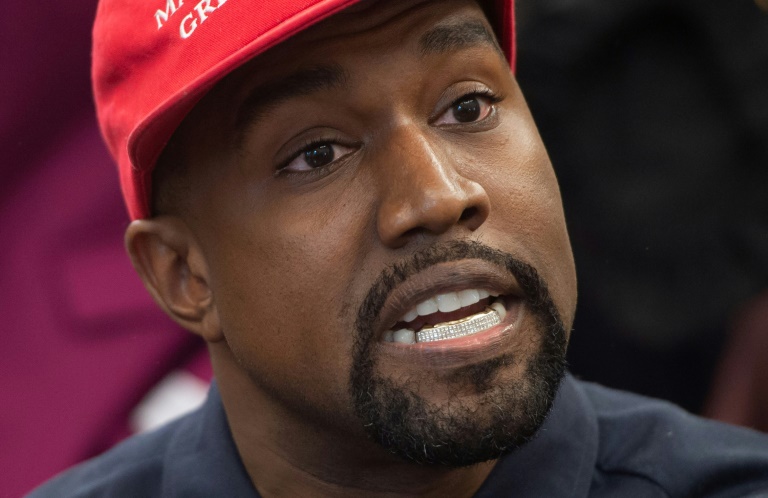
Musk's free speech absolutism 'a fantasy'

The limits of Elon Musk’s self-professed “free speech absolutism” were laid bare, critics said, when he banned rapper Kanye West from Twitter over his latest anti-Semitic outburst on Thursday.

Only a few days earlier, Musk tweeted that he was engaged in “a battle for the future of civilization. If free speech is lost even in America, tyranny is all that lies ahead.”

Since taking over Twitter, the billionaire has reinstated several controversial figures, including ex-president Donald Trump, who was banned for inciting violence with his false claims about fraud after his defeat in the 2020 United States election. 

But Musk’s claim to be a free speech absolutist was always going to struggle to survive the clash with reality — and particularly the clash with West (officially known as Ye), who has mounted an increasingly vociferous campaign of anti-Semitic outbursts in recent weeks. 

The final straw for Musk was West’s tweet showing a Nazi swastika interlaced with a Star of David. 

It followed an interview with conspiracy theorist Alex Jones, in which he declared his “love” of the Nazis and admiration for Adolf Hitler.

“The problem is that Elon Musk has a half-baked free speech philosophy,” said Jacob Mchangama, author of “Free Speech: A History From Socrates to Social Media”.

“Sometimes he talks about total freedom of speech, sometimes about respecting the law. But of course laws are very different around the world where Twitter is present. Some of the things (West) has said would arguably be punishable in court in Europe, especially in France.” 

– ‘A fantasy’ –

Few believe that total freedom of speech is possible, especially for a private platform that relies on advertising. 

“So-called free speech absolutism is just a fantasy,” said influential podcaster Sam Harris earlier this week on his “Making Sense” show. “Almost no one really holds that position even when they espouse it.”

He said some level of content moderation was needed to stop platforms turning into “a digital sewer”. 

“Contrary to what most people think it’s legal to shout ‘fire’ in a crowded theatre, but wouldn’t we want the owner of that theatre to remove someone who was shouting that over and over again?” Harris said.

Mchangama said he did not believe West’s comments actually amounted to inciting violence, not least because the rapper has a well-documented history of mental illness that appears to be fuelling his erratic behaviour. 

“He seems profoundly disturbed rather than trying to organise violence against Jews,” Mchangama said. 

He would also like to see more creative solutions to the challenge of content moderation, and feels Musk has missed an opportunity. 

“The best way forward is to empower users to filter more of what they don’t like rather than have governments or big tech make these decisions at a centralised level,” he said.

“You can’t have free speech absolutism… but you should err on the side of free speech and there are ways that Musk could have done it. But he’s been chaotic and has not made a persuasive case for the sceptics.”

US-led forces resume normal patrols in Syria

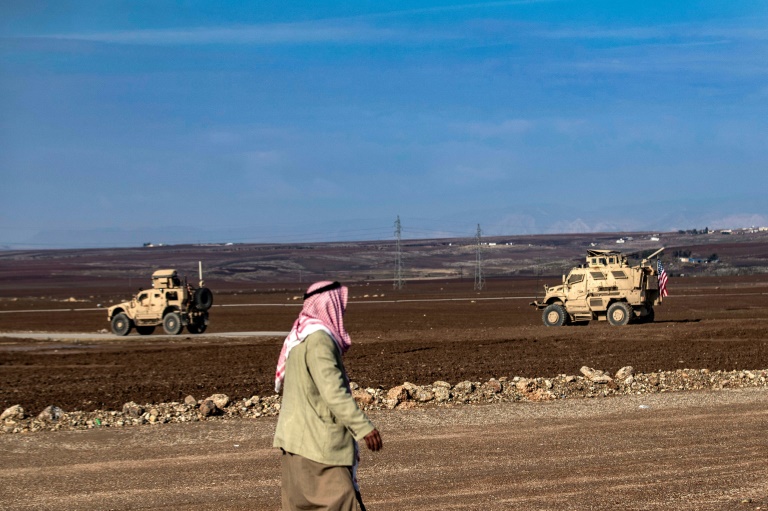
A US-led coalition fighting jihadists resumed regular patrols in Kurdish-held areas of northeast Syria on Friday after earlier Turkish air strikes, an AFP correspondent and a Kurdish military source said.

Patrols were reduced following the Turkish strikes that began on November 20 in Kurdish-controlled areas of Syria and Iraq, in response to a deadly Istanbul bombing that Ankara blamed on Kurdish groups.

The Kurds denied responsibility.

Hundreds of American troops are in Syria as part of the fight against remnants of the Islamic State group jihadists.

Two four-vehicle patrols bearing US flags set off separately from a base in Rmeilan in Hasakeh province, the AFP correspondent said.

A vehicle belonging to the Kurdish-led Syrian Democratic Forces (SDF) accompanied each convoy, which travelled in different directions towards Syria’s borders.

“The international coalition in cooperation with the Syrian Democratic Forces resumed its usual patrols in northeast Syria following a reduction due to Turkish strikes in the area,” a Kurdish military source told AFP.

The source requested anonymity as he was not authorised to speak on the matter.

The usual 20 weekly patrols had dropped to around five or six following the Turkish strikes, which Ankara said it carried out with aircraft and drones.

The US supports the SDF, which is the Kurds’ de facto army in the area and led the battle that dislodged IS from the last scraps of their Syrian territory in 2019.

Turkey said it struck targets of the Syrian Kurdish People’s Protection Units (YPG), which dominate the SDF but which Ankara sees as an offshoot of the Kurdistan Workers’ Party (PKK).

Turkey and its Western allies designate the PKK as a terrorist group.

The SDF “needs to focus on repelling the Turkish threats and protecting its areas”, the Kurdish military source said.

The Syrian Observatory for Human Rights, a Britain-based war monitor with a vast network of sources on the ground, said patrols were also seen Friday in Deir Ezzor province further south.

Turkey has also threatened a ground operation in the semi-autonomous Syrian Kurdish zones, something which US Defence Secretary Lloyd Austin on Wednesday expressed “strong opposition” to.

The SDF has warned that a Turkish incursion would jeopardise the fight against IS.

Ramaphosa: From Mandela's protégé to scandal-hit leader

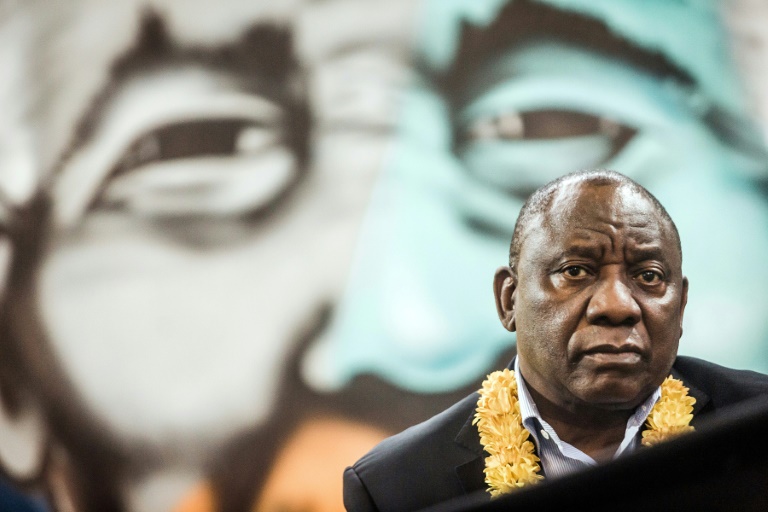
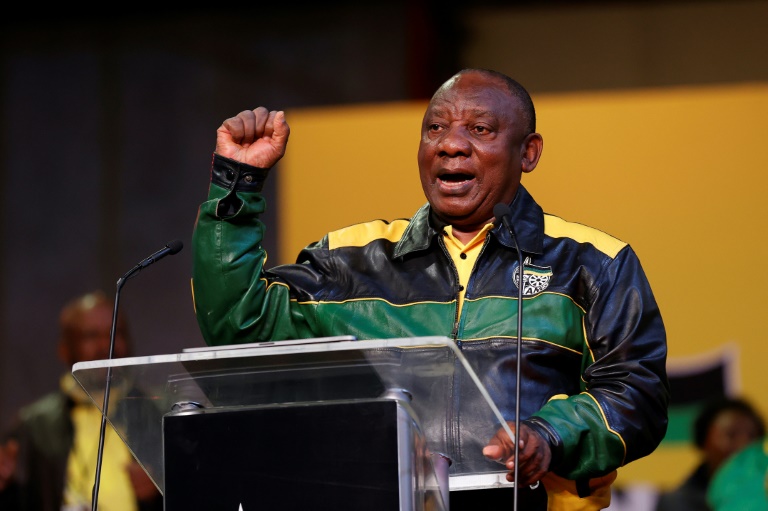
Pragmatic, wealthy and ambitious, Cyril Ramaphosa promised “a new dawn” for corruption-ridden South Africa when he became president.

Today, nearly five years later, his reputation has been overwhelmed by a deeply damaging scandal.  

Just as he looked set to secure re-election at the helm of the ruling ANC party — a stepping stone to a second term as president of the nation -– a special inquiry determined Ramaphosa had probably broken the law over the alleged cover-up of a burglary.

Details about a huge cash haul stolen from his farmhouse have dealt a massive reputational blow to Ramphosa, who took the reins of Africa’s most industrialised economy on a pledge to root out graft.

The African National Congress (ANC), the vanguard of the anti-apartheid struggle once led by Nelson Mandela, must now decide whether Ramaphosa should stay or be pushed out like his graft-tained predecessor, Jacob Zuma.

Born on November 17, 1952 in Johannesburg’s Soweto township — the cradle of the anti-apartheid struggle — Ramaphosa had long angled for South Africa’s top job, but only came to it after a long detour. 

He took up activism while studying law in the 1970s, and spent 11 months in solitary confinement in 1974.

After studying, he turned to trade unionism, one of the few legal ways of protesting against the white-minority regime. 

In 1982, he founded the National Union of Mineworkers (NUM), which swelled to 300,000 members and led massive strikes in 1987 that shook the foundations of white rule.

– From Mandela to Coca-Cola –

A protege of Mandela, who once described him as one of the most gifted leaders of the “new generation,” Ramaphosa stood alongside the anti-apartheid icon when he walked out of jail in 1990. 

He was a key member of the taskforce that steered the transition to democracy.

But after missing out on becoming Mandela’s successor, Ramaphosa swapped politics for a foray into business that made him one of the wealthiest people in Africa.

He held stakes in McDonald’s and Coca-Cola, making millions in deals that required investors to partner with non-white shareholders. 

Ramaphosa also developed a passion for breeding rare buffalos and cattle — a business that would come back to haunt him. 

The opposition once nicknamed him “The Buffalo” after he bid for an 18-million-rand ($104,000) beast in 2012. 

He later apologised for making the glitzy bid “in a sea of poverty.” 

In 2012, his image was badly tarnished when police killed 34 striking workers at the Marikana platinum mine, where he was then a non-executive director. He had called for a crackdown on the strikers, whom he accused of “dastardly criminal” behaviour.

– Covid –

He returned to politics to become Jacob Zuma’s vice president in 2014, often drawing criticism for failing to speak out against government corruption.

Renowned for his patience and strategic thinking, Ramaphosa narrowly defeated pro-Zuma rivals to take over leadership of the ANC party in 2017 and then the presidency when Zuma was forced out two months later.

Relaxed at public appearances, he attracts a support base crossing South Africa’s racial and class divides, but still faces strong opposition from inside the ANC, mainly from Zuma supporters.

His anti-corruption drive has yielded some results, with charges being brought against some high-profile figures.

His handling of the Covid health crisis also won praise internationally.

But the pandemic dealt a heavy blow to plans to revive South Africa’s sagging economy, unemployment remains stratospherically high and prolonged power cuts are a deep source of anger.

– Cash under cushions –

Yet it is the accusations that Ramaphosa attempted to conceal a $580,000 heist at his Phala Phala farmhouse that have most damaged him.

The cash was payment for buffalos bought by a Sudanese citizen, Ramaphosa told investigators.

The money was stored beneath sofa cushions in his residence at the ranch, a place staff believed to be the “safest,” he said.

He denied allegations, first made by South Africa’s ex-spy boss, a Zuma ally, that he had arranged for the robbers to be kidnapped and bribed into silence.

But the inquiry panel expressed doubt about the legitimacy of the source of the money. 

It also concluded that Ramaphosa may have committed serious violations and misconduct in being involved at his farm while president, in not reporting the theft directly to police and in seeking the help of his Namibian counterpart to apprehend the thieves.

Its report was submitted to parliament on Wednesday, potentially opening the way for a vote to remove Ramaphosa.

China further relaxes Covid rules after protests

Cities across China further unwound Covid restrictions Friday, loosening testing and quarantine rules in the wake of nationwide protests calling for an end to lockdowns and greater political freedoms.

Anger and frustration with China’s hardline pandemic response spilled onto the streets last weekend in widespread demonstrations not seen in decades.

China’s vast security apparatus has moved swiftly to smother the rallies, deploying a heavy police presence while boosting online censorship and surveillance of the population.

A number of cities have now begun loosening Covid restrictions, such as moving away from daily mass testing — a tedious mainstay of life under Beijing’s stringent zero-Covid policy.

But sporadic localised clashes have continued to flare up.

Social media footage posted Thursday night and geolocated by AFP showed dozens of people clashing with health workers in hazmat suits outside a school in Yicheng, in central China’s Hubei province.

The author of the post said people in the video were parents of students who had tested positive for the virus and been taken to quarantine facilities.

Parents are seen kneeling in front of the school gate, pleading to take their children home. Another video showed at least a dozen police officers at the scene.

– Home quarantine –

Signs have emerged of a possible shift in the policy of sending positive cases to central quarantine facilities.

An analysis by state-run newspaper People’s Daily on Friday quoted a number of health experts supporting local government moves to allow patients to quarantine at home, which would be a marked departure from current rules.

When called on Friday, some officials in the Chaoyang district of Beijing said people who tested positive there would no longer have to go to central quarantine.

Authorities in the southern factory hub of Dongguan on Thursday also said those who meet “specific conditions” should be allowed to quarantine at home. They did not specify what those conditions would be.

The southern tech hub of Shenzhen on Wednesday rolled out a similar policy.

Central government officials have signalled that a broader relaxation of the zero-Covid policy could be in the works.

Speaking at the National Health Commission Wednesday, Vice Premier Sun Chunlan said the Omicron variant was weakening and vaccination rates were improving, according to the state-run Xinhua news agency.

A central figure behind Beijing’s pandemic response, Sun said this “new situation” required “new tasks”.

She made no mention of zero-Covid in those remarks or in another meeting on Thursday, suggesting the approach, which has disrupted the economy and daily life, might soon be relaxed.

– Testing loosens up –

The southwestern metropolis of Chengdu from Friday no longer required a recent negative test result to enter public places or ride the metro, instead only demanding a green health code on an app confirming people have not travelled to a “high-risk” area.

Beijing also announced Friday that using public transport in the city would no longer require a negative PCR test taken within 48 hours. 

The day before, the capital’s health authorities called on hospitals not to deny treatment to people without a 48-hour test.

In January, a pregnant woman in the city of Xi’an miscarried after being refused hospital entry for not having a PCR result.

China has seen a string of deaths after treatment was delayed by Covid restrictions, including the recent death of a four-month-old baby who was stuck in quarantine with her father.

Those cases became a rallying cry during the protests, with a viral post listing the names of those who died because of alleged negligence linked to the pandemic response.

Many other cities with virus outbreaks are allowing restaurants, shopping malls and even schools to reopen, in a clear departure from previous tough lockdown rules.

In the northwestern city of Urumqi, where a fire that killed 10 people spurred anti-lockdown protests, authorities announced Friday that supermarkets, hotels, restaurants and ski resorts would gradually be reopened.

The city of more than four million in the far-western Xinjiang region endured one of China’s longest lockdowns, with some areas shut from early August.

OPEC set to stick or cut more amid plan to cap Russian oil price

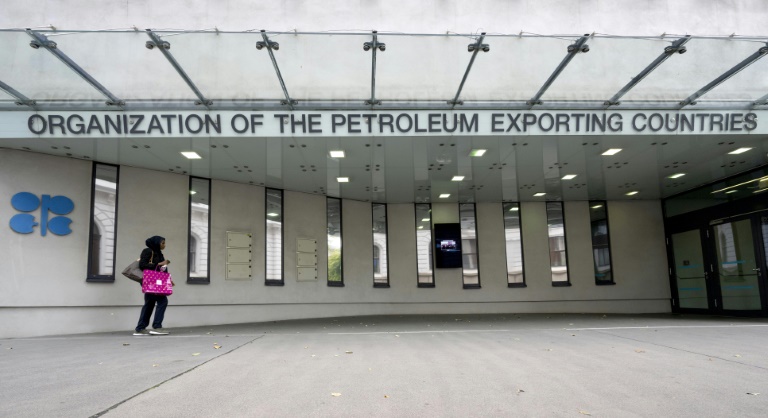
Major oil producers are expected to stick to their current output strategy or even slash production further when they meet on Sunday in the face of falling prices, a potential Russian oil price cap and an embargo on Russian crude shipments.

At their last ministerial session in October the 13-nation Organization of the Petroleum Exporting Countries headed by Riyadh and its 10 allies led by Moscow, collectively known as OPEC+, agreed to reduce output by two million barrels per day (bpd) from November.

The OPEC+ reduction amounted to the biggest cut since the height of the Covid pandemic in 2020.

Amid fears of economic slowdown, Sunday’s cartel meeting via videoconference convenes ahead of the EU enforcing an embargo on Russian crude shipments from Monday.

G7 countries, the EU and Australia had also appeared close to agreeing a $60 dollar per barrel price cap on Russian oil Thursday.

The alliance should vote for a “rollover of the previous decision” to cut two million bpd, an Iranian source told AFP Thursday, arguing that the market was “very uncertain” in light of imminent European sanctions.

– China worries –

“Odds are that the group will reassert its commitment to its latest output cuts,” says PVM Energy analyst Stephen Brennock, adding he would not rule out that they “may even potentially announce fresh cuts” to bolster prices.

Since the October meeting, oil prices have been plummeting to their level of early 2022, far from the peaks above $130 a barrel in March after the start of Russia’s invasion in Ukraine.

Two global crude benchmarks were hovering around $85 a barrel on Thursday.

Covid-related restrictions in China have raised fears about energy demand from the world’s largest importer of crude oil.

Beijing defused concerns, however, by signalling a possible easing of the strict zero-Covid policy, after nationwide protests against health restrictions broke out.

Soaring inflation in Europe and across the Atlantic have also fuelled fears of a recession.

– Russian ‘leverage’ –

Beyond the economic gloom, the big unknown in the oil equation currently is Russian oil, as Western nations seek to decouple themselves from Moscow’s energy supplies as fast as possible. 

The EU has decided to ban member states from buying Russian oil exported by sea from December 5, “putting at risk over two million barrels per day,” according to estimates by ANZ analysts.

Investors are also scrutinising a European Commission-proposed $60 dollar per barrel price cap on Russian crude, which is designed to reinforce the effectiveness of the EU embargo.

The EU was already in agreement with Washington on the need to cap the price Western clients pay for Russia’s oil, to prevent Moscow profiting from price rises triggered by its own war on Ukraine.

Last week, President Vladimir Putin had warned that any attempt by the West to cap the price of Russian oil would have “grave consequences” for world markets.

Russia “has several options to circumvent such a cap,” said UniCredit economist Edoardo Campanella, adding that “OPEC+ might feel compelled to adopt a more aggressive stance” by cutting or threatening to cut production even further.

“Russia might also retaliate by leveraging its influence within OPEC+ to push for more production cuts down the road, thus exacerbating the global energy crisis,” Campanella said.

NGOs take aim at Indonesia over orangutans, academic freedom

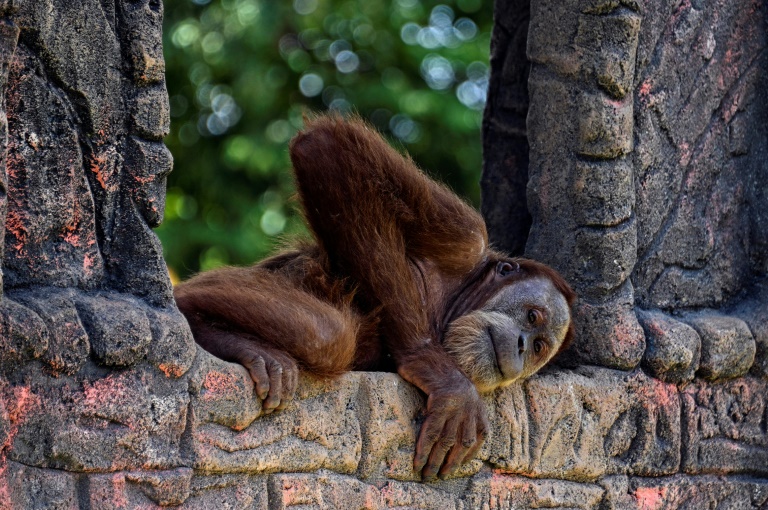
More than a dozen NGOs have issued a letter accusing Indonesia of stymieing scientific research, after Jakarta banned a group of foreign academics who opposed an official claim that orangutan numbers are increasing.

Indonesia is home to the world’s oldest tropical rainforest where the critically endangered apes are losing tracts of their habitat to logging, palm oil plantations and mining.

The legal letter of objection, filed to the environment ministry Thursday by 18 groups including Greenpeace and Amnesty International, called on authorities to lift a ban imposed in September on the five Western scientists and allow researchers to work freely.

The NGOs could decide to file a lawsuit if their demands are not met.

The five academics — all based outside Indonesia — had penned an op-ed in a local newspaper citing studies showing the orangutan population is in decline, countering official claims their numbers were set to grow. 

They were banned from the country the day the piece was published.

The NGOs called the ban anti-science and said it restricted academic freedom. They demanded a public apology from the government for what they said was an abuse of power by silencing dissenting opinions. 

“It is a manifestation of power control of knowledge production, which has violated the academic freedom principle,” they said in a statement Thursday.

Arie Rompas, Greenpeace Indonesia’s forest campaign team leader, said the ministry’s move was “authoritarian”, stressing that credible data was essential for sound environmental policies. 

“If the data lacks credibility, policies will not solve issues such as deforestation, forest fires, or the orangutan population,” Rompas told AFP Friday. 

The environment ministry did not respond to a request from AFP for comment.

“We are still waiting on the ministry’s response to see what are the next steps,” said Rompas.

Poaching and habitat loss had already decimated the orangutan population in the Southeast Asian nation before the coronavirus emerged as another threat to the mammals, who share 97 percent of their DNA with humans.

Fewer than 120,000 orangutans were estimated to remain in the wild before the recent dispute erupted, but the exact number was unknown.

The population of orangutans in Borneo alone plummeted from about 288,000 in 1973 to around 100,000 by 2017, according to the International Union for Conservation of Nature.

The letter by the NGOs calls on the government to work with scientists to reach an agreed estimate on current numbers.

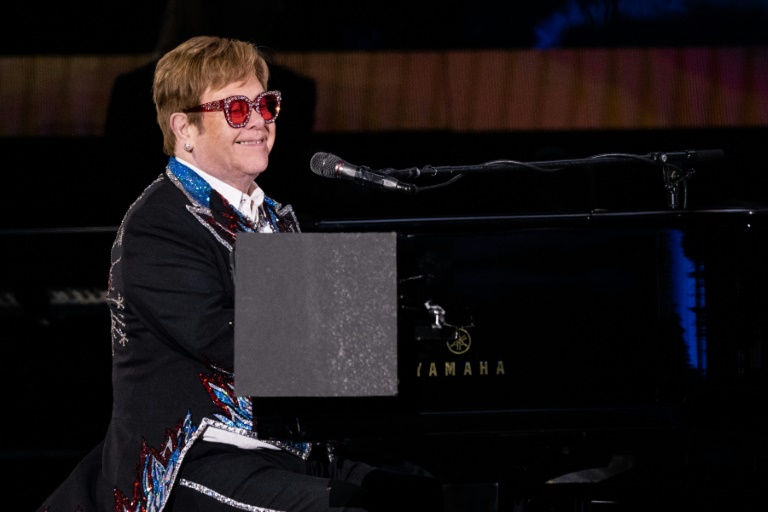
Sun to go down on Elton John's final UK tour at Glastonbury

After Paul McCartney, the Glastonbury music festival on Friday again rolled back the years by announcing Elton John as its headline act next June to close out his final UK tour.

The 75-year-old singer-songwriter said he “couldn’t be more excited” to make his debut at Britain’s best-known festival as he winds down a glittering live career.

John last month played his final US gigs as part of his “Farewell Yellow Brick Road” world tour, which is due to end in Stockholm on July 8. 

Prior to that, he will headline the closing Sunday slot at Glastonbury in southwest England on June 25, according to Emily Eavis, whose father Michael started the British event in 1970.

“This will be the final UK show of Elton’s last ever tour, so we will be closing the festival and marking this huge moment in both of our histories with the mother of all send-offs,” she said.

“We are so very happy to finally bring the Rocket Man to Worthy Farm!”

John announced the farewell world tour in 2018, but it was curtailed by the Covid pandemic and after he was injured in a fall.

The British singer has scored a hit single in every decade since the 1970s and amassed worldwide record sales of 300 million.

– ‘Incredibly emotional’ –

The tour features extravagant costumes, spectacular visuals and classics from his catalogue along with recent number one “Cold Heart”, which was a collaboration with pop star Dua Lipa.

John said his Glastonbury premiere would be a “fitting way” to say goodbye to his fans at home.

“They have been beyond brilliant, and have supported me through all the highs and lows of my career,” he said, paying tribute to Glastonbury’s “genuine, enthusiastic support for the best emerging talent”.

“I’ve been talking to Emily Eavis about it over the last few weeks and I can’t wait to embrace the spirit of the greatest festival in the world. It’s going to be incredibly emotional.”

In recent years, however, Glastonbury has paid less heed to new emerging talent on its main stages.

Last June, McCartney became the festival’s oldest solo headliner at the age of 80. He played a set of Beatles classics, aided by cameos from Bruce Springsteen and Dave Grohl.

Soul legend Diana Ross, 78, also performed this year, leading to some grumbling on social media at the “geriatric” profile and that only the rich and middle-aged could afford the ticket prices.

More than 100,000 standard tickets for next year’s June 21-25 festival sold out in just over an hour when they went on sale a month ago, despite the price rising to £335 ($410) from £280 this year.

Ramaphosa political fate hangs in balance in South Africa

The political future of President Cyril Ramaphosa hung in the balance on Friday, as South Africans wondered whether he would cling to power or resign over accusations that he sought to cover up a burglary at his farm.

On Thursday, the 70-year-old head of state was rumoured to be close to stepping down in the face of calls to quit — but by Friday morning, the pendulum seemed to have swung the other way as allies urged him to fight on. 

The African National Congress (ANC), which has ruled South Africa since the end of apartheid in 1994, was to hold an emergency session of its decision-making body at 1200 GMT to discuss a crisis that has deepened party divisions.

Ramaphosa has been under fire since June, when a former spy boss filed a complaint with police, alleging he had concealed the theft of a cash haul at his farm at Phala Phala in northeastern South Africa.

Instead of alerting the authorities, he allegedly organised for the robbers to be kidnapped and bribed into silence. Ramaphosa has denied any wrongdoing. 

“There’s no factual and legal basis for (him to go),” Mathole Motshekga, an ANC lawmaker and Ramaphosa ally, told AFP on Friday.

The rand recovered some ground against the dollar early Friday after a sharp drop the previous day, following publication of a report from an independent commission into the scandal.

Late Thursday, Ramaphosa’s spokesman Vincent Magwenya said the president, who has been holed up in talks with ANC leaders, was considering all options.

An announcement was “imminent,” the spokesman said, but stressed the president was not “panicking.” 

The decision would not be “rushed” but made in the interest of the country and the government’s “stability”, Magwenya said.

“The top ANC people don’t want him to leave,” an ANC executive told AFP on condition of anonymity late Thursday.

The head of the influential Anglican Church also pleaded for the president to stay on. 

“No one should be above the law, but to pass final judgement on a person based on what is in effect a board of preliminary investigation, which has not made a final determination of the facts, could lead to lawlessness in South Africa,” Archbishop Thabo Makgoba, the successor of the late Desmond Tutu, said. 

– Cash under cushions –

The president has denied any wrongdoing, saying the accusations against him were “without any merit.” 

But he admitted that $580,000 in cash — which he said was payment for buffaloes bought by a Sudanese citizen — was stolen from under sofa cushions at his ranch. 

The vast sum has cast a dark shadow over Ramaphosa’s bid to portray himself as graft-free after the corruption-tainted era of Jacob Zuma.

On Wednesday, the three-person special panel tasked with probing the affair submitted its report to parliament.

It concluded Ramaphosa “may have committed” serious violations and misconduct in not reporting the theft directly to police and in seeking the help of his Namibian counterpart to apprehend the thieves.

Parliament is scheduled to examine the report on Tuesday.

The debate could lead to a vote on removing him from office. For this to succeed, a motion has to be supported by at least two-thirds of lawmakers.

The scandal has come at the worst possible moment for Ramaphosa, who had looked set to secure re-election at the helm of the ANC — a stepping stone to a second term as national president. 

The ANC, which after 28 years in power is experiencing dwindling support, is due to vote in a new leadership on December 16. 

– ‘Life goes on’ –

“The president has overwhelming support for re-election,” said Motshekga, the ANC lawmaker, describing the panel’s report as “not conclusive”.

“We will go to Parliament on Tuesday and just reject that report and life goes on.”

Ramaphosa took office at the helm of Africa’s most industrialised economy in 2018 vowing to root out corruption that had taken root across state institutions.

He now risks becoming the third ANC leader forced out since the party came to power after the end of apartheid.

Ramaphosa’s predecessor Zuma dodged four impeachment votes until the ANC forced him to resign over graft in 2018.

The ANC also pushed Thabo Mbeki out of office in 2008 in the middle of a power struggle.

Moroccans rejoice at reaching World Cup last 16

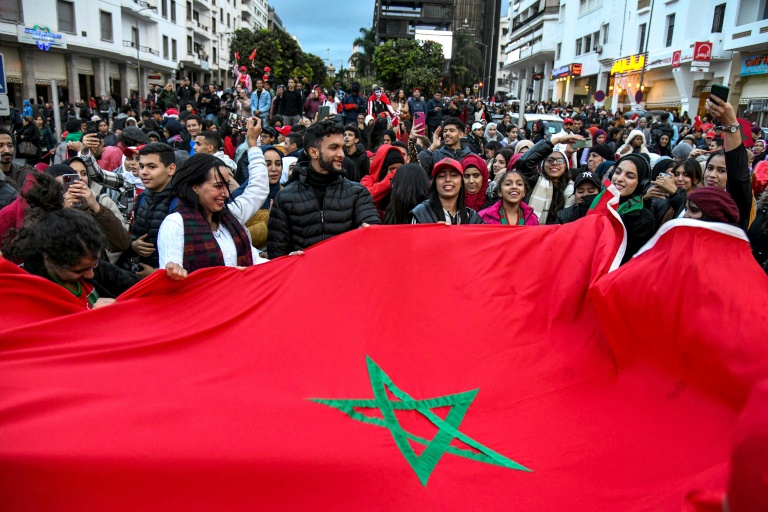
Ecstatic Moroccans celebrated on Thursday after their team qualified for the knockout stages of the World Cup for the first time since 1986.

“We’ve waited 36 years,” one fan cried after the Atlas Lions beat Canada 2-1 to storm into the round of 16 as winners of their group.

In 1986, the football-obsessed North African nation became the first African or Arab country ever to reach the knockout stages, before many of the current players were born.

On Thursday, the iconic Avenue Mohammed V through central Rabat thronged with supporters wrapped in the country’s red flag with its green star, setting off firecrackers as drivers honked their horns.

Heavy rain, a welcome sight in the drought-stricken country, cleared up before the final whistle as men, women and children poured into the streets to celebrate.

Cafes had been packed for the match and even banks had closed early to allow people to watch.

“I was stressed about the match but they blew us away,” said Houda, 34, who was watching at a cafe with her daughter. 

Morocco had gone from a draw with Croatia to a spectacular win on Sunday against Belgium before beating Canada, a huge boost for coach Walid Regragui, who has been in the job for just three months.

According to opinion polls, a fifth of Moroccans believe their team will reach the semi-final, and national carrier Royal Air Maroc has put on special flights to ferry fans back and forth from Qatar.

Maths teacher Mehdi Dida said his joy had “no limits.”

“It’s a historic moment to see the Moroccan flag so high and see our players give their all for their country,” he said.

One social media user wrote that people his father’s age continually talked about the team of 1986.

“In 20 years’ time, I’ll be able to tell my children about the team of 2022,” he wrote. “It’s historic!”

isb-hic-kao-agr/par/gj

Close Bitnami banner
Bitnami