World

OPEC set to stick or cut more amid plan to cap Russian oil price

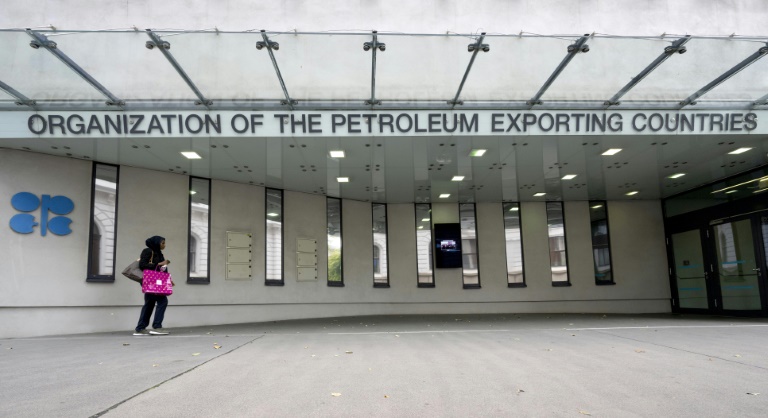
Major oil producers are expected to stick to their current output strategy or even slash production further when they meet on Sunday in the face of falling prices, a potential Russian oil price cap and an embargo on Russian crude shipments.

At their last ministerial session in October the 13-nation Organization of the Petroleum Exporting Countries headed by Riyadh and its 10 allies led by Moscow, collectively known as OPEC+, agreed to reduce output by two million barrels per day (bpd) from November.

The OPEC+ reduction amounted to the biggest cut since the height of the Covid pandemic in 2020.

Amid fears of economic slowdown, Sunday’s the cartel’s meeting via videoconference convenes ahead of the EU enforcing an embargo on Russian crude shipments from Monday.

G7 countries, the EU and Australia had also appeared close to agreeing a $60 dollar per barrel price cap on Russian oil Thursday.

The alliance should vote for a “rollover of the previous decision” to cut two million bpd, an Iranian source told AFP Thursday, arguing that the market was “very uncertain” in light of imminent European sanctions.

– China worries –

“Odds are that the group will reassert its commitment to its latest output cuts,” says PVM Energy analyst Stephen Brennock, adding he would not rule out that they “may even potentially announce fresh cuts” to bolster prices.

Since the October meeting, oil prices have been plummeting to their level of early 2022, far from the peaks above $130 a barrel in March after the start of Russia’s invasion in Ukraine.

Two global crude benchmarks were hovering around $85 a barrel on Thursday.

Covid-related restrictions in China have raised fears about energy demand from the world’s largest importer of crude oil.

Beijing defused concerns, however, by signalling a possible easing of the strict zero-Covid policy, after nationwide protests against health restrictions broke out.

Soaring inflation in Europe and across the Atlantic have also fuelled fears of a recession.

– Russian ‘leverage’ –

Beyond the economic gloom, the big unknown in the oil equation currently is Russian oil, as Western nations seek to decouple themselves from Moscow’s energy supplies as fast as possible. 

The EU has decided to ban member states from buying Russian oil exported by sea from December 5, “putting at risk over two million barrels per day,” according to estimates by ANZ analysts.

Investors are also scrutinising a European Commission-proposed $60 dollar per barrel price cap on Russian crude, which is designed to reinforce the effectiveness of the EU embargo.

The EU was already in agreement with Washington on the need to cap the price Western clients pay for Russia’s oil, to prevent Moscow profiting from price rises triggered by its own war on Ukraine.

Last week, President Vladimir Putin had warned that any attempt by the West to cap the price of Russian oil would have “grave consequences” for world markets.

Russia “has several options to circumvent such a cap,” said UniCredit economist Edoardo Campanella, adding that “OPEC+ might feel compelled to adopt a more aggressive stance” by cutting or threatening to cut production even further.

“Russia might also retaliate by leveraging its influence within OPEC+ to push for more production cuts down the road, thus exacerbating the global energy crisis,” Campanella said.
Fed rate hopes weigh on dollar, stocks fall ahead of US jobs data

The dollar struggled to recover Friday from its recent sell-off as traders grew confident the Federal Reserve will slow its pace of interest rate hikes, while a recent equities rally sputtered as focus turns to key US jobs data.

Another positive inflation data release out of the United States added to expectations that the US central bank will take a lighter approach to lifting borrowing costs at its December meeting.

The personal consumption expenditures price index data came a day after Fed boss Jerome Powell indicated that the days of 75 percentage-point rate increases were gone as officials pore over the impact of tightening on the economy.

A report showing factory activity shrinking in November added to the sense that the Fed moves were kicking in.

The developments gave forex traders another reason to shift out of the dollar, pushing it down against its major peers — having surged this year on the back of hawkish Fed policy.

The greenback was under particular pressure from the yen Thursday, having hit a three-decade high in October, while sterling and the yuan were also well up from the record lows touched recently.

The US unit was unable to break higher on Friday.

But several Fed officials including Powell have lined up to warn that rates will continue to rise and stay elevated, with the possibility of no cut until 2024.

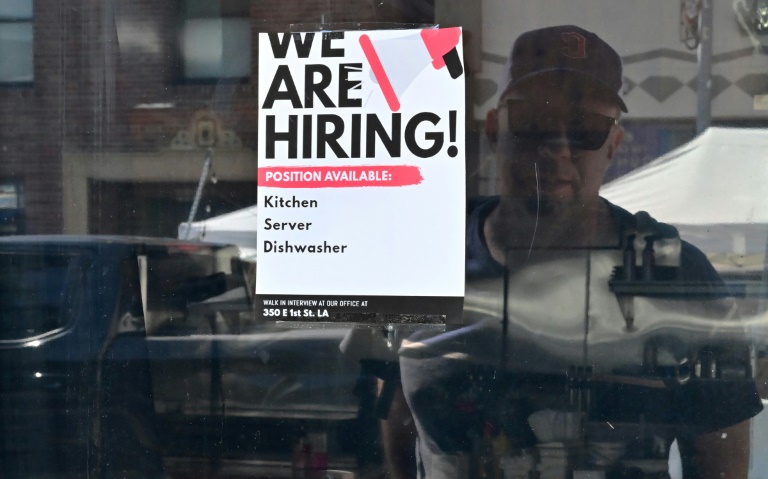
While the mood on trading floors has become much lighter, equity investors took a step back from their latest buying spree as they awaited the release of the closely watched non-farm payrolls report later Friday.

The figures will provide the most recent snapshot of how the world’s top economy is faring in light of the higher rates and four-decade-high inflation.

“Stocks are grinding a touch lower in Asia after a directionless US session, which sees local traders book some profits ahead of the non-farm payroll report,” said SPI Asset Management’s Stephen Innes.

“A strong report could still reinforce the Fed’s hawkish ambitions. So traders are jockeying for position ahead of the moderately high-risk event.”

Hong Kong, Shanghai, Tokyo, Sydney, Seoul, Mumbai, Bangkok, Singapore, Taipei, Wellington, Manila and Jakarta all fell.

London, Paris and Frankfurt all opened in the red.

Investors were following developments in China amid signs it is edging towards a pivot from its draconian Covid-zero strategy, which has seen the lockdown of tens of millions and strangled the giant economy this year.

The move came after widespread protests across the country earlier in the week against almost three years of heavy-handed containment measures and calls for more political freedoms.

Observers say they expect officials to signal a shift in priorities at a key meeting later this month, with a focus turning to kickstarting the economy, though with vaccination rates low the move will likely be gradual.

“The language (at the meeting) will prioritise economic growth more than it did the last couple of years,” Arthur Budaghyan, at BCA Research Inc, said.

“Economic conditions are worsening, and policymakers’ pain point is being reached.”

– Key figures around 0820 GMT –

Tokyo – Nikkei 225: DOWN 1.6 percent at 27,777.90 (close)

Hong Kong – Hang Seng Index: DOWN 0.3 percent at 18,675.35 (close)

Shanghai – Composite: DOWN 0.3 percent at 3,156.14 (close)

London – FTSE 100: DOWN 0.3 percent at 7,539.42

Euro/dollar: DOWN at $1.0516 from $1.0529 on Thursday

Dollar/yen: DOWN at 134.60 yen from 135.34 yen

Pound/dollar: DOWN at $1.2249 from $1.2251

Euro/pound: DOWN at 85.84 pence from 85.91 pence

West Texas Intermediate: UP 0.4 percent at $81.53 per barrel

Brent North Sea crude: UP 0.6 percent at $87.41 per barrel

New York – Dow: DOWN 0.6 percent at 34,395.01 (close)

Switzerland fines engineering giant $4.3 mn over S.Africa bribery

Swedish-Swiss engineering giant ABB has been fined four million Swiss francs ($4.3 million) over bribery linked to the construction of a huge power plant in South Africa, Switzerland announced on Friday.

The attorney general’s office said ABB Management Services, which is headquartered in Switzerland, admitted not taking “all necessary and reasonable provisions” to prevent bribery payments to officials in South Africa.

“Various ABB employees set up from 2013 on a bribery scheme in order to obtain orders, through excessive payments to subcontractors, for the construction of a coal-fired power plant in South Africa,” the attorney general’s office said.

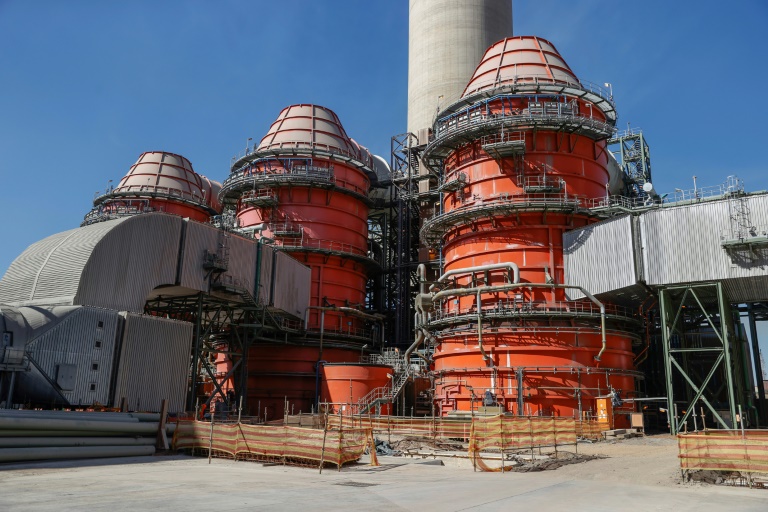
Construction near Johannesburg of the Kusile power station, the fourth largest coal-fired generator in the world, has been fraught with allegations of graft. South Africa’s struggling power utility Eskom commissioned the plant in 2007.

“ABB South Africa received orders for a value of at least $200 million with bribery payments of at least 1.3 million Swiss francs,” the attorney general’s office said.

As a result, it said ABB had been slapped with a fine of four million Swiss francs and ordered the group to pay 50,000 Swiss francs for the cost of proceedings.

The firm has already made a compensation payment of $104 million in South Africa, the attorney general’s office said.

On Thursday, South African prosecutors announced that ABB would pay more than 2.5 billion rand ($144,000) in “punitive reparations” to South Africa over “criminal conduct” at Eskom.

Switzerland said the US justice department and Securities and Exchange Commission were also expected to resolve with ABB on Friday.

In October eight people, including former Eskom CEO Matshela Koko, were arrested on corruption charges linked to a multi-million-dollar contract with the Swedish-Swiss firm.

Philippines' largest prison holds mass burial for 70 inmates

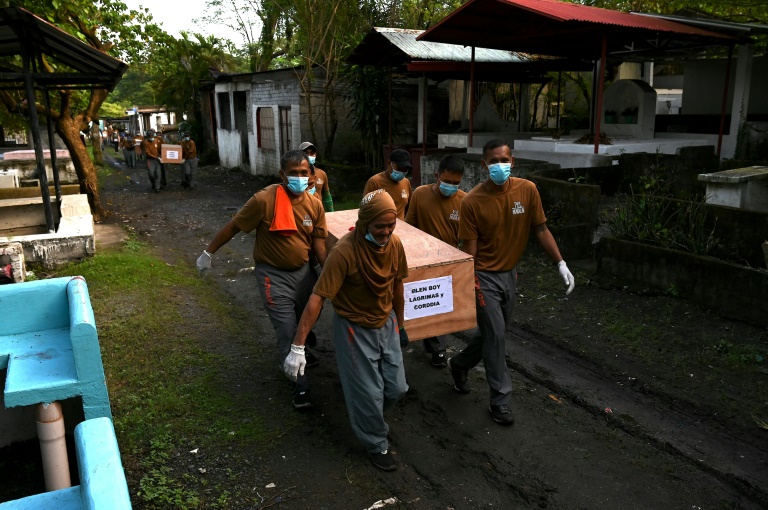
The bodies of 70 inmates from the Philippines’ largest prison were laid to rest Friday in a mass burial, weeks after their decomposing remains were discovered in a Manila funeral home.

They were among 176 corpses found by police during an investigation into the death of an inmate, who was accused of being involved in the killing of a journalist in early October.

Most of the deaths were due to “natural causes”, said Cecilia Villanueva, the Bureau of Corrections’ acting director for health and welfare services.

Among them was a Japanese national. 

Villanueva said 127 of the 140 bodies buried so far were badly decomposed and could not be autopsied again.

The bodies began piling up in the funeral home in December 2021 after their families — most of them poor — did not claim them.

Villanueva blamed “constraints” for the failure of corrections staff to ensure the inmates were given timely burials.

Bodies are normally held at the accredited funeral home for three months to give relatives time to retrieve them.  

Friday’s mass burial was the biggest ever by the Bureau of Corrections, Villanueva told reporters.

Minimum security inmates carried the 70 plywood coffins to their final resting place — cheap concrete tombs in a cemetery inside the prison complex.

The gruesome discovery at the funeral home was only the latest scandal to rock the troubled Bureau of Corrections, which runs the country’s overcrowded prison system.

Its chief Gerald Bantag is accused of ordering the killing of radio broadcaster Percival Mabasa, as well as Cristito Villamor Palana, an inmate who allegedly passed on the kill order to the gunman.

After Bantag was suspended from his job as director general, a huge pit was discovered next to his former official residence inside the prison complex.

Bantag claims it was for scuba diving, not an escape tunnel for inmates.

Among the remaining bodies still at the funeral home, eight would be re-examined by Raquel Fortun, one of the country’s two forensic pathologists. 

Villanueva said an average of one to two prisoners died every day inside New Bilibid Prison, where about 29,000 inmates are held in a facility designed for

 6,435. 

There were only five doctors to treat the prisoners, but the Bureau of Corrections was trying to hire more.

“We are doing everything we can, we try to provide health care, just as health care is provided to the public, but there are so many constraints,” Villanueva said.

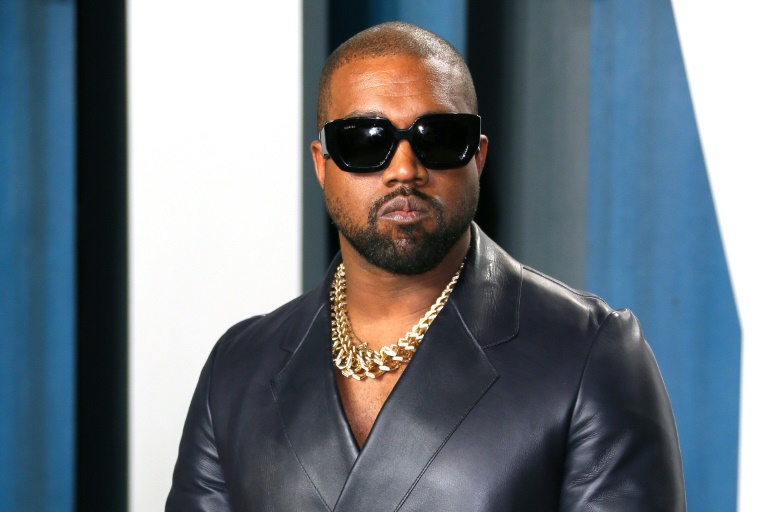
Musk kicks Kanye West off Twitter after swastika post

Elon Musk kicked Kanye West off Twitter on Friday “for incitement to violence,” after the rapper posted a picture that appeared to show a swastika interlaced with a Star of David. 

The post came hours after an interview with conspiracy theorist Alex Jones, in which West sparked outrage by declaring his “love” of Nazis and admiration for Adolf Hitler.

West had also shared a picture of a shirtless Musk getting sprayed with water, captioned: “Let’s always remember this as my final tweet.” 

In response, Musk said: “Just clarifying that his account is being suspended for incitement to violence, not an unflattering pic of me.”

Musk, who previously called himself a “free speech absolutist,” has repeatedly said he believes all content permitted by law should be allowed on Twitter, and sought to remake the social media organization after he took control in October. 

In an hours-long appearance on Infowars, the show fronted by Jones, West — now known as Ye — wore a black mask completely covering his face, as he ranted about sin, pornography and the devil.

“I like Hitler,” West said several times.

West hid his face completely under a mask that had neither eye nor mouth slits. 

However, Jones addressed him as West as they spoke, Infowars billed the interview as being with West, and at one point Jones took West’s cellphone and posted a tweet on his account that appeared in real-time.

West, who has hinted he is running for US president in 2024, has spoken openly about his struggles with mental illness, but his erratic behavior has continued to raise concerns.

The businessman has seen his commercial relationships crumble after a series of anti-Semitic comments, as the one-time titan of fashion and music appears to have entered a disturbing spiral.

– ‘I love Nazis’ –

On Infowars, West drew shocked laughter and even disagreement from far-right host Jones.

“I see good things about Hitler also,” he told Jones.

“This guy… invented highways, invented the very microphone that I used as a musician, you can’t say out loud that this person ever did anything good, and I’m done with that.”

Hitler did not invent either of those things.

“I’m done with the classification, every human being has something of value that they brought to the table, especially Hitler.

“I like Hitler.”

Jones, a serial provocateur who was ordered to pay hundreds of millions of dollars in damages for claiming one of America’s deadliest school shootings was a “hoax,” interjected that “the Nazis were thugs and did really bad things.”

West did not back down.

“But they did good things too. We gotta stop dissing the Nazis all the time… I love Nazis,” West said.

Hours after the interview, social media platform Parler, a favorite of conservatives for its hands-off approach to moderation, said a deal for West to buy the outfit was off.

“Parlement Technologies would like to confirm that the company has mutually agreed with Ye to terminate the intent of sale of Parler,” the network said on Twitter. 

“This decision was made in the interest of both parties in mid-November.”

In October, German sportswear giant Adidas severed its lucrative tie-up with West after the star made anti-Semitic statements, including threatening to “go death con 3 on JEWISH PEOPLE,” using a misspelled reference to US military readiness.

Paris fashion house Balenciaga and US clothing retailer Gap also ended ties with West, who appeared at a Paris fashion show wearing a shirt with the slogan “White Lives Matter,” a rebuke to the Black Lives Matter racial equality movement.

– Fuentes –

West appeared on Infowars alongside Nick Fuentes, the same white supremacist with whom West had dinner last week at former president Donald Trump’s Florida estate, in a meeting that provoked outrage.

Thursday’s livestream sparked immediate condemnation from the Republican Jewish Coalition, which dubbed the three men “a disgusting triumvirate of conspiracy theorists, Holocaust deniers, and anti-Semites.”

“Given his praise of Hitler, it can’t be overstated that Kanye West is a vile, repellent bigot who has targeted the Jewish community with threats and Nazi-style defamation,” a statement from the group said.

“Conservatives who have mistakenly indulged Kanye West must make it clear that he is a pariah. Enough is enough.”

China further relaxes Covid rules after protests

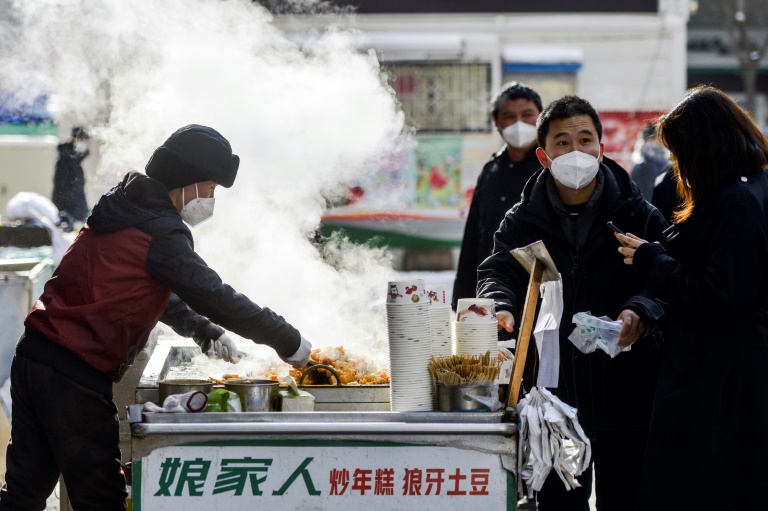
Cities across China further unwound Covid restrictions Friday, loosening testing and quarantine rules in the wake of nationwide protests calling for an end to lockdowns and greater political freedoms.

Anger and frustration with China’s hardline pandemic response spilled out onto the streets last weekend in widespread demonstrations not seen in decades.

In the wake of the unrest across China, a number of cities have begun loosening Covid restrictions, such as moving away from daily mass testing requirements, a tedious mainstay of life under Beijing’s stringent zero-Covid policy.

At the same time, authorities are continuing to seek to contain protests with heavy security on the streets, online censorship in full force, and surveillance of the population heightened.

As of Friday, the southwestern metropolis of Chengdu will no longer require a recent negative test result to enter public places or ride the metro, instead only requiring a green health code confirming they have not travelled to a “high risk” area.

In Beijing, health authorities called on Thursday on hospitals not to deny treatment to people without a negative PCR test taken within 48 hours.

In January, a pregnant woman in the city of Xi’an miscarried after being refused hospital entry for not having a PCR test result.

China has seen a string of deaths after treatment was delayed by Covid restrictions, including the recent death of a four-month-old baby who was stuck in quarantine with her father.

Those cases became a rallying cry during the protests, with a viral post listing the names of those who died because of alleged negligence linked to the pandemic response.

Many other cities with virus outbreaks are allowing restaurants, shopping malls and even schools to reopen, in a clear departure from previous tough lockdown rules.

In northwestern Urumqi, where a fire that killed ten people was the spark for the anti-lockdown protests, authorities announced Friday that supermarkets, hotels, restaurants, and ski resorts would gradually be opened. 

The city of over four million residents endured one of China’s longest lockdowns, with some areas shut in early August.

– Home quarantine –

An analysis by state-run newspaper People’s Daily on Friday quoted a number of health experts supporting local government moves to allow positive cases to quarantine at home.

The shift would be a marked departure from current rules, which require that they be held in government facilities.

The southern factory hub of Dongguan Thursday said that those who meet “specific conditions” should be allowed to quarantine at home. It did not specify what those conditions would be.

The southern tech hub Shenzhen rolled out a similar policy Wednesday.

Central government officials have also signalled that a broader relaxation of zero-Covid policy could be in the works.

Speaking at the National Health Commission Wednesday, Vice Premier Sun Chunlan said the Omicron variant was weakening and vaccination rates were improving, according to the state-run Xinhua news agency.

A central figure behind Beijing’s pandemic response, Sun said this “new situation” required “new tasks”.

She made no mention of zero-Covid in those remarks or in another meeting on Thursday, suggesting the approach, that has disrupted the economy and daily life, might soon be relaxed.

China further relaxes Covid rules after protests

Cities across China further unwound Covid restrictions Friday, loosening testing and quarantine rules in the wake of nationwide protests calling for an end to lockdowns and greater political freedoms.

Anger and frustration with China’s hardline pandemic response spilled out onto the streets last weekend in widespread demonstrations not seen in decades.

In the wake of the unrest across China, a number of cities have begun loosening Covid restrictions, such as moving away from daily mass testing requirements, a tedious mainstay of life under Beijing’s stringent zero-Covid policy.

At the same time, authorities are continuing to seek to contain protests with heavy security on the streets, online censorship in full force, and surveillance of the population heightened.

As of Friday, the southwestern metropolis of Chengdu will no longer require a recent negative test result to enter public places or ride the metro, instead only requiring a green health code confirming they have not travelled to a “high risk” area.

In Beijing, health authorities called on Thursday on hospitals not to deny treatment to people without a negative PCR test taken within 48 hours.

In January, a pregnant woman in the city of Xi’an miscarried after being refused hospital entry for not having a PCR test result.

China has seen a string of deaths after treatment was delayed by Covid restrictions, including the recent death of a four-month-old baby who was stuck in quarantine with her father.

Those cases became a rallying cry during the protests, with a viral post listing the names of those who died because of alleged negligence linked to the pandemic response.

Many other cities with virus outbreaks are allowing restaurants, shopping malls and even schools to reopen, in a clear departure from previous tough lockdown rules.

In northwestern Urumqi, where a fire that killed ten people was the spark for the anti-lockdown protests, authorities announced Friday that supermarkets, hotels, restaurants, and ski resorts would gradually be opened. 

The city of over four million residents endured one of China’s longest lockdowns, with some areas shut in early August.

– Home quarantine –

An analysis by state-run newspaper People’s Daily on Friday quoted a number of health experts supporting local government moves to allow positive cases to quarantine at home.

The shift would be a marked departure from current rules, which require that they be held in government facilities.

The southern factory hub of Dongguan Thursday said that those who meet “specific conditions” should be allowed to quarantine at home. It did not specify what those conditions would be.

The southern tech hub Shenzhen rolled out a similar policy Wednesday.

Central government officials have also signalled that a broader relaxation of zero-Covid policy could be in the works.

Speaking at the National Health Commission Wednesday, Vice Premier Sun Chunlan said the Omicron variant was weakening and vaccination rates were improving, according to the state-run Xinhua news agency.

A central figure behind Beijing’s pandemic response, Sun said this “new situation” required “new tasks”.

She made no mention of zero-Covid in those remarks or in another meeting on Thursday, suggesting the approach, that has disrupted the economy and daily life, might soon be relaxed.

Japanese cannibal who walked free dies age 73

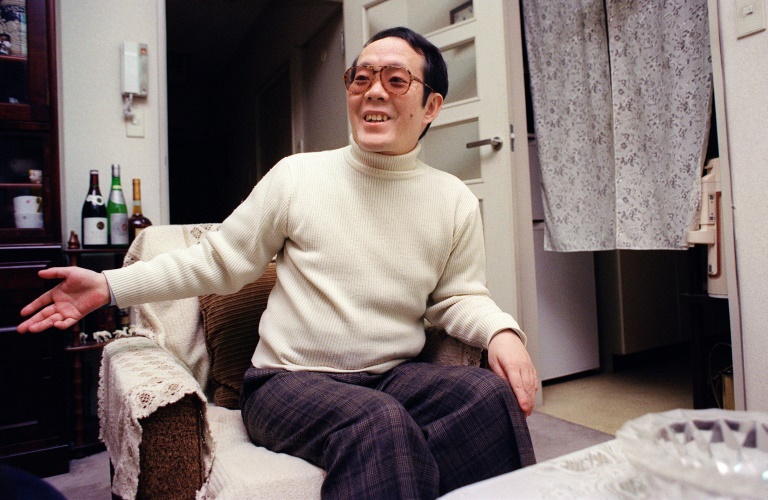
Issei Sagawa, a Japanese murderer known as the “Kobe Cannibal” who killed and ate a Dutch student but was never jailed, has died aged 73.

Sagawa died of pneumonia on November 24 and was given a funeral attended only by relatives, with no public ceremony planned, his younger brother and a friend said in a statement.

In 1981, Sagawa was studying in Paris when he invited Dutch student Renee Hartevelt to his home.

He shot her in the neck, raped her, and then consumed parts of her body over the course of several days.

Sagawa then attempted to dispose of her remains in the Bois de Boulogne park and was arrested several days later, confessing his crime to police.

But in 1983 he was deemed unfit for trial by French medical experts and was initially held in a psychiatric institution before being deported to Japan in 1984.

Hartevelt’s family pledged at the time to push for Sagawa to be prosecuted in Japan so that “the murderer would never go free”.

But on his arrival, he was ruled sane by Japanese authorities, who decided Sagawa’s only problem was a “character anomaly” and that he did not require hospitalisation.

Japanese authorities were unable to get his case files from their French counterparts, who considered the case closed, leaving the murderer to walk free.

Sagawa made no secret of his crime and capitalised on his notoriety, including with a novel-like memoir titled “In the Fog” in which he reminisced about the murder in vivid detail.

The murder was also the subject of Japanese novelist Juro Kara’s “Letter from Sagawa-kun”, which won the country’s most prestigious literary prize in 1982.

Despite the heinous details of the murder, and his lack of remorse, Sagawa gained a level of celebrity and regularly gave interviews to domestic and international media in the years after his return.

He was featured in a magazine for his paintings of naked women, appeared in a pornographic movie and produced a manga comic book that depicted his crime in graphic and unrelenting detail.

The sordid fascination with the murder even saw it referenced by the Rolling Stones and The Stranglers in songs.

Sagawa lived out his final years with his brother, reportedly in a wheelchair after a series of health problems including a stroke.

But he displayed no apparent sign of remorse or reform, telling Vice in a 2013 interview as he looked at posters of Japanese women: “I think they would taste delicious”.

He also recounted details of the incident and his ongoing obsession with cannibalism in interviews and a 2017 documentary, “Caniba”.

The film’s directors spent months with Sagawa and his brother, and described themselves as “conflicted” about the experience.

“We were disgusted, fascinated, we wanted to understand,” said co-director Verena Paravel.

Concern rises as new Turkish media law squeezes dissent

A new law gives Turkey fresh ammunition to censor the media and silence dissent ahead of elections in which President Recep Tayyip Erdogan plans to prolong his two decades in office, journalists and activists say.

Since 2014, when Erdogan became president, tens of thousands of people, from high-school teens to a former Miss Turkey have been prosecuted under a long-standing law that criminalises insulting the president.

The law, passed in parliament in October, could see reporters and social media users jailed for up to three years for spreading what is branded “fake news”.

“Prosecution, investigation and threats are part of our daily life,” Gokhan Bicici, editor-in-chief of Istanbul-based independent news portal dokuz8NEWS, told AFP at his news portal’s headquarters on the Asian side of the Bosphorus.

“Being more careful, trying as much as possible not to be a target is the main concern of many journalists in Turkey today, including the most free ones.”

Press advocates say the new law could allow authorities to shut down the internet, preventing the public from hearing about exiled Turkish mob boss Sedat Peker’s claims about the government’s alleged dirty affairs. 

Or, they say, the government could restrict access to social media as they did after a November 13 bomb attack in Istanbul which killed six people and which authorities blamed on the outlawed Kurdistan Workers’ Party (PKK).

Most Turkish newspapers and television channels run by allies toe the government line, but social networks and internet-based media remained largely free — to the dismay of Erdogan.

Next June he faces his trickiest elections yet since becoming prime minister in 2003 and subsequently winning the presidency.

His ruling party’s approval ratings have dropped to historic lows amid astronomical inflation and a currency crisis.

– ‘Enormous control’ –

Digital rights expert Yaman Akdeniz said the law provides “broad and uncircumscribed discretion to authorities” in its potential widespread use ahead of the election.

“It is therefore no surprise that the first person to be investigated for this crime is the leader of the main opposition party,” he told AFP.

Kemal Kilicdaroglu, a likely candidate for president in next year’s election, came under fire for accusing the government on Twitter over “an epidemic of methamphetamines” in Turkey.

Bicici says the government already had enough ammunition — from anti-terror to defamation laws — to silence the free media.

Erdogan has defended the new law, however, calling it an “urgent need” and likening “smear campaigns” on social networks to a “terrorist attack”.

Paradoxically, Erdogan himself has a social media account and urged his supporters to rally through Twitter after surviving a coup attempt in 2016.

The government maintains that the law fights disinformation and has started publishing a weekly “disinformation bulletin”.

Emma Sinclair-Webb of Human Rights Watch said the government “is equipping itself with powers to exert enormous control over social media.” 

“The law puts the tech companies in a very difficult position: they either have to comply with the law and remove content or even hand over user data or they face enormous penalties,” she said.

– Uneasy future –

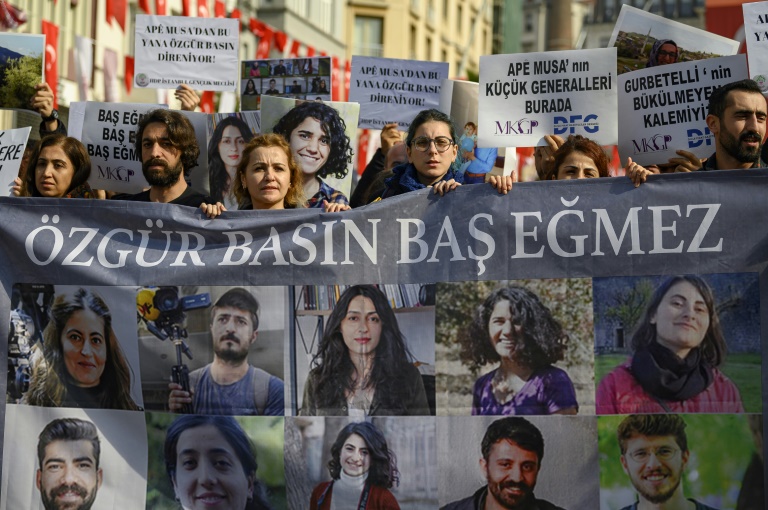
Turkish journalists staged protests when the bill was debated in parliament.

“This law… will destroy the remaining bits of free speech,” said Gokhan Durmus, head of the Turkish Journalists’ Union.

Fatma Demirelli, director of the P24 press freedom group, pointed to “new arrests targeting a large number of journalists working for Kurdish media outlets since this summer.”

“We are concerned that this new law… might further exacerbate the situation by pushing up the number of both prosecutions and imprisonments of journalists significantly,” she told AFP. 

In October, nine journalists were remanded in custody accused of alleged ties to the PKK, which Ankara and its Western allies blacklist as a terror group.

Ergin Caglar, a journalist for the Mezopotamya news agency that was raided by police, said despite pressure “the free media has never bowed its head until today, and it will not after the censorship law and the arrests.” 

Dokuz8NEWS reporter Fatos Erdogan said reporting is getting tougher, pointing out police barricades to AFP as she filmed a recent protest against the arrest of the head of the Turkish doctors’ union, Sebnem Korur Fincanci.

“I have a feeling there will be more pressure after the censorship law,” she said.

Erol Onderoglu of Reporters Without Borders who himself stands accused of terror-related charges, said the law “rejects all the qualities of journalism and having a dissident identity.

“I don’t believe the future is going to be that easy.”

Hair transplant fad turns deadly in India

All that balding Indian television executive Athar Rasheed wanted was to look handsome and get married. But the 30-year-old’s seemingly harmless hair transplant went fatally wrong. 

Women have been judged on their appearance for millennia, but in an increasingly materialistic Indian society, men are also feeling pressure to look young and presentable for fear of losing their social standing.

More and more prematurely balding men are opting for hair transplants as disposable incomes rise and an emphasis on personal appearance becomes stronger.

But in a weakly regulated sector, the procedure — sometimes performed by amateurs self-trained on YouTube — can have deadly results.

Rasheed was the sole breadwinner for his family and aspired to a better life — owning a house and getting his two sisters married.

But he developed sepsis after undergoing a hair transplant at a clinic in Delhi last year, his distraught mother Asiya Begum, 62, told AFP.

The swelling spread from his head and he suffered terrible agonies.

“My son died a very painful death. His kidneys stopped functioning and then all his other organs collapsed,” she said, breaking down.

Armed with photographs showing Rasheed’s bloated face and black rashes that broke out all over his body in his final hours, the family lodged a police complaint.

Four people, including the two men who performed the surgery, have been arrested and are awaiting trial.  

“I remember my son every day and die a slow death,” she said, sitting in her modest one-room rented flat in a rundown neighbourhood of the capital.

“I lost my son but I don’t want any other mother to lose their child because of fraudulent practices of a few people,” she said.

– Confidence booster –

When performed by a skilled surgeon, a hair transplant can be a life-changing and confidence-boosting experience, especially for young Indian men looking for personal and professional growth.

Harish Iyer, a social commentator and equal rights activist, said men have started focusing more on their grooming as lifestyles change.

“The need to exhibit youth and vitality is echoed by all genders,” Iyer told AFP.

“The pressure was always on women to look a certain way and find acceptance, but the needle is now changing.” 

But at the same time, specialists say increasingly sedentary lifestyles, smoking, improper diet and stress can result in early hair loss. 

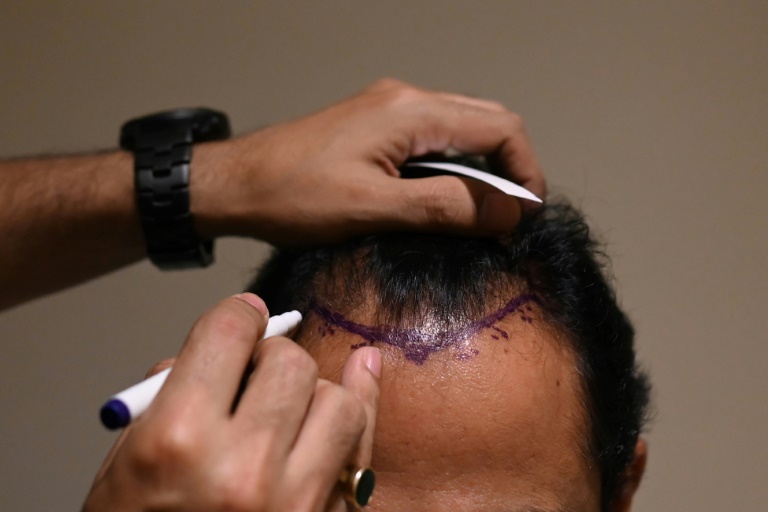
A hair transplantation procedure involves removing follicles from a dense area of hair, such as the back of the head, and then implanting them on the affected area of the scalp.

Doctor Mayank Singh performs up to 15 surgeries a month at his upscale clinic in a posh New Delhi neighbourhood.

Most of his patients are aged 25 to 35 and looking to either get married or climb the professional ladder, especially in jobs where appearances matter.

The procedure costs some 350,000 rupees ($4,300), a considerable sum in a country where millions live on less than two dollars a day.

Seedy clinics manned by untrained personnel perform the surgery at a fraction of the cost.

– YouTube workshops –

Singh, who is also the secretary of the Association of Hair Restoration Surgeons of India, said quacks were bringing the industry a bad name.

“People have this myth that this is a minor procedure, whereas the duration of the surgery is pretty long, running into some six to eight hours,” said Singh.

“It involves a lot of local anaesthesia that has to be administered over time. If someone does not have the knowledge about what we need to do, then it can become an unsafe procedure.”

Alarmed by the mushrooming number of clinics offering often subpar service at discounted prices, India’s National Medical Commission issued a warning in September.

“Watching in workshops or on YouTube or similar platforms is not adequate training to start aesthetic procedures including hair transplantation,” it said.

Only properly trained doctors should perform such procedures, it added.

Singh, a plastic surgeon, said it was imperative that the guidelines were strictly adhered to.

He has a long list of happy customers, including doctor Lakshmi Narayanan, who for years avoided going to social gatherings because of his baldness.

“My hair loss started when I was just 18. I used to avoid taking pictures of myself or even looking in the mirror,” Narayanan, now 29, told AFP.

“But not anymore. I can interact confidently with people now and I am looking for a life partner.”

Close Bitnami banner
Bitnami