World

French baguettes get UNESCO heritage status

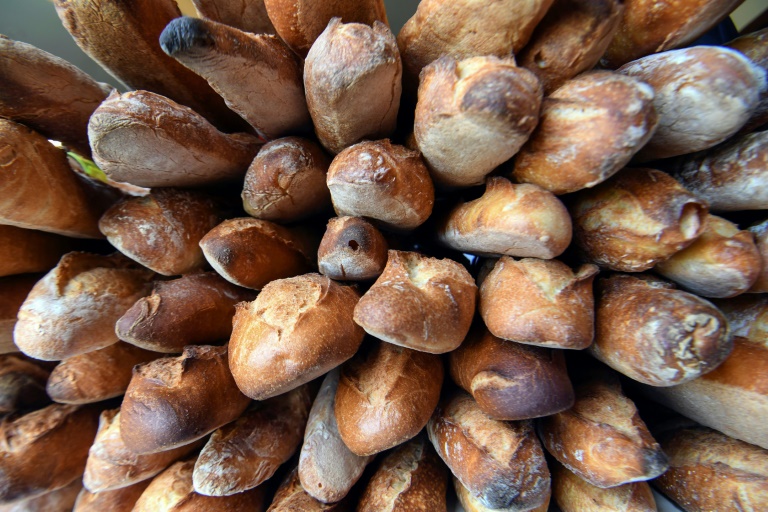
The French baguette — “250 grams of magic and perfection”, in the words of President Emmanuel Macron, and one of the abiding symbols of the nation — was given UNESCO heritage status on Wednesday.

The bread, with its crusty exterior and soft middle, has remained a quintessential part of French life long after other stereotypes like berets and strings of garlic have fallen by the wayside. 

More than six billion are baked every year in France, according to the National Federation of French Bakeries, and the UN agency’s “intangible cultural heritage status” honours the tradition.

“It celebrates a whole culture: the daily ritual, a structural element of a meal, synonymous with sharing and conviviality,” said UNESCO director-general Audrey Azoulay.

It comes at a challenging time for the industry.

France has been losing some 400 artisanal bakeries per year since 1970, from 55,000 (one per 790 residents) to 35,000 today (one per 2,000). 

The decline is due to the spread of industrial bakeries and out-of-town supermarkets in rural areas, while urbanites increasingly opt for sourdough, and swap their ham baguettes for burgers.

At least one artisan was unimpressed with the award at a time when his colleagues are struggling with spiking prices. 

“It’s a joke,” said Francois Pozzoli, an award-winning baker in the major city of Lyon.

“At a time when baking is in an unprecedented crisis, this feels poorly timed. Flour is up 10-15 percent, butter around 40 percent, eggs 50-60 percent… Bakers need support.”

– Honeycomb and cream –

Still, it remains an entirely common sight to see the French with a couple of sticks under their arm, ritually chewing off the warm end as they leave the bakery, or “boulangerie”.

There are national competitions, during which the bread is sliced down the middle to allow judges to evaluate the regularity of its honeycomb texture as well as the colour of the interior, which should be cream. 

But despite being a seemingly immortal fixture in French life, the baguette only officially got its name in 1920, when a new law specified its minimum weight (80 grams) and maximum length (40 centimetres). 

“Initially, the baguette was considered a luxury product. The working classes ate rustic breads that kept better,” said Loic Bienassis, of the European Institute of Food History and Cultures, who helped prepare the UNESCO dossier. 

“Then consumption became widespread, and the countryside was won over by baguettes in the 1960s and 70s,” he said. 

Its earlier history is rather uncertain. 

Some say long loaves were already common in the 18th century; others that it took the introduction of steam ovens by Austrian baker August Zang in the 1830s for its modern incarnation to take shape.

One popular tale is that Napoleon ordered bread to be made in thin sticks that could be more easily carried by soldiers. 

Another links baguettes to the construction of the Paris metro in the late 19th century, and the idea that baguettes were easier to tear up and share, avoiding arguments between the workers and the need for knives.

France submitted its request to UNESCO in early 2021, with baguettes chosen over the zinc roofs of Paris and a wine festival in Arbois in the east of the country.
Eurozone inflation falls for first time in 17 months

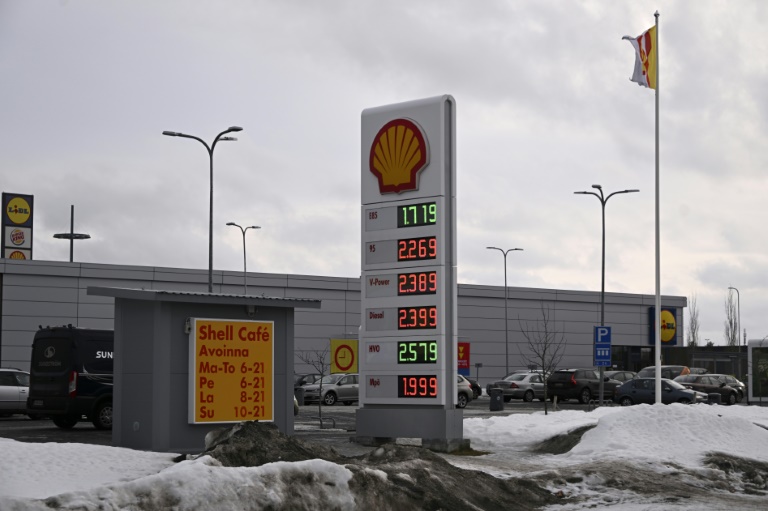
The eurozone annual inflation rate fell for the first time in 17 months in November as it slowed to 10 percent, official data showed Wednesday.

Boosted by soaring energy and food bills triggered by Russia’s war in Ukraine, the rate of price increases had hit a new historic record every month since November 21.

Analysts had expected the inflation rate in the single currency area to fall but the drop was steeper than predicted by Bloomberg and FactSet, who foresaw 10.4 percent.

Inflation had hit 10.6 percent in October.

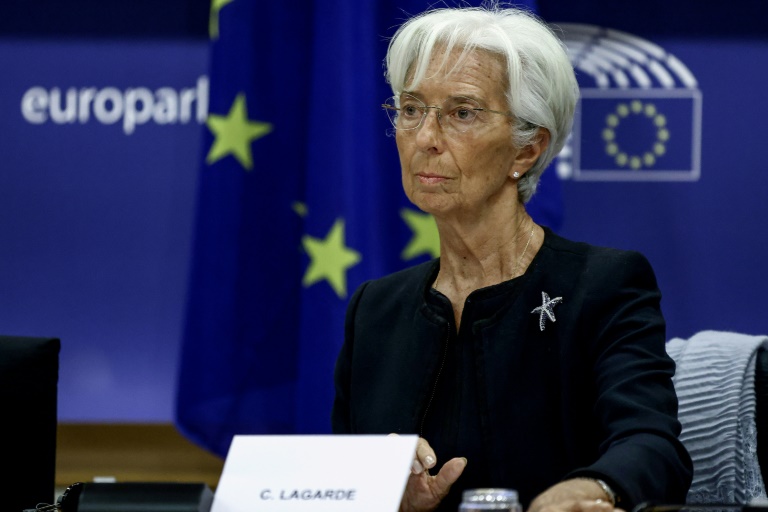
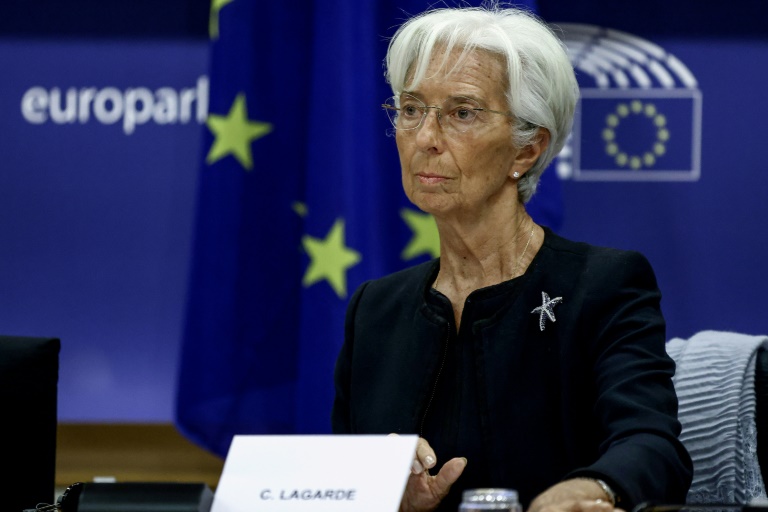
But the November figure may not convince the European Central Bank that it can stop raising interest rates, as its president Christine Lagarde has expressed scepticism that inflation has peaked.

As late as Monday, Lagarde warned: “I think that there is too much uncertainty … to assume that inflation has actually reached its peak. It would surprise me.”

Analysts said the reverse in the trend could see the bank go for a smaller 50-basis-point increase in rates next month rather than the expected 75-point bump.

“We were due some good news,” said Bert Colijn, senior eurozone economist at the ING bank. “The eurozone inflation rate ticked down after a few nasty upside surprises.”

– Food price inflation up –

Nevertheless, he cautioned that core inflation remained stable.

“Whether this is the peak in inflation remains to be seen,” he said. 

“Another episode in the energy crisis could easily push inflation back up again and core inflation usually proves to be sticky after a supply shock.”

Andrew Kenningham, chief Europe economist at Capital Economics, also sounded a note of caution.

“Eurozone headline inflation may now be past its peak but with core inflation unchanged in November and likely to stay well above 2 percent throughout next year, we expect the ECB to press on with another 50 basis point or even 75 basis point deposit rate hike in December,” he said.

An easing in the speed with which energy prices are rising was the main reason for the November fall in overall inflation, compensating for still accelerating food and drink costs.

Among the 19 countries that use the euro, Spain now has the lowest inflation rate, dropping to 6.6 percent compared to previous top performer France, now on 7.1.

Germany and Italy are still running high inflation rates, but both dropped slightly, the former down 0.3 percentage points to 11.3 percent and the latter down 0.1 points to 12.5 percent.

Stocks diverge ahead of next Fed rate signal

Stock markets fluctuated on Wednesday as eurozone inflation slowed for the first time in 17 months and investors awaited fresh signals about the US central bank’s interest rate plans.

Markets were also buoyed by hopes that China will further ease its strict Covid containment measures following widespread protests, though gains were tempered by leaders’ warnings of a crackdown on dissent.

Traders were awaiting a key speech by Federal Reserve chief Jerome Powell, with many expecting him to outline plans for future interest rate hikes to tackle high US consumer prices.

“Will he adopt a more hawkish-minded tone like he did after the last FOMC (Fed policy) meeting or will he have a less hawkish tone?” said Briefing.com analyst Patrick O’Hare.

“His tone is going to move the market’s thinking with respect to the path of monetary policy,” he said.

Powell was due to speak after government data on Wednesday showed that the US economy grew more than initially reported in the third quarter, reflecting upward revisions to retail spending and some forms of investment.

The London, Paris and Frankfurt stock markets were up in afternoon trading while Wall Street seesawed after the opening, with the Dow falling almost 0.3 percent.

The euro, meanwhile, rose against the dollar as eurozone inflation eased to 10 percent in November, the first drop in 17 months, according to official data.

But this may not lead to an easing of European Central Bank policy as ECB president Christine Lagarde has expressed scepticism that inflation has peaked.

“The ECB is still increasing (interest) rates and this is what traders are focused on,” AvaTrade analyst Naeem Aslam told AFP.

Inflation in the bloc had hit a record 10.6 percent in October, boosted also by soaring energy and food bills in the wake of Russia’s war in Ukraine.

“Euro area inflation figures surprised on the downside, providing an early indication that the record price pressures seen in recent months may have peaked,” added CEBR economist Karl Thompson.

However, he warned that “inflation is nonetheless likely to remain elevated throughout 2023” and forecast rising rates next month.

Global central banks, including the Fed, have ramped up borrowing costs this year in a bid to dampen red-hot inflation that was fuelled also as economies reopened from the pandemic.

– China protests –

In Asia, Asian stocks mostly rebounded as investors looked past weekend demonstrations in China after officials announced moves aimed at softening the zero-Covid strategy.

But in a sign that the leadership was determined to maintain its authority, the country’s top security body called for a “crackdown” against “hostile forces”.

New clashes broke out in China’s southern city of Guangzhou on Tuesday night and into Wednesday, according to witnesses and social media footage verified by AFP.

Data showing China’s factory activity shrank further in November underscored the impact the zero-Covid approach has had on the world’s second-biggest economy.

Elsewhere, oil prices jumped by more than three percent, with the international benchmark, Brent, reaching almost $87 per barrel.

– Key figures around 1435 GMT –

New York – Dow: DOWN 0.3 percent at 33,768.55 points

London – FTSE 100: UP 1.0 percent at 7,585.80 

Frankfurt – DAX: UP 0.2 percent at 14,386.13

Paris – CAC 40: UP 0.7 percent at 6,718.06

EURO STOXX 50: UP 0.7 percent at 3,960.49

Tokyo – Nikkei 225: DOWN 0.2 percent at 27,968.99 (close)

Hong Kong – Hang Seng Index: UP 2.2 percent at 18,597.23 (close)

Shanghai – Composite: UP 0.1 percent at 3,151.34 (close)

Euro/dollar: UP at $1.0384 from $1.0330 on Tuesday

Dollar/yen: UP at 139.31 yen from 138.63 yen

Pound/dollar: UP at $1.2012 from $1.1952

Euro/pound: UP at 86.44 pence from 86.42 pence

Brent North Sea crude: UP 3.1 percent at $86.82 per barrel

West Texas Intermediate: UP 3.4 percent at $80.89 per barrel

burs-lth/imm

Stocks diverge ahead of next Fed rate signal

Stock markets fluctuated on Wednesday as eurozone inflation slowed for the first time in 17 months and investors awaited fresh signals about the US central bank’s interest rate plans.

Markets were also buoyed by hopes that China will further ease its strict Covid containment measures following widespread protests, though gains were tempered by leaders’ warnings of a crackdown on dissent.

Traders were awaiting a key speech by Federal Reserve chief Jerome Powell, with many expecting him to outline plans for future interest rate hikes to tackle high US consumer prices.

“Will he adopt a more hawkish-minded tone like he did after the last FOMC (Fed policy) meeting or will he have a less hawkish tone?” said Briefing.com analyst Patrick O’Hare.

“His tone is going to move the market’s thinking with respect to the path of monetary policy,” he said.

Powell was due to speak after government data on Wednesday showed that the US economy grew more than initially reported in the third quarter, reflecting upward revisions to retail spending and some forms of investment.

The London, Paris and Frankfurt stock markets were up in afternoon trading while Wall Street seesawed after the opening, with the Dow falling almost 0.3 percent.

The euro, meanwhile, rose against the dollar as eurozone inflation eased to 10 percent in November, the first drop in 17 months, according to official data.

But this may not lead to an easing of European Central Bank policy as ECB president Christine Lagarde has expressed scepticism that inflation has peaked.

“The ECB is still increasing (interest) rates and this is what traders are focused on,” AvaTrade analyst Naeem Aslam told AFP.

Inflation in the bloc had hit a record 10.6 percent in October, boosted also by soaring energy and food bills in the wake of Russia’s war in Ukraine.

“Euro area inflation figures surprised on the downside, providing an early indication that the record price pressures seen in recent months may have peaked,” added CEBR economist Karl Thompson.

However, he warned that “inflation is nonetheless likely to remain elevated throughout 2023” and forecast rising rates next month.

Global central banks, including the Fed, have ramped up borrowing costs this year in a bid to dampen red-hot inflation that was fuelled also as economies reopened from the pandemic.

– China protests –

In Asia, Asian stocks mostly rebounded as investors looked past weekend demonstrations in China after officials announced moves aimed at softening the zero-Covid strategy.

But in a sign that the leadership was determined to maintain its authority, the country’s top security body called for a “crackdown” against “hostile forces”.

New clashes broke out in China’s southern city of Guangzhou on Tuesday night and into Wednesday, according to witnesses and social media footage verified by AFP.

Data showing China’s factory activity shrank further in November underscored the impact the zero-Covid approach has had on the world’s second-biggest economy.

Elsewhere, oil prices jumped by more than three percent, with the international benchmark, Brent, reaching almost $87 per barrel.

– Key figures around 1435 GMT –

New York – Dow: DOWN 0.3 percent at 33,768.55 points

London – FTSE 100: UP 1.0 percent at 7,585.80 

Frankfurt – DAX: UP 0.2 percent at 14,386.13

Paris – CAC 40: UP 0.7 percent at 6,718.06

EURO STOXX 50: UP 0.7 percent at 3,960.49

Tokyo – Nikkei 225: DOWN 0.2 percent at 27,968.99 (close)

Hong Kong – Hang Seng Index: UP 2.2 percent at 18,597.23 (close)

Shanghai – Composite: UP 0.1 percent at 3,151.34 (close)

Euro/dollar: UP at $1.0384 from $1.0330 on Tuesday

Dollar/yen: UP at 139.31 yen from 138.63 yen

Pound/dollar: UP at $1.2012 from $1.1952

Euro/pound: UP at 86.44 pence from 86.42 pence

Brent North Sea crude: UP 3.1 percent at $86.82 per barrel

West Texas Intermediate: UP 3.4 percent at $80.89 per barrel

burs-lth/imm

At least 16 killed, 24 wounded in north Afghanistan blast

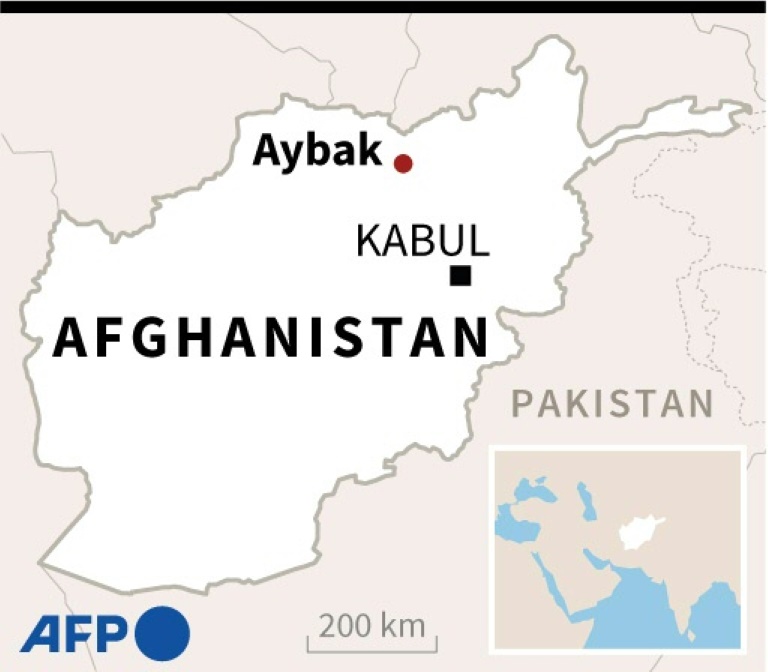
At least 16 people were killed and 24 others wounded Wednesday by a blast at a madrassa in Afghanistan’s northern city of Aybak, a doctor at a local hospital told AFP.

There have been dozens of blasts and attacks targeting civilians since the Taliban returned to power in August last year, most claimed by the local chapter of the Islamic State (IS) group.

A doctor in Aybak, about 200 kilometres (130 miles) north of the capital Kabul, said the casualties were mostly youngsters.

“All of them are children and ordinary people,” he told AFP, asking not to be named.

A provincial official confirmed the blast at Al Jihad madrassa, an Islamic religious school, but could not provide casualty figures.

The Taliban, which frequently plays down casualty figures, said 10 students had died and “many others” were injured.

“Our detective and security forces are working quickly to identify the perpetrators of this unforgivable crime and punish them for their actions,” tweeted Interior Ministry spokesman Abdul Nafay Takor.

Images and video circulating on social media — which could not immediately be verified — showed Taliban fighters picking their way through bodies strewn across the floor of a building.

Prayer mats, shattered glass and other debris littered the scene.

– Lull between blasts –

The Aybak doctor said some critically wounded patients had been moved to better-equipped hospitals in Mazar-i-Sharif, which is about 120 kilometres away by road.

“Those who are here… were mostly hurt by shrapnel and blast waves. They had some shrapnel on their body and face,” he said.

Aybak is a small but ancient provincial capital that came to prominence as a caravan stopping post for traders during the fourth and fifth centuries when it was also an important Buddhist centre.

There has been a lull of a few weeks between major blasts targeting civilians in Afghanistan, although several Taliban fighters have been killed in isolated attacks. 

In September, at least 54 people — including 51 girls and young women — were killed when a suicide bomber detonated a device at a hall in Kabul packed with hundreds of students sitting a practice test for university admissions.

No group claimed responsibility for that bombing, but the Taliban later blamed the Islamic State and said it had killed several ringleaders.

In May last year, before the Taliban’s return to power, at least 85 people — mainly girls — were killed and about 300 were wounded when three bombs exploded near their school in the neighbourhood

No group claimed responsibility, but a year earlier IS claimed a suicide attack on an educational centre in the area that killed 24.

The Taliban’s return to power brought an end to their insurgency, but IS continues to stage attacks across the country.

The Taliban movement — made up primarily of ethnic Pashtuns — has pledged to protect minorities and clamp down on security threats.

Amnesty International called the blast “disturbing”, adding in a tweet it was “yet another reminder to the world that the sufferings of Afghan people are far from over.”

Ukraine embassy employee in Madrid 'lightly' injured by letter bomb: police

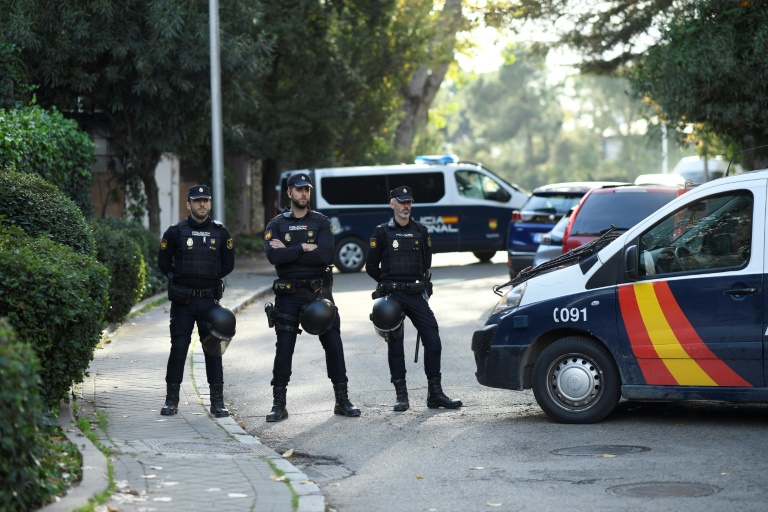
An employee of Ukraine’s embassy in Madrid was “lightly” injured Wednesday when a letter bomb blew up as he handled it, a police source said.

“National Police were informed around 1:00 pm (1200 GMT) of an explosion at the Ukranian embassy in Madrid. It happened when one of the embassy employees was handling a letter,” the source said.

“This employee was injured, apparently lightly, and he went himself to a hospital,” the sourced added.

Police have opened an investigation “which includes the participation of forensic police,” the source said without giving further details.

A security cordon has been put in place by the police around the embassy, located in a residential area in northern Madrid.

UK finance sector needs greater social mobility: study

Britain’s financial and professional services sector must boost socio-economic diversity in boardrooms, helping to bridge big differences in pay, a study commissioned by the government concluded Wednesday.

Having at least half of senior leaders in the sector coming from a “non-professional” background by 2030 would help to achieve the goal, said the report by the Socio-Economic Diversity Taskforce.

Around half of all employees in the sector are from non-professional backgrounds but these workers progress 25 percent slower than their “professional” peers, it added.

“It is vital that UK financial and professional services firms act now to enable talented people to rise to the top whatever their background,” said Catherine McGuinness, chair of the taskforce. 

“We need to break the ‘class’ ceiling — removing unfair barriers to progression is not only the right thing to do, it will enable firms to boost productivity, retention levels and innovation.”

The taskforce is led by the City of London Corporation, the authority running the British capital’s financial district.

It found that just over one-third of sector staff from non-professional backgrounds, described as working class and intermediate employees, have climbed the ladder to senior levels. 

Employees from non-professional backgrounds are also likely to earn up to £17,500 ($21,000) less per year. 

“The industry’s willingness to collaborate on tackling the barriers to promote people from lower socio-economic backgrounds into senior levels is unprecedented,” said taskforce co-chair Sandra Wallace.

“It marks a long-awaited shift in the priorities of our sector and recognises the business and moral imperative to change.”

In response, Louise Ashley from Queen Mary University of London said while the “taskforce report sets important goals”, improved social mobility “isn’t a conversation that financial and professional service firms really want to have”.

“Action is needed to address class pay and progression gaps, but this can’t just be a vague commitment to meritocracy and social mobility, offering an illusion of change while justifying the bumper rewards given to a select few.”

Ashley, a professor at the university’s business school, added that “social mobility is less likely in countries with steep inequalities of income and wealth”, such as the UK.

Macron tours Washington ahead of Biden talks on state visit

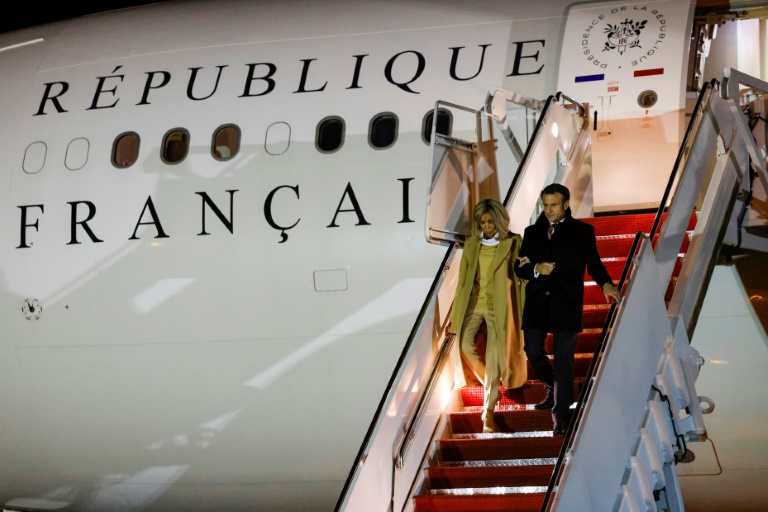
France’s President Emmanuel Macron underlines US-French cooperation with a tour of NASA headquarters Wednesday, but his state visit will veer into tougher territory when he meets his counterpart Joe Biden for the main part of a rare state visit.

The French leader, who arrived late Tuesday with his wife Brigitte, will join Vice President Kamala Harris at the US space agency facility in Washington. He’ll stay in the high-tech sphere later when he attends a meeting on civilian nuclear energy.

The busy schedule, which also includes a working lunch to discuss biodiversity and clean energy, and a visit to the historic Arlington National Cemetery, illustrates the ambitions set for the trip — the first formal state visit by a foreign leader to Washington since Biden took office nearly two years ago.

The core of the visit will be Thursday, including a White House military honor guard, Oval Office talks with Biden, a joint press conference and a banquet where Grammy-award-winning American musician Jon Batiste will perform.

Compared to Macron’s edgy experience as the guest of Donald Trump in 2018, this trip will be a carefully choreographed display of transatlantic friendship.

– EU-US trade tensions –

But tensions are rising over trade as Europeans nervously watch the rollout of Biden’s signature green industry policy — the Inflation Reduction Act.

The IRA is set to pump billions of dollars into climate-friendly technologies, with strong backing for American-made products. A similar effort is being put into microchip manufacturing.

Europeans fear an unfair US advantage in the sectors just as they are reeling from the economic consequences of the war in Ukraine and Western attempts to end reliance on Russian energy supplies.

Talk in Europe is now increasingly on whether the bloc should respond with its own subsidies and championing of homegrown products, effectively starting a trade war.

Another gripe in Europe is the high cost of US liquid natural gas exports — which have surged to try and replace canceled Russian deliveries.

White House National Security Council spokesman John Kirby struck a cautious note, telling French reporters that “right now we’re in the mode of listening and making sure we understand concerns by our European partners.”

Kirby went out of his way to praise Macron, referring to his “experience and wisdom.”

– Strategizing on China, Ukraine –

The breadth of Macron’s entourage — including the foreign, defense and finance ministers, as well as business leaders and astronauts — illustrates the importance Paris has put on the visit.

At the White House, however, a senior official said the main goal is to nurture the “personal relationship, the alliance relationship” with France — and between Biden and Macron.

That more modest-sounding goal will include improving coordination on helping Ukraine to repel Russia and the even more vexing question of how to manage the rise of superpower China.

“We are not allies on the same page,” one adviser to Macron told AFP, forecasting “challenging” talks with Biden.

Despite his strong support for Kyiv, Macron’s insistence on continuing to maintain dialogue with Russian President Vladimir Putin has irked American diplomats.

The China question — with Washington pursuing a more hawkish tone and EU powers trying to find a middle ground — is unlikely to see much progress.

“Europe has since 2018 its own, unique strategy for relations with China,” tweeted French embassy spokesman Pascal Confavreux in Washington.

A senior US official said even if their approaches to China were “not identical,” they should be at least “speaking from a common script.”

Former China leader Jiang Zemin dies, aged 96

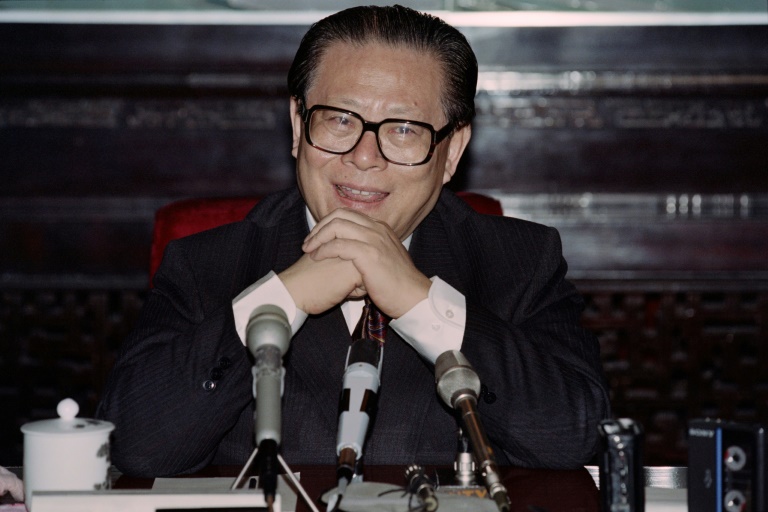
Former Chinese leader Jiang Zemin died Wednesday at the age of 96, state media reported, hailing him as a great communist revolutionary who helped quell the 1989 pro-democracy protests.

Jiang took power in the aftermath of the Tiananmen Square crackdown, in which the military used deadly force to end peaceful demonstrations, and led China towards its emergence as a global economic powerhouse.

The major bodies of China’s ruling Communist Party announced his death through a letter that expressed “profound grief”. 

“Jiang Zemin passed away due to leukemia and multiple organ failure in Shanghai at 12:13 p.m. on Nov. 30, 2022, at the age of 96, it was announced on Wednesday,” news agency Xinhua said.

His death came after all medical treatments had failed, it added, citing the letter.

“Comrade Jiang Zemin was an outstanding leader… a great Marxist, a great proletarian revolutionary, statesman, military strategist and diplomat, a long-tested communist fighter, and an outstanding leader of the great cause of socialism with Chinese characteristics,” it said.

Jiang’s death comes as China sees a flare-up of anti-Covid lockdown protests that have morphed into calls for more political freedoms — the most widespread since the 1989 pro-democracy rallies. 

“During the serious political turmoil in China in the spring and summer of 1989, Comrade Jiang Zemin supported and implemented the correct decision of the Party Central Committee to oppose unrest, defend the socialist state power and safeguard the fundamental interests of the people,” state broadcaster CCTV said Wednesday. 

– Flags at half-mast –

When Jiang replaced Deng Xiaoping as leader in 1989, China was still in the early stages of economic modernisation.

By the time he retired as president in 2003, China was a member of the World Trade Organization, Beijing had secured the 2008 Olympics, and the country was well on its way to superpower status.

Analysts say Jiang and his “Shanghai Gang” faction continued to exert influence over communist politics long after he left the top job, including in the selection of Xi Jinping as leader in 2012.  

Concerns over Jiang’s health had been raised when he did not attend the opening or closing ceremonies of last month’s Communist Party Congress, at which Xi was granted a historic third term.

CCTV said flags would be flown at half-mast at Chinese government buildings until the funeral, the date of which was not announced. 

State media websites turned black-and-white, and they posted a black-and-white photo of a chrysanthemum on their official accounts on social media platform Weibo. 

Apps such as Alipay and Taobao also turned monochrome. 

Russian President Vladimir Putin was one of the first world leaders to pay tribute, saying Jiang had been “a dear friend of our country”.

“The bright memory of such an authoritative politician and a wonderful person will forever remain in my heart,” Putin said in a message of condolence.

– Mixed legacy –

However, Jiang’s legacy remains mixed and his critics numerous.

He has been accused of failing to solve problems created by China’s economic rebirth: rampant corruption and inequality, environmental degradation and state sector reforms which caused mass layoffs.

In his former power base of Shanghai, one resident acknowledged Jiang had stewarded the city, and then China, through a period of intense economic development — but added that he “was not particularly capable”. 

The person, who declined to be named, criticised the “clear corruption” within the Communist Party that took root during his rule.

“When something like this happens, the people know they have to say certain things on the outside, but we all keep our own impressions in our hearts.”

Most people approached by AFP in Shanghai refused to comment, with one saying the death was “too sensitive”. 

But on Weibo, over half a million commenters flooded CCTV’s post on the death within an hour, with many referring to the late leader as “Grandpa Jiang”.

“There were a lot of corruption problems at the time, but he was a lively and jovial person,” Beijing resident Wang Yi told AFP. 

“The media was also freer in his time to report critically on society’s problems.”

– ‘Wrong man’ –

In recent years, Jiang had become the unlikely subject of viral memes among millennial and Gen Z Chinese fans, who called themselves “toad worshippers” in thrall to his frog-like countenance and quirky mannerisms.

Some used Jiang’s death to take veiled jabs at Xi on Wednesday.

“Toad… can you take Winnie the Pooh away?” one asked, using a banned nickname for Xi.

Others on the popular app WeChat posted links to songs titled “Shame it Wasn’t You” and “Wrong Man”, referencing Xi.

Many of the more irreverent posts were censored from Weibo searches within minutes, with the results for Jiang’s full name only showing state media accounts.

In a tweet, the University of Oxford’s Professor Patricia Thornton questioned whether public displays of grief could “open up space for the expression of new dissent and new demands from students and other protestors”. 

She referenced two other former Communist Party leaders — reformer Hu Yaobang and popular premier Zhou Enlai –- whose deaths in 1989 and 1976 respectively provoked mourning events that evolved into student political rallies.

Jiang’s death “cannot but stir reflection on some stark differences between the not-so-distant past & the reality of life in Xi’s #China today”, she wrote.

Bird flu kills almost 14,000 pelicans, seabirds in Peru

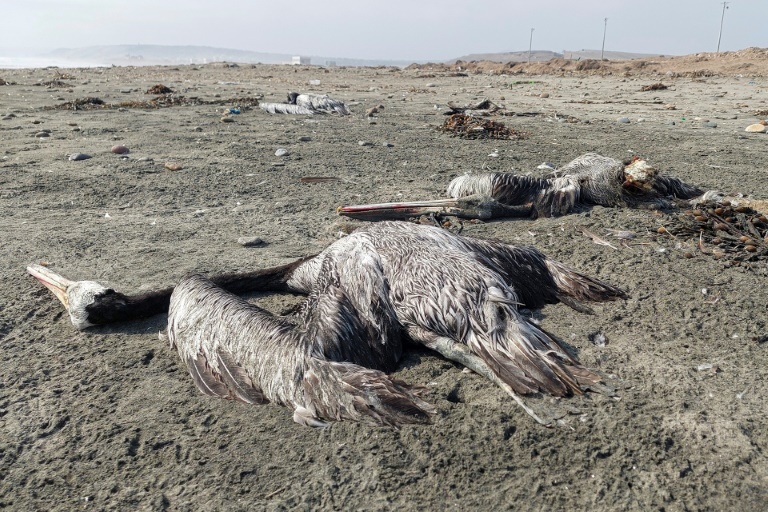
The highly contagious H5N1 avian flu virus has killed thousands of pelicans, blue-footed boobies and other seabirds in Peru, according to the National Forestry and Wildlife Service (SERFOR).

The current bird flu outbreak began in Canada and spread to the United States, which has seen a record 50 million avian deaths, according to the US Centers for Disease Control and Prevention.

Peru first issued a health alert last Thursday after confirming three cases of H5B1 in pelicans, and since then thousands have been found dead in coastal areas.

“The latest official report carried out at a national level shows more than 13,869 wild seabirds killed by the dangerous H5N1 avian flu virus,” said a SERFOR statement released late Tuesday.

This number includes 10,257 pelicans, 2,919 sea boobies and 614 blue-footed boobies, among other species.

Meanwhile, the national agricultural health agency SENASA said it had quarantined the town of Gallito in the northern coastal Lambayeque region to control the first bird flu outbreak on a poultry farm.

SENASA said the health alert was a precaution because the virus arriving from North American migratory birds could spread to “backyard birds,” such as ducks and chickens, as well as to commercial farms.

The United Nations’ Food and Agriculture Organization (FAO) earlier this year warned countries in South and Central America to be on “high alert” for the virus spreading via migratory birds.

There is no treatment for bird flu, which spreads naturally between wild birds and can also infect domestic poultry. Avian influenza viruses do not typically infect humans, although there have been rare cases.

Close Bitnami banner
Bitnami