World

US teen pleads guilty to racism-driven supermarket massacre

A self-declared white supremacist pleaded guilty Monday to shooting dead 10 Black people during a racist, live-streamed, rampage at a supermarket in the US state of New York earlier this year.

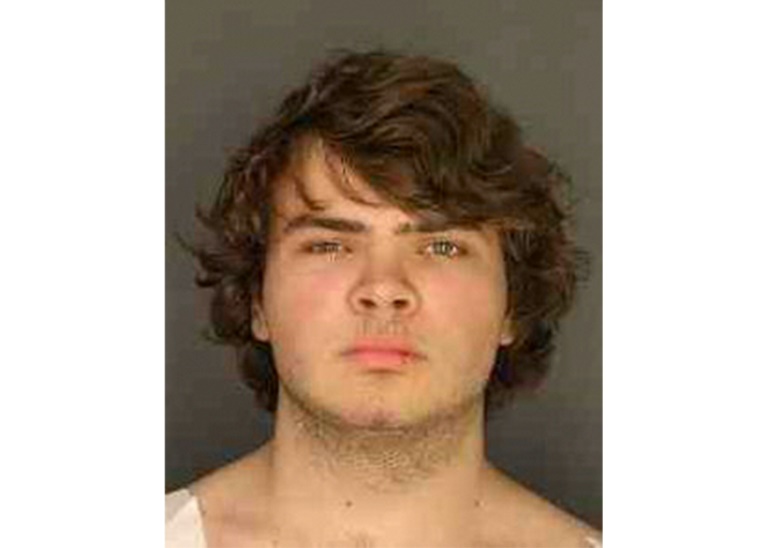
Payton Gendron, 19, will spend the rest of his life in prison after admitting one state charge of domestic terrorism motivated by hate over the massacre in Buffalo in May.

Erie County District Attorney John Flynn said Gendron had pleaded guilty to all charges, including 10 counts of murder in the first degree and three attempted murder charges.

“While justice has been accomplished, nothing will ever bring back the 10 beautiful people who lost their lives on that day,” Flynn told reporters.

“Hopefully the legal closure will provide the families and the victims some measure of relief,” he added.

Gendron had planned the attack for months, targeting Tops Friendly Market in Buffalo because of its large surrounding African-American population.

He drove from his hometown of Conklin, more than 200 miles (322 kilometers) away, with the intention of killing as many Black people as possible, prosecutors said.

Wearing heavy body armor and wielding an AR-15 assault rifle, Gendron shot four people in the store’s parking lot, three of them fatally, before entering the supermarket.

Among those killed inside was a retired police officer working as a security guard. He fired several shots at the assailant before being shot himself, police said.

Gendron wore a helmet with a video camera attached and live-streamed the attack on the platform Twitch.

He is the first person in New York to be convicted of the state’s domestic terrorism charge, which was introduced in 2020. It carries a penalty of life without parole.

Gendron still faces federal hate crime charges that could see him receive the death penalty.

He had initially pleaded not guilty to a single count of first-degree murder before state authorities later added the other charges.
Ukraine First Lady demands global response to sexual assault in war

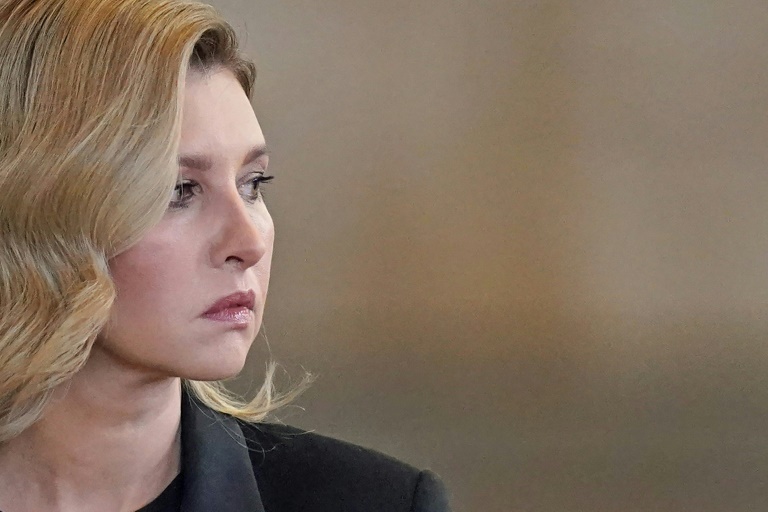
Ukraine First Lady Olena Zelenska on Monday demanded a “global response” to the use of sexual violence as a weapon of war, saying Kyiv prosecutors are investigating more than 100 possible crimes by Russian soldiers.

Speaking at the “Preventing Sexual Violence in Conflict Initiative” conference in London, Zelenska said the investigations were “just a small” fraction of the true number of such crimes being committed in the Ukraine conflict.

“The opportunities for the occupiers widened to humiliating Ukrainians and unfortunately, sexual violence and sexual crimes are within their arsenal,” she said.

“Everyone knows about the huge numbers of rapes,” she told delegates on the first day of the UK government-hosted event.

“They’re (Russian soldiers) very open about this.”

But victims are afraid to speak out over the stigma and fears that those responsible may return and do it again, Zelenska warned.

“That is why it’s extremely important to recognise this as a war crime and to bring all the perpetrators to account,” she said.

“There has to be a global response to this. Unfortunately, such war crimes will keep on going in the world as long as the servicemen think that they can go without any punishment.”

The Ukrainian government has launched a support programme to help victims of the war, which Zelenska said she hoped could be a “first step towards an investigation and prosecution”.

Ukraine is looking to set up similar initiatives outside the country, such as in Germany and the Czech Republic, she added.

– Scourge –

UK Foreign Secretary James Cleverly last week announced new aid for Ukraine on a visit to Kyiv, including support for victims of sexual violence by Russian soldiers.

The conference brings together representatives of about 70 countries to tackle the scourge of sexual violence in conflict.

It has heard from Nobel Peace Prize laureates Nadia Murad and Denis Mukwege, who won a joint award in 2018 for their work against the issue, as well as survivors.

Britain launched a year-long campaign to highlight the issue as part of its presidency of the G8 group of industrialised nations in 2012, which then included Russia.

Vladimir Putin attended that summit in Northern Ireland but Russia was suspended from the group in 2014 due to his country’s annexation of Crimea.

Hollywood actress Angelina Jolie who backed Britain’s push for an end to sexual violence in conflict said in a message to the latest meeting that there “has to be a decisive global response” to such assaults.

“When there isn’t, it sends a message to both the victim and the perpetrator that we don’t truly regard this as a significant crime that needs to be punished and prevented,” she added.

Zelenska later met Sunak’s wife Akshata Murty at Downing Street. The pair hugged and exchanged greetings before disappearing inside.

They re-emerged to hang decorations on the Christmas Tree erected outside the prime minister’s official residence and office.

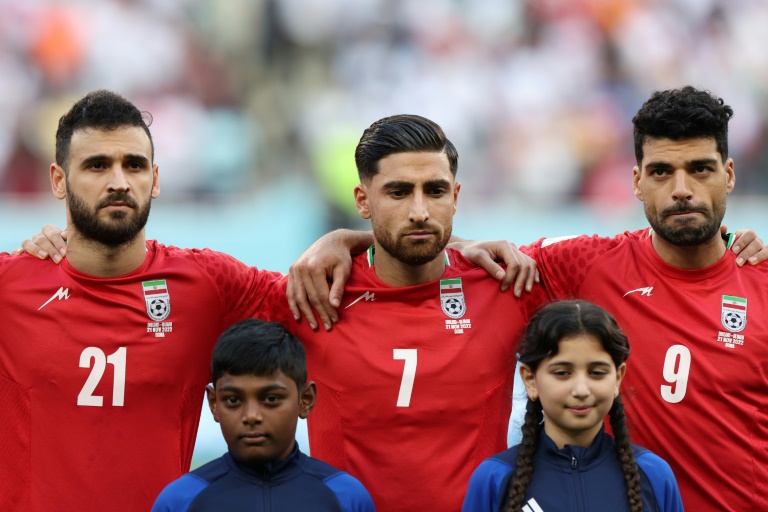
Iran's World Cup team caught in dilemma over protests at home

With their country riven by unrest, Iran’s football team are trapped in an impossible position at the World Cup as they head into a decisive clash with the United States.

They are criticised at home, where the security forces are battling protesters, whether they voice support for demonstrators or they stay quiet.

The Iranians have insisted since the start of the competition that they are in Qatar to “fight for the people and bring them joy”.

But Carlos Queiroz’s team are torn between conflicting interests as the Islamic republic’s government confronts widespread demonstrations sparked by the death in custody of Mahsa Amini after she was arrested for allegedly violating the strict dress code for women.

The Norway-based Iran Human Rights group says more than 410 people have been killed in a government crackdown.

The unrest at home has put the Iranian players under intense pressure.

“You don’t even imagine behind the scenes what these kids have been living in the last few days, just because they want to express themselves as footballers,” Portuguese coach Queiroz said after Iran lost their first game against England 6-2.

But after beating Wales 2-0 in the second match, the team are back in contention for a place in the last 16.

Having to take on Iran’s political nemesis, the United States, has only intensified the spotlight going into Tuesday’s match.

– ‘Real risk’ –

Before the World Cup kicked off, Iranian players earned social media plaudits for refusing to sing the national anthem or to celebrate goals after Amini’s September 16 death.

But the tone changed after Queiroz and his players met President Ebrahim Raisi before flying to Qatar.

“Team Melli”, as the national side is known, has traditionally been a unifying force in the football-mad country. Now it is a symbol of the divisions.

Shouts of “freedom” rang out from Iranians in the stadium when Iran took on England. They also shouted the name of Ali Karimi, the Bayern Munich player who has become a government critic.

But players such as Mehdi Torabi and Vahid Amiri are considered government supporters, and insults were also hurled from the stands.

Before the England game, the players stayed silent during the national anthem. Against Wales, they sang half-heartedly.

The government seized on the victory achieved with injury time goals. Iran’s supreme leader, Ayatollah Ali Khamenei, said the players had made “the Iranian nation happy”.

Jean-Baptiste Guegan, a French specialist on politics in sport, said the players are treading a fine line as they risk sanctions on their return from the World Cup.

“If the players show their support for the revolt, even silently, they risk being reprimanded,” he said. 

“On the other hand, there are activists and people involved in the struggle, who are risking their lives in Iran and want to see them (the team) be a symbol.”

The team could also face suspension by FIFA for making political gestures.

“It is the players’ dilemma,” said Guegan. 

“Whatever they do they will suffer the consequences. There is a real risk for them if the situation worsens in Iran.”

Last week, Iranian-Kurdish former international player Voria Ghafouri, was arrested for spreading “propaganda” against the state. He was eventually freed on bail on Monday.

Iranian football legend Ali Daei, who also played at Bayern Munich, said he had been “threatened” after expressing support for demonstrators.

Hawaii volcano, world's largest, erupts for first time in decades

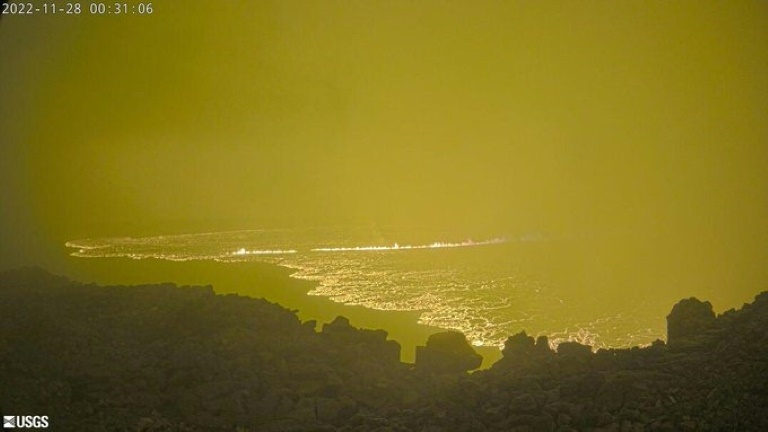
Hawaii’s Mauna Loa, the largest active volcano in the world, has erupted for the first time in nearly 40 years, US authorities said, spewing lava and ash Monday as emergency crews went on alert.

Flows of lava remained mostly contained within the summit’s massive caldera, but the eruption could pose a threat to nearby residents should conditions change, the United States Geological Survey reported at 11:45 pm local time Sunday (9:45 GMT Monday) some 15 minutes after the eruption inside Hawaii Volcanoes National Park.

Mauna Loa has been showing signs of building to an eruption for years, according to the USGS, which said the ongoing eruption was visible from Kona, a town on the west coast of Hawaii’s main island some 45 miles (72 kilometers) from the volcano.

“Lava is still erupting from the summit & is overflowing from the caldera,” the USGS said on its website, referring to the basin at the top of a volcano. While it added there were “no threats to populated areas currently,” it urged area residents to review preparedness procedures.

“If the eruptive vents migrate outside its walls, lava flows may move rapidly downslope,” according to the USGS.

The agency said the Hawaiian Volcano Observatory was in consultation with emergency management personnel and its staff would conduct an aerial reconnaissance over the 13,674-foot (4,168-meter) volcano as soon as possible.

Hawaii authorities said no evacuation orders have been given, although the summit area and several roads in the region were closed, and two shelters have been opened as a precaution.

An ashfall advisory has been issued for downwind of the volcano, with a light accumulation of ash expected on ships in ocean waters along the Big Island’s southeast.

A USGS webcam on Mauna Loa summit’s north rim showed long bright eruptive fissures within the volcanic crater, contrasted against the dark of night.

Robin George Andrews, a scientist and volcanologist, said a larger threat exists if magma begins to pour out of so-called rift zones along the volcano’s flanks.

While there is no evidence yet of this occurring now on Mauna Loa, “the fact that it is a hazardous mountain that hasn’t erupted since 1984 — the longest eruptive pause in its recorded history — is why we should all keep an eye on it,” Andrews posted on Twitter.

The largest volcano on Earth by volume, Mauna Loa, whose name means “Long Mountain,” covers half of the Big Island and is larger than the rest of the Hawaiian islands combined.

The volcano’s submarine flanks stretch for miles below sea level to the ocean floor, which in turn is depressed by Mauna Loa’s great mass — making its summit some 17 kilometers (55,700 feet) above its base according to the USGS.

One of six active volcanoes on the Hawaiian islands, Mauna Loa has erupted 33 times since 1843, according to USGS.

The most recent eruption, in 1984, lasted 22 days and produced lava flows which reached to within about seven kilometers (four miles) of Hilo, a city to the northeast which is home to about 44,000 people today.

Kilauea, a volcano on the southeastern flank of Mauna Loa, erupted almost continuously between 1983 and 2019, and a current minor eruption there has been ongoing for months.

Chad lawyers to stop work over mass trial of protesters

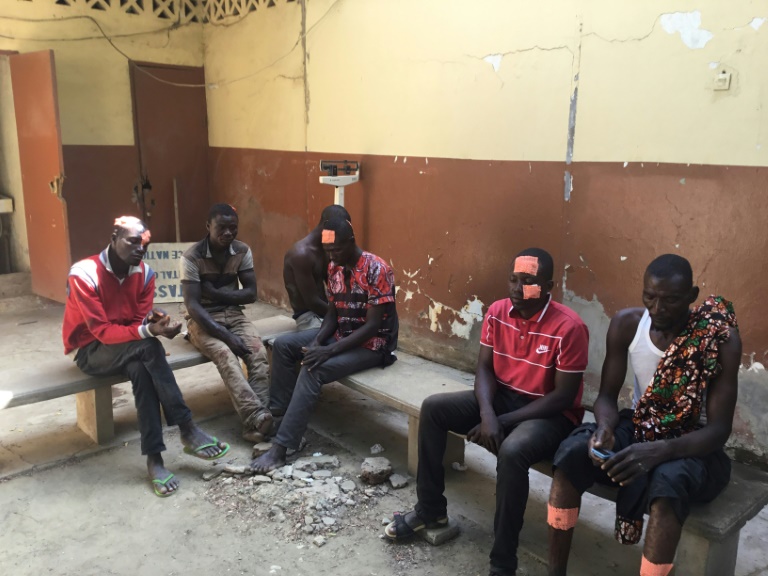
Lawyers in Chad have vowed to stop work during a mass trial, due to start Tuesday, of more than 400 people detained over deadly anti-government protests.

Officially, around 50 people — including 10 members of the security forces — died when police opened fire on demonstrators in the capital N’Djamena and several other cities on October 20.

But opposition groups say the actual toll was much higher, with unarmed civilians massacred.

The trial of the 401 detainees is set to run until December 4 inside the high-security prison of Koro Toro in the middle of the desert, more than 600 kilometres (370 miles) northeast of the capital.

Prosecutors say the accused face several charges including taking part in an unauthorised gathering, destroying belongings, arson and disturbing public order.

According to the public prosecutor, 621 people were arrested in N’Djamena after the protests, all of whom were transferred to Koro Toro.

Investigations are ongoing for the 220 other people, including 83 minors, it said.

The Chad Bar Association in a statement lashed the trial as “parody of justice.”

The detainees had been “kidnapped” and “deported” to Koro Toro in the absence of  any lawyers, it said.

The trial in the remote prison “violates procedural regulations,” it said.

Members of the association “have decided to stop all activity” for the duration of the trial, it said.

Opposition groups had encouraged protests on October 20 to mark the date when the ruling military had initially promised to cede power — a timeline General Mahamat Idriss Deby Itno has now extended by two years.

The 38-year-old general accused the demonstrators of “insurrection” and attempting to stage a coup.  

He took power when his father, Idriss Deby Itno, who ruled for 30 years, died during an operation against rebels in April 2021.

Eurozone inflation hasn't peaked yet, says ECB's Lagarde

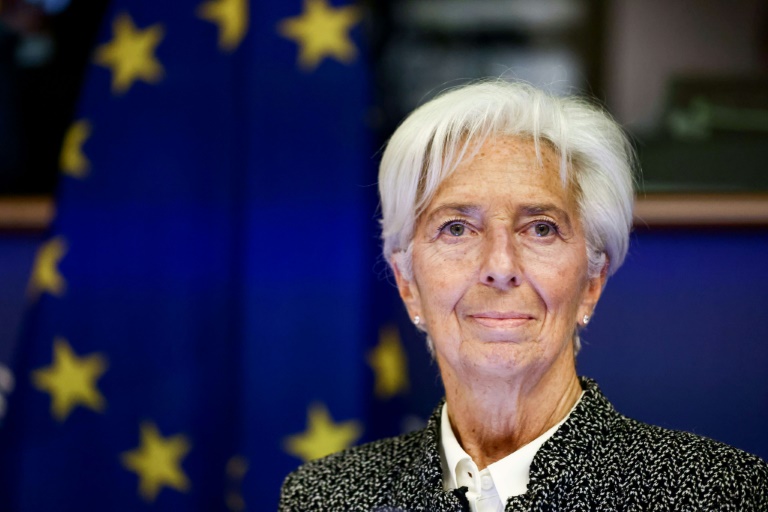
Eurozone inflation is running at a record high and has not yet peaked, European Central Bank President Christine Lagarde said Monday, signalling further interest rate hikes to come.

Consumer prices in the 19-nation euro region rose by 10.6 percent in October, fuelled by soaring food and energy costs in the wake of Russia’s war in Ukraine.

“I would like to see inflation having peaked in October but I’m afraid that I would not go as far as that,” Lagarde told European lawmakers in Brussels.

“I think that there is too much uncertainty — particularly in one component which is the pass-through of high energy costs at wholesale level into retail level — to assume that inflation has actually reached its peak. It would surprise me.”

The ECB has moved to tame inflation with a series of rate hikes, lifting its key interest rates by two percentage points since July.

Lagarde said the ECB has been hiking “at the fastest pace ever” and that more increases would be needed to bring inflation back down to the ECB’s two-percent target.

“We still have a way to go and we’re not done with inflation so, yes, we will continue to raise interest rates,” Lagarde said.

The ECB’s governing council is set to unveil the next increase in borrowing costs at its December 15 meeting, when policymakers will also be armed with new forecasts for inflation and economic growth.

In the United States, where the Federal Reserve began hiking rates earlier and more aggressively, policymakers have indicated that a slower pace of rate increases could “soon be appropriate”.

Heavy policing – and icy wind – keeps Beijing protesters at home

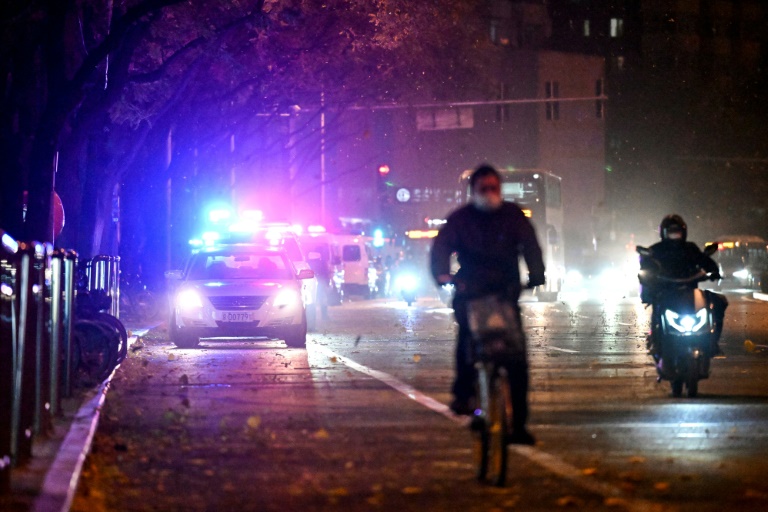
With police cars, foot patrols, a network of surveillance cameras, and aided by the icy wind, Beijing authorities appeared Monday to have deterred fresh anti-lockdown gatherings — at least for the time being.

Sunday night saw hundreds of people, mainly in their 20s and 30s, rally in a rare protest in a well-to-do tree-lined area on a bank of the river Liangma.

Many held blank white sheets of paper in a symbolic protest against censorship and chanted slogans opposing the strict health restrictions that have prevented them from moving freely for almost three years.

No such rally appeared to have taken place the following night, an AFP journalist saw, though many passersby expressed defiant support for the protests that have rocked China over the last few days.

“I followed this on social media and I wanted to come and see. Finally, there is a movement against this health policy,” a 40-year-old man who asked to remain anonymous told AFP, keeping his voice low.

“Today young people are worried. The price of housing has become almost inaccessible, they do not know if they will find a job,” he said.

“This health policy is like putting a lid on China. We’re becoming the laughingstock of the world, aren’t we?”

– ‘I support them’ –

Police patrolled nearby on both banks of the river in small groups every five minutes or so, standing out in their navy blue uniforms. Others were posted to adjacent streets.

Twenty cars and police vans were parked nearby, some equipped with cameras, making any gathering almost impossible.

“I am touched by what these young people did yesterday. They are defending their rights, I support them,” explained a 30-year-old enjoying the river, despite the gusts and frigid temperatures.

“I think they were inspired by the October event,” she said, referring to a rare protest just days ahead of a key Communist Party meeting when banners criticising lockdowns and Xi Jinping were draped over a bridge in Beijing. 

She, too, has reason to be upset.

“My passport expired two years ago and the authorities refuse to renew it because of health restrictions. We can’t even go abroad,” she told AFP.

Chinese authorities have paused issuing new passports to their nationals, with a few exceptions such as seeing close family, continuing their studies or being sent by their employer abroad.

– ‘It’s incomprehensible!’ –

A little further on, a young woman who came to jog said she had followed the events of the previous day on social media.

“It’s good. It sent a signal that people were tired of overly tough restrictions,” she said. 

“I think the government has heard the message and is going to relax the policy to give them and everyone else a way out.”

This is also what the 40-year-old hoped, he told AFP.

“We see our leaders going abroad and not wearing a mask. So why do we still have to wear one here? It’s incomprehensible!” he said.

Other politically sensitive places in Beijing, such as Tiananmen Square — the focal point of a major protest in 1989 that was later brutally crushed — were deserted on Monday.

On the outskirts of the area, police imposed identity checks — even on passing cyclists, a rare sign of heightened security around an already heavily-securitised area.

Another demonstration planned for the evening in the capital near the bridge where the banner was displayed in October, also reportedly did not take place again due to a strong police presence.

Eight civilians killed as hours-long Somalia hotel siege ends

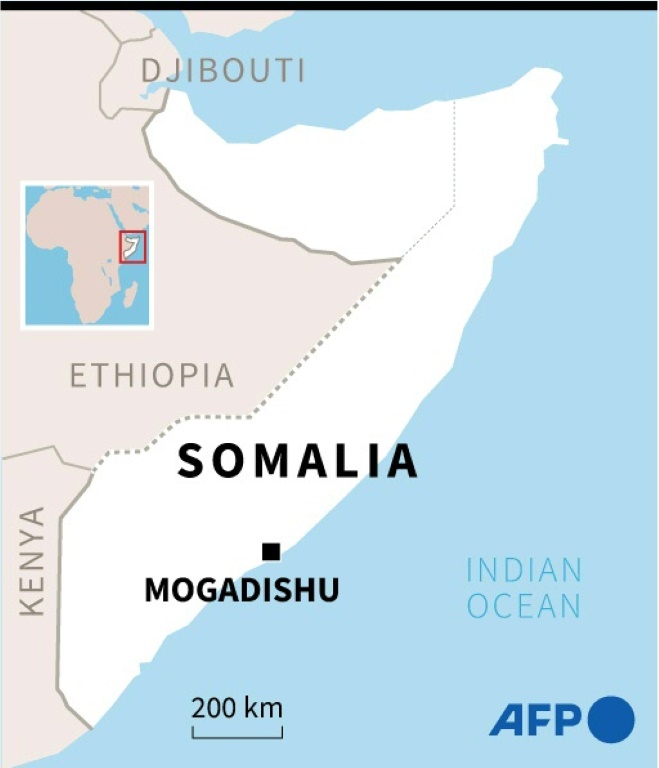
Somali security forces on Monday ended an hours-long siege by Al-Qaeda-linked insurgents who killed eight civilians after storming a prominent hotel in the capital Mogadishu, the police said.

Al-Shabaab militants attacked the Villa Rose, a hotel popular with politicians and government officials, in a hail of bullets and explosions at around 8:00 pm (1700 GMT) on Sunday.

Around 21 hours later, national police spokesman Sadik Dudishe told reporters that “the clearance operation in the Villa Rose hotel has ended.”

The jihadists “killed eight civilians who stayed in the hotel and the security forces succeeded in rescuing about 60 civilians, no one among the civilians was wounded,” he added.

One member of the security forces also died in the attack, he said.

“There were about six attackers involved — five of them were shot and killed by the security forces and one of them detonated himself.” 

The authorities have given no details about the identities of the casualties.

The heavily-guarded Villa Rose is located in a fortified area of the capital a few blocks from the office of President Hassan Sheikh Mohamud.

Its website describes the hotel as the “most secure lodging arrangement in Mogadishu” with metal detectors and a high perimeter wall. 

Al-Shabaab, which has been trying to overthrow Somalia’s central government for 15 years, claimed responsibility for the attack.

– ‘All-out war’ –

In a statement late on Sunday, the African Union Transition Mission in Somalia (ATMIS), a 20,000-strong military force drawn from across the continent, praised the “swift” security response to the assault.

Al-Shabaab has intensified attacks against civilian and military targets as Somalia’s recently elected government has pursued a policy of “all-out war” against the Islamists.

The security forces, backed by local militias, ATMIS and US air strikes, have driven Al-Shabaab from central parts of Somalia in recent months, but the offensive has drawn retribution. 

On October 29, two cars packed with explosives blew up minutes apart in Mogadishu followed by gunfire, killing at least 121 people and wounding 333 others.

It was the deadliest attack in the fragile Horn of Africa nation in five years.

At least 21 people were killed in a siege of a Mogadishu hotel in August that lasted 30 hours before security forces were able to overpower the militants inside.

– Closely guarded zone –

The latest hotel siege has raised questions as to how the militants managed to reach the closely guarded heart of Mogadishu’s administrative district undetected. 

Armed checkpoints block roads into the area, which also hosts a detention facility for high-value terror suspects overseen by the National Intelligence and Security Agency.

Somalia’s environment minister, Adam Aw Hirsi, who lives in the Villa Rose, said the attack was not a demonstration of an “emboldened” Al-Shabaab.

“To the contrary, the desperate move shows that the terror kingpins running for dear life are throwing their last kicks. We’ll not let up the war,” he posted on Twitter.

The United Nations said earlier this month that at least 613 civilians had been killed and 948 wounded in violence this year in Somalia, mostly caused by improvised explosive devices (IEDs) attributed to Al-Shabaab. 

The figures were the highest since 2017 and a rise of more than 30 percent from last year.

Ukraine First Lady demands global response to sexual assault in war

Ukraine First Lady Olena Zelenska on Monday demanded a “global response” to the use of sexual violence as a weapon of war, saying Kyiv prosecutors were investigating more than 100 possible crimes by Russian soldiers.

Speaking at the “Preventing Sexual Violence in Conflict Initiative” conference in London, Zelenska said the investigations were “just a small” fraction of the true number of such crimes being committed in the Ukraine conflict.

“The opportunities for the occupiers widened to humiliating Ukrainians and unfortunately, sexual violence and sexual crimes are within their arsenal,” she said.

“Everyone knows about the huge numbers of rapes,” she told delegates on the first day of the UK government-hosted event.

“They’re (Russian soldiers) very open about this.”

But victims were afraid of speaking out over the stigma and fears that those responsible may return and do it again, Zelenska warned.

“That is why it’s extremely important to recognise this as a war crime and to bring all the perpetrators to account,” she said.

“There has to be a global response to this. Unfortunately, such war crimes will keep on going in the world as long as the servicemen think that they can go without any punishment.”

The Ukrainian government has launched a support programme to help victims of the war, which Zelenska said she hoped could be a “first step towards an investigation and prosecution”.

Ukraine was looking to set up similar initiatives outside the country, such as in Germany and the Czech Republic, she added.

UK Foreign Secretary James Cleverly last week announced new aid for Ukraine on a visit to Kyiv, including support for victims of sexual violence by Russian soldiers.

The conference brings together representatives of about 70 countries to tackle the scourge of sexual violence in conflict.

It has heard from Nobel Peace Prize laureates Nadia Murad and Denis Mukwege, who won a joint award in 2018 for their work against the issue, as well as survivors.

Britain launched a year-long campaign to highlight the issue as part of its presidency of the G8 group of industrialised nations in 2012, which then included Russia, backed by Hollywood actress Angelina Jolie.

She said in a message to the latest meeting that there “has to be a decisive global response” to such assaults.

“When there isn’t, it sends a message to both the victim and the perpetrator that we don’t truly regard this as a significant crime that needs to be punished and prevented,” she added.

Irish regulator fines Meta 265 mn euros over data breach

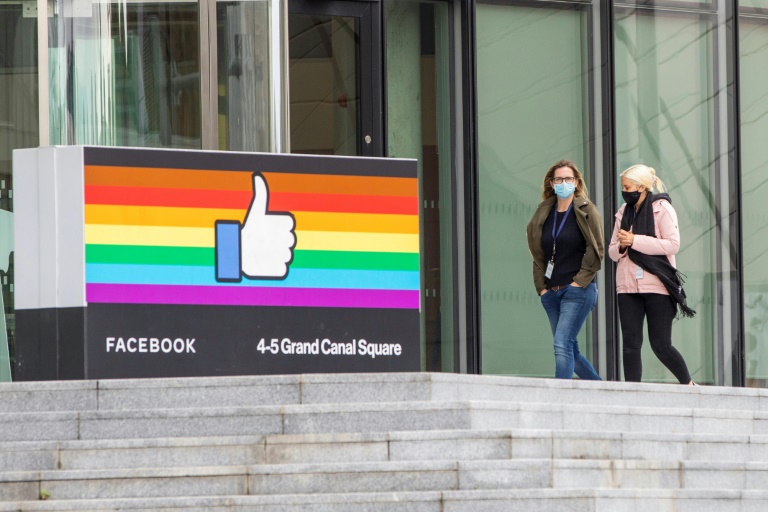
Ireland’s data regulator on Monday slapped Facebook owner Meta with a 265-million-euro ($275-million) fine after details of more than half a billion users were leaked on a hacking website.

The Data Protection Commission (DPC) said it had reached the decision following a “comprehensive inquiry process, including cooperation with all of the other data protection supervisory authorities within the EU”.

Meta’s European operations are based in Dublin, along with a number of other major global tech companies including Google, Apple and Twitter.

As a result, Ireland’s data protection agency is the lead regulator responsible for holding them to account. 

The watchdog found the social media behemoth led by Mark Zuckerberg had breached two articles of the EU’s data protection laws.

In addition to the fine, the DPC said it had “imposed a reprimand and an order” requiring the Facebook owner to “bring its processing into compliance by taking a range of specified remedial actions within a particular timeframe”.

In response to the fine, a Meta spokesperson said the firm had “cooperated fully” with the DPC on the issue.

The tech firm had previously said the data was “scraped” from the site by hackers in 2019, who took advantage of a feature designed to help people easily find friends using contact lists.

“We made changes to our systems during the time in question, including removing the ability to scrape our features in this way using phone numbers,” the spokesperson said.

“Unauthorised data scraping is unacceptable and against our rules and we will continue working with our peers on this industry challenge. We are reviewing this decision carefully,” they added.

– EU fears –

The Irish watchdog launched its probe in April 2021 to determine whether the EU-wide General Data Protection Regulation (GDPR) charter on data rights and the corresponding Irish legislation had been infringed.

Under the GDPR, which came into effect in 2018, social media users have a wider range of rights relating to their data.

The fine follows a landmark decision by the Irish watchdog to fine Meta a record 405 million euros in September after its Instagram platform was found to have breached regulations on the handling of children’s data.

In July 2019, Facebook was fined a record $5 billion by the US federal authorities over its privacy controls in the wake of the Cambridge Analytica scandal.

In September 2021, the DPC also fined WhatsApp — Meta’s instant messaging application — 225 million euros for failing to comply with its transparency rules for data transfers.

And in France, the CNIL national data watchdog fined Facebook 60 million euros in January 2022 for its use of online “cookies”, the digital trackers used to target advertising.

In recent weeks, the European Union has voiced its fears over a fall in standards in data privacy and content moderation amid widespread job losses in the tech sector.

Meta said earlier this month it planned to lay off more than 11,000 staff amid an advertising slump.

The micro-blogging platform Twitter has attracted similar criticisms following its acquisition by Elon Musk in October.

Tech entrepreneur Musk cut around half of Twitter’s 7,500-strong workforce, including many employees tasked with fighting disinformation, when he bought the firm.

Close Bitnami banner
Bitnami