World

Comoros ex-president Sambi jailed for life for 'high treason'

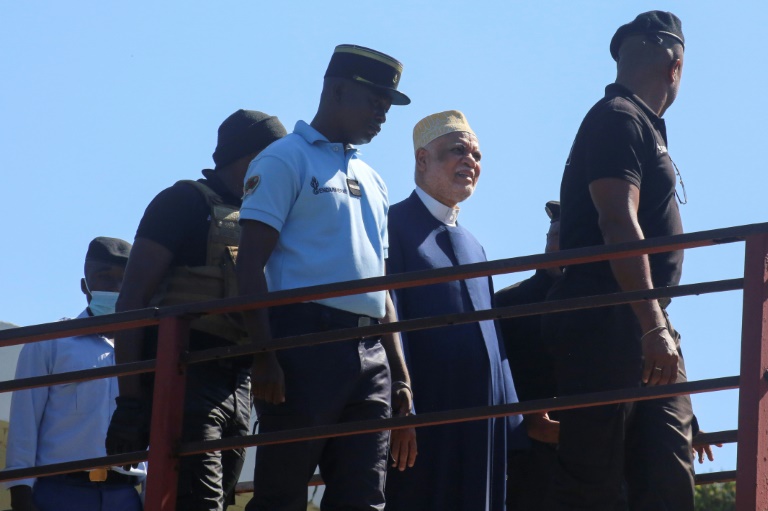
A court in the Comoros on Monday handed down a life sentence for high treason to ex-president Ahmed Abdallah Sambi, who was convicted of selling passports to stateless people living in the Gulf.

Sambi, 64, an arch rival of President Azali Assoumani, was sentenced by the State Security Court, a special judicial body whose rulings cannot be appealed.

“Sambi is sentenced to life imprisonment,” court president Omar Ben Ali said, reading out the verdict, which also stripped the former leader of the right to vote and hold public office.

“The court orders his property and assets to be confiscated to the benefit of the public treasury.”

Sambi was convicted in absentia after refusing to attend proceedings.

He briefly appeared at the first hearing, where his lawyers unsuccessfully asked the judge to recuse himself as he had previously sat on the panel that indicted their defendant.

“The composition of the court is illegal. I do not want to be tried by this court,” Sambi said before boycotting further sessions.

“This sentence is entirely consistent with what we have seen so far, a judicial charade guided by members of the government which ended in life imprisonment for the biggest political opponent of the current regime”, Sambi’s daughter Tisslame Sambi told AFP.

Sambi, who led the small Indian Ocean archipelago between 2006 and 2011, pushed through a law in 2008 allowing the sale of passports for high fees.

The scheme aimed at the so-called bidoon — an Arab minority numbering in the tens of thousands who cannot obtain citizenship.

The former president was accused of embezzling millions of dollars under the scheme.

“He betrayed the mission entrusted to him by the Comorans,” public prosecutor Ali Mohamed Djounaid told the court last week as he requested a life sentence.

– ‘Peanuts’ –

The prosecution said the loss to the public purse amounted to more than $1.8 billion — more than the impoverished nation’s GDP.

“They gave thugs the right to sell Comoran nationality as if they were selling peanuts,” said Eric Emmanuel Sossa, a lawyer for civilian plaintiffs.

But Sambi’s French lawyer Jean-Gilles Halimi said “no evidence” of missing money or bank accounts had been put forward to suggest a crime.

Sambi was originally prosecuted for corruption, but the charges were reclassified as high treason, a crime that “does not exist in Comoran law,” Halimi said. 

The former president had already spent four years behind bars before he faced trial, far exceeding the maximum eight months. He was originally placed under house arrest for disturbing public order.

Another lawyer, Mahamoudou Ahmada, said the court went beyond prosecutors’ requests in stripping his client of his civil rights.

Government secretary general Daniel Ali Bandar said he was “satisfied” that the trial had gone ahead “peacefully” but was waiting to see what would happen in civil proceedings. 

“More than prison sentences, Comorans want to know what happened to the millions of euros that have been embezzled,” he said.

Among other defendants, French Syrian businessman Bashar Kiwan, who had accused the government of seeking to pressure him into testifying against Sambi — something denied by the presidency — was sentenced to 10 years.

Former vice president Mohamed Ali Soilihi, the runner-up in a disputed 2016 vote, was handed a 20-year jail term. 

Both men were convicted in absentia. The authorities issued international arrest warrants for both men. 

– Troubled nation –

Sambi studied in Saudi Arabia, Sudan and in a theological school in Iran, and typically dressed in the traditional garb of Iranian clerics — a style that gave him the nickname of “ayatollah.” 

A former French archipelago of three islands of some 900,000 people located northwest of Mozambique, the Comoros has endured years of political turmoil.

Since independence in 1975, the country has endured more than 20 attempted coups, four of which were successful.

Assoumani seized power in 1999 and was re-elected in 2016 in a vote marred by violence and allegations of irregularities.

He was able to extend his term thanks to a controversial referendum in 2018 that changed the constitution.


Activists file legal challenge over Finnish climate inaction

Environmental organisations in Finland on Monday filed a legal challenge accusing the government of breaking its own commitments to protect the climate, the first challenge of its kind in the country.

In July, Finland passed the Climate Change Act, which aims to make the country carbon-neutral by 2035. 

But the environmental groups say the government had ignored its own laws by failing to protect the Nordic nation’s carbon sinks.

Carbon sinks are natural systems, such as forests, that absorb carbon from the atmosphere and store it in, for example, vegetation and soil.

“The government has violated its own Climate Change Act by not taking a decision on additional measures to meet Finland’s climate targets,” Hanna Aho, Policy Officer for the Finnish Association for Nature Conservation (FANC), told AFP.

“As a result, it seems very unlikely that climate targets will be met,” Aho said.

The FANC and Greenpeace, which jointly mounted the legal challenge, say carbon sinks in Finland have “collapsed” due to an increase in logging and to slower tree growth. 

The most recent chance for the government to address the issue was its Annual Climate Report in October but that still lacked the necessary “assessment on measures to protect the sinks”, Aho said.

“Logging has not been restricted, even though it is known to be the most important factor affecting the size of carbon sinks,” she added.

The organisations petitioned the country’s Supreme Administrative Court to overrule the government’s decision to submit the report without “additional measures to enhance carbon sinks”.

The groups said the report should be sent back to the drawing board because it was not in line with the Climate Change Act.

“Prime Minister Sanna Marin’s government’s inaction is in stark contrast to the obligations of the Climate Change Act,” Aho said.

It will be up to the court to decide whether or not to hear the case.

In recent years, Finland has struggled to balance its climate ambitions with its forestry industry, which is an important part of its economy.

In 2020, Finnish foresty product exports were worth 10.4 billion euros, amounting to 18 percent of the country’s total exports. 

A growing number of organisations and individuals around the world have turned to the courts to challenge what they see as government inaction on the climate.

More than 600 activists in neighbouring Sweden, including Greta Thunberg, filed a lawsuit on Friday accusing the state of climate inaction, also a first in the country.

Activists file legal challenge over Finnish climate inaction

Environmental organisations in Finland on Monday filed a legal challenge accusing the government of breaking its own commitments to protect the climate, the first challenge of its kind in the country.

In July, Finland passed the Climate Change Act, which aims to make the country carbon-neutral by 2035. 

But the environmental groups say the government had ignored its own laws by failing to protect the Nordic nation’s carbon sinks.

Carbon sinks are natural systems, such as forests, that absorb carbon from the atmosphere and store it in, for example, vegetation and soil.

“The government has violated its own Climate Change Act by not taking a decision on additional measures to meet Finland’s climate targets,” Hanna Aho, Policy Officer for the Finnish Association for Nature Conservation (FANC), told AFP.

“As a result, it seems very unlikely that climate targets will be met,” Aho said.

The FANC and Greenpeace, which jointly mounted the legal challenge, say carbon sinks in Finland have “collapsed” due to an increase in logging and to slower tree growth. 

The most recent chance for the government to address the issue was its Annual Climate Report in October but that still lacked the necessary “assessment on measures to protect the sinks”, Aho said.

“Logging has not been restricted, even though it is known to be the most important factor affecting the size of carbon sinks,” she added.

The organisations petitioned the country’s Supreme Administrative Court to overrule the government’s decision to submit the report without “additional measures to enhance carbon sinks”.

The groups said the report should be sent back to the drawing board because it was not in line with the Climate Change Act.

“Prime Minister Sanna Marin’s government’s inaction is in stark contrast to the obligations of the Climate Change Act,” Aho said.

It will be up to the court to decide whether or not to hear the case.

In recent years, Finland has struggled to balance its climate ambitions with its forestry industry, which is an important part of its economy.

In 2020, Finnish foresty product exports were worth 10.4 billion euros, amounting to 18 percent of the country’s total exports. 

A growing number of organisations and individuals around the world have turned to the courts to challenge what they see as government inaction on the climate.

More than 600 activists in neighbouring Sweden, including Greta Thunberg, filed a lawsuit on Friday accusing the state of climate inaction, also a first in the country.

Activists file legal challenge over Finnish climate inaction

Environmental organisations in Finland on Monday filed a legal challenge accusing the government of breaking its own commitments to protect the climate, the first challenge of its kind in the country.

In July, Finland passed the Climate Change Act, which aims to make the country carbon-neutral by 2035. 

But the environmental groups say the government had ignored its own laws by failing to protect the Nordic nation’s carbon sinks.

Carbon sinks are natural systems, such as forests, that absorb carbon from the atmosphere and store it in, for example, vegetation and soil.

“The government has violated its own Climate Change Act by not taking a decision on additional measures to meet Finland’s climate targets,” Hanna Aho, Policy Officer for the Finnish Association for Nature Conservation (FANC), told AFP.

“As a result, it seems very unlikely that climate targets will be met,” Aho said.

The FANC and Greenpeace, which jointly mounted the legal challenge, say carbon sinks in Finland have “collapsed” due to an increase in logging and to slower tree growth. 

The most recent chance for the government to address the issue was its Annual Climate Report in October but that still lacked the necessary “assessment on measures to protect the sinks”, Aho said.

“Logging has not been restricted, even though it is known to be the most important factor affecting the size of carbon sinks,” she added.

The organisations petitioned the country’s Supreme Administrative Court to overrule the government’s decision to submit the report without “additional measures to enhance carbon sinks”.

The groups said the report should be sent back to the drawing board because it was not in line with the Climate Change Act.

“Prime Minister Sanna Marin’s government’s inaction is in stark contrast to the obligations of the Climate Change Act,” Aho said.

It will be up to the court to decide whether or not to hear the case.

In recent years, Finland has struggled to balance its climate ambitions with its forestry industry, which is an important part of its economy.

In 2020, Finnish foresty product exports were worth 10.4 billion euros, amounting to 18 percent of the country’s total exports. 

A growing number of organisations and individuals around the world have turned to the courts to challenge what they see as government inaction on the climate.

More than 600 activists in neighbouring Sweden, including Greta Thunberg, filed a lawsuit on Friday accusing the state of climate inaction, also a first in the country.

Equities, oil prices slide on China unrest

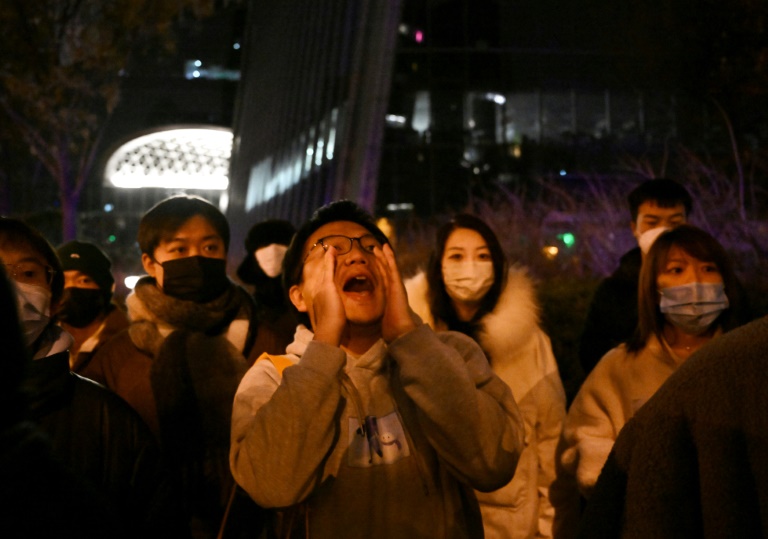
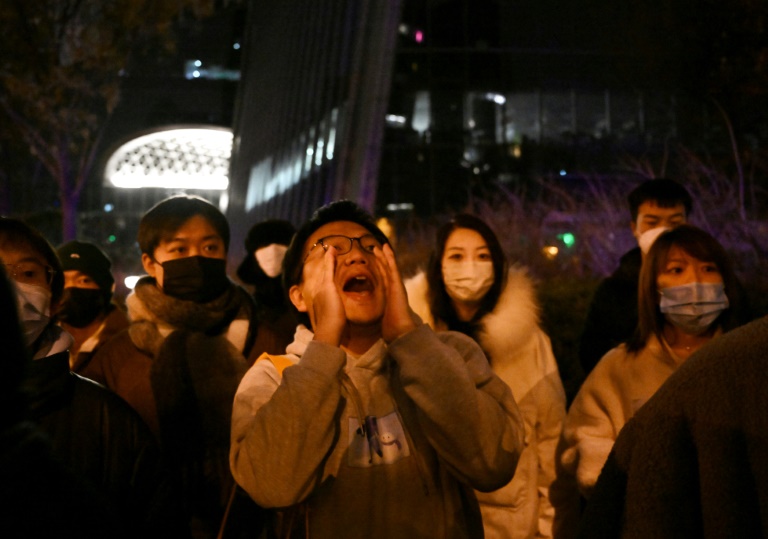
Stocks and oil prices slid Monday on concerns about protests across China calling for political freedoms and an end to the government’s hardline zero-Covid policy, fuelling uncertainty in the world’s number-two economy.

“Unrest in major cities in China has destabilised risk-on markets including oil which is under pressure, pushing BP and Shell towards the bottom of the UK index,” noted Victoria Scholar, head of investment at Interactive Investor.

China-linked stocks took the brunt of selling in Asia, with Hong Kong’s Hang Seng Index closing down more than one percent and Shanghai off 0.8 percent. The yuan slipped more than one percent.

Europe’s main stock markets were all lower nearing the half-way stage.

“Sentiment has turned sour as unrest across China grows,” said SPI Asset Management’s Stephen Innes. 

“Risk of the situation escalating from here and short-term volatility remains high.”

Hundreds of people took to the streets in China at the weekend in the country’s biggest demonstrations since pro-democracy rallies in 1989 were crushed.

A deadly fire in the Xinjiang region Thursday served as the catalyst for the public anger, with many blaming virus lockdowns for hampering rescue efforts.

People have taken to the streets in Beijing, Shanghai, Guangzhou and Chengdu calling for an end to lockdowns, after an easing of some measures had fuelled hopes of a lighter pandemic approach.

Some demonstrators were even demanding the resignation of China’s President Xi Jinping, who was recently re-appointed to a precedent-breaking third term as the country’s leader.

The latest targeted containment measures have been introduced as the country sees record-high infections.

The prospect of a hit to demand in the world’s biggest crude importer hammered oil prices, with both main contracts down around three percent.

The selling has taken a bit out of recent gains across markets sparked by hopes of a slowdown in the Federal Reserve’s interest rate hikes, with inflation finally showing signs of softening.

However, some observers said the protests could provide long-term benefits as they could force President Xi to shift away from his strict, economically damaging measures sooner.

Investors were also looking ahead to the release of US jobs data at the end of the week, which could provide clues about the Fed’s next moves, while speeches by central bank boss Jerome Powell and other key policymakers will also be pored over.

– Key figures around 1130 GMT –

London – FTSE 100: DOWN 0.3 percent at 7,461.60 points

Frankfurt – DAX: DOWN 0.8 percent at 14,419.04

Paris – CAC 40: DOWN 0.8 percent at 6,656.50

EURO STOXX 50: DOWN 0.7 percent at 3,933.93

Tokyo – Nikkei 225: DOWN 0.4 percent at 28,162.83 (close)

Hong Kong – Hang Seng Index: DOWN 1.6 percent at 17,297.94 (close)

Shanghai – Composite: DOWN 0.8 percent at 3,078.55 (close)

New York – Dow: UP 0.5 percent at 34,347.03 (close)

Euro/dollar: UP at $1.0495 from $1.0403 on Friday

Dollar/yen: DOWN at 137.85 yen from 139.03 yen

Pound/dollar: UP at $1.2098 from $1.2087

Euro/pound: UP at 86.72 pence from 86.03 pence

West Texas Intermediate: DOWN 3.1 percent at $73.94 per barrel

Brent North Sea crude: DOWN 3.0 percent at $81.14 per barrel

Equities, oil prices slide on China unrest

Stocks and oil prices slid Monday on concerns about protests across China calling for political freedoms and an end to the government’s hardline zero-Covid policy, fuelling uncertainty in the world’s number-two economy.

“Unrest in major cities in China has destabilised risk-on markets including oil which is under pressure, pushing BP and Shell towards the bottom of the UK index,” noted Victoria Scholar, head of investment at Interactive Investor.

China-linked stocks took the brunt of selling in Asia, with Hong Kong’s Hang Seng Index closing down more than one percent and Shanghai off 0.8 percent. The yuan slipped more than one percent.

Europe’s main stock markets were all lower nearing the half-way stage.

“Sentiment has turned sour as unrest across China grows,” said SPI Asset Management’s Stephen Innes. 

“Risk of the situation escalating from here and short-term volatility remains high.”

Hundreds of people took to the streets in China at the weekend in the country’s biggest demonstrations since pro-democracy rallies in 1989 were crushed.

A deadly fire in the Xinjiang region Thursday served as the catalyst for the public anger, with many blaming virus lockdowns for hampering rescue efforts.

People have taken to the streets in Beijing, Shanghai, Guangzhou and Chengdu calling for an end to lockdowns, after an easing of some measures had fuelled hopes of a lighter pandemic approach.

Some demonstrators were even demanding the resignation of China’s President Xi Jinping, who was recently re-appointed to a precedent-breaking third term as the country’s leader.

The latest targeted containment measures have been introduced as the country sees record-high infections.

The prospect of a hit to demand in the world’s biggest crude importer hammered oil prices, with both main contracts down around three percent.

The selling has taken a bit out of recent gains across markets sparked by hopes of a slowdown in the Federal Reserve’s interest rate hikes, with inflation finally showing signs of softening.

However, some observers said the protests could provide long-term benefits as they could force President Xi to shift away from his strict, economically damaging measures sooner.

Investors were also looking ahead to the release of US jobs data at the end of the week, which could provide clues about the Fed’s next moves, while speeches by central bank boss Jerome Powell and other key policymakers will also be pored over.

– Key figures around 1130 GMT –

London – FTSE 100: DOWN 0.3 percent at 7,461.60 points

Frankfurt – DAX: DOWN 0.8 percent at 14,419.04

Paris – CAC 40: DOWN 0.8 percent at 6,656.50

EURO STOXX 50: DOWN 0.7 percent at 3,933.93

Tokyo – Nikkei 225: DOWN 0.4 percent at 28,162.83 (close)

Hong Kong – Hang Seng Index: DOWN 1.6 percent at 17,297.94 (close)

Shanghai – Composite: DOWN 0.8 percent at 3,078.55 (close)

New York – Dow: UP 0.5 percent at 34,347.03 (close)

Euro/dollar: UP at $1.0495 from $1.0403 on Friday

Dollar/yen: DOWN at 137.85 yen from 139.03 yen

Pound/dollar: UP at $1.2098 from $1.2087

Euro/pound: UP at 86.72 pence from 86.03 pence

West Texas Intermediate: DOWN 3.1 percent at $73.94 per barrel

Brent North Sea crude: DOWN 3.0 percent at $81.14 per barrel

Four dead as hotel siege in Somali capital enters 18th hour

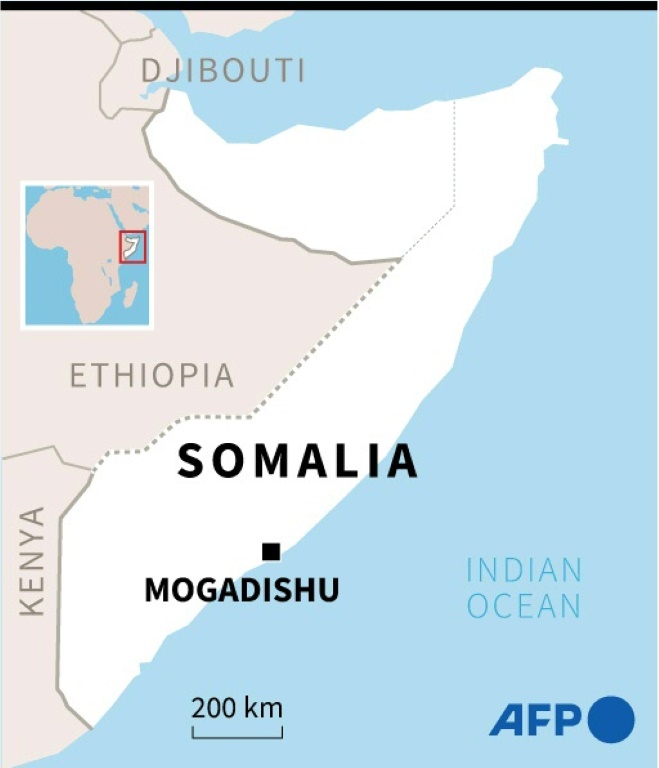
Somali forces closed in on Monday on Al-Shabaab militants laying siege to a popular hotel in the capital, Mogadishu, where at least four people have been killed in an ongoing attack.

The crackle of gunfire could still be heard coming from the besieged Villa Rose 18 hours after the Islamists stormed the hotel in central Mogadishu in a hail of bullets and explosions.

Mohamed Dahir, an official from the national security agency, told AFP that government forces had taken control of the hotel and pinned the insurgents down in a top-floor room.

“The terrorist gunmen are trapped inside a room in the hotel and the security forces are close to ending the siege very soon,” he told AFP.

“So far we have confirmed the death of four people”, he said, adding that government officials were among those wounded.  

The Villa Rose is frequented by members of parliament and located in a secure central part of the capital just a few blocks from the office of Somalia’s President Hassan Sheikh Mohamud.

Al-Shabaab, a militant group affiliated to Al-Qaeda that has been trying to overthrow Somalia’s central government for 15 years, claimed responsibility for the attack.

Police said the gunmen rushed into the hotel in Bondhere district at around 8:00 pm (1700 GMT) on Sunday and an operation was under way to “eliminate” them.

– Retaliatory attacks –

Witnesses near the scene described still hearing loud explosions and gunfire on Monday morning.

“I saw several military vehicles with special forces heading towards the hotel, and a few minutes later there was heavy gunfire and explosions,” said witness Mahad Yare.

In a statement late on Sunday, the African Union Transition Mission in Somalia (ATMIS), a 20,000-strong military force drawn from across the continent, praised the “swift” security response to the attack.

The Villa Rose website describes the hotel as the “most secure lodging arrangement in Mogadishu” with metal detectors and a high perimeter wall. 

Al-Shabaab has intensified attacks against civilian and military targets as Somalia’s recently elected government has pursued a policy of “all-out war” against the Islamists.

The security forces, backed by local militias, ATMIS and US air strikes, have driven Al-Shabaab from central parts of Somalia in recent months, but the offensive has drawn retribution. 

On October 29, two cars packed with explosives blew up minutes apart in Mogadishu followed by gunfire, killing at least 121 people and wounding 333 others.

It was the deadliest attack in the fragile Horn of Africa nation in five years.

– Closely guarded zone –

At least 21 people were killed in a siege of a Mogadishu hotel in August that lasted 30 hours before security forces were able to overpower the militants inside.

The latest hotel siege has raised questions as to how the militants managed to reach the closely guarded heart of Mogadishu’s administrative district undetected. 

Armed checkpoints block roads into the area, which also hosts a detention facility for high-value terror suspects overseen by the National Intelligence and Security Agency.

Somalia’s environment minister, Adam Aw Hirsi, who lives in the Villa Rose, said the attack was not a demonstration of an “emboldened” Al-Shabaab.

“To the contrary, the desperate move shows that the terror kingpins running for dear life are throwing their last kicks. We’ll not let up the war,” he posted on Twitter.

The United Nations said earlier this month that at least 613 civilians had been killed and 948 wounded in violence this year in Somalia, mostly caused by improvised explosive devices (IEDs) attributed to Al-Shabaab. 

The figures were the highest since 2017 and a rise of more than 30 percent from last year.

UK condemns China for BBC journalist's arrest at Covid demo

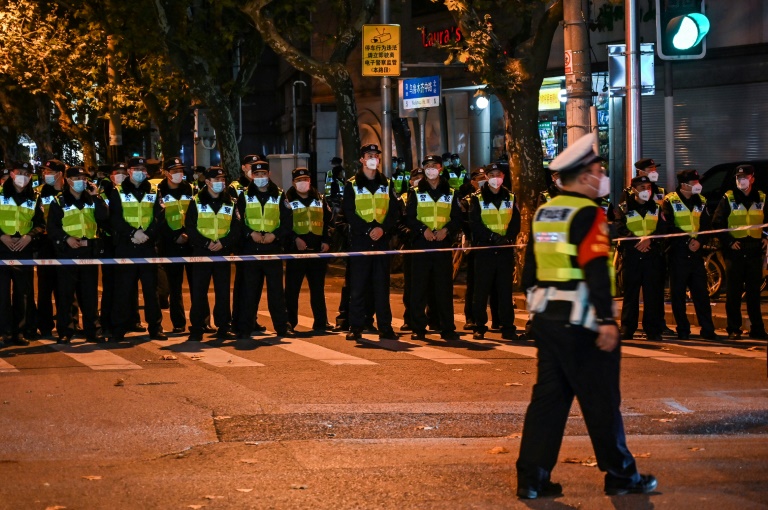
Britain’s government on Monday condemned Chinese police after the BBC said one of its journalists was arrested and beaten while covering Covid protests in Shanghai, the latest incident to test relations between the countries.

Ed Lawrence, working in China as an accredited journalist, was detained for several hours, during which he was assaulted and kicked by police, according to the UK broadcaster. 

After his release, Lawrence tweeted on Monday to thank his followers, adding he believed “at least one local national was arrested after trying to stop the police from beating me”.

British Foreign Secretary James Cleverly called the incident “deeply disturbing”.

“Media freedom and freedom to protest must be respected. No country is exempt,” he tweeted.

“Journalists must be able to do their job without intimidation.”

The arrest came as new Prime Minister Rishi Sunak prepared to deliver his first major speech on foreign policy later on Monday, in which he will argue the need to counter UK competitors “not with grand rhetoric but with robust pragmatism”.

Some critics took that to mean a softer line on countries such as China, whose diplomats in Manchester earned a relatively mild UK government rebuke after they recently attacked a Hong Kong democracy protester. 

Security minister Tom Tugendhat said Lawrence’s arrest was “an echo of the repression the CCP (Chinese Communist Party) is attempting elsewhere”.

“China’s attempts at state repression here in the UK remind us of the urgent need to defend our own freedoms,” he said, after reports emerged of China operating undeclared police outposts in foreign countries including Britain.

Hundreds of people took to the streets in China’s major cities on Sunday in a rare outpouring of public anger against the state over its zero-Covid policy. 

The BBC said it was “extremely concerned”, after Lawrence was filmed being hauled away at one of the protests in Shanghai. 

“We have had no official explanation or apology from the Chinese authorities, beyond a claim by the officials who later released him that they had arrested him for his own good in case he caught Covid from the crowd,” it said.

“We do not consider this a credible explanation.”

China’s foreign ministry said on Monday that Lawrence had not identified himself as a journalist.

“Based on what we learned from relevant Shanghai authorities, he did not identify himself as a journalist and didn’t voluntarily present his press credentials,” foreign ministry spokesperson Zhao Lijian said.

He told international media to “follow Chinese laws and regulations while in China”.

But the campaign group Reporters Sans Frontieres (Reporters Without Borders) also condemned Lawrence’s arrest and alleged assault.

“RSF stands with all those practising fact-based journalism in China & calls on regime to respect their right to report on protests,” it tweeted.

Iran football legend Daei targeted by 'threats' after backing protests

Iranian football legend Ali Daei on Monday said he had been targeted by threats after backing ongoing protests in Iran triggered by the death of Mahsa Amini.

Amini, a 22-year-old Iranian of Kurdish origin, died on September 16, three days after her arrest by the notorious morality police while visiting Tehran with her younger brother.

Daei, whose 109 goals at international level was long unsurpassed until he was overtaken by Cristiano Ronaldo, played in Iran’s legendary 1998 2-1 World Cup victory against the United States.

He decided not be go to the World Cup in Qatar due to the Iranian authorities’ deadly crackdown on the protests.

“I have received numerous threats against myself and my family in recent months and days from some organisations, medias and unknown individuals,” Daei said in a statement on Instagram.

“I was taught humanity, honour, patriotism and freedom…. What do you want to achieve with such threats?” he added.

In the post, Daei also called for the “unconditional release” of prisoners arrested in the crackdown on the protests in Iran.

Daei earlier this month said he would not be travelling to Qatar for the World Cup, despite having an invitation from the organisers, saying he wanted to be “with my compatriots and express sympathy with all those who have lost loved ones” in the ongoing crackdown.

His comments come as Iran prepares to face the United States on Tuesday, in a repeat of the 1998 showdown, with ‘Team Melli’ seeking to reach the final stages of a World Cup for the first time in its history.

There has been intense scrutiny on football as the protests continue in Iran, posing the biggest challenge to the regime since the 1979 revolution.

Daei himself reportedly had his passport confiscated when returning to Iran in the early phase of the protests but subsequently had it returned.

Prominent Iranian footballer of Kurdish origin Voria Ghafouri, who has been outspoken in his support of the protests, was arrested last week.

Iranian media reports said he had been released on bail. But Norway-based Kurdish rights group Hengaw denied this and said he had been transferred from the west of Iran to jail in Tehran.

Cocaine 'super-cartel' busted in Dubai, Europe: police

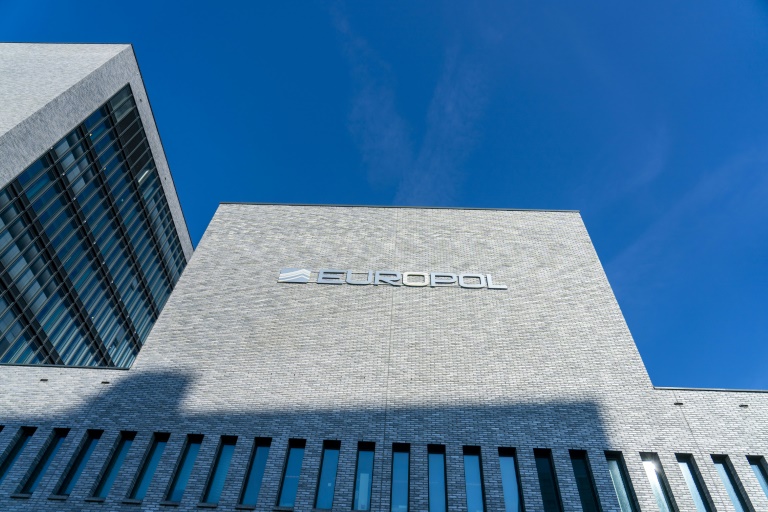
Police have dismantled a huge drugs “super-cartel” that controlled a third of Europe’s cocaine trade, arresting 49 people in various countries, including six chief suspects in Dubai, Europol said on Monday.

The huge international operation seized 30 tonnes of the drug and led to arrests in Belgium, France, the Netherlands and Spain, the European Union’s police agency said in a statement.

The crackdown — which involved one “extremely big fish” from the Netherlands and based in Dubai– largely targeted cocaine coming from South America through the ports of Rotterdam and Antwerp.

“The drugpins, considered as high-value targets by Europol, had come together to form what was known as a ‘super cartel’ which controlled around one third of the cocaine trade in Europe,” Europol said.

“The scale of cocaine importation into Europe under the suspects’ control and command was massive and over 30 tonnes of drugs were seized by law enforcement over the course of the investigations.”

Europol said Dubai had arrested two “high-value” suspects who are linked to France, two connected to the Netherlands and another two linked to Spain.

Ten people were arrested in Belgium, six in France and 13 in Spain. Another 14 people were arrested in 2021 in the Netherlands as part of the same operation, the Hague-based organisation said.

The arrests were the latest in a series that followed a police hack of sophisticated encrypted telephones used by organised crime networks last year, Europol said.

Police took down the SKY ECC phone platform last year, after secretly using it for a long period to listen in on what were supposed to be secure communications between drug traffickers.

– ‘Extremely big fish’ –

Dutch prosecutors said they would request the extradition of the suspects from the United Arab Emirates.

One of the suspects was a 37-year-old man with dual Dutch and Moroccan nationality, who was held for allegedly importing thousands of kilogrammes (pounds) of cocaine into the Netherlands in 2020 and 2021.

“These are serious criminal offences pertaining to international drug trafficking, mainly from South America via the ports of Antwerp and Rotterdam,” the Dutch public prosecution service said in a statement.

The other was a 40-year-old dual Dutch-Bosnian national, it said.

“One of the Dutch suspects is an extremely big fish,” a Europol source told AFP on condition of anonymity.

The Dutch suspects were allegedly linked to Ridouan Taghi, who was arrested in Dubai in 2019 and is now on trial in the Netherlands, the source said.

Taghi is accused of running a huge Amsterdam-based cocaine smuggling group and faces charges including murder.

Spain’s Guardia Civil said a total of 13 people had been arrested in Barcelona, Madrid and Malaga on November 8 after 698 kilogrammes (1,539 pounds) of cocaine were found in a container in the port of Valencia.

The head of the smuggling operation, a British national, fled to Dubai after an attempted arrest in Spain and was continuing to direct operations from there, it said in a statement.

The cocaine was imported from Panama in central America and his supplier, a Panamanian, also lived in Dubai, it said.

Close Bitnami banner
Bitnami