World

China protests speak to deep political frustrations

Protests spreading in China have been catalysed by fury at the government’s hardline zero-Covid policies but have also exposed deep-rooted frustration against the country’s wider political system.

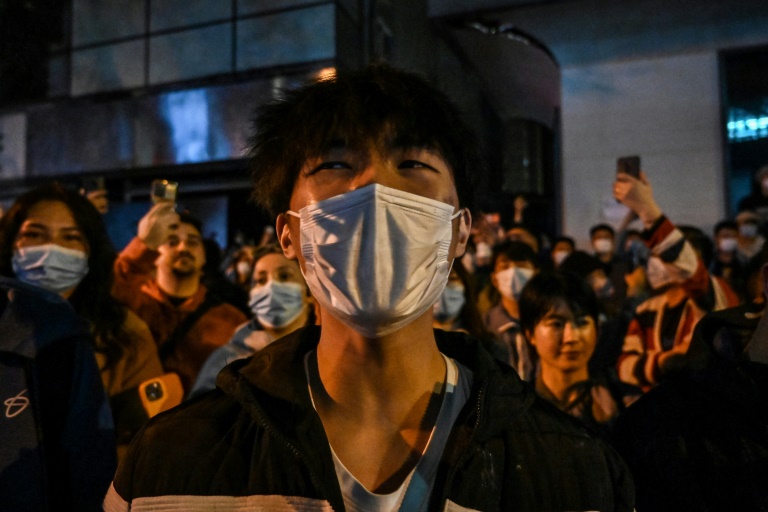
People took to the streets across China on Sunday to call for an end to lockdowns and for greater political freedoms, in a wave of widespread protest not seen since pro-democracy rallies in 1989.

A deadly fire last week in Urumqi, the capital of northwest China’s Xinjiang region, sparked public anger, with many blaming Covid-19 lockdowns for hampering rescue efforts.

China remains the only major economy with a strict zero-Covid policy, with local authorities clamping down on even small outbreaks with strict lockdowns, mass testing campaigns, and lengthy quarantines.

While many had expected the policy to be relaxed after the ruling Communist Party’s five-yearly congress last month, Beijing instead doubled down. That fuelled the public rage now playing out on the streets of some of China’s biggest cities.

“People have now reached a boiling point because there has been no clear path to end the zero-Covid policy,” Alfred Wu Muluan, a Chinese politics expert at the National University of Singapore (NUS), told AFP.

Yasheng Huang, a professor at MIT, said on Twitter the party’s new top leadership comprised of Xi Jinping loyalists was committed to zero-Covid.

“Before the 20th Congress there was hope of policy change, but the leadership lineup of the Congress completely derailed this expectation, forcing people to take actions into their own hands,” Huang said.

– ‘Freedom to write!’ –

Anger over Covid lockdowns has also transformed into calls for broader political change, with some in Shanghai early on Sunday even chanting “Xi Jinping, step down! CCP, step down!” 

Students protesting at Beijing’s elite Tsinghua University on Sunday chanted “democracy and the rule of law, freedom of expression”.

And demonstrators in Beijing on Sunday night shouted slogans demanding “freedom of art” and “freedom to write!”

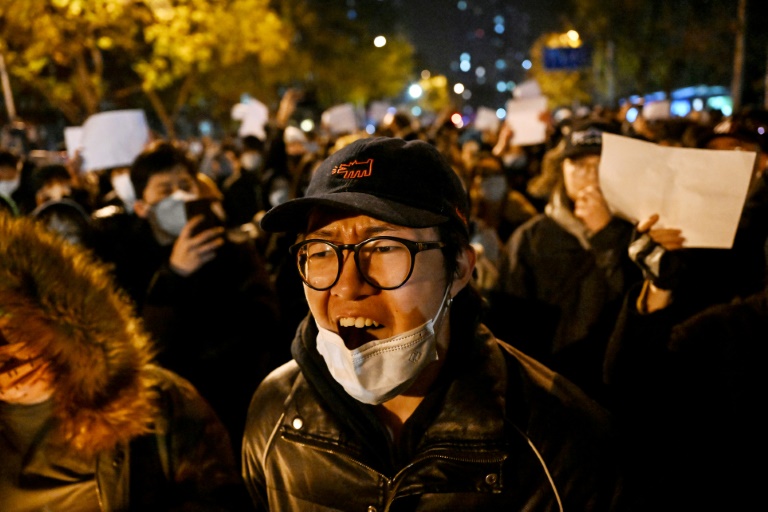
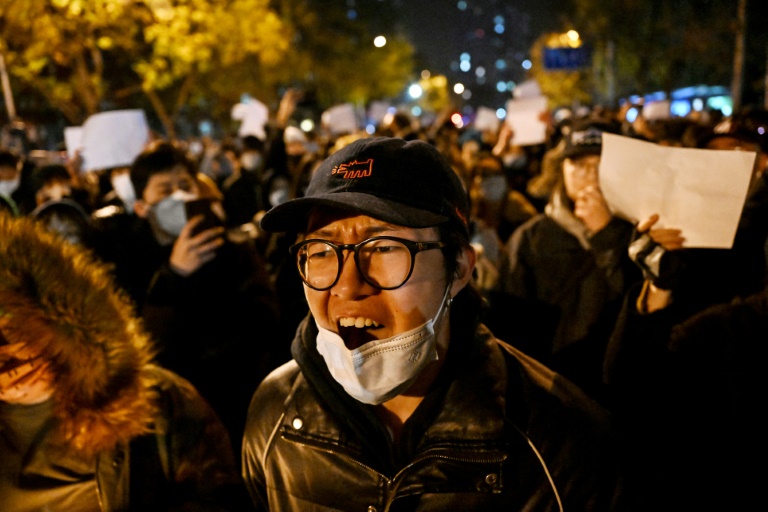
Demonstrators across China have also held up blank sheets of paper symbolising censorship.

“I don’t recall public protests directly calling for press freedom in the past two decades,” political scientist Maria Repnikova said in a tweet.

“What is very intriguing about these protests is how single-issue focus on #covidlockdown quickly transpired into wider political issues,” she said.

Largely young and social media savvy, protesters have organised on the web and used canny tricks to protest against state censorship — from holding up blank papers to online articles consisting of nonsense combinations of “positive” words to draw attention to the lack of free speech. 

“The protesters are very young, and anger from the bottom is very, very strong,” the NUS’s Wu said.

– Scale and intensity –

What will particularly spook the party’s leadership, analysts said, is the protesters’ rage at China’s top brass. This, they argue, is unprecedented since the pro-democracy rallies in 1989 that were ruthlessly crushed.

“In terms of both the scale and intensity, this is the single largest protest by young people in China since the student movement in 1989,” Willy Wo-Lap Lam, Senior Fellow at The Jamestown Foundation, told AFP.

“In 1989, students were very careful not to attack the party leadership by name. This time they have been very specific (about wanting a) change in leadership.”

The scope of the protests — from elite universities in Beijing to central Chinese cities such as Wuhan and Chengdu — is notable, Lam said.

Other analysts cautioned against comparisons to the bloody events of 1989.

“There may not be overarching demand for political reform beyond ending zero-Covid,” Chenchen Zhang, an assistant professor at Durham University, tweeted. “The urban youth today grew up with economic growth, social media, globalised popular culture.”

“The past should not limit our imagination.”

– ‘Anger is very strong’ –

Rare public protests in China are typically focused on local officials and firms, with Beijing “cast in a benevolent light to come in and rescue people from local corruption”, said one expert.

“In these protests, the central government is now being targeted because people understand that zero-Covid is a central policy,” Mary Gallagher, Director of the Center for Chinese Studies at the University of Michigan, told AFP.

Experts were divided on whether Beijing will respond with the carrot or the stick. 

“Anger is very strong, but you can’t arrest everyone,” Wu said.

Peter Frankopan, Professor of Global History at Oxford University, described the role of police as delicate.

“There will be considerable sympathy, especially with younger officers, for the protesters. So giving the order to crackdown brings risks too,” he told AFP.

The leadership will likely be forced to confront the unrest publicly.

“Xi or other top-level leaders will have to come out sooner or later. If not, there is a risk that the protests would continue later,” Lam said.

With the protests entering their third day, experts said it was likely the rallies would continue.

“It seems to me that the discontent is rising, rather than falling,” Frankopan said.

China moves to curb and censor rare, nationwide protests

China security forces detained people Monday at the scene of a rare demonstration as authorities worked to extinguish protests that flared across the country calling for political freedoms and an end to Covid lockdowns.

People have taken to the streets in major cities and gathered at university campuses across China to call for an end to lockdowns and greater political freedoms, in a wave of protests not seen since pro-democracy rallies in 1989 were crushed.

A deadly fire last week in Urumqi, the capital of northwest China’s Xinjiang region, was the catalyst for the public anger, with many blaming Covid lockdowns for hampering rescue efforts.

Beijing Monday accused “forces with ulterior motives” for linking the fire to Covid measures, saying local authorities had “made clear the facts and refuted this information and smears”.

In Shanghai at an area where demonstrators gathered over the weekend, AFP witnessed police leading three people away from a site, while China’s censors worked to scrub signs of the social media-driven rallies.

Protesters have notably used the rallies to call for greater political freedoms — with some even demanding the resignation of China’s President Xi Jinping, recently re-appointed to a historic third term as the country’s leader.

Large crowds gathered Sunday in the capital Beijing and the economic hub of Shanghai, where police clashed with protesters as they tried to stop groups from converging at Wulumuqi street, named after the Mandarin for Urumqi.

Hundreds of people rallied in the same area with blank sheets of paper and flowers to hold what appeared to be a silent protest on Sunday afternoon.

The BBC said one of its journalists had been arrested and beaten by police while covering the Shanghai protests, though China’s foreign ministry said the reporter had not identified himself as such.

A British government minister Monday denounced the Chinese police’s actions as “unacceptable” and “concerning”.

In the capital, at least 400 people gathered on the banks of a river for several hours, with some shouting: “We are all Xinjiang people! Go Chinese people!”

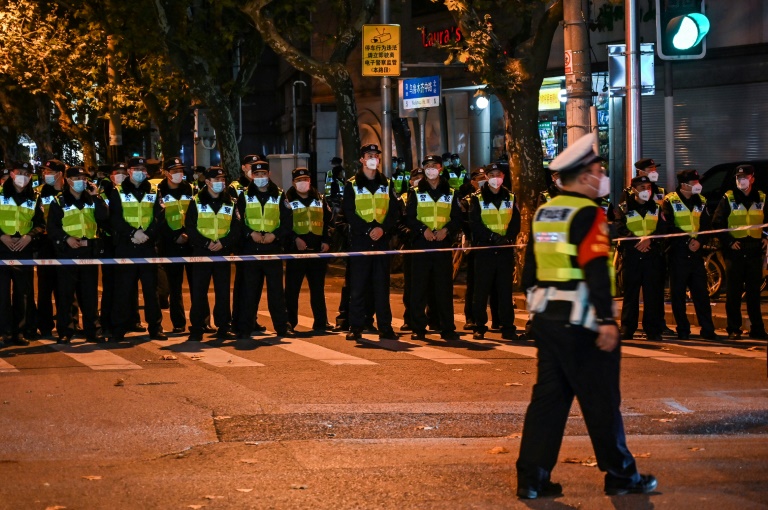
AFP journalists at the tense scene of the Shanghai protests Monday saw a heavy police presence, with blue fences in place along the pavements to stop further gatherings.

Three people were then detained by police at the site, an AFP journalist saw, with law enforcement preventing passersby from taking photos or video of the area.

When asked why one of the people was taken away, a policeman told AFP “because he didn’t obey our arrangements” before referring the reporter to local police authorities.

Shanghai police had not responded on Monday to repeated enquiries about how many people had been detained.

An AFP journalist also filmed people being detained on Sunday.

State censors appeared to have largely cleaned Chinese social media of any news about the rallies by Monday.

The search terms “Liangma River”, “Urumqi Road” — sites of protests in Beijing and Shanghai — had been scrubbed of any references to the rallies on the Twitter-like Weibo platform.

– ‘Boiling point’ –

China’s strict control of information and continued travel curbs tied to the zero-Covid policy make verifying numbers of protesters across the vast country challenging.

But such widespread rallies are exceptionally rare, with authorities harshly clamping down on any and all opposition to the central government.

Spreading through social media, the protests have been fuelled by frustration at the central government’s zero-Covid policy, which sees authorities impose snap lockdowns, lengthy quarantines and mass testing campaigns over just a handful of cases.

Protests also occurred on Sunday in Wuhan, the central city where Covid-19 first emerged, while there were reports of demonstrations in Guangzhou, Chengdu and Hong Kong. 

At the scene of the Beijing riverside rally, where rows of police vehicles were in place on Monday, a female jogger in her twenties told AFP she had seen the protests on social media.

“This protest was a good thing, it sent the signal that people were fed up with too strong restrictions,” the jogger, who asked not to be named, said.

“I think the government has understood the message and that they will ease the policy in order to give them and everyone a way out,” she added, saying that “censorship couldn’t keep up” with news of the protests.

State-run newspaper the People’s Daily published a commentary Monday morning warning against “paralysis” and “battle-weariness” in the fight against Covid — but stopped far short of calling for an end to hardline policy.

“People have now reached a boiling point because there has been no clear direction to path to end the zero-Covid policy,” Alfred Wu Muluan, a Chinese politics expert at the National University of Singapore, told AFP.

“The party has underestimated the people’s anger.”

China reported 40,052 domestic Covid-19 cases Monday, a record high but tiny compared to caseloads in the West at the height of the pandemic.

Equities and crude drop as China hit by protests

Stocks and oil prices sank Monday on concerns about protests across China calling for political freedoms and an end to the government’s hardline zero-Covid policy, fuelling uncertainty in the world’s number-two economy.

Hundreds of people took to the streets at the weekend in the country’s biggest demonstrations since pro-democracy rallies in 1989 were crushed.

A deadly fire in the Xinjiang region on Thursday served as the catalyst for the public anger, with many blaming virus lockdowns for hampering rescue efforts.

People have taken to the streets in Beijing, Shanghai, Guangzhou and Chengdu calling for an end to lockdowns, after an easing of some measures had fuelled hopes of a lighter pandemic approach.

Some demonstrators were even demanding the resignation of China’s President Xi Jinping, who was recently re-appointed to a precedent-breaking third term as the country’s leader.

The latest targeted containment measures have been introduced as the country sees record-high infections.

China-linked stocks took the brunt of selling, with Hong Kong’s Hang Seng Index down more than one percent and Shanghai off 0.8 percent. The yuan slipped more than one percent.

There were also losses in Tokyo, Sydney, Seoul, Singapore, Taipei, Jakarta, Bangkok and Wellington.

London, Paris and Frankfurt opened with losses.

“Sentiment has turned sour as unrest across China grows,” said SPI Asset Management’s Stephen Innes. “Protest of this extent is rare in the country and raises many uncertainties.

“The best scenario is further easing and reopening, but the speed (of) how things deteriorated over the weekend suggests the government needs to act fast. The risk of the situation escalating from here and short-term volatility remains high.”

Ken Cheung of Mizuho Bank added: “It appears that the zero-Covid policy is reaching its tipping point. More easing or refinement on the Covid measures will be needed to curb discontent.”

The prospect of a hit to demand in the world’s biggest crude importer hammered oil prices, with both main contracts down more than two percent.

The selling has taken a bit out of recent gains across markets sparked by hopes of a slowdown in the Federal Reserve’s interest rate hikes, with inflation finally showing signs of softening.

However, some observers said the protests could provide long-term benefits as they could force President Xi Jinping to shift away from his strict, economically damaging measures sooner.

Teneo Holdings’ Gabriel Wildau said: “I don’t expect Xi to publicly admit error or show weakness, but this wave of protests could cause the leadership to decide privately that the exit needs to proceed more quickly than previously planned.”

Investors are now looking ahead to the release of US jobs data at the end of the week, which could provide clues about the Fed’s next moves, while speeches by central bank boss Jerome Powell and other key policymakers will also be pored over.

“While the likes of Federal Reserve Governor Christopher Waller can talk about the fact that the (policy board) is not going to react based on one consumer price index print from October — when the headline number came in below expectations at 7.7 percent — the inescapable fact remains that US CPI has been rising at a slower rate since June,” said Michael Hewson of CMC Markets.

– Key figures around 0710 GMT –

Tokyo – Nikkei 225: DOWN 0.4 percent at 28,162.83 (close)

Hong Kong – Hang Seng Index: DOWN 1.6 percent at 17,297.94 (close)

Shanghai – Composite: DOWN 0.8 percent at 3,078.55 (close)

London – FTSE 100: DOWN 0.6 percent at 7,439.90

Euro/dollar: DOWN at $1.0387 from $1.0403 on Friday

Dollar/yen: DOWN at 138.22 yen from 139.03 yen

Pound/dollar: DOWN at $1.2065 from $1.2087

Euro/pound: UP at 86.12 pence from 86.03 pence

West Texas Intermediate: DOWN 2.5 percent at $74.40 per barrel

Brent North Sea crude: DOWN 2.4 percent at $81.67 per barrel

New York – Dow: UP 0.5 percent at 34,347.03 (close)

Equities and crude drop as China hit by protests

Stocks and oil prices sank Monday on concerns about protests across China calling for political freedoms and an end to the government’s hardline zero-Covid policy, fuelling uncertainty in the world’s number-two economy.

Hundreds of people took to the streets at the weekend in the country’s biggest demonstrations since pro-democracy rallies in 1989 were crushed.

A deadly fire in the Xinjiang region on Thursday served as the catalyst for the public anger, with many blaming virus lockdowns for hampering rescue efforts.

People have taken to the streets in Beijing, Shanghai, Guangzhou and Chengdu calling for an end to lockdowns, after an easing of some measures had fuelled hopes of a lighter pandemic approach.

Some demonstrators were even demanding the resignation of China’s President Xi Jinping, who was recently re-appointed to a precedent-breaking third term as the country’s leader.

The latest targeted containment measures have been introduced as the country sees record-high infections.

China-linked stocks took the brunt of selling, with Hong Kong’s Hang Seng Index down more than one percent and Shanghai off 0.8 percent. The yuan slipped more than one percent.

There were also losses in Tokyo, Sydney, Seoul, Singapore, Taipei, Jakarta, Bangkok and Wellington.

London, Paris and Frankfurt opened with losses.

“Sentiment has turned sour as unrest across China grows,” said SPI Asset Management’s Stephen Innes. “Protest of this extent is rare in the country and raises many uncertainties.

“The best scenario is further easing and reopening, but the speed (of) how things deteriorated over the weekend suggests the government needs to act fast. The risk of the situation escalating from here and short-term volatility remains high.”

Ken Cheung of Mizuho Bank added: “It appears that the zero-Covid policy is reaching its tipping point. More easing or refinement on the Covid measures will be needed to curb discontent.”

The prospect of a hit to demand in the world’s biggest crude importer hammered oil prices, with both main contracts down more than two percent.

The selling has taken a bit out of recent gains across markets sparked by hopes of a slowdown in the Federal Reserve’s interest rate hikes, with inflation finally showing signs of softening.

However, some observers said the protests could provide long-term benefits as they could force President Xi Jinping to shift away from his strict, economically damaging measures sooner.

Teneo Holdings’ Gabriel Wildau said: “I don’t expect Xi to publicly admit error or show weakness, but this wave of protests could cause the leadership to decide privately that the exit needs to proceed more quickly than previously planned.”

Investors are now looking ahead to the release of US jobs data at the end of the week, which could provide clues about the Fed’s next moves, while speeches by central bank boss Jerome Powell and other key policymakers will also be pored over.

“While the likes of Federal Reserve Governor Christopher Waller can talk about the fact that the (policy board) is not going to react based on one consumer price index print from October — when the headline number came in below expectations at 7.7 percent — the inescapable fact remains that US CPI has been rising at a slower rate since June,” said Michael Hewson of CMC Markets.

– Key figures around 0710 GMT –

Tokyo – Nikkei 225: DOWN 0.4 percent at 28,162.83 (close)

Hong Kong – Hang Seng Index: DOWN 1.6 percent at 17,297.94 (close)

Shanghai – Composite: DOWN 0.8 percent at 3,078.55 (close)

London – FTSE 100: DOWN 0.6 percent at 7,439.90

Euro/dollar: DOWN at $1.0387 from $1.0403 on Friday

Dollar/yen: DOWN at 138.22 yen from 139.03 yen

Pound/dollar: DOWN at $1.2065 from $1.2087

Euro/pound: UP at 86.12 pence from 86.03 pence

West Texas Intermediate: DOWN 2.5 percent at $74.40 per barrel

Brent North Sea crude: DOWN 2.4 percent at $81.67 per barrel

New York – Dow: UP 0.5 percent at 34,347.03 (close)

China arrests BBC journalist covering Covid protests

The BBC has said one of its journalists in China was arrested and beaten by police while covering protests on Sunday against the country’s zero-Covid policy.

Hundreds of people took to the streets in China’s major cities on Sunday in a rare outpouring of public anger against the state.

“The BBC is extremely concerned about the treatment of our journalist Ed Lawrence, who was arrested and handcuffed while covering the protests in Shanghai,” the broadcaster said in a statement.

Lawrence, working in the country as an accredited journalist, was detained for several hours, during which time he was beaten and kicked by police, according to the BBC. He was later released.

Lawrence tweeted on Monday to thank his followers, adding he believed “at least one local national was arrested after trying to stop the police from beating me”.

The reporter later returned to the scene of the protest, according to videos he posted to his Twitter page.

“It is very worrying that one of our journalists was attacked in this way whilst carrying out his duties,” the BBC said.

“We have had no official explanation or apology from the Chinese authorities, beyond a claim by the officials who later released him that they had arrested him for his own good in case he caught Covid from the crowd,” the statement added.

“We do not consider this a credible explanation.”

China’s foreign ministry said Monday that Lawrence had not identified himself as a journalist.

“Based on what we learned from relevant Shanghai authorities, he did not identify himself as a journalist and didn’t voluntarily present his press credentials,” foreign ministry spokesperson Zhao Lijian said, telling international media to “follow Chinese laws and regulations while in China”.

burs-je/mtp

Ex-governor tries 'outsider' upset with Nigeria presidential bid

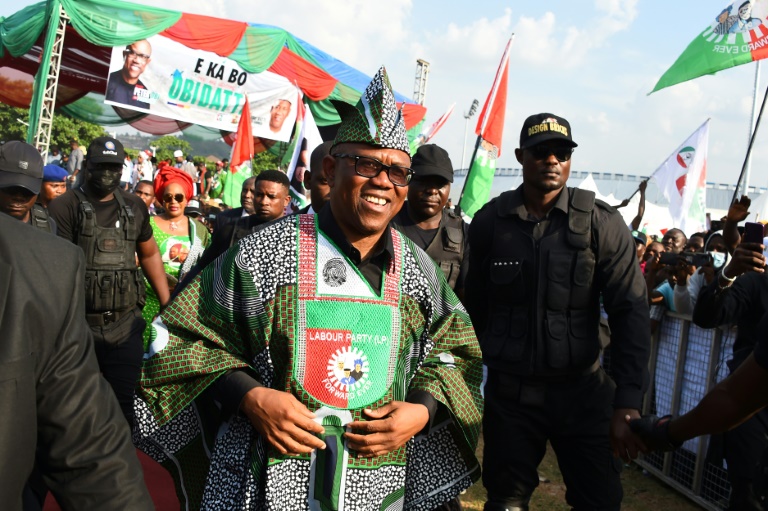
Horns blaring from the crowd, Nigerian candidate Peter Obi makes his pitch, repeating a mantra that he offers youth a chance for change in February’s election.

For 35-year-old footwear seller Joseph Nwankwo it was what he wants to hear. 

“I never voted for any party. They believed our vote never counted. This time round we believe our vote will,” said Nwankwo at the rally in southwest Ibadan city. “We are the youth. If we don’t do it, who will do it for us?” 

Backed by the Labour Party, Obi is emerging as a rare third challenger to the two mainstream parties who have governed Africa’s most populous country since the end of military rule in 1999.

Next February’s election is set to be a tight race to replace President Muhammadu Buhari, who steps down with Nigeria facing huge security challenges and an economy hobbled by fallout from the pandemic and Ukraine’s war.

A former southeast Anambra state governor and one-time PDP vice presidential candidate, Obi has gained momentum with a vibrant social media following and what supporters see as a fresher voice over the other old guard rivals.

Ruling All Progressives Congress (APC) and main opposition Peoples Democratic Party chieftains dismiss Obi as a Twitter phenomenon devoid of a national party network to challenge their deep pockets.

Obi, 61, may face many obstacles in his run to the Aso Rock presidential villa, but his message is resonating especially among younger, urban Nigerians who call themselves “Obi-dients”.

Whether he can win remains unclear — some local polls have him ahead. But analysts say Obi’s challenge is already complicating the political outlook for the PDP and APC.

APC is fielding Bola Tinubu, an 70-year-old former Lagos state governor known as the “Godfather of Lagos” for his political clout.

Against him, the PDP has Atiku Abubakar, 76, a wealthy businessman on his sixth bid for the presidency. He was vice president in 1999.

“All of the political and economic and social conditions have made him a palatable alternative,” SBM Intelligence analyst Ikesemit Effiong said of Obi.

“It is beginning to dent the image of the traditional political parties.”

– Political geography –

Wearing glasses and often dressed in a simple black traditional suit, Obi has run a grass-roots campaign where he touts his experience as governor and his outsider status.

A wealthy trader, Obi says he is about turning Nigeria around — increasing production rather than consumption, governing responsibly and taking on insecurity.   

“The government we intend to form, will be the beginning of a new Nigeria,” he told a crowd of thousands in Ibadan. “We will secure a united Nigeria.”

But with little structure nationwide and no governors, rivals say the Labour party and Obi will struggle. In 2019, the Labour Party candidate won 0.02 percent of the vote. The party elected one lawmaker.

“People say the Obidients, of course they will,” said Edo State governor Godwin Obaseki, who is campaigning for PDP. “But they will run out of steam.”

Nigerian elections are often about geography calculations. To win the presidency, a candidate must get a majority of the votes and also 25 percent of the votes in two thirds of its 36 states.

Almost equally split between predominantly Muslim north and the mostly Christian south, Nigeria is a patchwork of ethnic groups, including the largest Yoruba, Hausa and Igbo.

In an unwritten agreement to promote informal power sharing, the presidency has rotated alternatively between candidates from the north and south.

But 2023 is complex. After two terms under Buhari, a northern Muslim, many expected a southerner. But PDP went with Abubakar, a northerner. APC chose southerner Tinubu, but an all Muslim president and vice president team.

– New dimension –

Obi, an Igbo from the southeast, will likely do well in traditional PDP strongholds in that region, but may also dent APC’s vote in Tinubu’s Lagos stronghold, analysts said.

With the PDP already damaged by a deep split with Rivers State governor over its candidate, APC may benefit more from incumbency and Obi taking away PDP’s votes, risk analysts Eurasia Group said.

But opponents question Obi’s support in the north, where large voting blocks have delivered the presidency in the last two elections.

“Have you seen social media promoting Peter Obi in the north?” Zamfara State governor Bello Matawalle and APC leader told TVS news. “During the election they will understand they have the wrong calculation.”

Voter turnout is often low in Nigeria, and some observers ask whether Obi’s presence could disrupt APC and PDP support enough to force a second-round runoff for the first time ever. 

“Clearly he is going to be a major factor in determining the outcome of the election,” said Chidi Anselm Odinkalu, a professor at Tufts University’s Fletcher School.

Lagos taxi driver Abrahim Babatunde Lawal agrees. He voted twice for Buhari and APC since 2015. Next year he is giving Obi a chance. 

“He’s a new dimension, someone who is different from the old politicians,” Lawal said. “I won’t say he is going to win, it will be very difficult, we are just hoping.”

Four dead in hotel siege in Somali capital: security agency

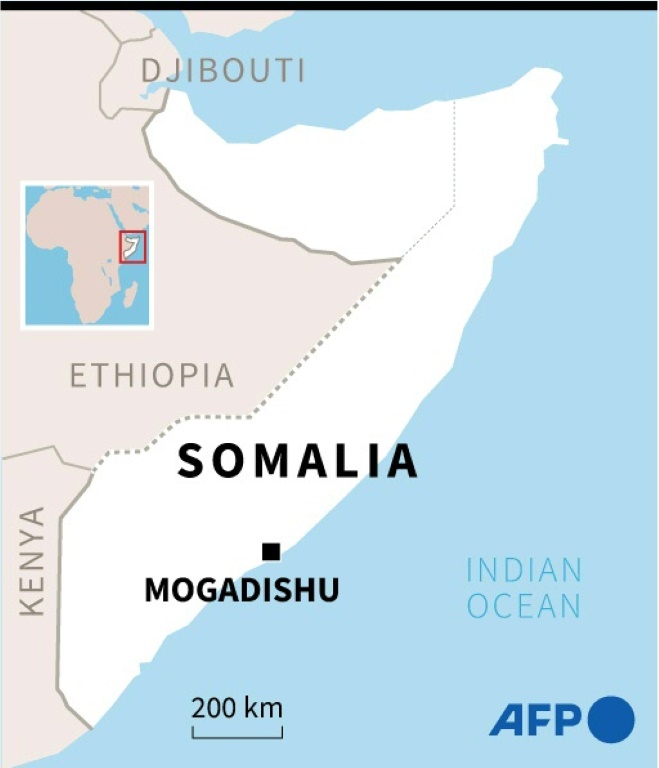
At least four people were killed in an ongoing attack by Al-Shabaab militants who laid siege to a popular hotel in Somalia’s capital Mogadishu overnight, a security agency official told AFP on Monday.

Gunfire and explosions could still be heard more than 12 hours after the militants stormed the hotel near the presidential palace in a hail of bullets.

Mohamed Dahir, an official from the national security agency, told AFP the gunmen were holed up in a room at the Villa Rose surrounded by government forces.

“So far we have confirmed the death of four people”, he said, adding that others had been rescued from the besieged venue.

“Very soon the situation will return to normal.”

Government officials were among others injured, he added. 

The Villa Rose is frequented by MPs and located in a secure central part of the capital just a few blocks from the office of Somalia’s President Hassan Sheikh Mohamud.

Al-Shabaab, a militant group affiliated with Al-Qaeda that has been trying to overthrow Somalia’s central government for 15 years, claimed responsibility for the attack.

Police said the gunmen rushed into the hotel in Bondhere district at around 8:00 pm (1700 GMT) on Sunday and an operation was under way to “eliminate” them.

More than 12 hours later, witnesses near the scene described still hearing loud explosions and gunfire.

“I saw several military vehicles with special forces heading towards the hotel, and a few minutes later, there was heavy gunfire and explosions,” said local witness Mahad Yare.

In a statement late Sunday, the African Union Transition Mission in Somalia (ATMIS), a 20,000-strong military force drawn from across the continent, praised the “swift” security response to the attack.

On its website the Villa Rose describes the hotel as the “most secure lodging arrangement in Mogadishu” with metal detectors and a high perimeter wall. 

– Retaliatory attacks –

Al-Shabaab has intensified attacks against civilian and military targets as Somalia’s recently-elected government has pursued a policy of “all-out war” against the Islamists.

The security forces, backed by local militias, ATMIS and US air strikes, have driven Al-Shabaab from central parts of the country in recent months, but the offensive has drawn retribution.

On October 29, two cars packed with explosives blew up minutes apart in Mogadishu followed by gunfire, killing at least 121 people and injuring 333 others.

It was the deadliest attack in the fragile Horn of Africa nation in five years.

At least 21 people were killed in a siege on a Mogadishu hotel in August that lasted 30 hours before security forces were able to overpower the militants inside.

The UN said earlier this month that at least 613 civilians had been killed and 948 injured in violence this year in Somalia, mostly caused by improvised explosive devices (IEDs) attributed to Al-Shabaab. 

The figures were the highest since 2017 and a more-than 30-percent rise from last year.

Ex-governor tries 'outsider' upset with Nigeria presidential bid

Horns blaring from the crowd, Nigerian candidate Peter Obi makes his pitch, repeating a mantra that he offers youth a chance for change in February’s election.

For 35-year-old footwear seller Joseph Nwankwo it was what wants to hear. 

“I never voted for any party. They believed our vote never counted. This time round we believe our vote will,” said Nwankwo at the rally in southwest Ibadan city. “We are the youth. If we don’t do it, who will do it for us?” 

Backed by the Labour Party, Obi is emerging as a rare third challenger to the two mainstream parties who have governed Africa’s most populous country since the end of military rule in 1999.

Next February’s election is set to be a tight race to replace President Muhammadu Buhari, who steps down with Nigeria facing huge security challenges and an economy hobbled by fallout from the pandemic and Ukraine’s war.

A former southeast Anambra state governor and one-time PDP vice presidential candidate, Obi has gained momentum with a vibrant social media following and what supporters see as a fresher voice over the other old guard rivals.

Ruling All Progressives Congress (APC) and main opposition Peoples Democratic Party chieftains dismiss Obi as a Twitter phenomenon devoid of a national party network to challenge their deep pockets.

Obi, 61, may face many obstacles in his run to Aso Rock presidential villa, but his message is resonating especially among younger, urban Nigerians who call themselves “Obi-dients”.

Whether he can win remains unclear — some local polls have him ahead. But analysts say Obi’s challenge is already complicating the political outlook for the PDP and APC.

APC is fielding Bola Tinubu, an 70-year-old former Lagos state governor known as the “Godfather of Lagos” for his political clout.

Against him, the PDP has Atiku Abubakar, 76, a wealthy businessman on his sixth bid for the presidency. He was vice president in 1999.

“All of the political and economic and social conditions have made him a palatable alternative,” SBM Intelligence analyst Ikesemit Effiong said of Obi.

“It is beginning to dent the image of the traditional political parties.”

– Political geography –

Wearing glasses and often dressed in a simple black traditional suit, Obi has run a grass-roots campaign where he touts his experience as governor and his outsider status.

A wealthy trader, Obi says he is about turning Nigeria around — increasing production rather than consumption, governing responsibly and taking on insecurity.   

“The government we intend to form, will be the beginning of a new Nigeria,” he told a crowd of thousands in Ibadan. “We will secure a united Nigeria.”

But with little structure nationwide and no governors, rivals say the Labour party and Obi will struggle. In 2019, the Labour Party candidate won 0.02 percent of the vote. The party elected one lawmaker.

“People say the Obidients, of course they will,” said Edo State governor Godwin Obaseki, who is campaigning for PDP. “But they will run out of steam.”

Nigerian elections are often about geography calculations. To win the presidency, a candidate must get a majority of the votes and also 25 percent of the votes in two thirds of its 36 states.

Almost equally split between predominantly Muslim north and the mostly Christian south, Nigeria is a patchwork of ethnic groups, including the largest Yoruba, Hausa and Igbo.

In an unwritten agreement to promote informal power sharing, the presidency has rotated alternatively between candidates from the north and south.

But 2023 is complex. After two terms under Buhari, a northern Muslim, many expected a southerner. But PDP went with Abubakar, a northerner. APC chose southerner Tinubu, but an all Muslim president and vice president team.

– New dimension –

Obi, an Igbo from the southeast, will likely do well in traditional PDP strongholds in that region, but may also dent APC’s vote in Tinubu’s Lagos stronghold, analysts said.

With the PDP already damaged by a deep split with Rivers State governor over its candidate, APC may benefit more from incumbency and Obi taking away PDP’s votes, risk analysts Eurasia Group said.

But opponents question Obi’s support in the north, where large voting blocks have delivered the presidency in the last two elections.

“Have you seen social media promoting Peter Obi in the north?” Zamfara State governor Bello Matawalle and APC leader told TVS news. “During the election they will understand they have the wrong calculation.”

Voter turnout is often low in Nigeria, and some observers ask whether Obi’s presence could disrupt APC and PDP support enough to force a second-round runoff for the first time ever. 

“Clearly he is going to be a major factor in determining the outcome of the election,” said Chidi Anselm Odinkalu, a professor at Tufts University’s Fletcher School.

Lagos taxi driver Abrahim Babatunde Lawal agrees. He voted twice for Buhari and APC since 2015. Next year he is giving Obi a chance. 

“He’s a new dimension, someone who is different from the old politicians,” Lawal said. “I won’t say he is going to win, it will be very difficult, we are just hoping.”

Celebrated Greek cheesemakers brought low by inflation

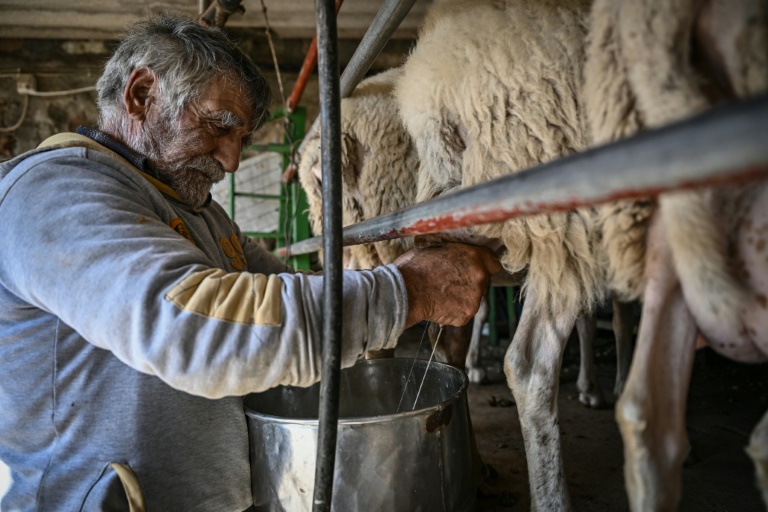
On his bougainvillaea-covered farm on the Greek island of Naxos, Yannis Karganis milks his sheep, wondering anxiously how he will cope with soaring costs and keep his cheesemaking business afloat.

After the war in Ukraine sparked an inflationary spiral in the price of cereals, fuel and other goods, farmers on Naxos and across the country have been left fearing for their survival.

“I earn nothing from my cheeses,” says the septuagenarian, who makes Naxos graviera, a hard yellow cheese popular throughout Greece and beyond.

“I work day and night and despite this, I still cannot live.”

Inflation in Greece rose to 12 percent in September before dropping to 9.1 percent in October. 

Even though the government announced nearly 280 million euros ($291 million) in support benefits for young farmers earlier this year, there is still heavy pressure on the country’s agricultural sector which employs 11 percent of the workforce.

“Last year, a bag of feed cost 14 euros. This year it’s 21 euros. Gasoline has skyrocketed to 2.30 euros per litre at the moment,” the greying Karganis sighs, stirring a large cauldron to make cheese in his small kitchen.

– Social stress –

Throughout the country, social pressure is rising in the face of soaring energy prices. 

In November, a general strike on the issue paralysed Greece.

Dimitris Kapounis, head of the union of Naxos agricultural cooperatives, warns that if nothing changes “in the medium term, there will be no more milk on the Greek market, no meat, potatoes, or anything else.”

Naxos graviera — made from 80 percent cow’s milk and 20 percent sheep or goat’s milk — is one of Greece’s most popular cheeses. 

The Greeks like it sprinkled on pasta, fried or as a table cheese.

But even carrying the vaunted European Protected Designation of Origin label, and exporting to a dozen countries including the United States and Germany, hasn’t helped stem the slide in output as costs ramp up.

This year, the usual annual production of more than 1,250 tons has already fallen by 130 tons, the cooperative said.

– Lack of milk –

The squeeze on animal feed and fuel has resulted in a fall in milk production, explains local shepherd Yannis Vavoulas.

“We can’t maintain feeding them properly,” the 42-year-old says. 

“We feed them two or three times (a day) with little food,” which means the animals produce less milk. 

The crisis is so acute that some farmers have had to slaughter part of their herd, further reducing milk production.

Yorgos Margaritis, who owns 250 cows, is one of the local farmers to have already made this painful decision.

He gestures to some of his nearby animals which he says would normally have been inseminated by now for producing calves.

“(Instead), they will be slaughtered,” he says.

The cost of transporting goods from the Greek mainland is also becoming prohibitive — it takes more than five hours by boat to get from the main Greek port of Piraeus to Naxos.

In an act of desperation, the Naxos cooperative in April went as far as neighbouring Bulgaria to buy animal feed, where prices are lower.

“If the milk producers are not helped… then we are all lost,” warns Yannis Kavouras, head of the largest cheese factory in Naxos.

And as the EU’s protected status regulations permit only the use of local milk, shipping it in from elsewhere is not an option either.

“If the producers don’t bring any more milk, what am I going to use — water?” wonders Kavouras.

Celebrated Greek cheesemakers brought low by inflation

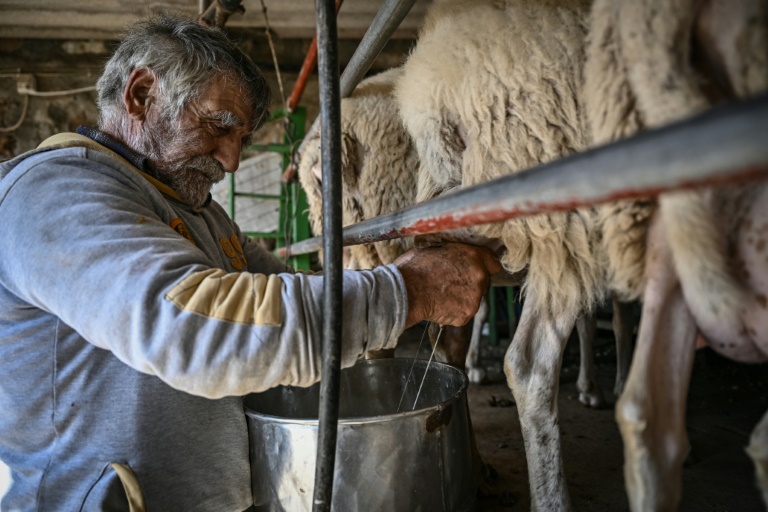
On his bougainvillaea-covered farm on the Greek island of Naxos, Yannis Karganis milks his sheep, wondering anxiously how he will cope with soaring costs and keep his cheesemaking business afloat.

After the war in Ukraine sparked an inflationary spiral in the price of cereals, fuel and other goods, farmers on Naxos and across the country have been left fearing for their survival.

“I earn nothing from my cheeses,” says the septuagenarian, who makes Naxos graviera, a hard yellow cheese popular throughout Greece and beyond.

“I work day and night and despite this, I still cannot live.”

Inflation in Greece rose to 12 percent in September before dropping to 9.1 percent in October. 

Even though the government announced nearly 280 million euros ($291 million) in support benefits for young farmers earlier this year, there is still heavy pressure on the country’s agricultural sector which employs 11 percent of the workforce.

“Last year, a bag of feed cost 14 euros. This year it’s 21 euros. Gasoline has skyrocketed to 2.30 euros per litre at the moment,” the greying Karganis sighs, stirring a large cauldron to make cheese in his small kitchen.

– Social stress –

Throughout the country, social pressure is rising in the face of soaring energy prices. 

In November, a general strike on the issue paralysed Greece.

Dimitris Kapounis, head of the union of Naxos agricultural cooperatives, warns that if nothing changes “in the medium term, there will be no more milk on the Greek market, no meat, potatoes, or anything else.”

Naxos graviera — made from 80 percent cow’s milk and 20 percent sheep or goat’s milk — is one of Greece’s most popular cheeses. 

The Greeks like it sprinkled on pasta, fried or as a table cheese.

But even carrying the vaunted European Protected Designation of Origin label, and exporting to a dozen countries including the United States and Germany, hasn’t helped stem the slide in output as costs ramp up.

This year, the usual annual production of more than 1,250 tons has already fallen by 130 tons, the cooperative said.

– Lack of milk –

The squeeze on animal feed and fuel has resulted in a fall in milk production, explains local shepherd Yannis Vavoulas.

“We can’t maintain feeding them properly,” the 42-year-old says. 

“We feed them two or three times (a day) with little food,” which means the animals produce less milk. 

The crisis is so acute that some farmers have had to slaughter part of their herd, further reducing milk production.

Yorgos Margaritis, who owns 250 cows, is one of the local farmers to have already made this painful decision.

He gestures to some of his nearby animals which he says would normally have been inseminated by now for producing calves.

“(Instead), they will be slaughtered,” he says.

The cost of transporting goods from the Greek mainland is also becoming prohibitive — it takes more than five hours by boat to get from the main Greek port of Piraeus to Naxos.

In an act of desperation, the Naxos cooperative in April went as far as neighbouring Bulgaria to buy animal feed, where prices are lower.

“If the milk producers are not helped… then we are all lost,” warns Yannis Kavouras, head of the largest cheese factory in Naxos.

And as the EU’s protected status regulations permit only the use of local milk, shipping it in from elsewhere is not an option either.

“If the producers don’t bring any more milk, what am I going to use — water?” wonders Kavouras.

Close Bitnami banner
Bitnami