World

Italy declares state of emergency after deadly island landslide

Italy declared a state of emergency on the southern island of Ischia on Sunday after a landslide killed at least seven people and left several others missing. 

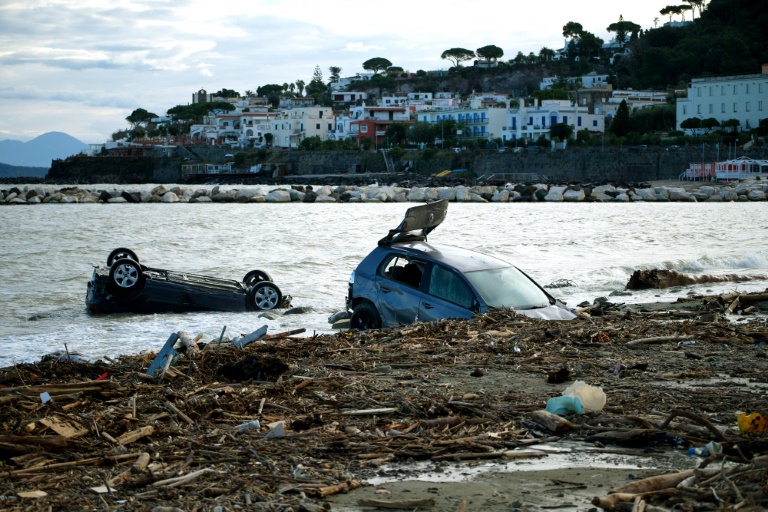
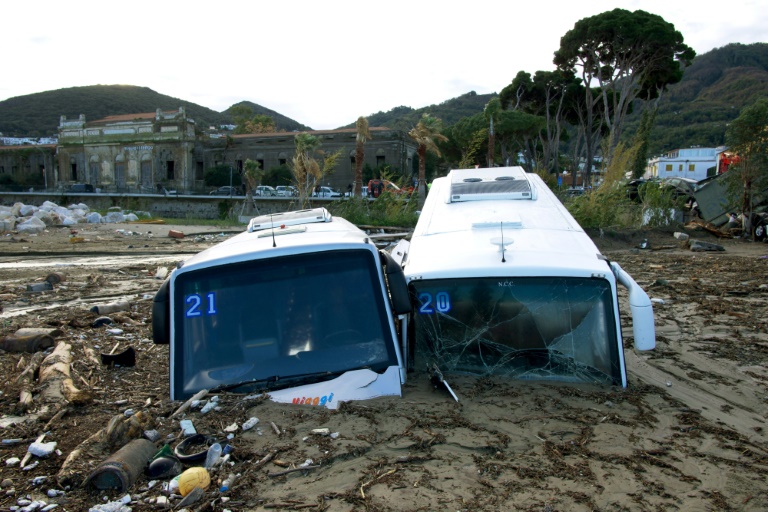
A wave of mud and debris crashed through the small town of Casamicciola Terme on Saturday morning, engulfing at least one house and sweeping cars down to the sea, local media and emergency services said.

“The toll of victims from the landslide in Casamicciola has risen to seven dead, while five are missing,” Naples city prefect Claudio Palomba announced late Sunday. 

A first tranche of two million euros ($2 million) of relief funds was released at the end of an emergency cabinet meeting, which declared the state of emergency, said Minister for Civil Protection Nello Musumeci.

Italian media had earlier reported that four bodies had been found by Sunday afternoon.

More than 200 rescuers were still searching for missing people, while hundreds of volunteers, up to their knees in mud, were busy cleaning the town’s streets.

The rescue effort had been hampered by rain and high winds, which also delayed ferries bringing reinforcements from the mainland.

“It’s a situation that hurts us, if only for the people who disappeared under the mountain. Here it’s an island and even if we don’t really know everyone, it’s almost that,” Salvatore Lorini, 45, told AFP.

“The mountain came down, there was devastation of shops, cars, hotels and that was already happening nine years ago. Now I am cleaning my mother-in-law’s shop,” he said.

Interior Minister Matteo Piantedosi had earlier warned there were people trapped in the mud, saying it was a “very serious” situation.

– Complex rescue operation –

Heavy rain sent torrents of mud through the streets of Casamicciola Terme, a spa resort of 8,000 inhabitants on the north of Ischia, a lush island near Capri that is thronged with tourists in summer.

Trees were upturned and cars left battered on the side of the road or in the water, according to AFP journalists.

Boulders were scattered around as excavators sought to free up access to homes, cars and shops.

“If I could, I would leave Casamicciola because I now struggle to live there, even if my house survived the tremor, the flooding,” 64-year-old Iacono Maria told AFP.

Pope Francis said he was praying for the victims, “those who suffer and all those who have contributed to the rescue” in his Angelus prayer on Sunday.

The fire service said earlier one house had been swamped by the mud and two people had been rescued from a car swept into the sea.

In the worst-affected area of the town, at least 30 families were trapped in their homes without water or electricity, with mud and debris blocking the road, ANSA news agency reported.

Officials had said they expected to evacuate and find temporary homes for between 150 and 200 people.

Local authorities called on Ischia residents to stay inside to avoid hindering the rescue operation.

An “exponential” growth of infrastructure sparked by mass tourism ended up “stifling all the natural elements of the land and covering everything with cement”, geologist Mario Tozzi wrote in La Stampa newspaper.

Casamicciola Terme was hit by an earthquake in 2017, in which two people died. It was completely destroyed by a much more powerful tremor at the end of the 19th century.

The devastation in Ischia comes just weeks after 11 people died in heavy rain and flooding in the central Italian region of Marche.
Belgian rail workers to strike next week

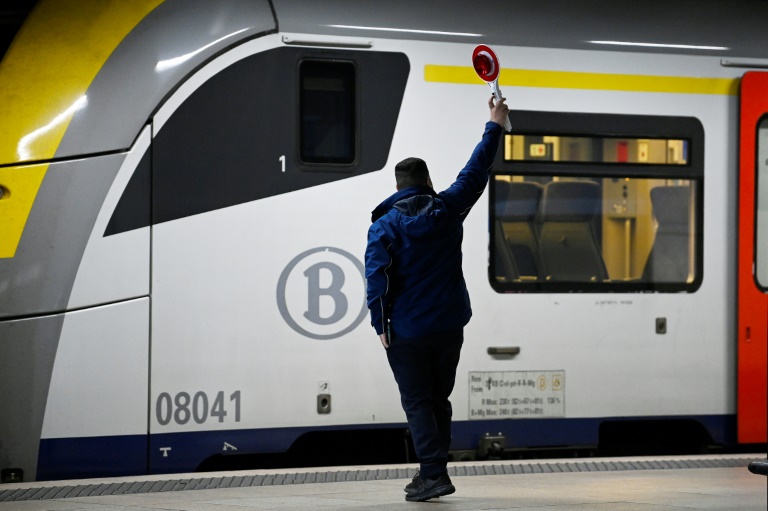
Rail workers in Belgium are to strike over several days in the coming week as part of a union-led campaign for greater government investment in the network.

One train in four on average will run on Tuesday because of the action, called by the main rail unions, Belgium’s rail operator the SNCB said in a statement. The action will start late Monday from 2000 GMT.

Services in some regions will be completely halted according to media reports.

A 48-hour strike by train drivers on Wednesday and Thursday will further disrupt services.

Rail workers in Belgium have regularly denounced their worsening working conditions and called for greater government investment.

Protests across China as anger mounts over zero-Covid policy

Hundreds of people took to the streets in China’s major cities on Sunday to protest against the country’s zero-Covid policy, in a rare outpouring of public anger against the state.

China’s hardline virus strategy is stoking public frustration, with many growing weary of snap lockdowns, lengthy quarantines and mass testing campaigns.

A deadly fire on Thursday in Urumqi, the capital of northwest China’s Xinjiang region, has become a fresh catalyst for public anger, with many blaming Covid lockdowns for hampering rescue efforts. Authorities deny the claims. 

On Sunday night, at least 400 people gathered on the banks of a river in the capital Beijing for several hours, with some shouting: “We are all Xinjiang people! Go Chinese people!”

AFP reporters at the scene described the crowd singing the national anthem and listening to speeches, while on the other side of the canal bank, a line of police cars waited. 

Cars honked in support as people remained in the area until the early hours, chanting and waving blank sheets of paper symbolising censorship. 

Authorities blocked the road to stop cars passing, and around 100 plainclothes and police officers arrived on the scene. 

At around 2:00 am (1800 GMT) they were joined by coaches of paramilitary police. 

Eventually protesters agreed to leave after making officers promise their demands had been heard. 

– Shanghai clashes –

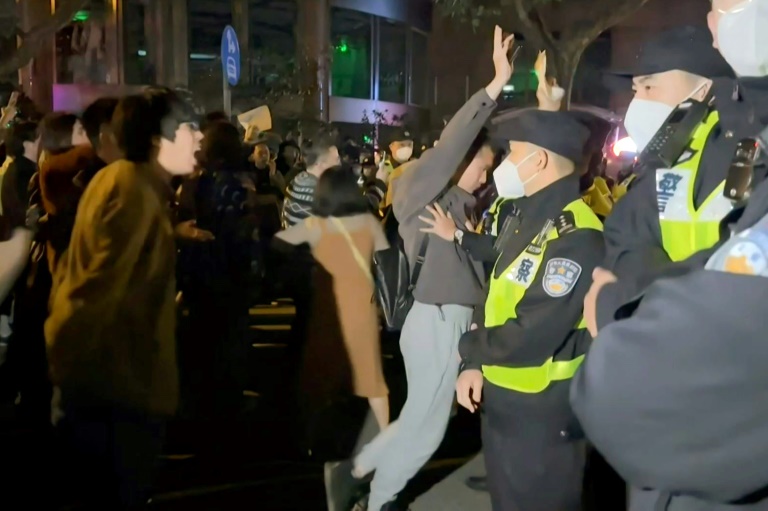
In downtown Shanghai — China’s biggest metropolis — AFP saw police clashing with groups of protesters, as officers tried to move people away from the site of an earlier demonstration on Wulumuqi street, named after the Mandarin for Urumqi. 

Crowds that had gathered overnight — some of whom chanted “Xi Jinping, step down! CCP, step down!” — were dispersed by Sunday morning.

But in the afternoon, hundreds rallied in the same area with blank sheets of paper and flowers to hold what appeared to be a silent protest, an eyewitness told AFP.

Social media videos from the area that appeared to be taken in the late afternoon showed the crowd chanting.  

By evening, dozens of policemen in yellow high-vis jackets formed a thick line, cordoning off the streets where the protests had taken place. 

AFP saw multiple people arrested as officers told demonstrators to leave the area. 

A foreigner who wished to remain anonymous told AFP he had seen a standoff as police directed a crowd away from Wulumuqi street. 

“The police appeared to be looking for individuals suspected of leading the protests,” he said.

“Protesters directed their anger at the police and the party, using the ‘step down!’ refrain of the last few days.”

By midnight the area was calm, though swamped by hundreds of police officers and dozens of cars lining both sides of the road in some places. 

Men in hard hats and overalls were erecting tall blue metal barriers on the sides of the street, cutting off the pavement. When asked why, they said they did not know.

In the central megacity of Wuhan, where the coronavirus first emerged, multiple livestreams that were quickly censored showed crowds walking through the streets cheering and filming on their phones.  

Footage of protests allegedly taken in major cities Guangzhou and Chengdu was also spreading online Sunday night, but AFP was unable to independently verify the videos. 

– University protests –

Earlier in the day, around 200 to 300 students rallied at Beijing’s elite Tsinghua University to protest against lockdowns, one witness who wished to remain anonymous told AFP.

A video that appeared to be taken in the same location showed students shouting, “Democracy and the rule of law, freedom of expression”, and was quickly taken down. 

Other vigils took place overnight at universities across China, including one at Tsinghua’s neighbour Peking University, an undergraduate participant told AFP. 

He said some anti-Covid slogans had been daubed on a wall in the university. 

Some of the words echoed a banner that was hung over a Beijing bridge just before the Communist Party Congress in October. 

“I heard people yelling: ‘No to Covid tests, yes to freedom!’,” he said, adding there were between 100 and 200 people there. 

Videos on social media also showed a mass vigil at Nanjing Institute of Communications, with people holding lights and white sheets of paper. 

Hashtags relating to the institute were censored on Weibo, and video platforms Duoyin and Kuaishou were scrubbed of footage. 

Videos from campuses in Xi’an, Guangzhou and Wuhan showing similar protests also spread on social media. AFP was unable to verify the footage independently. 

– ‘Lift lockdowns!’ –

China reported 39,506 domestic Covid-19 cases Sunday, a record high but tiny compared to caseloads in the West at the height of the pandemic.

The protests come against a backdrop of mounting public frustration over China’s zero-tolerance approach to the virus and follow sporadic rallies in other cities.

Hundreds of people massed outside Urumqi’s government offices after the deadly fire, chanting: “Lift lockdowns!”, footage partially verified by AFP shows. 

AFP verified the video by geolocating local landmarks but was unable to specify exactly when the protests occurred.

It is the latest in several high-profile cases where emergency services have been allegedly slowed down by Covid lockdowns.

The Qatar World Cup has also proved a flashpoint, as scenes of maskless fans provoked outrage on social media. 

China’s state broadcaster has started cutting close-ups of supporters and replacing them with shots of officials or players. 

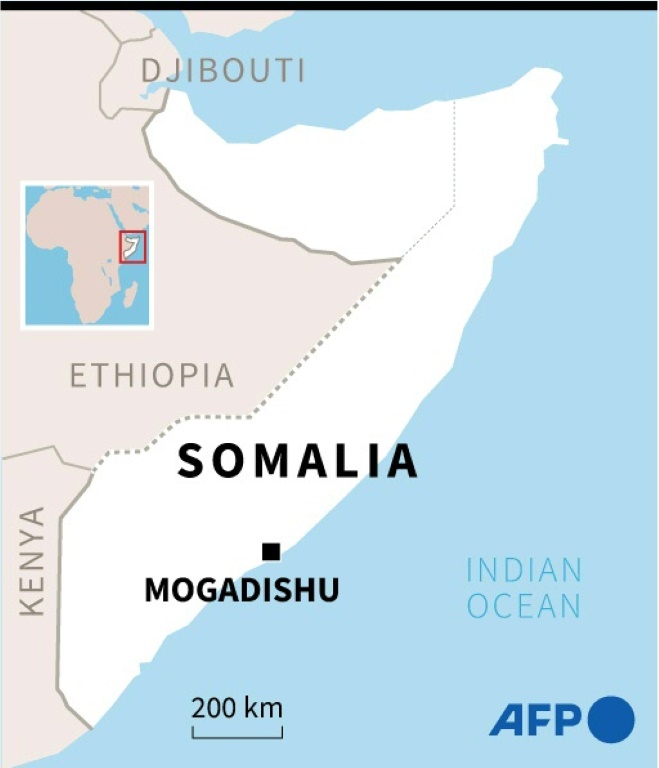
Somalia questions foreign 'hostages' found near Al-Shabaab territory

Somali police launched an investigation Sunday after 20 foreigners were discovered near territory controlled by the Al-Shabaab militant group claiming to be fishermen who had been held hostage for years.

Police spokesman Sadik Dudishe said the men — 14 Iranians and six Pakistanis — were apprehended for questioning after they wandered unexpectedly from a part of Galmudug state under militant control.

“Some of these people were kidnapped by Al-Shabaab in 2014, while others were abducted on the Harardhere coast, near Qosol-tire, in southern Somalia in mid-2019,” Dudishe said in a statement.

“Four of them have physical injuries,” he said.

It is not clear how the men came to be released, and police provided no further detail, citing an ongoing inquiry. 

Local authorities in Hobyo, the coastal town where the men appeared, said the foreigners were being held for questioning.

“We are still investigating these 20 men who were detained today after coming from an Al-Shabaab controlled area,” Hobyo’s commissioner Abdullahi Ahmed Ali told reporters.

“They have claimed to be fishermen,” he added.

Al-Shabaab, which controls swathes of rural Somalia, has been trying to overthrow the central government for 15 years, funding its insurgency through criminal activities including kidnapping and ransom.

Somalia has also been plagued by piracy for years, though attacks on maritime vessels off the coast have fallen off sharply in recent years since peaking at 176 in 2011.

Unconfirmed reports suggest the men could have been abducted by pirates and passed on to Al-Shabaab, an affiliate of Al-Qaeda, which includes foreign fighters among its ranks.

In 2020, three Iranian fishermen believed to be the last hostages held by Somali pirates were freed after five years of captivity.

Cuba holds local elections as opposition deplores pressure

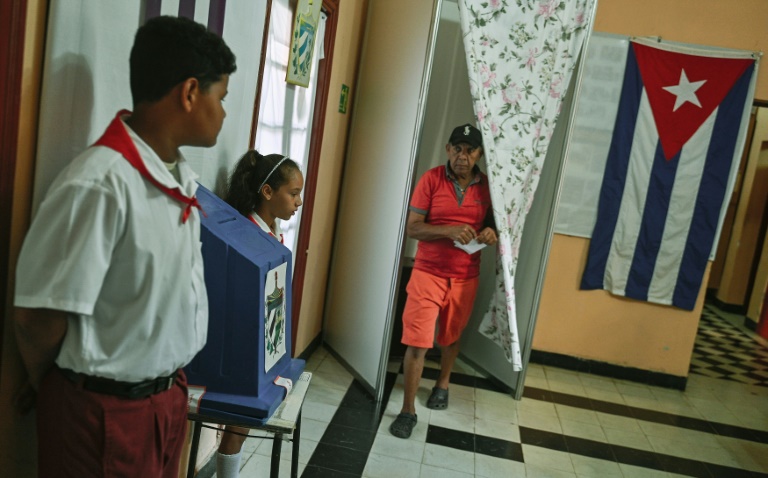
Cubans are voting Sunday in municipal elections amid a grave economic crisis that could weaken turnout and with the opposition charging some of its candidates have faced unfair pressure.

More than eight million Cubans aged 16 and older (of a population of 11.2 million) are eligible to cast secret ballots to select more than 12,400 municipal delegates, or councillors, from the 27,000 candidates nominated by show of hands in neighborhood assemblies.

In Havana, polling stations opened without incident at 7:00 am (1200 GMT), AFP journalists reported.

President Miguel Díaz-Canel, who had arrived back in Cuba earlier Sunday after a trip that took him to Algeria, Russia, Turkey and China, went with his wife Lis Cuesta to vote at a polling station in Playa, west of Havana. 

He later told reporters that the electoral process confirmed the political and social stability of the island, despite the “economic suffocation” he said the US was imposing on Cuba. 

The government had mounted an intense get-out-the-vote campaign on social media, as well as in the press and on television — both controlled by the ruling Communist Party, which oversees the election process but does not nominate candidates. 

But the opposition platform known as the Council for the Democratic Transition in Cuba (CDTC), which promotes change and pluralism in the country through legal means, called on people to abstain, citing unfair pressure by the government.

Its vice president, Manuel Cuesta, told AFP that three of the group’s candidates had been prevented “by the political police” from participating in neighborhood assemblies because they appeared to have a good chance of winning.

He said a fourth candidate, Jose Cabrera, was nominated in the southeastern city of Palma Soriano but never made it to the ballot over “threats of losing his job” and other difficulties.

The Cuban government has branded opposition members as US “mercenaries.”

These elections are the first step in a unique electoral system.

Councillors elected Sunday will form municipal governments that will propose 50 percent of the candidates for provincial assemblies and the National Assembly, which in turn elects the Council of State and the Cuban president from among its members. 

The other 50 percent are put forward by social organizations close to the government.

In theory, the system allows any Cuban to reach parliament, but the opposition maintains that Communist Party militants have the ability to prevent any opposition member from being elected. 

Adding uncertainty to the election — the first since Diaz-Canel came to power in 2018 —  is the economic crisis that has brought shortages of food and medicine and daily blackouts to the island, fueling an outflow of migrants and potentially increasing abstentionism.

Candidates who fail to win with an outright majority this Sunday will face a runoff on December 4.

Greece opens abuse, fraud probe into famed charity

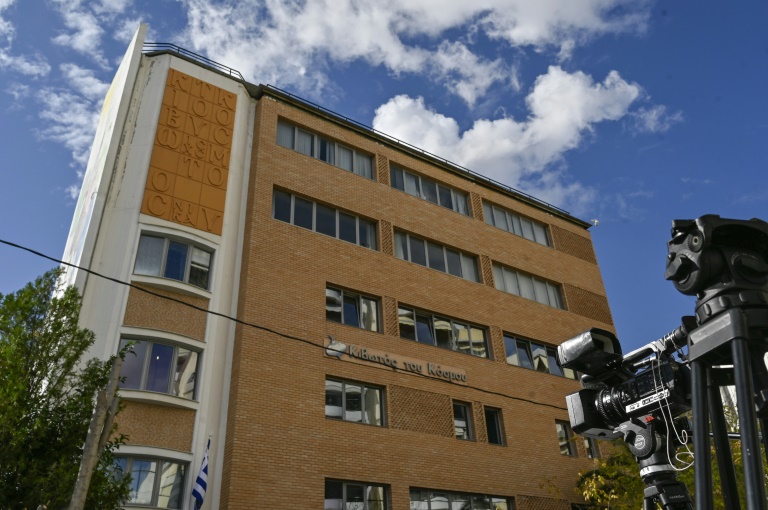
Greece has opened a probe into one of the country’s best-known child charities after numerous claims of alleged abuse and financial mismanagement, a justice ministry source told AFP on Sunday.

The Ark of the World, founded by a charismatic priest, has worked with underprivileged children for at least two decades in Athens and several other parts of Greece.

Since mid-November, Greek media have been broadcasting allegations of malfeasance at the charity from former staff and former children under its care, their faces obscured and voices disguised.

One 19-year-old told police that he was allegedly sexually molested by a senior charity official, according to media reports.

One former staffer said that he was fired after speaking out after a co-worker allegedly beat three boys.

Others have claimed that charity executives demanded monetary donations instead of clothes and food, and lived lives of luxury.

The government this week replaced the organisation’s entire board and installed new management.

The charity had been claiming to have some 500 children in its care, but deputy social affairs minister Domna Michailidou on Sunday told To Vima daily that the actual number was 136.

“(The children) are safe,” Prime Minister Kyriakos Mitsotakis told Alpha TV on Friday, calling the case “complicated”.

“We are interested in seeing what happened as regards to the finances. Because these are facilities handled large sums of money, primarily from private donations,” Mitsotakis said. 

The non-profit had received millions of euros and dozens of properties from private donors over more than two decades, according to media.

The charity’s founder, Father Antonios Papanikolaou, who has worked with children from underprivileged Greek and migrant families since 1998, has dismissed the claims.

“It’s not possible. This cannot have happened. I never harmed a child,” he was quoted as saying by Star TV Wednesday.

The head of the Orthodox Church of Greece, Archbishop Ieronymos, sought to distance the church from the priest, saying Papanikolaou was “solely responsible” for running the charity and that he “never consented” to cooperate with church welfare officials.

In 2018, the Ark of the World was among 50 individuals and organisations from 26 EU countries to receive the annual European Citizen’s Prize, an award for initiatives that promote integration and tolerance.

The Ark had also received numerous domestic awards, including from the Athens Academy in 2008.

40 Burundi rebels killed in east DR Congo

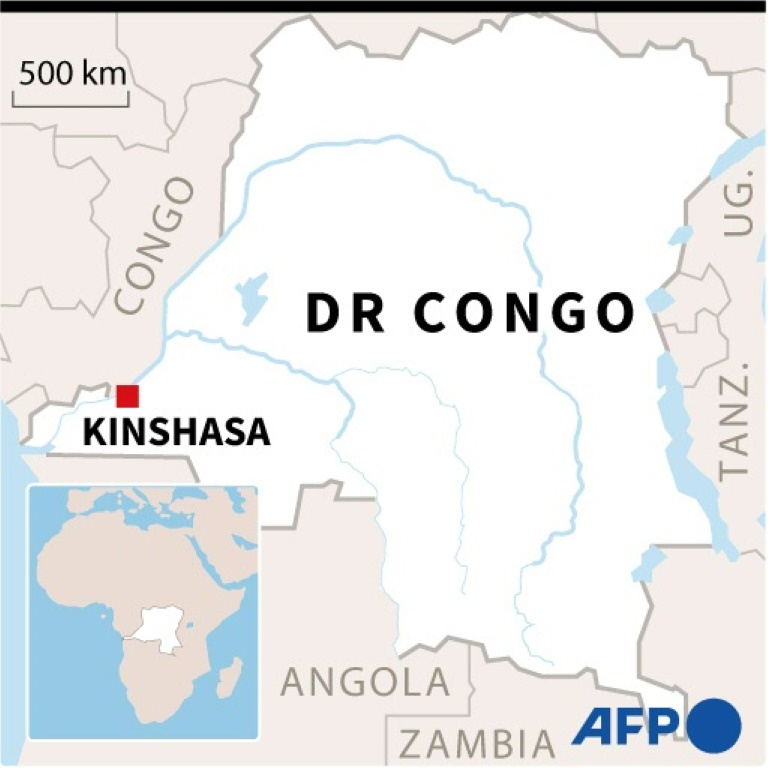
Forty Burundian rebels have been killed in a joint offensive by the militaries of Democratic Republic of Congo and Burundi in eastern DRC, a Congolese army spokesman said on Sunday. 

The two armies “carried out a high-intensity offensive operation” against Burundian rebels of the National Liberation Forces (FNL), Lieutenant Marc Elongo-Kyondwa said in a statement. 

The enemy “suffered a heavy loss of men and equipment: 40 attackers neutralised (killed),” he said. 

The two armies “dislodged” the FNL “from all the four hills overlooking the town of Nabombi,” considered a command post of the FNL’s self-proclaimed general Aloys Nzabampema, he added. 

The Congolese army called on local people to cooperate with the regular forces and “young people to dissociate themselves from armed groups”, the statement quoted Congolese General Major Ramazani Fundi, commander of operations in the southern part of the province, as saying. 

The FNL is a branch of Agathon Rwasa’s former rebel group, now the main political opposition in Burundi. 

Since August, Burundian soldiers charged with fighting armed groups have been officially present in DRC’s South Kivu region, as part of the Community of East African States (EAC) force. 

In June, the EAC decided to set up a regional force, comprising the Kenyan and Ugandan armies alongside Congolese soldiers in North Kivu and Ituri, the South Sudanese army in Haut-Uele and Burundians in South Kivu.  

Kinshasa, which accuses Rwanda of actively supporting M23 rebels in North Kivu, has refused to allow Kigali to take part in the force. 

For nearly 30 years, the east of the DRC has been plagued by violent armed groups, some local, others made up of militiamen from neighbouring countries. 

Rescuers search for missing after deadly landslide on Italian island

Italian rescuers were searching for missing people on the southern island of Ischia on Sunday after a landslide killed at least four and the government declared a state of emergency.

A wave of mud and debris crashed through the small town of Casamicciola Terme on Saturday morning, engulfing at least one house and sweeping cars down to the sea, local media and emergency services said.

A first tranche of two million euros ($2 million) of relief funds was released at the end of an emergency cabinet meeting which declared the state of emergency, said Minister for Civil Protection Nello Musumeci.

Italian media reported that four bodies had been found by Sunday afternoon, with an official toll to be provided in the evening by the prefect of Naples Claudio Palomba.

More than 200 rescuers were still searching for around 10 missing people, while hundreds of volunteers, up to their knees in mud, were busy cleaning the town’s streets.

The rescue effort had been hampered by rain and high winds, which also delayed ferries bringing reinforcements from the mainland.

“It’s a situation that hurts us, if only for the people who disappeared under the mountain. Here it’s an island and even if we don’t really know everyone, it’s almost that,” Salvatore Lorini, 45, told AFP.

“The mountain came down, there was devastation of shops, cars, hotels and that was already happening nine years ago. Now I am cleaning my mother-in-law’s shop,” he said.

Interior Minister Matteo Piantedosi had earlier warned there were people trapped in the mud, saying it was a “very serious” situation.

– Complex rescue operation –

Heavy rain sent torrents of mud through the streets of Casamicciola Terme, a spa resort of 8,000 inhabitants on the north of Ischia, a lush island near Capri that is thronged with tourists in summer.

Trees were upturned and cars left battered on the side of the road or in the water, according to AFP journalists.

Boulders were scattered around as excavators sought to free up access to homes, cars and shops.

“If I could, I would leave Casamicciola because I now struggle to live there, even if my house survived the tremor, the flooding,” 64-year-old Iacono Maria told AFP.

Pope Francis said he was praying for the victims, “those who suffer and all those who have contributed to the rescue” in his Angelus prayer on Sunday.

The fire service said earlier one house had been swamped by the mud and two people had been rescued from a car swept into the sea.

In the worst-affected area of the town, at least 30 families were trapped in their homes without water or electricity, with mud and debris blocking the road, ANSA news agency reported.

Officials had said they expected to evacuate and find temporary homes for between 150 and 200 people.

Local authorities called on residents of Ischia to stay inside to avoid hindering the rescue operation.

An “exponential” growth of infrastructure sparked by mass tourism ended up “stifling all the natural elements of the land and covering everything with cement”, geologist Mario Tozzi wrote in La Stampa newspaper.

Casamicciola Terme was hit by an earthquake in 2017, in which two people died. It was completely destroyed by a much more powerful earthquake at the end of the 19th century.

The devastation in Ischia comes just weeks after 11 people died in heavy rain and flooding in the central Italian region of Marche.
Thousands protest Turkish strikes on Kurdish groups in Syria

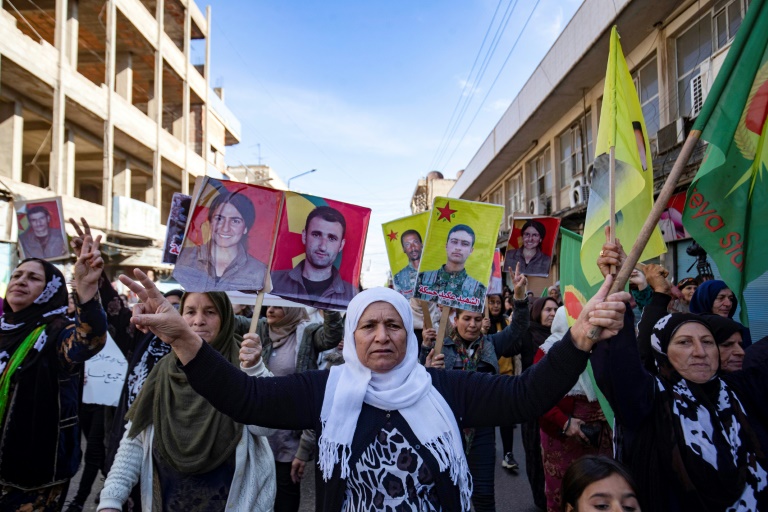
Thousands of Kurds protested on Sunday in the Syrian city of Qamishli against days of deadly Turkish cross-border strikes targeting Kurdish groups in the country’s northeast.

Turkey announced last Sunday it had carried out air strikes against semi-autonomous Kurdish zones in north and northeastern Syria, and across the border in Iraq. It has also threatened a ground offensive in those areas of Syria.

Demonstrators in Kurdish-controlled Qamishli, in Hasakeh province, brandished photos of people killed during recent strikes in the semi-autonomous region, an AFP correspondent said.

“Only the will of the Kurdish people remains,” said protester Siham Sleiman, 49. “It will not be broken and we remain ready. We will not leave our historic land.”

After a three-day lull, Turkish fighter jets heavily bombed Kurdish-controlled areas north of Aleppo early on Sunday, according to the Britain-based Syrian Observatory for Human Rights, a war monitor.

A separate Turkish drone strike killed five Syrian government soldiers near Tal Rifaat, also north of Aleppo, the Observatory added, reporting an exchange of shelling between Kurdish combatants and Turkish forces and their Syrian proxies.

Protesters in Qamishli also chanted in favour of the resistance in “Rojava” — the name Kurds in Syria give to the area they administer.

“The message that we want to convey to the world is that we are victims of eradication,” said Salah el-Dine Hamou, 55.

“How long will we continue to die while other countries watch?”

The Turkish strikes come after a November 13 bombing in Istanbul that killed six people and wounded 81. Ankara blamed the attack on the Kurdistan Workers Party (PKK), which it and its Western allies consider a terrorist group.

The PKK has waged an insurgency against the Turkish state since 1984. Turkey alleges that Syrian Kurdish fighters are the PKK’s allies.

Kurdish groups denied any involvement in the Ankara blast.

Some protesters on Sunday carried Kurdish flags alongside photos of PKK leader Abdullah Ocalan — jailed in Turkey since 1999 — and shouted slogans against Turkish President Recep Tayyip Erdogan.

The Turkish raids have killed at least 63 Kurdish and allied fighters and Syrian regime soldiers, as well as a Kurdish journalist, according to the Observatory, which relies on an extensive network of sources in Syria.

Eight people have been killed in retaliatory artillery fire, three of them across the Turkish border.

Since 2016, Turkey’s military has conducted three offensives mostly targeting Kurdish fighters, and captured territory in northern Syria, which is now held by Ankara-backed proxies.

The US-backed Syrian Democratic Forces (SDF), the Kurds’ de facto army in the area, led the battle that dislodged Islamic State group jihadist fighters from the last scraps of their Syrian territory in 2019.

Protests across China as anger mounts over zero-Covid policy

Hundreds of people took to the streets in China’s major cities on Sunday to protest against the country’s zero-Covid policy in a rare outpouring of public anger against the state.

China’s hardline virus strategy is stoking public frustration, with many growing weary of snap lockdowns, lengthy quarantines and mass testing campaigns.

A deadly fire on Thursday in Urumqi, the capital of northwest China’s Xinjiang region, has become a fresh catalyst for public anger, with many blaming lengthy Covid lockdowns for hampering rescue efforts. Authorities deny the claims. 

On Sunday night, between 300 to 400 people gathered on the banks of a river in the capital Beijing for several hours, with some shouting: “We are all Xinjiang people! Go Chinese people!”

AFP reporters at the scene described the crowd singing the national anthem and listening to speeches, while on the other side of the canal bank, a line of police cars waited. 

In the central megacity of Wuhan, where the coronavirus first emerged, multiple livestreams that were quickly censored showed crowds walking through the streets cheering and filming on their phones.  

And in downtown Shanghai, AFP saw police clashing with groups of protestors, as officers tried to move people away from the site of an earlier demonstration on Wulumuqi street — named after the Mandarin for Urumqi. 

Crowds that had gathered overnight — some of whom chanted “Xi Jinping, step down! CCP, step down!” — were dispersed by morning.

But in the afternoon, hundreds gathered in the same area to hold what appeared to be a silent protest, an eyewitness told AFP.

Social media videos from the area that appeared to be taken in the late afternoon showed the crowd chanting.  

Footage from several different angles showed a man holding a bouquet of yellow flowers being dragged into a police car at one intersection as onlookers shouted.

By evening, dozens of policemen in yellow high-vis jackets formed a thick line, cordoning off the streets where the protests had taken place. 

AFP saw multiple people arrested as officers told people to leave the area. 

A foreigner who wished to remain anonymous told AFP he had seen a standoff as police directed a crowd away from Wulumuqi street. 

“The police appeared to be looking for individuals suspected of leading the protests,” he said.  

“The atmosphere was very tense, but there was also excitement and energy… Protestors directed their anger at the police and the party, using the ‘step down!’ refrain of the last few days.”

Footage of protests allegedly taken in major cities Guangzhou and Chengdu were also spreading online Sunday night, but AFP was unable to independently verify them. 

– University protests –

Earlier in the day, hundreds also rallied at Beijing’s elite Tsinghua University to protest against lockdowns, one witness who wished to remain anonymous told AFP.

“At 11:30 am students started holding up signs at the entrance of the canteen, then more and more people joined,” they said, estimating there were 200-300 people present, some holding blank bits of paper. 

Participants sang the national anthem and “the Internationale” — a standard of the international communist movement — and chanted “freedom will prevail” and “no to lockdowns, we want freedom”, they said.

A video that appeared to be taken in the same location showed students shouting, “Democracy and the rule of law, freedom of expression”, and was quickly taken down. 

Other vigils took place overnight at universities across China, including one at Tsinghua’s neighbour Peking University, an undergraduate participant told AFP. 

Speaking anonymously as well for fear of repercussions, he said some anti-Covid slogans had been daubed on a wall in the university. 

Some of the words echoed a banner that was hung over a Beijing bridge just before the Communist Party Congress in October. 

“I heard people yelling: ‘No to Covid tests, yes to freedom!’,” he said, adding there were between 100 and 200 people there. 

Videos on social media also showed a mass vigil at Nanjing Institute of Communications, with people holding lights and white sheets of paper. 

Hashtags relating to the protest were censored on Weibo, and video platforms Duoyin and Kuaishou were scrubbed of footage. 

Videos from campuses in Xi’an, Guangzhou and Wuhan showing similar protests also spread on social media. AFP was unable to verify the footage independently. 

– ‘Lift lockdowns!’ –

China reported 39,506 domestic Covid-19 cases Sunday, a record high but small compared to caseloads in the West at the height of the pandemic.

The protests come against a backdrop of mounting public frustration over China’s zero-tolerance approach to the virus and follow sporadic rallies in other cities.

Hundreds of people massed outside Urumqi’s government offices after the deadly fire, chanting: “Lift lockdowns!”, footage partially verified by AFP shows. 

AFP verified the video by geolocating local landmarks but was unable to specify exactly when the protests occurred.

It is the latest in several high-profile cases where emergency services have been allegedly slowed down by Covid lockdowns, which have catalysed public opposition.

The Qatar World Cup has also proved a flashpoint, as scenes of maskless fans provoked outrage on social media. 

China’s state broadcaster has started cutting close-ups of supporters and replacing them with shots of officials or players. 

Close Bitnami banner
Bitnami