World

Five key decisions at global wildlife summit

A global wildlife summit that ends Friday passed resolutions to protect hundreds of threatened species, including sharks, reptiles, turtles as well as trees.

Here are some highlights of the two-week meeting of the Convention on International Trade in Endangered Species (CITES) in Panama.

1) Sharks steal the show

No longer just the villains of the deep, these ancient predators were the stars of the summit.

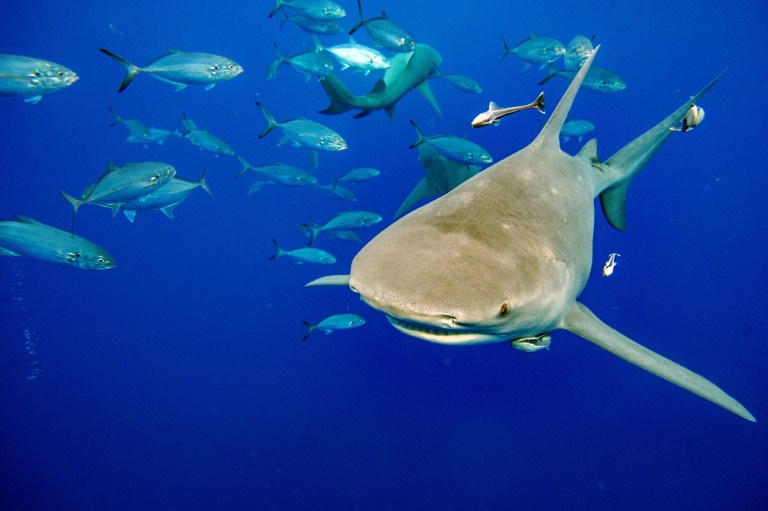
Delegates from more than 180 countries agreed to regulate the trade in 54 species of the requiem shark and hammerhead shark families.

These species are the most hunted for their shark fins — seen as a delicacy in some Asian countries — and their numbers have been decimated, putting the entire marine ecosystem at risk.

Only Japan grumbled over the resolution, arguing restrictions on the trade of the blue shark would be a blow to the livelihoods of its fishermen.

CITES also voted to restrict the trade of guitarfish rays and several other freshwater ray species.

2) See-through glass frogs

The skin of these nocturnal amphibians can be lime green or so translucent their organs are visible through their skin.

This has made them sought-after pets, and intense trafficking has placed the species in critical danger.

CITES also placed more than 160 species of glass frog, found in several rainforests in Central and South America, on its Appendix II, which places trade restrictions on threatened species.

The European Union and Canada withdrew early reservations about the resolution, which was adopted unanimously.

3) Weird and wonderful turtles

CITES approved varying levels of protection for around 20 turtle species from America and Asia.

These include the striking matamata turtles, with their prehistoric, beetle-like appearance, which have also become sought-after pets and are hunted for their meat and eggs.

They live in the Amazon and Orinoco basins, but scientists do not know how many there are.

Freshwater turtles are among the most-trafficked species in the world.

The unusual-looking North American Alligator Snapping Turtle was also granted trade protection.

4) Crocodile bans lifted

Brazil and the Philippines now will be able to export farm-raised crocodiles, after a total trade ban was lifted.

Delegates also allowed the export of skin and meat of the broad-snouted caiman — found in the wild in the Brazilian Amazon and Pantanal as well as wetlands, rivers, and lakes of neighboring countries.

“The population of these animals is very big. There has been a great reproductive success,” said researcher Miryam Venegas-Anaya, a crocodile expert with the University of Panama.

In the Philippines, a trade restriction was lifted on the saltwater crocodile that lives mainly on the islands of Mindanao and Palawan.

However, Thailand’s efforts to lift a ban on its Siamese crocodile was rejected.

5) Ivory ban stays, no luck for hippos

Zimbabwe and its southern African neighbors have seen their elephant populations soar in recent years, and pushed a drive to re-open the ivory trade which has been banned since 1989.

One-off sales were allowed in 1999 and 2008 despite fierce opposition.

However, in the rest of the continent poaching for ivory is still decimating elephant populations and the request was rejected.

Delegates also rejected a request by Botswana, Namibia and Eswatini (formerly Swaziland), to allow the sale of southern white rhino horn.

Meanwhile, after a fierce debate, a request by ten west African nations to ban the trade in hippopotamus, was rejected by delegates.

Illegal trade in the surly semi-aquatic mammal — for its meat, ivory tusks, teeth, and skull — rose after elephant ivory was banned. 
Five key decisions at global wildlife summit

A global wildlife summit that ends Friday passed resolutions to protect hundreds of threatened species, including sharks, reptiles, turtles as well as trees.

Here are some highlights of the two-week meeting of the Convention on International Trade in Endangered Species (CITES) in Panama.

1) Sharks steal the show

No longer just the villains of the deep, these ancient predators were the stars of the summit.

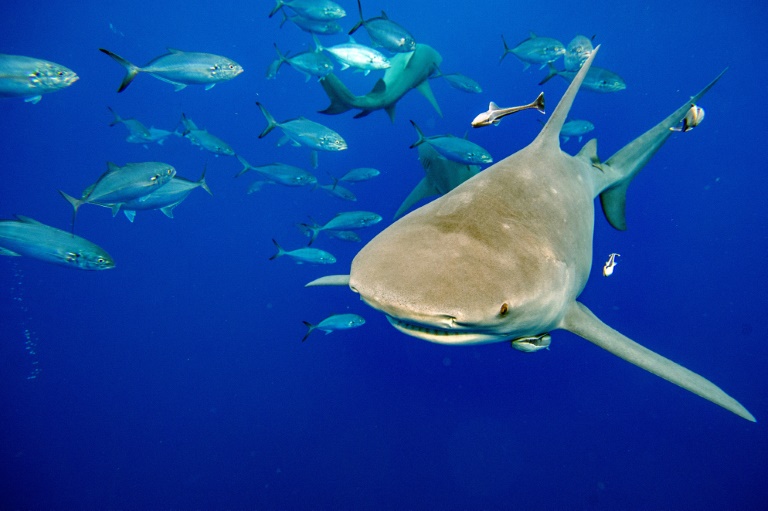
Delegates from more than 180 countries agreed to regulate the trade in 54 species of the requiem shark and hammerhead shark families.

These species are the most hunted for their shark fins — seen as a delicacy in some Asian countries — and their numbers have been decimated, putting the entire marine ecosystem at risk.

Only Japan grumbled over the resolution, arguing restrictions on the trade of the blue shark would be a blow to the livelihoods of its fishermen.

CITES also voted to restrict the trade of guitarfish rays and several other freshwater ray species.

2) See-through glass frogs

The skin of these nocturnal amphibians can be lime green or so translucent their organs are visible through their skin.

This has made them sought-after pets, and intense trafficking has placed the species in critical danger.

CITES also placed more than 160 species of glass frog, found in several rainforests in Central and South America, on its Appendix II, which places trade restrictions on threatened species.

The European Union and Canada withdrew early reservations about the resolution, which was adopted unanimously.

3) Weird and wonderful turtles

CITES approved varying levels of protection for around 20 turtle species from America and Asia.

These include the striking matamata turtles, with their prehistoric, beetle-like appearance, which have also become sought-after pets and are hunted for their meat and eggs.

They live in the Amazon and Orinoco basins, but scientists do not know how many there are.

Freshwater turtles are among the most-trafficked species in the world.

The unusual-looking North American Alligator Snapping Turtle was also granted trade protection.

4) Crocodile bans lifted

Brazil and the Philippines now will be able to export farm-raised crocodiles, after a total trade ban was lifted.

Delegates also allowed the export of skin and meat of the broad-snouted caiman — found in the wild in the Brazilian Amazon and Pantanal as well as wetlands, rivers, and lakes of neighboring countries.

“The population of these animals is very big. There has been a great reproductive success,” said researcher Miryam Venegas-Anaya, a crocodile expert with the University of Panama.

In the Philippines, a trade restriction was lifted on the saltwater crocodile that lives mainly on the islands of Mindanao and Palawan.

However, Thailand’s efforts to lift a ban on its Siamese crocodile was rejected.

5) Ivory ban stays, no luck for hippos

Zimbabwe and its southern African neighbors have seen their elephant populations soar in recent years, and pushed a drive to re-open the ivory trade which has been banned since 1989.

One-off sales were allowed in 1999 and 2008 despite fierce opposition.

However, in the rest of the continent poaching for ivory is still decimating elephant populations and the request was rejected.

Delegates also rejected a request by Botswana, Namibia and Eswatini (formerly Swaziland), to allow the sale of southern white rhino horn.

Meanwhile, after a fierce debate, a request by ten west African nations to ban the trade in hippopotamus, was rejected by delegates.

Illegal trade in the surly semi-aquatic mammal — for its meat, ivory tusks, teeth, and skull — rose after elephant ivory was banned. 

Macron to raise US subsidies in talks with Biden next week

French President Emmanuel Macron will raise concerns about the effects of American industrial subsidies and tax breaks during talks with US President Joe Biden in Washington next week, a top French official said Friday.

France and other EU countries are increasingly alarmed that the Inflation Reduction Act (IRA), which Biden signed in August, will distort transatlantic trade to give American companies an unfair advantage.

The act, designed to accelerate the US transition to a low-carbon economy, contains around $370 billion in subsidies for green energy as well as tax cuts for US-made electric cars and batteries. 

“We cannot risk more de-industrialisation in Europe at a time when we’re trying to re-industrialise,” a senior aide to Macron told reporters ahead of the French leader’s trip to Washington from Tuesday night.

The biggest concern is about “American investment in Europe being repatriated,” he said during a briefing ahead of what will be the first state visit by a foreign leader to Washington under Biden. 

Although Macron appreciates no major changes can be made to a law seen as one of Biden’s main legislative achievements, he is hoping to carve out “exemptions” to help European industries.

“We can imagine that the American adminstration agrees to exemptions for a certain number of European industrial sectors, perhaps in the same way as they’re doing for Canada and Mexico,” the aide added. 

Macron, 44, has long favoured a Buy Europe Act that would offer incentives and requirements for consumers and governments to buy EU-made equipment.

But the idea faces resistance from countries such as the Netherlands and Germany, which worry about the costs and the impact on trade.

“The message from the Americans is ‘Do your own IRA’,” the French aide said.

Macron “will draw the necessary conclusions for us as Europeans from the conversations”, he added.

– ‘Gap’ –

The tension over US industrial policy is one of several areas of friction between the European Union and Washington that Macron will raise next week during his state visit.

EU countries are also frustrated about the huge profits being made by US energy exporters as they supply LNG gas to Europe in the wake of Russia’s invasion of Ukraine in February.

“Europe is giving and suffering the most in terms of sanctions against Russia,” the French official said, referring to the sanctions introduced on the Russian energy and industrial sectors.

“We see the risk of a gap developing between Europe and the United States,” he added, stressing the need for a new “synchronisation”. 

Macron is set to arrive on Tuesday evening in Washington before beginning a two-day official programme that will see him given the full honours of a state visit at the White House on Thursday.

He will be the first French president to have been offered two state visits, which have the highest level of diplomatic protocol, his office said.

His first came at the invitation of Donald Trump in April 2018 amid another transatlantic trade dispute over US tariffs on steel and aluminium introduced by the former Republican president.

That trip was memorable for Trump publicly flicking dandruff off Macron’s suit and the two men planting an oak tree in the White House garden that was later removed, then died.

Ties between Macron and Biden were severely strained by a row over supplying submarines to Australia in 2021, but have since recovered, with the two men speaking and meeting regularly.

“The relationship (with Biden) is very fluid, friendly and very open on all issues,” the French official said. 

“The presidents Trump and Biden are not at all the same personality and the dynamic is not the same,” he added. 

Macron will be accompanied by a large delegation of ministers and business leaders, with the visit set to feature talks about nuclear energy and space cooperation.

He will travel to New Orleans on Friday.

Macron to raise US subsidies in talks with Biden next week

French President Emmanuel Macron will raise concerns about the effects of American industrial subsidies and tax breaks during talks with US President Joe Biden in Washington next week, a top French official said Friday.

France and other EU countries are increasingly alarmed that the Inflation Reduction Act (IRA), which Biden signed in August, will distort transatlantic trade to give American companies an unfair advantage.

The act, designed to accelerate the US transition to a low-carbon economy, contains around $370 billion in subsidies for green energy as well as tax cuts for US-made electric cars and batteries. 

“We cannot risk more de-industrialisation in Europe at a time when we’re trying to re-industrialise,” a senior aide to Macron told reporters ahead of the French leader’s trip to Washington from Tuesday night.

The biggest concern is about “American investment in Europe being repatriated,” he said during a briefing ahead of what will be the first state visit by a foreign leader to Washington under Biden. 

Although Macron appreciates no major changes can be made to a law seen as one of Biden’s main legislative achievements, he is hoping to carve out “exemptions” to help European industries.

“We can imagine that the American adminstration agrees to exemptions for a certain number of European industrial sectors, perhaps in the same way as they’re doing for Canada and Mexico,” the aide added. 

Macron, 44, has long favoured a Buy Europe Act that would offer incentives and requirements for consumers and governments to buy EU-made equipment.

But the idea faces resistance from countries such as the Netherlands and Germany, which worry about the costs and the impact on trade.

“The message from the Americans is ‘Do your own IRA’,” the French aide said.

Macron “will draw the necessary conclusions for us as Europeans from the conversations”, he added.

– ‘Gap’ –

The tension over US industrial policy is one of several areas of friction between the European Union and Washington that Macron will raise next week during his state visit.

EU countries are also frustrated about the huge profits being made by US energy exporters as they supply LNG gas to Europe in the wake of Russia’s invasion of Ukraine in February.

“Europe is giving and suffering the most in terms of sanctions against Russia,” the French official said, referring to the sanctions introduced on the Russian energy and industrial sectors.

“We see the risk of a gap developing between Europe and the United States,” he added, stressing the need for a new “synchronisation”. 

Macron is set to arrive on Tuesday evening in Washington before beginning a two-day official programme that will see him given the full honours of a state visit at the White House on Thursday.

He will be the first French president to have been offered two state visits, which have the highest level of diplomatic protocol, his office said.

His first came at the invitation of Donald Trump in April 2018 amid another transatlantic trade dispute over US tariffs on steel and aluminium introduced by the former Republican president.

That trip was memorable for Trump publicly flicking dandruff off Macron’s suit and the two men planting an oak tree in the White House garden that was later removed, then died.

Ties between Macron and Biden were severely strained by a row over supplying submarines to Australia in 2021, but have since recovered, with the two men speaking and meeting regularly.

“The relationship (with Biden) is very fluid, friendly and very open on all issues,” the French official said. 

“The presidents Trump and Biden are not at all the same personality and the dynamic is not the same,” he added. 

Macron will be accompanied by a large delegation of ministers and business leaders, with the visit set to feature talks about nuclear energy and space cooperation.

He will travel to New Orleans on Friday.

Stocks mixed as China Covid spike offsets rosier US rate outlook

Stock markets were mixed Friday, as fresh Covid lockdown fears in China offset hopes that the Federal Reserve would moderate US interest-rate hikes.

Trading was light after the Thanksgiving day break in the United States with few catalysts to drive action on trading floors and investors looking ahead to economic data releases next week, as well as a public appearance by Federal Reserve Chair Jerome Powell.

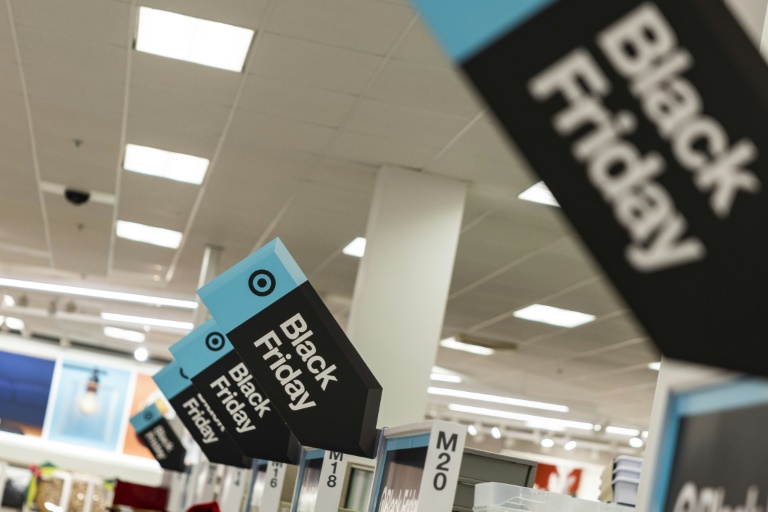
The S&P 500 was flat at the end of a holiday-shortened session as much attention turned to “Black Friday,” the annual kickoff of the festive shopping season.

Leading forecasts from Deloitte and the National Retail Federation project a single-digit percentage rise in US holiday sales this year, but this is unlikely to exceed the inflation rate — which stood at 7.7 percent in October.

Most of Europe’s major stock markets were up at the end of the day’s trading while Asian indices closed mixed.

The euro was also mixed against main rivals, as official data showed Germany’s economy grew more than previously thought in the third quarter despite high inflation and an energy crisis.

Oil prices fell again Friday after heavy losses earlier in the week.

– Mood picking up –

The mood across markets has picked up this month as a series of indicators suggested the US economy, the world’s largest, was showing signs of slowing after the Fed ramped up interest rates to cool surging prices.

These include reports showing some moderation in inflation, which has dominated the central bank’s focus for months.

And while a selection of Fed officials lined up to warn there was more tightening to come, there is an expectation that the days of bumper 75 basis-point increases are gone.

That has slightly eased worries that the sharp rise in borrowing costs could tip the US economy into recession — though many observers still see a contraction coming.

Markets also focused on fears about the spike in Covid cases in China, which authorities are trying to contain with a series of targeted measures in big cities including Beijing and Shanghai, although they stopped short of full-on lockdowns.

Still, SPI Asset Management’s Stephen Innes said there appeared to be less concern about the government’s reaction as it looks to ease parts of its strict Covid-zero strategy.

“Stock and currency market investors are tentatively looking through the current lockdown regime while betting on the more optimistic interpretation that China is hitting the limits of ‘Covid-zero’ and the authorities’ efforts to loosen restrictions will continue,” he added.

But worries about China were at the heart of a nearly two percent dip in Apple shares amid concerns over the potential impact on production following protests at a vast iPhone factory in Zhengzhou city.

China’s strict zero-Covid policy “has been an absolute body blow to Apple’s supply chain with the Foxconn protests in Zhengzhou a black eye for both Apple and Foxconn,” said analysts Daniel Ives and John Katsingris of Wedbush in an analysis.

Wedbush added that many Apple stores likely have shortages, warning it is not a good sign heading into the holiday season.

– Key figures around 1900 GMT –

New York – Dow: UP 0.5 percent at 34,347.03 (close)

New York – S&P 500: FLAT at 4,026.12 (close)

New York – Nasdaq: DOWN 0.5 percent at 11,226.36 (close)

London – FTSE 100: UP 0.3 percent at 7,486.67 points (close)

Paris – CAC 40: UP 0.1 percent at 6,712.48 (close)

Frankfurt – DAX: FLAT at 14,541.38 (close)

EURO STOXX 50: FLAT at 3,962.41

Tokyo – Nikkei 225: DOWN 0.4 percent at 28,283.03 (close)

Hong Kong – Hang Seng Index: DOWN 0.5 percent at 17,573.58 (close)

Shanghai – Composite: UP 0.4 percent at 3,101.69 (close)

Euro/dollar: DOWN at $1.0403 from $1.0410 on Thursday

Dollar/yen: UP at 139.03 yen from 138.54 yen

Pound/dollar: DOWN at $1.2087 from $1.2113

Euro/pound: UP at 86.03 pence from 85.94 pence

Brent North Sea crude: DOWN 2.1 percent at $83.63 per barrel

West Texas Intermediate: DOWN 2.1 percent at $76.28 per barrel

burs-jmb/bys

Vehicle pollution zone to cover all of London

Older and more heavily polluting vehicles will have to pay to enter the entire metropolitan area of London from next August, the British capital’s mayor said Friday.

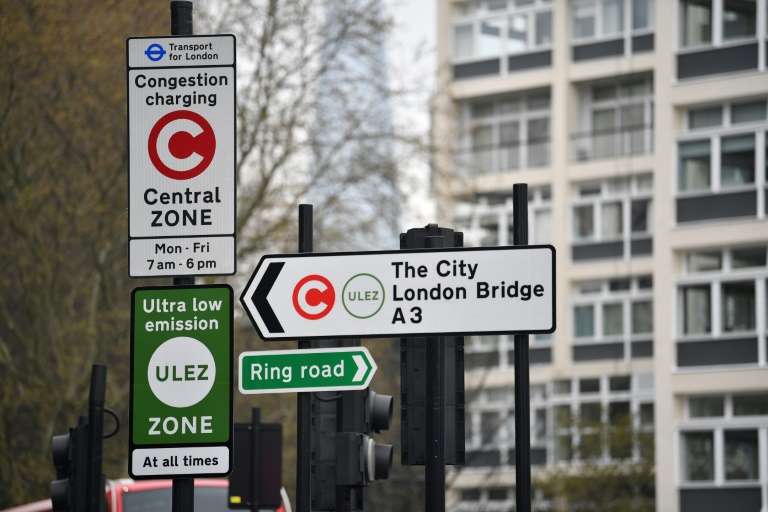
Sadiq Khan said the ultra-low emission zone (ULEZ) would be expanded beyond its current confines from August 29, to encompass the entire nine million people of Greater London.

Announcing a parallel expansion of bus services in outer London, he argued that air pollution from older and heavier vehicles was making Londoners “sick from cradle to the grave”.

The ULEZ had already proven “transformational”, the mayor said, and its extension would mean “five million more people will be able to breathe cleaner air and live healthier lives”. 

But the plan has prompted a fierce backlash from political opponents and some residents in the capital, who point to a consultation held indicating that a majority of Londoners opposed extending the zone.

The two-month outreach exercise — held earlier this year by Transport for London (TfL), which runs the capital’s various transport systems — heard from 57,913 people, including nearly 12,000 campaigners on either side of the issue.

Although it found 55 percent of respondents had “some concern” about their local air quality, the consultation also recorded 59 percent as opposed to the ULEZ being expanded at all.

That rose to 70 percent in the outer London areas set to be part of the enlargement.

“Sadiq Khan has broken his promise to listen to Londoners,” the Conservative grouping in London’s devolved lawmaking assembly said on Twitter. 

“He must U-TURN on the ULEZ expansion.”

– ‘An example’ –

The zone has already been expanded once since it was introduced in April 2019, and today covers a large area within London’s North and South Circular inner ring-roads and the city centre.

Unless their vehicles are exempt, drivers entering the zone have to pay a daily charge of £12.50 ($15).

Petrol cars first registered after 2005, and diesel cars after September 2015, typically meet the ULEZ standards for nitrous oxide emissions and are exempt.

Air pollution caused around 1,000 annual hospital admissions for asthma and serious lung conditions in London between 2014 and 2016, according to a 2019 report.

A coroner ruled in 2020 that air pollution made a “material contribution” to the death of a nine-year-old London girl in 2013 — the first time in Britain that air pollution was officially listed as a cause of death.

Air pollution is “affecting children before they’re even born, and giving them lifelong health issues”, the campaign group Mums for Lungs tweeted.

“Good news for the health of all Londoners,” it said in response to the ULEZ announcement.

Billionaire businessman Michael Bloomberg, a UN climate envoy and former mayor of New York, said Khan was “helping to clean London’s air and set an example for cities around the world”.

But opponents of the ULEZ argue it amounts to a “tax” on poorer drivers least able to afford to replace their polluting vehicles, and has hurt small businesses.

The announcement will be “a hammer-blow for desperate drivers and businesses already struggling with crippling fuel costs” during a cost-of-living crisis, said the head of roads policy for motoring body the RAC, Nicholas Lyes.

All cars and vans entering central London during the daytime also have to pay a “congestion charge” of £15, a measure first introduced in 2003.

Similar schemes have been set up in several other British towns and cities to reduce emission levels and improve air quality.

Meta calls for UK govt rethink over plans to scrap EU laws

Facebook owner Meta is urging UK lawmakers considering legislation to scrap all retained European Union laws by 2024 to maintain some e-commerce rules to keep Britain globally competitive. 

The UK government introduced legislation in September to amend, repeal or replace all EU laws automatically retained after Brexit by the end of next year. 

“The Brexit Freedoms Bill will enable the UK government to remove years of burdensome EU regulation in favour of a more agile, home-grown regulatory approach that benefits people and businesses across the UK,” it said at the time.

In a newly disclosed letter to a committee of MPs scrutinising the bill, the US tech giant said it wanted to draw “attention to one key area of retained EU legislation that we believe may be affected”.

The California-based company, which has around 4,000 full-time staff in Britain, noted 2002 electronic commerce regulations based on an EU directive limit the liability of online platforms “that act as a mere conduit”.

“This framework… is critical to maintaining an online environment that enables a thriving and diverse technology sector to flourish in the UK,” Meta said.

It warned that without it, “platforms and websites are less likely to want to operate in the UK and may pull back from making the UK a hub for innovative new products and services in the way the government envisages”.

Meta argued the provisions should be “either explicitly maintained elsewhere or recommend that the E-Commerce Regs are removed from scope of the Revocation Bill”.

The draft legislation is currently working its way through parliament. 

It has provoked a backlash in Britain, with many public and private interest groups and organisations accusing the government of moving too far, too fast. 

Trade unions are among those opposed to the bill, with one leading organisation warning in another letter to the committee published Friday that it “poses a significant threat to workers’ rights and should be opposed by MPs”.

“It is striking that ministers have yet to explain which laws they intend to retain, to amend or allow to expire,” the Trades Union Congress said. 

“Indeed, there even remains uncertainty about whether government knows which laws are affected,” it added, arguing “the ultimate goal is deregulation”.

Meanwhile TheCityUK, one of London’s leading financial lobby groups, said it has “a number of reservations about the appropriateness of this Bill in current circumstances”.

The organisation cited “the overall need for it, opportunity costs, the risk of worsening the relationship with the EU, and the potential for increased burdens on business”. 

“At a minimum, a far longer sunset period for implementation should be allowed,” it added.

Stocks mixed as China Covid spike offsets rosier US rate outlook

Stock markets traded mixed Friday, as fresh Covid lockdown fears in China offset hopes that the Federal Reserve would tone down US interest-rate hikes.

Trading was light after the Thanksgiving day break in the United States with few catalysts to drive action on trading floors and investors looking ahead to the release of US jobs data next week.

Most of Europe’s major stock markets were up at the end of the day’s trading while Asian indices closed mixed.

Similarly Wall Street stocks opened undecided Friday with analysts expecting a quiet trading session with markets closing around midday.

The focus will likely be on Black Friday purchases and so this “could concentrate some of today’s thin trading interest on the retail stocks”, Patrick O’Hare of Briefing.com said in a note.

The euro was also mixed against main rivals, as official data showed Germany’s economy grew more than previously thought in the third quarter despite high inflation and an energy crisis.

Oil prices fell again Friday after heavy losses earlier in the week.

– Mood picking up –

The mood across markets has picked up this month as a series of indicators suggested the US economy, the world’s largest, was showing signs of weakness after the Fed ramped up interest rates.

The standout reports were consumer and wholesale inflation, which came in much lower than forecast and provided the US central bank with room to row back on its hawkishness.

And while a selection of Fed officials lined up to warn there was more tightening to come, there is an expectation that the days of bumper 75 basis-point increases are gone.

That has slightly eased worries that the sharp rise in borrowing costs could tip the US economy into recession — though many observers still see a contraction coming.

SPI Asset Management’s Stephen Innes said there was a “market consensus bias to believe that US headline inflation will continue to ease substantially over the next month or two and that the tail risks around (more than five percent interest rates) have dropped sharply”.

“After all, a step down to 50 basis points in December would be an unambiguous signal that peak hawkishness has passed.”

Focus was also on fears about the spike in Covid cases in China, which authorities are trying to contain with a series of targeted measures in big cities including Beijing and Shanghai, though they are short of full-on lockdowns.

Still, Innes said there appeared to be less concern about the government’s reaction as it looks to ease parts of its strict Covid-zero strategy.

“Stock and currency market investors are tentatively looking through the current lockdown regime while betting on the more optimistic interpretation that China is hitting the limits of ‘Covid-zero’ and the authorities’ efforts to loosen restrictions will continue,” he added.

– Key figures around 1645 GMT –

New York – Dow: UP 0.5 percent at 34,375.76

EURO STOXX 50: UP 0.4 percent at 3,962.41

London – FTSE 100: UP 0.3 percent at 7,486.67 points (close)

Paris – CAC 40: UP 0.1 percent at 6,712.48 (close)

Frankfurt – DAX: FLAT at 14,541.38 (close)

Tokyo – Nikkei 225: DOWN 0.4 percent at 28,283.03 (close)

Hong Kong – Hang Seng Index: DOWN 0.5 percent at 17,573.58 (close)

Shanghai – Composite: UP 0.4 percent at 3,101.69 (close)

Euro/dollar: DOWN at $1.0400 from $1.0411 on Thursday

Dollar/yen: UP at 139.25 yen from 138.39 yen

Pound/dollar: DOWN at $1.2089 from $1.2131

Euro/pound: UP at 86.03 pence from 85.82 pence

Brent North Sea crude: DOWN 0.4 percent at $85.01 per barrel

West Texas Intermediate: DOWN 0.2 percent at $77.80 per barrel

burs-raz/rox

Twitter aims to diversify beyond advertising, but can it be done?

Is it a pipe dream or a possibility? Elon Musk wants to meaningfully diversify Twitter’s revenue stream beyond advertising, but no major social network has managed so far to go without ads altogether. 

Something of a gold standard, social media ads can be fine-tuned and tailored to individual users on a mass scale, and have been particularly lucrative for Meta’s Facebook and Instagram, as well as Google.

“Facebook pretty much set the standard for having an ad model for social networks,” said Jasmine Enberg, an analyst at Insider Intelligence. “But that doesn’t necessarily have to be the way that social platforms monetize.”

Social networks are facing budget cuts from inflation-afflicted advertisers and increased regulations on the use of lucrative personal data, so it makes sense for them “to be exploring new, non-ad monetization techniques,” she said.

The issue is delicate for Twitter, whose revenue is 90 percent dependent on advertising. Advertisers, on the other hand, do not necessarily need Twitter and can turn to other social networks.

The advertising situation at Twitter has been particularly dire since Musk took over the company in late October.

In recent weeks, half of Twitter’s 100 top advertisers have announced they are suspending or have otherwise “seemingly stopped advertising on Twitter,” an analysis conducted by nonprofit watchdog group Media Matters found.

They fear being associated with toxic content as Musk, who describes himself as a “free speech absolutist,” advocates for laxer moderation.

“Musk didn’t understand that Twitter itself was a brand, had cachet,” said Sarah Roberts, an information studies expert at University of California, Los Angeles.

“Now companies don’t even want to be associated with it. It’s not even that they worry about the content. Twitter is a tainted brand, a brand non grata companies don’t want to be associated with,” she added.

– Alternate solutions –

Social media sites are testing two alternate solutions in particular: charging everyday users and charging content creators. 

The forum platform Reddit has deployed a hybrid model, making money via advertising, paid subscriptions and digital coins that allow users access to special privileges.

That said, “It’s always hard to charge for something that used to be free,” said Carolina Milanesi of research firm Creative Strategies. 

“Unless you give something different or create a different product, you can’t go from not charging to charging,” she said.

While Twitter has been offering a paid subscription with additional features since last year, Musk aimed to raise the price to $8 a month and include account verification in the plan’s perks. 

A partial launch was chaotic, however, and prompted the proliferation of so many fake accounts that the rollout of so-called Twitter Blue has now been paused.

Musk has now tweeted that this feature called Verified will be launched next week.

“Figuring out a way to charge users for premium features and make money off of users is not a bad idea,” Enberg said.

But she said the benefits Twitter offered may not have been enticing enough, and that the verification aspect should be more of a security feature than a monetizable feature.

Finally, because paid subscribers — arguably the most active on the network — would see 50 percent less advertising than non-paying users, the plan would “dilute the quality and the size of the addressable audience for advertisers.”

Some newer platforms are trying to do without advertising altogether, with no guarantee of long-term viability.

For example, on Discord, a live-discussion social network, subscribers have access to more emoticons.

And the fledgling photo-sharing app BeReal is hoping to not have to sell ads by making money through in-app purchases instead, the Financial Times reported. 

– ‘Big-name influencers’ –

Twitter had some 230 million daily active users as of June, and Musk continues to congratulate himself on growing that number since taking over.

But increased users do not necessarily translate into dollars.

Snapchat, which also launched a paid version in June, has gained more and more users, but not necessarily money. Most users do not pay anything and advertizers have cut spending on this app.

Faced with this reality, platforms are competing for content creators to attract and retain audiences — and either taking commission or making them pay for the promotion of their messages and videos.

This represents “a really big opportunity” for Twitter, Enberg said. 

Twitter “does have a lot of celebrities and big-name influencers, politicians and journalists” with whom it could form a mutually financially beneficial relationship, she said.

Milanesi added that while the network already offers some promotional tools, they are “quite expensive, and not very effective.”

Taliban treatment of women could be crime against humanity: UN expert

Taliban restrictions on the freedoms of women and girls could amount to a crime against humanity, the UN special rapporteur on human rights in Afghanistan said Friday.

Richard Bennett and other UN rights experts said the Taliban’s targeting of women and girls deepen “flagrant violations of their human rights and freedoms that are already the most draconian globally and may amount to gender persecution — a crime against humanity”.

Most women who work for the government have lost their jobs — or are being paid a pittance to stay at home — since the Taliban returned to power in August 2021.

Afghan women have also been barred from travelling without a male relative and must cover up with a burqa or hijab when outside the home.

This month the Taliban barred women from entering parks, funfairs, gyms and public baths.

Schools for teenage girls have also been shuttered across most of the country.

“In recent months, violations of women and girls’ fundamental rights and freedoms in Afghanistan, already the most severe and unacceptable in the world, have sharply increased,” the UN experts said in a statement.

“Confining women to their homes is tantamount to imprisonment and is likely leading to increased levels of domestic violence and mental health challenges.”

– ‘Appalled’ by floggings –

Women human rights defenders peacefully protesting the restrictions have for months been increasingly targeted, beaten, and arrested, they added.

Discriminatory Taliban measures “should be investigated as gender persecution with a view to prosecutions under international law”, the experts said.

UN experts do not speak for the United Nations but are mandated to report their findings to the global body.

They urged the Taliban to respect women’s fundamental rights and the international community to demand the restoration of women’s freedoms and rights.

The UN Human Rights Office said separately it was “appalled” by the flogging of 11 men and three women in Afghanistan on Wednesday and called for “this abhorrent form of punishment to cease immediately”.

They were flogged after being found guilty of theft and “moral crimes”, an official said in Logar province.

The lashings were the first to be confirmed since the Taliban’s supreme leader ordered judges this month to fully enforce sharia law.

“Corporal punishment is a human rights violation under international law,” UN Rights Office spokeswoman Ravina Shamdasani said. 

“We are also concerned that arrests, court hearings, sentencing and punishments are often all carried out on the same day. All people have the right to be treated with dignity and equality.”

Close Bitnami banner
Bitnami