World

Iran arrests ex-international footballer who backed protests

Iran on Thursday arrested a former international football player of Kurdish origin who has strongly supported the protests that have rocked the country since September, news agencies said.

Voria Ghafouri, an outspoken figure who appeared 28 times for Iran up until 2019, was arrested after a club training session over accusations that he spread “propaganda” against the Islamic republic, the Fars news agency reported.

He is one of the most prominent figures arrested in a widescale crackdown on protests, amid intense scrutiny on the conduct of the national team at the World Cup in Qatar.

The team refrained from singing the national anthem at their first match against England on Monday.

But concern is also growing over the extent of the authorities’ crackdown in the western Kurdish areas of Iran from which Ghafouri hails, with rights groups saying dozens have been killed over the last week alone.

Ghafouri was detained after a training session with his club Foolad Khuzestan on charges of having “tarnished the reputation of the national team and spread propaganda against the state”, the Fars new agency said.

Kurdish-focused rights group Hengaw, based in Norway, also said he had been arrested, posting a picture of the player in traditional Kurdish dress.

Former Iranian international footballer Ali Karimi, another outspoken supporter of the protests, also posted the same photo of Ghafouri on his Twitter account in support of the player.

“For the honourable Voria,” he wrote.

– ‘Stood behind his people’ –

Ghafouri, 35, was listed as a member of Iran’s 2018 World Cup squad but was not named in the final lineup playing at this year’s World Cup in Qatar.

Originally from the Kurdish-populated city of Sanandaj in western Iran, Ghafouri had posted a photo of himself on Instagram in traditional Kurdish dress.

Iran has seen more than two months of demonstrations sparked by the death in custody of 22-year-old Mahsa Amini, herself of Kurdish origin, after she was arrested for an alleged breach of the country’s strict dress code for women. 

The protests have swelled into a broad movement against the ruling theocracy.

Ghafouri had on his social media accounts strongly backed the protests and also reportedly visited the Kurdish-populated areas of Iran to express solidarity with families of the victims of the crackdown.

He won particular praise for visiting the young daughter of a woman who had been killed in the protests and giving her a tablet as a gift.

“Voria stood behind his people and paid for it. We should also stand behind him and not let him be alone,” tweeted US-based dissident Masih Alinejad.

– ‘Not our enemies’ –

Ghafouri was formerly the captain of Iran’s leading club Esteghlal before his contract was terminated and he moved to Foolad Khuzestan.

Many fans suggested the ending of his career with Esteghlal was revenge for speaking out in support of earlier protests that erupted this summer. Others argued that in his mid-30s Ghafouri was already too old for the Iranian top flight.

Ghafouri is not the first big sports name to have been caught up in the crackdown.

International footballer Hossein Mahini was arrested in October for supporting the protests but was later released.

The international side won plaudits abroad for their refusal to sing the anthem at the match on Monday.

But many Iranians have criticised the team for meeting President Ebrahim Raisi just before leaving for Qatar as the protests raged.

“They players out not our enemies,” Iran’s Portuguese coach Carlos Queiroz this week wrote on Instagram in response to the anger.

After losing 6-2 to England, Team Melli’s next match is against Wales on Friday.
EU fails to agree gas price cap amid deep divisions

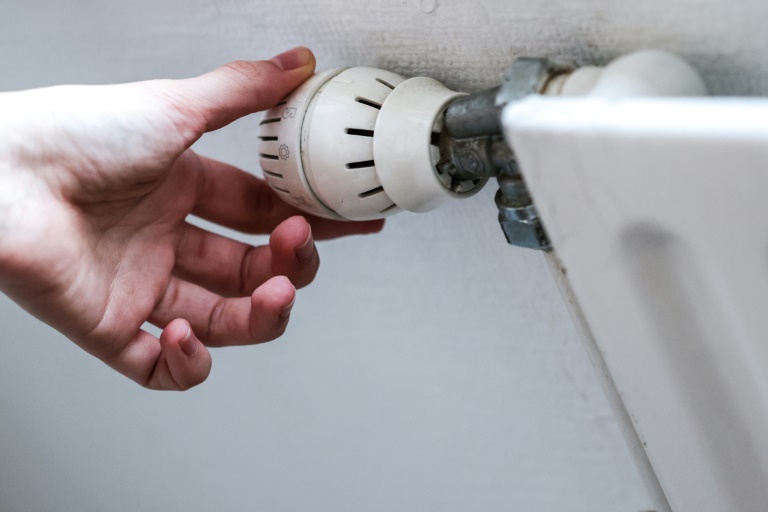
EU energy ministers failed Thursday to agree a cap on gas prices to mitigate the energy crunch in Europe, amid deep divisions over an initial proposal slammed by many as a “joke”.

The ministers will now meet in the first half of December to try to bridge differences, said Czech Industry Minister Jozef Sikela, whose country currently holds the rotating presidency of the EU.

During the “heated discussions” ministers did manage to adopt a couple of other “important measures”, including joint gas purchases to avoid intra-EU competition driving up prices, supply solidarity in times of need, and hastening authorisation of renewable energy sources, Sikela said.

Several ministers going into Thursday’s meeting complained that the gas price cap proposal on the table, unveiled by the European Commission just two days earlier, was clearly designed to never be used.

The Polish and Spanish energy ministers called the proposal a “joke”. 

The price cap plan — which the commission was never keen on — sets a maximum threshold of 275 euros per megawatt hour.

But it comes with so many conditions attached that it would not even have been activated back in August, when the gas price briefly soared above 300 euros, alarming Europe used to historic prices around 10 percent of that.

The cap proposal would only be triggered if the 275-euro limit was breached continuously for at least two weeks, and then only if the price for liquified natural gas (LNG) rose above 58 euros for 10 days within that same two-week period.

The price of wholesale gas in Europe on Thursday was around 124 euros, according to the main TTF benchmark.

The commission’s proposed price cap was seen as neutered under pressure from members including Germany and the Netherlands, which feared a cap could divert gas supplies to more lucrative markets, especially Asia.

Yet at least 15 EU countries — more than half the bloc — want some form of workable ceiling on wholesale gas prices to tackle a crunch in supply forced by Russia’s war in Ukraine.

– ‘Not about one number’ –

EU energy minister Kadri Simson said the European Commission was bound by “parameters” it was given by EU capitals in its formulation of a price cap, and that those governments were free to agree on a change to the parameters if they wished.

While the proposed cap “is not about one number,” she stressed the aim was to have a capping mechanism that, once activated, would stay in place for “a longer time period” and not turn on and off according to daily trading.

She also said that it was designed for next year’s gas filling season, when international competition for supplies could skyrocket.

“All signs are hinting that next year that global competition might be even significantly fiercer than it was this summer and autumn,” when European prices soared, she said.

While the European Union hasn’t banned Russian gas, the Kremlin has been turning off the taps in retaliation for sanctions imposed by Brussels in the wake of Moscow’s invasion. 

Before the war, Russian gas supplies accounted for more than 40 percent of all imported gas into the European Union, with export powerhouse Germany particularly needy.

That has now dropped to less than 10 percent. 

But alternative sources — such as LNG shipped from the United States and the Gulf — cannot make up the shortfall, and Europe faces a pricey heating bill for winter.

The price cap plan, if adopted, would start in January. It would run alongside a voluntary initiative for EU member states to cut natural gas use by 15 percent over the northern hemisphere winter.

Wildlife summit to vote on shark protections

Delegates at a global summit on trade in endangered species will decide Thursday whether to approve a proposal to protect sharks, a move that could drastically reduce the lucrative and often cruel shark fin trade.

The proposal would place dozens of species of the requiem shark and the hammerhead shark families on Appendix II of the Convention on International Trade in Endangered Species (CITES).

The appendix lists species that may not yet be threatened with extinction but may become so unless trade in them is closely controlled.  

If Thursday’s plenary meeting gives the green light, “it would be a historic decision,” Panamanian delegate Shirley Binder told AFP.

“For the first time CITES would be handling a very large number of shark species, which would be approximately 90 percent of the market,” she said. 

Spurring the trade is the insatiable Asian appetite for shark fins, which make their way onto dinner tables in Hong Kong, Taiwan, and Japan.

Despite being described as almost tasteless and gelatinous, shark fin soup is viewed as a delicacy and is enjoyed by the very wealthy, often at weddings and expensive banquets.

Shark fins, representing a market of about $500 million per year, can sell for about $1,000 a kilogram.

– From villain to conservation darling –

Sharks have long been seen as the villain of the seas they have occupied for more than 400 million years, drawing horror with their depiction in films such as “Jaws,” and occasional attacks on humans.

However, these ancient predators have undergone an image makeover in recent years as conservationists have highlighted the crucial role they play in regulating the ocean ecosystem.

According to the Pew Environment Group, between 63 million and 273 million sharks are killed every year, mainly for their fins and other parts.

With many shark species taking more than 10 years to reach sexual maturity, and having a low fertility rate, the constant hunting of the species has decimated their numbers.

In many parts of the world, fisherman lop the sharks fins off at sea, tossing the shark back into the ocean for a cruel death by suffocation or blood loss.

The efforts by conservationists led to a turning point in 2013, when CITES imposed the first trade restrictions on some shark species. 

“We are in the middle of a very large shark extinction crisis,” Luke Warwick, director of shark protection for the NGO Wildlife Conservation Society (WCS), told AFP at the beginning of the summit. 

– Heated debate –

Thursday’s vote followed a fierce debate that lasted nearly three hours, with Japan and Peru seeking to reduce the number of shark species that would be protected. 

Japan had proposed that the trade restriction be reduced to 19 species of requiem sharks, and Peru called for the blue shark to be removed from the list. 

However, both suggestions were rejected.

“We hope that nothing extraordinary happens and that these entire families of sharks are ratified for inclusion in Annex II,” Chilean delegate Ricardo Saez told AFP. 

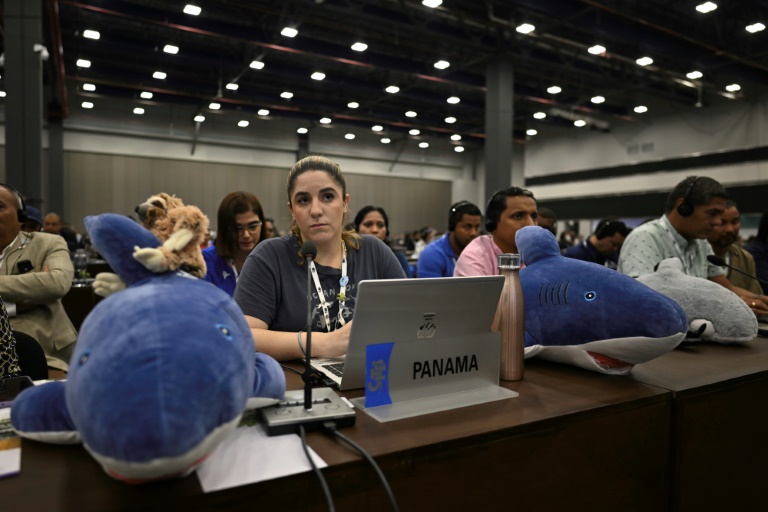
Several delegations, including hosts Panama, displayed stuffed toy sharks on their tables during the earlier Committee I debate.

The plenary will also vote on ratifying a proposal to protect guitarfish, a species of ray.

The shark initiative was one of the most discussed at this year’s CITES summit in Panama, with the proposal co-sponsored by the European Union and 15 countries. 

Participants at the summit considered 52 proposals to change species protection levels.

CITES, which came into force in 1975, has set international trade rules for more than 36,000 wild species. 

Its signatories include 183 countries and the European Union. 

French MPs vote to enshrine abortion rights in constitution

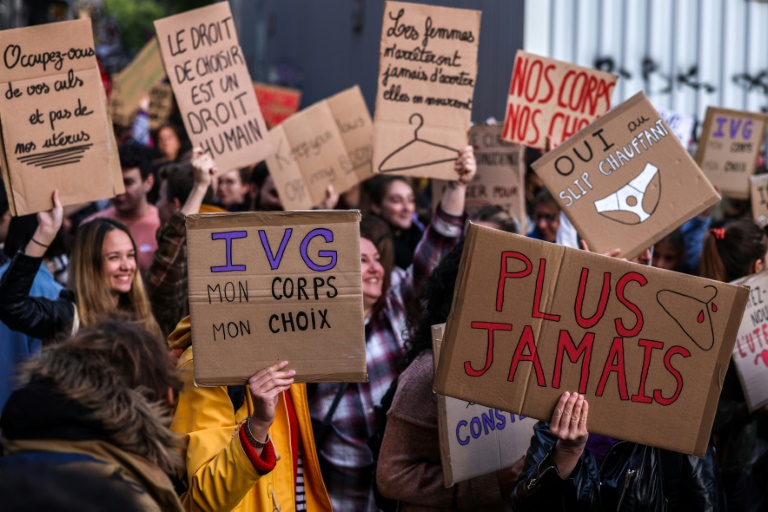
Lawmakers in the French parliament voted Thursday to add the right to abortion to the constitution in response to recent changes in Poland and the United States.

MPs from the left-wing France Unbowed (LFI) party and the ruling centrist coalition struck a deal on the wording of the new clause, which passed with a huge majority.

“The law guarantees the effectiveness and equal access to the right to voluntarily end a pregnancy,” reads the proposed constitutional addition to article 66.

It was approved with 337 votes for and 32 against, with the bill now set to be sent to the conservative-majority Senate for approval.

The initiative was prompted by the US Supreme Court’s explosive decision this year to overturn the nationwide right to termination procedures for Americans.

The conservative government of Poland has also heavily restricted abortion rights.

“The assembly is speaking to the world, our country is speaking to the world,” said jubilant MP Mathilde Panot from LFI, dedicating the vote to women in Hungary, Poland and the United States. 

Panot, who spearheaded the legislation along with a member of President Emmanuel Macron’s party, said the move was necessary in France to protect “against a regression”.

Abortion was legalised in France in 1974 in a law championed by health minister Simone Veil, a women’s rights icon granted the rare honour of burial at the Pantheon by Macron upon her death in 2018.

– Legal for 48 years –

A previous attempt to inscribe the right to abortion as well as contraception into the French constitution, with different wording, was rejected by the Senate in October. 

This second attempt will also need a green light in the upper chamber and must then be voted on in a national referendum.

“It’s a big step… but it’s just the first step,” said centrist MP Sacha Houlie from Macron’s Renaissance party.

Thursday’s agreement was a rare instance of harmony between the hard-left LFI and Macron’s centrist allies in the hung and often bad-tempered National Assembly.

Macron’s minority government has repeatedly struggled to pass legislation, finding cooperation with the different political factions difficult.

Many conservative and Catholic politicians had announced their misgivings about the abortion change, seeing it as unnecessary given the legal protections already in place.

Far-right leader Marine Le Pen, whose National Rally is the biggest single opposition party in parliament, had called it “totally misplaced” earlier this week because abortion rights were not under threat in France.

She missed the vote on Thursday “for medical reasons”, a spokesperson said.

The parliamentary voting system initially indicated by error that she had voted in favour of the text.

Extreme poverty rising in Latin America: UN

Extreme poverty is likely to affect 82 million people in Latin America in 2022, an increase spurred by a slow pandemic recovery and high inflation, the UN economic commission for the region said Thursday.

“It has not been possible to reverse the impacts of the pandemic in terms of poverty and extreme poverty,” said Jose Manuel Salazar-Xirinachs, executive secretary of the UN Economic Commission for Latin America and the Caribbean (ECLAC).

The figure represents 13.1 percent of the region’s population, an increase from 12.9 percent in 2021.

Overall, 12 million more people are facing extreme poverty since 2019, before the Covid-19 pandemic.

Salazar-Xirinachs pointed to a “cascade of external shocks,” namely a slowdown in economic growth, the weak recovery of the jobs market, and rising inflation.

The Santiago-based UN body said the extreme poverty figures were a “setback of a quarter of a century” for the region.

In October, the agency predicted higher-than-expected growth of 3.2 percent in the region. However, this is expected to halve in 2023 with a projected growth of 1.2 percent.

The UN body also highlighted the severe consequences the pandemic had on education in Latin America and the Caribbean, with an average of 70 weeks of school closures compared to 41 weeks elsewhere in the world.

The number of youths aged 18-24 who are not studying or working rose from 22.3 percent in 2019 to 28.7 percent in 2020.

Iran arrests ex-international footballer who backed protests

Iran on Thursday arrested a former international football player of Kurdish origin who has strongly supported the protests that have rocked the country since September, news agencies said.

Voria Ghafouri, an outspoken figure who appeared 28 times for Iran up until 2019, was arrested after a club training session over accusations that he spread “propaganda” against the Islamic republic, the Fars news agency reported.

He is one of the most prominent figures arrested in a widescale crackdown on protests, amid intense scrutiny on the conduct of the national team at the World Cup in Qatar.

The team refrained from singing the national anthem at their first match against England on Monday.

But concern is also growing over the extent of the authorities’ crackdown in the western Kurdish areas of Iran from which Ghafouri hails, with rights groups saying dozens have been killed over the last week alone.

Ghafouri was detained after a training session with his club Foolad Khuzestan on charges of having “tarnished the reputation of the national team and spread propaganda against the state”, the Fars new agency said.

Kurdish-focused rights group Hengaw, based in Norway, also said he had been arrested, posting a picture of the player in traditional Kurdish dress.

Former Iranian international footballer Ali Karimi, another outspoken supporter of the protests, also posted the same photo of Ghafouri on his Twitter account in support of the player.

“For the honourable Voria,” he wrote.

– ‘Stood behind his people’ –

Ghafouri, 35, was listed as a member of Iran’s 2018 World Cup squad but was not named in the final lineup playing at this year’s World Cup in Qatar.

Originally from the Kurdish-populated city of Sanandaj in western Iran, Ghafouri had posted a photo of himself on Instagram in traditional Kurdish dress.

Iran has seen more than two months of demonstrations sparked by the death in custody of 22-year-old Mahsa Amini, herself of Kurdish origin, after she was arrested for an alleged breach of the country’s strict dress code for women. 

The protests have swelled into a broad movement against the ruling theocracy.

Ghafouri had on his social media accounts strongly backed the protests and also reportedly visited the Kurdish-populated areas of Iran to express solidarity with families of the victims of the crackdown.

He won particular praise for visiting the young daughter of a woman who had been killed in the protests and giving her a tablet as a gift.

“Voria stood behind his people and paid for it. We should also stand behind him and not let him be alone,” tweeted US-based dissident Masih Alinejad.

– ‘Not our enemies’ –

Ghafouri was formerly the captain of Iran’s leading club Esteghlal before his contract was terminated and he moved to Foolad Khuzestan.

Many fans suggested the ending of his career with Esteghlal was revenge for speaking out in support of earlier protests that erupted this summer. Others argued that in his mid-30s Ghafouri was already too old for the Iranian top flight.

Ghafouri is not the first big sports name to have been caught up in the crackdown.

International footballer Hossein Mahini was arrested in October for supporting the protests but was later released.

The international side won plaudits abroad for their refusal to sing the anthem at the match on Monday.

But many Iranians have criticised the team for meeting President Ebrahim Raisi just before leaving for Qatar as the protests raged.

“They players out not our enemies,” Iran’s Portuguese coach Carlos Queiroz this week wrote on Instagram in response to the anger.

After losing 6-2 to England, Team Melli’s next match is against Wales on Friday.
Stocks rise, dollar slips as Fed signals softer rate hike pace

Stock markets mostly rose Thursday and the dollar largely weakened after minutes from the Federal Reserve’s latest policy meeting suggested it could slow the pace of its rate hikes.

The news provided traders with a cushion against concerns about surging Covid-19 cases in China that have fanned speculation authorities will revert to lockdowns and other economically debilitating measures to fight the outbreak.

Oil prices rallied slightly later Thursday after earlier extending sharp losses from the previous day fuelled by worries about the impact on demand from China’s Covid outbreaks.

Wednesday’s much-anticipated minutes showed most US central bank chiefs felt smaller increases would “likely soon be appropriate” as the economy shows signs of weakness following almost a year of monetary tightening.

“Equities are revelling in the wake of the… minutes after the Fed telegraphed a downshift from jumbo to extra-large rate hikes,” said SPI Asset Management’s Stephen Innes.

“A commitment to moving toward restrictive monetary policy remains intact, but the (policy board) is ready to slow the path toward that destination.”

He added that a less aggressive Fed “should pave the runway for take-off in Asia, fuelled by expectations of China’s reopening by March next year”.

Bets were growing on officials announcing a 50-basis-point lift at their December gathering, down from four straight 75-point hikes.

The latest indicators showed the manufacturing and services sectors continued to contract last month, while jobless claims picked up.

The developments allowed Wall Street traders to head off to their Thanksgiving break with a spring in their step, the S&P 500 ending at a two-month high as they finally see a glimmer of light at the end of the tunnel after a painful year.

Asia and Europe mostly followed suit.

Kuala Lumpur surged more than three percent and the ringgit held gains after opposition leader Anwar Ibrahim was named prime minister, ending a days-long leadership impasse after inconclusive polls that had rattled Malaysia’s markets.

The more risk-on environment was also reflected in a further drop in the dollar against its peers, having surged for much of the year as traders bet on ever-higher US interest rates.

Investors were keeping a close watch also on China after it announced a record number of new Covid cases, as authorities worked to curb the spread with snap lockdowns, mass testing and travel restrictions.

While officials are trying more targeted measures to contain the disease, concerns remain that they will resort to the painful city-wide shutdowns seen in Shanghai earlier this year as part of the zero-Covid strategy, which hammered the economy.

However, that worry has been tempered somewhat after China signalled fresh support measures aimed at boosting growth, with the State Council saying tools would be used to ensure liquidity in markets.

The comments led to talk of another cut in the amount of cash that banks must keep in reserve, freeing them to lend more.

– Key figures around 1630 GMT –

London – FTSE 100: FLAT at 7,466.60 points (close)

Paris – CAC 40: UP 0.4 percent at 6,707.32 (close)

Frankfurt – DAX: UP 0.8 percent at 14,539.56 (close)

EURO STOXX 50: UP 0.4 percent at 3,961.99

Tokyo – Nikkei 225: UP 1.0 percent at 28,383.09 (close)

Hong Kong – Hang Seng Index: UP 0.8 percent at 17,660.90 (close)

Shanghai – Composite: DOWN 0.3 percent at 3,089.31 (close)

New York – Dow: UP 0.3 percent at 34,194.06 (close)

Euro/dollar: UP at $1.411 from $1.0401 on Wednesday

Dollar/yen: DOWN at 138.39 yen from 139.52 yen

Pound/dollar: UP at $1.2131 from $1.2064

Euro/pound: DOWN at 85.82 pence from 86.18 pence

West Texas Intermediate: FLAT at $77.91 per barrel

Brent North Sea crude: DOWN 0.4 percent at $85.10 per barrel

Bid to ban bullfighting abandoned in France

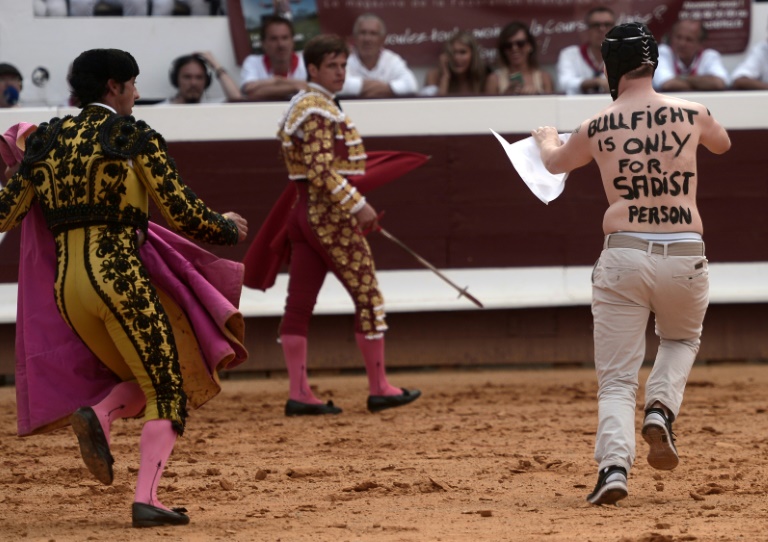
A bid to ban bullfighting in France was abandoned Thursday in parliament, spelling relief for lovers of the traditional blood sport and dismay for animal rights’ activists. 

The 577-seat national assembly had looked set to vote on draft legislation that would have made the practice illegal.

But after lawmakers filed more than 500 amendments, many of them designed to take up parliamentary time and obstruct the vote, the MP behind the bill withdrew it.

“I’m so sorry,” Aymeric Caron, a left-wing MP, vegan and animal rights’ campaigner, told the national assembly as he announced the decision in raucous and bad-tempered scenes.

Though public opinion is firmly in favour of outlawing the practice, the bill had already been expected to be rejected by a majority of lawmakers who are wary about stirring up the bullfighting heartlands in the south of the country. 

“We need to go towards a conciliation, an exchange,” President Emmanuel Macron said on Wednesday, adding that he did not expect the draft law to pass. “From where I am sitting, this is not a current priority.” 

His government has urged members of the ruling centrist coalition not to support the text from the opposition France Unbowed party, even though many members are known to personally favour it. 

During a first debate of the parliament’s law commission last week, a majority voted against the proposal by Caron, who denounced the “barbarism” of a tradition that was imported from Spain in the 1850s.

“Caron has antagonised people instead of trying to smooth it over,” a lawmaker from Macron’s party told AFP on condition of anonymity.

The bill proposes modifying an existing law penalising animal cruelty to remove exemptions for bullfights that can be shown to be “uninterrupted local traditions”.

These are granted in towns such as Bayonne and Mont-de-Marsan in southwest France and along the Mediterranean coast including Arles, Beziers and Nimes. 

Around 1,000 bulls are killed each year in France, according to the National Observatory of Bull Cultures.

– ‘Tackling death’ –

Many so-called “bull towns” depend on the shows for tourism and see the culture of bull-breeding and the spectacle of the fight as part of their way of life — idolised by artists from Ernest Hemingway to Pablo Picasso.

They organised demonstrations last Saturday, while animal rights protesters gathered in Paris — highlighting the north-south and rural-versus-Paris divide at the heart of the debate. 

“Caron, in a very moralising tone, wants to explain to us, from Paris, what is good or bad in the south,” the mayor of Mont-de-Marsan, Charles Dayot, told AFP recently.

Other defenders of “la Corrida” in France view the focus on the sport as hypocritical when factory farms and industrial slaughter houses are overlooked.

“These animals die too and we don’t talk enough about it,” said Dalia Navarro, who formed the pro-bullfighting group Les Andalouses in southern Arles.

Modern society “has more and more difficulty in accepting seeing death. But la Corrida tackles death, which is often a taboo subject,” she told AFP.

Previous judicial attempts to outlaw bullfighting have repeatedly failed, with courts routinely rejecting lawsuits lodged by animal rights activists, most recently in July 2021 in Nimes.

The debate in France about the ethics of killing animals for entertainment is echoed in other countries with bullfighting histories, including Spain and Portugal as well as Mexico, Colombia and Venezuela.

In June, a judge in Mexico City ordered an indefinite suspension of bullfighting in the capital’s historic bullring, the largest in the world.

The first bullfight took place in France in 1853 in Bayonne to honour Eugenie de Montijo, the Spanish wife of Napoleon III.

adc-cs-iw-adp/sjw/pvh

Ukraine battles to reconnect millions in the cold and dark

Ukraine battled Thursday to reconnect water and electricity services to millions of people cut off after Russia launched dozens of cruise missiles that battered Ukraine’s already crippled electricity grid.

The energy system in Ukraine is on the brink of collapse and millions have been subjected to emergency blackouts over recent weeks after systematic Russian bombardments of the grid.

The World Health Organisation has warned of “life-threatening” consequences and estimated that millions could leave their homes as a result.

Twenty-four hours after the Russian strikes smashed Kyiv, city officials said 70 percent of homes were still suffering emergency outages but that water services had been fully restored.

“Energy companies are making every effort to return (services) as soon as possible,” Kyiv Mayor Vitali Klitschko said earlier.

The strikes knocking out electricity come at a precarious time, with winter setting in and temperatures in the capital hovering just above freezing.

Ukraine accused Russian forces of launching around 70 cruise missiles as well as drones in attacks that left 10 dead and around 50 wounded.

But Russia’s defence ministry denied striking any targets inside Kyiv and said damage in the capital was caused by Ukrainian and foreign air defence systems.

– ‘Scariest day’ –

“Not a single strike was made on targets within the city of Kyiv,” it said.

Moscow’s is targeting power facilities in an apparent effort to force capitulation after nine months of war that has seen Russian forces fail in most of their stated territorial objectives.

“The way they fight and target civil infrastructure, it can cause nothing but fury,” said Oleksiy Yakovlenko, the chief administrator at a hospital in the eastern Ukraine city of Kramatorsk.

But even as blackouts there become more frequent, Yakovlenko said his resolve was unwavering.

“If they expect us to fall on our knees and crawl to them it won’t happen,” Yakovlenko told AFP. 

The wave of attacks on Ukraine’s grid come as Russian troops suffer a wave of battlefield defeats. This month they withdrew from the only regional capital they had captured, destroying key infrastructure as they retreated from Kherson in the south. 

Ukraine prosecutors said Thursday authorities had discovered a total of nine torture sites used by the Russians in Kherson as well as “the bodies of 432 killed civilians”.

Wednesday’s attacks disconnected three Ukrainian nuclear plants automatically from the national grid and triggered blackouts in neighbouring Moldova, where the energy network is linked to Ukraine.

The energy ministry said that all three nuclear facilities had been reconnected by Thursday morning.

And power was nearly entirely back online in ex-Soviet Moldova and its pro-European president Maia Sandu convened a meeting of her security council to discuss energy.

The mayor of Ukraine’s second largest city, Kharkiv, near the border with Russia, said water was being restored to homes and municipal workers were reconnecting public transport. 

“We’ve restarted power supplies. Believe me, it was very difficult,” said Mayor Igor Terekhov.

But there were still disruptions across the country and even the central bank warned the outages could impact banks.

“There is danger of complete inability of banks to work due to prolonged absence of electricity supply,” it said.

– ‘Shutdowns’ –

The Kremlin said Ukraine was ultimately responsible for the fallout from the strikes and that Kyiv could end the strikes by acquiescing to Russian demands.

Ukraine “has every opportunity to settle the situation, to fulfil Russia’s demands and as a result, end all possible suffering of the civilian population,” spokesman Dmitry Peskov said.

Moscow announced separately it had issued tens of thousands of Russian passports to residents of four Ukrainian territories, which President Vladimir Putin claimed to have annexed in September.

“More than 80,000 people received passports as citizens of the Russian Federation,” Valentina Kazakova, a migration official with the interior ministry, said in remarks carried by Russian news agencies. 

In September, Russia held so-called referendums in Donetsk, Lugansk, Zaporizhzhia and Kherson and claimed residents had voted in favour of becoming subjects of Russia.

Putin formally annexed the territories at a ceremony in the Kremlin later that month, even though his forces have never had full control over them.

Spanish PM sets sights on international role

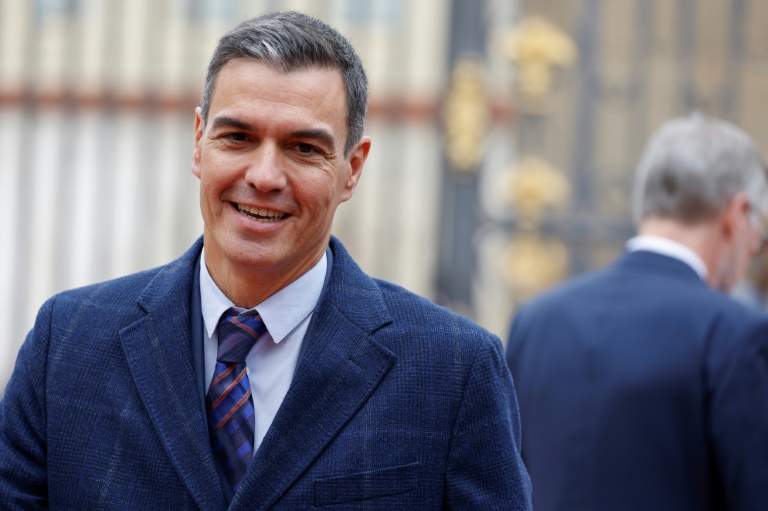
Spanish Prime Minister Pedro Sanchez will on Friday become president of an international socialist grouping, a potential springboard to a major post on the world stage.

A year before a general election in Spain, which polls suggest he will struggle to win, Sanchez is the only candidate to head the Socialist International (SI) — an umbrella group of 132 centre-left parties from around the world.

The telegenic 50-year-old takes over from former Greek prime minister George Papandreou as head of the SI which begins a three-day gathering in Madrid on Friday.

“While symbolic… this post could be a way (for Sanchez) to regain credit among voters by presenting himself as influential on the world stage,” said Pablo Simon, a political science professor at Madrid’s Carlos III University

“But it also could be that he plans on capitalising on this network of international contacts” which the post offers to “play a prominent role later” in a top global body, he added.

Former Portuguese prime minister Antonio Guterres led the International Socialist before he went on to head the United Nations refugee agency in 2005 and then become UN secretary general in 2017.

“All prime ministers who love foreign affairs have a tendency to look for an international post to secure a post-governmental career,” said Teneo Intelligence analyst Antonio Barroso. 

– ‘More weight’ –

Sanchez has made international affairs a priority since he came to power in June 2018, in contrast to his conservative predecessor Mariano Rajoy, and has sought to boost Spain’s influence in the European Union.

Within days of taking office, Sanchez made international headlines by agreeing to take in migrants from the Aquarius rescue ship who were rejected by other European nations.

The first modern Spanish premier to speak English fluently, Sanchez served as chief of staff to the UN high representative to Bosnia during the Kosovo conflict.

He has fostered good relations with France and Germany, which has made Spain “one of the engines of European politics”, said Simon, citing as an example Madrid’s lead in talks over the energy crisis sparked by the war in Ukraine.

Sanchez successfully lobbied to have his foreign minister, Josep Borrell, appointed as European Union foreign policy chief in 2019.

“Spain has much more weight in the European Union debate than 10 years ago,” said Barroso, adding the premier had “boosted Spain’s credibility” with its “European partners”. 

Beyond the EU, Sanchez hosted a crucial NATO summit in Madrid in June, just four months after Russia’s invasion of Ukraine, and has “reconnected” with Latin America, which has shifted to the left in recent years, said Simon.

Sanchez visited four Latin American countries in August 2018, his first official trip outside Europe, in what was seen as an effort to underscore the region as a priority of his foreign policy.

– With Biden and Macron –

During the recent G20 summit in Indonesia, Sanchez posted a photo of himself meeting German Chancellor Olaf Scholz, French President Emmanuel Macron, British Prime Minister Rishi Sunak and US President Joe Biden.

Seen as an attempt to burnish his credentials on international affairs, the photo was much mocked on social media.

But Ignacio Molina, a senior analyst at the Elcano Royal Institute think tank, believes Sanchez’s priority is to remain prime minister after the general election, which is expected by the end of 2023.

Speculation about a possible senior role for Sanchez at a global body is coming from Spain’s opposition parties, which have “spread the idea he uses international meetings to prepare his future in case of an electoral defeat next year”, Molina said.

“I don’t think he’s deliberately developing an international network for personal reasons. It’s more because he’s at ease in European politics, where he faces less opposition.”

Close Bitnami banner
Bitnami