World

ICC prosecutor seeks charges against fugitive warlord Kony

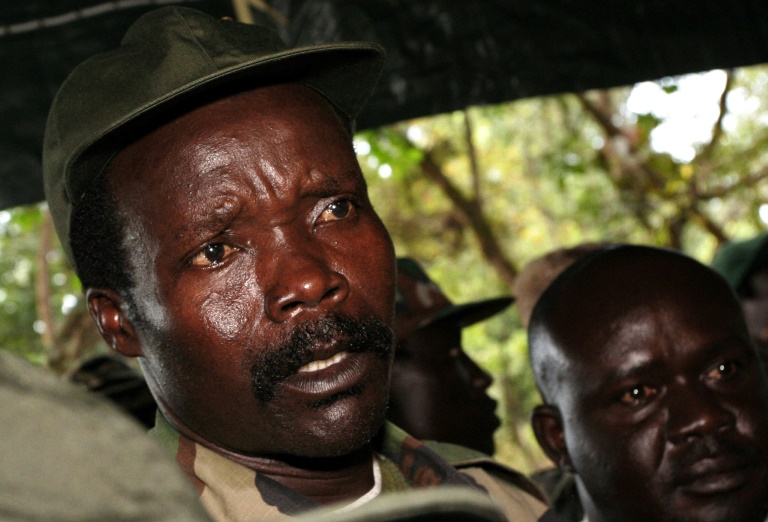
The International Criminal Court’s chief prosecutor said Thursday he would ask judges to confirm charges against Ugandan warlord Joseph Kony, head of the notorious Lord’s Resistance Army (LRA), even though Kony remains at large.

Kony launched a bloody rebellion more than three decades ago seeking to impose his own version of the Ten Commandments in northern Uganda, unleashing a campaign of terror that spread to several other countries.

The Hague-based ICC issued an arrest warrant for Kony in 2005 on allegations of war crimes and crimes against humanity, and US president Barack Obama in 2011 launched a small number of US troops to help regional armies try to capture him.

“However, this arrest warrant remains unexecuted to this day. Mr Kony has sought to evade judicial proceedings at this court for more than 17 years despite continuing efforts,” ICC prosecutor Karim Khan said in a statement.

Khan said he had asked judges for authorisation to hold a hearing to confirm the charges against Kony in his absence.

“This is the first time that my Office has made such a request since the establishment of the ICC,” he said.

“I have determined it is both necessary and appropriate to seek to advance proceedings against him to the fullest extent compatible with the Rome Statute,” the charter which governs the ICC, he said.

Suspects cannot be tried in absentia at the ICC, but it is possible to hold confirmation hearings while they are still fugitives, Khan explained.

– ‘Meaningful milestone’ –

Confirming the charges against Kony would make it easier and quicker to put him on trial should he be captured, the prosecutor added.

Any hearing involving Kony would be a “meaningful milestone for victims of Mr Kony’s crimes who have waited patiently for justice for almost two decades,” Khan said.

Starting with a bloody rebellion in northern Uganda against President Yoweri Museveni, the LRA’s campaign of violence has claimed more than 100,000 lives and seen 60,000 children abducted.

The violence eventually spread to Sudan, the Democratic Republic of Congo and Central African Republic.

The allegations against Kony in the arrest warrant include murder, cruel treatment, enslavement, rape, and attacks against civilian population, the ICC said.

In 2021, the ICC convicted a LRA child soldier-turned commander, Dominic Ongwen, of war crimes and crimes against humanity and sentenced him to 25 years in jail.

He has appealed against the verdict and sentence, arguing that he was scarred by his own history and still believed he was “possessed” by the spirit of Kony.

The ICC was set up in 2002 to bring perpetrators of the world’s worst crimes to justice, but has been criticised for choosing many of its cases from African nations.
I.Coast's Ble Goude says he wants to make low-key return

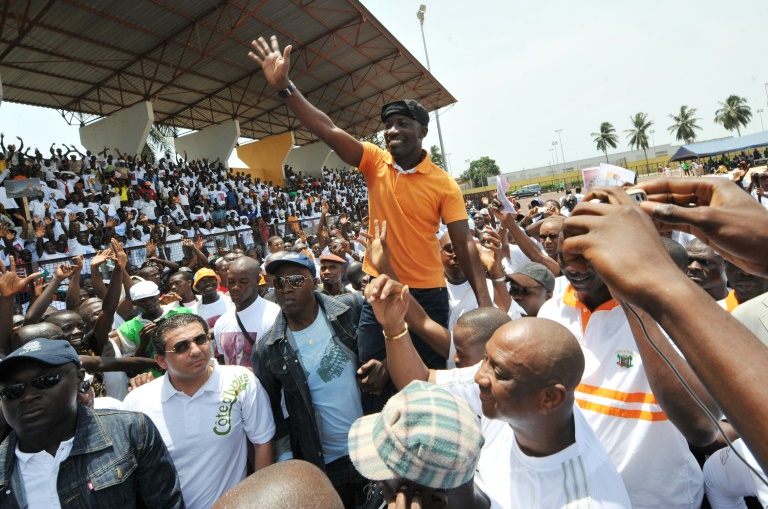
Charles Ble Goude, a key figure in post-electoral violence that swept Ivory Coast 11 years ago, wants to make a low-key homecoming this weekend, his representatives said on Thursday.

The former right-hand man to ex-president Laurent Gbagbo is set to fly back on Saturday morning after being acquitted last year with his erstwhile boss by the International Criminal Court (ICC).

Some have feared his arrival could spark a return to confrontation in a country still nursing the wounds of the 2010-11 conflict, which claimed several thousand lives.

But Boga Sako, who heads the welcoming committee, told a press conference that Ble Goude “wishes to make a sober return.”

“The welcoming committee urges friends, relatives, campaigners, admirers or sympathisers to scrupulously observe security measures and Mr. Ble Goude’s wishes so that this return is part of the process of national reconciliation and cohesion,” he said.

“There’s no point in going to the airport,” he warned.

In a statement to AFP, Ble Goude said he was “very happy” to be returning to his home country, but also appealed for “discipline and a spirit of reunion.”

Gbagbo, a fiery left-wing orator from a humble background who portrayed himself as champion of the poor, was Ivory Coast’s president for 10 turbulent years.

In October 2010 he lost in elections to Alassane Ouattara but refused to accept the result.

Their showdown split the country along north-south lines, triggering violence in 2011 that claimed an estimated 3,000 lives.

Ble Goude at the time was head of a pro-Gbagbo nationalist group called the Young Patriots — his nickname was “the General of the Streets” for his ability to raise and rouse angry crowds.

After Gbagbo was detained, Ble Goude fled to Ghana, where he was arrested in 2014 and transferred to The Hague.

He and his former boss were placed on trial in 2016 for crimes against humanity.

They were acquitted in 2019, a ruling that was upheld definitively in March last year.

Gbagbo, 77, who still has a groundswell of support in Ivory Coast, negotiated his return with Ouattara and came home in June 2021.

He donned the role of elder statesman to help “reconciliation” in a country shaken by deadly violence that erupted when Ouattara in October 2020 mounted a bid for a third term in office — a move that critics said breached the constitution.

– Low profile –

Ble Goude, 50, was issued with a passport in May but his return is also being scripted by behind-the-scenes contacts.

Sako said Ble Goude would be arriving on a regular commercial flight and exit through normal channels, not via a presidential or ministerial suite.

He will be greeted by about 10 people, including former first lady Simone Gbagbo, he said. 

He will then go to Yopougon, a working-class area of Abidjan, “for a party, not a (political) rally,” he said.

Ble Goude, like Gbagbo previously, also has the shadow of legal proceedings over him.

In 2019, shortly after his acquittal by the ICC, an Ivorian court sentenced him to 20 years in absentia on charges of murder, rape and torture in the 2010-11 violence.

Gbagbo had received a 20-year term in absentia for the “looting” of the local branch of the Central Bank of the West African States during the crisis. He was pardoned by Ouattara in August.

Anwar Ibrahim sworn in as Malaysia's prime minister

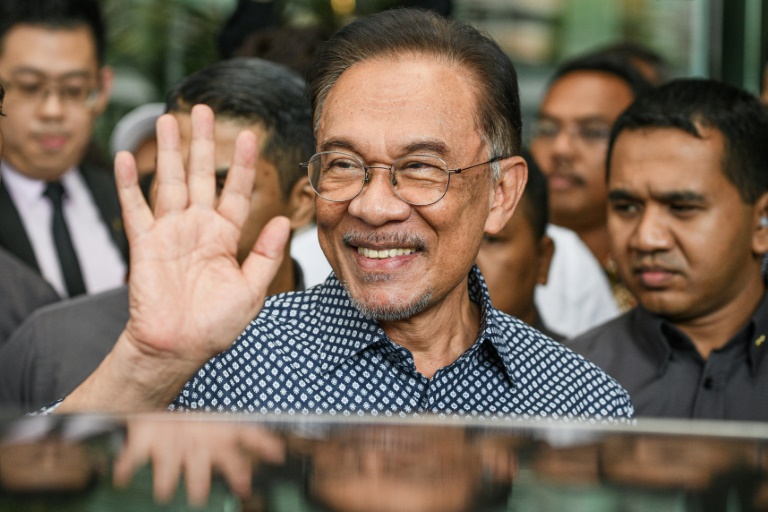
Malaysia’s perennial opposition leader Anwar Ibrahim was sworn in as prime minister before the king in Kuala Lumpur Thursday, ending a five-day political impasse after inconclusive polls.

The ceremony at the National Palace closed the chapter on one of the most dramatic elections in Malaysia’s history, after no party managed to secure a majority to form a government for the first time since independence in 1957.

Anwar’s ascension to the premiership caps a turbulent political life, which has not only propelled him into the corridors of power but also landed him inside a jail cell.

“I will not tolerate corruption and abuses … None should be marginalised under my administration,” Anwar told a news conference.

He said his focus would be on the economy.

“This is a national unity government. All are welcome, on condition you accept the fundamental rules of good governance, no corruption and Malaysia for all Malaysians,” Anwar said.

He said his multi-ethnic Pakatan Harapan coalition had been able to secure a majority after gaining seats from old foes in the former ruling bloc Barisan Nasional and another party in Sarawak state on Borneo island.

Anwar’s coalition campaigned on an anti-graft message and won the most seats in the election with 82. That was ahead of the 73 won by former prime minister Muhyiddin Yassin’s Malay-centric Perikatan Nasional bloc but still well short of the 112 needed for a majority.

Both leaders were summoned by the king this week in an attempt to break the deadlock but no deal could be struck. The king then held a special meeting with other royals on Thursday before the palace announced Anwar as the new premier.

Seeking to boost the legitimacy of his appointment, Anwar said his coalition would propose a vote of confidence in parliament on December 19. 

Anwar’s supporters were in a celebratory mood in the capital, Kuala Lumpur.

“I got goosebumps, seriously,” said 36-year-old Norhafitzah Ashruff Hassan. “He fought hard to be given the chance to be PM. I hope he performs well and proves his worth.”

Muhammad Taufiq Zamri, a 37-year-old product manager said: “I cannot express in words the ecstatic feeling I have.”

Anwar said he had received a congratulatory phone call from Turkish President Recep Tayyip Erdogan just before his news conference.

– Rollercoaster journey-

The premiership is the culmination of a 25-year rollercoaster for Anwar.

The firebrand former student activist was first poised to take the reins in the late 1990s, after serving as finance chief and deputy prime minister under Malaysia’s political patriarch Mahathir Mohamad.

But the two had a bitter falling-out over how to handle the 1997-98 Asian financial crisis.

Mahathir sacked his former protege, who was also expelled from their then-party the United Malays National Organisation (UMNO), and charged with corruption and sodomy. Anwar said the charges were politically motivated. 

Anwar was sentenced to six years in jail for corruption in 1999 and then given an additional nine on a sodomy charge the following year.

Street protests erupted and evolved into a movement for democratic reforms, with Anwar stringing together an opposition coalition from behind bars. 

The Mahathir-Anwar tussle has dominated and shaped Malaysian politics over the past four decades, “alternately bringing despair and hope, progress and regress to the country’s polity”, according to Oh Ei Sun of the Pacific Research Center of Malaysia.

The Malaysian Supreme Court overturned Anwar’s sodomy conviction in 2004 and ordered him freed. 

-‘Long time coming’-

Anwar re-aligned with Mahathir during the 2018 elections, when his nonagenarian foe came out of retirement to challenge incumbent Najib Razak, who was mired in the billion-dollar 1MDB financial scandal.

Their detente scored a historic victory against UMNO and Najib, who is now serving a 12-year jail term for corruption.

Mahathir became prime minister for the second time, with an agreement to eventually hand the premiership to Anwar.

He never fulfilled that pact and their alliance collapsed after 22 months.

In his most recent bid to lead Southeast Asia’s third-largest economy, Anwar once again pledged to end corruption and cultivate multi-ethnic harmony.

“This is a long time coming for Anwar Ibrahim,” Asrul Hadi Abdullah Sani, deputy managing director at strategic advisory firm Bower Group Asia, told AFP.

James Chin, a professor of Asian studies at the University of Tasmania, told AFP the palace’s announcement “will be welcomed internationally since Anwar is known as a Muslim democrat worldwide”.

“His biggest challenge will be to lead Malaysia out of the economic malaise following the pandemic.” 

Struggling Ghana plans tax rise, debt swap to secure IMF aid

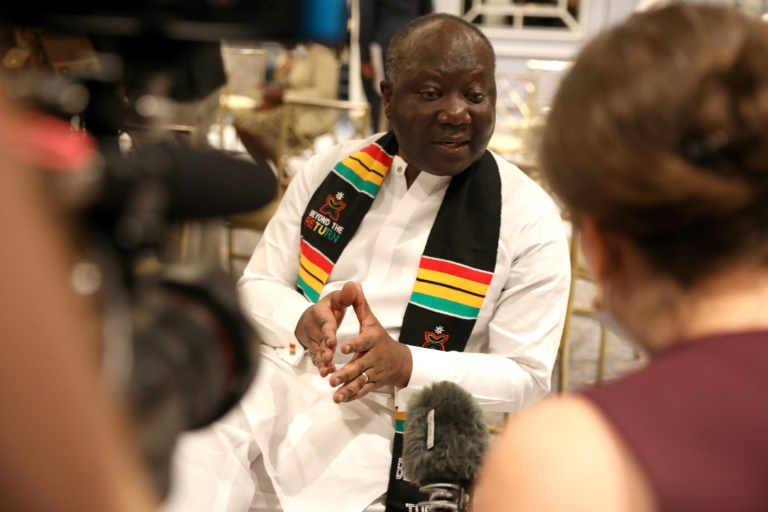
Ghana’s finance minister, Kenneth Ofori-Atta, presented the 2023 budget to parliament on Thursday, hiking tax and planning a debt swap as the country’s negotiates an International Monetary Fund (IMF) loan.

Ofori-Atta is facing calls for his dismissal as the West African state battles an economic crisis, with inflation at more than 40 percent and the cedi currency falling sharply.

Ghana hopes to secure up to $3 billion in IMF credit this year to shore up public finances after the government initially said it would not need to go to the multilateral lender.

“The challenges we face are daunting,” the minister said in a statement to lawmakers. “I, therefore, ask all of us to play a constructive role in getting our nation back on track.”

To increase revenues, the 2023 budget will raise value-added tax by 2.5 percent to 15 percent. The so-called E-levy on electronic transactions will be reduced from 1.5 percent to 1.0 percent in a bid to encourage more transactions.

The government will also freeze hiring of public workers for next year.

Ghana, a top cocoa and gold producer, also has oil and gas reserves but its debt service payments are high and its revenues low. Like the rest of Africa, it has been hit hard by economic fallout from the global pandemic and the Ukraine war. 

Since the start of the year, the cedi currency has depreciated more than 53 percent. That compared to an average seven percent average annual depreciation between 2017 and 2021, the finance minister said. 

Inflation in October hit 40.2 percent.

The local currency’s depreciation against the dollar has increasing Ghana’s foreign debt stock by 93 billion cedi or $6 billion this year alone, the minister said. 

He said the government would start a debt exchange programme but did not give details of how that would happen.

Earlier this year, President Nana Akufo-Addo reversed his government’s position and said the country would go to the IMF for help.

Critics have questioned what austerity measures may have to accompany any loan deal. Ghanaians already struggling with high costs of living.

Ofori-Atta said the IMF talks had made “substantial progress”, with agreement on “fiscal adjustment path, debt strategy and financing”.

The government is under increasing pressure over the country’s economic woes and Ofori-Atta faced an enquiry from lawmakers last week over his financial management.

Speaking in parliament on Friday, he apologised to Ghanaians for the struggles they faced. 

Earlier this month, Akufo-Addo fired the government’s junior finance minister, Charles Adu Boahen, over graft allegations after he appeared in a documentary on illegal gold mining.

Struggling Ghana plans tax rise, debt swap to secure IMF aid

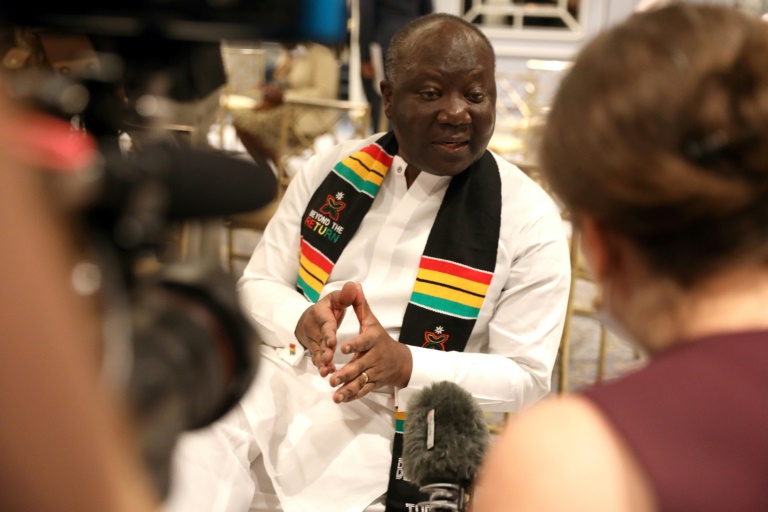
Ghana’s finance minister, Kenneth Ofori-Atta, presented the 2023 budget to parliament on Thursday, hiking tax and planning a debt swap as the country’s negotiates an International Monetary Fund (IMF) loan.

Ofori-Atta is facing calls for his dismissal as the West African state battles an economic crisis, with inflation at more than 40 percent and the cedi currency falling sharply.

Ghana hopes to secure up to $3 billion in IMF credit this year to shore up public finances after the government initially said it would not need to go to the multilateral lender.

“The challenges we face are daunting,” the minister said in a statement to lawmakers. “I, therefore, ask all of us to play a constructive role in getting our nation back on track.”

To increase revenues, the 2023 budget will raise value-added tax by 2.5 percent to 15 percent. The so-called E-levy on electronic transactions will be reduced from 1.5 percent to 1.0 percent in a bid to encourage more transactions.

The government will also freeze hiring of public workers for next year.

Ghana, a top cocoa and gold producer, also has oil and gas reserves but its debt service payments are high and its revenues low. Like the rest of Africa, it has been hit hard by economic fallout from the global pandemic and the Ukraine war. 

Since the start of the year, the cedi currency has depreciated more than 53 percent. That compared to an average seven percent average annual depreciation between 2017 and 2021, the finance minister said. 

Inflation in October hit 40.2 percent.

The local currency’s depreciation against the dollar has increasing Ghana’s foreign debt stock by 93 billion cedi or $6 billion this year alone, the minister said. 

He said the government would start a debt exchange programme but did not give details of how that would happen.

Earlier this year, President Nana Akufo-Addo reversed his government’s position and said the country would go to the IMF for help.

Critics have questioned what austerity measures may have to accompany any loan deal. Ghanaians already struggling with high costs of living.

Ofori-Atta said the IMF talks had made “substantial progress”, with agreement on “fiscal adjustment path, debt strategy and financing”.

The government is under increasing pressure over the country’s economic woes and Ofori-Atta faced an enquiry from lawmakers last week over his financial management.

Speaking in parliament on Friday, he apologised to Ghanaians for the struggles they faced. 

Earlier this month, Akufo-Addo fired the government’s junior finance minister, Charles Adu Boahen, over graft allegations after he appeared in a documentary on illegal gold mining.

Brazil election court throws out Bolsonaro challenge, fines party

Brazil’s top electoral authority on Wednesday threw out a challenge by President Jair Bolsonaro’s party against his election defeat and fined it more than $4 million for bringing the case “in bad faith.”

The head of the Superior Electoral Tribunal (TSE), judge Alexandre de Moraes, ruled the far-right president’s Liberal Party had presented “absolutely false” arguments in its case, which he said was aimed at “encouraging criminal and anti-democratic movements” by Bolsonaro supporters seeking to fight the election result.

The Liberal Party (PL) brought the case Tuesday, saying an auditing firm it hired had found “irreparable operating discrepancies” in around 280,000 electronic voting machines used in the October 30 runoff election, which Bolsonaro lost to veteran leftist Luiz Inacio Lula da Silva.

The PL called for electoral authorities to exclude all votes cast on five models of voting machine manufactured before 2020, alleging they gave a suspiciously large advantage of nearly five percentage points to Lula.

Party lawyer Marcelo Bessa said excluding those votes would change the election result, from a 1.8-percentage-point win for Lula to a 2.1-percentage-point win for Bolsonaro.

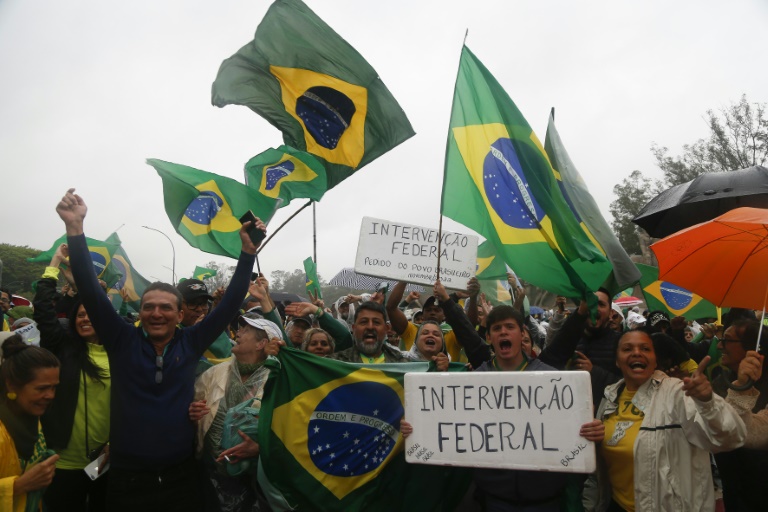
Moraes responded with a withering rejection, accusing the PL of seeking to fuel ongoing protests by Bolsonaro supporters who have blocked highways and rallied outside army barracks calling for a military intervention to keep the incumbent in power.

“There is a total lack of supporting evidence” in the PL’s claim, Moraes said in a statement.

The case “is blatantly offensive to the democratic rule of law, and was brought recklessly, for the purpose of encouraging criminal and anti-democratic movements… responsible for grave threats and violence,” he added.

He fined the PL’s coalition 22.9 million reais ($4.2 million), and ordered an investigation of party leader Valdemar da Costa Neto and the head of the firm behind the audit, the Legal Vote Institute.

Bolsonaro, who has regularly alleged Brazil’s voting system is plagued by fraud — without providing evidence — was initially silent for nearly 48 hours after his defeat.

He then made a terse statement saying he would respect the constitution, but has not explicitly conceded defeat or congratulated Lula, who is due to be sworn in on January 1.

Syria Kurds fear thaw between Assad regime and Turkey

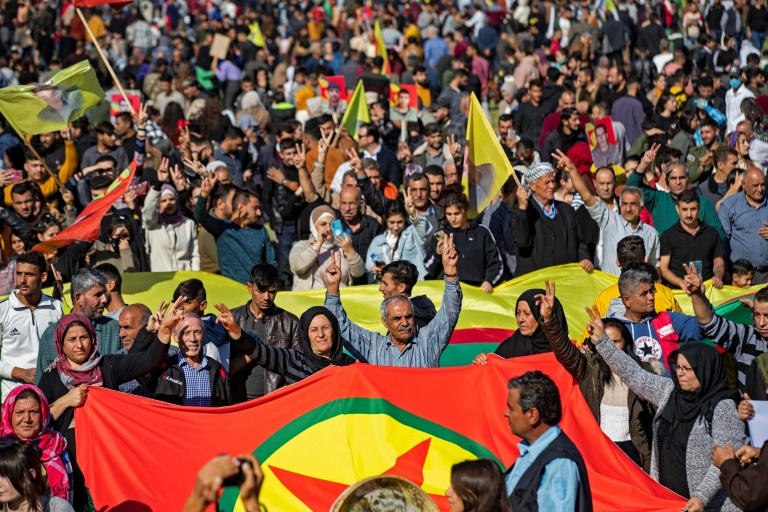
Syria’s Kurds, bracing for a Turkish land offensive against their autonomous northern region, face an additional threat: being squeezed by warming ties between their foe Ankara and the Assad regime.

The Kurds — an ethnic minority who live in mountainous regions across Turkey, Syria, Iraq and Iran — have long fought for their own homeland, and Turkey brands their separatist groups “terrorists”.

Turkish President Recep Tayyip Erdogan has blamed Kurdish armed groups for a deadly bomb attack in Istanbul this month, an accusation they have strongly rejected.

In recent days, Turkey has launched air strikes on hundreds of Kurdish targets in Iraq and Syria and threatened a new ground operation into northern Syria, run by a Kurdish-led autonomous administration.

The region’s Kurdish-led Syrian Democratic Forces (SDF), backed by US troops, spearheaded the fight against the Islamic State group in recent years.

Since Syria’s civil war broke out in 2011, relations have sharply deteriorated between Erdogan and Syria’s Bashar al-Assad, whose forces have since regained vast territories with backing from Russia.

But now there are signs of a Russia-brokered rapprochement between the Turkish and Syrian leaders, with Erdogan saying on Wednesday that he considered a meeting with Assad “possible”.

Here is a look back at a decade of tensions and what a thaw would mean for the Syrian Kurds. 

– How did Turkey-Syria relations fray? –

Before 2011, Ankara and Damascus were political and economic partners, and Erdogan and Assad cultivated a personal friendship.

But at the start of Syria’s popular uprising, Turkey advised its ally to initiate political reforms, then urged Assad to “resign to prevent bloodshed”. 

In March 2012, Turkey closed its embassy in Damascus and Erdogan started branding Assad a “murderer” and a “terrorist”. 

Ankara started to welcome Syrian political opposition groups and to support the rebels. 

Since 2016, Turkey has launched three offensives into Syria against Kurdish forces and it now controls a border strip inside Syria, citing its own national security needs.

Turkish and Syrian forces clashed in early 2020 when pro-Assad fighters were advancing toward the rebel-held Idlib province, before Russia intervened to calm the situation.

– How do Syrian Kurds get on with Assad? –

Before the war, Syria’s Kurds faced discrimination and were barred, for example, from Kurdish language schooling.

For the past decade, as Syrian regime troops vacated the north and northeast, Kurds were able to establish limited self-rule.

The Kurds have avoided open hostilities with the Assad regime, except for some skirmishes, and maintained good ties with both US and Russian forces.

Damascus rejects the autonomous administration, accusing the Syrian Kurds of “separatism”.

Several rounds of talks have brought few results but, after Russian mediation, the Syrian army was able to deploy limited forces in Kurdish-run areas against the Turkish advance.

– Are Syrian-Turkish relations warming? –

Turkey has softened its position toward the Syrian regime in recent months, nudged by Russia.

Turkey’s foreign minister in August called for reconciliation between Assad and rebel groups, and Turkey’s intelligence chief has visited Damascus.

Erdogan said on Wednesday he considers direct talks with Assad “possible”, saying that “there is no place for resentment in politics”. 

Analysts say Russia, as it fights its war in Ukraine, is pushing for the rapprochement between the two neighbours, which both consider Kurdish fighters a common threat.

When the recent Turkish strikes killed around 20 Syrian military personnel, the response from Damascus was muted. Its deputy foreign minister Ayman Soussan merely denounced “the pretexts invoked by the Turkish occupation to justify its policy in Syria”. 

The SDF commander-in-chief Mazloum Abdi told AFP this week that he felt “Damascus’ position is weaker than during previous Turkish offensives” and also claimed there had been “contacts between the two parties”.

– How would a thaw impact Syrian Kurds?

Abdi charged that Turkey’s aim is to reach an “agreement” with the Assad regime “to eradicate the experience” of Kurdish self-rule.

Erdogan, who faces an election next year, would also like to start sending back millions of Syrian refugees, observers say.

For Erdogan and Assad “to be on speaking terms… means they can make deals,” said analyst Aron Lund of think tank Century International.

“They have common enemies and rivals, such as the SDF. They can swap assets, for example by helping each other kill or silence enemies located on the territory of the other, or arrange for mutual extraditions.”

Lund stressed that “for the SDF, any serious Ankara-Damascus reconciliation would be a disaster.

“It removes their primary protection against Ankara — which is Damascus, backstopped by Russia — and it allows Erdogan and Assad to move in concert to resolve their Kurdish ‘problems’.” 

Emperor Charles V's secret code cracked after five centuries

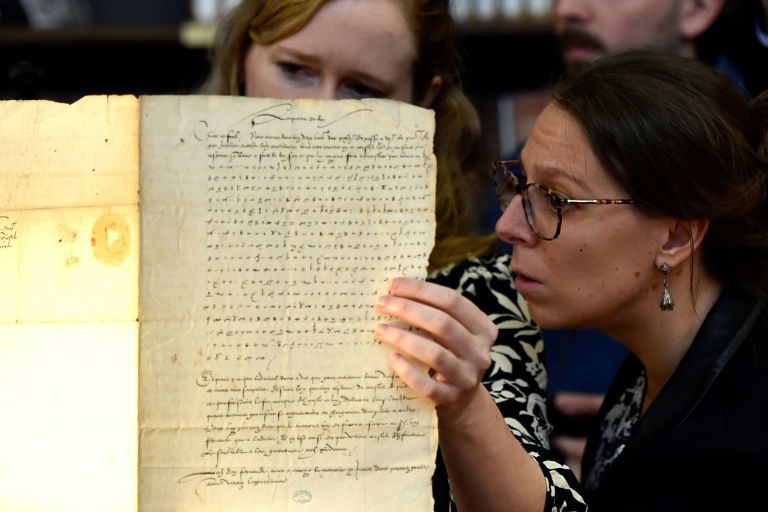
A team of researchers has cracked a five century-old code which reveals a rumoured French plot to kill the Holy Roman Emperor and King of Spain Charles V.

Charles was one of the most powerful men of the 16th century, presiding over a vast empire that took in much of western Europe and the Americas during a reign of more than 40 years.

It took the team from the Loria research lab in eastern France six months to decipher the letter written in 1547 by the emperor to his ambassador in France.

The tumultuous period saw a succession of wars and tensions between Spain and France, ruled at that time by Francis I, the Renaissance ruler who brought Leonardo da Vinci from Italy.

The letter from Charles V to Jean de Saint-Mauris had languished forgotten for centuries in the collections of the Stanislas library in Nancy.

Cecile Pierrot, a cryptographer from Loria, first heard of its existence at a dinner in 2019, and after much searching was able to set eyes on it in 2021.

Bearing the signature of Charles V, it was at once mysterious and utterly incomprehensible, she told reporters on Wednesday. 

– ‘Snapshot of strategy’ –

In painstaking work backed by computers, Pierrot found “distinct families” of some 120 symbols used by Charles V.

“Whole words are encrypted with a single symbol” and the emperor replaced vowels coming after consonants with marks, she said, an inspiration probably coming from Arabic.

In another obstacle, he also used symbols that mean nothing to mislead any adversary trying to decipher the message.

The breakthrough came in June, when Pierrot managed to make out a phrase in the letter, and the team then cracked the code with the help of historian Camille Desenclos.

“It was painstaking and long work but there was really a breakthrough that happened in one day, where all of a sudden we had the right hypothesis,” she said.

Another letter from Jean de Saint-Mauris, where the receiver had doodled a form of transcription code in the margin, also helped.

– More discoveries to come –

Desenclos said it was “rare as a historian to manage to read a letter that no one had managed to read for five centuries.”

It “confirms the somewhat degraded state” in 1547 of relations between Francis I and Charles V, who had signed a peace treaty three years earlier, she said.

But relations were still tense between the two, with various attempts to weaken each other, she said. 

So much so that one nugget of information revealed was the rumour of an assassination plot against Charles V that was said to have been brewing in France, Desenclos said.

She said “not much had been known” about the plot but it underlined the monarch’s “fear”.

The researchers now hope to identify other letters between the emperor and his ambassador “to have a snapshot of Charles V’s strategy in Europe”, she said. 

“It is likely that we will make many more discoveries in the coming years,” the historian said.

Emperor Charles V's secret code cracked after five centuries

A team of researchers has cracked a five century-old code which reveals a rumoured French plot to kill the Holy Roman Emperor and King of Spain Charles V.

Charles was one of the most powerful men of the 16th century, presiding over a vast empire that took in much of western Europe and the Americas during a reign of more than 40 years.

It took the team from the Loria research lab in eastern France six months to decipher the letter written in 1547 by the emperor to his ambassador in France.

The tumultuous period saw a succession of wars and tensions between Spain and France, ruled at that time by Francis I, the Renaissance ruler who brought Leonardo da Vinci from Italy.

The letter from Charles V to Jean de Saint-Mauris had languished forgotten for centuries in the collections of the Stanislas library in Nancy.

Cecile Pierrot, a cryptographer from Loria, first heard of its existence at a dinner in 2019, and after much searching was able to set eyes on it in 2021.

Bearing the signature of Charles V, it was at once mysterious and utterly incomprehensible, she told reporters on Wednesday. 

– ‘Snapshot of strategy’ –

In painstaking work backed by computers, Pierrot found “distinct families” of some 120 symbols used by Charles V.

“Whole words are encrypted with a single symbol” and the emperor replaced vowels coming after consonants with marks, she said, an inspiration probably coming from Arabic.

In another obstacle, he also used symbols that mean nothing to mislead any adversary trying to decipher the message.

The breakthrough came in June, when Pierrot managed to make out a phrase in the letter, and the team then cracked the code with the help of historian Camille Desenclos.

“It was painstaking and long work but there was really a breakthrough that happened in one day, where all of a sudden we had the right hypothesis,” she said.

Another letter from Jean de Saint-Mauris, where the receiver had doodled a form of transcription code in the margin, also helped.

– More discoveries to come –

Desenclos said it was “rare as a historian to manage to read a letter that no one had managed to read for five centuries.”

It “confirms the somewhat degraded state” in 1547 of relations between Francis I and Charles V, who had signed a peace treaty three years earlier, she said.

But relations were still tense between the two, with various attempts to weaken each other, she said. 

So much so that one nugget of information revealed was the rumour of an assassination plot against Charles V that was said to have been brewing in France, Desenclos said.

She said “not much had been known” about the plot but it underlined the monarch’s “fear”.

The researchers now hope to identify other letters between the emperor and his ambassador “to have a snapshot of Charles V’s strategy in Europe”, she said. 

“It is likely that we will make many more discoveries in the coming years,” the historian said.

Ukraine battles to restore power after latest Russian barrage

Ukraine struggled Thursday to repair its battered power and water services after Russia targeted the electricity grid with dozens of cruise missiles and temperatures plunged.

The Ukrainian energy system is on the brink of collapse and millions have been subjected to emergency blackouts for weeks due to systematic Russian bombardments of the grid.

The World Health Organisation has warned of “life-threatening” consequences and estimated that millions could leave their homes as a result.

Mayor Vitali Klitschko said more than two-thirds of the capital was still cut off despite municipal workers in Kyiv restoring some water service overnight.

“Seventy percent of the capital remains without electricity,” Klitschko said. “Energy companies are making every effort to return it as soon as possible,” he added.

Kyiv shivered Thursday as temperatures hovered just above zero degrees Celsius (32 degrees Fahrenheit) with some rain.

Ukraine’s military accused Russian forces of firing around 70 cruise missiles at targets across the country on Wednesday and of deploying attack drones.

Ten people were killed and around 50 wounded, Ukrainian Prosecutor General Andriy Kostin told local media.

But Russia’s defence ministry denied striking any targets inside Kyiv and said damage in the capital was the result of Ukrainian and foreign air defence systems.

– ‘Scariest day’ –

“Not a single strike was made on targets within the city of Kyiv,” it said.

Moscow’s targeting of power facilities is their bid to force capitulation after nine months of war that has seen Russian forces fail in most of their stated territorial objectives.

“So many victims, so many houses ruined,” 52-year-old Iryna Shyrokova told AFP in Vyshgorod on the outskirts of Kyiv after Wednesday’s Russian strikes.

“People have nowhere to live, nowhere to sleep. It’s cold. I can’t explain it. What for? We are also human beings,” she said, calling it “the scariest day”.

This month Moscow’s troops withdrew from the only regional capital they had captured, destroying key infrastructure as they retreated from Kherson in the south. 

Kostin said Ukrainian authorities had discovered a total of nine torture sites used by the Russians in Kherson as well as “the bodies of 432 killed civilians”. He did not specify how they were killed.

Wednesday’s attacks disconnected three Ukrainian nuclear plants automatically from the national grid and provoked blackouts in neighbouring Moldova, whose energy network is linked to Ukraine.

Ukraine’s energy ministry said that all three nuclear facilities had been reconnected by Thursday morning.

The governor of Kharkiv region — home to the country’s second largest city — said the eponymous city was suffering electricity supply issues and “emergency power shutdowns”.

The head of the central region of Poltava, Dmytro Lunin, said authorities were “working around the clock to restore power”.

– ‘Shutdowns’ –

“In the coming hours, we will start supplying energy to critical infrastructure and then to the majority of households,” Lunin said.

About 50 percent of central Dnipropetrovsk region had electricity, governor Valentyn Reznichenko said.

“The energy supply situation is complicated. So shutdowns will continue in the region to reduce the pressure on the grid as much as possible,” Reznichenko warned.

Repair work was ongoing elsewhere, including in the Rivne, Cherkasy, Kirovograd and Zhytomyr regions, officials said.

The Kremlin said Ukraine was ultimately responsible for the fallout from the strikes and that Kyiv could end the strikes by acquiescing to Russian demands.

Ukraine “has every opportunity to settle the situation, to fulfil Russia’s demands and as a result, end all possible suffering of the civilian population,” spokesman Dmitry Peskov said.

Moscow announced separately it had issued tens of thousands of Russian passports to residents of four Ukrainian territories, which President Vladimir Putin claimed to have annexed in September.

“More than 80,000 people received passports as citizens of the Russian Federation,” Valentina Kazakova, a migration official with the interior ministry, said in remarks carried by Russian news agencies. 

In September, Russia held so called referendums in Donetsk, Lugansk, Zaporizhzhia and Kherson and claimed residents had voted in favour of becoming subjects of Russia.

Putin formally annexed the territories at a ceremony in the Kremlin later that month, even though his forces have never had full control over them.

Close Bitnami banner
Bitnami